Home Blog Page 518

Staying In: Final Space

0
Image courtesy of Netflix


Best for: Rick and Morty fans, sci-fi fanatics, heartfelt comedy lovers


If you’re looking for your next animated comedy, look no further than Final Space. The cartoon follows Gary, an astronaut who is a prisoner aboard the Galaxy One. He comes across Mooncake, a cute green alien, who he promises to keep safe . . . but unbeknownst to Gary, Mooncake is actually a planet destroyer. Together, they go on numerous adventures to figure out the mystery that is “Final Space.”

The show starts as a goofy nonsensical space adventure that is funnier than anything else. But give it a few episodes, and what audiences will find so great about the show is that it constantly plays with comedic moments that are followed by tear-jerking scenes. This makes Final Space surprisingly heartfelt, and has viewers care deeply for the characters. But the animation style by itself looks gorgeous, too: the planet and stars in black-light colors really make the cartoon visually stunning.

At face value, Final Space appears to be a goofy comedy, but behind that mask is a remarkably deep and challenging series. This cartoon goes much further than most animated shows, having Final Space be a great example that animation can be more than just a platform for children’s television.  


Opinions of the Hour

0

“Mind your language, professors” – Liang Chenglu, China Daily

Liang’s article is a sobering critique of Megan Neely, an assistant professor at Duke University, who sent an email regarding international students having conversations in Chinese. In the email, Neely called these students “unprofessional” and “impolite.” The email quickly went viral on social media, leading to Neely resigning from her position as the director of graduate studies in response to the outrage.

Liang’s article talks about the uncomfortable implications of Neely using her position of power to “coerce” international students into speaking English, and her implied intent to eliminate the familiarity that international students have with their native language in a foreign country. She follows that it would be vastly discriminatory if internships and research positions were indeed given based on Neely’s absurd value of using exclusively English in private conversations. After all, these foreign students would not have been enrolled at Duke had their English skills been deemed insufficient in work and school.

Liang calls out Neely’s email as a deplorable example of the subtle yet ongoing discrimination against Asians in the West that hides under a cruel guise of well-meaning advice. For Duke to uphold their identity as an “elite university,” they’re right to be discouraging this sort of behaviour in their professors, and they have to protect student diversity and inclusivity through their language.

SFU researchers discover a way to combat HIV mutation

0

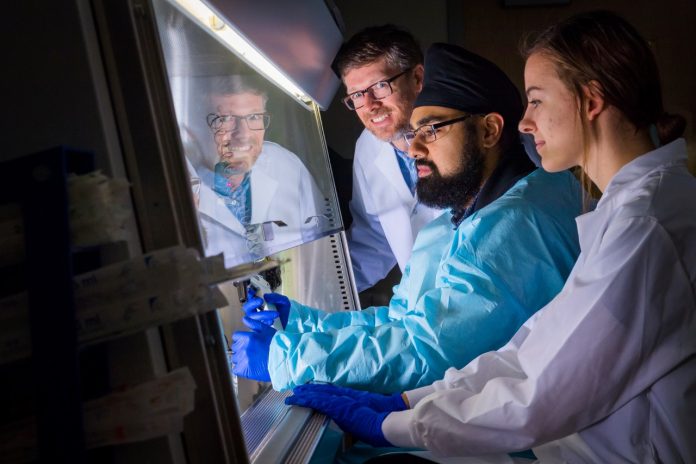
In November 2018, Simon Fraser University researchers along with a group of South African academics from the University of Kwa-Zulu Natal published a study that revealed how certain HIV-positive individuals possess immune cells that enable them to control their HIV viral load. This research provides further clues in the quest for developing an HIV vaccine, which is an epidemic that affects millions worldwide. The team plans to use their results to conduct future experiments that could lead to a more comprehensive understanding of a T-cell response associated with HIV.   

The study, Dual HLA B*42 and B*81-reactive T cells receptors recognize more diverse HIV-1 Gag escape variants, was conducted from 2017–18, and the methods used in the study took approximately six years to establish, according to Gursev Anmole, a PhD candidate in molecular biology and biochemistry and one of the lead authors of the study.

In an email interview with The Peak, Anmole explained that the human immune system has immune cells called CD8+ T cells, also known as “killer T-cells.” Killer T-cells recognize virus particles (antigens) presented on virus-infected cells. Because of this unique ability, the CD8+ T cells are critical in destroying virus-infected cells.

When HIV infects a host cell, it expresses antigens on its cell surface via the human leukocyte antigen (HLA) protein, said Anmole. Killer T-cells have a receptor called the T-cell receptor (TCR) which identifies cells displaying the HLA protein. The killer T-cells destroy these cells to stop them from further damaging their host.

Uniquely, Anmole says, the HIV virus can mutate rapidly, which lets it evade this defensive mechanism to keep reproducing copies of itself and infecting nearby cells. However, some HIV-positive individuals possess CD8+ T cells that can still recognize and destroy these mutated HIV variants, keeping the concentration of HIV in their blood at a low amount.

“This recognition of mutated HIV variants by killer T-cells is made possible by “cross-reactive” TCR that can recognize mutated forms of an HIV antigen,” explained Anmole.

“Identifying and studying the characteristics of HIV-specific TCR in individuals that show HIV control can therefore help us identify mechanisms behind TCR-mediated HIV control, which in turn can be used to better design HIV vaccines and therapeutics,” he further added.

According to Anmole, the study analyzed two highly similar HLA proteins, HLA-B*81 and B*42. Both respond to the same HIV antigen, TL9.

Dr. Mark Brockman, who is an SFU health sciences professor and senior author of the study explained to SFU News that, “A person’s T cell “repertoire” is made up of a possible 20-100 million unique lineages of cells . . . To reduce the complexity of [this] study, the team examined [these two HLA variants].”

Anmole also noted that: “Since these HLAs are similar and the antigen they present is identical, [any] difference in HIV control between these groups may be [due to the fact that] B*81 individuals may have cross-reactive TCR able to recognize HIV escape variants while B*42 individuals may not.”

The researchers confirmed that individuals with B*81 could control their viral load much better than B*42-expressing individuals because they had cross-reactive TCR that were more sensitive to HIV variants, according to Anmole. This study demonstrated that some HIV-specific TCR recognize HIV escape variants better than others and that there may be a clinical benefit of possessing cross-reactive TCR, he further added.

When asked about the obstacles the team faced while conducting this study, Anmole shared: “Research is full of challenges as we are discovering new ideas . . . There were many challenges along the way, from complex assay design to late nights in the lab when things did not work and 7 a.m. Skype calls with our collaborators in Durban, South Africa!”

Anmole concluded the interview by saying the Brockman team will use the results from this experiment to conduct future experiments that include individuals with different HLA proteins who recognize different HIV antigens. This will lead to a more comprehensive understanding of a T-cell response associated with HIV control across a larger population.

With files from SFU News

Foolproof ways to cheat on your midterms!

0
Photo courtesy of Flickr

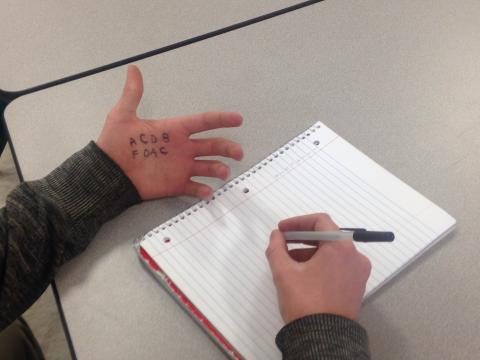
University is hard. Why put in the time studying when you PAY to be here. Don’t worry, I have done some research and found a few foolproof ways for you to cheat on those pesky exams.

Friendship
If you can plan at least one semester ahead, find out who TAs the hardest course you will be taking. Discover where they reside and “accidentally” bump into them. From there, infiltrate their life. Become their best friend.
Then, you’re going to need to hire an actor. One day, while you two are walking along the street, the actor will run up to your TA, point a gun at them, and demand that they hand over their wallet. Cue fake battle in the middle of the street. Roundhouse kick the (toy) gun out of the robber’s hands. The gun will spin through the air and land in your hand. “Not today buddy, back off of my best friend, or else!” The robber flees the scene, and you are left as the hero.
Another actor you have hired who has been observing the scene exclaims to your TA, “Wow, that was amazing! You owe them your life!” Your TA is so thankful that they don’t even open your exam on test day. Instead, they write A+ in large letters on the front of your test.

Composter
Plant scrap pieces of kitchen waste around the exam room. On the bottom side of these vegetable peels, write down any information you need to remember. Get up to ask if you can go to the bathroom during the exam and on your way, pick up a piece of garbage. Make a facial expression that says, “Why is this here, I guess I will slightly inspect this object and then throw it out!” while getting a good glance at the information. The best part is, the scraps will biodegrade naturally, ensuring you won’t get caught.

Bionic Bee+
Alright, this one gets a bit techy, so listen up. You’ll train a bee to fly around the exam room and look at exams for you while wearing a microscopic GoPro. You will need to hook up the GoPro to a pair of glasses that you will wear. When you tap a button on the glasses, you can see what the GoPro is filming inside your lenses.
While you are writing the exam, release the bee. As the bee examines the tests of your peers, keep note of their answers by watching the screen on your lenses. You may want to take a Gravol in advance; the footage will be a bit shaky!

Black Mirror in the AQ
Clone yourself and teach your clone to care about studying. (That will be the hardest part) The cloning process is simple enough: take a cell from anywhere on the body, separate out the nucleus, place it within an egg that has had its own DNA removed, find a surrogate, and voila! The technology on how to do this is not fully developed, and the internet says it may take hundreds of failed surrogates, pregnancies, and births to make it happen, but it’s better than studying!

Once you have your clone, make sure you keep them hidden so no one will suspect a thing when you send them out into the real world as yourself. While they are being hidden for months and years at a time, give them books and cognitive training games. Feed them mounds of vegetables and other super foods and play them only classical music. You will create such a genius that your course material will be no problem for them.
Dress them up in your clothes and drop them off at your exam while you head off to the mountains for a ski day. Just make sure they don’t talk too much to anyone; apparently, clones are always a bit “off.”


Sex Education breaks through the taboo around teenage sex but falls to overplayed clichés

0
Image courtesy of Netflix


Sex Education is a nitty-gritty, in-depth exploration of high schoolers’ sex lives, fully loaded with awkwardness, charming characters, and physical comedy.

The new British Netflix show follows Otis, a sexually inexperienced outcast in school whose mom is a sex therapist. He teams up with the school’s notorious bad girl, Maeve, to give sex advice to other students at the school — whether it’s on getting a better shag, destigmatizing females wanking, or helping couples learn about communication. While their scheme starts with motives to find social liberation and get some cash, the two underground business partners become unlikely friends.

The show is remarkably unique from any other show revolving around sex comedy. Sex Education is centred around teenage sex lives, but it approaches the taboo topic with such openness and lack of filter.  It discusses fetish, masturbation, abortion, queer sex, etc. Through Otis’ personal development and the advice he gives, the show conveys the importance of communication, connection, and consent — in sex and overall in life.

Although the show deserves high praise, and it will likely go down as a Gen. Z iconic show, it was full of classic high school comedy clichés that I was disappointed to find in an otherwise brilliant show. The mean teacher/headmaster. The flamboyant gay best friend who gets bullied by a dumb mean jock. Of course Maeve, the hot bad girl of the school who is actually whip smart and has heartbreaking family issues that make her outwardly cold. And of course the main protagonist, an awkward lanky outsider, is absolutely in love with a girl that the show presents as someone that is way out of his league.

If these stereotypes sound familiar to you, it’s probably because you saw them in every teenage coming-of-age indie movie and YA book ever.

Aside from that, the show’s attentiveness to character quirks and details are unique and clever as hell, and the actual premise of the show being based around healthy conversations about sex (finally!) is daring and powerful. If this show was so set on breaking barriers and looking good while doing it, why didn’t they go all in and throw stereotypes and clichés out the window? What about a queer-as-hell protagonist? A happy ending for the suppressed gay son of the headmaster?

Netflix announced that Sex Education is renewed for a second season, so here’s hoping that they go big instead of going home. Sex Education is progressive, inclusive, fearless, funny, and charming, but if they can be all that, they have the potential to be even better in season two by throwing in some plot twists to put it off it’s current predictable course.


Seth Rogen and Evan Goldberg bring their voices to The Vogue

1
To top off the evening, Rogen and Goldberg brought in Canadian Mounties to feed Timbits to audience members


Seth Rogen and Evan Goldberg are some of the funniest people to ever break out of Vancouver, and this was further proven on the evening of February 15 at the Vogue Theatre. As a part of Just For Laugh’s Northwest Comedy Festival, Rogen and Goldberg held an event where fans were treated to an intimate evening with the stars through a facilitated Q&A session.

Audience members asked questions about their well-established filmography, and many were directed towards the iconic, coming-of-age film Superbad. In addition, fans asked questions about their personal lives, with one fan having the audacity to ask how the stars each lost their virginity.

During the event I was reminded that Rogen and Goldberg’s personability has helped them maintain their considerable success. Fans were presented with the amazing opportunity to seek advice from Rogen and Goldberg about the world of film and production. Luckily, I was able to ask the duo about any insight they could provide to young writers and actors aspiring to make their marks in the industry. Rogen and Goldberg were nothing short of funny and genuine, adhering to their well-established reputations.  

Those present at the Vogue Theatre were also treated to a number of  exclusive sneak-peaks of the upcoming productions Rogen and Goldberg are soon releasing. Perhaps the most exciting revelation was a scene from the upcoming film, Long Shot, a story that follows the hilarious misadventures of a vehemently bold journalist (played by Rogen). Although I’m not permitted to reveal the contents of the scene, I would be remiss in not stating how emphatically brilliant the writing was in the film’s short clip.

Rogen and Goldberg even provided glimpses into the early drafts of some of their most famous productions. Towards the middle of the evening’s event, the stars shared an earlier version of their rated-R animated film, Sausage Party. Although the film has become infamous for its extremely raunchy essence, the deleted scene that Rogen and Goldberg revealed was perhaps a bit too grotesque . . . even for a film called Sausage Party. I think it’s best to describe the deleted scene as shockingly repulsive.

At the end of the evening, I looked around the Vogue Theatre and perceived how fans lovingly clapped and cheered for Rogen and Goldberg. Consequently, I came to fully realize just how much the comedic legends  have made the city of Vancouver proud. Rogen and Goldberg may have gained legions of admirers around the world, but their most ardent fans still remain in Vancouver, the city they once called home.

SFU keeps hope alive for second place finish with huge 6–2 win in Nanaimo

0
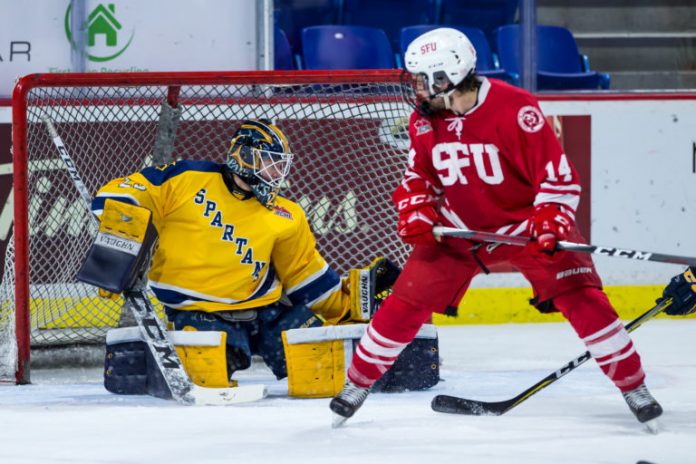
The Clan still have time to move up the standings. (Photo courtesy of SFU Hockey)

The SFU hockey team rolled into Nanaimo on Friday night in fourth place in the BCIHL standings with multiple games in hand on the rivals they trail in the standings. The team’s currently facing an uphill battle to secure home ice advantage in the first round of the playoffs, requiring a a 5–1 record over the remainder of the BCIHL season. With that in mind, the Clan arrived at the Nanaimo Ice Centre focused on taking it one game at a time.

After a delayed start due to the VIU (Vancouver Island University) Mariners’ celebration of their graduating class of seniors, the Clan unleashed an offensive assault early in the game and built up a lead they would never relinquish.

The first period saw the Clan jump out to a 2–0 lead on goals from team point leaders Mac Colasimone and Nic Holowko. Throughout the first, the team did a great job of using their team speed and maintaining team discipline.

While the Clan would continue their strong play into the first half of the second period and add two more goals to take a commanding 4–0 lead, the team allowed their emotions to get a bit out of control, which allowed the Mariners back into the game late in the second.

After a series of penalties and disorganized power-play attempts on behalf of the Clan, the Mariners pulled within two goals just before the end of the second period to set up an intense third in which the Clan would do their best to protect their two-goal lead and their faint hopes for home ice advantage in the first round of the playoffs.

Fortunately for the Clan, goaltender Ryan Sandrin slammed the door on the Mariners’ offense in the third period to secure the 6–2 win. Sandrin stopped 35 of 37 shots to notch his sixth win in eight starts this year. While the Clan carried the play for most of the first half of the game, Sandrin had to be sharp with multiple big saves throughout the last half of the second and the third periods. His repeated strong performances in key games down the stretch this season appears to have solidified his position as the go-to goaltender for the Clan as the playoffs rapidly approach.

The Clan now face a quick turn around with their next game at 3 p.m on Monday at the Bill Copeland Sports Centre. A big two points will be up for grabs on Monday that would go a long way toward securing the second playoff seed and home ice advantage in the first round for the Clan.

With this in mind, The Peak caught up with defenseman Daniel Nussipakynov, post-game, while he was riding the exercise bike to hear some of his thoughts on the team’s dominating performance. Asked what the biggest improvements were for the Clan in their win over VIU this Friday versus the loss to the Mariners last weekend, Nussipakynov pointed to the fact that “we came out flying with an awareness of the importance of the two points and with a stronger commitment to using our team speed and maintaining team discipline and emotional control.”

When asked how the team should approach the tall order of winning at least five of their remaining six games to secure home ice advantage in the first round, Nussipakynov noted that “every game is extremely crucial for us, so we have to take it one game at a time. Our end goal is capturing the BCIHL championship, so we are motivated by that goal while understanding the process required to get us there.”

The Clan will continue their drive for a second-place finish in the BCIHL standings on Family Day at home at the Bill Copeland Sports Centre.   

SFU needs to address how construction noise makes campus dysfunctional

0
Photo by Chris Ho/The Peak

Three of my five classes are on the Burnaby campus. Twice last week, we were forced to move because of construction noises.

When I say “forced to move,” I mean that my discussion-based seminars got up and left for another space because we were simply unable to get any work done over the sound of cement being drilled in. And with everyone engaging in this mass exodus from the AQ’s construction choir, officially or unofficially relocating classrooms is frustrating and time-consuming.

In a few of our classes, we had to get creative. One professor literally brought us to Club Ilia and we split nachos and pop while talking about human rights, which sounds hilarious until you realise how ridiculous and unsustainable that is. Another professor gave us some options about how to proceed and put it to a vote, and our fourth-year seminar elected to search for another spot on campus to continue our discussion.

On both counts, professors were helpful, professional, dedicated, and attentive to the needs of students — but they shouldn’t be the only ones accommodating for the school’s noise.

I know that our school is basically a Cold War-era cement pop-up shop, and that construction is a necessity to maintain and improve our infrastructure. But that shouldn’t come at the price of students’ education. If it does, we’re losing sight of why this brutalist monstrosity crowns Burnaby Mountain in the first place.

Noise pollution has known negative effects on your health, from hypertension to anxiey. According to WorkSafe BC: “An employer must ensure that a worker is not exposed to noise levels above either of the following exposure limits: (a) 85 dBA [decibels] Lex daily noise exposure level.” Construction workers are notoriously at-risk for work-related hearing loss, not only because of long-term exposure, but also because their sites are regularly above peak limits. If the workers are subjected to this degree of noise, it shouldn’t be a surprise that the classes in the same building are going to find it disruptive.

While I wasn’t whipping out decibel meters to check the numbers during lecture (although I hear there are apps for that), our work was absolutely disrupted. Other students looked tense and uncomfortable, one of my friends whose first language wasn’t English was straining to figure out what was happening, and Advil became a hot commodity among the entire class.

I’m pretty sure that students don’t need their institution trying to nerf their performances and stressing them out furthermore. We do enough of that ourselves, thanks.

More than that, this amount of noise is also a serious accessibility problem for students with any kind of hearing impairment, migraine problems, or with anxiety disorders who may or may not be registered with the Centre for Accessible Learning. For these students, the harm from this noise can be especially harmful; having concerns about the construction on campus is not petty or whiny at this point.

It’s made more frustrating since we’re still paying around $750 for every class we take. While I don’t like thinking of my education as being reducible to its monetary worth, it feels necessary to say how much value is being ruined for us. On a basic level, if I’m going to be paying for my education like a customer, I’m comfortable pointing out that a healthy learning environment should be included in the per-credit cost of my BA. My classmates have joked about getting refunds for missed and disrupted class times, but if we’re going to put a price on education this logic isn’t crazy.

Since we’re in a system where students are customers, maybe those bright-eyed twelfth graders with post-secondary dreams should go shop elsewhere. SFU needs to do a better job of thinking of students’ needs and learning conditions when it’s scheduling construction and classes, and think logistically about how those two affect each other.

What grinds our gears: The difficult and confusing stairs and pathways of Burnaby campus during construction

0
Illustration by Cora Fu/The Peak

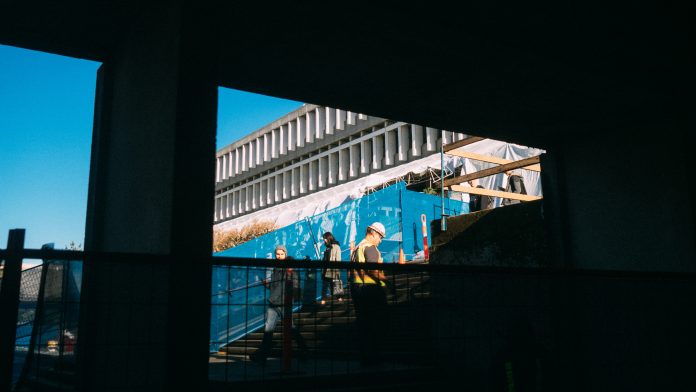
Getting to places around Burnaby campus has been the bane of SFU student existence since even before the construction began. After nearly getting trampled at the Production Skytrain station due to that tradition of sprinting down the stairs, we already had to deal with that steep flight at Saywell. The absolute last thing you want after all that is the lengthy walk up and down more flights of stairs just to get to West Mall.

Now, though, the stairs and walkways of this campus are an ever-changing labyrinth thanks to the construction on campus. You thought navigating the routes through Robert C. Brown Hall or the technology complexes were a challenge? Try it when the entire school has become a shifting maze of arrows, fences and “Public Walkway” signs. Forget about going to the Lorne Davies Center to work out, just getting there from the AQ through several closed pathways is tiring enough.  

It’s bad enough normally, but it only gets worse when the frequent rainfall (and recently snowfall) hits the flights outside. Remember the good old days when SFU students could at least say that they could get everywhere on campus without getting wet? With construction clogging and closing up the indoor staircases, those days are now a distant memory — almost as distant as the upper walkway we need to take now that the AQ’s so closed off.

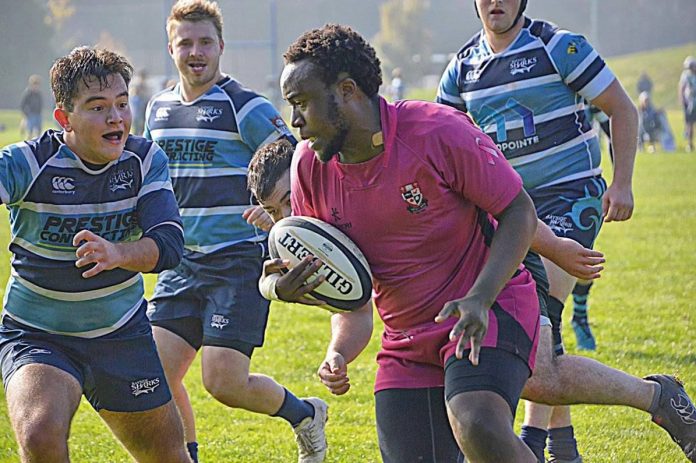
Tapiwa Samkange discusses SFU rugby community and living away from home

0
(Photo courtesy of Al Riede)

Year: Freshmen

Hometown:  Harare, Zimbabwe

Major: Molecular Biology and Biochemistry

Tapiwa “Taps” Samkange is an international student from Harare, Zimbabwe. Beginning his journey at Fraser International College (FIC), and currently in his freshman year at Simon Fraser University, Taps moved to Canada three years ago, and has been an active member of the SFU Rugby Club ever since.

Taps chose to attend SFU in order to experience a new country and simultaneously pursue an academic career. Tenacious and joyful, the player is loved by his coaches and teammates, who describe him as a pivotal member not only to the club, but to the entire community built around it. Although he has been playing rugby since he was 13, Taps finds the community at SFU to be particularly loving and engaging.

Currently playing tight head prop (the cornerstone of rugby scrums), Taps has collected skills, friends and memories from the club that he holds very dearly. His love for the sport and the team are as apparent as his results on the field. Although Taps first saw rugby as a way to bring something familiar to the unknown, he currently describes the club as his family.

The Peak: How did you first learn about SFU Rugby?

Tapiwa Samkange: I learned about it from my CA (Residence Community Advisor). He told me I should try out, so I went down for a practice… and the rest is history, I guess.

P: How do you manage between an academic and athletic career at SFU?

TS: Obviously I wouldn’t say it’s as intense as other athletic careers because we only practice twice a week, but you just have to strike a balance and prioritize what’s important. I think people often try to schedule their lives around things as opposed to committing to what they enjoy, and I think that’s the biggest mistake. You should state your priorities and then go from there.

P: Who would you say is the most important person in your life?

TS: It has to be my mom. She is always looking out for me. I can’t explain how much she carries me and keeps me going all the time. Even though I’m far from home and communication is not the same, I know that no matter what happens, whatever I do, she’ll always have my back. She’ll always be there.

P: You mentioned that you used to play rugby in Zimbabwe. What do you find the main difference to be between playing here and back home?

TS: They’re definitely different styles. We play in an open age group so there’s a lot more older kids that play an underhand, “older style rugby” that you don’t experience in high school. But playing back home it’s more of a “faster play,” more geared towards grinding harder and harder.

P: Could you take me through your first game here at Simon Fraser University? How much has changed since you first began playing with the team?

TS: My first game was an away game and I was on the bench. It was cold, oh my god, so much cold. I remember getting to play the second half and yeah! It was just weird because there were older people than I expected, and a couple guys bigger than I expected too. I think I touched the ball once during the whole game and it didn’t go great. But afterwards, the whole team just got together and it made me want to come back and play more. It’s very different now – I get to start now! Compared to back then, I’ve gained a bit more confidence because I know what it takes [to play] the game. Before, I was younger and fresher to the team; now I feel confident enough in my role and my tackles. I feel more established.

P: What is your favourite thing about SFU Rugby?

TS: The SFU community and the family bond. Even with rugby as a whole in the Lower Mainland, it’s just so community driven. Not a lot of people do play rugby, so the people who do . . . everyone is just great! From all walks of life, doing all sorts of odd jobs, and coming together every Saturday, come rain or snow, and just beat the heck out of each other.

P: What is the environment around the field like? How is the community at SFU rugby?

TS: Before the game there’s a lot of different people. Some people are more quiet and just want to play music and focus on the game. Other people relax with talking and juggling around. And then when the game happens the view changes. Stuff gets real. Afterwards though, everyone is great with everyone. Like I said, there’s a big community. After the game you feed the other team. You get to know other teams, and once you’ve played for a couple of years, you remember a couple faces and it’s just easy to kick around. There’s a lot of people that through injuries had to stop playing, but they still show up to the games just for the community aspect of it.

P: How has SFU Rugby changed your course at the University, and in your life in general?

TS: Oh so much! It helped me settle in, as coming from Zimbabwe I knew only a few people, so it helped a lot because it’s such a family bond playing rugby. Everyone was nice to me. If you need help with something they’ll be there. It really helped me make friends.

P: Who would you say is the funniest guy in the locker room?

TS: I would say Aidan [Brown]. He could make anyone laugh. He has witty comebacks for everything that no one else could think of. He’s just a treat!

P: How is being from somewhere so far away impact the way you live your life here in Canada and SFU?

TS: When first coming here there was definitely a culture clash. Like, it’s a lot more liberal around here, a lot different compared to back home. But it’s nice because I chose to go somewhere different, and it’s the difference I wanted. Vancouver is a great place, and a great place for me. But being far away, it’s not always easy – you get homesick and you miss home. Zimbabwe is super far away, but with technology it helps a little bit. It just helps you have a different perspective. It makes you think about how different everyone is and the places they came from. Changing your scene is a good thing. The world is so much bigger than I think people realize. So just always expose yourself to as much of it as possible.

P: Do you see yourself staying in Vancouver in the long run?

TS: I would like to stay here a while. I don’t know if I will live here forever, but yeah, so far I’ve enjoyed the city and the people. Like I said, the rugby is sort of my family away from home. Coming from far away, your friends become your family, and it’s a good enough family to stick around with. So I’m not necessarily in a rush to go back home.

P: To the people who might be considering trying out for the team, what would you say?

TS: Come and have a try out. Rugby is a sport that can take all body types. You don’t have to be the tallest or the biggest. You can be small and fast. It allows all bodies to play, as long as you have determination. You have to want it, because rugby games are very intense on the field. You have to be determined to win it. I hope that people feel free to come out, it’s a lot of fun.

Athlete’s corner: As an international student, Tapiwa recommends being engaged and becoming part of a community that shares the same interests as you. Currently ranking at 6th place, the Simon Fraser RFC [Rugby Football Club] is on the track to make it to playoffs, and Taps encourages everyone to come and join the community on its journey there. SFU Rugby holds games most Saturdays, often on Burnaby Mountain, and no matter the results, a party is always guaranteed.