Home Blog Page 463

Long Story Short: Friend breakups can be as painful as romantic ones 

0
Illustrated by Tiffany Chan


I’m in my room in Vancouver, scrolling through my Instagram feed. In the pale blue glow of my phone screen, I see the new post that she’s uploaded from New Orleans: a picture of herself and some other girl. They’re in matching costumes and I scrunch my mouth. She never did anything like that with me, I think distantly. I double tap the screen on instinct. I continue scrolling, and try not to think too hard about how happy the person I once called someone my best friend looks with someone new. 


I’ve gone through some painful break-ups, but no one told me about how painful friendship break-ups can be. And even though I just got dumped this summer, the break-up that haunts me, and I believe will continue to stick with me, is the one I went through with my (now ex) best friend. 


I met my ex-best friend in high school — Let’s call her Elizabeth. Elizabeth and I became friends over a school play between rehearsals and running lines. When we both realised we had a shared love of Doctor Who and Tumblr (I know, please don’t bully me), we hit it right off. The next few months were filled with long sunny afternoons with her, whispered conversations in the darkness of movie theatres, and obnoxiously loud laughter at jokes no one else would understand. During that time, she even had a boyfriend briefly, but he often said that whenever us three would hang out, he felt like he was the third-wheel. And honestly? He wasn’t wrong. When I think back to high school, despite the horrible time I had, she was one of the reasons I recall those days with warmth. Her smile, her wit, and her; I still miss all three dearly. I wanted nothing more for this person to stay as my partner-in-crime, my commander-in-homie, my [insert any silly joke label here] — any name we’d call ourselves would do as long we stayed friends. 


We lost touch gradually — it was so subtle, I barely noticed it. Over the course of two years, it ebbed away slowly and quietly. The thing about friendship break-ups is that they fade in the corner of your eye. Calls were missed, inside jokes grew stale, and visits proved how wide the gap between us was. Neither of us acknowledge that anything has changed with how we talk. Instead of completely ignoring each other, we stay in each other’s periphery with an enthusiastic comment on a great Instagram post; these emotional equivalents to bread crumbs somehow made the break-up worse.


There are countless songs about heartbreak — ranging from singers feeling utterly gutted to victorious to bitter. But most of all, many break-up songs about your ex-partner are all about empowerment. You’re over that loser! Social media, witness my goddamn #FlexOnMyEx! The underlying message in each break-up anthem is, “I am better off without you in my life and I can’t wait to tell the world.” 


When I think of people I’m no longer friends with, when I think of Elizabeth, I’m not filled with a sense of victory, more so a sense of hollow emptiness. There are no break-up anthems about losing friends that empower you. Songs like “When She Loved Me” by Sarah MacLachlan just remind me of a deep psychic ache that I can’t quite shake each time I see she’s posted something new on social media. 


What I learned is that unlike the melodrama of romantic break-ups, a break-up between friends, however, is more ambiguous, more confusing. Because there can come a day where you can dive deep into a new partner, but the regret and sadness from a friend break-up lingers. It sticks with you in every new friendship made, every holiday passed, and the hope that maybe one day they’ll reach out still lurks. The sob story of being dumped by your good-for-nothing ex will always garner more sympathy and more understanding than trying to articulate how a perfectly great friendship crumbled over time. And it’s a shame we can’t mourn a friendship as publically. But both kinds of loss, at the end of the day, are equally valid and painful in their own dimensions


Why must SFU Burnaby get the butt-end of the toilet paper roll?

0
Guests of Goldcorp Centre for the Arts are spoiled next to Burnaby Mountain. Photo: Andrea Renney/The Peak

In the “Whale of a Birthday” episode of the culturally impactful show Spongebob Squarepants, Squidward performs a song for Pearl on her sixteenth birthday. The monumental song won audiences over with the stunning lyric, “When my tear ducts give issue, I can’t use just any tissue, I need four ply, four ply, four ply, when I cry.” 

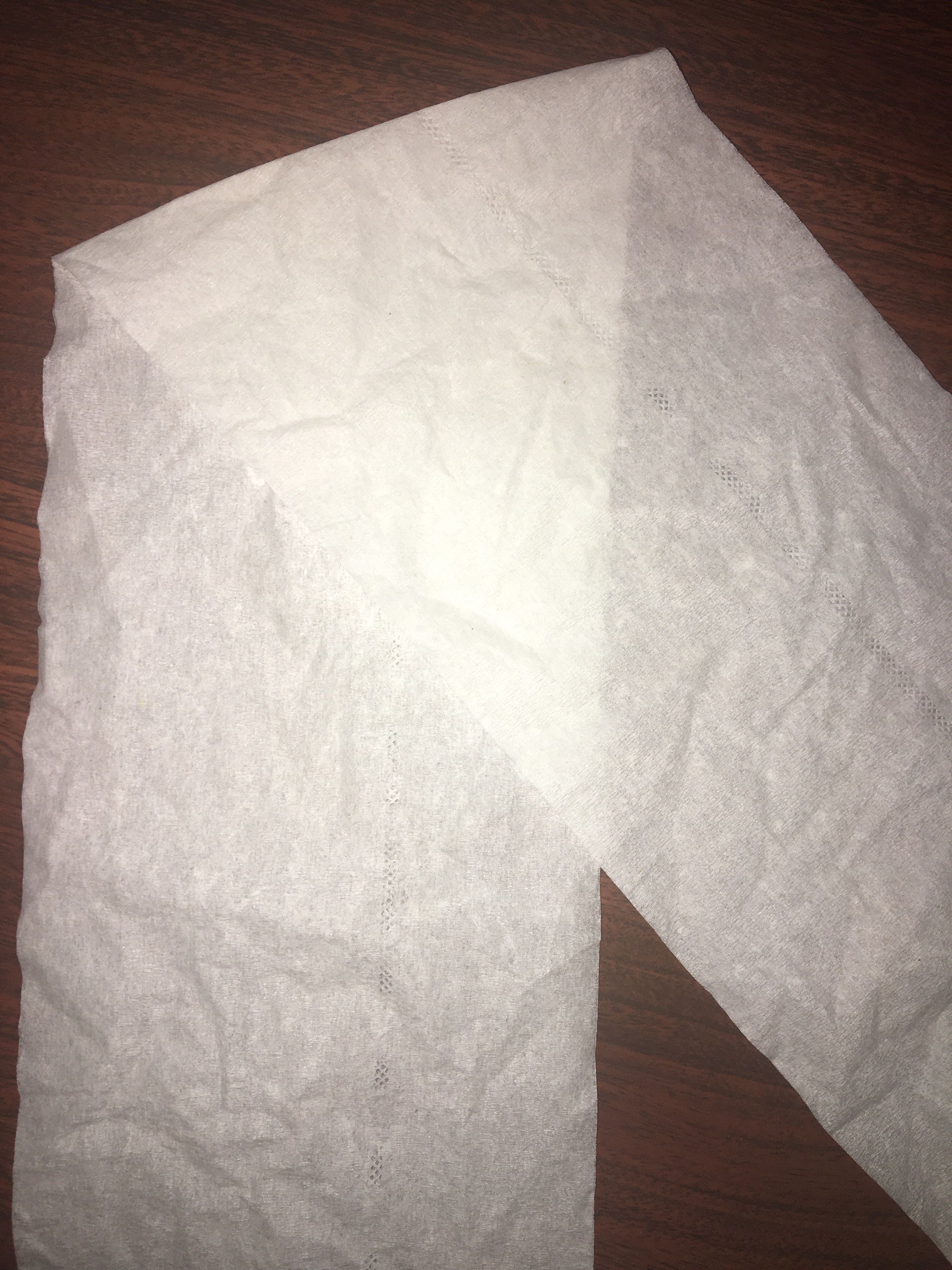
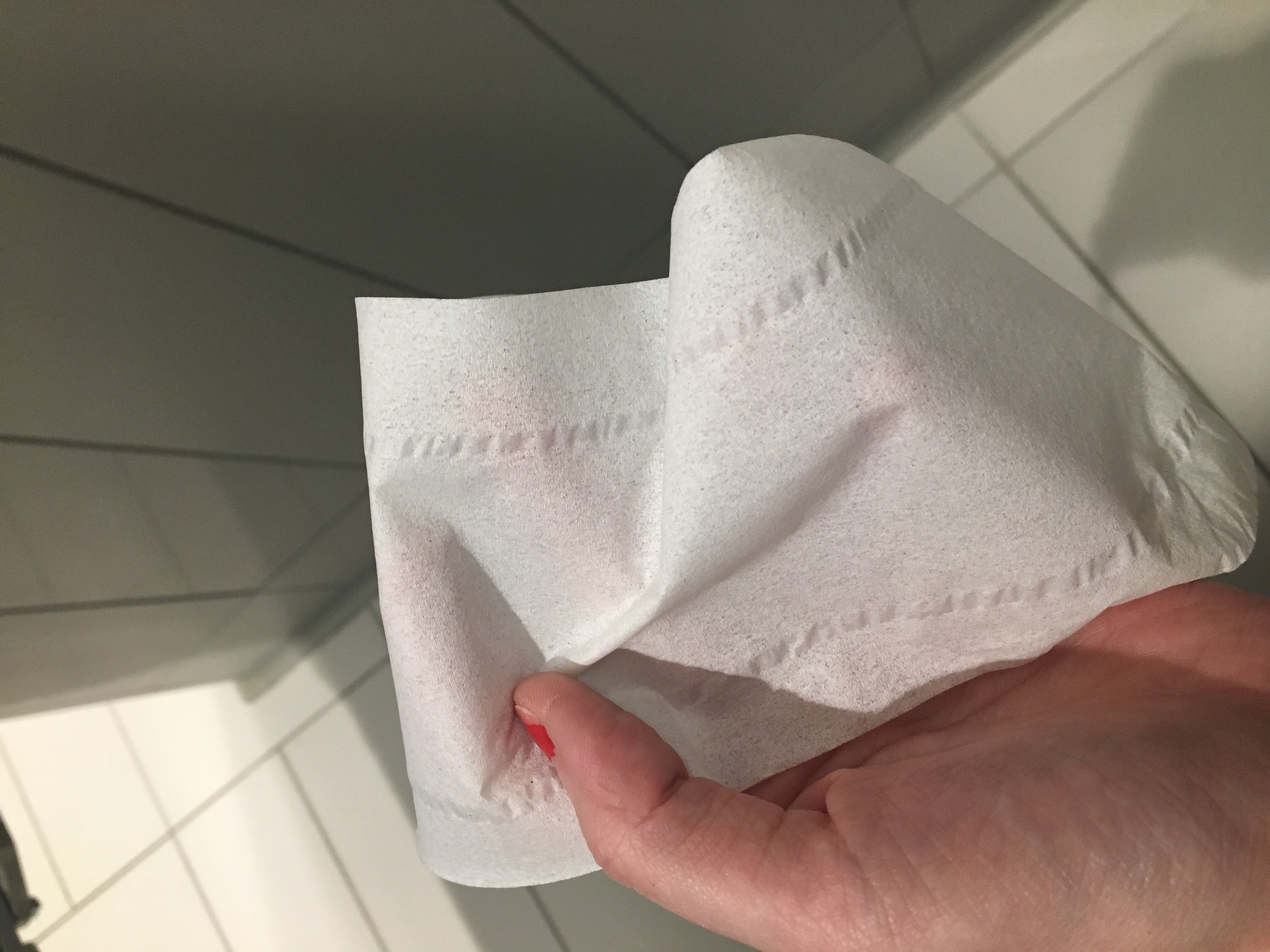
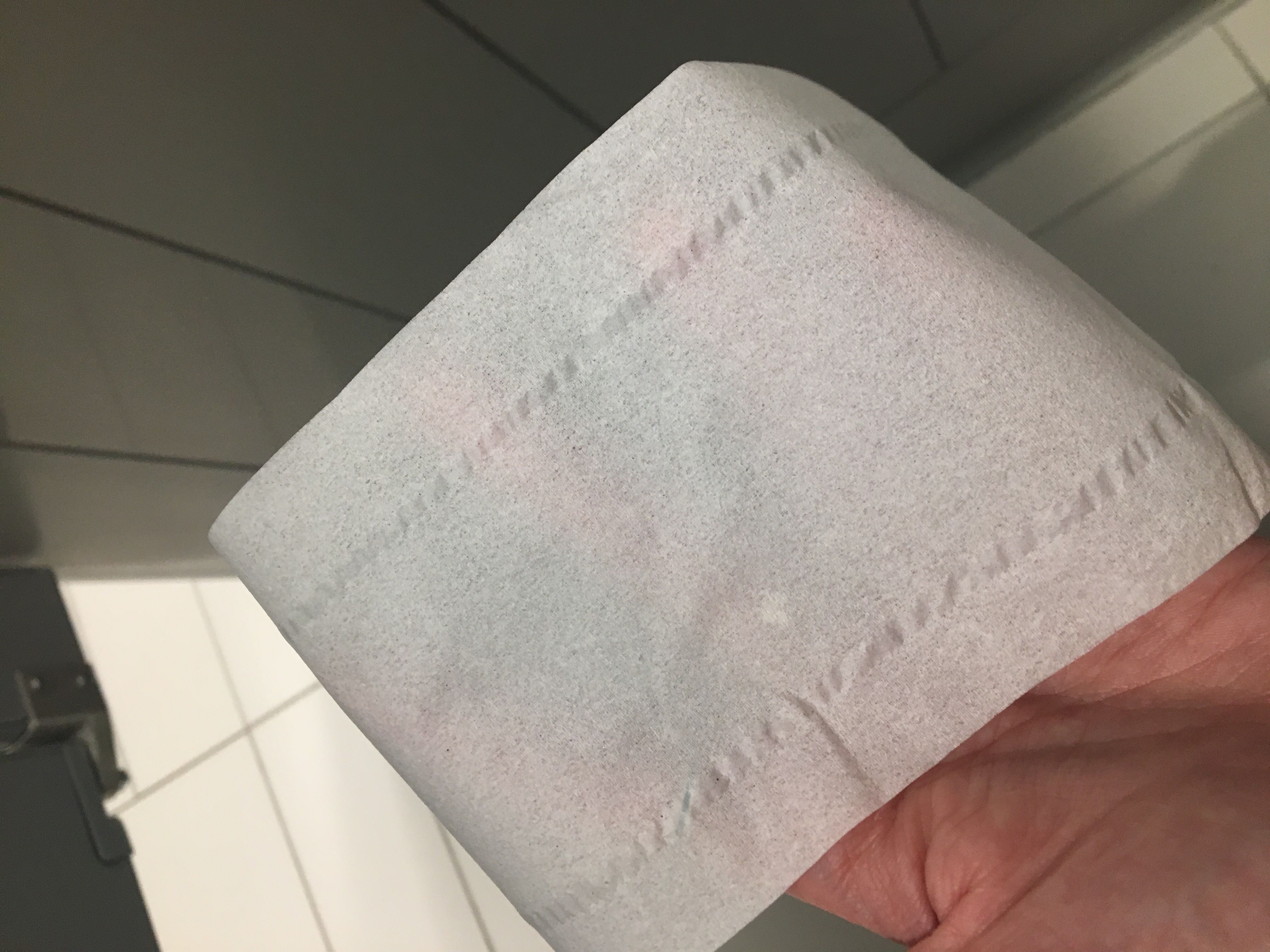
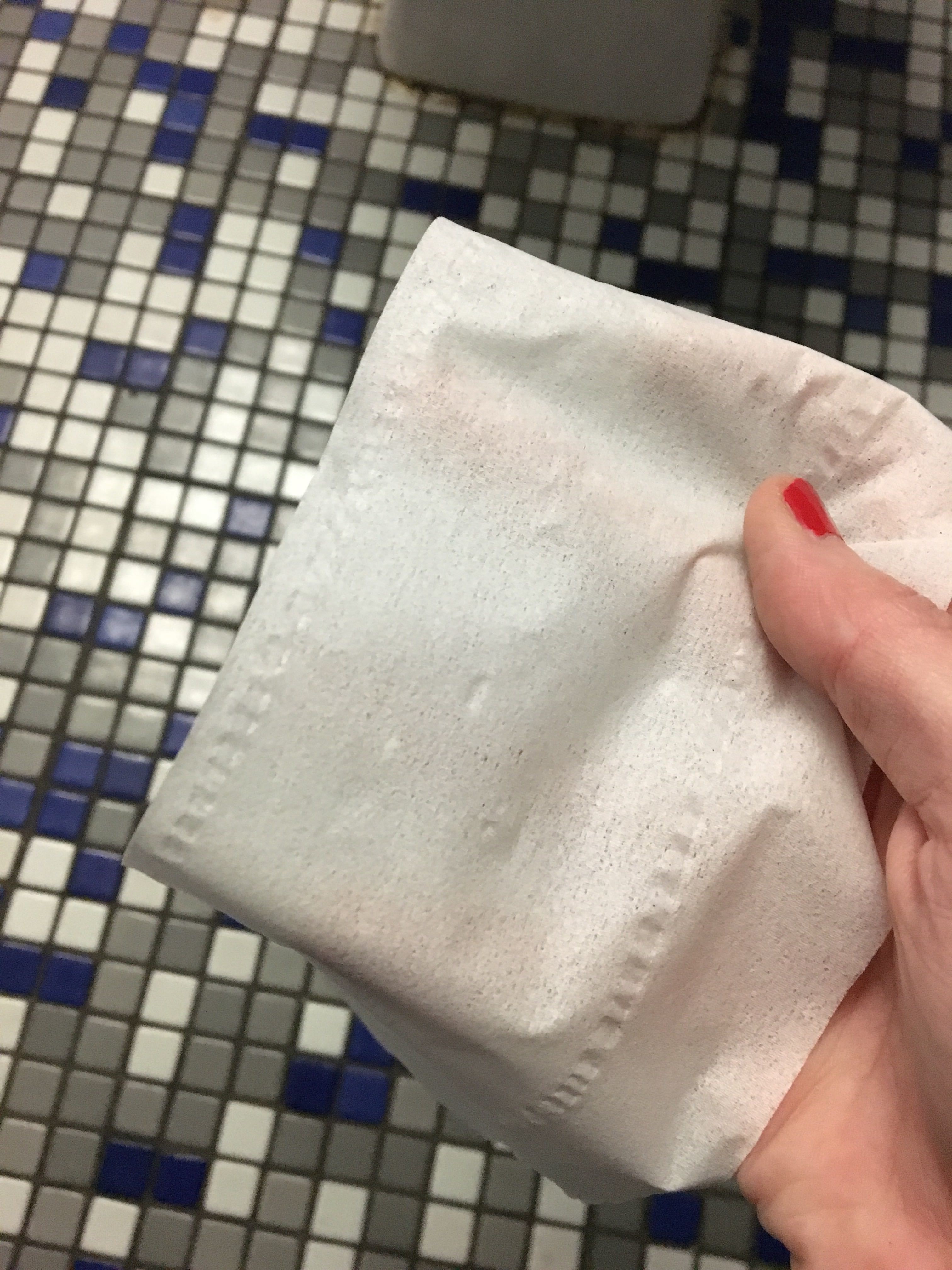
This song resonates with me to this very day. It shaped my expectations for myself and what I deserve in my tissues. You can thus imagine my horror, my dismay, my shock when I headed into my first washroom stall at the university I would call home for the next two-plus years to find the flimsiest quarter-ply toilet paper I have ever had the displeasure of using.

This sick, sad excuse for toilet paper exists in every toilet stall around the Burnaby campus. Unless students whip out their own toilet roll from their bags, the quarter-ply nightmare is inescapable atop this cursed mountain. From residential buildings to Blusson and beyond, the wretched rolls wreak their havoc. No one is safe.

Each dispenser possesses two humongous rolls that hardly fit. Despite its pretense, bigger is not always better. The hefty rolls get stuck after a pathetic amount of paper reaches the hands of SFU patrons. The desperate grasp for a sufficient amount of toilet paper results in little to no success. Like a pathetic attempt at confetti, teensy squares of TP find themselves in the hands of the betrayed, the stranded. 

In a cruel twist of fate, these pieces flutter forgotten to the floor where they belong. Users are left helpless on their porcelain thrones. Silent cries for help sound out as the only way to get more TP is to carefully, care-fu-lly, move the roll to reveal a little more of the paper. The stall floors of each washroom are covered in little snowflakes of failed attempts at attaining a sufficient wad of TP. Beside each scrap lies the tears of students who just want to feel clean, but can’t.

Rushing between classes and need to go? Good luck, kid. Wanting to speed up the prolonged time of a particularly predominant number two? Yeah, right. Everybody knows now. You should have done your business at home, I guess.

Less is not always more in the TP industry. The toilet paper rolls across campus echo the transparency of dollar store tissue paper for bagged birthday presents. Thin enough to view your own hand through it, this stuff requires at the minimum five or six bunches or folds to do a meagre job of things. If SFU really wanted to help the environment, or whatever they had in mind with this toilet paper monstrosity, the toilet paper decision makers would have put their heads together to realize that flimsier paper requiring twice as many layers (not including scrap waste on the floor) is more of a waste than a greater ply paper that requires less bunching.

To rub salt in the wounds even more, other SFU campuses have effective TP that is not see-through. Our downtown campuses boast double-ply TP for their toilet needs. For those formal meetings and important guests at Harbour Centre? They get to have have triple-ply! Maybe it’s the elevation getting to me, but is this not unfair for the students, faculty, and staff on top of Burnaby Mountain?

We need a thicker TP around Burnaby. The sorry excuse of paper we have currently is a waste of resources, and as far as preventing us from having to wipe with our bare hands, it scores a 3/7. With such thin material to work with, is the job really being done as well as it could be? As it should be? The fix is easy enough: it’s not impossible to find a thicker ply that works with the current dispensers. All we ask is for our toilet experience to be given the same amount of consideration as those at the Vancouver campuses. By phasing out the current abominations in our stalls, bums all over campus will be better off. 


Arguments can’t be “pro-life” if concern for life ends at birth

0
Seeing a pro-life club at Clubs Days was disturbing. Photo: Zeh Daruwalla/The Peak

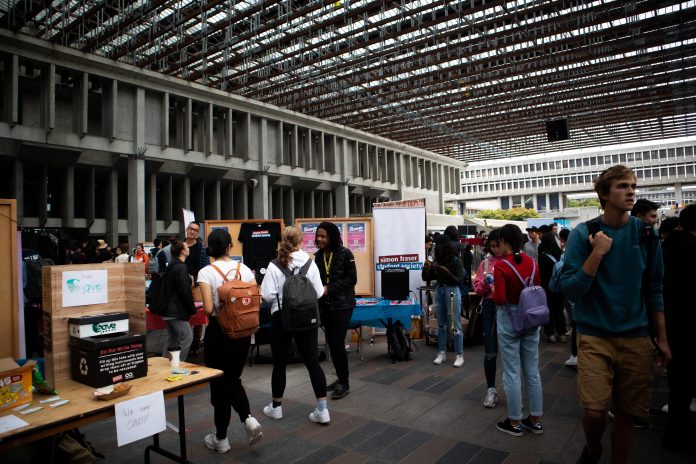
It all started during Clubs Days when I was wandering the booths. As I approached one, a member who was explaining the club to a passerby turned to include me in her explanation: “We’re SFU’s pro-life club.” It took me a moment to register her words but once I did, I turned around and nope’d right out of there. 

Since then, I have not been able to stop thinking about the insidiousness of the term “pro-life.” The definition of pro-life begins and ends with the birth of a child. Proponents of it don’t really care about the life of the mother or the life of the baby once it’s born. If they did, they would look at the bigger picture, and not focus on such a narrow view of what life is. This movement is anti-abortion or pro-birth, but what it definitely is not is pro-life.

The anti-abortion movement feeds into the classism and racism embedded in our society. According to an article made available by the National Center for Biotechnology Information, the most important factor in the decision to have an abortion reported to researchers were socioeconomic. For those already struggling with finding adequate resources to support themselves, the additional cost of food, childcare, clothing, medical expenses, a larger living space, etc. places a huge financial burden on women living in poverty. 

This economic insecurity is compounded by the fact that many employers view parents, especially new mothers, as unreliable—and parental leave in general as a negative thing. As a result, this leads to fewer employment opportunities for pregnant women or new mothers. The ensuing lack of job security and need for increased resources disproportionately effects poorer people, forcing them deeper into a cycle of poverty. And because poverty is also racialized due to structural barriers in employment and racist stereotypes, forcing women to carry their pregnancies to term furthers the marginalization of racialized folk as well. 

If anti-choice folks are so concerned about “loss of life” through abortion, there is a simple solution: create situations wherein parents are stable enough to have and care for children. Give them access to housing, food, better working conditions, child support, job security, access to mental and physical health resources, contraception, and better opportunities for education in general. The anti-abortion movement only succeeds in punishing people for perceived moral failings and furthering racial and class scorn.

Where in the anti-abortion movement is the concern for the conditions in which life is lived? Where is the understanding of the intersectionality of racial and class disparity and its effect on life expectancy? 

For anyone looking for pro-choice resources on campus, the SFSS Women’s Centre is one that is “committed to ensuring reproductive rights and justice for all, including non-judgmental information on abortion and pregnancy, and support for parents and families.” They provide a necessary, informed, and inclusive alternative to those who do not wish to be subjected to the myth-based morality judgments advocated by anti-choice groups. You can find them in the Rotunda, just outside of the W.A.C. Bennett Library.

This November 11 consider that history comes in more colours than white

0
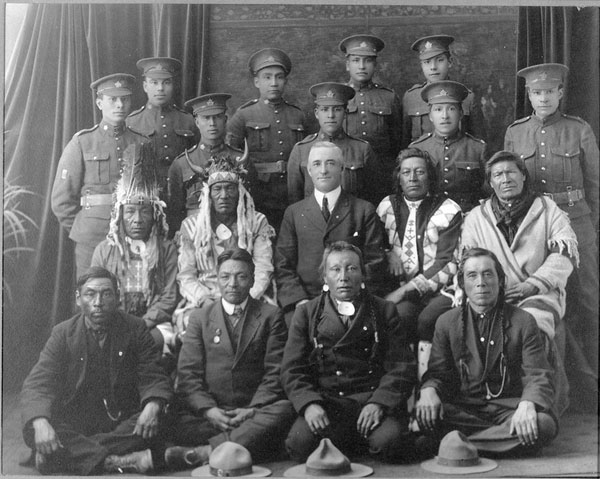
Every family has war stories — what are some of yours? Photo: /Veterans Affairs Canada

Right at the start of November, cadets in uniform appear in the malls or in front of supermarkets exchanging poppies for donations to support veterans and their families. People are encouraged to wear poppies this time of year to honour the lives of those who have served and fallen in war. Yet, the faces and lives that we remember on November 11 only tell a fraction of the past’s bravery, suffering, and loss.

In history classes, lessons are heavily focused on the Canadian, American, and British armies’ involvement in the First World War. This has meant that the causes, main actors, and victims of the war are told through the faces of white men. But countless communities of colour also served and gave their lives in war. For example, Indigenous communities in Canada were excluded and mistreated so poorly from war memorial activities that they created their own veteran’s day on November 8. Our whitewashed versions of history exclude and discredit the services of people of colour. Their stories and experiences are tucked away in the footnotes of textbooks and lecture slides.  

When we place a poppy on the left side of our jackets, we should remember not only the white men we see in our textbooks, but also the people of colour and marginalized communities who also served and were caught up in the horrors of war. These people deserve the same honour, respect, and credit that white veterans receive on November 11. 

My family does not have a connection to the Great War. But my mother tells me the story of her father, mother, and aunt who were caught in the middle of the Second World War when Japan invaded the Philippines in 1942. They were in Bulacan and hid in an underground hole covered by wood, dirt, and leaves. The hole was large enough to fit even the neighbouring families. I’m told that when the men of the community were taken, they would never be seen again. Women were raped and parents hid their children to prevent them from being taken away. My great-aunt and grandfather were left orphaned at age nine because of atrocities like this.

My paternal grandfather volunteered in the war effort and enlisted with the 15th Infantry, USAFI (United States Army Forces In the Philippines), and clerked at 1st Battalion Headquarters. He later transferred to a combat unit. His father was an enlisted United States merchant mariner who helped deliver war supplies to other US troops. Their ship, SS Susana, was torpedoed by a German submarine and their bodies were never found. These stories are often marginalized next to heroic retellings and visualizations of white soldiers. The unfortunate result is that these people of colour and their stories are forgotten on a day when we are called upon to remember those brave lives lost.

I share my family’s story because in one way or another, we all have a connection to war. It is important to find out these relationships to the past to have a deeper understanding of where we came from, the experiences that our ancestors lived through, and how these stories have brought us to where we are today.

We are rarely educated on the lives of people of colour who volunteered or dedicated their lives to help Canadian, American, or British troops. The lives of Muslims, Sikhs, Hindus, Asians, Indigenous peoples, black people, and other marginalized groups who fought and suffered are not honoured or remembered in publicized ceremonies. We cannot educate our children about our past without considering that history is not just white. 

I know I am incredibly lucky to have immigrated to Canada from the Philippines when I was two. I live in what I believe to be a safe place that has provided my family and I opportunities to start a new life. I do not want to come across as disparaging the lives lost in making Canada the country that has become our safe home. I recognize that I am extremely privileged to live in Canada. But I must also not forget my family roots and history and make sure that my ancestors’ stories are respected and honoured. 

On November 11, recall your own family’s narratives and experiences with war. Remember that history consists of more than what is televised and published in books. Don’t forget to honour the people that matter to your own history. Remember the wars that have touched your family, and the lives that were irrevocably changed. Most of all remember that our whitewashed history is made up of the lives of people of colour as well — lest we forget. 


Shakespeare is more torment than tranquility in an introductory class

2
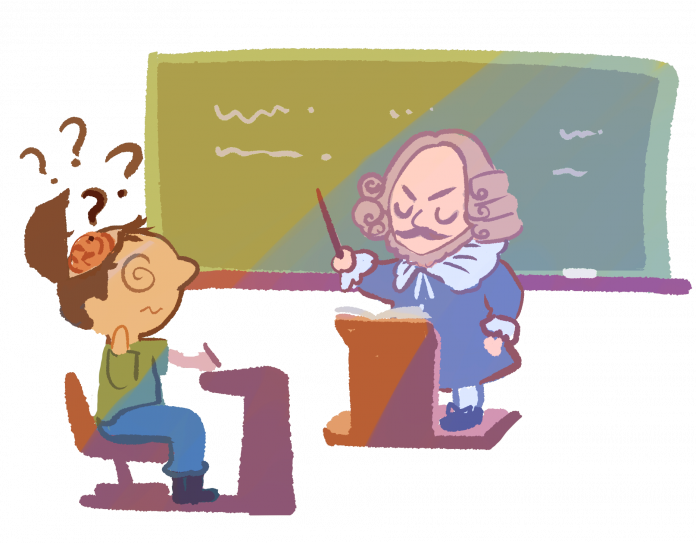
It’s time to yeet Shakespeare out of first-year classes. Illustration: Nancy Chen/The Peak

Whether or not Shakespeare should be taught in schools is often widely debated. Many maintain that Shakespearean sonnets and plays are indispensable pieces of English literature, as their themes remain timeless. Others argue that Shakespeare’s works are too boring, outdated, or challenging for students. There are positives and negatives in this discussion, and there’s no doubt that his writing is a valuable part of literature. But in a first year English class, though? Not so much. 

First year courses set out to provide a base for the rest of post-secondary education, focusing on fundamental concepts. English classes generally aim to teach students basic essay and writing skills, and the ability to critically analyse characters and themes within a story or poem. This is what the department expects students to do with Shakespeare. The problem is that Shakespeare isn’t entry-level English, so to speak. Students can’t start unpacking his complicated brilliance without some practice with more accessible materials first.

The English language has changed significantly over the years, and in that respect, Shakespeare provides historical insight into that evolution. However, with such a stark difference between Shakespearean (Early Modern English) and contemporary English, his writing doesn’t serve as a good example of how to analyse and craft effective writing in English today. Bringing Shakespeare into first year classes as an early introduction gives students the impression that analysing difficult pieces is just what the entire department is about. So many students have told me they hate reading or English as a subject because it’s hard to understand. In reality they probably just meant, “I hated reading Shakespeare, and that’s the only reading I’ve been introduced to.”

Shakespeare’s writing is typically difficult to read, even for avid readers. He’s enjoyed by literature and history buffs, but his work isn’t for everyone. For students who just want to get that English credit, hone their writing skills, or want to test the waters in the world of English, Shakespeare isn’t a great introduction. Shakespeare’s work isn’t the only example in the English canon that can teach students how to critically analyse English literature. There are so many diverse contemporary poets and novelists that are more engaging, that appeal to a wider audience, and can teach the same skills that professors want students to demonstrate. There’s Natsume Sōseki and Hermann Hesse, who deal with the complexity of change and the human heart in works such as Kokoro and Demain. There’s Sarah Kay and Ocean Vuong, who weave simple words together to create intricate poems of loss and love. These works are easier to read, and in no way are inferior to Shakespeare. 

English is more than difficult plays or poems; it can provide students with new worldviews, improve writing skills, and impart knowledge in entertaining ways. Contemporary works can assist students in learning what any introductory course aims to teach, so why not diversify the options and explore beyond Shakespeare? 


A little more clarity going into an exam would be nice, thanks

1
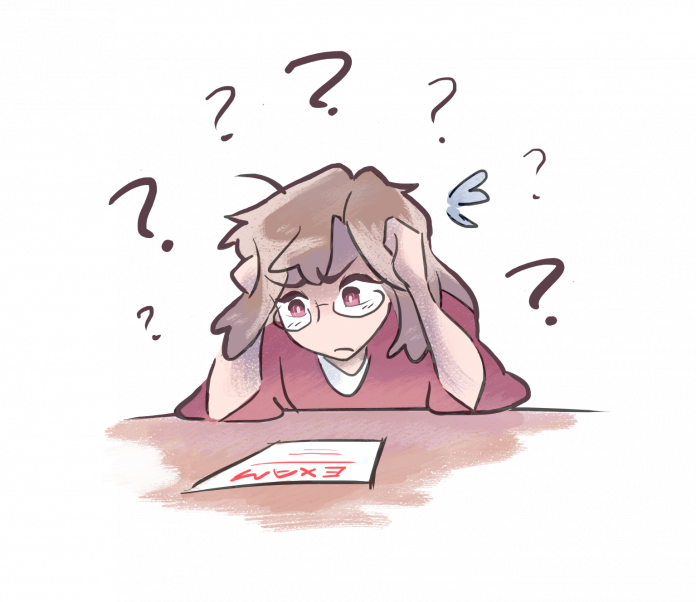
Don’t make midterms more stressful than they already are. Illustration: Sabrina Kedzior/The Peak

This Halloween I dressed up as a midterm exam guide. It’s, like, the scariest thing ever — next to, you know, midterms. My costume, “ghost of a midterm guide,” was basically pieces of scrap paper that I glued on myself with a few vague instructions such as “be on time” and “see syllabus” — but most were just blank. Instead of “trick-or-treat” I said, “Boo-hoo! So what if the midterm is 30% of your grade?” with a couldn’t-care-less attitude, yawning the entire time. This outfit required minimal effort, which is handy for a last-minute costume, but not great when students’ grades are hanging on the line.

Call me cynical, but I like to know exactly how I’m going to get shattered on an exam. Be it multiple choice questions that spark incomparable amounts of self-doubt, or short-answer questions that are just about as short as NBA players, please professor, for the love of God, just let me know what to expect!

I took a class where the professor stressed that the exam would mainly be based on multiple choice questions. However, on the day of the midterm most of the weight was actually allocated to long-answer math problems. This really hampers time-management during an exam as I had devoted most of my time to filling out the scantron. When I realized that I didn’t have enough time for the math problems nicely hidden on the last page of the question-sheet, it was already too late. While I do take some blame for not going through the entire booklet as soon as I was handed the exam, it is not entirely my fault. I went into the room expecting mostly multiple choice questions and left with a sense of betrayal and utter disappointment instead.

Professors should include the question pattern, along with estimated weights in the midterm guide. This would give students an approximate idea of how much time to spend on each section. The material to be tested on should also be included here so that students know what to study. It’s not always the case that all content taught in classes leading up to the midterm will be on the exam. Once, in class, the professor vaguely mentioned that the midterm would contain all content up to “here” in the middle of the lecture, and didn’t bother clarifying further.

Also, I can’t believe I have to point this out in university, but professors should post instructions at least a week ahead. This would give students enough time to email their instructors with questions and reasonably expect to get an answer before the exam.

And before I exhaust my grief with midterms, maybe — just maybe — test us on things we’ve actually done in class? I know it seems like a wild thought to test students on things you’ve actually taught, but we’re mentally, as well as financially, broke and deserve some justice. I once had a midterm where the class average was 38% because the questions on the exam were radically different from tutorial practice questions. When the class average is an F grade before the bell curve saves us, maybe that should be taken as a red flag that something isn’t right on the instruction side.

Midterms usually have a lot of weight attached to them, so it’s more than fair to ask for comprehensive instructions in a timely manner. Exams induce enough panic on their own, so the least professors can do is give us accurate hints about how to approach them.


Board rejects motion to house CJSF, Embark, SFPIRG, and SOCA in the SUB 7–5

2
Image courtesy of sfss.ca

Editor’s note: this piece will be followed by more in-depth coverage on the discussions surrounding both motions and concerns voiced about accessibility, feasibility, and financial responsibility. Other business from this meeting will be discussed in a future piece. 

A motion originally proposed by SFSS president Giovanni HoSang to house SOCA, SFPIRG, Embark, and CJSF in the Student Union Building (SUB) was defeated on November 1’s SFSS Board meeting. Another motion was adopted to renovate Forum Chambers and the Undergrounds in Maggie Benston Centre to house SOCA, SFPIRG, and CJSF instead — though SFU community members expressed concerns regarding this resolution. The other groups currently housed in the Rotunda — The Women’s Centre, Out on Campus, and the First Nation Students Association — have space guaranteed in the SUB.

Three guests spoke on this issue prior to the Board’s discussion: a student who had been involved with SFPIRG, Matt McDonald (Director of External Relations for the Graduate Student Society), and Magnus Thyvold (CJSF Station Manager). 

From the Board of directors; Jennifer Chou, Tawanda Nigel Chitapi, Osob Mohamed, and Shina Kaur spoke spoke in support of the motion. Simran Uppal expressed feedback she had received from students and departmental student unions executives who wished to see space in the SUB allocated majoritarily to students. Giovanni HoSang read an open letter supporting the motion signed by himself, Jennifer Chou, Shina Kaur, Fiona Li, and Osob Mohamed. 

HoSang’s motion, printed below along with vote results tallied by several Peak staff members, was originally proposed and postponed at the May 30 and October 18 Board meetings.  

Following the first motion’s rejection, the Board elected to take a break given the tension and emotion in the room. Many SFU community members left the meeting at this time or took advantage of the break to discuss frustrations and reactions to this decision in the hallway. 

After the break, the Board passed a motion to renovate Forum Chambers and the Undergrounds at a projected cost of $320,000 to house SOCA, SFPIRG, and CJSF. 

The last item before the Board went in camera was a question and answer period for guests in attendance. Of the 10 questions asked (five of which by The Peak), Board members answered five. As the last question of the Q&A period, The Peak asked Board members which independent student society’s services they had used or activities they had participated in, one group at a time. Less than half of the Board had used each service. 

Many speakers at the meeting reacted to the motion in the meeting itself. During the meeting, The Peak invited attendees to submit comments and concerns before 6:00 p.m. (due to our publication schedule). The Peak had the opportunity to talk to Giovanni HoSang, Jesse Wentzloff (CJSF’s Public Affairs Coordinator) and Robin Erikkson (Programming Coordinator). 

Wentzloff voiced disappointment at both the Board’s decision “to evict us and the other student groups by denying us space in the SUB.” 

He was also disappointed by “the cowardice of the Board members who voted against the proposal that would have housed all the groups [ . . . ] in that they uniformly refused to answer questions or provide any concrete reasoning for their decisions and were disrespectful throughout the process — not paying attention to speakers and checking their phones…”

CJSF’s disappointment is compounded by the fact that a move to Forum Chambers/the Undergrounds had already been discussed and deemed unsuitable for their society’s needs. Erikkson also discussed concerns regarding the financial feasibility and responsibility of this plan. Board members discussed this issue during the meeting and the Q&A, with VP Finance Tawanda Nigel Chipati explaining that the SFSS’ Space Expansion Fund would cover these renovations. The briefing accompanying the motion notes that CJSF has also been saving funds in preparation for a potential move. 

“Why would the SFSS choose to spend that amount of money [ . . . ] to renovate space when they have a brand new building that they’ve already spent millions of dollars on?” 

HoSang too was disappointed by the decision.

“It’s very disheartening that the vote went this way, but let’s see what happens in the next couple of months.” 

He reminded students that they could reach out to Board members and vote with this issue in mind in the next election. 

The issue of space in the SUB has deep roots on campus. Following a consultation period in 2013–2014, rotunda groups found out in December 2017 that they were not being given space in the SUB. Since, they have reacted with a variety of presentations, discussions, educational workshops, petitions, letters, and awareness campaigns. 


Vote Breakdown:

7.1 Alternative Shared Space Model – Improved Model for the SUB – MOTION 2019

Be it resolved that 8 of the 22 Bookable Open Rooms be assigned to clubs and DSUs for a period of one semester with the possibility of extension by additional periods of one semester at a time; Be it further resolved that each of the 8 open bookable rooms be assigned to one club or student union except if two groups wish to share a room;
Be it further resolved that staff be tasked to determine the next steps in the process of allocating the 8 Open Bookable Rooms as semesterly bookable spaces to clubs and student unions and to report back to the Board with recommendations. Be it further resolved that the remaining 4 organizational suites be allocated to SFPIRG, Embark, CJSF and SOCA, in addition to the ones already allocated to the SFSS Women’s Centre, SFSS Out on Campus and First Nation Students Association.

Votes in Favour

  • Jennifer Chou (Arts and Social Sciences Representative)
  • Giovanni Hosang (President)
  • Shina Kaur (VP University Relations)
  • Fiona Li (Communications, Art and Technology Representative)
  • Osob Mohamed (Health Sciences Representative)

Votes Against

  • Maneet Aujla (At-large)
  • Jasdeep Gill (VP External Relations)
  • Julian Loutsik (Environment)
  • Jessica Nguyen (VP Student Life)
  • Simran Uppal (Science)
  • Andrew Wong (Business

Abstentions

  • Tawanda Nigel Chitapi (VP Finance)
  • Emerly Liu (Education)

Note: Rayhaan Khan was not in attendance the vote but arrived later, and Nick Chubb was not in attendance during the meeting


8.1 Forum Chambers and the Undergrounds – MOTION BOD 2019-11-01:05

Be it resolved that the Board of Directors direct management to approach SFPIRG, CJSF,
SOCA, and Embark to discuss and implement the plan for permanent space allocation in MBC 2901 (Forum Chambers) and 3901 (The Undergrounds).

Votes in Favour

    • Maneet Aujla (At-large)
    • Jasdeep Gill (VP External Relations)
    • Julian Loutsik (Environment)
    • Jessica Nguyen (VP Student Life)
    • Simran Uppal (Science)
    • Andrew Wong (Business)
    • Tawanda Nigel Chitapi (VP Finance)
    • Emerly Liu (Education)

Votes Against

(None)

Abstentions:

  • Jennifer Chou (Arts and Social Sciences Representative)
  • Giovanni Hosang (President)
  • Shina Kaur (VP University Relations)
  • Fiona Li (Communications, Art and Technology Representative)
  • Osob Mohamed (Health Sciences Representative)

Your weekly SFU horoscopes: November 5–11

0
An illustration of a girl with long flowing hair. Astrological signs and stars shine around her.
ILLUSTRATION: Marissa Ouyang / The Peak

Aries — March 21–April 19

You could participate in NaNoWriMo this year. But why write a rushed novel when your whole life is basically a rushed novel? Complete with contrived misfortunes, an arbitrary plot structure, and too much Times New Roman font when all you lust after is Papyrus.

Taurus — April 20–May 20

The TransLink strike action could still be ongoing. Or it could resolve itself. Either way, expect some travel disruptions, and expect to be sad about it. After all, there are only two places you could find yourself trapped: in Cloverdale, and not in Cloverdale. And the latter is only slightly less ratchet than the former.

Gemini — May 21–June 20

Congratulations — daylight savings time has officially ended, granting you a single extra hour! Budget this hour carefully. Twenty-five minutes for your next bursary application. Fifteen minutes for squeezing out another negativistic business email. And bank the last 20 for a doctor’s appointment where you and your stress migraine will probably be prescribed crystal healing or alternative love therapy.

Cancer — June 21–July 22

This week, you’ll have trouble with the cold. To be more specific, there won’t be enough of it to keep your heart safely refrigerated, guarded from melting after one devil-may-care glance from your SFU Security crush.

Leo — July 23–August 22

Black Friday may not be until November 29, but get shopping early. Every day is Black Friday when your cute smile and your confidence in discussing your oral fixation enrapture retail workers at an 80% success rate.

Virgo — August 23–September 22

Stop moping over your dissatisfaction with your academic performance this week. Your performance is dissatisfying every week. Now you have to face that instead of distracting yourself with strange alpaca videos.

Libra — September 23–October 22

Don’t let people judge you when they find out you didn’t vote. You have a right to indecisiveness. Just like the United Kingdom.

Scorpio — October 23–November 21

You’ve gotten way too powerful with #SCORPSZN settling over Vancouver. Take advantage of this. Live out your deepest fantasy: swallowing a live octopus and waiting to see whether or not it suctions itself to your airway and kills you.

Sagittarius — November 22–December 21

You’ve been letting yourself lean on others lately. What a shocker. But don’t get too comfortable. Your support system is as fragile as a bodybuilding influencer’s ego and may collapse at any time. That’s what you get for assembling your social circle out of milksops and Battlestar Galactica players. 

Capricorn — December 22–January 19

You may find yourself fretting this week. Your best outfits will always have just one key component drifting in the laundry and unusable. But stop worrying about it. You only have one worthwhile date to look forward to, anyway: enrolment. 

Aquarius — January 20–February 18

You are a S’Well bottle of creativity, but catering to your followers on social media has drained you dry. There’s no fighting back. You are, after all, totally plastic and incapable of anger or any other feeling. Just acknowledge quietly that emptiness is the new Instagrammable. 

Pisces — February 19–March 20

Pain and failure surrounds you. But you may thrive this week in unexpected ways. You’ve absorbed everyone else’s powers, and now only you will make it through the tuberculosis outbreak known as existing.

Overly friendly professor destroys students’ lives for forgetting to call him by first name

0

Assistant professor Michael McManfred, a recent hire for the Department of Legal, Ethical, and General Investigative Technology (LEGIT), has been censured by the university for destroying the well-being of his first year LEGIT 105 students. Reportedly, the LEGIT professor’s tyranny started after several of his students accidentally called him “Professor McManfred,” instead of “Mike,” as he had so benevolently urged them to do at the start of the year. 

According to Parker Anders, one of McManfred’s TAs, the problem started last Monday — the day of the midterm. As volleys of students sent desperate emails in the early 11:46 a.m. hours of the morning, begging to know “what to expect” from the exam, McManfred was “unnerved and hurt” that some of them had addressed him by his formal title.

Later, McManfred allegedly called all of his TAs into his office. Anders described the room as “decked out like a war movie,” complete with blown-up maps of Saywell Hall on the walls and miniatures of students haphazardly scattered across the tables.

“It was . . . super frightening,” Anders continued. “He pulled up the midterm on Google Docs and started rewriting all the questions, all while gesturing at his maps and ranting about how the first years were conspiring to make him feel uncool, unloved, and much too respected.” 

Anders also produced a copy of the revised exam, whose questions included “Describe in 4–5 sentences why you aren’t obsessed with Mike” and “Why does Mike deserve a 5/5 for all three categories on Rate My Prof? Explain in 1,000 words or more.”

The LEGIT 105 students, meanwhile, were mostly confused about McManfred’s reaction.

“Well, he never records his lectures ‘cos he wants us to come to class to get to know him in person — as if anyone is going to walk all the way to Blusson Hall,” explained Reema Eternal, one of McManfred’s LEGIT 105 students. “So I never found out he wants us to call him Mike.

“What’s the big deal, anyway? I thought the whole and entire reason people got PhDs was so that everyone else has to call them ‘Doctor.’” 

In an interview with McManfred in his hidden lab in the depths of Robert C. Brown, he explained that after meeting with his TAs, he had taken a couple of days to reflect on the situation.

“I lied in bed for a while listening to Selena Gomez’s Revival (2015) on repeat while ugly-heaving,” says McManfred. “And I was really struck by that one song, ‘Kill Em with Kindness.’

“I realized then that the only way to love my students, guarantee their success, and earn love from them in return was, in fact, to kill them — academically.” 

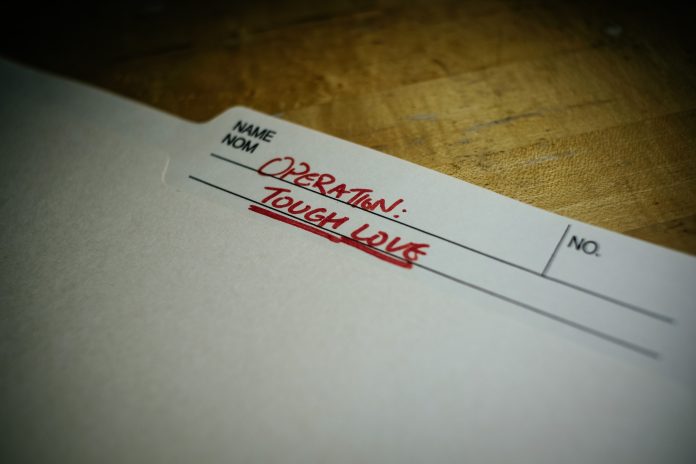
Appropriately for this revelation, McManfred outlined his new plan to destroy his students, Codename: TOUGH LOVE.

1. “Emails sent past 3 p.m. on weekdays, or any time on weekends, will be ignored. My unspoken rejection will break the students’ hearts, and then they’ll have to take those evenings and weekends off to relax and not think about school.”

2. “Assignment requirements will be extremely vague. By denying the class all semblance of guidance or fair evaluation, I can assertively encourage them to think creatively and liberate themselves from arbitrary boundaries!”

3. “All grades will be scaled to a C-. Near-failure will encourage students to try their hardest; that’s when they will learn the most!”

“That will teach them to think before referring to me as if I were my father,” McManfred concluded, “especially when they won’t even treat me like the cool dad.”