Home Blog Page 446

Professor Mark Jaccard’s lecture on climate emergency emphasizes the importance of sincerity and citizen action

0
Photo: Madeleine Chen / The Peak

Mark Jaccard, SFU Distinguished Professor and Director of the School of Resource and Environmental Management, gave a talk about climate action at SFU’s Harbour Centre last week. He is also one of the four SFU experts recently recruited to the newly established Canadian Institute for Climate Choices.

The lecture was based on his new book The Citizen’s Guide to Climate Success: Overcoming Myths that Hinder Progress, which details actions against climate change in relation to citizen efforts. 

Jaccard began the talk to a lecture hall almost filled to capacity with an invitation and reminder to the audience to think critically about their own biases. 

He then went on to list his common myths surrounding climate change: fossil fuels, global agreements, and domestic policies. He concluded that global decarbonization, or the elimination of fossil fuel use, is a difficult process.

Jaccard then showed how the path to successfully lowering carbon is relatively “simple.” He explained that our key actions should be to “rapidly phase-out the burning of coal, oil, and most uses of natural gas” and implement compulsory policies for this.

Jaccard also described some of the factors that are holding the world back from this “simple” path. This included the promotion of climate myths, rigid pro/con views, “wishful-thinking” biases, biases that further our agendas, and climate sincere or insincere politicians. 

Throughout the entire talk, Jaccard heavily emphasized the importance of not having views that one is unwilling to change. 

“I’m not saying that you cannot be pro or con [ . . . ] but I invite you to think about how rigid you should be in your views [ . . . ] Don’t let perfection be the enemy of good.”

Matt Horne, the City of Vancouver’s Climate Policy Manager, was also there as the respondent to comment on the city’s plans for climate success.

He noted that the city of Vancouver’s emissions largely come from two main sources: buildings and transportation.   

Horne emphasized that “it comes down to [a] simple set of six or seven solutions at a local level, like more walking, more cycling, more transit, more electric vehicles, [electric] heat pumps, renewable gas. It’s not a long list of what we have to transition from today.”

A busy and passionate Q&A session followed, with questions from the audience ranging from clarification about the speakers’ points to oppositional views on their stances. 

When asked how the average, climate-concerned citizen can make the most of their time, Jaccard suggested that supporting certain political parties that champion climate action and are vocal about the issue’s importance through civic action are the best ways.

Horne added to this that local Vancouver politicians are “very accessible” and are willing to meet with climate-concerned citizens. 

This talk is the second of four in the Faculty of Environment’s 2020 Dean’s Lecture Series. The series of free talks are in celebration of the Faculty’s tenth anniversary and, according to the event page, features “scholars and practitioners who explore some of the pressing social and ecological challenges we face.”

The next and last talk in the Dean’s Lecture series is called “Navigating towards ecologically safe and socially just fisheries” and will be held on March 12 at SFU’s Harbour Centre in room 1900 at 7:00 p.m. Jaccard’s lecture was also streamed live  and is available to watch on the SFU IT Services website through a link on the event page.

Graduate Student Society’s 2020 AGM features record attendance and by-law amendments

2
Photo: Matt Mcdonald

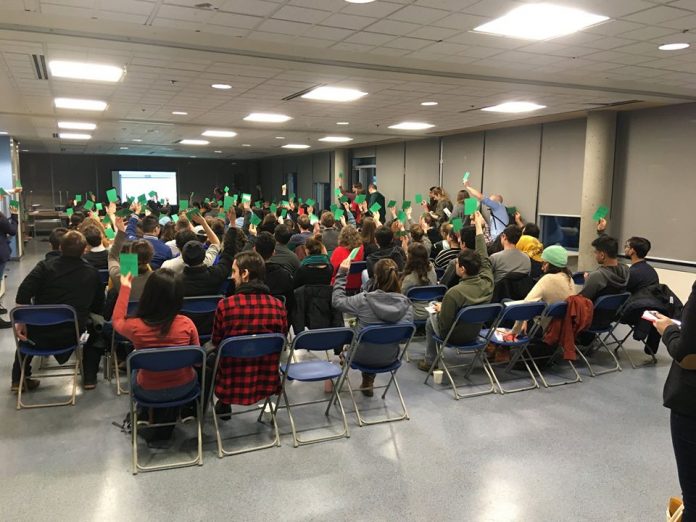
On February 11, the Graduate Student Society (GSS) held their Annual General Meeting (AGM) in which members voted on changes to their by-laws — the society’s top governing documents.

The meeting began with an overview of the 2020 Agenda, and the Statement of Financial Position for the 2018/2019 year, in which the auditor stated, “in our opinion, the accompanying financial statements present fairly, in all material respects, the financial position of the society.”

After the AGM attendees reviewed and accepted the Statement of Financial Position, the proposed-By-Law changes were presented and voted on.

The first proposed amendment covered By-Law 1. The amendment intended to address the use of pronouns throughout the by-laws. Attendees voted in favour of amending the by-laws to include the gender-neutral pronoun “they and them,” rather than language that suggests any gender. 

Another proposed amendment was to Section 19, under By-Law VI, which covered the electoral terms of the GSS’s elected representatives. The by-law originally stipulated that “half of the Directors” would be elected in the months of February or March, and that half would be elected in October or November. This was amended to establish periods from January through April and September through December, respectively.

Luciana Fortes, Director of Internal Relations, explained that this was to have a longer campaign and nomination period, so as to increase the amount of time for members to submit their nominations.

Several other amendments revolved around procedures related to proceedings of Council meetings and wording changes to existing by-laws.

On the subject of attendance at the AGM, Matt McDonald, Director of External Relations, was pleased. 

“With 211 graduate students present, this year’s Annual General Meeting had by far the highest attendance since the formation of the GSS in 2007.

“There was a real energy in the room and at the social held afterward, and along with the last election’s historically high voter turnout, we are getting a sense of how excited graduate students at SFU are to get involved,” he said. “We hope to build on this success in the future and continue to strengthen the graduate student community.”

The U-pass got renewed; let’s not take it for granted

0
Students would pay three times as much on transit if it weren’t for the U-pass. Photo: Chris Ho/The Peak

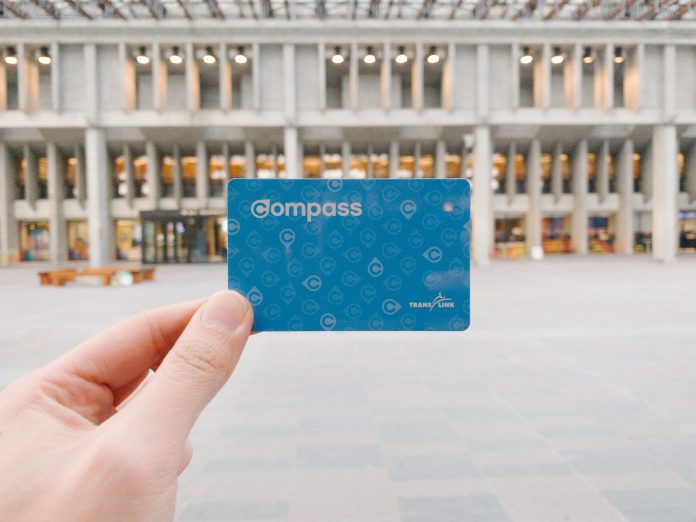
In a recent vote by students at participating universities, the U-pass has been extended until 2025 with a 2% increase yearly starting May 1. Our current U-pass program agreement, which started in 2010, is coming to an end and its $41 monthly rate will go up to $42.50. The referendum to vote on the continuation of the pass happens every five years. While this seems like a given for students, it is important that we keep fighting to have this program renewed every time it comes up in a referendum.

Public transit is integral to the life of most students. Students of commuter schools especially depend on the trains and buses to get to school, to work, and their leisure activities. Sure there are alternatives, like driving or biking around, but for many students, owning a car is a bigger expense than they can afford. And let’s not forget that the majority of the Lower Mainland doesn’t have the infrastructure to support wide-spread bicycle use. Public transit is the only viable option for lots of university students, and having a cheap monthly pass to rely on is a godsend. Honestly, the fact that we have to keep voting to retain the pass, and not just recognize it for the fundamental necessity that it is, is baffling.

Don’t get me wrong, we’re lucky that the recent vote agreed to keep the U-pass for another five years. But that wasn’t necessarily a forgone conclusion, and we shouldn’t take it for granted. Remember that currently, the amount that students pay for per semester (a three month pass) is slightly less than a one month, three-zone pass for the general public. Agreeing to keep this valuable program not only keeps the cost of transit lower for cash-strapped students, but it also makes increases predictably infrequent — unlike the general public who have to deal with annual fee hikes. 

Another reason the U-pass is so important is its positive impact on the environment. U-pass users account for 13% of transit use in Vancouver. This has helped with decreasing the amount of greenhouse gas emissions that get released every month by reducing the number of individual vehicles on the road. 

The vote to keep the U-pass for another five years shows just how much students value and support this program, despite the monthly price. Currently, 10 schools and 140,000 students depend on the U-pass. Even if the price continues to rise, hopefully the U-pass will keep pulling through so that it will be one less expense students have to worry about. Let’s make sure we never stop fighting for this valuable service.

SFU Alumni Christa Ovenell hosts a four-part series engaging in open and honest conversations about death

1
Photo by Chris Ho.

I’m an avid user of the idiom “I’m dead,” and while I use it mostly for comedic purposes, rarely have I ever had a genuine conversation about what it means to die. In fact, it’s not often that people dive into the topic at all, as it holds rather morbid connotations. However, through attending Christa Ovenell’s workshop, “Know Before You Go,” my entire perspective on addressing death has shifted. Elaborating on what it means to have our affairs in order, Ovenell engages in open and honest discussions that encourage and normalize our approach to end-of-life conversations.

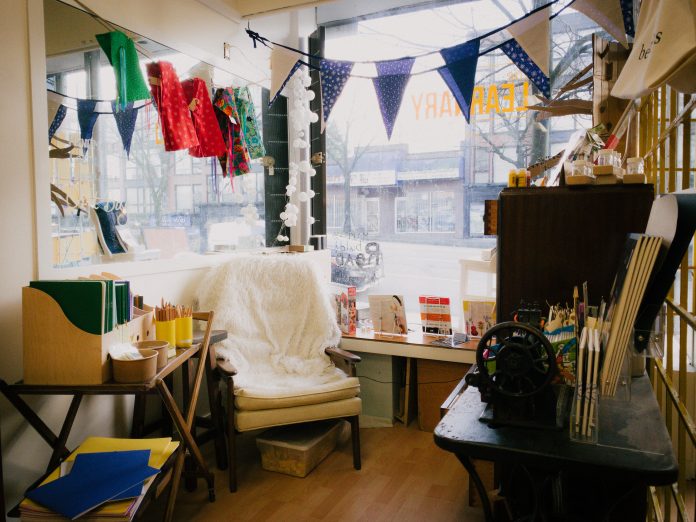
Contrary to the dreariness that surrounds the notion of dying, the event was held at The Learnary, a small and cozy non-profit shop along East Hastings. Selling a variety of intergenerational books, art supplies, and do-it-yourself kits, The Learnary also serves as a workshop space for practical skills from basic sewing to home brewing. I immediately felt a sense of liveliness as I entered the space. A bright yellow accent wall, along with matching yellow curtains, made for a visually vibrant setting. Colourful pennant banners also decorated the room, adding a festive atmosphere to the mix. What I loved most about the space, however, was the nostalgic presence of antiques displayed along the shelves, like old cameras and used typewriters.

I was greeted with a warm welcome by Ovenell and Surya, one of the co-managers of the shop, who kindly offered me tea as she walked me inside. Right away, there was a sense of intimacy and physical closeness, as our small group of ten sat around a circular table. We had no choice but to face one another. At the same time, Ovenell was quick to assure us that we were free to step outside of the circle at any time if we felt any discomfort.

The workshop began with Ovenell asking each individual to introduce themselves, share their reason for attending the event, and mention one thing or person that they loved. While some were just simply curious about the topic at hand, others had specific goals in mind of what they hoped to learn at the end of the session. One attendee openly shared a personal story of having experienced a death in the family and how this motivated her to explore further discussions about how to properly prepare for such an event. Meanwhile, another participant who appeared relatively older than the rest of us, had a more optimistic outlook on death. Instead, she gleefully expressed that she was more than ready to reach the end of her life, and it was only a matter of guaranteeing that all of her preparations were in proper order. Sharing each other’s background was effective in allowing everyone to feel more at ease with one another, building up a level of trust as we dug deeper into our own relationships with death.

Following this brief introduction, Ovenell’s workshop focused on many of the legal matters that go along with planning for the day you die. She offered an abundance of resources, information, and advice regarding legal documentations, such as the difference between a power of attorney and a representation agreement. She also emphasized the importance of a will, urging that in no way should a person die without first establishing where all of their properties should go. While legal advice did not so much apply to me, it was refreshing to observe a group of people candidly talk about organizing their death without any emotional baggage attached. To them, it came off naturally to speak on matters like deciding between cremation or a burial, or about signing do-not-resuscitate forms in order to allow for natural death to occur. 

Although Ovenell was the main facilitator of the discussion, she established a rather open and encouraging space for everyone to include their voices into the conversation. I was surprised to find myself sharing smiles and laughter with the other attendees as we spoke about death with less of an imminent and uncontrollable dread. Rather, we treated it as just another future event that — like all others — would need proper planning. One individual even half-jokingly recommended that perhaps a death party was to be coordinated where people can gather in a social setting to settle documents and wills together. Hearing this suggestion without any context may seem rather dark. However, in the setting of the workshop, it garnered a large amount of laughs from the group who resonated with the idea.

While I initially felt strange discussing death in such a casual and lighthearted manner, I found that it rid me of my formerly bleak perceptions of what a conversation about dying would be like. Being in my 20s, this concept feels rather detached from my everyday reality, and not to mention my large fear of death itself, as it feels so uncertain and ungraspable. However, attending Ovenell’s workshop allowed me to break this very mold that confined the subject of death into something that was dark in nature.

Ovenell will be hosting her next workshop on February 20, which will dive further into the discussion on memorialization. To learn more about her four-part series, you can find more information at The Learnary website.

Allowing the RCMP to recruit on campus undermines reconciliation efforts

2
The RCMP has always been a part of violence and displacement against Indigenous people. Photo: /The Star

Anyone who’s wandered past the BIG Fair or the Mini BIG Fair at SFU may have seen a booth set up for the RCMP. Some have already realized the hypocrisy that goes into having the RCMP recruiting on campus. For anyone who hasn’t, here’s the disconnect: SFU reportedly recognizes it’s on stolen land, yet invites the very organization that helped steal the land in the first place to recruit people. Those new recruits will then go on to police those who they stole the land from.

Like many places around British Columbia, SFU has started making land acknowledgments at events held on its campuses. There is even a handy little guide on their website with info on which land acknowledgment to use for each campus. For Burnaby, it’s “Simon Fraser University acknowledges the unceded Traditional Coast Salish Lands including the Tsleil-Waututh (səl̓ilw̓ətaʔɬ), Kwikwetlem (kʷikʷəƛ̓əm), Squamish (Sḵwx̱wú7mesh Úxwumixw) and Musqueam (xʷməθkʷəy̓əm) Nations.”

So SFU acknowledging it’s on stolen land seems like a good start. But if the RCMP are allowed to recruit on campus, clearly SFU is not acknowledging the violence that went into removing Indigenous people from this land. The RCMP was created specifically in order to displace Indigenous people, and were tasked with removing Indigenous youth from their homes and families and putting them into residential schools.

What makes this arguably worse is that a whole section of SFU’s website is dedicated to reconciliation, specifically regarding education. As part of this supposed dedication and SFU’s goal of empowering Indigenous people, SFU created the Aboriginal Reconciliation Council which, in 2017, released the Walk This Path With Us report. The report states that “[p]ost-secondary education for Indigenous people in Canada is deeply scarred by a long and disastrous history of colonialism, racism, and residential schooling . . . [and] saw more than 150,000 First Nation, Métis, and Inuit children forcibly removed from their communities and assigned to schools.”

Let me just repeat that once more: the RCMP helped forcibly remove over 150,000 Indigenous children from their land and families. For perspective, the student population of all three of SFU’s campuses is approximately 30,000. 

SFU presents itself as wanting to rectify these historical wrongs and provide Indigenous people with access to education without assimilation, as well as engage with Indigenous knowledge and education styles that were previously condemned. However, if SFU is conveniently overlooking the complicity of the RCMP as the source of force, violence, and harm against Indigenous people, how exactly is it empowering Indigenous students?

How does the SFU administration not see the hypocrisy in saying they are striving toward reconciliation while bringing people complicit in Indigenous oppression to campus? How is SFU any different from Canadian governments who pat themselves on the back for making empty land acknowledgments while ordering the RCMP raid on Wet’suwet’en lands? The same lands they acknowledge are stolen? If SFU is truly dedicated to creating a safe environment for Indigenous education, they should stop allowing the RCMP to recruit on campus. It’s honestly a no-brainer.

Perhaps if the role of the RCMP as an oppressive tool of the state had been addressed and rectified as a mistake of the past, their presence at campus recruitment fairs may be more tolerable. But as it stands, their mismanagement of Colten Boushie’s case, Tina Fontaine’s unsolved murder, the over 1,200 Missing and Murdered Indigenous Women and Girls, and, of course, the force used against the Wet’suwet’en put into context all too clearly that the RCMP has never stopped acting as the violent arm of colonial governments against Indigenous communities.

No wonder Indigenous youth are declaring that #reconcilitationisdead.


CJSF shows how integral independent societies are to the SFU experience

1
A lot of hard work and fond memories are tied up in CJSF. Photo: Chris Ho/The Peak

In the spring of my third year at SFU, I was living with a horrible case of lizard brain — I doubted all of my actions, words, and thoughts. It was an extremely difficult couple of months on my mental health. Tired, I decided to fight back and take a risk: I joined the on-campus radio station, CJSF. There, I found that I had little to worry about. I was welcomed warmly and offered a myriad of activities through which I could participate. 

At first, I just wanted a change of pace and wanted to tap more into my creative side. Slowly, I began to get acquainted with the station’s day-to-day activities. I met cool people, many of whom were fellow students. I realized that CJSF created an incredible community that is integral to the student experience at SFU. To lose CJSF would mean that students would be robbed of the potential for a fulfilling student experience.

However, the station is currently facing the threat of being displaced. Last semester, the SFSS Board of Directors voted to exclude several Rotunda student groups — the Simon Fraser Public Interest Research Group (SFPIRG), Students of Caribbean and African Ancestry (SOCA), Embark, and CJSF — from spacing plans in the upcoming Student Union Building. 

Obviously, this made me very upset. For CJSF, being displaced means that the station would be left without an adequate space from which to operate. Importantly, it means that students involved with CJSF would not have a space to create radio content, a space to hang out with other community members, or a space from which to organize.

CJSF provides opportunities for me to get involved at SFU and my community beyond SFU. It gives me a safe space to express my creativity. There, I feel like I belong, I make friends, and I find community. I vividly remember supporting the running of the station’s booth with other CJSF members during Pride in 2018. We were a popular booth. In the August heat, we stood under our muggy tent for hours, cranking out hundreds of handmade custom pins. Afterwards, sipping on margaritas, we toasted to our hard day of work in the community. 

I also remember a dreary, rainy springtime in the middle of the semester when studies and work felt too overwhelming. Stuck in what seemed to be an unending loop of cold, wet nights and grey, damp days, my work piled up and my lizard brain ramped up to maximum power. It was the friends I made at the station who cheered me on. Springtime was just as hard for them as it was for me, but we had each other to rely on. And we could look forward to unwinding and doing something fun when we hosted our radio program.

Students cannot lose CJSF. The radio station’s involvement at SFU is unspeakably bountiful. Not only do we endeavour to highlight students’ voices, movements, and issues, but students help run the operations of our station. Much of our programming and events are student-organized and lead. Every week, CJSF welcomes prospective SFU student volunteers to its office. They become curious about what we do at the station when they see us at Club Days events. They hope to get hired at the station as work-study students, interns, or summer assistants. Students are involved in every part of CJSF’s structure.

Recently, the SFSS Council condemned the SFSS Board on their decision to exclude CJSF, SFPIRG, SOCA, and Embark from their accessible, cost-effective, long-term space models, and I — along with many other CJSF volunteers — am immensely grateful for this. But knowing that these groups are still in a limbo state on spacing issues continues to be worrying and frustrating. It is the Board’s responsibility to offer accessible, cost-effective, long-term space for these student groups. And so far, they have failed to do so.

CJSF enriches the lives of SFU students, current and prospective. It has enriched my experience as an SFU student in so many ways — as it has done for countless others. Losing CJSF at SFU would hurt students more than the SFSS Board of Directors could possibly imagine. 

Currently in the middle of my final semester, I look back at the memories that I made at CJSF. No doubt I will continue to volunteer there even after I graduate — at least, I hope to be able to do so.


Political Corner: You can’t understand the Wet’suwet’en protests without knowing their history

1
The RCMP perpetuate a legacy of colonial aggression against Indigenous communities. Photo: Jesse Winter/VICE

Many Indigenous land defenders and their allies are outraged by the recent invasion of the Wet’suwet’en territory by the RCMP. Despite the fact that all protesters were unarmed and repeatedly said they were peaceful, the RCMP removed the land defenders at gunpoint during a ceremony for Missing and Murdered Indigenous Women and Girls. 

The Coastal GasLink pipeline — whose proposed construction would cross through Wet’suwet’en cultural and historical sites on their land — prompted protests against the construction. The use of RCMP force against the Wet’suwet’en protestors represents a continuation of history of the RCMP as tools to control and discipline Indigenous communities — one that needs to end immediately.

What most history books will not say is that the RCMP was created to forcibly remove Indigenous people from their traditional territories. Steve Hewitt, a history lecturer at the University of Birmingham, explained in a Global BC interview that the RCMP’s job “effectively, was to clear the plains, the Prairies, of Indigenous people [ . . . ] to displace Indigenous people, to move them onto reserves whether they were willing to go or not.” They were also involved in enforcing the forced removal of Indigenous children into residential schools that became part of the legacy of genocide and intergenerational trauma. With that history in mind, the use of force against the Wet’suwet’en is a colonial act of oppression. 

Instead of continuing the historical narrative of violence against Indigenous people, Premier John Horgan could have agreed to engage in dialogue on behalf of the BC government with the Wet’suwet’en Nation as they requested. 

What is needed in times like these is a respectful conversation that is informed by history and embedded in a moral system that considers everyone. This specifically includes respecting Indigenous laws. If the BC government had decided to approach the Wet’suwet’en and their concerns with the respect and peacefulness that the Wet’suwet’en brought forth, the principles of reconciliation would have been prioritized and truly acknowledged.

But the goal of the capitalist, settler-colonial government has always been to fracture and subordinate Indigenous people and their interests. Part of Canada’s efforts to control and marginalise Indigenous people have been to divide them into elected and hereditary chiefs. 

As a Tyee article explains, “Under the Indian Act, those who are recognized by the federal government as having First Nations ‘status’ are grouped into bands, led by a chief and council elected by the band members.” Elected chiefs and band councils have authorities, powers, and jurisdiction on the reserve land base itself. And where the border of the reserve ends, so ends their power and jurisdiction. Additionally, these did not extinguish or completely eliminate the legal systems that existed before contact.

Hereditary chiefs are appointed through traditional and family ties. Part of their role is to preserve the knowledge, traditions, and ways of life of their nations — which includes historical and vital connections to the land. The hereditary role is seen as focused on protecting the traditional territory. 

Since the Wet’suwet’en have never signed a treaty with Canada over their land, their territory is not a reserve. This causes disagreement about who consents to the pipeline on the Wet’suwet’en territory and for what reason. The escalation could have been avoided if provincial and federal leaders had been willing to meet with hereditary chiefs about the pipeline — but they refused. 

This is why the public, Indigenous people, and their allies have started standing up in solidarity with the Wet’suwet’en people. Throughout the last few weeks, several protests across Canada have taken place. Train track blockades, intersection access to ports, and occupation of BC’s legislature have been the main tactics used to disrupt Canada’s economic activity. Land defenders want to pressure the government to remove the RCMP and respect the Wet’suwet’en, which means respecting their laws, their sovereignty on their unceded territory, and their land rights.  

What is happening on Wet’suwet’en territory exemplifies how Canada has disregarded reconciliation between settlers and Indigenous people in the past and throughout the present. Reconciliation is prioritized when it is convenient and beneficial to the government, as during elections. Land rights are only respected if it suits the government’s economic needs. Indigenous existence is only acknowledged if it does not challenge the status quo. 


Accessible transportation in BC is in crisis and taxis aren’t helping

0
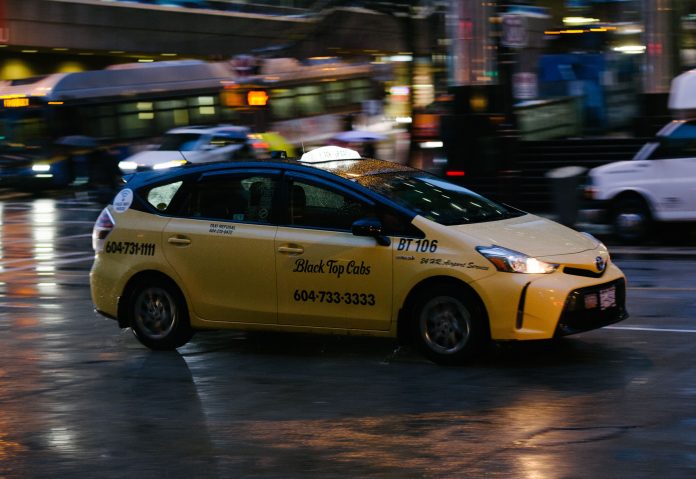
The arrival of ride-hailing services has caused disputes with the taxi industry. Photo: Andres Chavarriaga/The Peak

After years of waiting, ride-hailing finally launched in Vancouver last month, a move that was applauded by much of the local community. 

It’s not hard to see why people are excited about ride-hailing. A quick glance at some of the Google reviews for several Vancouver taxi companies reveal scores of two stars or less. The reviews cite high prices, long pickup times, and rude drivers. The thought of being able to take a ride that’s cheaper, convenient, modern, and friendlier would excite anyone.

Unfortunately, those with accessibility needs haven’t been able to join in on the excitement. Much criticism has been leveled at the BC Passenger Transportation Board (PTB), who have not implemented any requirements for wheelchair accessible vehicles in ride-hailing fleets. Additionally, they have only levied a 30-cent fee for non-accessible ride-hailing trips, which PTB vaguely said will go towards “funding for accessibility programs.” 

It’s a shame, because many people who depend on mobility aids such as wheelchairs need more accessible transportation options. Buses and HandyDART may be inconvenient or unavailable, and taxis can be a nightmare to deal with.

For background, taxis are required to have 17% of their fleet be made up of accessible vehicles, but those vehicles don’t need to be on the road. They often sit unused in lots because they’re much more expensive to operate and don’t earn as much money for taxi drivers. To combat this, taxi companies usually subsidize drivers who take accessible vehicles to make driving them worth the time. Unfortunately, people with disabilities still regularly report waiting hours for accessible taxis to show up, despite booking in advance.

Even when accessible taxis are on the road, there are plenty of problems. People with disabilities regularly tell stories of taxis refusing them service or refusing to take certain payment types — such as TaxiSaver vouchers — from them, both of which are illegal.

At the end of January, the Vancouver Taxi Association (VTA) stated that they would no longer subsidize taxi drivers for driving accessible vehicles. This understandably brought a wave of public outcry. VTA cited the fact that ride-hailing companies are not required by the PTB to have accessible vehicles in their fleets. Taxi drivers will now have almost no monetary incentive to drive accessible taxis, further shrinking an already short supply of accessible transportation.

It’s clear that taxis and ride-hailing are always going to operate only in their self-interest, with accessible transportation not seeming to fall into that category. We should all be calling on the PTB to introduce tighter regulations and higher subsidies so accessible transportation can operate. 

There’s been a lot of talk in the past year about creating a “level playing field” for taxis and ride-hailing to fairly compete on, but whatever playing field the PTB creates, we should at the very least make sure it’s one that fairly serves every member of our local communities.


I tried celibacy for a week

0
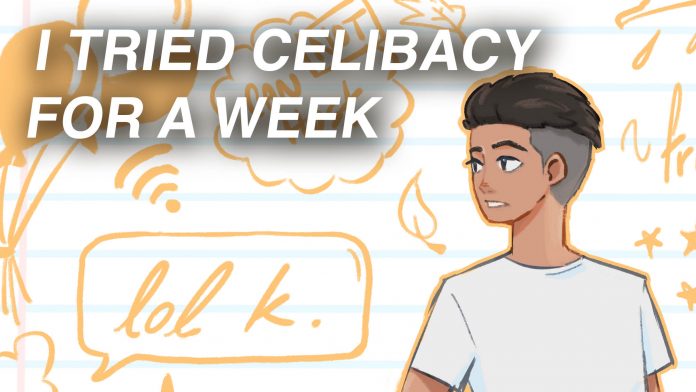
Illustration by Siloam Yeung

I’ll admit, I do enjoy leaning into the sex stuff a bit. Is it because I was sexually repressed and closeted as an adolescent and thus have gone/still go overboard with compensating for lost sexual experiences? Perhaps. Do I admit I have a bit of a problem? Maybe.

Then the perfect challenge arose — a co-worker saying to me, “You really can’t go a day without doing or saying something sexual, can you?”

And that’s how my week-long experiment began — something I never thought a young, hip, easily sexually aroused person like myself would attempt.

Going celibate for a week.

Day 1

Today I started my journey with perusing Grindr, Tinder, Hinge, Bro, Hornet, Chappy, and Scruff. I met up with a guy and we boned. It was rad. Then I remembered that I was supposed to be celibate. Whoops.

Day 1 (again)

OK, I actually managed to be celibate today.

Walking into the office, I definitely got some attention from my co-workers. I think they could tell I was radiating a purer and more chaste light, but that might have been because I was fully dressed like a nun.  

A couple of them playfully gave me a hard time. They said things like “why are you doing this?” and “this literally makes no sense,” and “you’re just doing this for attention,” and even “you’re an idiot; I don’t even like you.”

I can’t believe this is the kind of stuff celibate people go through every day. Remarkable.

Day 2

I’ll be honest, two (three, technically) days in and I’m kind of getting the handle on this. I’ve started picking up hobbies to fill the time I’d waste thinking or talking about sex — who knew you could do so much pointless shit besides trying to get raw-dogged?

Maybe this isn’t so hard after all!

Day 3

I feel like I’m losing myself. I don’t know who I am anymore. I can’t do this.

Day 4

Admittedly, yesterday was a bad day, but today I’m feeling better.

I’ve had to tell all of these guys who message me that I can’t talk to them because I’m celibate — I even started telling guys who haven’t even asked. I also told my parents, friends, co-workers who already knew, and random people I passed on the street.

Just doing what I can to spread the good word.

Day 5

I’ve now spent five days being celibate and I truly feel like I know what the lives of celibate people are like.

There’s a lot of doubt, self-restraint, and an understanding that it’s not that you can’t have sex, it’s that you choose not to. This experiment is truly teaching me a lot of very obvious things that I can’t wait to condescendingly explain to people in depth.

I really think people will respect me for trying this out, and hopefully that will make them want to fuck me. 

Day 6

Two days left, and I realize now how empowering being celibate is — and not just for people who legitimately want to be celibate, but also for me, a local hero. Why? Well . . . because . . . you know . . . There are . . . expectations? We live in a society that pressures people to . . . do . . . things?

Fuck, I don’t know. People say these kinds of things in BuzzFeed videos that do really well, might as well try throwing something like that in here.

Day 7 

So today was my last day, and I have to say, it’s crazy how normal not being an overtly sexual/sexually-driven person has become for me. It’s like people can just be like this all of the time. Truly wild. 

Honestly, I learned a lot about myself this week. I learned that every other sentence I say is/contains a euphemism for sex, buttholes, or dicks — I had to spend a lot of this week with my usually gaping mouth-hole closed. I also learned that you’re still allowed to eat and sleep when you’re celibate. And, most importantly, I learned that, much like Tinkerbell, I need to get absolutely clapped to survive. I think that’s how the quote goes, I don’t know. I’m not a Disney gay.

So I guess the question stands: would I ever do this again? Would I ever consider going celibate after a week of growing, learning, and becoming in tune with myself more?

Absolutely fucking not. This was bunk as hell.

I need to get laid. Now. 


SFYOU: Meet the professor engineering the Archives of Lesbian Oral Testimony, Elise Chenier

1
Photo: Cameron Duder

Name: Elise Chenier

Pronouns: She/her/hers

Department Affiliation: Professor in the SFU History Department

Hometown: Toronto, Ontario

Occupation: History professor, Director of the Archive of Lesbian Oral Testimony

It’s likely that the majority of people reading this have not heard about something called the Archives of Lesbian Oral Testimony (ALOT). The brainchild of Elise Chenier, an oral historian and professor at SFU, ALOT was founded in 2010 and is primarily a digital collection of audio and video recordings centring around people who have identified as lesbian at some point in their lives. The goal of ALOT is to bring to light both lesbian and queer women histories that mainstream history has largely overlooked. These narratives, as ALOT’s web page explains, “reveal what it meant for a woman to desire and love other women, and to survive and resist against a culture that treated them as sinful and deviant.” ALOT is meant to both provide a glimpse into the past, as well as help imagine the future.

A small amount of the collection resides in the Special Collections and Rare Books section of the W.A.C. Bennett Library, however, this section is just dedicated to Shirley Petten, the first woman in Canada to win the fight for same-sex benefits from the British Columbia Workers’ Compensation Board. 

The collections cover everything from the medical industry, to coming out, to kinks like BDSM. The wonderful thing about these archives growing on a primarily digital platform, is that it increases the accessibility of them — something Chenier has done intentionally. 

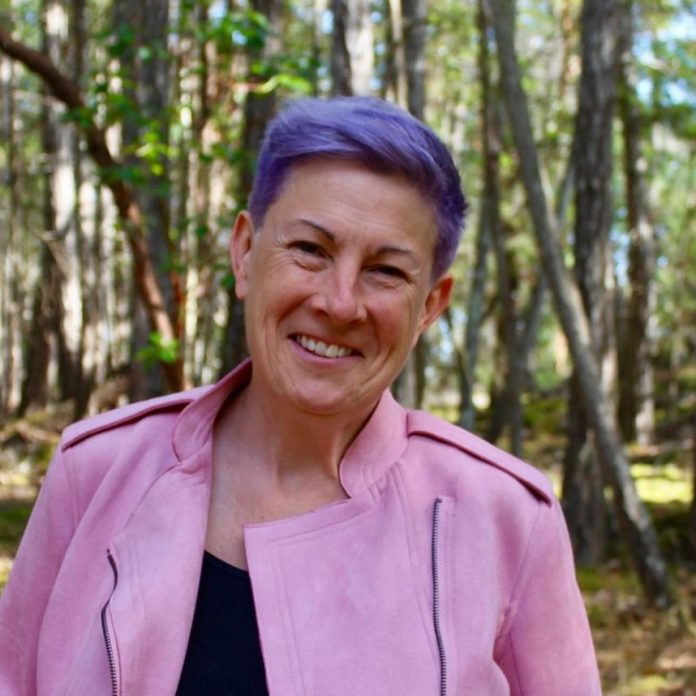
I asked Chenier if I could interview her further about ALOT, and we met in her office in the AQ on a rainy Friday afternoon. Chenier has a short, purple pixie cut and greeted me with a cup of tea in her hand, projecting an image that screamed both edgy and down to earth. The cushioned bench that I made myself comfortable on was right beside the window overlooking the observatory and resembled a reading nook, making her office feel more inviting than most.

Chenier started by talking about how she came to found the collection through research on her Master’s thesis titled “Tough ladies and troublemakers: Toronto’s public lesbian community, 1955–1965” which eventually evolved into the final publication “Sex, Intimacy, and Desire among Men of Chinese Heritage and Women of Non-Asian Heritage in Toronto, 1910–1950.” It was intriguing to see the evolution of her work and the value of oral history. The project, which can be found on interracialintimacies.org, is highly worth checking out.

Though the thread of Chenier’s research had changed, she realized, “I had all these cassettes. What was I going to do with them? Also, I knew the women who had made Forbidden Love, which was a documentary that came out in the early ‘90s, and they had said to me, ‘if you would like to use our research tapes (also cassettes) for your own research, you are more than welcome to.’ So I thought I should just digitize these, and it started with that idea. And then I thought, ‘why don’t I just put these online so that other people can use them?’”

One important thing Chenier noted, however, is that while some of the interviews conducted on the site are hers, the goal of the archives is not to go out and find people to interview. Rather, as she says, “an archive collects material that’s already been created. So my intention with this was to take these tapes that were just left in basements or attics or what-have-you [ . . . ] and make sure the work people had put into getting these stories, we didn’t lose again. Because you can’t get them back because most of the people interviewed are gone.”

Some examples of content she collected in the early days of the archive were tapes from a radio show and tapes from a gay cable television show from Alberta. Now the archives have expanded to include recordings from various places in both Canada and the US, including a tape of Angela Davis, a Black feminist activist (and one of my personal heroes), giving a speech at the Orpheum.

Chenier explained that the growth of the archives is dependent on her funding. She’s less restricted when she is able to hire a part-time archivist and is then able to put out calls for oral histories on social media and other platforms. Being an archivist, Chenier finds it vital to gather diverse experiences and makes sure to reach out to people both in Canada and the US.

She told me, “I certainly have [reached out to] people, especially [. . .] Black women because I really personally am very interested in the word ‘womanist’, which became popular in [black queer circles] maybe more ‘80s but I think it was around ‘70s.” 

Chenier hypothesized, “I think it spoke to a kind of, maybe an ambivalence toward the word lesbian, or maybe also a more expansive approach.” 

“I think it’s a big problem that the category ‘lesbian’ is racialized white and able-bodied, so we need to think about that. That’s why it’s really interesting, the word ‘womanist’, it intrigues me, how people are navigating it. And Two-Spirit is not the same as ‘lesbian’ so how do we navigate those kinds of things, right? And develop a deeper understanding.”

To Chenier, accessibility, remaining a grassroots project, and being woman-focused were and continue to be three fundamental aspects of ALOT, and she strives for inclusivity. 

The archives now contain content from people with a variety of identities, including gay men, in order to follow traditional archival practices and avoid breaking up collections of oral testimonies just because some of them may not be solely focused on lesbians. 

“If it was only gay men, we would say no, this is not the repository. But it has lesbians in it. If there’s some gay men in it, or straight people, we don’t care.” 

Ultimately, the goal is to feature the accounts of lesbians, which explains why the word “lesbian” remains in the project name.

So what exactly defines a lesbian? Who is able to donate their story to the lesbian archives?

Chenier explained, “Because we live in this moment, where for some people the word ‘lesbian’ is a dog-whistle to trans people, I always make a point of saying it’s a trans-inclusive project. So how do we define that? We’re not in the business of identifying people. If you feel your story belongs here, then donate it. If you don’t feel your story belongs here, then don’t donate it. It’s as simple as that. You decide.”

In an attempt to bring lesbian oral histories into the community, Chenier recently started hosting a reoccuring event called Lesbian Lives Live. The next event will be held at SFU, however, for all future events, Chenier will be partnering with Britannia Community Centre. 

The decision to move away from both SFU and the Vancouver Public Library (VPL) in the long-run comes as a result of both organizations allowing Meghan Murphy to book rooms in their venues. 

“[The] position of the university was that they were not going to back away from controversial speakers [ . . . ] I thought that was insufficient  [ . . . ] I hope it sends a signal to SFU.” 

Regarding VPL not refusing Meghan Murphy, Chenier says, “My understanding is that they’re in a legal bind [ . . . ] people are going to have to invest their resources to get creative about how they respond to these things and so far, I don’t see that happening.”

It is important for Chenier to hold Lesbian Lives Live in a safe space, and she was thrilled when Britannia agreed to cosponsor the event.

As Chenier describes it, Lesbian Lives Live is meant to “provide a multi generational space . . . where you can actually socialize and talk [ . . . ] And meet people across the generations. Young people are always so excited to meet older people.” Chenier’s passion for this project shines through as she exclaims, “It’s wonderful and I love it. I love it!”

Past events of Lesbian Lives Live have had guests such as Ma-Nee Chacaby, a Two-Spirit Cree-Ojibwa lesbian from Thunder Bay, and Mary-Woo Sims, a biracial lesbian who was also the first Human Rights Commissioner of BC.

The most recent Lesbian Lives Live event was held on February 16th at the Vancouver campus. It was a special polyamory-themed Valentine’s day edition. The guests included Anais West and Sara Vickruck, who created an “award-winning slam poetry musical” called Queer Poly Love Ballad. Chenier describes them as, “wonderful performers [ . . . ] full of energy and their piece explores polyamory.”

There will be more events monthly, and you can still check out ALOT for free, anywhere, anytime.