Home Blog Page 409

Board Shorts — September 18, 2020

0
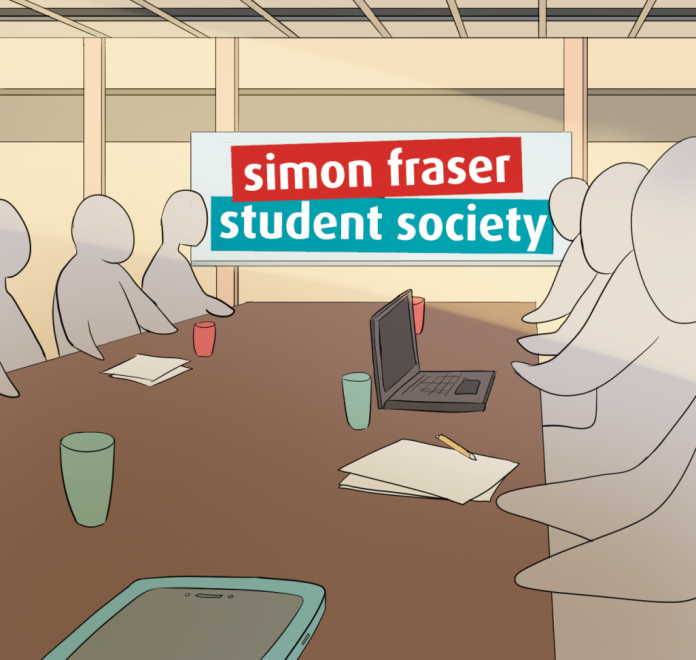
Image: Irene Lo

The refund and course drop deadline 

According to SFSS President Osob Mohamed, students had complaints regarding confusion around the date for refund and course drop deadlines. 

VP of University Relations Gabe Liosis said that “this isn’t the first time this happen[ed], and it is frustrating for students who are scrambling to withdraw from their class or are just unaware of these types of deadlines.” 

Some students did not get a chance to attend their first lecture due to technical issues with recording and posting lectures or the Scholar Strike protest, but were expected to drop their courses by September 15 for a full refund. 

Mohamed added, “Giving students one week to figure out if they are going to be successful in that course is not nearly enough time.”

The Board will discuss this further at the Joint Operations Group meeting and hopes to extend the deadline for future semesters. 

SFU Esports presents the gaming lounge in the Student Union Building (SUB)

SFU Esports, a student-led club that hosts social events, tournaments, and viewing parties for a variety of games, joined the meeting to discuss future proposals and plans for the gaming lounge in the SUB. 

They discussed the high student engagement they’ve been resonating with since the switch to remote learning. For instance, tournaments ranged from 80 participants to 256. 

The Board asked about the plans to avoid sexual harassment and ensuring safety in the lounge. According to SFU Esports, hiring a part-time lounge manager is a potential option, as well as having volunteers from SFU Esports to ensure the safety of students and equipment in the lounge. 

It was discussed that a working group, led by VP Finance Corbett Gildersleve, would be formed to work closely with SFU Esports to discuss budgeting, equipment, and hiring options. 

Potential event to keep students updated about the SFSS

The Board spoke about an event informing and engaging members of the student body about the SFSS and what’s going on. This event will differ from SFSS Board meetings and would present what the SFSS is working on, how to get involved, and would include an “interactive portion where students can ask questions.” 

A potential semesterly event is in the discussion and would entail a Facebook event or a Zoom presentation. 

There was no decision made regarding the topic, but will be followed up within future meetings. 

The next SFSS Board Meeting is scheduled to take place on October 2, 2020. 


Senate Report: September 14, 2020

0
Photo from Peak archives

President Johnson states her priorities for the term

President Joy Johnson spoke on the priorities for the Fall 2020 term: maintaining student engagement, the well-being of the SFU community, and equity, diversity, and inclusion work. Johnson stated that her ultimate goal is ensuring SFU “is a resilient and adaptive institution that can thrive despite some of the challenges” the community is facing.

First Nations programs renamed to Indigenous programs 

Both motions were moved by Vice-President, Academic and Provost pro tem Jonathan Driver, where the first motion recommended that the Board of Governors approve the “full proposal for a certificate in business administration in Indigenous business leadership.” The program would begin in Fall 2021. There was also a motion to pass a similar program at the graduate level. Both passed unanimously.

The second motion was the name changes of First Nations programs to Indigenous, to ensure inclusivity. This motion follows the name change of the department of First Nations studies to the department of Indigenous studies.

Spring 2020 report on grade inflation 

The Spring 2020 grades report showed a substantial inflation of grades for the term due to the implementation of pass/fail with the onset of the pandemic. Where some faculties experienced significant inflation, others remained similar to previous terms. According to Senator Zareen Naqvi, there is an ongoing project to have grade reports for each term instead of an annual report. This would allow for the comparison of the Spring 2020 term to Summer and Fall.

Senator Daniel Leznoff discussed the issue of the uneven grade increase across faculties in relation to scholarships. This question will be passed onto the Senate Policy Committee on Scholarships, Awards & Bursaries. Senator Colin Percival stated that the consensus amongst the committee is to avoid penalizing students for the inflation of their GPA and to ensure the students that deserve their scholarships receive them.

The passing of Dr. Ali Dastmalchian

Driver also spoke to the impact of the life of Dr. Ali Dastmalchian, the dean of the Beedie School of Business, who passed away August 13.

Senator Driver said, “He was well known for his ability to create positive transformational change brought about through [ . . . ] strong consultation processes [ . . . ] he was a humble man, who believed strongly that success came from strong teams rather than individual leaders.”

The next senate meeting is planned to occur on Monday October 5.

Wildlife to move into Beedie student’s forest tattoo sleeve following increase in campus construction

0
PHOTO: Deepal Tamang / Unsplash

Dear SFU,

I know that with all those new stunning, only entirely gentrified cinder blocks you call your new Residence buildings are taking a toll on the wildlife and their habitats. But who can blame you? Supply and demand, baby. I know all about it. I learned it in that one ECON class I took before I realized there was basic math in it and dipped. I thought I could just wear a suit and call it a day.

Well, that aside, these animals really should have thought about SFU’s construction when their great-great-great (imagine I added a couple greats there. Animals bang like crazy) grandparents settled near a university. I mean, yeah, maybe the people building the university could have considered the reverse of that and built their uni away from a forested mountain providing a crucial area amongst a major city that already claimed much of their habitat. But anyways . . .

I was thinking — now, bear with me here (HA yeah you catch that one? Fist bump) — what if I make use of this absolute chick magnet tatted on my arm, my black and grey forest half sleeve, for the greater good? (The greatest good is getting that puss, but the greater good is doing things that help me get said puss.) I could maybe like, house them in here for a while until you guys are done absolutely obliterating their homes. Ladies love a guy who recycles. Imagine if I save a whole forest, bro. 

I could fit so many caribou in here. I even have a little moon tatted in the sky. The wolves would love that. (There are wolves around Burnaby Mountain, right? Doesn’t matter.) My bulging tendons would house it all.

Think of the Tinder opening lines I could make after they all move in. Picture something like, “I saved the deer on Burnaby campus, can I save you a seat on my face?” or maybe “these coyotes aren’t the only thing that’s packing.” The possibilities are endless.

Don’t worry about the technicalities of it all, man. I can move them in somehow. Things always seem to work out for me. Is it because I’m a straight man? Maybe. But that’s just how the cards fall. Now, it’s time for me to save Burnaby Mountain’s animals for the sake of making women fall for me. I have Mother Nature in mind. Really, I do.

What’s that saying? Reproduce, reuse, recycle? Yeah, something like that. I live by that shit.

Think about it. Can’t wait to hear back from you.

Your man,

Chadley Bradley, fourth-year Beedie student

How I lost a year of my life (and almost so much more) using SFU Health and Counselling Services

1
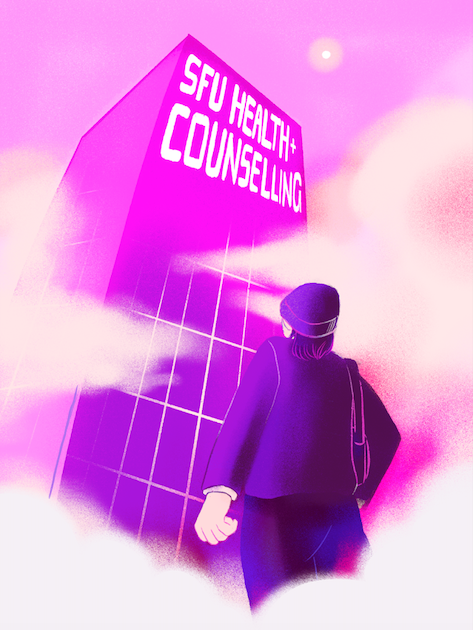
Illustration courtesy of Tiffany Chan.

Growing up as an American-Canadian dual citizen, I came to Canada excited for the accessible health care I’d always heard about that was just out of reach. On my second day on campus, I found SFU’s Health & Counselling Services and made my first appointments, ready to take some big steps on my mental health journey. What I didn’t know at the time was that I was about to take some big steps backwards in the process.

While I was enthusiastic about the Health & Counselling Services the first time I walked in last year, these days I am wary as I chat with their staff. I am grateful for the positive support and diagnoses I’ve received, but the general outcomes of my time spent with SFU Health & Counselling Services have been incredibly damaging.

From the beginning, I noticed and understood that SFU had no idea how to work with transgender students, but it became even more apparent over time. Rather than treating me the way a cisgender student would be treated, my non-binary identity was both brushed off and considered a reason behind my mental illnesses.

It took several visits before reception had figured out how to use my preferred name on file and not misgender me in the short moments we had together. It took weeks before my counsellor learned which name to call me, even with my preferred name on file and in their notes. For my doctor, it took weeks before they remembered that my preferred name in the file is what I wanted to be called. Even when I informed SFU workers of my transgender identity when relevant, I had to take the initiative to explain what it meant — as though they have never encountered a transgender person before. 

A close friend of mine, who sought assistance from the same SFU doctor I did, reported that they put down his hormone replacement therapy as the reason for his health symptoms, when it was medically impossible for that to play any role. Like my friend’s experience, the same doctor questioned me about whether I’d been taking “transgender medications,” a vague and informal term, as though hormone replacement therapy would have any correlation to psychotic symptoms. 

This troubled me because there’s no way that being transgender, whether medically transitioning or not, would cause the kinds of mood swings I had been having. Ignorance about transgender issues and our mental health is common in health care, and it is just another systemic issue that SFU’s doctors are complacent in. 

After only three 30-minute appointments, my doctor prescribed the first medication in early November. This was barely enough time to confirm my OCD, anxiety, and depression — the first of which would soon be ignored by my doctor. Already I was encouraged to start taking a drug, even without trying therapy as a first treatment option. The plan was to try it out and see how I was after a few weeks. 

The drug had negative side effects that made it unsafe for me to even walk from my dorm to my lectures. Even after I had adjusted to a standard dosage, I still felt worse than before I was prescribed the medication. After informing my doctor that I was having an increase in suicidal ideation, they decided to keep me on the medication. In fact, they decided to keep increasing dosage in hopes that double or more of the medication would start to treat a different disorder I have. As we kept increasing the dosage, most of the side effects unmonitored, I continued expressing that I was having serious physical side effects and suicidal thoughts, but on we went. 

By this time, it was January and I was at four times the initial dosage. On January 12, I had a failed suicide attempt. We stuck to the medication, just to be sure it wouldn’t still have positive future effects. On February 24, a friend took me to the ER for active intent to attempt suicide. On March 2, I returned to the ER for active intent to attempt suicide. At this point, my friends would not leave me with more than a few day’s dosage in my room at a time, because they knew I would otherwise try to overdose on it.

By this time, the SFU doctor finally decided it would be time to lower the dosage, but they also decided that I would add a new medication to my daily mix of drugs. They knew I was still trying to cope with changes from the medications given to me by the ER doctors, and would be dealing with side effects from changing dosages of the first medication. Needless to say, the cocktail of drugs left my physical health in a state of disrepair, unable to complete coursework and physically incapable of going to my classes. 

It only took a few minutes in the ER for the doctors to recognize that my symptoms that were initially recognized as typical anxiety and depression were treatment-resistant, and perhaps even a misdiagnosis because they were so hastily accepted and medicated.

After the trip to the ER, the final two months of the Spring 2020 semester were full of medication changes, never giving me a break to catch my breath before something else would change. I was agitated, hallucinating, paranoid, completely dissociating, and of course, brushed off by my SFU doctor. 

In between finals, I was seeking help outside of SFU. The first psychiatrist and first doctor I saw agreed that my mood swings clearly looked like bipolar disorder, and likely also borderline personality disorder. 

This psychiatrist immediately recognized my emotional regulation issues, and that I was in a state of hypomania. For me, hypomania consisted of restlessness, lack of sleep, mind racing, inability to concentrate on anything while starting a handful of new projects, bouts of reckless behaviour, paranoia, and delusional thoughts. 

The recognition of hypomania suggested bipolar disorder, while my SFU doctor of months had brushed off unusual mood changes as just part of medication side effects. This psychiatrist also suggested at first that the symptoms were caused by my transgender identity, like my SFU doctor, which speaks to broader issues in health care.

The primary issue that SFU doctors, and general practitioners as a whole, deal with is to accommodate people with mental illnesses. Suggesting that my transgender identity was the source behind my emotional regulation issues was oversimplifying complex issues. 

Furthermore, it appeared to me that my gender transition had been treated as a mental health concern to be fixed, rather than acknowledging the social complexities that accompany gender dysphoria and the trauma that can come with transphobic experiences.

Mental health conditions remain stigmatized, and as a result, they may not keep up to date on how to treat disorders — especially when there are comorbidities and the patient is of a marginalized or historically oppressed group. 

Still, I continued to see my SFU doctor as I did not have the financial stability to move to private specialists, or knew any better at the time to make the switch. As late April came, they let me go away unmonitored for the following four months with an antipsychotic medication that normally requires regular monitoring and blood tests, initially suggested by them and then prescribed by my psychiatrist. 

I wasn’t even given so much as a warning about its side effects, and after just three days, I knew my nervous system had a severe reaction to it. After those three days, I had to stop taking it because I knew if I listened to the medical advice I was given, it could kill me over the summer.

I spent months describing my mood swings and emotional dysregulation to an SFU doctor, and instead of any kind of therapy, referrals to a psychiatrist, or deeper looks into the causes of my mood swings, all I got was a dangerous mix of drugs.

The SFU doctor I went to for help lost the trust I’d normally give a medical professional. Having lost nearly a year of my life to mistreatment, they left me with medical trauma that I am still struggling to make sense of. Looking back on all of this, their negligence could have killed me, and I am still surprised that I am alive to be writing this article.

SFU student writes letter on tuition increases

2
Image Courtesy of Simon Fraser University via Facebook

On September 8, SFU student Aliya Boulanger wrote a letter to decision-makers regarding SFU’s tuition increase. At the March 19 meeting, the Board of Governors approved the tuition hike in regards to the 2020–21 Budget and Financial Plan. The increase entails a 2% increase for domestic undergraduate students and 4% increase for undergraduate for international students.

Boulanger asks that “student activity fees for this semester are deferred until the student body can use the facilities that they’re paying for, and the student activity fees [students have] paid for this semester to be refunded.” 

She also calls on SFU “to go to bat for its students against TransLink to get us an opt-in system” as well as the “freez[ing of] tuition increases until our education can be delivered in the way in which it was intended, and refund us the tuition increase they charged us for this semester.”

The student fee breakdown has indicated that remote students are not being charged for Athletics & Recreation fees and supplementary fees for laboratory equipment. Student services fees continue to operate remotely and are still included in tuition fees, as well as the student activity fee, which is set by the Simon Fraser Student Society (SFSS). Students eligible in pre-existing categories for exemption of the U-Pass and students residing outside of Metro Vancouver are able to opt-out of the U-Pass fee, which is also set by the SFSS. 

Boulanger sent her letter to Dr. Jonathan Driver and the Minister for Advanced Education, Melanie Mark, twice. In her second attempt, she included other ministers of education. Boulanger stated that she had not received a response from any of the recipients.

The Peak spoke to Boulanger in regards to her letter and what prompted her to take action against the tuition increase. She explained that she was disappointed with “the way the end of the Spring 2020 semester was handled” and hoped there would be improvements made to the quality of education for the Fall 2020 semester. 

“It reaffirms what many of my SFU peers and I have felt; that SFU as an institution is not a supportive community where students are seen as human beings, but rather as units to be churned through the system to maximize efficiency and financial gain,” Boulanger said.

Boulanger’s next steps will be to “try to ask these questions in person [ . . . ] [and] to send the letter, or a shorter version, to local papers and other media.

“We are consumers, and the SFU administration is accountable to us! If we’re not satisfied we have to let them know, otherwise they’ll continue to take advantage of us. We are powerful if we ask for these things together, so I encourage those reading this to take the time to speak up and take action,” Boulanger concluded.

In a statement to The Peak, Vice-President and Academic Provost pro tem, Jonathan Driver, explained that “SFU is funded through [ . . . ] operating revenues [that] come from a grant from the province (based on enrollment targets) and from tuition fees from students. 

“This covers all the costs of running a big institution – salaries, financial aid, equipment and supplies, library, cleaning, utilities, etc.”

Driver noted that “tuition fees are adjusted annually by the Board of Governors, based on budget projections,” and “the rate of increase for domestic students is often capped by the province below the level of inflation.

“SFU is maintaining a full range of academic programs and supports for students, including increased financial assistance. Most of the costs associated with those activities will increase due to inflation, with salaries being the single largest expense. While some costs have gone down (e.g. electricity costs), others have increased, including financial aid to students, and IT services for remote delivery of programs,” concluded Driver. 

Top ten people natural selection is coming for

0
Very calm, very cool. Nothing wrong here. Illustration: Siloam Yeung / The Peak
  1. Social media influencers

It should come as no surprise that social media influencers are on this list, given the fact that anyone who spends their life trying to flex their empty personalities and unfulfilling brand endorsements would quite literally do anything for validation. Whether they’re posing for the perfect picture in precarious places, trying to generate enough clicks on a video of them doing dramatized but super mundane things, or participating in some sort of unnecessary scandal, influencers have a life expectancy as long as their relevance — so as you can imagine, not long. As Lady Gaga said once in a song I think, “I live for the [validation from an audience of people I don’t care about and only want money from]!” 

2. Gender revealers

I could say a lot about how these people reinforce the gender binary, are mindless in their willingness to put others at risk with their unnecessarily grand gestures, or are most definitely attention-seeking nobodies who want to push their heteronormative practices in the faces of their friends and loved ones. But instead, I’ll just say this: the only thing revealed by your gender reveal party is that you’re an idiot.

3. Android users

Now I’m not one to insert my biases, but I can’t help but feel compelled to say Android users are inferior as I write this on my MackBook Air with my Apple Airpods in my ears and my iPhone X right next to me. According to an analytic on Macworld, in 2019 Apple dominated the North American market with 52.28% of sales, with Samsung following far behind at 25.54%. And according to me, anyone who takes a photo with an Android camera has a 100% of generating an image that’s literally five pixels and has a 0.1% chance of matching with me on Tinder with their five-pixel mirror selfies. These statistics are equally and indisputably significant, proving how much better Apple is and why Android users will not last. 

4. Boys of Frat

Legend says that long ago, a war broke out between the Boys of Frat and the Folding Table Nation when the Boys of Frat attacked. For centuries these champions of the competitive drinking game world raged war on one another, bringing misfortune to the innocent. Due to their misdeeds against society, the bloodlines of the Boys of Frat were cursed. Now, descendants of the Frat dynasty are subject to an infinite war on the successors of the Folding Table dynasty, enforcing their violence by jumping and smashing into them as their ancestors did. When will this war be over and who will win? Who knows. We can only predict which of these two fated foes will thrive and who will eventually perish: one side of this war consists of sensitive, cheap, skinny-legged, deconstructable objects with less than one brain cell, while the other side consists of tables, so who can really be sure. 

5. Karens

In today’s society, Karens are constantly testing their limits, thinking the solution to their problems is yelling and causing a scene. But what they need to realize is that these are the tactics for fending off a bear, not trying to get a return when they have used the product and don’t have a receipt on them. It’s only a matter of time before a Karen slips up and finds herself face to face with the devil — but trust, even after she’s six feet under, she will still ask to speak to the manager regarding why she’s in Hell not Hell+. 

6. People who still say “dank”

It’s said that language is constantly evolving, and it can be argued that in m̶o̶s̶t̶ ̶s̶o̶m̶e̶ a few ways, society is doing the same. So tell me why there are people out there who genuinely still use the word “dank”? How have we let these people slip through and remain integrated in our society? I would say that this notion and the people who still use this word still “dank,” but I have more common sense and knowledge to know that this word is about as weak and irrelevant as anyone who still says it.

7. “Ohhh, that’s too spicy for me”

I initially was going to open this section with a sassy little quip about people who can’t handle spice, but I think it may have been too spicy, so I had to cut it. If someone looks at the spice scale at Nando’s and thinks Lemon & Herb is too spicy for their chicken, their food palettes have left them at an unfortunate disadvantage that will ultimately lead to their downfall. What should happen to them if someone puts too much salt on their fries — or worse, their water is sparkling? I can’t help but wonder what will happen when these people eventually perish and find themselves in Hell — good luck finding anything less than Lemon & Herb when you literally live in fire.

8. Non-maskers

These people took Future a little too seriously when he said “Mask on, fuck it mask off” and are truly not built to last, no matter what their privileged immune systems have to say about it. While this could just apply to people who are truly risking it all and not wearing a mask, this is also a callout to anyone who wears their mask only on their mouth while completely exposing their nose. I don’t know if these people have an understanding of how breathing works, but bacteria can also enter your body by breathing through your nose. If only there was some way to also block that passageway and protect it. Oh wait. There is.

9. Anyone who posts stories on Facebook

I’ll keep this one short and sweet: it’s bold of you to think you’re safe by posting stories on Facebook, given the fact actual robot and sunscreen enthusiast Mark Zuckerberg is constantly watching. You’re just making it easier for him to find you and eliminate you. And if you think anyone is going to try to save you, just remember: you’re posting stories on Facebook, do you really think people will care that you’re gone? 

10. Me 

I can’t drive, I have anxiety, and I’m so gay and weak I consider pushing clothes down the rusty racks at Value Village a strenuous arm workout. My time is nigh.

SFUnexplained: SFU works with other institutions to keep its student body here — and not in the ways you may think

1
Illustration: Tiffany Chan / The Peak

Have you ever thought about why those at the top of SFU make hundreds of thousands of dollars to ignore students? People have to wake up and realize that these top-dog figures could never be this rich and be this bad at their jobs — they are playing 4D chess, and they are 20 steps ahead. 

All of their perceived incompetence must be constructed. They’re ignoring all students because none of us are here through our own free will. They know we have no choice but to stay at SFU. Wake up, sheeple: We’re all the victims of an underground cabal of shadowy figures in charge of trapping students in a university that no one really wanted to go to in the first place.

Everyone knows that SFU isn’t really anyone’s first choice, so how did we all get here? The double-crossing conspirators made up of underpaid high school teachers doubling as “counsellors,” academic advisors, and our parents will say it’s because they “get it, you like CSI and wanted to be a criminology major” or “you really struggled with physics 11, how do you expect to do calculus?” How do they know all this information about our personal lives? Since when are these people allowed to infringe on our rights and freedoms? They obviously have some kind of insider access.

But how? 

I’ll tell you how: SFU is paying off other universities, our supposed emotional support high school English teachers, and even our parents — all to purposely deny students and leave them with one option: Simon Fraser. 

When you really think about it, it all starts to make sense. SFU did take it upon themselves to raise tuition during a pandemic. Is that because they’re inherently evil or because they need to increase their profits to continue harvesting students?  It’s definitely not because “remote learning and teaching continues to provide a high-quality educational experience,” so the latter is the only plausible option left.

This also explains why SFU is located on a mountain. Running an operation that keeps students in a location against their will requires a large amount of land that is isolated from the rest of society. If any of us threaten to leave they’ll just stop bus services or manufacture a snowstorm. We’ll be stuck with no escape in sight and SFU will have exactly what they want: control over their precious little students. 

You may be thinking, “What if we organize and just carpool down the mountain?” That’s when the TMX pipeline comes into play. 

Have you ever thought about why SFU is in favour of TMX while in the same breath assuring everyone that they’re working towards reconciliation and sustainability? You might think it’s because they are “stupid” or “out of touch with reality” or “purposely keeping up socially progressive appearances to avoid any uprising of student organizations that would result in meaningful change that would hurt the university’s social and liquid capital.” 

But it’s not. 

It’s their solution for when the worst happens. If the students organize there will be an oil spill conveniently affecting the mountain. It’s a good contingency plan either way, as the pipeline will inevitably leak sooner or later.

The only way to escape the university is to replace each one of us with students from other universities without SFU noticing. Luckily, SFU doesn’t know anything about its students and likely wouldn’t notice if 25,000 students were suddenly exchanged for another group. All we need is to convince students of another university that SFU is full of opportunities. But what university is in such a dire situation that SFU looks like a safe haven? Is there a group of students that willingly spend their time at SFU without even being enrolled? 

Oh my god. The answer to our freedom has been right in front of us this whole time: Kwantlen Polytechnic University.

In-person dating horror stories

PHOTO: Debby Hudson / Unsplash

Horror movie binge (by Serena)

When you live in Surrey, in-person dating means that going anywhere else is a date. It also means that overrated events like Fright Night at the PNE are the best date ideas within 20km. 

They’re so overrated that your date may drink half a bottle of vodka on the hour-long drive to the PNE, just to down the other half while their date looks for parking on a Saturday. 

The rest of the date plays out in the background like a Netflix movie you’re not necessarily interested in. The plot doesn’t really make sense at all. Once you start paying attention at the climax of the movie, everything is happening at once. Your date can’t walk straight, jumps a fence, and gets a concussion. Before you know it, you’re cleaning blood off of their clothes and the car. They don’t remember what happened. Then finally, you’re back in Surrey hoping you never see your date again. 

It’s me. I’m the date.

Kind of OK, Cupid (By Shangrila)

I met someone on OKCupid, figuring I’d give online dating a shot. And honestly? I think this person might be the one. 

I know we’ve only been texting for nine days, seven hours and 22 minutes, but I’m already in love. I’m thinking of surprising them with a video call for the first time. I’m in the best relationship in my life. 

This one actually respects my personal space unlike my ex-boyfriend, Josh. 

Josh always did things that annoyed the hell out of me like standing so close to me that I could feel his breath moistening the back of my neck. Now, there’s no more mandatory hand holding with sweaty palms, or having to deal with bad breath that makes Shrek’s ass smell like Dolce & Gabbana’s new Mediterranian fall fragrance collection. No more desperate face sucking in a Wendy’s washroom with nasty chapped lips, and no more unsolicited burps or terribly concealed transit farts. 

Going on online dates makes things less complicated. I don’t get stood up or left outside the theatre for two hours during a torrential downpour. Watching movies together with Netflix Party and starting music sessions on Spotify changes the game; we can listen to Lana Del Ray in sync as we both contemplate our existences to “Video Games” on our bedroom floors.

Our conversations are never dry thanks to emojis, stickers, and GIFs. You can’t really send GIFs that correlate with your mood when you’re talking face to face, can you? I mean, what better way to show your emotions, right?  

Love game (by Paige)

I miss the excitement of that one time I saved up money to fly down to see my long-distance boyfriend (remember flying and the little pretzels? Damn) only to have him ignore me the entire time for his League of Legends tournament. Fleeting moments of excitement would rush through my low self-esteem-filled body when he would finally break the nauseatingly awkward silence bouncing off the Plants vs. Zombies posters in his room. 

Turns out it was just him responding to the boys on Discord.

Nothing hit quite like putting my suitcase down, getting a .2 second hug with a cold-as-ice eboy reject, and spending the rest of my night alternating between the edge of his bed and the anxiety attacks in his tiny bathroom without him checking on me once. 

You just don’t get those intimate, heartwarming moments while socially distancing, you know?

What do I do now? Know my self-worth? Maybe. I haven’t swiped right on a “come over if you’re thicc, stay home if you’re sick” bio on Tinder yet. And I know to avoid light-up keyboards and double monitors like they’re the plague (too soon?) 

That’s called growth. Also I hate League of Legends.

Student grateful to finally be able to use hoarded Bath & Body Works hand sanitizers from sixth grade

1
Photo: Gudrun Wai-Gunnarsson / The Peak

With half the world being on fire and countless (often preventable) deaths being reported daily, it feels like everything is out of my control. My stupid little actions aren’t even helping with this deep sense of loneliness I have. How can I help with the new bubonic plague? What do I do when everything feels out of control? 

If almost buying hair dye online and then talking myself out of it doesn’t work, I clean. One day, I put on my combination Lizzo/Nickelback motivational playlist and some rubber gloves and got to work deep-cleaning my closet.

After digging through layers of high school binders and stress-tear-stained band sheet music like some kind of sad paleontologist, the Silly Bandz and Tiger Beat magazines told me I had reached the middle school era. I was bracing myself for deeply embarrassing drawings of David Tennant, but nothing could have prepared me for what I found instead. Shimmering, covered in turquoise and magenta cases and grime, there were dozens and dozens of Bath & Body Works hand sanitizer bottles from the early 2010s. I had found it: the pandemic holy grail. 

Like a ravenous beast, I ripped open bottles and poured the sweet nectar onto my hands, my arms, my head — anything to soak up the precious juices. Drunk on power and rubbing alcohol, my pulse pounded as I contemplated my newly held responsibility. People search their whole quarantine lives for just a drop of hand sanitizer. Here I was, boasting 10 litres of it — sparkles and the sweet, nauseating stench of Chocolate Creme Donut included. A sense of self-righteous purpose came over me.

I knew what I needed to do. 

I tied a bandana over my nose and mouth, smeared fallen forest fire ash under my eyes like war paint, and sprinted out of my driveway. 

Chucking hand sanitizer bottles at houses and passerbys like a punch-drunk Newsie, I ran through neighbourhood streets sharing my good news with anyone six feet away that would listen. The gift of cleanliness was too important to be hoarded; it was my responsibility to share this with the world. Did I hit the windshields of oncoming traffic, hindering their vision with the pink, sparkling contents of a Cherry Apple bottle reminiscent of a bludgeoned fairy? Maybe. But I also gave the driver peace of mind.

Skipping through the streets, tossing bottles over my shoulders with abandon, I felt like I had found my true Sweet Pea-scented purpose amongst the chaos. 

I threw almost every bottle I had at my neighbours that day . . . except for one. I placed it right in front of my door on a table to use. Now, every time I walk home, all worries about the pandemic and online classes and smoke and elections and deadlines and isolation and bullshit just melt away. I had a pandemic’s worth of hand sanitizer. Now others do, too. For one shining, Toasted Coconut-smelling moment, all was well.

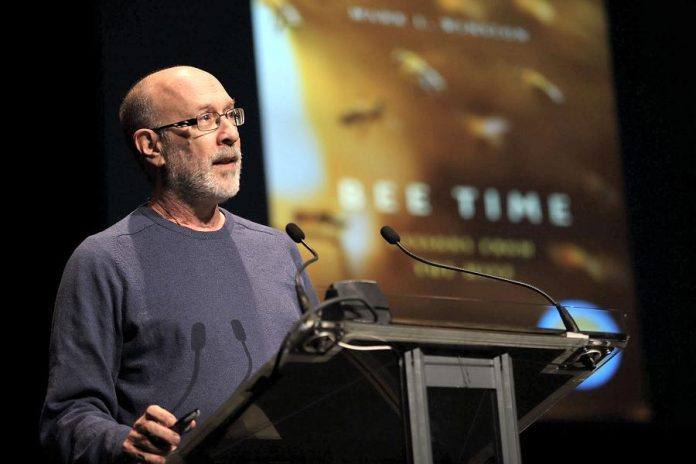
SFYou: Get the buzz on Professor Mark L. Winston

0
Image courtesy of Sarah Murray.

Name: Mark L. Winston

Pronouns: He/him/his

Departmental Affiliation: Biological Sciences and the Morris J. Wosk Centre for Dialogue

Hometown: South Euclid, Ohio

Current Occupation: Professor and Senior Fellow

Fun Fact: Mark was once the president of the Douglas County, Kansas Western Swing Association

Professor Mark L. Winston has had a lengthy education and career in the work of bee pollination. It has led to being the director of SFU’s Centre for Dialogue for the past 12 years, and now as the new non-fiction Writer-in-Residence for the SFU Library. I sat down with Winston for an interview to talk about his career, effective environmental communication, and the role of mentorship in his new position.

We first talked about how the issues that Winston studied at the beginning of his career compared to the issues that were being studied in the field today. For Winston, who had taken two very distinct career paths, this was a complex question. 

“As an entomologist, I’ve always studied bees. The questions today are considerably more complex because bees are dying. There’s urgency in figuring out why bees are dying, there’s been a lot more work investigating the impact of the environment on bees. When I first started out, they were much more interested in bees themselves and their social behaviour [ . . . ] looking at things like how bees communicate to looking at [their] environmental impact,” Winston explained. 

I asked Winston what made him start studying bees and work in bee pollination. He chuckled.  “I’m always interested in how younger people today look at work! In my experience, a lot of what we end up doing in our lives is coincidence. A lot of it is inspired by things that may have nothing to do with what we end up doing.” To answer the question, he first started studying bees because he wanted to be a tropical biologist.

“Y’know, I wanted to wear khaki clothes and start exploring the jungle [ . . . ] the trees, and the birds, and the snakes, and all that’s living in the wild in South America,” he said, eliciting a chuckle. The thought sent me straight to Indiana Jones, which did sound pretty fun. “I applied for PhD research at the University of Kansas where they have a good entomology department that often sends students down to the tropics. I had determined that insects were of interest to me because I had taken some courses in entomology as an undergraduate. When I got to Kansas, my supervisor said, ‘Oh, guess what? I just got a grant to study killer bees in South America!’ I heard South America and thought, ‘Great, I’m writing about bees, but hey, I’m in the tropics!’” 

His first time studying bees was a little harrowing. “Knowing nothing about bees, I was mostly terrified. I heard they stung,” I chuckled again. “The first time I entered a hive, time just slowed down for me. I took off my helm, and I took off my gloves, and I was just fascinated by these complex social organisms and how they operate with each other, and run society, and collaborate. That was a moment that I can still reach back and experience,” he says fondly. 

There was something really comforting listening to Winston talk about something that has driven such a large part of his career as a coincidence. Evidently, he ended up falling in love with them, but he had not always known that he was going to study them.

We then talked more about how to effectively communicate urgent environmental issues like the declining bee population without coming off as too alarmist. In essence, Winston explained that it’s best to focus on multiple factors rather than one key impact so as to not oversimplify the issue. 

“In my writing, I really try to focus on interactive synergy: not just one thing, but a complex set of factors. You have to bring in multiple elements. It’s really easy to write about one thing, I could write about pesticides and how they’re killing bees. It would probably be fairly simple, but it’s not the story —  the story is one of a thousand little cuts, and moving points where the whole ecosystem surrounding bees is causing it.”

These days, Winston focuses more on editing and helping other writers find their voice. Winston has published quite a few books himself, receiving the Governor General award in 2015 for his book, Bee Time: Lessons From the Hive. For him, book writing is an engaging process.

“I can see a book in all of its dimensions when I’m writing. It’ll take a year, or two, or three when I’m really immersed in it, but when you’re writing a book, no matter what else you’re doing, the book is always in the back of your mind.” 

I asked if it’s difficult to balance the ideas of other writers as they develop their ideas. Winston presented me with four principles that he uses to judge writing, emphasizing that it needs to make an impact most of all. 

“All writing benefits from four things: brevity, getting to the point, clarity — which is really knowing what you want to say, from knowing your own voice and not trying to sound like someone else — and the ultimate arbitrator of writing, which is impact.

Everybody has a different voice, it is quite easy to tell one writer from another. But the key issue is: is your writing doing what you’d hope it would do? Does it have an impact, make you feel something, change your mind?” 

After more than a decade of work in the Centre for Dialogue, Winston comes into his position as the Non-Fiction Writer-in-Residence, and as a mentor, with eloquence and empathy. 

In mentioning his role as a mentor, Winston was very much impacted by the mentors in his life. In particular, he spoke about one memory when he was an undergraduate student, where he mused that he probably had the lowest grade point average of any faculty member he had ever known. 

“I knocked on the door of a faculty member I had never met, and it turned out that she was one of the most famous biologists of the 20th century! At the time, I had a lot of hair, a big beard, overalls, and a transcript that looked like I was barely making it in school. For whatever reason, she took me seriously. She sat me down for two to three hours, and she told me about her research and old books from her shelf about what she was studying, and she offered me a job! That changed my life. I’ve never forgotten the impact that a person can have on other people.” 

Thinking about the way Winston was changing people’s lives now by helping them make their impact through their writing was very warming. I expressed that I had some difficulty picturing the impact of my own work, and it was relieving to hear him express similar sentiments. 

“The impact of what any of us do is so hard to measure. I would think it’s fair to say that there’s more awareness of issues due to the writing I’ve done. I’ve seen some examples of things getting better, but it’s not just due to my voice — it has taken a cacophony of many voices to move the needle. As I get older, I’ve become more comfortable with the idea that it’s very unusual for any one of us to change the world.

To answer that another way, if I’ve had much impact, it’s through my students — research students, students that I’ve taught in Semester in Dialogue, and I see those students going out in the world and doing things in a different way.”

Winston had a message for students experiencing the impacts of remote learning and living in a pandemic:

 “In human history, there’s always been periods like this —  horrible wars, famines, pandemics, and volcanoes, and terrible natural disasters. In that sense, it’s not new to the world, but it’s new in our time. This is the worst I’ve seen the world . . . [but] we get through this by supporting each other. That’s never changed. Be kind is the take home response, that’s what we gotta do.”

For more information on upcoming workshops with Mark L. Winston, visit the events page of the SFU library website.