Home Blog Page 408

SFU’s COVID-19 and the Future of Democracy highlights activism arising from the pandemic

0
Illustration courtesy of SFU Public Square.

If anything good has emerged from this pandemic, it’s that the cracks in our systems have become more apparent than ever. It might feel easy to make like a turtle and hide until it all goes away, but if there’s something you can take away from the event COVID-19 and the Future of Democracy, it’s that now is precisely the time to take action instead. 

In a conversation put on by SFU Public Square and the Morris J. Wosk Centre for Dialogue that discussed gentrification, the throne speech, and the elitism of the art world, the four activists (Clare Beckton, Sandeep Johal, Walied Khogali Ali, and Liliah Williamson) led discussion around what it means to work towards a better world, and what that looks like in a time where traditional methods of physical gatherings can be deadly. 

The panel began with an effort to bring the audience into the presentation; it was about democracy after all. In the Zoom chat, participants were invited to share what democracy means to them and why they were there, as well as encourage conversation. As a range of responses rolled in, the event’s moderator Sabreena Delhon reminded everyone that “the people you encounter are the experts in their own experiences.” 

She introduced herself and shared a land acknowledgement, pausing to inform the audience that the event was presented with live closed captioning for those who needed it. This was the first appearance of a continuing theme about accessibility, and how true intersectionality means working outside traditional means of delivery. She then opened the floor for each of the four panelists to introduce themselves and the work they’ve done during the past six months of the pandemic. 

Clare Beckton, a former senior executive and current advocate for women in leadership, found concerns that COVID-19 may cause a regression on all of the societal gains made for women’s roles in society at large. With her own organization, The Prosperity Project, Beckton hopes to ensure that the increase in women leaving the workforce in the face of COVID-19 “doesn’t create a setback for us given all the progress that has been made in the past 40 years [ . . . ] going backwards.” The Prosperity Project provides training for women who otherwise may not get the opportunity. 

As she noted in an interview with The Peak, women are more likely to simultaneously work in industries as low-wage workers, who have been disportionately affected by the physical and economic effects of COVID-19, as well as be taking on the brunt of childcare and work in the home. 

“Some of [these women] have had to step back, lots of them who have had jobs have had to step back in a lot of cases because they just couldn’t do it all, and some are contemplating just stepping out of the workplace all together which is not healthy for the Canadian nation.” 

She spoke with urgency but never panic, noting that the shift to online outreach has removed physical barriers, allowing more people access to the organization than before. It’s not all negative, she insisted. A recurring theme from the event emerged: when normalcy is out the window, jump in to shape the new normal. 

Walied Khogali Ali is an organizer in Toronto who worked within the parameters of COVID-19 to create change in his own community. During Ramadan this year, he delivered meals to those who needed them across Toronto through his project, #RamadanMealsTO. Through grassroots fundraising, they were able to deliver 10,000 meals and employ at-risk youth to help deliver them, helping those who have been disportionately impacted by COVID-19. 

He noted how many of the people hit hardest by the pandemic, essential and low-wage workers, are disproportionately represented by racialized people, and Canada’s inability to get housing and food to many citizens have become more obvious than ever during the pandemic. The way he sees it, shifting times are the best opportunities to get in and steer that change for good. 

As he put it, “never let a good crisis go to waste”. 

Lilah Williamson is a high school climate activist with Sustainabiliteens, a group of teenage Vancouver activists who have rallied for their governments to enact meaningful efforts against the climate crisis like last year’s enormous Vancouver Climate Strike. 

At the event, she discussed how the pandemic turned their most famous and successful initiatives, public strikes, into a COVID non-starter. Rather than viewing it as a barrier, she says it acted instead like a “reset button.” The online initiatives have also found them working towards a wider range of goals through what Williamson called “distance action.” most recently with their “No Going Back” campaign. It fought for a better future for young Canadians, by creating and promoting a list of demands for Prime Minister Trudeau’s throne speech dealing with climate action, dismantling systemic racism, and decolonization. 

Sandeep Johal is a Vancouver-based artist whose work acts as commentary for social issues by “telling the stories of women who can no longer speak for themselves.” She discussed how during the pandemic, this manifested in the “Make Art While Apart” project, which transformed boarded up doors of businesses into pieces of art across Vancouver. 

Johal described how much the project had turned the “depressing doom space into an open-air gallery.” Her participation with the project is far from her only work creating art for all. Much of her work is an embodiment of democratizing art. 

She discussed a recent display she put on within the Vancouver Art Gallery, done in conjunction with Moving Still: Performative Photography from India. It was a blending of the “highbrow” celebrated there, and the “lowbrow” art looked down upon, and how a fellow person of colour told her that they could never see themselves in the gallery until she was featured there. 

“It really comes down to having access to these spaces,” she continued, “and being seen and being heard.”

After the panel discussion concluded, participants, panelists, and staff were sent into breakout groups to settle with our thoughts and everything that had been said. In our conversation, composed of only three members, we spoke about what the discussion stirred in us, what stood out, and how to spin it into change. It became clear that the themes of hope, loss, and action seemed to rise out of all of the panelists’ remarks. 

The 15 minutes flew by, and it seemed to be a deep meditation on the loss we’ve experienced as a society, and the hope of a goal on the horizon yet to be reached. As the session concluded, it felt almost like coming out of church, praying for a future you don’t know if you’ll see; sitting with like-minded individuals and our convictions, listening to others deliver testament to what action towards a common goal can accomplish. 

As I listened to these activists, all of whom had reasons to become apathetic towards a system that had turned their back on them but still continued to rally and organize for a better future, I found myself sharing a quote from Jon Lovett to my breakout group that kept ringing through my mind: “Hope is annoying because it makes demands of you.” 

Hope is the most potent motivator to fight for a better future, because as Johal put it, if they didn’t have hope that things would change, they would have no reason to do what they do. If you want to take action, try to find it in yourself because that’s the most personal place to start. Then, get busy.

WGOG: Stop assigning me last minute assignments

0
Illustration by Momo Lin/The Peak

This is the first semester I am taking classes that were not originally designed for online learning, and let me tell you that it is annoying. While the class quality is actually better than I expected, one annoying thing is that the professor will assign work due immediately after the lecture. 

I have a four-hour-long Zoom lecture this semester, and that takes up a big chunk of my time. Another one of my classes has an hour-long lecture that I actually take during my lunch break at work. This is fine, and I accommodate that into my schedule. The problem is when after the four hour lecture, my professor will announce a “short discussion question” due by midnight the same day. 

That is work that I had not accommodated for in my schedule, and quite frankly feels like a lack of consideration to me as a student. Just because we are all online does not mean these professors have access to me 24/7. I have a life outside of school, and giving me less than 12 hours to complete an assignment — no matter how small the assignment may be — is very disrespectful to me and my time. 

I have other things to worry about, like how I’m going to pay for my tuition after the 2% increase, or trying not to catch COVID-19 and spread it to my whole family. Remote learning is great because I get to do things on my own time and schedule my life accordingly, so don’t assign me something last minute and expect me to do it outside of the scheduled lecture time. 

SFU Criminology should cut ties with police

0
Courtesy of SFU School of Criminology

Modern life (particularly news discourse) has become like the never-ending climax of a post-apocalyptic film. One persistent, dramatic arc is that of policing and all the adjacent discourse that surrounds #blacklivesmatter, police brutality, and Indigenous rights movements. The frequent deaths of young black men at the hands of police have rightfully caused a crisis in North American policing in a way that we have never seen before.

In response to these recent controversies, Carleton University’s criminology department announced in August that they are cutting ties to police. More specifically, they are cutting student co-op placements with police and affiliated organizations, and creating four related student scholarships. Carleton’s criminology department should be commended for their proactive actions in supporting communities that are frequently and disproportionately targeted by law enforcement.

The academic field of criminology has long been associated (and frequently direct partners with) police departments. The statement from Carleton’s criminology department reads: “Criminology itself has been complicit in being an education stream for police and for corrections for many years.” SFU criminology has also partnered with the RCMP for recruitment, co-op, and internship opportunities, something that has caused controversy on campus. Like Carleton’s criminology department, SFU criminology needs to take a cold, hard look at where they’re implicitly staking their ground politically by being in a partnership with police departments.

Though much of the recent debate on policing has been fueled by extrajudicial killings in the US, in Canada, policing has also come under some well-deserved scrutiny. In particular, the shameful historical and modern treatment of Indigenous communities by police should cause Canadians to reevaluate the institution of policing in Canada. The RCMP was conceived by Canada’s first prime minister, literally to control and displace Indigenous peoples. They fulfilled this purpose very well, from forcing Indigenous peoples onto reserves to taking Indigenous children and putting them in residential schools. However, this legacy continues to this day, as seen in the countless Missing and Murdered Indigenous Women, or the RCMP’s use of force against the ‘Wet’suwet’en.

As the discourse related to systemic racism and policing has heated up, especially after the murder of George Floyd, many organizations across North American society have sought to make statements and reevaluate their ties to police organizations. It’s a testament to how much of a sudden shift there has been in societal attitudes that corporate America, and others who you’d never expect to wade into politics, have made statements against systemic racism and police brutality. For example, Lego decided to stop marketing it’s police lego sets, Nintendo made a statement about the death of Floyd, and the TV show Brooklyn 99 rewrote its upcoming season to reconsider how it portrays police. The bar is low for Corporate America, and much of it has condemned police brutality. Yet SFU criminology continues to partner with police. Normally, one does not expect Corporate America to be more progressive than academics in advocating for social reform.

SFU has emphasized reconciliation as a core part of its identity as an organization. New SFU President Joy Johnson has also said that it is an important part of her vision for SFU moving forward. Former SFU President Andrew Petter also recently made a statement condemning racism and systemic discrimination. For SFU criminology to so brazenly invite and partner with the RCMP, given its history with Indigenous peoples, flies in the face of SFU’s commitment to reconciliation. It is well past time that SFU criminology fixed that, and reorient themselves towards lifting up Indigenous and marginalized communities, rather than enabling institutions that oppress them.


Dean of SFU health sciences to co-lead COVID-19 Work-Study

0
PHOTO: Tyler Franta / Unsplash

Dr. Tania Bubela, the faculty of health science’s dean, is co-leading a study that explores the impact of COVID-19 on the workplace. The 1.2 million dollar project, SARS‐CoV‐2 Study for Eased Restrictions in British Columbia (SAfER), is funded by Genome BC, Genome Canada, and life science industry partners.

In an interview with The Peak, Dr. Bubela explained that the study plans to analyze subjects from five workplaces which include SFU, UBC’s Life Science Institute, and three local biotechnology companies.

“We’re going to be recruiting 1,500 participants from those [areas], anybody who is in the workplace at least one day a week is eligible,” she said.

Dr. Bubela explained that “the test population is the life sciences sector in British Columbia.” She emphasized the importance of researching this industry, because “it’s not the kind of work that you can do remotely.” 

SAfER will take participants through three main portions that will aid in coming to safe practices for the future. 

The first part is to test participants for COVID-19 before the study begins, which will ensure that the findings can be accurately traced to the study period. 

The second part of the study will be a “blood draw to look at serology.” It will consist of three testing points, one at the beginning, after six months, and 12 months. “This is a kind of test that looks at the immune response to the virus and the longevity of the immune response to the virus,” Dr. Bubela said. This will give a certain answer on whether the participants have contracted the virus during the study period regardless of symptoms.

The final part of the study will seek the psychosocial impacts of the virus on the participants, in the form of a questionnaire to check in on the participants and their well-being. This will ask  questions about issues like “their family circumstances because there’s a lot of other factors that come into play for risk of exposure.” 

The underlying data will be available for health officials. Dr. Bubela explained that their work will be used to help make informed decisions for the future. For example, using “epidemiological modelling to inform the public health measures, both at the provincial and at the federal level.” 

Dr. Bubela added that “models are only as good as the data that inform them, so we’re hoping that the models can be made more accurate so we can be more responsive.”

The findings will be used for improved long-term planning for large employers in BC, and ensure it can work simultaneously with the public health system in contact tracing. 

Recruitment for the study is aimed to begin in October, awaiting ethics approval. 


Cisgender people should make efforts towards normalizing pronoun sharing

0
Nadia Bormotova / Getty Images

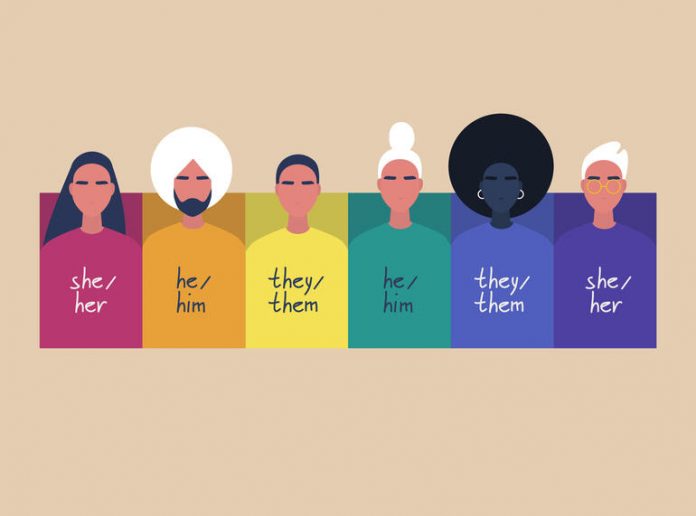
For people who have never had to worry about having their correct pronouns not being used, sharing gender pronouns might not seem that important. Because they’re used to being properly identified without questioning or misgendering, cisgender people (meaning people whose gender identity correlates to their sex assigned at birth) may be confused when prompted to specify how they would like to be addressed. The same reassurance cannot be guaranteed, however, for those who do not identify within binary perceptions of gender, which sees males and females (who go by he/him/his and she/her/hers, respectively) as the assumed norm. Sharing one’s pronouns, and politely asking for someone else’s pronouns, is an exceptionally easy way for those not in communities that do not conform to the gender binary to enact better allyship.

Before I go on I want to make one thing clear: this piece and the notion of normalizing pronoun sharing is not for me. Though I am part of the LGBTQ2+ community, I am still a cisgender gay man who uses he/him/his pronouns — I’m privileged in that my correct pronouns are typically assumed and used by strangers with very little need for clarity. 

But the same cannot be said for those who perhaps identify with they/them pronouns such as those who are trans, non-binary, or gender nonconforming, who face misgendering and discrimination for their pronouns and identities. So while I am writing this to bring attention to why normalizing pronoun usage is significant, I stress that I am writing this as a privileged member of the LGBTQ2+ community who merely wants to shed light on the significance of normalizing pronoun establishment. 

To begin, the most obvious reason why we should be normalizing sharing pronouns is simply because it’s respectful. Cisgender people should begin sharing their pronouns as it helps trans, non-binary, or gender nonconforming individuals to not feel isolated when they share theirs. By sharing their pronouns, cisgender people can establish sharing pronouns as not simply done in LGBTQ2+ settings, but in all settings. In certain environments like workplaces or classes, taking the initiative to share pronouns helps to create a safe space for people of these communities, which can be incredibly comforting in helping them feel welcomed and accepted. 

Moreover, cisgender people sharing their pronouns deconstructs the idea that everyone’s gender can be assumed, something that often results in misgendering. The idea that pronouns can be assumed by one’s outward appearance conforms to a gender binary and, ultimately, the stereotyping of gender expression. Through demonstrating that gender identity is not something that can/should be assumed, this alleviates pressure for those whose identity is more fluid and normalizes the idea that identity is not simply one (male) or the other (female). 

With this in mind, there are numerous instances where someone could include their pronouns to better normalize pronoun sharing. For instance, I have my pronouns on my social media accounts (in my Instagram bio, for example) and also in my email signatures. Screen names in Zoom calls is another helpful place to put your pronouns — this could be especially helpful for lectures. The benefit of including your pronouns in these places is that it helps people who may not know you personally see which pronouns you prefer to use to avoid misgendering. This is especially significant in professional settings, where establishing pronoun sharing can create a comforting work environment/relationship amongst staff, and can let people who may not know you well address you correctly. 

Additionally, including your pronouns when introducing yourself is another place where you can make your pronouns known; whether it’s to an individual or within a group context, sharing your pronouns can help encourage others to share their pronouns, which can be especially supportive in helping someone feel comfortable enough to share theirs. Something as simple as saying, “Hello I’m Juztin, I use he/him/his pronouns” takes very little effort to share as someone cisgendered.

Beyond simply normalizing sharing correct pronouns, other steps to becoming a better ally include challenging your own use of gender-specific language and respectfully asking for someone’s pronouns. The gender binary ignores the fluidity that is involved in identity, and it is so ingrained in our everyday lives that we often fail to question it. Language especially is something we often gender unintentionally, and making little adjustments such as saying “their” when referring to a person instead of “his/hers,” or using “parent,” “sibling,” or “partner” so as to not assume gender can help to make language more inclusive.

If you accidentally misgender someone, be sure to apologize, correct yourself, listen, and do better — of course your intent is not malicious, so the best way to atone is just to hold yourself accountable and work towards using the correct pronouns to help that person be comfortable. 

What’s important to remember is that the purpose of allyship is not what you can do for you, but what you can do in support of someone else. While no one is going to be perfect in how they enact allyship, efforts towards questioning our own biases, normalizing behaviours that are more inclusive, and simply being patient and open enough to listening can help to ease the anxiety that centres around gender identity.

Holistic Nutritionist Rhiannon Lytle on maintaining mental and physical health in university

0
Image courtesy of @eatingbetweenlines on Instagram.

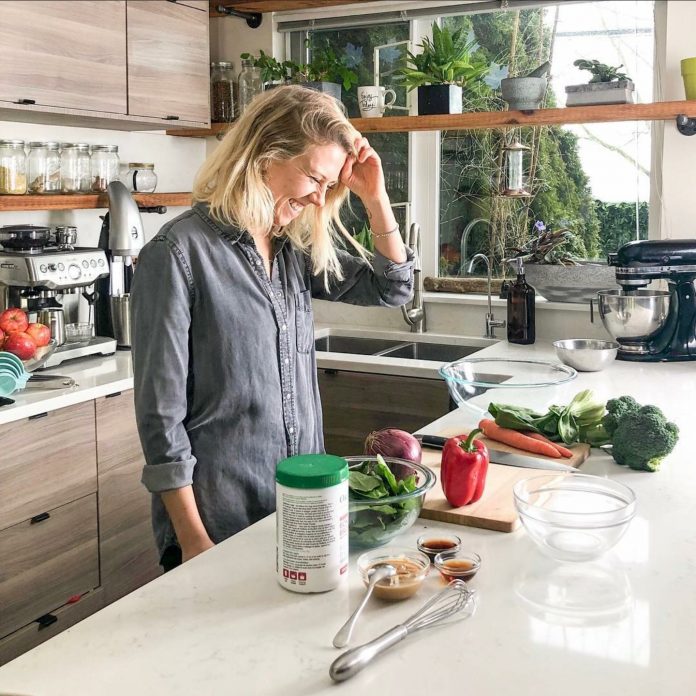
The back-to-school season is upon us and at this point, you know what that means: exciting change, neverending deadlines, job applications, faulty internet connections and, God forbid, a life outside of them. In other words, academic life can bring on more stress than we can handle sometimes. That’s where Registered Holistic Nutritionist and wellness educator Rhiannon Lytle, who also leads education and product knowledge at Organika (a Canadian health and wellness company) can offer some relief. In an interview with The Peak, Lytle shares advice on how to identify unknown causes of stress, the impact of your diet on mental and physical health, and how taking time to be patient with yourself can be a game-changer for your mental and physical health. 

The Peak: Do you have any tips to help students identify the unknown stress triggers in their lives?

Rhiannon Lytle: When we’re looking at stress, one thing we do as a society is we exist from moment to moment to moment without really checking in with ourselves — and we just live this surface-level life a lot of the time. You know, we’re sad and we don’t cry, because “we can’t cry, that’s not right.” What we’re seeing more is that people need to identify those stressors by doing things like taking a few deep breaths. 

When people feel like they can’t breathe, there’s a reason for that! Take a deep breath and tune yourself inwards so that you’re not just moving from moment to moment. Write down some of those things that come so that once you start to be aware of it, you start to notice the things you realize are really bothering you. Your roommate snoring may not have been something you thought was really bothering you, but when you look at it, it’s almost the root because you haven’t been sleeping properly! So write these things down, take deep breaths — not even to calm the stress, but just to look inward for a minute no matter where you are. We’re all told this stuff, [but then] when you try it, you go “oh, yeah! That does work!”

P: What are the most common harmful habits you see in students when it comes to managing their stress, and what strategies can they adopt instead?

Lytle: Definitely one of the most harmful habits we gravitate towards [very quickly is] coping mechanisms. These can be a physical thing, and that can be: a cup of coffee when you’re tired, or alcohol when you’re really stressed, or working out really consistently because we assume that high-intensity physical activity is going to be that one thing that changes the way our body looks [ . . . ] Identifying what you use as a coping mechanism is going to be really important to identifying how you manage the stress, and then deciding whether or not it’s something you need. So, if someone is having a cup of coffee three times a day, see if you can swap out one cup of coffee for maybe something like maca, which is an adaptogen, which helps us adapt to stress, [blended with] cacao powder and a little bit maple syrup or oat milk — something that’s going to balance your cortical, or what balances your stress hormones, so you’re not just riding this high of stressful moment to stressful moment because caffeine does act like stress in our bodies at the end of the day. It wakes us up, sure, gives us a bit more brain power, but it just creates a little more stress that we don’t necessarily need. 

P: Based on your work as a nutritionist, what can students integrate into their diets (or take out of them) to help their mental and physical health? 

Lytle: The first one I’m going to say, most people are probably going to hate me. If you can limit caffeine intake, that’s number one. If you can limit alcohol intake, that’s also really great, because both of them can really stress our systems. If you are dealing with a hormone imbalance, and your stress levels are skyrocketing and decreasing, and you’re just living from hot coffee in the morning to ice coffee in [the afternoon] to beer in the evening at the pub, can you cut it down to just one coffee in the morning and swapping it out for that maca or an adaptogen latte or herbal tea even? That’s going to be a great option for you. In the evening, have the beer, but instead of maybe excessively drinking, balance it out with some water, or swap it with some flavoured waters, or use an effervescent tablet and make yourself a mocktail — no one’s really going to notice, plus it’s flavourful and has vitamins! 

Doing that and also, when it comes to our fitness, you don’t always have to go so hard. If you can go for an hour-long walk and listen to a podcast, that’s going to do just as much for your body, especially when you’re stressed, than doing a high-intensity workout or a spin class. I absolutely love my spin class, but say you do that first thing in the morning, you leave and get a cup of coffee, then what happens? That stress hormone, that cortisol, is going to be super high and then, by three o’clock, you’re crashing hard. You’re probably moody, you’re probably going to reach for something sugary, so those things can all work together to be not the best for yourself. 

P: Do you have any advice on how students who menstruate can limit it from interfering with their stress levels and overall wellness? 

Lytle: Totally. I’m very passionate about this work, if you can tell, mainly because I personally dealt with a lot of issues, especially during university, around the menstrual cycle [ . . . ] and ignored it because that’s what we’re told — that periods are a burden, we don’t want to have them. They’re annoying, they’re painful, we get moody. That’s not necessarily the case, and you don’t have to deal with it. 

The first recommendation I give to anyone who is stressed about menstruation is to learn or figure out ways to embrace it more. Are you taking your temperature every morning to learn about your base-level body temperature? Are you adding in different herbs, like the maca, so you can help manage that a little bit better? Are you tracking your cycle on an app and learning about how it works? When we learn more about it, it’s kind of freakin’ cool! Our body’s temperature changes because of when we’re on our cycle. Learning about it can be, well, I say exciting, other people may say interesting! [laughs] Another thing I would say is, can you manage it through breath work? Can you add in those adaptogens that I talked about because that can help manage the stress? When we talk about painful periods and mood swings, those adaptogens are going to be great, but also things like liver [supportive herbs]. If we’re talking about something like milk thistle, or chlorophyll, or dandelion roots, like those are all really good options for you to try, especially if you’re dealing with period issues. 

Lytle can be found at Integrative Naturopathic Medical Centre in Vancouver. Interview edited for length and clarity. 

Why we should be moving towards mindful thrifting

4
Kim Regala / The Peak

I’ve thrifted all my life, my mom got me into it. I always loved going to Value Village as a kid, and was thrilled at any excuse to go into Vancouver. I still remember my first find: a pair of floral-print converse I literally wore to death. 

Before quarantine, I thrifted on the regular. Last month, I went to my first thrift shop in six months, and it felt like coming home. I got a Tchaikovsky vinyl and some delightfully weird clothing, including a sailor-style dress that was $20. 

But is thrifting really the harmless hobby many see it as? These are valuable things at low prices, and oftentimes, that affordability is the main appeal. When I was younger, thrifting was looked down upon. It was one of those things poor people did. 

And like many things poor people did and were mocked for, eventually rich people did it and suddenly it was cool. 

There are definitely points against thrifting if you don’t have to. For example, you’re not only taking resources from the less fortunate, but potentially ruining the industry for them. As stated in a Varsity article, many worry about thrift stores being gentrified, and having their prices go up. 

“I’ve seen a big difference especially in their stores, like jackets used to be $7.99. And no-name brands are nowadays 17 dollars,” student Meghan Garvida stated in the 2018 piece. 

To many, it’s an open-and-shut case: if you have the means, you should buy elsewhere. If you have money and you want to fight fast fashion, buy a sustainable brand instead of taking from a wholesome local resource that does nothing but give to the community. 

But it’s never that simple. 

First of all, many thrift chains have issues. Value Village was accused last year of deceptive advertising, and the Salvation Army is still struggling to move past its allegations of homophobia. Not to mention they’re huge companies that probably don’t need the extra money. 

On the other hand, local foundations, like the volunteer-run Peace Arch Hospice Society Thrift Store, are quite transparent and need all the help they can get. 

Of course, this doesn’t mean you can do whatever you want in thrift stores. There’s a reason prices are going up. One common suspect? Thrift-flippers. 

For those not in the know, thrift-flipping is the act of thrifting something cheap and reselling it at a higher price. It’s very popular right now, with many flipping full-time. I’d say if anyone’s to blame for thrift store prices going up, it’s the people buying stuff for $10 and selling it for $60. Stores realize they could be making more off what they sell, and act accordingly. 

There’s no way to know for sure that’s what’s going on, but it wouldn’t surprise me. Not to mention the unfortunate implications of taking things from a public resource that many rely on just to make a profit.

In short, no one’s saying you need to stop thrifting forever. But it’s important to remember any privileges you may have and try to partake in thrifting mindfully. 


Sustainable Thrifting Tips:

  • Don’t buy winter clothing or accessories if you can help it. Priority should go to those who otherwise can’t afford to keep warm. 
  • Don’t buy plus-size clothing if you’re skinny. Larger people already have limited buying options. 
  • Don’t buy baby clothes, strollers, or anything that one might need in childcare. 
  • Try to support local, genuine thrift stores over the chains.

Pivot 2020 to inform post-COVID-19 urban recovery

0

Pivot 2020 has partnered with SFU Morris J. Wosk Centre for Dialogue, Canadian Council for Youth Prosperity, Canadian Urban Institute, INM (Institut de Nouveau Monde), Tamarack Institute, and Youthful Cities to conduct remote research on 27 Canadian cities. 

During the COVID-19 pandemic, youth are experiencing unemployment and “massive interruptions to social connection and support services,” according to Pivot’s homepage. By “surveying youth, interviewing community members, and collecting benchmark information,” Pivot’s interdisciplinary team will collect data on their respective cities. Their research will study “education, employment, entrepreneurship, financial access, [and] gender equity.”

In addition to providing youth with employment, Pivot also plans to “develop an open and accessible web-based information hub that centers youth informed data, priorities and opportunities with cities, organizations, leaders to inform Canada’s post-pandemic urban recovery.

“The findings will populate an open and accessible database grounded in priorities and opportunities by youth that can be used by planners, organizations, governments and more.”

When asked about how Pivot 2020 intends to ensure their research sample is representative of the Canadian population, Program Director Aakanksha John explained that Pivot has “gone through extensive ethics reviews and EDI (equity, diversity, and inclusion) audits.”

Data from their city profiles will also include demographics for each city, which will inform their surveys, interviews, and indexes.

As stated by Pivot’s Communication Manager Rachel Wong, by hiring youth researchers to conduct research on their local cities, Pivot aims to ensure that the project recruits a diverse team and that their research sample is representative of the Canadian population.

According to John, “Pivot is also focused on what youth are going to do after they finish the program, so [they’ve] been working really closely with [their] wonderful program partner, the Canadian Council of Youth and Prosperity, to ensure that youth that are doing this work with us are really well-supported in terms of virtual success and workforce strategy.” 

Dr. Marianne Ignace named into the Royal Society of Canada

0
Image Courtesy of Simon Fraser University via SFU News

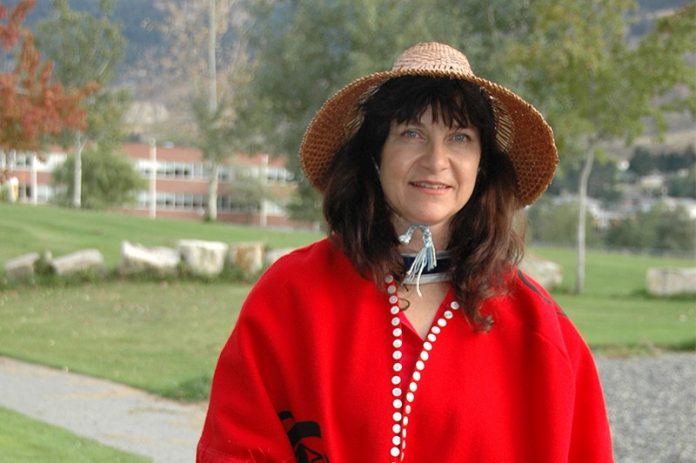
SFU professor Dr. Marianne Ignace was named a fellow in the Royal Society of Canada (RSC), a national academy that promotes research in arts, humanities, and sciences. Dr. Ignace is a leading scholar in Indigenous studies and linguistics in BC, working to revitalize and preserve Indigenous languages. 

In 2017, she and her husband, Chief Dr. Ronald Ignace, co-authored the book Secwépemc People, Land, and Laws. In an interview with The Peak, she explained the book discusses the Secwépemc people’s “10,000 year existence on the land and expresses Secwépemc Indigenous laws through stories.” She noted that they’re currently working to create “a follow up of a collection of stories [that they] have reclaimed into [their] language.”

Dr. Ignace also received a grant from the Social Sciences and Humanities Research Council of Canada, to collaborate with over 20 Indigenous organizations that encompass various languages in BC, Southeast Alaska, and the Yukon. Ignace’s aim is to conduct “language documentation projects,” amongst other research projects, where she strives to produce “new learners of Indigenous languages.”

For the last three years, Dr. Ignace has worked in the Secwépemc Nation with a group of adults learning their language. She said she aims “to raise a new generation of adults into the language.” When asked about the effects of her work, Dr. Ignace noted that she’s “seen some really good progress” in students’ language fluency. Dr. Ignace said that with hard work, she feels it’s possible to “turn the decline of languages around.” 

In addition to Dr. Ignace’s area of study, her work is connected to the “[field] of Indigenous ethnoecology and ethnobiology.” Part of her research centres around how Indigenous communities “[interact] with plants and animals on the land” in connection with their language.

Her research in ethnoecology and it’s relationship with language traces back to the 1980s when Dr. Ignace recorded the Secwépemc and Haida elders’ stories and narratives. These records were the foundation for her and Chief Dr. Ronald Ignace’s book. 

Dr. Ignace stated that the way in which Indigenous communities “express [their] thoughts about the world, about the environment, about social relations, [and about] the land” share a relationship. “The languages and the cultures are inseparably connected, deep down [ . . . ] that’s kind of why language revitalization is so important, to not lose that thread to ancestors, to the land, to the wisdom.”

Scaling the wall of toxic masculinity and rediscovering sports as an adult

0
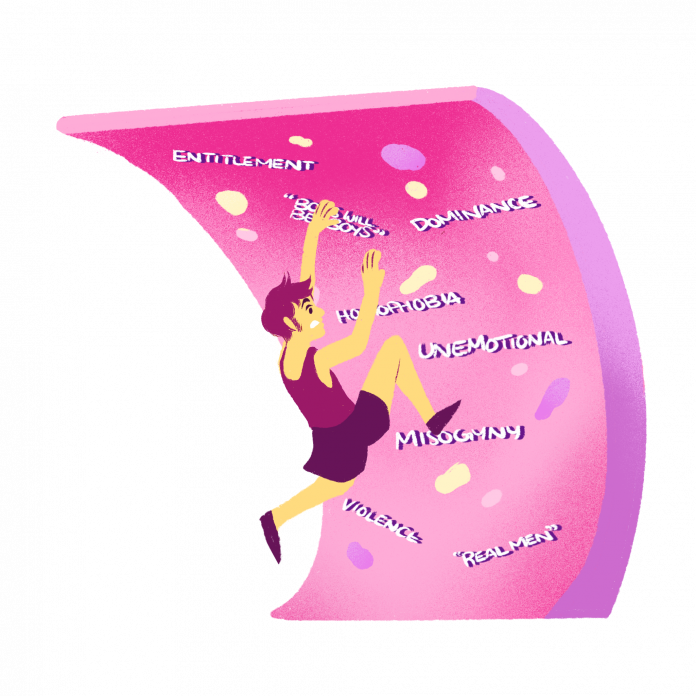
Image courtesy of Tiffany Chan.

I’m just about at the top of an indoor rock climbing wall. There’s a red and black machine a couple feet above my head, and it has a bungee-cord-like thing hooked into the harness at my waist. It’s supposed to support my weight and bring me down gently, should I fall. There’s a few rocks above me I could still climb up on, and I consider it. I think to myself that rock climbing is like a timed jigsaw puzzle, in which the piece that you are currently trying to place is your own body, and the time element is your diminishing stamina. Rather than trying to climb the last few rocks though, I reach up and put my hand on the machine, as that’s as good of an end goal as any on this climb. 

It’s my second time ever going rock climbing, and it took me three tries to get to the top of the beginner route. Through all the struggles I’ve had of academic work, of mental health, of the tribulations of living life, this was hard but it wasn’t complicated. It was a clear, unqualified, unambiguous accomplishment — unlike so many other things in my life. I feel great for a second, then I realize I’m clinging to coloured pieces of plastic 30 feet in the air, and I have to actually let go for the machine to catch me and bring me down.

I’ve had a weird relationship with sports. I watched wrestling, basketball, and hockey, and played basketball and hockey. But as I grew into my teenage years, I fit in less with my peers, and like many ‘nerd’ or ‘uncool’ types in high school, I cultivated an identity that was oppositional and condescending to the things that were appreciated by the ‘in-crowd.’ This included disavowing sports, being a film snob rather than watching mainstream action blockbusters, and (ironically) getting into classic rock like the Beatles and Pink Floyd rather than the rap music that was popular at the time (though I completely missed the irony in cultivating an ‘alternative’ identity around listening to dad-rock). In hindsight, a part of the reason for this was that much of the popular culture (and especially sports) was, and continues to be, suffused with the kind of toxic masculinity that many of us who didn’t fit in found traumatizing.

From a more mature perspective, I have found that while I’ve retained my appreciation for things that have a niche appeal, that there is craft, skill, artistry, and pleasure in things that are popular or mainstream as well, including the sports I originally cast aside. Moreover, the things that I found appealing in niche cultural products can also be found in mainstream culture if you’re looking. Not only that they could be found, but that they were just as beguiling, just as spiritually enlightening or artistically fulfilling as the entertainment I consumed when I considered myself more ‘enlightened.’ 

This was my way back to taking an interest in sports. I always loved hearing and telling stories, so naturally I gravitated towards reading and film. When I took an interest in writing, many writers and storytellers I admired expressed that some of the best writing and journalism that’s ever been produced has been in sports journalism. The reason for this is that professional, amateur, and recreational sports are amazing conduits for great storytelling and expressions of humanity, and in more ways and through more lenses than you might think. Of course there are the typical lenses, such as how your favourite team did in the playoffs this year, what team won the Stanley Cup, the Super Bowl, or whether LeBron James is better than Michael Jordan. 

I think those are certainly great, if overanalyzed and overexposed stories about modern sports. However, I believe that sports and sports fandom says so much about our culture, society, and who we are as people. There are so many stories to explore that cut across an incredibly broad swathe of related topics. 

For example:

Civil Rights, Vietnam War: Muhammad Ali was not only the greatest boxer of his time, but also one of the most important civil rights activists and perhaps the most high-profile person to resist the Vietnam War draft. At this time, Ali was one of the most famous people in the world, and the government saw his open defiance as a threat that could (and did) galvanize others, thus they tried to make an example of him. In my eyes, the fact that he was stripped of his boxing license and convicted of draft evasion at the height of his fame and career makes him one of the most interesting, complex individuals of the 20th century. Journalist William Rhoden wrote, “Ali’s actions changed my standard of what constituted an athlete’s greatness. Possessing a killer jump shot or the ability to stop on a dime was no longer enough. What were you doing for the liberation of your people? What were you doing to help your country live up to the covenant of its founding principles?”

Body shaming, racism, sexism: While Serena Williams has by far dominated the sport of women’s tennis, through much of her career she has not actually been the highest paid player, due to fewer endorsements. The reason for this according to many articles, including on Slate and The Atlantic, is that, aside from being Black in a sport with far more white women, Williams has developed a muscular physique that has helped her steamroll over her opponents. It is a physique that is less ‘marketable’ and ‘feminine,’ for companies looking to endorse athletes. Despite her unprecedented dominance of the sport, Williams has endured much body-shaming in the media. The implication here is that, in a sport where much of the media focus is on the female athlete’s looks, her outfits, and where the presiding organization once tried to ban women from ‘grunting’ while playing, Williams’ has prioritized pure sport and athleticism over so-called ‘femininity,’ marketability or money — whereas her peers have done the opposite. 

Urban infrastructure, poverty, government spending priorities: The ongoing stories talk about how sports intersect with inner city culture, with many seeing sports as a way out of poverty (as portrayed in the Oscar-winning documentary Hoop Dreams). Other notable discussions include the controversies related to governments pouring millions into constructing stadiums for professional sports teams, money that some say is better spent in other areas.

Physics and psychology: In the 1970s, when NBA player Rick Barry pioneered an underhanded free throw shot (also known as a ‘granny shot’), it was found, according to a physicist interviewed by the Washington Post, that it was objectively superior to the more standard overhand shot. This was due to fewer variables in the angle and direction one can throw in. Barry was one of the NBA’s greatest free throw shooters ever, ranking 7th all-time in free throw percentage (89.31%). However, few players adopted his method despite Barry’s success, with Hall of Fame member Wilt Chamberlain dropping it because he looked too ‘sissy.’ In this case, Chamberlain is doing something that he knows is inferior, because of social pressures, ie. the machismo (strong or aggressively masculine) culture and toxic masculinity that pervades sports, something that Barry had no concern for.

Sports are an amazing engine for meaningful stories about our culture and society. Unfortunately, the machismo culture that often surrounds sports sucks up all of the air in the room, leaving little space for discussion about the endlessly fascinating micro-narratives arising from it. It is also important to acknowledge that many of us have traumatizing memories of high school gym class, where we were forced to participate in activities that we had little natural ability in, and the bigger, stronger kids had sway. I believe this culture of machismo and toxic masculinity embedded within sports is actually harmful to its most powerful expressions and applications. It certainly harmed me. I was fairly athletic and pretty decent at most sports, but due to not fitting in with the jock/machismo culture that surrounded it, I didn’t get to explore my athletic ability to its full potential.

Where this leaves me now is that I am trying to reimagine a relationship with watching and playing sports that casts aside both the trauma of toxic masculinity and the misguided condescending attitude that I developed as a survival mechanism. But this is still a challenge because of the harm that toxic masculinity does to our psyches.

Here in the present, I’m still hanging in the air, clinging to the bright plastic rocks a little too long, and using up the little stamina I have left. I feel good, but I’m getting butterflies, more and more as the seconds tick by. I can’t help but reflect on the journey I’ve had, and how powerful sports narratives have brought me here. I haven’t had the nerve to (re)try team sports as an adult, however I’ve enjoyed the communal, but still solo, nature of rock climbing. I’ve particularly enjoyed this micro-narrative of me finally getting to the top of the beginner’s route on my third try, in a sense scaling the wall of toxic masculinity. I take a deep breath to calm my nerves, close my eyes, and let go of the wall.