Home Blog Page 400

Student believes they left last scrap of serotonin underneath the rainbow parachute in grade three gym class

0
PHOTO: Bev / Pixabay

I remember that day so clearly. 

Fourth period meant that it was time for gym class. Normally, I’d be nauseous from the anxiety of playing dodgeball against the eight-year-old Olympians, but our teacher opted to lead us outside, instead. Who needed our brand-new gymnasium that steered funds away from replacing our textbooks from 1967, anyway?

I don’t know what I was expecting. Maybe we’d play Four Square, or “Slurp Tag,” a messed up version of tag where you had to lick your hand before tagging someone. Ah, what class. This was the beauty of pre-pandemic times: bonding via wiping your saliva on some kid’s shoulder. 

Ms. Williamson went to the supply closet that my third-grade boyfriend Dylan swore was haunted, and to everyone’s delight, she pulled out . . .

The coveted rainbow parachute. 

It was a marvellous invention. It was more beautiful than Sam from Totally Spies — which, if you knew how gay my eight-year old self was, says a lot.

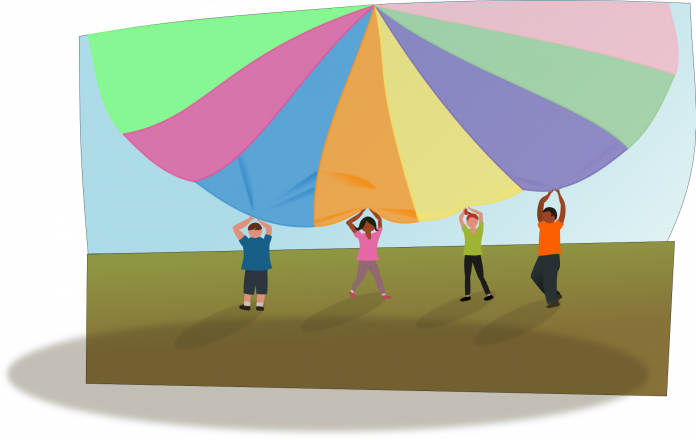
“Grab a handle,” said Ms. Williamson, and we obliged, eager to take part in the blessed (cult?) ritual. We lifted it up and down, more synchronized than Mariah Carey lip-syncing on New Year’s Eve 2016 (which really isn’t that hard to do, but still.) Finally, we pulled it over our heads, settling underneath it. We blocked the world out and thrived underneath a nylon rainbow sky. 

That, my dear reader, was the last time I ever felt happy.

When we went inside for lunch afterwards, Dylan — my third-grade boyfriend, if you recall — immediately broke up with me. He dumped me in fear that holding hands would get me pregnant. That was the first incident in a miserable series of events, often headed by stupid men, that brought my cynical ass here today. Such events included: dating a guy who said he was a pilot but was really a sad stamp collector and then staying with him for three years, choking on a hotdog because I was trying to show off my deep-throating skills to a different guy, and getting high and writing a song you all should know but don’t called “Friday.” I’m coming for you, Rebecca Black. It should have been me who had a glamourously gay TikTok comeback.

Underneath that rainbow parachute was the last time I have ever felt an ounce of serotonin light up my sad, smooth brain. My therapist says that I’m “severely depressed” and “need to stop falling for toxic men just because they look vaguely like Owen Wilson, but specifically Owen Wilson when he was on That 70s Show because it was the only time he was ever attractive,” but I know the truth, Susan. One day I will return to Our Lady of Holy Trinity Saint Jesus Elementary School. I will find that rainbow parachute, and I will find happiness again. I wonder if Dylan is still hanging around there.

Site C Dam to reroute Peace River this fall

0

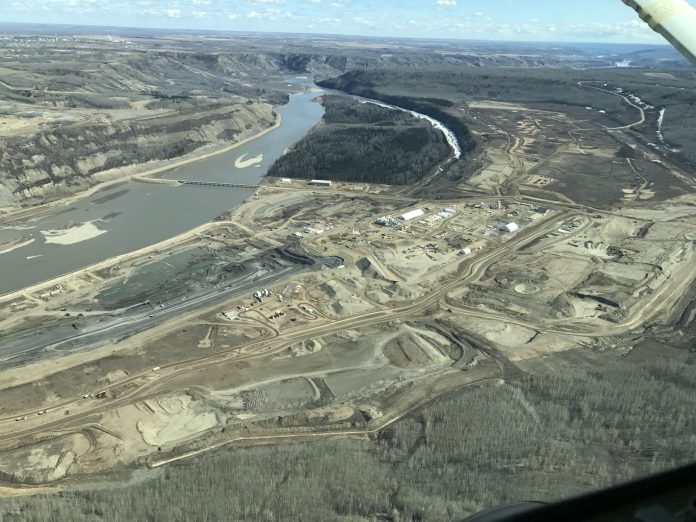
BC Hydro recently announced that they are diverting Peace River this fall in the process of constructing the Site C Dam to meet BC’s growing energy demand.

As British Columbia’s population grows and “we see more and more vehicles switch from diesel and gasoline to electric, [there is going to be a] significant increase in the energy demand,” according to SFU Resource & Environmental Management professor Zafar Adeel. This demand for energy will be met by the construction of Site C. Upon completion it will provide energy to around 450,000 homes a year. 

COVID-19 caused the construction to be temporarily suspended. BC Hydro released a statement noting that the “delays have presented further cost pressures on the budget.” They resumed construction as of April 2020 and the Peace River diversion is “scheduled to take place in fall 2020 over a period of several weeks.” 

The Peak spoke with Adeel to discuss the environmental implications of the project. He explained that the construction began in 2015. Since then, there has been a set of permits issued to eradicate and relocate fish habitats and beaver dams, along with the capture of various amphibians. Relocating animals upsets the balance of the natural ecosystem in the place they’re taken from and where they are moved to. This can have major environmental consequences, such as going extinct, not being able to recover, or harming life in the area they are moved to.  

Opting for alternative renewable power is difficult and can be more costly than a hydroelectric dam, according to Adeel. Currently, 86% of BCs energy comes from hydroelectric power; alternative renewable power sources, such as wind power or biomass power, contributing a total of 8%. The preference for hydroelectric power can be explained by its flexibility: “Within literally a matter of minutes, you can switch on [additional hydroelectric] turbines to meet an expanded [energy demand]. However, “With wind power, with solar, you have to actually store the energy somewhere so that when the demand goes up you’re able to tap into it,” according to Adeel. Because of this, the capital cost to store energy can cause those alternatives to be too expensive. He concluded that hydropower remains the cheapest renewable source of power. 

Site C has a complicated history, according to Adeel. He noted that the environmental reviews done in 1983 by the BC Utilities Commission did not recommend the construction of Site C. In the early 1990s, construction was revisited once again by BC Hydro but decided that it was “environmentally unacceptable,” as noted by Adeel. In 2010, the BC legislature removed the BC Utilities Commission review.

Indigenous peoples have also noted that the construction project is “an infringement on [their Treaty Rights.” According to Raven Trust, an organization for Indigenous justice, “there are alternatives to Site C that do not infringe upon our Treaty Rights [or] destroy the Peace River Valley.”

Site C’s reservoir would submerge “old growth forests in the area that have to be removed.” This includes Indigenous land that includes culturally significant “heritage and archaeological sites,” according to Adeel. Some have noted that amongst the land remains Indigenous burial grounds, farmland, “and the last intact section of the Peace River Valley still available for Treaty 8 members to engage in traditional practices.” More specifically, the project would damage  “moose calving grounds, medicine harvesting and berry picking, and spiritual practices.” Indigenous activist Helen Knott expressed that by building the dam and destroying the way Indigenous peoples practice their culture, “[BC Hydro is] stealing from future generations, both Indigenous and non-Indigenous.” 

The Union of British Columbia Indian Chiefs expressed that “the federal and provincial governments acted irresponsibly when they granted approval for construction of the massively destructive dam.” They also stated that the United Nations condemned the construction and “and called for an immediate halt.”

Adeel noted BC Hydro’s decision to flood 128 kilometres of the Peace River, including “prime agricultural land” will severely impact the communities along the river. However, BC Hydro claims that over 13 Indigenous groups have “confirmed that they have been adequately consulted and accommodated,” according to a statement released in May 2018. 

Adeel added that there are many proposals to build dams elsewhere. For example, there is a proposal to discontinue the construction of Site C and opt for building 17 additional smaller power units on Bute Island that would produce around 1,000 megawatts, equal to Site C. BC Hydro maintains that the project would provide “the best combination of financial, technical, environmental, and economic development attributes for the amount of energy and dependable capacity.”

BC Hydro declined to comment.

Myths about veganism shouldn’t stop people from choosing it

1
PHOTO: Pxfuel

I remember when my sister surprised my entire family with the news that she was going vegan. As is typical for a Punjabi family, the majority of our diet included dairy, so it was no shock that my sister received tremendous backlash. Despite my parents’ adverse reactions, my sister persevered and managed to convince us all that the vegan lifestyle really is worth the change. Her journey in becoming vegan inspired me to do further research on the topic, leading me to realize that there are many misconceptions that surround it that should be dispelled. 

People who follow a vegan diet are surely asked if they get enough protein more times than they can count. The common thought is that we gain protein from animal products, which is entirely untrue as protein is found in all plant foods. Not to mention, animals consumed as a source of protein are fed plant-based diets. Being vegan just means consuming protein directly from the source instead of consuming excess injected hormones that come with animal protein. This idea that vegans don’t consume enough protein is especially misplaced because, according to HealthLink BC, vegan diets containing soy products, grains, nuts, and seeds are more than sufficient in fulfilling your body’s protein needs.

There is no denying that protein is an essential nutrient in the way our bodies function; however, we do not need high quantities. Research even suggests that having a high animal-based protein diet can actually have dangerous effects. Adults who consume animal-based products in very high amounts are “four times more likely to die of cancer and 75 percent more likely to die from any cause.” This just proves that animal-based protein isn’t entirely healthy and shouldn’t be favored over a vegan diet. 

I can’t tell you how many times I’ve heard people say that veganism is unhealthy, and use it as a reason for why they won’t go vegan, when it’s completely the opposite. Not only are you less likely to suffer from heart disease and have lower cholesterol levels, being vegan also helps improve your immune system and can improve your skin. Another common myth is that being vegan leads to malnutrition. As long as your diet is well balanced and you are consuming enough nutrients, the benefits of being vegan are endless!

Veganism is widely associated with solely food, and this may be the case for some, but it doesn’t stop there. People who generally follow veganism make it a whole lifestyle to only purchase cruelty free products, along with making conscious efforts to be sustainable and environmental friendly. This lifestyle is inspiring and should be taken into consideration as it’s no secret that we are currently in a crisis when it comes to our planet. Since we are utilizing Earth’s natural resources far faster than they are replenishing, it is causing the planet to go through serious changes. Embracing veganism helps the environment far beyond we can comprehend and improves your health as well. 

Although it may seem like a drastic change, what I have learned from my sister’s journey into veganism is that becoming vegan is completely worth it. Many people believe the myths about veganism easily, but not only is it healthier, it is also good for our planet. Being vegan means you are living a cruelty free life, and what could be better than that?

What Grinds Our Gears: Courses meant for online learning shouldn’t be as disorganized as the newly adapted ones

0
PHOTO: JESHOOTS.COM / Unsplash

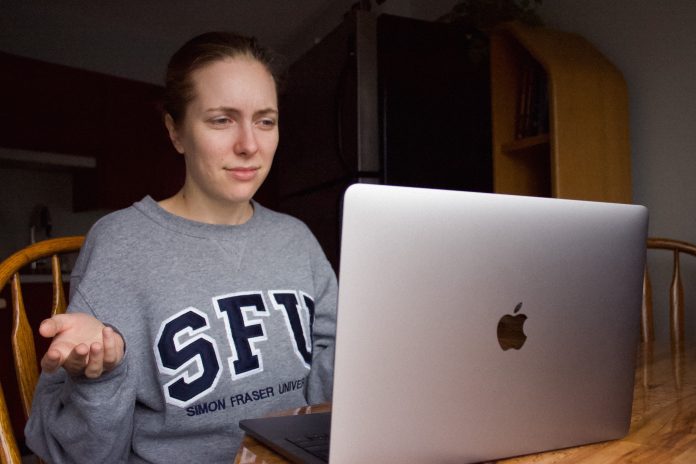
Distance education courses — not to be confused with the shitshow in-person classes now taught online — are intended to be delivered remotely. Lessons and resources appear on Canvas for the student’s convenience. In theory, the professor should have some sort of grasp on communicating the course’s goals. So why do I feel more lost in my Romantic English online course than my courses that moved online for the first time this Fall semester?

This course is an absolute disaster — and that’s coming from someone who cries nightly (and daily) to Keshi. Discussions are facilitated by students for students, and I have no idea if my contributions are fruitful. It’s week eight and I have received no feedback at all.

For our most recent assignment, the class was so confused about the expectations that the due date was extended because that many people were lost. Then, it got pushed again because no further explanations were provided and complaints were made.

I haven’t gotten my mark back (not surprised), so I still don’t know if I integrated a poem analysis, a secondary source on everyone’s favourite Romantic, Blake, and my own response to these things (yes, we had to use the first-person. I’m still shaking) within the four pages allotted. Those four pages aged me. As a fourth-year English major, four pages should take less effort than a BuzzFeed math quiz.

With no Zoom calls for questions, transparency on Canvas is critical. Was the TA confused and therefore couldn’t elaborate on the expectations? Who knows. But can students have a bit of organization during this already stressful time? As a treat?

SFU saves student from exam stress by making exams 25 hours apart instead of 24

0
PHOTO: Gudrun Wai-Gunnarsson / The Peak

SFU proudly announced in a recent mass email that, to accommodate during these unprecedented times, the university’s administration decided on the Fall 2020 exam schedule after enrollment. This was to ensure that no student had multiple exams within the same 24 hours.

What does this mean for the scum of this godforsaken concrete deathtrap? Not only will students have a whole day and an hour to feel that good old nauseating test anxiety, but SFU can give themselves a big, self-congratulatory pat on the metaphorical back for helping practically no one — and honestly, they’ve earned it. From carrying on that very back the burden of terrifying past students during exams with invasive proctoring software, to raising tuition to such an extent that the SFSS’s poor chat had to be overrun by underwhelming memes during their AGM in an attempt to condemn them, SFU representatives may just deserve this one.

While it is unclear why SFU didn’t write exam schedules this way prior to the pandemic, students can now take the extra hour graciously provided to figure it out. 

On the other hand, math majors can finally shut up about their two 8:30 a.m. finals. One may be at this time, you fraction-comprehending fucks, but your next one, at the worst, will be at 9 a.m. It doesn’t have the same ring to it when you complain.

While most students have major projects still due within a few days of each other during exam season, this drastic change to finals will give students a massive break between exams to finish them all. To finally realize that two or more multiple-hour exams within a day is too much for a student . . . talk about Canada’s number one comprehensive university

Now you can’t say that SFU does nothing for its students. With exam anxiety resolved in one fell swoop, the university’s administration no longer has to worry about replacing its dog therapy to help with students’ mental health.

Anti-mask rallies held at Vancouver Art Gallery

0
Photo Courtesy of @CityHallWchVAN via Twitter

Editors’ Note: This article previously misspelled Dr. Sun-Ha Hong’s name as “Dr. Sung-Ha Hong.” It has now been corrected.

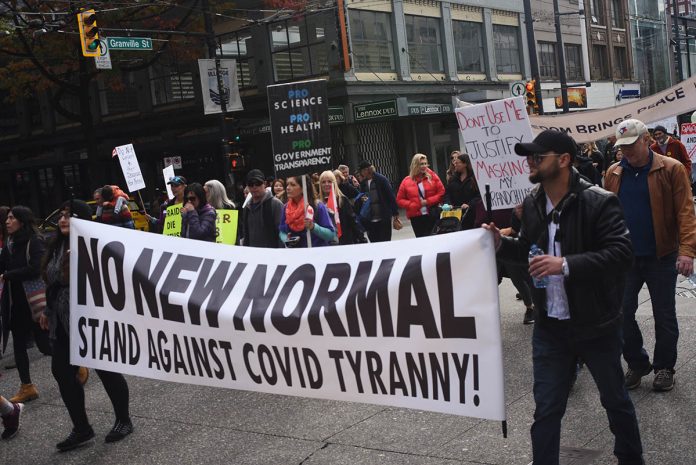
Anti-mask rallies have been organized over the past weekends in Canada, including a “mega rally” on October 17 at the Vancouver Art Gallery. The event protested against the provincial health recommendations to wear a mask amid the COVID-19 pandemic. 

The rallies were hosted by Hugs Over Masks, an organization co-founded by Vladislav Sobolev. The Peak reached out to Sobolev for an interview for more information regarding his stance on the pandemic. He stated he was “pro-education and pro-science” and explained that he decided to kickstart the group when he attended an anti-mask protest in Toronto on May 2, with the objective of the rallies to educate and be “a place of compassion, of love, and positivity.”

According to Sobolev, the hugs in Hugs Over Masks “represents humanity in all its glory.” He added that masks are “a symbol of tyranny and fear because right now if you see anyone wearing masks in public, especially outside to me, [it] just shows that that person is very fearful,” he explained.

“When you have forced medical procedures happening — and a mask is a medical procedure — people don’t understand [that] when you’re wearing a mask, it alters how much oxygen your body gets.” Hugs Over Masks provided an academic source for this claim, however, it states that the cause behind the change in oxygen saturation is unclear, noting that the changes in oxygen found in the study “may be either due to the facial mask or the operational stress.” 

The World Health Organization (WHO) and Centers for Disease Control and Prevention both state that masks are recommended to limit the spread of COVID-19 and that masks do not affect oxygen levels.

“Snapchat filters [ . . . ] was one of the ways [social media] indoctrinated and brainwashed children specifically to put things on their faces,” Sobolev explained. He uses this as an example of many ways that children have been influenced by social media to accustom them to “wearing masks on their faces, which is completely harmful and devastating to the growing, developing [of] a child’s body.” The WHO states that masks are not recommended for children under the age of five. They also note that evidence remains limited regarding harms and benefits for children wearing masks. The WHO maintains that mask-wearing depends on the extent of COVID-19 transmission in their area, the child’s ability to wear a mask properly, and recommend considerations regarding psychosocial development and children with disabilities.  

The World Health Organization has labelled the surge in disinformation during the pandemic as an “infodemic” — a large consumption of information that leads to the spread of misinformation. Amongst other examples of mis/disinformation includes the claim that masks are detrimental to one’s health, according to multiple fact-checking sites. A study conducted by Cornell University evaluated 38 million English-written articles from traditional media worldwide and “identified over 1.1 million news articles that disseminated, amplified or reported on misinformation related to the pandemic.” Sarah Evanega, the lead author of the study and director of the Cornell Alliance for Science, said that “if people are misled by unscientific and unsubstantiated claims about the disease, they may be less likely to observe official guidance and thus risk spreading the virus.”

SFU Communication professor Dr. Sun-Ha Hong, who specializes in disinformation and conspiracies, says that it’s pivotal to go to the experts for any certain topic. “I am going to go by their best understanding of what is happening and what we need to do as a public to keep everybody safe.

“As a researcher myself, I know that it is often difficult to figure out exactly what a virus does or exactly what is known about a novel situation, so I understand that sometimes the advisories are going to change [ . . . ] or [that] there are certain margins of error. But I am not going to immediately believe that they must be lying.”

According to Dr. Hong, disinformation “creates an environment of doubt. So we find a lot of people that say, ‘I believe that the coronavirus is real. But I have my doubts about whether I need to wear a mask or whether I need to socially distance.’”

Dr. Hong added that attention does not directly correlate with credibility, and referenced Cornell University’s study which cited that politicians “are the single largest source of misinformation because they get amplified on television.

“[Politicians] tend to receive a disproportionate amount of media attention because they tend to be very good at strategizing on how to get that attention,” he said. 

Dr. Hong wanted to highlight that every profession and job has an outlier — and that doesn’t compromise the truth. “99% of people who actually do this job, know what common sense is, but you will always find one person who works at a restaurant who has said something crazy about restaurants.” He added, “We are tricked into thinking the hundred other official sources must be wrong because there are two sources that say something different.

“A lot of the time, the most reliable sources tend to be boring sources. The truth is not always exciting,” Dr. Hong said. “You can find any argument you want on the internet if you look closely enough. So if you see something that does that, that’s got nothing to do with whether it’s true.”

White person shocked to learn about racism for the first time through Instagram infographic

0
PHOTO: Katka Pavlickova / Unsplash

I just learned that racism existed when I opened Instagram feed the other day. Expecting my feed of custom Starbucks drinks, country music artists, and nothing but Live, Laugh, Love, I instead came across my awakening. My feed was filled with black squares with the hashtags #BlackTuesday and #TheShowMustBePaused. Something switched in me, and I desperately needed the world to know so. 

I was searching for a way to show my support for Black Lives Matter, but donating to BIPOC-led organizations that have been operating for decades and who are most equipped to help the victims of institutional violence just wasn’t for me. But posting a picture of a black square, completely ruining the aesthetic of my feed . . . now that’s brave. So I did just that. I even took the initiative to add #BlackLivesMatter in the caption.

I became an activist that day, and did so without causing harm to anyone. I didn’t have to stop supporting my favourite openly racist essential oil business owner or block roads like those hooligans — and I definitely didn’t co-opt a movement started by two Black women in the music industry. 

Now, I am the most woke person in my circle. I do really important work like constantly proclaiming that I don’t see colour, going to protests and posting pictures so I can prove that I went, and asking the one Black person I met in 2005 if they’re okay. It’s really exhausting work and the allyship fatigue that I have to endure from being such a selfless person is a burden. I couldn’t name another person that is more overwhelmed and exhausted by the emotions that come from doing this meaningful work.

Despite all of my tireless, thankless work, I still have this guilt that I’m not doing enough. I still need more evidence to rebut people’s claims that I have white priv— I mean, that my activism is performative. I have to innovate and come up with a solution to this problem.

Thankfully, I have the perfect idea. I’ll create necklaces from the broken glass from the protests, upcharge the piece by 1000%, and commodify off the trauma of others. Everytime I leave the comfort of my suburb to go into a Black community, my nervousness around Black people is curbed as I put the pieces back together from shattered lives. I’m providing society with a commodity that is truly worthwhile: overpriced costume jewelry. Taking something I consider to be dangerous in a Black community and making it safe by profiting from it in a White community . . . truly admirable.

Finally, my work has come to fruition. The dozens of white followers I’ve gained through constantly posting infographics about the police that I’ve never read all the way through on my story can be put to use. They’ll be able to placate their guilt from not supporting the BLM movement by increasing the profits of a white-owned business. It’s a win-win.

Online AGMs allow for students to be more engaged with their governance

0
PHOTO: John Schnobrich / Unsplash

To be honest, I had never attended one of the SFSS’ Annual General Meetings (AGM). Not for lack of care, but because the in-person format never really jived with me. This year’s AGM, however, was the first that I’ve actually wanted to be at. The online format was something that the 600+ students who attended could agree is a large improvement from in-person meetings: its accessibility and ability to engage a large number of students would give incentive for me to attend the next one, if it’s online.

One of the main benefits of the online format, other than reaching students during a pandemic, is that it allows people who would not be able to come to campus to be present. This includes students with accessibility concerns, a course conflict, or even someone who doesn’t want to make the trek up to the mountain that day. Students who wouldn’t want to commit to sitting in a room for multiple hours can simply get a preview, a small dip in the world of student politics at their leisure.

Zoom’s technical difficulties are inevitable, but the minor glitches are nothing compared to the sheer amount of participation. Student attendance at this first online meeting, at one point, was 612 attendees. This was way over the required minimum of 250 to pass votes, and a number which bodes well for the future of student participation. The last AGM in recent years that met quorum was the one in 2018, and that’s only because everyone wanted to impeach the SFSS president. Everyone even left after the vote was cast. 

Granted, I think that most people who attended this meeting just wanted to win a prize. There shouldn’t have to be a bribe of electronics for students to care about decisions that impact their future, but it is an effective way to get them to come. In addition, the money saved from not having the meeting in-person allowed the SFSS to purchase those prizes to give back to students, a plus for student’s pandemic struggles. 

With online AGMs, you won’t get the rousing euphoria of everyone extending their hands to impeach a SFSS president, but also no one can smoke bomb the auditorium and delay the whole meeting. In addition, because of Zoom’s polling function, votes are anonymous and students can’t be swayed by a wave of hands. Not to mention that it’s more accurate than a guess from a quick glance.

The length and density of the online meeting did make it dreadfully boring, but it’s three hours in exchange for potential years of impactful change. It’s also a great introduction for students to get involved with and be aware of student politics. It gives them a lot of perspective on the routine business proceedings that go on behind the student-led organization that we benefit from. It would be beneficial for the whole student body for future AGM meetings to be held online, pandemic or not.

The online format of the AGM did exactly what the SFSS advertised and brought back student power. Not only from the resounding votes in favour of the motions that plan to do so, but in the inclusivity and accessibility of the event which gave attendees a greater understanding of the processes that empower them as students. Let’s hope that by next year the pandemic has passed, but online AGMs stay.

Meeting etiquette still applies even when it’s online

0
Photo Courtesy of the Simon Fraser Student Society

Last Monday, the Simon Fraser Student Society (SFSS) held their Annual General Meeting (AGM) online with over 600 people in attendance. The last time the AGM had a turnout like this was back in 2006, with the majority of students attending this year to condemn SFU for tuition hikes and for the many raffle prizes.

A benefit of the SFSS holding the AGM over Zoom was the use of the chat function. Students were able to talk to each other in real-time to ask questions and fix technical issues. Despite the high attendance through Zoom and the versatility of the chat, like any time you give students the opportunity to communicate freely, internet trolls came rushing in. 

While joking around with peers is fine, it needs to be understood that this was a serious meeting that affected not only the current student body, but future students’ lives as well. 

Online or in person, students should be respectful during meetings. The SFSS is not a club, they are a group that are trying to pass important policies to hold our university accountable and better the lives of its students. So it is helpful to no one when attendees come into the chat and send a mass block of white squares.

One of the more playful comments included: “I propose we give $20 million to SFU Anime Club just to see what happens,” with responses like “student engagement will only surge with the power of anime.” There was even a discussion of distributing body pillows to all SFU students. While these comments in the moment are fun, other comments had more negative connotations. 

“Everyone deny the vote for lols” said one SFU student regarding the motion to condemn SFU for the tuition increase, while another student suggested that we “vote against [it] to save time” in hopes that we could get to the raffle draw sooner. 

Just because we are online does not give students the excuse to not take these meetings seriously, and being disrespectful in chat is no benefit to anyone. It got to the point where Osob Mohamed — chair of the meeting and president of the SFSS — had to hop into the chat and say “I am reminding the assembly of the rules of the meeting.”

Additionally, spamming the chat just makes everything run slower. One user even said that “this chat is slowing my computer to the point of it not loading.” Spammers are not God’s gift to mankind because they think they’re funny in chat, especially when it is hindering others’ experience of the AGM.

If pointless behaviour like this continues, I’m sure chat functions will be disabled in potential future meetings, which will be worse for everyone. So just don’t be a dick, and leave dumb commentary to Reddit.

Monday Music: Songs that remind me of my ex-boyfriend Joe that I listen to while pleasuring myself and weeping

0
PHOTO: Kelly Sikkema / Unsplash

So Joe and I have been broken up now for a week — a week, 11 hours, three minutes, and 43 seconds to be exact. Have I left bed since then? No. Have I stopped crying? Of course not. Has the muscle on my right forearm grown exponentially as thinking of my ex during the height of climaxing is the only way I can feel anything right now? Next question. If you’re like me and are in the need for songs specifically for jerking it while sobbing, this playlist might just be for you. (And Joe if you’re out there and you see this I love you baby I’d do anything to have you back.) 

“Deepthroat” – CupcakKe

This was our song. This will always be our song. As I blew you in the Denny’s parking lot on our second date with this song blaring on your car radio, you looked me in the eyes and said, “You and me forever, Clive” — to which I responded “GACKK AcKk” while trying not to vomit on your dick. This scene plays out in my head like a movie: the look in your eyes as I stared at you and gagged, your playful teasing of calling me the wrong name (my favourite recurring joke of yours), the ambient sound of the radio shouting “lick lick lick lick, I wanna eat your dick” mixed with the smell of piss wafting from the dumpster next to us, and the gasps of awe and wonder from the audience (AKA the onlookers from the Denny’s). I will replay this memory forever, Joe, especially while holding myself in the palm of my hand. 

“Cotton Eye Joe” – Rednex

It’s only natural to put a song with your ex’s name in it on such a playlist. You always hated this song because it’s actually about an STD, but I loved how that reminded me of you even more. For our three week anniversary, I made you that mixtape that was just this song on repeat 18 times. I bet you played that CD to death since it apparently broke so quickly. Should I make you another one? Would that get you back? Now here I am, just as lost as the narrator to this song. Where did you come from, but more importantly, Joe, where did you go?

“My Immortal” – Evanescence

This song hurts, in perhaps the best way possible. Sometimes lyrics that hit too close to home are what help you forget getting broken up with via a Snap that also had “streak” written out poorly on it. Sometimes perfect catharsis is the muffled sob you suppress as you shoot across the room at the wall 9ft away to an Evanescence song. It’s like Evanescence says, there’s just too much that time cannot erase. How can anyone expect me to get over a three month relationship this quickly? 

Jimmy Barnes screaming for 10 hours

Joe I’m losing my fucking mind without you. I’ve listened to this song on the daily since you’ve left. I don’t know how much longer I can do this. I don’t even fucking know who Jimmy Barnes is, but his howling against a mountain backdrop seems to pleasure me enough until I pass out from exhaustion. Is this what you wanted? Are you satisfied? 

Or are you testing me? Ohhh, I see what you’re doing. You’re doing this on purpose. You want me to get out of this funk and come to you right now, don’t you? I’m running out of Kleenex and lube, anyways. This must be a sign. I still remember where your family kept the spare key. I always remembered the tiny things like that. Fuck, I can’t take it anymore. Hang on, baby. I’m on my way.