Home Blog Page 389

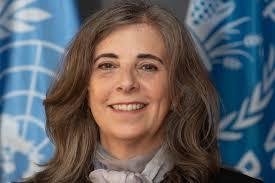
SFYou: Cynthia Jones, 2020 Nobel Peace Prize Winner

0
Photo courtesy of SFU News.

Name: Cynthia Jones

Pronouns: she / her

Departmental affiliation: Bachelors of Science in Kinesiology (graduated in 1990)

Hometown: Agassiz, BC

Occupation: Chief, Administrative Services at the United Nations World Food Programme (WFP)

Fun fact: In her spare time, Cynthia enjoys watching science fiction and martial arts films, especially Mulan.

Graduating from SFU in 1990, Cynthia Jones has had a lengthy career working to fight structural issues in the world. While working with an NGO in a war zone in South Sudan, Jones witnessed the United Nations World Food Programme’s (WFP) active role in distributing goods and “fell in love with [the] organization” and their work. Following a year of working in South Sudan, she traveled to Uganda to assist with the WFP’s Southern Sudanese refugee programs. 

She worked as a consultant and then was promoted to administer food distribution programs for refugees fleeing Joseph Kony’s Lord’s Resistance Army. She also assisted with the Food for Asset Program, which compensated participants for work such as repairing roads and planting trees with food.

After years of working with the WFP, she eventually became their Chief Administrative Officer and in 2020, Jones and her team were awarded the 2020 Nobel Peace Prize “for [their] efforts to combat hunger, for [their] contribution to bettering conditions for peace in conflict-affected areas, and for acting as a driving force in efforts to prevent the use of hunger as a weapon of war and conflict.” As the world’s largest humanitarian organization, the WFP provided assistance to 100 million people in 88 different countries in 2020.

Providing a Lifeline During the Pandemic

During an interview with The Peak, Jones discussed how  the global pandemic exacerbated unemployment and world hunger. Through a partnership with the World Health Organization (WHO), the WFP continued to supply food, water, and personal protective equipment (PPE)  to countries in Africa and the Middle East to match the increasing need for food, especially in urban areas and quarantine centres.

This partnership led to the UN Supply Chain Coordination System. Jones explained, “[During] the flight bans, we started up basically a global passenger air service able to get the health workers and the humanitarian workers in some of these countries, mainly in Africa and the Middle East, [ . .  . ] to manage the scale-up of the response. We set up these international staging areas that distribute health supplies [and] PPE that were destined to countries. They were flying [both humanitarian workers and supplies] in and then [shipping] them into the different countries.”

“Primarily we’re providing the logistics and the logistical support [ . . . ]  to the [WHO] and to governments to be able to get the supplies and the people to where they need to go. We are adapting our country-level programs and targeting patients that are affected by hunger due to COVID.”

Hunger is an Interconnected Issue

Jones spoke on how the issue of hunger is not singular; it exists in connection with others.

“We’re not going to achieve zero hunger unless we also put an end to war and conflict, and [realize they are] really two sides of the same coin, so to speak. Things are even more challenging, because also we have the effect of climate change, and that exacerbates a lot of things. Many people that we are supporting are agricultural communities that are affected by droughts and floods and conflicts.”

The WFP is actively involved in providing food to those experiencing food crises in Afghanistan, the Democratic Republic of Congo, and Yemen. Additionally, Jones addresses the growing need in the Sahara and West Africa as they are “on a fragile line of [ . . . ] people moving into famine.”

The WFP can be supported by playing the game Free Rice in which each correct answer raises money to support various WFP projects. The ad revenue earned from Free Rice is donated to the WFP, which buys food including but not limited to rice. Downloading the Share the Meal app on the Apple App store or Google Play will provide one day’s worth of meals to a child for USD $0.80. Donations to WFP are accepted through their website.

SFU alumni Dr. Jordan Abel on reimagining academia and literature

0
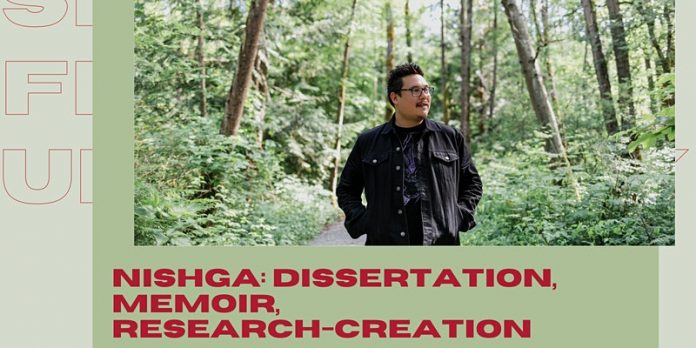
Photo courtesy of SFU Graduate and Postdoctoral Studies.

Dr. Jordan Abel, a Nisga’a poet, writer, and professor, doesn’t often get the chance to talk about his dissertation process. As an SFU doctoral graduate himself, he was the first speaker of SFU’s Supervision in the 21st Century series focusing on the future of graduate research, in the event A Conversation with Jordan Abel. He told the audience that he was very “intrigued” to be asked to discuss it and had a lot he wanted to contribute. 

Hosted by the Department of Graduate and Postdoctoral Studies, Dr. Abel discussed how he developed his Ph.D. dissertation at SFU to go beyond convention and incorporate photography, poetry, and autobiography to fully capture the complexities of his research and experience. Out of this process grew the book, Nishga. 

As someone who finds poetry a beautiful but baffling art form, Dr. Abel’s event intrigued me as he not only understands his craft but has mastered it. I also wanted to hear Dr. Abel’s perspective on higher education as a Nisga’a person in academia, on the West Coast, and in the world at-large. As a settler interested in reimagining higher education, I think it’s necessary to listen to Indigenous voices in this realm. 

Joining Dr. Abel in conversation was Dr. Deanna Reder, a Cree-Métis Associate Professor of Indigenous Studies and English Literature at SFU and member of Dr. Abel’s Ph.D. supervisory board. 

Telling the virtual audience he was “super stoked” to be joining them from his home on Treaty Six territory, Dr. Abel joked, “[being] in my basement with my X-Files poster behind me is not quite the most professional background [ . . . ] but there you go.”

Since many graduate students were in attendance, both the audience and Dr. Abel were glad to discuss his dissertation process. Drawing inspiration from Natalie Loveless’ book How to Make Art at the End of the World, he discussed how a reimagined version that went beyond writing “books that aren’t books” could benefit not only the research and project itself, but its full accessibility outside of the academic world.

“[Making our research public], whether it be through an academic book or a creative book or an art show, is [something] that allows us to expand our vision of what our research might look like and how we might ultimately present it. It really reminds me a lot of the ways we discuss form in poetry, which is to say that, in poetry, the form and the content should be activating each other.”

Abel continued, “The form needs to respond to the content, and the content needs to respond to the form; just having the form as a [conventional] dissertation is perhaps too narrow to accommodate all of the many ways in which our research may take form.”

Considering Dr. Abel’s body of work, it seems natural that his dissertation would transcend genre. His previous works have taken settler-colonial accounts of Indigenous life as source material, peeling back the layers to make poetry from their words in order to find the meaning and consequences of the original pieces. 

For his 2013 book, The Place of Scraps, Dr. Abel used an 18th-century ethnographer’s accounts which attempted to erase First Nations cultures on the Pacific Northwest under the guise of documenting them. In his 2016 book, Injun, which won the prestigious Griffin Poetry Prize, he deconstructed western pulp novels, creating his own poetry out of their words, to call attention to their racist portrayals of Indigenous peoples.

Nishga, however, is structured differently. Set to release on May 18, 2021, the work uses Dr. Abel’s own family as his source material to describe the “afterlife of residential schools” and the intergenerational trauma that it left on his family — his grandparents were survivors of the schools.

“There was no alternative [for] me than writing about [it] personally. I think for other people in other circumstances, [they] could imagine a way to write about [ . . . ] the wake of violence that ripples outwards from residential schools in a way that isn’t personal. For me, I couldn’t even imagine what that would look like.” He continued, “I’ve experienced it in such a particular, embodied way that the only way I could even understand it was to try to understand my own experience.”

As Dr. Reder puts it, looking at one’s own life to find material is “an Indigenous intellectual tradition. 

“How else are you going to write about anything without relying on the autobiographical, given the almost absence of Indigenous histories in the academy, but of course, in the world?” she said. “[It’s a] necessary assertion of [saying] ‘Hi! I’m here!’”

While Dr. Abel is now an Associate Professor at the University of Alberta teaching Indigenous Literature and Creative Writing, he says a position like that was far from certain when he began his postgraduate studies.

“When I began my Ph.D., I had no idea whether or not there would be a job waiting for me at the other end and, based on the job market at the time, there might possibly be no job at all when I finished my Ph.D. in my field. That was a moment where I really realized that I have neither the time nor patience to write a book that isn’t a book. I was really hoping that the Ph.D. would be a place where I could do work that was meaningful for me in some way regardless of the form that it took. I think Nishga was a project that really grew out of that discomfort,” he expressed.

In turn, Dr. Abel tentatively sees what grew out of Nishga as his next project: a series of written landscape portraits inspired by those he wrote for his dissertation. 

“It’s really strange to write but I’ve been really slowly and steadily working on it for the last few years, and it’s only been the last six months or so that it’s felt like a substantive project that may actually become its own book. I feel like I very often don’t want to say ‘this is my next project’ because you never know whether or not a project will just collapse in on itself,” he laughed, “but his one looks like it might be my next one. I’m spending all my time writing landscapes and thinking about what land looks like in fiction.”

Dr. Abel has an ability to thrive in the “slippery state between genres” to create academic and literary works that defy convention. Exposing the past to illuminate the present in his poetry, and expanding the academic definition of research to create a fuller understanding and display of it in his doctoral studies, makes him a fascinating, deeply insightful, and warm individual. His work will be incredibly worth following for many years to come. 

SFU report calls for a budget plan to prioritize children’s mental health due to COVID-19 struggles

0
PHOTO: Michał Parzuchowski / Unsplash

SFU professor and Director of the Children’s Health Policy Centre, Charlotte Waddell, led a study on COVID-19 and its impact on the mental health of children aged 0–18. The research report, published in September 2020, aims to “inform and assist policymakers in planning to support all children in BC during COVID-19 and beyond.”

Waddell recommended that new budgets be put in place to protect kids and “be devoted to effective interventions.” In an interview with The Peak, Waddell suggested investing in cognitive-behavioural therapy to “treat problems like anxiety, depression, and post-traumatic stress [and] prevent these problems from progressing to full-blown disorders.”

She noted that the mental health of youth and children during pandemics and natural disasters was “worse if children were severely affected, say, losing loved ones themselves, but better if children had strong [support], say, from their friends and families.”

Waddell explains in the report that the nature of the pandemic is still recent and unfolding. In order to predict the effects of the virus, the research drew on data concerning the impact that previous outbreaks, pandemics, and natural disasters have had on children. The data showed that after these disasters, children experienced high rates of anxiety, depression, post-traumatic stress and behavioural issues. 

“Some groups are [harder] hit than others,” Waddell said. Her research showed that children who were struggling with adversities before COVID-19 will struggle more with anxiety, post-traumatic stress, and depression. The report predicts sharp increases in services such as the Kids Help Phone, both during and after COVID-19. Waddell pointed out that children from low-income families rely on school programs for food provision, so temporary school closures have intensified stress and food insecurity. 

The report states that children might be disproportionately affected if they are experiencing socio-economic disadvantage, racism, pre-existing mental health conditions, and developmental problems. It found that children living in Indigenous communities are harmed by the effects of colonialism and experience extreme food insecurity, which has led to being more heavily affected by the pandemic.

Based on a previous study examining the effects of infectious disease outbreaks on children’s mental health, the report finds that 30% of children who were isolated or quarantined “exceeded the clinical threshold for post-traumatic stress symptoms.” Of those children, 33.4% began using mental health services for “generalized anxiety, adjustment difficulties, acute stress, post-traumatic stress, and grief.”

Waddell expressed that BC has “long under-served children’s mental health,” citing that “half of children with mental disorders were not getting treatment even pre-pandemic.” Based on the studies, Waddell asserted that BC policy makers should “prepare to respond by increasing children’s mental health services.” 

Waddell recommends that communities support the mental health of youth and those disproportionately affected by the pandemic by “writing to their MPs and MLAs to show this concern.” She also suggests that children in need of mental health services should visit a Child & Youth Mental Health Intake Clinic. The full research report can be found here.

App connects BC paramedics to American Sign Language interpreters for Deaf patients

0
Courtesy of Provincial Health Services via Twitter.

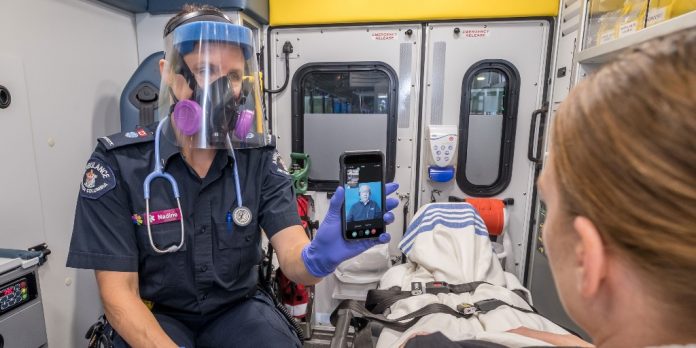
British Columbia Emergency Health Services (BCEHS), the Provincial Language Service (PLS), and the Office of Virtual Health (OVH) have launched an app to increase accessibility for those in the Deaf community. The app was designed to connect BC Paramedics to American Sign Language (ASL) interpreters. “It reduces barriers between our paramedic staff and Deaf, Deaf-Blind, and Hard of Hearing patients, enhancing patient care and safety,” says Sarah Morris, media relations for BCEHS, in an email statement to The Peak. 

According to the Provincial Health Service Authority’s (PHSA) website, the app is necessary to address the accessibility restrictions that have emerged as a result of the COVID-19 pandemic. The current pandemic protocols do not allow an interpreter or support person to ride in the ambulances and masks do not allow for lip reading, which many in the Deaf community rely on to communicate. 

The PHSA’s website notes that these unintended consequences of the pandemic have meant “community members [have] raised [concerns] that they sometimes had difficulty communicating with paramedics in emergency situations.”

According to Morris, the app will be installed on BC ambulance iPhones. ASL interpreters can be accessed on demand to translate for patients without charge to the patient or medical department. Some clinical areas already have access to this service.

The PHSA website notes that the interpreters “are trained to accurately convey all parts of a message without changing the content, meaning or tone, reducing errors and enhancing safety.” The PHSA believes that this service will enhance patient safety, communication and allow the patient to “focus solely on understanding their illness.”

Morris noted that this is the first time that an interpreting resource of this nature has been introduced in Canada. According to Morris, despite the app being born out of new accessibility challenges, it “will remain in place after COVID-19” and will add to the pre-existing options offered for the Deaf, Deaf-Blind, and Hard of Hearing community.

Scott Jeffrey, sign language service coordinator with PLS and a Deaf individual, noted that PLS has “created a Community Advisory Group that is made up of Deaf, Deaf-Blind, and Hard of Hearing participants to allow for ongoing engagement with the community.” 

This service is provided under the 1997 Supreme Court Ruling which mandates the Medicare Act and Hospital Insurance Act and requires “that sign language interpretation must be provided to Deaf patients in BC to comply with the Canadian Charter of Rights and Freedoms.”

ASL interpreters are available for patient’s interactions with other healthcare workers, private physicians, and other services for medical emergencies and non-emergency situations. 

More information on how to book an interpreter can be found online.

The Bright-er Side: TikTok boredom spotlights youth creativity

0
ILLUSTRATION: Siloam Yeung / The Peak

I don’t have TikTok. So it says something that I’m still very impacted by the constant innovation that comes from it. Pandemic boredom being funnelled into the app has only illuminated how much talent and creativity youth have to share with the world. 

The creation of elaborate narratives, green-screened worlds of wonder, and clever uses of video effects are just a few of the innovations I’ve seen in TikTok videos posted on other platforms. Not to mention that the practice of captioning videos has also grown drastically from these youth who are more mindful of accessibility. The fact that entire musicals are being written, sung, and designed through one–minute videos by these youngsters solidified this trend of ingenuity. One of these musicals being the Ratatouille musical which was recently turned into a one-night, star-studded fundraiser that garnered over $1.9 million in donations.

Don’t get me wrong, TikTok is still a social media cesspool. They’ve removed content from “ugly, poor, and disabled” users, have failed to protect children, and potentially have large breaches in security. Aside from these and other long-contested dangers of social media, the spotlight on creativity from youth still pierces through any darkness.

The TikTok app itself doesn’t really deserve any credit for this light, in truth. Without it, I’m sure there would be another app, another digital method, that this creativity would seep into. As of now though, it is the platform where youth are making their voices heard and minds seen. 

Watching these videos, I imagine these creators are getting into video design, editing, production, and aspiring to create bigger productions. I see comedic kids planning their first stand-up show. I just feel all of the potential that youth have always had being let loose, ready to be used for something greater. So, maybe, I should get TikTok. 

The best places to isolate at SFU

0
PHOTO: Gudrun Wai-Gunnarsson / The Peak

Are you an SFU student without the heart to go long-distance with your partner, the university? Need a place to isolate on campus? True, SFU is quite deserted as of now, but here are some locations to hide in to ensure that your trip to campus remains solo!

  1. First floor of the library 

Did you even know that the SFU Burnaby library has a first floor accessible to the student body? Something about 50-year-old dusty PhD theses from SFU’s earliest days is probably enough to keep anyone away. Sneezes are frightening at the moment, after all. 

By the way, grad students, this might be where the results of your 620,000+ hours of research end up. Check out the picture of your faculty dean dancing during the first ever Clubs Day while you’re there. You may not miss dancing at clubs as much after seeing that.

  1. The AQ Gardens

Who’s actually going to be there, especially in the winter when it rains or snows? There are a couple of benches in the gardens for you to sit down and contemplate every action in your life that has led you to this moment. Now, your eyes and butt are wet from sitting on that bench. Way to go. 

Don’t try to do this in the summer, though. If you try and hide there, you’ll end up playing a one-sided game of hide-and-seek with the SFU Camp kids.

  1. Your TA’s office/lab 

Become an RA for some environmental science TA and then you can obtain keys to a random lab on campus. You can hide there since the grad students are probably choosing to work from home nowadays — if they can help it. Who knows with SFU. You are free to conduct any experiments you want . . . I recommend finding ways to make Zoom sessions actually zoom by.

  1. The Vancouver campus 

The only time I’ve ended up here was after falling asleep on the R5. It’s a good place to hide from the rest of the SFU community, but it’s in a sort of shopping mall that’s still operating for some reason — so maybe don’t go too far off the actual campus area.

  1. The SUB 

Similar to the gondola, it’s a place for you to hide that officially doesn’t exist on the SFU campus maps quite yet. I’ve checked! Just don’t stay pressed up against all that glass or you’ll give yourself up! Oh wait, it’s still not open to the public. Better luck next eon.

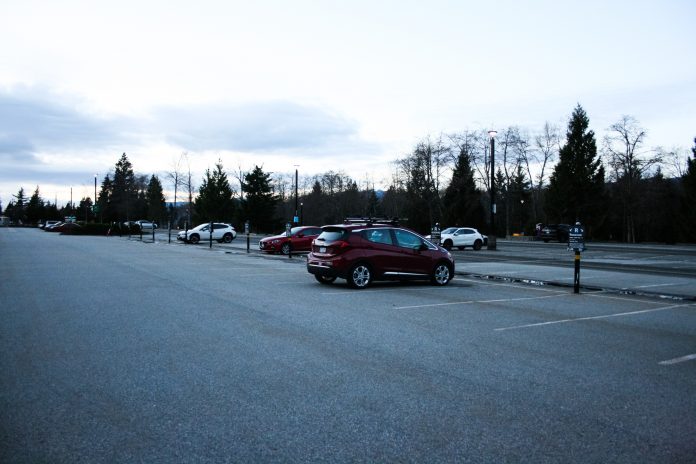
6. The parking lots. As long as you don’t have a car, the attendants have nothing to give you a ticket for and therefore, you probably won’t encounter anyone there. Just don’t stand in one place too long. Desperate attendants might count that as parking!

7. The Peak’s office 

9/10 readers of The Peak newspaper still say they can’t find this office. 10/10 of casual Peak writers have never even been into The Peak’s office. True story. I asked myself 10 times where it was. Clearly, the place is a secret fortress. For all I know it’s actually in the Surrey campus and the editors have been leading me along in their email signatures saying they’re in the Burnaby campus.

President Joy Johnson discusses new Vice-President, People, Equity and Inclusion position

1
PHOTO: Ahmed Ali / The Peak

President and Vice-Chancellor Joy Johnson recently announced the addition of a new executive position at SFU: Vice-President (VP), People, Equity, and Inclusion. The Peak had the chance to hear from President Johnson through an email interview, regarding the expectations of the position.

“The new VP will be responsible for bringing a strategic and integrated approach to hiring, supporting, and developing faculty and staff,” said President Johnson. She elaborated that the position will have responsibilities in creating an SFU-wide equity, diversity, and inclusion (EDI) plan that will be established in close collaboration with the Vice-Provost and Associate Vice-President Students and International Rummana Khan Hemani. 

President Johnson explained that survey feedback from stakeholders and university leaders outlined the need for senior leadership to push forward EDI. 

“It is difficult for one VP to drive this change forward without the areas of responsibility and resources to do so. Because so much of the structural change will need to be driven by functions in Human Resources and Faculty Relations,” noted President Johnson. She expressed that appointing an executive to be accountable for an integrated EDI and faculty human resources plan will ensure “a welcoming, diverse, and inclusive institutional culture.”

According to President Johnson, “There will be a robust community engagement process to create the position description and candidate profile. That community engagement process will be open to students, faculty, and staff.” 

The position is intended to improve equity and inclusivity at SFU by identifying strategies for recognizing and dismantling institutional racism. Johnson explained that this work “will include setting a vision and measurable objectives toward achieving that vision.”

“Our approach [ . . . ] needs to be intersectional. A person’s social location is made up of multiple factors such as gender, race, class, and ability — we need to understand and appreciate the ways these structures converge to create differentiated access to resources and opportunity.” 

President Johnson was not able to comment on specific steps that will be taken to achieve an EDI strategy as the position is in its early stages of being created, but she anticipates that the work will result in improvement at SFU through the process of recruiting and engaging faculty and staff. 

The Vice-President, People, Equity, and Inclusion position will be on the university executive board and consult decisions with President Johnson. The new VP will be responsible for determining what resources and support they need to do their work and  includes deciding the required work for other senior roles. 

“As with all critical issues at SFU, we will continue our consultative, collaborative approach and the VP will consult with a broad range of stakeholders in gathering input, including students, faculty, and staff.”

This new VP will also be accountable for ensuring that EDI values are practiced and implemented throughout institutional decision-making. 

“It’s also important to note that [ . . . ] the work of creating a more equitable and inclusive university community is a responsibility we all share. There is work being done within Student Services and in our faculties to advance equity and inclusion on behalf of students. The new VP will be asked to consider how to integrate EDI initiatives for students with those for faculty and staff.”

Legality doesn’t equal morality

0
Just because something’s legal, doesn’t make it right. PHOTO: Tingey Injury Law Firm / Unsplash

From a young age, many of us are given a very particular image of the law. We are taught that it is this grandiose, impartial, and moral entity that separates right from wrong. But it’s a dangerous game, conflating morality with legality.

The thing about the legal system is that, like much of our society today, it was founded by imperfect people in imperfect ways. Canada’s very founder, John A. Macdonald, has a long list of horrifying actions to his name. While society has changed, we can’t forget that our laws were put into place by previous generations, and they shouldn’t be treated as an immovable, impartial monolith. 

Our laws hold the biases of those that came before us, biases that benefit certain groups, such as wealthy people over working class people. A punishment that’s life-changing for the latter can be easily brushed off by the former. When infamous billionaire Jeff Bezos was renovating his mansion, he accrued $16,000 in parking tickets, which he shrugged off in a way most people can only dream of. For some, even one parking ticket can have huge negative impacts.

This legal bias also extends to other marginalized groups. Regarding Indigenous peoples, the case of oppression is so severe that the UN has called Canada out for it. It’s not unwarranted, either; the Canadian government has time and time again violated the Indigenous populace’s sovereignty. The construction of an unwanted pipeline on Wet’suwet’en territory has even led to the Wet’suwet’en people bringing a court case to highlight the issue — because apparently the pipeline’s legality needed debate. On top of that, both Black and Indigenous people were disproportionately persecuted for possession of marijuana before it was legal. This shows that bias can be found in many aspects of the legal system, from the penning of laws to the enforcement of them. 

These are just a couple of cases. There are many outdated laws that still haven’t been officially removed. While criminalized in the City of Vancouver, conversion therapy remains legal in BC. Other laws which have long been recognized as unjust have only very recently been removed. Same-sex marriage was only legalized in Canada in 2005 and it took until 2017 in Canada for trans people to be legally protected against discrimination — but that doesn’t mean they shouldn’t have been protected before.

Slavery, too, was once legal. In Canada, it was common practice for over 200 years. Though slavery may technically be over, exploitation of labour unfortunately continues today, such as with the “employment” of Californian prisoners to fight the state’s wildfires. They were paid less than three dollars an hour and only recently got the right to work as civilian firefighters after their sentence. This would mortify much of the greater public, yet continues to happen rightfully under the law.

We need to treat the law as what it is: a system built on a flawed, biased foundation, one that should be considered malleable by future generations. As our morals evolve, we need to make sure the law follows.

Current grading systems don’t reflect student’s abilities

1
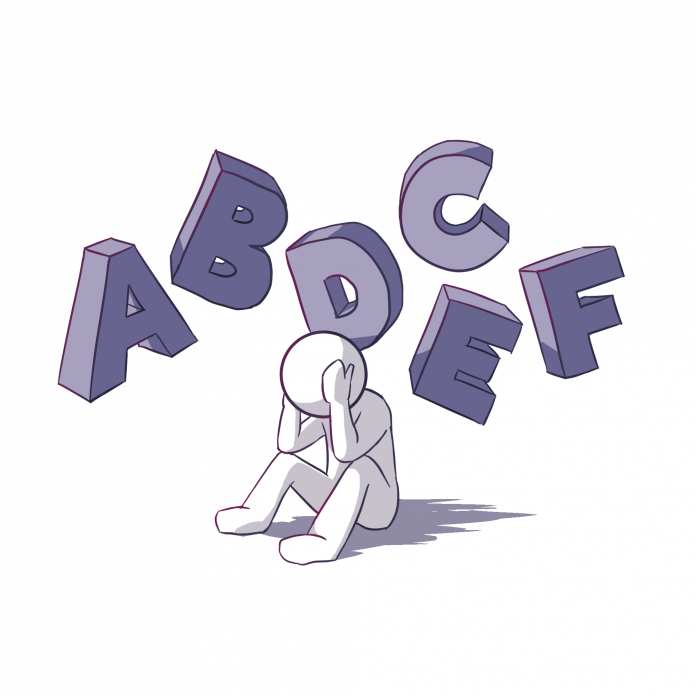
Letter grades shouldn’t determine our success. ILLUSTRATION: Anthony Liao / The Peak

It’s believed that rewarding students’ hard work with letter grades can promote more effective learning. However, rather than prioritizing learning, this system induces pressure on students to focus solely on grades. The SFU Senate recently approved a compassionate grading pilot that would allow students to take a pass, credit, or no credit mark for electives. While this move is a great start for reforming the letter grade system, discrepancies remain. A permanent, alternative grading scheme should be implemented to ensure a focus on learning.

Without external pressures from the letter grade system, students can adopt mastery-approach goals. These would have them use effective study strategies, enjoy learning, and encourage high levels of effort, perseverance, and adaptability. Students with mastery goals also focus on growth by assessing their learning and challenging themselves with difficult course material. Because the letter grade system rewards performance, these types of learning goals are not a focus.

Grading policies are also inconsistent across institutions, so percentage cut-offs for grades vary. For example, Simon Fraser University and Kwantlen Polytechnic University use a 4.33 grading scale, whereas other post-secondary institutions, such as the University of Toronto, use a 4.0 grading scale. The same percentage earned at different universities may result in different grades for students with similar levels of retained information.

Transcripts fail to adequately detail students’ level of knowledge because of this discrepancy. Post-secondary transfer students receive transfer credit, but depending on the institutions’ grading scale, grades received for transferred credits may be converted. Students who meet the same learning outcomes should not be excluded from opportunities to improve their CGPA with transfer courses. 

Implementing a pass/fail grading system would help with these discrepancies and not interfere with future prospects. In America, 52 medical schools, agreed to unconditionally accept Spring 2020 pass/fail grades in admissions. Program directors at Stanford University’s School of Medicine deemed their alumni who had a pass/fail system as competent as those without. 

A study of seven American medical schools also indicated that students assessed with a pass/fail grading system experienced less burnout and stress than students with a letter grade system. In addition, following the University of Virginia School of Medicine adopting a pass/fail grading system in 2003, students had “improved psychological well-being and satisfaction, without any reduction in performance in courses or [ . . . ] level of attendance.” Not only can a pass/fail grading system help with admissions, but it can alleviate student hardship.

Additionally, Cs do tend to get degrees, as the saying goes. This makes the letter grade system even more arbitrary. Not to mention the fact that 1% differences in scores may result in a higher letter grades, but transcripts fail to detail why a student with 95% seems more competent than a student with 94%. A student with a 4.0 GPA and no extracurriculars may have scored one more question correct on an exam, but a student with a 3.9 GPA and years of research experience probably has a more well-rounded portfolio. 

Students face inconsistent grading policies and increased pressure to prioritize their grades over learning. By offering alternatives, such as the pass/fail grading system, educators can provide students with the ability to thrive in their academic life.

Your weekly SFU Horoscopes: January 17–23

0
An illustration of a girl with long flowing hair. Astrological signs and stars shine around her.
ILLUSTRATION: Marissa Ouyang / The Peak

Aries: How is that fourth New Year’s resolution going? Maybe if you actually stuck with something for longer than a month, you could make a change in your life. Pick up those roller skates you bought back in March 2020 and become the unattainable manic pixie dream entity of your dreams. 

Taurus: Taurus, I think you have some control issues that need some addressing. This week during your Starbucks™ visit, try not to stand directly at the bar in order to watch your barista’s every move. Well, at least they can’t hear your huffing through your mask, I suppose.

Gemini: For your next impulsive online purchase, try buying a sword! It may not help your credit card debt, but at least this way you’ll feel like you’re straight out of Lord of the Rings instead of straight back in a rut no money can help you out of.

Cancer: Is it really seasonal depression when it lasts all year? Take this opportunity to get a therapist in week two rather than exam season. That’s when you only exit your room between the hours of 3 a.m. and 6 a.m. for leftovers too hot on the outside and too cold on the inside — hey, that food’s just like a Scorpio!

Leo: How has your sleep schedule been? Have you stayed awake for nights on end due to your near-constant anxiety over essays due weeks from now? Well, since you can’t do someone else right now, might as well do your assignments. Sigh.

Virgo: Honestly, at this point, I’m a bit frightened to say mean things about you for the sake of humour. Like, last time I poked fun at a Virgo, they promptly reminded me that my dull sense of humour is why my dad doesn’t love me.

Libra: While you’re sitting back and weighing your options, life is passing you by. Wake the hell up and make a decision already! Seriously, you’re more indecisive and non-committal than my ex-boyfriend. B̶r̶a̶d̶,̶ ̶b̶a̶b̶y̶,̶ ̶i̶f̶ ̶y̶o̶u̶’̶r̶e̶ ̶r̶e̶a̶d̶i̶n̶g̶ ̶t̶h̶i̶s̶ ̶y̶o̶u̶ ̶l̶e̶f̶t̶ ̶a̶ ̶s̶o̶c̶k̶ ̶a̶t̶ ̶m̶y̶ ̶p̶l̶a̶c̶e̶.̶ ̶S̶h̶o̶u̶l̶d̶ ̶I̶ ̶d̶r̶o̶p̶ ̶i̶t̶ ̶o̶f̶f̶?̶

Scorpio: Next time you start missing social interaction, try hailing Bloody Mary like in middle school. With all this social distancing, she’s probably lonely and out of work 🙁

Sagittarius: Take this coming weekend to KonMari the living hell out of your possessions. The stars know about your cryptic collection of mid-2000s Furbies stuffed in the back of your closet. They asked me to remind you how much those little monsters sell for on eBay. 

Capricorn: Capricorn, I think we all knew that the moment midnight struck on New Years, the world wouldn’t magically be okay again. But all your pessimism seriously didn’t help our high hopes. With your season starting out the new year, I think it’s only up from here.

Aquarius: Spice up your life by dowsing yourself completely in garlic powder! It’ll leave a memorable impression on that cute grocery store cashier who you see every week. It keeps away vampires and ensures you a six-foot radius. Or 20.

Pisces: Escapism isn’t the only thing you’re after, Pisces. You’re not just looking for some distractions from the cruel realities of the present through YA novels and Pokemon GO. You’re also looking to get away from Aquarius because they smell weird for some reason.