Home Blog Page 357

Rainbow capitalism does more harm than good

0
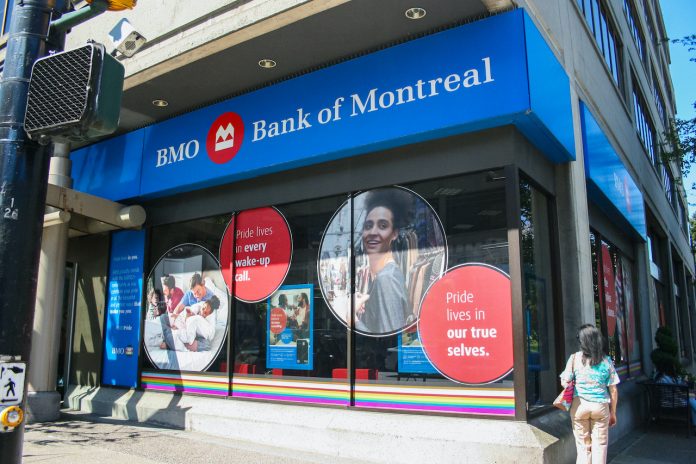
Pride Month brings corporate exploitation of queer issues for profits.  PHOTO: Gudrun Wai-Gunnarsson / The Peak

Rainbow capitalism, a marketing strategy that commodifies Pride, largely harms LGBTQIA2S+ people. Every June, large corporations don rainbows to increase profits, just to forget about us the rest of the year. They often take little to no action to support our needs unless it’s convenient for them, and they may even work to take away our rights.

While there are a few ways LGBTQIA2S+ people may profit off rainbow capitalism, the harm done far outweighs these small benefits. Some companies offer a small portion of sales or a one-time donation to LGBTQIA2S+ non-profits as part of their campaigns to promote a supposed commitment to diversity. This only gives us short-term support, and then we’re swept aside until the next Pride Month. Additionally, non-profits can exploit their workers under capitalism, so even the corporations boasting support for us contribute to the oppressive system that holds us down. 

Other LGBTQIA2S+ organizations profit from running these tokenizing advertisements, while benefitting from the commodification of Pride to support their work. In a few cases, the companies involved may even take tangible actions to support LGBTQIA2S+ people, like developing programs to include more trans employees or changing their insurance policies to equally benefit employees’ same-sex partners. However, this often benefits the most privileged in the community — namely white and cis community members.

Many companies that boast their faux allyship are completely disingenuous. The companies that change their logos to rainbows don’t do so in countries where LGBTQIA2S+ people are less accepted, reminding us that rainbows are only valuable to companies when they match their social climate. 

Companies including AT&T, The Coca-Cola Company, General Motors, Anheuser-Busch, and NBCUniversal continue to donate profits to anti-LGBTQIAS2+ causes while showing off oodles of rainbow flags. These actions are hypocritical and harm our community under the guise of promoting diversity. How can we trust the rainbow in a logo when the same company pays for our continued oppression?

Companies promoting rainbow capitalism insult and discredit prior generations of LGBTQIA2S+ activists. Our history is rife with violent oppression. We continue to experience higher rates of unemployment, workplace discrimination, and poverty — this especially impacts BIPOC community members. 

Earlier in our fight for equal rights, the Gay Liberation Front declared that “[we] identify ourselves with [ . . . ] all those oppressed by this rotten, dirty, vile, fucked-up capitalist conspiracy.” Our liberation movements need to continue rejecting capitalism. Pride is not a time for companies to market to us and sanitize our stories while making us more palatable in this capitalist shitshow.

Where possible, we can buy from businesses run by our community members and reject the notion that rainbow capitalism was ever about Pride. We can continue sharing information about the ways rainbow capitalism is harmful and the corporations that take part in it. Those who are able to can help by boycotting the corporations that take advantage of Pride Month. Pride is a celebration of queer joy, not a promotion of capitalism.

Access for All advocates for SFU to provide a safer environment proposal in their return-to-campus plan

1
PHOTO: Gudrun Wai-Gunnarsson / The Peak

SFU released its four-stage reopening plan on May 26, 2021. In stage four, the plan proposes a 80–100% density return to campus for in-person learning. In response, Serena Bains, vice-president university and academic affairs of the Simon Fraser Student Society (SFSS), introduced the Access for All campaign to SFU. 

The campaign brings forth concerns regarding campus reopening and how it would impact disabled, neurodiverse, immunocompromised people, BIPOC members, international students, and other marginalized groups. It makes calls to action for SFU, including:

  • Facilitating hybrid courses for all SFU classes during the Fall 2021 semester
  • Releasing a specific COVID-19 SFU reopening plan that would decrease infectious outbreaks, such as:
    • Social distancing measures in lecture halls
    • COVID-19 testing on campus
    • Making vaccines a priority for students
    • Making masks mandatory (with exceptions for disabled and/or neurodiverse people)

The campaign also lists the barriers that students may face with a campus return. 

Some examples include concerns about low-income countries’ lack of vaccine access for international students, who would face potential exposure to COVID-19 due to travel. Another concern is that transitioning solely to in-person delivery for courses will make courses less accessible, as online learning has closed captioning and asynchronous delivery. 

Access for All was originally created by the Society for Students with a Disability at the University of Victoria to address the BC COVID-19 Return-to-Campus Primer released on April 30, 2021. 

Bains found information about the Access for All campaign on social media, and contacted the organizers about implementing it at SFU. 

“We had a lot of concerns,” Bains said regarding the Go-Forward guidelines released by the province on June 1. While SFU states they will clean lecture halls daily, Bains noted there were no guidelines on cleaning between lectures — despite lecture halls returning to full capacity. Coupled with the province’s plan to make masks optional in September, the campaign highlights that students and faculty members will be at higher risk of infection.

Bains also worried members of the SFU community weren’t properly represented in the panel of experts for the Go-Forward guidelines. 

While SFU recommended that marginalized students have access to accommodations, Bains said they are not mandated by the university. “In my opinion, if SFU isn’t mandated or provided the resources, then they won’t commit to these things on their own accord.

“I think we need to recognize that before the pandemic, a lot of students were left behind in their education,” Bains said.

“SFU should commit to consulting with students, staff, and faculty for their return to campus plans.” They said SFU should rethink making plans according to the province’s.

“I don’t think one’s morality should rely on legislation, especially if you have the resources to provide a safe environment to the community members you’re supposed to serve.”

On June 16, Council had drafts of letters prepared for the SFU administration and the province in support of Access for All. They are currently asking for signatures from students. 

I don’t want a “coming out” story

0
Coming out does not have to be a big event. ILLUSTRATION: Maple Sukontasukkul / The Peak

Ever since high school, I had my suspicions I wasn’t straight. I brushed it off for years, but I eventually came to understand and accept that part of me. As I embraced this aspect of my identity, I felt an unnerving pressure to suddenly come out to everyone around me. It felt like I needed to create a list of names of who to come out to. I needed to find a time, place, and set the scene for my big reveal. But the more people I told about my sexuality, the more I felt like I was sharing a part of me I didn’t need to. 

I kept questioning why people needed to know my sexual orientation and why I had to come out simply to erase their perception that I was straight. 

I understand coming out is important to many people, and that’s great! I also know coming out is an important aspect of LGBTQIA2S+ history and visibility. However, there was a weight inside of me — when should I tell them? How will they respond? Even though I suspected my friends would be supportive, I felt like I needed their explicit acceptance. 

I was plagued by anxiety, hoping no one would see me differently. I wanted the validation that, regardless of my sexuality, people would still love me just the same. Gradually, I realized I didn’t care. Whether they saw me differently or not was their perception of me, not mine. 

Some of my experiences coming out to people were better than others. Regardless of how anyone reacted, I felt like something was off. I was never really satisfied. Most of the time, I didn’t feel a magical weight lifted off my chest. I just felt like they knew me a little better. I had opened a very personal part of myself, perhaps when I didn’t need to. 

What started to bother me was the new access I had given people into my personal life. Even my fellow queer friends would ask me about who I was going to date next, as if I could simply decide who the next person I fell for would be. 

For a while, I felt like a fraud for not wanting to have a huge coming out story for my family. I don’t particularly see myself ever standing in the kitchen, nervously waiting to tell my parents about my sexuality. But after all, wasn’t coming out supposed to be a part of the queer journey? Aren’t my parents either supposed to go into acceptance or denial? In turn, won’t their response shape my identity? After years of consuming media that was focused on coming out, I thought it was just something I was supposed to do. If I didn’t have some grand coming out, I supposed that meant I was hiding and in the closet. I told myself I simply wasn’t “ready,” until I realized I just don’t really care about telling some people. 

It’s not that I don’t want people to know my sexuality because I’m ashamed — I’m not. I’m very happy, proud, and comfortable with myself. I know that in romantic relationships, I prefer for my partner to know my sexuality. However, outside of that, I don’t feel like disclosing my sexuality and don’t feel the need to. I don’t actively try to hide it unless there are circumstances that require me to do so. Among friends, I might bring it up if I feel like it — or maybe I won’t. I just think we should all collectively stop assuming everyone is straight unless told otherwise. 

I don’t feel the need to come out and tell the world about who I’m capable of loving. I think it’s beautiful that I can love multiple genders. I don’t care for the whole world to know this aspect of me. I’m enjoying being quietly queer however I want to be. It has taken me long enough to realize that these are valid feelings. 

If you want to explicitly come out to people, then do so! However, for those who aren’t ready, who may put themselves in unsafe situations, or who simply don’t want to — that’s also fine. Part of my experience may be shaped by the fact that, because I am attracted to multiple genders, in some cases, I would appear to be in a heterosexual relationship. However, it’s not a requirement of the LGBTQIA2S+ community to have a coming out story. We should all be free to be queer in whatever way we want to be.

Resources for Indigenous students

0

For any Indigenous students needing support while dealing with the weight of the last few weeks, here is a list of resources compiled by the Indigenous Student Centre, First Nations Student Association, and the Simon Fraser Student Society

Support at SFU:

Indigenous Student Centre:

  • Connecting with an Indigenous Counsellor

Book an appointment with Indigenous Counsellor, email [email protected] and ask to book with Jennifer, HCS Indigenous Counsellor

  • My SSP (Student Support Program) 

1-844-451-9700 — ask to book an appointment with an Indigenous Counsellor

My SSP App for 24/7 support

  • SFU Health & Counselling

778-782-4615


External Supports:

  • Indian Residential School Survivors Society

1-866-925-4419

1-800-721-0066 (Crisis Line for immediate support)


  • First Nation Health Authority

There is mental wellness support that is provided through the First Nations Health Authority specifically for survivors and families who have been directly impacted by the Indian Residential School system. If you self-identify as Indigenous please reach out and request additional support. This is what it is intended for.


  • Aboriginal Wellness Program

604-675-2551


  • Child and Youth Aboriginal Mental Health Outreach – East Hastings Street

604-868-0368


  • Child and Youth Aboriginal Mental Health Outreach – Cambie Street

604-688-0551


Help Lines:

  • KUU-US Crisis Line Society

Adults: 250-723-4050

Youth: 250-723-2040

Toll-free: 1-800-588-8717


  • Tsow-Tun Le Lum Society

Toll-free: 1-888-403-3123

Main office: 250-390-3123


  • Métis Crisis Line:

1-833-638-4722


  • First Nations and Inuit Hope for Wellness Help Line:

1-855-242-3310


Further Support and Resources for Indigenous Students has been compiled by staff at the SFU Indigenous Student Centre and can be found on their Instagram @sfu_isc

SFU Community-Engaged Research discusses inclusivity among youth

0

SFU Community-Engaged Research hosted “Holding space vs. making space: building youth-led community belonging.” The workshop aimed to examined inclusivity and platforming marginalized youth in community-centred research. It featured four speakers who discussed their experiences piloting the Youth Justice Lab and what it taught them. 

Over this six-week virtual lab, high school members conducted open conversations exploring decolonization, racial equity, and intergenerational activism. Acting as an inclusive space for students to learn about social issues, the project was made in partnership with the SFU Centre for Restorative Justice  and North Shore Restorative Justice Society (NSRJS). 

“Our goal, in coming to this new justice lab, was to foster meaningful youth engagement opportunities,” said Anne-Marie Parent, program manager of the Restorative Justice in Education Initiative.

Undergraduate student Emma Mendez said her group focused on decolonizing high school curriculums. This experience inspired her to continue working on social justice projects with NSRJS. “It really empowered me and transformed the way I saw community. It stressed the importance of community in the sense of fostering connections, respect, and accountability,” she said.

Mendez found the Youth Justice Lab easily accessible to those wanting to participate because it was free and only required participants to fill out an application form. She said the lab could improve on inclusivity in areas of internet access, closed captioning, and accomodation for people whose second language is English. 

“Not everyone has access to stable Wi-Fi or technology [ . . . ] I think we would need to bring people from these communities, and actually have a wider conversation about what their needs are,” she said.

According to Parent, it is also important that Youth Justice Lab fosters inclusivity by having educational conversations that decentre whiteness. She said they can do this by being intentional about platforming the voices of people with diverse lived experiences.

Youth advisory member Graham Best said the group of students created a set of community guidelines for constructive discussions. 

“For me, coming to this set of community agreements really helps the space to feel safe,” he explained, as it opens up discussion and encourages participants to learn about subjects such as income equality, poverty, and mental health support networks.

Looking forward to creating a second Youth Justice Lab, youth advisory member Graham Best aims to continue his process of learning and unlearning to create an equitable future.

Learn more about the Youth Justice Lab and their initiatives here.

What niche characterized your queer adolescence?

0
ILLUSTRATION: Van Mai / The Peak

Have you ever realized you were queer and then realized the signs were definitely there when you were a teenager? This quiz will take you back to those endearingly embarrassing days. 

Warning: doing this quiz may induce memories of songs you only know because of Glee. 

  1. How did you spend your precious weekends? 

A) 2 a.m. at a Denny’s with your class of 30 as well as your stage crew, scream-singing the lyrics to the musical you just finished. It’s a tradition, okay? Don’t look at us like that.

B) You planned a picnic with your three best friends and baked a small cake to celebrate nothing in particular. Persephone herself would probably smile down at you!

C)You’re playing Stardew Valley mods because you need a little ~ variety ~ in your farming simulators.

  1. What quote still makes your heart soft?

A) “ . . .  And you know what they did? They danced!” You will never forgive Hadestown for destroying you inside out. Never.

B) “When my time comes around / Lay me gently in the cold dark earth / No grave can hold me down / I’ll crawl home to her,” because Hozier makes you scream like an actual feral wolf.

C) “We accept the love we think we deserve,” because as soon as you read it, you knew you would reblog that same damn quote with 50 different PicMonkey-edited sunset photos just to feel the sweet, sweet angst.

  1. What outfit would you don to face the bitter dungeon of high school?

A) A baseball shirt and leggings, the most comfortable thing you could find in your closet. You need a flexible outfit for all the finger guns you’re going to make that day.

B) A short-sleeved mustard yellow blouse with a long maxi skirt dotted with flowers. You are hoping to be mistaken for an actual peony by a cutie walking by.

C) A worn red plaid button-up, jeans, a beanie, and black boots. Your Sleeping With Sirens shirt was in the wash, unfortunately. (They were also an unfortunate pick for your emotional support emo band, kid.)

  1. Pick the Greek myth that hurt you the most.

A) Orpheus and Eurydice. THEY WERE SO CLOSE!

B) Medusa, because you were tricked into believing that she was the villain for such a large part of your life.

C) Patroclus and Achilles. Madeline Miller has your heart in knots for writing a love so tender.

If you picked mostly As, you were a theatre kid!

You really didn’t anticipate how much you’d grow to love your dusty high school theatre and the shows you found, but here you are. This is true even if you spend every moment as an adult embarrassed because of it.

Are you disappointed by how invested you were in a show that glorifies the founding fathers of America? Do you have a target with Ryan Murphy’s face on it? Maybe, but you found your goofy family in this room filled with asbestos. And you have every right to belt those sad Waitress songs all you want! 

If you picked mostly Bs, you loved cottagecore!

If you see one more frog in round glasses, you might start crying. You call your messy table maximalism, and you don’t think your poetry is really poetry. Your Spotify is pretty much a shrine to the one pop queen you’ve decided to worship and music you’d consider dancing barefoot in the forest to. The copious amounts of plants that you’ve adopted and named currently have the best shot at your inheritance.

And most importantly, your playlist has songs that make you feel the most queer emotion of all: yearning.

If you picked mostly Cs, you were deep into fandom communities!

Your villain origin story began when your favourite shows queerbaited characters right before your eyes — that, and you likely had a Homestuck phase. You feel a little betrayed by the internet for turning you into a gremlin, but you know that you can never find the same familiar kind of disastrous fandom energy anywhere else. 

Now? You’re an adult that plays Dungeons & Dragons because you want your character to develop and grow in the way you wish your favorite characters did. And you definitely play an elf or a tiefling.

Dear Peakie

0
PHOTO: Sara Brinkac / The Peak

Dear Peakie, I’ve been trying to find the perfect barbecue to buy for my dad. My budget is about $5. Please help. Sincerely, Broke Bloke

Hi Broke Bloke, buying presents for your dad is tough. But don’t worry; with my world-class advice, you’ll finally get that “I love you” you’ve so desperately been looking for. Now, I know you think you have to buy your dad a “proper grill” for Father’s Day, but that’s just a lie spread by Big BBQ. Those suits at George Foreman will have you believe that grilling has to be done in “specified” and “controlled” locations, but that is the furthest from the truth. 

During my time as head chef at the world’s most premier five-star Michelin restaurant, I strictly used the “Open Flame” method and grilled my way amongst the greats. Originating in 420 AD, the “Open Flame” method was first discovered by vikings during a routine town pillaging. The warriors felt a tad peckish. They quickly realized, not only could they roast a beautiful steak anywhere they pleased with the houses all aflame, but the controlled BBQs Sven was selling in their village were a total scam. So go ahead and give your dad that $5 bill as kindling, Broke Bloke. This Father’s Day, you will be giving your dad the gift of the most effective and portable barbecue on the market. And don’t worry if you run out of kindling. I find that my court transcripts always work great in a pinch. They really add a great “public threat” flavour to the steaks. 

Dear Peakie, I’ve just realized I don’t have an adequate villain origin story for when I eventually snap and take down SFU. What should I do? Signed, Foolella de Vil 

Hi Foolella, it’s tough to see such a growing disparity of villain backstories in our current economy. I completely sympathize. Fortunately for you, I spent about five years of my youth as a certified Evil Mastermind. While I was chairman of the board of “Villains for World Domination,” my dear friend Jeff gave me some great advice that I’d like to share with you: every villain backstory must have a sympathetic element. Whether it be the cruelty of society or the cruelty of your ex-wife divorcing you and taking your hard-stolen money, a villain has to go through a soul-removing event. Perhaps you once failed a final exam because a construction site blocked your path and made you late. From that day on you vowed to erect meaningless construction sites all over SFU to make everyone feel the same frustration you felt that dreaded day. Now you scrawl your name across campus haunting innocent bystanders, laughing in the face of completion dates, and making sure every SFU commuter knows the evil villain “Ledcor.”

Dear Peakie, I’ve gotten so used to texting people during the pandemic that I keep saying things like “LOL” and “poggers” when I talk to people in real life. Help! Signed, Bestie 

Hey Bestie, I’m sorry to say you are suffering from what we in the medical field call “Reverse Dictation.” While it is common to use talk-to-text to tell your phone what to say, prolonged exposure to LED keyboards can flip this cognitive function. When this happens, your phone begins to tell you what to say. Thankfully, your case is still in early stages — I once treated a man in stage-four Reverse Dictation who could only speak in 1s and 0s. Whenever he went to sleep, he would hum the Windows shutdown jingle. It was tragic.

Unfortunately, there is no known cure for Reverse Dictation, but we have found many ways to help people live healthy and happy lives with this affliction. Currently, the most effective treatment is what we call “irony.” Next time you feel the urge to blurt out “poggers,” play it off with a sarcastic expression and you will quickly turn the tables on any social missteps. For this to work, however, you really have to become a fully ironic person. That means dabbing, whipping, saying “ya-yeet” while throwing things, and playing Pokémon GO like 2016 never ended. Throw it all to the wind and no one will be able to tell what is social ineptitude and what is scathing commentaries on society. All the best Bestie and remember: if it’s not cool, it’s ironic.

Biodegradable printer ink cartridges developed by SFU students

1

SFU School of Sustainable Energy Engineering students created a refillable ink cartridge system for home printers. The product, SustainInk, is designed to “turn a traditional ink cartridge printer into a reusable, refillable ink reservoir.” 

SustainInk hopes to cut down on waste in landfills by eliminating the need for ink cartridges and making home-printing affordable for students.

Project lead Eddy Sanderson reported the team is using a 3D printer with biodegradable material to create the cartridges. The SustainInk reservoirs’ material can be biodegraded in 80 days in a commercial facility.

“We’re looking at trying to make a different kind of ink that is based out of algae so that it’s carbon negative,” added Sanderson.

According to Sanderson, many standard “printer cartridges aren’t properly recycled because some of the inks contain heavy metals that [can’t] be broken down properly — a lot of them end up in landfills where they further contaminate water systems.” Currently 20–30% of ink cartridges are recycled.

“We’re trying to remove the landfill aspect.” 

SustainInk is also focused on “looking at how to make printing more accessible for students because it’s extremely cost prohibitive.” According to Sanderson, printer cartridges have a 700% markup in the market. Alternative reports have stated the “average markup on ink cartridges is 1,000% to 2,000%.”

Sanderson explained once consumers buy a company’s printer, “[they’re] forced to continue to buy the same refills for that system. So it kind of strongholds you into a cycle of having to spend more than it’s actually worth.”

Their study found that the yearly cost of printing is roughly $700 of ink cartridges, whereas SustainInk could print the same amount for under $50 a year.

Ink reservoir printers start at roughly $800, said Sanderson. 

This project was inspired by the shift to online learning due to COVID-19. Many of the SustainInk team members had to purchase at-home printers. They quickly found that “buying an ink refill was almost as much as buying a new printer, which is not sustainable.”

The team responsible for SynthaSift includes SFU students Akash Bains, Ryan Cordoni, Erin Flood, Alia Gola, Dana Kadoura, and Aiden Rudy.

More information on SustainInk can be found on YouTube. 

It’s time to bust myths about asexuality

0
ILLUSTRATION: Maple Sutontasukkul/The Peak

Content warning: mentions of sexual assault

Asexual people are believed to make up at least 1% of the world’s population. By comparison, 1% of the world is about the same amount of people who have red hair, or about twice as many people living in Canada today. Despite this, asexual people are barely represented or talked about in media. When they are, they’re often misrepresented, and misinformation spreads far.

The definition of asexuality is a lack of sexual attraction. Asexuality can exist on a spectrum, which can include asexuals,  gray-asexuals (folks who are largely asexual but still have sex), and demisexuals, the latter of whom usually do not experience sexual attraction but may on occasion. 

Conversely, allosexuality refers to a sexual attraction to others. The umbrella term allosexual can include heterosexuals, homosexuals, bisexuals, and pansexuals, among others. Allosexuals experience sexual attraction to others frequently, while asexuals experience little or no sexual attraction. Both asexuality and allosexuality exist on spectrums and are experienced in a variety of different ways, yet myths continue to spread about asexuality.


Myth: Asexuals cannot love

Asexuals are often stereotyped to seem cold, anti-social, and emotionless in the media. However, a lack of sexual attraction is, well, nothing more than that. While people of any sexual orientation can be aromatic (experiencing no romantic attraction), that is not true for every asexual. For those who are aromantic, they can also experience non-romantic and non-sexual love for people in their lives, sometimes forming dedicated platonic relationships. Many asexuals date, fall in love, and get married. Some have children, whom they also love. All asexuals make friends and love the people in their lives, just like allosexuals can. 


Myth: Asexuals never have sex

Some asexual people can and do have sex for a variety of reasons. Some may enjoy the intimacy of the experience or choose sex as an act of love for their allosexual partner(s). Others may just enjoy physical arousal, or they may simply want to partake in the activity. Asexuality does not mean that a person cannot have sex. Some asexuals are sex-repulsed, some enjoy regular sexual activities, and many others fall on a spectrum somewhere in between. Asexuality also does not equal anti-sex attitudes, and asexuals can be sex-positive without experiencing sexual attraction or partaking in sexual activities. 


Myth: Asexuals don’t experience arousal

Despite a lack of sexual attraction, some asexuals do have a libido, and most can experience physical arousal. An asexual person may masturbate, consume pornographic content, or have kinks, fetishes, or fantasies without it changing their sexual orientation. While many asexuals may not be as likely to partake in these activities as often as allosexuals (or at all), involvement in these activities has no bearing on sexual orientation. 


Myth: Asexuality is unnatural or an illness

Asexuality is as normal and natural as any sexual orientation. It does not qualify as any kind of sexual dysfunction or mental illness. For the majority of asexuals, it is not a phase. There is nothing that makes asexuality unnatural or unhealthy; it is just one way of identifying sexual orientation.


Myth:  Asexuality is a choice

Being asexual is not a choice. While some people may choose to be celibate or abstain from sex, that isn’t the same as being asexual. Asexuals are not necessarily virgins, anti-sex, or avoiding sex entirely. Asexuals can choose to abstain from sex, but that is not the same as someone who has sexual attraction avoiding sexual activities. 


Myth: Asexuals are all closeted homosexuals

Because of a prevalent false belief that asexuality does not exist, people can assume that those identifying as asexual are lying about their sexual orientation. While it can be safer for some people to stay in the closet, identifying as asexual can be just as dangerous as identifying with other LGBTQI2S+ identities. Asexuals are not lying, and they need to be believed about their identities without question. 


Myth: Asexuals don’t experience oppression or discrimination

With all the misinformation about asexuality out there, it can be easy for some people to think asexuals never experience oppression or discrimination like other members of the LGBTQI2S+ community. Asexuals experience harassment because of the negative beliefs that asexuality is unnatural and a choice. Asexuals are sometimes even rejected by the LGBTQI2S+ community. Because of dangerous bigotry and false beliefs about asexuals, people of other identities commit sexual assault in violent attempts to change asexuals’ sexual identities. 

To connect with other asexuals or learn more about asexuality, see the Asexuality Visibility and Education Network at http://asexuality.org/.

SFU students develop laundry filter to mitigate plastic pollution

1
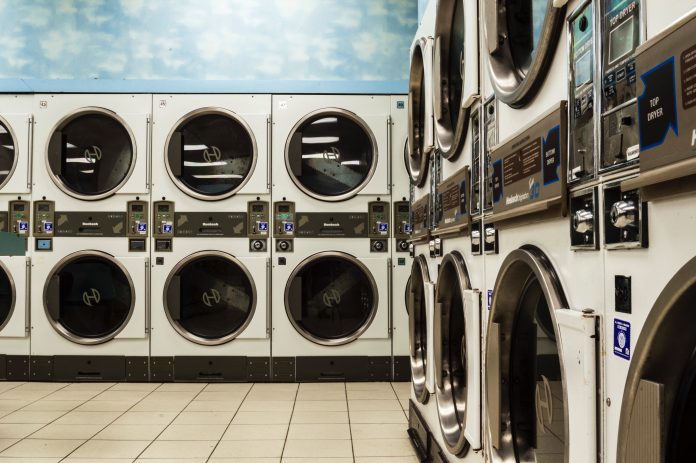
PHOTO: Marshall Williams / Unsplash

SFU School of Sustainable Energy Engineering students recently created a microplastic filter for laundry machines. In an interview with The Peak, Elizabeth Salvosa, team member for SynthaSift said it “filters microplastics from our laundry that would otherwise be introduced to the water system.” 

Laundry filter products such as Lint LUV-R and Filtrol were an inspiration for the team’s development, but the team noted SynthaSift is “10 times finer,” while maintaining competitive prices.

SynthaSift team’s study found that competitor products “functioned like your dryer lint bin and do not effectively filter out smaller [microplastic] particles.” 

According to Salvosa, their research report noted the “average family does 300 loads of laundry annually.” 

Some studies find that as many as 700,000 microfibres and microplastics will be released after each load of laundry. These particles are spread throughout the environment via waterways — The New York Times reports “9.25 to 15.86 million tons of microplastics can be found on the ocean floor.”

Clothing made from synthetic fibres release particles that “do not break down completely, and natural fibres are often treated with harmful chemicals or dyes.” 

Salvosa reported the development team plans on undergoing up to a year of household testing. “We want to ensure that the product is consistent with our projected usage and design before considering further development and market viability,” said Salvosa. 

“We have also talked to a researcher from another institution exploring magnetic mechanisms, which is promising.”

The original prototype was created via 3D printer “using biodegradable polylactic acid, to minimize the environmental impact at each stage of design.”

Salvosa said the team “researched various mechanisms for filtration, and [SynthaSift] was one of the more viable options at this point in time.”

The team responsible for SynthaSift includes SFU students Daisy Chen, Braden Harding, Mishak Taggart, Cyrus Urbanowicz, and Changle Yu.

According to Ocean Clean Wash, clothes made from synthetic material contribute to 35% of the plastic pollution in oceans. The International Union for Conservation of Nature reports that 8 million tons of new plastic pollution enter the oceans each year.

These particles “have physical effects on wildlife and humans via the food chain,” according to SynthaSift’s report.

Microplastics in marine life can “block digestive tracts, diminish the urge to eat, and alter feeding behavior,” according to National Geographic. All of these can harm or kill marine life, as well as restrict their reproductive abilities, further limiting the size of the population.

The Center for Biological Diversity found that “thousands of seabirds and sea turtles, seals and other marine mammals are killed each year after ingesting plastic.” One study reports synthetic fibre particles have travelled throughout the arctic ocean and are found in arctic zooplankton, seabirds, and marine life.

More information on the SynthaSift Laundry Microplastic Filter can be found on YouTube.