Home Blog Page 326

The Art of Academia: preparing for a new semester

0
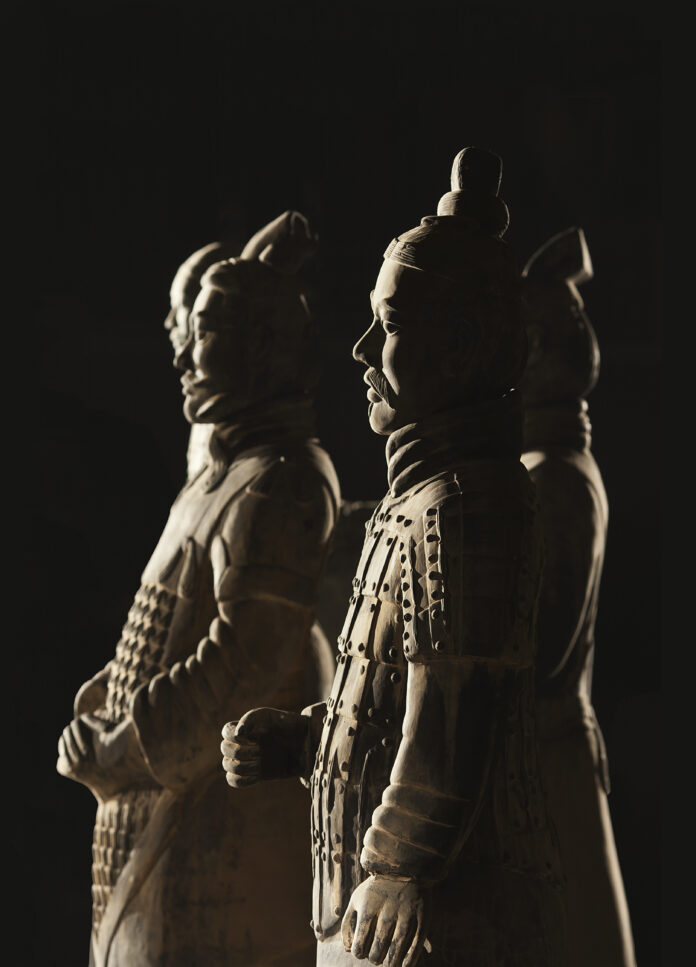
Four grey stone statues of Sun Tzu standing beside each other all facing towards the left. The lighting is dim and dramatic with a black background behind the statues.
Using Sun Tzu Art of War to help plan for my next semester has changed my life. PHOTO: tonyv3112 / Adobe Stock

“The general who wins the battle makes many calculations in his temple before the battle is fought. The general who loses makes but few calculations beforehand.” — Sun Tzu

Not to be dramatic, but applying the Art of War by Sun Tzu to everyday struggles has changed my life. As I go into my last semester, I want to pass on the Sun Tzu-inspired routine that has made a measurable difference in my mental health and academic success.

An academic journey has battles called semesters: some are more challenging than others, some surprise you, and some are simply necessary to obtain a greater goal. Like battles, each semester needs ample preparation. Before my semester gets busy, there are things I do to prevent burnout and the familiar feeling of stomach-churning doom. As a new army of classes looms over you like storm clouds, I hope these will help you feel like you’re closing in on the semester, rather than the semester closing in on you. 

  1. Declutter your workspace and honour your previous semester 

If you’re anything like me, your post-finals desk is probably a mess and you haven’t been able to tidy it properly until this point. But as Sun Tzu said, “In the midst of chaos, there is also opportunity.” Go through all the paperwork from your previous semester and keep anything that helped you grow as a student. Even if you didn’t get the grades or outcomes you wanted, take a moment to appreciate the work you put in and celebrate the small wins. I believe honouring the past is one of the key elements to moving onward.

After doing so, clean the rest of your space. This can also include organizing your digital desktop and virtual files.  If you have the time, do a deep clean of your living space as well. I typically only have the time and energy to do this in between semesters. Even after this one step, I feel immensely refreshed.

  1. Equip yourself with the tools you need 

You wouldn’t run into battle without having a stocked base camp with trusty weapons and adequate rations. Look at your now decluttered space and make a list of supplies to stock up on for the semester. I typically divide this into three different sections: desk and school supplies, health and well-being, and essentials. It’s good to start this list as you declutter and clean so when you notice you’re running out of something, you won’t forget to buy it later. I take extra care to check on things I use a lot throughout the semester, such as sticky notes, printer paper and ink, vitamins, coffee, etc. Equipping yourself with the tools you need also includes course-specific materials. Take a quick look at your course outlines and put in an order for textbooks and whatever else is asked for — if they’re not listed yet, order them the moment they’re available. 

  1. Strategize with your mind and body

When Sun Tzu mentioned strategizing in the “temple,” the “temple” is you — your mind and body are going to be carrying you through the term. Lay out your weekly schedule and start sleeping and waking up at the times you would have to for the upcoming semester. This might be unnecessary for some people, but as someone who has been staying up till 5:00 a.m. playing video games or binge-watching shows, you want to actually make sure you are resting. 

This is your time to look closely at your course outlines and record the information given to you. I use the website/app, Notion, to record all my school deadlines in detail, and use Google Calendar to alert me when there’s an upcoming deadline. I also take this time to book and record non-academic events and doctor’s appointments. Whenever I try to book appointments during a stressful semester, my brain short circuits and I end up putting it off until the end of term. Sleep well and eat well. Absolutely do that extended skincare routine, keep your body active with YouTube home workouts, and drink lots of water. Really extend the care you give to yourself here.

  1. Setting goals and boundaries 

No battle starts without goals and no general will be found without boundaries. I want to stress how important it is not to have a grade or percentage goal. Due to extenuating life circumstances, I had to aim for straight A’s every semester for two years to get my GPA back up before graduation. Those were the most mentally agonizing semesters of my life and absolutely ripped the enjoyment out of truly enjoyable classes. If you want to get good grades this term (who doesn’t?), make goals around what you can do to make that happen. For example, set goals like “check off deadlines as you complete them” or “go to office hours and review feedback on assignments at least once a month” rather than “get straight A’s this term.” 

The second thing is communicating your boundaries to your family, friends, co-workers, and colleagues. I have at least five hard commitments every semester and need to set firm boundaries for each of those responsibilities to stay on track. For my family, I’ll say something like, “Hey, if you see me working hard at my desk at night, please drop me a text rather than interrupt my workflow.” To my co-workers at my café job, I’ll say, “Hey, please don’t message me outside of work about work stuff. If it’s an emergency, tell the manager.” 

At first, this might be hard to do — especially if you’re not used to it — but most of the time people will appreciate the transparency. Truth is, whether you communicated to them or not, you probably expect people to respect your boundaries anyway. So it’s not entirely fair if you don’t openly communicate your boundaries but get upset when they are ignored. When you communicate your boundaries with others, it reduces the likelihood of resentment growing inside you because someone can’t read your mind. 

  1. Do whatever the fuck you want

This is a much less structured tip, but seriously — do whatever the fuck you want. I’m so busy during the semester I barely have the time to sleep and eat my meals. So it becomes difficult to prioritize spending meaningful time with my loved ones or engaging in my hobbies like painting and practicing my instruments. I longingly think of doing these things during the semester if I didn’t make time for them during the break, and start spiralling over how I don’t have time to engage in things that make me happy anymore. Before the semester gets under full swing, this is the time for you to relax. As you do the things you love, reflect on how you can incorporate them into this semester’s schedule in smaller ways. Look for an opportunity at least once a week where you can carve out time for yourself, and intentionally put that in your schedule. 

Although preparation is important, so is maintenance and balance. Do your best to maintain all the preparation work you just did by incorporating these great things you’ve set up for yourself into your hectic semester. Each semester is an intense time that requires a lot of energy and flexibility. This week of preparation has been effective for me because it’s a blueprint to return to, and it reminds me of the care I am capable of giving to myself.

“Victorious warriors win first and then go to war, while defeated warriors go to war first and then seek to win.” — Sun Tzu


 

Zarak’s Afghan fare is a welcome addition to Vancouver’s culinary scene

0
Collage featuring two dishes: on the left, hummus and flatbread; on the right, dumplings with split peas
This restaurant is rich in cultural significance. Sara Wong / The Peak

Looking for hipster bars, trendy boutiques, and specialty coffee shops? Main Street is the place to be. It’s also where you’ll find Zarak, sister restaurant of South Surrey’s Afghan Kitchen, which opened just over a month ago. 

This restaurant may be new, but you wouldn’t be able to tell by the way they execute service. When you dine out as much as I do, the little things like timing when dishes are served and checking in throughout the meal make a big difference. From the moment I stepped inside, the staff was warm and attentive. There was a genuine, down-to-earth quality to their actions that made me feel completely at ease. 

At Zarak, it was as if I was attending a cozy dinner party at a friend’s house. And like any experienced host would do, everything was placed with a specific purpose. Details such as custom ceramic dinner plates, exposed brick, and gold fixtures weren’t just there to fit an aesthetic, they reflected a personal journey for co-owner Hassib Sarwari. 

The Afghan immigrant and small business owner wanted to commemorate the beauty of his home country, while also recognizing its tumultuous history. Triangle and quadrilateral-shaped bits of gold embedded in the ceiling, for instance, are a nod to kite flying, a childhood activity which the Taliban banned from 1996–2001.

A similar narrative of subtle sophistication was represented in Zarak’s menu. As advertised, they offered “refined dishes, not straying away from the integrity of mum’s recipes.” The food is designed to be shared. If you’re unfamiliar with Afghan cuisine or are having a hard time narrowing down your selection, I suggest asking the servers for their recommendations. 

To start, my friend and I got the roasted red pepper hummus ($9), which was served with noni afghani — a traditional flatbread. The bread was light and fluffy, with a hint of sesame flavour that complimented the hummus well. A healthy sprinkling of paprika and some whole chickpeas on top rounded out the appetizer.

The next course, popular Afghan dumplings called mantu ($13), ended up being my favourite dish of the night. Nested on a bed of split peas, the expertly folded and steamed dumplings were presented like the crown jewels of a treasure chest. Translucent wrappers glistened in the dim lighting, inviting us to dive in. And if your spice tolerance is minimal like mine, rest assured the seasoned beef filling of these mantu have just the right amount of heat. Two dollops of chaka — strained and lightly salted yoghurt — on the side offered a cool, refreshing contrast to the dumplings.

My server recommended one of the lamb entrées as a must-order, and the lamb shank ($26) did not disappoint. The meat was tender, falling off the bone without resistance. Mixed with the salata (side salad) and kachaloo (potato medallions in tomato sauce), this dish was a knockout. At this point, I was pretty full, but I savoured every bite. 

Equally as impressive as the food was the drink selection. Normally I gravitate towards cocktails, but my affinity for chai took precedence. I opted for sheer chai ($6), a pink tea with ground cardamom and milk. The spices were comforting to me, like being wrapped in a warm embrace. It was the perfect beginning and end to my meal. 

Before walking into Zarak, I had never tried Afghan food. I left that late December night declaring it one of the best dining experiences I had in 2021. The love, dedication, and passion poured into the space was abundant. Combined with the quality of the food and drink, my time at Zarak exceeded expectations. Do yourself a favour and book a reservation, before I beat you to it.

SFSS president Gabe Liosis resigns

0
Gudrun Wai-Gunnarsson / The Peak

On January 5, 2022, Simon Fraser Student Society (SFSS) president Gabe Liosis announced his resignation due to mental health challenges intensified by the pandemic. His resignation will take effect on January 24. 

As per SFSS by-law 14, vice-president internal and organizational development Corbett Gildersleve will be taking over the term. The resignation notice detailed Gildersleve will serve in this role until May 1 when the next elected president will begin their term. Additionally, Council will be appointing an acting vice-president internal and organizational development to take over Gildersleve’s role during this interim period.

Liosis began serving on the SFSS executive council in 2020 as the vice-president university relations. He was later elected president in the Spring 2021 general election. Liosis attributed his time serving the student body through SFSS as “the greatest honour of [his] life.” 

In his resignation notice, Liosis explained the combination of his position’s workload and the pandemic worsened his mental health. He said he’s currently experiencing “severe anxiety and depression.

“I — like many people my age were — began to grapple with deep mental health challenges associated with social isolation and burnout, which worsened over the next 21 months,” said Liosis. “It became increasingly unbearable over the last two years, not only because of the pandemic, but performing an incredibly difficult job on top of that. My anxiety has become particularly bad since returning to campus for in-person learning in September 2021.”

Liosis stated he is no longer in a position to take on the responsibilities attached to the role of president. He wrote it is not within his current capacity to “lead the charge in moving the Society in the direction that it needs.

“When you decide to run for president of a student society [ . . . ] you also bear the burden of representing and advocating for your friends, your peers, and marginalized communities — you are expected to perform your best as anything less will result in harm to those people and groups.”

Liosis expressed his gratitude and solidarity in his statement and said this was a very difficult decision which was ultimately decided by putting his health first. 

“I do not, and will not, regret taking any actions I deem necessary to protect my mental health, even if it means stepping away from a job that I love with immense passion.”

Your guide to SFU’s financial aid options

0
If you’re a student in financial need you can book an appointment with the Financial Aid and Awards office to discuss your options. PHOTO: Jonadan Cheun / The Peak

Since millions of scholarship dollars go unclaimed every year, students should take advantage of the financial aid opportunities available. With the Spring 2022 semester tuition deadline approaching on January 21, 2022, now is a great time to get a head start on financial aid applications. The Peak talked to Manoj Bhakthan, director of financial aid and awards, to break down the different resources available through the SFU Financial Aid and Awards Office.


What student resources and financial aid options do you offer? 

The Financial Aid and Awards Office is a student’s go-to place for funding. In 2020–21, SFU provided undergraduate and graduate students with over $19 million in funding. This money comes either directly from SFU or through private donations. 

Domestic and international undergraduate students have a wide range of financial aid options to choose from, such as awards, bursaries, scholarships, and work-study programs. 

Canadian students are eligible for SFU’s financial aid and government student loans while international students are eligible only for SFU’s financial aid. However, American international students can contact the Financial Aid and Awards Office regarding student loans from the US. All other international students should contact their local governments to explore options for funding. For all financial aid opportunities, recipients must be full-time students (enrolled in nine or more credits).

Regarding bursaries Bhakthan said, “Lots of institutions across Canada don’t provide bursary funding to international students.” He added their office is proud of SFU for being “one of the only institutions across Canada that potentially provide bursary funding to international students.” 

To qualify for bursaries, students must be enrolled in a minimum of nine credits. If the Centre for Accessible Learning receives documentation confirming a student has a disability, they may be eligible for financial aid as a part-time student.


Scholarships, Awards, and Bursaries 

For scholarships and awards, students can re-apply every term. Depending on the scholarship or award, the eligibility criteria may be based on a student’s program or status as an incoming high school student, transfer student, athlete, or Indigenous student.

SFU scholarship’s eligibility criteria is primarily student’s academic performance. Scholarship recipients must be full-time students with a minimum 3.5 Cumulative Grade Point Average (CGPA).” 

For the undergraduate open scholarship, students do not need to apply. Instead, if they meet the requirements, they are automatically eligible. To qualify for selection, the scholarship candidates must have a minimum 3.67 CGPA and complete 30 SFU credits.

As opposed to scholarships, awards focus on significant volunteer and extracurricular experience and in good academic standing (minimum 2.00 CGPA). 

“It’s only in the case where we have two students where the committee feels equally strong about both of them, but there’s only one award available, they might use GPA as a tie-breaker,” explained Bhakthan. 

While everyone is eligible for scholarships and awards, bursaries are limited to students with financial need. The Financial Aid and Awards Office warns students bursaries “should not be treated as your primary source of funding.” When applying for a bursary, students will be asked for details on their financial situation, such as sources of income. It is also important to note that due to the high volume of applications, “will be processed in the middle of the term of application, after the tuition payment deadline.”


Work-Study Program

Similar to bursaries, students are eligible for the work-study program through demonstration of financial need. The work-study program offers students on-campus, part-time positions for one semester. It intends to give students “an opportunity to participate in research-based projects and earn a supplemental income.”

Students may reapply every semester, but the Financial Aid and Awards office will reassess the student’s eligibility. To qualify, students must complete a Canvas course to prepare them for their work-study application by covering topics such as resumes and cover letters. Then, if selected, students will complete a job interview.


How has SFU’s Financial Aid and Awards Office supported students during the COVID-19 pandemic?

In response to increased financial need and unemployment rates among post-secondary students, the Financial Aid and Award Office offered students emergency funding during spring and summer 2020. Bhakthan said, “The Financial Aid and Awards office disbursed over $3.2 million dollars and supported close to 3,200 students during that challenging time.” The emergency funding was intended to help students with “unexpected living expenses, technology for remote learning, and travel assistance to return to Canada or go back to their home country.”

Bhakthan said emergency funding is still available and students in need of emergency funding can contact the Office of Student Support, Rights, & Responsibilities office ([email protected]) or the Indigenous Student Centre for more information.


What is your advice for students applying for SFU’s financial aid?

Bhakthan recommended students do their research before booking an appointment. The SFU Financial Aid and Awards website provides in-depth information on the different types of funding deadlines, eligibility criteria, and terms of reference. If students have background knowledge on the different resources available, they can make the most out of the advising appointment by asking specific questions. 

To learn more about SFU’s Financial Aid and Awards Office, book a Zoom, phone, or in-person appointment. To book an in-person appointment at any campus, email [email protected]. To start your financial aid application, visit go.sfu.ca.

What Grinds Our Gears: Leaving a mess behind at the movie theatres

0
A young couple are at the theatre. The projector light passes overhead, as the two stare over the camera. A drink is between them, and a bag of popcorn and another drink are at their sides. They look slightly disconcerted about something happening on screen.
It’s almost more difficult to not throw out your garbage. Photo: Felipe Bustillo / Unsplash

I love going to watch movies in theatres. There is such a strong sense of community, everything looks better on a big screen, and the overpriced popcorn is delicious. What I don’t love about going to the movies? People who refuse to throw their garbage out when they leave.

There are garbage cans literally right outside the theatre that are almost impossible to miss. Additionally, there are often  employees waiting for you to leave the theatre who will sort your garbage for you. How much of an inconsiderate asshat do you have to be to make these underpaid workers clean up your mess for you? I promise that whatever you’re rushing off to do after your movie can wait the few seconds it takes to throw out your garbage.

Maybe it’s confusing for people so I’ll give you step-by-step instructions: Step one: When the movie is over, grab your garbage — it’s just where you left it. Step two: Walk out of the theatre with said garbage (hint: this is the same exit you would normally take). Step three: place the garbage into any of the garbage bins located directly outside of the theatre.

Was that so hard? The answer is no. So instead of rushing off to Google the meaning of the movie you just watched was because you’re too obtuse to understand it, do the bare minimum and clean up after yourself.

What Grinds Our Gears: Un-radicalized old people

0
An old man in a suit is dancing. He is wearing large headphones, and is smiling at the camera.
Older people have a lot more time on their hands, so what are they doing with it? Photo: Andrea Piacquadio / Pexels

Old people — the ones that aren’t outright critical of any change — are often renowned for their mellow nature. For this reason, they are entirely deserving of the flak I’m about to throw at them. Either they have lived their entire lives willfully unaware of the injustices of the world, or they simply choose to be inactive.

Of course, it is unreasonable to expect anyone to be aware of every social issue, and many struggle with internet-based communication. But between parades, civil disobediences, and even riots, it’s difficult to ignore social justice movements and issues.

Any senior who has never come to terms with  social injustice has done so through intentional ignorance, and so  deserves what I’m roasting them for. More likely, the average old person has some inkling things are not rosy pink in the world for everyone. My question: what the fuck are they doing about it?

Of any social group, the elderly are the best-equipped to enact social change. They have decades of experience to work with, are almost universally regarded as people we should listen to, and have free time to spare. They’re typically not supporting families, or working to pay off mortgages. Surely they have better things to do with their time than watching Jeopardy reruns or drinking prune juice at the local bingo hall. Like working on long-term solutions to things like Vancouver’s opioid crisis, or helping undo some of the damage that they’ve allowed to escalate into the climate crisis.

What Grinds Our Gears: SFU’s useless emails

0
A woman in a green shirt stares at the camera. She looks jaded and exhausted. Her chin rests on her palm, and a laptop is open in front of her.
Don’t we get enough obtuse readings from our coursework? Photo: Andrea Piacquadio / Pexels

SFU’s emails and updates are a running joke among students and it’s not hard to see why. Our inboxes become flooded with useless emails every time the administration attempts to give us information. I choose my words carefully — SFU attempts to send us meaningful updates, but rarely succeeds. Their emails are a convoluted mess of unclear, vague words stamped with an official email signature to make them look important.

Their recent “what to expect for the spring term” update is filled with fluffy words that contain no real specifics. After stating self-declared vaccination rates, the email reads, “As we return to normal in-person teaching, research and engagement activities in the spring term we will foster rich, in-person connections with students.”

What does this tell me? Nothing. I might as well not have opened the email, because while I might infer we’re returning to a completely in-person semester (or are we still “transitioning?”), this simple statement is not written nearly as clearly as it should be. Instead, it’s dressed up with fancy words that obscure its true meaning. It doesn’t give me any specifics on what to do regarding COVID-19 breakouts, accessible learning, or any other of the myriad issues SFU has been plagued with this semester.

It’s honestly no wonder students have largely given up reading and opening these emails — they aren’t doing what a well-written email should do: communicate information effectively. Now, rather than anxiously opening the next email hoping it contains a sliver of useful information, I will peacefully allow my inbox to overflow, knowing I won’t be missing anything.

What Grinds Our Gears: Confusing satire and parody

0
A demonic-looking goat person with a long tongue carries a giant salt shaker on their back. It is ostensibly a depiction of a satyr.
Just because it's funny doesn't mean it's satire. Illustration: Tiffany Chan/The Peak

For centuries people have carelessly thrown the word “satire” around to describe everything and I can’t take it anymore. Satire and parody are not the same thing! It seems modern humanity’s definitions are as loose as their morals and the burden has come upon me to set our species straight. So here it goes.

Parody: “an imitation of a particular writer, artist, or genre, exaggerating it deliberately to produce a comic effect.”

Satire: “a way of using humour to show that someone or something is foolish, weak, bad, etc.: humour that shows the weaknesses or bad qualities of a person, government, society, etc.”

No longer will I stand for someone telling me how The 41-Year-Old Virgin Who Knocked Up Sarah Marshall and Felt Superbad About It is a great satirical film that’s just my kind of humour. It’s not, it never was. It’s just a blatant imitation of original ideas that inject slapstick humour where actual thought might be.

No longer will I stand idly by while every humourous political reference is praised as satirical gold. Satire does not equal politics. Just because you can put on a wig and repeat the actions of a person doesn’t make you insightful. Satire has the ability to make us think critically about societal absurdities by getting us to laugh at particular situations. Political parodies, on the other hand, make me want to crawl into a corner and die.

So please, next time you’re about to describe something as satire, ask yourself: does it make fun of something deeply rooted in humanity or is it the Starving Games?

What Grinds Our Gears: Students who regularly commandeer class discussions

0
A yellow sign is held up as if in a protest march. It reads "stop talking", with the word stop painted inside an octagon, like a traffic sign. It looks like a nice day.
Students should be able to mute classmates who find seven different ways to say the exact same thing. Photo: Markus Spiske / Unsplash

The end of my first semester at university brings immeasurable joy in leaving certain overeager students behind. Seriously — what the hell. I thought we left sucking up to teachers and reciting entire textbooks in high school.

Don’t get me wrong, I am entirely one for buttering up teachers: striking up conversations which happen to shift the mark of your last paper, or staying behind after class in hopes for a few pointers on upcoming tests. But this can be done just as effectively without interrupting class time.

Already annoying in high school, the university’s teacher’s pet morphed into the unbearably outspoken student. They seem to be dead-set on making you pull your hair out and leave  Zoom lectures to vent your frustrations by cooking a full meal.

Of course, there is absolutely nothing wrong with being eager to learn. As students, we pay thousands of dollars every semester to do exactly this. It’s the way certain students go about learning that grinds my fucking gears.

You might as well rip a page from your textbook each time someone speaks for so long your teacher has to interject. A simple question gets unpacked in a 10 minute tirade, and their lexicon — gaudy and embellished — is just the cherry on top of the cake.

We need less students who undermine professors for their own ego and esteem. Then, instead of questioning whether we should hit them with the nearest encyclopedia, we can start thinking of questions relevant to the course material.

What Grinds Our Gears: People judging strangers

0
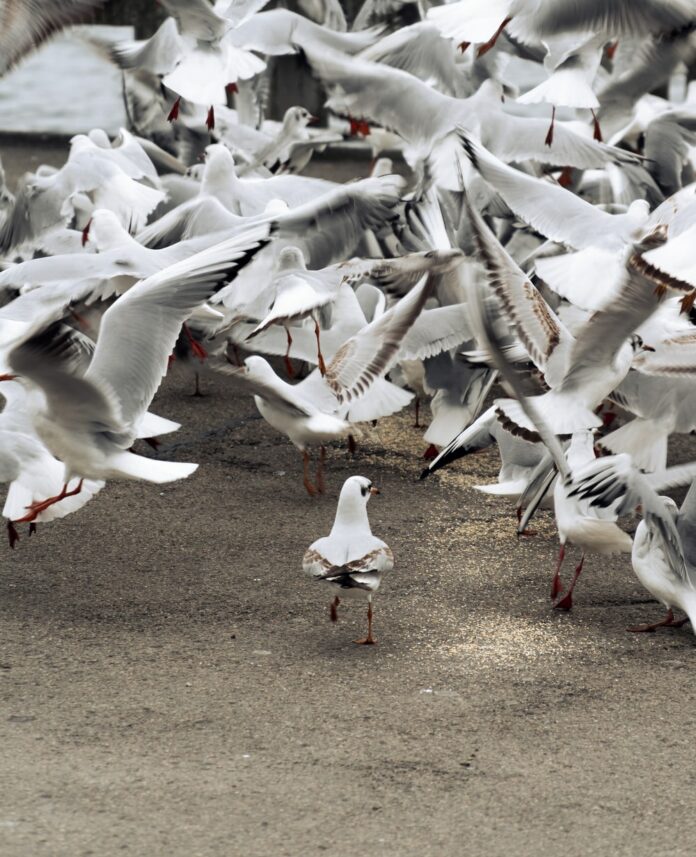
A solitary bird is walking, while a crowd of other birds surrounding it are taking off. The birds are white-ish, and have gray and black markings. Most of the frame is taken up by birds in flight.
Let people act however they want. Photo: Elias Hampp / Unsplash

Every day, I hear people judge strangers for things that don’t matter or affect them — like talking to themselves — but people acting differently from you isn’t the problem you’ve been taught it is.

Sometimes people act “strange” because of neurodivergence, substance use, psychosis, or (shocker!) they might just feel like acting that way. Regardless, it’s nobody else’s business and generally harmless. In fact, acting unusual can make life more fun — you should try it sometime!

Sometimes I forget what I’m about to do if I don’t verbally remind myself. Maybe I’m practicing a presentation on the way to a class? And, sure, I do sometimes hear voices and see people who don’t exist, who I’ve definitely tried to hold doors for and say hello to. What about it?

Mind your own damn business and I’ll mind mine. What does it matter if someone talks to themselves, especially when they’re no inherent danger to themselves or anyone else?

Next time you think to avoid a stranger because of their behaviour, point someone out to a friend, or snap a quick photo to share, reconsider why that person attracted your attention and whether it’s your place to make such quick judgments of them. Spoiler: it rarely is!