Home Blog Page 265

The Sylvia Platters unpacks complicated cultural upbringings in Youth Without Virtue

0
photograph of four band members crouched down together at a sidewalk.
The band bonded over their lived experiences of growing up in conservative religious households. Photo Courtesy of Megan Lambert.

By: Yelin Gemma Lee, Arts & Culture Editor

If you were looking for a short and sweet EP to listen to during coffee breaks on your sunlit patio this summer, I’ve got just the remedy for you. The Sylvia Platters (TSP), an indie-rock band from BC’s Fraser Valley, released their melancholic EP titled Youth Without Virtue on June 24. The album was created throughout the pandemic and the quiet moments of reflection it allowed.

The Peak interviewed TSP bassist, Stephen Carl O’Shea, to learn more about the band and their creative direction. He explained the album explores the clash between conservative cultural upbringings and one’s own adopted values as an adult.

“There exists the world your parents raised you in, and then there is the world you interpret to be authentic and real. Social conditioning within tightly controlled conservative communities employs fear-based tactics to ensure the community’s boundaries are established and held,” said O’Shea. “For each of us, we chose to unpack these complicated histories of upbringings and channel them through energetic expressions of upbeats, downbeats, and vocal harmonies.”

O’Shea said the band bonded over their shared lived experiences of this dissonance between the values they were raised on and the values they ultimately chose for themselves.

“Each of us knew the strict sense of rules and performative social presentation that were required by elders within the community. As we found this commonality amongst our lived experiences, the themes of the album galvanized as cathartic healing through the pandemic’s isolation.”

As someone who navigates the treacherous effects of religious trauma, Youth Without Virtue played a special role during my loneliest moments. The lyrics and upbeat instrumentals felt like a breath of fresh air and sunlight pouring through a dark room at the same time. Rather than being a sorrowful reflection, it’s a resounding soundtrack for hope and healing.
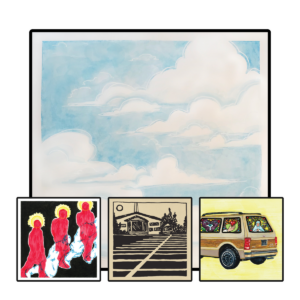
illustrated album cover of Youth Without Virtue
Youth Without Virtue album cover. Photo Courtesy of The Sylvia Platters.

I love listening to the EP on loop because it seamlessly flows into the next track and the EP’s poetic imagery is on theme but not repetitive. Some of my favourite lyrics are found in “Doldrums:” “Dredging up some old sins / So bored of this insurrection / With no unearned affection.” But my ultimate favourite song has to be the title track, which has an upbeat industrial production that clears away for the lyrics of the verses to shine through. The lyrics resonated with me deeply, especially when they croon, “When the guilt starts getting the best of you / And your faithless friends are falling through / Listen to your sister / Take her word for scripture,” and the bridge: “You’re never enough / You’re never alright / You kill what you love / It burns you alive.”

Youth Without Virtue was released physically as a cassette. When asked why, O’Shea explained it felt like the best option in terms of time, cost, and sustainability.

“In this world of intangible releases, another digital EP felt incredibly underwhelming. We desperately wanted to embrace something tactile that TSP fans could hold in their hands,” said O’Shea. “We landed on cassettes as the perfect format as it connected to our upbringing of long family road trips in Chrysler Voyager minivans and their stock cassette decks. For good measure, we got exactly 66 cassettes made up to suit the thematic elements of Youth Without Virtue.”

O’Shea revealed that Youth Without Virtue is a part of a Youth Without… series of EP releases, with plans for the second one being drafted up.

“All of us in TSP are very passionate about our artistic endeavours as an expression of our lived experiences. The band remains an outlet for creative expression and cathartic release,” said O’Shea.

To learn more about The Sylvia Platters, visit their bandcamp page and follow their Instagram page. You can listen to Youth Without Virtue on all major streaming platforms. 
 

Hybridity highlights the collectivity of Asian Canadian diasporic experience and local Asian Canadian artists

0
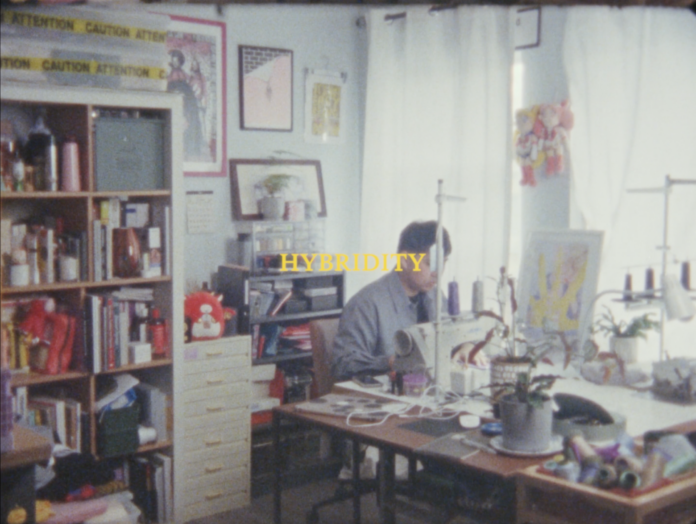
Fashion designer Alex S. Yu working at his workspace on his sewing machine
Hybridity celebrates local Asian Canadian artists in their various disciplines. Photo Courtesy of Kevin Kim / Hybridity.

By: Yelin Gemma Lee, Arts & Culture Editor

Hybridity begins with an introduction by multiple voices from featured artists overlapping each other — the hybridity of united voices. It’s almost as though they finish each other’s sentences but their voices overlap enough to be noticeably disruptive. I felt immediately pulled into the creative direction of the film by this compelling introduction. It encompassed the solidarity between these local artists and the Asian Canadian community through filmography.

What began as a passion project between like-minded SFU film students sparked into a beautiful short documentary that captivates you under its spell. Being under four minutes, Hybridity leaves you wanting more. The film showcases masterful creative direction and cinematography.

The Peak interviewed Kevin Kim, director of Hybridity, to learn more about his thoughts behind the project. He noted the ideas around it began to take form in early April, where they were in reflective anticipation of Asian Heritage Month.

“I was born in Korea but I moved to Canada at a young age, and so oftentimes I feel like I’m in a limbo between both worlds,” said Kim. “However, I knew that there were so many more people like me, immigrants who can’t place themselves in either world. We either don’t think about it or feel at a loss when we do.”

Kim explained the project originated as an idea to reach out to people around him to ask for their diasporic perspectives, but then it settled to taking the opportunity to celebrate local AAPI artists who were also first or second generation immigrants.

“I wanted to showcase impactful, local artists in their spaces to show other multicultural artists that there is a vibrant community of Asian Canadian artists here in Vancouver,” said Kim. “There are a lot of expectations set in the industry on who we are and what we create. It’s important that together we are breaking said norms collectively, creating a supportive and safe environment where we can express ourselves freely without judgement and maintaining the pride of being both the Eastern and Western worlds.”

Being an Asian Canadian artist and an immigrant myself, Hybridity created an anthem of some of my innermost feelings and formative memories. Although I felt relatability and solidarity through everything that was expressed by these artists, my favorite line was when Jace Junggyu Kim said, “I was good at drawing and I didn’t have to really speak. My art was sort of a language to communicate with other people.”

The way the dialogue between five different artists was so seamlessly integrated together was very impactful. The flow of their lines drifted from person to the next as though they were speaking as one voice, nurturing a collective narrative that bloomed and spilled over. The film switched between clear footage and footage that looked like it was old-film, which seemed to represent the shifting nature of diaspora over time. The footage of the artists working their respective disciplines in their spaces was peaceful and inspiring to watch.

“It’s important that we give space for Asian Canadians to share their work so that we can share our stories without fearing judgement or prejudice, and not let our stories be twisted by the perspective of others,” said Kim. “Our goal with the film is for the audience to understand that they are not alone [ . . . ] they can feel supported and proud of who they are as multicultural artists. We also hope to show those who aren’t in the said demographic what it is like to be a culturally hybrid artist and to raise the voices of our community to the public.”

Food for Thought: Butter Chicken

0
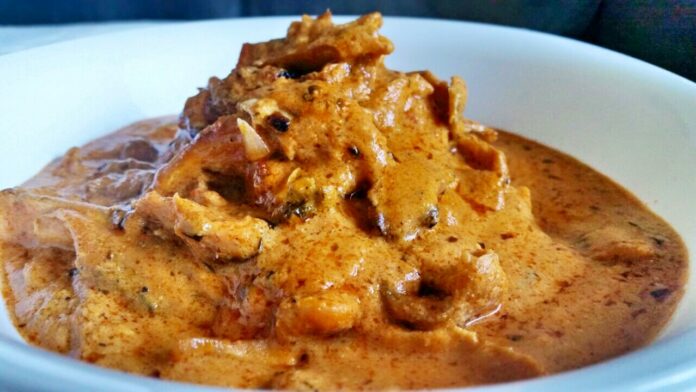
close-up shot of butter chicken piled on top of rice
Butter Chicken has come a long way since its humble beginnings. Photo Courtesy of Affaf Ali / Wikimedia

By: Roshi Chadha, SFU Student

Being from Punjab, Northern India, I have many childhood memories of eating my favourite dish, butter chicken curry, with my parents. This luscious curry, paired with scented jeera rice or naan, always lifted my mood. This meal is not only famous in India but in many other parts of the world. The smell of butter and tender chicken pieces mixed in warm tomato-flavoured sauce is mouth watering. Since moving to Canada three years ago, I have tried this dish at many different places around Vancouver but none have measured up to the dish made by my mom. I think the secret ingredient for my mom’s recipe is definitely the authentic curry leaves, known as sweet neem, that add more rich flavour to the dish.

Butter chicken was developed by Kundan Lal Jaggia and Kundan Lal Gurjal, who began their culinary journey operating a small road-side eatery in Peshawar, Pakistan. After partition in 1947, both the owners resettled in India where they created murgh makhani (butter chicken) in their restaurant, Moti Mahal. It was a common practice at the time to throw out leftovers right away to avoid the risk of eating spoiled food. However, the owners of this restaurant began using their infamous leftover tandoori chicken pieces to make into a sweet-savoury sauce with lots of butter and cream. This is how butter chicken originated — as a creative and delicious way to combat excess food waste.

It is surprising to see the humble dish, made in a small roadside restaurant, make its way to different states in India. Since its beginnings, the butter chicken recipe spread throughout the world with its first introduction in Manhattan. It first appeared there through a print in the newspaper in 1975 highlighting the butter chicken dish served at Gaylord Indian restaurant. Additionally, Indian families who migrated to Canada and other parts of the world began to open their own restaurants and serving this traditional dish.

Butter chicken is a dish that seems complicated to cook but in reality only requires a few main ingredients like butter, chicken, Indian spices such as turmeric and cumin, and staple vegetables like tomatoes and onions. It doesn’t take too long to make and is a hearty and delightful meal after a tiring day. Butter chicken is usually cooked in North India on many special occasions such as Diwali and Holi as it is a traditional comfort food and a staple in our culture.

In current western society, this butter chicken curry is also used separately as fillings for wraps, burgers, pizzas, and pot pies. Although it makes me feel a little bit anguished knowing the dish is getting further from the traditional recipe, it’s been interesting to see the popularity and different interpretations of butter chicken in the western world. If you are curious to try this dish, some of my favourite restaurants to order butter chicken from are Sula Indian restaurant and Tasty Indian Bistro.

Pride history exhibit opens in Surrey

0
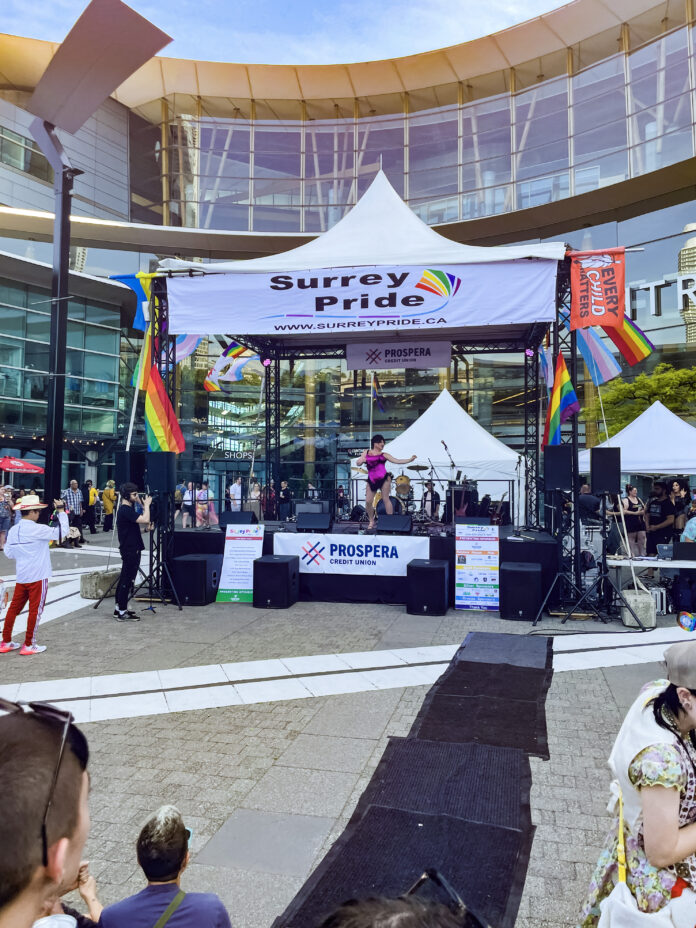
The photo is of the outdoor Surrey Pride Festival. A drag performer is on an outdoor stage as the crowd watches.
This year’s Surrey Pride events included live music and drag shows. PHOTO: Yasmin Simsek / The Peak

By: Yasmin Vejs Simsek, Staff Writer

Dr. Jen Marchbank from SFU’s gender, sexuality and women’s studies department has curated the first LGBTQIA2S+ exhibit at the Museum of Surrey. This comes as part of the museum’s Show and Share displays with elements from the LGBTQIAS2+ community’s history in the city. The exhibit is currently on and will be open to view until September 4. It consists of elements from Marchbank’s personal archives, news articles from the Surrey archives, as well as donations from SHER and other organizations. 

2024 will be the 25th anniversary of Pride in Surrey, and Marchbank is planning on making this exhibit permanent at the Museum of Surrey before then. The Peak interviewed Marchbank to learn more about Surrey Pride.  

Surrey Pride Society has existed since 2001, when it was called Out in Surrey Rainbow Cultural Society. Four years prior to the society’s establishment, three LGBTQIA2S+ books were banned by the Surrey School Board due to parental complains. The complaint began when James Chamberlain, a teacher, submitted the books to the school board for approval prior to teaching them in class. This turned into a legal battle and made its way to the Supreme Court of Canada, where the decision was overturned. At the time, Chief Justice Beverly McLachlin said, “Tolerance is always age-appropriate, children cannot learn unless they are exposed to views that differ from those they are taught at home.” 

The three specific books can be seen at the Museum of Surrey: Belinda’s Bouquet, Asha’s Mums, and One Dad, Two Dads, Brown Dads, Blue Dads. On her search to find them, Marchbank said, “They are not anywhere in the library system of Surrey. So I’ll be making a request.” 

In June 1999, president of Surrey Pride Society, Martin Rooney, was dared to put on Surrey’s first queer dance as a fundraiser to fight the people who were in support of the book ban. To that, Marchbank’s wife, Sylvia Traphan, said, “So what the bigots actually achieved was they started the whole movement in Surrey.”  

The Surrey museum’s exhibit told the story of Rooney, who has a long history with LGBTQIA2S+ activism. From 1993 to 2010, the US had a travel ban on people who were HIV positive. Rooney was going to the US in 2007 to buy a turkey when he was stopped because of his HIV positive status. He was interrogated for three hours, accused of having false papers, his photo was run through the FBI’s most wanted list, and was turned back to Canada. 

Rooney ensured this story reached the media and held a rally to get the US Senate to lift the ban. Because of Rooney’s hard work, Marchbank stated, “It made the American government change the law.” When the ban was lifted over two years later on January 4, 2010, Rooney then went to the US to purchase his turkey.  

During the beginning of the pandemic, Surrey Pride Society had a virtual festival, which is being screened at the Museum of Surrey as part of the exhibit. The festival was filmed in “a grotty little bar with a green screen. The floor space for the whole bar was about this size,” Marchbank said while gesturing to an area of no more than 10 square metres.

This year, Surrey Pride Society held events throughout June, many of them specifically for certain groups within the LGBTQIA2S+ community. It culminated in the annual Pride festival which took place on June 25 at Surrey Central City Plaza. 

The attendance was estimated to be similar to the success of 2019 and community members of all ages came out to celebrate Pride. There were free popsicles, merchandise from the vendors, numerous live music acts, and drag shows being performed in 28-degree heat. The show was finished off with a rendition of “Sweet Caroline” by Rooney.

What’s on the Menu: Weekly reports with your best pal and racoon, Stinks

0
An illustration of a raccoon with a bowtie staring quizzically at the camera
Your trash talker ILLUSTRATION: Megan Yung / The Peak

By: Nercya Kalino, Staff Writer

Welcome back to What’s on the Menu. I am your best pal, Stinks the Raccoon, with the weekly report on what the students are tossing in the trash. Thanks to your readership, this has become the top raccoon newsletter. We have a treat for you. In the past month, a number of students have moved off the SFU residence area, and what was left behind was a feast! Tune into my report to hear more.

The amount of garbage left on the sides of the flooded bins was impeccable. Just prime stuff. I’m talking Cheeto dust, Maruchan ramen packs, and beautiful SPAM. Even some whole packages of spinach! I guess humans buy produce to watch them wilt. so we’ve been lucky lately, but I’m no scientist.

If you missed it, do visit our website where you can buy your favorite snacks and check the countdown clock on when the next treasures will be flooding in the Garbage Disposals of Glory. Of course, you will need to turn your alerts on and pass this information along to your families. 

And now, it is with great sadness to announce that Mr. Slow Paws’ son, Sticky Paws, got himself stuck in the garbage disposal. What pushed him to go this far, we do not know. Our top sources indicate he wanted to find the most priced junk in order to sway the ladies. 

We are deeply saddened by this news. We were not able to recover him because it was garbage pick up day. Goodbye, sweet prince. May you eat lots of garbage, whatever garbage disposal you visit next.

Next on What’s on the Menu is the top five foods the community has voted on. 

At number five is cracked eggs. Whilst these are gems hard to find, the sweet yolk and the crunch of the eggshell makes it worthwhile. At number four is the frogs. Chewy and puffy, the elastic skin is good for a long munch, especially if food is scarce. With the rain coming in and out, these snacks have become rare, so look out, folks. 

At number three and two we have the rotten mangoes and watermelons. If you are lucky you might find tomatoes, too. The humans are definitely getting back on the summer fruit wave. 

At number one is our all time favorite and is still holding its position: the canned and jarred food. We have the old moldy beans, tangy jams, and beef cans. Mushroom soups too, yuck, but it is on the list. While sticking our little paws into the cans is most definitely unsafe, it’s always worth the risk. 

In other news, the president of racoon watch, Mr. Scraps, has announced that the local humans in our area have decided to change the bins. While the bins signify more supply, we ought to watch out for the composite bins with the new locks that trap everything inside. Our composite stealth missions are currently halted until further investigation. 

Thank you for tuning in on What’s on the Menu, I’ve been Stinks, and that is all for the news today. Remember to travel in packs and always hiss if a human thinks you are cute.

Lower mainland Pride events to celebrate queerness

0
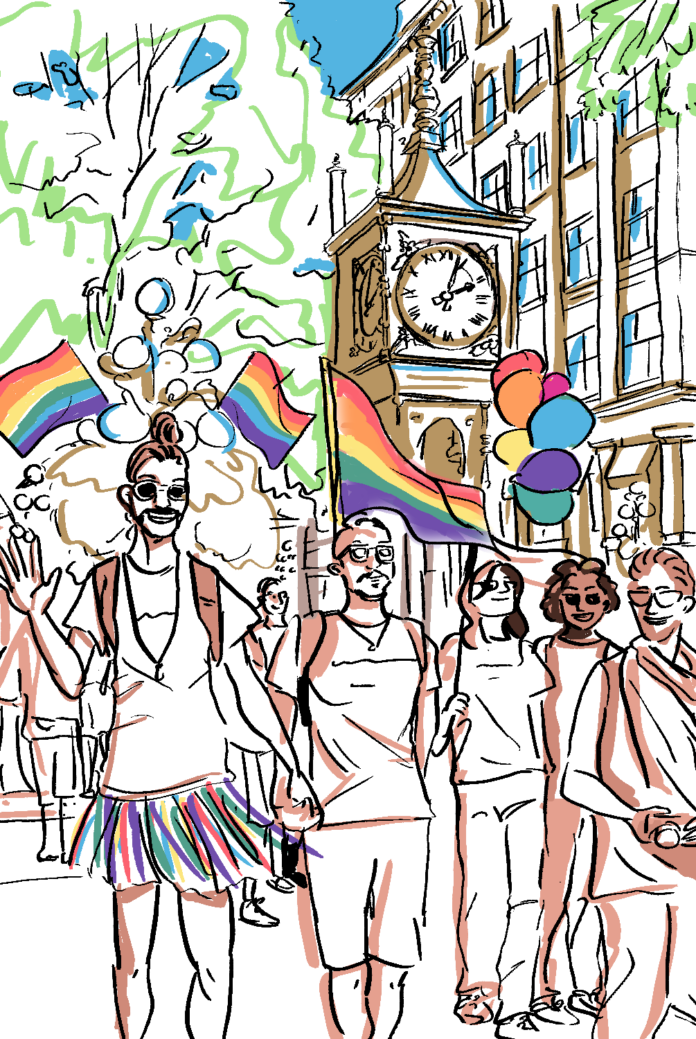
queer folks walking during a Pride-merch adorned street
Image Courtesy of Angela Shen / The Peak

By: Olivia Visser, Staff Writer

Pride month is officially over, but July and August are home to Vancouver Pride Week and a multitude of queer community events. Whether you’re a regular LGBTQIA2S+ event attendee or brand new to the scene, you’re sure to find something you’ll enjoy in this list of Pride festivities!


Movie Screening: Someone Like Me

If you’re unable to attend in-person events, the Co-operative Housing Federation of BC is hosting a free online screening of the documentary film Someone Like Me. Directed by Sean Horlor and Steve J. Adams, Someone Like Me follows the story of a gay asylum seeker from Uganda who finds support from members of Vancouver’s queer community. This is an online event, so it will be live-streamed through a link sent to registered guests. The National Film Board describes the film as “revealing how in a world where one must constantly fight for the right to exist, survival itself becomes a victory.” 

The trailer and film have trigger warnings for homophobia and violence.

When: August 4, 6:00 p.m.–7:45 p.m.

Where: Online, registration via Eventbrite


Sunset Beach Festival

In addition to Vancouver’s iconic annual Pride parade, Vancouver Pride Society is also hosting its sunset beach festival on July 31. Taking place along the beautiful backdrop of Í7iy̓el̓shn Sunset Beach, this is an opportunity to browse an artisan market, listen to live music, watch drag performances, and more. Masks are “strongly encouraged” at the event and will be provided at the Vancouver Pride tent to those who need one. The Sunset Beach Festival page also has a schedule for an accessible shuttle for those with mobility needs, and also offers ASL interpretation, disability seating, and a low-sensory tent. No registration is required. 

When: July 31, 11:00 a.m.–6:00 p.m.

Where: 1204 Beach Avenue, Vancouver


New West Pride and Richmond Pride 

Although some cities like Surrey and Coquitlam have already had their Pride festivals and events in June, other Metro Vancouver cities host their own Pride events in July and August. This year, the New West Pride 2022 Street Festival returns on August 13, taking over Columbia St. from New West Station to Columbia Station. In previous years, they’ve featured a main stage with performances, as well as vendors from Columbia businesses. Richmond Pride Week is happening during the last week of July with a great roster of events including Printmaking for Pride. Hosted by artists Edward Fu-Chen Juan and Jade Balogh-Callow, attendees are encouraged to bring their own art materials to create a “Wall of Pride” that symbolizes “strength, endurance, and perseverance.” No registration is required, but you must show up before 3:30 p.m.

When: August 13, 3:00 p.m.–8:00 p.m. (New West Pride Street Festival), July 23, 11:00 a.m.–4:00p.m. (Printmaking for Pride)

Where: Columbia St. (New West Pride), Richmond Cultural Centre Plaza (Printmaking for Pride) 


Burnaby Pride Festival and Pride BBQ in the Park

Burnaby Pride is hosting its fifth annual pride festival on July 23. This event takes place in Burnaby Civic Square and will feature live music, drag, comedy, and vendor booths. Burnaby Pride gives a few examples from their 2019 Pride events on accessibility such as disability-specific volunteers, digital events, ASL interpretation, and an accessibility table. No registration is required for this community event!

For those looking for a more relaxed experience, Burnaby Pride is also putting together a Pride barbeque at Lobley Park. A choice of meat, vegetarian, or Halal food will be offered to guests, and everything is free! There will also be a live performance from Burnaby-based vocalist Kaya, a queer woman of colour who creates soul, jazz, and indie-pop music. There is a registration page on Eventbrite, but Burnaby Pride says you can also just walk in. 

When: July 23, 12:00 p.m.–5:00 p.m. (Burnaby Pride), July 9, 2:00 p.m.–6:00 p.m. (Pride BBQ)

Where: Civic Square, Burnaby (Burnaby Pride), Lobley Park, Burnaby (Pride BBQ)

Meet the SFU club building electric racing cars from scratch

0
photo of a person working on a laptop with a motherboard in the foreground
The club is already gearing up to start test drives for their 2023 competition car this fall. PHOTO: Andrei Divinagarcia / Team Phantom

By: Isabella Urbani, Staff Writer

Do you have a need for speed? Since 2017, Team Phantom has been designing fully-operational electric vehicles for racing competitions. The club was started by students majoring in mechatronics at SFU — a branch of engineering specialized in mechanical, electrical, and electronic elements of building. The club originally started out building electric go-karts but switched to assembling electric cars from scratch. The team enters their car into electric competitions hosted by the Formula Society of Automotive Engineers (SAE), who also put on other competitions as part of their Collegiate Design Series

The Peak spoke with operations director and mechatronic SFU student Alex Cherniavskii about how the club strives to make their cars as sustainable as possible. Since the cars run on electricity and don’t produce any emissions, they are “cleaner than a traditional combustion-engine.” This helps the team demonstrate that crafting smaller scale electrical vehicles is practical, and helps prospective engineers build the skills necessary to pursue a career in sustainability. 

We already have club alumni that started their own cleantech company, Moment Energy, and we have both current and past club members currently working at industry-leading electric transportation and energy companies,” said Cherniavskii, who currently works as an intern for Tesla. 

As the next generation of engineers, Team Phantom is mindful of what they can do during their projects to limit emissions. “It will be our responsibility to ensure that we do things to ensure the integrity of our future as a collective of people that live on this planet [ . . . ] We all know what’s coming, so it is our job to recognize that we can apply ourselves to improve the outcome as much as we can.”

Part of using greener building methods also means picking and choosing when to use resources. Instead of competing annually, Team Phantom participates in races every other year. In order to design a car from the ground up to race every two years, Team Phantom is split into four sub-team  controls, dynamics, frame/aero, and power and a business team to seek out sponsorships to make their cars. 

The control team is the driver’s right-hand man. They build the communication system the driver uses to remain in control of the vehicle at all times. The dynamics team is the car’s eyes and ears. They make sure integral parts of the car such as the breaking and steering system are good to go. The frame/aero team give a hand to the car’s structural design, including its bodywork. And lastly, the power team is the heart of the system, constructing and managing the electrical system of the car to power the motor. Once a vision for the car has been assembled, the team gathers together to weld and assemble the metal parts. 

Due to the team’s two-year design focus, the team will not be competing at this year’s Formula SAE Electric competition, but is preparing for next year’s. They are close to assembling the car, with plans to test drive in the fall. When ready, the car will be judged in comparison to other entries from schools across the world based on two main categories: static and dynamic. The static category consists of a technical inspection of the car, a presentation by the team to a panel of judges, a cost and manufacturing component to evaluate the team’s business savviness, and a design event. The dynamic portion, on the other hand, looks at the on-track racing abilities of the car in three races: acceleration on a straight path, skidpad event for evaluating turns, and the car’s overall performance. 

Team Phantom relies on a plethora of sponsors to get the resources needed for their car each competition, including support from the Simon Fraser Student Society and companies such as Race Energy Performance. But when the club isn’t bringing their creations to life, they are visiting local middle schools and high schools with building challenges, such as hydrogen-fuel powered mini-cars, to inspire young STEM students. On their website, Team Phantom explains they do this because “to teach is to learn twice.” The club is true to this mantra by accepting all student members, regardless of experience, to partake in the building process. 

“It takes an immense amount of engineering work to engineer a good but safe racing vehicle, so it’s rewarding to see the design once it is built,” said Cherniavskii. “But I think the most important part is the amount of learning that happens during the process, as that is what contributes to long term future career success and builds skills that lead to being able to do even more technical things down the road.”

You can find more information on Team Phantom by heading to their website and checking out their Instagram page for updates on their latest design. 

Authentic ramen connoisseur: Recipes from dormitory expert, Guy Ramsey

0
A photo of a man typing angrily at his computer beside a bowl of ramen noodles
My privilege and my ramen is worthy of a Michelin star, peasants

By: Yasmin Vejs Simsek, Staff Writer

It was the year 2011 and I had just come back from a trip to Japan, and all I wanted was a smooth ramen throwback to take me back to the cherry blossoms of Tokyo. Ramen is a Japanese noodle dish, for those of you who haven’t been lucky enough to go to Japan, like myself. My favorite restaurant for ramen was this authentic cute little place with paintings of geishas adorning the walls and steaming bowls of hot ramen being served in artisanal Japanese bowls. So, longing for my favorite place in the world, I dug up this soup-er (see what I did there?) flavourful spaghetti recipe from my grandmother’s old cookbook, and have adapted it into an authentic collegiate meal for champions.

This recipe has been in my family for generations. My great-great-great-great-great grandmother used to make it for Edgar Allan Poe, and he loved it so much he wrote a poem for her yes, To Helen is about her! I think, nay, KNOW, they would approve my twist to it though, even if they didn’t have hot sauce and instant ramen in the 1800’s. I have perfected this recipe, so of course you won’t be able to make the perfect ramen in the first go, but after 4045 tries, you should be getting closer.

I always make this for myself if I am having a rainy day and I need a little pick-me up. Like that time my Xbox glitched and it hadn’t even saved my game of FIFA!  Or like the time I checked my bank account and hadn’t been transferred the $5,000 promised for my summer vacation to Cuba. I had to use my emergency credit card. All while actually writing a paper about Freud’s homoerotic tendencies. Ugh, relatable, I know. I’ll get em next time, champs, with the best ramen in the world.

HOW TO MAKE DELICIOUS, STEAMING, TASTY RAMEN SPAGHETTI:

This gourmet ramen dish is so fluffy, squiggly, salty, mahogany (I used my essay writing skills, can you tell?) with notes of burned truffle. And best of all, it’s super simple to make and you can basically make it with things you already have in your kitchen. 

First of all, you need galangal. Who doesn’t have that in their cupboard? If you just ran out of galangal, you can substitute for ginger, but I will suggest running to the shop, it really is the best option. Other than that, you just need tapioca flour, spirulina, hot sauce, quail eggs, remoulade, three types of soy sauce and muscovado sugar — NOT BROWN SUGAR — and they’re all staples in most of our homes, right?

Oh, you want more of the recipe? Like and subscribe for part 2/7 on my ramen journey. It’s only the low, low cost of ten Maruchan packets a day!

If you make this ramen, make sure to tag me on Instagram, TikTok, Facebook, Snapchat, Twitter, Pinterest, Tumblr, Flickr, LinkedIn, MySpace, etc. My handle is @EverybodyLovesRamend123. Remember to follow and leave a comment to let me know how much you liked it.

 Love,
Guy Ramsey

The Multicultural Myth: We need to stop celebrating Canada Day

0
Canadian flag against blue sky
You can’t champion your country’s human rights when serious inequalities remain unaddressed. PHOTO: Jp Valery, Unsplash

By: Olivia Visser, Staff Writer

Content warning: anti-Indigenous violence and discrimination, residential schools 

Canada Day is a celebration of national pride. From endless hiking trails, to universal(-ish) healthcare and Tim Horton’s, many Canadians get to celebrate their quality of life. However, not everyone shares this privilege to the same degree. And it’s due to our failure to provide those Canadian privileges to Indigenous peoples that we should cancel Canada Day in favour of a Day for National Reconciliation.

In this country, Indigenous people have historically suffered from and continue to endure systemic injustices that our government both caused and refuses to tangibly address. A celebration of a country’s history that takes place while a large segment of its citizenry is actively suffering isn’t innocent, it’s nationalistic. We’re minimizing the country’s colonial history and continuation of genocide in favour of an artificially positive vision of the country.

Canada’s history, inextricably linked, as it is, to violence and discrimination against Indigenous peoples is nothing to be celebrated particularly when that celebration inevitably turns to talk of how Canada is uniquely multicultural. The treatment of Indigenous peoples makes the country’s claim to multiculturalism ring hollow. 

Beyond having their land violently dispossessed, Indigenous people experienced cultural genocide by being forced into residential schools and forcibly stripped of their Indian Status through the Indian Act’s policy of enfranchisement. The enfranchisement process involved losing “their treaty and statutory rights as Indigenous peoples, and their right to live in the reserve community.” The Act also banned practices like potlatchs and the Sun Dance in a deliberate show of racism. The government was intentionally trying to establish its own eurocentric culture, yet nowadays people praise Canada for its public commitment to diversity. The central Canadian myth that we value multiculturalism is undermined by the history that we choose to celebrate every July 1st

Today, Indigenous people continue to suffer the consequences of Canada’s genocidal past. The last residential school was only closed in 1996, so many survivors are still alive today. New unmarked graves are continuously added to over 1,300 that have been confirmed to be discovered so far at residential schools. For most Canadians, this is a devastating reminder of our history, but for Indigenous people, it’s a traumatic manifestation of the violence that still burdens survivors and their loved ones.

Before we begin to celebrate Canadian culture, we need to address our present-day injustices. The Canadian government still violates Indigenous rights by encroaching on their lands for resource development and denying basic needs like water and healthcare. We also need to seriously address the crisis of missing and murdered Indigenous women by moving away from performative gestures and towards measurable action. Land acknowledgments are essential but don’t generate substantial change on their own. The Canadian government can start by addressing the material well-being of those living on reserves by increasing funds for essential resources and restoring land rights. Reconciliation by our government is performative if many communities still lack access to safe drinking water, and live on land owned and controlled by the Crown.

Reconciliation isn’t as simple as holding hands and pretending everything is all sunshine and rainbows. A step as simple as adding “Reconciliation Day” to the calendar, as the country did last year, isn’t enough. It is performative in the same way Canada claims to care about reconciliation, while still actively harming Indigenous communities — because every Canada Day we still celebrate being on stolen lands

Reconciliation is just a word for the starting point, not the endpoint, in accounting for the trauma that’s been forced onto Indigenous communities. It involves respecting Indigenous land rights, honouring treaties, and recognizing the contributions that Indigenous people have made to our society. It’s time to ditch Canada Day in favour of an alternative that actually accounts for our country’s dark history, and celebrates multiculturalism in a genuine manner. 

We also can’t sit back and expect the government to entirely fix a problem caused in part by civilian complacency. Reconciliation involves individual as well as systemic solidarity. Canadians can donate to Indigenous-run mutual aid organizations as a way to directly support those affected by colonization. Indigenous Mutual Aid is just one organization that offers emergency funds, medicine, and community resources to Indigenous people in need. Because these funds bypass government involvement, independent organizations like this can allocate their resources more effectively, with firsthand knowledge of where support is needed.

Canada is far from meeting the mark on reconciliation, but that doesn’t mean justice is a hopeless feat. The only real way forward is for everyone to recognize their place in this system that has targeted Indigenous communities since it began. Every settler in this country benefits from contributions made by Indigenous people who were subjected to genocide. Because of this, Canada Day should be permanently replaced with a Day for Reconciliation. We should have a holiday that reflects the values our society emptily articulates and should genuinely strive toward.

What Grinds Our Gears: Two+ midterms

0
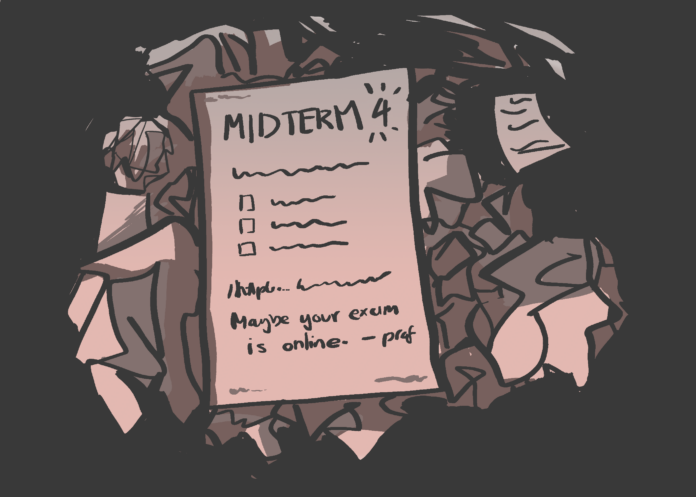
A flurry of midterm exams
On the problem of multiple midterm exams

By: Jerrica Zabala, SFU Student

Course selection week! The best time of the semester when we’re all absolutely drowning in school work. I gloss over prospective course syllabi and suddenly find myself in the shits; I’ve just found out the beloved required course for my degree has midterm exams . . . Plural. This is, of course, absurd. By definition, midterm means halfway. There can’t be more than one halfway point in the term. So then how can there be more than one midterm exam!?

Seeing the course syllabus on the SFU website already gives me anxiety. How are you gonna make me write more than two tests and call it “midterms”? Here, let’s make it easier for you. “Mid” is shorthand for “middle.” “Middle-term” exam. Feeling pretty silly having two or more of them now, aren’t you? 

The only acceptable definition of multiple midterms would have to be in the MIDDLE of TWO terms. Unless I’m pursuing TWO degrees at TWO different universities, I should not be taking TWO MIDDLE term exams.

Do you know how embarrassing it is to have two midterms? Especially during a conversation when your friends ask, “What do you mean you have a midterm? The semester is done in three weeks.” Like what is that about? Oh, and why the hell are you giving out a “midterm” exam two weeks after the semester has started? I digress. 

You want students to take your class with minimal test anxiety? HumDon’t call it a “midterm exam,” just call them unit tests. Midterms are exactly what it describes. Mid. It may be the most insignificant things students complain about during our time at SFU, but don’t fucking push me on it.