Home Blog Page 240

Civil organizations voice concerns on Canada’s Bill C-26 for cybersecurity

0
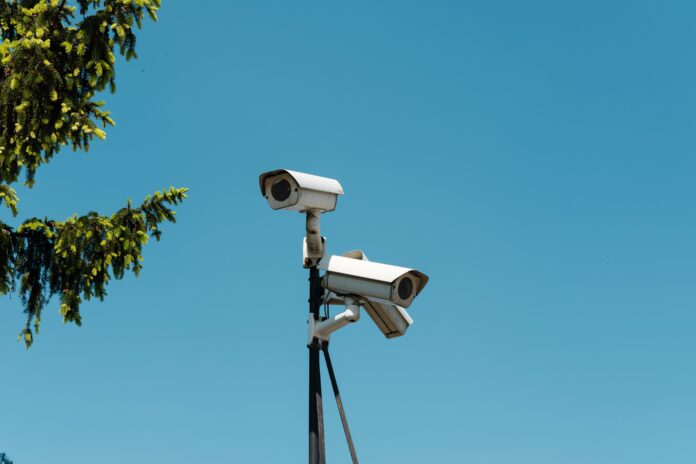
This photo is of a security camera built-into a lamppost outside
PHOTO: Michał Jakubowski / Unsplash

By: Pranjali J Mann, News Writer

Canada’s Bill C-26 on cybersecurity is raising concerns of privacy and lack of government accountability among citizens and civil organizations. Seven of the major associations of cybersecurity including Canadian Civil Liberties Association, OpenMedia, and Ligue des droits et libertés have written a letter underlining the worries. The joint open letter was addressed to the Canadian minister of public safety, Marco E. L. Mendicino

The federal bill was introduced on June 14, 2022. According to the Government of Canada’s website, “This proposed legislation will protect Canadians and bolster cybersecurity across the financial, telecommunications, energy, and transportation sectors.” Moreover, it aimed to “add security as a policy objective,” which gives the government authority to monitor Canadian companies’ activity and suppliers. 

With this bill, if the government suspects a threat of cyberattacks or manipulation it can force telecommunication service providers to remove or suspend services to said person. This bill also requires the service providers to form security plans.  

Considering cyberspace as “Canada’s critical infrastructure,” the legislation is meant to provide increased security for both private individuals and companies. This offers the government additional authority to “mandate any necessary action to secure Canada’s telecommunications system.”

However, the civil society organizations have stated this bill “grants the government sweeping new powers not only over vast swathes of the Canadian economy, but also to intrude on the private lives of Canadians.” 

To find out more about the bill and issues around it, The Peak interviewed SFU’s expert on cybersecurity, Darren Byler. Describing rationale behind the legislation, Byler noted, “It is ostensibly the government’s attempts to control new forms of spam and cyberattacks that are happening in Canadian society.” He also flagged the upward trend in spam and hacking attacks, on both individuals and corporations over the last decade. 

When asked if the timing of the bill had anything to do with cybersecurity concerns around the globe, he said, “That is a real concern I suppose. And that’s part of what this bill is also meant to address.” He elaborated, “The rise of sort of disinformation and misinformation that we see from national level actors like Russia, China, Iran, North Korea, and others, I think [those] are at a national level a source of concern, especially when we know that some of those state actors are attempting to influence democratic processes — elections and so on. We’ve seen that in the case of the United States.” 

Byler explained that under the existing systems, cyberspace was monitored by broad privacy mechanisms, but this legislation enables the government “greater access to information, they’ll be able to track who’s doing the misinformation, who’s sending the ransomware,” said Byler. “It would untie their hands [and allow them] to intervene and do investigative work at scale,” said Byler. 

He also signaled the lack of transparency in Canadian legislation. He explained, “It basically is promoting a kind of secrecy, opacity for the government, so that citizens won’t know what the government knows and what it is doing. That brings a lot of risk to individuals and companies because they simply don’t know what’s being looked at all the time and their property is basically being invaded.”

He added, “There’s also the possibility that in the way that the bill is framed, that services could just be cut off to individuals in a sort of arbitrary way without individuals and companies, without them knowing.” 

In terms of possible loopholes in the bill, Byler noted the need for public advising and participation of societal groups to work together. He stated, “I think the framing that enables this to accentuate and intensify secrecy that it should be removed and instead it should be much more transparent in terms of like this is what the government is collecting. How it’s making decisions around [ . . . ] what constitutes harm and needs to be terminated as a service.” 

Acknowledging this as a challenging situation and stance for the government, he said, “I think building it in a way that’s democratic and allows input from society and at the very minimum, [and] transparency as to what’s being done would be the best way forward.”  

The Peak reached out to the ministry of public safety office, but didn’t receive a response by the publication deadline.

The ABCs of Fact Checking and Media Bias

0
Photo of protesters marching, one of them is holding a sign that says "I can't believe we're marching for facts"

by Daniel Salcedo Rubio

A couple of weeks ago, I wrote an article about the importance of scientific communications and novel steps STEM creators have taken towards scientific dissemination. Well, today my dear reader, I’ve come to you with the ABCs of fact-checking. Because no matter how much informative content is posted on social media, Auntie Grace will probably keep sharing those sketchy links.

Question the Source

First things first, before even opening the article, make sure it’s coming from a serious news outlet, blog, or webpage. You have no idea the number of people (and news outlets) that share articles from satirical publications like The Onion or The Beaverton thinking it’s actually a serious piece.

Okay, so it’s not an article from The Onion, what next? We now have to ensure the publisher is a reputable source. This one is easier said than done. There are a couple of methodologies that might help you determine if a source is reliable or credible. Five Ws, SMART check, or the CRAAP test can all be useful tools. Some of the most important aspects to review in all three methodologies are:

  • Who is the author? Do they have a good or bad reputation?
  • What’s the purpose of this source? What’s the intent behind it?
  • Is it objective? Do they tend to use facts and studies, or do they write with emotion?
  • Is it current? Has this been disproven already?
  • Who is being interviewed? What ideas are being platformed?

This should help you build a strong case for or against the source. Before moving on, I want to give some notes when checking the author of the piece. Let’s remember everyone has some bias no matter how objective we try to be: it’s part of being a human. Getting to know who is writing the article or maybe even reading some of their previous articles can help you understand their point of view. Ask yourself questions. Is the author being objective? What’s their background? Is there a clear conflict of interest? Read the “About the Author” section if it’s available.

I don’t fully endorse that you put all your trust in Bias Charts, using them will definitely help you better understand and criticize the publisher. Bias Charts are a helpful tool to understand the tendency of a publisher or a media outlet towards a specific point of view or political affiliation, hence the name. Bias Charts are also made by humans, so bias in Bias Charts can still happen (I know, the irony). The organizations behind Bias Charts should be transparent on their methodology to rate and score each media outlet. There are a couple that I personally like to use, but my absolute favorite is the Ad Fontes chart. They are very open about the methodology behind each score they give.

Question the Article itself

Okay, first filter down, here’s where we actually begin to work on the article Auntie Grace sent us. Ask yourself if there’s anything too outrageous to be true and pay special attention to the headlines. Remember, people tend to only share articles after only reading the title, so it stands to reason that fake news will have impactful headlines made to catch peoples’ attention.

Ask yourself — Is the title written so it will get clicks, likes, or shares? If it is, then that’s your first red flag. Headlines can be exaggerated so people feel the need to share it, but usually, there’s nothing to sustain such claims. That being said, don’t be so quick as to dismiss an article for an outrageous headline, there are some pieces that are so impactful there’s no other way to write about them. Can you discern which headline is real and which one is fake?:

If you guessed that the spinach story was the fake one and the gorilla story was true, well, you would be in the wrong. Headlines are a good way to start, just don’t make any final assumptions solely based on them.

Now we move into the article’s content. Carefully read every section, and begin your questioning:

  • Are they making any hard affirmations?
  • Do they have any sources to support their claims? If so, which sources are they using?
  • Are they reputable?
  • Are they current?

This might seem like a never-ending story: to review one article you must check its sources, and it goes on and on. And while that might be slightly true, sources that support hard affirmations should come from official communications or organizations that have the capacity to give hard data. Official sources can be Health Canada, WHO, or The Government of Canada. Other reputable sources that aren’t official or government related could be The Associate Press (AP), Reuters, or the Wall Street Journal. Finally, we can also trust publishers like Nature, The American Association for the Advancement of Science, or the European Scientific Journal when it comes to science-related content. While all these sources are overall trustworthy, they aren’t exempt from bias either, so also read and use them with a critical eye. One tip I can give you is to cross-examine your sources. News articles are bound to be covered by multiple media outlets, are they all saying the same thing? Are they unclear with their conclusions or have they convoluted the facts?

You can also find support on third-party fact checkers, though I recommend using only those whose processes are well documented and available to the public. AP Fact Check is my personal favourite and I would actually encourage you to use it to make your life a bit easier.

Question Yourself (and maybe the person who shared it too)

Finally, you should always question yourself as well. We have talked a lot about bias and reputability in the media, but we are also subject to judging articles as truthful or fake based on our own personal bias. Our perception of the world is deeply affected by our own biases, and while analyzing them is well beyond the scope of this article, ask yourself (I know, you probably hate me by this point for making you question everything): Why am I making this judgement? Is my opinion supported in facts or in feelings? If the latter, what makes me feel this way? Is there something that would make me change my mind?

Fact-checking is not an easy thing to do, it takes time and effort to view the information we receive with a critical eye. We’ll be the next generation to lead society, so it’s important we acquire and train these skills. I hope that this short-and-sweet guide can help you better discern between accurate information and fake news.

How health officials have botched COVID-19 messaging

0
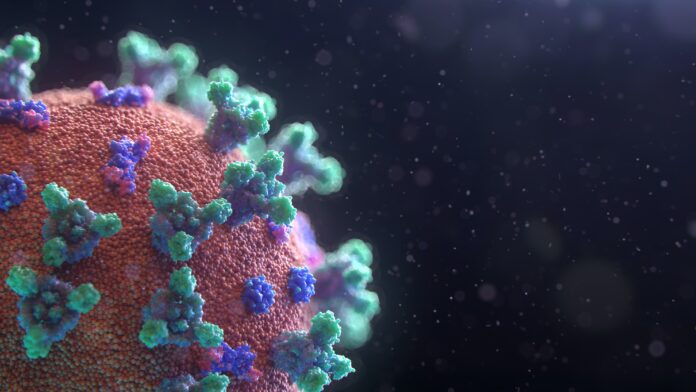
Animation of a the COVID-19 virus.

By Olivia Visser, Opinions Editor

Everyone wants the pandemic to be over, but we can’t will the virus away. We won’t bring an end to COVID-19 by pretending cases and hospitalizations are low when, in reality, they’re rising again. I believe this is due in part to our government’s mixed messaging about the virus.

Something shifted the first time mask mandates were lifted. You know, when indoor mask regulations were lifted briefly in July 2021 before shortly returning again in August 2021. It’s hard to pinpoint what exactly changed after that, but I think a lot of people felt frustrated by being jerked around with false assurances about the state of the pandemic. Some felt they couldn’t trust our government. In a way, they were right.

Globally and nationally, COVID-19 messaging had a confusing start. The World Health Organization (WHO) initially claimed mask use “by healthy individuals could induce a false sense of security.” The statement came even after China, Vietnam, and other countries recommended the use of face masks as a preventive measure. This left many people in the west unsure about the efficacy of mask-wearing.

Fast forward one month, and Dr. Henry was telling the public that masks are “something that we should get used to.” We know that even just wearing a cloth mask can protect against 50–70% of fine respiratory droplets, which was how COVID-19 was primarily thought to spread in early 2020. Our COVID-19 knowledge changes and evolves alongside medical research, but health officials should have exercised more caution before impulsively reassuring the public with rapidly shifting data. These early pieces of information have stayed within the realm of public understanding, with many people tuning out new information. Health officials are supposed to be providing the public with new information, but instead they have only caused confusion and a false sense of security.

It took the WHO over two years to quietly recognize that airborne infection of COVID-19 was possible, despite being served epidemiology reports with proof of this beforehand. This delayed acknowledgement caused an inadequate response to implement measures to combat an airborne threat.

Many have exhaustively discussed masking’s importance since the start of the pandemic. Underlying most arguments is an emphasis on protecting those most vulnerable to serious illness and death from COVID-19: disabled and critically ill people, elderly people, and otherwise immunocompromised people. At the start of the pandemic, a healthy 12-year-old elementary schooler might have minimal symptoms, but they have the potential to spread the illness to those who risk death or complications from infection.

Capital Daily and The Burnaby Beacon conducted a joint investigation into claims made by Dr. Henry about COVID-19 transmission in schools. They found significant disparities between Henry’s public statements and her knowledge about the virus and pandemic conditions. Starting in September 2020, Henry began assuring the public that “the risk of transmission at schools was very low.” Even in April 2021, she maintained her position that “school transmission itself is not a major driver of community transmission.”

While teachers with lived experience expressed concern over her theory, BC did little to curb infection rates in schools. Some fell back on the faulty argument that even if kids do get sick, most of them probably won’t get severely ill, and that’s not to mention the increasing evidence of COVID-19 potentially wreaking havoc on children’s health. Further, COVID-19 often results in mild symptoms for younger age groups. This allows for easy transmission, since many people only test or isolate themselves for COVID-19 if they show significant signs of illness.

Dr. Henry knew this — leaked emails suggest she was aware of the widespread concern over school transmission. According to the investigation, one email she wrote reads: “Could you please give me some of the stats from your school assessments for the media brief today. We need to be able to give some data that supports what we keep saying transmission in schools is low.” Why was she so keen on selling the public a false sense of security? According to The Beacon, Henry based her information off a regularly updated report which “cautioned that the certainty of the evidence was low and that findings could change as more data became available.”

Meanwhile, Dr. Henry co-authored a recent study on COVID-19 transmission in BC, which found that “80% of kids and youth have had COVID-19.” According to The Vancouver Sun, the study also says only 60–70% of adults have been infected by comparison. This information directly contradicts Henry’s frequent claims that transmission rates in schools were low. It supports what teachers and healthcare professionals have been echoing all along: people were, and are, getting sick at high rates.

A publication in the Canadian Medical Association Journal found Canada was ahead of many countries for second vaccination dose rates. However, like many citizens, the government seems to have given up on fighting COVID-19. Only 50% of the Canadian population has received their third vaccination, and officials have backed down on their efforts to promote masks and vaccines. Public health has said little about fourth doses, leaving many confused about official health recommendations.

With mask and vaccine mandates being lifted in BC earlier this March, and all travel restrictions disappearing as of October, some might think the COVID-19 pandemic is finally coming to an end. While I’d like to believe this is true, I can’t help feeling as though we’ve learned nothing this entire time. Wanting the pandemic to be over won’t make it over; this is evident through all the mixed signals given to citizens and the fact that we’re still struggling to keep hospitalizations down. A CTV News article cited The Public Health Agency of Canada, saying hospitals had an average of 4,700 daily hospitalizations from COVID-19 between September 15–October 15. That’s more than twice the number from last year, which was 2,000.

Immunocompromised and at-risk people deserve to participate in society. They shouldn’t need to hide indoors forever to protect their health because we navigated this pandemic so poorly. As 2022 wraps up and we enter another year of uncertainty amid COVID-19, we still must act with at-risk groups in mind. This goes for individuals and our government: you can’t will the virus away.

Cryptid Spotlight: Tiny Tormenters

0
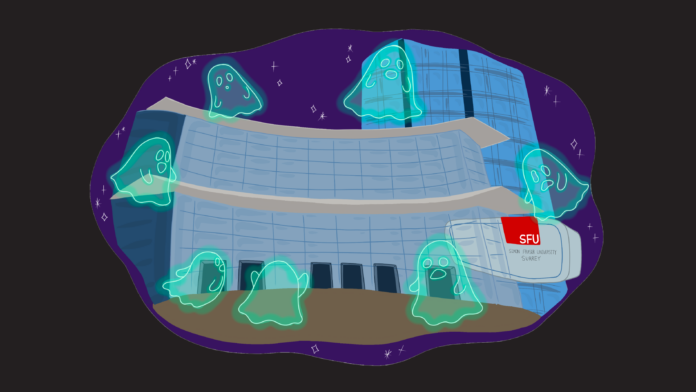
Illustrations of phantom crying babies around the Surrey campus
ILLUSTRATION: Hayeon Gil / The Peak

By: Nathan T, Peak Associate

As midterm week rolls around, so too do the trials and tribulations of SFU students. None more so than the poor engineering computer science and business students in the SFU Surrey campus. Uninformed Burnaby Mountain-only individuals will marvel at the fact that the SFU Surrey Campus sits on one of the busiest shopping malls in Surrey. Some might expect it to be a blessing but for many a keener student, this prime location serves only as a wellspring of torment and anguish.

There have been many unconfirmed reports (confirming would involve too much work) of screaming children and babies echoing from the mall. Babies of the phantom persuasion, that is. Student Quit Crying Wah was found in the campus library with his head buried in his hands. “I’ve got a midterm in, like, a month and I haven’t even done my optional pre-reading for next week’s guest lecture yet. Why is SFU built on top of a mall? I can’t afford to buy anything anyway.” 

Wah tried to go home to study but found that he was distracted by the lack of noise in his home. It’s like the babies conditioned me to need noise when I’m studying,” he said mournfully.But then if I hear crying, I can’t study because I wanna cry as well.” Wherever Wah would turn, he could almost hear the faint wah-ing of the toddlers scampering about campus.

Worse, Wah told stories of how the babies would cry during the most interesting part of his discrete mathematics lecture and ruin the magical world of set theory. “You can’t hear the prof, Wah said. His set theory had been ruined by babies set on haunting his final exams. “And then as you’re trying to figure out all the math on the screen, you feel like crying too.

Why do the children cry? Some say it is because they don’t get their way in the toy shops of the Central City mall, others suggest that the close proximity to SFU Surrey emits an aura of malevolent, yet, melancholy miasma which puts the tears to the eyes of those who might enter its gates as students one day. We strongly believe in this theory. The campus is certified spooky, like all of SFU’s esteemed campuses. Admirably, Wah sees this, too, as an obstacle to his grander ascent.

“I’m just gonna keep on trucking.” Wah says. “Every tear I cry brings me one step closer to graduation and when I will receive that piece of paper from the Supreme Chancellor of the SFU Senate or whatever the job title of that person is.”

Revenge of the Stomach: Digestive Boogaloo

0
Illustration of a grumpy, personified stomach.
ILLUSTRATION: Alyssa Umbal / The Peak

By: Olivia Visser, Opinions Editor

Ah, it’s you again. I’ll admit, your response to my last letter left me with a bit of hopeless optimism. You seemed receptive for once. No lashing out in anger, no irritable bowels. You really had me thinking for a moment that maybe you’re “just sensitive.” Alas, the peace of the stomach is short lived. 

I now know our last conversation was simply the calm before the storm. Had I known then, I wouldn’t have stuffed my face with a box of Halloween candy. I was testing the waters, and boy, was I in too deep. Waist deep in deliciously sweet chocolate wrappers. 

Since then, you’ve continued to attack everything I value in life; from my ability to enjoy desserts, to my functioning at work and school. All those missing assignments and days spent in bed rather than class. Yeah, that’s right. I’m blaming you for my struggles in school. Now it’s personal. I mean, you could argue it became personal the moment you began nagging me in public places. It’s not easy being brave when you have a tummy ache. Nay, it’s one of the most challenging feats a human can undertake.

I was out shopping for groceries the other day. While browsing the produce aisle, I found myself thinking: what would my digestive system want? Can you believe that!? All these years of mistreatment, and somehow I still find myself rushing to defend you.

I’m fighting back this time. I’ve gone back to my family doctor (again) with concerns, realizing that maybe this isn’t all just “in my head” like you’ve led me to believe. No, maybe you are the problem. I don’t want a compromise — I want my life (and stomach) back! 

Yes, our situation is a bit more complicated than most. I can’t just leave you, some might argue I need you. I’d say it’s not that simple. What do you have to say for yourself!?

Stricken with fear, Eunice the stomach picked up his pen and began fumbling a response. He never understood why criticism followed him everywhere he went.

“Bbbbrrrrrbbbrrrrrrr,” he wrote.

“GGRRBRBBBRGHHHGRGBB!” 

I’m taking my life back,

Eunice

Shion Skye Carter embodies a brushstroke in Residuals (住み・墨)

0
Shion Skye Carter posing in white paper garments in front of a black background
PHOTO: Lula-Belle Jedynak

By: C Icart, Staff Writer

Residuals (住み・墨) culminates as Shion Skye Carter pulls out a delicate paper dress and puts it on to dance. Presented through The Dance Centre’s Iris Garland Emerging Choreographer Award, this captivating solo dance performance at the Scotiabank Dance Centre marks Carter’s search “for her own, distinct artistic voice.” Carter won the Emerging Choreographer Award in 2021 after graduating from SFU in 2019 with a major in dance with a minor in kinesiology. 

住み・墨 combines the Japanese words “to reside” and “ink,” which are both pronounced “sumi.”

In Residuals (住み・墨), Japanese calligraphy becomes a vehicle for Carter to explore memories that result in “a journey of self-discovery, where the layers of her identity begin to unfurl.” It was fascinating to see how she drew on the art form to explore her relationship with her heritage. Carter was born in Japan, moved to Canada at the age of six, and began learning calligraphy before she became a dancer. 

After taking a break from calligraphy to focus on school, Carter reached out to her calligraphy mentor, Yoko Murakami, to begin retaking lessons for this solo. “Now, calligraphy is a practice that I can come back to when I need a meditative activity to regain a sense of groundedness,” they said.

As someone whose dance experience is limited to the happy dance I do when I eat something delicious, I felt pretty out of my element attending the show, but seeing how Carter used her body and the space to tell a story was amazing. 

The colour scheme of the performance revolved around black and white, representing ink and paper. As Carter dances surrounded by paper, the abstract lighting helps recreate her grandparents’ home. The dance performers’ willingness to play with shadows and darkness created striking images. Carter begins in a box, illuminated only by a ray of light which she reaches towards. As Andie Lloyd, who did the lighting design for both pieces, mentioned during the post-show artist talkback: they are not afraid of the dark.

The show post-show artist talkback included Carter and Stefan Nazarevich, the composer for Residuals (住み・墨), along with others in the show. Throughout the performance, she embodies the ink, the brush, and the people in her family. “​​Sometimes, I feel that I’m better able to express myself through my body rather than with words,” said Carter. “Calligraphy, merged with movement, has acted as a portal for me to reconnect to parts of my Japanese heritage and cultural expectations.”

Residuals (住み・墨) shows that Carter is an innovative and incredibly talented artist with a truly unique point of view. They’re already in the process of creating Threading Echoes, a collaborative dance performance about the history of shifu, a traditional Japanese fabric weaving technique. Follow her on Instagram to keep up with this exciting upcoming project, and more.

Ottawa’s fall budget announces new interest-free student loans

0
This is a photo of Capitol Hill in Ottawa.
PHOTO: Benoit Debaix / Unsplash

By: Pranjali J Mann, News Writer

Low-income workers and students were offered some financial relief in a budgetary announcement from Parliament Hill, Ottawa on November 3. Federal finance minister Chrystia Freeland has proposed waiving federal student loan interest permanently. 

In an attempt to provide “a real, robust industrial policy” for Canadian economic growth, Freeland’s budget aimed to increase federal funding for student loans. According to CBC News, all “federal student and apprenticeship loans will be interest-free permanently.” It is estimated this will provide $410 of student relief every year. The policy will take effect on April 1, 2023. 

This step is a continuation of COVID-19 relief for students on federal loans. According to Narcity, extension of the federal interest freeze until 2023 would aid “about 1.5 million Canadians who have debt to repay.” For students in BC, the provincial portion of their loans were interest free since 2019. At the time, it was estimated 200,000 people were benefiting from the announcement. This included students enrolled in full-time graduate and undergraduate degree programs. 

The Liberal party of Canada’s website said, “As we look towards the future, we believe that no one should be deterred from pursuing an education because interest costs make it unaffordable.”

Now, with students being permanently interest-free from federal loans, they are set to receive greater benefits. As before, loan repayments are not required until 6 months after completion of the university programs.

Under the Government of Canada’s “Youth Employment and Skills Strategy” program (YESS), an estimated $800 million will be invested to increase job placements — with at least “70,000 annual summer job placements” in the next three years. This investment is in addition to the 2022 annual budget commitments to ensure the government’s effort towards post-secondary education affordability. YESS is aiming to provide necessary information, work experience, and skills for youth facing barriers in “transition into the workforce.” 

It was also highlighted that despite possible signs of recession in the coming year, unemployment rates are predicted to remain lower to the 2008–2009 crisis standard. One of the reasons cited for this was the current state of “tight labor market.” This indicates some sectors have staff shortages whereas others have a surplus of workers. This creates what CBC News calls a “seller’s market.” In an interview to CBC News, a government official also indicated lower unemployment and higher commodity prices are generally “good for the Canadian economy.”

For low-income Canadian workers, Freeland announced possible changes in current Canadian Worker Benefit (CWB). “CWB is a refundable tax credit for individuals and families who are working and earning a low income.” This announcement offered a “refundable tax credit” top-up for about three million workers. This is found to support up to “$714 for single workers and $1,231 for a family,” as per the press release

To learn more about the government’s housing, healthcare and clean electricity transition low-income family workers policies, visit the Government of Canada website.

What Pop-Tart flavour are you?

0
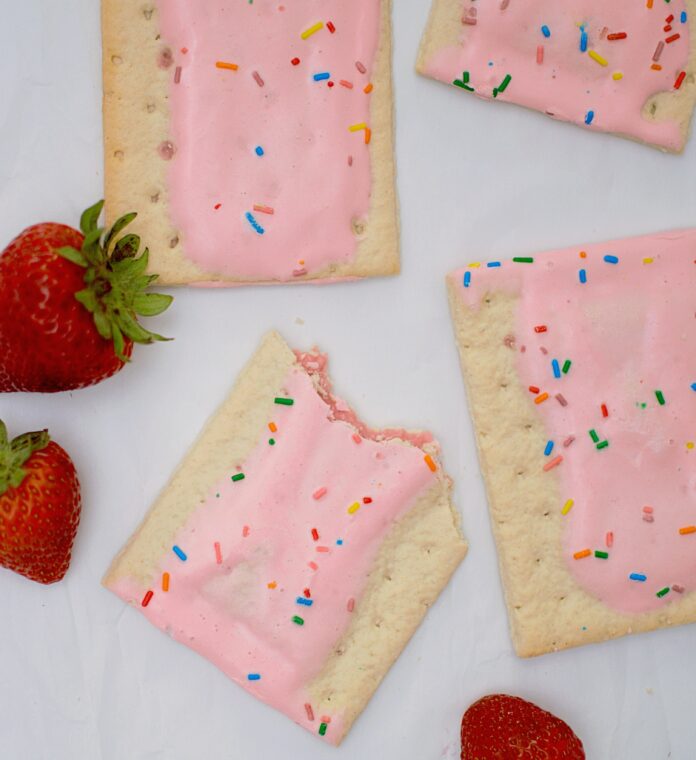
Stock photo of strawberry pop-tarts
PHOTO: Isabella and Zsa Fischer / Unsplash

By: Hannah Kazemi, Staff Writer, Brainwashed by Teen Vogue

If you’re anything like me, you spent many late nights as a 12-year-old flipping through pink-centric girlie tween magazines. You read about all of the latest celeb gossip and took many arbitrary quizzes. Finding out what my choice in glitter shape says about what career I should go into really enlightened me. To give you a taste of the absurdity that was teen girl magazine content, we present this quiz to provide a completely factual and unbiased read of your character.

Question 1

You have three hours between classes every Thursday, and your classes are downtown. How do you spend that time?

  1. You go to Breka and ask to sit at someone’s table (tables at Breka are hot real estate). You discover they’re visiting Vancouver for the first time so you add them on Instagram and DM them a list of all the must-do things while they’re here. You include links and everything.
  2. Go to office hours and fill the entire three hours talking your prof’s ear off about the paper due this week, his dog, your dog, grad school, and which TA has better fashion sense.
  3. Try to get work done and listen to some music, but become bored and wander off downtown to find something to eat. You treat yourself every week you’re here. At what point does ordering your usual from the same food truck lose its “treat” status?

Question 2

McFogg comes to life and asks you for some “help with his homework.” Do you:

  1. Say “yes” enthusiastically because you mistake his suggestiveness with genuine need for help.
  2. Say “yes” because you’ve always had a thing for McFogg and have been waiting for this day.
  3. Say “no” immediately because you’re not into furry costumes.

Question 3

Do you sleep with socks on?

  1. Sometimes, because they keep your little toesies warm and cozy.
  2. Yes, but only one. Sleeping with both on would throw off your body heat. It’s perfectly balanced between “warm” and “one foot out for the monsters to grab.”
  3. Absolutely not. You’re not a monster!

Question 4

You go to the bathroom at your friend’s house and after you do your business you realize there’s no more toilet paper. Do you:

  1. Use tissues in the meantime, then subtly let your friend know that they’re out. You don’t want them to feel bad.
  2. Drip dry.
  3. Text your friend that there’s no more toilet paper and have them toss you a roll as you crack the door.

Question 5

Your friends invite you to happy hour at Cactus Club for girl’s night. Do you:

  1. Treat everyone to an appy because they’ve all been working so hard this semester (and because happy hour prices make your wallet feel generous! Those truffle fries are so hard to resist).
  2. The happy hour menu overwhelms you, so you convince the group to order one of everything and share. You hate half of it but won’t admit it, at risk of your friends calling you impulsive. Again.
  3. You order the chicken lettuce wraps (duh) and a bellini (duh) because it’s Sunday Funday, baby!

If you answered Mostly A’s

You are the frosted confetti cupcake Pop-Tart. You’re very sweet (almost overwhelmingly so), but the fun sprinkles on top distract from the sickly sweet pure-sugar taste of the icing. You send memes to your friends professing your undying love to them because you think that they deserve to have their day brightened. Little do you know that after a couple of bites, you’re kinda hard to swallow.

If you answered Mostly B’s

You are the frosted grape Pop-Tart. Gross. Grape is everybody’s least favourite flavour. Your friends are tired of hearing your rendition of Taylor Swift’s “Karma,” partly because you do too much and partly because it sounds like every other generic pop song ever. They see the value in giving 100% when it comes to your “passions,” but only when your baseline energy level isn’t 150%. Maybe stop being weird?!

If you answered Mostly C’s

You are the frosted strawberry Pop-Tart. A classic. The crowd favourite. The one that gets picked first because everyone knows they can rely on you to bring them joy. Familiar and perfectly balanced between being sweet and tart, you’re a simple gal who doesn’t ask for much. This makes you the perfect friend.

SFSS discusses the health and dental care referendum vote

0
This photo is of the SFU stadium at the Burnaby Campus. The stadium is empty but it is a sunny day.
PHOTO: Krystal Chan / The Peak

Editor’s Note: The article was updated on November 17, to state Baran attended the Alliance of BC Students instead of the BC Federation of Students Lobby Days. Additionally, it was updated to note the referendum required a majority vote, not two-thirds, but failed because they failed to reach quorum.

By: Pranjali J Mann, News Writer

Student health and dental fee referendum information

Vice-president internal and organizational development, Judit Nagy, proposed adding the increase of the fall health and dental plan fees to the referenda. 

Nagy’s motion proposed keeping “pace with the rising cost of health and dental services.” This motion was brought up to open avenues for increased mental health services. SFSS president Helen Sofia Pahou noted the original 2008 motion for the first SFSS health and dental provision did not account for inflation.

In this meeting, more communication about the clear benefits and harms of the referendum were asked to be posted on the SFSS website. 

At the end of the referendum’s voting period on November 3, it was decided the $31.20 increase to the fee will not be applied. This referendum required a majority vote to pass, but the vote did not pass because they failed to reach quorum. But now, the cost remains the same — $254.36 for advanced plan and $197.51 for the basic plan SFU students on a yearly basis. Students can opt-out in case of an equivalent insurance plan in the province, during the “Change-of-Coverage Period.” 

Student Lobby Days Presentation

This was presented by SFSS vice-president external and community affairs, Eshana Baran, who attended the Alliance of BC Students annual meeting in Victoria. The yearly conference works towards accessible and affordable education. 

According to the BC Federation of Students’ website, this meeting was hosted by the British Columbia Institute of Technology Student Association and the Student Union Society of the University of Fraser Valley. The two-day federation meeting had 45 MLA’s and 17 post-secondary student union bodies in attendance, representing about 210,000 students in the province. 

Representing the SFSS at the meeting, Baran attended the lobby training for international students. At the conference, she voiced demands for international students. Additionally, she noted other areas of concern around “financial aid, international student’s rights, support for students with disabilities, and sexualized student survivor support.” 

Baran noted her meeting had various representatives from the BC Liberals, BC Greens, and BC NDP. Through a chance to connect with other student vice-president externals from across the province, she expressed gratitude for being able to connect with powerful student advocates. 

TikTok is dangerous if not used with caution

0
text style sad face in tik tok logo colours
ILLUSTRATION: Raissa Sourabh / The Peak

By: Hannah Kazemi, Staff Writer

Content warning: mentions of disordered eating

Writing this piece makes me a bit of a hypocrite. I have TikTok, and scroll endlessly on my feed. I don’t post videos of my own, but I’ll admit my excessive time online is predominantly due to TikTok. That being said, I can love the app and criticize it at the same time: TikTok can be dangerous if not used properly.

I think many people feel this way — we know in theory that spending too much time on TikTok has the potential to do damage, namely to people’s long-term attention spans and mental health. Some psychologists have studied “TikTok brain:” a phenomenon stemming from excessive use that impacts kids’ ability to stay focused, be productive, and maintain concentration for longer periods of time.

More importantly, the app has proven to be a breeding ground for harmful content, especially for children and teenagers who are more impressionable and base a lot of their self-worth off the people they watch online.

TikTok has been in the news since its launch because of trends and “challenges” that have spawned from popular videos. This includes clips that showcase borderline illegal and dangerous activities: people have died attempting the “blackout challenge,” which encourages users to hold their breath until passing out, and the “devious licks” challenge encourages teens to steal things like soap dispensers from their school or stop signs from the street. 

The hypersexualization and exploitation of young children should also spark concern, as should “what I eat in a day” videos filled with body-checking that perpetuates toxic ideas of what young peoples’ bodies should look like. These types of videos have inspired trends like the “corpse bride diet” and videos where women show off how skinny they are by either wrapping a pair of headphones around their waist or holding up a piece of A4 printer paper against themselves. With the fast-paced nature of the app allowing new content to be posted and reproduced in minutes, it’s no surprise that seemingly harmless videos of someone doing something silly or mundane can turn into a dangerous viral trend so suddenly.

I don’t think people should ditch the app altogether, since other studies have shown TikTok is beneficial for inspiring creativity and self-expression in users, because there really are no limits on how creators can express themselves. Users have the ability to quickly reach a wide audience, so they can spread awareness about important social issues. People inspire change in a way that hasn’t really been possible before. Teens and youth are being exposed to important issues, like climate change and racial injustice, in a way they can easily digest. These are some of the app’s biggest positives.

At its core, a lot of good comes out of TikTok. I find myself laughing and awwww-ing at most of the videos flashing across my screen. Creative and positive trends catch on the same way that harmful trends do. Yet, browsing should still be approached with caution. Because at any given moment you can come across equally uplifting or damaging content, without knowing how it will affect you. It’s like playing roulette every time you open the app. You never know what your “For You” page is going to show you that day.