Home Blog Page 1131

Community members advocate for preferred names on student IDs

0

Two SFU community members, in collaboration with individuals from SFPIRG and Out on Campus, have started a campaign to create a university policy which would allow students to have their preferred names on their student ID cards.

Lucas Crawford, Ruth Wynn Woodward lecturer in the Department of Gender, Sexuality, and Women’s Studies (GSWS) and a transgender individual himself, is embarking on a campaign with GSWS student Nathan Lindsey to make self-identification more comfortable for transgender students at the university.

The issue concerns the university’s current policy which does not allow students to use their preferred names on their IDs. According to Crawford, this is not feasible or even always safe for transgender students.

“The problem with the current lack of policy I would say is it is one of safety, and one of access, and one of choice. And by that I mean that it should be up to a transgender student when and if they want to disclose their transgender status to other people,” he said.

Beyond formal activities, such as registering for classes or paying tuition, students at SFU use their ID cards in places such as the library, the bookstore, and the cafe. These are all situations in which a transgender student might have to disclose “a really intimate piece of [their] past, [their] old name,” said Crawford.

In addition to transgender individuals, the ID issue also concerns international students who may prefer to be called by a different name, as well as students who go by names other than those on their birth certificates.

Lyndsay told The Peak that the only place he has ever seen his preferred name appear is on the online Student Centre and on his email.

“I looked into it, emailed some people in the department, and they told me that the university requires that you use your legal name on your student ID because it can be used as a secondary piece of legal ID,” he said. “I can understand that, but I think there should still be a trans policy.”

Although legally changing one’s name might seem to be a solution to the problem, Lyndsay explained that many students can’t afford to undergo the process.

He echoed Crawford’s concerns that the current situation carries a risk factor for trans individuals: “It makes it unsafe. It puts someone at risk of being outed, [facing] violence, feeling uncomfortable, having to explain your identity to people. You don’t always want to be on the defensive all the time.”

To cast a spotlight on the issue, the two threw an ID Modification Party with Out On Campus on September 17. At the event, students were encouraged to laminate over their current student ID cards, replacing their “wrong” names with their preferred names. “I think [the event was] a first step to a long-term solution that needs to happen,” Nathan said.

Next week, Crawford and Lyndsay are meeting with Tim Rahilly, associate vice president, students, and Mark Walker, SFU’s registrar, to propose changes to the university’s policy.

Although the university has yet to discuss the initiative, Rahilly told The Peak, “I look forward to speaking about this and SFU will do its best to respond to concerns while balancing our role of protecting the authenticity of student identity and credentials we issue.”

Crawford said he believes that the university could have an effective policy in place for students arriving at SFU in fall 2015.

Regarding the meeting next week with administration, he said, “I’m hoping that we can show them just how exciting for SFU it would be to take the lead on this issue, and I hope that we can [work towards] figuring out how to move forward with the new initiative.”

Raccoon Prank Scares Students!

0

SFU is known for its raccoon problem, but usually they aren’t this scary.

How glorious it is: an inter view with The Glorious Sons

0

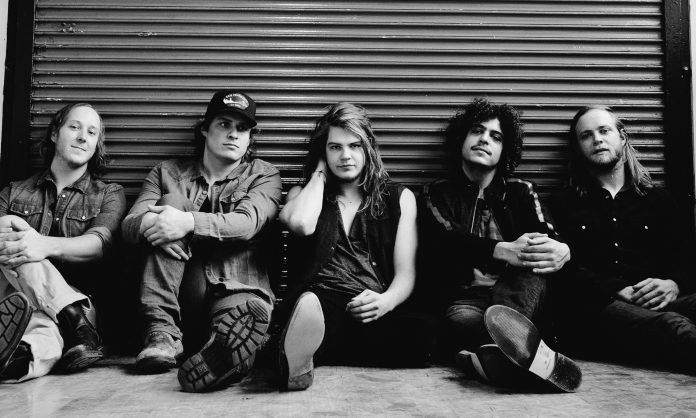
Kingston Ontario’s The Glorious Sons will soon release a new album, The Union, just days after they play in Vancouver. Brett Emmons, the band’s singer and keyboardist, says the group’s growth is reflected in this, their first full-length album.

“We’re maturing as musicians and as people,” he says. Brett was invited by his brother and Glorious Sons guitarist, Jay Emmons, to sing for the band after quitting post-secondary school in Halifax to pursue music. According to him, the group has been the same close-knit five guys since then.

“Everybody’s open to everybody’s ideas,” he says, “and we’re all just trying to do the same thing: write great music that means something to us and means something to others.”

Their new album is driven by hard rock beats, distorted blues riffs and melodies, biting yells, and group vocals. Jay, described the album as spanning from “acoustic, to campfire, to ballad, to straight-up rock.”

The sound could be said to stand somewhere near ’70s and modern rock, similar to that of The Black Keys or Kings of Leon. This straight-up, classic sound is also common among many current Canadian bands, including The Sheepdogs, or locals Yukon Blonde and Bend Sinister.

Brett names both Kings of Leon and The Abbott Brothers as band influences, and says the classic Allman Brothers and Rolling Stones make for much of their touring music. He admits to being “a super fan of Bruce Springstein and Jackson Brown,” as well.

These influences only emerge “in hints” in their music, Brett explains. While they love many different bands, they’re not the type to copy others’ sounds; they’re more interested in bringing ideas to a jam session and exploring them. “It’s all about writing what you want to write; it’s not about trying to sound like anybody or trying to recreate the magic of Springstein,” says Brett.

This love is evident in the new album, with songs that stick together cohesively, yet don’t get stale on their own, and don’t sound like carbon copies of each other. The album tells a story of a passionate, creative group who care about making music, first and foremost.

Brett is thankful for the rock and roll roots The Glorious Sons draw influence from, as well as the appreciation he sees of this in Canada. “I think it’s really loved by the country, and it’s one of the best music scenes around,” he says. “I believe that basically everything we have today has at least been touched by rock and roll. Everybody’s been influenced by the Beatles.”

While many older people love classic rock, it is still appreciated by Canadian youth, who have proven that they “would rather be listening to that than anything else,” he says. Jay echoes the sentiment, saying that Canadian rock is a staple that a lot of Canadians listen to “to help get through the day.”

When it comes to breaking into international scenes, Jay and Brett both allude to doing so, but right now they’re focused on what they have. “We’re young and we’re hungry,” says Brett, but right now he’s thankful for their “real audience” in Canada.

He concludes, “We love playing rock and roll, we love a good audience, and we love when people hear our music.”

The Glorious Sons will release The Union on September 16, and perform at The Commodore on September 13.

Album review: The Gaslight Anthem – Get Hurt

0

The fifth album from these New Jersey rockers, Get Hurt marks a change in the band’s tone with a less celebratory mood and more of a personal, melancholy feel. The album is said to be inspired by vocalist and guitarist Brian Fallon’s divorce from his wife of 10 years, and that makes a lot of sense with songs like “Break Your Heart,” “Dark Places,” and “Ain’t that a Shame.” There are no upbeat songs about the radio to be found here, but there is plenty of pour-your-heart-out, passionate rock ‘n’ roll that shows another side of their sound.

The aggressive first single, “Rollin’ and Tumblin’” is a cathartic ode to the angry post-breakup state of uncertainty and depression. Fallon sings about wondering which pills to take, breaking his own heart again, and rolling and tumbling into a state of depression.

“Get Hurt” was the first single that I came across on the radio, and it being such a shift from their previous album, Handwritten, I wasn’t sure what to think of it. After a few listens I began to understand and appreciate the meaning behind the song, and although it’s still not my favourite off the record, I think it’s an example of the strong, personal songwriting throughout the album.

My favourite track, “Break Your Heart,” is one of those delicate songs that could bring you to tears under the right circumstances. You can hear the emotion flowing from Fallon as he sings “I trusted somebody way and back when. And I loved her like fire until it drove me insane.” Unlike any of their previous work, this is a beautiful song that shows the depth of their range as a rock group.

Their third single and opening track, “Stay Vicious,” is a rousing song about needing to be saved and looking for something to ease the pain as Fallon sings “I have pills for this, and tabs for that. And something that used to resemble a soul.”

This intimate collection of songs is a departure from their previous work, but it is instilled with their unique mixture of folk, rock, and Americana influences, including a great harmonica intro on “Mama’s Boys” and a nod to the traditional folk song “Swing Low, Sweet Chariot” on “Red Violins” as they sing “Chariot swing low, if you come for me.” Along with their clever, emotive songwriting this mélange is what makes their work so compelling.

Empathizing with evil in The Drop

0

Leaving uneasy after seeing The Drop, I looked down and noticed red ink had stained my hands like the bloodguilt the hero (and I) had experienced. None of it would wash off!

Where are the movies with protagonists we can emulate? Does everything have to be so dark and bleak? Where are the positive messages? Certainly there should be places for both condonable and condemnable protagonists, but we have neglected one for the other.  Director Michael R. Roskam’s film conforms with the current trend of morally dark protagonists that have taken hold of mainstream and art-house films.

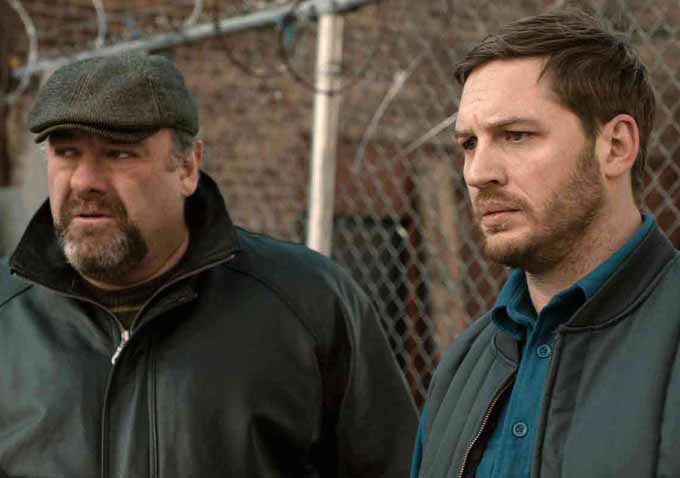
Bob (Tom Hardy) is a bartender for a Chechen mob owned establishment that is used for laundering money. Our hero is isolated, lonely, and guilt ridden. He goes to church every day but never takes communion. He lives alone without any family and becomes wrapped up in a stray, abused dog that he finds in a trash can. I instantly felt for this man.

Evidently, some gruesome burden weighed on his conscience. His enigmatic nature is cryptic and difficult to read. Once we discover his motivation, his past, and his thinking, we realize we have been tricked into empathising with evil. When the shift in perspective comes in the third act, Bob is no longer a hero but precisely the opposite. However, the film’s tone never seems to shift with the new found knowledge. The closing shot is a kind of happily-ever-after visual that hints at something redemptive without the protagonist ever needing to change. I was repulsed.

Such a character would have been inconceivable during the reign of the Hayes code in the Hollywood studio system during the 1920s. This form of voluntary censorship (although surrounding pressures made it coercive) was put into place for the movie industry to regain its moral standing after a few celebrity scandals at the time. Movies coming under this code were positive and focused on good, moral members of society. Admittedly, the Hayes code had some morally questionable flaws: the inability to critique the clergy or the banishment of on-screen interracial relationships. Censorship is never the answer.

However, the ‘free speech’ state of filmmaking today has swung us the other way. We revel in this kind of darkness and have become desensitised to evil. Hollywood is just there to supply the demand. In the 20’s that meant primarily making safe and inoffensive films with messages strongly influenced by the Christian community; now it means more movies like The Drop.

None of this is to say that Roskam has made a bad film. It’s alright. The Drop is technically proficient and competent, but its storytelling utilises a laborious pace. It is painfully mediocre despite the best efforts of the A-list cast — James Gandolfini as the ex-owner of the bar who now works for the Chechens, and Noomi Rapace as the woman whom Bob befriends to help him take care of the stray dog.

The blameless Hollywood hero is dead and I have killed him; we have killed him. The blood is on all of our hands and until there is a societal shift, like Bob, we will be unable to wash away the guilt.

Art imitates life in a Fringe show about actors who work at a restaurant

0

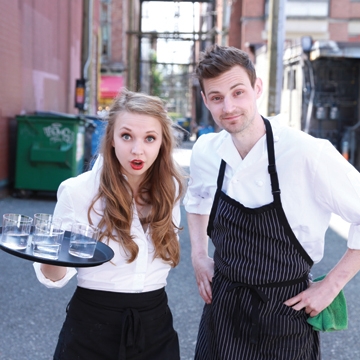
Sometimes life imitates art and vice versa in a serendipitous feedback loop. Pippa Mackie is an actor, and she also works in a restaurant; not the other way around. The line between these two parallel lives is becoming a bit blurred lately as she performs her new show, Industry: The Food Must Go Out, at the Vancouver Fringe Festival. “The vibe is a chef, a busser, and a server walk into their own restaurant, it’s closed down, and they want to have some fun — that’s really what the show is,” said Mackie.

The show is performed at Edible Canada on Granville Island, the hub of the Fringe Festival, and the circumstances couldn’t have been more perfect for this show. Mackie works with chef Nik Bunting, a sketch comedian, and server Lauren Jackson, who is a fellow theatre school grad. Mackie has had an idea brewing for a while to do a show involving life in the restaurant industry, but a couple of months ago it all started to come together when she thought about doing a show at her workplace.

“It’s worked out extremely well, and it’s really a dream because I have had this idea for a while. To do it in an actual restaurant once it’s closed is amazing.” Their manager, doubling as executive producer of the show, was very supportive of the idea, and the three of them began working at the restaurant by day and rehearsing there by night. “We’re up until 4:00 a.m. rehearsing. I can party until 4:00 a.m. just fine, but being genuinely creative at 4:00 a.m. is really, really insane,” laughed Mackie.

Being an actor and having a second job in the restaurant industry is so common it’s a cliché, she explained. “When I tell people I’m an actor, they’ll ask ‘which restaurant do you work at,’ and I used to be ashamed that I had an answer for them,” she laughed. “The show has made me really open up about it and kind of appreciate what this world is.”

With their combined 30 years of restaurant experience, Mackie, Bunting, and Jackson have a huge collection of stories to draw from, and now that she’s writing a show about working in the industry, Mackie said she is constantly coming across new material. “When you’re writing a show you start really hearing things. If we could make the show three hours, we would.” The show is just under an hour, and they have tried to cover all aspects of working in a restaurant.

“I think we’re doing a pretty good job of encompassing everything because I’ve been support staff most of my career, Lauren Jackson has been a server most of her career, and Nik Bunting is a chef. I’ve dish washed before and so has Nik, and I’ve also worked on line very briefly. It’s not just the front of house people; it’s the stuff that happens in the back too which is so insane.”

Mackie explained that the industry is sort of like a club where everyone seems to know everyone else. She actually referred both Bunting and Jackson to Edible Canada, before she even started working there, and their other co-worker, Emmelia Gordon who guest stars in the show as a hilarious bumbling personification of a hangover, got Mackie another restaurant job and worked with Mackie on their previous Fringe show The Progressive Polygamists. “It’s incestual really,” laughed Mackie, “which is funny I said incestual because we did a show about polygamy.”

The show pokes fun at all kinds of things: from the “infamously foul-mouthed cooks” to Mackie’s own dietary restrictions (she’s a dairy and wheat intolerant pescatarian who’s allergic to strawberries and cats). “Restaurants are the most accommodating they’ve ever been. You can go to a steak restaurant as a vegan,” said Mackie. “You have to try and please everybody — that’s one of the more interesting things about working at a restaurant — if you have eight tables you’re serving, you have to please them all at the same time. It’s pretty intense.”

All of the stories in the show are taken from real life. “So much of it is so ridiculous — but it actually did happen,” she said. The actors also play themselves, which is more vulnerable than playing a character. “It’s your heart on the line when it’s your own writing, your own producing, your own acting. It’s a very personal show,” admitted Mackie. “You just want it to be everything you imagined in your mind.”

There are a few things that acting and serving in a restaurant have in common. “There’s something really dramatic about working in a restaurant,” said Mackie, “it is like being on stage, once you start serving a table you have to finish it. You do have to have a personality that can address a group of people and be confident in that, so I think it does require a certain amount of confidence.” Although they don’t have to memorize lines, they do have to memorize orders, and timing is everything.

The show’s timing between different scenes was just right. “We kind of have these fantasy moments. Like a different interpretation of what a brunch shift feels like,” said Mackie. Their interpretation of brunch is the kitchen as the trenches where the cooks stay as the servers go out on the front line into the battlefield. It’s a war zone and sometimes they lose people or tragically cook someone’s eggs wrong. These fantasy moments were a very nice balance to the more personal monologues and segments of audience participation.

“We have a blind tasting during our show and one lucky audience member will be chosen,” said Mackie. “We’ve given ourselves all these tasks during the show, things that are kind of risky. I think that’s what this business is about — both the performance business and the restaurant business — is that they’re both risky in different ways.” Whereas a chef will risk serving a new dish, they’re taking risks with audience participation.

“We don’t know what they’re going to say, and we don’t know what we’re going to say back to them. We know the activity they might have to do, but we really don’t know where it will take us.” It’s all in the spirit of the festival, and Fringe is a great place to experiment and interact with the audience. “The Fringe Festival crowd are some of the best audience members you could ever ask for — they’re very engaged, they’re very excited,” said Mackie.

Watching the opening night performance, I think the audience loved the interactive aspect of the show, and they also loved being able to hold up their pre-paid colour coded piece of paper and have a drink brought to them. It’s a casual atmosphere and the show is so engaging and funny that you may even forget to use that drink card.

While this show is for anyone who’s ever worked in the restaurant industry, it’s also for the general public who may learn a thing or two about how to be a good customer and how to ensure the staff won’t make fun of you in the back. One quick tip: don’t pronounce the wine wrong. If you don’t know, just don’t say it. Another thing that makes it into the show is the hated hot water with lemon order. This is a sure fire way to get on a server’s bad side, along with showing up a few minutes before closing.

“It’s an ode to what we do, and so much of it we’re hoping to be relatable for people who work in the industry. I’m really interested to see which jokes get which laughs because we have so many that are catered to the industry,” said Pippa. While I’ve never worked in a restaurant, I found this show at times hilarious, poignant, and artfully structured in a way that there was never a dull moment.

“Being a professional actor, sometimes I can get used to my costume being all pressed and ready in my dressing room and I just show up half an hour before a show,” said Mackie, “I act, and then I leave, but the Fringe is always a reminder of how much goes into creating a show.”

With all their hearts and souls into the writing, producing, and acting of this show, it shows as they combine their parallel lives and art imitates life, imitating art. “I’m so excited about this show — for so many different reasons. It really is a bucket list kind of show. It amalgamates so many things, and I love food and wine, and I love to perform and write, and I love the Fringe.”

Industry: The Food Must Go Out will be performed as part of the Vancouver Fringe Festival at Edible Canada Bistro Sep 6-14. For more information, visit www.vancouverfringe.com.


 

Why road trip stories are so captivating

0

I have yet to encounter anyone who doesn’t like a good old-fashioned road trip. That’s the truly amazing thing about them: there are so many different kinds of vacations and people tend to differ in opinion about all of them — whether it’s better to go to the beach or the forest or the mountains — but one thing we can always seem to agree on is that the best way to get anywhere is to load up a car with your favourite people, some good music and junk food and just hit the road.

It’s amazing that people still chose to drive places when they could just as easily fly, but there is something so much more interesting about driving through the Rocky Mountains for six hours than just flying over them in one. There is something alluring about forging your own path and enjoying the ride. Road trips make every vacation so much more worthwhile because the journey is just as important as the destination, if not more.

English poetry classes teach about the pastoral ideal, about the idea of getting away from it all and returning to the outdoors, and I think that the artistic obsession with road trips is an extension of this. Books such as Kerouac’s On The Road romanticize the idea of just getting up and going, allowing the open road to take you away from everyday life. Kerouac’s characters are driven to escape from their mundane lives in search of something more exciting and fulfilling, and the journey to get to this imagined destination is an integral part of the story.

Movies like Into the Wild and The Secret Life of Walter Mitty are able to capture our attention with characters who strive to find that serenity that comes with forging amazing paths for themselves. On top of it all, there is always such a huge focus on the scenery, the amazing breathtaking views that you can find if you just drive an hour or two out of town.

We all want an escape from the everyday parts of our lives, and not everyone can afford to hop on a plane and go away for months at a time, or just move and start all over. Road trips are accessible: you can make a trip down the coast for only a weekend, and it can be something exciting if you make it about the trip itself versus the arrival at your destination.

Always make time for stops at the side of the road for goat farms and pie shops, lakes and deer herds; for every eccentric thing that catches your interest, you should pull over for. Road trips are a lot like art, we search out meaning from them, we use them as an escape or as a way to find a story, be it our own or imagined.

Of course, every great story needs a great soundtrack. One of the best parts about road trips is choosing your musical accompaniment. It’s key to pick the best music and to sing along as loudly as you like, and be sure to add in embarrassing dance moves that you know those passing cars will see.

There is something so fitting about the acoustic sounds of easy-to-sing-along-to music that makes kilometres of highway between stops melt away. I have some of my own personal favourite go-to road trip sounds, and I’m sure you do to, but if you are looking to expand your playlist, give John Welsh’s new EP, On the Road, a listen.

He’s a BC local who wrote all his songs while travelling the world, from New Zealand to Newfoundland, and all the way back home again. His music is upbeat, catchy, and super easy to sing along to while cruising down the highway on your next adventure.

If you’re ever looking for a break — maybe classes are getting a bit overwhelming or your job just kind of sucks — try just taking a day or two to go somewhere different. Maybe you don’t even have a specific destination, but just get up and drive somewhere. If you don’t have a car, I’m sure a friend who does would be up for an adventure, and worst comes to worst you can rent a car. There’s nothing stopping you but yourself, so get out there, get on the road, and don’t forget your iPod.


Fringe Festival highlights

0

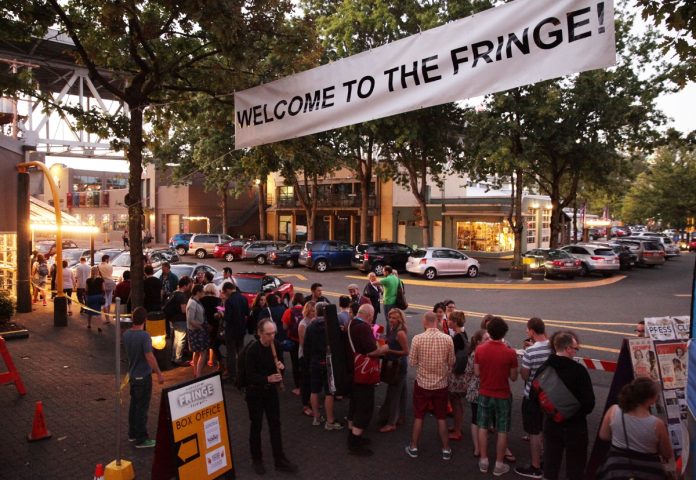
The Fringe Festival is on its 30th run this year, but I only discovered its majesty in 2013. Its small-sized venues provide just the right amount of intimacy at a show, offering both the prestigiousness and closeness that allows the performers to speak to the audience, and vice versa, a technique used extensively in the Fringe For All preview event.

Fringe For All is the event used to promote Fringe shows. It packed 40 show previews into a roughly two-hour time span, and each show was allowed two minutes to show off what makes it special.

The shows that immediately stood out to me were those that took a different look at storytelling and acting, or that had a unique quirk that set them apart. Of course, at Fringe, these qualities are pervasive. Take the terrifying, charming, Tim Burton-esque Aiden Flynn Lost His Brother So He Makes Another, for instance. This silent preview had Aiden Flynn (Morgan Murray) teaching his apparently zombied brother (Danielle Spilchen) how to walk one step at a time, leaving an air of mystique from the mix of childish love and logic that could make such a horrifying situation come to being.

The Greatest Monkey Show on Earth has a similar quirky effect. The name in itself suggests the cliched nature of such a show, but the preview wasn’t simply based around a tired monkey costume act. Ross Travis showed his strength of comedic timing, as he simply flipped between goofy acrobatics and screams to blank stares, yet had the crowd laughing harder than in any other preview.

Dr. Frightfeld presents “Dead Air” features a radio host (Grahame Kent) giving a radio performance while assuming the audience can’t see him. This gave room for the silent sound-effects creator (Robert Grier) to show the extent of his lackluster sound effects through the use of his voice and plastic keyboard, and the speaker to tell the audience to “turn off their radios right now!” and smoke like no one was watching.

Roller Derby Saved my Soul featured Amy (Nancy Kenny) explaining how to pick the perfect name for roller derby, with “the perfect mix of violence and sexuality,” like “human menstrual crisis,” or “Justin Cider,” the latter of which she made sure to explain explicitly, as she couldn’t understand it without “saying it really fast” a few times. The show promises to play with the audience’s comfort levels to get at its main themes of finding oneself and one’s sexuality, all through the eyes of the excited, charming Amy.

Of course, many traditional storytellers were there, whose shows are surely as captivating as their more quirky counterparts. The Dark Fantastic is dramatically reminiscent of, and at least as captivating as, Welcome to Nightvale. Paleoncology features the charming Kira Hall avoiding her family problems by obsessing over dinosaurs, and dressing up as one.

Also, I was surprised by how intriguing I found Verbal Diarrhea, Actual Diarrhea, Heartbreak, Disorder, considering the preview featured Gerard Harris telling the passionate, expressive dramatic monologue of Cher’s “Life After Love,” before he promised that it had nothing to do with the show.

Of course, not every play is going to conform to my personal tastes, but that’s one beauty of Fringe. There were many shows, for instance, whose frankness and honesty promise to tackle important issues tastefully. Meatfloaf Jesus, for instance, offers a mix of music by artist Meatloaf set against the backdrop of Christianity, passion, and finding one’s sexuality. Eating Pasta off the Floor featured one moment of Maria Affinito being embarrassed by her loud, insulting mother, that promises an intriguing narrative.

Want to be amazed? See Junk, a musical with instruments made from junk, or the juggling in Eye Candy. Want to be moved? See The Human Body Project, an unscripted show featuring Tasha Diamant talking about nudity and vulnerability, while being nude and vulnerable.

All the creativity and talent that is going into this year’s Fringe certainly can’t be summed-up quickly. Read the descriptions, see what stands out to you, and you’re certain to come away from a show with something more than what you went in with.

For more information,visit www.vancouverfringe.com.

 

In theory: no budget, no crew, no script

0

Schrodinger’s cat, dinner party antics, and experimental filmmaking collide in James Ward Byrkit’s directorial feature-length debut, Coherence. This is one head trip of a movie that begins slowly as a dull and pointless visitation to one of the most tiresome branches of indie filmmaking, mumblecore, but gains momentum as it begins to fully explore its trippy sci-fi story. Eventually it goes into territory you don’t see coming and ends with a cliffhanger even Hitchcock would have been proud of. The less you know the better.

Byrkit made this film with no budget, no crew and no script. His actors were as clueless as the audience; the actors tried to piece together the mystery of how so many weird events could be taking place at once.

A comet is passing close to earth which is apparently interfering with cell phone reception and causing power outages. The guests of the party drink, take drugs, and discuss their mundane lives. None of it is particularly interesting until things go bonkers.

The director sacrifices technical polish in order to utilize his methodology. The visuals are often weak and not pleasing to the eye as their improvised nature becomes apparent through the editing, which cuts between characters without establishing the surrounding setting. We almost never get a wide shot to show where everyone is sitting at the table so that we can mentally place everyone in the space within the frame.

The director filmed improvised material not knowing where his actors would move or what exactly they would say. Perhaps there was no time for perfection. Unfortunately, the same can be said for some of the audio. Sometimes when multiple characters are bantering at once some of the sound descends into incomprehensible sludge.

However, I suppose this is the sacrifice he is willing to make in order to get naturalistic performances out of his actors, who all do remarkable work. Their dialogue is authentic and does not seem rushed like most films that sacrifice realism for efficiency.

James Ward Byrkit lets his actors talk and talk and talk. At times this is a commendable aspect of the film and at other times it is one of the most boring; it all depends on what the characters are chatting about. If it’s themselves it is probably the latter aspect but if it’s the mystery, it’s the former.

Don’t be confused by the quantum theory and that stupid cat; this is pure genre fare, not profound cinema. Any attempt to make a statement about the characters or explore any significant themes is neglected in favour of figuring out the mystery. It’s in these scenes that the naturalistic performances from the actors pay their dividends. The screams are real screams; the inquisitive stares are real confusion. James Ward Byrkit’s talent is the real deal.

In theory, anyone could have made Coherence, but in practice it takes someone creative and inventive. In practice this is an amateurish effort, but in theory its story is too different and far out to ignore. Coherence is a film all about theory.

Dramatic Fringe

0

For Body and Light – 3 stars

Slow and pensive, this show was poetry in motion. The poetry and music of Ian Ferrier and choreography of Stéphanie Morin-Robert, Linnea Gwiazda, and Allison Burn, combined to create a vivid atmosphere full of maritime imagery. Like the ocean tides, these dancers moved fluidly below one large light hanging above centre stage, representing the moon.

The mesmerizing poetry came alive, yet left room for imagination and interpretation. The large light, maneuvered by a pulley, changed the tone of the space as it was moved to different heights and pulled to the side of the stage. Opening the show were a young musician and spoken word duo who were extremely talented and set the tone for the show. The show ended in a puddle of water as one of the dancers stood in rubber wellingtons filled to the brim. As she moved, the water spilled out around her.

Definition of Time – 4 stars

Iris Lau’s new work in a series exploring complexities of time further delves into the theme as her company incorporates elements of theatre into their work, addressing each other in gibberish and using props to illustrate various scenes.

I found this study of time fascinating as they question what defines time for each of us. Memories, emotions, and thoughts all punctuate time, and the way it manifests itself for each of us. My favourite scene was near the end of the performance as the dancers walked across stage one at a time in all kinds of shoes and left them scattered around the stage.

The Zoo Story – 5 stars

Part of the Dramatic Works Series at The Cultch, Edward Albee’s 1958 play is still extremely relevant today. A bench and a conversation between two strangers is all it takes to captivate the audience of this powerful piece of theatre. It’s a commentary on social alienation, class disparities, and the universal desire for human connection — all of which resonate very well in the 21st century.

Scott Button was wonderfully subtle as Peter, a wealthy man who likes to sit on a bench in Central Park and read a book. Along comes Tom Stevens as Jerry, a working class guy who inquires which direction is north. Jerry sticks around and gradually their conversation grows as they move on to more personal matters and we learn about each of their lives. Stevens impressed me with his portrayal of this character who seems on the edge of insanity, yet is so sympathetic.

Macbeth – 4 stars

Set in the Dunsinane Institute for the Criminally Insane, this adaptation is also part of The Cultch’s Dramatic Works Series. Macbeth is already full of dark themes, but this production takes them even further. The murderous tendencies of Macbeth (Nicolas Taggart) and his wife are paralleled with their lust and the three witches seem to be part human, part animal. The sparse stage and black costuming adds to the grim atmosphere of the piece. Lady Macbeth (Hannah Rose Brearley) in her blood red dress and matching hair is the embodiment of their murderous rage, and although Macbeth attempts to sway her mind, he is drawn into her evil plan.

To create a feeling of being in an institute for the insane, whispered voices would sometimes play, even while actors were speaking. I found this to be quite distracting at times, and I would have liked less of it. I enjoyed this new version of such a familiar story, and I think that after a few more performances it will be even more polished and striking.

Versus – 3 stars

What if you were trying to write a play and then it all of a sudden started writing itself? Writer Andrea Yu toys with this idea in Versus as Andrea (Evelyn Chew) touches a forbidden Chinese figurine that begins to work its black magic and her writing begins to take place in real life.

Andrea’s friend, Pandora (Pandora Morgan) is caught up in this creative writing exercise and ends up being turned into a zombie and things get very strange. The first few scenes of this play were intriguing, but I had the impression that the story was going to take a very different direction. When Pandora became a zombie, it felt like there was some genre mixing going on, and while she was a very convincing zombie, I don’t know if it was the most effective direction for the plot.

That being said the actors in the show were able to bring this story to life without taking themselves too seriously and Chew was able to let out a few cathartic screams at family members as it seemed the black magic was affecting her too.

Junk – 4 stars

Who knew that junkyard scraps could be turned into such beautiful, creative instruments. Paul Snider’s labour of love is a musical about trash, but it’s also a musical about treasures. With themes of sustainability and looking out for future generations running through the songs, I loved the message he is trying to spread with this show.

The music was also impressive with instruments like the recycolin (violin made from a baseball bat and papier mache), xyladder (xylophone built from wood scraps into the shape of a ladder), and trash set (a drum set made from all kinds of trash). The oil drum tampini and various PVC tubing organ reminded me of Blue Man Group’s innovative use of sound.

I enjoyed the extremely creative instruments and there were great songs like “Pieces of Somebody’s Life” that had strong lyrics and an important message, but I felt that the show was missing a narrative and developed characters to guide us through. As a series of songs played on these very cool instruments, it was an entertaining evening, but I think it could be developed further.