Home Blog Page 1131

Hitler had the right idea

0

Right off the bat, I feel like I should apologize to anyone who I may have offended.

It’s not often that I write for any section other than The Peak‘s illustrious and often irreverent humour section, so each semester when I’m called upon to spill my real thoughts in an “Editor’s Voice,” I’m not always as tactful as, maybe, I should be.

Of course, what I mean when I say “apologize” is apologize for the last two “Editor’s Voices” I wrote back in summer and fall.

Not only did I controversially say that I believed that US President Barack Obama would go down in history as “one of the presidents of the United States,” but I followed that up with a staunchly pro-choice stance on trick-or-treating.

You can’t deny that a small moustache is way more practical than a big bushy mess under your nose.

I knew the risk I was taking with these wild and contentious opinions of mine and although I stand behind every word I wrote (even “and”), I still feel as if I have to take a second to make amends with those loyal Peak readers who may have felt betrayed by such radical commentary.

That being said, this semester I decided that I would wholeheartedly attempt to tone down my tendency towards a ridiculous and, frankly, immature “shock-factor” and just write something nice and normal that no one could possibly get mad at.

With that said, I believe that Adolph Hitler had the right idea. Smaller, more manageable facial hair is definitely the best way to present yourself.

Now, of course, I disagree with most of Hitler’s views. His politics, his ideals, even his taste in arm bands was horrible. But you can’t deny that a small moustache is way more practical than a big bushy mess under the nose.

A small moustache allows you to breathe better, it looks much more dignified, and you can drink foamy beverages as much as you want without a care in the world.

With all the grooming products and razorblades available today, there’s really no reason to sport any moustache bigger than a couple of inches. So please, follow in the footsteps of Hitler and keep it neat and clean up there.

Oh god, now that I look at it again I realize the headline I chose might have been a little inappropriate.

It kind of makes it seem like I’m saying that having a large moustache is “wrong” and that’s not what I’m going for at all. Of course you can still be a fine and decent person with a handlebar or even a Van Dyke, it’s just my personal preference to keep it on the small end.

Whatever, I know that Peak readers are intelligent and thoughtful enough to read past the first line before passing judgement. If you do have a problem with anything you’ve read here however, please let me know by emailing [email protected]. Don’t forget that using caps-lock is a great way to get your point across.

Also, you should check out the humour section, it’s the last couple pages of this paper and it’s a lot of fun and if you have any problems with anything you read there, again, please email [email protected], okay?

Life after Sochi

0

At the end of the Sochi 2014 Olympic games, several media outlets around the world reported on the phenomenon known as Olympic withdrawal.

Its apparent symptoms can range from sadness, anxiety, and a lack of motivation which can supposedly plague both fans and athletes after the closing of an Olympic games.

However, according to SFU professor Dr. David Cox, who has been a clinical psychologist for multiple Canadian Olympic delegations and has attended several Olympics as part of the support staff, this phenomenon shouldn’t be labeled as a withdrawal because of the negative connotations attached to that term.

Instead, he argues that it should be understood as a “post-Olympic experience” that athletes go through in which they take time to reflect on the intense physical and emotional Olympic games. In fact, Cox states that for many athletes, this time of reflection usually involves reminiscing about positive memories from their Olympic participation.

Cox compares athletes’ post-Olympic experience to that of graduating university students since both groups worked hard for four years in order to achieve a goal. He adds that for a number of athletes, just like convocating students, this time of reflection also involves making decisions about the future.

In the case of athletes, the decision is whether or not to continue to train and compete for future Olympics.

This process can be more intense for athletes of certain sports that run on a quadrennial system and have an age limit due to physical requirements, thereby leaving competitors to decide if, at their age, they should attempt to train for another four years.

Cox insists athletes should take a well-deserved break from intense training after their Olympic experience and not make quick decisions about their futures; he recommends the same for coaches and support staff.

And for the fans that may be missing the enthusiasm, motivation, and unity that the Olympics create, Cox says all is not lost at the Closing Ceremonies.

“Watch the Paralympic games,” he says, as they offer another two weeks of national pride with athletes just as talented as those in the previous games.

Poster Slam 2014

0

Well, it’s election time again and SFU’s beautiful grey walls have once again been covered up by a seemingly endless number of posters. There are so many out there it’s hard to believe that they’re all just for this one election! While most of them are great and really creative (I saw one that was like the Obama thing, neat!) there’s a few . . . how should I put this, stinkers out there that are just ripe for mockery! So without further ado, let’s slam this year’s worst posters!

WEb-300

Oh boy, look at this one, it doesn’t even have the candidate’s name on it! Hey jerk, maybe you should spend a little less time mastering photoshop and a little more time REMEMBERING TO PUT YOU NAME ON THE POSTER! It just says “300: Rise of an Empire,” what does that even mean? This is one of the worst SFSS election posters of the year!

WEB-chinese

Ummm sorry, but not all of us can read chinese, okay? If you want to get some votes you might want to try putting some English in there! You know, this might be fine if it were like a tutoring service that was specifically targeting chinese students but these are the SFSS elections, you got to do better than this! NEXT!

WEB-math

Are you kidding me Math Tutor?!? Is this really the best you could come up with? At least have a picture or some colour or something! And if you’ve really been a high school teacher since 1999, like you claim, why do you even want to be in the SFSS anyway? Are your guys’ salaries really that bad? Come on Tutor, smarten up!

WEB-men

Okay, so I’ve been seeing a lot of these around campus, so kudos on the promotion, but I’ve just got to say it: these are some of the dumbest posters I’ve ever seen! Sure, their quality is pretty amazing but, seriously just “men”? That’s all it says? We’ve already heard of men, idiot! We’re going to need a LITTLE MORE INFO! What a terrible poster for an SFSS election!

WEB-door

Alright, I’ve got to admit, this one’s actually kind of cool. You can literally push it into the wall and a door will open, which is pretty awesome. But still, I don’t see what this has to do with the elections or the SFSS! I’m not even sure if I would consider this to be a poster, it’s more of a button! God, am I confused. Anyway, this poster sucks, moron! “Press to Open”? Get real!

Sentenced to Death

0

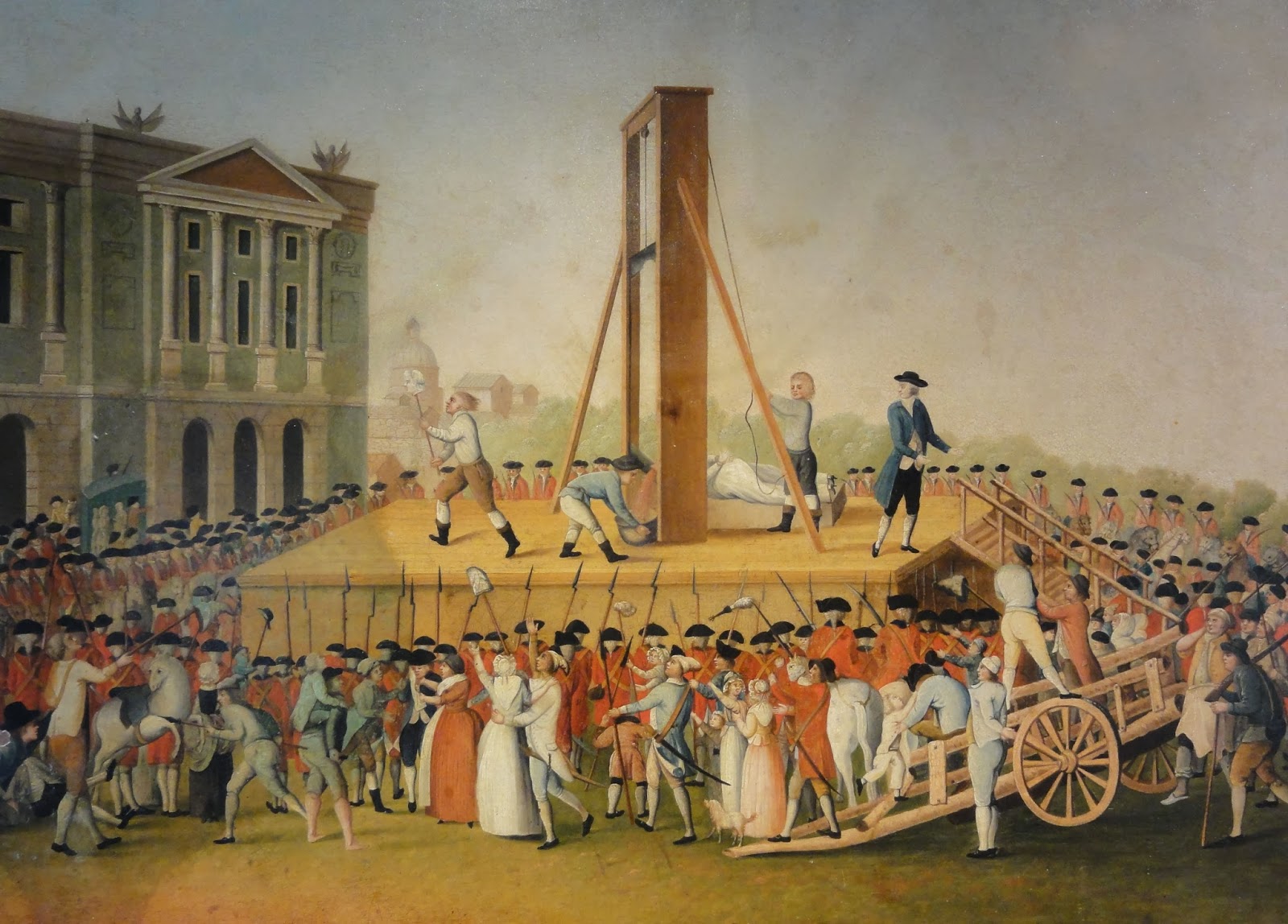
1793 marie antoinette-wikipedia commons

Growing up as the child of a police officer, I have always believed very strongly in the concept of crime and punishment. If you violate the law, you deserve to have certain freedoms revoked for a period of time deemed reasonable by the court. Though I would place myself in favour of harsher punishment for criminals, there is one line that I cannot cross: the sentence of death.

Though some may argue the value of the Hammurabian “eye for an eye” policy, our society should not have the power to take from a person that which it cannot give. This is especially important when it comes to those who are wrongly found to be guilty. If one is accused of murder, found guilty and sentenced to life imprisonment, they can be released if exonerated by later evidence.

The death penalty, on the other hand, is final. Once your punishment is carried out, there’s no coming back.

According the Death Penalty Information Center, over 140 people have been released from death row since 1973 “with evidence of their innocence.” However, a study done by two professors in the United States found that, of the 7,000 people executed between 1900 and 1985, only 35 were innocent of capital crimes.

In other words, a little under 0.5 per cent of all cases where the death sentence was carried out were incorrect. While this may not seem like enough to justify the abolition of the death penalty, it does matter greatly to the families of those 35 people, and for the 3,108 more currently awaiting execution in the United States.

Our society should not have the power to take from a person that which it cannot give.

There is little evidence for capital punishment as a deterrent to violent crime — especially given the fact that the sentence is based largely on a given judge’s discretion. In these cases, the difference between life or death is one person’s verdict.

Even in Canada, the debate still rages. Many may not know this, but the death penalty in Canada was slowly abolished over a 13-year period, lasting from 1963 until the narrow passage (130:124) of Bill C-84 in July of 1976, which abolished the death penalty with the exception of certain offences under the National Defence Act. The death penalty was not fully abolished until 1998 — less than 20 years ago.

The reasons cited for the abolition of capital punishment in this country were the same reasons we hear today: fear of wrongful convictions, concerns about the state taking people’s lives, and uncertainty regarding the death penalty’s role as a deterrent for crime. Until 2007, the Canadian government also had a policy of automatically requesting clemency for any Canadian citizen sentenced to capital punishment for crimes in another country — it’s still occasionally requested on a case-to-case basis.

Despite the outcry in Parliament when this change occurred, studies have shown that the average Canadian is actually in favour of reinstating the death penalty. Gallup polls taken between the years of 1978 and 1998 found that support for the reinstatement of the death penalty never dropped below 55 per cent. Even more telling is an Angus Reid poll conducted last year, where 63 per cent of those polled were in favour of reinstating the death penalty.

While the majority of those in favour supported the Conservatives in the last election, 51 per cent of Liberal supporters polled were also in favour, as were 57 per cent of NDP supporters. Clearly the reinstatement of the death penalty is an issue that crosses political lines, and the majority of Canadian politicians seem to be in favour of reintroducing it.

However, when asked if they preferred capital punishment or life imprisonment without the possibility of parole, the numbers changed significantly — 63 per cent became 39.

Currently, any Canadian convicted of murder, whether it be first or second degree, is given a “life sentence,” but first-degree murderers are eligible for parole after 25 years, and second-degree murderers after 10. The Correctional Service of Canada estimates that the average incarceration time for first-degree murderers is only 22.4 years.

With this in mind, it is not shocking to see these kinds of poll numbers. It’s not that Canadians are overwhelmingly in favour of the death penalty; what we are in favour of is keeping violent criminals off the streets — especially those who may offend again.

If the poll numbers are any indication, before this year is out, we may see the federal government attempt to pass a law that would allow judges to pass Life Without Parole sentences for, in the words of Justice Minister Peter MacKay, “the worst of the worst, the most violent, repeat offenders.”

Though the debate on the death penalty is still split, this option seems to find the perfect middle ground, and one that will make the majority of Canadians feel more secure. Those who have committed violent crimes absolutely deserve to be punished, but we have no right to take someone’s life — no matter what.

Manhattan and Monopoly: Four ways Nollywood is more successful than Hollywood

0

Sleeper 4

“If my films make one more person miserable, I know I’ve done my job.” 

In the existential eyes of Woody Allen, the world is a miserable place. As a great filmmaker, his job is to communicate the harsh realities of life in a way that the world can relate to them. To Woody, success is about making people miserable.

We often see success in economic terms: success equals money, money equals success. Such a paradigm has led to the idealization of Hollywood as the world’s most successful cultural producer. But if we define success in more than economic terms, we may see other industries surpassing Hollywood.

Here are four ways the Nigerian film industry, Nollywood, is more successful than Hollywood.


Democratization of the
means of production

In Nollywood, films are released straight to cassette tapes or compact discs. The low production and distribution costs of Nigerian films provides an equal opportunity for everyone to profit from the industry.

FIlms are distributed out of electronic markets, where thousands of vendors sell a variety of films. Individual vendors and groups of vendors purchase cassette tapes and electronic devices to transfer films onto tapes.

On average, it costs $1.50 to make a single film cassette, which is sold for approximately $3.00. Unlike Hollywood, Nollywood’s egalitarian production process provides an affordable opportunity for almost anyone to profit.

Independence from the government 

Nollywood is a more than $4 million industry that has arisen without influence from the government. The intellectual property laws that fuel the fire of Hollywood’s corporate monopoly over North American cultural industries are non-existent in Nigeria.

Copyright laws are put in place to protect artists from having their work stolen, but now act as a monopoly tax on cultural products. Under copyright laws, access to cultural products must be purchased, and the only people who can afford to do this are corporate actors. Corporations obtain a monopoly over cultural products, and charge fees for the average citizen to access these products.

On the other hand, Nollywood has grown from the inside out. Deregulated intellectual property allows for sharing of cultural products, so all citizens have equal access to Nigerian cultural products.

Reflecting real cultural values 

Human-to-animal transformations, demons materializing out of thin air, and women spontaneously growing male genitalia — these are not your typical Hollywood film scenes, but they are not uncommon in Nollywood. Such scenes may seem silly and unrealistic when taken literally, but they are in fact more “real” than most of the films that come out of Hollywood.

The cultural symbols in Nollywood films reflect genuine Nigerian values that are relevant to the country’s citizens. On the contrary, films coming out of Hollywood primarily reflect “the American Dream” — values that can only truly be associated with those with social capital.

Everyone has a voice

The open market, and low production costs of producing a film in Nigeria, mean the barriers for entry into Nollywood are minimal. The development of the Nigerian film industry has allowed any Nigerian with access to a camera and basic editing software to make significant contributions to cultural industries.

Democratization of the means of production, and independence from the government has led to an industry where everyone can have a voice which allows for the free flow of cultural products that every Nigerian, rich or poor, can relate to.

Satellite Signals

0

surrey

Surrey


On Saturday, March 8, SFU’s LOVE Club hosted a free event called “Why Don’t Vegans Eat Cheese?” The evening began with a presentation on cruelty in the dairy industry. Following the talk, guests were invited to sample various dairy and cruelty-free products, such as dairy-free cheeses, milks, butters, and pizza from Vegan Pizza House. One did not need to be a vegan or vegetarian to attend as it also pertained to those with a lactose intolerance or an interest in cruelty-free lifestyles.


WEB-woodward

Woodward’s


Somewhere Else is Here, a film produced by independent artists, Marina Leblhuber and Jasmina Hirschl, is comprised of messages from residents of Vancouver’s downtown eastside. The residents willing to contribute were asked to share what they would like to see communicated in a message to the public. The film, which was screened last Tuesday, March 11, features many culturally, politically, and artistically diverse individuals. It also highlights the ambivalent nature of the neighbourhood itself and the resilience of the community.


vancouver


Vancouver


The world might be ending, and we all might die relatively soon. At least, that is the possibility “Deep Time, Global Change, and You: The Past as a Guide to the Future” attempted to address. The lecture series, hosted by the faculties of science and environment, wrapped up last Thursday with the final talk by Prof. Anthony Barnosky of UC Berkeley. Barnosky’s lecture, like every talk in the series, looked back into the history of the earth. The aim of the lecture series was to explore solutions for how we should manage our environment and ourselves in order to sustain life on earth.


Clan finish second at NDNU Invitational

0

They may not be first to spring to mind when it comes to Clan varsity sports, but perhaps they should be. The SFU golf teams may be small, but the hard work put in by these dedicated athletes is paying off.

Coming off an impressive fall season that saw the young squad improve 44 spots for a 28th ranking in the NCAA Division II, the Clan men’s golf program has hit the spring season strong.

As of early March, the Clan have earned their first top-20 ranking in the nation since joining the NCAA in 2010, sitting in 19th position.

“This is an incredible accomplishment for the team,” said head coach John Buchanan. “We are a small team, and lack the depth that allows many of our competitors to be successful, but we have very dedicated players here at SFU.”

Since the turn of the calendar year the Clan have continued to excel, earning a seventh place finish at CSU-San Bernadino Coyote Classic, before finishing second at the Notre Dame de Namur (NDNU) Argonaut Invitational, which earned them their top-20 ranking.

At the NDNU Invitational, the Clan had a strong showing with two athletes finishing in the top 10 and four finishing in the top 20.

Bret Thompson, the 2013 Great Northwest Athletic Conference Freshman of the Year, and freshman Kevin Vigna led the way coming in fifth and seventh respectively. Thompson had rounds of 71-75-72 (+2), while Vigna had rounds of 76-74-71 (+5) to lead the team on the road.

Senior Mike Belle finished in 13th position, and John Mlikotic finished 18th, while TJ McColl rounded out the field for the team. Chico State, ranked second in the NCAA Div. II, won the tournament just 22 strokes ahead of the Clan, proving how tight the competition truly is.

“We finished only 22 strokes being Chico,” continued Buchanan. “Mike [Belle] had a rough first day which would have helped us out there, but it really shows how close we are coming this season. I am very optimistic looking forward to the rest of this season and onto 2015.”

The Clan men will be back in action with two more events in California, as they prepare for the GNAC Championships, where they will look to advance onward to the West Regional Tournament.

Woohoo, boohoo

0

Woohoo: automatons

I am so okay with automatons, i.e. robots, being a thing. They’ll probably only make life better, or at least maintain the status quo, for everyone in the future. And by “everyone,” I include the automatons who will eventually assume citizenship status.

What reason do we have to fear robots aside from fearing being intellectually inferior to another species? The curiosity behind this idea will surely always exist with or without robots, and shouldn’t stop us from advancing technology.

We need to trust that automatons will be designed to do good. Now, I know what you’re thinking: “But ‘Good’ is an arbitrary concept created within societies! We can’t program ‘good’ as much as we can’t program ‘happy’!” Friends, I agree.

We have to believe these beings with superior intelligence will know what’s best for everyone. At least, surely, intelligent beings couldn’t justify destroying other sentient beings, right?

Humans can’t, and we’re pretty smart.

We all need to just relax. By the time robots live among us, they’ll have convinced us that it doesn’t matter, anyway.

Boohoo: autocorrect

On the other hand, this lower form of technology that I, for one, struggle with everyday has done no favours for the human/automaton races. Not only does it make typing frustrating as hell, it symbolizes technological apathy.

By autocorrect, I mean a phone’s automatic process that corrects misspelled words, replacing them with words typed in the past or typed frequently. For me, this often translates to missing one letter in “cool,” and it being corrected to one way I emphatically spelled it in the past: “coooooooooool.” Shenanigans result.

Keyboards simply don’t work on touchscreens, and autocorrect serves as a daily reminder of that fact. Continuing to struggle with it every day also represents a reluctance to change to technology that isn’t spoon-fed.

Want a great typing system? Check out the keyboard alternative 8pen. Learn to use this intuitive system, and let’s make cool, freeware systems such as this the norm.

While you’re at it, erase Windows 8 and download Linux, the freeware software designed for the people by the people. If something is broke, and no one is fixing it, then we users need to find something better.

Terms and conditions may apply

0

WEB-terms and conditions- Mark Burnham

A film screening at SFU Burnaby suggests that Internet users are signing up for more than the latest iPhone app when they check off “I agree” to the Terms and Conditions.

Before leaving on vacation to the US, Irish tourist Leigh Bryan tweeted that he was going to “destroy America.” Once his plane landed, Bryan and his girlfriend were interrogated by the Department of Homeland Security, detained, handcuffed, and even put in a detention center before being sent back to Europe.

Bryan’s is just one example shown in the documentary Terms and Conditions May Apply of social media and government surveillance working together with user consent but not necessarily awareness.

The film was screened on March 12 as part of an event organized by the Teaching and Learning Commons called “What Don’t You Know about the Social Media You Use.”

The event explained that Internet users are putting their personal information up for grabs by agreeing to the terms and conditions — contracts that are long and full of enough technical terminology to put off even the most well-intentioned.

Once users agree to the terms and conditions, online services have the authority to record every upload, tweet, search and click. As SFU student Adam Van der Zwan put it, “We really have no Internet privacy.”

Free social media like Facebook, Instagram and Twitter rely on data mining to generate income, but the dissemination of users’ personal information rarely stops there.

Van der Zwan, a third-year communications major, sat on the discussion panel along with Jon Festinger, a law professor at UBC, Kevin O’Neill, associate professor of education technology at SFU, and Stuart Poyntz, an SFU communications assistant professor. All four panelists agreed that this breach of user trust becomes much more threatening when the government gets its hands on supposedly private information.


Hoback described Facebook as “the CIA’s dream come true.”


The director of the film, Cullen Hoback, described Facebook as “the CIA’s dream come true,” and said that government agencies like the NSA and Canada’s CSEC continue to monitor Internet users based on information that they’ve willingly provided to their favourite websites or service providers.

As in the case of Leigh Bryan’s tweet, this can lead to the harassment of civilians for crimes that they haven’t committed.

Festinger claims that Canadians are even less aware of government surveillance than our US counterparts. “We haven’t really had our own Snowden,” he said, however that doesn’t mean that our online activities aren’t being monitored.

While many argue that they don’t have anything to hide, the film claims Internet users don’t know what could be considered a threat to national security. Either way, by simply having an online presence, hiding is no longer an option.

After watching Terms and Conditions May Apply, Van der Zwan said, “I’ve definitely become more hostile toward the Internet.”

Van der Zwan says he believes government surveillance is necessary to national security, but not to the extent it’s happening at the moment, and not without informed consent. He said, “If the government needs to survey everything we do online, we should at least be issued an official statement, or reason, that will notify us in advance.”

“The answer is law and regulation,” Festinger agreed. However, he worries that corporate lobbyists will continue to evade any baseline privacy law for online services. Online services are only as valuable as the user data they have compiled, and anonymity doesn’t bring in a profit.

Van der Zwan says Internet users must first be made aware of how they’re being taken advantage of before things can change — in other words, users must understand that terms and conditions always apply.

SFU professor testifies in same-sex marriage case

0

WEB-Same sex marriage - flickr-kathleenjoyful

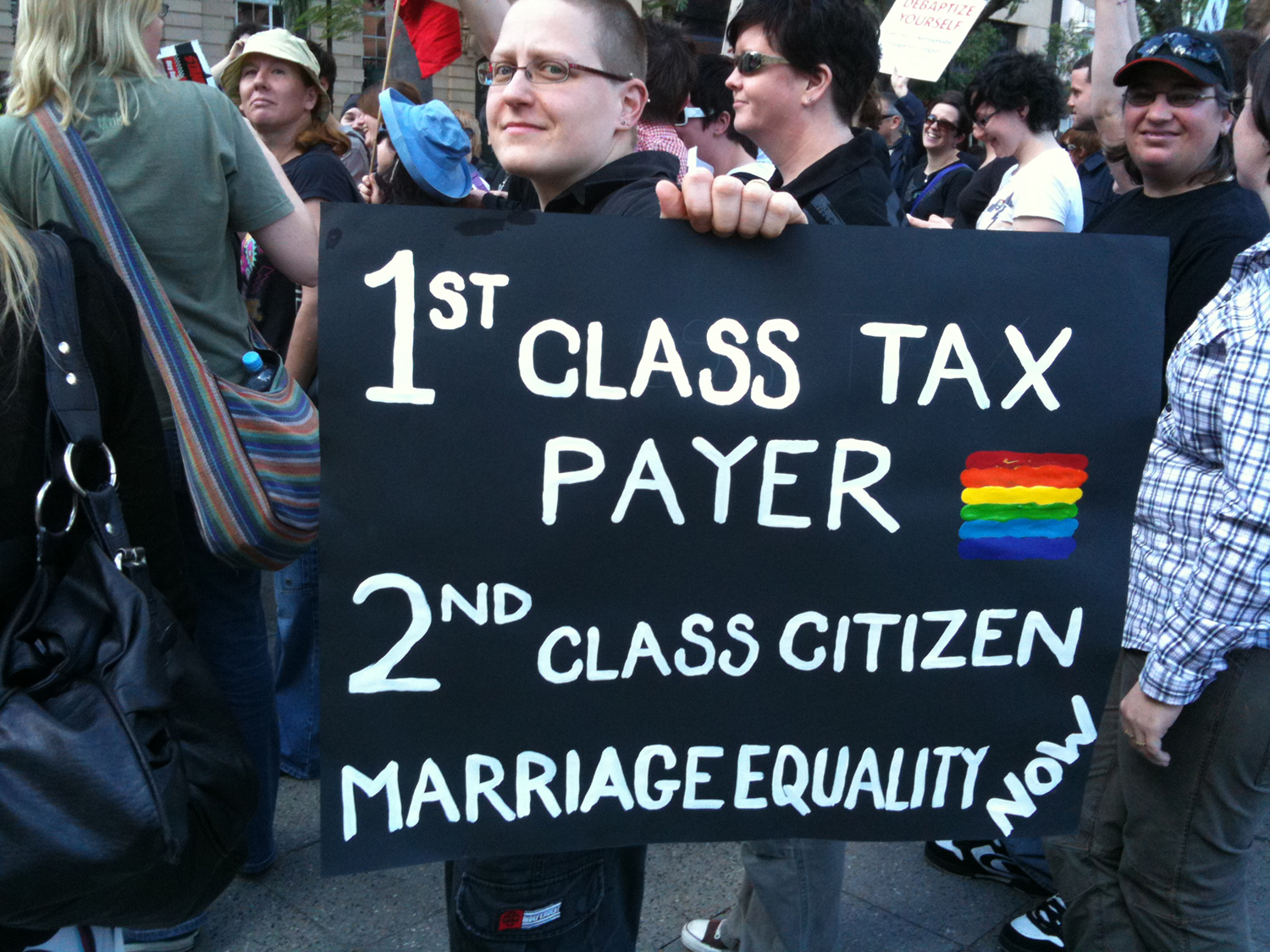
An SFU professor has testified in a federal court trial in Detroit, Michigan, which is challenging the definition of marriage as one man, one woman. The state has claimed that children of same-sex marriage do not do as well in school as those raised by heterosexual couples.

The case is a response to an initial challenge to Michigan’s definition of marriage, which was brought to court by a lesbian couple who wanted to marry and secure adoption rights as a couple for their individually adopted children.

Four social science researchers were called upon to testify in defence of Michigan’s ban on same-sex marriage: one of those researchers is SFU economics professor Douglas Allen.

Allen was called to speak on three research topics: his survey of 60 papers on child outcome research published between 1995-2013, a replication of the Rosenfeld study, and his own paper on high school graduation rates among children of same-sex households.

For the latter, Allen looked at data collected from the Canada census and concluded that children in same-sex households were less likely to graduate high school than children from households with heterosexual parents.

He says of his results, “I am not aiming to make any conjecture about why this was found to be the case. I am only presenting what I found.”

Allen initially aimed to correct the findings of a study conducted by Michael Rosenfeld, a sociologist at Stanford University, whose results showed that children of same-sex and heterosexual parents show the same levels of educational achievement. Summarising a range of research in the field, Rosenfeld testified, “It’s clear that being raised by same-sex parents is no disadvantage to children.”

In his criticism, Allen cited problems with the child outcome literature in general as it draws conclusions based on small, biased samples, making it easy to conclude that children from all households achieved the same rates of academic success.

Allen has come under fire for his response to a question posed at the end of the trial: The plaintiff’s attorney asked if he thought homosexuals were eternally damned, yes or no, to which Allen replied, “Without repentance? Yes.”

Allen explained to The Peak that he was only allowed to give a yes or no answer to the question, and that sexual orientation was not a factor in his testimony. His reply was based in his beliefs that all sinners, if they do not repent and turn to Jesus, will go to hell, no matter their sexual preference.

A long time researcher of the economics of family dynamics, Allen sees the relationships of every household as unique. He said, “I am not opposed to same-sex marriage. I just don’t think that there should be one rule governing different types of relationships.”

Nevertheless, Elise Chenier, a professor in the SFU Department of History and the director of the Archive of Lesbian Oral Testimony, challenges this view. Her research involves the study of sexuality and gender in 20th century United States and Canada, as well as aspects of same -sex marriage.

Chenier is not affiliated with the proceedings of the case, however she says of the defence’s argument, “I think that when you’re opposed to something, you will marshal whatever resources you have to argue against it.”

Regardless of the nature of the research, Chenier has issues with the general focus of the trial. She said, “[The defendants] are equating how well you do in school with your overall quality of life. I don’t necessarily think that’s the single determining factor on a child’s life. Whether they succeed or they fail, this will prevent same-sex couples from having the same legal rights and benefits that opposite sex couples currently enjoy.”

Final closing statements for the case were given last Friday, March 7. The trial’s verdict is expected to come out within the next two weeks.