Home Blog Page 1040

Next semester will be different

0
Screen Shot 2015-04-03 at 9.29.45 PM
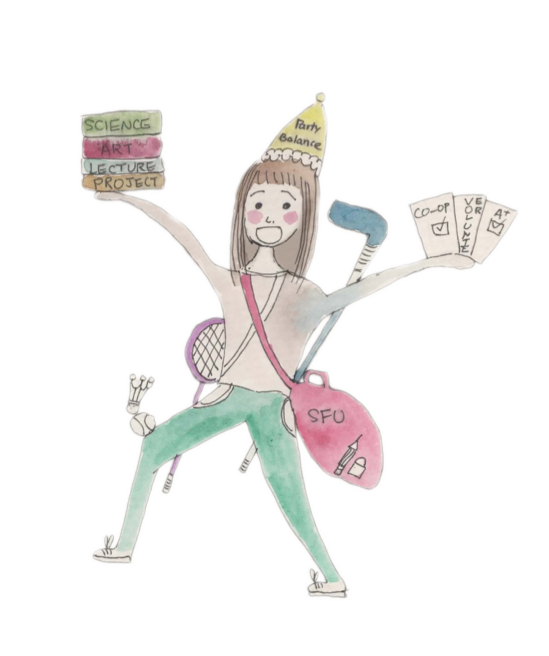
Illustration by Momo Lin

Well it looks like you made it,
you’re almost all of the way through.
Another semester under your belt,
your parents couldn’t be prouder of you.

All finals are done,
the last paper handed in.
It’s time to celebrate,
with a double tonic and gin.

But the last few months weren’t your best,
your GPA harder to preserve.
Your grades might have dipped a bit,
thank goodness for the curve.

It’s not your fault this happened,
you took too many classes.
And it probably didn’t help,
that half of your TAs were asses.

“They really weren’t fair,”
you complain to your friend.
“I think my ideas were just,
too insightful to comprehend.”

All that’s behind you though,
you’ll do better next time.
You make a pledge to yourself,
completely in rhyme.

Next semester will be different,
you make the promise loud and clear.
I’ll stay in on weekends,
I’ll drink half as much beer.

It’s society’s fault, really,
for making you this way.
Social norms compel you,
to party each Friday.

Next semester will be different,
you make a note to yourself.
I’ll use the textbooks for more,
than just sitting on a shelf.

I’ll do all of the readings,
the recommended ones too.
Maybe then exam questions,
won’t feel so out of the blue.

Next semester will be different,
said enough and it might come true.
There has to be a way to bounce back,
or else your GPA will hit a low two.

Perhaps taking better notes,
will lead to higher marks, I’m assuming.
Or at least stop filling the margins,
with all of your amatuer cartooning.

Next semester will be different,
there won’t be a problem in sight.
Between work, friends, and school,
you’ll get the balance right.

Maybe you’ll even have enough time,
to get back into hobbies you miss.
Like music or rock climbing,
not just exploring the Internet abyss.

Next semester will be different,
or at least you think it might be.
Hoping is great,
but there’s no guarantee.

What if the classes get harder?
What if there’s even more homework?
What if you run out of money?
What if things just go berserk?

Life can get overwhelming,
sometimes it sneaks up on you.
The semester just ended,
but there’s already stuff you can do.

Like scholarships and bursaries,
you’ll have to apply early.
And scoping out classes,
preferably not ones in Surrey.

And have you thought about graduation?
It’s not as far off as you might think.
And have you fulfilled your
breadth courses?

Your spirits slowly do sink.
It probably wouldn’t hurt,
to start readings for next semester.
‘Cause if your grades dip too low,
your scholarship they’ll sequester.

Suddenly the stresses you thought were gone,
come rushing back all at once.
If you don’t succeed in life right now,
your family will think you a dunce.

You don’t know how you made it through last semester,
it truly was your worst.
Academia filling your head with knowledge,
‘til your cranial cavity’s prone to burst.

You needed citations for your citations,
a page just for your thesis.
You questioned all of your sanity,
and if you really needed this.

Hassle and bother,
anxiety and stress.
While you’re in school,
everything else is a mess.

Assignments, exams,
and those participation marks.
Student loan interest waiting,
like a pool full of sharks.

You skipped classes to do homework,
and fell even further behind.
As term papers loomed,
you felt even more confined.

“Wait, the essay’s due tomorrow?
I thought that was next week.”
Bought yourself 9,000 Red Bulls,
because technically we don’t need that much sleep.

Online discussions and labs,
and a list for extra reading?
Though it’s likely not literal,
your eyes feel like they’re bleeding.

Deadlines a-galore,
and marked absent if you’re late.
Waking nightmares are the worst ones,
they’re impossible to escape.

Group projects with 10 members,
each more absent-minded than the last.
You raise your hands in frustration,
and pray this too shall pass.

But. . . next semester will be different,
you really mean it this time.
Now’s the age to take on too much,
you’re still in your prime.

‘Cause as much as school’s hard,
and often difficult to manage.
When you finally have a degree,
then you’ll have all the advantage.

And if things don’t work out,
the world proves to be just too cruel.
You can always come back
and apply for grad school.
University Briefs

0

UVic conference highlights the diversity of autism

On April 2, UVic hosted the third annual Autism’s Own Conference, celebrating World Autism Awareness Month. The conference was held to celebrate the autism community and culture.

Patrick Dwyer, the chairperson for the Society for Students with a Disability (SSD), said, “Each person on the spectrum is hugely unique. It’s incredibly diverse. If you’ve met one person with autism, you’ve met one person with autism.”

With this in mind, the conference aimed to break the myths surrounding autism. The discussion panel was free and open to the public.

With files from The Martlet


Break-in at UBC restuarant results in canned pop theft

At approximately 4 a.m. on Monday, March 30, a break-in occurred in the UBC Student Union Building at the Chinese restaurant, The Moon.

There was no cash on the premises and valuables were secured. An unidentified man spent 45 minutes breaking into the place, but ended up leaving with only soft drinks.

The restaurant has since been cleaned up and the security has been double-checking doors to make sure it doesn’t happen again. “Unless he was able to get hold of The Moon’s secret wing recipe, there’s not a lot he would have been able to get away with,” said Shaun Wilson, head of AMS security.

With files from The Ubyssey


University of Calgary mascot arrested! . . . Just kidding

In honour of April Fools’ Day, the University of Calgary pranked students by publishing an article that suggested that their beloved mascot, Rex, had been arrested.

After clicking on the article, students were greeted with the message, “Just kidding, Rex is awesome! Happy April Fools [sic] day everyone.”

Similar pranks ensued at university campuses around the country, including McGill’s announcement of a fall reading break and SFU’s own claim to have launched Texting-Free Walking Zones to prevent injuries from texting while walking.

With files from University of Calgary

SFU prof outlines steps to a more liveable Vancouver

0

AA045205
Michael Geller, an adjunct professor at the SFU Centre for Sustainable Community Development, gave a rousing lecture entitled “12 Great Ideas for Vancouver from Around the World” to an eager audience on the night of Wednesday, April 1 at Harbour Centre.

Geller, a renowned Vancouver architect whose work includes helping with the planning and development of SFU’s own UniverCity, drew on his professional experience as well as his travels to over 55 countries to give concrete suggestions about how Vancouver could become a more livable city. Here is a small sampling of Geller’s “12 Great Ideas.”

“Making Vancouver a friendlier city”

Geller cited a study by the Vancouver Foundation which found that Vancouver residents feel isolated and that the city is unfriendly.

He noted that, while we have events like the Celebration of Light and the Dîner en Blanc, we need more community events that bring people together. Moreover, Geller stressed the need for new condo developments to include communal spaces to make them friendlier and encourage community.

“Becoming a more pedestrian-oriented city” 

Geller pointed out that Vancouver’s Granville Mall is a poorly designed pedestrian zone. He cited examples of major European cities that have vibrant pedestrian zones and suggested that Vancouver should follow suit. He stated that the experience of these zones could be enhanced with more plantlife and better paving.

“Promoting transportation options”

Vancouver has made great strides in promoting cycling over the past decade, noted Geller, but we still have some ways to go. For comparison, Amsterdam has underground parking garages for bicycles. He suggested the possibility of a tram system. To fund transit, he said, we could look to road pricing, as is done in Chile.

“Becoming a better planned city”

Geller believes in the maxim that “form follows function,” but he acknowledged that, in Vancouver, “form follows finance.” He argued that Vancouver needs to have a better process for planning.

Rather than asking for applications for rezoning, he said that the city should have a development plan that pre-zones each area. He noted the need for consistency of scale and a multiplicity of housing options in such a development plan.

“Becoming healthier and safer”

Geller suggested that, along with environmental impact assessments, the city should also conduct health impact assessments. He noted that the CBC science program The Nature of Things selected UniverCity as a case study in how communities can reduce obesity.

Geller only alluded to the transit referendum in his presentation, but he talked to The Peak after to clarify his views. “I agree with all the people who say it was a mistake to even have it,” he said. “But, having done it, I feel it’s better to vote yes and start to get some of these infrastructural improvements than to try and make a point by voting no.” He noted that the vote to approve the U-Pass at SFU itself only passed by a “narrow” margin.

Once Geller concluded, the floor opened to questions from the audience. Over a dozen audience members took the opportunity to voice their own suggestions for improving Vancouver. Despite having opposing views on how to achieve a more liveable city, participants engaged in a lively and impassioned debate on the topic.

The level of engagement at the event surprised Geller. “Too often we have very heated community meetings to oppose a particular project. We rarely have conservations about the broader things,” he commented.

“I was shocked, to be honest, by how many people came forward and wanted to talk about [their] ideas.”

Satellite Signals

0
Image credit: Eleanor Qu

Woodward’s

SFU’s School for the Contemporary Arts (SCA) welcomed students to the Goldcorp Centre for the Arts for an inspiring dance performance titled SHIFT. From April 1–4, SCA students performed on stage in collaboration with Canadian choreographers. The dancers showcased their techniques and emotions within the contemporary setting.

Surrey

A discussion titled “Art Activism: The Cairo-Tehran Connection” invited attendees to examine the creative ways in which women are challenging the status quo in Egypt and Iran. Held on March 31, the second of this four-part series looked at how independent female musicians and filmmakers are influencing the sociopolitical scene in Egypt.

Harbour Centre

Students from Interactive Arts and Technology (IAT) 833 showcased their talents at an art showing and dance party held on Tuesday, March 31. Projects displayed included POEME: A Poetry Engine, an installation created by Shannon Cuykendall described as “powered by your movement,” as well as a performance piece by Kıvanç Tatar titled Deep Breath.

Board Shorts

0

Code of Conduct working group

The SFSS set the revision and implementation of the draft Code of Conduct for SFSS board members as an organizational priority. The code was originally prepared last summer.

President Chardaye Bueckert motivated in favour of the code: “It’s formalizing the mechanism whereby students can relay [their] concerns. [. . .] It’s positive inasmuch as it does empower council to be more of an advisory body.”

She continued, “I would also point out that this has been outstanding since 2013, when over 600 students signed a petition asking that SFSS do this very thing and implement such a Code of Conduct.”

The board also requested that Council, which meets after board, strike a working group to review and implement the proposed code. Each council member on the working group will receive a $50 honorarium.

Accessibility Projects assistant

The board voted in favour of the creation of a temporary project worker position to do a full accessibility assessment for the society this summer.

VP Finance Adam Potvin spoke in favour of the position: “It could only benefit the society with having the time and resources to conduct surveys, to focus on accessibility issues as they pertain to the website and to student spaces.”

The proposed accessibility projects assistant position would also entail looking into how other institutions approach accessibility. The budget is yet to be determined.

Not all board members were equally convinced that a new student hire was the best way to improve the society’s accessibility. Concerns of redundancy arose over the fact that the board already has an Accessibility Fund Advisory Committee (AFAC) that could do the same thing, as well as whether a student could complete a proper financial audit.

Bueckert pointed out that AFAC members already feel “quite maxed out” and adopting this position would be in line with the society’s goal of “moving to governance, rather than operations.”

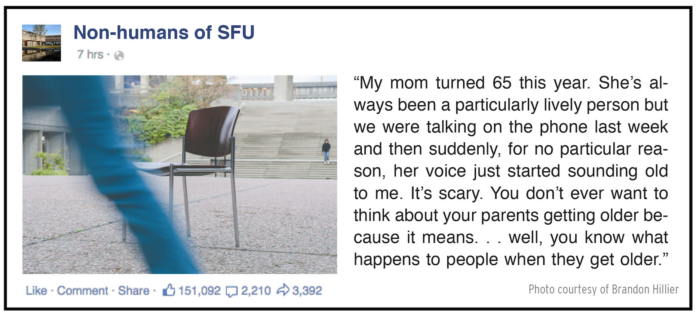
Non-humans of SFU

0

Screen Shot 2015-04-03 at 9.13.22 PM

My Arts Degree is Worthless

0

16150175927_203478eac2_z

Sorry if my title tricked you into thinking this was yet another narrow-minded jab at the liberal arts. But I think there is a very good reason to distinguish between the piece of paper you receive from a man in a silly hat at the end of your long four (or five or six) years at university and what you actually get out of it.

It didn’t used to be that way, of course — a bachelor’s degree used to be like the golden ticket into Willy Wonka’s Chocolate Factory, except instead of a lifetime supply of chocolate and a psychedelic factory tour, you got to reproduce a comfortable middle-class existence in a sterile, white-collar office job. But those days are over.

As I near the end of my undergraduate career here at SFU, the frequency of belligerent questioning I receive has  increased proportionally. In different forms, they invariably ask, “What the hell kind of job are you going to get with a sociology degree!?”

It didn’t start out this way. These same people were perfectly happy when I was a bright-eyed UVic engineering freshman with a clearly-defined path to a well-paying job. But that discourse shifted significantly when I decided to walk my own path into the SFU sociology department.

I get similar responses when I tell other arts students I’m a sociology major, but an arts degree isn’t about the grades you get, it’s about how you develop as a person. It’s about the things you learn, and the people who help you learn them. This all sounds cheesy, but bear with me.

The things I’ve gained aren’t exclusively job skills. They are life skills that produce better, more critical citizens who engage with society in both the public sphere and in their everyday life.

I hear people enjoy lists, so let’s give that a try. Here are the top four things I’ve gained from my liberal arts education:

1. Critical thinking skills

There’s an often-quoted saying that anthropology is about “making the strange familiar and the familiar strange” — but I want to extend that to the arts as a whole. An arts education pushes the boundaries of possibility. Instead of stopping at questions of  “what?” and “how much?,” I’ve learned to ask the big question: “why?”

The academic questions I explore everyday tend not to be instrumental. They aren’t aimed at market-rationalized goals of profit, or even to accomplish a specific, defined outcome.

Of course, society needs people like that. We need scientists to discover the empirical nature of existence, engineers to build things based on those discoveries, and environmental scientists to study the effects. But we also need people to question what’s behind those innovations.

2. Peer engagement

The only way I actually got better at thinking critically was by being critiqued myself. In fact, I hope you use our Facebook comments section after you finish reading to do the same.

Arts students have their own comments section: each other. Upper-level arts courses tend to be small and discussion-based. This has been ripe terrain for engagement with wildly different perspectives than my own.

The only way I’ve developed critical thought has been through the ruthless critique from my fellow classmates. These are people who grapple with the same questions I do, yet produce radically different conclusions. Simply put, my peer groups have made me a better thinker than I ever could have been alone.

3. An interdisciplinary perspective

Most arts courses I’ve taken overlap. A communications course might discuss Marx, while a history class might invoke hegemony. Instead of staying isolated within our respective disciplines, arts has allowed me to draw upon multiple perspectives to understand the world.

Arts are the venn diagram of university studies. In my degree I’ve been able to explore the intersections of history, the human mind, rhetoric, society, culture, and ethics. Only by bringing these all together have I been able better understand the world around me.

4. Reading and writing

I read a lot. Pages and pages every day. Some of it’s fun, some not so much. But it’s almost always challenging, and that’s fantastic. Being able to read a vast amount of text, understand it fully, pick out the important concepts, and write something actually worthwhile about is something I do almost every day.

Being able to articulate my thoughts, feelings, and desires fully has been the most liberating experience of my life. And I wouldn’t give that up for anything.

I’m aware that this is an incredibly privileged position to take on higher education. Most people I know are buried under mountains of student loan debt, and don’t have the luxury to pay $7,000+ a year in tuition to simply become better thinkers — myself included.

While most arts degrees do not have specific, defined career paths built into them, that’s not really the point. Rather, they create a foundation to build their lives upon. And in the age of precarious neoliberal ‘flexible’ labour, maybe this is a good thing.

Labour market demands change constantly, and many technical skills become obsolete overnight with parallel technical advancements. Instead of specialized vocational training good for working one specific job in one specific industry, an arts education has allowed me to develop an adaptable skill-base of writing, researching, communications, and analytic skills that can applied to a plethora of contexts. So far, I’ve applied them to education and digital communications analysis, benefiting enormously from these skills.

And while I may not graduate to a six-figure salary immediately, I know I’ll be okay in the long run.

But even beyond that, my education has allowed me to interrogate the market logic ideology that pervades our culture — instead of asking “how much can I make?,” I instead ask “how can I make a difference in society?” Ultimately, the track laid out by my arts education is not clear-cut. It’s a twisted path of curiosity, questioning, and exploration. But I’ve learned that that’s the best way for me to develop as a person. I have embraced the chaos. I recommend you do the same.

SFU football athletes participate at CFL regional combine

0
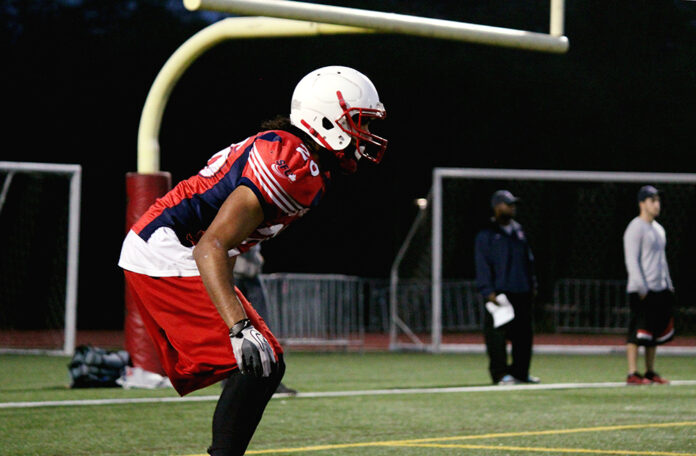
Wide receiver Bibake Uppal notched a second-place finish in the three-cone drill. Photo courtesy of Surrey Now

Last Monday, six Clan football graduates headed to Edmonton to participate in the CFL regional combine. The players hoped to receive an invitation to the national combine the following weekend, where two SFU football players — wide receiver Lemar Durant and defensive back Matt Isherwood — were directly invited.

Unlike last year, where both players invited from SFU received an invite to the national combine, none of the six — running back/defensive back Chris Tolbert, wide receiver Bobby Pospischil, wide receiver Kyle Kawamoto, defensive lineman Kristian Lawrence, running back Cole Tudor, and wide receiver Bibake Uppal — received an invitation.

The six players were tested with six drills: bench press, vertical jump, broad jump, short shuttle, 40-yard dash, and the three-cone drill.

The Clan alumni did particularly well at the three-cone drill, with Pospischil and Uppal claiming first and second overall times respectively. Five of the six players finished in under eight seconds.

“I felt I performed well at the vertical jump; my broad wasn’t as good as I would’ve liked it to have been, but I still performed decent at that, my three-cone drill was second best at the combine so I felt pretty confident about that, especially at my height,” Uppal told The Peak in a phone interview.

However, the 40-yard dash was a point of struggle for much of the Clan delegation, according to Uppal.

“I think everyone was in the same boat as me, they felt like they should have performed better for the most part,” he said. “[It] seemed like most of the people at the combine were pretty disappointed at what they ran. [. . .] There were a couple of guys who ran pretty fast, but for the most part, it seemed like everyone ran a little slower than they would have liked to.”

Kawamoto also achieved the second overall score for the short shuttle drill.

TSN’s Duane Forde, who had listed Pospischil and Uppal as athletes to watch, wrote, “[Pospischil] tested well and got open during one-on-ones, but had a rare bad day catching the football. With his smaller stature already working against him in the scouts’ eyes, he needed to be almost perfect.”

For the athletes, not being invited to the national combine is certainly disappointing, and makes the path to being drafted in the CFL tougher. But Uppal is still optimistic about his future.

“A couple of coaches spoke to me after the combine, and said they were looking at me, so I’ve got to just stay at it, keep training, work on the things I feel I didn’t perform well in; and the ones I did perform well in, I need to work on those as well,” he said.

He noted that the event gave him a glimpse of what he needed to do to be drafted by a CFL team.

“Being in that atmosphere testing is not the same as when you’re at home working on those numbers, [when] you’re more comfortable. [It’s] a little bit more pressure, you don’t get very many attempts at certain things, so you’ve got to make sure you’re consistently doing well,” he said.

“They say this is one of the deepest drafts in years, so it’s helpful to see the guys I’m going to be going up against in the draft, and certain things they’re good at that I need to improve at. It’s always good to learn off other people’s games.”

Diverse movement at the Vancouver International Dance Festival

0
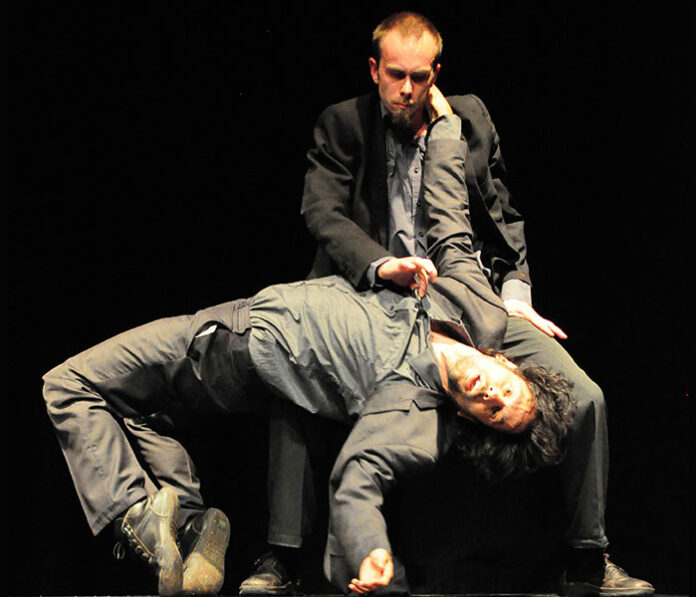
Photo courtesy of VIDF.

Ferenc Fehér

The Vancouver International Dance Festival presented a diverse line up of artists this year, and offered many free shows as well as ticketed events. Hungarian choreographer and performer Ferenc Fehér’s work, Tao Te, was one of the free shows at the Roundhouse Community Centre.

Along with Balázs Szitás, Fehér’s choreography was full of deliberate movements that had the two dancers running and tumbling around the stage, throwing and pushing themselves off of each other without losing momentum. It was striking to see how well his performance conveyed the speed of traveling through life on our chosen path.

The structural device of Fehér’s dance theatre piece is represented in the program by a quote from Martin Heidegger: “The lasting element in thinking is the way. And ways of thinking hold within them that mysterious quality that we can walk them forward and backward, and that indeed only the way back will lead us forward.”

Philosophically and physically complex, Tao Te was both a beautiful study of Heidegger’s concepts and an impressive piece of choreography. With limp limbs, the dancers’ vigilant, stilted movements were intriguing and thought-provoking as they moved through various sequences, including an aggressive wrestling bout.

Fehér says that, to him, “thinking and choreographing are mirror-images of each other since they refer to the same secret.” His unique combination of freestyle dance and martial arts, coupled with his interest in philosophy, made for a multifaceted work of art.

Out Innerspace and 605 Collective

Another double bill show featured two local dance companies who have grown together over the years, Out Innerspace and the 605 Collective. They both presented works-in-progress that highlighted their strengths.

Out Innerspace’s style is cinematic, dark, and full of complex facial expressions. The seven dancers in this piece stayed in a tight group and moved as one being during most of the piece. The work was choreographed and performed by company founders David Raymond and Tiffany Tregarthen, in collaboration with Laura Avery, Ralph Escamillan, Elissa Hanson, Arash Khakpour, and Renée Sigouin.

With animalistic intensity, they slinked around the stage in aggressive, complex formations. What I love about this company is their ability to create complex characters and narratives through their unique movement. One particularly innovative moment was when a few of the dancers formed a large talking mouth from a combination of different body parts.

The group of dancers seems to be fighting and avoiding some outside force during the piece, while also dealing with some parallel internal conflict. The work is a comment on the oversimplification of good and evil, and begins with a short monologue which says “you are good” and “we could not do this good without you.”

The 605 Collective has long been one of my favourite dance companies, and I am looking forward to seeing the full length version of Vital Few next year. Choreographed by Lisa Gelley and Josh Martin and performed along with Hayden Fong, Jane Osborne, Odile-Amélie Peters, Jessica Wilkie, and Sophia Wolfe, this work-in-progress explores the theory that it only takes a small number of people in any group to effect change.

Playing on the constant codependence and interrelationship between the dancers, this work was a fascinating study of how one small change has a much larger ripple effect. They dance as a collective while also allowing each dancer’s distinct style to shine through, and there is no leader as they all lead the group at some point.

The dancers are highly aware of each other throughout the piece, knowing exactly when to pick up where another left off with impeccably smooth transitions. They were autonomous from the group while also being highly dependent on them. The 605 Collective has always created movement in a collaborative way, and this work explores this concept beautifully.

Meet the Clan: Adrian VanderHelm

0
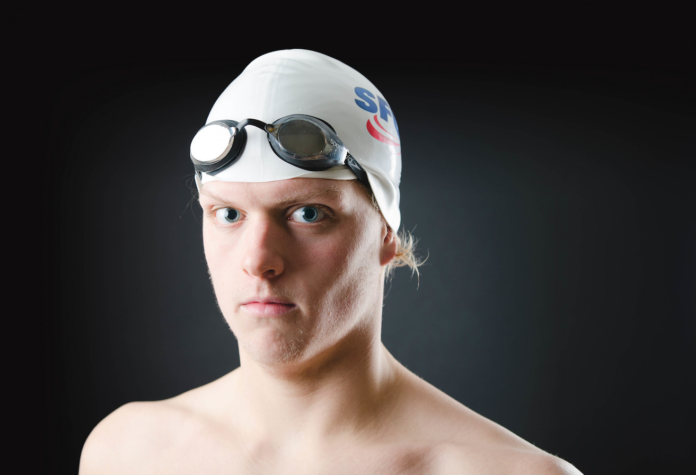
Only a freshman, Adrian VanderHelm is the first member of the men’s swim team to qualify for the National Championship. Image Credit: Brandon Hillier /The Peak
 Only a freshman, Adrian VanderHelm is the first member of the men’s swim team to qualify for the National Championship. Image Credit: Brandon Hillier /The Peak
Only a freshman, Adrian VanderHelm is the first member of the men’s swim team to qualify for the National Championship. Image Credit: Brandon Hillier /The Peak

Screen Shot 2015-03-27 at 9.00.12 PMAdrian VanderHelm is the first member of SFU’s men’s swim team to qualify for the NCAA Div II National Championship — a feat he topped by also becoming the first male All-American swimmer at SFU. All in his freshman year.

“It didn’t really sink in until I got there and I started to see the level of competition,” reflects Adrian on his experience at the national championship. “Coach Liam [Donnelly] is not really one to congratulate, or be very buddy-buddy with you, but he gave me, we call it ‘the Liam Donnelly side hug,’ he gives you a pat on the back. It’s a big deal, if he does that, it’s like, ‘Woah, he gave you a hug.’”

Despite his early success at SFU, Adrian was a late bloomer to the sport of swimming.

“It’s my sixth year. I haven’t been swimming that long — most people start when they’re a lot younger, I only started [competitive swimming] in grade nine.”

In high school, Adrian struggled with his body weight. “When I was in grade eight, I was 5’7” and 220 lbs, I was a really big kid,” he remembers. “I was always pretty good at swimming, so my mom heard how swimmers were super ripped, and she was like, ‘maybe he could try that and see if he liked it, and maybe it would help with his weight.’ [. . .] So I tried it and I was very good at it.

“The biggest struggle I still have is nutrition,” he notes. “I log my food every single day, I count calories, I count certain nutrients I take in — and I still have trouble keeping my weight down.”

While Adrian notes that there is a history of weight issues in his family, he was reluctant to attribute it to ‘bad genes.’

“Some people say it’s in the genes, but I don’t like to look at it like that, because then it’s like, ‘Oh, I’m just going to be fat,’ and I’m like you might as well try [to lose weight],” he explains.

With swimming, Adrian has found an avenue to get in shape, noting that he is now at a “comfortable” 187 lbs.

“You always hear people say, ‘swimming is the best exercise, it’s a full-body thing,’ but it really is true,” he says. “Not only is it a full body workout, it burns a lot of calories fast, and it’s fun for me — I don’t know if other people find it fun. It also is very calming — if I’m ever stressed for school I’ll go for a swim, even if I already swam twice that day.”

Exercise, however, wasn’t the only thing Adrian found in swimming. He also attributes a newfound confidence to his sport.

“I was shy, I had trouble with I guess you could say bullying — I don’t like that word — but people picking on you and people calling you fat or ‘fattie.’ It hurts and it sucks, but in the end it makes you who you are,” Adrian says.

That’s the best, being able to come from people making fun of you and letting that drive you [. . .] You can’t let it push you down. I kind of rose above it and showed them what I was made of.”

When the time came to decide on where to go for university, Adrian narrowed it down to three choices: University of Victoria, University of Toronto, and SFU. Ultimately, the American collegiate atmosphere drew him to SFU.

“The people in the States just race like crazy. It’s nuts; you go to a swim meet and there’s more people watching than a Canadian hockey game — and it’s swimming, nobody even watches swimming,” he says.

The move from Barrie, ON was tough on the business student. Though he joined three “best friends” from Barrie who were already at SFU, he admits the first few weeks were a real challenge.

“I’m really close to my family — three brothers, two wonderful parents — it’s tough. I [saw] them day-in and day-out, my mom cooks my meals, my dad talks to me everyday, and we just hang out because my dad works from home. We’re just a really close family.

“All of a sudden, just not seeing them at all, it was really tough,” Adrian continues.

“In October I had kind of a breakdown, I had a week where I was like, ‘I want to go home, this is not for me,’ [. . .] I almost failed my first math midterm, that was the big thing, ‘What am I doing here? I don’t belong here,’” he notes.

But things quickly got better.

“After I had an interview with SFU SportsDesk [an SFU Athletics-produced web series], and having them want to interview me, talking to people, and being part of the leadership in the school in my first year, all that stuff [came] together to show me that people wanted me to be here and I wasn’t just here because I wanted to be here,” he says.

“Then having those three friends from Barrie back from my hometown rooted me, and I was able to feel like I was kind of like at home.”

Now, he finds a sense of comfort at SFU, with a family of sorts in his team, and a new place he can call home.

“When I went home for Christmas, I went home [to Barrie], but I started to think to myself I want to go home — back to BC. And it’s weird, I’ve only been here for six months.”

FUN FACT:
Pokemon Master
Swimming isn’t Adrian’s only specialty. “I went to the world championship for Pokemon cards when I was younger and competed for Team Canada, I went twice, Nintendo pays for you to go down there [. . .] I played Pokemon cards against some of the best kids in the world, and I came 19th.” He adds, “Pokemon taught me to read, taught me to write, taught me to do most of my mental math.” Adrian notes that he no longer plays the card game, but he “still loves Pokemon,” and has all the medals, and even has a Pokémon poster in his dorm room.