Home Blog Page 1024

Comic Connoisseur: Julian Lawrence debuts the coming-of-age tale Drippy’s Mama

0

On the surface, The Adventures of Drippy the Newsboy has the look of a lighthearted children’s story. Rest assured, the story in Julian Lawrence’s debut graphic novel is anything but childish. Lawrence, who adapts this story from Stephen Crane’s George’s Mama, succeeds in making this story fresh and enjoyable.

In Drippy’s Mama, readers are given a tale that will make you think twice about drinking, and even more about how we can overlook our mothers.

Drippy is a compassionate and friendly newsboy who hopes to gain the affections of his attractive neighbour, Dripette. However, in the city of Drippytown, the last surviving of five sons works hard to support his widowed mother. He dedicates little time to himself, and is not accepted by those in his community.

This all changes one day when Drippy reconnects with an old acquaintance named Harry, a man with a thirst for whiskey and not much else. Harry acquaints the naive newsboy to the world of alcohol, and before long he becomes addicted to the newfound lifestyle. Living life with reckless abandon, Drippy’s life begins to spiral out of control, affecting his job, and worse, his relationship with his mother.

Julian Lawrence packs the story with a remarkable amount of emotion. Every page is packed with resonant moments that readers can connect with. Drippy’s Mama is a vivid mirror to the follies of youth; to those of us whom have shared in the same youthful exuberance as young Drippy, it can be at times hard to read.

The character is one audiences can connect with almost immediately. His caring nature makes him admirable from the moment he is introduced. It makes it even harder for readers when he begins his dark descent into the world of alcoholism, and even harder when you see him turn harshly against his frail, loving mother. These moments amidst many others will leave readers with a heavy heart.

The world of Drippytown is drawn in a way that is cartoon-esque yet packed with insurmountable maturity. The artwork reflects the immaturity of its protagonist and his glorified vision of the world of drinking and partying. Drippy’s supporting cast is a host of diverse characters ranging from an inebriated sock puppet to a hard drinking goat in a business jacket. These contribute to the rich world of Drippytown and provide a subtle commentary to just some of the people we can come across in the real world.

Drippy’s Mama is a smartly written coming-of-age tale, with an accessibility that spans every age group. It’s a poignant story that plays on the heart strings of readers young and old alike.

Above all, Drippy the Newsboy is a story that allows readers to reflect more deeply on how crusades toward self-realization can leave us to mistreat the people who have our best interest in mind.

Community raises safety concerns over Kinder Morgan expansion

0
Kinder Morgan plans to add 14 new tanks to its Burnaby tank farm. - The Province

Nearly 200 people gathered at Forest Grove Elementary on Wednesday, May 20 for a town hall meeting organized by Burnaby Residents Opposed to Kinder Morgan Expansion.

The crowd consisted of politicians, citizens, and members of community organizations who were united in their concern about the expansion of Kinder Morgan’s Trans Mountain pipeline, which would be tunnelled through Burnaby Mountain.

Part of the project is an expansion of the Westridge terminal on the north side of Burnaby Mountain, and the addition of 14 new tanks to the Burnaby tank farm on the south side of the mountain. Chris Bowcock, Burnaby’s deputy fire chief, said that this would increase the risk of a tank fire that could extend to outlying areas.

SFU hired a consulting company to review the Human Health Risk Assessment completed by Kinder Morgan. They issued a report that concluded the assessment “did not evaluate the potential risk related to the spread of a fire to the surrounding forested area. This would lead to potentially greater risk to SFU from the smoke and emissions, and potential isolation of the campus by blockage of egress routes.”

“We would have to do what we call ‘shelter in place’ and keep people on the mountain.”

Terry Waterhouse,

SFU’s chief safety officer

While there has never been a major fire since the farm began operation in the ‘50s, the expansion would complicate the evacuation of Burnaby Mountain for the Burnaby Fire Department. In the scenario that a severe fire broke out, the department might be forced to close the only two access roads to Burnaby Campus, trapping people on Burnaby Mountain.

SFU’s chief safety officer, Terry Waterhouse, told Burnaby Now that there has been “minimal communication” between the university and Kinder Morgan regarding safety procedures in the event of an emergency on their facilities.

Waterhouse said, “There is not a plan; there’s not a plan specific to that scenario. We would have to do what we call ‘shelter in place’ and keep people on the mountain.

“We need these issues addressed, and we will continue to push on in the process and be demanding of Kinder Morgan and Trans Mountain to provide the information we need as a community in a very unique geographic situation.”

Burnaby mayor Derek Corrigan was also present at the town hall. He expressed disappointment in the National Energy Board’s (NEB) approval process and reiterated his commitment to stop the project.

Corrigan stated, “[We’re] going to go to court with clean hands and ensure we’ve done everything humanly possible before I stand with you, and probably 10,000 other people, and get arrested to stop this.”

The Tsleil-Waututh Nation recently launched a suit to the federal court of appeals and were granted leave on four claims that the NEB hearings did not adequately consult with the First Nations. Carleen Thomas, who represented the nation at the event, argued that “this is not right. Canadian citizens should not have to take their governments to court to make them do their job.”

The Peak contacted Kinder Morgan for comment and they stated via email response that they “respect the forums individuals and groups have created to discuss the expansion.” They say they have consulted with Aboriginal groups, environmental organizations, and municipal governments among others as part of their “comprehensive stakeholder engagement program.”

SFU biomedical physiology and kinesiology professor Angela Brooks-Wilson spoke to The Peak about diluted bitumen, or “dilbit,” the form of crude oil transported through the pipeline.

A material safety data sheet for dilbit reveals that it is a carcinogen, flammable, toxic, mutagenic (able to cause birth defects), and can affect fertility and “enter lungs and cause damage.” In the event of a spill or fire, Brooks-Wilson noted that toxic fumes could linger in the air for days afterwards.

However, a report published by the Trans Mountain project found that “the characteristics of dilbit are not unique and are comparable to conventional crude oils.”

Put your problem solving to the test at Smartypantz escape rooms

0

Real life escape rooms, a concept created by programmers in Silicon Valley, have now made their way to Richmond, Vancouver, and Burnaby. More than 10 escape rooms have popped up around the Lower Mainland, spurring a lot of local hype. The Peak got the chance to check out SmartyPantz in Gastown, conveniently located just half a block from SFU Woodward’s.

SmartyPantz has five different themed rooms: Dream’scape, Doomed Submarine, Spies and Lies, Thirst For Murder, and Morning Never Comes, which Priscilla and Monica tackled together.

Priscilla Skylar Lee:

I’ve done over 15 escape rooms now, all over the world. Smartypantz has the same concept as an escape room, but the objective is not to find an exit to the room, but to progress through the whole storyline. Monica and I had the chance to do Morning Never Comes; it’s the lowest difficulty level of the rooms that they offer, with a recommended minimum of four people to a maximum of eight people.

The decor of the lobby and waiting room had a vintage retro feel. With giant Jenga, and lots of puzzle books and other puzzles to fiddle with, a group would have no trouble killing time as they waited to get into the room and for the rest of their members to arrive.

The staff were very friendly, from arriving at the location to beginning the room. The staff helper was called a “host” who spoke and dressed the part being played. Once in the room, you get a walkie-talkie that allows you to communicate with the host, and they remain in character throughout. This is really awesome, as it adds to the atmosphere; however, it can also be extremely tedious as you have to ask specifically for the hint that you want.

As for the room, the decor is probably in the top three of all the rooms I’ve ever done. It was well-detailed, it fit the theme, and made you really feel like you were in the right setting. There were a couple of things that weren’t glued down (you could tell they were supposed to be), but other than that, the decor for Morning Never Comes was on point.

Upon entering the room, there was no real sense of where to start. The clues weren’t so difficult that they didn’t produce any leads; however, from the host’s words you didn’t really know what to do. The puzzles seemed linear, but they weren’t. The dim light in the room made it quite difficult to solve certain puzzles. There were quite a few red herrings as well, which were tedious compared to other escape rooms.

Overall, it was a good experience. Smartypantz has rooms that are more about the story than looking for items and finding combinations, which is a nice change of pace for the escape room scene. I for one will be returning shortly for a shot at their most difficult room with a larger group of people.

Monica Miller:

As a first-time escape room attendee, I certainly had apprehensions. I wasn’t sure how much I liked the idea of being locked in a small room, with or without company.

After signing safety wavers, a staff member arrived in character to give us our room orientation. The room, Morning Never Comes, is a paranormal investigation where a murdered woman is haunting her former home.

Priscilla, my fellow escapee, clarified that nothing would jump out at us, although I was still concerned about feeling claustrophobic. In the end, it was a moot point. The room in which we played, although not large, was spacious for two people.

Most of Smartypantz’s rooms (save for one larger room) are designed to hold up to eight players, but I would think even six would have felt crowded in Morning Never Comes.

Although the staff member’s characterization was well-done and fun, I felt the “mission” was a bit vague. Unlike what I’d been told about escape rooms — where you literally have to find the exit — this was more like solving a mystery.

We were given the room’s back-story so quickly that I felt I barely absorbed it before we were launched into searching the room. I was following Priscilla’s lead, but we both felt the puzzle was a bit vague, and maybe not intended for just two people.

We spent 20 minutes hunting for the first piece of the puzzle, and ended up contacting our Paranormal Investigator via walkie-talkie for a hint. He also used the line to broadcast mood-setting ‘paranormal’ noise as well as answer questions.

The atmosphere of the room was very well done, although poorly lit, and the puzzle was unique.

However, the price point of all these escape rooms is quite steep for a 45–60 minute game. Even though we failed to “put the ghost’s spirit to rest,” I enjoyed the experience and would like to try another escape room.

This week in comics

0

The Adventures of Agoraphobia Man: World Defender (Jacey Gibb)
EDIT-Agoraphobia #4

Sadie the Sadistic Snail (Miranda Mcfarlane)
CMYK-Sadist snail

Peers (Leslie Lu)
Peers 4

Seagull Square (Jill Mandrake)Seagull Square #4

Laugh Track: Emmett Hall

0
Illustration by Saida Saetgareeva

It’s not uncommon for comedians in Vancouver to have their fingers in several different pots at once. In addition to providing music as part of the well-regarded Sunday Service, Emmett Hall is also a regular at several other comedy shows around town and the frontman of new experimental group Revered — but we’ll let Hall struggle for himself to describe this latest project.

Tell our readers about what you do, inside and outside of the Vancouver comedy scene.

My day job is working in children’s animated cartoons. I’ve been an animator and storyboard artist for over 10 years, currently working on My Little Pony. I’ve been with The Sunday Service since about 2006. I’m generally their musical director/the piano player for their improv, though I’ll get on stage with them from time to time. On my own, I do a lot of alternative comedy stuff in town, stuff through the China Cloud Theatre, a lot of the Cameron MacLeod produced comedy things, and shows at Little Mountain Gallery.

How did you become involved with The Sunday Service?

Back in 2000, I was going to an art college in Toronto but I was also taking improv classes at Second City. They had a piano in the rehearsal room, so during breaks I’d just doodle around on the piano and my instructor said they were always looking for piano players to play along with improv shows. When I moved back to Vancouver, through a mutual friend I knew Taz VanRassel and he introduced me to Instant Theatre. By the time 2006 rolled around, that’s when Sunday Service really started forming. I was just playing semi-regularly for the Sunday shows but after a while I was there every Sunday and every Sunday since. We’ve been at the Fox Cabaret for just over a year. That’s sort of my story mixed with The Sunday Service’s history.

How do you like the venue change to the Fox Cabaret?

It’s great! Now it’s a spectacle, which is great. We’re on a stage, we have curtains, we have lights. Just last night, I think we crammed in over 200 people. So now there’s pressure to put on a real show, you know? It was intimate and fun at the previous place and I miss a lot of those elements, but it just felt a little more slack, kind of like you’re in someone’s living room. But now we’re up high on a stage, we’re being amplified, and we’ve got a name for ourselves, so we have to maintain that.

How often do you join in on the acting?

I’m like a member on reserve, when they’re down a few people. If we do a gig outside of the Fox and we’re performing with a different theatre company or a corporate gig or something, then I’ll get up on stage. Personally, I find improvising an anxiety-ridden craft. Behind the piano, it’s okay, but onstage, I’m thinking too hard, which is kind of the opposite of what you’re supposed to do.

What’s your favourite form of comedy?

For me, it’s always very high-concept things. That sort of stuff I usually do by myself, so it’s pre-written and it might involve music or a PowerPoint presentation or a weird character. I guess that’s just my individualistic approach. I think that’s an easy way for me to not present myself in my entirety. It’s kind of cheating, because comedy can be very personal and very vulnerable and very honest, and I try to incorporate that a little bit, but if I’m hiding behind characters and really weird, meta-style jokes, there’s probably a bit of me running away from that. At the same time, I like suggesting a sentiment that’s really absurd, but that’s somehow familiar. You catch the audience with the familiarity, and then you twist it. That’s very specific to me and my kind of comedy when I get on stage by myself.

How did your musical project Revered get started?

Weekend Leisure was working with Cameron MacLeod to make Steel Viper Force, an independent action movie in the style of old ‘80s blood sport but with comedians. Their sound designer, Pietro Sammarco, asked me to work with him to make an “Eye of the Tiger” style montage song and so we worked on a song together. Pietro and I worked really well together and we also involved another comedian named Ken Lawson, who’s an amazing guitar player.

It’s been about a year since then, I think that’s still on the shelf, with things percolating with it, but I thought, “What if Pietro and I worked on something with a slightly more earnest sentiment behind it?” Still full of bravado and a clownish aspect to it, sort of pseudo confidence, but the context is still self-deprecating.

So I approached Pietro if he wanted to work on these songs that I’ve been writing, if he wanted to help produce them and put them on stage. The album should hopefully be done by early summer. It’s tricky. People know me as a funny guy and a comedian — and that’s not to say this music isn’t funny — but it’s going to be hard to not have them blend completely into each other.

Describe Revered to someone who’s never seen you live.

It’s kind of like self-deprecating catharsis through pseudo bravado, if I want to sound pretentious. It’s like performance art, I’m taking the piss out of myself but I want people to be entertained and hopefully leave a little bit of sincerity out there while it happens. This is just the beginning so I don’t know what people can expect yet; I don’t know what to expect yet.

What do people have to look forward to about the upcoming show on June 5?

A cape. I’ll be wearing my cape for sure, some synthesizer madness. Some ill-choreographed dance moves. I’ll throw in some acoustic, jazzy numbers on the piano, amongst the 16-bit-sounding laser rock we’ve got going on.

Yeah, close enough. I think I’m selling it, right?

You can catch Emmett Hall onstage every Sunday at the Fox Cabaret as part of The Sunday Service, or you can see his new project Revered at the Anza Club on June 5 as part of Vancouver’s Music Waste.


Years of locker thefts re-open debate for gender neutral change rooms

3

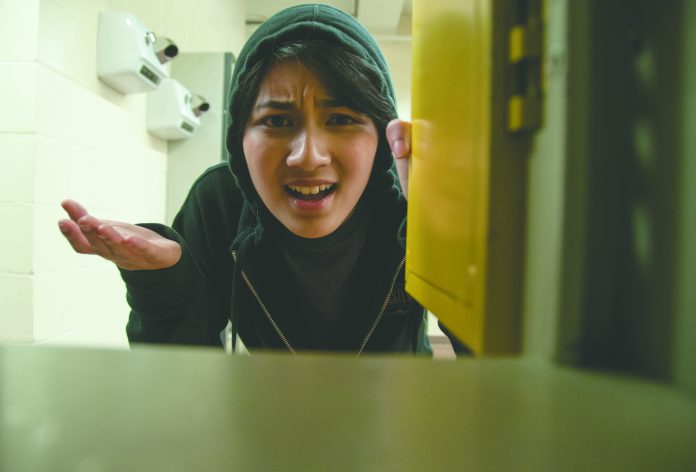
Users of SFU’s men’s change rooms are calling for an end to the sexist rules that they argue are putting their personal valuables at risk.

For users of the fitness centre at SFU’s Burnaby campus, locker thefts and warnings about them are old news. Since last year, posters promoting awareness by both security services and gym staff have marked the walls of change rooms, though more break-ins are reported each month. With the majority of thefts reportedly occurring in the male change rooms, some male gym goers have taken a controversial stance to protect their property: they are circulating a petition to let men use the female locker room in order to better safeguard their personal belongings.

“No one seems to be stealing their shit,” said one angry SFU student, interviewed by The Peak between bench press reps at the fitness centre. “You never hear about any thefts in their locker room. It’s, like, totally sexist, man.”

While theft statistics can neither be confirmed nor denied by SFU security, it should be noted that all email notifications regarding the break-ins only mention the male change room as an area of concern.

For personal trainer and SFU employee Jim Mann, the only surprise about the petition is that it didn’t come sooner. “Guys at the gym have been concerned about this for a long time. I honestly don’t blame them for taking action. They have a right to be fed up.”

“We should be able to bring out technology and phones to school without fear of them being stolen,” said the co-creator of the petition. “I pay enough for my tuition as is. I shouldn’t have to pay for a locker and be held responsible if it’s broken into.”

When interviewed by The Peak, most female gym attendees said they were sympathetic towards the issues of theft, but their responses varied from calling it “laughable” to “utterly insane.” One student in particular voiced her opinion that the problem of thievery rested with the men themselves.

“They come into the change rooms, in their expensive clothes, carrying designer bags with tablets, iPhones [. . .] and they wonder why their belongings are gone at the end of their workout. If you ask me, some men are making themselves targets to theft.”

As it stands, the petition has reached 138 signatures, with the goal of hitting 300. Even if the petition fails, the creators of the petition hope that it will promote enough awareness on the subject to elicit change. Until that time, security and gym staff continue to advise students to leave valuables and prized possessions at home.

This serves as the second time in SFU history that locker reform has been brought to the forefront of student politics. Back in ‘84, then-SFSS President Jorge Orville put forward the idea of adding security cameras to the locker rooms, but the proposal was universally rejected.

Tips for making the most out of your summer getaway

0
Photo courtesy of Ken Teegardin (Flickr)

If you’re reading this while in between brain-busting summer semester tutorials, this article isn’t for you. Neither is it for the person who opted to use these months as a chance to get three jobs and build up a nest egg for the rest of the year. No, this article is for the person who waits until Vancouver’s warmest season to flee to somewhere slightly warmer, for the global explorer who needs to tweet their morning on an exotic beach — otherwise, how will people back home know that it happened?

Vacationing used to mean taking a break from reality, but some say that hoards of gadgets have made this type of vacationing extremely futile. On the contrary, going on vacation has never been more rewarding, or easy to post about. Here are a few tips on how to make the most of your next summer vacation.

Tip 1: Take a photo of an airplane wing or your passport next to your boarding pass to signify that you’re about to embark on the adventure of a lifetime. Without an establishing shot like this, you risk confusing your loyal followers who might not have seen your multiple posts counting down to your departure date. Another fun way to humblebrag: snap a shot of the queue of passengers boarding the plane.

Tip 2: Once you’ve arrived at your destination — which seems less authentic and more like a over-hyped tourist trap — snap a photo of yourself with a punchy caption like YOLO, maybe paired with a winking emoticon. People back home will know what it means.

Tip 3: If you are travelling with others, make sure you impede on their time with frequent nagging for selfies — or more precisely “us-ies.” They’ll secretly thank you when, years from now, they have so many photos to remind them of an amazing trip.

Tip 4: Make sure you spend a bit of time interacting with the locals and trying to learn about their culture. While this might be a bit out of your comfort zone, locals are your best bet for translating cool words that you can use as hashtags later on.

Tip 5: Always remember to charge your electronic devices. This might seem like a no-brainer, but you don’t want to get stuck without a screen to look at. If your phone dies, immediately start charging it and hop over to your tablet. Vacations are only as good as the social media coverage you provide.

With so many different ways to make the most of your summer vacation, you might worry that you’ve wasted a perfectly good time to relax. Your vacation might not have recharged your batteries — or even made you feel you better — but your social media obsession and tech addiction will have succeeded tremendously in making you feel “liked.

Board Shorts

0
Photo courtesy of Rockridge Secondary School

Cedar brushing ceremony

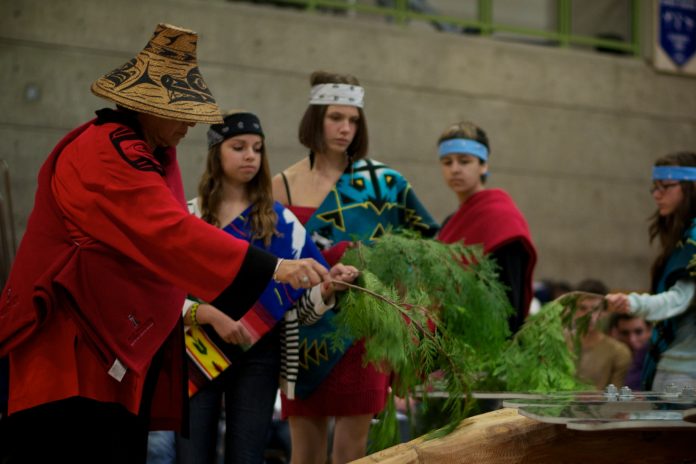
A motion put forward by VP external relations Kathleen Yang on May 29, proposed a traditional Coast Salish cedar brushing ceremony for the SFSS board offices. The traditional ceremony will serve to cleanse the space and acknowledge that the offices are located on unceded Coast Salish territory.

The ceremony is to take place on Monday, June 1. The requested honorarium will go towards purchasing a gift for the people who perform the ceremony, as is traditional in Coast Salish culture.

Student engagement strategy

Communications coordinator Irma Arkus spoke about a tentative strategy to consistently and effectively engage students. She pointed out SFU clubs days as a prime opportunity for collecting feedback and creating a database of information.

“It’s easier for them to come to you than for you to go to them,” Arkus explained. “Engagement is not just about having personal conversations [. . . it’s] about building a body of knowledge.”

Arkus suggested weekly engagement reports from each board member to ensure all clubs and student organizations are being reached.

Executive director Colleen Knox added, “What this allows us to do is to reduce inefficiencies in the organization,” and to avoid “reinventing the wheel” every summer by compiling data to work from for the incoming board.

Board members discussed their experience of engaging with students at events such as clubs days. VP student services Darwin Binesh said of approaching members, “That first time, when I go and introduce myself, I’m not doing it from the perspective of collecting information. I’m doing it from the perspective of establishing a relationship.”

Health sciences rep Larissa Chen added that people are more hesitant to answer questions and engage in conversation when approached by someone with a clipboard.

President Enoch Weng noted that this may be more of an internal issue and a matter of communicating with each other. He suggested that it is less about a lack of engagement and more about circulating data to all board members.

Revision of minute taking process

A proposal to update the minute taking process for the whole society was brought to the table for discussion. The proposed changes involve recording audio of all board of directors, committee, and council meetings, and making them available online to the membership.

This would make the SFSS more accessible to the visually impaired, in addition to relieving some of the burden on the society’s minute taker, who currently must attend several weekly meetings. They then would only have to listen for pertinent information and need not include the sometimes lengthy discussion revolving around agenda items.

Arkus reasoned that this would make the minute taker’s job easier, as they would not need to be physically present at all society meetings. “This position is horrible. It’s the worst job in the world,” she said.

Farewell Colleen

This meeting was the last ever for long time staff member Colleen Knox. She is leaving her position of Executive Director for the society after years with the society. She thanked the board for the goodbye party they threw for her: “I had a really good time and I was on cloud nine all night.”

Weng said on behalf of the board, “We’re so thankful for you being here. [. . .] We wouldn’t be in the place we are today without your help.”

Sexual misconduct in the military must come to an end

0
Photo Credit: Mayatan (Flickr)

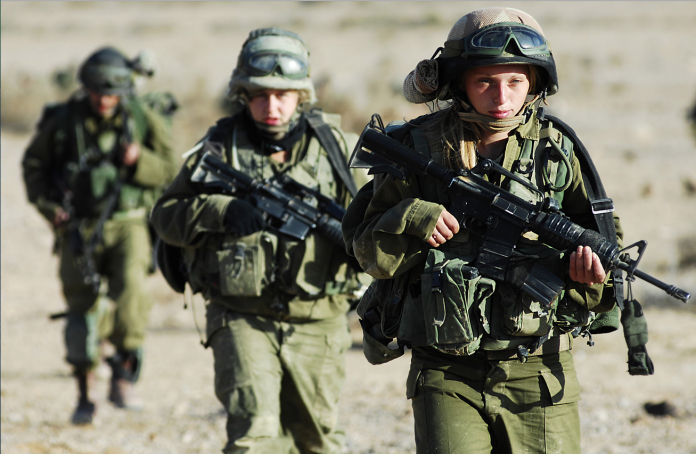
A damning report authored by former Supreme Court Justice Marie Deschamps has exposed the pervasive sexual misconduct in Canada’s Armed Forces. She blames both a “sexualized culture” that “is hostile to women,” as well as the lack of action on behalf of military leadership regarding the issue.

A similar article authored by Maclean’s claimed that only one in 10 incidents of military sexual assault are reported, while each day, the article estimates, there are about five incidents of sexual misconduct in the military.

Canada’s armed forces currently deny the scope and pervasiveness of the problem. General Tom Lawson, Chief of Defence Staff, has said that he doesn’t believe “that sexual misconduct is any part of [their] military culture.”

Military culture centers on a fraternal camaraderie rather than an equitable partnership in which women can engage. Those who break rank and speak out about abuses and injustices compromise that fraternity, and thus are treated with hostility and discrimination. The military therefore is inherently biased towards turning a blind eye towards wrongdoing of any kind in order to maintain the facade that its members are moral vanguards.

This sentiment is echoed in the oft-repeated platitude, “we need to support our troops”: the unsaid implication here is that our troops must be vehemently defended. It implies that its numbers are infallible.

Military culture centers on a fraternal camaraderie rather than an equitable partnership in which women can engage.

Because of the misogyny and sexism that male members perpetuate, this culture disproportionately impacts women, who are most likely to be victims of such abuse.  This culture is not limited to the Armed Forces. In 2013, The Royal Military College of Canada in Kingston, Ontario received complaints from more than 10 women who reported sexual harassment committed by more senior cadets. The College’s Board of Governors was notified about this issue, yet, allegedly, no action was taken. The impunity that these sexual offenders face in the college foreshadows the impunity they will certainly be privileged with when they join the Armed Forces.

Recently, former Canadian military medic James Wilks was found guilty of 10 counts of sexual assault and 15 counts of breach of trust, and was sentenced to 30 months in prison. Wilks now walks free after a judge ruled he could remain as such until his appeal is heard. This proceeding in military court illustrates the complacency with which sexual misconduct is handled.

If a culture of sexual violence pervades the military, it is logical that military courts operate the same way. Civilian courts, while littered with their own issues, would be superior arbiters of justice in these cases.

Deschamps’s report makes 10 recommendations on how to improve the way in which the military deals with sexual misconduct, however, so far only two have been have been fully accepted. One of the unaccepted recommendations advises the creation of an independent agency for victims in the military to seek advice and support, and lodge complaints.

General Lawson has been critical of such an agency becoming independent of the Chief of Defence Staff. This tepid response only highlights the sexism ingrained in Canada’s military. The fight to get the military to stop protecting rapists and sexual harassers and to start protecting victims of abuse will drag on unless leaders get their priorities in order.

Until then, for female soldiers, sexual and verbal abuse will be just another threat in an already dangerous occupation.

Artificial intelligence could rob us of our humanity

1

From basic communication tools to space exploration, the strides made yearly in science and technology are absolutely astounding to say the least. With Artificial Intelligence (AI) developments, societies around the world must now come to terms with its implications in the long run.

AI is a double-edged sword; it poses great benefits, but also big threats to the human condition in various ways.

Researchers at the Italian Institute of Technology have developed a robot known as iCub, an humanoid robot with movable limbs, a cognitive infrastructure and facial expressions to boot. The thought of having something so close to an actual person may seem progressive at first, however, I’m personally terrified of such a development. Even watching a video of the iCub’s facial expressions creeped me out.

It could be argued that this kind of AI means that humans can hopefully be relieved of the dirt, danger, and monotonies of life. However, this has the potential to create a very empty and sterile world.

Think about those who do not have the privilege to ignore said dirt, danger, and monotony too; they will be gravely disadvantaged. Being human is about more than being efficient, but unfortunately we continuously make this the benchmark for a worthwhile life.

Researchers in the UK have developed these robots to “learn” from one another and work autonomously. This makes me wary. The abilities machines are endowed with may become the very reason they disadvantage us in the future. It only takes one bad idea to be passed on from one robot to the next, and the next thing you know we have a scene from The Terminator.

It only takes one bad idea to be passed on from one robot to the next and we have a scene from The Terminator.

There is something to be said whenever we fervently seek to humanize machines. Isn’t it already bad enough that smartphones reduce human interaction to the extent that they do? To overdevelop machines feeds into an anti-social agenda that we may not be able to fully grasp in the short run. We must draw the line somewhere.

Having moved from a developing country to Canada, where technology is the center of numerous daily functions, I can say from experience that life often becomes too mechanical for my liking. On numerous occasions I have gone days without talking to anyone because, quite simply, I didn’t have to. For each of my daily tasks there is an app, machine, or scanner.

This can be socially damaging, especially as it is not easy to understand the differences in carrying out daily tasks if one is accustomed to relying on technology for everything.

It may sound as if I am tech-shaming developed nations, but the issue is bigger than that. Technology inarguably enhances various aspects of life, like accuracy and reduced time wastage.

However, take a moment to think about what it means for society to perpetually try to save time. Life becomes a race to fill up as much of that time as possible, rather than to holistically experience it.

Despite the will to advance pushing us to new heights, a level of moderation should be practiced in order to maintain our sanity as a species. Artificial Intelligence could potentially relieve us of everything that makes us human.