Home Blog Page 877

HUMOUR: WikiLeaks exposes Trudeau’s plan to use college students as renewable energy source

0

WikiLeaks has dropped a bombshell right before the start of the UN Climate Change Conference in Paris: Justin Trudeau plans to replace petroleum with college students as the world’s leading energy source.

When asked by media about these revelations, the Canadian prime minister was unapologetic about his proposal.

“The world is facing both a serious energy crisis and a rise in global temperatures,” said Trudeau, outside of the Louvre. “The only way to combat this is by finding a source of renewable, clean energy that is more available and efficient than solar, tidal, or nuclear. We believe we have found that source, and that is in the natural hyperactivity found in college students worldwide.”

According to the WikiLeaks document, Canadian scientists had known about the immense power of stressed young adults since 2008. However, Stephen Harper muzzled the scientists in order to protect the “dignity of college students.” Justin Trudeau argues, however, that college students have no dignity during exam season.

“Let’s be real here. When you’re mixing Four Loko and Adderall and contemplating selling your 98 Corolla to that one guy who actually attended lecture in exchange for his notes, you have no dignity left. You literally can’t sink any lower,” Trudeau said, citing his own experiences at McGill.

The following is a list of ways that Trudeau’s Student Energy Plan will be implemented.

Student tear harvester: Statistics Canada has shown year after year that the number of crying students drastically increases during finals, as they accept their impending doom. By using a system of funnels attached to popular student study spots, the government of Canada hopes to recycle the massive amounts of tears that these young scholars expel. The vast quantities of H2O captured through this system could be used to water drought-ridden fields, or it can be reintegrated back into the college environment and used to hydrate legions of thirsty undergrads unable to get a date.

Kinetic energy capturing vests: A lethal mixture of immense stress, no sleep, and copious amounts of coffee causes college students to shake uncontrollably during the weeks leading up to finals. The government of Canada hopes to capitalize on this rapid release of kinetic energy by attaching kinetic energy-capturing vests to all people enrolled in a post-secondary institution. Whenever students vibrate uncontrollably, the vests convert and store that kinetic energy. Once students finish their final exam, they will hand in their paper along with their vests, and then curl up into the fetal position, ready to be used once again by the government.

Fetal position sofas: The cost of making sofas is immense, and it represents an immense drain on the Canadian economy. However, researchers at the University of Saskatchewan have discovered that after final exams, 93 per cent of students immediately enter the fetal position and hibernate until their next term begins. Therefore, Canada, in partnership with IKEA, will be using college students as temporary sofas during their period of hibernation. “These students are the best material possible for making sofas,” said Canada’s Minister of Furniture Development. “They’re rigid enough to put together and stack like Lego, yet quite plump to sit on as they’ve spent the last couple months being beaten down by assignments, exams, and the realization that they’ll never amount to anything in life.” No official word yet on  what the new sofas will be called, but sources say the frontrunner is Hunoreschesuckers.
HUMOUR: Christmas to come even earlier next year, take over “Halloween” season

0
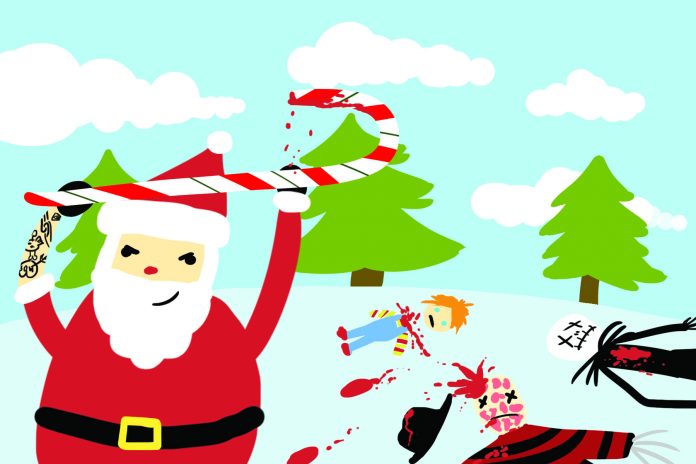
Illustration by Phoebe Lim

A controversial announcement surfaced in Whistler this weekend which could very well change the Christmas landscape forever. Over caviar and Dom Perignon, the leading fat cats of North America’s most prolific supermarket chains announced a controversial decision to scrap Halloween 2016 in favor of creating more space for Christmas-themed paraphernalia and primetime advertisement spots.

Retail stores from all across North America have reportedly already discarded plans to display any Halloween products and related promotions next fall. It is also reported that some companies have already begun marketing preparation for the next batch of nonsensical consumer fads, such as the recently announced Snoop Dogg’s Easy Baked Oven and Mr. T’s refurbished line of X-rated Shrinky Dinks.

While the contentious decision has left some divided, an unforeseen amount of consumers have recently spoke up in favour of Halloween’s dismissal. For a strong majority of Yuletide yahoos, the reception has been warmer than a toasting yule log and nothing short of an early Christmas present.

“I’m sure the little kids will be bitching about it the most, but that’s life. It’ll be good for their little minds to get the kick in the head they sorely need,” said SFU education major Hernando Castro. “Besides, this is going to give me such a head start on my Christmas shopping.”

Pending on the success of next year’s supersized Christmas, sources say Halloween could be canceled indefinitely.

Halloween enthusiasts, on the other hand, have taken the news hardest of all. Citing the loss of the ghoulish holiday as a horror in line with the bite of a razor blade apple.

That’s right: gone are the days of knocking on stranger’s doors for free candy and being scared shitless by Halloween movie marathons, for Halloween has been laid to rest by jolly old Saint Nicholas and his pack of corporate tycoons.

One chairperson even took to his personal Facebook account, proclaiming excitedly: “The people have spoken loud and clear with their wallets. They want more Christmas, and by jove, we will give them what they asked for. Suck it, Halloween.”

To get more insight into the announcement, The Peak sought out economics professor Fitz Ingram for further comment and what it could mean for the holiday landscape.

“Halloween just isn’t the money-maker it used to be. Tootsie rolls, pumpkins, and sexy Minion costumes — it’s just not enough to keep the average multi-million conglomerates sending their board members to Monaco and Venezuela,” said Ingram.

“Companies want to fleece us of every bit of cash we got. And the only way they can do it these days is by gutting Halloween like a Jack o’ Lantern and selling human-sized Toblerones to put in their kid’s stockings. Companies are taking the first steps to making Christmas a year-long extravaganza of marketing brilliance. And this is the first step in their master plan. Just you wait and see.”

With Halloween scrapped, people can expect to hear Yuletide butchering of their favourite Christmas songs by shoddy cover artists as early as mid-October. Those mourning Halloween’s passing are advised to eat their remaining candy stash slowly, for the age of trick or treat has set in the souls of every gore lord and scream queen across the Northwestern hemisphere.

HUMOUR: The emotional rollercoaster of exams

0
Image courtesy of Robert Couse-Baker (Flickr)

With the semester done, papers handed in and the course evaluations completed, there remains one more thing that stands in your way: finals.

Regardless of what year or program you’re in, finals are the worst. Our concentration is so strained that the most basic of daily tasks seem overwhelming. Is the font of our review guide shrinking, or are my eyes closing from lack of sleep? The emotional rollercoaster that comes with exam season hits everyone hard, regardless of the height requirement.

First, you get nostalgic. You reminisce on your first day, all smiley and fresh-faced. Remember when you actually had time to watch Orange is the New Black?

But then you’ve fallen into a time warp, because suddenly the prof starts talking about finals. You start hyperventilating, wondering if you were actually in lecture or if you were stuck on your couch for 13 weeks. Nothing looks familiar in your syllabus. Theory of relativity? Linear algebra? WHAT? Why did I ever think that Ruby Rose was going to be on the final??

This causes you to question your life path. You begin to have an existential crisis, having intense inner dialogue running through your mind as you sit on the 145. “Why did I take poli sci? Did I think that I was going to be a politician? Why are politicians such lowlifes? Do politicians care about transit? Do politicians even take transit? Why does the 145 go so slow? Why are we stuck in traffic? Why are there so many people on this bus? WHY?!?!”

You then reassure yourself that you’re on the right track. You pat yourself on the back for all your achievements, like that one time you made your TA laugh with a punny joke. You tell yourself that what you’re doing is awesome.

But even puns can’t save your ship from sinking, as you fall deeper into your emotions. Suddenly there is an entire aisle of Mac’s convenience store supplies in your room as you eat your way into submission. You read your notes to the point where nothing makes sense anymore. You’re simultaneously hopeless and extremely pissed off at the fact that you’re technically directly paying for this stress via your tuition. By the time night falls, you’re drafting a backup plan of dropping out and becoming the next Steve Jobs.

Then comes the morning of. You had a night filled with dreams of logarithms and Sigmund Freud. You say to yourself, “I can do it.” The Rocky theme song plays in your mind as you walk to the gym to write the exam. And you write until the very end, dropping the mic — er, exam — on the table as you leave.

A wise man once said to “Just do it.” So ace those exams and kick ass. Don’t let your dreams of getting those A’s be dreams.

HUMOUR: War on Christmas enters its bitter 10th year

0
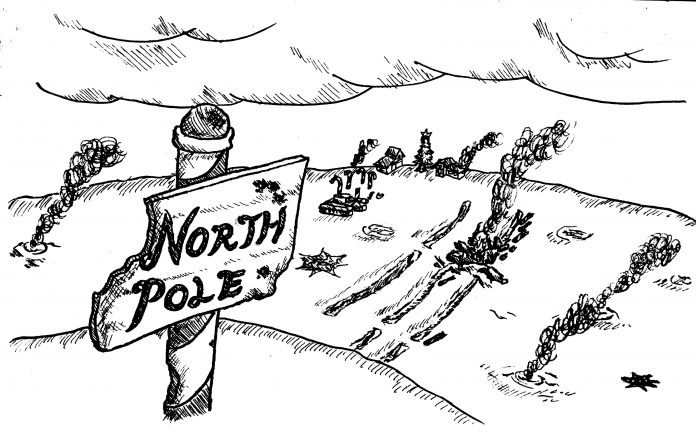
Illustration by Zach Chan

It’s been 10 long years since Bill O’Reilly declared that there was a “War on Christmas” by an alliance of those seeking to secularize the holiday and move it away from Christian roots.

Of course, this enflamed tensions at first with the neo-pagans, who pointed out that Christmas was the original Pagan holiday of Yule. Then Jewish people and people who actually celebrate Kwanzaa decided to promote their holidays in favour, and finally Muslims and atheists joined in to destroy a merry Christmas for us all.

We know the rest of the stories: the invasion of the North Pole, Jack Frost’s last stand, Santa Claus’s “Blood and Candy Canes” speech, the elven draft riots. Ten long years of conflict, brought to us by the same bastards that seek to scrub our Starbucks cups clean of Christmas cheer.

I arrived via reindeer-flown sled at the Green-n-Red Zone surrounding Santa’s Workshop in Christmas Village. I was told by a heavily-armed elf that I had to be “escorted, or else you could wind up in a situation hotter than an eggnog latte.” As I walked around, the holly-jolly atmosphere surrounding Christmas was dulled by the bitter siege, one most clearly exemplified by the elven families rationing Christmas cake — even with the risk of their children starving.

The workshop, once brightly lit by fresh red paint, was now bullet-riddled and chipped away by years of brutal warfare. I walked in on a press conference where jolly ol’ Saint Nick turned out to be much more irate in temperament. He yelled loudly, “a Jewish, African, pagan, Muslim, atheist, progressive, Illuminati alliance of heathens dares attack us and our beliefs! Thousands of years ago I almost lost a good pal, Jesus, to these same types of people. If it weren’t for resurrection, I might have never seen him again.”

Santa ended the press conference, taking a cue from former prime minister Stephen Harper not to answer any reporters’ questions.

After leaving the workshop, I lit up a cigarette, only for the explosion of a bomb to go off nearby. My elven body guards rushed me to safety while a nearby rabbi yelled, “Hanukkah now and forever, death to Christmas.” The guards shot at the man, flanked by an assorted other members of the anti-Christmas alliance. I got into a sleigh, which would take me away from the battlefield, when one of my bodyguards had his legs ripped apart by a grenade. In his dying words he whispered, “Tell my wife. . . the festive cups are coming back.” He died soon after handing me the address of the Starbucks she worked at.

I was transported back home, and descended into a post-traumatic state that would give Lieutenant Dan from Forrest Gump a run for his money. I drank vodka-spiked eggnogs like a bastard and had violent flashbacks during sex, only quelled by my girlfriend singing, “Let It Snow.”

I still haven’t visited my elven bodyguard’s wife, but when she asks how he died, I know what I’ll say. I’ll take a long sip on my eggnog and just repeat: “The horror, the horror.”

You Will Remember Me is a sharply written drama

0

Translated from Francois Archambault’s Tu te souviendras de moi, this play is an intense family drama brought to life with sharp writing and nuanced performances from the entire cast.

Edouard (Kevin McNulty), an aging former professor and outspoken intellectual, develops dementia while retaining his meticulous historical memory for dates and details. His family struggles to cope with his constant short term memory failure, which grows worse. Madeleine (Patti Allan), his wife, needs a break from looking after him, and they show up unannounced at their daughter’s house.

Isabelle (Marci T. House) is a stressed-out reporter who has to leave for an assignment, and her partner Patrick (Craig Erickson) offers to look after Edouard for the weekend. The two of them become friends despite Edouard constantly forgetting his name and reverting to calling him Michel, who was Isabelle’s ex. Patrick has some fun when Edouard keeps asking him what he does for a living, and changes his answer each time — each answer more outlandish than the last.

One evening, Patrick hires his daughter Berenice (Sereana Malani) to watch Edouard for him while he goes to play poker with his buddies. The scene with Edouard asking if Berenice is one of his former students and if they have slept together was wonderfully funny. She finally gets him to write in his trusty notebook about “the girl with the brown hair” who is “Patrick’s daughter.” After he reads this he has a moment of recognition before falling back into confusion and asking “who’s Patrick?” Berenice becomes exasperated with him, but their relationship grows, and the way she begins to care about him is touching.

Berenice discovers that Edouard had another daughter who committed suicide, and he used to call her Berenice, her middle name. After a confused episode in which Edouard begins to think she is that same Berenice, she decides to go along with it. This moment when Berenice decides to impersonate his deceased daughter was a turning point in the play and a huge ethical dilemma that we were forced to confront. Was it the right thing for her to do? It seems to be therapeutic for Edouard to talk to Berenice, but does that forgive the dishonesty?  

Meanwhile, Madeleine drops the bomb that she’s met another man and will be leaving Edouard with Isabelle for good. So many complex themes about family dynamics, dementia, love, unsolved trauma, and aging were dealt with in this intricately woven play that also manages to weave political tensions in Quebec into the story. By the end of the play, Edouard realizes that the immediate moment is enough to keep him going, and we all feel more appreciative of our ability to remember the past, and more conscious of our lives in the present.

You Will Remember Me is presented by Ruby Slippers Theatre from November 17–28 at The Cultch. For more information, visit thecultch.com.

SFU students rally against DTES displacement

1
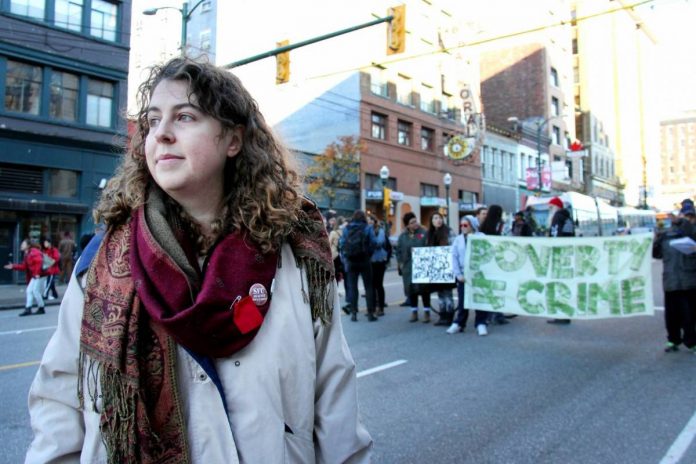
Amy Widmer mobilized fellow students on the afternoon of November 20. - Photo courtesy of The Georgia Straight

Approximately 25 individuals gathered last week as a part of SFU Against Displacement. The protest organized by a group of students concerned about the displacement of street vendors along the zero to 300 block of East Hastings.

On Monday, November 16, the Vancouver Police Department began to clear the vendors, many of whom are impoverished, off the streets as part of the city’s push to relocate them to safe sanctioned market areas.

The group met at noon on Friday, November 20, just off the Hastings and Carrall intersection, to develop and implement the direct action in protest of the displacement.

The Vancouver Sun reported, “The sidewalk market has been operating for years on the north side of Hastings Street in the heart of the Downtown Eastside and has long been dogged by accusations that its vendors sell stolen goods.”

The city insists their effort is to ensure vendors are operating in safe and legal spaces, and not to push homeless residents off the streets. However, SFU International Studies student and creator of the initiatve Amy Widmer believes that it is no coincidence that this push surfaced just prior to the opening of Sequel 138, a new condominium complex directly marketed to the middle class.

The development is to be opened on the south side of Hastings St. in the block between Columbia St. and Main St.

Widmer created the Facebook event for SFU Against Displacement around 3:00 a.m. on Tuesday morning, expecting to garner about 20 responses. By Wednesday night, there were over 1,000 people invited.

Reflecting on her position as a student who attends the SFU Woodwards campus, she felt there was an immense lack of engagement among students in issues surrounding the Downtown Eastside (DTES).

Widmer and the other organizers decided not to plan out exactly what was to happen at the protest, as they wanted it to be a collective decision made by all of those in attendance, to ensure everyone was comfortable and in agreement with the action.

After gathering, the group decided to block off East Hastings and marched towards Sequel 138, where the they held the street for nearly two hours from around 12:30 to 2:30 p.m.

“For the first little while it was kind of quiet, or maybe even slightly uncomfortable,” reflected Widmer. “But after a little bit, the residents in the Downtown Eastside started approaching us, and talking to us, and asking why we were there, and thanking us.”

Widmer explained that most of the community members they engaged with were overwhelmingly supportive of their initiative, joining in and sharing stories of their personal histories and experiences with vending.

She explained that residents expressed their concerns about the displacement, saying that “it was detrimental to their community and their safety.”

According to Widmer, beings students gave the group a certain amount of credibility and ability to engage in this public action with little difficulty or conflict, both with the authorities and members of the community.

She believes the fact that the action was spearheaded by students made the event successful: “I’ve been to many direct actions where we take the street, and pretty much [at] every single one, after about the first hour and a half, maybe even less than that, there are a lot of cops present and they start to kettle you.

“They start to push you to the sidewalks, they start kicking you off the street and threatening you with arrest — not once did that happen, not once,” Widmer added. “I think that partially has to do with the fact that we’re students, and it sends a different message to the public if police [interact with] students in this more aggressive manner.”

During a debrief meeting directly after the action, the group agreed that from that point forward they wanted to make an effort to increase the direct engagement of students and faculty in issues surrounding the DTES.

As an International Studies student, Widmer expressed that being at the frontline of the action almost enhanced her educational experience, and that such interactions within the DTES community are an invaluable part of learning.

“You learn all this critical theory, and you learn to critique things, but all in this way that is so separate from those who are experiencing the worst aspects of gentrification and capitalism,” she said.

M/Hotel pushes boundaries at Dance in Vancouver

0

Hotel rooms are both welcoming and alienating places; when you slide your key into the slot and enter into an empty room, everything inside simultaneously belongs to you and has a price.

M/Hotel, presented by battery opera, brought the audience and performers into close proximity last week as part of the Dance in Vancouver festival. It was curious and interactive, and drew its richness from the power of narrative. The show included a marathon performances occurring every hour 12 times daily for three days at the Holiday Inn downtown. David McIntosh, artistic producer, stayed in the bar for that entire length of time to chat and answer questions.

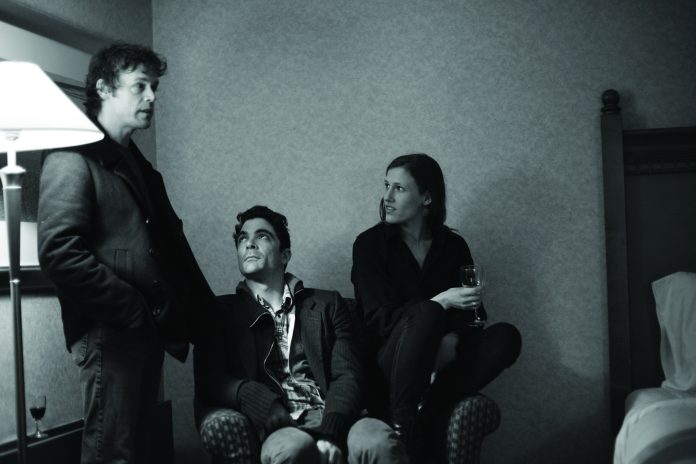
Up to five audience members at a time shared unique one-hour experiences in a hotel room with two performers, who used dance, text, and music to tell stories. It pushed boundaries in the relationship between audience and performer, the space of the stage, and the fluidity of “performativity” in such an intimate setting.

M/Hotel relies upon short narratives written by David McIntosh in and around hotel rooms over the course of a year. There are 36 possible variations of the show, so each time slot is a truly unique performance. I chatted with David in the relaxed hotel bar between shows, and he pointed out the energy variations in the show. Every one changes, he said, depending on who is present in the audience, and even the performers often can’t anticipate exactly what their partner will do.

The audience themselves responded differently within the performance space. Some became uncomfortable and perch on the wall to spectate, while others were relaxed — even to the point of getting into the bed and napping.

Hotels are places of monetary exchange, and this economic necessity was symbolized at the start of the performance in the hotel bar. A man explained where our room was and requested both money and a set of house keys from the participants. Unwilling at first, I decided to hand over my keychain (what the heck!). He gave us a room number and sent us off up the stairs with a complicated set of instructions to find our room.

The two shows I saw were incredibly different, but had a similar structure. The first had two female performers; one acted out an improvised dance while holding my set of keys, and the other delivered a fascinating monologue about the power of smell in connection with memory. The atmosphere felt formal, like we were taking part in someone else’s dream.

The second performance felt more casual; there was no sense of tragedy in the air like the first show. In fact several times I laughed, despite its morbid story of an acrobat in the circus. With two male performers and a brighter room area, there was a new sense of playfulness that changed the way I read their actions. The story was less ambiguous, and cut through the air rather than pulling us along with it.

I have never viewed performances in such intimate settings. Hotel rooms are spaces you never share with strangers, so there was a delightful sense of awkwardness. I felt a strong connection to the other audience members, and a strange distance from the performers. They were right beside us, but inaccessible.

The viewing took on a strange sense of voyeurism similar to film; though we shared the same confined space there was a tactile separation between viewer and performer almost like a lens. The audience had a new power to dictate the mood of the performance, and it was the performers who responded.

Blitzen Trapper falls victim to bad acoustics

0
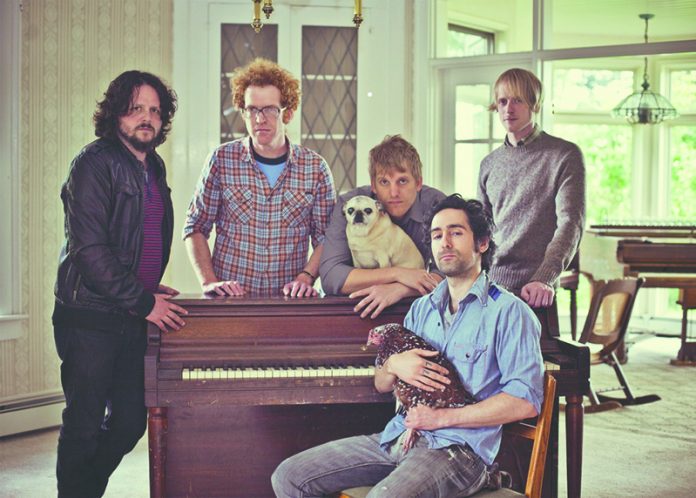
Blitzen Trapper Band Photo.

Blitzen Trapper, a rock band based in Portland, Oregon, has one of the most unique catalogues in music. They can seamlessly go from playing a bluesy indie-folk track to a classic rock-inspired one without it feeling like a stretch. However, this varied musical style can pose problems when playing a live show in a venue that was never designed to handle music so varied.

The band played at the Biltmore Cabaret, which as a venue for either burlesque or a punk show would be acoustically perfect, but it failed to highlight their musical abilities. The muddy acoustics made all of their songs sound similar, which was very disappointing given their ability to play many different styles of music while maintaining the essence of what makes them a band.

Despite this, the group maintained high energy throughout their show. There was a moment when they almost lost the crowd during an instrumental interlude that could have been shorter, but they seamlessly transitioned into a cover of The Beatles’ “Come Together” and brought the crowd back from the brink, and, if possible, got them more excited about being there than when the band first got on stage.

This second half of the show featured songs more popular among fans, such as “Furr” and “Black River Killer”; the first half predominately featured songs off of their latest album, All Across This Land, which was a very recent release. These newer songs sounded much like a southern fried version of their older releases, though, again, the acoustics of the venue negatively affected the overall sound of the concert.

Blitzen Trapper did work in favour of the opening act, Phoebe Bridgers. Although she herself is in a punk band, Sloppy Janes, her solo work definitely doesn’t fit that genre. It is firmly in the realm of singer songwriter with a tinge of country. Her music suited the space well, being comprised of only her singing, her guitar, and minimal drums in the background.

Overall, the concert was average. Suprisingly, this wasn’t the band’s fault, but rather the venue’s, which would not let the varied stylings of this excellent group come forth.

Creed flies high and knocks down expectations

1

As diehard Rocky fan, I couldn’t help but feel uncomfortable with the prospect of another film, even one focused on the son of Apollo Creed, Rocky’s perennial rival. A spinoff of the timeless six-movie series just seemed like an unnecessary cash grab. More than that, the series had ended on such a high note — why even take the chance of messing up such a stellar franchise?

And yet, after watching Creed, it seems all the more clear and justifiable that such a film should exist as a companion to the others. Creed isn’t a paint-by-numbers boxing flick regurgitating the winning element of the past Rocky films, but a movie dedicated on building its own legacy unique from those that came before it.

Creed follows the story of Adonis Creed, who wants nothing more than to be a professional boxer. After fighting for most of his life in foster homes and in juvie, it’s the only things that seems natural — completely ignoring the fact that he is the illegitimate son of the late Apollo Creed, boxing legend and Rocky’s former rival. However, Adonis wants to make it on his own without relying on his father’s name to open doors for him. On a whim, the young boxer quits his job and leaves LA for Philadelphia to recruit the help of an aging Rocky Balboa.

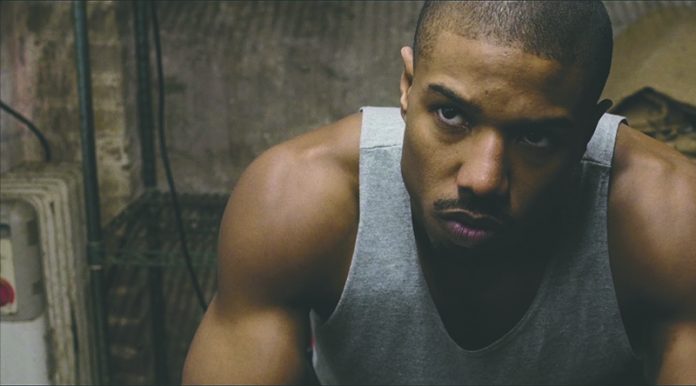
At the heart of every Rocky film are strongly written characters who dominate the screen and tug on the hearts of movie-goers. Creed keeps the tradition alive with strong performances from all its cast members — with special emphasis on Michael B. Jordan in the title role as Adonis Creed. Jordan continues to showcase his magnificent acting abilities, reminding audiences that he’s one to keep an eye on.

Sylvester Stallone returns as the much-beloved Rocky Balboa, albeit shifting from his typical role as leading man to a supporting role in the story. Stallone’s performance enriches the film, never overshadowing his co-star’s performance.

Fight scenes and montages, which have been a noteworthy draw of past films, continue to stand out. Director Ryan Coogler changes things up nicely with long, seamless close shots, which help place viewers in the proverbial boots of its lead. On many occasions the fighting seems so visceral and intense, you’d swear it was you throwing Creed’s punches.

Admittedly, the movie does make some significant departures from the tone of the past films. By its end, though, I arrived at a better respect for these choices. They connect to an all-encompassing theme integral to the film’s plot. In a lot of ways, Adonis’ story arc of personal development is reflective of the way the story is presented on screen.

Creed is a near perfect popcorn flick which succeeds in paying homage to the past Rocky films as much as it sets up its own distinct path for future installments. Packed with engrossing fight scenes that leave you on edge of your seat and endlessly endearing characters we come to grow attached to, the quintessential underdog saga continues in fine form, still packing the same heart and resolve we have all expect.

Rapture, Blister, Burn presents feminist perspective on the modern woman

0

Mitch and Murray productions presents a modern take on feminism with Rapture, Blister, Burn. Written by Gina Gionfriddo, this play explores the eternal question: how green is the grass on the other side?

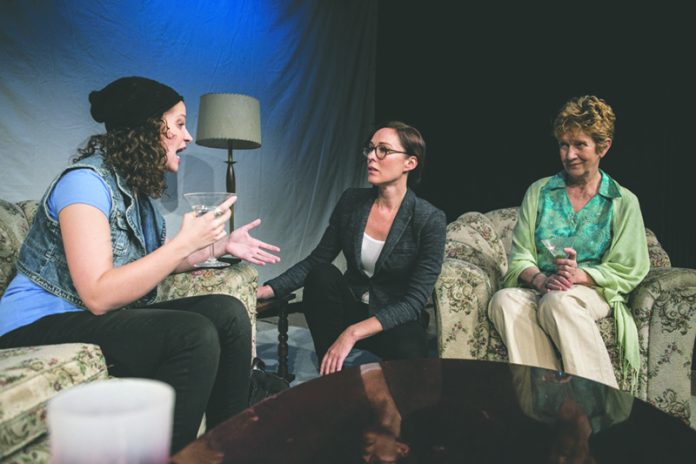
After her mother’s health scare, Catherine returns home to a life she had foregone in favour of a successful career. Encountering old friends and lovers, she sees the life including a husband and children as one she may have missed out on. The questions Catherine asks about life, as a modern woman, reflects the uncertainty modern women may have about the decision to be independent and self-sufficient.

This candid piece presents some of the most popular yet conflicting views that modern women hold about equal rights. While the writing is forthright, sincere and insightful, equal praise should be given to the actors in their portrayals, which ensure the dialogue does not come across as preachy or judgemental.

The interactions between the female characters are where the play really shines. The debates between them highlight the different eras of feminism in which they were raised, while respectfully outlining the potential pros and cons of certain beliefs. The dialogue finds a way to be both relatable and peppered with metaphor and references from the academic world.

The play does not try to lead the audience to a specific point of view. Much like the characters, we are introduced to many different options and are left to determine which point of view works best for us. The epiphanies the characters have at the end of the piece are more fulfilling as they came to it through their own critical thinking. While some of the dialogue threatens to run for too long, the show’s moments of humour help viewers to maintain interest in those moments.

Rapture, Blister, Burn may not be revolutionary in terms of its feminist views, but it brings up honest and necessary topics about the modern woman.