Home Blog Page 745

How to flirt with your cute tutorial partner

0

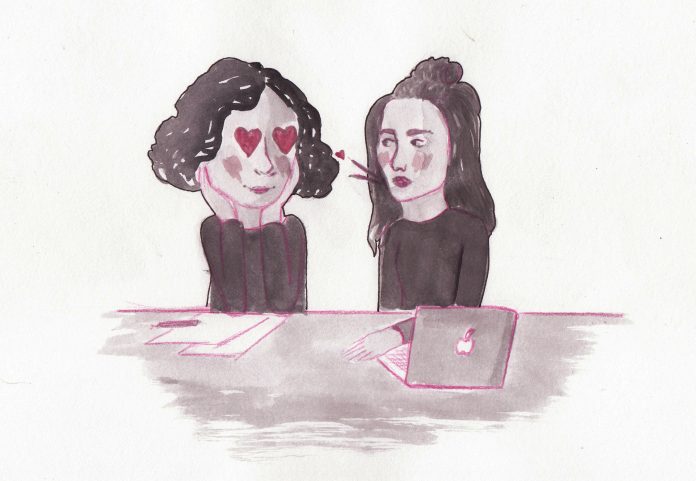
University classes offer students the perfect window to find that special somebody, yet they don’t teach you how to effectively flirt with your tutorial or lab partner. So listen up and take good notes. You might not have a stellar GPA, but hey, winning the heart of that cutie is much more important than paying attention in tutorial.

Debate theory

Girls dig guys who can debate a theory or two at any time. Plus, it really shows your “academia is my soulmate” side. Get her eating out of the palm of your hand while you debate about theories, like whether it hurt when she fell out of the sky, or how possible it is for her hair to look this luscious all the damn time.

Arrange a library date

The sexiest thing to do with your tutorial partner? Just stare. It’s kinda tough to do in tutorial with so much noise and chatter, but in the silence of the library, you can study the colours of his eyes, the bone structure of his jaw, and the curve of his lips. Whoever said anatomy was boring?!

Get the professor’s approval

Show your lady who really dominates the lecture hall by getting in on some witty and intellectual banter with your professor. If your prof springs a 10-point quiz on you, spring back with a confident “I don’t need to study this quiz because I got a perfect 10 right here,” while gesturing at your girl beside you. If she doesn’t get in on that, maybe your prof will swoon at it.

Share your notes

Notes are a coveted part of studying, so show your guy that you care about them by sharing some of your own notes with him. Notes can include the ones that you took when you paid attention in lecture for all of five minutes, as well as doodles of your future family, an ode about how great his hair looks in the morning, or graphs that chart out exactly how perfect his eyebrows are. You’ll both pass this class with flying colours!

Do your research

Ladies love it when you pay attention to their life, interests, and likes — wait, you haven’t been paying attention? You better hit the books and study her social profiles and networks pronto tonto! Be sure to cite Best Friend et al. when talking about how great last night’s episode of The Bachelorette was, or discuss how Ex-Boyfriend (2014) was a real sleazeball. You’ll definitely melt her heart with how much you pay attention to her!

Quotes to hang on small artsy canvases in your middle-class suburban home

0

Bakers gonna bake

White, middle-class, suburbia.
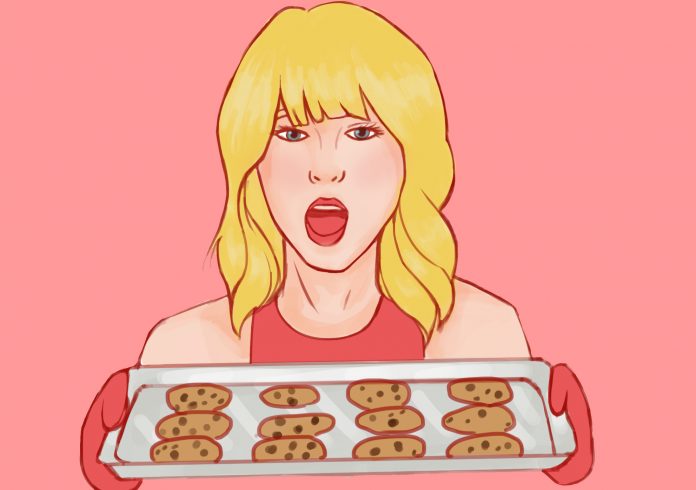
With a fair degree of certainty, I’m going to assume that the only activity you partake in more than listening to Tay-tay is whipping up a fresh tray of chocolate chip cookies.

So this quote is a perfectly apt Venn diagram which outlines your life philosophy: there are always going to be people out there who judge you for loving One Tree Hill. Let them.
It’s their loss for never having known the joy of estranged brothers being united through basketball.


Who needs friends when you’ve got casserole ?

Got some leftover asparagus and cheese? Casserole that bitch. Tuna and hummus? Looks like it’s casserole o’clock. Banana and chives? All aboard the casserole express — next stop, my tummy.

Finally made a friend? For the love of God, please don’t casserole Margaret.  

Good things come in small packages, except a small package

You don’t need to get a four by four — nor do you need a 24-inch cheeseburger pizza. That’s right, put down the 60-pack of single-ply toilet paper and slowly back away from Costco. Size isn’t everything. Well, most of the time. (Yes, I’m alluding to micropenises here.
Mircopenisi? Regardless, no offence intended towards those who have a micropenis.)

Having an orgasm is a state of mind

Sure, technically it’s a physical sensation. But if you tell yourself, “You know what? Today, I am going to have an orgasm,” chances are you will.

In a similar vein, if you put your mind to being able to rap every verse to Eminem’s “8 Mile,” that’s
exactly what’s going to happen, Marshall.

Aspire for greatness, expect mediocrity

You made a good go of it with high school football. But that inevitably led to a saIes job at a local car dealership. I know you go by your middle name, Joe, but your parents named you “Average” for a reason. Embrace it; there’s no shame in it.

When life gives you lemons, get out 50 cents. You’re at a grocery store. Stop fucking stealing, you kleptomaniac

Life doesn’t just give you lemons. This isn’t a fucking Disney movie. You want some lemonade? Get your good for nothing ass to Walmart, buy some lemons, and make it yourself. Or if you’re a lazy son of a bitch, just buy some lemonade. It’s really not that difficult. While you’re there, maybe see what their return policy is on other bullshit proverbial phrases.


Tips for millennials on getting hired

0

Much like how humans need air to breathe and the Internet needs cute cat videos for us to look at, it is a well-known fact that millennials need jobs. But who wants to write a resume or cover letter? Or sit through an hour-long interview with a businessperson in a stiff pinstripe suit?

We’ve got five easy (and much more enjoyable) tips to make that hiring process go by in a breeze instead.

1) Start an underground prosthetics lab in order to make yourself look older and wiser.

I mean, if you can’t get a job because you have a baby face and no experience, then add that experience to your face. Simple math: wrinkles = wisdom, which will reel in the ka-ching!

2) Face the world of unpaid internships by brushing up on your Starbucks knowledge.

Not only is doing coffee runs an essential life skill, it is also a rite of passage. Everyone deserves the experience of muttering, “I’m getting experience,” while gritting their teeth and juggling 15 different coffee orders in their hands.

3) Don’t ever graduate.

With enough sleep deprivation and dorm room cup noodles, it is easy to convince oneself that being a student is a full-time job. The cycle of papers, exams, and stress becomes the sole purpose for existence and fills the void that a job would. This is why I’m doing a double major in communication and kinesiology with a minor in fine arts and am currently starting a masters degree in philosophy — because I love school so freaking much.

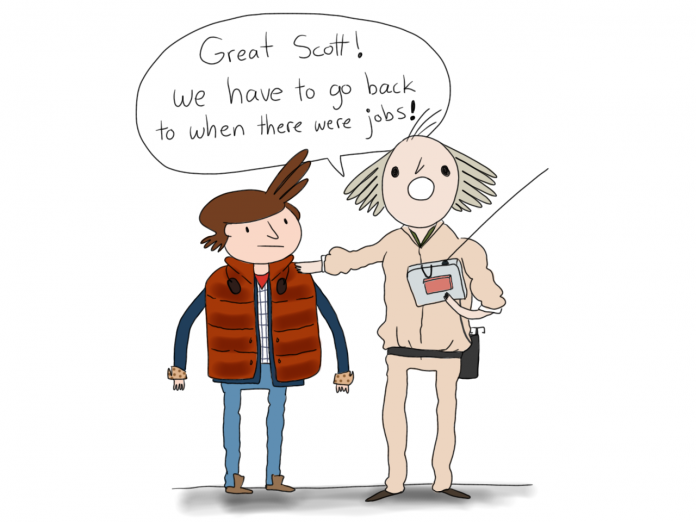
4) Go back in time to when there were actually jobs available.

Legend has it that time travel machines exist in generation X’s closets. Us millennials can jack them, go back in time, take the jobs that they speak so fondly of, and come back to the present cultured and successful while they drivel in penniless despair.  Great Scott, we have to go back!


5) Create a YouTube channel to complain about millennial problems.

All you need is a degree that you have no use for and a camera. Set the camera up in your bedroom. Complain about life. Mention said useless degree at least twice in every video you make. Cash in on advertising dollars when you inevitably become famous for being so #relatable.

Interview with Deepak Sharma

2
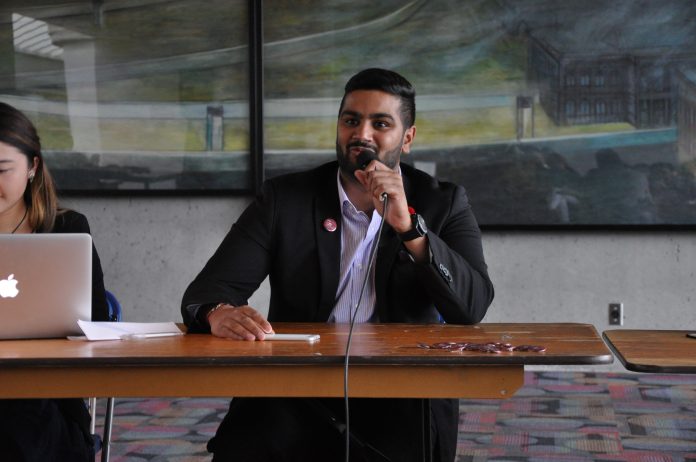
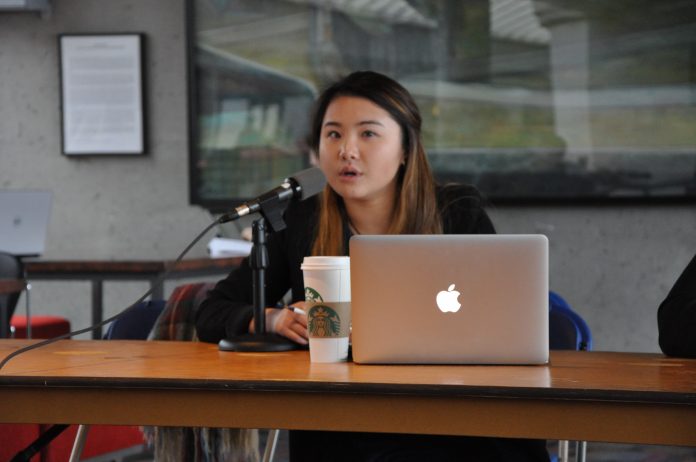
Deepak Sharma speaks at Wednesday's debate at Burnaby campus. Having stepped down as president after his election last spring, Sharma is hoping to regain the confidence of the student body and return as president-elect.

With the SFSS byelection this week, The Peak sat down with all the presidential candidates for a more in-depth chat than the timed responses at the debates. To find the other interviews, click here for Larissa Chen and here for Darien Lechner. 

Ashley Fraser: Why should students give you another chance after you essentially caused the byelection?

Deepak Sharma: I have never really shied away from why the byelection is taking place in the first place. After I left after being in the first month in office, originally I planned to just walk away from it all. I think the biggest reason why I decided to come back and why students should trust me again and have their confidence in me again is beyond the personal growth and development that comes from any candidate, which I never shy from acknowledging, the biggest thing is, I want to come back and fulfill the various commitments I made and fulfill the various confidence and trust that membership had already earned in placing me in the first place. In addition to that, because one may say you want to fulfill commitments, that’s pretty big isn’t it? What I generally mean by that is apply my experience and knowledge of being a member of the executive for at least over a year and a member of the board for over the past two years. I think that February, March, April, is when I want to apply all that knowledge that I have acquired during the transition period. I think being a part of the SFSS for two years now with very different boards, I think I can take the board to a place where we can prioritize all of the commitments we have made. I have over a year’s experience working with senior management; however, I have essentially been nonexistent with this current board for the almost past six months. I believe it’s very easy for me to potentially basically pick up where I left off with this board, because of the rapport I would have with them.

AF: How is your relationship with everyone who is on the SFSS board since you stepped down?

DS: Up until the Surrey debate I assumed that I had no negative relationship with a single board member, or individual board member. I think you may recall one board member did question my inclusivity at the debate, but I think I have discussed it and perhaps resolved it, and apart from that I would assume they are all my friends still — I would say so, maybe they might beg to differ. Ten out of the 13 people remaining are the people I run alongside, people who I have been working with on projects and initiatives prior to even being on the board. I think it’s a fair question for the membership to ask “Why we should trust you again when you just left us hanging,” however, I believe that’s a non-issue of me working well with the board just because I have that rapport and experience with the board and know their strengths and weaknesses. They know me personally as well. I think that is why it is fairly easy for me to just slide in there and continue to support them.

AF: You claim your resignation was forced. Did anyone at the SFSS actually force you?

DS: I think ‘force’ may be misinterpreted — forced means, forced by SFSS bylaw. So I think in my first public post that I made, where I wanted to explain what I did: take responsibility, apologize to the membership, specifically the board who is affected even more than the membership. I was supposed to be their support team and be that assertive leader; however, I wanted to acknowledge that there was no specific individual that was to blame for my forced resignation, which would be forced due to the bylaws from the previous eight years that we had to follow.

AF: On that note, you waited four months to make a statement after you stepped down. How can students trust that you will be transparent as potential president of the SFSS?

DS: Personally, I was never in denial, but there was a big cloud of regret, sadness, and embarrassment. Since I had vacated that seat, I believe that I let the membership down. It was more sadness that I let down individuals who were very confident in me. The question of transparency, the fact that I was able to be open and honest and acknowledge my mistake, on a personal level — although the timeline was four months later — I think that should provide the membership significant reasoning to believe my transparency and my ability to communicate with what takes place in the workplace. I think that when I look at it professionally, I would be representing a place of over 20,000 members on a day-to-day basis, I think it would be my fiduciary duty to ensure that anything is communicated in a timely manner.

AF: In terms of being transparent, earning back students’ trust, what is one big thing that you would like to accomplish if you were to be elected?

DS: I think we have a great relationship with SFU Health and Counselling, with High Five, our president last year did a great job of building that rapport, as well. I think this year we have some very interested board members who are passionate about this issue although, due to my vacancy they never really got to get to it. I would want to prioritize creating a peer support network, going across all three campuses, going towards, the stigma of mental health in addition to supporting members’ mental health and well-being. That is something that is big that I would like to prioritize that would have a direct and immediate impact on students.

AF: You said you did not decide to run until the last minute. Why should students believe that you are taking this election seriously?

DS: I think students should believe that I am taking this election seriously. The fact that I am willing to take that first step forward to put my name out there and make myself vulnerable to criticism and questions — and very fair criticisms because nothing had been answered in the last four months — letting them know that I have that passion and drive and that commitment that I had made to them, and I am not just simply running some sort of joke campaign, or running a campaign where I may come across as uninterested, however those are sort of secondary reasons. The fact that I went from thinking about transferring from this post-secondary institution, to wanting to not run away from my problems. I think I stress that I directly want to resolve my problems.

AF: At the Surrey debate you challenged candidates to go paperless. Why did you challenge candidates to go paperless if you now have posters up?

DS: I think at that time, I think if we had all committed to go paperless, I think that would have been fair and equal. I think if you take a look at the posters that I have put up, a large majority of them are 8.5×11 rather than 11×17 that other candidates have put up.

I feel really at fault that this election is taking place in the first place so I hope that using a smaller paper size, in a very miniscule way, still reduces the cost of this byelection in addition to obviously the sustainability factor. I think if we were all able to commit to that, it would all be fair and even playing field, but I did put posters up, because going back to your last question, I don’t want to look like I am not taking this seriously and putting in the time and commitment into having a strong campaign.

AF: If you are elected, what do you plan to do about the stadium?

DS: Although this does not gain any extra support or does not strengthen me as a candidate, I have always been, a much bigger supporter of the stadium over the Student Union Building. Although it is not a regular practice to have a student society funding a stadium, as it has always been traditionally viewed as a university or alumni business item, I see this as an opportunity to have our DNA directly imprinted on the stadium, and more accessibility to it. I was very disconnected from the board this past summer, however when I did find out that the stadium was being cancelled, I was very disappointed. At Burnaby, I don’t know the conversations behind why, although it may have been after doing all sorts of research, having it be over three times the amount it was budgeted for and then working towards reducing it, to potentially reduce the cost, but this was upsetting. However, one of my platform points is to find alternative means to a community-based stadium project. I think the first step towards that, even before we start talking about an infrastructure of that stadium is that rapport with the university administration and members beyond athletes, because I think that will be directly beneficial to the stadium as well.

AF: What is your favourite SFU memory?

DS: My favourite SFU memory was how I got involved with the SFSS in the first place. My favourite memory was being part of the marketing campaigning that led to the gathering of almost 2,000 students from all campuses that were able to attend the first-time Fall Kickoff event, which sparked my involvement with the SFSS back in 2013. Since then, I have had many great memories at SFU.

All eyes on GNAC Player of the Year Adam Jones

1
Jones led the GNAC in both points and assists, and was also named to the conference First Team All-GNAC.

Describing an athlete as a “superstar” can often be overused, but it is hard not to immediately think of the word while looking at junior Adam Jones’ achievements. For Jones, soccer was already running in his genes.

“I grew up in Port Coquitlam. My father played football for the Vancouver Eighty-Sixers. I’m a big Manchester United fan because my great-grandfather played for the club. Paul Scholes was a model for me when he was still playing.

“Football was never forced upon me. I just fell in love with it.”

The Port Coquitlam resident travelled a long way playing soccer before returning home. Jones modestly recalled his achievement overseas.

“I was part of an academy in Burnaby, and every year they took a group to Europe to play. There was a cup in Denmark and another one in Sweden. I went to both. It was unbelievable. It was an experience that affected me in so many ways. You don’t realize it at 12, but as you [get] older, you realize the magnitude of this achievement. Around that time, I started thinking I want to become a pro. It gives you a little bit more hope.”

A few years following his journey overseas, Jones felt that it was necessary to go back to his roots.

“I can still live at home here and my family can come and watch my games. The NCAA [National Collegiate Athletic Association] aspect of SFU was also the big reason. I liked the thought of playing in the NCAA; I think it’s pretty prestigious. SFU [is a] good school soccer-wise and it fits me very well. Again, if you look at the financial side, it costs so much more in the [United] States. I spent one year in England during my academic year residence. I went there on trials and I was able to learn self-confidence. When you go over there on your own, you have to be confident.”

With a brilliant regular season performance from the Clan, Jones took home the award for GNAC Player of the Year. The midfielder scored 10 goals and had nine assists. “I think I was in the library writing a paper,” he laughed about how he found out. “It was exciting and it was actually beside Mamadi [Camara] in the ranking.

“Football was never forced upon me. I just fell in love with it.”

“Among all these achievements, I think the message that no one really had to say was the fact that in 20 years it will be great to look back on this. As of right now, none of this will matter to us right now unless we do well in the tournament.”

One could learn a few lessons on how to boss the midfield from Jones. He revealed how his own identity fits into his role.

“My skills are more applicable to a midfield role. I like to set the tempo. I like to pass and create occasions and when someone gets the ball and dribble right away, I don’t have breakaway speed. Midfield is somewhere where I can play my role within the game.”

Jones’ ally in the midfield is none other than his brother Kyle Jones. The Jones pair has been shining on the pitch this season. With his little brother on the team, one might think there is an ongoing competition between the two. The storyline is different from Adam Jones’ perspective, though.

“It’s really fun, to be honest with you. Being two years apart, if he ever wanted to come and train with my team, he would. If I had some spare time, I would hang out with his team. We’re very close that way. There’s no real competition. We understand that we have different attributes that will help the team. We know how to push each other’s buttons the right way.”

While Canadian athletes often get less exposure to Major League Soccer (MLS) drafts due to the absence of a local league, the future is set to be bright for Jones, who ends the interview on an optimistic note.

“I would love to get drafted in the MLS. Being Canadian, I don’t know how much opportunities I would have. If an American team invited me for a preseason trial, for example, I would definitely be open to that option.”

Fun fact:
Which professional team would you want to play for?

“I would play in the Premier League for Manchester United.”

Interview with Larissa Chen

3
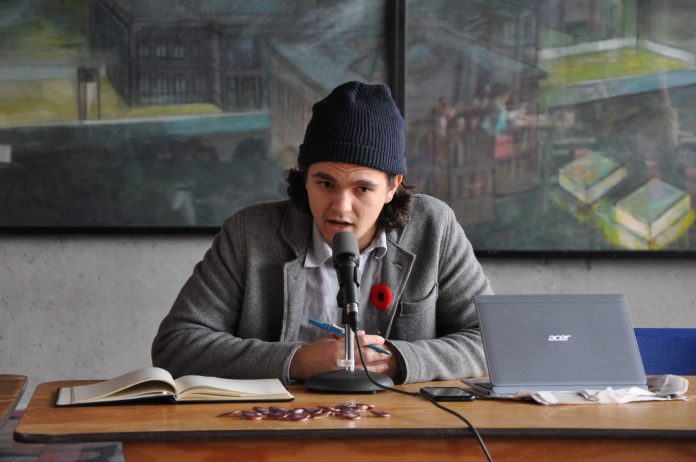
Larissa Chen speaks at Wednesday's debate on Burnaby campus. Chen's campaign is focused on continuing her tenure as interim president.

With the SFSS byelection this week, The Peak sat down with all the presidential candidates for a more in-depth chat than the timed responses at the debates. To find the other interviews, click here for Darien Lechner and here for Deepak Sharma. 

Nathan Ross: You mentioned on Surrey that one of the reasons you were running was so that students weren’t faced with the same option as they had in the general election. Can you elaborate on why you feel that way?

Larissa Chen: During the spring election, students had two options for president. I am currently running alongside those same individuals during this byelection. Given that I have been serving in the role of interim president from May to October 2016, I have the experience that neither of them possess and that is six months of direct experience in the presidential position. Additionally, I have established strong and respectful relationships with the current board and SFSS staff, that will ensure collaborative and successful outcomes for students.

NR: This was asked at the debate, and has been touched on a lot by Darien, but I’d like to give you the chance to answer it without a time limit or anyone in your face. How come you chose to step down as president of the SFSS after the nominations were announced? Follow-up question: If you had stepped down earlier, could VP student services have been a position on the byelection ballot?

LC: It was a difficult decision to step down as VP student services. The bylaws do not indicate it to be mandatory, but I felt it would be an unfair advantage to run a campaign for the role I have direct resources for. Originally, I was hopeful a diverse range of individuals would put themselves forward for the presidential role. Since this was not the case, I decided not to withdraw my name and handed my resignation after the nominations were announced. I was also unsure of my own readiness to run until the second week of nomination period.

For the VP student services role to be added onto this by-election ballot, the position must undergo transition, be vacated and announced “at least two weeks before the opening of the nomination period” (Bylaw 15). It would be challenging for anyone to vacate their role early October, as this remains amongst the busiest times for the SFSS. I focused on fulfilling my VP student services and interim president duties and I welcome everyone to view our board minutes and my individual work reports for that duration (available on the SFSS website).

NR: How would you convince voters that haven’t been happy with the SFSS in the past few months to elect you as president if they didn’t enjoy the board when you were the interim president?

LC: Contrary to popular belief, the president isn’t the sole individual who decides on the direction of the SFSS. The president is the support for other board members and staff who represent and receive feedback from the students. A leader is only as strong as their team and respectively, I know the strengths of this board better than my fellow candidates. The SFSS Board operates as a whole and sometimes, as an individual voice, I didn’t agree with the direction set by the board. But given my transition, experience, and knowledge built over the past six months, I am ready to lead. I understand the concerns expressed and I am the ideal person to listen and address them.

I was faced with an unprecedented situation: transition into an executive role, as well as demands of the president role. This is not easy for anyone. Simply put, it is professional development and SFSS commitment on acceleration mode. But as I have been faced with obstacles, concerns, and support, I’ve realized the value of maintaining such a challenging role as you support your colleagues amd act as the comprehensive knowledge broker for everyone. I’m hopeful students will vote #Lari4President due to my experience, but also recognize that I can be the strong and empathetic voice for my fellow undergraduates.

NR: You’ve been in the role of president now since June. What are you proudest of what you have accomplished in this time?

LC: Assuming the role of president was definitely unexpected. As I ease into being the most interpersonal VP student services students have ever seen, I suddenly assumed the added responsibilities of president. A lot of my summer days were spent in meetings, reviewing files and researching. The transition period into president is a daunting, complex, and difficult process, especially when one does not see themselves worthy of the role; it’s a very vulnerable and insecure place to be in. Gradually, I shifted my focus from perfection to my very best and good intentions and grew confident and began to speak up, concisely and honestly. I began to set expectations before all else, resulting in constructive conversations and effective problem-solving. I shifted my focus towards the intent, rationale, and outcome of anything I did. Much of this can be seen behind the scenes, but the realization of representing my team, students, and the SFSS, my voice became bolder and stronger than ever.

I’m also proud that I was able to maintain the dual responsibility of VP student services and interim president. I continued to actively participate in meetings about U-Pass, Health and Dental Plan, Food and Beverage Services, Ombuds office, sexual violence policy and support services, mental well-being, accessibility, communications, strategic engagement, governance, bylaws, etc. I didn’t lose sight of my campaign platform and personal values. For this, I am glad.

NR: On that subject: if you could have a do-over on anything, would you take it? Which instance and how come?

LC: This is an interesting question as I’m highly critical of myself and tend to identify areas of improvement all the time. If I had an opportunity to “do-over” anything, it would be to have a stronger voice in the Build SFU stadium outcome. The process, communication, and interactions with students would’ve gone much more smoothly had we done the subsequent first. If elected president, I would have a greater say in Build SFU process than I did as interim president. This comes from the discussions and gradual knowledge gained about the logistics and details, but more importantly, the structural process [and] limitations and interpersonal respect established between SFU and SFSS. As my platform emphasizes, I will be the continuity piece for the SFSS, if elected.

NR: Your platform points to a lot of great work that you have done and will continue to do. But if you had to sum it up without telling people to check out your platform for more information, why should students vote for you over Darien and Deepak?

LC: My platform aims to highlight the continuity role I will play as SFSS president, if elected. However, if I were to summarize the value I can bring to the role and society, it would be that I am ready. I have the experience, relationships, and personality to make an immediate impact on the SFSS and its students. I’ve witnessed the process firsthand and have openly received criticisms as areas for improvement. Furthermore, I want students to realize that the SFSS is theirs and I aim to ensure the organization remains approachable, informed, and receptive to student feedback. I feel I will be successful in promoting this as these align with my own personal characteristics and values.

NR: What is your favourite memory from your time at SFU?

LC: I’m currently in my fourth year at SFU, as a health science student, and that in itself still boggles me. I feel I’ve had quite a diverse range of experiences by spending my entire first year at SFU Surrey, living on Burnaby campus, and hanging out at Harbour Centre for my gerontology courses. However, my favourite memories are always those times when you reach a point in life when you can say “Wow. Good job, past Lari. That was a doozy.” These only happen after the inevitable breaking points in university and the only way through is to pause, look at the bigger picture, reassess priorities, and work towards improvement. It’s OK to not be OK! Life will be overwhelming, but if you have a supportive network (and an occasional beer), facing your challenges will always be the best choice.

$5 a Day Challenge: Life skills are actually worth something . . . who would have thought

0

This is the third post in a week-long web series that documents Kevin Rey’s experiences living off of $5 worth of food a day. Check back daily for another post.

I haven’t been completely honest with you guys.

I’ve been cheating.

Well, not really cheating since I really did only spend $35 on food for the whole week. But I am bringing a tool into the challenge that the average student might not have access to.

I have a pasta machine. And I use it to make my own pasta from scratch.

Let me explain.

Over the past few years, I’ve started to understand just how much I like food. Like, I really enjoy food. I’m not the best cook, but I’m always looking for different ways I can make better quality food for my wife and I, and anybody else staying for dinner. My YouTube history is a cornucopia of cooking videos, and I mark up my cookbooks with notes.

There’s just something meaningful to me about taking some ingredients and combining them with nuance and patience to yield something nourishing for myself and others. It’s also a great way to make friends, and it makes me feel a little more like a real adult.

I think this has been a thread in my life for a long time, but it’s only now that I’ve had the means to explore it.

I’ve been deathly allergic to peanuts my whole life. I can be in the same room as them, but the smell really bothers my nose and if I eat anything with peanuts in it, I have to go to the hospital. That hasn’t happened too often, although my friends will gladly tell you that the majority of times I’ve had an allergic reaction, it’s been my own damn fault.

The biggest problem has been factory-made desserts and candy, although that’s been getting easier with peanut-free versions coming onto the scene. My family’s solution was to make everything at home, and when I was old enough, my mom taught me how to bake a few things for myself.

So I’ve had a lot of experience sharing food with others, and deriving incredible satisfaction when people have enjoyed it. But it’s only recently occurred to me that whatever time I invest in learning to cook will literally feed me for the rest of my life. I feel like an idiot for not realizing this sooner, but cooking really is a life skill.

Think about it: there’s no downside. You get to learn something new, build confidence, make great tasting food, and usually make things much more cheaply than buying them pre-cooked.

Sure, it usually takes more time than boiling some ramen, but all of us definitely have the half hour-ish to spare. We can shave off a bit of Facebook time, or even put off that little bit of studying so we eat a proper meal.

The obvious challenge that I can see is occasionally, you totally mess up. Like for this challenge, I thought I would make alfredo sauce to go with the pasta. But I used milk instead of cream since it was cheaper, and man did that not turn out how it was supposed to. The result tasted pretty bland, and the consistency was really thin, like I was pouring, well, milk onto my pasta.

But that’s OK since I didn’t die of food poisoning, and I learned that sometimes replacing cream with milk is an awful, awful idea.

So I invite you to take a look at what your relationship with cooking is, and to learn just a little bit more about it over the next week. Maybe it’s learning how to use a knife properly or learning a new sauce base, but any experience you gain now is so valuable.

Satellite Signals

0

Harbour Centre

Harbour Centre hosts the book launch of of A Propaganda System: How Canada’s Government, Corporations, Media and Academia Sell War and Exploitation. The book seeks to enlighten, where so many Canadians believe their country is a positive force despite a problematic history. The event kicks off at 6 p.m. with talks by the author Yves Engler, who some consider Canada’s version of Noam Chomsky.

Woodward’s

Running all the way up to Christmas, Bah! Humbug! returns for its seventh year at Woodward’s. This festive tradition is director Max Reimer’s modern adaption of Dickens’ classic A Christmas Carol. It imagines Ebenezer Scrooge as a pawn shop owner on Hasting Street.  

SFU Surrey

An information session is happening at SFU Surrey, presented by the career and professional programs, continuing studies department. Rehabilitation and disability management diploma info session starts at 5:30 p.m. on November 16. Students looking for a career in healthcare, human resources, or counselling are welcome. The event is free, but attendees are asked to register online before attending.

Interview with Darien Lechner

1
Darien Lechner speaking at the debate on Wednesday at the Burnaby campus. Lechner's campaign has been focused on transparency and breathing new life into the SFSS.

With the SFSS byelection this week, The Peak sat down with all the presidential candidates for a more in-depth chat than the timed responses at the debates. To find the other interviews, click here for Larissa Chen and here for Deepak Sharma. 

Nathan Ross: Why did you decide to run again in the byelection?

Darien Lechner: I decided to run again because given the reasons for the byelection, I felt it was appropriate at the time. I kind of felt I made a lot of progress in the previous election in communicating with students and getting a message across that I didn’t actually know was going to be there when I ran, because I ran the first time based on principle. I didn’t see anyone else representing the values that I wanted to see in a candidate, and then it turned out it was just me and Deepak [Sharma]. And then I lost that election but I had quite a bit of support and a lot of people coming to me and saying “What you’re saying, we agree with and we know you’re up against a slate and you’re the long shot but don’t stop,” and so then the opportunity came to pick it up again and continue where we left off.

NR: What are the values that you’re looking for in a candidate?

DL: I really feel that transparency has got to be number one, and accountability. This previous new board has faced something that has never really existed in its history where we had 70 athletes actually storm a meeting and demanding answers. We’ve seen more efforts to move things into in camera and to be more secretive and to operate separate from the membership. And so to me, I think that’s what I wanted to see. I was tired of seeing faces on posters and in slogans and buzzwords and so what I tried to do was to have a campaign that seemed more like a conversation based on the facts and try to say “I don’t feel this is right and I’m wondering if you do too and maybe together we can change this so it’s something we all agree with.” And so the other value that I want to see in a candidate is someone who can be responsible to make sure that the commitment they’re asking people to vote them in for, they can actually stick to. That was a big disappointment for a lot of people. The other thing I think is kind of like transparency, but honesty and just good intentions. We don’t want to be suspicious of the people that are taking our money and saying “We’re spending this with your interest” and not really having a conversation with us to make sure that they’re on track. And so that’s why after I lost the election, I wanted to join a committee cause it felt at the time . . . I didn’t know anything about anything byelection at that point and I wanted to be in a position where I could try and take the stuff I’d built with at that point from the campaign and actually put it into action so that’s why I targeted the advocacy committee and I said “I want to try and sit on that. I want to try and work with some of people I met on the campaign with the slate and try to build a relationship and try and get something productive done.” So we had the survey throughout the summer and that was a big priority, and I felt that was kind of important to give people an option to voice their displeasure. Or what they think is being done right, I think that’s getting lost in the drama that’s going around right now, is the society isn’t all bad. There are huge problems with it but there is also good work that people are doing and it’s also important to acknowledge that but given the nature of the byelection a lot of that will be taking second place to the bigger stories and narratives.

NR: If you had to say just one good thing that the society has done since taking office in May, what would you point to?

DL: I think a lot of good work is being done on the sexual assault and prevention policy. I think even though the turnout to the consultation sessions isn’t enormous and everyone is championing this, there have been some really good ideas and conversations. There’s good points now to build off of and move forward so I think that was a big plus. The kickoff is something the society does too, and I think this year was a pretty good success compared to years previous. The weather didn’t turn out, but as far as providing something for students with their money, I think that was actually fairly well-done and responsible. So those are two big ones. I don’t know all the information about the stadium and the SUB contracts, cause a lot of that is private, so I think that’s an area though where they haven’t done enough. It was actually kind of a surprise to everyone when the stadium was cancelled but the biggest thing was that it was so over budget and it seemed at no steps along the way did anyone have the foresight to kind of check like “Maybe we should check in on this and be treating them equally,” so I think in that regard the board is really missing foresight and leadership in that regard. In looking ahead, we’re thinking “We’re doing this well now, but we need to think about who is coming in next year and making sure they’re just as informed and they’re picking up the ball and rolling.” I think that was a big part of Deepak’s platform at the time, saying “We know what we’re doing, we’re the experts, we’re gonna hit the ground running,” and that fell apart right away.

NR: In your spring campaign, you made a lot of noise about the Build SFU levy. This time, it’s modified what you’d like to do with the levy. Instead of scrapping it overall, you’d like to rework how the levy is taken. Do you want to talk about why you made this change?

DL: Basically it’s changed because I’ve got a time constraint now. I don’t have a year to try and change things. I’ve got realistically four months. I need to also account for the fact that I have to learn a lot on the fly, so there’s that. Also, I want to look over the actual agreement so that we can make real changes. I don’t want to promise too much, and then have what’s changed between now and then actually bite me, so I want to be honest with people about what’s a feasible goal. I want to modify it because that seems like something we can do within the organization itself. I also want to, and I didn’t really touch on this in the last debate, is that I also too still touch the bylaws to make sure that when the society is going to ask for levies like this that they need five percent [response from all students]. It’s unacceptable to do what they did before with hiding this in the AGM and then pushing for it in that way.

NR: I think it’s fair to say you are a headstrong individual. You see something you want done, it seems that you believe if you don’t do it that no one else will. How do you envision working with a team where you have to be able to convince a vote for a board instead of just passing an idea through?

DL: That’s a really good point. I think some things I’d like to say to that is I have worked with a few board members on the advocacy committee so I think that there is a sentiment there now that they understand that I’m not someone . . . before I made it seem like I wanted to come in and tear everything down and I didn’t know what I was talking about and I was aggressive and I can understand that view of me. Now they understand where I’m coming from, they understand that they’ve worked with me in the past and I think that since that relationship has been established, I can build off of that. As far as moving the vote, I also find it really hard to see why anyone wouldn’t want to — in a situation where I was elected — why they would vote against that. It seems like it would be against their own interests, and I really would be open to hearing the problems they have with the policies I’d be bringing forward. Then I’d like to take that into consideration and see where I’m maybe not fully understanding an issue or two. So that’s kind of the mentality I want to take into the board, but I also want to try and direct them. It seems that transparency and accountability have been buzzwords, but they haven’t been a focus given the track record and I want to steer them in the direction that was promised. And part of that may have been because of the drama that happened, because it’s kind of reasonable to see that naturally a power vacuum would have happened in any scenario. That’s what I’m going into it with my mentality and why I think I can get it done.

NR: Should you be elected, you basically have four months as you made clear. You are the only one who should they be elected from this byelection has not already served as president in some capacity or another. Why wouldn’t this hinder you?

DL: I don’t think it’s set anyone at a disadvantage in the past. I don’t want to misrepresent, but I believe that [former SFSS president] Enoch [Weng] didn’t serve on the board previously too, so he was a sort of like an outsider candidate in the same vein as myself in as far as having that direct experience. That didn’t seem to set him back or really set back his supporters, so I think there’s that mentality that this is a student organization, there are the frameworks in place to guide someone along once they’ve come into it. There’s a team there that is going to be willing to help the person along, and I think all of those put together make it less of a concern. Other than it being an enormous amount of work, I haven’t had anyone come and say “I don’t think you’re ready for this because of this,” and that’s been something I’ve been open to hearing and it hasn’t been there so I don’t think it is a valid concern at this point.

NR: What is your favourite SFU memory?

DL: You caught me out of left field with that one! It’s going to sound really corny but nothing really beats coming up here on your first day. I moved into residence for my first year and all the excitement in just seeing all these people . . . I’m from a small town too, and I’d never lived away from home for anything more than a week on like a band trip so being in the middle of that, seeing all these people, and kind of being overwhelmed and scared is actually a really good memory. It’s kind of humbling to think about and it’s nice too because you can sort of see as you get older and older and older and you realize you’re coming to the end of your degree that it doesn’t stop. They keep coming in and I feel that really humbling and exciting.