Home Blog Page 690

New Music Friday

(Linda Shu / The Peak)

“Don’t Quit” – DJ Khaled, Calvin Harris, Travis Scott, Jeremih

Edna Batengas: Very funky vibes, sounds like disco jams my mum would be listening to. I mean, the lyrics are kinda motivational I guess, but considering this collab had such talented artists, it’s  disappointing. On another note, Jeremih’s voice is just something else: it could melt butter.

Sarah Kwan: Harris, Khaled, Scott, and Jeremih present an interesting blend of disco, autotune, and carefree beats for a feel-good summer song. With all these names, I wouldn’t be surprised if it comes out as the next hit.

Neil MacAlister: Travis Scott suits moody music so much more than Calvin Harris’ tropical sound. This has all the makings of a solid summer hit, but it just fails to connect. Honestly, I had higher hopes for this Khaled album in general, but Major Key was better.

“Start Over” – Imagine Dragons

EB: I feel like Imagine Dragons is really breaking out of their regular realm and with their new album, I feel like there’s something for everyone, including the tone deaf. I can confidently say that this song is way better than “Thunder” . . . But it’s really not my cup of tea. Sounds likes a whiny ex wanting another chance.

SK: It seems that Imagine Dragons is switching styles faster than you can switch majors. The beat is funky and not in a good way. The lyrics are a pathetic attempt at a pop song. This is the latest in the Dragons’ musical identity crisis. As an early listener of Imagine Dragons, I’m wishing for a hot tub time machine right about now.

NM: Another week, another boring Imagine Dragons song that fails to make any kind of emotional connection.

“Naughty Ride” – WizKid, Major Lazer

EB: It has such chilled and laid-back vibes. I feel like I should be hanging out on the beach with coke and rum. Even though half the time I can’t understand what he’s saying, it still seems legit to me. Sexual loving jams, summer ‘17, I see you.

SK: Sexual innuendo is balanced perfectly with a decent beat. The lyrics seem like they’re written with a third grader’s vocabulary, but it flows with the sensuality of a Brazilian summer day.

NM: I really like Wizkid, but I’d kill for him to make a song that doesn’t sound like everything else he’s done. Also, this is surprisingly mellow for a Major Lazer track.

“Crabs in a Bucket” – Vince Staples

EB: The title itself speaks for this track. Far too alternative for me. I felt like my speakers were picking up multiple radio signals at once. Although I must admit that once the vocals came in, the message got deep. Well, until some girl came on singing gibberish that sounded somewhat like French.

SK: I’m confused. This hipster alternative mishmash of soundbites is not what I’d call music. But if this is your spice of life, you’ll enjoy the random squawks, ominous background sounds of computer glitches, and disc scratches.

NM: I love this new Vince Staples album, the whole sound is profoundly original and Vince is at the top of his game. He and Kilo flow all over this beat, shoutout to Bon Iver’s Justin Vernon for this laid-back, quasi-electronic production. One of the year’s best projects, I’ve had it on repeat all day.

“Moonlight” – Grace VanderWaal

EB: As soon as I heard this, I thought of Ellie Goulding. Such light and airy vocals. This is the summer anthem all those girls who love using the flower-head filter were waiting for.

SK: Enjoy light feminine vocals? You’ll love this. The acoustic background with pop vibes gives it a fun and whimsical feel. Break out your ukulele and prepare for some great YouTube covers. This is an absolute must for a summer road trip playlist.

NM: So this girl is 13? I’m really impressed, this has all the makings of a pop hit. The ukulele is a nice touch.

“Delete” – Story Untold

EB: Mmmm, sounds like another boy band to me. It does get a lot better, in the way that any boy band eventually grows on you.

SK: A coming-of-age love song for nostalgic band seekers. The sound is very Linkin Park meets Simple Plan.

NM: Are you trying to tell me this isn’t Simple Plan? Kids these days will never know real pop punk, this is so boring.

“Kill Your Love” – Jess Moskaluke

EB: I hate to admit this, but i’m just a sucker for country music. This song is definitely shaking me up. Never heard of this artist before, but I’d totally listen to more of her stuff.

SK: Folk country sounds and romantic lyrics. I love this feminine country pop song for sunny days and rolling down the car windows. Moskaluke has potential, I’d keep an eye out for her other songs.

NM: Hey, it’s a country pop song that sounds like every single other country pop song.

“In Cold Blood” – Alt-J

EB: Sounds kinda slimy. Like that song that ends up playing in that dingy bar downtown that has really cheap drinks, but gross toilets and sticky floors. The lyrics are a bit juvenile for me; if I have to hear multiple “la la la la’s” in a song, then I’m too old for it. Towards the end it starts to make sounds like an old arcade game, all that beeping and buzzing.

SK: Gritty with lots of tambourines and guitar. The lyrics could use some work, I’m sick of the “la la la’s” and I’m missing the point. The random video game sounds crush the initial indie mood.

NM: This is one of my favourites off their new album. I was hoping for more from a live performance, though, this sounds pretty identical to the studio version.

“Lift” – Radiohead

EB: This song was too slow. It didn’t get to the point. It just dragged on and on to the point where I still don’t even know what this song is about.

SK: In Radiohead’s latest song, “Lift,” they return with breathy vocals, a steady beat, and great guitar. The feel of the song is gentle but bland just like its name. The overall impression is lukewarm.

NM: Can’t go wrong with an unreleased ‘90s Radiohead song. Honestly, I get why they kept these tracks off OK Computer, they’d have clashed with the album’s whole aesthetic, but I’m so grateful we have them now.

“Drifting on a Summer’s Night” – The Deep Dark Woods

EB: Sounds like this track belongs on the soundtracks of the Cars animated films.

SK: This cacophony of sounds has the potential to make a cowboy nostalgic.

NM: Wow, these guys could not sound more like their band name. This has a moody, folky feel, but then it goes a little bluegrass? I’m not really feeling it.

“Where the Love Goes” – Anjulie, Oskar Flood

EB: Ooooh, I like this one. It has a great beat, I can totally see myself jamming to this in car rides this summer. I even fancy the EDM beats, this is perfect!

SK: This is a summer hit in the making. Contemporary beats mesh with a soothing voice to create a hot beat for any time of the day. It’s drop of the beat hits the sweet spot.

NM: This production sounds like a mix between Felix Snow and DJ Snake. In a good way.

“Supersize” – SonReal

EB: “Supersize” sounds like the name of a drink at a 7/11. What exactly are we supersizing here? Nah, not feeling this rap song. Plus, I found the chorus to be super annoying.

SK: “Supersize” starts off optimistically with a bad boy bassist. Unfortunately, its paired with a rapper who’s as confused as I am about what to order at 7/11. I have better things to spend my time on.

NM: BC doesn’t put out a lot of rappers. I can think of two (Kyprios and Snak the Ripper) that have achieved any kind of media attention, so shout-out to this guy for actually getting his name out there. He has potential.

A breakdown of the new SFSS elections policies

4
The changes are in response to past issues including low turnout and inconsistency between elections.

SFU students are bound to notice some differences come the next annual student society election in contrast to previous years.

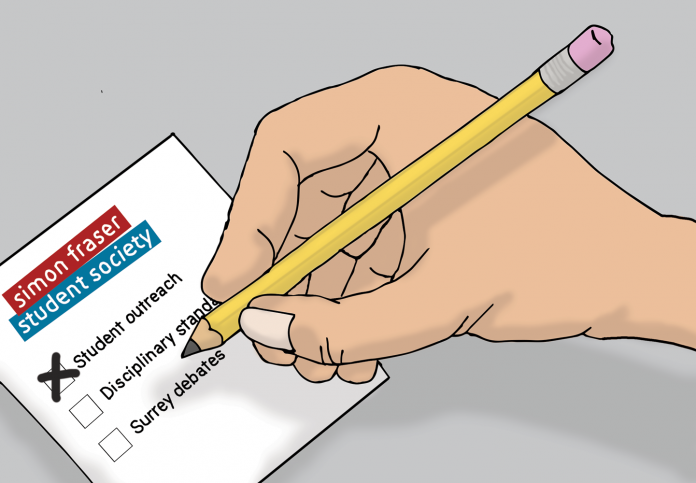
The Simon Fraser Student Society (SFSS) unveiled a new set of elections and referenda policies passed by the previous board of directors last semester. The current board has picked up the work initiated by its predecessor and is making additional updates.  

“In our opinion, [the new policies] will resolve the problems that we [faced] in the previous elections policies,” said Erwin Kwok, vice-president of university relations.

The significant number of new additions to the policies will affect many stages of the election process, including all-candidate debates, campaign materials, and disciplinary action when a candidate violates a policy.

The society intends the changes to provide clearer guidelines and resolve past difficulties in the delivery of elections, according to Kwok.  

“We are also trying to address the concerns that were brought up by all the different [Independent Electoral Commission] reports, and the feedback from the elections candidates themselves about the issues they faced,” he said.

Increasing turnout

Following a number of elections with low candidate and member turnouts, the Independent Electoral Commission (IEC) — the committee responsible for administering society elections — is tasked under the new policies with a number of outreach duties.

The commission will now be responsible for tabling as well as class, student union, and club visits during the nomination and voting period.

There are other aspects of the policies that are meant to free up the time of the commissioners by having staff take care of the background administrative tasks, Kwok mentioned. The hope is that outreach activities will help increase turnout in elections.

All-candidate debates

It was previously required that all-candidate debates take place at both the Burnaby and Surrey campuses. However, a major change in the policy means that debates will now be held on one of the university’s three campuses.

Hosting a single debate on a chosen campus is intended to increase the overall attendance, according to Kwok.

“We’ve noticed that the society is expending so many resources on hosting [multiple] debates and yet yielding little return — there’s not a lot of turnout,” he explained.

“By virtue of having one debate, [the staff] can focus all concerted effort on one and then that will generate more turnout relative to the three cumulative [debates].”

During the election campaign this year, The Peak noted almost no attendance at the Burnaby and Surrey campus debates. A number of candidates also did not turn out to the session held in Surrey.

Referendum questions

The SFSS cut the budget for reimbursement previously allocated to those members who submitted a successful question for referendum.

Previously, the person who submitted a question for referendum was eligible under the policies for a $300 reimbursement for printing costs. The previous board deemed the policy unfair as a referendum involves all students, not just the person who submitted it, noted Kwok.

He said that the SFSS will handle the promotion of the referendum questions.

The society also removed the requirement that the chief commissioner of the elections approve all referendum campaigns. “The IEC can’t and shouldn’t stop members from participating in the referendum process,” Kwok explained.

Campaigning

Though the majority of the criteria around posters and other campaign materials under the former policies remain intact, the society will now provide a template that candidates must use to build their campaign materials.

The template will ensure that campaign materials meet the standards under the policies.

Disciplinary action

Former policies only stipulated that disciplinary action against candidates who were found to have broken election regulations was at the discretion of the chief commissioner of the IEC.

“There was no consistency,” said Kwok. “Some years you would see commissioners giving out $20 fines on the first [offence], and then another time it is a warning only.”

The new policies specify three levels of disciplinary action for candidates who violate bylaws or policies during an election. For the first offence, the penalty is a written reprimand. The second offence carries a 50% reduction of campaign reimbursement, and the third results in disqualification.

“Now it is just a clear process for administering complaints,” explained Kwok.

Flexible appointment

Under the earlier policies, the position of ‘chief commissioner’ was appointed for a one-year term beginning in December. The new policies stipulate that the board will determine the term for which the chief commissioner is appointed.

“The flexibility allows the Board to better ensure that the elections are properly administered,” explained Kwok.

The policies also stipulate a process for the submission of a recommendation for the dismissal of the chief commissioner if they fail to meet minimum standards for hosting an election.

While the SFSS intends the changes to improve the delivery of elections, the policies will be re-evaluated if further problems arise. “If these new policies do not address [the issues], we are willing to look into it again,” said Kwok.

World News Beat

0

CHINA – Deadly landslide leaves village searching for the missing

The civilians of a village in Maoxian county in Sichuan, China became victims to a devastating landslide this week that took the lives of 15 people and left over 120 missing. The province of Sichuan is no stranger to natural disasters, having suffered a massive earthquake that left 87,000 people dead or missing in 2008. The landslide is thought to have been caused by heavy rainfall and a lack of vegetation. Rescue teams continue to work to uncover many others trapped beneath the coat of heavy rock that covers the village.

With files from BBC News.

TURKEY – Gay Pride parade banned in Istanbul for the third year in a row

After being told they could not participate in a Gay Pride parade in the Turkish capital of Istanbul, organizers of the event insisted on marching anyways to protest the ban they deemed unconstitutional. Armed police met the marchers before they could enter the street where the rally was to begin, detaining at least ten people in the process. The government’s original reasoning for the ban responded to threats received by nationalist groups. However, the opposition maintains that the conservative government continues to use these threats as an excuse for homophobic actions.

With files from BBC News.

PAKISTAN – Over 150 people killed in fuel tanker explosion

In the city of Ahmedpur East, Pakistan, civilians were killed as a tanker carrying 25,000 litres of fuel ignited. Villagers were originally gathered around the crashed vehicle on the side of the road to collect fuel that was spilling out of it before a lit cigarette initiated the explosion. Authorities are finding it difficult to treat the severely burned survivors, as the city does not have the medical infrastructure. Road conditions within the area are known to be unsafe and are thought to have contributed to the cause of the crash.

With files from BBC News.

UNITED STATES – Ohio governor’s website hacked with ISIS message

A number of Ohio websites were hacked to display a message campaigning for the so-called Islamic State against President Trump this week. The message stated that Trump and “all [his] people” would be held accountable “for every drop of blood flowing in Muslim countries.” The hack was performed by a group called Team System DZ, and it is currently unconfirmed whether there is a connection with the so-called Islamic State. American authorities are currently trying to determine how the hackers were able to attain administrative access to these classified sites.

With files from CNN.

The cost of the Canada 150

0

The country is gearing up for its anniversary celebrations this week — showcasing a multitude of events funded by the half-a-billion federal dollars allocated to mark the 150th year since Canadian confederation.

The federal government has invested $200 million in various community and country-wide initiatives around the festivities, including $20 million for events taking place on Parliament Hill this Canada Day. An additional $300 million has been devoted to infrastructure projects across the country.

The events marking the national anniversary will involve a hefty cost to operate. The amount set aside for the Ottawa celebrations does not include the cost of police deployment to events, expected to be at its highest level this year.

With a total of $100 million designated for the community-level projects, a further $80 million have gone toward 38 projects designated as “signature initiatives” by the government.

Thus far, a tall ship race in Quebec City and a massive multimedia installation in Ontario have racked-up a total of $10.5 million in funding.

A giant game of snakes and ladders planned for Calgary, Alberta has been granted $416,000 for an installation this September. The organizers will offer a dozen experiential sites, ranging from a virtual reality public transit space station to a 51-metre-long, fire-breathing snake.

Another $198,000 has been expended for the Red Couch Tour, where people will have the chance to take photos on a leather sofa that will make a country-wide trip. In Port Alberni, the Tri-Conic Challenge, which pits human athletes against Canada’s steam-engine trains or freighter boats, has received $80,000.

Over 3,000 applications from groups vying for a piece of the community fund were submitted, but only 15% of the commemorative ideas were approved for funding as of early last month. The rest have either been rejected or are still to be processed.

There are also many smaller-scale events planned under the banners of the national celebrations. With a $50,000 grant, a Nova Scotia arts centre will produce a musical that details the history behind Canada’s suffragette movement. Prince Edward Island’s Symphony Society has received $115,000 for its poetry contest. 

As the expensive endeavour of celebrating the sesquicentennial unfolds this year, it promises a manifold of activities in which Canadians can partake in their provinces.

With files from Global News, The Globe and Mail, and Metro News.

Album Reviews

Witness by Katy Perry

It’s been four years since Katy Perry has released new music and she’s making an explosive return to the spotlight with her latest studio album, Witness. The pop icon is known for catchy beats meant to be fun sing-alongs when you’re in the car with your friends, like her previous projects Prism and Teenage Dream. This album showcases this with the first single, “Chained to the Rhythm,” but the similarities end there. While listening to the tracks, they gave me an eerie feeling that I honestly wasn’t expecting. Quite a few songs speak about gaining a newfound confidence as well as finally breaking free from a low point in one’s life, including “Power” and “Bigger Than Me.”

Overall, it exhibits a darker side of her we’ve seldom heard before. What surprised me the most was “Save as Draft,” an emotional ballad amongst the fast-paced tunes that anyone can relate to who’s gone through and is continuing to go through many hardships in life. The clear expression of vulnerability is what the fans will love. If I were to add any critique, however, what I would’ve wished for is a little less autotune. She possesses a very unique tone and a pretty falsetto, neither of which need heavy synthesizing. For those who’ve listened to her since she first started, Prism and Teenage Dream are amazing and personally two of my favourite albums, so I would recommend them over Witness. Despite this, one can’t deny that she’s evidently maintaining her track record of quality music and it won’t disappoint. – TC

Saturation by Brockhampton

Brockhampton is a collective of 20-something-year-old rappers, singers, and visual artists who, after meeting each other on Internet rap forums, decided to uproot their lives and buy a house together in LA to form what they call an “all-American boy band.” They arrived on the scene with a series of singles and a debut mixtape last year, but with Saturation, their first official album, Brockhampton has established itself as one of the most exciting collectives going.

Kevin Abstract’s innovative artistry, Dom McLennon’s phenomenal writing, Merlyn Wood’s chaotic Patois, bearface’s punk screams and tender falsettos, Ameer Vann’s show-stealing cadence and flow, and more, are all interwoven into emotionally-complex and immaculately-conceived tracks. Tales of complicated love, generational anxiety, experiences of prejudice and intolerance, and, ultimately, finding solace through art and companionship are central to Saturation. In essence, it’s an album about being young, scared, and determined, delivered by some of the most talented young artists in the industry. They manage to mix hip hop, pop, punk, and anything else you can imagine into one of this year’s best albums. – NM

Ctrl by SZA
SZA is one of Top Dawg Entertainment’s most underrated artists: a St. Louis-born singer with a stirringly powerful voice and knacks for soulful R&B and deeply personal songwriting. Ctrl is an album about relationships, but each song addresses the concept from a different angle. For SZA, love isn’t simply a feeling of joyful intimacy; it’s a complicated emotional journey that threatens her very mental state. She isn’t afraid to wear her heart on her sleeve, admitting to everything from sleeping with her boyfriend’s friend on “Supermodel,” to questioning her own self-worth in periods of loneliness on “Drew Barrymore.” The central concept of the album is, of course, control and the desperate need to maintain some sense of it in a relationship, even if it proves destructive to yourself or those you love. SZA’s insecurities threaten her every step of the way, but throughout Ctrl she firmly establishes her confidence and empowerment. It’s a complex sexual odyssey, delivered from an artist with a deep-rooted love for soul and R&B, that gets better and more intricate with each listen. – NM

Contemporary African authors you should add to your reading list this summer

0
Ghana Must Go was Taiye Selasi's first published full-length novel. (Photo courtesy of Manfred Sause)


1.Taiye Selasi

Ghana Must Go

Ghana Must Go is a deeper illustration of Selasi’s “afropolitanism.” A fresh breath into the diverse realm of African literature, the book weaves through cultural complexities whilst tackling themes such as migration and family.

It’s a truly exciting read! It has received critical acclaim and several nominations, including one for the National Association for the Advancement of Colored People Image Award.


(Image courtesy of Hamish Hamilton)


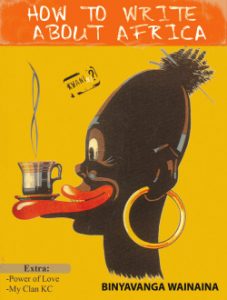
2. Binyavanga Wainaina

How To Write About Africa

As an African, I have never read a more outstanding satirical piece about the depiction of our continent. Wainaina weaves a relatable picture on the classic depiction of the “dark continent” in modern-day media. He drops powerful lines such as:

“In your text, treat Africa as if it were one country. It is hot and dusty with rolling grasslands and huge herds of animals and tall, thin people who are starving.”

It is a piece that cuts through you and makes you grapple with the dangers of a single story, while using light-hearted satire, sarcasm, and humour to get through it.

(Image courtesy of Kwani Trust)


3. NoViolet Bulawayo

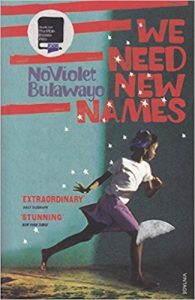
We Need New Names

This novel is a riveting coming-of-age tale set in Zimbabwe and the US. It has a unique child’s-view perspective on complex themes such as democracy, violence, and death. The novel sheds light on the immigrant experience, as the characters’ struggles evolve to include identity in an unforgiving America, especially to the black teen.

Bulawayo weaves a new and fresh narrative, African voices in migration literature, and the struggle of African-born natives in finding an identity foothold in the West.

(Image courtesy of Back Bay Books)

4. Leila Aboulela

Lyrics Alley

This novel is set in 1950s Sudan. It is a story that dissects the fragile balance between modernity and traditionalism in a country that has experienced years of foreign imperialism.

Rather than a cultural sob story, Aboulela offers the warmth and deep meaning of a Muslim family life, and of Islam’s great usefulness to many. Lyrics Alley reminds us of the amazing beauty of the Qur’an, classic Sufi poetry, and the shahada.

(Image courtesy of Grove Press)

The Mummy fails in spectacular fashion

0
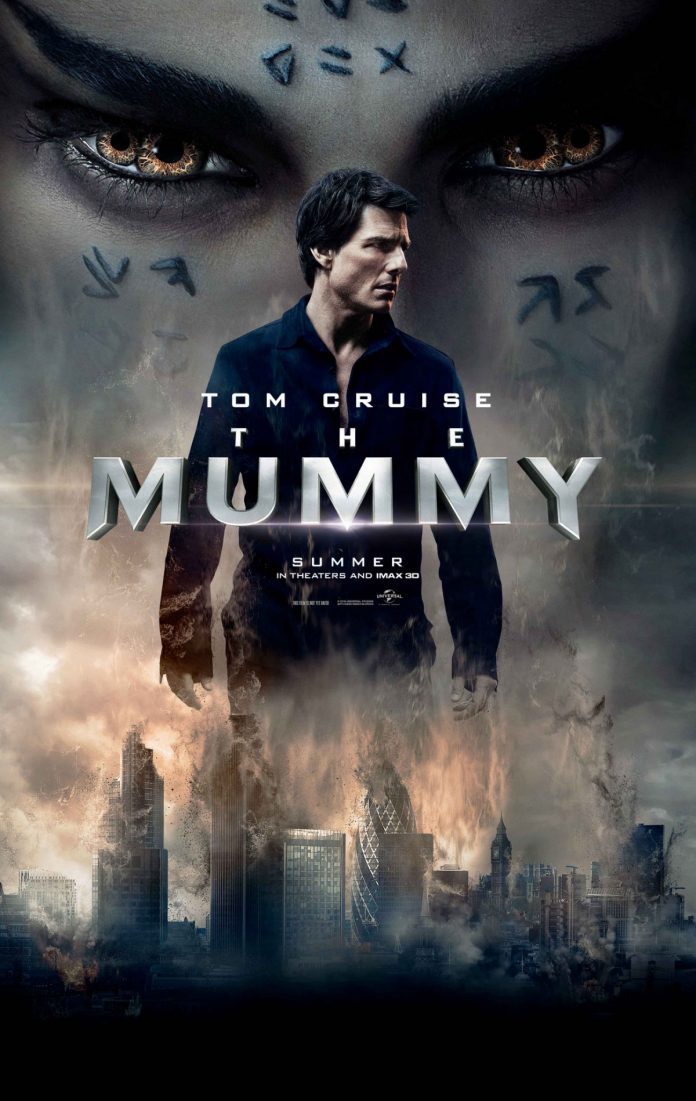
This Mummy film, like its namesake, is best left in the past, yet has a horrible habit of not staying dead. (Image courtesy of Universal Pictures)

The Mummy is a devastating cinematic blunder. Director Alex Kurtzman’s reboot of the classic monster film fails to capture the thrills of its predecessors. It buries my expectations for a well-rounded summer blockbuster, never coming close to Stephen Sommers’ Mummy films.

     The movie unravels due to a multitude of unfortunate shortcomings. Through shallow and cliché dialogue, not much substance is offered, especially for the film’s ending that doesn’t leave audiences with any satisfaction at all. The action sequences are somewhat intense, maybe even suspenseful, and the visuals help elevate them, but the film’s action leaves no lasting impression for viewers.  

    Mission Impossible star Tom Cruise is dragged into this new reboot as Nick Morton, a bold adventurer and soldier that takes on the undead. Subsequently, the film depicts Cruise as the hotshot treasure hunter archetype. He tries his best, but his character’s lack of depth makes it difficult for viewers to take him seriously. Cruise’s performance sadly becomes satirical of other treasure hunter films, such as Indiana Jones and Lara Croft: Tomb Raider.  

     There is also the bad chemistry among the film’s cast. Unlike the amazing chemistry between Rachel Weisz and Brendan Fraser in Sommers’ first two Mummy films, Cruise and his co-star Annabelle Wallis are not the right fit for the big screen. Cruise and Wallis deprive viewers of anything profound, memorable, or worthwhile to appreciate. With dry and flat interactions, their chemistry is as barren as the desert’s sand dunes. There’s also Cruise’s poor chemistry with Jake Johnson. Johnson (best known for his work in Jurassic World) and Cruise provide light-hearted banter that becomes way too awkward to laugh at.

     However, Sofia Boutella (best known for her work in Kingsman: The Secret Service and Star Trek Beyond) provides a horrifying, sinister portrayal as the film’s mummy. Her performance amazingly overshadows the rest of the cast. Boutella’s acting brings out the mummy’s vicious demeanour and lust for power. Through meticulous visuals and costume design, Boutella’s presence on-screen is truly unsettling, but nonetheless, entertains (and hopefully scares) modern-day audiences.

     Russell Crowe’s performance as Dr. Henry Jekyll/Mr. Hyde, the leader of a secret organization that eradicates the world’s supernatural threats, makes the film unique to some degree. Jekyll’s headquarters will fascinate viewers. It offers an interesting atmosphere and platform for an alternative storyline that could’ve been better pursued. Crowe does well in evoking Jekyll’s philosophy on evil. However, Crowe seems incredibly underused, as his main job is to only provide a narrative voiceover and explain the stakes involved in saving the world, much like his role as Jor-El from Man of Steel.  

This Mummy reboot has some excitement, scares, and thrills, but regrettably fails to live up to its predecessor that is Stephen Sommers’ rendition of the classic monster movie.

Looking beyond 150

0

Canada has existed long before confederation. While you celebrate the past 150 years, keep in mind all that came before them. Canada’s history is complex, as this compilation of our biggest fuck-ups and greatest victories will show. All events have been gathered and cross-checked from the following sources: a Canadian history timeline, the Canadian encyclopedia, Wikipedia (and its supporting articles), a second timeline of Canada, and other news articles.

July 1, 2017 — Canada celebrates 150 years since confederation. They also celebrate all the things that make it Canada: beavers, hockey, maple syrup, Tim Hortons, Rick Mercer, Shania Twain, and colonialism.

November 30, 2016 — Studies show 130 advisories against drinking the water in 85 different First Nations communities. The year before, there were 139 warnings that the drinking water was unsafe in 94 communities. This number does not account for water filtration systems in danger of failing.

May 18, 2016 — Justin Trudeau formally apologizes for the Komagata Maru incident.

May 1, 2016 — Fort McMurray is almost destroyed by wildfire.

December 8, 2015 — A national public inquiry is launched to investigate missing and murdered Indigenous women. This is the first formal action the Canadian government takes despite years of calls to action from various human rights and Indigenous rights groups. It is estimated that 4,000 Indigenous women went missing or were murdered between 1980 and 2012.

February 14, 2010 — Alexandre Bilodeau wins Canada’s first gold medal on home soil during the 2010 Olympic games held in Vancouver.

June 11, 2008 — A formal apology for the treatment Indigenous children faced in residential schools is made by Prime Minister Stephen Harper. Next steps in reconciliation are slow and limited.

July 20, 2005 — Same-sex marriage is legalized in Canada.

April 18, 2002 — four Canadian soldiers are accidentally killed by a US bomber while serving in Afghanistan. Before then, the last Canadian soldiers killed in combat were during the Korean War (1950-1953).

April 1, 1999 — Nunavut is the last to join confederation.

May 1, 1996 — Human rights laws in Canada are updated to protect homosexuals against discrimination.

1996 — The last residential school is finally closed. Around 150,000 Indigenous children attended these schools, many suffering from abuse, malnutrition, and disease. 3,200 of these children died from neglect or illness. Some were used as subjects for experiments without their knowledge or consent. The effects this cultural genocide had on Indigenous culture is beyond measure.

1994 — Roméo Dallaire leads a UN Peacekeeping mission in Rwanda. Though he warns his superiors that a genocide is imminent, they order him to do nothing. He disobeyed his orders and helped save what lives he could. 800,000 people were killed during the Rwandan genocide. Dallaire would be haunted by his time there and the lack of support he received from the UN during the crisis. He has since become a humanitarian and an advocate against child soldiers.

June 25, 1993 — The first female (and currently only) Prime Minister, Kim Campbell, is sworn into office.

1992 — The Toronto Blue Jays are the first Major League Baseball team based outside the USA to win the World Series. They become back-to-back champions when they win again in 1993.

December 6, 1989 — 14 women are killed when a gunman open fires on them at Montréal’s École Polytechnique. The gunman specifically targeted them for being women in STEM. A memorial to these women has since been built just outside SFU’s Applied Sciences Building.

1988 — Abortion becomes legal in Canada following a Supreme Court verdict that deemed the denial of the service unconstitutional.

October 5, 1984 — Marc Garneau becomes the first Canadian in space when he joins the crew of the space shuttle Challenger.

May 14, 1984 — Jeanne-Mathilde Sauvé becomes the first female Governor General of Canada (she was also the first female Speaker of the House of Commons in 1980).

April 17, 1982 — The Canadian Constitution is approved. The Constitution contains the Charter of Rights and Freedoms; a document intended to protect all Canadians’ human rights.

November 13, 1981 — The Canadarm is launched into space attached to Space Shuttle Columbia.

September 1, 1980 — Terry Fox has to stop running due to a cancer relapse. Despite vows to finish his marathon, he dies in hospital at 22.

April 12, 1980 — Terry Fox begins his Marathon of Hope: he plans to run across Canada on his artificial leg to raise money and awareness for cancer research.

February 1977 — Terry Fox, a first-year student, visits the SFU health centre for pain in his right knee. He is prescribed painkillers.

June 26, 1976 — The CN Tower opens. From the time it is built until 2007, it is the tallest free standing building on the planet.

1976 — Parliament abolishes the death penalty for civilians (members of the armed forces can still be executed until 1998 when Canada bans all forms of state execution). The last criminals executed in Canada are killed 14 years before this bill passes.

1971 — Pierre Trudeau (aged 52) married SFU alumna Margaret Sinclair (aged 24).

1971 — Pierre Trudeau creates a policy declaring Canada to be a multicultural nation. Whether this is actually true is still up for debate.

1970 — Canada begins converting to the metric system.

July 1, 1967 — Canada celebrates 100 years since confederation.

October 4, 1965 — The Peak publishes its first issue under the name The S. F. View.

September 9, 1965 — Simon Fraser University opens.

July 30, 1962 — The Trans-Canada highway is officially opened. The ceremony takes place at Roger’s Pass.

March 31, 1960 — First Nations peoples are granted the right to vote in federal elections.

1960 — The Canadian Bill of Rights is the first law passed by Parliament to protect human rights.

1956 — Lester B. Pearson proposes a United Nations Peacekeeping force as a way to resolve the Suez Crisis. Since then, the United Nations has engaged in 69 peacekeeping efforts thanks to Pearson’s proposal. He receives the Nobel Peace Prize for this in 1957.

1952–1953 — Lester B. Pearson is elected as the president of the United Nations General Assembly where he tries to find a resolution for the Korean War.

June 12, 1951 — Inuit peoples are enfranchised.

April 4, 1949 — Canada joins NATO as one of its founding members.

April 1, 1949 — Japanese Canadians are allowed to return to the west coast of Canada.

March 31, 1949 — Newfoundland and Labrador enter confederation.

June 15, 1948 — Asian Canadians are given the right to vote.

Late 1945 — Japanese Canadians being held in internment camps are forced to either move East or “voluntar[ily]” move to Japan. 4,000 who did not make the choice in time were deported.

December 14, 1945 — A Nazi general gives execution orders for Canadian prisoners of war that are still held captive. The general is later tried and found guilty of war crimes by a Canadian court and is imprisoned.

September 2, 1945 — The Japanese surrender, ending the war in the Pacific and World War Two overall. 41,992 Canadians were killed in the six years of fighting.

August 9, 1945 — The second and final atomic bomb of the war is dropped on Nagasaki. This essentially ends the war and begins both the arms race and the Cold War era.

August 6, 1945 — The atomic bomb is dropped on Hiroshima. 130,000 people are presumed dead.

June 26, 1945 — Canada joins the newly formed United Nations.

May 7, 1945 — Germany signs the surrender documents. They are ratified the next day. War is over in Europe and soldiers celebrate Victory in Europe Day. In Halifax, thousands of servicemen riot.

June 6, 1944 — 14,000 Canadians soldiers land on Juno beach as part of the D-Day campaign. 359 are killed and 715 are injured.

Summer 1942 — The Canadian government took control of a mine near Great Bear Lake that has uranium in it to help support the development of the atomic bomb. There are no public records of whether the uranium was ultimately used in the bombs that were dropped on Japan.

January–February 1942 — Due to anti-Japanese paranoia, all people with Japanese ancestry are removed from their homes in British Columbia following two bills passed by Parliament. Many men were sent to work camps, families were often split up, and those who rebelled in any way were sent to a prisoner of war camp.

December 1941 — Hong Kong falls to Japan. Canadian soldiers are captured as prisoners of war. Many die in the camps.

April 4, 1940 — Quebec allows women to vote in provincial elections. They are the last province to make this change.

September 10, 1939 — Canada declares war on Germany following a vote in Parliament and enters the Second World War. Later in the month, Parliament would pass a law forcing the conscription of many Canadian men. One purposeful exclusion was that of Asian men because Parliament feared it would give them a valid argument for enfranchisement.

December 11, 1931 — The Statute of Westminster grants Canada autonomy.

1929 — The stock market crashes and the Great Depression begins. The 1930s are often credited as beginning the process of social welfare programs in Canada.

1923 — Canadian doctors Frederick Banting and J.J.R. Macleod win the Nobel Prize for their discovery of insulin.

November 11, 1918 — World War One ends. 60,661 Canadians are dead as a result of the war. Most who returned were never the same, either due to injury or what was then known as shell shock.

1918 — Most women gain the right to vote in federal elections. Asian people and Indigenous peoples were noticeably excluded. Following the abolishment of slavery, there were no laws banning African Canadians from voting; however, it is important to note that unofficial discrimination did stop many from exercising their right to vote.

October 1917 — Canadian troops arrive at the Battle of Passchendaele. A survivor credits it as “one of the Muddy-est, Bloody-est, of the whole war.” Canadians experienced over 15,600 casualties as a result.

June 7, 1917 — Louise McKinney of Alberta wins a seat in the Legislative Assembly and becomes the first woman in the entire British Empire to be elected to a legislature.

April 9–12, 1917 — The Battle of Vimy Ridge becomes one of Canada’s greatest military achievements. 10,500 Canadians were injured or killed for what was the greatest territorial gain the Allies had so far in the war.

November 26, 1917 — The National Hockey League (NHL) is formed in Montreal.

1916 — The Battle of the Somme. 801 Canadian were there on the first day, all members of the First Newfoundland Regiment. Only 68 reported back at the end of the day. Most Canadian regiments joined the battle in the final three months of what would be a five-month conflict. Over 24,700 Canadians were lost.

April 22–May 25, 1915 — Canadians fight in their first major battle: Second Battle of Ypres. It is the first large chlorine gas attack (more than 160 tonnes of the gas was released on the first day alone). Over 6,500 Canadians were injured, captured, or killed. This is also the battle during which John McCrae writes his famous poem “In Flanders Fields.”

August 4, 1914 — Britain declares war on Germany. As a British colony, Canada is automatically at war as well. 630,000 men and women serve during the war.

May 29, 1914 — The sinking of Empress of Ireland becomes the worst maritime disaster in Canadian history. 1,012 out of 1,477 passengers are killed when the ship sinks in 14 minutes.

May 1914 — The Komagata Maru incident begins. Over 300 South Asian immigrants on the Komagata Maru were denied entry into Canada due to discriminatory regulations such as blocking people not on a continuous trip from their home country and any Asian who arrived with less than $200 (around $4,828 in today’s dollars). Immigration officers tried to force passengers to leave voluntarily by limiting their ability to communicate with the outside world — which effectively blocked their ability to take their case to a Canadian court — and denying the ship food and water unless it was absolutely necessary. Eventually, the case was taken to court and the decision supported the Canadian government. Upon returning to India, passengers of the Komagata Maru were seen as dangerous revolutionaries. Several were arrested and 20 were killed upon docking in India.

April 1912 — The Titanic sinks 640 kilometers of the coast of Newfoundland. Four Canadian ships including CS Mackay-Bennett carried undertakers and embalming supplies to gather victims of the wreck and bring them back to Halifax, where many were buried. Only 333 out of 1500 bodies were ever found.

1909 — The Grey Cup is awarded for the first time to the University of Toronto Varsity Blues.

1908 — Anne of Green Gables is first published.

September 1, 1905 — Saskatchewan and Alberta enter confederation.

June 13, 1898 — Yukon Territory joins confederation.

1893 — The Stanley Cup is awarded for the first time to the Montreal HC.

November 16, 1885 — Louis Riel is publicly hung in Regina.

1885 — Louis Riel leads a second Métis rebellion.

1881 — The Canadian Pacific Railway company is founded. The company builds a railroad connecting British Columbia to the rest of Canada and is completed in 1885. 15,000 Chinese labourers work in dangerous conditions to complete the railroad. It is estimated that at least 600 died during construction.

~1880 — The first residential schools open.

August 1876 — First “long-distance” telephone call took place between inventor Alexander Graham Bell’s home and Brantford, Ontario six kilometers away.

1875 — Jennie Kidd Trout graduates from the Woman’s Medical College of Pennsylvania and passes the Ontario exam to become Canada’s first licensed female doctor. She would later help fund the Women’s Medical College in Kingston, Ontario.

July 1, 1873 — Prince Edward Island becomes a member of confederation.

July 20, 1871 — British Columbia enters confederation.

July 15, 1870 — Manitoba and Northwest Territories join confederation.

1869–1870 — Louis Riel leads a Métis (the children of Indigenous and European parents) rebellion in Red River area of Montreal.

July 1, 1867 — Confederation: Canada becomes a country and recognizes the provinces of New Brunswick, Nova Scotia, Ontario, and Quebec. John A. Macdonald becomes the first prime minister.

1850–1869 — Gold is found in British Columbia. Multiple gold rushes occur in this time period in different areas, drawing thousands to the area. The first Chinese immigrants come to British Columbia during this time.

1840 — Cunard Line (a major shipping and cruise ship line) is founded by Halifax-born Samuel Cunard.

July 21, 1836 — First Canadian railroad (Champlain and Saint Lawrence Railroad) opens. The line travels from La Prairie to St. Johns.

1833 — Slavery Abolition Act is passed, abolishing slavery in most British Colonies.

June 1832 — A ship arriving in Quebec brings Cholera to Canada, killing thousands.

October 28, 1830 — Josiah and Nancy Henson, escaped slaves from America, reach Canada. They will eventually create a settlement in Canada called Dawn: a community for escaped slaves.

1815 — War of 1812 ends. Canada returns all captured territory to America.

August 24, 1814 — Canadian forces burn most of Washington, D.C. including the Presidential Mansion, or, as it’s known today, the White House.

1813 — Americans capture and burn York.

June 18, 1812 — America declared war on Canada, marking the beginning of the War of 1812. Though the majority of fighting was done by black Canadians, British military, and Indigenous peoples, there has been a persistent myth that most of the fighting was done by civilians.

August 27, 1793 — York (now Toronto) is established.

July 9, 1793 — Upper Canada (Ontario) passes an anti-slavery law that bans slave importation and demands that children born into slavery must be freed when they turn 25. This effectively makes Canada a safe haven for slaves escaping America.

June 1792 — Captain Vancouver becomes the second European to sail into what he named the Burrard Inlet.

1789 — The North West Company, Hudson’s Bay’s biggest rival, is founded. Many who worked for the North West Company were Scottish highlanders who had emigrated to Canada following the highland clearances.

1786 — Molson brewing company is founded.

1783 — British loyalists start moving into Canada from the new United States.

1775–1783 — The American Revolutionary War causes chaos to Canadian colonies including several attacks on Quebec after they decided not to join the revolution.

June 22, 1774 — The Quebec Act receives royal assent, guaranteeing freedom to practice Catholicism and use French law in civil matters.

September 8, 1760 – British forces capture Montreal during the Seven Years War, effectively gaining control of the entirety of New France. Three years later, on February 10, the conquest is formalized through the Treaty of Paris and New France becomes Quebec.

1755–1757 — Smallpox epidemic occurs. It’s considered to be the worst epidemic in French Canada.

March 23, 1752 — Canada’s first newspaper, the Halifax Gazette, prints its first issue.

1749 — Halifax is founded, violating a treaty with the Mi’kmaq peoples.

1741 — The first Europeans report seeing the Rocky Mountains.

1713 — The Treaty of Utrecht is signed, giving Newfoundland, Hudson Bay, and what is modern day Nova Scotia over to British possession.

1701 — The Iroquois peoples sign a treaty with Britain, selling their land in the Great Lakes region for protection. They also sign a treaty with France formalizing peace between the two groups.

1698 — New France Governor Frontenac raids Iroquois groups, destroying food stores and villages. This effectively ends the Iroquois raids on New France.

August 5, 1689 — Lachine Massacre (the Mohawk against a French settlement) begins a new set of attacks between the Iroquois peoples and French colonists.

May 2, 1670 — The Hudson’s Bay Company is created via royal charter, making it “the oldest incorporated joint-stock merchandising company in the English-speaking world” according to the Canadian Encyclopedia.

1648–1649 — Iroquois disperse Huron living along the St. Lawrence. They also begin attacking New France (Quebec).

1644 — First hospital in Canada, Hotel-Dieu, opens.

~1640 — Low numbers of beaver and otter in Iroquois land lead to the beginnings of the “Beaver Wars.” This ongoing conflict between the Iroquois peoples and other Indigenous groups in the area followed from a growing dependence on colonists for their resources and a demand for beaver pelts back in Europe. The war permanently displaced or destroyed several Indigenous groups.

1639 — Smallpox epidemic kills 50% of the Huron peoples.

May 22, 1611 — The first Jesuits arrive in Canada, hoping to bring Christianity to the “lost souls.”

1611 — Henry Hudson’s mutinous crew sets him adrift in James Bay with his son and several other men. They are never seen again.

1610 — Etienne Brule, who lived among the Huron peoples, is the first European to see three of the Great Lakes: Lake Ontario, Lake Superior, and Lake Huron.

July 30, 1609 — Champlain becomes the first colonist to use firearms against Indigenous peoples.

July 3, 1608 — Quebec City is founded by Samuel de Champlain.

1606 — First play is performed in Canada.

~1580 — The fur trade begins.

1576 — First attempt to find the Northwest Passage.

1535 — Jacques Cartier names areas of modern-day Quebec Canada after the word ‘kanata’: an Iroquois word for ‘settlement.’

June 24, 1497 — John Cabot arrives on the east coast of Canada and claims it for England.

~1100 AD — Five Iroquois nations form the Haudenosaunee, creating stability and trade relations in the Great Lakes area.

1000 AD — Leif Eriksson lands in Newfoundland, creating a short-lived viking community in what is now L’Anse aux Meadows.

1000 AD — The Thule people travel across Northern Canada, eventually settling in areas now inhabited by their descendants, Canada’s Inuit peoples.

~30,000–15,000 BCE — First Indigenous peoples cross a bridge of ice from Siberia into Canada.

SFU club to host sold-out sports analytics hackathon

0
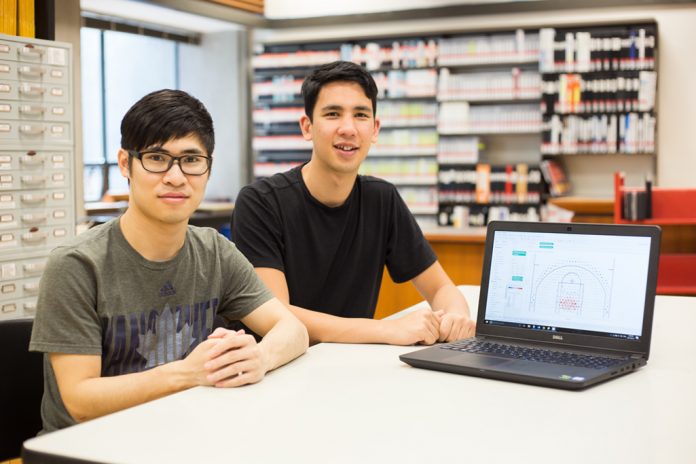
Lucus Wu and Dani Chu are spearheading the initiative to host a student-focused hackathon.

A student-run sports analytics club will be hosting the inaugural Vancouver Sports Analytics Symposium and Hackathon (VanSASH), a two-day event running from July 8–9 at Harbour Centre.

The event is currently sold out as students from SFU, UBC, BCIT, the University of Toronto, and the United States seized the opportunity to display their analytical skills.

Sports analytics is a growing field that combines the fields of computer science and sports, according to SFU Sports Analytics Club president Dani Chu.

“A lot of my classmates are coders and die-hard sport fans, but they don’t know that these two passions can be merged into a profession. In fact, they don’t know that sports analytics is a field that they can specialize in post-graduation,” said Chu.

For the symposium, there will be six guest speakers presenting a wide variety of topics including sports gambling, sports strategy, team building, and the physiology of sports. At the following sessions, the attendees will be given the opportunity to do hands-on research using data provided by the Vancouver Canucks and the Vancouver Whitecaps.

This is the first time that the undergraduate club has taken on the organization of this type of event. The idea was spurred to develop a student-focused hackathon, according to Chu.

At other hackathons “it has always been about professors and professionals, and students have been neglected,” he said.

The organizers hope that by attending VanSASH, the participants can display their skills and network with potential employers, develop foundational analyses, and get their foot in the door of sports analytics.

With the current job market, there are few jobs offered in the sports analytics field. “Just submitting a resume is not enough nowadays,” said Chu. He said that the mentality that inspired the event was that the “best thing you can do is to do something.”

“Our aim with this event is to offer students the opportunity [to] show what they can do with the data presented to them. We want the students to show the scouts what we’re capable of — it is not just the professors and professionals who have talent,” explained Chu.  

A hackathon refers to the writing of codes in a composition setting. While some hackathons are about developing apps or software, at VanSASH participants will be writing codes to explain and summarize sports data.

“VanSASH is purely data-driven and about building analyses,” stated Chu. The project that the attendees will work on is open-ended, and the organizers plan to keep it that way.

Teams will be able to analyze hockey, soccer, and basketball data sets and the problems they may be assigned will include injury prediction, player performance assessment, match prediction, and predicting the future performance of athletes.

Participants will not only be developing codes for predictive power, but also analyzing if the players and the match line-up are efficient.

The winners will take away cash prizes and the opportunity to connect with professionals and researchers in the field.

Students gather for community dinners during Ramadan

0
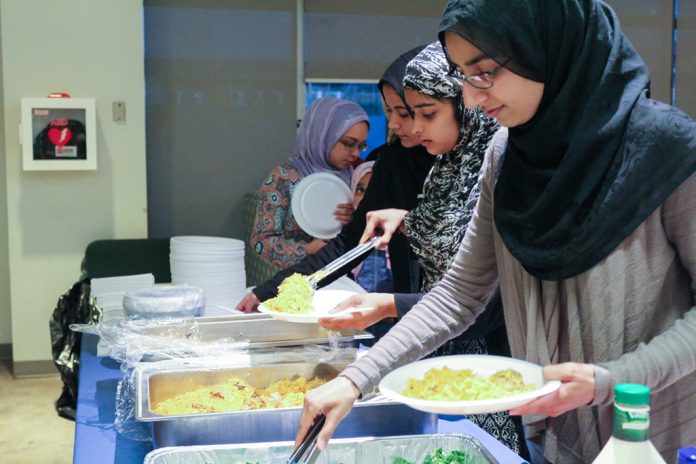
Amina Chaudhry enjoys a late dinner organized by students for students during Ramadan.

Simon Fraser University’s Muslim Students Association (MSA) hosted a series of weekly iftaars, special dinners involving the breaking of the fast, for students on campus during the month of Ramadan. Many students of diverse backgrounds gathered each Friday in Maggie Benston Centre to break the fast in each others’ company.   

“In addition to providing religious services and conducting educational programs, we try to have some events every semester to build a sense of community among the Muslims of SFU,” said Dostum Khan, a fourth-year political science student who currently serves as the president of the MSA.

The fasts are part of the Islamic holy month of Ramadan, when many Muslims the world over abstain from the consumption of food, drink, and sexual activity (for those who are married) during daylight hours. Given that the timings follow the sun, the duration of the daily fasts within the Lower Mainland averages around 18 hours.

The community iftaars serve as one of the many events facilitated by the MSA over the course of the year, alongside religious gatherings, keynote lectures, prayer services, and social hangouts.

Beyond offering a sense of spiritual communion, the iftaars have also served as a comfort space for many international students to meet, connect, and feel like a vital part of the campus community.

“The iftaars were the very first time that I felt at home in Ramadan,” said Indian international student Daanyal Sheikh. “Being alone in Ramadan as an international student can be quite depressing, but the iftaars made me realize that I may be away from my family at home, but the Muslim community here is just another family for me now.”

Each dinner was preceded by a brief religious talk, often conducted by local Islamic scholars or MSA students. These brief talks offered spiritual insights, and encouraged the attendees to be mindful of God and move towards building a deeper connection with their religious teachings, ideals, and moral precepts.

The meals offered via external catering services represented an array of cultural diversity, with dishes ranging from the famed Pakistani biryani to different Arab-oriented cuisines.

“At the end of the day, no matter how exhausting these events are for the volunteers, the satisfaction one attains by receiving such heartwarming feedback from international students outweighs everything else,” remarked Faye, a community volunteer who wished to be identified by only her first name.

The MSA hosts the weekly iftaar programs every year during Ramadan on Friday evenings. The events hosted by the students are open to everyone, irrespective of faith.

Hamza Malik is a senior executive member of the Muslim Students Association.