Home Blog Page 645

The lack of regulation on alternative medicine makes it dangerous

1

Essentially, alternative medicine is any treatment that is not part of conventional, evidence-based medicine, such as one would learn in certified medical schools. Canadians spent around $8.8 billion on alternative medicine treatments in 2016 and around 56% percent of Canadians tried at least one alternative medicine treatment in 2015.

I personally feel that a lot alternative medicine is flawed and potentially dangerous. Much of the “alternative medicine” world is lacking in scientific proof of effectiveness. To quote Tim Minchin: “You know what they call alternative medicine that’s been proved to work? Medicine.” A variety of factors make alternative medicine something of which to be wary.

There are definitely practices that fall, or have fallen, under the “alternative medicine” banner that have advantages. Marijuana, for instance, can be used to treat glaucoma, chronic pain, and seizures. Some meditation therapies can reduce our dependency on pharmaceutical painkillers.

However, there are many other alternative treatments that deserve to be criticized. One example would be homeopathy, a school of treatment dating back to the 1700s which holds that illnesses can be cured using small doses of the substance that caused the illness in the first place. Though many people will use homeopathy because it’s more “natural,” and it does have its supporters, it has been heavily denounced by various parts of the medical and scientific community.

“The concepts behind homeopathy defy our understanding of the laws of nature,” Consumer Reports quotes from their chief medical advisor, Marvin M. Lipman. Indeed, many of the studies on homeopathic medicine have found it to be dependent on the placebo effect or otherwise ineffective.

Conventional medical treatments have had years of testing and study, making them reliable. Antibiotics and vaccines, for example, often require up to 10–15 years of testing to be deemed safe for use in humans. But a lack of regulation on alternative meds means that many products, especially supplemental pills, can get away with containing useless to dangerous substances.

Many herbal supplement pills, due to their official classification as “dietary supplements” rather than medicines, do not face the same level of scrutiny on their labelling, which lets their producers gets away with failing to accurately report the effects of the supplements. For example, the herbal supplement kratom, popular in bodybuilding circles and already forbidden in multiple states in America, was linked to a case of pulmonary edema in a police officer in Albany this year.

The pills did not have pulmonary edema listed as a possible side effect. If they had — and if there were more measures in place to address the dangers of substances that are used medically despite not being properly classified as medicine — then these kinds of occurrences could be more easily avoided. Without those measures, one must be cautious about approaching alternative medicine.

Dr. Paul Offit, in his book Do You Believe in Magic? stated that “alternative medicine becomes quackery” in four ways: by “recommending against conventional therapies that are helpful;” “promoting potentially harmful therapies without adequate warning;” “draining patients’ bank accounts;” or by “promoting magical thinking.”

When people spend their money on ineffective treatments, relying on the placebo effect while decrying more effective cures, that checks all of the above boxes. While it can be tempting to think of alternative medicine as purer, more natural, and therefore superior, doing so is incredibly dangerous.

Rating SFU’s presidents based solely on their buildings 2.0

0
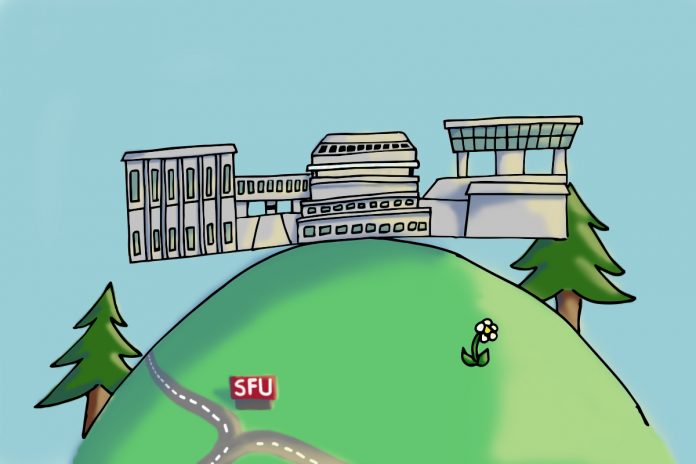
Illustration by Zach Chan


Back in June of 2008, then opinions editor J.J. McCullough wrote an article judging SFU presidents and chancellors based solely on campus landmarks bearing their name. Almost 10 years later, I have decided to reevaluate his original analysis with my own.

JJM note: in many cases accurate information about SFU’s buildings was difficult to find. My analysis is thus based mostly on first hand observation, inter-spliced with made-up facts that “felt right” when I wrote this at 3:00 a.m.

JP note: all of my opinions are based solely on my own personal experiences. If you feel differently, please don’t at me.


Gordon Shrum: chancellor from 1963 to 1969
Current life status: dead
Building named after him: the Shrum Science Centre

JJM (2008): By far the largest and most science-related of the presidential buildings, the Shrum Science Centre, better known as the “SSC” or “Big Shrummy,” houses the many bearded, bespectacled men and women who perform the university’s frightening scientific experiments, some of which serve legitimate academic purposes.

The Shrum building itself is sprawling and maze-like, with several incompetently placed rubber-soled staircases and a recklessly excessive amount of sliding glass doors. There are several floors, each of which gets progressively bleaker the deeper you progress into the SSC’s ominous and dank hallways, until you finally wind up in an endless network of concrete tunnels filled with buzzing refrigerators. You are correct to assume that these are the famed SFU refrigerator catacombs you have previously read so much about.

The university’s most learned teachers of science have their offices on the SSC’s first two floors, which are easily identifiable by their bright red doors covered with newspaper clippings. Based on my observations, I would say that the SSC probably has the most newspaper clipping covered doors on campus, and I advise the faculty to publicize this  fact more prominently in recruitment brochures.

The lower floors are cellar-like, and often contain enormous, horrifying piles of discarded science machinery. Often these piles have sad little notes taped to them, imploring passers-by that the mess of wires and soldering metal are “free” for the taking, but these “offers” are just pranks set up to electrocute Labour Studies students and one would be wise to avoid them.

Though the residents of the SSC are generally dressed in ill-fitting shirts and reek of laboratory rubber, during the my travels I was often impressed by the cleanliness of their eyeballs; a condition which is likely correlated to the buildings numerous and easily-accessible eye-washing stations.

Mr. Shrum’s main characteristics based on his building: sciencey, confusing, full of discarded metal.


JP (2017): Other than the chemistry wing, not much has changed in the good ol’ Shrum. I can’t attest to what the lower floors of biology and physics looks like (quite frankly, I’m terrified to venture past the first hallway of both these buildings), but I can attest to the fact at least one office door is covered in newspaper clippings to this day.

Having been recently renovated, chemistry is quite nice as long as you don’t look at the ceiling. The missing tiles show exposed wires and absolute darknesses that resembles the literal abyss.

Mr. Shrum’s main characteristics based on his building: has attractive qualities, probably suffering an existential crisis on the inside.


Jack Diamond: chancellor from 1975 to 1978
Current life status: dead
Building named after him: Diamond Alumni Centre

JJM (2008): If you enjoy eating at a restaurant that offers sumptus meals, breathtaking views, and is also closed, then you can’t do much better than the Diamond Alumni Centre. At one time this fabled building, located in some bushes behind Robert C. Brown Centre (see below), offered delicious, hot lunches of assorted meats and liquors to legitimate SFU alumni, illegitimate non-alumni, and the sleepy, elderly relatives of both. Earlier this month, however, the restaurant ceased serving lunches for budgetary reasons, and now simply stands as a run-of-the-mill bush hut. Proposals for future use include renting it out to a high-class unabomber, or a family of bears.

Regardless, the Diamond Alumni Centre is still one of the more classy locations on campus, in the sense that it is regularly vacuumed and has functional windows. There are some Natives paintings and artificial plants, and the building’s entranceway features a large, reasonably tasteful portrait of the late Mr. Diamond and his late wife, Lil’ Sadie. Although yellowing, the portrait is still pleasant to look at for those who enjoy receiving a waxy, vacant stare from beyond the grave.

Mr. Diamond’s main characteristics based on his building: clean, unpopular, boozy.


JP (2017): While the Diamond Alumni Centre is once again open for students to go for lunch, the fact that I have never gone is probably not a great sign of its overall popularity as there are not many food options on campus I haven’t tried. From what I understand, it’s popular for university events as well as weddings for some reason.

Mr. Diamond’s main characteristics based on his building: often left out of group plans, enjoys networking, fiscally responsible when planning events.


Joseph Segal: chancellor from 1993 to 1999
Current life status: alive
Building named after him: Segal School of Business

JJM (2008): If you have not heard of the Segal School of Business before, I am not surprised, as there seems to be a high-profile conspiracy afoot to prevent people from visiting it. When I asked SFU staff about it, they often unauthentically claimed to “not know” where the building was, or claimed that they were not SFU staff and that I was actually at Douglas College. Regardless, the plot to conceal the existence of the Segal Business school is most unfortunate as it’s actually a reasonably pleasant and well-lit building containing several attractive clocks.

Located downtown, as part of SFU’s unloved Vancouver campus, the Segal School occupies the abandoned corpse of a 1920s-era bank. One of the plaques on the wall describes the architecture style as “revival temple,” which seems about right as it does strike you as the sort of austere, column-filled building one might imagine a virgin to be ritualistically slaughtered in.

My visit to the Segal building got off to an unpleasant start when a horrible little man accosted me at the entrance, demanding that I produce photographic identification to verify that I was a student, and not, I suppose, a Mossad agent or some such. He was wearing a black vest, and although it bore no labels of an sort, I naturally deferred to his authority, as a result of my strict pro-vest upbringing. I was nevertheless somewhat unnerved by this security, as well over 87 per cent of the Segal building simply consists of a marble staircase and an enormous clock with golden hands. Though I did often consider stealing the hands, the logistics of transport were simply impractical.

During my brief time at Segal I was unable to discern whether or not this purported “school” was actually used for any clear academic purpose. While it has several rooms with bizarre, long names chosen to recognize the achievements of various wealthy Vancouver law firms, these chambers were usually full of fat men, often with mustaches, sitting around wearing neckties and sweating. At the same time, I readily admit that I have never taken a business class, so I am unsure as to how typical this sort of behaviour is in that faculty.

Regardless, the stupid man with the vest would not stop hounding me (I suspect either because I was getting too close to the truth, or because I was spitting constantly) so I left without significant investigation. I did, however, find an old-timey bank door in the basement, which was kind of cool.

Mr. Segal’s main characteristics based on his building: classy, secretive, bank-like.


JP (2017): I was also asked for ID when I visited the Segal building even though I told the security guard that I was delivering The Peak newspaper and clearly had two bundles of the paper precariously propped under my arm.

This building is gorgeous but mostly empty of people whenever I’ve been. As a graduate school building, I can only assume its students have better things to do with their time than sit around and talk about how rich they’re probably going to be. As it stands, I felt extremely out of place wearing my beat-up shoes and something other than a power suit. I think the building itself could tell I was poor and wanted me out as soon as possible.

Mr. Segal’s main characteristics based on his building: classy, elitist, enjoys Ayn Rand probably.


Pauline Jewett: president from 1974 to 1978
And Barbara Rae: chancellor from 1987 to 1993
Current life status: dead and alive, respectively.
Building named after them: Pauline Jewett House, Barbara Rae House

JJM (2008): SFU has had exactly two women occupy its two top jobs, and the school has chosen to honour their unique lives and personalities by naming two identical residence towers in their honour.

Residence towers, as we all know, are hive-like structures where the university sticks ignorant first-year students so they may quickly learn the skills of insect-like conformity that will be in such great demand during their later academic careers. Compared to the slovenly hovels of other residences buildings, the the towers offer unrealistically perk-filled living environments, with opulent luxuries such as DVD players and gender-segregated washrooms. Even though this is a blatantly deceptive trap to lure wealthy children to live permanently at the university, it remains effective. This is largely due to the proven fact that extended exposure to DVD players weakens reasoning skills.

Madame Jewett and Rae’s main characteristics based on his building: perky, tall, somewhat sterile.


JP (2017): My oh my, how times change. 10 years have not been kind to these buildings. Increased rumours of black mould and cringe-worthy antics of under 18-year-old boys make P.J. and B. Rae seem like increasingly poor housing options. The concrete walls probably don’t help either.

Madame Jewett and Rae’s main characteristics based on his building: immature, in need of a long shower.


William Hamilton: chancellor from 1984 to 1987
Current life status: dead
Building named after him: Hamilton Hall

JJM (2008): According to university lore, graduate students and undergraduates students may never cohabitate with one another, as their body juices are chemically incompatible to the point of explosion. Contemporary biologists, by contrast, tend to dispute this once-untouched piece of conventional wisdom, putting forward a revisionist theory that graduate students are merely awful human beings.

Regardless, some time ago SFU built a number of separate dormitories for graduate students to sleep and cry in, one of which was Hamilton Hall. Today, however, the Hall has fallen into disrepair and is now entirely uninhabited except for a dozen swarthy foreign labourers who curse loudly while banging hammers and wearing sweat pants. They are largely regarded to be an improvement over the building’s previous tenants.

Mr. Hamilton’s main characteristics based on his building: shoddily constructed.


JP (2017): The renovations seem to have helped this building a lot and I would argue it seems like the nicest residence building to live in, except maybe the townhouses. It seems much cleaner than the other buildings at least, whether that is due to a more mature population is hard to say.

Mr. Hamilton’s main characteristics based on his building: mature, the kind of guy you’d want your parents to meet.


Robert C. Brown: acting president during 1993
Current life status: unknown
Building named after him: Robert C. Brown Hall

JJM (2008): Affixed to the side of the AQ like a smooth concrete carbuncle, the Robert C. Brown Hall (or “RCB;” pronounced “ r’cub”) is the the building that houses SFU’s most cryptic and unpopular faculties, such as Geography and French. With six floors, it is well-deserving of its reputation as SFU’s most floory building, though less deserving of its reputation as the birthplace of the late Sir Alec Guinness. First time students often find the building’s abundance of stairs confusing, as several staircases lead not to classrooms but rather rooftop gardens, or other dimensions.

Like the Shrum centre, RCB’s top floors contain offices, while the lesser floors contain hallways, water fountains, and storage rooms for plastic chairs [editor’s note: these are actually classrooms]. The lower floors  are also increasingly hot and uncomfortable, perhaps due to their proximity to the Earth’s molten core.

Though the fact has been downplayed since the end of the Cold War, many rooms in the RCB can double as effective bomb shelters or submarine docks.

Mr. Brown’s main characteristics based on his building: sturdy, deep, hot.


JP (2017):  While RCB may have grown in popularity thanks to the French department moving to West Mall and psychology taking up residence there, it is just as confusing as ever. Trying to give directions to specific rooms in RCB is a task I would not wish on my worst enemy. I have often wondered if someone has gotten lost and is doomed to wander the halls forever trying to find their TA’s office. I pray I never have a class there again

Mr. Brown’s main characteristics based on his building: dubious, complex, possibly related to King Minos.


Kenneth Strand: president from 1968 to 1974
Current life status: unknown
Building named after him: Strand Hall

JJM (2008): Strand Hall is the bureaucratic Valhalla of SFU. As the building that deals directly with the university president and his vast array of secretaries, mages, and food tasters, it is the building which all other campus bureaucrats lie awake in their one-bedroom apartments and dream of someday being promoted to. Of course, for students it is a place which is best avoided, lest their eyes catch glimpses of the monstrous cubicle-hell of “professional life” that awaits them upon graduation.

Aside from many, many offices and disgusting washrooms where nobody flushes the toilets, Strand Hall is famous mostly for its vast gallery of abstract art, much of which was drawn either by presidential children,  or the university chancellor (oddly, one of his few official duties).

Mr. Strand’s main characteristics based on his building: isolated, artistic, never flushes the toilet.


JP (2017): Fun fact: Strand Hall was once home to the School of Contemporary Arts before it moved to the downtown campus. As it is now a fully administrative building, I have mercifully never been inside. I know this is unreasonable, but I have an unwavering fear that should I enter I would be expelled upon sight for trespassing (also, it’s full of asbestos, so bullet dodged there). Therefore, I can neither confirm nor deny how often the toilets are flushed, but if it’s anything like the rest of SFU the answer is not frequently enough.

Mr. Strand’s main characteristics based on his building: had dreams of being an artist but let them die in favour of a “real” job, stuffy, full of asbestos.


Patrick McTaggart-Cowan: president from 1964 to 1968
Current life status: dead
Building named after him: Patrick McTaggart-Cowan Hall

JJM (2008): Patrick McTaggart-Cowan was a Scottish weatherman who served as SFU’s first-ever president. At the time, Scotsmen were still something of a rarity in Canada, so his lengthy, hyphenated name was often shortened to simply “McCow” by students who hated him. This tradition lives on today in the form of “McCow” hall, one of the university’s several residence buildings not named after a lady president, lunatic, or Dutch petroleum firm.

As far as residence buildings go, McCow is relatively standard. It offers students simple, square rooms in which to store their bed sheets and forks. To the walls, boxy furniture is affixed with tiny screws in order to prevent the dual evils of theft and Feng Shui. When I visited, many students had attached jaunty pieces of construction paper to their doors with famous international landmarks on them, perhaps in an attempt to trick their brains into believing that their doors were magical gateways to Paris or Moscow,as opposed to merely claustrophobia and foul-smelling fabric.

By generous contract, all students in McCow are guaranteed windows. If your room is located on the east side of the building, your window will face the Terry Fox field, where you can watch athletes play softball, which is good if you like sports or are a pervert. If your room is on the west side, your window will face the Louis Riel graduate student residence building, which is disgusting. As is often the case at SFU, the latter fate can be easily avoided by bribing the assistant dean of windows, however.

Mr. McCow’s main characteristics based on his building: uninspiring, sufficient, distrustful of undisciplined furniture-moving.


JP (2017): McCow and I have a complicated history. I went on a very disappointing first date that took place mostly in one of the rooms. There was no second date. I also had a very drunk friend cry on my bosom over the fact that girls refused his romantic propositions. Having seen him drunk, I was not very surprised by this information but feigned sympathy anyway even though it was two a.m. and I wanted to go home. He now has a two drink limit in my presence (he doesn’t know about this, I just leave when he starts to go over).

Mr. McCow’s main characteristics based on his building: unromantic, dense, a sloppy drunk.


William G. Saywell: president 1983 to 1993
Current life status: unknown
Building named after him: Saywell Hall

JP (2017): In the time since this article was originally published, another building has been named for a past president. Home to the criminology department, Saywell Hall’s main walk-way is incredibly bright for a building that houses a morgue. Designed by SFU’s original architect’s apprentice, the building stays true to the brutalist style while being slightly less soul-crushing. An incredibly eco-friendly building, Saywell is not the worst place to have a class and I can’t think of a better endorsement for a building on this campus.
Mr. Saywell’s main characteristics based on his building: bright, eco-friendly, slightly morbid.


Dementors come to SFU only to find that all the souls are already gone

0
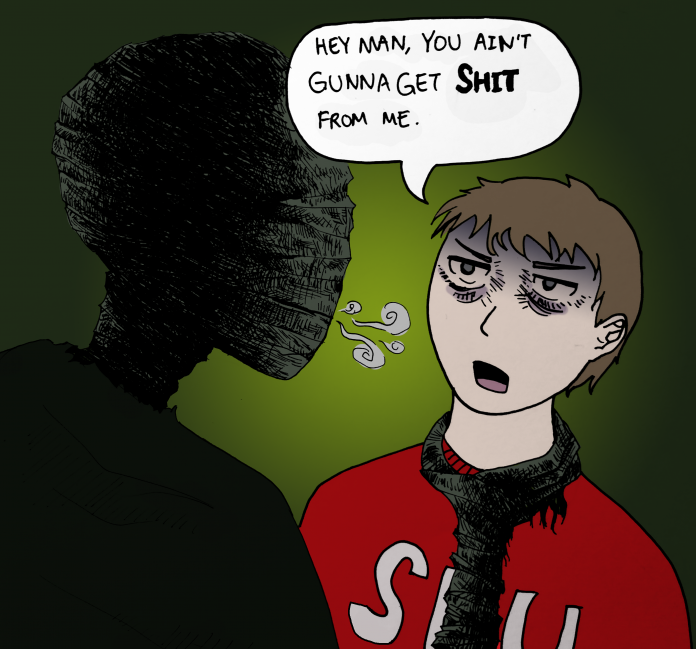
Illustration by Alice Zhang

SFU received an unexpected visit this week when Dementors infiltrated campus. Unfortunately, the Dementors were disappointed because they could not find what they were looking for.

“We really picked the wrong fucking month to come here,” one Dementor shared with The Peak. For context, Dementors are creatures from Azkaban who get their nutrition from sucking up human souls.

“It’s really unfortunate, because we didn’t know that November was the month that everyone was going to be dead inside,” another Dementor stated. “There are no souls here.”

In the month of November, SFU disproportionately experiences about 90 per cent student soul loss due to weeks of unmarked assignments, negative bank account balances, and the inability to accept GPA numbers will be dropped by an average of one point.

Several SFU students, who refused to be named, shared their experiences of not having a soul.

“I can’t feel my legs,” one student said.

“It feels like I’M the Dementor,” another student stated. Clearly, this student did not understand what it means to be a Dementor, as they would in fact be full of souls.

For next time, we recommended that the visitors come during Welcome Week. This is when all the naive first-year students think they’re in for the time of their lives, and it would be best to come then so the first-years don’t have to experience slowly losing their soul over the course of four years like the rest of us. It would be better to just suck it up before the students can even think university is a fun place to be.  

The Dementors turned to the professors to attempt to feed on their souls, only to find that they don’t have any either. “I went to this one prof, and tried to feed on his soul, but I just got a mouth full of cash and it tasted like shit,” stated one Dementor. Shocking.

The Dementors left campus early Monday morning, disappointed and hungry. We can only hope that next time we can give them the SFU “spirit” that they were looking for.

Formal email translation

0
Photo by Antonioguillem via Adobe Stock


Original:

Dear Professor,

I am writing to inform you about a potential problem that I am having with the students you assigned to be in my project group. I am aware that you are very busy, but please reply to me as soon as you are available.

Sincerely,

Nathaniel

BSc candidate

Translation:

The students assigned to my group suck and it’s YOUR fault because you made up the groups for us, so do something about it. I am a high school Executive Illustrious Governor General Golden Number 1 Scholarship winner, this cannot be my fault.


Original:

Dear Nathaniel,

Thank you for your email. I am sorry for the delay in replying to your email. Can you please describe the situation with your group? Has your teaching assistant been made aware of the situation?

Warm regards,

Professor Sheldon Bestresearch

Bsc, BA, Msc, MA, MEng, MBA, MEd, MPH, MFA, JD, MD, PhD, DSc, FRSC, FRCSC, KBE

Director of Global Research in Researching about Research

Harvard, MIT, Oxford, Cambridge Adjunct Professor

Translation:

Are you kidding me? Did you know that I am a professor? The reason I take so long to reply is to show you exactly how busy I am. I have a dozen projects going on at the same time, each of which I actually know the name of! I mean, who is this “Nathaniel?” I think my wife’s childhood dog was called Nathaniel . . . Go bother the TAs, TAs please do a clean-up in aisle three!

P.S. Check out my rad credentials, haha a BSc? Bitch please, I got that when I was 12 during my free time.

Original:

Dear Professor,

One of my group members has unpleasant facial features which might not be an issue were it not for the fact that another member of my group — who has a deeply satisfying appearance of which I am most captivated and enamoured by — has been entranced by the one with the unpleasant facial features.

Translation:

I like a girl in my group, but she likes the other guy who is ugly and not me.


Original:

Dear Nathaniel,

I am of the belief that such aspects of the undergraduate student’s university experience are quite beyond my control. I would however advise you to dedicate your time to your academics rather than relationships. You would find your time and future in better hands. But if you do need any assistance, I suggest you begin your endeavours with your teaching assistant.

Translation:

Really, a romantic problem? I must not be giving enough work to my students if they have enough spare time to think of relationships. BTW I checked your marks, I hope you are not relying on the final or the curve to pass, because you suck!


Original:

This is an automatically sent email, please do not respond

Dear colleagues and students,

Thank you for your emails. Due to recent events in the workplace, I have decided to take advantage of a rare opportunity to diversify myself in a different work environment. I have taken an offer to work with a prestigious firm in the industry. As such, I will not be responding to emails from this account any longer.

Best Regards

Professor Emeritus Sheldon Bestresearch

Bsc, BA, Msc, MA, MEng, MBA, MEd, MPH, MFA, JD, MD, PhD, DSc, FRSC, FRCSC, KBE

Former Director of Global Research in Researching about Research

Former Harvard, MIT, Oxford, Cambridge Adjunct Professor

Translation:

Peace OUT, I’m done with this bullshit.


TransLink prepares for winter weather at SFU Burnaby

0

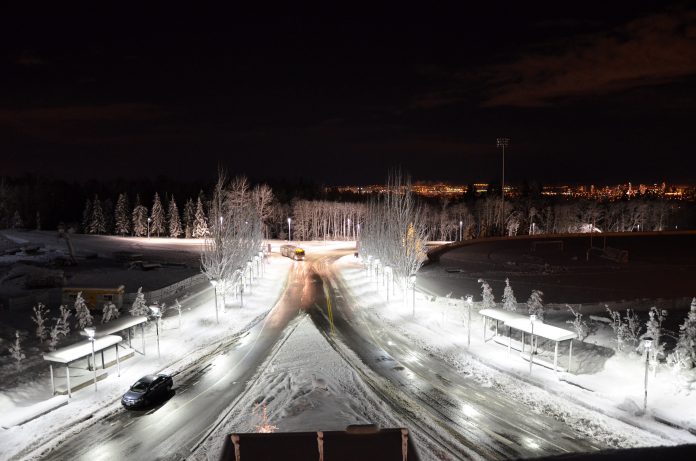
TransLink has unveiled its plans to brave the snow-covered roads up to the main Simon Fraser University campus this year. The transit provider is taking additional steps this time around since major snowfall in Metro Vancouver last year caused extensive disruptions to much of the region’s public transportation.

“Maintaining transit service during winter storms is important to us, and we’re always looking for ways to improve what we do and update our winter response plans,” TransLink spokesperson Chris Bryan told The Peak in a statement.

Last year, winter weather left hundreds of students stranded on Burnaby Mountain with exams and classes cancelled and bus service up the mountain suspended due to hazardous road conditions. The students living in university residences were also unable to get off the mountain to attend exams at other campuses.

TransLink has given transportation to and from SFU during the winter months this year centre stage. The company has said it will test out ‘tire socks’ on its vehicles if conditions on the mountain deteriorate to the point that buses have traction challenges.

The tire socks will be fitted on four 40-foot buses as shuttles on the 145 bus route from Production Way SkyTrain Station to SFU Burnaby. According to the TransLink spokesman, the tire socks have been successfully used in snowy conditions in Scandinavia.

“This year we are preparing for the worst.” – Chris Bryan, TransLink spokesperson

“Burnaby Mountain has always been a challenge in snow for all vehicles, buses included,” Bryan added. “If we find [the tire socks] are working very well, we will move to expand their use to other challenging areas of the transit system as quickly as possible.”

Translink is also prepared to swap out its 60-foot articulated buses for 40-foot conventional buses which operate better in snowy or icy road conditions on routes up the mountain. SFU is at a higher elevation compared to the rest of Metro Vancouver and often experiences greater severity in winter conditions.

TransLink has also noted its plans to address problems in other parts of the transit system. There will be anti-icing sprayers used to keep SkyTrain and electric trolley bus lines free of ice build-up in addition to extra staff on scene during challenging conditions. The company will also have an arborist review all trees and branches within 10 metres of the SkyTrain and West Coast Express tracks.

“TransLink did a good job of keeping people moving [last year],” Bryan said at a press conference on November 2. “But there is always room for improvement. This year we are preparing for the worst.”

He added that the company is investing in ways to keep people informed about travel on each of its routes, including alerts and social media updates.

The TransLink buses are already equipped with all-weather tires that are rated for snow, a recommendation of the provincial government. However, the tire socks will wrap around the tire to provide additional traction on steep and snowy routes.

The tire socks help to increase the contact surface area between the snow or ice and the tire, explained Simon Agnew, a maintenance engineer at the Coast Mountain Bus Company, in a video posted by TransLink.

“Our rider comfort is still very good, there is no noise that comes from [the snow socks],” Agnew said in a demo, adding that the socks are easy to install and will take about two or three minutes to place on each of the tires.

The installation was one of the factors that went into the company’s decision to test out this particular device.

SFU advises students to check its website and social media pages for updates on changing weather conditions on the campus. It also warns students not to try to walk down the mountain or drive a car that is not equipped for winter conditions during a severe weather event.

New adaptation of Titus Andronicus involves clowns and comedy

0
(Photo courtesy of the Cultch)

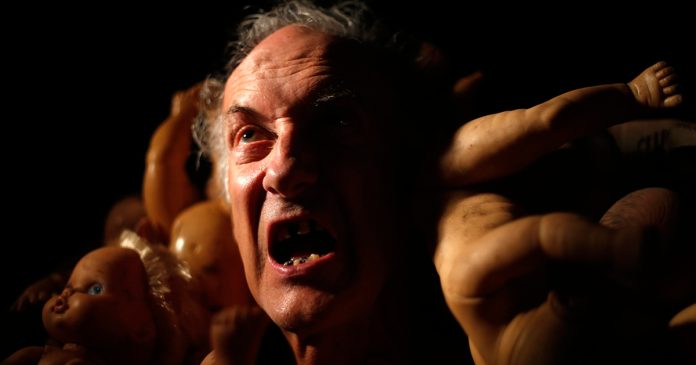
Shakespeare’s Titus Andronicus gets a whole new treatment in Colleen Murphy’s new work produced by Rumble Theatre and developed with the assistance of Bard on the Beach. The Bard’s gory tragedy, which includes multiple deaths, sexual assault, severed heads and hands, a live burial, and cannibalism is not exactly a cheerful play. The Society for the Destitute Presents Titus Bouffonius, however, is a retelling that fuses it with contemporary dialogue and an element of humour with clowns performing in the French bouffon style.

     The Society for the Destitute is a group of five bouffoon-style clowns who wear lumpy, padded costumes and make it their mission to mock the absurdities of our world. They do and say as they wish, and through their mockery the clowns are able to present this story from a new perspective while sharing their true feelings about the state of the world. The clowns reflect the audience’s own feelings and their faults while making them both laugh and think deeply. The bouffon may be an entertainer, but clowning can also be very intelligent.  

     The clowns, outcast and poverty-stricken, decide that they will put on their own version of Titus Andronicus and their version will shed new light on this much-maligned Shakespearean classic. This is a much-anticipated world premiere from Murphy, who is a two-time Governor General’s Award winner for her playwriting (Pig Girl and The December Man). Stephen Drover directs a talented cast of bouffons: Sarah Afful, Peter Anderson, Craig Erickson, Pippa Mackie, and Naomi Wright.

     Full of political satire, physical theatre, and chaos, the clowns are able to present the play in a way that highlights the timely themes of war, rage, and grief with our current political climate in mind. They also question the fine line that is sometimes drawn between what is beautiful and what is repulsive.

     The bouffons might forget a line or two, they might make audiences uncomfortable, and they might not stay dead after they’ve been killed off, but their Titus adaptation is sure to get audiences thinking while entertaining them with a unique form of clowning we don’t often get to see. We may not know whether to take them seriously or not, but that’s irrelevant as long as they entertain and leave audiences with some food for thought.  

The Society for the Destitute Presents Titus Bouffonius will be presented by Rumble Theatre and the Cultch from November 22–December 3 at the Cultch’s Historic Theatre. For more information, visit thecultch.com.

Cross country women place 10th out of 32 at NCAA Championships

0
Senior Julia Howley has lead the women's team in every race this season. (Photo courtesy of SFU Athletics)

This past Saturday, the SFU cross country women’s team had their last race of the season, picking up a tenth spot at the national championships in a year in which they had won four of the seven meets they’ve competed in.

Led by senior Julia Howley at every race, the women have been able to wrap up a cross country season which head coach Brit Townsend has worded as “the best year we’ve ever had.”

A great team effort was present at every race, and the NCAA Championships was not an exception. Julia Howley (15th) and Miryam Bassett (24th) attained All-American honours in arguably their best performances they have ever had in cross country. The depth of the field at the NCAA DII Championships is huge and it really requires each athlete to be at their best if they want to achieve something as ambitious as an All-American performance.

Howley’s consistency has been remarkable the entire season. It is not easy to perform great on the biggest day of the season, especially when knowing that you have to put an extreme amount of effort, both physically and mentally, in order to be ready for it. With such a performance, Howley has shown that her talent is not only physical, but also mental.

Meanwhile, Bassett’s progression throughout the season is also noteworthy. She has moved up consistently at each of the seven races of the season, peaking for the two most important races, the regional championships and national championships.

The third woman to cross the finish line was freshman Olivia Willett in 66th. Willett has completed an impressive first year, which is very encouraging for the team as the top two runners (Howley and Bassett) are seniors and will not be competing for SFU in future cross country seasons.

Chelsea Ribeiro and Sophie Dodd completed the scoring squad for the race, in 136th and 156th positions, respectively. Both of their performances were crucial to obtain the top 10 finish as the team was only nine points in front of Colorado Mines, who ended up in 11th overall.

Paige Nock and Calli Charlton completed the team with 176th and 215th positions in a race that junior Addy Townsend could not run due to a rolled ankle earlier in the week. Townsend had been a solid third runner throughout the season, and the team definitely missed her on the national stage. Coach Brit Townsend stated at the end of the race that she was “very happy with the team’s finish considering the circumstances,” implying that the goal was to do better than that, but there are certain things, especially in this sport, which you can’t control.

SFU’s cross country teams will be taking a short break from racing and switch the focus in preparation for the indoor and outdoor seasons that will begin in January of next year.

Madison Power and Christine Howlett say ‘goodbye’ in style on Senior Night

0
Christine Howlett and Madison Power both played key roles during their time on the team. (Photo courtesy of SFU Athletics)

On Saturday night, the Clan took on the second place team in the Great Northwest Athletic Conference (GNAC), Northwest Nazarene, who came into Burnaby boasting a 16–3 conference record. Simon Fraser managed to win in convincing fashion, with set scores of 25–23, 25–14, 22–25, and 25–16. More importantly, however, was the play of the Clan’s two seniors, Madison Power and Christine Howlett, who had great performances in their last game ever for SFU.

The game got off to a suiting start, as Power got Simon Fraser’s first point with a kill. The set stayed close throughout, with neither team able to pull more than three points ahead of the other. After the score was tied 23–23, an attacking error by Northwest Nazarene player Kendra Bodine followed by a kill from Simon Fraser’s Tessa May gave the Clan the first set victory.

The home team took this momentum into the second set, where they cruised to a 25–14 victory. Kills from Tessa May and Madison Power put Northwest Nazarene out of their misery, in a set where SFU looked the much more dominant team.

Northwest Nazarene would respond in the third and show why they’re one of the west region’s best teams this season. After being down 19–15, the Clan fought back to bring the game within one, but ultimately fell 25–22 after a kill from Northwest Nazarene’s Madi Farrell.

The Clan would then win the fourth set 25–16, with strong play from Howlett down the stretch in her last set in a Simon Fraser uniform.

Howlett finished the game with nine kills and four blocks, while fellow senior Power finished with four kills and one block. “We wanted to send our seniors off on a high note in their final game, and they both stepped up and contributed, both blocking and attacking, and they won some important points for us that swung momentum in our favour . . . it was everything you could ask for on [Senior] Night,” said head coach Gina Schmidt to SFU Athletics after the game.

Tessa May had a fantastic night in the middle, leading the game in both kills and blocks with 21 and 10, respectively. Betsie de Beer and Kirsten Pinkney also had strong performances, finishing with 16 and 12 kills.

The Clan have now won seven of their last nine games, but unfortunately will just miss out on a playoff spot as the fifth place team in the GNAC. They will finish the season with a 12–8 conference record, two games shy of third and fourth place teams Central Washington and Alaska Anchorage.

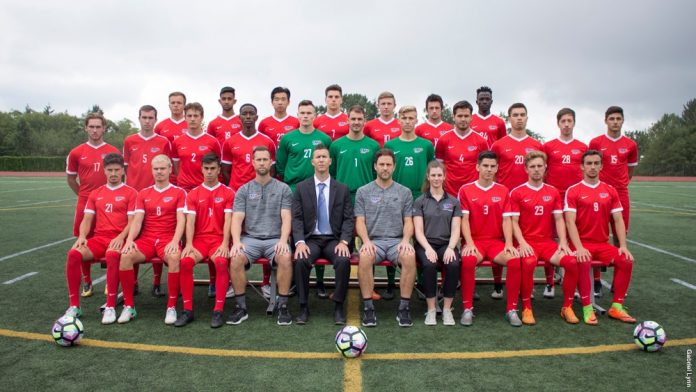
A season much like the last; what we think of the men’s soccer team’s year

0
Nine players made an all-conference team for the Clan this season. (Photo courtesy of SFU Athletics)

After last week’s shocking loss to Cal Poly Pomona in the national tournament, the men’s soccer team’s second straight year losing to this team in the first round, seeing the positives in a shorter-than-expected season requires a step back. The Clan were ranked as high as number three in the nation as the season was getting under way, but had their title hopes vanished in a span of 90 minutes. Even with this first-round exit, however, the men’s soccer team’s season is a reminder that this is not only one of the finest programs at Simon Fraser, but in the entire Great Northwest Athletic Conference (GNAC).

The Clan won their second straight GNAC title (going 7–2–3 in conference play), and they’re sixth all-time. While it was not quite as dominating as their eight-point title win in 2016, SFU got things done when they needed to. The GNAC title was on the line as the team went into their last week of conference play with two crucial games against Western Washington and Seattle Pacific, the only thing between them and the championship. The infamous snow day on November 2 forced the game between Western Washington and Simon Fraser to be cancelled, leaving the match against Seattle Pacific (then ranked first in the GNAC) two days later as the battle for the title. The Clan did not disappoint, as two goals by Mamadi Camara gave the team a 2–0 win and secured the championship on Terry Fox Field.

This win was not surprising, as the Clan finished 7–0–1 on the season at home, with their only draw coming the following day in a mean-nothing makeup game against Western Washington. Playing on the road was a different story, however, as the team finished 2–2–3, while also going 2–1–0 on neutral ground. Unfortunately, losses did travel across the border, and this season’s struggles in the USA were disappointing for a team that is ranked amongst the elite in the National Collegiate Athletic Association (NCAA) Division II. As the only NCAA team in Canada, the Clan are not able to host national tournament games in Burnaby, negating their home field advantage once the team enters post-season play.

While SFU dominated possession and scoring chances in nearly every game they played this season, there were times where they struggled with finishing. As head coach Clint Schneider said, “I wish we would have found a better scoring touch down the stretch . . . I think we did everything to win our game in the national tournament, but that’s football; you have to score to win games.”

The team’s most consistent scorer was freshman Matteo Polisi, who led the team with 10 goals, good for third in the GNAC. For his efforts he was awarded the GNAC Freshman of the Year award. Perhaps his greatest competition for the award was his brother and teammate Marcello Polisi, who was awarded the GNAC Player of the Year award. The GNAC opted to give an award to both players due to their exceptional play, and also so that things wouldn’t get awkward at Christmas dinner. With two freshmen as two of the best players in the entire conference, the Clan have two cornerstones for the next three seasons. Clint Schneider was awarded consecutive Coach of the Year awards, while senior Magnus Kristensen was awarded the Defensive Player of the Year for the second straight season.

Kristensen is among four seniors who have now played their final game for Simon Fraser, with defensive partner Pascal Schmidt, starting goalie Miguel Hof, and midfield star Adam Jones (who battled injuries down the stretch) being the others. All four were crucial players for the Clan, and were all regulars in the starting lineup when fit. When asked what losing these seniors meant, coach Schneider responded, “[It’s] always tough to lose players of the calibere of my seniors, but the program is bigger than me and any individual player, and we will make sure we are competing for conference, regional, and national championships next year.”

One unfortunate loss should not taint SFU’s dominant season. As stated by coach Schneider, “[The Clan] had a very good team and [they] proved that [they] can play and beat anyone.” With nine players making a GNAC all-conference team and highly touted prospects such as William Raphael joining the squad, the team has the depth to continue dominating the conference for years to come. A team this good, however, will always be judged by how they compete on the national stage.

Stranger Things 2: stranger, darker and more grown-up than season 1

0
(Image courtesy of Netflix)

Season two picks up about a year after season one ends, but the story is put together so well that you’re pulled back into Hawkins seamlessly. Stranger Things holds a special place in my heart alongside all the other stories that actually remember and take into consideration the trauma they put their characters through. Joyce is overprotective of Will, Jonathan overcompensates out of guilt for Will’s disappearance, Will himself has trouble fitting in at school and readapting to everyday life, and Nancy refuses to forget Barbara. On the subject of consistency, Stranger Things manages to preserve and continue playing around the fictional universe it has created while going forwards, and without falling into repetition.

     The ‘80s aesthetic of Stranger Things lives on in season two (if not becoming more obvious). Everything from clothing, to hairstyles, to movie references and interior decoration shouts it out. The Ronald Reagan election signs that appear on lawns in the background while the party trick-or-treats were like the icing on the cake. Not to mention the haunting, creepy design of the Upside Down, which epitomizes the meticulous attention to detail of the show.  

     However as the show grows and matures, so does its content. Now that season one has come and gone and dealt with the initial spookiness and mystery of the supernatural as well as the sci-fi aspects of the story, season two has gotten darker. The creatures are more violent, the stakes are higher, and the line between Hawkins and the Upside Down is thinner than ever.

     Similarly, the intensity of the action and its increasing darkness is mirrored by the growing pains of the children. Will, Mike, Dustin, Lucas, and their new (shockingly female) friend Max spend the season learning how to approach and befriend girls who aren’t paranormal, how to dance with girls who aren’t paranormal, deal with loss, call out issues of race and sexism, and try to discover themselves, who they are, and where they fit in.

     Elle spends the most time on the latter, and I really appreciated the way her character is being developed. With Elle, less is more: a few good, concise camera shots and a well-chosen soundtrack can tell you everything you need to know about her loneliness and frustration (although Jim Hopper does teach her a new word every day as part of their adorable new bond).

     The fact that these themes could be carried so well throughout the show is telling of the surprisingly talented child actors on which the show rests. I was particularly impressed by Noah Schnapp who played Will, since we didn’t see much of him in season one. Which isn’t to say that the adults didn’t perform just as well, particularly Winona Ryder, who delivers the maternal extremes of feverish protectionism and tenderness.

     Season two of Stranger Things is bingeable and engrossing. I am both impressed and happy with how the show has matured. It maintains all the elements from its first season that made the show likable and unique, and pushed them one step further as it grew up. The last scene left me feeling thankful for the ambiguity over whether or not a season three is on the horizon.