Home Blog Page 627

The Good, the Alright, and the Just Plain Bad of sex work in media

0
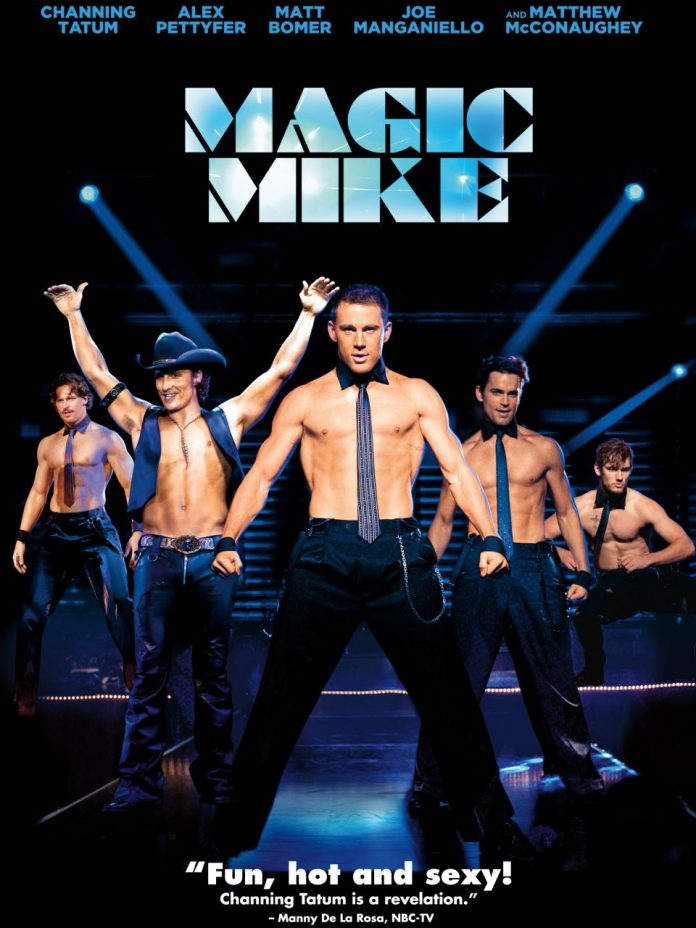
Sex work is also something that men do. (Image courtesy of Warner Bros.)

Sex work has been featured openly in the media since at least the 1950s, but we haven’t necessarily gotten better at portraying it in the last seventy or so years. Some shows and movies still feed into negative stereotypes and only portray a very small sliver of what sex work is. Thankfully, we’re slowly starting to see better and better portrayals of sex work and sex workers in the cinema and on TV.

Working Girls (1986)

(Image courtesy of Miramax)

If you an example of how to portray sex workers in a positive way in media, look no further than Working Girls. Sex workers, just as other characters, deserve rich, detailed lives with backstories, wants, desires, dreams, etc. If we aren’t giving sex workers rich backstories, then they become objects of pleasure, instead of humans. In Working Girls, characters are seen doing homework, sleeping in, doing laundry, riding their bikes, having conversations — things real humans and real women do.

Portrays sex work as: something real humans do.


The Immigrant (2013)

(Image courtesy of the Weinstein Company)

This movie portrays a Polish immigrant (played by Marion Cotillard) who comes to live in New York City and quickly realizes she has limited options to support herself. She is soon under the control of a pimp, and has no means to escape him or her new lifestyle. Sex work is not viewed as a choice or a real career, but instead as a last-ditch effort involving abuse and cruelty that she regularly endures. In reality, unfortunately, this is what some sex workers endure, and it is important to shed light on situations such as this so people know it occurs. On the other hand, all aspects and all situations involved in sex work need to be and deserve to be portrayed accurately in our media.

Portrays sex work as: exploitive, a last ditch effort for desperate people.

Burlesque (2010)
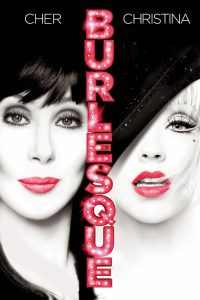
(Image courtesy of Screen Gems)

In many movies about strippers and sugar babies, you’ll see a similar arc: a sweet, young girl trying to make it in the world, pay rent, pay for school, etc. who takes up stripping or being a sugar baby, eventually finding a man who “saves” her. This is done either financially or through a romantic relationship. This arc is seen in Marilyn Monroe’s “How to Marry a Millionaire” (1953) and the classic “Pretty Woman” (1990). It glosses over any difficulties or conflict resulting from sex work, and portrays the woman as Barbie doll arm candy. Repeat after me: not all sugar babies are college students trying to make ends meet. Not all strippers are young Western gals new to the big city. Are some? Yeah, and it’s great to see them represented! But are some not? Of course, and we need more media about sex work to accurately portray all sides of the profession, instead of just ones that play into stereotypes and show the really good and the really bad.

Portrays sex workers as: exclusively young girls trying to make ends meet and be saved by a man.

Deadwood (2004) / Game of Thrones (2011)

I decided to group these two together because one of them portrays sex workers well, and the other does not. Take a moment to make some guesses, taking into consideration all that has been said in this article thus far.

     Deadwood breaks away from the “hooker with a heart of gold” arc, and fleshes out their sex workers with storylines, interests, and hobbies beside sex work, as well as struggles and successes. Game of Thrones, meanwhile, shows sex workers as flat, plastic characters who are eventually killed by someone after having sex with them. No one seems to bat an eye when fan-favourite characters brutally beat and kill sex workers. If you hadn’t already guessed, Game of Thrones does an unsatisfactory job at portraying sex workers.

Portrays sex workers as: fleshed out and interesting vs. flat and dead.


Breakfast at Tiffany’s (1961)
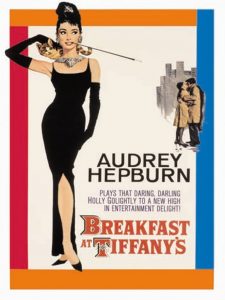
(Image courtesy of Paramount Pictures)

“What?? I don’t remember any sex work in this movie?” You might not remember it because what Holly Golightly (played by Audrey Hepburn) does for work is never explicitly said or shown. A lot is left to the imagination, with references to getting “$50 for the powder room.” In a 1968 Playboy interview, Truman Capote, the original author of the novella-turned-movie, danced around calling Holly a call girl and instead used the term “authentic American geisha.” Holly and the entire movie managed to avoid the stigma and shame that is often associated with sex work, and let audiences see Holly as simply beautiful, classy, and youthful. It’s great that Holly is portrayed in this way, but one must wonder why it seems to be suggested that respect and sex work are shown as mutually exclusive.

Portrays sex work: as vague, hidden.

Riverdale (2017)

(Image courtesy of Warner Bros.)

(If you aren’t yet caught up with Riverdale, you may want to skip this section.) In the most recent season of the Netflix teen drama, not one, but two sex workers have been subtly introduced. First Cheryl’s mother, Mrs. Blossom, has turned to sex work to pay for the lavish lifestyle that her and Cheryl had been enjoying in previous seasons. She entertains gentleman callers in a red silk robe in the mansion, while her daughter, disgusted, begs her to stop. This portrayal is both good and bad. Mrs. Blossom is portrayed as a classy woman at all times, discussing how she enjoys the attention of gentleman callers. In some scenes, she is happy, almost glowing. It is also interesting that she is an older woman doing sex work — usually TV tends to shy away from the sexuality of moms and most older women. The negative side of this portrayal is that sex work is shown as a last-ditch, save-the-house effort, which isn’t always the case.

     Next, we have Betty’s estranged brother, Chic. When Betty and her mother ask him what he does, he scoffs and says “fantasy fulfillment!” so quickly that you might have missed it. He also mentions that he has a “client” on the way. At first, I was excited to see where the show would take this new character, but it quickly goes downhill. Later in the episode, Chic is attacked and stabbed in his apartment, further perpetuating the idea that sex work gets you “mixed up with the wrong people.” He watches Betty sleep later that night, and he seems menacing, unhinged, and crazy.

Portrays sex workers as: classy, older women in mansions, but also unhinged, unhappy brothers in sketchy apartments.

Documentaries/crime shows (CSI, Law & Order, etc.)

(Image courtesy of NBC)

A large amount of the screen time portraying sex workers shows them as victims or perpetrators of a crime. Law & Order, CSI, and multiple documentaries, such as The Craigslist Killer, show sex workers as victims of murder. Monster, a 2003 documentary, for example, introduces serial killer and sex worker, Aileen Wuornos, a mentally unstable woman who murdered and robbed multiple clients. On the flip side, documentaries like Hot Girls Wanted (2015), show young people leaving their families to live and work in a makeshift brothel/home. The portrayal of sex workers is almost parody, making a joke at their expense such as when incredibly young, foolish girls explain to their tearful moms why they don’t wear condoms, saying, “He didn’t actually cum in me, it just looks that way for the camera!” The reason this is problematic is not because situations like this never happen, but because these shows and documentaries only portray a tiny sliver of what sex work is like, leading the audience to stereotypes and misinterpretations about the profession.

Portrays sex workers as: seedy, mixed up with the wrong crowd, worrisomely inexperienced, something to make fun of.

Hung (2009) / Magic Mike (2012)
This series and this movie both deserve a shout-out for portraying men doing sex work. Men are sex workers, too!

Portrays sex work as: something men do, too.

A crash course on pronouns

0
Image courtesy of The Avalon Post.

In preschool you were probably taught about how there are boys and girls and . . . well, that’s usually all you get. Broadening our understanding of identity, gender, and sexuality is just as much a part of growing up and bettering our understanding of the world and the people around us as discovering that Santa isn’t real. The thing is, you rarely get a formal education on the matter. If you need some help with gender pronouns, fear not! Here’s a crash course on them, featuring some commonly asked questions.


Q:  What is a pronoun?

A:  A pronoun is a word that functions on its own as a noun and refers to somebody else. The most common pronouns are he, she, and they. Some less common ones include ze/zie, ve, xe, and per.

So while we tend to think of personal pronouns as he/him/his or she/her/hers, there are many more. 


Q: Why are pronouns so important?

A:  Aside from the fact that we use pronouns in everyday conversations, pronouns are often gendered and so they tell us something about somebody’s identity. Being misgendered can make anyone feel disrespected, invalidated, dismissed, and/or dysphoric; trans and genderqueer folks have an especially long history of misgendering being used to oppress and disrespect. Trans Student Educational Resources highlights that ‘preferred pronouns’ aren’t actually preferred at all. They are simply pronouns that are not optional and to which there is no alternative if you want to use the right language.

Gender pronouns are crucial for the validation of a person’s identity. It takes barely any effort on your part to call someone by their appropriate pronouns, but it will make them feel like a million bucks.


Q: So how do I tell what pronoun a person uses?

A: You can’t tell what pronoun a person uses just by looking at them. Sex, gender, and sexuality are separate parts of being a human. Since you can’t be in another person’s shoes, you have no way or right to police their gender identity or its validity.

I identify as genderqueer. This means that I don’t identify as being solely male or female, but more of a mix of the two. Genderqueer people can also identify as both male and female or neither male nor female. Usually, the gender-neutral pronoun they is used to refer to genderqueer people, but personally, I still use she.

This doesn’t mean I am invalidating myself or that I identify with being a female more, I just don’t really care what someone uses to refer to me. But there are definitely people who have specific preferred pronouns that represent their identity best, and that has to be respected. Long story short? Ask.


Q: How do you go about asking someone for their pronoun(s) while still being polite?

A: I asked the lovely folks at Out On Campus for advice on how to approach someone and they suggest feeling out the situation.

Some people are perfectly fine with you politely asking, “Is it OK if I ask you your preferred pronouns?” while others might feel singled out, so make sure to ask if it’s okay to ask.

You can help someone feel safer while disclosing their pronouns by adding “Hi, I’m ___ and I use __/__ pronouns” when introducing yourself.

In a group setting, you can make asking for pronouns an optional part of the icebreaker/introduction. This way, no one is singled out.


Q: What are some effective ways to remember pronouns?

A: Personally, I remember a person’s pronouns by associating it with their face. Thus, when I am talking about them, I remember their pronoun by what they look like.

The Out On Campus staff finds that writing it down somewhere safe (like your cell phone) is an effective way of remembering. You can refer to your notes if you do forget.

Lastly, if you’re racking your brain trying to remember but come up short, just call the person by their name, because a pronoun is just a replacement for it anyways. The important thing is to be mindful when you’re speaking to someone. You’re not referring to someone by their preferred pronoun as a chore, but because you respect them as a human being.


Q: What do I do if I misgender someone?

A: The Out on Campus staff assure us not to panic, it happens every now and then. Simply correct yourself, and try not to misgender them again. An example of this would be “Sam and I went to Guadalupe and I went with her — sorry, them — to get tacos.”

If someone corrects you themselves, make sure to take note so it doesn’t happen again. Misgendering a few times while you’re still getting used to a person’s new pronouns is quite alright, but if it’s several months down the line and you’re still constantly misgendering them, then it may seem like you don’t care or that you feel as if the person isn’t worth shifting your language for or worth respecting.

DO NOT, under any circumstances, complain about how hard it is for you to remember a person’s preferred pronouns. Sure, you may have a hard time remembering to use the correct pronoun, but gender diverse people have a hard time just living their daily life. Being addressed correctly does a lot to help them feel more valid and respected.


I hope that this crash course was informative and has helped you be a little more aware of the gender diverse people around you. Remember that by using someone’s pronouns, you acknowledge their gender identity and are actively doing your part in respecting them.

Bisexual people aren’t confused, thanks

0

We’re familiar with the acronym LGBTQIA, which stands for Lesbian, Gay, Bisexual, Transgender, Queer/Questioning, Intersex, Asexual. As we can also see, B for Bisexual is the third letter in the acronym. If bisexual identifying people are such a big part of the LGBTQIA community, why are they being told they don’t matter?

A survey conducted in January of 2017 and published in the The New York Times reported that 7% of millennials identify as being gay, lesbian, bisexual, or transgender. Yet, bisexual people are constantly being undermined. We’re either being lectured on how we’re just confused, and that we’ll find the right guy/girl soon enough or being asked by Straight Boys™ if we want a threesome.

Bisexual people are basically expected to stay single forever, because as soon as we get together with anyone, we’re instantly put in to a box. If a person starts a heterosexual relationship, bystanders assume they’ve figured their “confusion” out and are “straight again.” If a homosexual relationship commences, they’re gay/lesbian.

Gay & Lesbian Alliance Against Defamation mentioned that when two people get into a relationship, they’re made to feel as if their sexual orientation no longer matters. Halsey also slammed this misconception with a Tweet reading “So if I’m dating a guy I’m straight, and if I date a woman, I’m a lesbian. The only way to be a #True bisexual is to date 2 people at once.”

Currently, I’m in a relationship with a man, but that doesn’t nullify the possibility that I might date a woman in the future. I mean, the whole premise of bisexuality is bi — as in, two, as in, is attracted to both women and men. (Of course, bisexual people can be attracted to people who identify outside the binary as well.)

Bisexuality is not a phase. It hurts when people assume that bisexuals are either experimenting or confused, and that we’ll eventually settle on being gay/lesbian or straight. An article published in i-D by Vice outlines the prejudice involved with calling bisexuality a phase. Many lesbian and gay people don’t take us seriously because we are able to experiment in heterosexual relationships. Thus, we’re not queer enough to be part of the LGBTQIA community.

Many gay and lesbian-identifying people also remind bisexuals that we can be straight passing, which they see as a privilege. By being able to fly under the radar, we are supposedly subject to less bullying and harassment from homophobes. This may be true, but as the i-D article points out, being able to pass for a straight person isn’t a clear-cut privilege, as it leads to more invisibility and less inclusivity from the LGBTQIA community.

There also plenty of Straight Boys™ in society — y’know, the kind who use triggered as a comeback — who thinks the world revolves around them. They make your bisexuality invalid by being a creep. From experience, when I came out to one of them, the first thing he said wasn’t “oh, congratulations!” or “that’s cool!” but “so, are you down for a threesome?”

Sure, there are plenty of bisexual people out there who love threesomes, and are maybe living with more than one partner. But many of us are monogamous and would prefer having sex with one person in a committed relationship. My sexuality isn’t something for you to fulfill your wildest fantasies with.

To summarize: bisexuality is not a phase, nor is it because we want to experiment with the same/opposite gender. Once we do end up in a committed relationship with another person, we still identify as bisexual. We do not magically convert to being gay/lesbian or straight. Lastly, please, for everyone’s sake, don’t be a Straight Boy™ and ask if we “wanna have a threesome.” It doesn’t do you any favours.

If you’ve read to the bottom of this piece on myths surround bisexuality and would like to know more about this or read up on other disproved myths, you can visit https://bisexual.org/ and do some exploring.

Meet Paola Quirós, new co-ordinator of the Women’s Centre

1
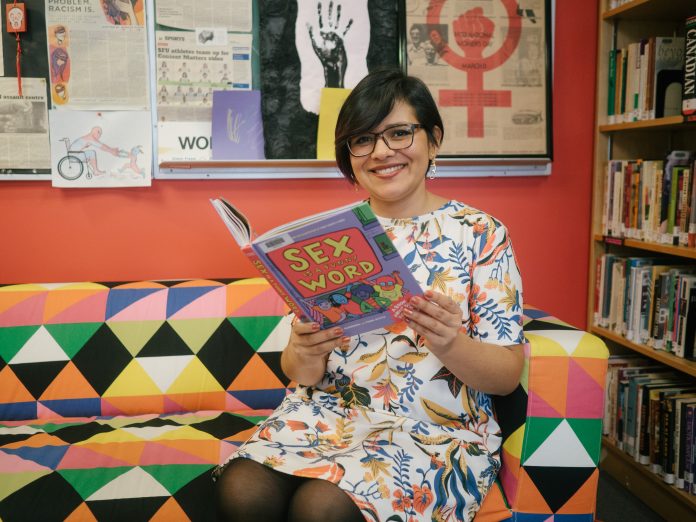
Paola Quirós, Women's Centre coordinator. Photo credit Chris Ho.

Fast Facts on Paola Quirós

  • Name: Paola Quirós (pronounced: p ah-OH-l ah)
  • Preferred pronouns: she/her
  • Position: Co-ordinator of the SFSS Women’s Centre since November 2017
  • Education: BA in Social Communication and Journalism from University of La Sabana in Colombia and a certificate in International Development from UBC
  • Work experience: Front-line worker in non-profit organizations supporting women and vulnerable populations (such as recent immigrants), member of the City of Vancouver’s Women’s Advisory Committee, co-producer of Suena a Revolución, a podcast that showcases Latin American and Caribbean artivists (activist and artist), and assisting callers who contact the VictimLink, Youth Against Violence, and the drug and alcohol phone lines.
  • Hobbies: Creating art, writing, and discovering new independent female artists
  • Fun fact: Although Quirós comes from Colombia, a country famous for coffee, she doesn’t like coffee at all.

On a cold winter afternoon on the Burnaby campus, I am happy to be warm inside of the Simon Fraser Student Society Women’s Centre, located in the Rotunda between the Lorne Davies Complex and the Maggie Benston Centre. As snow spirals downwards outside, the new coordinator of the space, Paola Quirós, shows me around.

We begin in the All Genders Resource Area, hosting a study space, a colourful geometric-patterned couch, over five thousand woman-centric books, and many resources including crisis-line numbers, pamphlets, condoms, and pregnancy tests. Behind a closed door, the lights have been dimmed, as students are curled up on the couches, napping. A bin of freshly-cleaned blankets and multiple comfy couches fill the space, as well as a fully-stocked kitchen, including a fridge and a microwave. More safe-sex supplies and resources, as well as snacks, line the counters. This is the 24/7 Lounge Area, open to all self-identified women, including trans and intersex women. There is a strict no gender policing policy in place, as well as a five-point mandate: the centre is pro-feminist, pro-choice, trans and intersex inclusive, sex positive, and anti-racist.

In an average day at the centre, Quirós works to keep the space organized and clean, ensures that the free resources are well-stocked, converses with SFU’s diverse student body, and supports anyone in distress, referring them to appropriate services. She also meets with various departments at SFU to collaboratively develop ways to continually support students.

When asked about something unexpected she has encountered at SFU so far, Quirós says: “To be honest, to have a women’s centre in a university. That’s big, and sometimes we don’t see it as that . . . Not all students in Canada [or] around the world will have the privilege to access a centre like this . . . SFU should be proud.” In Quirós’ home country of Colombia, a women’s centre in a university was unheard of. Now, she sees creating a safe, cozy, women-centric space with so many relevant resources as an integral part of supporting students.

An obstacle that she faces daily —which Quirós assures me is actually more of an opportunity, since it will not stop her — is trying to spread the word to students that the centre exists and is overflowing with resources for them. Quirós is passionate about making a positive impact on the wellness of self-identifying women, and all SFU students. She says, “I know that I may not be able to create a big impact, but I know that just by providing a single contact information, or just by listening to the student, by acknowledging what is happening, that is creating a difference.” A bright smile spreads across her face as she describes how much she enjoys interacting with the students she meets, her favourite part of the job.

Her work doesn’t end there, as Quirós has plans for wide-spread sex-positive education within and beyond the doors of the Centre. She believes that sexual education courses at SFU providing “information on sexual activity, and sexual inactivity that promotes pleasure, safety and informed choices across all genders, orientations, and expression” would be a useful resource for students. She hopes to bring sex-education workshops to the Women’s Centre, to build onto the work of SFU’s Health and Counselling Services’ Health Peers.

“I know that many secondary schools offer that training, but I think that we need to continue that line of work. The information does not stop when you move to university,” Quirós says.

Something else she’s looking forwards to? “Centring the voices of Indigenous and racialized self-identifying women at the Women’s Centre, and other minorities who are seldom heard,” she says with a smile. For Quirós, living far from home has helped her acknowledge her mestiza (European and Indigenous) roots and the importance of her identity.

The interview ends with this final message from Quirós to the student body: “Be proactive and check all the resources available at your university for you. Sometimes because we don’t know, we don’t access services . . . It will impact [your] wellness, and that will impact [your] academic life.” And, Quirós adds, “It’s your right.”

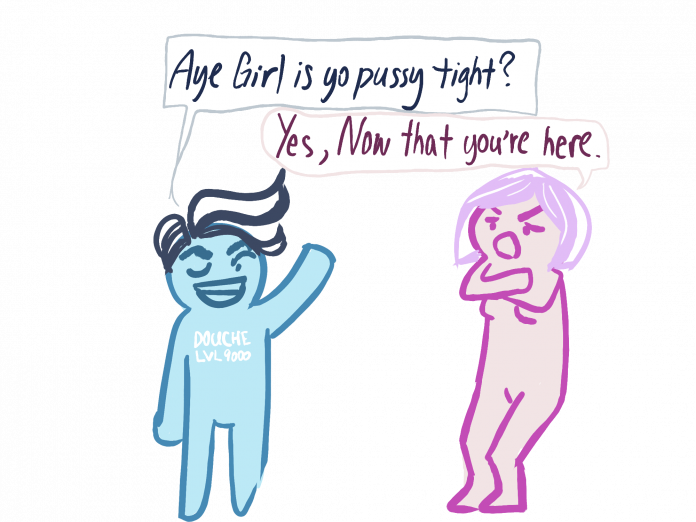
A short biology lesson for dumb idiots who ask “is your pussy tight?”

0
Illustrations by Emma Wu

With Google searches such as “my girlfriend feels loose is she cheating” and “how to make your vag tighter with vinegar,” I feel that it is absolutely necessary that I make this public announcement for all of you whom have been so obviously failed by the sexual education you received in high school (which forced you to look at photos of severely infected genitals without any other context and for some twisted reason that was considered proper sexual education).

I get it — all genitals confuse you. They’re weird, deformed, extroverted, cavernous, and filled with sexual pus. It’s all disgusting . . . but this is no reason for you to be an uninformed fuckface. Seriously, you’ve had access to the Internet since you were five years old — you’re a stupid over-privileged millennial just like me. You’ve been looking up “big bobs” and “vagima” since the days you had to secretly use the computer in your parents’ room — whenever your mom was on the phone with her sister or your dad was on the couch having a peaceful, fart-filled nap — so why the fuck couldn’t you look up something useful about vaginas for once? You probably do a Google search for vaginas on the daily (and have been doing so for 20 years straight), yet you never thought to properly inform yourself about the beautiful anomaly you’re constantly staring at?? I get that the closest you’ve been to a vagina is when you watch porn and have the screen tilted back just so far that you can shamefully see yourself in the reflection on the screen, but that is no reason for you to go around stroking your undercooked hot dog while spreading your ignorance and asking girls if their “pussies are tight.”

Let me answer for all the vaginas in the world: YES! Our pussies are as tight as the emo jeans that belong to all sad, misguided 16-year-olds. Our pussies are as tight as your mother’s lips that one time she found a crusty sock and a photo of that one female cousin you’re so suspiciously friendly to. Our pussies are as tight as our fists, which we use to punch ourselves in the faces because we are seeking relief from the wild, animalistic stupidity of your question. Our pussies are so tight because a “tight pussy” is a vagina which is not in a state of arousal. See, the vagina has muscles. The muscles are elastic, and are capable of expanding and contracting. Even after childbirth, when a literal freaking human being exits the vagina, the vagina goes back to its regular size after approximately 6 to 12 months. Do you really think your noodle-ass dick has shit to say to a vagina after a baby’s entire mammoth-sized cranium couldn’t do permanent damage to it? Really?

And it’s not like vaginas can’t loosen over time. As you age, it all goes to shit. We all know that. And multiple babies can definitely cause a damn ruckus down there, but again, your dick isn’t even close to being equivalent to the force and strain of multiple living creatures passing through the vaginal canal. So, in conclusion, never ask anyone with a vagina how tight their pussy is unless you want to know exactly how unaroused you make them — you should already know the answer to that.

Community program to launch for LGBTQ+ refugees

0
DIVERSEcity is a not-for-profit playing a leading role in helping refugees settle in Surrey and Canada. (Photo credits: Google)

Two SFU professors are teaming up with DIVERSEcity, a not-for-profit agency located in Surrey dedicated to offering services to the city’s multicultural population, to create more inclusive spaces for refugees identifying as LGBTQ+.

DIVERSEcity has been playing a leading role in helping refugees get settled in Surrey and Canada. Dr. Sharalyn Jordan, an assistant professor in SFU’s faculty of education, and associate professor Jen Marchbank have been providing program development and evaluation consultation for the non-profit’s new pilot program aimed at providing a safe space for sexual or gender diverse newcomers.

The program originated as a response to findings in a report conducted by students in SFU’s department of gender, sexuality, and women’s studies in collaboration with DIVERSEcity. The report found that resources are non-existent for LGBTQ+ refugees in Surrey.

“Jen [Marchbank and her students] did an environmental scan and provided empirical evidence that, although Surrey is the major arrival city for all refugees in BC — about half end up settling in Surrey — and LGBTQ newcomers are a significant group in that settling, there were absolute no services [for the LGBTQ+ newcomers],” commented Jordan.

Services offered for LGBTQ+ refugees in Vancouver, such as the Rainbow Refugee community group can be difficult for refugees settled in Surrey to access due to transportation difficulties such as taking transit or taking transit at night.

“Where do you go if you are both queer and Muslim to pray?” – Dr. Sharalyn Jordan, assistant professor

The new program currently under development is expected to launch around late February. Services that the program will be providing for sexual and gender diverse newcomers include information on mental health services, health care, HIV care, guest speakers on the topic of engaging in a job search, and handling interview questions, in addition to simply being a place of connection and a way refugees can get involved in the community.

The program hopes to bridge the gap between LGBTQ+ newcomers and the resources available to them in their new community, which may not always be well-known.

“An example that Jen and I talked about is, where do you go if you are both queer and Muslim to pray?” said Jordan. “There is a gender equity prayer group, but it’s not well-known. Another example is what kind of services are available for single queer parents in Farsi?”

“It’s important to recognize that even though in many ways Canada has legal protections to help people have human rights and equality, the reality is that Canadian cities are often a very confusing mix of open acceptance and celebration of rights to the realities or violence and hate and stigma particularly for people who are gender fluid or gender diverse and racialized.”

That being said, Jordan expressed optimism for Canada’s growing culture of inclusivity and sensitivity towards topics of gender and sexual diversity. As an example, she pointed to Canada’s restructuring of guidelines relating to gender and sexually diverse refugee claimants.

In previous practices, a great weight was placed on LGBTQ+ refugees’ responses to invasive questions on their sexual lives and sexual practices in order to prove themselves to be gender or sexually diverse. “People were denied refugee status because they weren’t credible as gay because they didn’t recognize the rainbow flag,” said Jordan.

In May 2017, however, the immigration and refugee board launched a new set of guidelines specifically around sexual orientation, gender identity, and sexual expression as it relates to refugee claimants. Jordan was involved in the consultation for those guidelines, and in the training of workers who would evaluate the refugee claimants based on these new guidelines.

“What we are now seeing is a far more respectful and sensitive approach,” she said. “One that is trauma-informed, one that understands that sexual and gender identity varies from culture to culture.”

Canada is moving towards a general understanding, Jordan assessed, that “there is no one standard on how to be LGBTQ+.”

With files from CBC News.

SFU becomes first university to offer asexuality studies

0

Simon Fraser University was the first institution in the world to offer a full-length undergraduate course in asexuality studies. According to the Asexual Visibility and Education Network, an online asexual community, an asexual person is defined as someone who does not experience sexual attraction to another individual. However, asexuality should be regarded as an umbrella term because people with low sexual desires could also fall under this category.

       In fall 2017, the department of gender, sexuality, and women’s studies offered a class titled “Critical Nonsexualites” that focused on the topic of asexuality. According to Dr. Ela Przybylo, Ruth Wynn Woodward postdoctoral fellow and the course instructor, asexual people make up approximately one percent of the population — so there is a good chance that you or someone you know is asexual. More than that, however, it is important to educate ourselves about asexuality and not assume that all people desire sex or are attracted sexually to others, she added.

       Przybylo explained that the society we live in influences us to practice compulsory sexuality, which is the idea that romantic relationships only feel legitimate when the individuals engage in sexual activities or are sexually attracted to others. As a result, “learning about asexuality [is] important because it helps us think critically about compulsory sexuality and how it is that sex and sexual attraction have become so central to how we understand ourselves and our relationships with others,” said Przybylo.

       “The core questions [in the course] were really around what is compulsory sexuality, how is it experienced by various people, and how can we take steps towards both including asexuality in feminist and queer spaces and thinking about compulsory sexuality critically,” stated Przybylo. “I want SFU students to think critically about why it is that we assume sex and sexual identity are normal and natural.”

       Przybylo also noted that students in the course were invited to think about other identities and how they interact with asexuality. By doing so, the students explored how certain ways of being are privileged and rewarded over others. “A focus on asexuality helps us look critically at how so-called ‘normal’ ranges of sexual desire have serious effects for us all and especially for people who are deemed as having ‘excessive’ or ‘lacking” desire,’ said Przybylo.

The Peak asked Przybylo if the course will be offered again in the future but she said that “this will likely not happen at SFU.”

       Although a course that focuses on the topic of asexuality won’t be offered again in the near future, Przybylo shared some of the exciting projects she is currently working on. At the moment, she is revising her book Asexual Erotics: Intimate Readings of Compulsory Sexuality in which she explores asexual forms relating across feminist, lesbian, and queer texts. She is also collaborating on several other projects on topics such as vegan masculinity on Instagram and critical disability studies approaches to menstrual pain.

       In addition, she is collaborating with her research assistant Shahar Shapira on developing the course “Intersectional Feminist Journal Praxis” which will be offered in fall 2018. According to Przybylo, “This is a project-based course in which students will be asked to collectively develop — from start to finish — an inaugural issue of an undergraduate journal that will be launched via the Open Journal Systems Software. The goal of the course is to mobilize students to partake actively, at all levels, in feminist publishing and feminist making while learning how to work collaboratively.”

Hypersexualizing women of colour in media builds harmful expectations

0

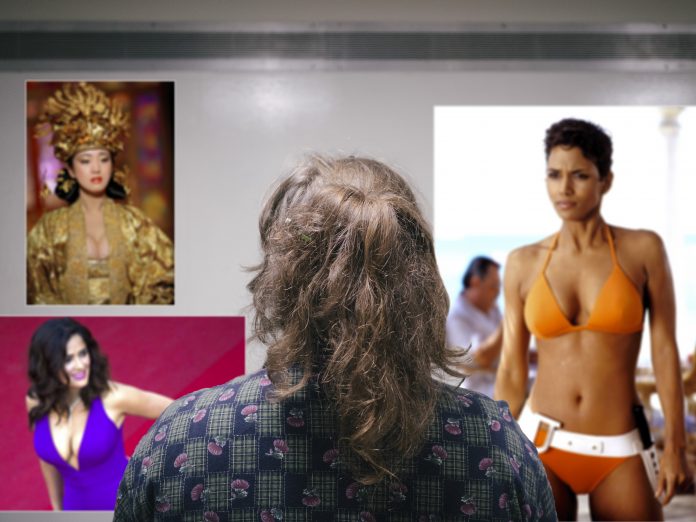
While any person can be sexualized, it is fair to say that women and femme bodies are most often the subjects of this gaze. Historically, women in media have been portrayed and understood as sexual beings, often there to please men. Many women have not chosen this for themselves; in fact, it’s literally been thrust upon them. Yet in order to be present within media, these are often the types of roles they have to play.

If you are a woman of colour, this state of affairs is even more challenging. The sexualization of “woman” meets the hypersexualization of “ethnic background,” leading to gross mischaracterizations and exaggerations of their bodies and their attitudes towards sex.

If you were to try and understand WOC purely based on media, you would probably “learn” the following. Black bodies are promiscuous and sexually dominant, with deeply desirable, exaggeratedly curved bodies. Latina women are fiery and hot-blooded, constantly thirsting for sex. Asian women are either docile and submissive, or secretly super kinky and dirty. Indigenous women are exoticised and reduced to sexy Halloween costumes. If you are a multiracial woman, you are some exotic cocktail of ethnicity, wrapped in a lightskin package that is understood as the end to all racism.

All of these stereotypes are rooted in ideas created by the dominant culture to justify the mistreatment of women. These stereotypes are then perpetrated and disseminated within the context of media representations of these women.

The Blaxploitation era of film in the 1970s was steeped in characterizations of strong black women as prostitutes or users of sex as a weapon. Sofia Vergara’s character on Modern Family is a super sexy and sassy Latina woman with huge breasts, a hot temper, and a hard-to-understand accent. In Rush Hour 2, one of the biggest fight scenes in the movie takes place in a Hong Kong massage parlour — yet not before Chris Tucker’s character ogles all of the silent girls as they attempt to draw his attention in bikinis and lingerie. (A note: Tucker’s character is also hypersexualized in this scene, as it is meant to reflect his insatiable sexual appetite.)

Yet this often transcends media into real life and causes real problems. As an example, many WOC face uncomfortable interactions based on their race, resulting in deeply painful experiences. On a personal note, when I am approached by men (which in and of itself is very rare) many often begin with comments like: “So is it true that black women have big asses?” or “Yo, what are you?” Upon learning that I am of mixed ethnicity, the conversation immediately turns to how hot mixed girls are.

Yes, I’m fly and finer than you’ll ever be. That doesn’t warrant any kind of mistreatment or stereotyping of how I think about sex. I don’t have a super curvy figure and I’m not “an easy lay.” Even if I did fit that characterization, it still does not mean that I am there to be an object of sexual gratification.

If a woman choses to present her image as sexy, she should be allowed to do it with no issues. It is her body and her choice. However, systemic racism and sexism often do this terrible dance of oppression and women of colour are caught in the middle with the media as it’s biggest supporter.

That said, I’m grateful for shows like Insecure, Jane the Virgin, Grown-ish, and The Mindy Project for presenting women of colour in stories and narratives that allow them to be fully realized women who are in control of their sexuality while simultaneously focusing on not perpetuating stereotypes. While these kinds of shows aren’t always perfect, they do provide a balance to the hypersexualized narratives that we have come to accept as normal.

Things you wish someone told you about sex

0

You should absolutely be 100% blunt with your partner when it comes to sexual health

If you are currently hooking up with someone or plan to see someone a lot just for sex in the near future, the first question out of your mouths shouldn’t be “Your place or mine?” but “When was the last time you got tested?”

If you and a potential partner are hooking up, both of you have got to calm down, keep it in your pants, and put the ‘ho’ in honesty. While bringing up sexual history may break the mood or slow things down, letting your partner know what they may have in store for them medically is the bare minimum. STIs are a common safety hazard — and addressing the topic is common courtesy.

Your sexual history isn’t the only thing you should be honest about! You have to be honest with your partner in other ways, namely . . .

Don’t be afraid to be upfront and full-frontal with your kinks — as long as you’re respectful

Of course, everyone’s main kinks should be consent and mutual respect. More to the point, as university students, we are still barely past the thicket of adolescence and some are still discovering parts of their body. Why shouldn’t we discover more about what we like?

Telling your partner what you like and what you don’t like not only helps you both set boundaries, but also helps communicate to them what could make them be a better partner in bed. When it comes to sex, kinks (within reason) are 100% OK, and great when reciprocated! But if kinks are not shared between you and your boo, you nod your head, respect their boundaries because at the end of the day . . .

Their body, their rules

Healthy relationships are based on mutual respect, sexual or not. Treating your sexual partner with basic human decency is the bare minimum of respect you need to meet. Listening to both what your partner has to say and being receptive to their body language and nonverbal cues is very important, especially with sex, which puts a person in an otherwise very vulnerable position.

Communication, you can see, is a very necessary and recurring theme with sex. Being sure that your partner is OK with what you’re doing with them/to them is important. It’s also worth it to say that unless your partner is doing something that makes you uncomfortable or harms you, your opinions on their body are probably unwarranted and unwanted.

While we’re on the topic of potential conflicts that may come up in sexual relationships, here’s a reminder that . . .

It’s normal to get STIs (Sexually Transmitted Infections)!

According to HealthLinkBC, STIs are some of the most common infections had around the world. If you believe you begin exhibiting symptoms, stop sexual activity and go to your nearest health clinic for a check up. Be sure to breathe and remember that STIs are nothing to be ashamed of — they are common, and many are treatable/curable.

If you currently have, or plan to have, an active sex life, at some point you will probably be the writer/receiver of the message: “I just found out I’m positive for (this STI), you should go get tested.” Upon finding out about the news, the best course of action is to research the STI in question, and remain calm.

While it is justified if you feel upset or angry at your partner who (probably unknowingly/unintentionally) gave you an STI, remain calm and respectful. Be sure to ask questions so that you can better understand how your health may have been affected, which leads us to our last lesson . . .

Be smart, sexy, and safe

Listen, while getting laid is great and will warrant a high five from me, doing the nasty itself is nasty in the sense that there’s a lot to risk. So the best way to keep yourself smart and safe while being sexually active? Educate yourself on sexual health (i.e. know anatomy, know what sex acts leave you at risk for which STIs, know the types of protection, etc.). By doing so, you become a more well-informed sexual partner.

With all these lessons, go out and hoe out to your heart’s content. Remember: be direct, be respectful, and be nice (or naughty, if that’s what you’re into.)

Opinions of the Hour

0

“Why Are We Ashamed to Call ‘Get Out’ and ‘The Shape of Water’ Horror Films?” – Jason Zinoman, The New York Times

Journalist for the The New York Times, Jason Zinoman, isn’t afraid to inform the general public that Jordan Peele’s Get Out and Guillermo del Toro’s The Shape of Water definitely count as horror films. In his article, he starts by addressing the resistance people have to the legitimacy of horror as a genre in film.

Zinoman refers to the two films as shining examples of the brilliance horror is capable of offering to film, as well as proof of the diverse nature horror has as a genre. In Zinoman’s eyes, with films like Peele’s and del Toro’s, 2017 was supposed to be the year horror gained legitimacy as a genre, rather than be dismissed as crude and mindless.

He offers many perceptive insights on the success of both films. However, he does fail to acknowledge the shortcomings of ‘modern horror’ itself. Both films stand as exceptional horror films, but they stand as exceptions among the genre. Zinoman does not acknowledge that some critics are correct to judge most recent horror films as horrific (in a bad way), given that modern horror films rely on action, over-the-top gore, and jump-scares in place of genuine unsettling and horrifying truths.

While I stand as an unabashed horror fan alongside Zinoman, his praise for the horror genre remains incomplete. The fact that some horror films are brilliant doesn’t change the fact that many others are not.

With that said, Zinoman does articulate the nuanced and complicated that inhabit horror films as well, citing classics from George Romero to Darren Aronofsky. What Zinoman could have argued further is the observant nature of horror films as a whole; they continually reflect the fear and anxiety that lie within the world’s bellies in accordance to their era, and that is why they can hold their stake as a respected genre.

Overall, Zinoman provides a keen analysis on horror’s deserved seat to other well-respected movie genres, with films like Get Out and The Shape of Water to pave such a way.