Home Blog Page 625

Album Reviews

0

Culture II by Migos

Atlanta rap trio Migos are an enigma. A three-piece trap act that translated a massively devoted street following into mainstream media and radio attention, evolving from a vital member of modern Atlanta mixtape culture into a world-renowned rap group that took the world by storm. Last year, Migos blew away all expectations with their album Culture, a concise project that, at only thirteen tracks, never overstayed its welcome and showcased everything Quavo, Offset, and Takeoff have to offer.

     With Culture II, however, Migos seem to have abandoned the things that made their last album one of 2017’s best. At 24 tracks and a runtime of nearly two hours, Migos’ latest album is bloated, repetitive, and simply less exciting than its predecessor. This isn’t to say Culture II doesn’t have its highlights: “Stir Fry,” “Made Men,” “Narcos,” and “Gang Gang” are among the group’s best work to date — and features from the likes of Gucci Mane, 2 Chainz, and Cardi B are stellar — but Culture II is nonetheless a serious misstep in an attempt to build off of Culture’s remarkable legacy. – NM

November by SiR
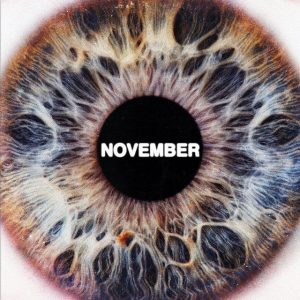
When California-based record label Top Dawg Entertainment added R&B singer SiR to their limited but impressive roster, many were surprised by the label’s choice to sign such an unknown artist. Over the past year, however, SiR has been slowly proving himself as someone worth watching. His last two EPs were an interesting development on his sound, but his full-length debut November is certainly his best work to date. It’s a smooth mix of silky soul and R&B that experiments with elements of trap on “I Know” and tinkling piano on “Something Foreign.” SiR’s delivery is at its most beautiful, however, on album highlights “D’Evils” and “Summer in November.”

     The short project is framed through a loose narrative of being onboard a spacecraft, hurtling through space towards an undisclosed destination lightyears away (a destination that, curiously, is never reached). Throughout the album, SiR interacts with the onboard computer, “K,” who checks in with the singer as he details his regrets about past relationships and anxieties of future ones, exploring struggles with forming connections and fighting with his own ego. – NM

All Melody by Nils Frahm

German composer and pianist Nils Frahm, acclaimed in the past for meticulously creating minimalist and expressive albums, crafts ethereal soundscapes in his new album All Melody. Frahm created this project while isolating himself in his personal Funkhaus studio. He takes us through this journey by exploring the voices that he can express on his synths, pianos, and drum machines, sonically guiding us through his experiences.

     Frahm also added vocals into his composition, something he hasn’t done before. This is shown in the tracks “The Whole Universe Wants to be Touched,” “A Place,” and “Momentum.” Frahm uses vocals as a new medium to delve into the sonic journey, furthering the soundstage in a powerful way.

     Tones of contemplation, minimalism, and excitement are prevalent in All Melody. Frahm stated that through isolating himself to make this album, he realized that “getting lost is beautiful”; and getting lost in this album is truly a beautiful experience. – SE

The House by Porches
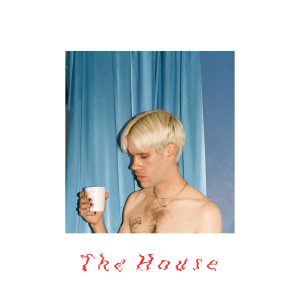
Porches, New York-based artist Aaron Maine’s project, returns with quite a left-field indie-pop album in The House. While Maine kept the underwater-themed songs and metaphors from his past release, Pool, he ditches the silky chorus/tremolo-driven guitars he previously used in favour of layered vocals and synth-driven instrumentals. Regardless of being quite different instrumentally, The House sounds like a natural deviation of Maine’s sound.

     Maine uses instrumentation to drive the lyrical content of his music. He conveys anxiety through the pulsating synth track “Find Me,” and keeps a steady arpeggiating beat to match the cadence of the poem being recited (in Norwegian!) in the track “Åkeren.”

     On the first listen, this album will be strange to those who are not familiar with Porches. Even if you don’t get the many references to his past release, Pool, Maine pulls you in with danceable instrumentals and relatable lyrical content. – SE

SFU hockey make up ground in playoff race with 6–2 win

0
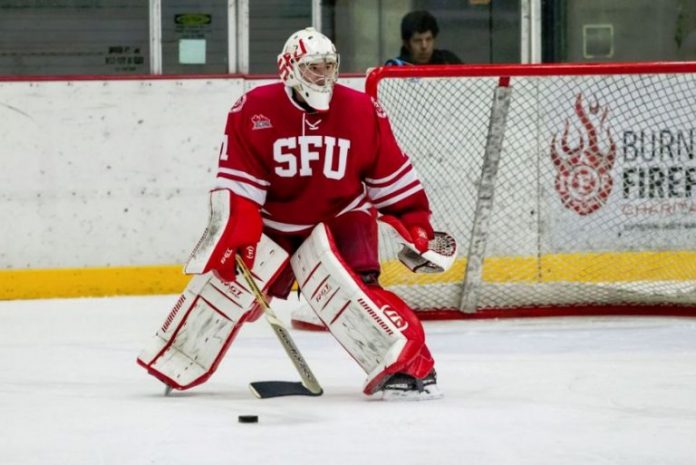
Lyndon Stanwood leads the league with 12 wins this season. (Photo courtesy of SFU hockey)

SFU hockey continued their outstanding second half of the season at Bill Copeland Sports Centre on Saturday night with a 6–2 win over Eastern Washington University (EWU). The win was the fourth time SFU has defeated EWU this season and they will look for the sweep of the season series two weekends from now when they hop on a bus for the classic Castlegar-Cheney road trip. The win was a solid team effort as the Clan stuck with their recent trend of consistent play to outmatch the struggling Eagles and cranked up the pressure on the second place Selkirk Saints. The offensive depth of the Clan was on full display in this one as seven players registered multi-point games.  Among these efforts was first-year player Nathan Washington’s first BC Intercollegiate Hockey League (BCIHL) goal that, along with an assist, also gave him the first multi-point game of his BCIHL career. There were numerous other strong performances in this game as Nicholas Holowko, Mac Colasimone, Spencer Unger, Robert Izsak, Brendan Lamont, and Eric Callegari all enjoyed two-point nights.

The only adversity the Clan faced in this game was early on as EWU got off to a flying start with two goals in the first period. SFU’s team defence wasn’t as sharp as the team would like it to be early in this one and this, along with having given up the first goal of the game multiple times recently, could be an area of the game SFU looks to improve going forward. The Clan would not allow this early adversity to obstruct their path to victory for long, though, as Lamont and Holowko would answer league-leading scorer Beau Walker’s 15th of the season with two quick ones to end the period and furnish SFU with a 3–2 lead heading into the second.

The second period saw Washington and Holowko score to provide the Clan with all the insurance they would need. Throughout the second, SFU established its dominance and made it clear that the Clan would not take the Eagles lightly despite their abysmal regular season record.

In the third, the SFU power play connected as Mathew Berry-Lamontagna potted his ninth goal of the year. His goal capped a night of solid team play as the Clan rode the 6–2 lead to victory. The three stars of the game, respectively, were Holowko, Washington, and Lamont as SFU won its second game in February and benefited from a solid performance in which all four lines contributed. When asked about the Clan building momentum for a playoff push, Washington emphasized a strong teamwork ethic and “everyone embracing their roles and maximizing what they can do with them.” This awareness of individual players’ roles within the team structure has been a foundational aspect of the balanced offensive attack SFU has enjoyed throughout most of the season. Washington also emphasized that the importance of upcoming games will only increase, as the significance of home ice advantage in the first round looms large over the final weeks of the season. He noted that throughout the season series thus far, “home ice has been a deciding factor between the Clan and Saints” and that the team must therefore “treat every game going forward like a playoff game” in order to give themselves the best possible chance to host the first round of playoffs.

The importance of the win versus Trinity Western last week for team confidence and, especially, playoff positioning was unquestionable as the Clan now sit just five points behind the second place Saints with a game in hand and only five games remaining in the regular season. However, with two big games against the Saints coming up this month, the Clan know that they control their own destiny as far as home ice advantage and a second place overall finish are concerned. Despite the importance of the two games against Selkirk coming up over the next two weeks, the Clan must avoid looking past the Vancouver Island University (VIU) Mariners who come into the Bill Copeland Sports Centre on Monday for a Family Day contest.


With yet another win in 2018, Stanwood added to his league-leading win total (12). Lyndon Stanwood made his 19th  start the season, his 15th in a row and only needed to play two periods and stop ten shots to secure the win as he was relieved by backup goaltender Ryan Sandrin to start the third period. Sandrin, playing in just his second game of the season, stopped all eight shots he faced including two nice glove saves with under a minute left in the game. The Clan has relied heavily on Stanwood as they fight for second place and home ice advantage in the first round of the playoffs and will likely continue to do so.

Overall, the Clan have continued their dominant second half of the 2018 season. Though not set in stone yet, the playoff picture is shaping up as SFU lines up to likely play Selkirk in the first round regardless of which team eventually clinches home ice advantage. Irrespective of the final shape of the playoff picture, it will undoubtedly be a challenging first round for the Clan. With the win over EWU, Simon Fraser moves to a 13–6–1 record in BCIHL regular season play.

As the team looks to peak come playoff time, they face off against VIU one last time before hosting Selkirk the following weekend. You can watch the Clan continue their playoff push on Family Day at Bill Copeland Sports Centre against the VIU Mariners.  Please note the unusual 4 p.m. start as the game has been scheduled to accommodate other family day festivities at the Bill Copeland Sports Centre.

Must-see events: Black History Month

0

Vancouver International Film Festival

VIFF will be offering a Black History Month three-ticket pass for $30 that will allow you to see any combination of the following films: Black Cop, Brown Girl Begins, Quest, or Tell Them We Are Rising. (More films were on offer as part of the bundle, but will not be shown after the time of publication.) Black Cop is one of the fastest-approaching screenings of their Black History Month coverage, taking place on February 19 at 6:30 p.m. at the Vancity Theatre. There will also be a screening of UK documentary Generation Revolution on February 17, also at the Vancity Theatre. For more information, visit VIFF’s website.

Lecture: The Congo Crisis

Hosted by The Voice of Ituri and the SFU African Students Association at SFU Vancouver’s Segal Centre (HCC 1410-1430) from 5–7:30 p.m. on February 19, Congolese journalist Luc Malembe will be giving a lecture on freedom of speech. As the event poster describes him “. . . Malembe has emerged as a prominent civil rights activist and journalist, even being imprisoned at different times for publicizing his political views.” For anyone interested in journalism, political science, or who just wants to broaden their understanding of the current state of affairs in the Democratic Republic of Congo, this lecture will be extremely informative. For more information visit the Facebook event page.

Black Panther movie night

Exactly what it sounds like. SFU Students of Caribbean and African Ancestry (SFU SOCA) is organizing an excursion to see the new Black Panther film. The movie night will take place on February 20 at Cineplex Metropolis at Metrotown for a 7:30 p.m. showing. Some advance tickets will be available through SFU SOCA at a reduced price of $10; all other tickets will be at regular price. More information regarding ticket sales can be found on their event page.

Facing Race: CBC Town Hall

Put on by CBC radio’s the Current at CBC Vancouver’s Studio One, this public forum will be hosted by Piya Chattopadhyay. This town hall will be focused on the topic of race within the Canadian health-care system, and is both free and open to all. You can register to attend on the CBC event page. It will take place on February 20, from 6:30–9:30 p.m. The town hall will also be available to watch live on Facebook, and will be broadcast on CBC Radio One on March 2. This is an excellent opportunity to be part of an important ongoing conversation in Canada.

Black History Month art exhibition

Curated by Rhoda Obineche, the Richmond Arts Centre will be hosting a Black History Month exhibition from February 17–March 2 in the upper rotunda, 7700 Minoru Gate. The event poster describes it as “an exploration of identity, culture, and self expression through photography, illustration, and paintings . . . [taking] us on an intimate journey from Canada through Ghana, [the] US, and Cuba.” The exhibition will be open Monday to Friday from 9 a.m.–9:30 p.m., and Saturday to Sunday from 10 a.m.–5 p.m. There will also be an opportunity to meet the artists on February 21 from 6–8 p.m. For more information contact [email protected].


Dogspotting at SFU

0
Image credit to Nathaniel Tok

Photographed by Nathaniel Tok

Commentary provided by Professional Dog Experts (a.k.a. The Peak Staff)


Name: Isis

Breed: Husky

Spotted: January 8

Janis McMath: NEVER stop this, Isis. 10/10.

Yuri Zhou: Huskies are my favourite dogs, especially with those eyes.

Natasha Tar: Husky + heterochromatic eyes = <3

Gabrielle McLaren: Appropriately named after a goddess.

Grace Rose: What a good frozen boof. *cues Let It Go*

Henry Tran: The hidden blue in your twinkling eyes, mellow and warm yellow, that’s you <3


Name: Maisie

Breed: Golden retriever

Spotted: January 10

Fun fact: Her nickname is ‘Mai’

Janis: She’s perfect, she’s beautiful, she looks like Linda Evangelista . . . she’s a model. Everything about her is perfect! 10/10.

Natasha: Aw. She looks like a happy doggo. I think I’ve seen her on campus before?

Gab: Photographs like she knows that she’s going to be the cutest one on this list.


Name: Storm

Breed: Lab retriever

Spotted: January 10

Fun fact: Storm eats anything

Janis: A perfect storm. 11/10.

Gab: Me as a dog, but cuter.

Yuri: *bursts out laughing* Look at his smile!!!! And where are his eyes?

Grace: Move over Kylie Jenner’s kid. This is the only Storm that matters.


Name: Lyan

Breed: German shepherd

Spotted: January 12

Janis: Lyan, I would be Lyan’ if I said you weren’t the most beautiful creature to grace the face of this planet. 13/10.

Gab: Such a good dog, he can’t even look at the camera because he’s so busy shepherding and being a friend.


Name: Butter

Breed: Australian shepherd

Spotted: January 15

Fun fact: Butter has lived at SFU her whole life (since 2005), and she likes the trails here because there are less people. She always sticks close to her owner because of shepherd behaviour traits.

Amneet Mann: Magnificent. This dog has its shit together better than I do. 10/10 fur also.

Natasha: I totally agree with Amneet. She’s a beauty.

Gab: There is nothing not to like about this dog, oh my God.

Yuri: She’s so cute, like a bear.

Grace: What a majestic doggo. I need her hair care routine.

Henry: Butter looks so elegant and sophisticated here, especially with her posture and gaze!


Name: Mocha

Breed: Toy poodle

Spotted: January 16

Natasha: I think I can relate to Mocha the most out of all these dogs. Looks slightly nervous. Awkwardly turning away from the camera.

Yuri: All poodles are really good.


Name: Dashu / 大叔

Breed: Maltese poodle

Spotted: January 17

Natasha: Such a stylish sweater for a stylish dog.

Gab: This dog is bilingual, there goes my heart.

Yuri: This dog’s name is either ‘uncle’ or ‘old uncle’ in Chinese.

Gab: EVEN BETTER!

Grace: He. Has. A. Sweater. *cries*

EnregistrerEnregistrer

EnregistrerEnregistrer

SFU professor provides free toolkit for detecting cancer-causing gas in household settings

0

Simon Fraser University’s Citizen Scientist project is providing free radon-testing kits to households in the Greater Vancouver area. These testing kits are capable of detecting radon, a harmful gas known to cause lung cancer in humans.

     Radon is an odorless and radioactive gas that is invisible to the naked eye — and like all radioactive elements, radon has a half-life. Radon gas decays and emits alpha particles, which is a form of radiation that can lead to adverse outcomes in the lungs.

     According to Dr. Anne-Marie Nicol, an associate professor in the faculty of health sciences, the alpha particles emitted by radon damage DNA in the human lungs when inhaled. “Radon is the second leading cause of lung cancer after smoking. In the USA, radon leads to more deaths than drunk driving every year,” said Nicol.

     Moreover, radon can enter buildings through cracks and openings in the floor and basement wells. “Where ventilation is poor or air changes are less frequent, radon levels can become elevated . . . and [this] can become dangerous,” explained Nicol.

     Since 2007, the Canadian federal government has urged Canadians to have their home tested for radon. However, according to Nicol, the reality is that many Canadians haven’t followed the federal government’s recommendation, which is very concerning.

     At the moment, the only accurate method to detect for the presence of radon in household settings is through radon-testing kits. In order to encourage the public to test their home for radon, Nicol has been distributing 200 free radon-testing kits to eligible homeowners, supported by SFU’s Community Engagement Fund. Once these testing kits are gone, there are a few other local vendors who sell these kits, including the BC Lung Association, said Nicol.

     Moreover, Nicol emphasized that these radon-testing kits are effective, non-toxic, user-friendly, and take approximately 91 days to complete. She also urges tenants to test for radon in their suite because rented suites located in the ground floors and basements of home tend to have the highest levels of radon.

     Currently, the Canadian government recommends that radon levels in household settings should not exceed 200 becquerels per cubic metre (Bq/m³), whereas the United States and World Health Organization’s recommended guidance levels are lower, at 150 Bq/m³ and 100 Bq/m³, respectively.

     In the event that a resident’s home is discovered to contain radon above the guideline level, they should contact a professional, said Nicol. “Decisions to remediate homes depend on what the rooms are used for. Basement rooms where people sleep or spend a lot of time are important places to fix.”

     Nicol also emphasized that residents living in North Vancouver, West Vancouver, as well as the Sea to Sky Corridor may have a higher probability of elevated levels of radon because of their geology. Radon is produced when uranium decays, so regions with higher levels of uranium also contain higher levels of radon.

     The Peak asked Nicol to share the reason why she is providing these radon-testing kits to the community and she said that in the interior region of Canada, there are regulations that require new homes to have a radon removal system partially built into a new home. However, in the Lower Mainland there is currently no regulation that requires that.

     “This study is trying to characterize the levels [of radon] in this region so we can better protect people [moving into] new homes . . . People who participate [in this study] are really helping us learn more about our region, and making local housing safer to everyone who lives in these house from then on,” she concluded.

BC moves to block Kinder Morgan pipeline expansion, provinces square off

0
BC government moves to block expansion until the environmental impact of a diluted bitumen spill can be assessed. (Photo Credits / Google)

British Columbia moved to block the Kinder Morgan Trans Mountain pipeline expansion through the announcement of its new plan to limit any diluted bitumen, or dilbit, from entering the province via the pipeline. The announcement prompted a domestic trade war — Alberta retaliated to BC’s announcement by suspending negotiations regarding Alberta buying BC’s electricity and by blocking BC wine imports.


Environmental concerns

Quoting the potential environmental and economic impacts, the province of BC recently announced new plans to restrict any new dilbit, originating from the petroleum deposits in Alberta’s oil sands, from entering BC. The minister of environment and climate change strategy, George Heyman, announced these plans on January 30, telling CBC News that “it’s clear from our perspective that there is a tremendous risk to our economy and our environment from a spill of diluted bitumen. British Columbians expect us to defend out coastline, our waterways in the interior of the province, and our economic and environmental interests overall.”

The restriction hinges on the province’s understanding of how a dilbit spill may be contained to minimize environmental damage. To this end, an independent panel launching in February has been commissioned to deliver a report on the province’s ability to clean up such a spill. It is estimated the report may take two years to submit.

Such a restriction on the flow of dilbit would effectively inhibit any pipeline expansion through the province.


Domestically offended

While environmentalists, Indigenous leaders, and BC politicians such as Andrew Weaver, the leader of the BC Green Party, hailed this new move, the announcement brought fury from Alberta, from where the diluted bitumen is found, extracted, and shipped.

Alberta’s suspension of talks with BC regarding electricity purchases could cost BC half a billion dollars per year. Albertan consumption of BC wine also makes up about 0.34% of BC’s exports to the province (about $61 million).

Rachel Notley, Alberta’s Premier, Tweeted that “the Govt of BC is now grasping at straws [to block the pipeline expansion].” She warned that the restriction is threatening thousands of jobs and called it “unconstitutional.”

“Job creators need to be able to trust law makers,” she said. “Today’s announcement suggest that in BC they cannot. British Columbians — indeed all Canadians —deserve better.”

The recent uncertainty is a cause for concern for Rachel Notley’s Albertan government, which must see more pipelines built to help with the deepening discounting and cuts against Canadian, and specifically, Albertan oil.

These cuts exist because Canadian oil is “sour,” meaning that it is high in sulphur content, thus requiring a price discount on the markets to sell. Other blends of oil, such as the Brent blend from Europe, are “sweeter” due to a lower sulphur content, and thus produce less harmful by-products and increase efficiencies when used. Pipeline constraints add costs and losses to Canadian oil producers on top of existing cuts, resulting in the ongoing push and shove between Alberta and both BC and the federal government.

Alberta’s economy is showing signs of a recovery from the recent dip in oil prices, and companies are continuing to push production, as seen by the ramp up of production at the new Fort Hills project, north of Fort McMurray.

The completion of the Trans Mountain Pipeline expansion project would triple the capacity of pipeline.


Protests continue

In the midst of the confrontation between governments, local protesters have continued their stance against the project. Pipeline protesters blocked off pipeline workers’ access to the Westridge Marine Terminal for the ninth time. “We will do this as long as we need to,” said protester David Mivasair. “We expect that his project will get shut down one way or another.”

Police have continued to arrest some protestors, with two elderly Indigenous women being forcibly arrested on January 10, based on a warrant “in relation to an obstruction investigation.”

For his part, Kinder Morgan Canada president Ian Anderson commented that “[he] never wanted to be the nexus of a trade dispute between provinces, but it’s certainly speaking to the severity of the matter.”

“I drink BC wine myself so I’m not going to be having any anytime soon if this continues,” he added.


With files from The Globe and Mail, CBC News, and Global News.

Sports Analytics Club: The Peak stat of the week

0
Illustration courtesy of Linda Shu

With yet another exciting Super Bowl behind us, National Football League (NFL) teams cross off the 2017–18 season and look towards the future. Many teams will need to reflect and rebuild this offseason and will look to the draft for help. Despite the drafting of many talented players, few of them truly become super stars in the NFL. Some predictions as to who will thrive can be based on college statistics, though league differences prevent college production from translating perfectly to NFL production. For this purpose the NFL Scouting Combine exists. Here, players perform a set of drills while scouts evaluate their technique and performance. The Combine consists of numerous activities ranging from powerful jumps to agile shuttles. Identifying which drills relate with consistent NFL production can be a challenge. Enter the SPARQ score — a cumulative measure evaluating the Speed, Power, Agility, Reaction, and Quickness of a player.

Created in 2004 and bought by Nike in 2009, the SPARQ scoring system is designed to be a standardized test of athleticism. The metric aims to summarize the aforementioned attributes into one statistic through an athlete’s performance in five exercises — the 40-yard dash measures speed, the power ball toss and the vertical jump measure power, the shuttle measures agility, and the Yo-Yo beep test measures reaction and endurance. An athlete receives a cumulative score based on their performances in these events.

Across sports, the SPARQ score places slightly different weights on the intermediate performance score from each exercise due to the differing demands of sports. For example, football is typically an anaerobic exercise that requires massive bursts of intermittent power. It’s SPARQ score will then place a heavier emphasis on the scores received in the power drills. On the other hand, soccer is typically an aerobic exercise requiring more endurance and agility and weights the agility and endurance scores more heavily. According to research by Daniel Lorenz et Al., a definition of elite endurance (aerobic) athletes remains challenging though elite anaerobic athletes are typically “more powerful and explosive” than their non-elite counterparts. Theoretically, SPARQ should detect elite NFL players, especially wide receivers and running backs. As data is only readily available for the previous few years, consider the following results from the 2015 draft class.

Of the 2015 running back draft class, the top two SPARQ scores belong to Ameer Abdullah (145.5) and David Johnson (139.7). Both of these players have held starting jobs since being drafted. Notably, Johnson made a name for himself in 2016, where he amassed over 2,000 yards on the season. The only player to achieve that mark this season was Todd Gurley, another player from the same draft class. He ranked 11th in SPARQ for that year (129.4). Other notable players from 2015’s draft class include Jay Ajayi (127.6), Melvin Gordon (125.7), Tevin Coleman (125.6), and Duke Johnson (124.2). Of course these are not the only high SPARQ players from the 2015 draft. Many other players with high SPARQ scores have made the NFL but have failed to make much out of their opportunity so far. The amount of success at the top of the SPARQ leaderboards, however, is encouraging. If the same draft class had been sorted by the best 40-yard dash times, Jeremy Langford, Karlos Williams, and Trey Williams would all edge out David Johnson for the top three of the Combine. These three players are by no means bad but have had significantly less success at the NFL level than the top SPARQ players.

Criticisms of SPARQ scoring come mainly from the view of commercialism. Through its partnership with Nike, SPARQ apparel and coaching sessions have become extremely profitable. Further the exact coefficients used to weight the drill scores when calculating the overall ranking is not public information, leading many to question how well the SPARQ score formula is designed. The analytical community has tried to reverse engineer the statistic and have derived what they believe to be an accurate set of coefficients. This process, however, would be much more accurate with the exact values. Finally, the application of SPARQ scoring can be suspect. Most NFL prospects have their SPARQ’s calculated from the results of the Combine. The problem here is that the Combine does not run some of the drills required for this statistic. Instead the SPARQ score must rely on substitute events to evaluate all of the necessary components. This leads to some inconsistency with the evaluation of players in what is supposed to be a metric that standardizes testing.

Clan lose heartbreaking game against Montana State University 77–75

0
Tyrell Lewin's 7–7 effort from the floor was not enough in the loss. Kelsey Nikl / The Peak

On Saturday night, SFU played host to Montana State University Billings (MSUB), in a battle between the ninth and tenth ranked teams in the Great Northwest Athletic Conference (GNAC). As can be expected between two teams so close in the standings, the two teams battled neck-and-neck the entire 40 minutes, before the Clan were shut down by the rim, missing two potential game winners with less than six seconds to go.

The two teams could hardly be separated in the first half, as MSUB’s 19–13 lead was the biggest difference between the teams in the first 20 minutes. This lead came after a 15–2 run by the visitors, as they got the dust off their kicks in the West Gym. SFU would reclaim the lead with three minutes to go, and headed into the break up 32–31.

For the Clan, the story of the first half was Tyrell Lewin, who went a perfect 6–6 from the field in the half for 12 points. For the Yellowjackets, however, Hafeez Abdul was on fire, with 16 points in the first half going 4–5 from the field and 6–6 from the free throw line.

This game had all the makings of a tight battle down the stretch, which would prove true in the second half.

The teams started the second half trading baskets for the first five and a half minutes, before the Clan got off to a great run. They got up by as much as 13 points, as they scored 27 points in less than eight minutes with a flurry of baskets. One of the highlights was a steal and fastbreak dunk by N’Kosi Kedar Salam, which got the crowd on their feet. As easily as they went up, however — being up 69–56 with less than six and a half minutes to go — Montana State responded. The Yellowjackets tied the game back up with 1:52 to go, after back-to-back threes by Zack Rollins. Hafeez then came up huge as he hit a pair of free throws with 12 seconds to go, which gave the visitors a 77–74 lead.

Down three points with 12 seconds to go, the Clan was still very much in the game.

Michael Provenzano got fouled then, and hit his first throw to make the score 77–75. He then missed the second free throw, and the ball found its way to GNAC-leading scorer Salam: the exact guy you want to shoot a potential game winner.

He missed.

Othniel Spence then got the rebound and got the ball out to the three for another opportunity to win the game.

He also missed.

With those misses, the Clan lost a heartbreaking game. They are now 3–13 in the GNAC, sitting only above the winless Concordia University. They will now regroup before hosting the University of Alaska on Thursday, February 15. Tipoff is at 5:15 p.m.

Grading NBA trade deadline deals

0
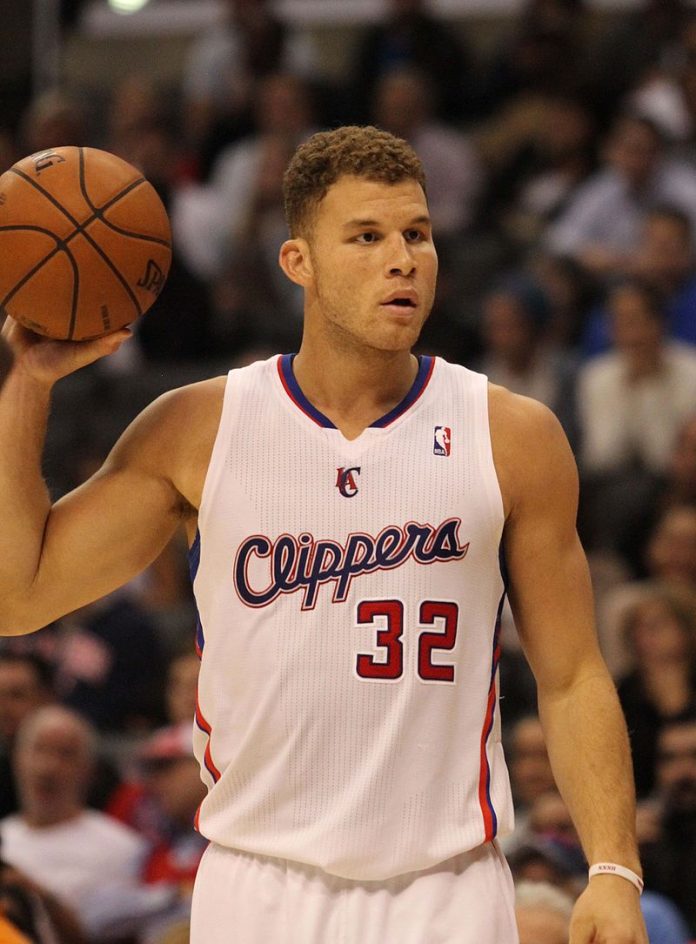
Five time All-Star Blake Griffin was traded to the Detroit Pistons more than a week before the deadline. (Photo courtesy of Verse Photography)

Editor’s Note: Trades from between January 29 and the trade deadline on February 8 will be considered for this article.

Blake Griffin gets sent to Mo Town

To Los Angeles Clippers: Tobias Harris, Boban Marjanovic, Avery Bradley, 2018 protected first-round pick, 2019 second-round pick

To Detriot Pistons: Blake Griffin, Brice Johnson, Willie Reed

Although it didn’t happen on deadline day, this was arguably the biggest blockbuster deal of the deadline period. While my initial thoughts were that the Clippers fleeced the Pistons to get the package that they did for Griffin, he has performed admirably for Detroit so far. In his first four games for the Pistons, Griffin averaged 21.5 points, 7.8 rebounds, and 6.3 assists. More importantly, all four games were wins. This past game, however, he was beat by his former team 108–95, similarly to how the Clippers won this deal. Tobias Harris and Avery Bradley are proven starters in this league (although the latter will likely leave after his deal expires in 2018), and Marjanovic only has one year left on a friendly deal. Add in two draft picks, and this looks like a great package for an injury-riddled, one-sided player who will have difficulty living up to 30 million plus over the next four seasons after this one. While the Clippers are getting more than just financial flexibility from this deal, you have to think that this was the main focus. There is a superstar inside of Griffin, but I have little faith that he’ll be able to maintain his level of play in the future. Even if he does maintain his level of play, a miracle would have to happen in Detroit in order for the team to be contenders during his contract, as they have over 70 million tied to a core of Andre Drummond, Reggie Jackson, and Griffin for the next three years.

Clippers Grade: A-

Pistons Grade: B-


Nikola Mirotic gets shipped off to New Orleans

To Chicago Bulls: Tony Allen, Omer Asik, Jameer Nelson, 2018 first-round pick, 2021 second-round pick swap rights

To New Orleans Pelicans: Nikola Mirotic, 2018 second-round pick

Nikola Mirotic was too good for the Bulls, who are doing everything they can to ensure a top draft pick next year. That being said, he is far from good enough to save the Pelicans’ season, after the injury to DeMarcus Cousins. While 12.5 million over the next two seasons isn’t bad for a play like Mirotic, giving up a first round pick for a chance at the playoffs is not the way to rebuild a franchise. The one plus to this deal is them finally getting rid of Omer Asik’s awful deal, but it’s hard to envision free agents wanting to play for this franchise, and Cousins is probably not going to resign. For the Bulls, they got the first round pick they wanted, although it was at the price of Asik’s contract. Given that they were not likely to do anything with that cap space anyways, this has to be considered a win.

Bulls Grade: A-

Pelicans Grade: B


Cavaliers give up on Isaiah Thomas


To Cavaliers: Jordan Clarkson, Larry Nance

To Los Angeles Lakers: Isaiah Thomas, Channing Frye, 2018 first-round pick (Cavs’ own)


Remember when Cavs fans were saying, “Just wait for Isaiah Thomas to come back”? Yeah, that didn’t help their issues on defence, which really isn’t that surprising. Remember when people thought that the Cavs won the Kyrie Irving trade with Boston? This trade is proof that they didn’t, and that Danny Ainge knows all. Given the current situation in Cleveland, however, this deal makes a lot of sense. Clarkson and Nance add a lot of defensive versatility to a roster that needed it, and the Isaiah Thomas experiment was not working out. Giving up a first round pick is tough, but Clarkson and Nance arguably have more potential than anybody the Cavs would’ve grabbed in 20s, especially considering their recent draft record. For the Lakers, they get rid of Clarkson’s contract (which isn’t bad, but hurt their chances of pursuing max contract-free agents this offseason), and get two expiring contracts in return. If LeBron leaves Cleveland this offseason, this may have been like buying a gym pass for a dude that’s trying to steal your girl, but this deal doesn’t really change the likelihood of that happening or not.


Cavaliers Grade: B+  

Lakers Grade: A


Cavaliers officially unload roster in three-way deal

To Cavaliers: Rodney Hood, George Hill

To Jazz: Jae Crowder, Derrick Rose

To Kings: Joe Johnson, Iman Shumpert, 2020 second-round pick

It is no question that the Cavs were having problems this year, and they did everything they could on deadline day to reshape the roster. George Hill and Rodney Hood aren’t huge upgrades over Jae Crowder, Derrick Rose, and Iman Shumpert, but at least they’re different. If there are concerns over this deal for the Cavs, it’s that Hill is on an absurd contract for this season and the next two, and really handcuffs the Cavs for the future. Realistically, the Cavs are basically screwed after this year anyways (I definitely think LeBron will leave), and so they are going all in for one more finals appearance. Question the logic, sure, but don’t question the intent. For the Jazz, they get a flier on Jae Crowder for two players they clearly had no interest in keeping for the future, which is solid. For the Kings, they get out of the Hill contract, but you really have to question why it was given to him in the first place.

Cavaliers Grade: B

Jazz Grade: B+

Kings Grade: B


Emmanuel Mudiay gets to fight for a starting job

To New York Knicks: Emmanuel Mudiay

To Denver Nuggets: Devin Harris, Clippers’ 2018 second-round pick via Knicks

To Dallas Mavericks: Doug McDermott, Nuggets’ second-round pick

Jamal Murray is the point guard for the foreseeable future for the Nuggets, so losing Mudiay doesn’t really sting. While Mudiay was thought of as much more than a “Harris and a second-round pick” type player when he was taken in the lottery, he was not really worth keeping around for the Nuggets. The Knicks will now take a shot at him, and while they can offer him a role, it’s still highly questionable if Mudiay can offer them anything. McDermott was turning into a solid rotation player for them, but for a team that is stuck in mediocrity, maybe getting a higher potential guy makes sense. I’m not convinced that Mudiay will be any better than who they would’ve gotten with their second-round pick, but the Knicks really didn’t give up much. For the Mavericks, Harris was dead weight on the roster, and getting what they did for him, while boring, is pretty good.

Knicks Grade: C+

Nuggets Grade: B-

Mavericks Grade: A-


Dwyane Wade erases blip in his career

To Miami Heat: Dwyane Wade

To Cleveland Cavaliers: Lightly-protected future second-round pick

Wade will always be remembered in a Miami Heat uniform, so seeing him back in the jersey is great for any NBA fan. After a falling out with Pat Riley in the offseason, the two made amends, so Wade can retire with the franchise he was always meant to retire with. Outside of a feel good story, this trade doesn’t really mean much for either franchise, but watch Wade’s return to the Heat to see why everybody is a winner in this one.

Heat Grade: A+

Cavaliers Grade: A+

http://www.miamiherald.com/sports/nba/miami-heat/article199439814.html

Board Shorts

1
Irene Lo / The Peak


Business relating to the Surrey Campus Committee

The Board motioned to approve up to $1,075 for the Surrey Campus Committee’s (SCC) Games Day event on March 12. The event will take place on the Surrey Campus’ Mezzanine, and will include popcorn, carnival games, and video games. This will be the biggest event organized by the SCC, aside from Pub Night. The SCC aims to run one event a semester based off an at-large member’s proposal.

The Board also resolved to appoint Gurpreet Boparai as a new at-large member for the SCC.  


The Board received a presentation on behalf of WUSC

The SFSS Board of Directors received a presentation on behalf of the SFU local committee of the World University Service of Canada (WUSC). WUSC is a non-profit that, among other things, powers the Student Refugee Program (SRP) which allows students from refugee camps to pursue post-secondary education. According to the local committee, SRP has been active at SFU since 1981. In 2016, the number of sponsored students jumped from one to two to six.

The funding for SPR is currently split between student levies and the VP’s office. The local committee is proposing a $2.50 increase in the levy for full-time undergraduate students ($1.50 for part-time students) in order to make the program sustainable. The Board is awaiting to review WUSC’s current, past, and projected budgets before taking further action.


Semester reports for summer 2017 and fall 2017 will be made publically available

The Board motioned to approve and publically release the semester reports for summer 2017 and fall 2017 by the Board of Directors. The Board cited transparency in their decision to make the reports accessible to students.