Home Blog Page 610

Modern feminists shouldn’t be so quick to dismiss their radical sisters

0

I am a feminist. My definition of a feminist is anyone who, like me, feels that men and women should be treated equally. I think that everyone should be supportive of gender equality, and therefore, feminist.

Some feminists are radical feminists. Traditionally, this means that they believe our current society is inherently patriarchal, and therefore, to achieve gender equality, it must be completely overthrown. Here, I define a “radical” feminist as any feminist that behaves in a radical way. Behaving in a “radical way” includes behaviours that some would call “extreme,” “progressive,” “revolutionary,” “attention-grabbing,” and so on.

When I say “modern” feminists, I’m referring to those that are products of and participants in the Third and Fourth Waves of feminism, from the 1990s and onwards. Most likely, the feminists reading this are modern feminists. I’m a modern feminist, myself. I don’t hate modern feminists, and certainly not all of them act out the behaviours I’m about to call out.

That being said, I think it’s time for many modern feminists to gain some respect for radical feminists of both past and present, as well as to stop dismissing their chosen forms of protest.

The term “radical feminist.” makes many people uncomfortable. Images of irate, aggressive women, bras aflame and legs unshaven, may come to mind. I know many women and men who cringe at the word “radical feminist” or use it as mockery or a joke. Most recently, I’ve noticed self-identifying feminists distancing themselves from radical feminism completely. Just check out some of the tweets relating to the Slut Walk and you’ll see women cursing out and mocking other women who participate.

“I’m not angry, I don’t hate anybody, I’m fine,” seems to be the new manifesto of modern feminists, who distance themselves from anything that isn’t calm and unthreatening. But, isn’t moving past the constraints of “calm and unthreatening” the entire point?

Stop me on the street and ask me if I’m mad about female oppression and gender inequality. I’ll give you a huge “yes!”. Why shouldn’t I? Gender inequality is threatening to all women. So be angry about it. Be threatening. When did that become such an atrocious thing?

A person I’m friends with Facebook shared an article a few days ago showing topless women protesting reproductive rights. They had pasties over their nipples and slogans written on their bare stomachs and chests. The poster had captioned it: “I don’t understand what this does for women. They’re coming off really aggressive and angry. That’s not a good look. Not cute.” Comments below echoed the sentiments, saying that this isn’t the right way for feminists to protest, that these girls should put their clothes back on.

Feminists that act too radical and out-of-the-box are getting shunned for it. As if feminism, in itself, isn’t and hasn’t always been radical.

Jessa Crispin, author of Why I’m Not a Feminist: A Feminist Manifesto sums up my thoughts well in her book: at some point, feminism has lost its identity in the pursuit of universality and become toothless. What used to be a criticism of culture has been mellowed to the point that it neatly fits into the current system.

“Feminism used to be outside the culture. It used to be a way of criticizing the culture. It used to be a way of imagining a different kind of culture. But somehow in the last 10 years or so, feminism became another part of the culture,” Crispin says.

There was once a time when the very thought that a woman is a person was considered radical, never mind the idea that these things deserve rights. In the same way that outsiders used to criticize and scoff at feminists, many modern feminists now criticize and scoff at radical feminists.

Feminism will never be accepted by every single person in the world; it’s just impossible. There will always be those who don’t think it’s necessary, and don’t agree with it – and that’s fine. So why are some feminists trying so hard to water down the cause so it’s easier for everyone to swallow?

“I’m not angry!” “You know, lots of women have it worse than me, I really shouldn’t be complaining that much.” “You’re making people uncomfortable when you protest like that.” “Those girls are really extreme. . . You don’t need to be that extreme.”

“Those girls”, meanwhile, are causing change.

For decades, radical feminists have been causing dramatic change with their out-there, extreme protests and ideas.

Take Mary Wollstonecraft, for example, who wrote A Vindication of the Rights of Women in 1792. In her time, the ideas of equality between sexes, equal access to education, women being single, women having relations out of wedlock, and a classless society were beyond radical, and she experienced backlash for these opinions. In exchange for that backlash, she is still well-known today by many.

What about militant suffragettes, who petitioned radically for the female vote? They smashed windows, destroyed mailboxes, cut telephone wires, and many died for the cause – for the vote that many women and modern feminists enjoy. And Coco Chanel, who dared dress women in pants when it was socially inappropriate to do so? As well as Sojourner Truth, a former slave who spoke passionately about racial inequalities in her “Ain’t I a Woman?” speech? bell hooks, who encouraged “radical openness” in teaching, thinking and learning. Consider Ellen Willis, the co-founder of the Redstockings and a vehement speaker on women’s sexuality – a taboo topic?

I could go on and on, listing more influential and radical women. Do you think these women wasted their time apologizing for their radicalness? Do you think they assured those around them that they’re ‘not angry’ and avoided aggressive debates? Do you think they scoffed and turned their backs on sisters who screamed, took their clothes off, smashed things in the name of the cause?

No. These women were radical and made changes that have benefited many, many women for decades, including the modern feminists that treat them with disdain today.

Modern feminists, radical feminists, feminists of every type are fighting the same gender equality battle.

The more feminists that exist and are passionate about this cause, the better, and everyone should choose how they want to express that passion. It’s okay to be radical and angry – you’re more than allowed, I encourage you, in fact, to be angry about the threats to women’s safety and rights that still exist today world-wide – and it’s okay to argue and protest.

Be memorable; be out-of-line. Feminism is and hopefully always will be radical, a counterculture, and a demand for change. There’s no point in pretending it’s not a threat, because threatening the status-quo is an incredibly important part of feminism. Be threatening to the status quo, and be forceful, or you risk going unnoticed and not making change.

It worked for Wollstonecraft, Truth, hooks, and Willis, it works for the “sluts” on the front-page paper and your Facebook feed, and it’ll work for you.  

 

The problem with taking the SFSS election slates at face value

0

Each year, the Simon Fraser Student Society (SFSS) election is like adulthood: sudden and overwhelming, and nobody ever tells you how it works or why. You’re just supposed to instinctively know, the same way you’re supposed to know how to grope produce to pick the freshest fruits. For me, slates are one of the strangest parts of the SFSS elections.

If you didn’t know what they were, I’m honestly not sure how you’d find out, since you won’t find a single mention of slates in the SFSS Elections and Referenda Policies and the SFSS’ website’s ‘Slates’ page (under ‘Elections’) is currently blanked. But essentially, slates are a group of candidates who are running together under a common name: this year, we have  Inspire SFU and Shift SFU.

Oh, so it’s like a political party, you might ask. Well, no, because one member’s election isn’t inherently linked to another’s success or failure. Furthermore, slate members don’t need to agree on specific platform elements like the BC Liberals might agree on a common budget that is unique to them and their members. If you look at how many times the word ‘gondola’ comes up in all the platforms: one independent candidate wants to look into it, as do three from Inspire SFU and two from Shift SFU. Of course, you would expect different platforms to be tailored to different positions, but what’s the point of a slate if your ideas are scattered and not unique?

One of the biggest parts of slates is their social media presence. You’ll find both slates on Facebook (where Shift SFU’s ‘about’ section identifies them as a political party). Both have produced videos (Shift, Inspire), hashtags, Facebook events that will remind folks to vote for them. There’s even an Instagram account for Inspire SFU.

What it comes down to is candidates using each other’s popularity, influence, and reach to campaign more effectively. I had trouble recognizing candidates when I attended the Burnaby campus debates (Thursday, March 15), but I knew exactly which slate they were a part of based on who was clapping for them.

I would say that there’s nothing wrong with that, aside from being a disadvantage to independent candidates or newcomers to the SFSS. But in this election, candidates have used their slates as camouflage, and that’s worrying.

On March 15, at the Burnaby campus debates, the first question was asked to the presidential candidates: why does mental health not appear on your platforms? While I was personally unsatisfied with both candidates’ responses, Amar Singh’s response is worth considering. He accepted the responsibility for his omission, but started by stating that he hadn’t thought it was necessary since one of his slate-mates had included the issue on their platform.

How were student voters expected to trace one candidate’s opinion to another? Does this imply that all the slate members of Shift SFU agree with at-large representative candidate Arman Mohseni that the SFSS should not prioritize funneling additional funding to the SFSS food bank, as he stated during the Q&A period of the debate? Does that mean that students worried about the food bank should vote for SFU Inspire, as two of their candidates clearly stated in their platforms specifically mentioned the food bank? The lack of regulation and clarity on slates makes their purpose unclear.

(This isn’t to pick on Singh exclusively: Jas Randhawa also focused his closing section at the end of the debate by focusing on the strength of his slate as opposed to the strength of his potential presidency.)

I think that very first question was incredibly valid, and pointed to a problem that has run through this entire election: slates allow weaker candidates to get lost in the crowd. What would the student body get if Singh were to become president, but not his slate-member with the mental health platform? Perhaps Singh would try to carry those initiatives through himself, but how would anyone know that?

This lack of regulation also means that there’s a lot of confusion about other issues. Take the allegations that the Inspire SFU campaign manager asked questions to candidates without making his affiliation public. While we have no way to know if this is true, the suggestion does illustrate that the fact that slates have no regulated codes of conducts creates a potential ethical loophole.

Furthermore, what are the implications for post-election? At the Burnaby debate, presidential candidates acknowledged that the Board would most likely be made up of candidates from all across the board. After an election period in which candidates not only run against one another but pit themselves against entire teams of candidates, I wonder what the long-term consequences of slate rivalries may be?

If you vote #InspireSFU or #voteshiftsfu, keep in mind that you really aren’t . . . You’re voting for individual candidates who will be elected to the Board as individuals and who will then carry out their duties as individuals. If you want to #voteintelligently, you need to go past the smoke and mirrors of slates and look at individual candidates and their individual platforms.

Drag is bigger than just cisgender men

0

In an interview with The Guardian, drag queen RuPaul commented that he would “probably not” allow trans* women as contestants on his show, RuPaul’s Drag Race. Following a swift and resounding backlash from not only fans but former contestants of his show, RuPaul issued an apology.

RuPaul’s arguments in his Guardian interview contain heavy notes of exclusivity towards trans* women and cis women within the drag community. This brings up the question of whether or not the drag community ought to be accepting of self-identified female drag queens. Not only should cis and trans* female drag queens be granted legitimacy to their drag, that courtesy should also extend to (cis and/or) drag kings and to non-binary drag performers, too.

To further understand drag, as well as to argue for acceptance of self-identified female drag queens, we have to examine the art of drag’s history. In an interview with TIME, Joe E. Jeffreys, drag historian of Tisch School of the Arts at New York University, described drag as a “theatrical form . . . [of] putting on clothing that is considered to be not appropriate to [the performer],” and is done with an “ironic distance.” Jeffreys notes that drag has played into historic settings like Shakespearean plays and vaudeville shows, and that while drag in its purest incarnation is performed within gay bars, it is “everybody’s art form.”

RuPaul claims that drag loses its sense of “danger” once cisgendered men no longer perform it, because the art of drag proves cis men’s rejection of conventional masculinity. Two things are wrong with that statement.

First, as transfeminine drag queen Charlene Incarnate points out, to imply that a sense of “danger” is lost when trans* women are performing proves to be ignorant. Given that in the social climate we have lived in and continue to live in “queer and trans women are raped and murdered in record numbers with every passing year,” the sense of danger and risk is very much present, if in a different form.

Furthermore, RuPaul’s stance proves myopic, in that it only focuses on one group/identity of drag performers in an otherwise very colourful and very intersectional community — a community that reveres this art form in its diversity. While drag performance is heavily rooted in gay culture, some of the most famous drag queens were certainly not cisgendered gay men.

One notable example would be Marsha P. Johnson, renowned trans* rights activist, who was also long rumoured to have been one of the first individuals to throw a brick during the Stonewall Riots. Johnson, a drag queen who was even photographed by Andy Warhol himself, also referred to herself with ‘she/her’ pronouns. Examples like Johnson stand as an example of drag’s historical intersection across the spectrum of gender identities, especially those of trans* women.

When RuPaul refuses to allow trans* women onto his show, and continues to accept cis gay men, he implicitly reinforces the notion that drag queens can only be made up by such a population. What RuPaul fails to consider, with his narrow perspective on who is allowed to do drag, is that he contradicts himself. He places gendered limits on an art that is historically renowned to be a ‘fuck you’ to gender norms and conventions in the first place.

One must question: why is it that only cis gay men are allowed to champion the title of drag queens? As a staff writer at Vulture, E. Alex Jung questions that if gender is all but irrelevant to drag as drag is to gender, “. . . why does it matter whether someone is a cisgender male or a transgender woman? Why can’t trans women subvert gender too?”

The drag community has been historically renowned to be vibrant and made up of wildly eclectic performers. In the exceedingly diverse landscape of drag today, Vancouver-based drag performer, Mx. Fortunate (pronounced ‘misfortunate’), considers drag as “gender art.” They affirm that, while drag is a fun means of expressing oneself, it is also “a political statement, especially for marginalized peoples to be in these spaces; like hyper queens, drag kings, and non-binary drag performers.”

Like their drag counterparts, Mx. Fortunate agrees that RuPaul’s definition of drag is exclusionary to trans* and non-binary people, and there is a stigma against certain types of drag. That said, Mx. Fortunate’s experience hasn’t been entirely negative; the local drag community here has been generally accepting.

With RuPaul’s Drag Race being unanimously the only high-profile, mainstream drag-centric TV show on air, RuPaul wields an enormous amount of power in helping control and deliver the narrative of drag performance to larger audiences as whole. This makes it that much more important that drag icons and ambassadors like RuPaul understand, recognize, and legitimize uncommon artistry like that of female cisgender, transgender, and non-binary drag performers alike.

Author’s note: Given the topics discussed in this article, it should be noted to readers that the author of this article is a cisgendered, heterosexual woman.

Hot new Uber delivery services!

0
Illustration by Jarielle Lim

If you haven’t been living under a rock these past few years, you would have heard of Uber — a more affordable taxi service that transports a person from point A to B (I mean, they’re a taxi service, if transportation wasn’t their goal, I’d be worried). Uber has delivery services, with Uber Eats (where you can order ready-made food so your lazy ass doesn’t have to put on real clothes), Uber Health (delivery of vaccines), and UberKITTENS (kittens for playtime and adoption). Even with all these cool benefits, Uber is still a shitty company who doesn’t give a flying fuck about their employees.

Anyways, Uber is coming to Vancouver soon and we will all be able to experience taxi services that don’t require a down deposit of a firstborn child.


  1. UberStudentLoans

Every time someone opts to take an Uber rather than a traditional taxi, the driver will tack a small portion of their student loans onto the bill. Let’s be honest, how else will they be able to pay off the tens of thousands of dollars of debt from receiving a post-secondary education? It’s not like Uber executives are making any real effort to cut them a living wage.


  1. UberGlitterBomb

Everyone has that one person they’d offer to the wolves in time of need, and if you say you don’t, you’re lying. Why not get Uber to send a glitter bomb to this person’s mailbox? It’s a win-win situation because a) one can orchestrate this from the comfort of their couch and b) Uber drivers don’t have to listen to the incessant chatter of some backseat know-it-all, drunkard, or professional ranter.

  1. UberUmbrellas

Raise your hand if you have been personally victimized by Vancouver’s moody weather. Uber executives would be downright fools if they don’t implement this service in a city with only one season: rain. You text a driver your location, and in five plus minutes (depending on how much of an inconvenience you are) a working umbrella is delivered. You might get a few side eyes though, because only newbies believe the Weather Network’s bullshit.

  1. UberFlannels

Whether you’re attending a house party hosted by that frat boy with a questionable reputation or you’re going to the movies with your gal pal, a flannel shirt is perfect for when you want to look approachable but also I came here to party. Just send a driver a preferred colour and they’ll most likely deliver a completely different coloured one.

  1. UberWakeupCall

Are you unable to wake up any earlier than two in the afternoon? Do you constantly piss off your significant other and friends by your laziness? If you said ‘yes’ to these, then please sign up for UberWakeupCall. The night before, tell a driver your desired wakeup time, and your job is done! Someone will arrive in the morning with a hot/iced coffee and a wakeup call ranging from yelling, to cold water, to a slap in the face — depending on your level of tiredness.

  1. Uber95

A driver in possession of a bus will make all the same stops that the 95 does — except they’ll actually be on time to get you to the class SFU should’ve already cancelled.

Upwards trends concern SFU researchers

0
The housing crisis is seeing increased disputes between landlords and tenants in the Lower Mainland. (Melissa Dimyadi / The Peak)


Renter anxiety increasing in Metro Vancouver, say SFU researchers

In a step away from the numbers and towards the people involved, SFU researchers Nicholas Blomley, Andy Yan, and Natalia Perez are using data to see how Vancouver’s housing prices crisis is affecting renters. A preliminary study found that anxiety among renters in the Lower Mainland is upwards trending.

The study found that calls made to the Tenant Resource and Advisory Centre increased by 7% between 2010 and 2016. The Residential Tenancy Branch’s data revealed that, out of 1,000 renter households, about 66 disputes result in eviction in Maple Ridge, ranking the area as the number one region for “eviction-related disputes.” The average for Metro Vancouver is 32.

The researchers anticipate that the data they have collected is an underestimate to the true number of evictions that occur in the Lower Mainland, as it only covers evictions that were officially disputed.

Blomley interprets this evidence to mean that high housing prices are affecting the rental market in the suburbs and contributing to the “suburbanization of poverty.”

“Eviction-related disputes” was a broad category further broken down and investigated as three sub-categories by the researchers: landlord use, unpaid rent, or cause.

Vancouver had the largest share of disputes over landlords modifying or selling the unit, which results in eviction of the renter. Evictions of this type have doubled from 2013 to 2016.

Unpaid rent, the biggest cause of disputes over eviction, was concentrated as a cause of eviction in Surrey, New Westminster, and Maple Ridge.

‘Cause’ as the reason for eviction accounted for around 14% of all disputes regarding eviction.

Around 60% of applications for eviction were filed by landlords, which researchers believe points to the power-dynamic between landlords and the tenants who rent from them.


With files from The Vancouver Sun.


SFU researchers find high levels of drug-resistant HIV in Ethiopian children

SFU health sciences researchers Zabrina Brumme, Mark Brockman, Natalie Kinloch, and Bemuluyigza Baraki have collaborated with researchers at the University of Hawassa in Ethiopia to study drug-resistant HIV strains among HIV-infected children in Southern Ethiopia who failed their first treatment therapy for the disease.

The study is the first large-scale survey of drug-resistant HIV in Ethiopia’s 65,000 plus children who live with the virus. The report concluded that 81% of this population is thought to have “resistance mutations” against common therapies that are often used to target HIV infections in the region.

Upon analysis of the data, the study called for more access to viral load monitoring and drug resistance genotyping to look for the genetic mutations in the virus that cause resistance to the treatments. Both of these procedures are part of standard care in first-world countries such as Canada.

Increased access to other types of HIV treatment in poorer socioeconomic areas was also recommended, as effective medical care for HIV-infected children is necessary to improve health outcomes and continue the fight against HIV/AIDS.

Why you’re paying so much for textbooks: Part 1 ⁄ 2

1
Image credit to Tiffany Chan, Staff Illustrator

Purchasing textbooks has become a macabre ritual amongst post-secondary students. Students at SFU, myself included, always spend time discussing, comparing, and ultimately asking the question to end all questions: “How much do you have to spend on textbooks this semester?”

At first glance, the issue would seem to lie between students and the institution bookstore. Occasionally, students also lay blame at the feet of professors for requiring textbooks that are too expensive, or not critical to the learning of course material. However, further research and interviews indicate that the issues regarding textbooks are not just a bookstore issue, but involve students, bookstores, publishers, course instructors, multiple levels of government, and e-commerce retailers. In fact, there are so many players involved and so many sides to the discussion that one of the initial issues in mitigating costs is the loud cacophony of voices from different groups with different interests.

Much of the reason why comes secondary to students, who, according to the Canadian Federation of Students via The Globe and Mail, says that the average Canadian post-secondary student spends $500–$1,000 on course material per semester. To exacerbate the problem, Canadian copyright law allows Canadian publishers and Canadian branches of foreign publishers to charge up to a 15% premium on foreign titles, and 10% on titles from the USA to cover the costs of shipping and handling books from abroad. Needless to say, there are complexities to examine before painting this issue with large brushstrokes.

I set out to understand the complexity of the situation, the solutions being proposed, how they are progressing, and where they may go.


A student’s perspective

Eva Zhu, a fourth-year health sciences major admitted that “this semester, I haven’t actually bought a textbook yet. I need to buy my toxicology textbook, which is $100, I think. If I had bought my film textbook, it would have been $158.” Zhu’s is a common sentiment: when faced with hundreds of dollars in textbook costs per semester, avoiding the purchase if it’s deemed unnecessary is appealing.

There is often discussion about whether or not there are certain faculties in which textbooks are more expensive than others. Zhu commented that biology and chemistry textbooks, from her experience, are the most expensive of the faculties in which she has taken courses, saying, “I bought my chemistry textbook secondhand, and I still spent $120, new was about $180. [For] my biology textbook, I spent $260.”

Like a large number of university students, Zhu tries to avoid SFU’s bookstore wherever possible, stating that she has been buying the majority of her textbooks using Facebook buyer-exchange groups since her first year, and only uses the bookstore if there are no other options and it is absolutely necessary. Spending potentially hundreds of dollars per semester on textbooks can add up to the cost of a whole other course. She also stated that “the majority of the time, I’ll buy a textbook, and I’ll open it once or twice in the entire term.”

When asked, she believes that it is the bookstore that is responsible for the high prices of textbooks. Her experience and comments paint a picture of distrust towards the institutions that administer textbooks.

Meanwhile, Maxwell Gawlick, a first-year intended psychology and criminology joint-major, shared a similar story. Gawlick attested to the high prices of textbooks, saying, “I generally spend close to $250 on textbooks. I could spend close to $500 . . .” He also said that the most he’s spent on a textbook was “a $130 Crim textbook I bought from the SFU bookstore.” Like Zhu, Gawlick gets as much as he can secondhand, and he isn’t pleased with the cost, commenting, “I don’t think it’s very reasonable for them to cost that much, especially when they’re targeted to a demographic of famously poor students.”

Gawlick also had thoughts when asked who’s to blame, but saw a silver lining in the process, noting, “It probably comes down to the authors. Not that it’s necessarily avoidable, because they put a lot of work into compiling a textbook that goes through a small run of prints. That isn’t easy to do cheaply, though certain authors like those of my psych course attempt to lower the cost by producing loose-leaf and so on. I still feel like textbooks are overpriced, but I do recognize that there’s a reason for some of it, at least.”

If Zhu’s and Gawlick’s thoughts are any indication, textbook prices have indeed become a part of the university student culture, as early as first year. While students may feel alone in that fight, it may not be the case, after all.


What the professors want

Course instructors have their own agenda for their use and selection of textbooks. Tara Immell, a business professor with a background in finances, plainly stated that in her classroom, she “will use the textbook that has been used in the past,” adding that “if something major has happened in the world that is related to that course, I much prefer the newer textbooks.” She indicated that otherwise, in the case that simply the order of chapters has changed or material has been expanded, she is OK with students using older editions of the textbook if they are willing to do the extra work of finding the correct material in the old textbook or working with a classmate to compensate.

Textbook cost does affect her decision, however, as she said, “Possibly, it is cheaper to buy the online problem solving package, plus access to the online textbook, than it is to buy the brand new printed textbook. So, I find the online problem solvers give students extra practice at no added cost above a new printed and bound textbook.”

Immell believes strongly that the best value both for readings, and practice problems lie in digital copies. She also commented that from her experience, the discrepancy in cost between different faculties’ textbooks lies in “the technical nature of the material in a textbook,” citing the amount of human work in textbooks, such as proofreading and oversight. This would explain, to an extent, why some faculty’s textbooks are far more expensive than another.

Immell’s case illustrates that instructors have their own approaches to textbook selection, and that many factors regarding textbook costs are out of their control — but that they too are often aware and concerned of the cost of their materials.


The Bookstore’s conflict

When I spoke to Mark McLaughlin, the chief commercial services officer who oversees operations at the SFU Bookstore, he was very clear that “our objective is really to drive down the price of learning resources.”

He said that there are a number of factors when determining the price of textbooks at the bookstore. This includes the price charged by the publisher to the bookstore and shipping and handling costs, which McLaughlin indicated were higher for SFU in particular.

“Most of the books are from Toronto, Chicago, they get shipped across the country. You know, Vancouver, we’re at the furthest end of the country, so we’d be more expensive than textbooks in downtown Toronto.”

He also cites labour cost as a major factor, as the students who work as cashiers and the people handling, shipping, and receiving textbooks all need to be compensated. Something he outlines a major issue with the cost of textbooks being “inefficiencies in the system,” including textbooks that need to be returned.

He uses the example of textbooks that are requested by instructors as required texts, then later are determined to be unnecessary, are not purchased, and have to be returned to the publisher. He explained that “the cost of shipping here and shipping back get embedded in the next textbook we sell.”

Such costs are necessary in order to pay expenses and attempt to break even. However, McLaughlin did not stop at inefficiencies simply in shipping, also noting that the publishers are “consistently increasing textbooks by 6% per year.” It is worth noting that a 6% increase in cost annually can be considered quite high, as the common standard for the inflation rate is around 2% annually. The US dollar exchange also drives prices upwards when the Canadian dollar isn’t doing well. These are issues that can no longer be considered within the realm of control of a university bookstore (even one that, as McLaughlin notes, has good purchasing power due to the size of its institution) but that belong to an international marketplace that lacks regulation.

McLaughlin also pointed out that getting mass support from other post-secondary institutions in order to present a united front on the mark is an uphill battle. According to him, not all institutions have non-profit bookstores like SFU, meaning that not everyone favours making the system cheaper and more efficient.

However, McLaughlin was enthusiastic when discussing solutions to the current system, including some investigated by the SFU Bookstore . . .


Editor’s note: To read more about the issue of textbook prices and these solutions, check out part 2 which will be available next week.

Eccentric Exposition: Wes Anderson

0
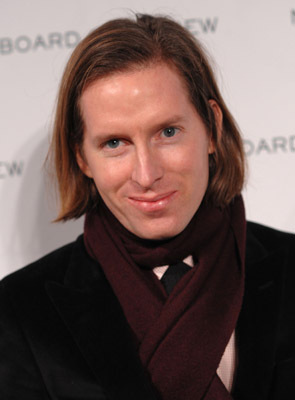
(Photo courtesy of Dimitrios Kambouris)

Wes Anderson’s directing style brings a childlike purity to his stories. Anderson frames his films with fast-paced, but smart dialogue that resonates with our inner intellectual. Eye-popping visuals complement his innocent originality.

     One of Anderson’s most famous works is The Grand Budapest Hotel. Starring Ralph Fiennes as its charismatic lead, the film has a talented ensemble cast that delivers quirky, confident performances. The film also creates an appealing strangeness that enriches the narrative through neat and ordered environments, and character mannerisms. With sets that resemble still-life paintings, Anderson’s sharp artistry adds an ethereal look to the film’s bizarre world.

     Another Anderson classic is the stop-motion animated film Fantastic Mr. Fox. As a rendition of Roald Dahl’s book of the same name, Fantastic Mr. Fox provides fun, offbeat antics. These antics parody heist films through the story of a fox thief (George Clooney) stealing food from and outsmarting a trio of unpleasant farmers. Like The Grand Budapest Hotel, the film has neat and ordered environments, with real-life textures — but mostly benefits from believable character dynamics. This film is also backed by a superb cast whose performances make the movie’s talking animals light-hearted and funny.

     Anderson will release another animated work, Isle of Dogs, on March 23. The film is sure to include his usual array of smart characters, and his exuberant wit. Make sure to catch up on Anderson’s other movies, like Moonrise Kingdom, that further demonstrate his strengths as a director.

SFU track and field start season off strong at Sacramento State Invitational

0
Addy Townsend is now ranked number one in the 800 meter. (Photo courtesy of SFU Athletics)

This past weekend, the SFU track and field team competed in the Sacramento State Invitational. On a beautiful sunny day, the conditions were perfect for one of the Clan’s first outdoor track and field meets of the season.

SFU took multiple runners to compete in the meet, and all did very well in their respective events. All of the athletes came home with good performances, however, some standout performances were those of the Clan’s Addy Townsend and Vladislav Tsygankov, both running great openers with times that will probably qualify them for the national tournament. These two will be returning this year after great performances last season as well.

Out of over 70 athletes, Townsend narrowly won the women’s 800-metre with a time of 2:08.55 even after being boxed in for the most of the race. With this time, she will then move to number one in the rankings.

Senior Tsygankov came back with a strong performance even after being away from the 400-metre for a few months. He won the race, beating many Division I athletes with a time of 52.21. This time moves him up to be ranked third; however, he just missed the automatic qualifying time which is 51.50.

Other athletes who competed well were underclassmen Nathan Mah, Renate Bluschke, and Aaron Ahl. Mah ran both the 100-metre and 200-metre finishing with a times of 11.01 and 22.60 respectively. Bluschke competing in the 200-metre with a time of 26.02, and the 400-metre finishing with a time of 57.84. Ahl finished the 1,500-metre with a personal best time of 3:58.87.

Coach Britt Townsend explained how “the season goes by quickly and we have to take advantage of every opportunity that is presented to us in order to qualify as many as possible for [the National Collegiate Athletic Association]. . .” And with a roster of over 60 people, that means going away to many meets around the Great Northwest Athletic Conference.

With the season continuing on, follow the Clan as they will be heading to Salem, Oregon next weekend and then to San Francisco the following weekend. Make sure to come out to see the Clan in action at home on the Terry Fox Field Saturday, April 7.

SFU unveils new high-tech robotic chemical biology research lab

0
The facility aims to be a leader in laboratory automation and screening equipment. (Nathaniel Tok / The Peak)


SFU has recently opened the new Centre for High Throughput Chemical Biology (cHTCB) facility. Bristling with high-tech automated equipment, the lab is the newest addition to the research facilities in the faculty of science and will conduct research at the crossroads of chemistry and biology.

In an interview with The Peak, professor and co-director of the cHTCB David Vadlo explained that the project began five years ago when a lack of high throughput screening technology in the region was observed. A solution in the form of an automatic robotic facility was conceived, which would allow for automation of procedures integral to studies such as identifying chemical probes or components of signalling pathways.

Roger Linington, associate professor in the department of chemistry and co-director of the new facility, called the facility “transformative for researchers in SFU’s life sciences departments, industry users, and outside academic researchers who want to take advantage of the speed and accuracy offered by the high throughput robotic platform.”

The cHTCB will allow researchers to conduct a high volume of experiments in a much shorter time frame than previously possible, analyzing up to 50,000 compounds a day by using robotics that are integrated with the lab instruments, such as liquid-handling devices and sensitivity detectors, via a scheduling software. The screening process, instructed by a computer program, is involved in procedures that range from culturing cells to analyzing data.

“This [facility] makes possible experiments that simply could not be done previously.” – David Vocadlo, co-director of HTCB

Vocadlo is aiming for the cHTCB to become a leader in laboratory automation and screening equipment. The innovative equipment will be made accessible to researchers within the region to advance science.

Within SFU, faculty, graduate students, and post-doctoral fellows will be able to use the faculty, with the hope that the facility will foster collaboration and keep SFU at the edge of scientific research. The centre will allow SFU researchers to create preliminary data in advance of grant applications.

Undergraduates will get to also get to experience the faculty through senior level laboratory courses. According to Vocadlo, this is “to ensure that students are exposed to the most recent technologies and laboratory automation that is changing how much research is now being done.”

(Nathaniel Tok / The Peak)

The faculty is already facilitating work on several projects, including research on antibacterials, cancer treatments, and neurodegenerative diseases such as Alzheimer’s and Parkinson’s disease. A team of researchers is also studying genetic disease of the heart and how they can alter heartbeat rhythm.

“Long term, these results should contribute to new approaches for solutions to a number of important and emerging challenges in human health,” said Linington.

Comedy Central’s Corporate is a hilarious show for a cynical world

0
The show is worth watching for Lance Reddick alone. (Photo courtesy of Comedy Central)

Comedy Central’s new show Corporate is a fantastically funny black comedy with a cynical take on the corporate world that awaits many of us on the other side of graduation. Although the show is comedic, it is far from happy.

     Like Black Mirror, Corporate is a show that brings the audience into a world that is unsettlingly believable. While Black Mirror is set in an imagined future, Corporate is very distinctly in the present . . . But in a present world that is so subtly twisted and surreal that the realities of everyday life are made so absurd that you can’t help but laugh. The source of the oddly dystopian world of Corporate is not technology as it is with Black Mirror, instead it is the society itself — a society that is all too familiar.

     The series follows Matt (Matt Ingebretson) and Jake (Jake Weisman), junior executives in training at the headquarters of Hampton DeVille: a fictional Amazonesque mega corporation with a bit of a morality issue. While Hampton DeVille might not care about its employees, it certainly cares about their productivity. From accidentally (or perhaps purposefully) waterboarding their employees at a company retreat, to faking a plane crash in an attempt to improve a sense of community, Hampton DeVille is the manifestation of everything that is ridiculous about modern corporations.

     Although it’s set in a corporate world, its humour comes from the absurdity of everyday life. In every episode, the audience is exposed to this utterly strange world as if it is normal, with Jake and Matt experiencing it all along with you. Whether it’s being entirely left out of society due to missing the most recent hit show, or being forced to attend yet another useless meeting, the cynicism of Corporate is a hilariously depressing look at the realities of everyday life.

     It’s a show so odd that you might watch six episodes before you realize that the company’s name is remarkably similar to the word “devil.” You might be halfway through a dream sequence before realizing it when a woman blows smoke straight into Matt’s face yelling, “I’m a fucking ghost!” Corporate is a perfectly cynical, unsettling take on the classic workplace sitcom. If you’re a fan of happy characters with fun and exciting lives, Corporate might not be for you. If you’re one to appreciate some good black comedy, it’s a show you’d hate to miss.

     Although it’s certainly true that not every joke, or even episode, always hits the mark. Some have a great concept (like what happens when a major corporation’s crimes are called out by a Banksy-like figure) but might not be executed in a way that makes the delivery itself funny. Sometimes the execution is spot on, but there’s not much behind the joke in the first place. Despite these few missteps, Corporate is a show with undeniable promise. It can be lacklustre, but when it’s good, it’ll keep you laughing from beginning to end.