Home Blog Page 584

Social entrepreneur and instructor Alia Sunderji makes change with Luv the Grub

1
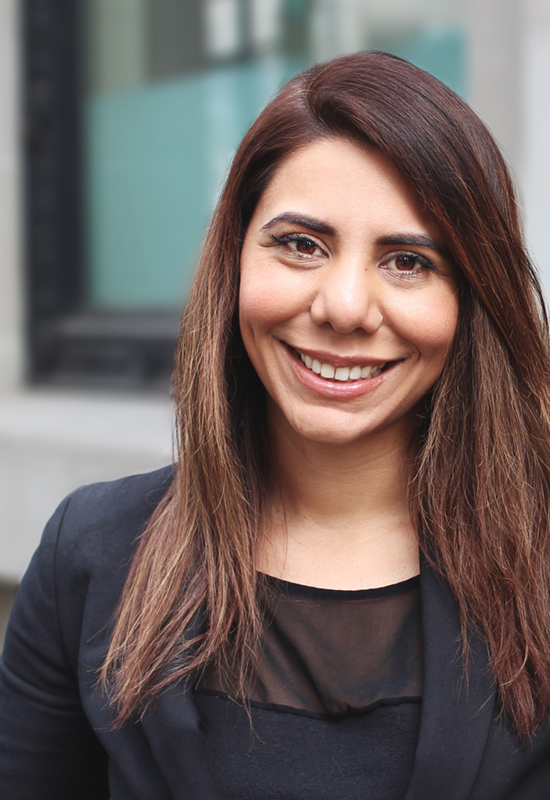
Alia Sunderji, image courtesy of Liv & Lola

Fast Facts

Name: Alia Sunderji

Pronouns: She/Her/Hers

Department Affiliation: Beedie School of Business

Businesses: Luv the Grub and Liv & Lola

Hometown: Vancouver, B.C

Hobbies: Hiking, surfing, salsa dancing, and biking

Fun Fact: Sunderji also sings, and some of her songs used to play on the radio.


Alia Sunderji is a powerhouse social entrepreneur and SFU instructor who runs Luv the Grub, a Vancouver-based social enterprise that has both an environmental and socio-economic mission. The Peak sat down with her for a sneak peak behind the magic she puts out through her work.

Partnering with local farmers and produce markets, Sunderji repurposes bumped, bruised and misshapen fruits and vegetables — perfectly good to eat, but still rejected by supermarkets — as ingredients for making jams, chutneys and spreads. She hires individuals with barriers to employment, and her staff is a full spectrum of people with different barriers: refugees, people who have experienced trauma, low-income youth and seniors, transitioning youth, youth with mental illness, individuals with language barriers, and more. Her goal is to create delicious spreads for the local market with local produce while solving local problems.

The idea for Luv the Grub was born when Sunderji was teaching BUS453: Sustainable Innovation. The class focuses on turning socio-economic and environmental issues in the world into opportunities.

“[Students] look for problems, they do ethnography or empathetic research and they really get to understand who it faces and the problem itself very, very intimately. And then they come up with a point of view statement, like ‘these are needs,’ and then they just go into rapid ideation [ to brainstorm] solutions.”

One year, her students’ research stumbled across the issue of food waste. They found that there was produce being discarded because it was not sufficiently in shape to be sent to supermarkets, but was still perfectly edible. Even worse, their research showed that it cost more to dispose of the products than it did to donate them.

Sunderji did some supplemental research of her own, talking to farmers, food and produce importers, and other markets that she felt understood the issue. Sunderji already had a social business in Guatemala, but she was at a point where she was looking for a way to give back locally, in her own community. Everything lined up perfectly, and that’s when inspiration struck: Luv the Grub was born.

Originally, she cold-called farmers and local produce markets in Vancouver, opening up the conversation by asking if they had experienced issues with produce waste, and eventually leading to the ask: would they be interested in either donating their excess unsellable produce or selling it at a discount?

“Almost every person said yes,” Sunderji told us. “It’s a huge issue.”

Poverty alleviation is a big and very personal part of Sunderji’s drive and passion for this project. Her mother came to Canada as a refugee from Uganda — Sunderji told us that the dictator at the time — Idi Amin — had ordered the expulsion of all Asians from Uganda, and they were forced to leave their homes, families, and businesses behind to find a new life. In addition, her father died when she was five years old. Watching her mother struggle as a single parent in a new country shaped Sunderji’s view of giving back to the community.

“It means a lot to do good by her… and to be able to help people with similar barriers and to to give people an evenly levelled field to opportunities,” Sunderji commented.

As is the case with every brave soul who embarks on a mission to save the world, once she began the project, Sunderji begin to run into roadblocks. One of the unexpected problems she had not anticipated was how hard it was to come up with new products, having overestimated how much her food innovation background would come in handy. Previously, she had worked as an Associate Brand Manager for Tim Horton’s, coming up with new breakfast items all the time, so she thought that it would be easy once she opened up her own food business. She soon realized that her work had been in marketing, and that now that she was working in operations, she would have to learn everything from the top.

“Even something like learning to scale was tough, being efficient. . .” Sunderji says. She admits that they did waste food at first when they were still experimenting and learning just how long produce lasts, but they were quick to learn how to mitigate the problem.

Another challenge Sunderji faces at the moment is managing all the different hats she has to wear. While she does have employees to create the jams and spreads, she is still the main worker behind everything that goes on at Luv the Grub. Other than hiring and managing, her job title even includes all the small, mundane tasks of her business: getting the necessities for labeling, keeping up her knowledge on food regulation, running the Instagram page . . . While she finds it a struggle to manage everything, she still feels that she’s really lucky.

“When you have a business, you should be very active. Even when I’m being passive, people are still reaching out to carry the product. I think that when you do something that you care about and that you’re passionate about, people see it and then they subscribe to it.”

While it’s only been a year and a half since Luv the Grub has been in business, Sunderji is happy with the success they’ve enjoyed so far. An especial triumph for her is Luv the Grub selling on Granville Island, and seeing the changes in her employees, and how they’re able to progress through their barriers.

“That’s why I do what I do,” Sunderji says emphatically.  “If I’m exhausted, that makes me energized, to be honest. To see that what we’re doing is really helping the people I want it to.” she said.

Something else she’s very proud of is how far the product itself has progressed, to the point that Luv the Grub now has a commercial kitchen. She told us about the pleasure of “hearing from people who love the product not only because of what we do, but the product itself. I don’t want it to be a charity, I want it to be a product that people buy and love it.”

An especially vital stakeholder for Sunderji has been the Drive Youth Employment Services (D-Yes), a youth employment agency that she has worked with for the past eight months.

“They have probably been the most instrumental to everything I do,” Sunderji said. For the last eight months, they have helped Luv the Grub grow by providing a space, connecting Sunderji with employment agencies across Vancouver (including their own), and they were able to find Sunderji a coordinator to supervise the production of the jams and spreads. “They’re probably just the best partner you could ever have.”  

When she’s not busy with all of the above, another one of Sunderji’s roles is teaching business at SFU. She began working as an instructor three years ago, at SFU and at Fraser International College (FIC. She started with BUS453, and is now teaching BUS238, as well as BUS200 (FIC).

“I do it because I love the energy I get from students,” she told us. “Being able to help them … to push them with their ideas is I think the greatest blessing of my career.”

To keep up with Sunderji’s busy career or learn more about Luv the Grub at luvthegrub.com, like them on their Facebook at facebook.com/luvthegrub, or follow them on Instagram at @luvthegrub.

 

Cancelling the Davie Street Block Party takes away from Pride

0
Image courtesy of Vancouver Pride Society

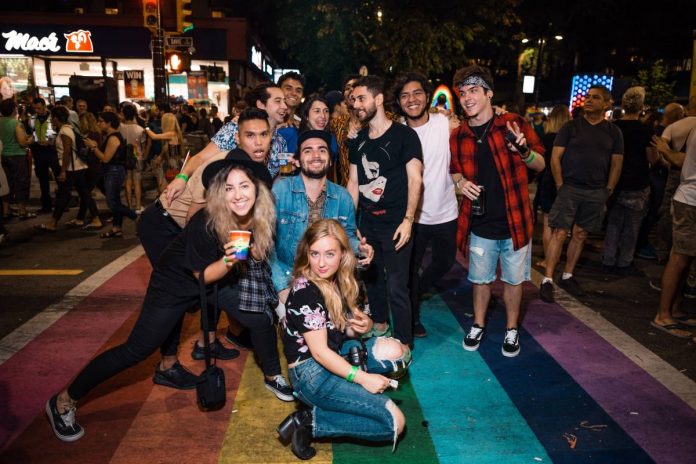
A few weeks ago, the Vancouver Pride Society (VPS) announced that they would be cancelling their annual Davie Street Block Party. This was due to the approximate cost of the event being over $100,000, a number which would be unreachable unless more sponsors donated. Because of this cancellation, thousands of people will not be able to start Vancouver’s Pride weekend on a high note, as I have been doing for the past few years.

On one hand, the cost seems like an exorbitant amount for any event to have to pay up without the help of donations. However, seeing as the VPS ended the 2016 year with a $50,354 surplus, I question how the 2017 Block Party and Pride Parade happened without consideration of what needed to be done to maintain a surplus. Now, with only weeks away from this year’s Pride weekend, I begin to think about how much more hollow it will feel.

Pride is like Christmas, but for LGBTQ+ individuals. It’s a time where there is so much love and happiness to go around in the community. It’s a time where I can be with my chosen family of friends who love me for who I am, while I am dressed up as comfortably as I like and being as loud and proud as I want.

My first time at the Block Party was in 2016, and it completely changed my experience going into the Pride weekend. The Block Party gets attendees to stick to Davie Village, AKA Gaybourhood, which centres all of the energy into one area. This is in contrast to the Sunday Pride Parade, where that energy seems to be distributed all around downtown.

The Block Party always filled my body and soul with the required energy to help me survive the entire weekend. The same goes for all of my friends, and probably all of the other people who are excited to start the weekend off right by enthusiastically dancing the Friday night away. I have a number of friends whom I would always drag to the Block Party, even if they were already planning to attend the Pride festivities on Sunday, because of the event’s ability to get people to simply enjoy the vibe of an evening party without the expectation of surviving a full-day experience like Sunday Pride. But now, with this part of Pride being cancelled and reimagined for 2019, I feel like Pride just won’t be the same.

“With only weeks away from this year’s Pride weekend, I begin to think about how much more hollow it will feel.”

I feel like its cancellation is a reflection of how much the VPS cares about us. If they were truly considerate of how much impact the Block Party had on individuals, pre-emptive measures to ensure its continuation would have been implemented. In fact, in their 2017 annual report, there is an exorbitant increase in advertising and travel expenses. This begs me to question whether or not Pride is really for the people of Vancouver to enjoy, or for the VPS team to fill their pockets.

Taking away the Block Party removes the opportunity for LGBTQ+ youth to ease into the Pride experience and spend their first Pride weekend meeting new people just like themselves. It’s also worth realizing how many queer vendors and art showcases there are during this party, and how such opportunities to have more exposure are now lost. Not only that, but attendees lose an advantageous opportunity to learn more about Vancouver’s gay community. I utilized the event to get used to being unabashedly gay, but I feel like its exclusion from Pride this year takes away the exciting energy that many people would want to have.

Historical pretexts for ridiculous political sanctions

Illustrated by Reslus

UK bans Danish imports in response to late 8th century Viking raids

The island nation passed sanctions on the “Viking homeland,” as secretary of state for foreign affairs Boris Johnson put it, “until Denmark returns all the gold they stole.” When Danish government officials pointed out that there was no such thing as England at the time, Johnson went beet red, and had to be restrained as he shouted, “I know you have the gold!” – AB

Italy bans Mongolian exports to avoid a repeat of the plague at the Siege of Kaffa (1346)  

Where were you when you realised that it was Mongolian warriors catapulting their fallen brothers-in-arms’ infected corpses into the ranks of Roman legionnaires that kick-started the Black Death’s intrusion into Europe? 1346 may seem like a long time ago, but the devastation brought on by the Black Death can still be felt in prospering Western Europe today.

“This is to show the Mongol Empire that we Romans do not forget,” Italian trade minister Marcus Aurelius Caesar pointed out. “Rome will not be defeated again!” – GM

Russia annexes EU as “recompense” for Napoleon’s invasion

The world power launched a full-scale invasion of the rest of Europe, capturing it overnight, despite France vetoing the mission when it was proposed to the security council.

When asked why, Russian President Vladimir Putin stated “we have launched a . . . minor military operation . . . as recompense for the inconvenience caused by Napoleon’s invasion of our country in 1812 . . .” He went on to say, “Yes, we took Paris two years later, but being forced to launch our own counter-offensive only further inconvenienced the Russian people. We demand compensation.”

Several European nations have called on the UN and NATO to intervene, but Russia and the UK have vetoed all such appeals. – AB

Transylvania de-annexes itself from Romania, claiming spoils from the First World War no longer valid

“We honestly thought they wouldn’t notice,” the underground leaders of Transylvania said, shrugging. “I mean, the First World War was so long ago. Does anybody even remember the Austro-Hungarian Empire? No. So why does a secret treaty they signed with the Entente Powers even matter anymore? I mean, even the British Empire was valid back then. That’s how long ago it was. This can’t possibly still be valid.”

The newly elected prime minister of Transylvania shrugged off concerns about Transylvania’s new socio-economic reality. “Ever since Twilight came out, we’ve been debating jumping on the whole vampire bandwagon and making it on our own. This feels right.” – GM

United States declares itself a national security threat due to its involvement in the American Civil War

As our history books tell us, there has been no greater loss of American lives in history than during the American Civil War, and the United States was the sole perpetrator. The American government acknowledges the threat that this radical nation poses to its people, and has labelled the United States as a national security threat in hopes of pre-emptively curbing any future dangers that may arise.

With no foreign involvement, the United States took over 600,000 American lives — which is more American lives lost than in any other military endeavour since. At this time, the United States is perhaps more divided than it has been since the civil war, and the American government does not wish for a repeat of that historical period.  – AR

Fictional Canadian characters that should make us proud

0

Some real-life Canadian figures disappoint us. They make empty promises, do bad things, and make us regular beaver-loving poutine-eaters doubt what we’re supposedly “standing on guard” for. However, in the fictional world there are plenty of Canadian icons to be proud of. Here are just a few:

Scott Pilgrim

Created by Canadian graphic novelist Bryan Lee O’Malley for his Scott Pilgrim series, Scott is a polite, parka-wearing fellow. Scott’s story takes place in Toronto, where he starts out as a between-jobs goof but matures through the power of love and facing his past mistakes. He’s proof that all of us have the power to grow into “real” responsible adults. The series was adapted into the movie Scott Pilgrim vs. the World, staring the lovable (and also Canadian!) Michael Cera as Scott.

Image courtesy of DC Comics

Equinox

A relatively new DC Comics character, Equinox is a Cree teenager who discovers her powers of flight, earth manipulation, and ice control. She hails from Moose Factory, Ontario, and her story is part of the Justice League United series. Her character not only draws a spotlight to the Cree culture, but to life in an isolated town. Writer Jeff Lemire got most of his inspiration and research from Moose Factory, speaking with residents and students about their experiences so the comic wouldn’t end up like the many past and problematic attempts at Indigenous superheroes.  

Deadpool

Maybe we shouldn’t be proud of him for outstanding morals, but Deadpool is funny and can really kick ass. Although in the comics he’s definitely more sadistic, the Deadpool movies have shown him to be loving and protective to the people closest to him. Vancouverite Ryan Reynolds plays his character in the movies, in which Deadpool jokingly claims he’s from Regina, Saskatchewan. Fun fact: after he said that, Regina residents petitioned for there to be a statue of Deadpool in their city; mayor Michael Fougere said, “Nope.”

Orphan Black characters

Orphan Black is a science fiction/thriller TV series about clones. Sounds cool, right? What makes it cooler is that every single clone is played by one woman: Saskatchewan-born Tatiana Maslany. You really have to see it to believe how she incredibly transforms into several distinctively different Canadian characters through both make-up and acting. Though the show’s characters are talented and diverse, Maslany should take the praise here for personifying them and, according to Vanity Fair, changing make-up and outfits up to four times a day.


Image courtesy of Marvel Comics

Northstar

When you think “Canadian X-Men,” I’m guessing that the Albertan Wolverine would instantly come to mind. Who you may not know about is Northstar, the French-Canadian X-Man who used his super speed to win skiing competitions, among other things. Northstar also happens to be Marvel’s first openly gay superhero, although he wasn’t able to come out for over a decade due to, you guessed it, homophobia in the comic industry. Northstar eventually went on to marry his partner in Astonishing X-Men, yet another first for mainstream comics.

Winnie-the-Pooh

What? Winnie-the-Pooh is Canadian? This was my reaction when I found out my childhood icon’s name “Winnie” was actually short for “Winnipeg.” Winnie is based off a real-life orphan bear cub who was bought by a soldier, Harry Colebourn. Colebourn named the bear “Winnie” after his hometown and cared for the bear until he decided to give it to the zoo. This is where writer A. A. Milne and his son Christopher Robin met the bear, and went on to make him famous. Winnie-the-Pooh has charmed generations of kids, and some have even claimed that Winnie and his friends represent different mental disorders, which could be helpful when teaching kids about them.

Recent celebrity suicides outline room to improve mental health dialogue

1
Image courtesy of Getty

In recent weeks, the world lost two iconic celebrities to suicide. It was a shock to all of us, as both appeared to be happy with their lives. The deaths of Kate Spade and Anthony Bourdain stunned me.

Spade was at the helm of a fashion empire built on her eponymous handbags. According to CNN, Spade’s husband, Andy, said he was in “complete shock” after her death — he discussed how she had been getting help for her anxiety and depression, and how the night before she died, she seemed perfectly happy.

Bourdain was a world-renowned chef, having authored multiple books and hosted a few television shows. His most popular show was Anthony Bourdain: Parts Unknown on CNN, which focused on him travelling the world and connecting with people and their cultures through local cuisine. Furthermore, one of his friends said that the last he knew, Bourdain was happy and in love.

There is something to be said about mental health in successful people and feeling like nothing is ever enough. We all naïvely believe that all of our problems will go away once we’ve accomplished our dreams. We trick ourselves into believing that money and success will cure the sadness and emptiness we feel, when in reality, we become emptier after realizing that money can’t fix things that can’t be bought. USA Today discusses how we live in a culture that is too busy trying to “make it” while discarding friendships, family, and self-actualization.

From the outside, their lives sound wonderful and completely fulfilling. These deaths illustrate a key issue; a fulfilling, successful career is only one aspect of life, and does not guarantee wellbeing or overall happiness.

Changing the way we view money and success is not an easy feat, but we can get better at regarding mental illness as more than a stain on our perfect lives. Seeking out professional help and taking antidepressants shouldn’t feel like acts of shame that need to be best-kept secrets.

However, professional help and medication should also not be viewed as cure-alls. A person may be getting a weekly 60-minute session with a professional, but it does not mean that their issues disappear for the rest of the week. Professional help is just a small puzzle piece in the grand scheme of someone’s well-being. Healthy interpersonal relationships are vital to a person’s well-being and perception of themselves.

Unfortunately, as a society, we often struggle to be able to sit down with each other on a regular basis and simply talk about what we’re feeling, especially the emotions deep down that may eventually manifest into something much darker. The dialogue that society creates around mental health should make it so that talking about these topics feels as unrestricted as speaking with a friend over the phone.

Kate Spade and Anthony Bourdain show that regardless of how happy the people around you seems, they could be crumbling on the inside. It will always be necessary for us to check up on each other.

As university students, we probably all have experiences — one way or another — with a classmate or friend who has struggled with their wellbeing. Therefore, we need discussions of mental and emotional well-being to become as routine and comfortable a part of everyday conversation as talking about the weather.

These recent losses have shown that we still have progress to make in regards to our dialogue on mental health. We each have a responsibility to improve it, and we owe it to each other, as classmates, colleagues, and friends. So today, even if your friend seems happy, ask how they’re doing. Give them a hug. It could help more than we give it credit for.

SFU authors’ spotlight

1
Image courtesy of McClelland & Stewart

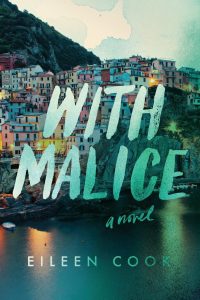
With Malice by Eileen Cook (an SFU Writer’s Studio mentor)
“Who we are is what comes out when shit goes bad.” Without giving away too much, this sentence from Eileen Cook’s With Malice sets the stage for the entire novel.

     The story starts with the main character, Jill, waking up in a hospital with no recollection of a tragic incident that saw her seriously injured and her best friend killed. The novel is disorientating from the start, as it follows Jill suffering from the loss of her friend Simone and of her memory. We, as readers, are kept in the dark just as much as Jill is, yet news articles, police statements, and even Facebook posts slowly feed us information.

       There is a strong sense of betrayal and fear present, and the author makes us feel as if we are in Jill’s shoes. To be locked out of your own mind, especially while you are a suspect in the murder of your best friend, is unthinkable, yet Cook makes us feel like we’re living it. This book is anything but light-hearted, and the fact that the only two people who know the truth about what happened are either dead or amnesiac is nerve-racking. The slow telling of the story only increases the anticipation. We are left to wonder: who is the real victim, and what is the real story?

       Admittedly, I was a bit wary of this book, as I’m not usually a fan of mystery-thriller novels, but (forgive the cliché) I was hooked from the very first page. This novel has every element a bookworm is looking for: dry sarcasm and humour, a sense of creepiness that doesn’t let up, teenage drama, international crime, and, of course, romance. You won’t be able to put this book down, so don’t pick it up during exam season. – NS

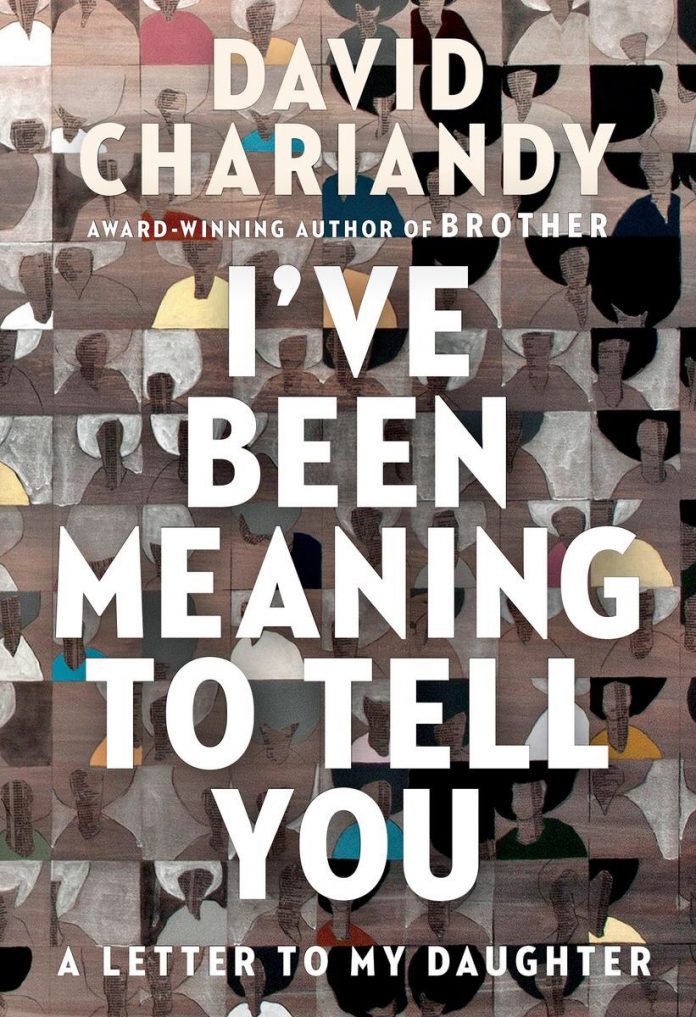
I’ve Been Meaning to Tell You: A Letter to My Daughter by David Chariandy (SFU associate English professor)

As a “person of colour,” how are you supposed to tell your child that no matter who they are and how good they are, they will be judged for the colour of their skin? How do you tell them about your own life, of the memories you’ve chosen not to dwell on from your childhood, where kids would taunt and tease you for the blackness of your skin?

     These are some of the questions David Chariandy grapples with, as he strives to talk to his daughter about race, how racism exists in Canada, and how he hopes she’ll never need to experience it, even though she already has.

     Every word is chosen with the utmost care and attention to try and convey what might be impossible to describe. Chariandy’s prose is vulnerable and honest, and throughout the book he is soft-spoken as he delves into the politics of race. There is pride, too, in who he is, who his family is, and what they’ve lived through.

     This book is Chariandy’s honesty with himself and his loved ones, and his attempt to say what he’s never been able to tell them aloud using the personal comfort of text. It’s Chariandy’s wish for his daughter to understand their family history in terms of racial politics. It’s the hope that although this was one man’s way of having this conversation with his child, it may help others, too.

     It’s a profoundly beautiful insight into what it means to have your body turned into a site of racial politics, so grab a copy and learn something from this deeply enlightening read. – CM

Social infrastructure development project initiated by four B.C post-secondary institutions

0

On June 11, Simon Fraser University (SFU),  the  British Columbia Institute of Technology  (BCIT),  the University of Northern British Columbia (UNBC), and  Vancouver Island University (VIU) committed to establish the B.C. Collaborative for Social Infrastructure. The  initiative originated from a roundtable hosted by SFU and McConnell in 2017. The roundtable was attended by presidents of universities and foundation representatives from all over Canada.

     The collaborative project is stated to help the institutions involved make palpable and sustainable community impact.  

     UNBC President Daniel Weeks said, “Each institution will bring its unique knowledge and resources to the discussion and by working together, continue to bring the University mindset of problem solving outside our walls and into the communities we are proud to serve.”   

     The initiative is supported by the McConnell  Family  Foundation.The foundation has previously funded Universities Canada to help them establish a nationwide platform for knowledge on social infrastructure development open to different Universities.

     SFU president Andrew Petter stated that “Canada’s public post-secondary  institutions have a huge opportunity, and I believe our responsibility is to increase the contributions we make to the communities we serve.”

     The  partner institutes will focus on specific action areas which are reported to include “green and sustainable campus and community  building, Indigenous  entrepreneurship and social finance, social procurement, and library outreach and community scholar  programs.” 

     Kathy Kinloch, President of BCIT said, “BCIT and our educational partners play a pivotal role in cultivating the talent and applied solutions that will drive our economy, green our planet, and enhance quality of life within our communities.”

    The four institutions are set to collaborate on practices and policies that would enable them to identify how initiatives can be increased and enhanced. The collaboration is also aimed at encouraging progress. The institutions further plan to come up with a set of practices that can be later offered to post-secondary institutions across Canada.

    “This project  will  enable SFU and our partners to share best practices and to test some of the many instruments we can leverage to build social infrastructure,” said Petter.   

Spotlight: Embark

0
On today’s spotlight, we feature Embark, an independent non-profit student society at SFU focused on empowering the next generation of student sustainability leaders.

A completely true and historically accurate history of Canada

0
Image courtesy of The Canada Guide


1351: Man living his best life taps tree and decides to boil sap on a dare. Discovers how to make maple syrup, changing the pancake game forever.

1400: All is well. The moose just had a baby boom. The bears have settled The Grizzli Wars.

1503: Trudeau family dynasty prophesied to reign as Prime Minister for many moons by a glowing beaver crawling out of a creek. Local Cree nations have no idea what the fuck this means.

1532: Jacques Cartier promises to pay back an Algonquin Chief for his half of their Uber ride and never does, setting the premise for a long history of broken white promises.

1567: British forces abandon hopes of militarizing pinecones in an attempt to accelerate conquest.

1602: Early settlers begin storing milk in plastic bags for safekeeping during long canoe expeditions.

1742: “O Canada” drunkenly composed at a lumberjack camp.

1754: Canadian man first to coin the term “sorry.”

1755: British soldier does not say sorry while deporting the Acadians from New Brunswick.

1763: French nobles are relieved after getting kicked out of North America by British forces, since Québec isn’t picking up any fashion or pâtisserie skills. While wondering what they’ll do with their free time now, they die in the Revolution.

1812: Canadians burn down the White House since Canada is totally a real country by now.

1845: Man on Franklin Expedition drops coffee overboard and invents the Iced Capp.

1867: Britain decides to let colonies have a playdate at Charlottetown and realizes with surprise that they’re actually kind of competent and self-sufficient. Like a surprisingly good art project that your Mom kept on the fridge, Canada is born.

1889: Sir John A Macdonald and Sir George-Étienne Cartier discovered having a torrid affair — in Macdonald’s own house. Damn.

1903: Half of Prince Edward Island breaks off, leaving Canada with a teeny tiny province.

1918: Civilians dying of the Spanish flu refuse life-saving vaccine as civilization crumbles around them immediately following the First World War, citing fear of autism and wishes to live a clean, holistic life cycle.

1921: Men accidentally elect first woman to Parliament on a dare and are horrified to learn that women are politically literate and competent beings.

1924: Economy doing great! Loonie never been stronger!

1938: Two men finally break vicious cycle of holding door for each other for the last twelve years.

1939: Oh fuck.

1950: Denim suit adopted as national dress.

1962: First American movie producer discovers just how much cheaper it is to shoot in Canada.

1965: Parliament adopts the current Canadian flag, once Lester B Pearson’s drawing of an American flag with a big ‘X’ in it is deemed impolite.

1990: First Walmart in Canada opens. Attempts at national identity are abandoned entirely.

2003: Avril Lavigne deemed national treasure by Heritage Canada.

2018: Québec tries to leave Canada again, calling Tim Hortons’ new poutine a blatant cultural disrespect.