
Home Blog Page 549

Album Reviews

0


Indigo by Wild Nothing

Returning with his fourth LP, Indigo (2018), Wild Nothing still proves to be a driving force in the realm of dream-pop and alt-rock. Even if it’s been eight years since Wild Nothing’s first album, Gemini (2010), long-time fans can still recognize his sound with Indigo — but with the changes he made to his sound, this album brings him in a new direction as an artist.  

       Indigo sounds more refined than Wild Nothing’s signature dorm-recorded works; upon first listen, long-time fans may be disappointed by the lack of lo-fi sound. This change, however, isn’t necessarily bad. The album soars right away with its opener “Letting Go,” and the quality carries itself through every song, hitting peaks with “Wheel of Misfortune” and “Canyon on Fire.” However, Indigo sadly doesn’t contain the same lyrical depth as albums like Gemini and 2012’s Nocturne.

       Even though the lyrics may not strike as deeply as previous works, Wild Nothing is dipping into a realm of higher musical fidelity, which makes me eager to hear upcoming releases. – EW

 

Room 25 by Noname

Room 25 is a beautifully affected album filled with introspection and depth. With a background in spoken word poetry, Noname continues to rap elegantly in Room 25, interweaving intelligent social observation with poetic devices with a graceful flow.

       Soft-spoken yet powerfully articulate, Noname’s creative music is astoundingly intimate and vulnerable. One track of hers which is particularly memorable for its sentimental subject matter is “Don’t Forget About Me.” The song exhibits Noname’s self-awareness as an artist with lines like “You title email ‘Noname thank you for your sweet Telefone / It saves lives’ / The secret is I’m actually broken.” The bars hit especially hard as she compares her art’s impact on fans to her own flawed state.

     This album delicately fuses neo-soul and jazzy inspired beats. “Blaxploitation”, a track named after the film genre from which it draws its funky soul influence, directly critiques the damaging nature of black stereotypes. The cinematic, orchestral production of “no name” draws the album to a moving close, with Noname exploring her identity as an artist.

      The album also contains features from up-and-coming artists. Ravyn Lenae lends her sultry soprano to “Montego Bae,” and rappers Smino and Saba join in for a smooth collaboration on “Ace”.

      If you like chill hip-hop, and want to be moved by deft and nuanced lyricism, “Room 25” is the poetic album for you. – KC


Club Sofa LP by Club Sofa

  Following numerous shows over the past year and a half (-ish), local Vancouver surf-rock band Club Sofa has released their debut self-titled LP. Across its eight songs, Club Sofa LP proves itself to be a brilliantly relatable and fun album; powered by each member’s individual performance.

           It’s interesting to hear the difference in sound compared to the live versions of these songs. While the live performances are generally higher octane, the studio-recorded versions carry the exact same energy and identity; each song is so individually recognizable and carries itself perfectly from start to finish. Lead singer Payton’s vocals glide powerfully across the album, especially in moments like the final chorus of “Beach Bum Baby,” and lead guitarist Dom’s skills provide unbelievably catchy riffs. Alongside them, bass player Jas creates a powerful backbone for each track, and drum player Jess powers the rhythm and atmosphere. Club Sofa’s debut LP has most definitely told us they know how to make a quality album, and I’m interested to see what lies ahead. – EW

What grads do: The fascinating culture and economy of sneakers

1
Photo courtesy of Michelle La

Michelle La, a master’s student studying anthropology at SFU with a focus on economic anthropology, is one of the most intriguing academics I’ve ever met. Researching the explosive subculture of the sneaker industry, Michelle studies the rapidly expanding economy surrounding it. Whether she’s analyzing the social processes that get people lining up for new shoes, keeping an eye on nuanced, widely coveted brands, or diving deep into the racial history of the industry, Michelle has become exceptionally versed in sneaker culture. I had the privilege of sitting down with Michelle to discuss her exciting research as an MA student.


P: Can you tell me a little more about the research you are currently conducting?

ML: I study sneaker enthusiasts, a.k.a. sneakerheads. I study the economic practices and methods people engage with in this informal economy. I also analyze the physical and digital spaces in which sneaker enthusiasts partake in their economic activities.


P: As an anthropology student, what prompted you to select the idiosyncratic world of sneakers?

ML: Firstly, I chose to focus on this field of research because, to my knowledge, no one has written about it yet. My first love wasn’t the social sciences; my first love was fashion. I wanted to ask important questions about cultures, and, through my research, I wanted to make the familiar strange and the strange familiar. In terms of the sneaker world, I wanted to use my research to help understand the individuals within its culture.


P: What have been some of the most notable events you’ve experienced within your research?

ML: What’s interesting is that, depending on the city you’re in, what’s considered “desirable” in  the sneaker market varies. Whether you’re in Vancouver, Toronto, Los Angeles, or Paris, the taste or demand in sneaker brands will be nuanced.

I remember being in LA during February of 2016. I was in a line-up on the release day of an Adidas Ultra-Boost drop. However, on that same day, there were a new pair of Jordans being released. So, as I was lining up in front of the LA sneaker shop, Undefeated, I suddenly became confused because I couldn’t believe that people in this long line were waiting for different sneakers. I’ve never been in a line where that happened.


P: Do you ever face pretentious attitudes from other anthropologists regarding your research?

ML: First of all, I usually get a “Whoa, I didn’t know this market existed!” So, that’s funny.

I presented at an economic geography conference at a university in Kelowna this past summer. This was in front of a group of prestigious economic geographers. I was one of the very few women of colour in attendance, and I’m heavily tattooed as well. I was fairly nervous.

One of the best comments I received came from a man in attendance. After my presentation, he told me that “my research troubles economists,” because my research challenges the idea that the marketers and companies solely determine what’s of value. My research shows that sneakerheads are so engaged within the determining of what shoes are or aren’t hot, so it challenges the old norms in which economists usually abide within.

So sure, people are surprised when I first tell them what my research is based on. There’s skepticism at first, but once I explain what my work is and what’s important about it, they grow more intrigued.


P: Have you ever felt jaded in the sneaker-world simply because you’re a woman?

ML: I think so, but not just for being a woman. I’m a particularly young-looking woman. I am young. I’m a woman of colour. I’m in an industry that’s quite male-dominated.

A peculiar type of sexism I experience in the sneaker game is when guys try to impress me with unscrupulous behaviour. They don’t see me as an economic threat. While conducting research, I’ve had guys try to flirt with me. A lot of guys grow surprised when they find out that I know a lot about the sneaker culture.

I think my race plays more of an influence on how I’m treated in this industry. I think that perhaps if I wasn’t a person of colour, maybe some people would have been more forthcoming with sharing what they’ve observed, themselves, in the sneaker culture. However, for the most part, I’ve been respected.


P: Sneaker culture was manifested from the hip hop culture, which in turn was created by Afrocentric people. As the sneaker culture becomes progressively mainstream, do you think people should fear it becoming whitewashed?

ML: I don’t know if I have enough data to fully support this, but the research I now have suggests that the sneaker culture is a commodification of black masculinity. If you go to the culture’s history, it emerged from the Afrocentric neighbourhoods of New York. At its genesis, the culture helped Black boys express themselves and present their identity.

Now, with the sneaker culture’s biggest trendsetters (like Kanye West and A$AP Rocky), Blackness has been associated with what’s cool, edgy, and deviant. I don’t think people understand that it’s Blackness that’s made the sneaker culture “cool.”

Since the commercialization of the sneaker culture, blackness has been appropriated. Therefore, the sneaker culture has already become whitewashed.


P: What’s the most imperative realization you’ve made in your research?

ML: I think the most important thing, both inside and outside of my discipline, is that we need to stop looking down on millennials because the way we’ve found ways to monetize and create communities, platforms, and channels in this economy is truly spectacular. Typically, us millenials do get a lazy reputation. Hopefully, my research challenges this pre-conceived notion that’s been placed on us.

As she continues to discern the unique aspects of the sneaker culture, Michelle provides more insight into both the social constructs and buying and selling processes sneaker-heads partake in. Her work is an excellent reminder that the amalgamation of individuality, creativity, and hard work that makes us all up has a place in the world of academia. More information on Michelle’s research of the sneaker economy, and culture, can be discovered on her website: https://www.mla.space/sneakers/ .

World News Beats

0


Kim Jong-un to invite Pope to visit North Korea

North Korean leader Kim Jong-un will reportedly invite the Pope to visit North Korea.

South Korean President Moon Jae-in is expected to extend a formal invitation to the Pope on behalf of Mr. Kim, as part of North Korea’s outreach efforts, next week during Jae-in’s Vatican visit. North Korea does not currently have a diplomatic relationship with the Vatican. No Pope has been to North Korea, but Kim Jong-un’s father Kim Jong-il reportedly invited Pope John Paul II to visit in 2000.

The Vatican has not commented on whether it would accept or reject the offer.

With files from Australian Broadcasting Corporation News and The New York Times.


Sierra Leone scraps plans to build airport with China

Sierra Leone has scrapped plans to build a $400 million Chinese-funded airport near its capital, Freetown.

Sierra Leone’s aviation minister, Kabineh Kallon, said in a statement to BBC News that the airport was not needed presently. Instead, the current international airport would be renovated with a possible bridge built to help connect it to Freetown, mentioned Kallon.

China’s ambassador to Sierra Leone, Wu Peng, said to BBC News that he did not see this event affecting future ties between the two countries.

The former president of Sierra Leone, Bai Koroma, had agreed with China to build the new airport before the former lost elections in March. China is the largest infrastructure project financier in Africa today.

With files from BBC News.


Singapore airlines reinstates longest commercial flight

On October 11, Singapore Airlines reintroduced their 16,700km Singapore-Newark flight, which is now considered the world’s longest commercial flight. The flight takes over 17 hours, flying to New Jersey over the Arctic.

The airline had cancelled the Singapore-Newark route in 2004 due to high fuel cost. Ultra-long-haul flights such as this one are now possible due to more fue- efficient planes such as the Airbus A350 and Boeing’s 787-Dreamliner. This cuts down on travelling time, which customers favour.

No economy class seats are available as the planes are outfitted with only premium-economy and business-class seats.

With files from The Straits Times and Global News.


Worldwide C-section rates undergo dramatic increase

A group of studies published in The Lancet has found that the number of caesarean sections (C-sections) performed worldwide has increased almost twofold, from 16 million in 2000 to 29.7 million in 2015.

Researchers believe that 21% of births globally are through C-section. A C-section is a surgical procedure used to deliver a baby through the abdomen and womb. The World Health Organization has called for a reduction in unneeded C-sections and greater access for women who need it. C-sections generally carry greater risk for mother and child relative to a vaginal birth.

About 26% of deliveries in Canada occur via C-section, compared to about 32% of deliveries in North America overall.

With files from CTV News and BBC News.


Album versus Album: Arctic Monkeys

0


 AM (2013)

Electric guitars, heavy drumming, and Alex Turner’s mesmerizing vocals — Arctic Monkeys had all of the ingredients to create one of their most flawless albums, AM. Almost every song is arguably a hit: from “Do I Wanna Know?”, which features a memorable guitar riff, all the way down to the more affectionate sound of “I Wanna Be Yours.” The album is a cohesive collection with a clear rock-and-roll influence, blending just the right amount of headbangers and slow ballads. Without a doubt, AM is one of the most recognizable albums to date in the indie rock genre.


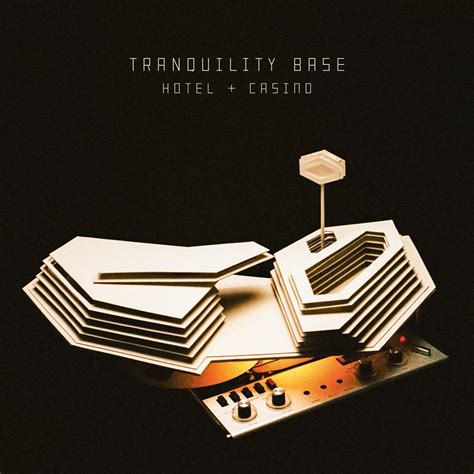
Tranquility Base Hotel & Casino (2018)

A complete contrast to 2013 Arctic Monkeys, Tranquility Base Hotel & Casino channels more of a cocktail-lounge vibe. The band takes a very experimental approach, leaving their electric guitars behind to favour retro keyboards. There is a definite David Bowie influence, especially in songs like “Star Treatment” and “Four Out of Five” that are rich with motifs of outer space. However, the intricate and unfamiliar verse patterns in each song are hard to follow, so at times, you might find them more confusing than enjoyable.


Verdict

An album like AM is a hard act to follow, and the release of Tranquility Base Hotel & Casino makes that clear. While I’m all for bands growing and changing their sound, it takes a particular type to appreciate the complexities in their 2018 album. AM, on the other hand, is packed with catchy tunes that no fan of indie rock could resist.

My study spot

Michelle G's study spot


Michelle C’s study spot

My favourite study spot is a quaint café and bakery called The Coffee Bun. Located in Coquitlam, a mere five-minute drive from my house, the café has just the right ambiance to study in. Their décor leans towards the natural side, with lots of wood tones and artificial greenery running throughout the store. Typically, there are only a couple of other patrons around when I arrive in the morning, so I can usually steal my coveted seat at the long table with the leather cushioned chairs.

I like to order a London Fog and their signature coffee bun before settling down. It’s here where I do most of the grunt work for my essays. With my planner and pens on one side and my food on the other, I get to typing out my first drafts. I don’t usually spend more than two or three hours there — that’s about how long it takes for me to finish that cup of coffee — but for those hours, I am absolutely focused. I’m able to get more done than I would spending an entire day at home. Not bad for six dollars.

– Michelle C


Michelle G’s study spot

I always like to study in an area that is quiet and full of light. There can be background noise as long as it’s nothing too distracting, like single voices — it’s too easy to accidentally eavesdrop and lose my focus. I like to have my laptop, my notes, my readings, and a variety of colored pens and highlighters laid out, so that everything is within reach. I keep snacks on hand to so that I don’t forget to eat while I am in the zone.

Note that my phone is purposely missing from this photo (and not just because I used it to take the photo). I hide it either in my backpack or in my basement if I’m at home. It’s just too tempting to constantly check on my texts and social media if it is sitting in front of me.

– Michelle G


Jennifer’s study spot

With a shelf lined with some of my favorite book series and a windowsill of succulents and cacti that I haven’t accidentally murdered yet, my desk is one of the places where I study the most often. It showcases my love of organization through my collection of whiteboards and planners, which I update on a daily basis.

My study routine usually begins with turning on some music and sitting down to quickly update my planner and whiteboard calendar. Often times, if I am feeling stressed, I will use my larger whiteboard to create a prioritized list that I call my “battle plan.” This helps me organize how I will get through the next week.

Before I get to work, I also have a collection of Darth Vader magnets that I use as a little mood tracker which I like to update. My most recent Dollar Tree visit yielded the three whiteboard magnets with the headings “Don’t Forget,” “To-Do,” and “When I get to it…” which I really like using to help plan out my study session.

– Jennifer L


Natasha’s study spot

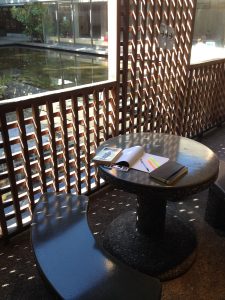
My preferred study spot is calm and isolated. I know most people go to the quiet floors of the library for spots like this, but ever since I looked on the ground beside one of those library desks and found a pile of nail clippings, I haven’t been the same.

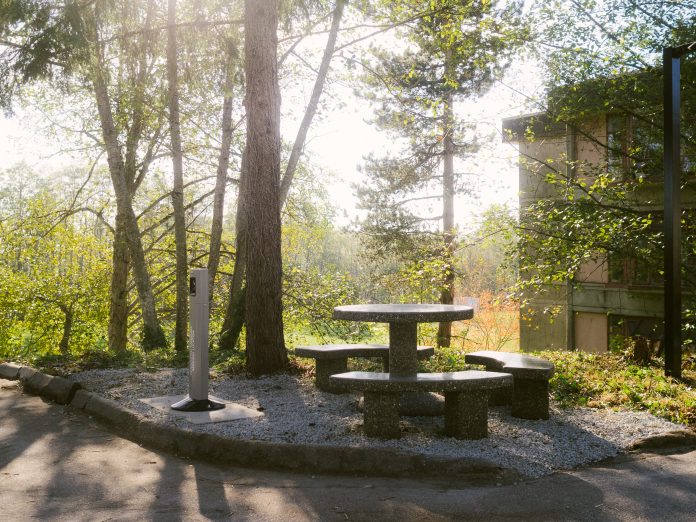
My favourite study spot is at the stone tables and benches beside the Robert C. Brown Hall, under Images Theatre. Although it’s cold in the fall and winter, the benches and tables are clean and protected from the rain. Even when the weather is nice, I don’t usually see people at this spot, maybe because the benches are frigid and literally rock hard. I usually take a coffee with me to fend off the chill, along with my planner, papers from class, and highlighters.

I take notes or draft out essays there because it’s easy to stay focused on boring tasks. There’s a little pond beside the area and it’s relaxing to watch the pond skaters and dragonflies when you’re taking mental breaks. However, there’s a room for tutorials right across from it, so bored students will probably be watching you.

– Natasha T


Nathaniel’s study spot

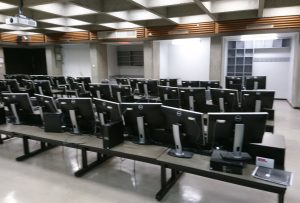
One of my favourite study spots is the basement computer lab, on the second floor of the SFU Library at the Burnaby campus. Being sort of below the surface, it’s sometimes overlooked by the other students, so it can be quieter than other places and it has more space available.

There are widescreen dual monitors for the Windows computers there, which I find easier to study with. There are also lots of charging ports, which is handy because my phone’s battery drains pretty quickly. The basement feel of the place also comes in handy during summertime since it’s a little cooler, and sometimes it even has air conditioning running. The second floor is also not a silent floor, so you can study with friends.

As for how I study, I usually have a physical copy of a textbook or the assigned readings in front of me, and then have note-taking software and lecture slides or notes open on two computer screens. I usually highlight important stuff in assigned readings and write important points from lecture notes by hand, since that helps me to remember things better. That way, when it gets closer to exams, I can study off my handwritten notes and highlights.

– Nathaniel T

Octopath Traveler may be the saviour of JRPGs

0
Image courtesy of nintendo.co.uk


As a game reminiscent of old Japanese role-playing games (JRPGs) like Final Fantasy or Chrono Trigger, Octopath Traveler can make players feel all of the nostalgic feelings 90s games had, and recreates it for a millennial audience. Not only is it one of the most beautiful JRPGs in the genre, but it stands out as the kind of game that challenges players creatively and intellectually.

       The game centres on eight different characters who each adventure around the world — hence the name, Octopath — trying to solve their own specific problems. However, all paths ultimately intertwine in such a fashion that the player can assist each traveler’s story.

       Players manage four characters at a time, and each has a unique ability that aids your quest. For example, Cyrus, a scholar, is a magic-user who can speak to NPCs to find out more information. On the other hand, Therion, a thief, can steal items from them. The player must decide what kind of playstyle their team will take: stoic and intuitive, or conniving and aggressive.

      But these aspects of the game are only relevant in the non- combative parts of the game when players are travelling from city to city, interacting with many kinds of NPCs. While the player must play strategically, the game’s turn-based combat dictates its pace: either players are incredibly strategic in causing an enemy’s slow death, or they players can try to use brute-force to ensure an enemy’s quick demise. The beginning of the game is a little slow since players need to determine how each character helps them in both the overworld and in combat, but by the mid-point of the game, it picks up, as players master the art of getting what they want with the resources at their disposal.

       Having invested a solid 60 hours of gameplay into Octopath Traveler, I was quite satisfied with how much fun I had. My biggest gripe is that it required a lot of grinding in order to get to a point where I felt my characters were strong enough to mow enemies down. Also, while the open world made me feel like there was a lot to explore, it became frustrating trying to complete small quests while having little to no direction on where to venture off to in the vast expanse.

        I would definitely recommend this game to Switch owners who enjoy a long-haul game. Patience is definitely a virtue, and this game is definitely not for impatient players who are looking to play casually. With that said, Octopath Traveler made me appreciate the amount of time I put into it, matching my extensive effort with as high a reward. If you like to work hard at something until you see results, then Octopath Traveler will be an absolute treat.

Octopath Traveler is currently available on Nintendo Switch.

Students gather at AQ reflection pond to reflect on their own worthlessness

2
Illustrated by Siloam Yeung

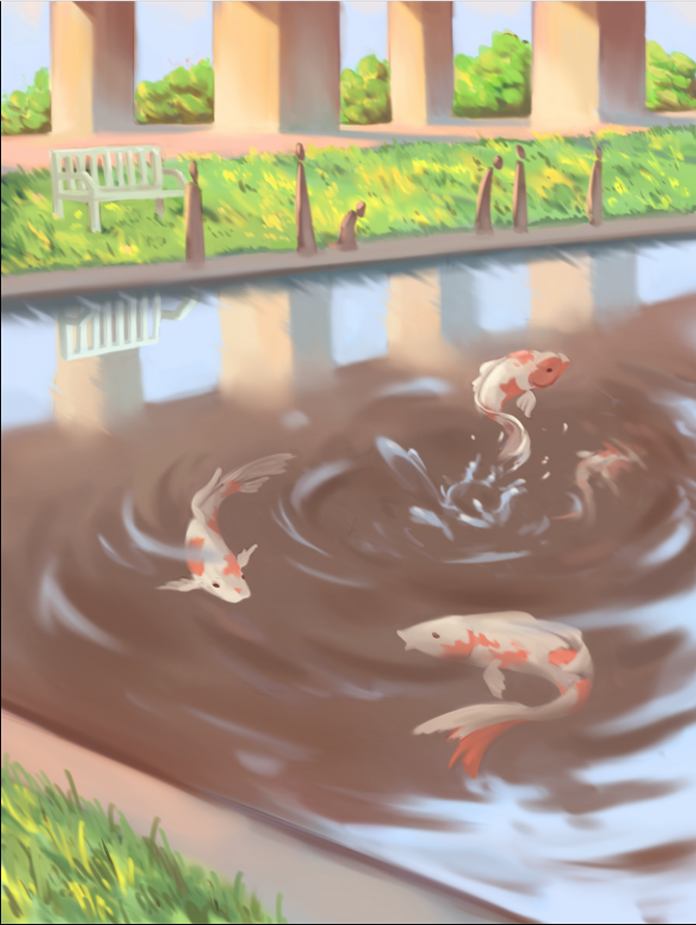
Last Tuesday, hundreds of SFU students congregated at the reflecting pond in the Academic Quadrangle (AQ) to peer into the water and ponder whether any of them add any real value to the universe.

“I used to believe in myself, which is why I even came to this school in the first place,” said one student (all interviewees requested anonymity, since they were no longer sure that they had any identity to begin with.) “Now, I know that ‘myself’ is just a social construct whose actions have no practical ramifications on the orgiastic interplay of atoms which light bounces off of to form the illusion of ‘Metro Vancouver.’

“I feel liberated, I guess.”

Students had all sorts of dark and tangentially related epiphanies as they ogled the koi fish cheerfully luxuriating in each other’s piss while floating through the eerily tranquil waters they call home.

One car-owning student recounted how, upon seeing himself in the pond, he understood that it was time to stop selling his bone marrow for money to pay the ever-rising parking rates on the mountain. He had realized that his flesh wasn’t even worth the price they paid. It was actually worth nothing, “in dollars or otherwise.”

Another began to cry as he spoke to us. He had written a philosophy exam earlier that day, and the reflecting pond had revealed that it didn’t matter if he wrote down the right answer when the test called for him to evaluate the validity of an argument about “that bitch Abby and her godforsaken peanut allergy.” All over the world, Reese’s Cups were still killing toddlers on the daily, and he was powerless in the face of that.

A Beedie student and a health sciences student, dissatisfied with their respective portfolios of accomplishments, jumped into the water together in the hopes of validating their lives. They had realized that the only people they had yet to sell down the river for their own benefit were themselves.

Around sunset — no one present could or would tell The Peak the exact time, because by this point the students had accepted that 24-hour days were just another sloppy, meaning-devoid lie sold to them by the Trudeau administration — dozens of professors lined up to show their support for the students, and do their own soul-searching.

“My ex-wife said she left me because she hated me, and I never understood it,” says Dr. Adam Fortune, an engineering professor. “Now that this pond water has shown me that in fact, I hate myself, I finally get it. I have closure about that whole affair, and my busted overhead projectors don’t smell like her any more.”

(Dr. Fortune was fine with being named because even in the depths of his self-loathing, he somehow still manages to be self-centred. Go figure.)

The other professor we asked did not wish to comment, instead asking that The Peak wait until he published his introspective findings in the next edition of his textbook, which he assigns as course reading to his own students every semester. He told The Peak that they would be going for around $150 apiece in the bookstore in January. Then The Peak told him to go shove the prosthetic leg from the nearby Terry Fox statue up his dick-slit.

The students may assemble again on a weekly basis, or they may not. They could not come to a consensus, since investing effort into successfully coordinating plans with each other would have come too close to working productively towards a hope, dream, or goal.

Printing costs at SFU shouldn’t be a thing

0
Photo by Alfred Zhang / The Peak

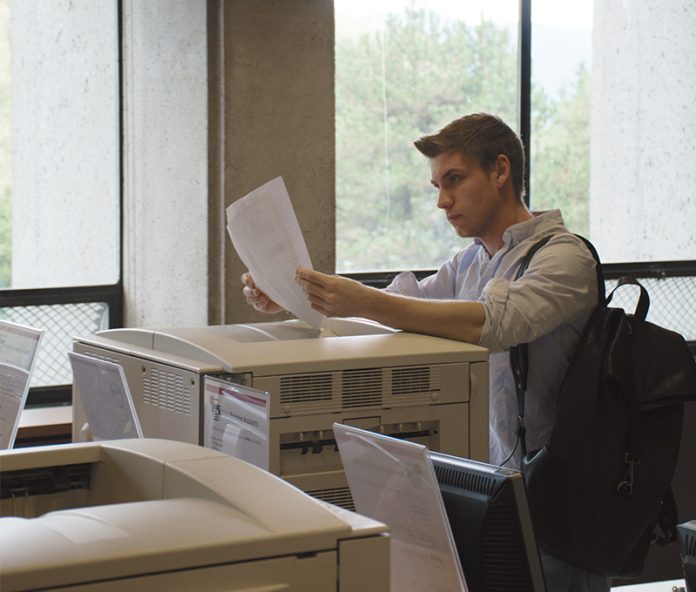
One thing that majorly irks me as an SFU student is the printing fees. Surrey campus charges $0.11 per side for a black-and-white printout, and $0.25 per side for a colour one. At Burnaby campus, it’s $0.11 for black-and-white and $0.30 for colour. Printing class material is a regular part of our academic routine, and we often need to do it at school.

It might be cheaper to print at home, but the costs of a good printer are often way beyond a student budget. Some people’s only option is to pay the school each time for the privilege of doing something that most of our courses require from us. This is especially bad if you’re a student who feels more comfortable working with paper than digital copies, or if you often mess things up and end up needing to print fresh copies of your assignments.

So many students need this utility, both regularly and in emergencies. It feels bad to be putting in credit card information just to print in these cases, or to put time into managing yet another account balance with the school’s printing accounts.

After paying thousands of dollars in tuition per semester, you’d expect some level of leniency on printing fees. SFU should provide free printing for its students and faculty. Before calling this impossible, it’s important to note that other post-secondary institutions do have better printing options. At Douglas College, for example, students get 300 free printouts per semester.

This issue isn’t humongous, and it certainly isn’t at the forefront of my daily struggles as a student. I can’t imagine spending much more than around $30 a semester for paper-heavy degrees, which would add up to about $100 a year and $400 through a bachelor’s degree (though, for the majority of students, the “four-year degree” is a fairytale sitting right next to Santa Claus and the tooth fairy).

But we pay enough for basic utilities in post-secondary: textbooks, food, and in some cases, rent. I don’t think it’s too much to ask that printing be eliminated from that list. It’s minor enough that people who use it would be grateful, and those who don’t may never even notice. Our time and energy should be all we need in our papers and assignments, rather than the cup of coffee we lose every time we print a page.

Research Roundup

0
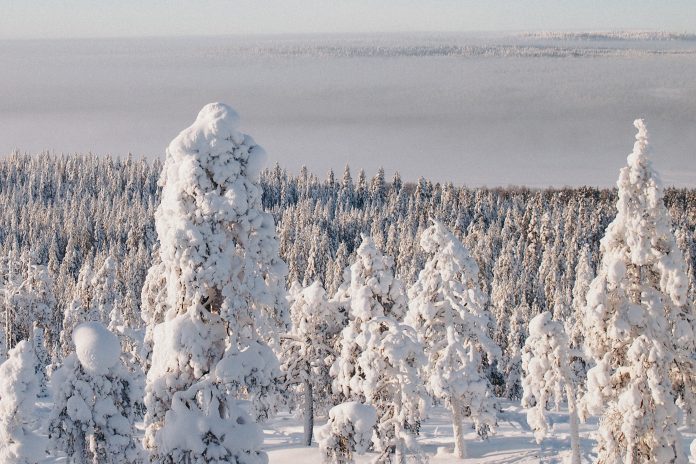
(Photo courtesy of Wild Nordic)


Climate change causes plant community to change in Arctic regions

A study has found a relationship between the impact of climate change and the growth of new, taller plants in the Arctic and tundra regions. The research has also looked into how warming affects the community structures of cold weather ecosystems and plant traits.

The lead authors of the study, which has been published in Nature, included SFU biology professor David Hik as well as Isla Myers-Smith, Chancellor’s Fellow, University of Edinburgh, who is one of Hik’s former PhD students.

The worldwide study with more than 100 participating researchers found that climate warming helped plants grow taller at arctic or mountainous sites like in the Arctic, Alaskan, Canadian, Icelandic, Scandinavian, and Siberian mountains. This increase in plant height is projected to affect soil temperature, decomposition, and carbon cycling within the ecosystem. Shorter plant species did not appear to be affected by the rise of taller species.

The overall change of tundra plant communities might depend on how wet the tundra becomes. “Our study highlights the importance of accounting for future changes in water availability, as this will likely influence both the magnitude and direction of change for many traits,” noted Hik.


Temperature and salmon found to affect steelhead trout behaviour

On the Keogh River in northern Vancouver Island, SFU biology doctorate student Colin Bailey and biology professor John Reynolds have found that temperature and population levels of salmon, along with other conditions, will cause steelhead trout to alter their life cycle, size, and numbers.

Reynolds, who is also examining the status of plants and animals across Canada, believes the insights of the study will help efforts to conserve steelhead trout. For example, a large influx of salmon returning to the river system will cause steelhead trout to migrate to the sea sooner and more steelheads to breed in rivers. Bailey speculates that the spawning salmon lay eggs in the river, which are a potent and energy-rich food source for the juvenile steelheads.

However, Bailey admits the situation is complex, saying that “these fish seem to be controlled by many different factors at different times.”

For now, research will look at how size and age at entry to the sea affect steelhead life at sea. This research in turn will help researchers see if steelhead rearing conditions affect whether they can return and reproduce themselves.

SFU announces two designated cannabis smoking areas on Burnaby campus

1
(Chris Ho / The Peak)


In response to B.C. legalizing cannabis, SFU has designated two temporary areas on Burnaby campus for cannabis-smoking.

One area is at the intersection of the Science Road and South Campus Road; the other is in the campus residential area, between Shell House and McTaggart-Cowan Hall. These areas are separate from the areas designated for smoking tobacco. There will be no such areas at the Surrey and Vancouver campuses, as they are located in urban centres, and therefore fall under municipal smoking regulations.

SFU employees are expected to continue follow existing SFU policies and WorkSafeBC regulations, which ban all substance-induced impairment at work.

SFU administration asks students who must use medical cannabis to register with the Centre for Students with Disabilities. This is meant to help the university “assist in ensuring appropriate accommodations within learning environments.”  said Dr. Tim Rahilly, vice-provost and associate vice-president, students and international, in his emailed announcement.

Rahilly additionally informed that the university will provide “reasonable accommodations for medical cannabis consumption on a case-by-case basis.”

SFU communications and Marketing sent out an emailed Cannabis Policy update on behalf of Sandi de Domenico, AVP Human Resources and Mark LaLonde, Chief Safety Officer. The update mentioned that the University was still reviewing its policies to analyze how best to update it to reflect the changes made by the new legislation.

Rahilly stated that the university’s first priority is to create the “safest conditions possible” for the SFU community, and this will be reflected in the latest policies. He continued that students, faculty and staff will also be consulted on the draft policies. The details of this consultation process will be released over the next few months.

“We are also working on developing a community education/awareness plan to inform our campus community for when our new policy is ready,” said SFU communications associate Justin Wong in an emailed statement to The Peak.

Wong mentioned in his statement that the university aims to have the new policies finalized by early 2019.