Home Blog Page 487

Communications conference unable to define communications

0
Photo curtesy of pixabay

The most important communications conference of the year was held over this past weekend.

And it was a failure.

This defeat, however, did not come as a shock to the event organizers, or the keynote speaker, or even the conference attendees; the annually held conference has been deemed a doomed project for the last 10 years, when the first conference was held. The conference, titled CMNS: What are we? has consistently failed to meet its goal of creating a single cohesive, comprehensible definition of a communications major ever since the faculty’s founding back in 2009.

The Peak caught up with the conference’s head organizer, Gabby Irkson, to discuss the nuances of this year’s definition disappointment.

I meet Gabby during her TA office hours. We only have 45 minutes for the interview because she shares her office, a converted utilities closet, with six other TAs on a rotating schedule.

We skip pleasantries.

“I disagree with the term, ‘failure,’” Gabby vehemently declares, leaning back on a filing cabinet made out of a rack meant to hold electrical cords. “Yes, communication majors everywhere are still without a simple definition for their own area of study, but the conference does a lot more than squabble over semantics.”

Gabby isn’t forcing optimism. Throughout the years, the annual conference has grown to include more than 10 straight hours of roundtable discussions about the proper adjectives to describe the faculty. The weekend also includes a moderated debate over whether that Adorno and Horkheimer’s reading on the Leftist Theory is racist, a semiotics competition in which teams are given a meme and two minutes to come up with as much semiotic analysis as possible, as well as a workshop on how students can best handle interrogative questions about what communications is until a definition can be agreed upon.

“The workshop was my idea,” Gabby smiles proudly.

She shows me a video on her phone of students standing in a circle, roleplaying a party where one member is asked by a friend exactly what a School of Communications student learns about.

“The best thing to be is emotionally prepared!” the Gabby on the phone happily informs the group.

Although personal fortitude may have been strengthened at the conference, it doesn’t outweigh the damage done by 10 years of having no concrete explanation for what communications actually is.

Gabby explains how the negative effects of enduring confusion hurt the long-term viability of the communications faculty. “When other faculties can’t quite grasp what we study, it hurts diplomatic relationships between Communications students and other majors,” Gabby solemnly notes. “Not to mention, it puts the entire sustainability of the communications major at risk.”

A decade of being definitionless has also led to the formation of a renegade communications protest group, The Annual Dismantlers, who wish to shut down the yearly conference entirely.

“In the ever fluctuating age of modernity,” their manifesto starts, “it is an advantage, not a disability, to remain untethered from archaically ridged forms of organization such as definitions.”

I reached out to the Dismantlers to find out what encapsulated modernity, but received no reply.

Next year, the conference will be mandatory for all communications students to attend. The administrative side of Simon Fraser University has claimed that if there is no definition by 2023, the entire faculty will be dissolved.


Sponsor a Student

1
Illustration curtesy of Momo Lin

Illustration by: Momo, Lin

Imagine if there was a university student in front of you. They are walking to class, notebook in one hand while sipping coffee with the other, smiling about maybe passing. They are on top of the world when disaster strikes.

Every four seconds, an SFU Student falls victim to great ills. The most common ones include inflamatus procratinus (procrastination) and nondietosis (a terrible diet of pizza and coffee).

It’s truly heartbreaking. But we, here at the Save the SFU Students Foundation United(STSFU), are taking steps to help these poor defenceless creatures. For just the price of one overpriced coffee on the campus, your donation will save these horribly afflicted undergrads.

STSFU prides itself on being the only charity which researches all its students to customize the best action plan to save them from their own terrible habits.

Some of our most successful missions have included . . .

—Changing their Ex’s Netflix Password

Netflix is the leading cause of procrastinitus in Students ages 18-35. If procrastinitus is left untreated, the student will develop a parasitical fungi (microsporum lazophoid) which will grow into the student’s body, slowly eating its way into their lethargic nervous system. It eventually stops their heart and brain, at which point, the student will slump dead over their laptop with Scrubs on auto-play.

As many students are both cheap and lazy, they tend to mostly procrastinate by hanging onto their ex’s Netflix password and using that to secretly watch all manner of shows that get cancelled within the year. Your donation will help us change the password by tirelessly pretending to be a scam which advertises that you can enter your Netflix details to win free Starbucks coupons or tagging them in Facebook posts with a “Who has the best Netflix Password” contest. This will leave them with fewer opportunities to procrastinate. We all know they’re too cheap to buy their own subscription or even get one for Amazon Prime or, God forbid, Hulu. For a premium, we can even stop them from Spotify Premium.

—Forced Meal Prepping

The diet of an SFU Student is among the most toxic known to man. With nothing but cheap carbs, coffee, and grease, it’s a miracle they’re even alive. Without intervention, a student will succumb to a sodium noodle-induced coma twice throughout the fall semester alone. With your help, we can attempt to replace all their instant-ready food with foods that take upwards of three days to prepare, forcing students to soak beans, and not kill themselves preparing fish. With these baby steps, we can hope that the life expectancy of these students increases by at least another week, given the damage already done.

—Blackmail

If all else fails, we can always just hold something they hold dear and use that to achieve our results. Your donations will help us research what these creatures have left that the modern education system hasn’t sucked their enjoyment out of. Our current prospects include holding their Netflix accounts at ransom, telling their significant others they’ve been taking selfies with other people, increasing the price of tuition and books, leaking their grades to their extended families at gatherings, and taking away the likes on their favourite meme pages.

Give generously, and forcibly inspire a student to not be a piece of shit today

When school children are out protesting you know society is broken

0
Activism of school children is a sign not only of the precarity of their futures, but also the apathy of adults. Photo courtesy of The Star

We have been seeing a resurgence of youth-led activism as of late, ranging from protests over detrimental education reform to gun control movements. It is safe to say that this wave of advocacy, primarily high school student-run, has garnered as much attention as the student movements that shaped college life in the 60s.

However, youth movements and youth activism now involve younger generations than ever before. The onus is no longer placed solely on college students. In fact, we are seeing that the level of grievance felt by younger generations is resulting in advocacy for change.

Youth today are forced into positions of activism because of looming threats to their safety, well-being, and undoubtedly their future. I believe that we, as older university students, should nurture the voices of the younger generations and support their participation in civic engagement and collaborative demonstrations.

In fact, there are already existing campaigns and causes that we can assist younger generations with by providing funds through pledge drives, or bringing awareness to them through advertising. For example, the global climate crisis has prompted a student protest called the Bay St. march, in which children as young as seven years old are demonstrating. To show solidarity for their cause, university students should hold our own marches, sit-ins, and awareness campaigns. Most of us have much more experience and a long legacy of college activism to draw from.

Of course, the reason that these youth-led movements are even happening is because older generations are ultimately failing to address big issues like climate change and violence in schools. Rather than finding ways to prevent these tragedies from happening, the common responses from world leaders is nonchalance and flat-out denial. Due to a lack of proper action being taken, disasters like mass shootings are becoming routine to the public. Even the global climate crisis is met with skepticism and cynical profiteering, allowing climate change denial to flourish.

It is reprehensible that the overall chaotic and unjust conditions of society have put such pressures on youth — specifically those in high school and elementary school — to take on the leadership roles of social campaigns. In other words, we are living in a society that forces children to “grow up” at a ridiculously young age.

Rather than leaving our younger generations to fill shoes too big for them without any support, we must help them pave the way to change. As university students, we arguably have more resources and knowledge that we can offer as aid. This includes having prior experience in organizing campaigns that we can share with younger students. Additionally, universities are perfect places to host events and gather funds, whereas places like high schools and elementary schools may struggle with having their young activists be taken seriously. As such, we can help younger students get access to more funds through our own involvement and pledge drives.

The reality is that this new age of student activism will continue to rise, encompassing youth as early as elementary school. We must help lessen the burden on our younger students, to allow them to see their futures are not all dependent on their advocacy alone. By helping to carry out more campaigns or marches, we can aid in nurturing young activist voices.

This new era of student activism must be met with helping hands, rather than putting the sole burden on the shoulders of literal children.

SFU Tuition Freeze Now appeals to BC 2020 Budget Consultation Committee

0
Paul Choptuik/ The Peak

On June 20, members of the SFU Tuition Freeze Now campaign appealed to the BC 2020 Budget Consultation Committee in Abbotsford. Founded in October 2018 in response to proposed tuition hikes, SFU Tuition Freeze Now advocates for a two-year tuition freeze for all university students in B.C.

The BC 2020 Budget Consultation Committee holds province-wide budget consultations and presents a final report to the Legislative Assembly with budgetary recommendations.

The committee, one of 10 permanent parliamentary committees, currently consists of seven MLAs: Bob D’Eith (chair), Dan Ashton (deputy chair), Doug Clovechok, Rich Coleman, Mitzi Dean, Ronna-Rae Leonard, and Nicholas Simons.

Public consultations took place from June 10–21, and were located in multiple locations in B.C., including Kimberley, Kamloops, Prince Rupert, Kitimat, Vancouver, and Abbotsford.

Kayla Phillips, a graduate student in the department of political science, addressed the committee alongside Annie Bhuiyan, an undergraduate student, on behalf of SFU Tuition Freeze Now. They asked the committee to recommend a cap on tuition.

Given five minutes to present their appeal to the committee, Phillips and Bhuiyan illustrated economic trends students in B.C. face that make education more and more unaffordable.

They highlighted university costs rising faster than the rate of general inflation, lowered grant funding for full time students, and the shrinking proportion of university funding when compared to the GDP of B.C. Then, Bhuyian outlined what SFU Tuition Freeze Now would like to see.

“In the short term, reversing this trend would mean small but meaningful hikes in real terms of the provincial grant funding given to universities, which would allow some measure of relief for students suffering from affordability issues across the province.

In the medium term, the committee should research and recommend the amount of ongoing increase in funding that would ensure a viable tuition freeze but does not degrade the quality of education and services provided by universities.”

After the presentation, the committee asked no questions.

D’Eith thanked the duo before noting that the message was one they had already heard.

“We have heard from a number of students around the province with regards to tuition fees and other funding for post-secondary, and we appreciate you adding your voice to that,” D’Eith said.

Phillips later commented to The Peak on how she felt SFU Tuition Freeze Now’s remarks were received by the committee.

“I think they were well received, but as one of the deputy clerks let us know, they’ve basically been on the road for two weeks and essentially at every spot they’ve heard a similar message, which does means our message is resonating with people around the province.

“The fact that there wasn’t any extra questions just means they’ve really heard this message so many times that there is no doubt left in their minds that there is something they have to do about this.”

The full transcripts of all the consultations are available online through the Legislative Assembly of British Columbia’s website, under the sub-heading of Select Standing Committee on Finance and Government Services.

SFU summer camps: are you for or against all these children on campus?

Love ‘em or hate ‘em, SFU summer camps are coming back for another year. Photo courtesy of Ana Samoylova via Unsplash

Point:

One of the biggest complaints I hear from classmates is that they don’t pay to have summer campers clogging hallways, screaming, and otherwise being bothersome. I’m not saying that having large numbers of kids on campus is perfect, but my sizzling-hot take on SFU summer camps is that they are more important than one might realize.

OK, so maybe it’s not the hottest take ever made, but some people go to school or work full-time and also have children. Some of these parents may be your classmates, your TAs, your professors, or any of the support staff around campus. SFU summer camps provide a convenient childcare option for members of the SFU community.

And while not every child who attends SFU camps will be connected to the university this way, research has demonstrated the potential of such camps as recruitment tools for future students. All those non-SFU affiliated kids could one day be students paying thousands in tuition to partially finance a future stadium expansion.

What’s more, these programs provide good employment and volunteer opportunities for SFU students. It’s hard finding a summer job that actually pays well. Head instructor positions at SFU camps do just that. The pay for regular instructors is somewhat less, but it’s still above minimum wage.

I might be a bit biased here as a former summer camp volunteer and someone who still volunteers with the 10–12 age range, but seeing kids having fun puts a smile on my face. I’d like to think it does for others too, especially when you’re stuck inside the AQ, which resembles a mine shaft nowadays.

So when I see that parade of kids just being kids, I think to myself, at least someone is having fun.

  • Paul Choptuik, Coordinating News Editor


Counterpoint:

As someone who used to live on campus residence, I can confidently say, having children who are not your own running amok is less than enjoyable.

Let me tell you a story of breakfast, my one joy in life, interrupted. The space around the dining hall doors was packed with children. The front desk was also blocked. I was already running late for class, but I was hungry, so I persevered.

At Fraser International College (where I was a student at the time), classes are split into four-hour chunks. If you don’t grab a meal before a class and you’re too much of a Scrooge to buy something, then it’s basically starvation for those four hours. Also, the dining hall closes early in the summer.

I almost gave up when I had to squeeze towards the food only for my view to be obstructed by yet another blockade of children. At that point, I resigned myself to my lateness.

Eventually the blockade cleared and my heart sang for joy — that is, before I saw the empty tray in front of me. They had cleaned out everything and I was horribly late for class!

I call bullshit when I have to be deprived of sustenance because of children who don’t even attend this school.

Along with food deprivation, the camps’ participants also bring noise pollution and irrational pedestrian speed bumps to campus. I almost had a heart attack the first time I heard them practicing their chants. Then I realised that this is something that occurs frequently throughout their time at SFU! I’m also pretty sure I almost tripped over one of the shorter kids before.

So for my safety and theirs, I don’t think that SFU should host kids at summer camp anymore.

  • Onosholema Ogoigbe, News Team Member

We need to recognize female athletes with equitable funding and coverage

0
Women perform just as well as men, if not better, in sports, so why don’t we reward them just as well? Photo by Jeffrey F Lin via Unsplash

Being the year 2019, one would expect equality to have been achieved in all aspects of life, including sports. However, the harsh reality is that there is still much work to be done in the battle over gender equality in women’s professional sports.

Despite their tremendous skill, female athletes still have to fight to be recognized and paid as equals when compared to their male counterparts. The U.S. Women’s National Soccer Team, for example, has in the past proven its superiority over their male counterparts, and yet they are currently suing over an unfair gender pay gap. It’s time we acknowledge that they deserve more recognition and support for their efforts in the sports field than they are currently getting.

I have seen many instances of inequality in sports. As a child, I played sports for the sake of physical activity, but was never encouraged to explore beyond the realm of “fun.” However, when it came to my younger brother, the situation was entirely different. My parents have always taken his sports more seriously, and my brother now plays soccer competitively with a desire to be signed to a major soccer league.

In the US, around half of people in sport are women, yet they receive less than 10% of media coverage. (This could also partially explain why female-oriented sports lack funding.) When it comes to scholarships, male athletes receive $179 million more than the female athletes, once again reiterating the massive lack of equity.

However, with the right media emphasis and funding, female athletes are able to flourish. According to the World Economic Forum, when female athletes receive the same funding as men, not only is participation increased for female athletes, but these athletes also show tremendous capacity to excel in their sports.

It’s important to reduce gender inequality in sports for both current and future female athletes. Without an equal playing field, female athletes receive the message that no matter their efforts, they will always be less valuable than men. In turn, this affects the younger generations of female athletes who are discouraged by lack of recognition next to the much higher-profile male athletics, affecting their likeliness to participate in sports.

Recognition and praise for the accomplishments of female athletes is crucial, and so is proper media coverage and funding. It’s time we break the cycle and start investing in the success of our female athletes.

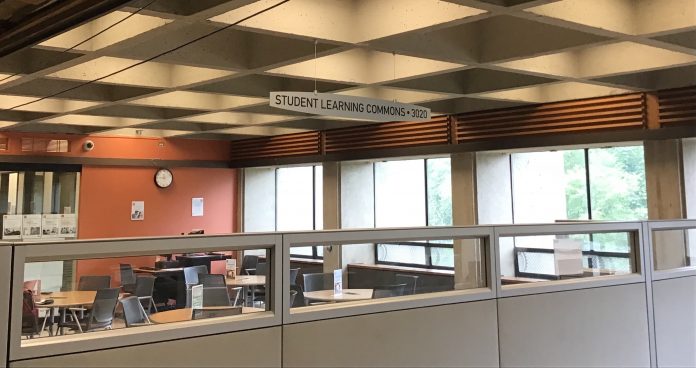
Graduate facilitators in the Student Learning Commons vote to unionize

1
Paul Choptuik/The Peak

On June 13, the Student Learning Commons’ (SLC) graduate facilitators voted decisively to unionize, becoming the newest educational position at SFU represented by the Teaching Staff Support Union (TSSU).

Speaking previously at the Graduate Student Society (GSS) meeting on June 11, TSSU representative and SLC graduate facilitator, Alicia Massie, noted that though they liked their bosses, working conditions could be improved. Facilitators didn’t have access to health care or maternity rights, and they would sometimes be paid at irregular time intervals.

“We came together as the workers and chatted, and wanted to be able to secure access to protection and basic rights such [as those that] everyone else in the library on campus has,” explained Massie.

Within the SLC, graduate facilitators offer a number of services and are split into four teams: the undergraduate writing team, the graduate writing team, the learning/back-on-track team, and the English as an additional language team. The SLC offers services at all three campuses, with locations and hours posted online. Right now, there are 14 facilitators listed.

“What we did is we applied to join the existing union,” explained Massie. “We’re part of this smallish group that is now part of the TSSU, so we’ll be exactly the same [ . . . ] we’re just a new job category within the union, but we’re all within the same collective agreement and we all function as one big happy family.”

Massie called the voting process “very relaxed.”

“The labour board came to all three campuses, which was great, and everybody got a chance to vote if they wanted to,” she said.

“And it passed overwhelmingly. We got really fantastic support, which is not a surprise but still really nice.”

According to Massie, once the facilitators started talking, the actual unionization process was quick. In part, this was due to a change in B.C. labour laws: when a group submits an application to the labour board, they need only wait five days before voting rather than 10. The process was also helped by the group’s small size and enthusiasm about unionizing.

Before this, the last time the TSSU started to represent a new position was when English Language and Culture/Interpretation and Translation Program (ELC/ITP) instructors joined in 2004.

The TSSU now represents the teaching assistants, tutor markers, sessionals, ELC/ITP instructors, and graduate facilitators in the SLC at SFU.

It’s time to purge points cards from our lives

0
Keep your points, I don’t need any more cards in my wallet. Photo by: Gudrun Wai-Gunnarsson / The Peak

These days, it seems as though I have more random junk in my wallet than actual money, credit cards included. Stacks of old receipts from three years ago, politely accepted business cards, and library cards from seven different cities all fatten my wallet. And that’s not even counting the points cards.

I have so many useless points cards, from grocery stores to dry cleaners to bubble tea joints. Despite almost never using them, I still keep falling for the cheerful offers from cashiers trying to line my wallet with more useless garbage.

It’s not like I get much out of points cards anyway. A free jug of milk every now and again when the cashier even remembers to ask, “Would you like to use points today?” That’s hardly worth the effort of struggling to find the right card while the people in line behind me glare death into the back of my skull.

But the most frustrating thing of all is the speed at which various points cards become obsolete. Just when I get used to the look and location of one card in my wallet, the store switches it up with a new bullshit system!

So imagine my frustration when I went to buy groceries at Nesters last week, only to be told that they no longer accept their points card. Now if I want to access my occasional free jug of milk, I need to download yet another useless app onto my phone and scan from there

That’s it! I’m putting my foot down now. I’m not going to clog up my phone just to slim down my wallet. They can keep their points! I didn’t need that milk anyway.

Dear straight people, Pride is so much more than a party

1
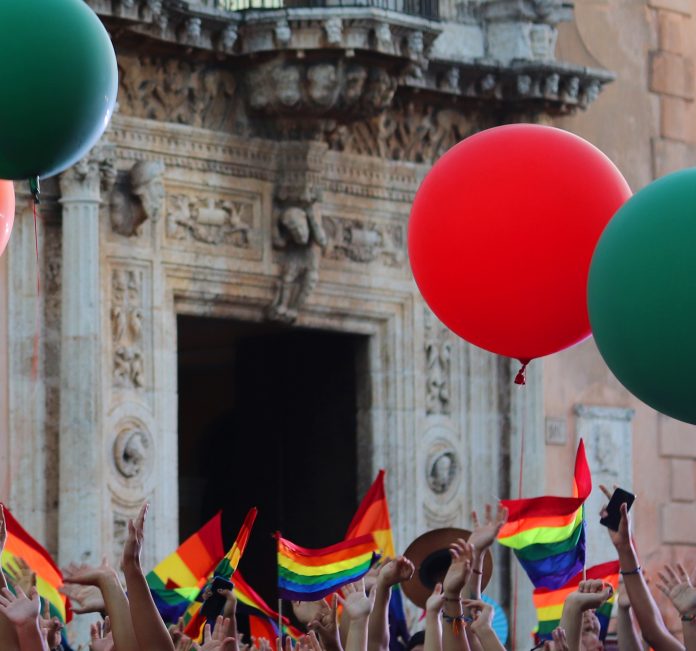
Pride is a reminder that LGBTQ2+ lives matter, as much as it is a celebration. Photo courtesy of Analuisa Gamboa via Unsplash

For many of us in the LGBTQ2+ community, Pride is the one event where we can show our identities freely without fear of persecution. Normally, I look around before I hold a girl’s hand, shoulder-checking all my blind spots for people who might react poorly. Many of my friends refuse to use public bathrooms because they’ve been slurred at or attacked. Public spaces are not as safe for us as they are for others.

When I first came out in my last year of high school, I came out with fear. Fear that I would be rejected by my friends and peers. Fear that the administration at my private Christian school might revoke my attendance. Fear that the conservative community around us would treat me and my family differently.

Despite attending high school with a considerable number of other LGBTQ2+ students, I was the only one who came out. I was the only one certain enough that my family would not disown me and kick me out. Even to this day, the tremendous pride I have in my identity is not divested from the sobering knowledge that I have to live cautiously because I am gay.

Last July, when I held hands with a girl at Stanley Park, a man walked by us and loudly called out “Faggots!” while flipping us off. At that moment, I remembered that homophobes have pride, too.

Can you see now why the LGBT+ community needs Pride? And why it needs to remain a safe space for us?

I don’t have an issue with straight people attending Pride. But I have an issue with those outside of the community who don’t know that it’s not a party for their consumption or an excuse to doll up, kiss their straight friends for shock value on social media, and get blackout drunk on the weekend. I have an issue with straight people temporarily partaking in our celebration for a few hours in an entire year while leaving us to carry the burdens of homophobia and transphobia for the rest of it. After all, it’s easier to share our happiness than our reality.

I wonder if the straight people making a festivity out of Pride remember the LGBTQ2+ community in Chechnya, massacred in waves of “anti-gay purges” by the government. I wonder if, amidst the confetti, bikinis, and drinking, they are also aware of the fact we stand in solidarity with those who cannot show pride and party it up because being in the closet is safer than being out. I wonder if the straight people lining up to take photos with drag queens show the same enthusiasm and support for trans* individuals who continue to struggle for safe access to public bathrooms.

I wonder: do they tell others off for using slurs or homophobic jokes? Or do they just laugh along because our existence is only worthy of their attention in the form of parties, and is just inconvenient otherwise?

Most of all, I wonder if the straight people posting pictures of themselves at Pride really know the bloodstained history of our community: Stonewall, a literal riot for the right to exist, a struggle that extends into the present.

Pride is a historical movement rooted in our community’s resistance against slaughter, the “corrective” rape of lesbians by men, the chemical castration and abuse of gay men, and the brutalization of trans* individuals. It’s a fight against conversion therapy, still legal in every city in B.C. except Vancouver. It’s a fight against the 73 countries in which our identity is still illegal. A fight to obtain the rights that cisgendered and heterosexual individuals do not think twice about even though but we have to continue proving (begging) to the world that we deserve them.

So straight, cisgendered people: go to Pride. But understand our frustration, our history, and our struggle. Love our community the way you love the glitz and glamour of our parades and shows.

And remember, Pride is not just about you having a fun time. It’s a tribute to the resilience and courage of the LGBTQ2+ community.

The situation in Sudan deserves more attention than on just social media

0
Twitter and Instagram profile pictures have been changed blue to honour a young man killed in the protests. Image via Mashable India

You may have seen a lot of talk surrounding Sudan in the past two weeks, particularly in profile pictures turning blue and the #IAmTheSudanRevolution and #SudanUprising hashtags. You may have even seen the occasional news article being shared. However, with how explosive and violent this internal conflict is within Sudan, the mainstream media and global politicians have been relatively silent. This reflects a pattern of general Western apathy to the struggles of small, distant nations.

To the people of Sudan, however, this revolution is nothing short of a fight for their rights and their lives. To understand why, we need to go back to April 2019.

After years of protest, the Sudanese people successfully rid themselves of their president, Omar al-Bashir, through a military coup. Bashir and his government had been accused of war crimes, genocide, and chemical weapons usage, among other things. The plan was to have a temporary military council to help stabilize the region while the country prepared for democratic rule. However, in May, the military began to oppose the idea, resulting in resurging protests including sit-ins and other civil disobedience campaigns.

This is what led the Rapid Support Force (RSF), a paramilitary group, to target civilians by killing, raping, and torturing them. On June 3, the Central Committee of Sudan Doctors claimed that at least 129 have died, many more were injured, and 70 have been raped. Hospitals have been shut down, and about 40 bodies were recovered from the Nile River.

Currently, there is an internet blackout in Sudan, and coverage within the mainstream media has been buried under pages of the latest Trump scandals. The Sudanese diaspora have drawn awareness to the situation by urging the use of hashtags and changing social media profile pictures to blue to honour Mohammad Mattar, who was recently killed by security forces. Celebrities like Demi Lovato and Rihanna have also taken part in the online solidarity.

However, this does not negate the fact that the media has a problem with selective empathy. Events occurring in poorer countries like Sudan are not given as much coverage as those in Western countries, where acts of violence on much smaller scales are talked about for days. This not only increases public apathy when it comes to the lives of those in more distant, less economically robust countries, but also causes a lack of aid and support being delivered to those affected.

If you want to help the Sudanese people out, you can raise awareness, donate money (through organizations like UNICEF, Save the Children, Doctors Without Borders), and/or call your local MP. By doing this, international organizations, such as the UN, along with the African Union, can be directed to step in and attempt to resolve the situation by negotiating peace talks, deploying peacekeeping forces, providing medical aid, and preventing the RSF from harming civilians any further.