Home Blog Page 485

What grinds Our Gears: Why are students still sweltering through summer classes in 2019?

0
Can we at least get some electric fans going, please? Illustration by Momo Lin / The Peak

You know what sucks? The lack of air conditioning on campus. As someone who sweats buckets whenever I’m at school during the summer, it downright pisses me off. 

Needless to say, summers in the last few years have been scorching hot. Despite this yearly inevitable unbearableness, I’ve definitely noticed that SFU does very little to even temporarily relieve us from it. 

The newer lecture halls in the third floor of the Academic Quadrangle have AC, which I acknowledge and appreciate. However, these few rooms aren’t enough when accounting for the overall comfort level of all students. Considering the institution is turning 54 years old, I’m really shocked that incorporating more indoor heating/cooling systems hasn’t appeared on anyone’s radar yet. 

I mean, we’re privileged to receive a higher education, sure, and we need to pay our dues, OK, but is walking into buildings that feel like saunas supposed to be one of them? Having no way to prevent ourselves from melting when the temperature measures 30 degrees C outside isn’t exactly helping our “university experience.” 

I dread having to deal with this for the remainder of my degree. I hope SFU does more about the indoor climate issue soon . . . hopefully at least a semester or two before I graduate.  


Islamophobic acts on campuses show that SFU needs more cross-cultural awareness

1
Islamophobic vandalism at two SFU campuses shows that Muslims are still being targeted for hate. Photo by Chris Ho / The Peak

Mishaa Khan is a student at SFU and the secretary of the SFU Muslim Student Association.

Recently, two events took place at SFU targeting the Muslim community: a man urinated in the prayer area at SFU Surrey while saying profanities about Muslims, and another individual stole money from the Muslim Student Association’s (MSA) charity box at the Burnaby Mountain campus. Both of these incidents took place during the end of the holy month of Ramadan, a day before the Islamic holiday, Eid. These events and countless others off campus suggest that Islamophobia is still present in liberal cities and institutions like the Lower Mainland and SFU, respectively. 

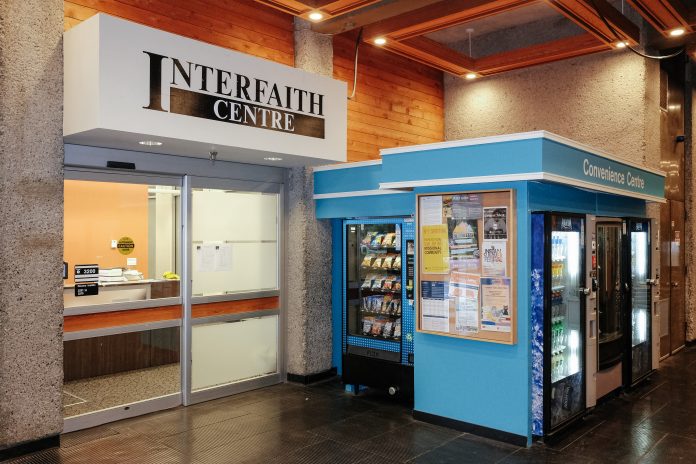
Behaviour like this is unacceptable and the fact that Muslims are still being targeted on campus shows the need for religious organizations like the MSA and the Interfaith Centre. They are able to support Muslim students and address problems they may face, like these two incidents. 

Local news channels, SFU, and the Interfaith Centre are working with the SFU MSA to make Muslims on campus feel more secure by raising awareness, increasing security, and trying to provide religious groups a permanent place at the SFU Surrey campus. 

However, despite all these attempts, many Muslims feel unsafe, unwanted, and targeted at SFU. This is because in addition to the incidents that occurred on campus, many commenters have responded to the reporting with hate speech and harsh comments online. For example, in the now-removed comment section of the article published by News 1130, one individual wrote, “This sounds like another hijab hoax, really phoney” while someone else responded in a tweet, “Take the word ‘news’ out of your title. Replace it with (Lefty garbage islamist propaganda).” 

During my two years in Canada and SFU, I have been fortunate enough to encounter very few Islamophobic attacks. However, one incident that I remember clearly to this day happened when a man approached me on Clubs Day and told me that ISIS enforces Islamic rules, that Islam is a hostile religion, and that women are degraded in Islam. As a practicing Muslim woman, I felt frustrated and upset at his comments and the misconceptions many possess about Islam. It results in division, discrimination, and conflict when there can be peace, acceptance, and harmony, instead. 

This isn’t me crying for help or playing the victim card. The larger point is that we need to fight unfounded hatred from all sources. We’re constantly reminded of radical actions by so-called Muslim groups, but the irony is that Islamophobes share the same misguided, dangerous ideology as radical groups because they both misuse religion to target others, especially Muslims. 

The SFU MSA tries to combat this discrimination by holding events like Islam Awareness Week every semester, or weekly booths where individuals can come and ask Muslim students questions about what Islam is really about. Yet despite these efforts, as recent events have shown, Muslims are still being targeted at SFU, which means the community needs to take more large-scale steps.

We need people who aren’t Muslims to speak up and support us as well. This means asking questions about Islam from reliable sources (e.g. SFU MSA and scholars) to get rid of misconceptions, befriending Muslims, and speaking out if you witness any Islamophobic incidents. 

This can be done by attending MSA events or reaching out to an MSA member through [email protected] or their Facebook page. The MSA invites students to learn what Islam really is about by engaging in discussion at events or information booths.

Adulthood 101: Employee Rights to keep in mind in the workplace

0
Illustration credit, Tiffany Chan

Unless you find that you’re the long-lost heir to, say, a small European kingdom called Genovia, you’ll probably find yourself working a job at some point in your life. Whether you’re in co-op or working a retail job to bring in that extra moolah, no matter what kind of work you do, here are some basics to keep in mind at your B.C. workplace, especially if you’re a busy student who spends more time looking over assignments than browsing governmental sites. 

* The following information is taken from the British Columbia Employment Standards.


Your time at work

  • Standard work hours are eight hours a day and 40 hours. Think of this like a soft maximum limit for your hours at work, but it can be exceeded as long as employees receive overtime pay. This may or may not pertain to you, depending on what kind of work you do. 
  • There’s also a minimum daily hours of work. If you are scheduled to go to work, you must be scheduled for at least two hours. Even if your employer has nothing for you to do, you will still be paid for those hours.
  • Of course, you also have to fuel up in the middle of your shift. While coffee breaks are not guaranteed (bah!), if you work more than five hours in a row, then your employer must give you a 30-minute meal break. Though the meal break can normally be unpaid, if your workplace requires you to work through your meal break or otherwise be available, you should be paid for that time.


Your time away from work: because your life ≠ work

  • You should be given at least 32 hours in a row off from work every week. If for whatever reason you have to go in to work, you are entitled to overtime pay. You should also have at least 8 hours between each shift.
  • Split shifts are when you work different shifts over the course of a single workday. These shifts should occur within a 12-hour timeframe, and you will receive regular pay (unless it exceeds standard hours to qualify for overtime).
  • You can also request time off for different reasons. After a year of working, you’ll receive paid vacation days; this amount varies depending on your tenure with your workplace. If need to take a leave of absence, you will need to let your employer know when you’ll be gone and for how long, and why you need to take said leave. If you’re sick and need time off, you might be required to have a doctor’s note depending on your employer.


Getting your paycheque

  • Your employer is required to pay you twice a month. 
  • Recently minimum wage was increased from $12.65 per hour to $13.85 per hour on June 1, so double-check your pay stubs! This is part of a larger plan to increase minimum wage over the course of the next couple of years. 
    • There are, however, exceptions. For example, minimum wage for a liquor server is currently at $12.70.
  • Remember the standard work hours I mentioned above? If those standard hours are exceeded, you are entitled to overtime pay for the time that you work over the standard work hours at either 1.5 or 2 times your regular pay rate (depending on your employer), unless you have an averaging agreement. Note that even with an averaging agreement, you still cannot work more than 12 hours a day without overtime, nor more than an average of 40 per week.
  • If you are scheduled to work a statutory holiday, it is important to double check if you are qualified to be paid. 
    • If you have been on staff for 30 days and have worked 15 of the 30 days before the statutory holiday, you will receive an average day’s pay, plus time and a half for your hours worked. If you work more than 12 hours, you will be getting paid double-time.
    • If you don’t qualify, you will receive regular pay for working statutory holidays.
  • You might see a little bit extra at the end of your paycheque, whether they’re overtime and statutory holiday wages, vacation pay, etc. If you work for gratuities and tips, you  might get to keep all the tips you make or you might be pooling your tips with other employees, depending on your workplace and position.
  • You will also see deductions, such as income tax deductions made based on the TD1 tax form you filled out for your employer when you started working with them. If your workplace offers insurance that you opted in to, you may also see deductions for premiums.
  • Business expenses cannot be deducted from employee wages. For example, if you have a dine-and-dash at your restaurant, or if you’re the unfortunate individual the office printer finally gave out on, that cannot be deducted from your wages.


Leaving the workplace

  • While you’re not legally required to let your employer know you’re leaving, it’s generally good practice to give your employer at least two weeks’ notice before leaving your place of work to give them time to prepare someone to fill your position or arrange for your exit (returning work equipment, getting paperwork done etc.). If you do give notice, your employer can choose to terminate your employment sooner than your notice date.
  • If your employer terminates your employment, they must give you written notice and/or payment. The length of notice and amount of payment given depends on how long you’ve been working with them and is outlined in your job contract.
  • Your employer does not need to give you any notice or compensation if they fire you for “just cause.” This means that the employer has a valid reason to end your employment, such as not meeting standards of employment or committing a serious offence at work.
  • After you leave the workplace, make sure to pick up your last paycheque plus whatever miscellaneous wages you might have accrued over time (e.g. vacation pay, overtime, compensation)! If you quit, you should have your final payment within six days of your last day at work. If your employer terminates your work, they should have your final payment within 48 hours of your last day at work.


If you have more specific concerns or other questions about working, below are some resources that can help guide your inquiries.

  • Employment Standards guide: This is like the tl;dr of the Employment Standards Act that will take you through most things that you will encounter in your workplace
  • SFU Co-op: If you’re doing co-op or considering doing co-op, this is probably your starting point. They also have more specific information on things such as what to expect at your workplace.
  • WorkBC: Think of this like the Career Centre of Real LifeTM. WorkBC offers resources getting a job, training, and can be a gateway to more specific resources.
  • Employment Standards Act: If nothing above answers your question, the best place to go would be the source of the law. It’s dry, it’s hard to read, but it has everything laid out in specific legal terms.


10 things I never knew about Canada as an international student

0
Image courtesy of Ali Tawfiq via Unsplash


1. Canadians are actually really polite

I never knew that Canadians are actually as nice as their stereotypes make them out to be. People apologize and say “thank you” like their life depends on it. Being in Canada has had me successfully saying thanks while exiting a SkyTrain; it seems to become a habitual reactionary response after a while. 

2. Education is harder than some people might think

I’m from India, and the common misconception is that the education system in Canada is comparatively easier. To some extent, that might be true. But that doesn’t take away from the hardships faced by students in Canada on a daily basis.

Educational hardship in Canada isn’t limited to the course load during the degree itself either. It extends to the pressures of post-grad job hunting and finding the money to pay for expensive post-secondary education.


3. Canada’s history of oppression

Through the art of colonization, the majority of historical accuracies seem to have been eliminated. We don’t get to see the history of Indigenous peoples taught at the same level as the rest of the historical content.

Unfortunately, I was as oblivious to said history in my first year in this country. I did not know anything about the land that I was benefiting from, nor did I know who this land truly belongs to. I never knew the truth of the beautiful land we now call Canada. Worst of all is the fact that the atrocities faced by the Indigenous population from the beginning of colonization and into today are still left out of history books and news. 

All this historical information (and more) is consistently being hidden or brushed aside, a common practice in all previously colonized nations. However, in a country like Canada, which boasts of its efforts to help Indigenous communities, I never knew that such methods of rewriting history still exist.

4. Forest Fires

I never knew that forests could spontaneously catch fire in 20-degree C temperature. Mind you, in India the temperature rises up to 50 degrees at least every summer, but the episodes of spontaneous combustion are next to none. In Canada, on the other hand, the forest fire incidents are very common. In fact, the 2018 forest fires engulfed up to 12,985 square kilometres in British Columbia alone, leading to a state of emergency.

5. Drinkable Tap Water

Drinking water from the tap: I NEVER knew that someone could drink water straight from a tap and not be riddled with typhoid. That’s something that only a small percentage of people in the world have access to, and I think it’s important not to take it lightly. Having access to safe drinking water every time you open the tap is rare, and unfortunately many places don’t have this luxury. 

6. Universal healthcare

I never realized that Canada has universal healthcare, nor did I know what that term entails. Universal healthcare is publicly funded and actually takes care of your day-to-day medical necessities.

This option saves people of all walks of life from losing their savings in times of  medical concern. It works on the model of equity, serving people based on their need rather than their ability to pay. I don’t understand why more countries don’t have this model, or something along similar lines.

7. Disparity in educational qualification

It saddens me to learn that educational achievements from different non-Western countries aren’t valued in Canada. People from my country (India) can be doctors or lawyers, but they are lost in the crowd in Canada and end up working at minimum wage jobs. 

8. Raccoons

I never knew that Canadians treat raccoons and other wildlife the same way they treat puppies. There is such fascination when it comes to viewing a wild raccoon that Canadians need to be reminded to maintain their distance. In Toronto, citizens once held an elaborate vigil for a dead raccoon forgotten by animal services which quickly was noticed as something that would occur “only in Canada.”  Even people around SFU seem to worship these animals. 

In fact, the SFU population has gone so far so to make a Facebook page called Raccoons of SFU, and petitions are passed along to make raccoons our mascot.

Note: Raccoons are a wild species, and so have the potential of being dangerous. Raccoons in B.C. are not a rabies vector. However, this does not mean that they don’t possess the danger of getting aggressive. Anyone coming in contact with them should bear that in mind.

9. Taxes

I never realized the amount of taxes attached to everything in Canada. My oblivious attitude to this factor could very much be because I didn’t have to deal with taxes when I wasn’t an adult. However, when you earn minimum wage and work towards paying for living and education, every tax burns like a pain never felt before. 

Nevertheless, the funds collected from these taxes, at various levels of our government, go towards bettering our lives as a community. This is seen in our transportation services, like the SkyTrains and busses which make traveling so much easier and more environmentally friendly.

10. Discrimination

As mentioned above, Canadians are nice, polite, and all around welcoming. However, Canada isn’t immune to the virus infecting our entire planet: discrimination. 

Although we might not see this discrimination as outwardly portrayed as in the United States, it is nonetheless here. It’s of a systemic form. You see it in the slight undermining of your identity through comments like, “How can you speak English if you are from India?” or the constant lack of effort people put into trying to pronounce your name correctly. 

Goodbye SFU: A soon-to-be grad reflects

0
Courtesy of SFU

“Goodbye SFU” is something I have wanted to say ever since my first ever set of midterms. But now that it is going to be reality, I don’t feel ready to leave.

My first memory of SFU is when I drove to university for the first time ever. As an international student, I had only seen the building while sitting in my home in Nairobi, Kenya. Yes, I had been on tours — the virtual ones. I knew some people by their names and profile pictures thanks to the SFU Fall 2015 group on Facebook. But after that drive, it was all real. I could touch and feel the buildings, and these people that I had met virtually were very different in person! The first time the taxi drove up Gaglardi Way, I finally saw the elevated floors of the AQ that I had only seen previously online.  

When I look back on my time at SFU, it was everything I had hoped and dreamed of . . . topped with some stress and anxiety. 

I began classes and made friends with people in both the communications and psychology departments: these spaces, I knew, were going to be like home for me for a long time. I wasn’t living on residence yet, so I always felt a little left out when all my “lecture friends” talked about going to the Dining Hall together after every class for a meal. That was OK, because I had found a bunch of commuter students, just like myself — but to overcome that and meet more people who didn’t necessarily live on campus, I ended up joining 16 clubs on my first Clubs Day! 

After the end of my first university semester and after having dealt with what really writing a paper is like, I remember feeling overwhelmed, but with a sense of achievement. For my first break, I flew back home to Kenya. Soon, I realized that there is no sadder feeling for an international student than having to get back to university after that first break.  

I was miserable, after spending only two weeks with my family, to be back to the snowy land of Vancouver. But I began to live on residence, and this is where I found my home and family away from home. It was amazing to have the glorious 24/7 goodness that was the Dining Hall. I was so happy to step up from my regular meals of pastas and Mr. Noodles! I stayed in residence for an entire year: moving between the Towers (#teambrae) and McCow. I met some of my closest friends and the most fascinating people through the SFU residences, and I am ever so grateful for that. 

So, my first goodbye to SFU was to residence when I finally left campus to try to really “adult” with a couple of my friends. After endless hours of studying, serious discussions, serious laughs, and the sight of Trump becoming the president of the United States, it was really tough to say goodbye to the Dining Hall, mainly! We suffered the very first day after moving out when we realized what a struggle it was to get groceries, walk home, and actually produce food out of it! 

My second goodbye is what’s coming up in a few months: a goodbye to all of SFU. It still makes me anxious thinking about the near future, where my schedule will not revolve around classes. Meeting with TAs and advisors in their offices, rushing to a class on the fifth floor of the AQ that I still can’t easily find (after having had class there for three years or so), bumping into people unexpectedly at the gym or the line at Tim Hortons: these seem like they have been a part of my life for so long, and now, they’re about not to be. 

Applying for jobs is similar to being waitlisted for a course: you don’t know whether you have the job or the course for a few weeks, and you live in that world of fantasy where you try to tell yourself this job/course isn’t all that great and there are better ones out there. But at the same time, you imagine your life with the job/course and just how perfect you think it’s going to be. 

I know that I am not going to find something worthwhile the second I’m out, but to even walk the walk out of SFU feels surreal. Even though I’ve been wanting to be done with school ever since the first semester, I don’t feel ready to leave. The SFU bubble is a very comfortable one to be in. 

If you don’t have a course you’d really like, you talk to one of your advisors and they’ll help you out. If you’re applying for a co-op and you don’t end up finding anything great yourself, the co-op advisors find you something good in the lightning round. If you are confused, slightly or massively, by anything in your courses, your professors and TAs are always around for extra help through so many different means. 

But now, once I’m out and if I ever feel lost, I have to be ready to find my way — without any of the wonderful people that have made my SFU journey easier.

Long story short: I’m still figuring out my sexual identity, and that’s fine

0
Image credit Tiffany Chan

Despite having a wonderful group of friends and resources that help me accept myself, I have not had an easy time navigating my sexual identity. Throughout high school, I spent time trying to put different labels on myself. But I wasn’t sure they fit me quite right. While I recognized in others that sexuality was fluid, I could not assign that same leniency to my own journey. I desperately craved a label that suited me. I knew I was queer but had not gotten very far from that realization. 

I have always put the process of discovering more about my sexuality on the back burner. It  seemed more like a burden to express this part of myself, and to look any deeper would only hurt me. Something that still affects me is a conversation I had with my parents a few years ago. My parents were talking about a family friend who had come out as bisexual and was in a relationship with their significant other. They described her sexuality as an indicator of her promiscuity and indecision. 

Though they claim to be supportive of gay rights, my parents still treat queerness as a punchline. I grew up with comments from my family about how gay our waiter seemed, and was expected to laugh because it was harmless to them. I was “allowed” to have a girlfriend, but my parents ultimately expected me to marry a man and give them grandchildren. 

Instead, I explored my sexuality in quieter ways, looking for role models in the media. I strongly rooted for Quinn and Rachel on Glee growing up, because I deeply related to the repressed gay subtext that I saw in Quinn’s character. I was also infatuated with Haruka Tenoh/Sailor Uranus from Sailor Moon. She had a beautiful relationship with Michiru Kaioh/Sailor Neptune, one that I admired and would learn to use as a model for my own relationships. The crooning voice of Haruka’s voice actor, Megumi Ogata, also sent butterflies to my 11-year-old stomach. Looking back, I didn’t take my attachments to these characters seriously because they were just characters, but they were a part of one of many moments where I learned I was not straight.

Chris Ho/ The Peak

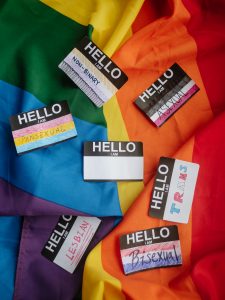
I really started trying to define my identity almost as an act of defiance against the heteronormative ideals my parents presented before me. When I was in high school, I thought that I was pansexual, because I did not want gender to affect my romantic or sexual attraction to the people around me. Of course, just because I did not want gender to affect how I experience attraction did not mean it didn’t play a factor in how I experienced it. After this, I thought bisexuality was a more fitting label for my sexual identity.

But there were still so many internal biases about my sexuality that troubled me. I had to admit to myself that I was scared of claiming who I was when I was still wondering if I was “bisexual enough.” The more time I spent not knowing who I was, the more I was consumed with guilt about my place in the LGBTQ2+ community. At 20 years old, I had not experienced a committed romantic relationship, though I had held crushes for long periods of time.

 “Can my queerness really be valid if I haven’t been in a romantic relationship?” I asked myself this constantly. I know now that when I could look at a woman and a man, I recognize that I feel different kinds of attraction to them, but it generally does not go beyond that. I spent so many years denying that I might identify on the asexual spectrum, because I assumed that it was a normal part of a relationship. I now recognize that experiencing sexuality as a secondary factor to a relationship is something I see in myself, too. 

Learning how I can change my labels as I develop has been both a humbling and safe journey thanks to how much more information I have today compared to when I started wondering about my romantic feelings. I am still so young, and to be absolute about my identity would be great, but to be confused is also okay. From campus resources like the Women’s Centre and Out on Campus to my friends who listen to my circular thoughts about the validity of my queerness, I am so thankful for having a strong support group that accepts my journey. 

Board Shorts: June 27, 2019

0
Irene Lo / The Peak

SFSS hears presentation on vaccines

Ajit Johal, a clinical instructor at the UBC Faculty of Pharmaceutical Sciences, gave a presentation about vaccine hesitancy and making vaccines available on campus. The presentation was titled “Looking at the unmet need of protecting adolescents and young adults against vaccine preventable diseases.”

Read more here. 

Accessibility Committee at-large reps appointed

The board has appointed Andrew Araneta, Vivian Ly, Ana Lozitskaia, and Mikaela Basile as student at-large members on the SFSS Accessibility Fund Committee for the Summer 2019 semester.

This follows from a discussion from the May 30 meeting about the board developing an accessibility standard policy. SFSS president Giovanni HoSang had provided The Peak with a statement about how the committee would be able to meet and work on developing such a policy for board approval after the appointment of at-large representatives.

Project expense process

Following inquiries from board members, SFSS Executive Director Sylvia Ceacero stated that having the board approve low-cost expenditure requests delayed projects. She reminded the board of the process for expenditures tied to projects: low-cost expenditures are to be processed immediately though her and outlined in their committee meetings. This allows the committees to get their funds approved on time, and the board would still be aware of the funds being used. 

“What I’m getting at is that [. . .] we should have one method,” she said of the request process.

Board Briefs Thursday, June 27

0
RESLUS/ The Peak

SFU Burnaby parking rate changes

At the latest Simon Fraser University Board of Governors meeting on June 27, Mike Cordoba, alumni order-in-council, spoke about changes in the SFU Burnaby campus’s parking rates that will come into effect July 1. 


Stating that these changes were in response to increases in the regional parking tax, Cordoba noted that it provided an opportunity to “rebalance current lot prices slightly,” to encourage more even usage across SFU’s parking lots.

Daily hourly rates will be increasing by $0.25, while the increase in daily max rates will vary. Monthly permit parking rates will also be increasing, with the notable exception of Residence West Lot, which will see a $9.88 reduction in the monthly rate. The exhaustive list of changes can be found online on SFU Parking and Sustainable Transportation’s website.

“It should be noted that SFU has not increased its permit parking rates since 2013 and the hourly rates have not increased since 2010, except for special increases in North Lot in 2018 to encourage parking in other lots,” Cordoba also stated.

New certificate programs announced

Christopher Lewis, order-in-council, reported that as per the recommendations made to the Board of Governors by SFU Senate during their meeting on May 21, three new program proposals were approved.

They are the Certificate in Creative Technologies in Digital Journalism within the Faculty of Communication, Art and Technology, the Certificate in International Studies in the School of International Studies within the Faculty of Arts and Social Sciences, and the Graduate Certificate in History in the department of history within the Faculty of Arts and Social Sciences. 

All programs will be effective Spring 2020.

SFU joins the International Sustainable Campus Network 

Martin Pochurko, vice-president of finance and administration, reported that SFU had joined the International Sustainable Campus Network (ISCN).

Pochurko noted that this involves a commitment to the ISCN’s charter, which can be found online. According to the ISCN, “signatories to the charter commit to follow and support five calls to action.”

These include “[embedding] sustainability in all aspects of the university” and  “[creating] an environment that cultivates resilient, empowered, caring and engaged students, staff, and faculty who will contribute to the health of people and places.”

SFU is the second Canadian university to join the network of over 90 universities worldwide, including Princeton, Harvard, and UBC, the last of which was the first Canadian university to join the network.

Lot 21 Approved

Porchuko also reported that Lot 21, a proposed housing project for mature students, had been approved. 

“We’re glad to see that moving forward, 90 units will be built in UniverCity,” stated Porchuko.

When complete, the project will target graduate students and students with families, a point that had been clarified by president Andrew Petter.

“One little correction: it says here ‘targeting grad students with children.’ In fact, it’s targeting graduate students and students with children.”


SFSS Board hears presentation on potential vaccine outreach services

0
Chris Ho/ The Peak

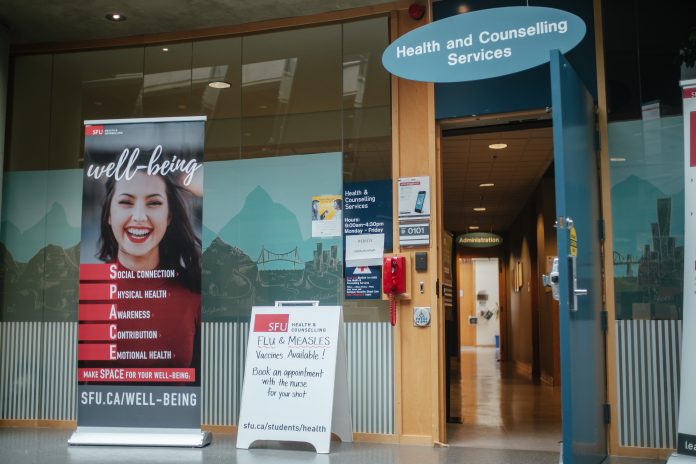
Ajit Johal, a clinical instructor at UBC’s Faculty of Pharmaceutical Sciences and owner of immunize.io and TravelRx, gave a presentation to the SFSS Board of Directors on vaccines at the June 27 meeting. Johal has had previous experience working with Sylvia Ceacero, SFSS executive director, on advocating for vaccinations for seniors.

With the overall goal of raising awareness and potentially bringing mobile vaccination services to SFU, Johal detailed which preventable diseases university students may be at risk of contracting, which vaccines are publicly funded, and which ones are not.

Highlighting the resurgence of measles, the risk of meningitis on university campuses, and the risk of contracting diseases like hepatitis and traveler’s diarrhea abroad, Johal illustrated the particular dangers to students.

Noting the gaps that some students may have in their vaccination history, or a lack of records making it unclear, Johal pointed out that the SFU Student Drug Benefit Plan allows for $150 per year for vaccine coverage. 

“That’s coverage on the table that you could utilize to access protection for vaccine preventable diseases,” Johal added.

Johal also noted that, board willing, there could be opportunities for students, especially those in the health sciences, to collaborate on an awareness program or even help in a mobile clinic.

“Health sciences, it would be good to collaborate with them to design some educational material [ . . . ] we don’t want them giving people unsolicited medical advice, they could always shadow any of our healthcare professionals.

“They can certainly help people with intake forms.”

Concluding his presentation, Johal stated his desire to work with the SFSS in particular to create a “healthy campus.”

“We are looking to work with the [SFU] Student Society to provide education, awareness of these diseases, working to create onsite clinics, run programs, partner with health science students, partner with other disciplines in healthcare,” Johal elaborated.

After the presentation, the board asked a number of questions.

Nick Chubb, applied sciences representative, asked whether Johal would need money from the SFSS. Johal clarified that he was not looking for money, just support.

“It would be good to have health science students volunteering,” Johal reiterated.

“It’s not just pushing people to get vaccinated, we also want information too. So even if people just want to have a conversation, they want to ask questions, they have access to that too.”

Tawanda Chitapi, vice-president finance, asked Johal what the best way of raising awareness was in his experience, with Johal responding that he has found word of mouth to be the most effective.

“Students will talk to one another like, ‘Hey, I just got this vaccine, it was super easy. I just went to this place at this time,’ and that’s what happened with workplace staff. That’s how we drove up immunization rates.”

Christina Loutsik, vice-president student services, asked what resources could be distributed and about human papillomavirus (HPV), which had not talked about in the presentation. 

Johal thanked Loutsik for the question, telling board about the World Health Organization’s (WHO) campaign to end HPV causing cervical cancer. He added that the National Advisory Committee on Immunization wanted people, regardless of age, to be immunized.

“There is a catch-up program for those born in 1994 or later, those born before, it would be a private vaccine,” Johal added.

Shina Kaur, vice-president university relations, inquired about international students who may not have attended high school in Canada and received the same vaccines.

“International students, they get caught up on everything. What the health units do for them is they just immunize based on history, it’s a blank canvas and they update everything, unless they can produce records,” Johal responded.

Concluding the discussion, Ceacero suggested a small working group could be formed to explore this partnership.

“If the board is agreeable, Ajit and I will connect again, and involve Christina, and involve other board members who are in health sciences and we can have a little working group to figure out how to move ahead with this, I think it could be very beneficial to our students.”


Students shouldn’t need to be policed into respecting quiet study spaces

0
Take your crinkly snack bags and your loudly whispered conversations some place else Photo by Andres Chavarriaga / The Peak

Last week, a fellow student sat beside me in the sixth-floor computer lab of the library and proceeded to watch a sports commentary video on YouTube. With the noise leaking from their earbuds, I couldn’t help but look up from my screen, distracted. This person then pulled out a family-sized bag of potato chips from their backpack and munched, loudly. They weren’t pulling out single chips to snack on discreetly, either. These were face-stuffing handfuls that left their entire palm encrusted with chip dust. 

Aside from the obnoxious crunching of both the chips themselves and the crinkly bag that contained them, this student would also lick the chip powder from their hands and then continue to handle the keyboard and mouse of a communal computer. Half in the voice of Damian from Mean Girls, I thought to myself, “Do you even go here?!”

Shuddering in my seat, this led to me to think about what better policing measures could be put in place to ensure that designated “quiet” study spaces actually remain quiet. Should students in the surrounding area give death glares to silence the perpetrator? Should incessant chattering between desk partitions be followed by passive-aggressive shushing? Should a level five offense of high-volume trap music leaking from headphones be acknowledged with a polite tap on the shoulder or an eraser thrown at the head? 

Ridiculous proposals aside, there shouldn’t be any need for quiet study spaces to be policed by security guards or the like, because we as students should understand how to not be obnoxiously distracting assholes. 

Hear me out. Most of us studying on this campus are university students. In other words, we should all have some basic knowledge of adulting and therefore know how to respect each other. Designated quiet study spaces can be a productivity paradise; based off of our individual study habits, there’s a reason why we choose to seek refuge in a silent area. Why tarnish the sanctity of this space with the crinkling of your granola bar wrapper? Why choose to hold a 40-minute loud-whispered conversation with your friend if you could talk literally anywhere else, for example, the staircase a few metres away? 

Really, the concept of a quiet study space is simple. If you’re having trouble understanding the courtesy of studying quietly in a space shared by fellow students, if you need someone to launch their pen at you to figure out how to behave in public, then buddy, there’s a whole slough of problems that are plaguing you (and unfortunately, others around you too). 

Please, for my sanity and for the sanity of our fellow silent studiers, learn how to respect these spaces or else don’t ruin them for others.