Home Blog Page 482

SFU students need to take earthquake preparedness seriously before an emergency situation

0
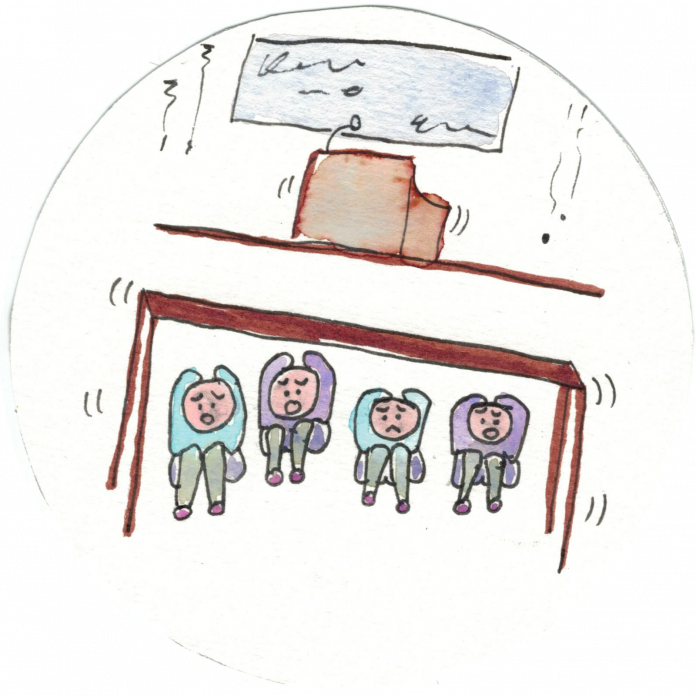
The worst time to be thinking about building your emergency kit is during a high-magnitude quake. Illustration by: Momo Lin/The Peak

Recent tectonic activity has put emergency preparedness back on the minds of British Columbians — and that’s an important opportunity to revisit how prepared we are for earthquakes.

Two major earthquakes hit southern California on July 4 and 5, damaging buildings, cutting off power and communication, and forcing many residents to evacuate their homes. Around the same time, B.C. was also treated to shaky ground with three consecutive earthquakes near Bella Bella. Though these minor earthquakes on our coast were unconnected to those in California, they’re an important reminder for those of us who aren’t prepared for a major earthquake here in the Lower Mainland. Prepared or not, it’s time to remind ourselves that we live on unstable ground. 

Although B.C. is within the Ring of Fire, an area notorious for its earthquakes, many British Columbians aren’t fully prepared for the risks of a destructive quake. According to a 2017 survey conducted by the provincial government, only 13% of B.C. residents have a “complete” emergency plan. Of Vancouverites who don’t have a plan in place, around a quarter blame laziness.

These emergency plans are especially important for SFU students, who may find themselves on a campus that is unfamiliar or far from home when an earthquake occurs. Imagine being on Burnaby Mountain when the “big one” hits: How would you protect yourself? Where would you go once the earthquake has passed? Without transit or cell service, how would you get down the mountain? How would you get in contact with your loved ones?

Luckily, preparing for an emergency doesn’t have to be difficult. Look through SFU’s earthquake procedures and participate in the ShakeOut BC Annual Earthquake Drill. Explore information specific to your city or your accessibility needs. If you can, prepare an emergency kit with enough supplies to last you through the first few days after a significant quake. Most importantly, make a plan with your loved ones and roommates about what to do in an emergency, so you know how to get in contact with each other and where to meet if communication has been cut off. 

Students rarely plan a week in advance, let alone for an emergency, but going unprepared can have disastrous consequences in the event of a high-magnitude quake. It’s also worth noting that it’s hard to predict when a major earthquake is coming, even though we’re due for one, which means updating your supplies and emergency plans over time is vital. 

These recent local quakes were minor; treat them as an opportunity to prepare for the ones that aren’t.

SFU Snap 2.0: The Latest and Greatest Features

0
Illustration by Momo Lin

Illustrated by:Momo Lin

The SFU Snap app everyone downloads as first-years is great, but what if we had a newer version that connected to Wi-Fi even less often? 

The “Construction Fence Labyrinth” game: This awesome game allows students to show off our creativity by designing new labyrinths for construction fences in Convocation Mall! All you have to do after clicking on the game is drag virtual fence sections and position them however you want on a grid that represents the Burnaby campus. And the best part? Your finished design is automatically entered into the running to win a daily contest afterwards! Whichever person’s design determined as the best one will be shown to the construction workers so they can actually use it for a day! 

The “Better Enrolment Date” counter: This is a running counter that shows every single student who has a better enrolment date than you. It’s a reminder of how all the good courses are being filled up by those lucky stiffs while you’re very angrily waiting for your time to arrive. 

The “Help” feature: A standard “help” feature that has McFogg the dog as an icon. It’s essentially the office assistant “Clippy” from Microsoft, but instead of helping, it gives you esoteric platitudes fit for your academic life. Such as “the darkness in you heart does not wallow underneath the gleaming quality of water fountains,” or “The wisdom you bring into the world will be squandered in court.”

The “Dirty Bathrooms” tracker: This one gives workers at SFU a comment platform where they can describe in excruciating detail how disgusting the bathrooms are. If there are puddles of God-knows-what on the floor or disturbing garbage they’ve found, this is the place to find out! The feature does not allow the workers to notify when the washrooms have actually been cleaned, because a built-in algorithm prevents people from engaging in any communication that positively contributes to students’ quality of life by deleting said communication right away. So, in the end, it truly enhances the experience of knowing already that we’re walking into a john with unflushed toilets or of being welcomed with nasty smells, now that people are completely aware of all the other nauseating things in said johns. 

The “No Studying Area” feature: During busy times of the school year like midterms or finals, sometimes it’s not easy to find a place to study or eat. This feature is a large collection of photos taken over the years, showing a bird’s-eye view of all the study areas entirely taken up.

SFU Name Generator

0
Illustration curtesy of Flickr

First Initial:

A – Spicy

B – Depressing

C – Grey

D – Dank

E – Sleeping

F – Grimy

G – Engaging

H – Reddit-Scrolling

I – Concrete

J – Sleep-Deprived

K – Caffeine-Addicted

L – Studious

M – Renaissance

N – Concrete

O – NCAA
P – No-Headphones
Q – Cranky

R – President 

S – Skipper
T – Academically-Advised

U – Mountainous

V – Bothered

W – TA

X – Tim

Y – Irritated

Z – Final


Last Initial:

A – Quadrangle

B – Avocado

C – 145

D – Tuition

E – Mezzanine

F – Snow-Hazard

G – Transit

H – Pond Water

I – Koi

J – Raccoon

K – Office Hours

L – Canvas Discussions

M – Alternating-Construction-Pathways

N – SFU Snap

O – MyExperience

P – Cornerstone

Q – UniverCity

R – Bus Loop

S – Convo mall

T – Canvas Discussion

U – Construction Noise

V – Not-So-Quiet-Study-Floor

W – Co-Op Workshop

X – Term Paper

Y – Temporary Tiles

Z – SUB


Number of Years at SFU:

1 – Petter

2 – Erikson

3 – McQuadrangle

4 – Woodward

5 – Fraser

6+ – Goldcorp

Student Masterchef: Surprise Mystery Box Challenge

0
Illustration by Alice Zhang

Illustration by: Alice Zhang 

As students, we all know how tedious buying groceries and meal planning (actual meal planning, not buying a pizza and rationing it for a week) can be. Not all of us are pro-chefs; in your darkest hour, when you haven’t found a good recipe or gone grocery shopping in days, that’s when the Surprise Mystery Box Challenge test begins. What are some ways you can make dinner from the scavenged ingredients you find in the crevices of your house? 

Payday Is Tomorrow And This Is All I Have

Ingredients:

  • 1 lone egg that got left behind in the carton
  • 2 stray packs of ramen that you locked away in your bedside drawer as a last resort
  • Some pieces of ham that have been chilling at the bottom of your fridge for like months but you insist they’re still good

This is far from the meal of champions, but it is a traditional staple of broke-ass student cuisine. The inspiration for this Mystery Box comes from having $5 to your name and waiting for the next direct deposit to hit.

The end result should be hastily thrown together and presented without thought, much like an undergrad essay. 

First, cook the ramen as instructed on the packaging, most of us will know when it’s done based on muscle memory. After the hot water softens the noodles to chewable, the egg is added in to cook with them, although the yolk usually doesn’t boil properly and it becomes one with the ramen-water (delicious!). Cutting up some questionable bits of ham adds a bit of extra protein, and they work as a perfect garnish to an already low-budget ramen bowl. 

Eleven’s Instant Eggos

Ingredients:

  • 3 freezer burnt Eggo waffles
  • ½ of a remaining pack of dino chicken nuggets you had to hide from your roommate
  • A sliver of butter that has been thriving and solidifying in the freezer from the renter before you  
  • A bottle of honey that you stole from the work office kitchen during a time of emergency

Sometimes you really want to have breakfast for dinner, but on a budget. Luckily, this Mystery Box has the perfect contents to battle the cravings of greasy diner food. 

People say freezer burns often render the food nearly inconsumable, but you can’t afford to have taste buds. For this Mystery Box, the waffles are first put into a toaster to warm them up. The butter is used to grease the pan (over medium heat) so you can fry the shrivelled-up dino nuggets. Then, since you’re too lazy to do the pile of dirty dishes in your sink, you can just flip over the lid of the pan and eat your waffles and golden-turned-charcoal nuggets off of that like the animal you are. Once the honey is drizzled on, it really brings the meal together — chicken waffles à la mode! Bone Apple Tea!

Improvise, Adapt, Overcome

Ingredients:

  • 2 slices of white bread that are starting to look a bit funky, but you can just cut off the weird bits
  • 1 hot dog wiener that you have been saving as a prized possession this past week
  • Mustard and ketchup packets at the bottom of your backpack that you got from the cornerstone A&W 
  • Leftover butter (optional)

Honestly, this Mystery Box might be a recreation of a typical elementary school lunch program meal, but it still slaps. Good hot dogs are hard to come by, so sometimes all you have to work with are slices of Wonder Bread and a disappointingly sized wiener. But worry not: these Mystery Box contents are not without a proper end result.

The pieces of bread can be buttered up so as to avoid dryness, and the hot dog wiener is simply placed between the two slices. Mustard and ketchup (relish is too bougie to be included here) go on the wiener to get rid of that cardboard taste. While the meal is one that is pretty hard to hold, a truly needy student will definitely not discriminate in eating it. 

Canada’s Engaged in Construction University

0

Text by: Nicole Magas, Opinions Editor

Welcome to sFU, Canada’s Engaged in Construction University! Study with us on our beautiful Burnaby Mountain campus where the picturesque landscape is perfectly framed by stacks of steel scaffolding. Here, your education will be only a small part of your experience — literally, you will barely be able to hear your lectures through the endless drilling into concrete.

At sFU the friendships you make will last a lifetime. The people you meet in your cohort are destined to follow you to the same group therapy session to dissect the trauma of the trench-like conditions of navigating our university.

Our graduates are primed to enter the working world with a host of important life skills, including but not limited to: ignoring loud, unwanted noise; quick adaptability to rapidly changing, dynamic environments; and the patience of a saint to get through even the most trying of life’s challenges.

At sFU, our tuition rates are adjusted to account for the quality of your education: the more obstructive construction projects we start, the higher your tuition will be!

So come join us at sFU, where our quad only has three walls, but at least our students have their iClickers.

Photo by: Chris Ho/The Peak

Long story short: I learned to make friends with my future self by putting me first

0
Image credit Tiffany Chan

Spring terms have usually been pretty shitty for me. School stress, combined with the wrath of allergy season, has typically led to burnout detrimental to both my physical and mental health. Ironically, during the spring of my first year of university, I achieved a 4.0 GPA. 

As a fresh-faced first-year, I was eager to get involved in the university community and excel in my academics. Having entered school in autumn, I had decided to spend the fall term taking it easy and focusing on transitioning into university life. Come spring, I was buzzing to take on all sorts of volunteer and employment opportunities alongside schoolwork. I signed up to volunteer for a large-scale event in my program, applied for jobs, and continued attending club events for organizations that I had joined after Clubs Day.

While I was proud of the work that I had put towards school, I had frequently been experiencing nosebleeds and stress headaches during that time. My seasonal allergies were causing me to sneeze often, and my lack of regard for self-care meant that I was blowing my nose so often that I would induce nosebleeds. At times, I would be experiencing a handful of nosebleeds in the same day. The symptoms of my allergies also include dry eyes, and so I remember finding it difficult to even study because keeping my irritated eyes open long enough to read a sentence was a struggle. 

I kept a high standard for myself in terms of work ethic and productivity, but I was sacrificing my basic needs for sleep and nutrition, not even making time to invest in allergy medicine, and generally keeping unsustainable work habits. I felt as trapped as the helium balloons stuck in the roof of Convocation Mall, gradually deflating over time.

This most recent spring, I took on three jobs along with four courses. Despite the stresses that I had faced during first-year, I told myself that I had learned from my earlier burnout. The jobs that I had chosen all had flexible schedules, which I figured would allow for adequate work-life balance. 

One of these jobs involved acting as a peer mentor of sorts, which included connecting students with resources to help support their university experiences. I felt like a fraud. If a fellow student admitted that they felt stressed from school, I would give self-care tips or recommend campus resources such as Health and Counselling or MySSP ー tips and resources which I could have benefitted from but felt that I didn’t “need” just yet. I wasn’t practicing what I preached when I tried to promote positive mental health or self-care.

These experiences led me to promise myself that I would prioritize my health and basic needs over my academics, creating a more self-care-oriented mindset. This line of thinking meant that, for example, on a given night, going to sleep early would be better than staying up late to stressfully work on an assignment. 

I failed a class that term.

And to my great surprise, the world didn’t end. Thanks to the hard work that I had put in earlier in my degree to build up my CGPA, the effect of this failure was marginal ー not ideal but by no means devastating. My degree did not come crashing down, I did not lose my scholarship or my somewhat GPA-dependent job, and my mother did not disown me. 

I took this as a lesson to be kind to myself. On a day-to-day basis, prioritizing my health would be so much more rewarding and valuable than a few GPA points. As someone who had previously put a lot of my self-worth in my academic performance, this failure came as a definite blow. However, my sense of self-worth is so much stronger than a mere letter grade. It was alright to pride myself on my work ethic, and I still do, but I could also put more trust in my earlier diligence. 

Overall, my advice is to make friends with your future self. Work hard now to make work easier for your future self, but most importantly, take care of yourself (i.e. get enough sleep) so that Future You can kick ass tomorrow. 

Start keeping track of candidates’ policies ahead of the election

0
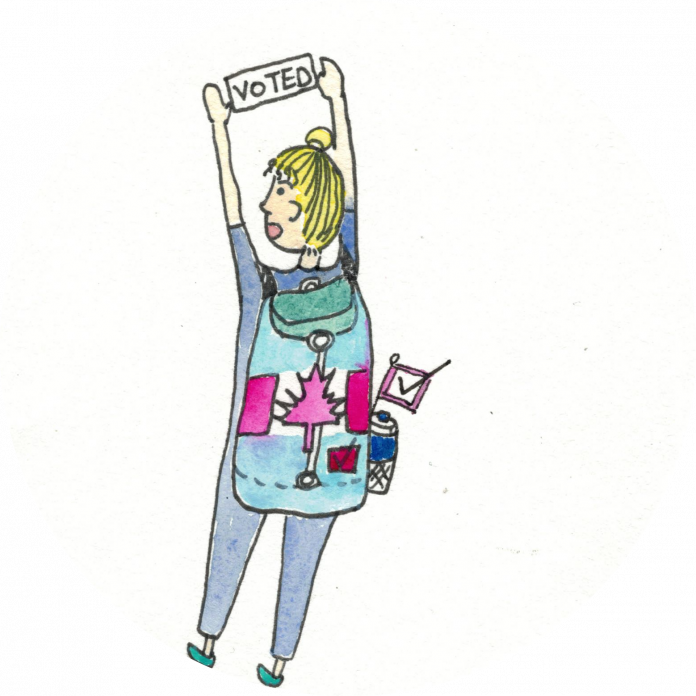
Millennial voters make up a large chunk of the voting bloc. Illustration by: Momo Lin/The Peak

The next Canadian federal election will be held this October, and the three major party leaders are preparing their campaigns. Only three months remain until an election that has voters uneasy about the future of our nation, and it’s crucial that young voters pay attention to the policies our federal candidates are offering.

Current prime minister and leader of the Liberal party, Justin Trudeau, has focused his campaign on helping the middle-class family once again. The Liberals have also chosen to focus on climate change — a cause that aligns with that of many millennials. All that aside, given the ongoing and harsh criticism he has received from the SNC-Lavalin scandal, it’s not unreasonable to assume that the allegations of Liberal government corruption could potentially hurt his votes.

Jagmeet Singh, leader of the New Democratic Party (NDP) party, is the first federal party leader in Canadian political history to come from a visible minority. Singh’s campaign touches on making education accessible to all, as he is advocating to eliminate tuition fees for post-secondary students. His campaign also proposes putting a stop on tax loopholes used by the wealthy, and diverting the otherwise lost revenue to supplementing aid for prescription drug costs. As a local politician, Singh has visited SFU in the recent past, where he spent time listening to students and engaging in different student-led activities.  

Conservative party leader Andrew Scheer is focusing his campaign on core conservative values. Scheer’s campaign goals include reducing the tax burden on Canadian families as part of a broader economic plan that also addresses budget waste in government. Scheer has been openly critical of Trudeau and his lax trade practices with China. Thus, he has promised to right what damage he claims Trudeau has done to Canada’s relationship with foreign allies. 

It is especially important that young voters, a significant demographic in the upcoming election, stay informed about policies of party leaders. Young voters need to be able to make decisions that will suit their needs and concerns. Especially when it comes to students — whether or not our issues (tuition fees, high cost of living, or the current job market) get resolved is highly dependent on which party is elected. 

As one third of the electorate in this election, millennials hold immense power in deciding what the future of our nation will look like. This October, remember to vote and to vote wisely.


Board Shorts: July 11, 2019

1
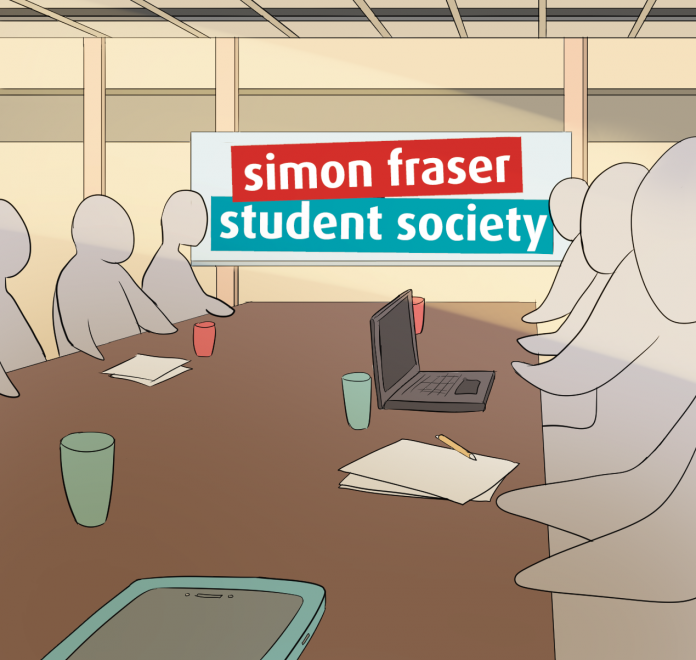
Irene Lo / The Peak

BCFS presents their campaign about interest on federal student loans to board 

Tanysha Klassen and Jenelle Davies, respectively the chairperson and organizer of the British Columbia Federation of Students (BCFS), presented to the board a federal campaign titled Knockout Interest. 

This campaign is focused on eliminating the interest charged on federal student loans, and aims to gain the attention of Prime Minister Justin Trudeau. Through extensive research, lobbying, and mobilizing, BCFS hopes to get student support by endorsing letters of support, co-branded posters and pledges, and encouraging students to spread the word on social media. 

“[We] hope to bring the biggest message as possible to the members of the federal government,” said Davies. 

BCFS represents students of all types throughout the province, such as undergraduates and graduates, including part-time students. Klassen and Davies both expressed BCFS’s interest to gain more partnerships for this campaign, such as other student unions. 

SFU Lifeline presentation addresses the assertion of SFSS’s pro-choice policy

SFU Lifeline president and vice president Lois Umali and Lily Moric presented to the board to address previous discussions on the society’s adoption of a pro-choice stance, and how this may affect their club. 

This led to a general discussion on abortion through the lens of the Canadian Charter of Rights and Freedoms. Osob Mohamed, health sciences faculty representative, highlighted that there have been several cases where the Supreme Court is protected by the charter. 

“Do you feel that your interpretation of the charter kind of goes against what was decided by the Supreme Court of Canada?” Mohamed asked the presenters.

In response, Moric stated that they would question what the charter considers a human life. 

“The sort of purity of the personhood of the fetus is also being challenged,” Moric said. “Just because it can’t speak. But their personhood is being challenged if we’re saying that abortion directly kills that fetus.”

The discussion was cut short by at-large representative and acting chair Rayhaan Khan due to shortage of time.

For a more detailed article on this discussion, visit the-peak.ca.

SFSS plans to collaborate with production company Crescendo 1 for the Fall Kickoff

Lastly, the SFSS also disclosed that they are planning to work with music and entertainment company, Crescendo 1, to plan the annual Fall Kickoff event. While previous kickoffs have been made possible with the production company Blueprint,  who will assist in artist relations, artist contracts and bookings, staging, and ticketing for the event.

Johnny Black, co-founder of Crescendo 1, emphasized that the production company is looking to help universities expand their brands, and create a music community in Vancouver.

“Our plan of action… is to help universities in Western Canada [to expand] their events and engage with their audience,” Black stated.

Crescendo 1, although a newer company, has hosted various Breakout festivals, presenting artists such as Migos and Tory Lanez. 


Museums need to be updated to reflect integrated rather than segmented histories

0
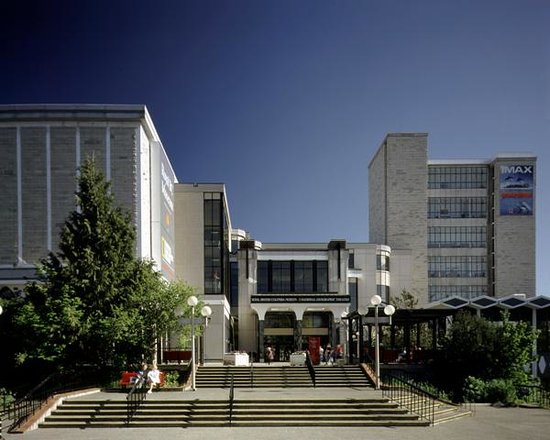
Updating the ways that museums curate their content is a crucial part of decolonization. Photo courtesy of Trip Advisor

Museums are crucial cultural depictions of history. To represent history responsibly, they should be updated to reflect a more inclusive history. Recently, Victoria’s Royal B.C. Museum has planned to modernize its building to address structural issues, and, more importantly, to reassess how the museum represents history in order to move away from a dominant white settler perspective. 

Typically, museums present history through a colonial context. Unfortunately, this means that when museums show a version of non-European history, they frame it through a lens of progress toward civilization, often putting Western achievements at the end of this linear progression scale. This implies that non-European civilizations are less advanced, as if their growth is somehow stuck in the past, which is untrue. Museums need to take steps to responsibly present history by not assuming European culture as the objective end standard, but rather including the perspective of other non-European communities with equal weight. 

Currently, the prevailing themes in the “Becoming B.C.” exhibit — discovery, adventure, frontiers, and pioneering — focus on a white, male settler perspective of the colonization process of British Columbia. This alienates non-European communities’ perspectives while creating the impression that there is a divide between white and Indigenous history. In the end, although the museum’s one section on Indigenous history is generally well-regarded and informative, the primacy given to the settler perspective in the “Becoming B.C.” exhibit erases Indigenous contributions to the formation of British Columbia, and relegates Indigenous peoples to the past. 

That museums curate history in favour of the European settlers is no surprise, given their roots in colonial expansion and so-called “cabinets of curiosities” — collections of items brought back to Europe during the age of exploration. However, other communities’ histories are appended as accents to the dominant Western colonial history in this presentation. 

Museums should move away from colonial framing and toward including non-European history as part of dominant history. This is something that should be handled thoroughly, in consultation with non-European parties to best decide how to represent history without placing primacy on the West as “modern” and the progressive end point. They must support efforts to help people learn about the land that they are on by giving Indigenous communities space and power to make suggestions on how museums can move forward to be inclusive and accurate.

We at SFU have not been exempt from presenting history by putting colonial actors in the forefront. The Charles Comfort mural, recently taken down after having been on display since 2004, has been blasted for its distasteful glorification of a false colonial history — something that has rankled SFU students for years. The painting depicted European explorers with the Indigenous people in the background of the colonial narrative. 

This depiction was not only inaccurate, but incredibly offensive, as it framed Indigenous people as passive. When the painting was acquired, the school’s vice-president university relations, Warren Gill, said that it could be used to provoke discussion on fundamental issues such as colonialism and First Nations’ experiences. However, this hurt the students more than it taught, and served as a lesson that a people’s trauma should not be treated as a teachable moment.  

SFU still has a long way to go in decolonizing its art collection, as the corridor where the Comfort mural had been still has “Indigenous” art provided by a non-Indigenous artist. We can better present the history of the land around us by being inclusive and accurate to all the actors who helped shape it. To do this, we must give space to people whose voices have been excluded or minimized by Western conceptions of history.

Adulthood 101: An international student’s quick tips for living alone

0
Illustration credit, Tiffany Chan

I moved away from my home in the Philippines when I was just 17 as an international student. Transitioning into both an independent lifestyle and a different cultural environment was a tumultuous and struggle-laden journey. Facing cold weather, deciphering Canadian slang, navigating the public transit system, filing my taxes on my own . . . there were many facets of my new life I needed to figure out how to manage. 

My biggest challenge was the daily maintenance and organization of an adult life — keeping my kitchen reasonably clean, doing laundry, paying bills on time, and financial planning (AKA not spending the majority of my paycheck on vodka crans at Fortune or on concert tickets). Here are some adulting lessons I’ve learned along the way.

Groceries: get them delivered. This was a game-changer for me — for the first two years of my college life, I commuted for 40 minutes both ways to get to the nearest Safeway. I eventually caved into using the “Asian grandma grocery cart” to make these trips easier. Weekly grocery trips, without a parent to drive me, was exhausting, so I started using Instacart to get my groceries delivered. It’s amazing-I pay a few extra dollars, do all my shopping online, and the next day my groceries are right at my door. Long gone were my days of hoping my rotisserie chicken didn’t tear a hole through the plastic bag on the 95. Thank goodness. 

Dishes: do them ASAP. Pretty basic advice, but if you have a full schedule of classes and a part-time or full-time job, they pile up real fast. If you can’t get to them the day of, rinse them off at least to save your future self the time it would have taken to scrub off that dried sriracha. Plus, if you have a roommate, this is just good manners. 

Laundry: do it strategically. I could never find a day in my week to block off a couple of hours to wash my clothes, sheets, rugs, towels, etc. I found that as the semesters flew by, I only got busier, and despite needing all those things to be clean to use, doing laundry was a burden on my schedule. So I timed doing laundry between other chores like making dinner or cleaning my bathroom.

Clutter: Marie Kondo everything. Let’s face it, there are so many things you have lying around that you don’t need. Dig through your closets, cabinets, drawers, etc. and toss out what you don’t need. The things you can’t use, but someone else may be able to, set aside to donate to a local organization. They may not spark joy for you, but they could be necessities for others. Big Brother Vancouver has a free pick-up service for donations, saving you the hassle of dropping off garbage bags of old-you clothes, and helps out a great cause.

Money I: keep track. We can all agree that Vancouver is an expensive city. No one wants to go through their monthly expenses, but when you’re saving up for that Asia backpacking trip or want to be a generally better spender, it does help to be aware of how much you’re spending and on what. I use an app called Koho that helps me manage my monthly budget so I spend mindfully. It has these cool features too like “RoundUps” that round up your expenses to the nearest dollar or ten, and moves this to a piggy bank of savings that you can cash out any time. There are tons of apps, or even a simple Google Sheet, that can help you lay out your spending habits and budget efficiently. Set budgets for things like groceries, entertainment, etc. I even narrowed down my budgets based on my frequent purchases like bubble tea and Starbucks coffees.

Money II: use deals. I love deals – I’m that crazy deal kind of girl who has all the apps like Groupon, Honey, and Mobile Bandit. Sometimes the money I save using these apps is just a few bucks, but some deals can save you a significant amount of cash, and if you don’t have a ton of disposable income, that’s extra funds to use on other things. Lots of popular food delivery/pick-up apps like UberEats, Ritual, Skip the Dishes, and DoorDash have $10 sign-up specials too that are convenient for lazy days in. Extra pro tip: birthday deals are a big thing too. Visit Sephora and Starbucks for free treats on your special day.

Weekly planning: use a damn calendar. I would be lost without my calendar to plan out my work shifts, classes, and time for other activities during the week. My manager once told me that during a job interview, if the candidate didn’t mention using a calendar or to-do list she would feel doubtful about their organization skills. It’s a great way to plan ahead and make sure you have time set aside for the necessary commitments, as well as planning your leisure activities without double-booking yourself or rushing around to get to your next appointment.

Learning how to take care of yourself as an adult, or maintain your home if you live alone, is a challenge for both domestic and international students and is easy to leave on the back-burner in sight of impending school deadlines or work commitments. Despite life being busy and student responsibilities increasing the further you delve into your program, remember to always take care of yourself. Schedule some me-time, make sure you get your eight hours of sleep, and prioritize your well-being just as much as your tangible adult responsibilities.