Home Blog Page 465

Political Corner: The Polish elections present a teachable moment for left-wing opposition parties

0
Poland re-elected right-wing nationalist Jarosław Kaczyński for a second term. Photo: Carsten Koall/Getty Images

With Canadian voters now recovering from our own election cycle, it is easy to forget about the politics of other countries and their potential repercussions. One example is Poland, which has also held parliamentary elections this month.

In 2015, the right-wing Law and Justice (PiS) party won the election easily, taking power away from the liberal Civic Coalition, by promising to work for Poland and its national identity. This is the platform that ultimately got them their second term. But which Poland has the party actually worked for?

Since 2015, Jarosław Kaczyński has called the LGBTQ2+ community a danger to society, going so far to say that the community is the biggest threat to Polish freedom since the Soviet era. So it is safe to say that the PiS is not interested in serving LGBTQ2+ individuals of Poland.

The PiS has instead focused their efforts on appealing to typical nuclear families. A majority of their support in the first election came from their promises to give families a monthly allowance for each child that they had. Once elected, the party followed through, helping many families improve their financial stability. It is unsurprising then that the PiS won by a large margin again in the election this month, even though many of their social policies don’t sit well with voters. 

The continuation of PiS rule in Poland is errily similar to the second-term re-election of Hungary’s Viktor Orbán, a far right politician who, on top of also being homophobic, is extremely anti-immigrant and has pulled Hungary to the far right. 

In both countries, opposition leaders had assumed they would have an easy time taking power back. Opposition strategies have been to push back hard against discrimmination policies, in addition to presenting themselves primarily as the antithesis to extreme right nationalists. This has also been the political reaction to the rise of far-right parties in other parts of the globe. However, this rhetoric has fallen short with voters who are looking for a solid platform to support, not simply an in-principle opposition party. In the wake of the Polish and Hungarian elections, it is clear that this strategy does not work. 

So what will? Going forward, the left-wing parties need a new strategy. Instead of focusing solely on being “the other guys” in politics, they should instead push their values and develop solid platforms, giving them a stronger presence in the elections. This would be a different way to show how they are the “other guy,” while backing up that claim with actual policy proposals.


It’s the great pumpkin recipes, SFU!

Illustrated by: Maple Sukontasukkul

Illustration by: Maple Sukontasukkul


Sometimes, pumpkin-spice lattes and pumpkin TimBits are not enough. This Halloween season, The Peak compiled a recipe roundup of pumpkin-centric foods, both savoury and sweet, that will surely sate your autumnal cravings. 


SWEET TREATS 

Pumpkin-marbled chocolate brownies 

The best part of this recipe is how dramatic the pumpkin and chocolate batter looks when you swirl them together with a fork. And yes, it is that easy to make everyone who knows you think you’re Martha Stewart. I hear your fears about chocolate and pumpkin as a pairing, but don’t let Starbucks makes you think that pumpkin has to stand alone. — GM 

Yields: Depends on the brownie recipe used as a base! 

Ingredients:

  • Ingredients needed for your go-to brownie recipe, or a store-bought brownie mix
  • 3 oz of cream cheese, softened
  • 1 tbsp butter 
  • 1/2 cup sugar 
  • 1 egg 
  • 1 cup of canned pumpkin 
  • 1 tsp vanilla 
  • 1 tbsp flour 
  • 1/4 tsp ground ginger 
  • 1/2 tsp ground cinnamon (or more) 

Instructions:

  1. Make your usual brownie recipe or follow the recipes on your mix, and pour batter into a prepared pan.
  2. Beat your cream cheese and butter together in a mixer or food processor (doing it by hand is doable but very labour intensive). 
  3. Add in sugar and beat until well combined. Protip: Scrape the sides of your bowl to avoid a granular mixture.
  4. Beat in all other ingredients.
  5. Dump spoonfuls of your pumpkin cream cheese mixture on top of brownie batter.
  6. Use a fork to swirl the cream cheese for a marbled effect, and to distribute the pumpkin cream cheese mix equally. 
  7. Bake your brownies as per your recipe’s instructions and enjoy! 


Pumpkin, carrot, and chocolate chip muffins 

These muffins are unspeakably good. I’m not even going to describe them because my words, those of a mere mortal, would not do them justice. Be liberal with your pumpkin spice (or whatever amalgamation of nutmeg, cinnamon, cloves, and ginger feels right in your heart while you’re baking) and throw in chocolate chips to truly love yourself. — GM 

Yield: 36 muffins 

Ingredients:

  • 3 cups of flour 
  • 1.5 tbsp of pumpkin spice (or whatever amalgamation of nutmeg, cinnamon, cloves, and ginger feels right — don’t bother buying pumpkin spice if you have these in your pantry!)
  • 2 tsp of baking soda 
  • 1 15 oz can of pumpkin puree 
  • 4 eggs
  • 1 cup of oil 
  • 1 tsp vanilla 
  • 1/2 cup water 
  • 1 cup shredded carrots 
  • 1 cup chocolate chips 

Instructions:

  1. Preheat the oven to 350°F. 
  2. Aside from your carrots and chocolate chips, combine your dry ingredients in one bowl and your wet ingredients in the other. Then, mix them together. 
  3. Add your carrots and chocolate chips in last, to make sure that they’re well-incorporated in your batter. 
  4. Bake your muffins for 18-20 minutes, and enjoy! 


Vegan pumpkin pie truffles

So this is actually my mom’s recipe (because I can’t cook) and I don’t know if I’m allowed to publish it, so please don’t tell her. The great thing about this recipe is that it is both vegan and can be made in less than 15 minutes. They taste just like little pumpkin pie bites, and since they’re vegan, you can pretend that they’re actually healthy for you while you eat the whole tray. — MO

Yields: 12 balls 

Ingredients:

  • 1 cup pumpkin puree (pure pumpkin, not pie mix)
  • 1/4 cup maple syrup
  • 1/2 tsp vanilla extract
  • 1/4 tsp salt
  • 1 tsp pumpkin pie spice (or use a mix of cinnamon, ginger, nutmeg)
  • 1/2 cup + 2-3 tbsp almond flour
  • 3 tbsp coconut flour
  • 2 tbsp coconut sugar
  • 1/2 tsp cinnamon
  • 1–2 tbsp rum or liquor of choice (optional)


Instructions:

  1. Add pumpkin puree and maple syrup to a pan. Mix in the salt and pumpkin pie spice. 
  2. Cook over medium heat for 6 to 8 mins to thicken slightly. Add in the vanilla extract. Here, you can add your 1–2 tbsp rum or liquor of choice.
  3. Allow mixture to cool slightly, then add in almond and coconut flour. Mix well. 
  4. Let chill to absorb for 10 minutes, then mix again. If the dough is sticky, add 2 tbsp or more of almond flour. Press the mixture between your fingers to check. 
  5. Using your hands, form the dough into smooth balls. 
  6. In a bowl, mix the coconut sugar and cinnamon. Roll the balls in the cinnamon and sugar mixture. 
  7. Store refrigerated for up to 3 days and frozen for up to a month. 


SAVOURY CITY 


Pumpkin alfredo 

Listen, I know this feels like a weird one, but bear with me! Pumpkin is the perfect cheap, nutritious, and filling thickener for a savoury and smooth sauce. I would recommend throwing in more garlic than the recipe calls for, and sage is a super nice addition to this dish. — GM 

Yields: 4 servings

Ingredients:

  • 1 pound of pasta (fettuccine is great!) 
  • 6 tbsp of butter, margarine, or another cooking oil 
  • 2 cloves of garlic or more
  • 1 cup of pumpkin puree 
  • 1/8 tsp of nutmeg 
  • 2/3 cup of half and half cream (if you’re using milk of some sort, adjust your quantity so that your sauce is still thick) 
  • Parmesan cheese and parsley to garnish (optional)

Instructions: 

  1. Boil water and make your pasta as usual. Make sure to keep some leftover pasta water (roughly half a cup, depending on how much liquid you want to later use to adjust your sauce’s consistency). 
  2. In a pan, melt your butter and cook your garlic. 
  3. The original recipe recommends incorporating all other ingredients in a pan to make the sauce, but feel free to toss everything in with your drained pasta so it all simmers together.  


Flourless pumpkin bread

I had gluten-intolerant friends in high school, which taught me that when you find a good flourless recipe, you never let it go. Not only do you pin that recipe on all of your boards — you carve it in your skin. This recipe’s hamartia is the fact that it calls for almond butter, which is so expensive it hurts. Feel free to substitute for peanut butter or even tahini, depending on what you have handy. — GM 

Yields: One loaf

Ingredients:

  • 1 cup of almond butter (or substitute) 
  • 2/3 cup of canned pumpkin puree (if you use pumpkin pie mix, adjust your spices and double/triple-check the ingredient list if gluten is a concern) 
  • 1/2 cup sugar 
  • 2 eggs
  • 1 tsp baking powder 
  • 1/2 tsp ground cinnamon (I always, always put more cinnamon than called for)
  • 1/2 tsp ground nutmeg
  • 1/8 tsp ground ginger
  • 1/8 tsp ground cloves 

Instructions:

  1. Preheat oven to 350°F. 
  2. Mix all the ingredients together; a blender or food processor works best.
  3. Bake in a loaf pan for 40–45 minutes until done or until a toothpick comes out clean. 

Note: Don’t worry if the top of your loaf sinks when it’s cooling, it’s normal! 


Slow-cooker pumpkin butter spread

Come the stroke of midnight on the day the first leaf falls from the trees, all foods turn into pumpkins. So why not butter? This sweet treat will turn your morning toast into a little slice of Thanksgiving pie that just can’t be beat! Pumpkin butter can be stored for up to two weeks in the fridge in an airtight container. It makes a great dip or spread to add just a little bit of extra pumpkin to all your autumn meals. — NM 

Yields: 4 mason jars worth

Ingredients: 

  • 2 small pie pumpkins  
  • 2 tbsp butter
  • 2 cups brown sugar
  • 1/4 cup apple juice
  • 1/2 tsp vanilla extract
  • 2 tsp ground cinnamon
  • 1 tsp ground ginger
  • 1/2 tsp nutmeg
  • 1/4 tsp cloves

Instructions:

  1. Cut pumpkins with a sharp knife and scrape out all the seeds.
  2. Carefully cut remaining flesh from shell and dice the flesh into cubes.
  3. Combine all ingredients in your slow cooker. Give it all a good stir with care.
  4. Cook on low heat for 8 hours. 
  5. Remove cooked mix into a standing blender and blend until smooth until even consistency is reached. Alternatively, do so in an emulsion blender can be used in the pot, or in a large bowl.
  6. Chill in the refrigerator to set.


Pumpkin curry: 

I love this recipe because it gives me a chance to eat a vegetable I usually don’t like. I would normally associate pumpkin flavourings with desserts and sweetness, so the contrast here is really enjoyable. I definitely always have it with the optional spicy chilies. It’s a Fijian-style curry, that is also vegan-friendly. In my opinion, it goes best with a simple roti, but rice works too. Shoutout to my friend, Pushpa Singh, who personally taught me how to make it! — DW 

Yields: 4 servings

Ingredients:

  • 1 medium pumpkin
  • 1 small onion
  • 1 tbsp ground garlic
  • 1 tsp ground ginger
  • 6 tbsp of olive or corn oil 
  • 1/4 tsp mustard seeds
  • 1/4 tsp cumin seeds
  • 1/2 tsp salt
  • 4 curry leaves
  • 1 tsp mint (optional)
  • 1–2 tsp of hot chilis (optional)


Directions:

  1. Cut pumpkin into small cubes. 
  2. Cut onion and chilis finely (if chilis are being added).
  3. Add oil to pan. Heat to medium-high, then add onions. 
  4. When onions are soft, add ginger, garlic, mustard seed, cumin, curry leaves, pumpkin, salt, and chilis. 
  5. Cook until soft. 
  6. Once cooked, add finely cut mint on top.

Self-deprecating humour isn’t as harmless as it seems

0
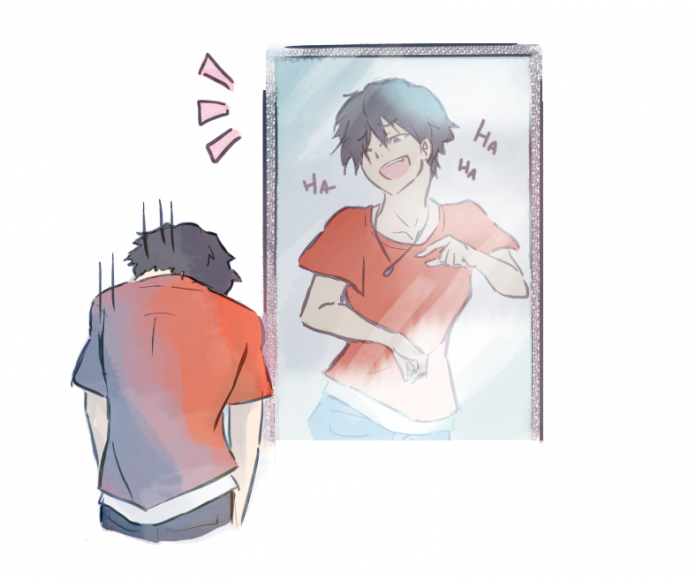
It’s possible to be your own bully, and that’s not OK. Illustration: Sabrina Kedzior/The Peak

“Sorry, I’m a such a mess, aren’t I?”
“I just want to die right now.”
“I know, I’m so annoying.”

These are the sort of comments that I hear from students on a day-to-day basis being shared by students. Hell, these are the jokes that float around consistently in my friend group. I used to make the same sort of jokes until I realized the toll it was taking on my mental health. I learned something really important that I wish more students would realize: self-deprecating humour can be a valid coping mechanism, but it can’t be the only way people talk about themselves. 

It is all too easy to use self-deprecating humour like so many others, but people have to realize that this sort of humour is deceptively insidious. It starts as a casual joke at one’s own expense, but when they’re the only jokes to fall back on, it can warp a person’s self-perception and self-worth. Through these jokes, I found that I internalized a lot of hurtful thoughts about myself. I became my own bully, and these jokes made up a version of me that I rationalized as my true self.

I largely ignored this because my peers were all making these kinds of jokes, but they need to be acknowledged for what they are: socially acceptable ways of putting ourselves down. I’m not calling them the devil, and I certainly don’t think they are the root of all mental health problems, but they’re not harmless either. 

My main problem with these jokes is that for some, they are easy ways to talk about our personal issues without really examining them. For me, I found that I was unwilling to acknowledge that my self-esteem was deteriorating, even when I became the first person to put myself down. I didn’t recognize when the self-deprecating humour stopped being a joke. I missed the point when people weren’t laughing along. In hindsight, the laughter of my friends was probably given out of empathy until the degree that I put myself down made them uncomfortable. 

A cousin of self-deprecating humour is apologizing profusely for things that no one should ever apologize for, such as asking for someone’s time, or passively existing in a space. I used to do this often, and honestly, it’s hard for me to stop. But while it is important to take accountability for things that actually bring harm or offense to someone else, it is just as important to recognize when self-blame is being assigned for things outside of individual control, or that no one else finds fault for. An easy way to break this habit is to replace “sorry” with “thank you.” For example, when late to a meeting with a friend, thank them for waiting instead of immediately apologizing for being later. That way, both parties get to feel positively impacted by the recognition of a less-than-ideal situation. 

What changed my mind about my habit of self-deprecating humour was a Tumblr post about switching jokes that put ourselves down with jokes that lift us up. The author insists that self-aggrandizing jokes are still accessible in the same way to our peers, but they don’t do internal harm to the person making the joke. 

When I read this, I realized that I was much more willing to make jokes at my own expense, including incredibly dark jokes that prodded at my self-esteem, than I was to elevate myself in silly ways. As the author says, self-aggrandizing jokes are good practice for talking about oneself positively, which I was at the time very uncomfortable with doing. But reading the post was pivotal in helping me both replace self-harming language with something more loving, and to realize the hurt I had been inflicting on myself. 

I want to make the disclaimer that this is by no means a dig at people who make similar jokes about themselves. Sometimes it’s the first way we become comfortable talking about how we perceive our personal faults. I wouldn’t want to take away from that. Nor am I telling anyone that talking about oneself positively is a sure-fire solution to all mental health problems. However it is still necessary to acknowledge that negatively joking about ourselves isn’t entirely harmless. I still catch myself making similar jokes, and personally, I know I’m doing more harm than good. 

If any of this has rung true to you, or to a friend you know, please reach out to them or seek out the people in your life that you can talk to — your family, a mental health specialist, or some trusted friends. Explore where the instinct to make these jokes comes from, and some possible healthier ways to communicate your inner self-doubts.


We shouldn’t be normalizing the ethnocide of Chinese Uyghurs

0
Minority Muslim groups are being submitted to barbaric acts in China. Photo: Recep Sakar/Yeni Safak

Genocides and ethnic cleansing are not a thing of the past, and clearly neither are internment camps. In the province of Xinjiang in China, officials are currently holding an estimated 3 million Uyghur, Kazakh, and other minority Muslim groups in detention centers. Providing opportunities for vocational training, as well as curbing the threat of Islamic extremism have been cited as reasons for detention. However, detainees explained that they were forced into the camps because they chose to follow their religion, speak their ethnic languages, or contact relatives overseas, among other things.

It’s no secret that China is attempting to erase ethnic Muslims from its population. Their methods have at times been barbaric. Brainwashing, separation of children from their parents, and forced marriages to Han Chinese men have all been used in order to destroy cultural identity and dilute the Uyghur population. Physical torture, electrocution, involuntary drug administration, and rape have also been used to intimidate and eliminate Uyghurs from China’s borders. Many have died as a result of the poor conditions of the camps, while other detainees have died of suicide.

China is trying to hide the news of the internment camps. Officials argue that these are voluntary facilities which aim to provide Uyghurs with vocational training. However, the presence of college-educated individuals and the elderly in these facilities challenges this notion. 

China is working hard to make sure that the international community sees this as anything but ethnocide — and unfortunately, their efforts appear to be working. 

Chinese propaganda has spread to the Lower Mainland. It is deeply concerning to see that UBC allowed a Chinese official to justify the presence of internment camps. Speaking at an event on global infrastructure, the official claiming they provide vocational training to the Uyghurs in the Xinjiang province because they lack social and economic opportunities. UBC tried to justify hosting the official, and professor Paul Evans argued that the official had rights to freedom of speech. 

Canadian institutions should be asking themselves: is protecting freedom of speech the higher virtue when it comes to spreading false propaganda? This question is especially important when the actions it seeks to mask parallel the treatment of Canada’s Indigenous population by European colonizers.


What Grinds Our Gears: Why does flavour innovation stop at the pumpkin patch?

0
We can drink so many other aspects of autumn. Illustration: Ashley Yien/The Peak

Before Starbucks takes me in the dead of night and disposes of my body with such corporate efficiency that it’s never found, hear me out. I get it, pumpkin spice is delicious. I hear you: I had a pumpkin scone as soon as those little orange fucks made their way into pastry cases across campus. I’m not opposed to pumpkin spice: it signals the arrival of my favourite season to the extent that it provokes a Pavlovian reaction deep within me. 

But why stop there? 

Why are we all assuming that our palates peaked at pumpkin? Where are my other fall-flavoured drinks and treats? 

Why aren’t coffee shops and eateries left, right, and centre selling apple cider? Where’s my apple pie spice latte? Caramel apple treats, anybody? And why aren’t we dipping our toes in the wonderful world of cranberries? Snickerdoodles have the comforting cinnamon loveliness we all crave when the leaves turn yellow and orange. Pear is harvested in the fall — how are we not eating and drinking pear everything? It’s absolutely delicious. And pecan pies; how could we forget pecan pie?! And don’t even get me started on the warmth, earthiness, and discreet sweetness of carrot cake. 

I’ve said too much. Fast food moguls are sending their personal hitmen after me as we speak.

But think about it.


Here’s what the Maclean’s top comprehensive university award doesn’t tell you about SFU

0
Do features like My SSP really help make SFU a top comprehensive university? Photo: Chris Ho/The Peak

Maclean’s magazine recently announced that SFU is once again Canada’s Top Comprehensive University for 2020. While this sounds like something that is pretty cool and exciting, when I read the reasons our school had been awarded the honour I was a bit confused. SFU does have some great things going for it, don’t get me wrong, but is it really the best school in all of Canada? 

What the heck does it even mean to be a comprehensive university? To be considered for this title, universities need to demonstrate diversity in program offerings and an outpouring of research. While SFU does boast an impressive number of programs, it might be worth considering quality as well as quantity for the comprehensive category. 

As an English major, I already have some issues with SFU receiving this award. This semester is the fourth time in two years I’ve had a class in the bottom corner of the Robert C. Brown Hall (RCB). There are no windows, no ventilation, and a total of one single outlet that my professor this semester spent a solid 30 minutes looking for. As a student in the Faculty of Arts and Social Sciences I feel somewhat neglected. Students studying math got a new wing, and other classes get to use those fancy-looking classrooms on the third floor of the Academic Quadrangle. If Maclean’s is claiming that we are the best university in Canada for all our different parts, then why are some faculties being so overlooked?

Maclean’s also talks about the “philosophy of sustainability” at SFU, which I do agree is something SFU is trying to do well. The only issue is that they conveniently gloss over the accessibility concerns that the “Re-use for Good” initiative has brought to light. If SFU is supposed to be the best at having everything, then why has it disregarded major accessibility issues for some of its students? 

Then there’s the issue of our physical buildings. Maclean’s mentions the UniverCity portion of the campus community as if it is a new bit of consumer infrastructure that has yet to be built. However, UniverCity and the Cornerstone plaza that bridges it to the school have been around for years. While it’s possible that an expanded UniverCity is in the queue of construction projects at SFU, that’s not much to write home about. It’s a nice thing to have on campus, but I don’t think it should be included with our “comprehensive” aspects. 

The final issue I have with SFU’s comprehensive university designation is in the praise it gives to the My Student Support Program (My SSP) — an app that connects students to counsellors. First of all, I didn’t even know this app existed. Secondly, the whole app is flawed in many ways. Reviews from the Apple App Store suggest that it’s riddled with bugs, and students have a difficult time connecting with an actual counsellor for their mental health issues. For an app that claims that you can connect to a counsellor 24/7, it seems a bit problematic that students are having a difficult time getting basic functionality — especially for students who are seeking much needed help. 

All in all, the praise we are given as Canada’s most comprehensive university makes it seem as if the people at Maclean’s haven’t been to SFU in a while. Was this information just recycled from previous years, or was this the result of actual research done to determine if we really are the most comprehensive university in Canada? 

But instead of feeling bummed out that we don’t actually deserve this honour, this is perhaps an opportunity for SFU to make some much needed changes. We should be giving equal value to all departments, be concerned with the needs of all students, and give people a mental health app that actually works. The most comprehensive university award should go to the university that is the most well-rounded and balanced in all its aspects. If we keep giving most of the resources to only a few groups of people on campus, do we really deserve this award?


An open letter from an absentee

0

Dear Classmates,

You’ve seen me. I’m in your ENGL 206 class, your HIST 102W, your CMPT 307. I’m the one that used to sit in the back and make bad origami boats. Yeah — that guy. 

I know what you’re probably thinking . . . What happened to you? You stopped showing up after Week 3. While you’re not the first — and, surely, not the last — to wonder this, I assure you I’ve been keeping busy. In fact, I feel it might be worthwhile to apprise you of what exactly I’ve been up to. 

You see, last Monday (this would be Week 7), I wanted to attend class, but I had an unexpected visitor stop by my dorm before I could leave. This visitor had eight legs, beady eyes, and a conspicuous disregard for my school schedule. And like the worst kind of house guest, he quickly made a nuisance of himself, hiding under the desk, then the bed, the dresser, the nightstand . . . When he finally got tired of our little game of hide-and-seek, I thanked him for stopping by and politely escorted him out of the room on a page ripped out of my Norton Reader (we won’t be reading all of “Bartleby, the Scrivener,” anyway, will we?) 

The thing is, as I’m sure you know, hosting guests in your dorm really takes it out of you. So I decided to take the advice of all of those mental health notifications our concerned administrators send us and relax a little before leaving. I put on some ASMR (instant noodle unboxing), made some tea, and took a load off. Regrettably, and I’m sure this happens to you, too, I relaxed a little too hard, and by the time I woke up, Monday was Tuesday.  

Now, we all know missing a lecture isn’t the end of the world, but you’re likely wondering where I was for this week’s midterm — again, I must confess I had more urgent matters to attend to. What if I were to tell you that I was given a direct order from MI6 to secure a highly valuable, highly specialized payload? You probably wouldn’t believe me. Those sorts of things only happen in the movies — right? 

I was minding my business that morning, reviewing the Sparknotes entry on Jane Eyre for the test when, out of nowhere, I received a call on my cell. I picked it up without checking the caller ID. 

“Truant,” the crackling voice on the other end said, “I need you to do something for me.”

“Who is this?” I answered.

“It’s me.”

I was spooked.

The voice continued: “I need you to go to Superstore and buy me some cumin. Not the seeds — the ground kind. And make sure it’s organic.”

“But I have a tes—”

“But my foot hurts. I think my plantar fasciitis is acting up again. You’re gonna have to go buy it for me. You’re the only one who can do this.”

There was real urgency in the cryptic voice.

“How am I supposed to get there? It’s 30 minutes away by bus.”

“I’ll lend you the Mazda. Gas is on me. The curry’s going to be terrible without cumin. Please hurry.” 

“Understood.”

I had to brave the endless throngs of extreme couponers that afternoon. There was danger (those parking lots are nuts); there was intrigue (at first, I couldn’t find the right aisle) — and though it was hard work, and I do regret not making it to class for the test, the head of Mom Industries 6 tells me I can rest easy this weekend because the curry came out great. 

It should be evident by now that I live a rather unpredictable lifestyle. There is no end to these incidents. Tomorrow, I may be whisked away to watch a Little League game, or wind up in the thralls of a YouTube video binge session, or find myself fully engrossed for no fewer than two hours in untangling my headphones. I do appreciate the fine work you guys are doing in class, and while I would very much like to be there in person to see it, given the wild nature of my life, I simply can’t make any promises. 

Yours truly, 

Truant

P.S. If you would be so kind, please send me your notes from lecture.

Long story short: You deserve to break free from cuffing season

0
Illustrated by Tiffany Chan


With cuffing season just around the corner, the number of couples I’ve seen roaming around campus has increased exponentially. It’s as if there’s some universal law out there that pulls people together the moment summer ends.  It’s always interesting when this happens. With the appearance of these new couples, the number of worried singles also seems to grow — in my first year, I was one of those worried single people. 

I was convinced that being single was a reflection of my worth. I thought that I was ugly, undesirable, and just an overall mess of a human being. In fact, I got so caught up in my own head that I almost dated some random guy in my class and got stuck in a relationship I shouldn’t have been in, just because he gave me a little attention. It’s messed up, I know. 


Through that rather traumatizing experience, I finally realized that being single is actually pretty great. People often compare being in love to seeing the moon for the first time, because it’s captivating, breathtaking, and, unlike the sun, its light doesn’t hurt your eyes. But if being in love is like seeing the moon, then being single is like watching the stars — because not only is it no less beautiful than the moon, but it’s also freeing.

Now, before I get too far, I just want to say that I’m not some kind of anti-love advocate or anything. Love is a beautiful thing. However, regardless of how beautiful love may be, it’s definitely not the be-all and end-all, which not everyone realizes. Love is put on such a high pedestal that single people literally get shit for being single. People get so caught up in the negative stigma around being single, that they overlook its beauty.

 For example, being single gives you so much more time to do the things you want to do. Back when I almost dated that guy, who I will call Will, it was like I got forcefully enrolled in an extra four-unit course. 

Relationships are honestly so time consuming that sometimes you don’t even have time for yourself.  As a rather introverted person, I really value my alone time — it gives me time to think. When I was in this almost-relationship, I never had time for myself. If I didn’t respond to messages fast enough, or if I just wanted to keep to myself for the day, I would get bombarded with phone calls and messages, asking if something was wrong, why I wasn’t answering, and so on. At first, I found it touching that he cared so much. It made me think that maybe I wasn’t totally worthless, after all. After a while, however, it just got tiring. I was burned out. I began seeing this relationship as merely an obligation, something I had to get through in order to be deemed valid, and that’s not right. 

I also started changing myself when I was with Will. I would hold back things I wanted to say in fear that he would disagree with me since he was a pretty opinionated person. I also found myself pretending to be dumber than I was because he would get mad at himself when I did better than him and for some reason, I felt as if his anger was my fault. Thinking back on it now, it’s pretty stupid. Comical, even. I ended up changing myself so much that I couldn’t even recognize myself anymore. This relationship made me unhappy. Nothing seemed to make sense anymore. I had lost myself amidst the waves of expectations crashing down on me, let the warm and fuzzy feeling of finally being in a relationship cloud my better judgement. It made me forget that the most important person, the one that I should be putting first, isn’t Will. 

It’s me. 

And I didn’t seem to realize this until I was single again. 

I was so preoccupied with trying to deal with this whole new relationship ordeal that I forgot to focus on myself. When you’re single, you really get to learn about yourself. You get time to embrace your flaws and learn to not rely on others to be the source of your happiness.  It teaches you to be emotionally independent and allows you to love yourself a little more. More self-love, honestly, is something we can all benefit from, especially in cases like mine, since I was just dating in hopes that it would somehow make me less insecure. I was still insecure; it was just a different kind of insecurity. 

For me, being single wasn’t remotely as bad as it had been made out to be. It was freeing, it gave me an opportunity to take care of myself and, more importantly, it gave me more time to love myself.  

So, here’s to another season of self-love. 


CONFESSIONALS: The housing crisis in Vancouver is ruining my sex life

0
Illustration of a closed envelope, with the text, “Confessionals”
ILLUSTRATION: Marissa Ouyang /The Peak

It’s a little after midnight. I’ve lost count of how many drinks I’ve had at this club, and I keep making too-intimate eye contact with semi-coherent, sweaty guys on the dance floor who can’t dance.

There’s one guy in particular who’s been on me the entire night. The guy in question, who has not-so-subtly been trying to pipe, grabs my waist from behind and sways me to a song I swear hasn’t changed in hours — and, you know, maybe I’m feeling something here . . . particularly against my lower back.

We dance together for a while, until he finally says something of actual interest that catches me off guard. I should have seen this coming, but when he sloppily screams over the music into my ear, “let’s go back to your place,” the thoughts start running:

  1. I kind of have to pee
  2. I think I just saw my friend pass me with a guy wearing an eyepatch . . . but this is my confessional, not hers
  3. I low-key want to get my back blown out by this guy, and I have maybe an hour’s window before I realize that this club-lighting nine is a bedroom-lighting three — so we’re sort of on a time crunch
  4. Going back to my place means a 30-minute trip to my suburban childhood home, where my parents, older brother, and pets are all most likely asleep

Yeah, that last thought is probably the most important, because it means this operation is certainly a bust. The only thing tonight that’s going to bust, apparently.

And this is the problem I’ve discovered since blooming into (I assume) my peak attractiveness: I want to bring guys home, but I risk my entire family hearing me get absolutely suplexed in the bedroom. 

You know what, I’m about to say it: the housing crisis in Vancouver is RUINING my sex life. 

This economy’s been dicking me down for long enough. I need something more. 

Look: I’m a 7/10 in a 3/10 economy ready to, at this point, hook up with 5/10s any way I can. But unfortunately, my current living situation has been railing me pretty hard — and it’s the only thing that’s been railing me as of late. 

For the privileged reader who is not vexed with the harsh cruelty of being too broke to bang, I offer this sentiment: imagine having a one-night-stand. The morning after Daddy pushed your lungs into your throat, you hear him run into Dad in the kitchen. As you lay in your own sweat, all you can hear is the two men sharing awkward small-talk. Anxiety grips your balls, the raw tenseness of calling out for your father and both men responding. 

Then, picture explaining things to your dad in G-rated — and appropriately, completely fictional — terms. Elucidate for him how this ‘friend’ who ‘slept over’ is ‘someone from class,’ not some headless torso you’ve barely talked to and frankly can’t name. 

Yeah . . . I’m at a point now where I refuse to let the economy continue to be the dom to my currently sub sex life. This economy’s been dicking me down for long enough. I need something more. 

I’ve started experimenting with alternatives, like promiscuous late-night hook-ups in the woods — the wood is ALWAYS cold and the splinters are inevitable. I would just hook up with guys in cars, but sadly, gays don’t drive. Trust me, it’s a thing. 

At this rate, I might have to make enough money to move out by following in the footsteps of the entrepeneurial gay pioneers before me: of course, I’m referring to creating an OnlyFans account. 

Despite my alternatives and future business schemes, though, Vancouver is still basically one big cockblock city. This city really needs to do something about this housing crisis, because clearly it’s at fault for my flopping sex life. It’s not my flakiness with guys I agree to meet up with, the stale conversations I make no effort to fix on dating apps, my distrust with letting strangers into my family home, my shallowness, my insecurities, or my inability to be emotionally vulnerable.

Nope. Definitely the housing thing. 

Who’s that building named after? : Burnaby campus edition

Image credit: Chris Ho / The Peak

W.A.C. Bennett Library
As a place that adheres to different student needs — whether that be as a spot for exam cramming, a trove for the perfect essay sources, or an escape for a solid mid-day nap — the W.A.C. Bennett Library has been there for us all at one point or another. Despite this familiarity, many might not know that the library is named after a former Premier of British Columbia. Born in 1900, William Andrew Cecil Bennett is the longest running premier in BC history. Before entering the world of politics, Bennett started as a hardware store owner in 1930, owning and operating the very successful five-chain Bennett’s Hardware. Following various other ventures (including a wine-making company) Bennett eventually pursued politics in 1941 as a Conservative member of the BC Legislature.

After failing to be elected as a member of the Conservative party, Bennett eventually became premier as the leader of BC’s Social Credit Party in 1952. He successfully won seven consecutive elections, with his run eventually ending in 1972 at the hands of Dave Barrett and the New Democrats. The two-decade premier died in 1979, where he was buried at Kelowna Municipal Cemetery. You can find a photo of Bennett in the library on the third floor, opposite the south west elevators.

Fun fact, Bennett was often called “Wacky” Bennett by enemies and “CeCe” by close friends. So for the days where the book you need has been taken out by someone else, or that perfect nap spot has been claimed by another, feel free to vent your library frustrations in the name of good ol’ Wacky himself. — JB

Maggie Benston Centre
Maggie Benston Centre, commonly referred to as MBC, is a place to find all your student service needs neatly housed in a mundane looking, blue-gray building. However, it is named after someone who could not be farther from mundane: Margaret Lowe Benston, an SFU professor in computing science, chemistry, and women’s studies.

It’s hard enough to be a professor in one department, but Benston managed to be in three! She advocated for women’s rights and co-founded the Women’s Studies program in 1975 and the Vancouver Women’s Caucus in 1988. Even though Benston unfortunately died of cancer in 1991, the progress she made for women’s rights, chemistry, and computing science will always serve as a reminder of her greatness. SFU honored her legacy by naming a building and a graduate bursary in the Gender Sexuality and Women’s Studies department after her. —MK


Trottier Observatory

The Trottier Observatory is named after two brothers with a passion for science and the Trottier Family Foundation, which donated $2.7 million to help fund campus’ $4.4 million telescope.

Older brother Lorne Trottier discovered a love of science and technology at a young age after building his first crystal radio and feeling fascinated by how it worked. This curiosity later helped him become an electronics engineer and a cofounder of Matrox, a technology company in Montreal that produces computer graphics and video products. He and Louise Rousselle Trottier established the Trottier Family Foundation in 2000, an organization interested in supporting innovations in health, education, science and the environment.
His younger brother Dr. Howard Trottier became a physics professor at SFU, and an amateur astronomer and astrophotographer. Dr. Trottier fell in love with the night sky at a young age, after being introduced to its beauty by a camp counselor in the Laurentians. He would go on to share this passion with others by founding the Starry Nights at SFU program in order to increase science outreach to young people. — JL
Diamond Alumni Centre

Jack Diamond was a self-made millionaire, philanthropist, sportsman, and community-minded person. Diamond came to Canada from Poland at the tender age of 17 as a poor boy. He first made his living here by selling potatoes on the streets, when he often went hungry. Working his way up, he later purchased the Pacific Meat Company in 1940 and transformed it into the largest packing house in BC. When he became a member of SFU’s board of governors, he included a grilled cheese sandwich and a glass of milk for $1 on the cafeteria menu, so that students would never go hungry like he once did. He even visited the cafeteria to ensure that the cheese was thickly sliced!

He served on SFU’s board of governors from 1967 to 1973, and was elected chancellor from 1975 to 1978. The Diamonds helped to raise over $1 million for the university while undertaking various other civic projects focussing on health, welfare and education. Jack Diamond was bestowed with Canada’s highest honour, the Companion of the Order of Canada, for his countless philanthropic and civic endeavours. With its stunning panoramic view of the mountains and sophisticated interior, the Diamond Alumni Centre (DAC — previously named the Jack and Sadie Diamond University Centre) is easily one of the most beautiful places on Burnaby campus. We are eternally thankful to Jack and Sadie Diamond for their generous and heartfelt contributions to the SFU community. — LM


Blusson Hall

Blusson Hall is one of the nice, luminous, shiny new parts of campus — which checks out since it was named after someone literally rolling in diamonds. Maybe I’m exaggerating, but Stewart Blusson is truly a pioneer as far as mining and geological research and exploration goes. Educated at UBC and the University of California in Berkeley, Blusson has worked for the Geological Survey of Canada among other initiatives. He was central to the discovery of diamond mines in the territories in the early 1990s and the ensuing development of a Canadian diamond industry. His efforts were originally discouraged by traditionalists, but Blusson’s ingenuity and perseverance paid off. He was appointed to the Order of Canada in 2004, and given the Queen Elizabeth II Jubilee Medal and the Logan Award — which is the highest award that the Geological Association of Canada gives out. While Blusson Hall is far from being his only philanthropic activity, we’re certainly thankful to Stewart Blusson for giving us one (1) safe haven from the construction noise and convocation hullabaloo. — GM


Robert C. Brown Hall

Following the long and storied SFU history of naming buildings after presidents, Robert C. Brown Hall, a maze of (rumoured) asbestos filled classrooms is no exception. A man close to my geography-laden heart, Robert (Bob) Brown got his BA and MSc in Geography from Oregon State University, and his Ph.D in Geography from Michigan State University. He spent his career focusing on ichthyology — literally fish science — and fishery research. He was SFU’s Dean of the Faculty of Interdisciplinary Studies (1972–1976), Faculty of Arts (1976–1991), as well as the Acting president in 1993. Additionally, he was President of the Burnaby Mountain Development Corporation (Univercity Project) from 1996–1999. So, if you’re currently paying thousands of dollars for the honour of living near Nesters and MINISO, he’s the one to blame. — OR