Home Blog Page 454

Resources for Australian bushfire relief

1
Image courtesy of Wikimedia Commons

As of the time this article is being written, 10.7 million hectares have been burnt in Australia. The Guardian reports that 1,700 homes have been lost, and 23 people have died due to the bushfires in South Australia, New South Wales (NSW), and Victoria. The ecological damage is devastating: The Age reports scientists’ fear that millions of animals are dead, but it is difficult to estimate as these bushfires are unprecedented in scale and severity. 

To put it bluntly, a continent is burning. Below, we’ve listed some organizations you can donate to. 


Firefighters
We can donate to the firefighters; donations to the following organizations are going toward the general benefit of the volunteer fire brigades. Some of the organizations listed below specifically provide financial assistance to the firefighters, helping lessen distress caused by the fires. These donations allow them to continue supporting their communities.

NSW Rural Fire Service
With 100 fires burning across the state, NSW has been heavily affected by the fires in particular. Donations to the NSW Rural Fire Service generally go towards the volunteer brigades.

CFS Foundation
The CFS Foundation provides immediate financial help for volunteer firefighters in South Australia to alleviate any suffering they may have undergone in their line of service.

County Fire Authority (CFA) Fire Service
Based in Victoria, the CFA Fire Service lets donors choose what they’d like their money to go towards. They can donate towards the welfare of the volunteer firefighters, affected communities, or donate directly to the organization itself. 

Rural Fire Brigade Association Queensland (RFBAQ)
The RFBAQ represents more than 1,400 brigades in Queensland. Donations going towards RFBAQ will provide the rural fire brigades with tools and resources that their volunteers need.


Communities
These are resources dedicated to rebuilding communities and providing hunger and financial relief to them.

Foundation for Rural & Regional Renewal (FRRR)
FRRR is an organization that claims their Disaster Resilience and Recovery Fund will help directly support community leaders. In the past, FRRR says that it has donated 19 million dollars for disaster relief. 

Fire Relief Fund for First Nations Communities
This is a fundraiser through GoFundMe specifically to rebuild affected First Nations communities. Led by community rights and empowerment advocate Neil Morris, a Yorta Yorta First Nations man, the fundraiser’s goals are to provide amenities, basic refurbishing, temporary shelter, and funds to help replace valuable items. Morris says that the aim for this fundraiser is to provide “culturally sensitive, specific direct support to some of those communities with critical costs to cover expenses.” 

Foodbank
Foodbank is an organization focused on hunger relief that works with 2,400 charity-run food relief programs. Donations will support communities in Victoria, though you can choose different states to donate to as well.

Lord Mayor’s Distress Relief Fund (LMDRF)
The LMDRF provides “financial assistance to individuals for the alleviation and relief of distress, suffering and personal hardships, brought about by any disaster or emergency within Western Australia.” They establish a permanent fund so that it can always be provided in emergency times. The City of Perth manages the administration fees, so donations are completely dedicated to people in need.

Wildlife
Over the last few weeks, the number of animals that have died in the bushfires has surpassed one billion. Many animals will lose their home while fleeing, and some of the resources are dedicated to provide drinking water for them as they become dehydrated.

Port Macquarie Koala Hospital Fundraiser
This is a fundraiser that puts drinking stations throughout the region for animal use. The money has thus far been used to build 100 drinking stations in New South Wales.

WIRES 
WIRES is dedicated to wildlife rescue in Australia, and this emergency season has seen them busier than ever. Financial donations will allow them to help on a national level, letting them give funds to other states and territories, as they’ve been primarily focusing their efforts on NSW. 

SAVEM
SAVEM is a Tier 2 Response and Recovery Agency in South Australia. This means that in an emergency, they are given clearance by the Control Agency (the South Australia Country Fire Service for Bushfire) to give emergency veterinary assistance. They “assess, triage, treat, shelter, reunite with owners or rehabilitate and return to habitat all species of animal post-event.” Currently, they’re focusing on livestock, and are waiting to be asked to provide wildlife tasking in a few weeks.

World Wildlife Fund (WWF) Australia
WWF says that donations will be used to collaborate with communities and scientists to provide a fast emergency response to help habitats recover. They would also like to “future-proof” Australia by funding solutions that help mitigate climate change to secure Australian natural resources.

SFU welcomes its REAL new president: Canadian-brand Meghan Markle

0

After months of tireless searching, a stroke of good luck has brought SFU our next school president. In a move to return to its radical eat-the-rich roots, SFU will be replacing Andrew Petter in the fall of 2020 with Canadian-brand Meghan Markle. 

“Well, it’s like I said that one time: ‘Be able to delegate, because there are some things that you just can’t do by yourself,’” reminisces Canadian-brand Markle. “And SFU definitely can’t function by itself. Just look at all the leaking tiles.”

Though Meghan Markle has an extensive professional history, Canadian-brand Meghan Markle is a different story. She is a life chapter so new that she might not even satisfy Locke’s psychological criterion of personal identity. Despite this, she has continued the old Meghan Markle’s legacy of kindness and philanthropy. Most recently, she dug a missing fourth year out of the dirty snowbanks beside the lower bus loop, all with her bare hands, and paid all his deferred residences fees out of pocket.

This career development comes quickly after the ex-royal’s pledge to become “financially independent” from the royal family. However, Canadian-brand Markle notes, most of her presidential pay cheque will cover the cost of being married to Canadian-brand Prince Harry, who has just enrolled at SFU as an undergrad.

Canadian-brand Harry has also expressed interest in running for the role of SFSS at-large representative later this semester.

“It only makes sense,” he told The Peak. “By then, I’ll have more lived experience than anyone when it comes to being at large.”

Canadian-brand Baby Archie is slated to replace Sylvia Ceacero as SFSS Executive Director. Some SFSS directors have raised concerns that he is too young right now to take command of the organization. Luckily for them, his term isn’t effective until the semester the SUB is completed.

“This is not what I was promised”: Students protest 2020, the dawn of a disappointing decade

0

Whatever happened to that bright, shiny new-decade glow? SFU students have come to point out that the wool cannot be pulled over their eyes any longer. The arrival of 2020 did not come with liberation, self-reinvention, or fresh starts. Instead, students lie awake at night facing the same old troubles: a cringeworthy mental gag reel of past embarrassments, the realization that they’ve set totally unrealistic goals, and the reality that absolutely nothing has changed since last year. 

In short, it may only be January, but students have already begun to feel ripped off by the new 20s. On Monday, students gathered outside the unfinished Student Union Building to protest the decade.

Most students gathered in a circle, wildly waving their arms and screaming their grievances. Like an unruly Twitter thread, students’ opinions rang out loud and uninhibited throughout Convocation Mall. One student even performed the popular 2012 “Gangnam Style” dance to demonstrate through art his desire to return to the 2010s. 

Several other students were seen roasting their 2020 calendars and lists of New Year’s resolutions over SFU’s fire pits, a visual demonstration of their own unresolved feelings of burnout. Fuel for the fire included gym attire, annotated class syllabuses, novels, learner driver’s manuals, vegan cookbooks, diet plans, unsent resumes, bathroom scales, and gardening tools. 

“This is not what I was promised!” an emotional student exclaimed as he raised a Mandalorian themed sign stating “2020, this is NOT the way. I have spoken!” An image on the poster likened the student’s 2020 experience to Baby Yoda being punched by a Stormtrooper. 

Searching for her first-year in the crowd, a helicopter parent took a moment to voice her concern that 2020 gives students an excuse to engage in certain distasteful behaviours. 

“It’s bad enough that in 2020, it will be 4/20 for an entire month,” said Thea Helicopter. “But Facebook is telling me that children believe that 2020 means they should ‘party like Gatsby’ from 2020 to 2029! I don’t even know who this Gatsby is! He’s probably some YouTuber! Why can’t children sit inside and read a good book anymore?” 

In a mass email to the student body, SFU advised all angry students to pay an additional fee to download SFU’s newest app, SFUdankvault, a combined hub for dank memes and anonymous confessions. Advanced AI chatbots will be regularly active on the app, liking and commenting on posts, to make students feel heard and address all of their concerns. 

Coming Up at SFU: Jan 20–26

0

Uniting to Improve Healthcare for Patients 

January 21 | SFU Surrey, RM SP 291 | 1 p.m.–4 p.m. | Free

Part of the Champions of Science & Tech Speaker Series and hosted by the Chang Institute for Entrepreneurship, the panel will discuss the healthcare system and highlight how, as the Event page states, unity is needed to “advance innovation.” Topics include: changes that may need to be done, the introduction of new and advanced technologies and therapies, and the various players in the system that are needed to create and improve Canadian healthcare. Registration is required, and can be found on the SFU events page.

Challenging Carceral Feminism: Why police and prisons are not the solution to sexual violence 

January 23 | SFPIRG Lounge, TC 326 | 1:30 p.m.–4:30 p.m. | Free

The Simon Fraser Public Interest Research Group (SFPIRG), a group focused on social and environmental justice funded and directed solely by students, is holding a discussion based on transformative justice, “Challenging Carceral Feminism: Why police and prisons are not the solution to sexual violence.” 

This event fits in well given that January is Sexual Assault Awareness Month at SFU. Join SFPIRG and others “to build capacity in our communities for responding to harm, including sexual violence, without relying on the state.” 

Peer Cafes Workshop – MOSAIC 

January 23 | SFU Global Student Centre | 5 p.m.–7 p.m. | Free

In partnership with Fraser International College (FIC), and Residence and Housing for Sexual Assault Awareness Month, MOSAIC is bringing an interactive workshop that provides students the education and tools to deeper their understanding and engage in disussing matters involving sexual assault. These include: defining gender-based violence, consent, rape culture, and the cultural expectations observed in host culture. Registration is required and can be found on the SFU events page.

MOSAIC is a “registered charity serving immigrant, refugee, migrant and mainstream communities in Greater Vancouver and the Fraser Valley as well as throughout the province of BC and overseas via online programs.”

Salish Singing and Drumming Workshop 

January 23 | SFU Goldcorp Centre for the Arts | 7 p.m.–9 p.m. | Free 

SFU frequently aims to highlight Indigenous culture in its educational mission, as it currently sits on the unceded Coast Salish Territory of the Musqueam, Squamish, Tsleil-Waututh, and Kwikwetlem Nations. In accordance with this mission, the Office of Community Engagement, and the Office for Aboriginal Peoples, are holding a workshop where you “learn traditional Salish drumming techniques and hear the stories and histories behind these songs.” Registration is required, and can be done on the SFU events page. 

Violence, Nonviolence, and Necessary Suffering 

January 24 | Harbour Centre Rm 2270 | 6 p.m. | Free 

This event hosted by the SFU Institute for the Humanities entails a philosophical discussion about the relationship between violence and non-violence, and their roles in society. The book that inspired this event will also be sold on-site. According to the event description, pain is a part of life, and for humans to liberate themselves from injustice, “humans should learn to embrace necessary suffering.” University of Victoria Professor of Sociology Peyman Vahabz (who also wrote the aforementioned book) and SFU Professor Emeritus of Humanities, Ian Angus, will be speakers at this event. This event is organized by the SFU Institute for the Humanities. Registration is required and can be found on the SFU events page. 

Improv Opera Episode 1: Coral Calls for Cloud 

January 26 | SFU Goldcorp Centre for the Arts | 2:00 p.m., 2:45 p.m., 3:30 p.m. | $7-$15 

This interdisciplinary artistic performance is the first of several sessions that combine fine art, poetry, video, music, and science. The story, according to the event description, is based on the “fascinating phenomenon where overheated coral reefs emit bio-chemicals which become aerosols, thus triggering cooling cloud formations directly above themselves.”

It is written by Meagan Woods, an interdisciplinary artist, choreographer, and Master of Fine Arts candidate in Interdisciplinary Arts. She collaborated with SFU’s School for the Contemporary Arts, SFU’s Music Program, and other well known composers and musicians to put on this performance. Tickets can be purchased through the SFU events page. 

Your weekly SFU horoscopes: January 20–26

0
An illustration of a girl with long flowing hair. Astrological signs and stars shine around her.
ILLUSTRATION: Marissa Ouyang / The Peak

Aries — March 21–April 19

You’ll sweat a bit this week. You think your friends might be playing “kiss, marry, kill” with your id, ego, and superego, all behind your back. Chill out and don’t let them make you feel awkward. Just play “kill, kill, kill” . . . with your expectations of loyalty.  

Taurus — April 20–May 20

You’ll have a disagreement or two this week. Don’t ever budge; don’t ever concede anything. If your opponent brings actual logical rebuttals to your opinions, just hide in the CSSS common room and pretend it didn’t happen. 

Gemini — May 21–June 20

This week, you will question everything about yourself. Splinter your sense of self further by completing a 100% completion speed-run of The Legend of Zelda: Majora’s Mask. Those moon children . . . Your mind won’t handle their existential questioning.

Cancer — June 21–July 22

You’re an empath, and you don’t like it. You want to burn down your tender spirit, but you can’t. There’s no hope for you. Cry forever as you empathize with dumb wastes of space who have medical and dental, yet didn’t opt out of SFU’s redundant plan. 

Leo — July 23–August 22

You’ll be unlucky in love this week. Everyone you’re crushing on turns to dust when you approach! But don’t get down on yourself. It’s not your fault you radiate nuclear sunshine, it’s their fault they don’t engage in cute hazmat suit role-play when you walk by.

Virgo — August 23–September 22

Friends may encourage you to dress a little edgier this week. Roll with their advice. Arrive at the club in full-body chainmail and cut every man you come across in half. 

Libra — September 23–October 22

You’re conflicted about how you can make the target of your affections love you back. But they say that if you love something, you let it go. So the solution is clear: walk right up to your would-be beau, say something dramatic and confusing like “you NEVER cared about me,” and then run in the opposite direction at top speed. The further you go, the deeper their love.

Scorpio — October 23–November 21

This week, eat nothing but Salt and Vinegar Pringles from Nesters. The heavy salt will grant you a barrier to banish your inner demons. Oh, and early-onset dementia. 

Sagittarius — November 22–December 21

Breathe in, breathe out. Exhale the darkness of your heart. Forgive your Menchies frozen yogurt cup for being cuter than you.

Capricorn — December 22–January 19

You’re exhausted this week, spiritually. Don’t be scared to surrender some independence. Take a load off your back by making someone else show up to your lectures and spend them staring blankly at pages of Elon Musk RPF (real-person fanfiction).

Aquarius — January 20–February 18

This week, you’re tired of always saying things that aren’t what you really mean. Solve this by simply never saying anything. Decrease your own emotional labour and make the peanut gallery really work to access your beautiful mind. 

Pisces — February 19–March 20

Shhhhhh . . . you and I both know you can’t handle the future this week. Take five.

I accidentally joined the university pyramid scheme

0

Check your phone — there’s a new direct message on Instagram. Is it a clueless friend, sending you ANOTHER meme you’ve already seen? Doja Cat, finally responding to the thirst trap you sent her while high? You unlock your phone, and . . .

It’s Kelsee, the girl from high school who bullied you for years. Beautiful. You already know what it’ll say.

Hey girl!! I’m reaching out because my regional President challenged me to reach out to 10 strong, fierce women who may be interested in earning money from home! Would you like to hear more about this ~amazing~ opportunity?!

You lock your phone again. You’d never fall for a stupid pyramid scheme, you think proudly. Think again, Kelsee. Not all of us will be willing to sell skin care products while wrangling other investors. Unlike some people, I have too much savvy and too much social anxiety to message anyone. So who’s the real loser?

***

I have some news, though. University is a pyramid scheme, too. You just don’t know it yet.

***

You’re accepted for your undergraduate program of choice. You beat out three other kids who attended two math classes all of grade 12. Nice. An entrance scholarship is the thimble you will use to scoop the water out of your metaphorical financial boat, sinking slowly, slowly, then, in true John Green style, all at once.

You need to spend here to make money out there, right? So, bring on hefty tuition payments. Work your ass off for four-plus years. Do you even care about what you study? It’s hard to think of an answer when you’re caught up in the afterglow of Welcome Day, the smiling faces and free food (the facades, the recruitment tactics). University, you start telling everyone you know, is an amazing opportunity.

There’s worries about money, of course. There’s gnawing anxiety about how you’ve so quickly compromised your beliefs and your personality. But you really feel accepted, appreciated. Not just by your new friends at school, who will stick by you forever (probably), but even by those fellow Reddit posters who validate your sub-par memes.

***

Congratulations! You have a piece of paper. Your education level is probably high enough for you to never get a job in your field of choice, and you’re still haunted by this ghastly debt. 

Most graduates like you have two choices. Compromise your desired career for a humiliating entry-level job that didn’t pertain at all to those $150 textbooks you looked at twice. Or — come right back to university for a graduate degree. 

You really do always come back.

***

You agree to work tirelessly for the university. You agree to being a TA and researching. Somehow, it’s Friday night and you’re marking 75 second-year papers. Half the kids still don’t know the difference between “there,” “their,” and “they’re.” 

But all the while, you encourage the students — to study hard, to take that new class (you despised the prof and the assignments were dumb), to just keep working at it. Eventually, it’ll all be worth it.

It’s been who-knows-how-long since you’ve had more than six hours of sleep. And you just typed “January 2016” on the top of your report, because we may be in a new decade, but you still haven’t gotten over the trauma of that year.

***

With a master’s degree under your belt, you realize you’ve sunk more money and effort into the university than you ever wanted. The worst part? Your studies have been so specific that at this point, any job that actually pertains to them will once again lead you right back into the university’s warm embrace.

So, a doctorate? You could. You consider it. That degree gets you the big bucks. That lets you teach!

Just a few more guaranteed government loans, a zesty splash of interest, all this schooling . . . 

All you really have to show for it are a bunch of PDFs clogging up your laptop and a load of fashionable, Jacob Marley-esque debt shackled to your ankle. But, you resign yourself as you upload yet another pirated reading to Canvas. There is no getting out now.

***

Look upward — look at the university administration. The ones who lose their minds over a parking violation but can’t seem to do much about the ridiculous international student tuition or the potentially rabid raccoons waltzing through the AQ. Those are the ones at the top, looking down upon the rest of us helpless idiots with pity in their eyes. They know that they will always be just a little bit better off than us.

Until, of course, the eventual collapse of the entire system. What happens when enough families bypass the university recruitment week? Or students begin an uprising to stop tuition altogether? But until then . . . 

You’re just a cog in the multi-billion dollar education industry. Truly, however, they couldn’t do it without people like you and me. 

Check your phone — there’s a new post from Kelsee. She’s celebrating her fifth anniversary with an army man from her hometown. With three kids and a dog, Kelsee is thriving. Her low-cut Guess jeans and cowgirl boots pair delightfully with her blonde streaks and perm. 

Her years of hustling back in the day helped her become the successful bank teller she is today. She escaped . . . when do we get to?

I fell in love with a meme king

0

I’ve always been a firm non-believer of romance. Ever since that school dance in the sixth grade . . . This kid thought the best way to ask me out was with a cheesy pick-up line, something like “the only math I need is you + me = us on the dance floor.” I looked him straight in the eye and walked right out of the gymnasium for all his friends to see. I heard he cried after. Pathetic. 

However, my entire perspective on love completely flipped the day I met my meme king.

Trust me: back then, I was no meme queen. I was more like a meme peasant, or maybe even lower than that. A meme Black Death-carrying flea, maybe. I’ll never forget hearing my high school friends laughing about “Miley, what’s good?” while I would just sit there, unquirky, unrelatable, keeping up my poker face. Who are you, Miley, wherever you are? I would think to myself. Are you OK?

Anyway. It happened one casual evening. As I swiped through Tinder boys, a picture of Leonardo DiCaprio suddenly popped up — a still from The Great Gatsby where Gatsby is raising his champagne glass for a toast. Quickly, I swiped right, thinking that I finally found someone who shares the same passion about art and literature. Little did I know, I had stumbled upon someone far better. Jerry was, in fact, a meme king. Soon to be . . . my meme king. 

I soon found out that Jerry had never actually seen or read The Great Gatsby. All of it was just a reference to some other thing. I wasn’t really sure what that other thing could be, if not the novel or movie that the image came from. But do you seriously think I was about to just expose my ignorance to someone I’d just met? 

Like most relationships, ours started out slow and steady. He’d send only two or three memes a day — four if I got lucky. At first, I’d only reply back with an “LOL.” Occasionally, I’d spice it up with a Face with Tears of Joy emoji. But as we got closer, the meme-sending became more frequent. Eventually, I too started replying back with my own memes. 

Granted, I had no clue what Grumpy Cat or Surprised Pikachu had to do with anything. But when you’ve been dating a meme king for this long, it’s hard not to pick up on what clicks and what doesn’t.

We’re three years into our relationship now. Honestly, I really think Jerry could be the one. He’s loyal — never missed a single day of memery — and so smart as he constantly reinvents our previously taught understanding of grammar and vocabulary. Most importantly, he’s shown me things that I have never seen before: things I’ll never be able to unsee again. 

Speaking of which, I’ve never actually seen what Jerry himself looks like. Up until recently, his Facebook profile picture was Baby Yoda. Just last Tuesday, he changed it to Crying Kim K. But I’m certain that on the first day we meet in real life, sparks will fly, just like when I first swiped right.

A n-year degree program was the right one for me

0
Image courtesy of Pxfeul

As a dorky inside joke in engineering, we classify students as being in their first, second, third, fourth, or nth year. Representing an unknown numerical variable, n is meant to cover undergraduate students from year five to, technically, year infinity. 

The joke elicits chuckles, but like all jokes, it also contains a kernel of truth about how common it is for students to extend their four-year undergraduate degree. According to the United States National Center for Education Statistics, only about 41% of students graduate within four years. Finding yourself in your nth year of university can feel inevitable, comical, but also sometimes scary.

I’m in my nth year of my undergraduate degree right now, where n equals 5.5. Before I graduate, n will equal six, at least. My plodding through my “endless degree” has become common joke fodder for me, especially as friends I graduated high school with and other family members wrap up this chapter of their lives. And my friends are borderline exasperated every time I experiment with adding a new twist to my post-secondary experience.

So, what have the past 5.5 years of my life tethered to SFU looked like? Well, I started off as a science major; started dabbling in journalism by writing for The Peak; worked as a writing mentor in the library’s Student Learning Commons; completed all the prerequisites to begin a Bachelor of Pharmaceutical Sciences degree; spent six months working with fungi in one of SFU’s biology research labs; considered transferring into the pharmacy program at UBC; decided popping pills for other people wasn’t for me; transferred to engineering; spent a summer doing brain imaging research; added a computing science minor to my degree; spent a year taking fewer classes as I focused on journalism and worked at The Peak; added a resource and environmental management minor to my degree; spent eight months writing firmware at my co-op placement; removed the resource and environmental management minor from my degree to allow myself to chart a smoother integration between engineering and environmentalism, and here we are!

I think it’s safe to say that there was no way I could’ve packed that journey in a four-year box. Leaning into all the opportunities I found intriguing required me to forfeit the idea of a linear post-secondary path and take the risk of a longer degree.

Perhaps more than some other degrees, engineering has a very strict four-year schedule: each term is packed with required courses that are only offered once a year, so it’s very easy to fall behind if you deviate on even a single course. My later start in engineering, and a willingness to deviate from the schedule even more, certainly brought some pros with it. 

One of the biggest pros is the change in perspective I was granted. At 18 years old, when I picked my university degree, I looked at my post-secondary education as a “black box”: four inflexible years of my life with a set entry point and a predicted exit point. Problem is, I had no idea where I wanted that exit point to be, or who I wanted to be when I got there.

Having no real plan for the next four years of your life and feeling completely lost about your future is probably the number one indicator that you might be joining the nth year club. 

But the good news is that if you are anything like 18-year-old me, with a handful of interests and no idea how they can fit into the world, university is probably the best place for you to be. University is one of the most densely-packed places in terms of nurturing ranges of experience, interests, life trajectories, and pursuits. This increases your chances of meeting and getting to know both like-minded and truly diverse people. And by default, you are constantly exposed to new ideas, opportunities, and ways of living. 

5.5 years in, and I have a much better understanding of what an ideal post-graduation life would look for me, the skills I want to learn during my university experience, and the type of work I want to do moving forward.

Another side effect of graduating in more than four years feels both like a pro and a con: you will inevitably be pushed out of your initial cohort. On the negative side of things, this can bring up a lot of insecurity as you feel like you’re already falling behind in life before you’ve even kicked off your early twenties. People you graduated with back in high school and started first year with will be graduating, travelling, pursuing post-graduate degrees, moving countries, and starting families, while you find yourself on the 145 for your thirteenth first day of school. It can sometimes feel like you’re stuck in this part of your life, and the light at the end of the tunnel is still at least a dozen final exams away.

But then, you meet everyone else who was also pushed out of their cohort, or never had one to begin with. You meet other students also taking the scenic route through their degrees, students who transferred programs halfway through, and adult students who’ve resumed their education after a lengthy break. The university population opens up and you start relating more to graduate students and professors, bringing you the opportunity to connect with a completely new set of people.

Now of course, to experience all of this — all of these pros and cons — you need money to finance your self-exploration and pursuit of education. A longer degree is inevitably a more expensive degree: tuition piles up on top of rent and groceries, and you barely have time to juggle a part-time job with your homework.

I am privileged to be able to continue dedicating myself to post-secondary education for the fifth year in a row. That’s not to say that I haven’t spent over a year of my education working full-time, spent the majority of the other years working part-time, and studied to be eligible for scholarships — but I also have my parents’ roof and my mom’s cooking to keep me getting to campus every day that I need to.

The nth year void is something students often feel they should avoid at all costs — whether you’re a diligent first year, committed to getting through this degree as fast as possible, or you’ve already got a couple years under your belt for the wrong degree. But if you’re lucky enough to have some leeway in terms of time and finances, letting your degree extend beyond four years can give you the time and space you need to get the most out of your university experience. Take it from someone who’s finally secure in her role as an nth-year student.

SFSS Fall Kickoff 2019 results in $105,995 deficit

5
Fall Kickoff 2019, held in the Strand Hall parking lot. Photo: Andres Chavarriaga

The Simon Fraser Student Society’s (SFSS) Fall Kickoff 2019 has resulted in a deficit of $105,995. 

The briefing on the event displays a total net loss of $45,995. However, included under ‘revenues’ are several sponsors, including the SFSS itself, which is listed as having sponsored $60,000. In total, this constitutes a deficit of $105,995. 

Prepared by Executive Director Sylvia Ceacero, the briefing report notes that there were added expenses associated with holding the concert in the Strand Hall parking lot rather than in Convocation Mall, as has been done in previous years. The report notes that the SFSS “would have saved approximately $9,000 if the concert was held at the Convocation Mall.” 

Jessica Nguyen, VP Student Life, said in an email to The Peak that extra costs were associated with the new venue, including “fencing, security, staging, ambulance on site, etc.” She explained that when organizing the event, the safety of students, as well as the quality of talent, were top priorities. 

An emergency Board meeting was called on August 12, 2019 to approve an increase in the budget for the event from a $15,000 allowable deficit (or “SFSS sponsorship” as referred to by the event briefing) to a $60,000 allowable deficit. 

SFSS President Giovanni HoSang said in an interview with The Peak that at the emergency meeting, he “didn’t really get the chance to speak about it at the board table [ . . . ] because conversation was shut down when [ . . . ] asking more questions about the budget.” 

SFU student and former SFSS Board member Corbett Gildersleve expressed his concerns to the Board as a guest on their November 29 meeting. He later spoke to The Peak in a phone interview. 

“The Board approved an additional $45,000 to go to this event with almost no discussion [ . . . ] something is very wrong about that and very very reckless and irresponsible.”

Gildersleve explained that he has called upon the SFSS to hire an independent auditor to assess the planning of the concert. 

“Best case scenario for the board is that they spend some extra money and time just to have something that ultimately verifies what they know.” 

He noted that SFU could step in and demand a proper investigation, which could include withholding money from the society.     

When asked if she would support an audit, Nguyen said that “the SFSS finances are audited on an annual basis by a professional firm.” 

Gildersleve, however, explained that the annual SFSS audit would not be conducted until September 2020, by which time there will be an entirely new board. He noted that conducting an audit at this time would not be appropriate, as an entirely new board would not know how decisions from the previous board were made. 

HoSang stated that he supports an audit. 

“The event delivery was a success, the financials behind it ⁠— which is the core of the event — was not a success, but we take the lessons from that and anything that comes from a possible audit,” said HoSang. 

Nguyen also considers the event to be a success overall. 

“This year’s Fall Kickoff demonstrated that the SFSS can pull off an event of this magnitude with no negatives which helped to rebuild our relationship with SFU. Even though there was a deficit this year, rebuilding the relationship with SFU and the community at-large is priceless.” 

Search for new Vice-President Academic and Provost underway

0
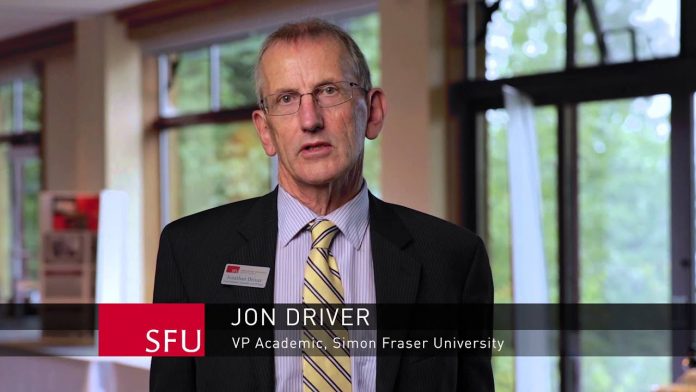
Photo Courtesy of SFU

The process to determine SFU’s next Vice-President Academic (VPA) and Provost is gearing up in preparation for the end of current VPA Professor Jonathan Driver’s term on August 20, 2020. 

The VPA provides leadership for academic initiatives at SFU such as student experience, curriculum quality, engagement, and faculty and staff. 

Driver has served as SFU’s VPA from 2008–2016, and has been holding the position on a pro tem (for the time being) basis since the beginning of the 2019 academic school year. He joined SFU faculty in the Department of Archaeology in 1982.

Consultations with university community to shape VPA requirements

In an email interview with The Peak, Secretary to the Vice-President, Academic and Provost Search Committee Kera McArthur wrote that “the recruitment process [for a new VPA] began in the fall” with the formation of a search committee as per policy GP 29 Search Committees for Vice-Presidents and Associate Vice-Presidents.

“As the search for the new Vice-President Academic gets going, which is really going to happen during this term, one of the requirements of that search is that the search committee consult broadly with the university community about the challenges and the opportunities that the next Vice-President Academic will face,” said Driver in an interview with The Peak.

McArthur remarked that the feedback provided during the consultations will be used to create a Position Description and Candidate Profile, documents that will guide the search committee as they “conduct interviews, review references and undertake any other necessary steps to evaluate candidates.”

“We are expecting to conclude the search by late spring, 2020,” wrote McArthur.

Current VPA weighs in on past accomplishments 

When asked about current areas of focus for the VPA’s office for the past few years, Driver pointed to SFU’s Academic Plan, which outlines the focus of the office in five-year intervals. Driver noted that many aspects of the current academic plan are working to enhance the student experience at SFU.

“You could look, for example, at the development of the Sexual Violence and Misconduct Prevention, Education, and Support policy and the development of the office that supports that policy,” offered Driver as an example. “You can particularly look at the work that’s being done around student health and wellness and especially around mental health,” he added, noting the release of the My SSP app which provides mental health support services to students.

Driver noted additional VPA initiatives, such as the development of a more integrated approach between online and in-person education at SFU, a focus on reconciliation and support for Indigenous students, and work on equity, inclusion, and diversity for all students on campus.

Future challenges of the position

In respect to some of the challenges the VPA’s office has faced the past few years, Driver stated that “the biggest challenge, really, is how do you create change? How do you build new services for students while working within a budget that puts limits on what we can do?”

For the next VPA’s term, Driver predicted three main challenges that the office would face.

“I would say that the first challenge is going to be balancing the affordability of education against increased demand for resources,” said Driver. He listed examples such as demands for smaller class sizes, greater support for mental health and wellness on campus, and creating more welcoming spaces on campus for students.

The second main challenge, according to Driver, will be how to create a campus community that is more inclusive of a diverse student population.

The third challenge the future VPA would face, as Driver identified it, is how to close the gap between SFU’s reported international reputation and the actual quality of teaching and research that occurs at the university, as reported by more objective figures.

“I think there’s some work to be done around ensuring that the great work that gets done here is better recognized and communicated to the outside world and that, in particular, the research achievements of our faculty members, the high-quality teaching that goes on here, and the achievements of our students after they leave the university need to be highlighted,” said Driver.

“We need to be more than just ranked as Canada’s #1 comprehensive university.”

Driver acknowledged that, while these were the three main challenges he had identified for the new VPA, he was certain that the search committee’s consultations with the university community would yield a much broader and more comprehensive list of challenges and opportunities for the new VPA to address.