As someone who has killed a cactus before from feeding it too much water, I am just as surprised to be proclaiming myself today as . . . a Plant Mom™. Now before you dismiss me of my lack of credibility in writing this list, I must say that over the years, I have come to learn a thing or two about plant parenting. While I’m certainly not an expert at plant parenthood, I have had lots of experience tending to the 10 plants (and counting) that live inside my bedroom. If you’re looking to begin your own plant family or are wanting to add some easy-to-take-care-of plants to your collection, here is my personal list of favourite low-maintenance indoor plants.
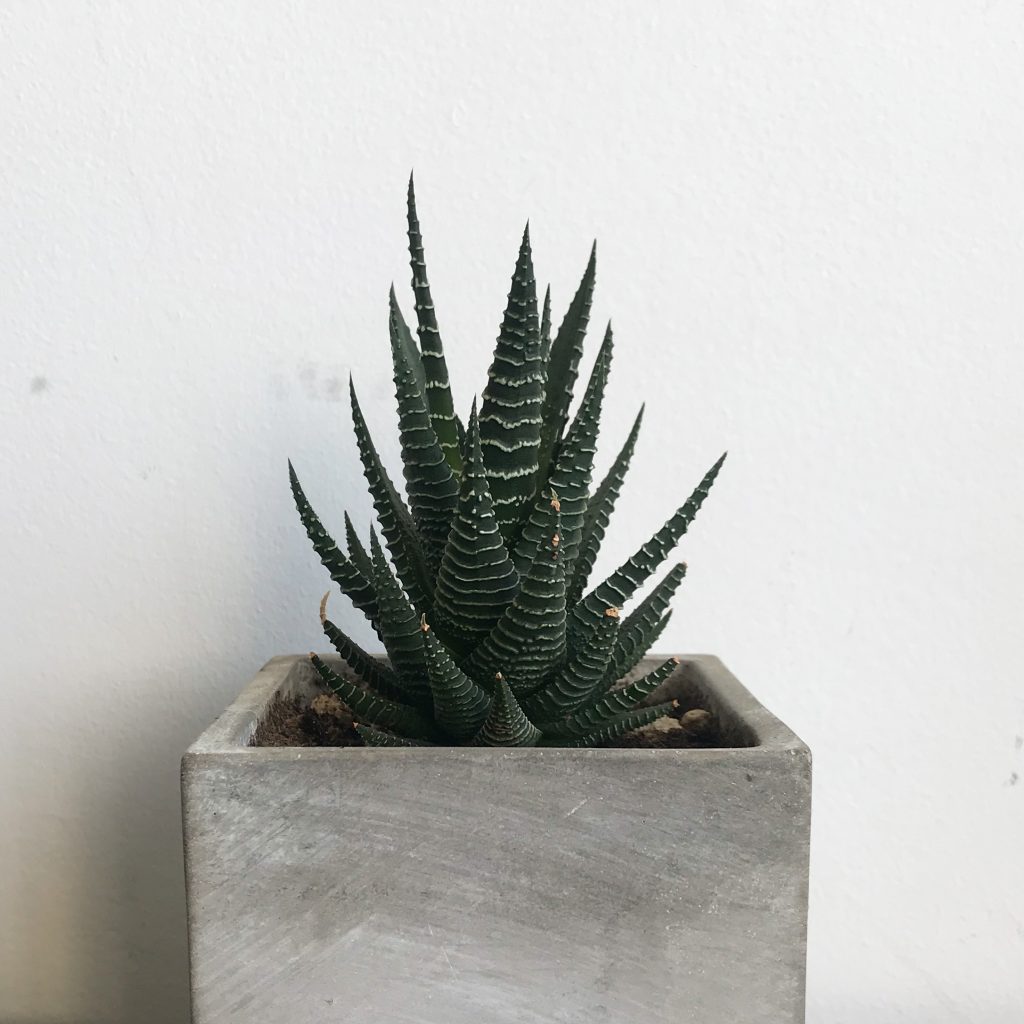
Possibly the easiest (and most obvious) option is the succulent. They come in various shapes and sizes — from those with pointy leaves to ones that form a lotus-like circular arrangement. No matter the case, these plants require very little care, making them the absolute go-to for any beginner plant parent. In the colder seasons when there is a higher humidity, watering them can be as infrequent as every two weeks. As for the summer and drier weather conditions, once a week will do just the trick.
Since cacti are part of the succulent family, and they are typically found in warm climates, you may think that these plants demand plenty of sunlight. However, just about three hours of light daily will keep these plants happy for the rest of the day — much to my surprise as well. It’s even advised to avoid too much direct sunlight as the heat could scorch their precious leaves. Ideally, these plants are best situated on a windowsill or on a nearby desk. Considering just how low maintenance they are, you could place them pretty much anywhere you choose and they are sure to last you for a long time.
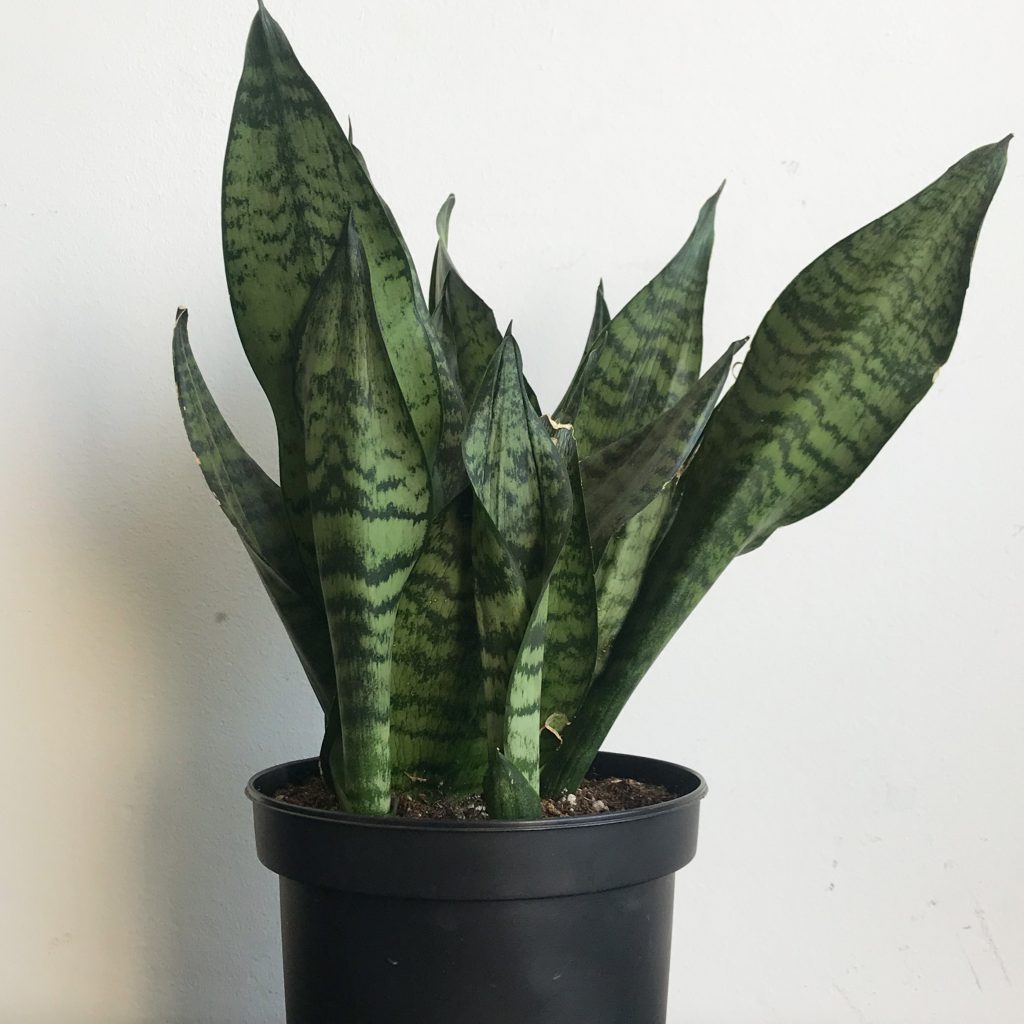
If you thought succulents were the embodiment of lazy plant parenting, wait until you hear about this next one. Snake plants, otherwise known as the sansevieria or the mother-in-law’s tongue, are quite possibly the toughest plants out there. Their sword-like leaves stick up vertically from their pots, giving them a literal edgy look. Known for their extreme environmental versatility, these bad boys will never die on you, no matter how hard you try. I barely remember the last time I watered my own snake plant, and somehow, it still sits on my shelf looking healthy as ever. While I definitely don’t approve of neglectful plant parenting, this just goes to show how completely adaptable these babies are to any conditions. Depending on the lighting and temperature of your room, watering them can be as infrequent as every two weeks, to really infrequent as every six weeks. As for sunlight, their preferences are non-existent as they can tolerate anything from low light to high light. If these reasons aren’t enough, may I also add that snake plants are known for filtering out toxic air at night? I’m sure we’re all needing to cut a little bit of toxicity out of our lives, and this plant will do just that for you.
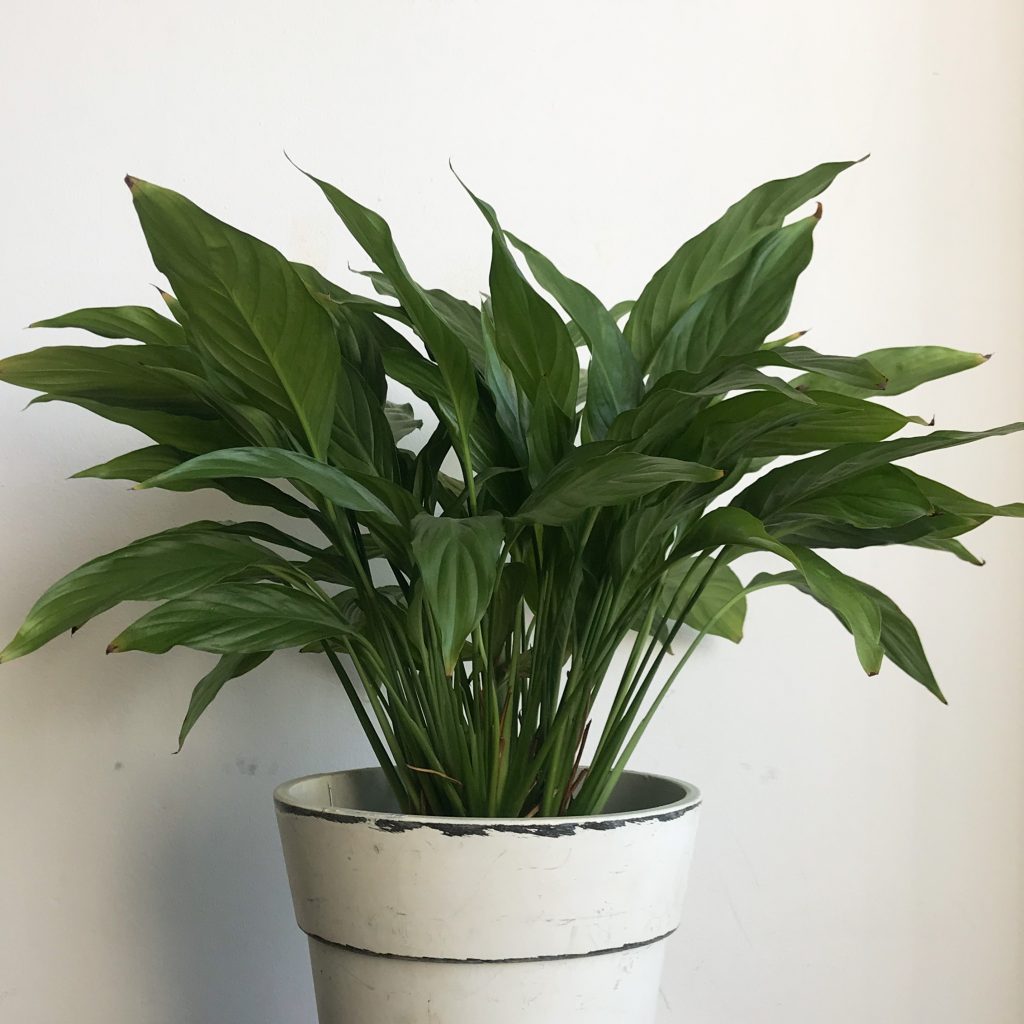
Owning plants that barely require caring are great and all, but if you’re really looking to dive into the life of plant parenting, consider the lovely peace lily. With dark green leaves spreading out of the pot, and white lilies blooming in the spring and early summer, these plants will certainly liven up any room. My peace lily taught me everything there was to learn about being a true Plant Mom™! There’s a bit more commitment needed, as watering is required every three to four days, or once the soil is completely dry. The benefit, though, is that these plants prefer low light and are even sensitive to direct sunlight. This makes them perfect for spaces that may not have access to windows. It may sound as if taking care of these plants is a lot of responsibility, but I kid you not, these babies will literally communicate all of their needs to you. If they’re feeling thirsty, their leaves will droop until you provide them with sufficient water, to which they will quickly rise back up. If they are too warm or are given too much direct sunlight, they may develop brown tips on their leaves to let you know. This one is definitely a good starter plant for those looking to up their plant-parenting skills.
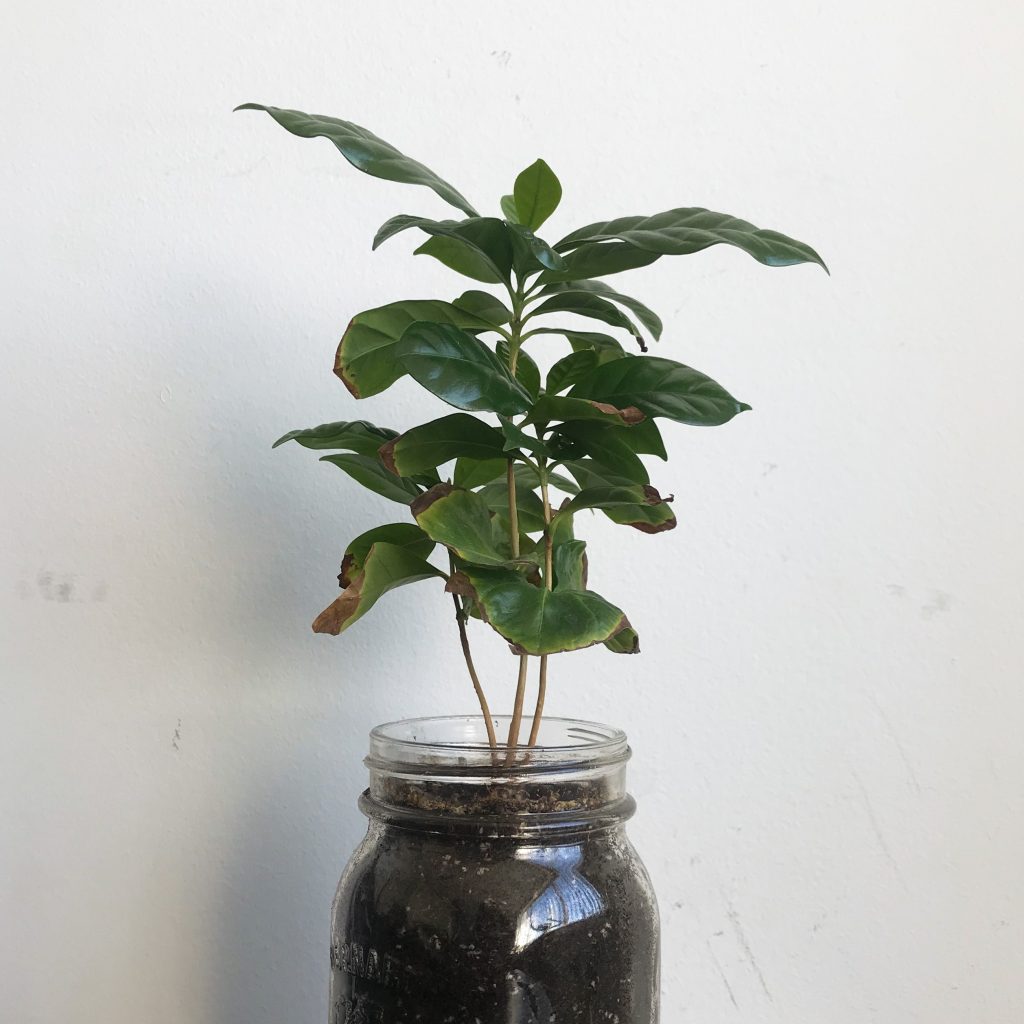
Despite my dislike for coffee — shocking coming from a college student, I know — my coffee plant is probably one of my favourite plants that I own. And yes, before you ask, they do grow coffee beans too. However, I wouldn’t suggest waiting on these guys for your next caffeine fix, as they will require at least three to four years to come in. It has only been a few months since I received this plant from my boyfriend, and already, he has grown twice the size as to when I first got him. As a tropical plant, this one does require the most watering out of all the plants mentioned in this list. It prefers to live in moist soil, which means that you may find yourself replenishing him nearly everyday or every other day. In terms of sunlight, I would strongly urge to keep it away from any direct sunlight. Exposure to direct sunlight could keep its leaves looking brown on the edges, as you can tell from my poor choice of placement by the window when I first brought him home. At this point, you may be thinking that I’m stretching the definition of “low maintenance” with the last one on this list. You are absolutely right, but hear me out. Seeing this plant grow from all the hard work I’ve put in is one of the most gratifying feelings I have ever felt. And if that’s not the epitome of plant parenting, I don’t know what is.
Just because it’s funny doesn’t mean it’s satire. Illustration: Tiffany Chan/The Peak
Please stop asking me if I know someone you know from SFU
SFU is a very large academic institution. We span over three campuses, offer a whole slew of programs, and have over 30,000 students. So what I truly don’t understand is why some people believe that everyone has met everyone else who attends our school. I’ve been asked countless times if “I know so-and-so who’s a blah, blah, blah major at SFU” and it irritates the hell out of me!
For clarification, I recognize how bringing the topic up is an attempt to make some sort of connection, or even just initiate a friendly discussion. But if the person I’m being asked about is in a completely different faculty or year, what are the odds of me having come across them? This only leads to me responding, “No, sorry,” then a painfully awkward silence ensues.
Honestly, if people just mentioned that they know someone who goes to SFU it would suffice. No one needs to waste time on wondering whether or not I know the individual when there’s a sporting chance that I don’t. For the rest of my time here, I only have one request, and it’s for anybody who’s thought of asking, or ever asked this question: please do us both a favour and save the conversation from predictable awkwardness by not bothering to ask it.
– Tiffany Chang
Time changes need to go so I can rest and enjoy the sun
Give me back my sleep schedule, time changes! Illustration: Tiffany Chan/The Peak
Why does an artificial time construct get to dictate whether I sleep well or when I see the sun?
I am (literally) tired of having days in the winter when I wake up and only have four to five hours of daylight. It’s like daylight saving was like, “Oh? Do you have seasonal depression? Here, every November let’s make it worse. And then every March, once you’ve fully adjusted, let’s fuck up your sleep schedule.”
People may read this and think, “Why don’t you wake up earlier?” but bitch, I am a night owl through and through and nothing can change that. I am certain many other people are as well. I shouldn’t have to pry my eyes open at an early hour to be able to soak in vitamin D (AKA vitamin dopamine). My sleep schedule, my mood, and my mental health shouldn’t also be something that shifts with the biannual time change. The ghost of Simon Fraser knows there’s already so many other factors that contribute to that.
Time is as fake as most students’ commitment to attend every class anyway. Tradition needs to shut the fuck up and die already, like the fragile gatekeeper it is, so everyone can finally be free from this temporal hellscape.
– Madeleine Chan
Reviews don’t tell me what your book is about
Don’t give me bling to increase book sales, give me an actual blurb of your novel. llustration: Tiffany Chan/The Peak
I walk into a bookstore, ready to treat myself after a long week. I browse through the shelves and pick up an interesting looking book. Eager to know what it’s about, I flip it over to read the back cover, only to come across the following:
“The most amazing book you’ll ever read.” — Jack Verde
“An amazing tale of family, love, identity, and death. This is a fabulous page-turner.” — Hayley Labour
Okay, great. But what is the book really about, besides the generic themes of love and all that? Am I going to meet a quirky character with a unique perspective on life, or will I accompany a brave warrior as he fights for his kingdom? I’m trying my best to find out, but I’m hit with “New York Times Bestseller” or “Odyssey Award Nominee.”
Where’s the damn plot?
Don’t give me 300 lines of praise from other authors and then throw in a list of awards and accolades on the cover. I really don’t care what John Green thinks; I just want to know what the book is about. These days, I have to go on a treasure hunt to find the mini blurb — if that exists at all — about the actual content of the book. Is it on the front-flap, hidden somewhere in the introduction, or is it buried somewhere else? I’d ask Mr. Green, but he’d probably get lost in the maze too.
In the quest to sell more books, publishers have been prioritizing glowing reviews over detailed descriptions of the story for the book cover. This steals the joy from the experience of book shopping. If I were to review this tragedy, I’d sum it up with the following: “A heart-wrenching tale.” — Bookworms.
– Lubaba Mahmud
I’m tired of always having to be the mother at the club
When a group of friends goes to the club, party roles start filling up. There’s the
Clubbing friend by choice, mother by force. Illustration: Tiffany Chan/The Peak
Adventurer, who decides to walk down Davie at 1:38 a.m. alone after downing seven Jäger bombs. Not far behind is the Signature Hoe™️, who spends the first half of the night flirting with anything with a pulse. This is also the one who later ditches their friends to get laid by a 4/10 that looks like a 9 under the club lights. Then there are those who don’t ever know their limits, downing another double directly after leaving the washroom stall with mom’s spaghetti still on their top.
My role, nine times out of 10 in these instances? Not one of the aforementioned archetypes, oh no. My destiny? I’m the club mom.
I’m talking about being the psychiatrist, the nurse, the one who holds a friend’s hair as they chundy for 30 minutes straight. While my friends get into trouble, or states of emotional distressed (often self-induced via texting exes), or blackout from drinking, I’m the one there to provide support. The whole night.
Don’t get me wrong, I’m happy to help however I can. Sometimes. But when I go out with the same group multiple times a semester, I don’t want them to assume that their ol’ pal Mom will come to their rescue, thus never feeling the need to correct their own dumbass behavior. Give the club mom a night to be an idiot, too!
This isn’t a call-out for anyone in particular, but hey, if the uncomfortable club outfit fits . . .
– Paige Riding
Civil disobedience is supposed to be inconvenient
Step outside your privilege and take a look at what’s really going on. Illustration: Tiffany Chan/The Peak
To all the people who have complained about the Wet’suwet’en protests: demonstrations like these are meant to disrupt your life. That’s literally the whole point! Civil disobedience is used as a last resort when (largely marginalized) groups have exhausted all other methods of trying to get governments to listen to them.
In the case of the Wet’suwet’en protests, you feel what it’s like to be inconvenienced in an incredibly minor way in order to bring attention to the major ways in which the Canadian government has and continues to dismiss the concerns of Indigenous people.
In addition to making you understand an iota of what the Wet’suwet’en people are dealing with (disruption to your life for a few hours vs. disruption to their whole lives), protests are supposed to make you ask why and who is to blame. In this case, the why is rooted in colonization and cultural genocide, and the who is the Canadian government.
Google it and educate yourself before slinging your ignorant and frankly racist remarks all over comment threads.
– Meera Eragoda
Not all tattoos have to mean something, some of them can be skin-deep
As a person with 42 tattoos, it’s pretty easy for my first conversation with someone to be about the art on my arm. While most interactions are relatively lighthearted, there’s question in particular that I’m truly tired of answering:
“So, what do all of these mean?”
I get this question a lot, and, frankly, I tend to give the same answer every time: “Some of them have meaning, but most of them don’t really mean anything.” This is received by one of two responses: either the person asks me to tell them the story behind the ones with meaning (which I begrudgingly do) or they insist that tattoos should mean something because they’re permanent. Tattoos? Permanent? Groundbreaking.
While I’m not the tattoo police, I will insist that someone shouldn’t feel like what they want or have on their body has to have some deep explanation to it. It’s annoying for me because I have so many, and thus need to vouch for multiple dumb ink children, but even a person with one or two tattoos doesn’t need that.
If you’re a person who asks someone what their tattoos mean, try holding yourself back to merely complimenting the artwork upon their fleshy canvases. While gawking is appreciated, questioning is not.
People should be able to get meaningless tattoos without being questioned for it — we’re the ones paying for these tattoos to be put on our bodies, we should be the ones deciding whether they need to mean something or not.
– Juztin Bello
Are you out of ur(inal) mind? Put your phone away!
Now is not that time to use that. Illustration: Tiffany Chan/The Peak
There’s little else that confuses and disgusts me more than witnessing the cultural phenomenon of guys using their phones at the urinal. I cannot stress this enough: the urinal is not a place to go on your phone. It is a sacred space — a space for release, a space for a person to unleash their inner animal. It is not, I repeat, not a space to watch the end of the Netflix episode you couldn’t finish last night.
Just think about it for a second. The droplets of urine that splash against the urinal and then onto you are going to seep into the cracks of your device and permeate the depths of your Netflix episode. Then you place your phone back into your pocket, wash your hands (if even), and later, place your hands in your pockets. It’s an asinine cycle.
Not only is it unhygienic to whip out your phone at the urinal, it is astoundingly disruptive for those around you.
I am trying to spend the few minutes I have in my break from class in a space of privacy, only to hear KJ Apa’s voice as the wall of the third urinal down is glazed.
I do not need this in my life.
If that is not enough, the potential danger of dropping an expensive phone in the urinal should steer anyone away fromeven thinking of doing such suspect activity.
But perhaps that is what urinal cellphone users deserve.
– Harvin Bhathal
Do we really need all these SFU watering holes?
This is not how I pictured my time at SFU. Illustration: Tiffany Chan/The Peak
One reason why I don’t hike so much anymore is because of one hike years ago, when I ended up going through a swamp. During that time, my feet and socks got soaked through my supposedly waterproof boots. The feeling of walking for eight hours until the next stopping point with water sloughing through my boots, and my subsequently itchy feet for weeks afterwards is something I would rather not repeat.
Yet, for whatever reason, SFU is determined to give me the opportunity to relive my experience in tiny, piecemeal moments. I’m talking, of course, about the random pools of water collecting at exits from Convo Mall going to the WMC. With all other paths blocked off by construction, I get to waddle through those “cute” little ponds, often inescapably near an outdoor staircase or doorway.
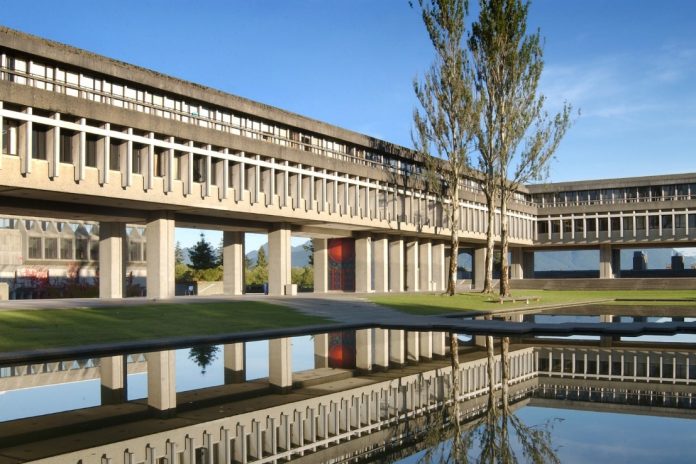
Seriously, whenever I met with people from UBC and they bragged about their school, I used to be able to tell them “at least I stay dry on campus when it rains.” Indeed, that was apparently Gordon Shrum’s vision for students when SFU’s design was first being considered. As a UBC professor taking over as Chancellor of the brand new university, he felt it best for students to stay dry in Raincouver.
Unfortunately, those deep quagmires, combined with my broke-ass shoes with extra holes for “breathability,” means that while my body stays dry, my feet do not.
– Nathaniel Tok
If only one person is talking at a meeting it should really just be an email
I really, really value efficiency in my life. The reality of my own mortality has made me realize that there are far better uses for my time than jam-packed commutes, uncoordinated errand running, and yes, sitting in on a meeting simply to be an extra butt in a chair.
Not all in-person meetings are pointless; let’s get that out of the way. Sometimes, it’s actually good to get a group of people together and hear everyone’s input on a project that’s right there on the table in front of everyone. I’m not talking about those meetings: I’m talking about the meetings where one person does all the talking to a group of half-zoned-out placeholders; the meetings where thoughts from the group are discouraged or shot down. In short, the meetings that could just be an email blast.
These meetings are especially irritating when they involve a long commute, like, for example up to SFU. I’m not just wasting an hour of my life sitting here listening to what I could read in 15 minutes, but I’ve lost three hours total in getting there and back as well!
If we take nothing else from our current pandemic situation (aside from good hygiene — seriously people, wash your goddamn hands!) could we at least in the future reevaluate mandatory attendance meetings? Could they really not just be an email afterall?
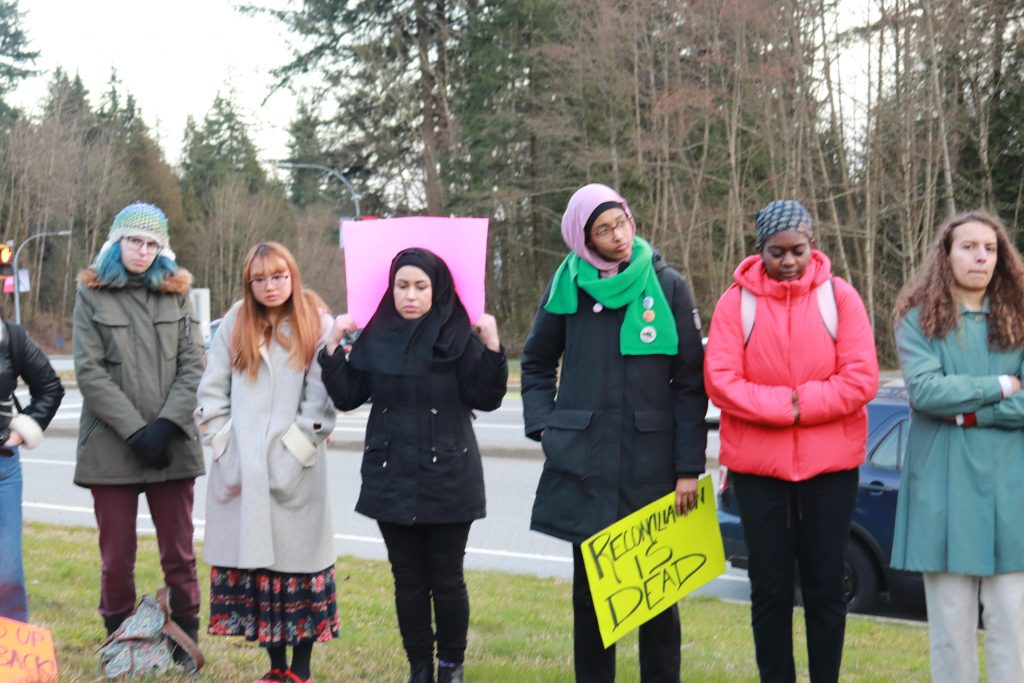
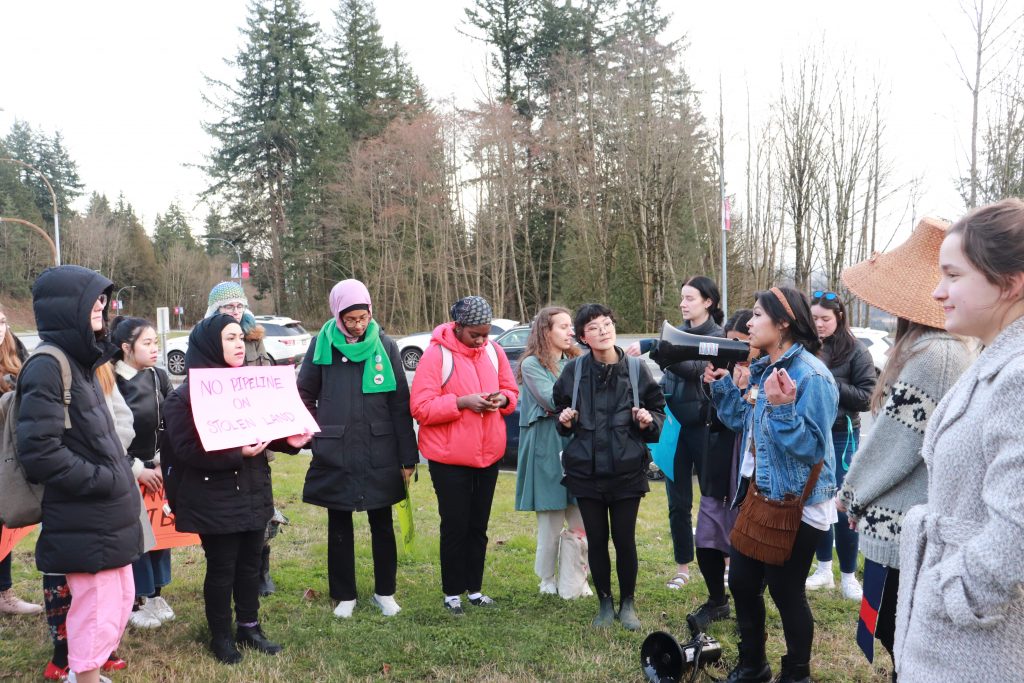
Students at over 30 schools across Canada walked out of class on March 4 in support of the Wet’suwet’en nation. At SFU, students rallied in Convocation Mall to hear Indigenous youth speak. Some students proceeded to walk down to Gaglardi Way where they partially stopped traffic up and down the mountain. Here are 15 song lyrics, chants, and quotes from the event. As many speakers spoke of demonstrators feeling unsafe and shared experiences of being followed or harassed due to their activism, speakers are only identified by an initial.
“As academics at this university, we have the privilege of being here and we are the ones who are going to make change.” — M
“Canada has no interest in its laws. It has signed onto many of the United Nation conventions. Convention of the Right of the Child, they signed onto that in 1990 and they closed the last residential school in 1996, six years later [ . . . ] They signed onto UNDRIP and they have broken all of those articles, they have violated all of those articles [ . . . ] Familiarize yourself with the laws of this land because they are a lie.” — S
Photo: Gabrielle McLaren / The Peak
“The Wet’suwet’en are under attack in their own land [ . . . ] it’s not right to be attacked on their own land, in their own homes.” — I
“This is not a fight for pipelines or against pipelines, this is a fight against white supremacy, genocide, imperialism. This is a fight to save our ecosystem and our water — that is what they arrest us for.” — S
“The media is focusing on how there’s a tentative agreement, but that doesn’t mean that [the RCMP has] left. You need to be critical of all information you’re receiving on social media [ . . . ] It’s a technique to stop us from gathering and standing in solidarity with those who need support right now.” — M
“This is a system that was meant to destroy us, and we have not let it.” — S
Photo: Gabrielle McLaren / The Peak
“It is Indigenous law versus colonial, imperial law of Canada . . . ” — E
“It is not an Indigenous principle to be violent, but it is for Canada.” — E
“I’m going to say ‘fuck’ and you guys all say ‘Justin Trudeau’ [ . . . ] Come on guys, this is all protected under freedom of expression. [ . . . ] ‘Fuck’ is a form of art and expression.” — T
“We need to make sure that we’re letting those who have priority in spaces, that we’re protecting Indigenous youth, that we’re protecting Indigenous women and Elders when they’re in those spaces.” — M
SFU sent out an email yesterday stating that as of March 17, 2020, they will be discontinuing all in-person instruction, including exams. The email stated that students should check their SFU Mail accounts and class Canvas pages for specific instructions on how their classes are proceeding. This follows similar announcements from other local institutions, including BCIT, Capilano University, and Langara College.
A letter from Andrew Petter entitled “COVID-19: A Test of our Mettle and Humanity,” indicates that professors and teaching assistants will have until March 19 to plan and implement the shift. Petter also explained that BC’s Public Health Officer has said there is no need for post-secondary institutions to close.
The email added that, though some students may be considering leaving the Lower Mainland, or Canada, that SFU is committed to supporting those students who remain.
“Though the COVID-19 pandemic knows no boundaries, neither does our shared humanity. We are all in this together. And, if we pull together, we can come through this a better and more compassionate community, province and country,” stated Petter.
SFU libraries to close
According to SFU’s COVID-19 FAQ, as of 5 p.m. on March 17, SFU’s Fraser and Belzberg libraries will close until further notice. The W.A.C. Bennett library will remain open from 9 a.m. to 5 p.m. until Friday March 20, and then will close until further notice.
All library workshops, events, and seminars have been suspended. All holds, recalls, and late fees are also suspended, with no fees being charged after March 13.
According to the notice from SFU Library, all services that can be transitioned to online delivery will do so, including research help via email, chat and videoconferencing.
SFU Recreation facilities suspended
All sports and recreational activities at SFU will be suspended as of March 17 at 5 p.m., until further notice. The Lorne Davies Complex will also be closed. Refunds for paid memberships and programs will be considered at a later date.
Parking on Burnaby Campus to be made free of charge
All parking on SFU Burnaby campus will be free of charge for the time being, so as to accommodate community members who wish to avoid public transit. Parking permit holders will be refunded their fees from March 15 to the end of the semester.
Campus shuttle suspended
SFU Burnaby’s campus shuttle will be suspended until further notice.
Food services
SFU’s Dining Hall remains open, with a seating capacity of 50. Takeout is now being offered at the Dining Hall.
Starbucks Cornerstone, Tim Hortons, and Renaissance café in the AQ remain open with adjusted hours. All other food providers are closed, or will be closing shortly, including Mackenzie Café and The Study.
SFU Bookstore, Spirit Shop, and Document Solutions to close
The Bookstore and Spirit Shop on all campuses will close until April 20, though online book sales will continue.
Document Solutions will suspend in-person service, but services will continue via phone and email.
You’ve basically raised me this semester. I’ve done everything you’ve prescribed in your column! I left the Red Backpack Cult because of you. All my eyelashes fell out after I started my diet of printed assignment sheets only. I filed for bankruptcy on Thursday! And none of this would have been possible without you . . . so what will I do when Spring 2020 ends and I don’t have your advice anymore?
I am scared of what the future holds for me in the coming weeks without this column. In the absence of your moral guidance, I have already stolen three puddings from Mackenzie Café. They were freaking disgusting, too. I couldn’t even keep them inside my belly, and soon puked them up all over a wall of SFSS campaign posters.
See what you’ve done to me? I’m literally dumber than a red backpack and I can’t live without you, Peakie.
From, A Lost One
Dear A Lost One,
That’s so cute. I’m sorry to hear that you can’t live without me. I know it must be hard to be a figment of my imagination, dependent on my whimsical mind and submitted to my editor to help me convince The Peak that I deserve funding. But I promise that you are a better person than I, and you will be OK. Trust yourself and your abilities. You’re going to kill it this summer, especially after you reincorporate protein into your diet and your eyelashes come back.
I’ve prepared you and yours for the long haul, and now I need a vacation. Might mess around a bit and build a summer home in Prince George, IDK. It’s called “Prince” George so it must be bougie enough, underneath the ice and the despair of teens who already know they’re doomed to raise families in the shadow of Big Pulp Mill.
Anyways. I believe in you, SFU. Give yourself the advice you want to see in the world; drink wine through used Nike socks without being told. I’ll be back, you’ll see. Until then, remember me and my reign of agenda-setting through media fondly. Don’t cry because it’s happened; smile because it’s over.
Forgive me, for I have sinned. For years, I have been burdened by the torturous small talk and dad jokes that occur at every family dinner. But tonight, I have chosen to end the madness. Tonight, I choose my sanity — by switching to all-green, all-ethical, all-eco-friendly ethical choices only.
Only two hours have passed since I saved myself from Aunt Judy’s birthday dinner by transforming into a vegan.
There I was, sitting patiently on the leather couch of the living room, tantalized by the smell of ground beef taco casserole. Grilled pork chops and crispy fried chicken were set onto the centre table as everyone’s mouths salivated.
My mom was up to her normal tactics, reminding everyone of her wrath if she was to catch anyone not using a coaster. My dad? Onto his next recitation of yet another famous joke — what’s new? Aunt Darlene was pretty tame this time. She went from three weight-gain comments per minute to a shocking two.
But Uncle Jerry was definitely on a roll tonight, trapping me in what felt like a century-long time loop, like the Hundred Years’ War of Mansplained Politics. It began with him talking about recent developments in Canada’s economy, and it ended with golf, again and again. As for how he managed to shift so fluidly, dexterously, and obnoxiously between those two topics? That, I will never know.
After a lifetime of dealing with cases like these, I’d gotten pretty used to shutting it all out. But tonight, something inside me changed.
Blame the excessive amount of spring rolls shoved into my mouth by Grandma Lucille. Or maybe just the overcompensating laughter of my cousin Genevieve, flooding the whole room in her high-pitched cackle.
But there I was, suddenly propping myself up on top of the dinner table with a ladle in hand. In a split second, I announced the words:
“I AM VEGAN.”
Silence filled the room in a way that has never been achieved at any family dinner.
Realizing what I had just done, I ran out of there as quickly as I could. I suddenly felt like a cheetah, moving so fast that my mom couldn’t even stop me in time to remind me to bring a jacket outside. A slender, slippery cheetah, like one of those house cats condemned to meatless diets by ill-informed owners looking to make points about environmentalism, or whatever.
I’m about to be well acquainted with “whatever,” I guess.
Now, I know what you’re thinking. What kind of monster would ever want to pass up on delicious and free home-cooked meals?But hear me out: veganizing was the only way to save myself from the emotional turmoil accumulated from the endless small talk with relatives that I barely see once a year.
Trust me, if you were in my shoes, you would have done so a long time ago. As a matter of fact, I should have too. Because I sit inside this Church’s Chicken now with a heavy chest, no longer from the burden of my family, but rather from the barbecue sandwich I’m smelling, the sandwich that lurks just out of reach. The sandwich in the hands of a customer with far less family baggage than I.
And as I inhale the sweet scent of scorched greasy meat, feeling the loving nurture I never got from the extended family I never added on Facebook, I dig for the courage to remind myself — everyone leaves home someday.
Clarification on housing Rotunda groups in the SUB
The Board passed a motion clarifying the terms of their agreement to house Rotunda groups in the Student Union Building (SUB).
The motion mandates Executive Director Sylvia Ceacero to enter into sublease agreements with the Rotunda groups. It also notes that the Rotunda groups’ subleases should align with the head-lease signed between the SFSS and SFU for the SUB.
Furthermore, it adds that SOCA will be granted space as per Configuration 3 with a Memorandum of Understanding.
The motion was carried unanimously.
SFU’s Chief Information Officer discusses security breach
SFU’s Chief Information Officer Mark Roman discussed the recent security breach at the Board meeting.
Roman explained to the Board that the breach occurred on Thursday morning, and was discovered by SFU on Friday. He noted that they were lucky that it was discovered “pretty quick.” After the breach was discovered, a large IT team spent the entire weekend working to understand what had happened, what data was taken, and what the next steps should be.
“I don’t want to go into the details of what happened, but it was human error. A person made a mistake,” said Roman. He explained that due to a human error, an automated bot found a weakness in the network and was able to take some data. Roman noted that the passwords that were taken were encrypted, and that it is difficult to decrypt them, but not impossible.
“The probability of risk is low, but we need to exercise an overabundance of caution and change our passwords,” he concluded.
He added that the computer that the mistake was made on has been unplugged from the network, thus solving the problem.
“I apologize and regret what has happened; it’s very unfortunate and we’re doing our best to fix it, and we’re being upfront and honest about what happened.”
March Mayhem
The Board voted to approve up to $2,600 for their March Mayhem event.
Environment Representative Julian Loutsik explained that it will be a 3-on-3 basketball tournament held in Convocation Mall. The event is open for all students to participate.
Loutsik noted that this event is in partnership with the Student-Athlete Advisory Committee (SAAC), and aims “to showcase some of our athletes who play different sports, and showcase students who maybe didn’t make varsity teams but are still talented. It’s a chance for them to participate in an athletic event.”
Applied Sciences Representative Nick Chubb added that the event will include a barbecue.
The Government of British Columbia has announced that their 2020–21 budget will include funding for needs-based grants to assist post-secondary students with funding their education.
StudentAid BC describes the grants as “needs-based, up-front, and available to eligible students each year.”
According to StudentAid BC’s website, the BC Access Grant will be offered starting September 2020. To be eligible to receive a grant, the applicant must be a low- or middle-income student studying at a BC public post-secondary school, and must be eligible to apply for and receive a student loan. Those receiving student loans will automatically be assessed for the grant program with no additional application process necessary.
Shina Kaur, SFSS VP University Relations, spoke with The Peak about the grant.
Kaur said that the grant is beneficial for “people not only with low income, but [ . . . ] marginalized community members that are trying to have access to education.
“I think it will [ . . . ] decrease the barriers that exist to accessing post-secondary education.”
Certain factors including family income and the length of one’s program influence the grant amounts. Family income and the maximum amount of a grant are reciprocal; as family income increases, the maximum loan amount decreases. Programs two years or less in length allot a maximum of $4,000 a year for students, while those in longer programs may receive a maximum of $1,000 a year.
Kaur noted how the program was created as a result of various BC student bodies lobbying together.
“Things like this really show the importance and the value that student societies can bring if we’re willing to speak out about the things that really do impact us,” she stated.
“It’s about them knowing that we’re here, we’re present, and we’re not going to move until you give us what we want.”
Still, Kaur noted that there is still room for improvement. This program offers significantly less funding than the previous needs-based grant program which was eliminated in 2004. Furthermore, the average undergraduate tuition costs in British Columbia post-secondary has significantly increased from an average of $4,400 in 2006–07 to $6,463 in 2019–20.
“I think it’s a step in the right direction. I think it’s not as good as we can do, especially considering the fact that in 2004, the amount that the grant was for eighty million dollars, so literally twice as much as they approved now.”
After a brief introduction and ice-breaker session, participants were asked to discuss the answers to questions like “What percentage of undergraduate students use EAL?” and “which faculty has the highest percentage of EAL graduate students?” in small groups. These questions were designed so that participants could get a better idea of SFU’s multilingual community. Some of the statistics shown include the following:
30% of undergraduates speak English as an additional language
15% of undergraduates speak no English at home
The Faculty of Applied Sciences (FAS) has the highest percentage of EAL graduate students (80%). This is closely followed by Faculty of Communication, Art and Technology with 52% EAL students, Faculty of Science with 44% EAL students, and Beedie School of Business with 32% EAL students
EAL students mostly attend evening classes in Burnaby campus
The workshop also outlined some myths about multilingual students. These included allegations that EAL students slow down the pace of classes, that their work took much longer to read and grade, or that faculties require special training to teach them. Moreover, the group discussions touched upon racial stereotypes and the prevalent hierarchy of languages, which gives the notion that English is a superior language.
Participants were then encouraged to think about the benefits that multilingual learners can bring. There was a wide consensus that these students often bring creative ideas and personal experiences that enrich class discussions.
Lastly, attendees were asked to write a message about how they will continue to appreciate the multilingual nature of SFU on some postcards. These will be mailed back to the students in attendance after six weeks, so that the postcards can serve as a reminder of how diversity is an asset to the SFU community.
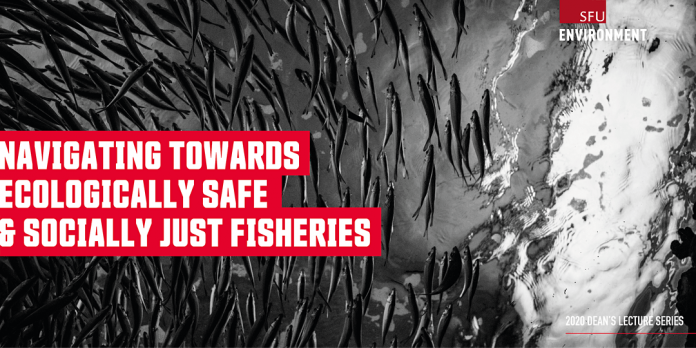
“We’re doing to the ocean the same thing that we’re doing to the land that we massacred,” stated Daniel Pauly, UBC zoology professor. “Essentially, we are deforesting the ocean.”
Pauly was one of the presenters, alongside Anne Salomon, one of Canada’s leading specialists in coastal marine ecology, and Kii’iljuus Barbara J. Wilson, an SFU MA alumnus, educator and elected representative for the Council of the Haida Nation. The focus of the talk was on the interconnectedness of social systems, governance systems, and ecosystems.
According to her bio on the event page, Wilson’s research links traditional knowledge, land and ocean management, conservation, climate change and Indigenous governance. Pauly is focused in mitigating the impact fisheries have on marine ecosystems as his doctorate and habilitation are in Fisheries Biology.
In regards to coastal ecosystems, Salomon discussed the intertwined systems “where humans have been [ . . . ] overexploiting, learning, managing and steward[ing] some of these areas for thousands of years.”
Salomon discussed the resilience of these social-ecological systems, and how they have the capacity to “adapt and transform the response to changing ocean conditions, societal values, international markets, and shifting governance practices.”
According to Salomon and Wilson, adapting to the life cycle of nature, strengthening Indigenous governance authority, and implementing adaptive co-management plans are solutions to protect BC’s Coast.
Salomon and Wilson also discussed the decline of kelp forests in the water along BC’s coast because of the growing population of sea urchins. Sea otters used to keep the sea urchin population in check as the latter was a food source, however large-scale commercial hunting took its toll on the sea otter population.The effects of climate change and ocean acidification also affected the sea urchins. Without the balance that the otters provided, the urchin’s population has risen and overeaten the kelp that acts as food and shelter for many organisms.
“My people always knew how to [maintain balance] by [ . . . ] being very deliberate in the ways they manage the very spheres of Haida Gwaii,” said Wilson.
The biggest challenge, according to Wilson, is that animals and humans both have a right to food.
“How do we do this respectfully [and] how do we eat [considering climate change] and the acidification of the ocean?”
Pauly thought that a global perspective “can best be shown through the expansion of fisheries.”
The consequences of overfishing along BC’s coast can be seen in the decline in population of sea otters, clams and herring.
Herring eggs are used for caviar but in North America, the rest of the fish is typically used as fertilizer, cat food or simply thrown away as opposed to a food source for humans.
Pauly, who grew up in Europe, added, “This is bizarre [ . . . ] because herring is actually good food.”
Since the herring is a common food source for marine mammals and predatory fish, according to Pauly, “The best way to protect [animals] is to leave them some food.”
The talk was streamed online for anyone who could not see it in person, and is available via the Eventbrite. For more information, visit coastalvoices.net to watch the documentary, Coastal Voices: Navigating the Return of Sea Otters, on which Salomon and Wilson worked as a researcher and cultural advisor respectively.