Home Blog Page 430

Drawing upon the art of hand lettering

0
Photo: Michelle Chiang

So what exactly is hand lettering, anyways? You’ve probably seen photos of it floating around, and maybe even called it the wrong name. But it’s important to note that there’s a distinction between calligraphy and hand lettering, or “modern calligraphy,” as it’s called sometimes. Calligraphy is about having beautiful writing and often uses specific tools and scripts (Roman, Gothic, Italic, etc.) to achieve it, while lettering is about illustrating letters and words. I won’t go into the details here, but keep in mind that they’re different. 

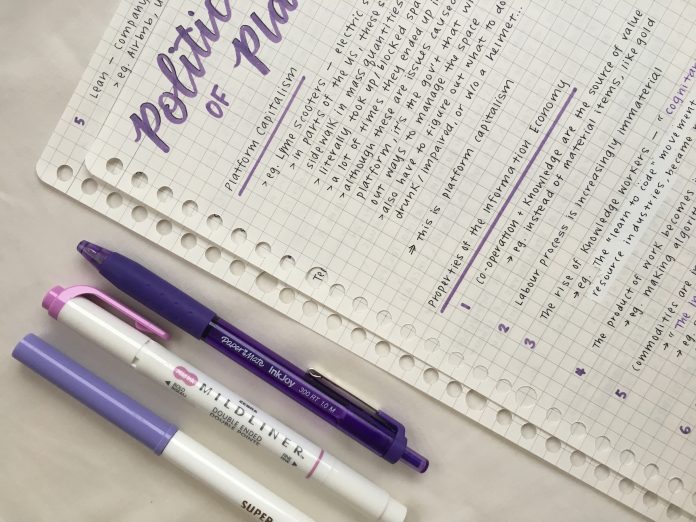
I first stumbled down the hand-lettering rabbit hole a couple years ago when I started bullet journaling. To me, it was crazy how the simple addition of a hand-lettered title could transform the page from bland to beautiful. On that day, I decided I wanted to learn how to do it myself, and so I took to Instagram to pick up the basics by watching people letter words and phrases. These days I use lettering for everything, even things that don’t need it: envelopes, birthday cards, song lyrics, bullet journaling, signage, you name it. Last semester, I lettered the titles of all my school notes. Was it necessary? No. Did I still do it? Absolutely. 

Thankfully, not only does lettering look impressive, but it’s really easy to pick up as well! For beginners, I recommend following letteritwrite on Instagram. She has short videos that demonstrate how to write each letter, in multiple styles, and with different types of pens. If you prefer to have more structure though, the books Creative Lettering and Beyond and Calligraphy Made Easy are great for beginners to practice lettering. The books have nifty little instructions on the basic principles of hand lettering and also come with practice sheets for you to mimic at the end.

Photo: Michelle Chiang

As for tools, it’s easy to be intimidated by the sheer amount of pens available to use, but you really only need one brush pen. A brush pen is exactly what it sounds like: a type of marker with a flexible, brush-like tip. The Tombow dual brush pens are the go-to pen of many letterers, but for beginners, I’d recommend the Pentel touch pens. It has a flexible nib and a harder brush instead of a softer brush. The bigger and more flexible the brush, the harder it is to control. Another good one to start with is the Tombow Fudenosuke and I also personally like the Faber-Castell brush pen! But if you’re stuck at home, you can definitely try out lettering just with pencils, pens, or whatever markers you have on hand. In fact, one of the more popular tools used by letterers, myself included, are actually Crayola Supertips. 

For those who are hoping to really get into lettering, I’d also recommend picking up a pad of Rhodia paper. It’s a lot smoother than regular printer paper, which will help your brush pens stay in good condition.

The roughness of printer paper tends to fray the brush tips and makes it unusable. My Faber-Castell brush pen died a very sad and quick death because of this. I’d encourage people to wait until they’re sure they want to continue before buying one though, because they can be a little pricey.

Lettering is a skill that makes your handwriting a hundred times more sophisticated. Once you learn how to hand letter, you’re literally unstoppable. Letter your envelopes. Letter your school notes. Letter the wall. Really, the possibilities are endless. 
 

New students are going to miss out on a lot of moments that make first year memorable

0
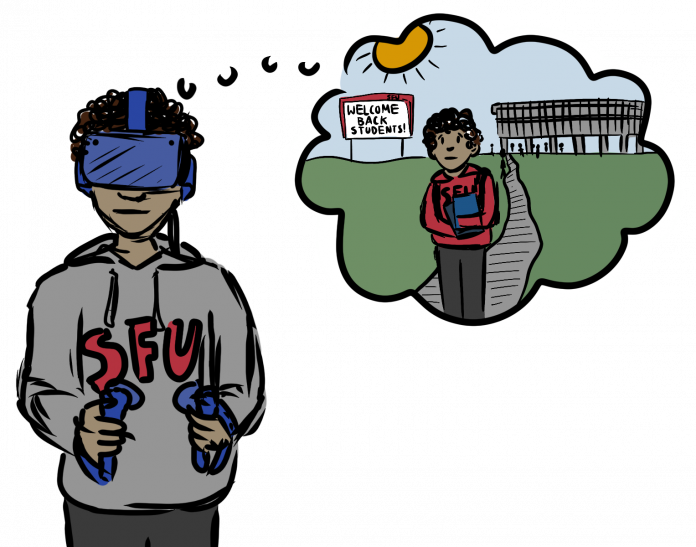
How can you virtually recreate the experience of the feeling of walking in on the first day of class? Illustration: Alex Vanderput/The Peak

Do you remember your first day of classes? I vaguely recall a whirlwind of back-to-back classes as advised by my seniors, getting swamped outside C9001, and losing my beloved laptop mouse. Rest in peace. But despite all that, there were some good experiences and good people who made that first year memorable. When I consider the incoming Fall 2024 class coming into things in the middle of a pandemic, I can only think that they’re going to have a much different and even harder time than the rest of us, with so much fewer of the meaningful experiences that made it worthwhile.

First years coming into SFU for Fall 2020 are going to have as, everyone says, an “unprecedented” experience. There’s no way to sugarcoat this. The transition from high school to university is hard enough, but it’s going to be harder still without the full, unhindered support normally provided in person by the SFU experience. Advisors, professors, and SFU student services are now limited to what they can type in emails and chats or present over a Zoom call — this is the best they can do, but we all know that it’s easy to misinterpret or read things incorrectly in emails or worse, to overlook an email.

No matter what faculty or demographic, there are some common experiences shared by all students, and in particular, students who are entering the university environment for the first time. The most important thing I learnt in my first year was not so much the actual course material itself, but about how to function in a brand new environment. 

Take for example the importance of utilizing the expertise of a TA. We’ve all been there one day before an exam in the TA’s office, desperately trying to digest the material. Now Fall semester students will have to do this over email. This means a lot of back and forths sometimes just to confirm a simple yes or no question. And it gets much worse for subjects like math or economics where graphs and diagrams are sometimes needed to explain concepts. I mean, you can send images back and forth, but email can’t substitute sitting with a TA or a professor in their office and getting real-time help with the materials tangibly in front of you both.

And that’s not the only positive interaction that’s lost with remote learning. Incoming students will miss out on so much of the university life that earlier cohorts have taken for granted now that they have to stay home and study. This starts right from the first day on campus. Walking around the school, seeing the massive library and lecture halls, or playing one of the festival style games on the Convo Mall during Welcome Week. As current students, we often forget that Month of Welcome is not about us, but rather about showing incoming students the scale and potential of their new life now that they are in university. This experience will now be lost on the new Fall students, and they won’t be able to regain that sense of excitement and wonder if or when the school reopens for them.

And let’s not forget the social events that are also now gone. One way that previous cohorts have mitigated loneliness has been to participate in student life. We can put classes online but we cannot recreate those “deep” 1 a.m. conversations held while stuck in a computer lab working on a project. Nor can we recreate the sense of accomplishment students get when successfully completing a fundraiser as a team with their clubmates, and going out for celebratory drinks afterward. 

First years this fall will not be able to live out their student life to the fullest — at least, not to the same extent that us older cohorts have done in the past. So much of our learning and growing at university is done horizontally through our peers, not just top down from instructors. These kinds of interactions are now reduced to Facebook group chats and Canvas discussion boards, which though they are better than nothing, are still not ideal.

All this means that first years in Fall 2020, like the rest of us, are going to have to figure out a lot of things. But unlike the rest of us, they are going to have far fewer opportunities to connect with people in the way that made university tolerable to many of us seniors. 

Best of luck class of 2024, I don’t envy you. Your first year is going to be filled with new challenges no one has overcome before that might change your lives, but know that you, like all other first years will get through this, and become all the better because of it.


What Grinds Our Gears: Could I get a little content to go with all these ads?

0
What did I come here for again? Illustration: Michelle Chiang/The Peak

Unprecedented times call for unprecedented media consumption. News articles, blogs, opinions pieces, factoids — like the borderline manic hypochondriac my mother always knew I’d grow up to be, I’m reading all of it. Or, at least, I’m trying to.

It’s a little hard to read anything when a split-second after I click a link my screen is flooded with 14 different ads and three invitations to sign up to receive more of this same visual cacophony in my inbox on an hourly basis. 

As I’m trying to read past the click-baity headline, the images on my screen are jumping around like a toddler on Pixy Stix while my computer labours to load the flood of information all at once. Christ, is that a seizure coming on? No, just a ton of dazzling Flash images desperately trying to make me part with what’s left in my bank account.

And yeah, I get it, ad revenue pays for creators and outlets blah, blah, capitalism. I know. But content should not be made to be a delivery system for advertisements, like it’s the white bread of the world’s least-in-demand crap sandwich.

If it takes me a full minute to dodge pop-ups, stop automatic videos from playing, and wait until all the first-priority ads have finished loading, then why are you even posting content to begin with? Just make the entire page ads and stop pretending like you’ve got anything else to say.

The very least you could do is cut it all back a bit — only until I find another ad-blocker that gets around my browser’s current controls. Then you’re free to flood the internet again with your bullshit consumerism to your hearts’ content. I promise I won’t mind at all.


It’s too early to determine whether tuition needs to be adjusted

0
Paying the full cost of tuition right now is frustrating, but it’s funding valuable services. Photo: Andres Chavarriaga/The Peak

In late April, before summer classes had even begun, many students across Canada began to express their frustration that universities would be charging them the same tuition fees, despite classes moving to an online format. While I understand the financial frustration that comes from being a student, and I can most certainly empathise with the sentiment that online classes are a much bigger pain than in-person classes, it’s too early to be demanding that tuition be reduced for the duration of enforced remote learning — at least, not until students have a better idea of what, exactly, they are getting (or not getting) out of this semester.

I will be the first champion of the idea that online classes, as a rule, suck. Without a physical lecture, and with limited access to a professor or a tutor marker (TM), students mostly have to rely on their ability to teach themselves the material that is, at best, guided in a series of modules and textbook chapters. But we should be clear that what SFU students are experiencing now is not traditional online or distance education that has been offered in the past by the Centre for Online and Distance Education (CODE). CODE classes are premade and packaged to be run by TMs, rather than faculty, and are meant to be completed within a pre-set time on the student’s own schedule.

The remote learning that students of the summer (and now fall) semesters are going to be participating in is different. Remote classes are still taught and directed by faculty in a fixed class time, just as if they were in person. The difference is that they are delivered in an online format. While this may seem like a relatively small difference for students who are stuck at home trying to listen to a lecture while younger siblings scream in the background, it makes a big difference in the reason why students shouldn’t jump the gun on demanding reduced tuition.

To start, there’s no real way to predict which classes are going to be better or worse off in this situation until they’ve had a chance to run. This also applies to the technological capabilities of individual instructors and students. A blanket tuition decrease where it might not even be needed is going to severely restrict the kinds of resources and technological investments that might prove necessary or incredibly useful in future remote learning environments. 

The reality is that we need some way to objectively assess whether or not students have been negatively affected by remote learning, and that is unfortunately going to require classes to run their course, and to weigh the outcomes of this semester against previous ones. 

To that end, a far more effective branch of advocacy would be to demand that universities are both actively collecting objective and subjective data, and are transparent in how they intend to assess the success or failure of this new remote system. As an example, will students have access to course and instructor evaluations this semester? And how will these evaluations be used in the decision-making for future semesters or, if necessary, retroactive tuition readjustments?

It’s really important that student activism in this matter is proactively focused in the right direction. It is not only the financial well-being of students that is affected by this pandemic, but also that of faculty, teaching staff, administrative staff, and all of the other ongoing services that are still available to students, albeit at a distance. Students have to keep in mind that these vital roles have not disappeared just because learning is remote, nor have they been intentionally reduced as in CODE classes.

There has been some good work done already that reduces the overall costs to students by addressing actual services that are no longer in use. The suspension of the U-pass fee is one such victory. Whether or not other services and fees are deemed to be redundant in a remote learning environment remains to be seen. Until then, concerned students ought to be diligent and mindful as they always are, and be prepared with a list of evidence and proposals at the end of the semester, if the collective learning experience does in fact go belly-up.


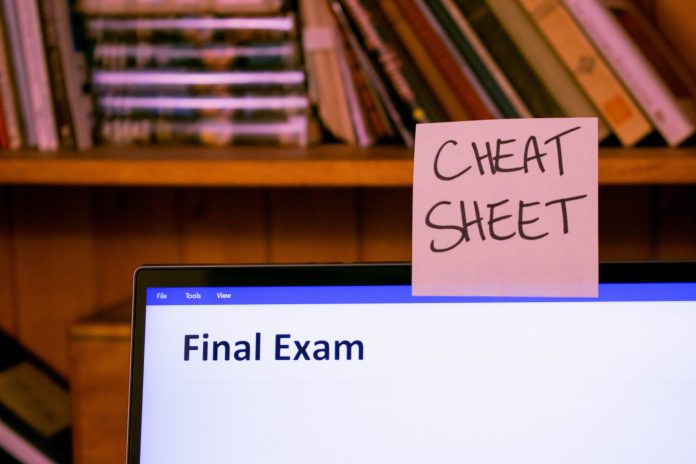
Remote learning is not an open invitation to cheat

0
Don’t be tempted by what looks like an easy way into a good grade. Photo: Maxwell Gawlick/The Peak

As of March, in-person classes have been adapted into online courses. This has brought numerous changes to students’ learning experiences, such as asynchronous lectures and remote finals. The switch has also exposed a potential abuse of remote learning: cheating. 

As one could imagine, it’s much easier to Google answers, refer to textbooks, or review Canvas slides when writing a take-home test. But cheating isn’t only harmful to the individual engaged in cheating — in a remote environment, it creates unnecessary hardship for everyone involved, from professors down to students taking the exam honestly. 

Let’s first consider what goes into discouraging cheating in an online environment. Professors and TAs have had to implement new, additional measures to try and ensure their students don’t cheat. This has involved asking students to turn on their webcams or microphones, or prohibiting them from coming into any form of contact with anyone else during the exam. Professors have also implemented time-limits to limit when students can access their exams, mimicking the restraints of being in-person. 

This is already an extra strain on faculty who then have to monitor dozens of students’ individual computers from a distance and record anything that may look like cheating. Aside from the gross invasion of privacy this entails, consider also the number of grey areas that could occur with technological limits or other unique circumstances of students each taking an exam in a different environment. 

What if students get an emergency phone call or need to contact someone due to technical difficulties? Additionally, students may not have access to a webcam, nor are they guaranteed to have laptops that have the capacity to use a webcam simultaneously paired with taking the online exam. If webcams or internet connections fail and students have near-identical answers, how can professors determine whether it was because of cheating? It’s not unreasonable to assume that remote exams have heightened instructors’ vigilance against cheaters. Students who are rightfully caught cheating will only increase the need to strengthen checks for academic integrity and increase the number of honest students who may be exposed to the stress of an accusation of academic dishonesty. 

SEE ALSO: SFU community group formed to advocate for student and staff during COVID-19

And let’s not forget that cheaters miss out on learning the material they’ve paid good money for. Plus, students who get caught face a series of penalties which may include suspension or the cancellation of their degree. No matter how easy it may look like to get away with it now that we’re all learning remotely, the fact remains that faculty still know what to look for and cheaters will ultimately get caught. The effort spent figuring out how to cheat the new online system could much more easily be spent actually learning the material, at no risk to the students involved.

There are of course still going to be students who are tempted to cheat behind the safety of their screens — however, it ultimately isn’t worth it. Academic dishonesty isn’t only a disservice to the cheater, but also to their peers and the staff who have to deal with the aftermath. It’s not fair to those who have good intentions to either be accused of academic dishonesty due to some arbitrary new policy, or to put effort into studying for their grades when others are too lazy to do so for the same result. 

Students are trying as frantically as professors to adapt to our new online environment. No one needs the additional stress of adjusting and readjusting the way we learn because some cheaters thought they could get away with it.

The use of digital proctor software at SFU and the potential for academic dishonesty in a remote learning environment is an ongoing story. Stay informed with future Peak articles on this subject.


Olo Radio attempts to reinvent the experience of listening to music

0
Photo courtesy of SFU News

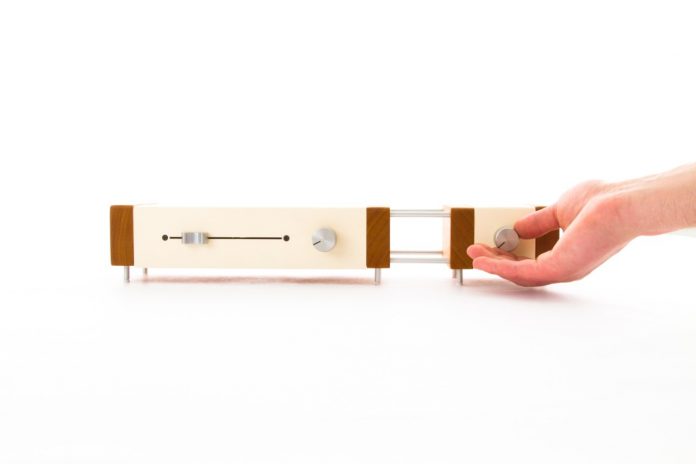
School of Interactive Arts and Technology professor William Odom has designed a physical device that compiles data on the user’s music listening history. 

The device, called Olo Radio, links to the user’s Last.fm account to gather the data. Last.fm is a music data aggregator that collects information on the music that an individual listens to, whether through Spotify, Apple Music, YouTube, CDs, etc., and stores the information. Olo Radio brings Last.fm’s service to a physical object that can be interacted with. 

In an interview with The Peak, Odom explained that the device consists of a motorized slider, timeframe knob, and a volume knob. The timeframe knob can be set to “day,” “year,” or “life,” and then the user can choose a point within that timeframe by moving the slider. 

According to Odom, Olo Radio presents an opportunity for self-reflection, and to consider one’s change and growth over time. It allows the listener to access the music of their past, and acts as a compilation of a lifetime’s worth of music. Odom noted that, “we’re really trying to create things [ . . . ] that can be a part of your life over a long period of time.” 

“One of the bigger agendas here is to try to change [the] design… of consumer electronics and the way in which we design and [think].”

Odom drew inspiration from Finnish designer Alvar Aalto and his mid-century works with the use of wood tones and steel. He described the design as Scandinavian and Japanese, and stated that the appearance of the device suggests a physical and mental balance. 

The human-computer interaction is an important part of Olo Radio; Odom intended it to emphasize “human agency and creativity within the person as opposed to the machine.” 

Tijs Duel, an intern of Odom’s, was a collaborator on the project. 

In an email interview with The Peak, Duel said: “I see reminiscing and reflection essential in the development of the self. These activities can be triggered and supported through mementos and media.”

He noted that Olo Radio provides “new and meaningful ways to explore our digital collections to get the most out of them.” 

Currently, there are five custom-designed Olo Radio’s that have been installed in homes in the greater Vancouver area to get a feel of the experience over time. 

When asked what the first song he heard when first using Olo Radio, Odom laughed as he reminisced on a song from JPEGMafia’s Veteran album.

In terms of future applications for Olo Radio, Odom stated that “one of the bigger agendas here is to try to change [the] design [ . . . ] of consumer electronics and the way in which we design and [think].”

SFU engineering students use personal 3D printers to help frontline workers

0
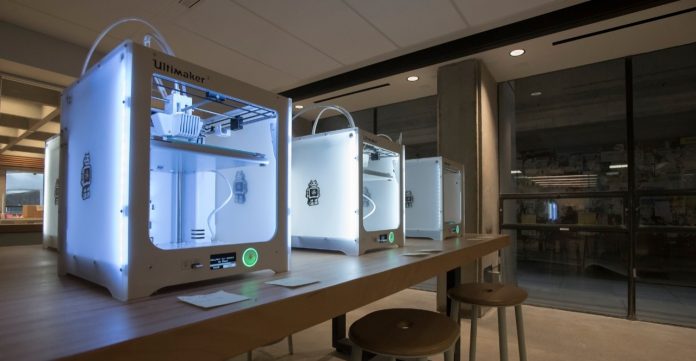
Five 3D printers are available to SFU students in the Media and Maker Commons. Photo courtesy of SFU

How would you react if you were told you could help frontline workers during the COVID-19 pandemic, all while earning class credit?

For Mechatronic Systems Engineering (MSE) students at SFU, this scenario is their reality. Organized by MSE professor Dr. Woo Soo Kim, this initiative involves engineering students using their own personal 3D printers to produce supplies for frontline workers. 

In an email interview with The Peak, Dr. Kim elaborated on the efforts of the MSE program known as the 3D Designed PPE Initiative.

Dr. Kim stated that he began the initiative in mid-March. Collaborators of the professor, Dr. Lillian Hung from the University of British Columbia and Stephen Wu from the City of Surrey, contacted the 3D printing expert, hoping such skills would help in the wake of the pandemic.

“At that time all the University labs were closed. So I sent emails to all 50 3D Designed PPE Initiative students. And 6 students raised hands that they have 3D printers at home.” 

According to Dr. Kim, these six undergraduate students have already made 500 medical mask ear-savers using their own personal 3D printers. Ear-savers help eliminate the discomfort felt by those wearing face masks for hours on end. He also noted that the students have made around 50 door handles. According to SFU News, these door handles will allow people to open a door without using their hands. 

From there, Dr. Kim gathered the products and delivered them to Vancouver General Hospital and the City of Surrey for their frontline workers.

According to SFU News, the students involved “determined a way to cut down the time it takes to print the mask straps, from 33 minutes to nine.”

The story further notes that these students can later apply their efforts to a directed study course for class credit.

Dr. Kim stated that 3D printing is a method of “sustainable manufacturing.” This approach to creating usable objects is enjoyed by many MSE students in their own home, and is therefore doable even with campus closures.

Those involved in the initiative have further plans to help those around them.

3D Designed PPE Initiative students will be working on their novel designs of ventilators in the summer, according to Dr. Kim. This will be imperative for anticipating another virus-surge similar to that of COVID-19.

“I always [tell] my students that engineers need to give back to our community and society.”

SFU community group formed to advocate for student and staff during COVID-19

1
Image courtesy SFU C19 Coalition via Facebook

In light of COVID-19, members of the SFU community have come together in support of one another through a group known as the SFU C19 Coalition. Formed in March of 2020, the SFU C19 Coalition consists of a combination of SFU students and employees. 

According to their demands to the university, the Coalition is advocating for more consultation with students and staff, a variety of academic accommodations for students and teaching staff, and better financial assistance to all students⁠—including international students. 

In a statement to The Peak, Ed Graham, an organizer at the Coalition, said that the movement was started due to the disproportionate impact that COVID-19 was having on international students and employees. 

“We hope the coalition will bring the financial and academic demands of internationals to the attention of SFU and beyond. We hope to see steps to ensure concrete measures are taken,” wrote Graham. 

President of the Simon Fraser Student Society (SFSS) and C19 Coalition Liaison to the SFSS Osob Mohamed talked more about the Coalition in an interview with The Peak. 

So far, Mohamed explained, the Coalition has been involved in online outreach, including an online petition. On the Coalition’s website, they also have listed a number of advocacy initiatives that students can get involved in. 

With regard to lowering tuition fees, the Coalition is pushing for SFU to implement some sort of tuition waiver for the Summer and Fall semesters. “The quality of education when you’re receiving it remotely is simply not the same as it is when you’re receiving it in person,” said Mohamed. 

Another key demand of the Coalition is that the university must provide clear guidelines to instructors with regard to remote teaching. 

“Nothing has been mandated to instructors as to what they’re allowed to and not allowed to do,” Mohamed stated. 

“We’re hoping to get some more clear guidelines across the board for instructors on how they’re allowed to conduct exams,” said Mohamed. She added that they will continue to push for the prohibition of proctoring software and room scans during exams. 

She also noted that the Coalition is pushing to give students free access to any software that might be required for a class, including SPSS and Adobe Creative Suite. Moreover, they would like to see professor’s recording lectures for the benefit of students who are in different time zones. 

“International students are getting the short end of the straw again,” remarked Mohamed. She noted that some of the added burdens on international students include paying higher tuition rates, experiencing difficulty returning home, having a limit to the number of hours they can work, and not being eligible for the Canadian Emergency Student Benefit. 

Mohamed explained that since the SFSS has officially endorsed the Coalition, they are hoping to bring their demands to coming meetings with university administrators and the president himself. 

“We fully support the work being done by the Coalition, we will continue to work with them to [ . . . ] make sure our students are getting the best outcomes that they possibly can during these rough times.” 

In addition to being endorsed by the SFSS, the Coalition has also been endorsed by the Graduate Student Society), the Teaching and Support Staff Union, and the Simon Fraser Public Interest Research Group. 

SFU researcher co-leads international team that examines the impact of COVID-19 on gender

0
Photo: Michael Cooper / Getty Images

SFU researcher and department of Health Sciences faculty member, Dr. Julia Smith, is co-leading an international research project that analyzes the gendered impacts of infectious disease outbreaks like COVID-19. 

Dr. Smith spoke with The Peak about her team’s research. 

“The project aims to better understand [ . . . ] how the COVID response is affecting different genders differently,” explained Dr. Smith.

She clarified that they are taking an intersectional approach; even though the overarching lens that is applied is a gendered lens, they are recognizing that there are other social determinants that affect health equity, including race, ethnicity, religion, and class. She also noted that they are trying to include all genders in relation to their relevant contexts, including non-binary. 

“We’re aiming to inform policy makers about the gender impacts of the response and make sure they have up-to-date information [ . . . ] We’re getting requests from policy makers for more information and they want to understand what’s happening.” 

She hopes that this will lead them towards an in-depth analysis of the implemented policies to identify the gaps in these policies. 

The project includes four case study countries: Canada, China, Hong Kong, and the United Kingdom. First, the team conducted a gendered matrix for each country. The matrix uses “document analysis from the media, from organizations, from the government,” and attempts to gather data on the gendered impacts of COVID-19.  The team then analyzes this data through a matrix tool they developed. 

Dr. Smith and her team also conducted interviews with various groups of people who they identified as being the most affected by the pandemic, including healthcare workers, those working in long-term care facilities, and foreign domestic workers. According to Dr. Smith, these interviews are necessary because in addition to quantitative research, “it’s really important to fully understand people’s experiences.”

The final part of the research process is policy analysis, where the findings from the matrix and the interviews will be applied in understanding the biggest challenges faced by people, and then compared to already developed policies in order to identify gaps. 

“It’s absolutely shocking how little has been written on this topic,” Dr. Smith said with regard to the gendered impacts of infectious disease outbreaks. She emphasized how gender dynamics are often overlooked, which complicates after-the-fact research initiatives. “It’s been interesting to be able to do the research in real time, we can analyze the policies in real time.” 

Dr. Smith can see her research going beyond COVID-19 and applying to future pandemics. 

“Documenting gender differences and [its] impacts is very important, but it’s only the first step. You don’t only want to write about how bad things are, you want to try and inform policies to make them better.” 

“I miss my sisters,” says treasurer who can’t defraud her sorority anymore

0
Photo courtesy of Valerie Elash via Unsplash

BURNABY, BC — Gracie O’Brien, a fourth year economics student at SFU, reported in several of her group chats this week that she was really missing her sorority sisters in Iota Omicron Upsilon (IOU). As IOU’s treasurer, O’Brien has defrauded the Greek life organization of over $30,000 during her tenure, and regrets that she does not get to see her sisters and their wads of cash anymore on account of COVID-19.

“Sisters nourish the soul, heal the heart, pay the mortgage,” O’Brien sighs. “I hate being away from them.”

IOU has not met for Greek life activities since mid-March, and is unlikely to operate through the summer. During the day, O’Brien staves off her loneliness with mimosas and old photos of her fellow IOU girls. Her favourite pictures are the ones printed on their stolen drivers’ licenses. 

“I’m maybe diversifying into identity theft,” she explains. “It’s really important to run side hustles and get creative since it’s total plague vibes right now.”

Surprisingly, none of O’Brien’s sisters have raised any objections to where their dues are going, shrugging it off as “solidarity always comes first.”

“I would literally die for my sisters,” says Aria Coleson, O’Brien’s little, “and shame on anyone who wouldn’t.” Coleson donated her fourth piece of pancreas to O’Brien on Friday in hopes of finally receiving a decorated paddle from her in the mail. 

O’Brien’s actions have been disavowed by other Canadian sororities, including Chi Rho Alpha (better known as the CRA). Despite weathering some criticism, though, O’Brien feels that her past embezzlement is justified. She has characterized her gains as “only fair compensation” for the critical work she has done for IOU over the years. 

“Look, I love these girls. And at the end of the day, they’re not paying for membership in a timeless, respected organization; they’re paying for friends. And I’m such a good friend, just look at my Snap Score.

“So honestly? As far as being defrauded by me goes? Love that for them,” she concluded.