Home Blog Page 420

We need to prepare for the psychological fallout of COVID-19 before it hits

0
Existing symptoms of anxiety and depression are worsening under COVID-19. Photo: Maxwell Gawlick/The Peak

A global pandemic is not a good time for anyone. Even those of us of the introvert persuasion are now looking at our four walls and wondering when it will be safe to have unrestricted interactions with friends and family again. And yet, as we start to settle into a “new normal” of face coverings, social distancing, and terrified Google searches at the onset of any cough or sore throat, it’s worth taking the time to shore up our emotional and structural defenses against the coming tsunami of mental health problems that is the inevitable result of this epoch of global upheaval.

Even as BC has seen a flattening of the COVID-19 curve, the pandemic continues to rage on elsewhere in Canada and around the world. The World Health Organization reported its single largest daily increase in cases on June 22 — a whopping 183,020 new reported infections. These new cases add to the strain already caused by the virus: the stress on healthcare systems, the loss of employment, economic stagnation, loss of social support systems and, of course, loss of life. Even the ever-growing number of questions around how the virus operates within the body is a source of continuing stress, with some patients experiencing debilitating symptoms months after the virus is undetectable in their systems.

All of these compounding stressors are a problem, not only in the immediate moment, but also in the long-term ramifications on collective and individual mental health. We are currently in the “active trauma” stage of this pandemic. We are focused on the immediate problems in front of us: how to keep ourselves and our loved ones safe, while also guarding against complete economic collapse and the inability to support ourselves. But dealing with trauma can only be pushed back so long. Eventually that bill is going to come due, and many, many people aren’t going to have the support they need to get through the coming crisis. 

Just before COVID-19 came to Canada, mental health care was still somewhat of a grey area in this nation. Data on wait times to receive care for mental health issues wasn’t available for many regions, making necessary funding initiatives difficult to assess and allocate nationally. Of the data that does exist, patients seeking care could expect to wait for over a year to have their specific needs addressed, depending on where they live.

These disparities and holes in data are worrying for the same reason that an unrestrained viral pandemic is worrying. If a huge number of people suddenly need mental health services to get through the onset of months of stress, anxiety, and depression, there is a very good chance that these needs will overwhelm our current mental health care capacity — especially where we don’t actually know what that capacity is. What this means is that people with existing mental health problems may find it more difficult to access services with increased strain on the system, while those who are experiencing a mental health crisis for the first time may not have access to the resources needed to identify, nor the counselling needed to address, these new conditions.

There is no doubt that while we are still wrestling with COVID-19, resources must be funnelled into helping our communities stay safe and healthy. However, as the immediate scramble to get a hold on the virus seems to be over (at least in Canada) now is a good time to start directing resources toward the future aftermath of the virus. In particular, both provincial and federal governments need to take steps to assess their current mental health care capacities, and the projected increase in care needs post-COVID. Additional resources need to be subsequently allocated into areas specializing in anxiety and depression counceling, as well as suicide prevention. 

The SFSS summary in “The COVID-19 Pandemic & the Student Experience” reports that nearly 50% of students have experienced worsening mental health as a result of the pandemic. It also states that only 10% of students have accessed the mental health supports available to them as SFU students, even though 75% know that they exist. While in the immediate moment these statistics show a worrying disparity between care needs and accessing care, at least we have an idea of where we can improve.

We won’t be completely done with COVID-19 once the virus itself leaves us. We need to start preparing now to deal with its aftermath so that we won’t be scrambling again to keep up with another emergency as it is unfolding.

 

Your weekly SFU horoscopes: July 13–19

0
An illustration of a girl with long flowing hair. Astrological signs and stars shine around her.
ILLUSTRATION: Marissa Ouyang / The Peak

Aries: This week, try stretching your body each morning. Sure, stretching has countless health benefits, but I’m mostly telling you to do this because you only ever stretch yourself thin figuratively. Help your hamstrings.

Taurus: Don’t forget to wear sunscreen this summer. I know it leaves your skin feeling oily, but nothing is more painful than damaged skin, except the hurt you feel from Pokémon not announcing a Sinnoh remake this year.

Gemini: This week, try revamping that old t-shirt chilling in the back of your closet. Tie-dye? Too messy. Purposeful tearing or chopping? Too dangerous. An accidental soup staining? Tasteful. Innovative. Brilliant.

Cancer: Try drinking more lemon water this week, Cancer. It’s cloudy and leaves a sour taste in everyone’s mouth. Just like your sense of judgment.

Leo: If you’re touch-starved this week, just spend your time waiting for your leftovers right in front of the microwave. You’ll get a warm, fuzzy feeling inside as the radiation reaches your heart faster than any significant other ever could.

Virgo: This week, buy a Roomba. Your home will feel tidy, just how you like it. And even if the worst case scenario happens and the vacuum becomes self-aware, at least you’ll have a friend who actually knows how to pick up after itself.

Libra: When’s the last time you read for fun? Are all the young-adult books tastefully broken up by a few classics on your bookshelf getting dusty? It’s alright. You can read two pages of a class’s reading and call it a day. Maybe just dust off the Suzanne Collins for your own health.

Scorpio: When you zone out during your online lectures this week, try shifting your focus from your phone to the amount of dust on your keyboard. It wastes just as much time and makes you just as uncomfortable. But you’re your computer’s only subscriber, and it’s lonely.

Sagittarius: This week, try reading under a tree. You’re used to being a victim of things throwing shade. Grow up and turn it around to benefit you, just like grown-ups commodify every other life experience.

Capricorn: Why do people try calling you after you text them? You have places to go, people to see, the self-esteems of some water signs to destroy. It ain’t much, but it’s honest work.

Aquarius: What summer fashion trends are you rocking this year? I bet a practical yet stylish pair of pale Vans would look great with your constant scowl.

Pisces: If you still have it, go listen to your old music player from when you were younger. Replaying the classics from middle school will give you the best of both worlds: a recollection of every single embarrassing thing you said or did at that time and the exhausting cynicism you have today.

Freedom Square plaque removed and engraved into new tiles

0
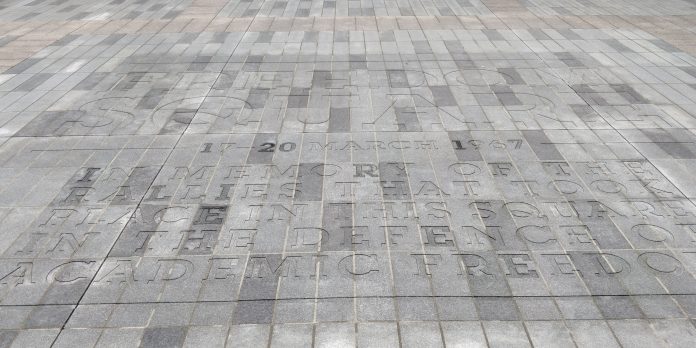
Engraving in tiles in Freedom Square, installed June 2020. Photo: WeiChun Kua.

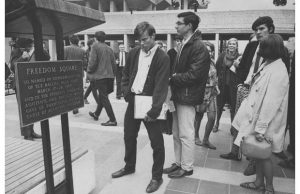
The plaque that once stood in SFU’s Freedom Square, in commemoration of protests that took place in 1967, has now been engraved into the new tiles in Freedom Square with different wording. 

According to SFU’s Chief Facilities Officer Larry Waddell, the original plaque, which is attached to a podium, was removed in October 2019 due to construction, and has since been stored in the basement of Maggie Benston Centre. 

The initial plaque read: “FREEDOM SQUARE. SO NAMED IN COMMEMORATION OF THE RALLIES HELD HERE MARCH 17–20, 1967 AND OF THE STUDENTS, TEACHING ASSISTANTS, AND FACULTY WHO GAVE OF THEMSELVES IN THE CAUSE OF ACADEMIC FREEDOM.”

The current engraving reads: “FREEDOM SQUARE | 17-20 MARCH 1967 | IN MEMORY OF THE RALLIES THAT TOOK PLACE IN THIS SQUARE IN THE DEFENCE OF ACADEMIC FREEDOM.”

Simon Fraser Student Society (SFSS) Science Representative WeiChun Kua noticed the engraving on the ground in mid-June. Kua stated in a Facebook post that the new wording is “a total erasure of history and unity in the SFU community to stand up to SFU Admins.”

In a follow-up statement to The Peak, Kua said specifically that the wording that includes “Students, Teaching Assistants and Faculty” is important to “maintain the context of the solidarity against the Board of Governors/SFU Admins.”

Assistant Director of SFU Communications & Marketing Marianne Meadahl told The Peak via email that the engraving of the writing was intended to “enhance” Freedom Square. “Removal of the weathered podium cleared the square for ease of movement of activities,” wrote Meadahl. 

She also noted that the wording on the podium “could be interpreted as implying loss of life in its initial description.” Particularly, this is referring to the wording: “who gave of themselves in the cause of academic freedom.” Meadahl stated that the new wording was approved by SFU administration and a representative of the SFSS. 

SFSS President Osob Mohamed told The Peak that although the wording was approved by an SFSS staff member at the time, the SFSS “would like to re-open the conversation to reinstate the wording that reflects on the solidarity between students, teaching assistants, and faculty members.”

With regard to the original plaque itself, Waddell told The Peak that there had been discussion with the SFSS about displaying it in the new Student Union Building. 

Former SFSS President Giovanni HoSang said that this issue was not brought to his or the VP University Relation’s attention, noting that the issue “seems to have fell through in communication within the management structure that [the SFSS] had.” 

Mohamed said that she does not believe that this was intentional, but was rather the product of miscommunication. She added that the SFSS would “like to see the plaque returned to its rightful home in Freedom Square.”

Background and context

In 1967, five SFU Teaching Assistants (TAs) signed an open letter to the students of Templeton Secondary School asking them to support their fellow grade 12 student, Peter Haines, who had been expelled for writing and distributing a book of poetry that criticized a student and teacher. The TAs (John Edmond, Chris Huxley, Martin Loney, Jeff Mercer, and Phil Stanworth) were subsequently fired from their TA positions. 

Chris Huxley, one of the five original TAs that was fired, recalled the experience in a recent interview with The Peak. “It was quite an innocuous thing he did [ . . . ] He criticized the way English literature was taught at that school.” 

Huxley explained that the group of TAs had heard about the expulsion through an article in the Vancouver Sun. In response, they wrote a letter back to the Vancouver Sun, all five of them signing it. On Monday March 13 1967, Huxley and some of the TAs protested in front of Templeton Secondary School and distributed leaflets to Templeton students. 

By the end of the week, the five TAs were fired from SFU, via telegram. 

“The reaction was far beyond our expectations,” said Huxley. He added that he had moved to Canada from England with the promise of the TA position as a source of income. 

“It wasn’t like it was a sidelined source of experience or some money, it was our only means of livelihood,” he stated. “To be fired without any due process or warning was quite a hit.” 

“Students of both Simon Fraser and UBC got very concerned,” Huxley said. Additionally, Tom Bottomore, who was Head of the PSA Department and Dean of Arts at the time, resigned as the Dean of Arts in protest of the firings. 

Between March 17 and March 20, thousands of SFU students and faculty members held a sit-in protest in Freedom Square in support of the TAs. 

Huxley noted that these protests took place in “the era of the so-called teach-in.” He explained that those involved would encourage both sides of any argument to speak. During this particular protest, there were not many people in favour of the SFU administration, “but if there was somebody, we would almost encourage them to come forward.” 

Reflecting on the experience, Huxley recalled that “people had enormous interest and patience to listen to many speeches. These rallies would go on for hours, it was quite amazing.”

Eventually, the Board of Governors met to consider appeals by the TAs. According to Huxley, hundreds of students went into the administration building and waited in the halls outside the meeting, threatening to strike if the firings were not overturned. 

The firings were overturned and the TAs were reinstated. 

Huxley noted that the two key issues being addressed in the protests were free speech and academic freedom. He believes it was part of the bigger Free Speech Movement, that was spreading across the world and burgeoning on the West Coast at the time. In the context of the Vietnam war, apartheid in South Africa, and the Civil Rights Movement, students engaging in and protesting for free speech was becoming the norm. 

History of the plaque

The commemorative plaque was purchased by the SFSS in the Summer of 1967, and was initially installed on September 11, 1968 after over a year’s delay (due to various bureaucratic processes of SFU administration). It was stolen the next day by UBC engineering students, and was substituted by a replica plaque with the wording ‘Fool’s Square’ replacing ‘Freedom Square.’ According to a 1968 edition of The Ubyssey, four students were seen running from the scene in the early morning of Thursday, September 12. An anonymous letter was allegedly sent to The Peak referring to the incident. The Peak did not disclose the contents of the letter. 

The original Freedom Square podium installed in 1968. Photo courtesy of SFU archives.

The plaque went on to spend several years in the trunk of someone’s car, and eventually made its way to a UBC fraternity house. It was later used as a TV stand for a UBC alumnus, who eventually returned it to SFU in 1990 when he became aware that SFU was looking for it. 

The plaque then disappeared again, and was discovered years later by student Amanda Camley in 1999 in an SFU administration office. The plaque was reinstated in Fall 2000, only to disappear again shortly after.  

It was then found in 2014 by the SFSS, in a storage space under a staircase in Convocation Mall. Facilities services told the SFSS that it had been there for at least 10 years. The plaque was returned to Freedom Square in October 2014, where it remained until Fall 2019. 

On the wording of the new engraving, Huxley said, “I can see that [people] might be concerned that it is diluting the original inscription.” He added that he did not recall the plaque being put in place, nor the initial theft of the plaque. 

“My memory of the late 60s was that we didn’t pay that much attention to the plaque at the time [ . . . ] I can see that if it’s etched into the stonework, it’s less likely to be stolen. There’s pluses and minuses I guess.” 


It took far too long for complaints about SFU Athletics’ team name to be heard

2
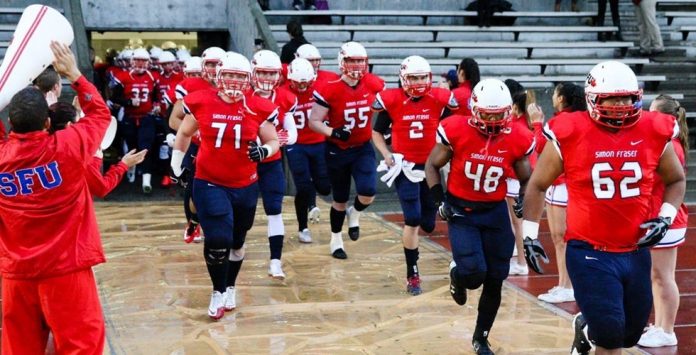
SFU’s sports teams have made several attempts to subtly distance themselves from their team name. Image via Wikimedia Commons

It’s no secret to the SFU community that our athletics teams are represented by an embarrassing and dangerously misleading name: “The Clan.” Meant as an homage to SFU’s Scottish roots, the name is more ubiquitously associated these days with the Klu Klux Klan (KKK), especially when teams travel to the US. 

Although athletes and professors have been speaking out against the name’s racist undertones for years, only now, in the midst of a conversational eruption on racialized violence, has the gravity of the name been given serious consideration by the university administration. 

The Clan may appear to be “just a name” with an unfortunate connotation to some. However, for SFU’s Black students, athletes, and the teams they play, it is a harmful and direct call-back to the violent racist regimes that have enabled and allowed for the continued dehumanization of Black and brown people over multiple generations. When it comes to basic safety and respect of students’ lived experiences, SFU should be prioritizing students above all else.

Black students at SFU have once again, in recent weeks, expressed the frustration of playing under a name that carries the connotation of being subordinate to white people. Mason Glover, a football player and student at SFU, expressed the difficulty of representing “The Clan” when, as he put it, the name is “the same name as someone that is out to kill you.” What Mason is referencing, of course, is the KKK.

The KKK — an organization purely aimed at erasing Black people and establishing white supremacy — has a well-documented legacy of brutality and racist mass-murdering. But it’s important to remember that even though the group is most often associated with the US, Canada is not exempt from a history of racialized violence; the KKK made an appearance here as well. While many Canadians have the privilege to simply ignore this history, any reference to the KKK — including having “clan” in a team name — is a painful reminder of this legacy to our Black communities.

Which is why it is so important to seriously reevaluate the necessity of the words and titles we institutionalize. When taken outside of history, “clan” is as benign as any other word. Unfortunately, words don’t exist in cultural vacuums. They adopt associations and meanings that must be accounted for, even in situations where those allusions aren’t intended. Frankly, I and many other students find it impossible to hear “The Clan” any differently than its racist connotations to the KKK. Isn’t it considerably shameful for an institution to maintain a name that demeans the very existence and excellence of its Black student body? The bare minimum for any university, especially one that claims diversity and acceptance, is to ensure all of its students feel equally safe.  

And let’s be clear, this is absolutely a safety issue as much as it is an issue of basic human respect. Instances of harassment are widely known to have occurred, even to the point where Black student-athletes have experienced racist remarks — Glover described recounting instances of mockery from other teams’ athletes when travelling in the southern United States. 

Doreen Anane-Bediakoh, a student-athlete playing for SFU’s soccer team, expressed how she feels like the name “has allowed for people to be offensive because it has given other people the ammunition, the power they need to attack Black folks.” She explained how being affiliated with a name that historically undermines the existence of Black people has destroyed any attempts at claiming Black self-empowerment. 

Up until very recently, attempts to change the name have all failed. Glover spoke on how just last year, there was a survey that went out in which a majority of athletes expressed a desire for a name change; SFU, however, “ran out of time to address the issue further.” He further noted how shortly after, word went out that “alumni and donors were threatening to withdraw funding from our athletics program” because a name change would be, as quoted from an anonymous alumni, misappropriating “the Scottish heritage of Simon Fraser.” If this is true, the human dignity that has been sacrificed in exchange for money is grotesque and embarrassing. 

Ultimately, there is no room for “school pride” when that school insists on a name that brings its athletes feelings of discomfort and shame, evokes ideas of terror, and mobilizes racist commentary against the very athletes who carry our sports teams. Even though SFU has formally announced its commitment to dropping the name, it is important that actions follow these promises and that the collective action of students, athletes, coaches, and professors doesn’t become another “thing of the past.”

To further engage in activism on this topic, check out Othniel Spence’s article on the name’s impact on Black athletes. There is also a GoFundMe you can consider donating to, and an email template you can fill out and send to administrators.


CONFESSIONALS: I miss Burnaby campus

0
Illustration of a closed envelope, with the text, “Confessionals”
ILLUSTRATION: Marissa Ouyang /The Peak

I’ll just say it: I miss going to Burnaby campus.

Every day, I got chills taking the 145 bus up the mountain and reaching the peak. See the uninviting concrete façade. See the sports field, the one that has too much money invested into it. It was like starting your day with a cold shower, giving that nice kick to your adrenals, but also paralyzing you with fear of another day at school. What a rush.

To remedy this longing for our school atop a glorified hill, I’ve started changing things around my home to bring more of that good ol’ au de engage into my life. For starters, I bought cans of SFU’s patented “Student Blood Red” paint (Pantone 19-1557 TCX, for your reference) and slathered it all over my walls, floors, Scottish Terrier — you name it, it’s been covered. I really wanted to be able to see red everywhere I go, just like I often do on campus. 

I have also not cleaned my room in three months (totally on purpose) so I can navigate the accumulating debris with increasing difficulty. Getting up in the morning to turn my alarm off on the other side of my room feels just like trying to get from Blusson Hall to WMC in 10 minutes. I also order takeout for every meal so that my bank account gets drained as fast as it does when faced with two sushi rolls at Mackenzie Café.

Unfortunately, my home wasn’t built in 1965 and doesn’t have asbestos lurking under its bland walls, so I have to huff the fumes from the otherwise unused Sharpies I bought in first year. You know, to have the same detrimental effect on my health. The SFU experience also wouldn’t be complete without inviting the RCMP into my home to set up a career fair booth. This is where I truly experience that colonial dissonance that SFU radiates.

Though, all of these attempts come nowhere near close to the real deal. Nothing I’ve tried can replicate the sickly sweet smell of the improperly sorted four-stream waste bins or the almost post-pubescent fear radiating off of a gaggle of high school students on a tour with their unusually excited parents. I don’t know how to deal with the fact that one of those groups may never stare at me like scientists studying a wild animal again.

I’m laying in bed now to try to process this loss. I’m starting to see shapes. They’re round, no, oval. They swirl around my vision, clouding my artistic judgement, making me believe that Arthur Erickson is a bad architect. Then, they merge into one, unusually upright statue: the avocado. I stare into the endless hole where the pit should be and think about if you can get avocado toast somewhere on campus, and feel sad that I can’t check. All I can do now is surround myself with these pitiful fleshy avocado replicas and daydream of a time where I can almost fall into the reflection pool on my way to see the real one.

What Grinds Our Gears: I need more respect from my intrusive family

0
This social distancing isn’t distant enough! Illustration: Sabrina Kedzior/The Peak

I have a very specific study ritual, one that works with my painfully neurodivergent brain: I move all my distractions, set up my phone to play 30 minutes of rain noises, and essentially hyperfocus. It’s been lifesaving for university. I don’t know why, but this specific setting just gets me into the zone. I feel alive and in control, which is fairly uncommon considering I’m a university student. 

One problem: other people continue to exist within earshot of me. 

My neighbours aren’t too bad, being quiet senior citizens. The problem, unfortunately, is that I live with a couple extroverts. While I’m trying to study, my dad will be downstairs blaring workout tunes that shake the house. Right next door, my sister will be loudly chatting with her boyfriend to keep isolation at bay. On the bright side, my mother is often inoffensively watching old CW shows — thanks, Mom. 

Sometimes they’ll even burst into my room unprompted. I put a “knock first” sign on my door, but cabin fever gives one blinders to those kinds of things. I could cover my door in caution tape and it wouldn’t mean anything to my family. 

The only thing that seems to sometimes work is sharing my daily agenda with everyone. I’m about two steps from making that thing required reading if it means getting through a Zoom call uninterrupted. 


International students needed more financial support in the past, and they need support now

0
Organizing social events isn’t enough for students worried about how to pay for basic necessities. Image courtesy of SFU.

Although another remote semester in the fall is a bummer for everyone, it’s especially difficult for the international students who are still paying the same outrageous tuition fees as they did for in-person classes. These students are being hit particularly hard by our current university circumstances. International students make up about a quarter of SFU’s total student body — our university would be sunk without them. Now, with so many international student lives cast into chaos by COVID-19, the structural flaws in how SFU supports them have become even more apparent, and it is imperative that SFU does everything it can to make its international students’ lives easier. 

As of right now, SFU’s “support” for international students is scarce. While some attempts at virtual socialization have been introduced like the Global Community Cafe via Zoom, it’s not enough to address the real hardships international students are facing. Truly, the best way to support international students now — as well as in the long term — is for SFU to implement structural changes. This starts with a tuition cap, as well as an increase in financial aid and more bursaries for which permanent residence is not an eligibility requirement. 

For the most part, international students can only work up to 20 hours a week while studying. With most low-wage, part-time jobs this isn’t a livable arrangement, especially in Greater Vancouver. Now, with the massive job insecurity brought on by COVID-19, in addition to the fact that international students living in Canada may not have a family to live at home with, financial stress on many international students is at emergency levels. 

The uncertainty and insecurity in both jobs and housing puts international students between a rock and a hard place during this pandemic. This is particularly because they aren’t eligible for BC’s student support funds either. But SFU could step in here to really help support the international students who are struggling, by increasing scholarship and bursary opportunities. It’s as simple as expanding existing eligibility to students who aren’t permanent residents, but who are just as much a part of the SFU community as domestic students and should be allowed to apply for the same awards. 

Keep in mind that part of the reason why international students are in this financial pickle to begin with is because SFU takes advantage of the fact that the provincial government does not impose a tuition cap for international students. In the spring of 2019, SFU increased the tuition of a majority of its programs by 12% for international students — with business courses increasing by an incredible 20%.

Clearly, so many financial aspects of being an international student at SFU were problematic before the global pandemic. The international student program is not structurally designed to be supportive to those who don’t have massive amounts of financial support already backing them — a shameful reality that promotes classism and economic inequality. Particularly at this time, when job options are restricted and some can’t travel home, international students need extra help from SFU in order to continue learning and growing at this institution. 

While workshops and virtual events are fun, real help is needed: more financial aid opportunities is an important and beneficial step. And, you know, maybe consider a tuition freeze on international student fees so a quarter of our community isn’t overburdened in an emergency situation again in the future.


SFU should bring back the food science and nutrition program

0
The science of food is a big industry in BC. Illustration: Maple Sukontasukkul/The Peak

You know what is the most important thing to students? No, I’m not thinking of grades, or even how full the 145 is during rush hour. I am thinking of food. You know, the thing which enables people to live? Which gives us energy and enables students to study? Which keeps society functioning? 

Did you know the department of biomedical physiology and kinesiology (BPK) in the Faculty of Science used to offer the Applied Human Nutrition Certificate Program? Now the only certificate program in BPK is the Occupational Ergonomics certificate. While that program is important for students wanting to work toward keeping people safe and comfortable in various industries, nutrition or food science is important as well and should once again be offered to students. Indeed, the food science program at SFU was famous enough to have even been promoted by the Alberta government and on international student websites.

Food science, according to the UBC Faculty of Land and Food Systems, goes beyond just how to make food. It looks at the biochemistry of food, nutrition, how food is made and processed, how food is developed, distributed, and influences our society. In short, it studies food through the tools of the natural and social sciences.

Beyond just offering essential life knowledge to students, a food science program would enable graduates to access and apply for a wide range of jobs such as food analysis technicians and food processing inspectors. Food and nutrition is a huge field in BC with over 2,500 food-related businesses generating around $9 billion worth of food per year. In fact, over 30,000 people in this province work in food-related jobs. In order to prepare its students for what is a very prevalent industry, SFU should reinstate a food science or nutrition program. 

There is good news, though! The infrastructure for the program is mostly in place already. To begin with, the program could follow the old Applied Human Nutrition Certificate Program with necessary changes made for course updates. For example, KIN 312: Nutrition in Fitness and Sport which existed in the old certificate program simply needs to be updated to BPK 312: Nutrition for Fitness and Sport. Other departments like biology can contribute courses to the program — such as BISC 373: Brewing Science — as an elective to supplement learning. 

As the food science program expands, brand new courses unique to the program, such as those dealing with food production processes, and food laws and regulations, could also be created to round off, strengthen, and specialize the program as per student interest.

BC is famous for food production. Just think about the Okanagan wineries, fruit farms, and dairy production (check where your milk comes from next time, it might be closer than you think) SFU should create a program to help students gain job-ready skills to tap into these promising BC industries.

So come on SFU, let’s recreate a program that will let students and faculty explore the exciting world of food!


Student organizers lead demand for changing SFU’s sports team name

0
Photo courtesy of SFU Athletics

SFU Athletics expressed their support for a name change of the athletics team name, the Simon Fraser Clan, last Thursday, July 2.

The SFU Athletics website says that, “In response to student athletes’ concerns about the nickname, SFU initiated a review process that has been ongoing since the beginning of 2020.  SFU Athletics will provide a report to the president in August and a decision will be shared before the fall term begins.”

The demand for change began back in 2017 through the efforts of various activists, including SFU philosophy professor Holly Andersen and former SFU Men’s Basketball team captain Othniel Spence. 

Spence and SFU student Marie Haddad created a petition titled “‘The Clan’ Simon Fraser University Needs a New Name.” The petition has over 8,000 signatures at the time of writing. 

The Peak spoke with Haddad over email about the name’s affiliation with the Ku Klux Klan. 

Haddad noted that “the implications of the political and social realm behind this history and era have directly affected Black communities until this day on several levels and it is a history we need to be aware of.”

“I recognize that [The Clan] was initially inspired by Scottish heritage but unfortunately it still portrays affiliation with the original name and carries the negative connotation [ . . . ] There is also an unfortunate and prominent North American History regarding the name which is deeply enrooted in the racist segregated threat to Black people and communities.”

The Peak also reached out to Mason Glover, an SFU Football player. He explained over email how the team name has affected him as a Black student athlete traveling frequently to the US.

“The name has greatly affected me,” he began, “it has affected family relationships and conversations, how I communicate with people when talking about my school, but most of all how I represent myself. 

“We get mostly dirty or inappropriate responses when people find out that our name is “Clan” especially playing in the United States. It’s not fair for students, especially students of colour to have to feel ashamed of representing themselves in an environment that they should feel most confident in,” he continued.

The #IAmNotYourClansman hashtag had been used by SFU student athletes on social media to demand the name change. Glover explained that student athletes are posing with athletic gear and using this hashtag to demand change from the university.

Glover noted that SFU “claimed to promote an engaged and diverse learning and social environment but put issues such as this on the back burner consistently. 

On SFU’s failure to acknowledge this issue previously, Glover stated: “And I also question what made them think differently all of the sudden? Why did it take an entire BLM movement, athletes such as Othniel Spence to make himself VERY vulnerable and bring up issues that are traumatizing to him and on top of that THOUSANDS of signatures when the majority of us have clearly wanted this for years.”

“It’s sickening that it has taken this long and this much push for them to finally understand the seriousness of this.”

Haddad and Spence have also called for support from various SFU organizations, including the Student-Athlete Advisory Committee and the Simon Fraser Student Society (SFSS). 

On June 24, the SFSS Council voted in favour of supporting the name change. The passed motion mandated the Council Chair to write a letter directed to Andrew Petter, Joy Johnson, and Rummana Khan Hemani in alignment with the email template found on the petition’s page itself. Council also called on the SFSS Board of Directors to follow suit. The Board passed the motion to write a letter and endorse the efforts in their June 26 meeting.

Haddad echoed this concern around the importance of having student voices heard while maintaining SFU’s Scottish heritage.

“The point is to acknowledge Scottish heritage in a way that does not undermine North American POC/Black History associated to the name,” Haddad wrote.

“That being said, connotation has great meaning to words aside from just a word’s definition, and it’s sad to say that the North American connotation [ . . . ] can be affiliated with the Ku Klux Klan.”

When asked for a comment on the newest announcement from SFU sports administration, Haddad said, “I’m glad to hear that SFU is standing in solidarity with their Athletes and taking this movement seriously. Seeing a commitment to changing the name from the university is definitely a sign of hope. That being said, there is still a big decision to be made by Andrew Petter, and we will keep amplifying Black and POC voices while applying pressure until the change is confirmed and made.”

LETTER TO THE EDITOR: There are other solutions to policing problems other than abolishing the police

0
The police should be just one small part of a larger community protection service. Illustrated by Reslus/The Peak.

Dear Editor-in-Chief,

Recently, The Peak published an editorial covering the debate surrounding policing in Canada, and whether the institution needs to be abolished or reformed. There’s no question that we have a problem with policing — namely the lack of accountability and the no-holds-barred approach the police have to even minor issues. While I agree that reform alone is not the answer, it is imperative that a deeper dive be taken into this issue — one that outlines alternative solutions to dissolving the police entirely.

Demands to completely abolish the police have at their crux the argument that policing is an institution of violence, and thus beyond reform or repair. It is a demand raised out of genuine, long-standing frustration with police brutality and abuse of power. However, it does come with a key problem: if the police are completely eradicated as an institution, what are they replaced with?

As of 2013, the Vancouver Police Department (VPD) has over 1,500 employees. Federally, the RCMP has over 30,000 employees. When taken as one institution, law enforcement is one of the largest employers in the country. Calls for complete abolishment essentially mean that all these workers — in uniform and otherwise — would be out of work, a prospect that police unions will (and should) fight bitterly.  

There is also the public safety side of things, with legitimate concerns around response to violent crimes. It is true that a large part of the time, police officers respond to issues such as noise complaints, traffic citations, and other non-criminal matters. Having said that, simply because responding to violent crimes is not what an officer does on a daily basis does not mean that violent crimes don’t exist. The public should have a police force to protect them in these rare cases.

Complete abolishment, thus, is not the solution. The example of Camden, New Jersey is frequently used to highlight “successful” abolishment. Prior to its sweeping changes, Camden’s violent crime was high and police brutality worse. There were 37 complaints of brutality at the hands of police in 2011. Since the police reforms, violent crimes have dropped 42% according to data provided by the department, and the crime rate itself has dropped considerably. The general public’s perception of the police has improved radically too. 

However, one needs to remember that Camden has a population of under 100,000, and in turn has a different law enforcement dynamic compared to much larger cities in the US and Canada. Also, and more importantly perhaps, the police force in Camden was not eliminated completely. They only changed the way policing took place, via retraining staff and putting new policies in place. So even if cities in Canada were to implement the same changes as in Camden, there is no guarantee that the results would be the same.

What is the answer to the police problem then? Defunding, for one.

Regardless of where we are in the debate, we can all agree that police departments across Canada are grossly overfunded. As reported by Statistics Canada, over $15 billion was spent in this country on policing in 2017–18, an increase of 2% from the prior year. At home in Vancouver, the city allocates $314 million to the VPD. This is an increase of $100 million over the last one decade.

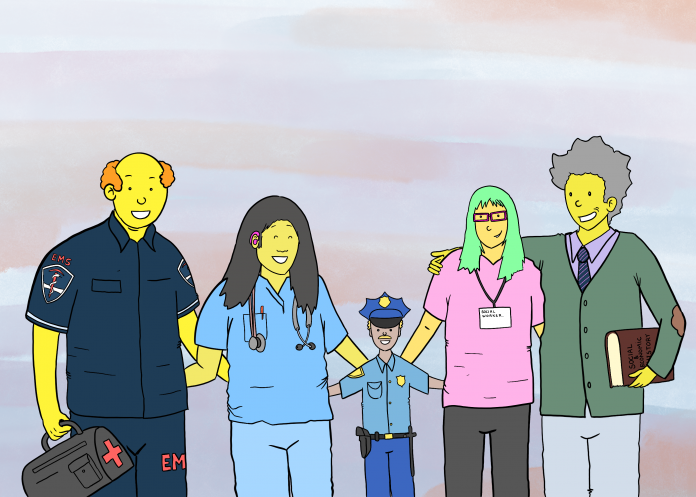
Defunding these departments even by 50% would maintain the ability to respond to violent crimes and would also result in the availability of substantial funds for other essential services. However even a small decrease of 10–20% would be substantial. A shift in funding to public servants such as mental health responders, addiction professionals, and outreach support workers would be a critical cog in the solution to the policing problem. 

Not only are these professionals better equipped to address mental health and addiction, but they really should be the first people to encounter calls for help from people going through these crises — not the police. Examples such as the recent murder of Ejaz Chaudhry in Ontario, and the abuse suffered by Mona Wang and Shanna Blanchard in BC — all during police wellness checks — come to mind. 

None of what I have proposed is intended to deny that systemic racism exists in our policing institutions, however it would be incorrect to say that every police officer on the force has racist views. Furthermore, we need to acknowledge that at the end of the day, everyone in a police force is a worker doing a job. The political left has historically fought for both civil rights and workers rights. This case should be no different. Officers who are guilty of homicides, assault, and abuse of power should absolutely be prosecuted, but complete abolishment of the force creates more problems than solutions. 

The focus of solving the policing problem should not be on eliminating the force altogether, but to bring it back in a new form that preserves the jobs of those who deserve them, as well as ends the violent practices too often made against the general populace.

Sincerely,
Salman Zafar
SFU Alumnus