Home Blog Page 410

The Bright-er Side: Catching a cold might not be so bad afterall

0
ILLUSTRATION: Siloam Yeung / The Peak

Did you know that in some sense of the word, every so often we experience another form of a pandemic? It’s the cold and the flu. So while the word “pandemic” might sound scary, did you also know that catching these viruses could be a potentially good thing?

According to some American scientists writing in the Lancet, the spread of the flu in Europe in 2009 was hindered by people who caught the cold. The rhinovirus’ (the cold virus) infection of human airway cells prompted cells to turn on their interferon genes to block against influenza A virus infections. This meant the cell had a 50,000 fold decrease in influenza viral load.

So what does this mean? Viruses can get in each others’ way and could change the course of disease outbreaks. A cold could stop you from catching the flu. The researchers then speculated (and this is the big one) that having the cold prevalent in a population could help us cope better with seasonal flu outbreaks and the COVID-19 pandemic. This is due to how SARS-CoV-2 (the COVID-19 virus strain), like other viruses, seems to be inhibited by interferon. Just like the cold disrupted the flu epidemic in Europe in 2009, so maybe the cold could help ease the COVID-19 pandemic.

Will this happen? Maybe. The researchers say more work is needed to see how the rhinovirus affects the body’s interferon responses towards SARS-CoV-2, but this viral interference should be considered when trying to create interventions against respiratory virus epidemics such as the COVID-19 pandemic or even the seasonal flu.

At this point, humanity needs all the help we can get. Perhaps the enemy of my enemy is my friend, which applies to viruses as well. At the very least, having a cold this fall might not be all bad.

Grad Minutes: September 8

0
Illustration by @Reslus

Editors note: This article initially stated that the GSS would be moving into the Student Union Building (SUB) on October 1. This was a error, and it is the SFSS who will be moving into the SUB on October 1. The article has been updated to reflect this.

Approval of merging the benefit plan and benefit contingency fund 

The benefit plan, valued at $257,344.14 and the benefit contingency fund, valued at $242,932.64 at the start of the 2019/20 financial year, have been approved for a merge. 

Director of Finance Farina Fassihi explained, “The benefit plan is used for providing bursaries [ . . . ] but with the benefit plan contingency fund we need to pay increased premiums [ . . . ] so the idea is to merge these two funds and create more interest, which would mean more burarises.” 

Advocate and Policy Advisor Harjap Grewal added, “One of the things that we’ve heard a lot from people is that our benefits plan is very good, but [ . . . ] for things like mental health, [ . . . ] [they] often run out of the allotment of what [they] have under the plan fairly quickly.” 

The merger would allow for more students to become eligible for new bursaries “particularly [with] mental health,” according to Fassihi. 

The motion passed with 20 in favour and four abstaining.


“International Students Full Immigration Status for All” endorsement

In response to COVID-19, the Migrant Rights Network requested for the “restructuring of Canada’s immigration system.” The campaign was launched in July and calls for “a single-tier immigration system, where everyone in the country has the same rights.” 

Director of Academic Relations Rahil Adeli elaborated, “International students comprise of [a] considerable portion of the Canadian migrants with temporary status and they face many restrictions and unfair conditions because of their status [ . . . ] including access to scholarships and government grants [ . . . ] They can face detention or deportation for simple reasons like working too many hours, changing schools, or even failing a course [ . . . ] [This system results] in 1/23 people — which includes 1.6 million people — [without] access to fully labourised healthcare or income support.” 

The letter demands that “all migrants, refugees and undocumented people in the country must be regularized and given full immigration status now without exception. All migrants arriving in the future must do so with full and permanent immigration status.” 

The GSS voted in favour of endorsing the initiative. The motion passed with 20 in favour and four abstaining.


Completion of the Student Union Building (SUB)

Director of External Relations Matthew McDonald stated that the Student Union Building has been completed and that the SFSS will be moving into it on October 1. 

The next Graduate Council Meeting is scheduled to take place on October 13. 

SFU study on homelessness focuses on older adults

0
PHOTO: SFU Communications & Marketing / Flickr

SFU adjunct professor Dr. Sarah Canham is leading a study that documents the causes behind the sharp increase of homelessness in people over the age of 55. 

Aging in the Right Place (AIRP) focuses on “housing for those in greatest need, which we defined as older people with experiences of homelessness,” according to Dr. Canham in an email interview with The Peak. She added that this age group in particular is very under-researched.

Dr. Canham described the necessity of treating homelessness as a multi-faceted issue with no one solution: “What ‘works’ for younger persons experiencing homelessness may not work very well for older adults. She added, “For instance, older adults are typically managing multiple challenges, including poor physical and mental health and/or the loss of loved ones and social support. As well, older adults are more reliant on fixed incomes and less able to keep up with the rising costs of living — and the costs of housing.”

The study is part of a greater research initiative called Collaborative Housing Research Network, with the intended goal of finding new information and insight into the housing crisis, as well as evaluating potential solutions to help bring it to an end. It is one of five projects within the greater Network across Canada.

While major research is yet to begin, Dr. Canham says that the preliminary research suggests a societal shift is needed to “advocate for housing to be considered a basic human right.” Additionally, the study suggests that different models of accessible housing will be necessary to decrease the amount of people living unhoused.

Dr. Canham notes that most older people require specialized housing regardless of income, often in the form of retirement communities and care homes, and that removing the income barrier would be a key practice to ensuring a healthier older population. “While housing and support models exist, they are most available to older adults who have the financial security to afford them. What’s needed, however, are affordable, accessible locations where older adults can safely live regardless of their income,” she said.

While the onus is on a collaborative group of entities to ensure housing for all, as Dr. Canham remarks, there are things anyone can do to make sure we get there: “Begin interacting with your elected officials and emphasizing the importance of housing and the need for there to be housing affordable to persons of all ages and all income levels. More housing needs to be built and this will require partnership and collaboration across multiple sectors — government, non-profit housing associations, senior-serving agencies, health authorities, and more.”

SFU offers sustainability program to bring fresh produce to students

1
PHOTO: ja ma / Unsplash

Editor’s note: a previous version of this article stated that the distribution schedule was on the Embark Sustainability website, while the sign-up for the program was on the SFU Food Hub website. This article has been edited for clarity to reflect that sign-ups for the Burnaby and Surrey campuses are on different websites.  

SFU’s Farm to Campus program supports local farming by purchasing discounted off-grade produce. They then distribute the fresh produce to students on the Burnaby and Surrey Campuses.

In an interview with The Peak, Coordinator, Civic and Community Engagement in External Relations Tara Flynn, said that at the Burnaby Neighborhood House, there were “quite a few SFU students [who] were coming down and [ . . . ] requesting food.” 

Ali White, Executive Director at Embark Sustainability Society, told The Peak that the project initially began last year, however, “Because of the pandemic [ . . . ] food security has been even more of a challenge for students.” 

Community partners such as Embark, TD Community Engagement Centre, the Simon Fraser Student Society (SFSS), and Offbeat Produce, amongst others, have worked together to organize the program. White noted that “food security is social sustainability” and “ensuring that [the] students are nourished” is a top priority for Embark Sustainability.

White said that this initiative combats local food waste. Due to preference for symmetrical produce in grocery stores, “Mounds of produce” end up “[rotting] on the fields.” In addition, local “farmers are often in debt or not making the proceeds that they need to sustain themselves because they are not able to sell a bunch of their crops,” according to White. 

Due to the restrictions set in place for COVID-19, Farm to Campus is currently operating out of the SFU Food Hub on the Burnaby campus and in the SRYE building on the Surrey campus. White outlined that their protocols ensure all volunteers are wearing masks, regularly using hand sanitizer, and maintaining distance. 

Flynn said that at Burnaby Campus, students are asked to “sign up a week in advance so that [they] know roughly how much food to bring up the mountain.” At the Surrey Campus, students can pay for a weekly subscription ranging from $3 to $8 to support the program. Volunteers separate and hand out food in brown paper bags to each student, limiting the amount of people handling the produce.

While the project is currently aiding between 25 to 75 people per week, it aims to expand in the near future, according to Flynn. She added in an email statement that while the Greater Vancouver Food Bank “makes up a very large proportion of the food that is given to students” they have a difficult time obtaining fresh produce. Flynn hopes to have the Farm to Campus Program, Embark’s Food Rescue program, and the GVBF run Food Hub through the SFSS to join together in a collective program, permanently bringing food to students. 

Students can sign up for Farm-to Campus Burnaby here, and Farm-to-Campus Surrey here. 

Community partners for the SFU Food Hub include: The SFU Office of Community Engagement, SFSS, Burnaby Neighbourhood House, United Way of Lower Mainland, GVFB, Offbeat Produce, Embark, Sustainability Office, and Food Systems Lab.

Community partners for the Farm-to-Campus initiative in Surrey include: SFU Surrey-TD Community Engagement Centre and Embark Sustainability Society, and is supported by the Plot Sharing Garden, Offbeat Produce, the SFU Office of Sustainability, and the SFU Food Systems Lab. Flynn gives special thanks to the Simon Fraser Student Society (SFSS) and SFU Surrey Administrative Office.

Opinions in Dialogue: Importance of incorporating Black history into education

1

Editor’s Note: Names used in conversation have been changed for the sake of anonymity

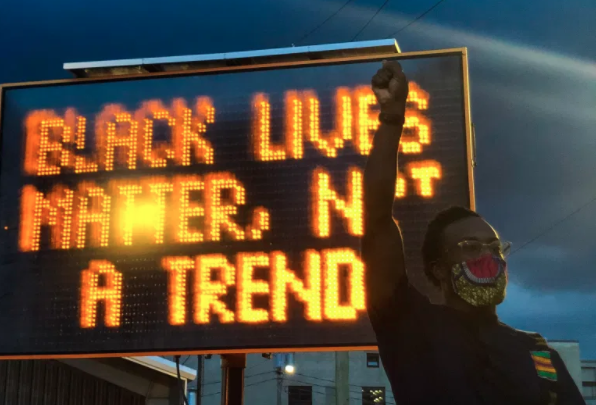
As Black Lives Matter protests continue in the US as well as here in Canada, the questions of ways to bring more awareness to the oppression Black Canadians have faced comes up. Education is one way to do so, but school curriculum currently doesn’t include Canadian Black history — or at least, not to the extent it should be taught. Why is it that the education students in Canada are given does not include the oppression Black people?


Manisha: I was having a conversation the other day with Rick, a caucasian male in his 60s, who had questioned why I went to the Black Lives Matter protest in Vancouver in June. I simply said that it’s because I support the movement, which led to a conversation about the racism Black people face in Canada. He stated he didn’t think Black people face racism and discrimination in Canada anymore. To this, I was bewildered. I listed off all the various reasons on how racism and discrimination against Black people is still prevalent today. He seemed super unaware of this information, and when I brought up racism against other ethnic minorities like Indigenous peoples, asian people, etc. he acknowledged that he was aware of the atrocities that these groups faced in Canadian history like residential schools, the Komagata Maru incident, and the Japanese internment camps. He had stated that what those people went through was horrible . . . but why did he not acknowledge the atrocities Black people have faced? 

It dawned on me that this was not out of complete ignorance on his part, but the lack of education. He hadn’t heard or learned about Canada’s racist past towards Black people so he therefore didn’t think it existed or is a problem in today’s society though he does acknowledge racism against Black people in America is a huge issue. Lack of education on this subject has led to unintentional ignorance in some and intentional ignorance in others. 


Shina: Well, I think that Canada likes to uphold its reputation of not being a racist country. This goes back to the perception that Canada didn’t contribute to slavery — atleast to the extent that the States did. To uphold that and keep that reputation they prevent adding Black history to school curriculums. By upholding this reputation the country is achieving what it wants, which is for people to believe that Canada isn’t a racist country but also to prevent people from learning about Canada’s racist past. 

When you consider that racism has existed for hundred and hundreds of years and that segregation was legal when my father was a child, residential schools had legally been forbidden only in the mid 90s. To say that racism no longer exists would be to suggest that racism is resolved and we’re done with that in a matter of about 25 years. If that sounds ridiculous, that’s because it is. 


Manisha: I agree, it is extremely ridiculous. We see the impacts of Canada’s racist past still today and the years of trauma being carried from generation to generation. The whole point about learning about history is to learn from the past and to educate ourselves so the same mistakes are not repeated. Canada as a whole cannot learn from the past if we continue the pretense that we ourselves do not have a dark past entrenched in racist policies, laws and ideologies. And just because the States’ racist history against Black people is so much more atrocious then that of Canada’s does not mean Canada does not have a racist past and that Canada is pardoned. 

Canadian’s need to be aware of this past so we can work towards making a better today and a better future for all Canadians — including Black Canadians. Including Black history in the curriculum would make it harder for Canadians to turn a blind eye to the injustices the Black community faces. This inclusion in our education system would help spread awareness on a subject many people may not really even think is an issue.


Shina: I remember one of my teachers mentioning that we need to learn history in the hopes that we never repeat it. I would like to add that it is also important to understand our nation’s past so that we can better appreciate the land that we reside on, and how it was built on the torturing and killings of not only the majority of indigenous peoples, but also Black people that were brought over as slaves. Having the right to learn about this history is not only beneficial for unaffected racial groups (such as white people) but also for the affected racial groups as well. Black and Indigenous people deserve to know everything their ancestors endured and the differences they made throughout history especially during the Civil Rights movement. When we are unaware of this history, we do not understand who we are. 


Manisha: I’d just like to point out that for those who do not believe that institutionalized racism or systemic racism in Canada isn’t a thing then they need to look back at Canadian history and recognize that there were members of parliament who were slave owners. These people who are supposed to govern people and encourage democracy are more concerned about making money fast through cheap labour by enslaving people. It’s inhumane and disgusting and it still happens today. 

The whole power dynamic between white people being in high status positions and ethnic minorities still not being a significant percentage in powerful positions is evidence towards the effects of systemic and institutionalized racism. There is still this belief that coloured folks are not smart enough, not good enough and that is just not true. I think some people don’t even realize how deeply rooted these racist and discriminatory beliefs are in our society.


Shina: For instance, from childhood up until age 15, I absolutely hated my 4b type hair (I am a Black woman). I genuinely believed for the longest time that straight hair was synonymous with beauty and anything “kinky” was undesirable and unkempt. Now that I am an adult and have done more research, I finally learned about the reasons why I hated myself and my race. 

When several Africans were being stripped from their homes and taken aboard on slave ships, their abusers did not understand their hairstyles because it was far too unique and therefore were forced to shave their heads. Since the slave era, Black people were shamed for their natural hair and any other physical features that did not resemble Eurocentric features. In fact, in the 1700s, the Tignon Laws banned Black women from displaying their hair in public because the beautiful hairstyles were deemed to be socially threatening and distracting since it attracted many White men to them. Had I been taught this painful past in my classrooms, my self-perception would have been very different and I probably would not have felt as insecure as I did at the time.


Manisha: Look around us, there are so many different cultures and ethnicities present here in Vancouver and in general all over Canada. Of course it is going to look like we’re multicultural and we are — but not in all aspects. The education we are taught in Canada does not excel when it comes to teaching about oppression, Black history, and even on indigenous peoples. I have to say I had not been taught an ounce of Black history throughout high school at all. Most of what I have learned about Canada’s history in terms of Black history is from other sources like the Canadian encyclopedia. They have tons and tons of information. Information that should be taught in schools, to help anti-racism efforts and to bring awareness to people who do not face discrimination and racism. 

Canada needs to step up and take ownership for its past.

Rejected ideas for the Student Union Building (SUB)

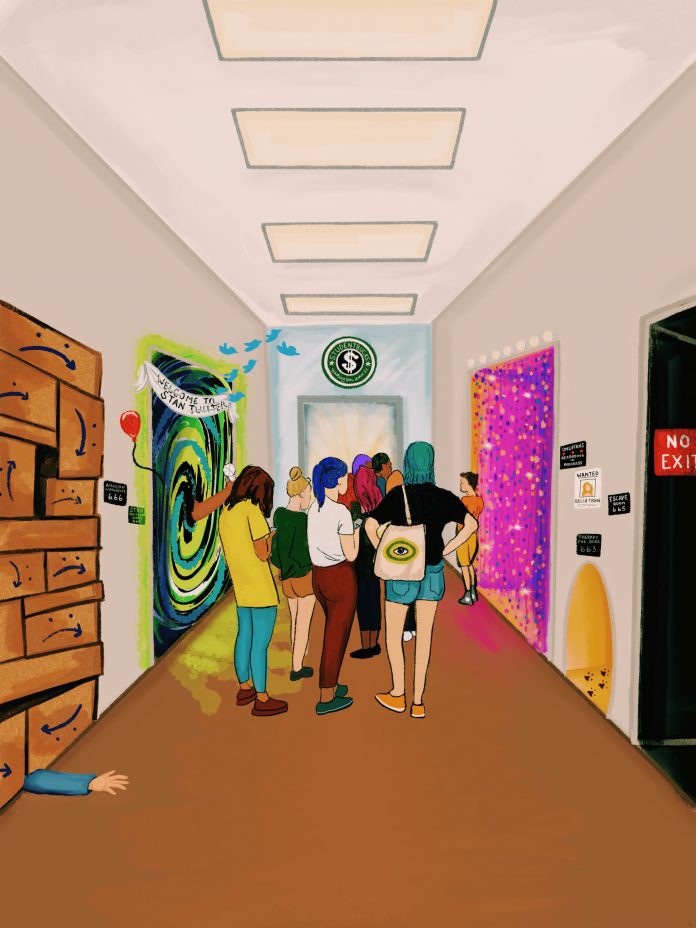
Illustration: Heather Wootton / The Peak

Escape room (By Juztin)

As any SFU student knows, being on campus is already kind of like being in an escape room: you’re anxious, have the overwhelming need to escape, and you can’t help but feel like you’ve wasted money on being confused in a room for 50 minutes. It might be nice to have a room where your intelligence and patience are tested by your adaptability to an environment and your success depends on the skills of the people around you. But then again, something like that already exists: it’s called a tutorial room.

PROS:

  • A good way to escape your other problems 
  • Quirky photo opportunity with definitely-not-cringey “we did it!” Or “we tried!” signs 
  • Can potentially indulge in your secret Stockholm syndrome kink 

CONS:

  • Your needs for assistance will most likely be ignored (thankfully, if you’ve been a student here long enough, you’re used to it by now) 
  • You get very little in return for having to think
  • You’ll have to pretend to be interested in escape rooms
  • Who actually enjoys doing escape rooms?

OnlyFans filming room (By Carter)

After walking in on peers having sex in the occult sciences aisles of the library, being emotionally ruined by hearing my dorm neighbour and his girlfriend banging while the only thing I’m banging out is an English paper due in 14 minutes, and struggling to get the best lighting for my own nudes without a friend showing up at my door for an impromptu study session, I propose a solution to everyone’s problems: an OnlyFans filming room. 

PROS: 

  • Encourages sex positivity, unlike most of SFU.
  • Increased safety for sex workers by reducing in-person meetups with that weird guy who lives on Commercial Drive named Kris.
  • Supports student jobs so that less students apply to suffer as TAs.
  • Keeps fans home and masturbating instead of going out and prolonging this damn pandemic with mediocre hookups that are not worth the risk whatsoever.
  • Increased solo sex means less pre-marital sex! Less unwanted pregnancies and STIs so even the evangelical Neo-Nazis can’t protest it.

CONS: 

  • Bella Thorne may find her way to SFU and take the room from us.

Stan Twitter war room (By Emma)

You know ‘em, you love ‘em, you see ‘em in the replies of every goddamn tweet. For the army that has everything, I propose that the SUB gifts Twitter stans a war room built for plotting their next moves and canceling their rivals. With laptops and deluxe albums (poster included!) as far as the eye can see, they truly keep winning. #StanLoona.

PROS: 

  • Collaborations result in the best fancams the world has ever seen.
  • With the ability to stream like never before, all fandoms get to number one.
  • Can pivot to political organizing if necessary. If anyone knows how to win a poll, it’s them.
  • Keeps the BTS fans in one controlled environment.

CONS:

  • Their resources and teamwork may make them too powerful, resulting in a campus take over. Move over, Petter. Megan thee Stallion’s hotties are invading. There’s a war in this house. There’s some whores in this house.
  • They may literally kill each other. Someone will say Future Nostalgia is “kinda overrated idk :///” and all hell will break loose. One group will overpower the others, creating a brutal authoritarian rule. All hail Dua Lipa. 

Amazon warehouse (By Paige)

As if students grinding out two minimum wage jobs don’t get exploited enough, let’s continue lining the pockets of CEO Jeff Bezos with an Amazon warehouse conveniently located where students desperate to keep up with tuition hikes for an online semester reside. From slave labour bath mats to textbooks that are nowhere near a “very good” condition despite being advertised as such, this warehouse really does have it all — except ethical working conditions for those who keep it running!

PROS:

  • Amazon packages delivered quickly to those on and near campus for the student. unwilling to support local or, I don’t know, any other store.
  • Your textbooks that the Bookstore does not actually carry may arrive before mid-October with such a close location.
  • Increased job opportunities for students already used to being hurt.

CONS:

  • Amazon cares more about incorrect products being placed in a bin than their workers. literally dying in their warehouses. But they have such good sales on paper towels!
  • The combination of exploitative hours and wages AND the dangers of parcels falling on workers even makes the exploited TA and RA jobs look good.
  • Forklift go brr really loudly during class.

Puppy petting centre (By Nathan)

Basically, an area for students to play with puppies and to have puppy therapy permanently on campus (not just before exams when no one can make their puny time slots, anyway). Students with huge gaps between classes will be offered opportunities to work there so they can kill time and keep the centre open for most of the morning and afternoons. 

PROS: 

  • SFU gets points for placing a place for student wellness inside their brand new state of the art building.
  • Huskies housed in the centre can double as sled dogs when it snows and buses inevitably stop running. 

CONS: 

  • The dogs that professors and SFU staff bring to their offices will no longer be the stars of the workplace.
  • Everyone will skip class to hang out here and get even more miserable seeing how happy the dogs are compared to students. 
  • Trusting students to care for other living creatures may be problematic when they consider two iced coffees sufficient fuel for six hours of lectures and two hours of commuting.

Yet another Starbucks (By Sara)

Given that Starbucks is on a quest for world domination by opening new locations within blocks of existing ones, I wouldn’t put it past them to steal an opportunity away from a local business in order to have space in the SUB. While another coffee shop would be a welcomed addition to campus, I’m not sure a Starbucks is the best choice . . .

PROS:

  • If you’re in the SUB and need coffee, you won’t have to walk the excruciating 40+ steps to the AQ for Renaissance Coffee or battle the elements (i.e. pouring rain) to get to the painfully similar cafes in WMC or UniverCity.

CONS:

  • Droves of Doc Martens-endowed, floppy-haired Tame Impala fans will descend upon the new Starbucks and spend five minutes holding up the line while they order their non-fat, no whip, light iced mochas . . .
  • Or a matcha latte, heated to exactly 392 degrees (and not a degree higher, they will check), with 5 pumps magic mushroom syrup and no foam . . .
  • Or a grande salted caramel frappuccino, sub the salt in the salted caramel for the tears of philosophy students leaving their highly ambiguous “what does epistemology really mean?” midterm, double blended, in a venti cup with oat milk instead of regular milk.
  • Seeing as the two Starbucks already on campus are closed due to COVID-19, a new one probably won’t open for a while (go find your oat milk elsewhere, ya hippies.)

Being a visually impaired student in the age of COVID-19

0
Courtesy of Jill Sloane.

This article is part of an ongoing series about how disabled students have transitioned to remote learning and pandemic living.

“I’ve done a video editing course, I’ve done graphic design being fully blind,” said SFU Communication student Jill Sloane. “We found ways to make that work, which is pretty crazy if you think about it.”

Sloane has been blind in both eyes since the age of 15. As such, there are certain barriers to Sloane receiving the education that she wants, as life at SFU is designed for sighted students first. This necessitates that she receive accommodations from SFU so as to be able to overcome these barriers to education.

“It’s kind of fun to break the mold of what people think students with disabilities can do. Because like when you think of a blind person doing video editing or graphic design, it kind of shocks people,” she said, with a mischievous chuckle. 

Sloane does her visual design work with the assistance of an access aid, a person who is hired through SFU’s Centre for Accessible Learning (CAL) to assist disabled students. The aid describes the visual material to Sloane, who then directs the aid as to the changes she wishes to make onscreen. 

“She’ll start describing an image or something without me having to ask her now [ . . . ] So she’s just been a huge, huge help [with] all these different kind of courses I’ve taken,” said Sloane. 

Alongside the access aid, Sloane has a whole team of people who work to make SFU more accessible for her. This includes a caseworker, note-takers who take notes in class, transcribers who put reading materials in an accessible format for her. “They’re all willing to help me find a way to make whatever course work,” she said.

To make reading material accessible for Sloane, CAL scans her textbooks and converts them to a digital format for her, from which she uses text-to-speech software to study it. Images from readings must be noted and described manually by the transcribers however. Because of this labour-intensive process, Sloane tends to receive books chapter-by-chapter rather than all at once. 

“Sometimes it’s not soon enough. It takes me probably twice as long to read each chapter than sighted students,” she said. “So I don’t always get it done in time. So that was the main issue before the pandemic, the urgency of getting my course materials on time.”

On the topic of reading in Braille, rather than voice-to-text software, Sloane says “ I didn’t learn Braille until later on in my life, so I’m not very competent at reading with it. So I only really have the one option of electronic formats.”

On Campus Vs Online Student Life

Sloane had a bit of a difficult time adjusting to remote learning in the Spring and Summer semesters. “I don’t tend to really work from home very well,” she said, adding that she loved the experience of going to campus, and the social interaction of classes and campus.

This is despite the fact that Sloane frequently had trouble navigating campus, and finding classrooms. “What level [d]o I have to be on? [Are] there stairs or elevators? [ . . . ] Like there’s so many different things to consider, how to even get from one side of campus to the other [ . . . ] and there’s so many people,” she said. 

She added that frequent construction was also a barrier, “[e]specially when they don’t tell me it’s there. So then I walk into the middle of a construction site without even knowing [ . . . ] I [normally] use different landmarks, whether it’s like a different texture on the ground, or a different sound or something to kind of keep myself oriented to know where I am. So when they do construction, and take those away, I get really lost.” 

According to Sloane,  that part of student life has become much easier with remote learning. Despite all that, she prefers the on-campus experience. “I’m a very social person, so it’s weird for me to be at home so much, basically.”

Remote Learning Software

The online learning platforms that SFU uses has been a significant difficulty for Sloane. In particular, it is a challenge to take websites and software specifically designed for sighted persons, and find ways to make it accessible for a non-sighted person through other software.  

“Navigating around [Canvas] with all the keyboard commands, it’s so tedious and so frustrating. And it’s always been that way from, from my experience,” she said. 

With BBCollaborate, she found that the link sent out to the class to join a video session sometimes expired, and then she had a difficult time looking around the website for how to join it. “So then I have to ask a friend or the Centre [for Accessible Learning] or my access aid.”

Once one has joined the session, as BBCollaborate is an audiovisual platform, this poses its own set of accessibility issues. 

“Video is annoying because I can’t aim the camera very well. Sometimes I don’t know what the camera is pointing at. So then [professors] are always like, ‘why aren’t you on video?’” she said. “I can’t aim the camera so you’re gonna deal.” 

She adds that the chatroom that is available during video sessions, where students can ask questions, she is unable to access at all. Zoom, however, is much more accessible and less glitchy when her professors opt to use that for video sessions.

“There’s always some kind of accessibility barrier [to remote learning], which drives me insane. So even more so online now, because everything’s online,” she said “Lectures and discussion boards and posting assignments and like all the readings [ . . . ] Almost every part of the online aspect, there’s something that’s inaccessible.”

Pandemic Life

On overall feelings about how being a person with a visual impairment has changed in the age of COVID-19, Sloane has found it a challenging adjustment.

“I’m not comfortable taking transit on my own [ . . . ] because I can’t social distance from people, because I can’t see where they are, and I don’t trust people to social distance from me,” she said. “If I bump into [someone] or tap them with a cane, and they freak out because I’m not socially distancing, that is a big issue right now.” 

“People aren’t willing to guide me as much [ . . . ] like for example I went to a restaurant with a friend the other day. I usually go get the waitress to get me to the table, so I would grab onto their elbow and they would guide me through the tables. But she was uncomfortable with that so [what happened was] I’d grab one end of the menu, she’d grab the other end,” she said.

“So I almost like [being] more isolated at home because my independence is gone [ . . . ] People are a lot more hesitant to help you when they don’t want you to grab on to their elbow to guide you. It’s hard when you’re in a new place. It’s kind of hard for you to get around when you don’t know where you are,” she said. “Then you’re like, ‘what I do now?’” 

“It’s really taken my independen[ce] [a]way, and being someone with a visual impairment, independence is something that you strive for like basically your entire life.”

SFYou: Annie Ohana, teacher and activist

0
Photo by Martin Diotte/CBC.

Name: Annie Ohana

Pronouns: she / her

Departmental Affiliation: Bachelor of Arts in Political Science and Government (graduated in 2004), a Bachelor of Arts in Criminology (graduated in 2004), a Bachelor of Education in Curriculum and Instruction (graduated in 2011), and a Masters of Education in Equity Studies (graduated in 2018)

Hometown: Montréal, Québec

Occupation: Anti-Oppression Curriculum Specialist and Aboriginal Department Head at LA Matheson Secondary School

Three years after graduating from secondary school, I reconnected with my former teacher and SFU alumna, Annie Ohana. Ohana is involved in various clubs and projects ranging from charity fundraisers, such as the annual fashion show and performance showcase “Digging the Roots,” to her own social justice club “Mustang Justice.” During our interview, I realized that similar to three years ago, Ohana still continues to inspire students to become resilient in the face of adversity, donate their time to their communities, and be proud to attend LA Matheson Secondary School. Similar to this Surrey secondary school’s mascot, the Mustang, Ohana still embodies the strength required to pursue justice.

Reform in the Education System

Ohana is also actively involved with helping secondary school students to network with the BC Teachers’ Federation. This summer, students from Mustang Justice and the LA Matheson Black Student Union joined the Committee for Action on Social Justice, a panel formed by the BC Teachers’ Federation to express their concerns regarding racism in our education system.

Ohana reflected on the dynamics of student-teacher relationships and what these student panelists taught her.

“For anyone with a job that has power attached (to assess, to manage a classroom etc.), there are always blindspots. Being knowledgeable as to our content, we can forget that it is new for students, and naturally not as easy to pick up,” she said. 

Ohana explained that students’ life experiences have educational value, but a teacher’s unwillingness to connect with students “dangerously force students to disengage.” Students and teachers are interdependent, as they both learn from each other. Ohana admits that learning requires humility.

“At the end of the day, teachers need to see themselves as learners and allow students to teach us. A cycle of growth between teacher and student is much better than a top down approach.”

Inspired by the students’ involvement, Ohana acknowledges that this event is just the beginning of reform within our education system.

“I hope [students and teachers] understand that our system has yet to transform. We still have settler colonial, white [E]urocentric models that only tokenize not liberate.”

Ohana encourages other teachers to fight for reform and encourages them to “[t]ake the reigns and with student experience at the core, dismantle and rebuild education.”

Masked but Not Silent

Ohana actively incorporates social justice into all of her classes. In addition to teaching Social Studies and Social Justice 12, Ohana also teaches French and plans to use “masks with a message” for her French lessons.

During this pandemic, the use of face masks has increased and for some, masks have become a fashion statement. For Ohana, masks are a tool for activists to “spread awareness while stopping the spread of disease.”

When asked about her motivation behind collecting fabric face masks, she said, “Emergencies often lead to a silencing of voices. [I]mportant issues such as racial justice, 2SLGBTQ rights and so much more get pushed to the side. [A]s we need to wear masks, collecting non profit masks meant to aid the fight for civil and human rights seemed a natural way to bring is[s]ues forward. Our bodies our poli[ti]cial, the personal is political.”

Foreign language classes often focus on topics such as grammar and vocabulary. Ohana not only rises to the challenge of teaching language but also sees language lessons as an opportunity and platform to educate our students on languages’ role in colonization. 

“Teaching about colonization and the spread of languages which often erased original mother tongues is key in any language classroom. [T]he socio-pol[itical] historical realities in our world need to be taught in the context of languages.

My own knowledge of French is based on the French colonization of Morocco, and so the story must always begin from nuanced contexts of how we came to speak the languages we speak. English colonization of these Unceded territories of Turtle Island is the original reason why I had to learn English as well.”

A Call to Action

Younger students may be interested in electives such as Social Justice 12 but have less flexibility than senior students in terms of how many and which electives they can take. However, Ohana argues that  teaching anti-racism must remain a priority at all levels of the education system because it provides students with a solid foundation. She warns us of the danger of excluding anti-racist curriculum from other classes.

“Anti-racist practice and beliefs cannot be limited to one course. We need to teach from anti-racist perspectives and pedagogy throughout our school. From the codes of conduct we follow, the extra curriculars we offer, to each [and] every single course from Math to French and so on. [I]f you wait for one course, a lot of violence and prejudice will be allowed to exist.”

Ohana recommends that new secondary school teachers consult other teachers on how to teach anti-racist curriculum and learn from their students.

“I encourage teachers to explor[e] lived experiences and identities of [their] students, let their voices fill the room MORE than yours, do not fear opposition or difference, use it to create dialogue. Being anti-racist is a natural form of being. [F]rom how you set up your classroom, to what resources you use, encourage kids to critically analyze these realities and empower them to create the world they want to see through the application of the skills/content you are teaching.”

Most importantly, Ohana urges other teachers to “not be afraid to disrupt norms, what you are told to do or teach[ ] is not always best practice.”

TransLink launches Phase 1 of Burnaby Mountain Gondola Transit project

2
PHOTO: Sierra M / Unsplash

TransLink is working on Phase 1 of the Burnaby Mountain Gondola Transit project (BMGT). This centres around public engagement where commuters are asked to voice their opinions through a survey on their preferred route. Burnaby Mayor Mike Hurley noted that “this is an important opportunity for the community to have their say.”

“Public consultation will focus on the three proposed routes, including travel times, cost and environmental impacts, as well as neighbourhood interests such as noise, safety and privacy.” The survey will close on September 30, 2020. TransLink plans to begin Phase 2 of their Public Engagement Plan in late fall 2020 where they will “share route assessment results,” as stated on their website.

According to a report by the Simon Fraser Student Society (SFSS), 84% of SFU students prefered Route 1, a direct 2.7km route from Production Way-University SkyTrain Station to SFU Burnaby Campus. SFU students found this to be the best route in both “efficiency and effectiveness.” Students commented on the positive outcome of this route causing “the least impact on the Mountain grounds.” 

Route 2 received 13% of SFU student’s support. This route would be an “eastern route from Production Way-University SkyTrain Station with the gondola travelling along Gaglardi Way, changing direction at an angle station, and continuing to SFU Burnaby campus with the terminal near the bus exchange. No passenger boarding is proposed at the angle station.” TransLink also noted that this route may require tree removal, and other environmental impacts yet to be identified.  

Route 3 is the “western route from Lake City Way SkyTrain Station to SFU Burnaby campus, which would cross the Burnaby Mountain Golf Course, change direction at an angle station, and continue to SFU Burnaby Campus.” This route received 3% of SFU student support. 

TransLink is scheduled to submit their final report, which will include their official recommended route option, to the Burnaby Council and the Mayor’s Council on Regional Transportation during winter 2020. They are planning to have an Investment Plan and Project Approval from the TransLink Board and Mayors’ Council on Regional Transportation by early 2021. 

Community members can register for the upcoming Virtual Open House on the BMGT project on September 19, 2020 from 2 p.m. to 3 p.m. The public can also tune in to a Telephone Town Hall on September 22, 2020 from 7 p.m. to 8 p.m regarding the BGMT project. Both events will include a presentation and a live question and answer session with the project team. Registration and more information can be found on Translink’s website. 

Scholar Strike Canada: A cause for hope and a missed opportunity

0
Jennifer Kasiama’s words from “Emergence from Emergency,” a series of poetic installations in Toronto, curated by OCAD U’s Creative Writing Chair Catherine Black and instructor Ian Keteku, with student-artists: Jennifer Kasiama, Leaf Watson, Meighan Morson, Ehiko Odeh, Chris Markland.

“Education isn’t about teaching students how to make the trains run on time.” said Min Sook Lee, Associate Professor at Ontario College of Art and Design University, during the first scheduled digital teach-in, Abolition or death: Confronting police forces in Canada. ”It’s about working with students to engage in the issues of our times.”

On September 9 and 10, 2020, academics across Canada participated in the inaugural Scholar Strike. The idea of the Scholar Strike originated in the United States, inspired by WNBA and NBA players striking following the criminal negligence of the Kenosha PD in shooting Jacob Blake seven times in the back. A tweet from Dr. Anthea Butler on August 26, 2020 set the wheels in motion for an organized labour action/teach-in/social justice advocacy.

The Canadian Scholar Strike was primarily organized by Lee and Beverly Bain, Professor of Women and Genders Studies at the University of Toronto.

According to the Simon Fraser University Faculty Association (SFUSA), “On September 2, the Canadian Association of University Teachers (CAUT) circulated a memo via email,” regarding the Scholar Strike. 

“I was glad to see a Canadian Scholar Strike being organized, and the teach-ins that came together over such a word window of time were incredibly powerful[,]” said Magie Ramirez, SFU Assistant Professor in the Department of Geography.

Over 2,000 scholars across Canada participated in the Scholar Strike, 34 of which are academics from SFU.

The aim of this Scholar Strike is summarized through a list of actions and commitments outlined on www.scholarstrikecanada.ca

  • “We must support the demands for defunding the police and redistributing those resources to Black, Indigenous, racialized, queer and trans communities for the creation of sustainable and healthy communities.  
  • We must support demands to remove campus police.  All agreements between policing institutions and universities must be rescinded. 
  • We must address the historic and current underrepresentation of Black and Indigenous faculty (full and part-time) in all Canadian institutions and press University Administrations to prioritize the urgency of these faculty hires. 
  • We commit to supporting meaningful efforts to recruit, admit, retain and mentor Black, Indigenous and racialized undergraduate and graduate students. 
  • We must support the campaign by CUPE 3261 to stop the University of Toronto from contracting out caretaking services thereby relinquishing its responsibility to safeguard secure and suitable paying jobs and health and safety of workers.
  • We must advocate for the creation, expansion, and maintenance of mental health and health care resources for students at our universities. 
  • We must support the demand for affordable education, sustainable jobs and housing for students and cultural professionals across all the universities.”  

A Missed Opportunity

“I would have liked to have seen more participation from faculty at SFU,” said Magie Ramirez, Assistant Professor at SFU. 

From over a couple thousand faculty members at SFU, only 34 participated in the Scholar Strike. In an interview with The Peak, the SFUSA went on record to state that no SFU faculty received any backlash for their participation. With full support from SFU President Joy Johnson in the form of a recent statement, it brings to question why more faculty chose not to participate.

Regarding those who did not participate, Johnson stated, “Other scholars may choose to incorporate these issues in their classrooms through teaching and discussion.”

Was it more effective to facilitate discussion within a classroom setting or to participate in an organized action aimed to highlight anti-Black and anti-Indigenous police brutality and violence that exists in Canada?

If education is about working with students to participate in the issues of their time, then facilitating discussion about important social issues already happens often in a university setting. Is another two days of facilitating discussion as a footnote in a lecture/seminar/tutorial more effective, or is it more effective to take an organized stand against the oppression of racialized groups?

The lack of full participation from SFU faculty and staff in the Scholar Strike calls attention to the theory of incrementalism, which in the context of social justice is a theory that values small-scale socio-political changes over time instead of large-scale. But in an effort to be ‘realistic’, incremental changes are fundamentally opposed to changes that will disrupt the status quo.

Incremental changes allow for the existing structures of power to adjust and adapt to the efforts to defund or abolish them.

In 2018, Canadain Prime Minister Justin Trudeau promised to work with Indigenous peoples for a new legal framework regarding Section 35 of the Constitution Act (1982), by October of 2019. Indigenous leaders, such as Neskonlith First Nation Chief Judy Wilson, were skeptical of his promises, noting an integral component left out of his speech — the Indigenous title to lands.

On October 24, 2019, the Government of British Columbia announced the introduction of Bill 41, Declaration on the Rights of Indigenous Peoples Act. 

Article 8(2) states that, “States shall provide effective mechanisms for the prevention of, and redress for: [ . . . ] (b) Any action which has the aim or effect of dispossessing them of their lands, territories or resources; (c) Any form of forced population transfer which has the aim or effect of violating or undermining any of their rights [ . . . ]”

Unfortunately, recent events such as the invasion of the Wet’suwet’en territory by the Coastal Gaslink pipeline and RCMP, and the continued construction of the Trans Mountain pipeline during the pandemic, show that Bill 41 is nothing but an incremental change designed for the Canadian Federal government to maintain control over Indigenous peoples.

“Almost 100% of injunctions filed against First Nations by industry and governments involve resource extraction or development, and most are granted in their favour,” said Desmond Cole, during the teach-in Abolition or death: Confronting police forces in Canada, referencing a report from the Yellowhead Institute. “What follows is the militarization of Indigenous lands, and criminalization of land defenders.”

This is not to equate the lack of full participation in the Scholar Strike to the Federal government actively oppressing Indigenous peoples. The point is, incrementalism will not produce fundamental change.

Considering the current climate and circumstances surrounding anti-Black and anti-Indigenous racism in Canada and the United States, SFU faculty members had an opportunity to participate in a country-wide action approved by the SFU President, and they lost an opportunity to advance this dialogue.

Advancing the Dialogue

Evelyn Encalada Grez, SFU Assistant Professor in Labour Studies, had the opportunity to be a speaker on the teach-in, Migrant Workers in Canada: Unfree Labour on Stolen Land. In an interview with The Peak, Grez provides a synopsis of the teach-in.

“I presented about our work and knowledge about the structural and every[d]ay racism that migrant farmworkers are subjected to in rural Canada to the invisibility and indifference in mainstream Canada. Migrant farmworkers have been participating in government run guest worker programs since 1966 and form a part of Canada’s legacy of a white settler nation because workers are from the [G]lobal South and cannot claim permanent residency status in the country no matter how long they have been living and working here, basically they are permanently temporary in the country.”

“Our panel consisted of Adrian Smith, Ossgoode Hall Law Professor, Chris Ramsaroop, OISE PhD student and Min Sook Lee. Adrian and Chris are Justice for Migrant Workers, organizers. It was Chris actually who invited me to the farms on a fact finding mission to a town called Leamington, Ontario back in 2001 where we first met with migrant farmworkers and started to learn about their conditions of work and life. We never stopped going. Adrian has been an ally and organizer with us along the way, having an important role in the legalities of these guest worker programs and challenging the ways that the law allows for migrant workers exploitation and exclusions from basic human rights.” 

“Min Sook Lee has been coming out with us to the farms over all these years and she filmed two documentaries with our collaboration in rural Ontario, namely El Contrato and Migrant Dreams. It was the first time the 4 of us were in a panel together and we shared of our historic memory of the movement for migrant rights and many stories and analysis of what systematic racism looks like in the lives of migrant workers and their families too who we cannot forget in the configuration of agriculture and as part of our communities that we are connected to transnationally.”

A teach-in that stood out to Ramirez, an urban geographer whose work explores how racial capitalism, art-activism, and urban space intersect, was Two Crises: A Virus and Labour.

“Dr. Rinaldo Walcott’s lecture on [T]hursday resonated with me quite a bit regarding the anti-Blackness inherent in the university, and what this moment asks of us as critical scholars in pushing back against the recalibration that the university is doing in this moment of pandemic and mass uprising,” said Ramirez.

“I think this applies to faculty, but also more broadly to graduate and undergraduate students [—] the demands we make of the university are imperative and necessary as we work towards building more just futures.” 

While this was a missed opportunity to have a larger impact, it was still a historic strike according to Grez because it allowed them “to engage in these [discussions] beyond the ivory tower and reach a wider public [ . . . ] all the conversations were archived and we will be able to refer to them constantly over the next few weeks and months.”

“The discussions centered [on] the voices of BIPOC scholars and thinkers who often have to fight for spaces to be heard. Our voices get muted by a deafening liberalism imposing a type of respectability politics. Also, when we do speak we get dismissed for being biased or too angry while other[s] who are constructed as [W]hite can discuss issues of privilege and racism without the same backlash as many of [us] have experienced in our careers and activism. “

Ramirez notes that “there is a general feeling that we cannot return to “business as usual” in the wake of the global pandemic and the ongoing uprising against anti-Black violence and carceral systems.”

“[W]e need more knowledge sharing among us and to open the paywalls and borders of the university and communities to expand our spaces to reach more people and include more voices of those who have been excluded for too long,” said Grez.

For more information about the Canadian Scholar Strike, visit www.scholarstrikecanada.ca. To watch the digital teach-ins, visit their YouTube channel, Scholar Strike Canada.