Home Blog Page 392

The SFSS calls on SFU to re-implement pass/fail grading

0
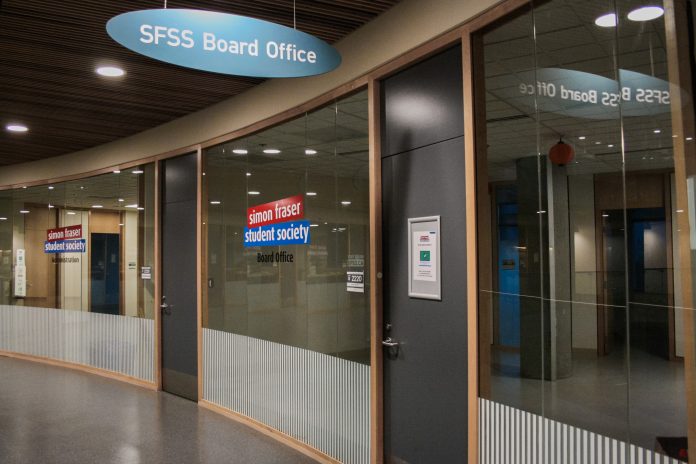
PHOTO: Ahmed Ali / The Peak

The Simon Fraser Student Society (SFSS) is calling for SFU to implement pass/fail grading for the upcoming Spring 2021 semester and “retroactively for the Fall 2020 semester.” They are proposing that “students be allowed the choice to accept their final course grade or opt for a ‘pass/fail’ grading basis for an individual course.” This would mean that “P” and “F” grades would not affect students’ GPAs and passed courses would “count towards the total unit[s] required for a degree.”

The memo sent to the Senate by the SFSS outlines various Canadian universities, including the University of Calgary and Concordia University, which have introduced different grading systems, such as the pass/fail system. Vice President of University Relations, Gabe Liosis, said in an interview with The Peak that “SFU could be a leader across Canada” if the Senate chooses to take action on this issue.

The SFSS memo states that the pass/fail grading system should be implemented to reflect SFU’s commitment to equity, diversity, and inclusion — especially during the unprecedented times of the pandemic. They argue that this motion would alleviate the mental health strain that students are experiencing due to the pandemic.

The SFSS outlines concern for students’ mental well-being as “grading schemes have not been altered” to remote learning. Liosis stated that many students have reached out to him to express the stress that online learning has caused them. According to Liosis, many students work in different time zones, lack access to sufficient work environments, and experience burnout and social isolation. Furthermore, scholarship requirements, student loans, and other academic commitments prevent students from taking lighter course loads or taking any semesters off. 

Liosis stated that the SFSS’ efforts have been “met largely with great resistance from SFU [a]dministration.” Dr. Jonathan Driver, former Vice-President, Academic and Provost pro tem, stated that SFU sees “no reason to implement the pass/fail option” after the Spring 2020 term. 

Driver noted that SFU accommodates students in different time zones and those who are unable to attend live lectures online by encouraging instructors to adopt asynchronous learning for their courses. He believes that, at this point, students should be able to determine whether to take courses under the circumstances of the pandemic.

Others have expressed concern over the impact on proficiency that a pass/fail system would have on crucial professions such as medicine or engineering in which specific grades matter. Liosis addressed those who believe that the pass/fail grading scheme would be detrimental to graduate school opportunities. He said that while a large majority of students are not pursuing post-baccalaureate or masters degrees, many universities have stated they will review each student’s applications holistically and with regard to each individual’s experience with the pandemic.

Liosis said that the SFSS plans to continue working with student senators until the January 11, 2021 Senate meeting. He noted that “the fact that this motion made it onto the Senate agenda in the first place is an excellent example of what happens when students unite, using one voice, to push for a common cause.”

Read more about the SFSS’ campaign to implement pass/fail grading here.

Canadian government announces 2021 stimulus of a $10 Steam card and some foil balloons

1
ILLUSTRATION: Shaheen Virk / The Peak

The Canadian government held a press event today to discuss their new 2021 COVID-19 relief effort. A representative announced that the follow-up to their hefty $500 stimulus for single individuals living through eight months of economic disaster would be a $10 Steam card and some foil balloons.

“We were confident that the $500 would be sufficient rent coverage for a long duration of time,” explained the representative during the screened press conference. “After checking some ledgers from the 1960s that excluded Vancouver, the entirety of Ontario, and basically every other location but Quesnel, British Columbia, we were confident in this decision.” 

“While this is admittedly a slightly smaller compensation than our previous contribution to our strong economy and even stronger citizens, we hoped to reach more Canadians by pooling much of our COVID-19 relief money into sponsored PSAs. We got these advertisements on TikTok!” 

A journalist asked why the government was putting PSAs on TikTok when people were struggling to scrape by and that extra money could’ve gone literally anywhere else. 

“Well, you know, the youth,” the representative replied, making a gesture vaguely resembling a finger-gun. “They’re always going to parties and stuff. So we thought we would think like the youth and hire TikTok dancers to talk about how parties are bad. The youth need to stay strong and stay inside!” 

The press circle agreed that yes, it was the youth at fault and not the open, max-capacity restaurant they’d met up at an hour before.

A reporter questioned the dip in the relief funding allocated since 2020.

“With the dent in our budget, we decided to focus more on moral support during these trying times. You know this Steam gift card covers the popular multiplayer game Among Us twice over? You can buy it for you and maybe a friend, and then run around building your spaceships and stuff. Or whatever you do over there. Point is, you’ll be with friends. You are not facing this pandemic alone.”

The press circle murmured amongst themselves.

“See? We listen to the people!” The representative exclaimed. “We know you like to play Among Us, and now you can buy it a whole other time to make it run twice as quickly! Or, if you and maybe about seven other friends pool together, you can buy that new Animal Cross [sic] game! Be on an island catching bugs or whatever, while not catching the bug!” 

As soon as he’d said it, another representative joined him on the podium and whispered something into his ear. The representative cleared his throat, straightened his tie, and said, “Okay, I’m being told Steam doesn’t have Animal Crossing. It is, in fact, not made by Steam?” he hesitated, scowling and leaning over his podium as if in deep confusion. 

“But gaming aside, check out the complimentary foil balloons!” The representative gestured to a collection of sample balloons onstage beside him. 

“See, they all have charming little phrases for moral support: FLATTEN THAT CURVE and WE WILL SURVIVE THIS. A lovely little reminder that this is temporary and we can overcome this — together.” 

He was joined again by his coworker, who urgently whispered to him. 

“Oh,” he murmured. “So, hmm, someone’s found and is now auctioning a misprint of one of these balloons. Apparently it says, and I quote, FLATTEN MY CURVES. Please note this sale is in no way affiliated with the Canadian government.”

His coworker checked her phone and whispered something else. 

“Oh boy,” he said. “It’s been sold . . . for twice our 2021 national relief budget.” 

Silence fell over the press circle. Someone coughed. Several people shuffled away from the source. 

“. . . Anywho! You guys have fun,” the representative said. “No further questions.” 

Creative Collective: Drop-in Craft Time offers a community of inspiration and support

0
Illustrated by Alex Vanderput.

The premise for Creative Collective at Home is simple: participants do a craft of their choice over Zoom in the company of other students and a SFU Health & Counselling Services (HCS) host. This structure gives students the chance to connect with each other in a safe space while creating art together. Everything about these sessions is geared towards the comfort of participants. The host introduces themselves and asks attendees about the crafts they are creating in order to nurture a friendly atmosphere and help start dialogue. There is no pressure for students to keep their cameras on or to use the microphone and they can opt to use the chat box instead.

The session I attended was a drop-in session where participants could attend whenever they wanted. The event also encouraged the use of whatever supplies students had at home, even if all they had was paper and pens.

To help inspire students, SFU HCS provided a digital activity calendar of different craft ideas. Ideas varied from creativity through body movement in prompts like “choreograph a dance” to visual creativity in “create a bookmark with paper and coloured pencils.” My personal favourites were the ideas centred around directly cultivating healthy emotions towards ourselves or others with prompts like “create your bliss list” and “create a card of gratitude for someone in your life.” 

I appreciate being able to craft this way as it allows me to take care of myself and create excitement and joy by showing love to someone in my life. All of the activities on the downloadable calendar are focused on developing a healthy relationship with art by recognizing our feelings and expressing them.

The event emphasized the many ways creativity can be interpreted. For the host, creativity meant taking a piece of paper, folding it in random places, colouring it, and possibly adding some quotes. For me, it meant using old travel photos as a guide to write in my travel journal about past adventures. The possibilities were endless. 

I also appreciated the warm community support of this event. It goes a long way to have someone support your decision to participate in art without judgement. So often, people question the usefulness of art in modern life. and this can subconsciously cause us to feel shame when participating in artistic activities. Even if we try to ignore such voices, it’s exhausting to hear this negativity or try to justify ourselves to no end. But having a community of people, or at least one person, can help validate and support creative expression. Attending Creative Collective, I definitely felt like I could share my passion for journaling and be listened to. 

Another beautiful aspect of creating art collectively is being inspired by the creativity of others and potentially inspiring others with your creativity. During the event, I shared my book journal, my languages journal, my lyric/quote journal, my poetry journal, and my miscellaneous journal, as well as my journaling philosophy. I no longer write about every menial thing that happens to me but rather, things that ignite my curiosity or touch my heart in some way — meaningful experiences or thoughts. For me, this keeps journaling a passionate, exploratory activity instead of a passive chore. 

After sharing my ideas about journaling, the host told me that they felt inspired to dive into more diverse journaling practices. I was happy to share a hobby that is a source of such peace and love in my life, as well as a medium for self-growth. She also mentioned a free journaling workshop that provides a framework for reflection in processing the year that was 2020.

SFU HCS recognizes that many students may be experiencing Zoom fatigue and the idea of another Zoom call, even if it is for self-expression, may be too much. As a solution, they also provide asynchronous online resources for students to use. After looking through the resources, my personal favourite was Our Creative Community, a digital art gallery featuring creative pieces in response to a monthly prompt which students, faculty, and staff can contribute to with writing, imagery, or both. 

October’s prompt was “What does a peaceful place look like?” while the prompt for November was “What is your favourite part about autumn?” Viewing and reading through the responses treated my eyes to gorgeous paintings, my mind to indulgent writing, and gave me so many ideas for self-care. I felt so energized by the simple activity of absorbing what other people created, imagining the mindful, loving care that each person put into their work.

If you are looking for an accepting space and are open to exploring your creative genes, Creative Collective at Home is a lovely option. For more information, check out the Creative Collective part of the SFU HCS website.

How your email really found me

0
PHOTO: Gudrun Wai-Gunnarsson / The Peak

Out of all the horrible things that occurred during 2020, there’s one thing that’s been neglected in the 2020 slander: the pity emails. 

Now, I don’t just mean any regular ol’ pity emails. I mean that one particular statement in every email — so offensive and poor in taste that I can’t just ignore it. I am referring to the notorious “I hope this email finds you well.” 

Allow me to explain how “this email finds me,” President and Vice Chancellor Joy Johnson. First of all, it’s a miracle that the email has even found me. I am hidden within a labyrinth of 400 unopened emails, Cheeto-stained fingers, and destroyed aspirations. You know I was finally going to get myself into “good academic standing”? Finally get laid in the avocado? Spot Andrew Petter in real life to prove to myself that he actually exists?

I can assure you that this email — one of the many emphasizing the need for support, school pride, something about equity (or was it about that Scottish dog? It doesn’t matter.) — found me with a smirk of contempt on my face and tears in my eyes reflecting its words as I watch compilations of couples smiling on Instagram. I. Am. Not. Well.

Joy says “we’re all in this together” or whatever, but I don’t see her bringing me snacks when I’ve hotboxed my overpriced 50 sqft basement suite. 

Yet, I read on. This is all a product of my own self-reassurance. I’m holding onto the single aspect of remote learning that still ties me to an SFU student identity: pointing and laughing at SFU-wide emails. Believe me, if I did not pity myself so much, I would be fighting this identity crisis instead of writing this. 

How could this email possibly find me “well” Ms. President? Have you been outside lately? Because I haven’t. It’s been weeks, probably months. For all I know, there could be a flock of angry crows waiting outside my front door — or my landlord (gasp)! You want to know exactly how this email finds me? I am surrounded by walls of scratched up wallpaper, tallies covering my walls, counting the days since I’ve been permitted to finish off strangers’ leftover drinks at a bar. Sigh.

How dare you mock me like that? How dare you wish me the best “during these troubling times”? Is your sympathy supposed to fix my failing grades, broken relationships, or my clogged toilet? What about my Neopets dying? Can you bring the Webkinz website back to life? That’s what would be the best.

The only way to alleviate the frustration induced by this mockery is to respond to these emails. Therefore, I have set up an automated response to all Joy Johnson emails, stating exactly how I feel. This is how it reads:

“Dearest President Joy Johnson, 

Screw you and your beautiful haircut. It’s so cool that you’re gay, but please stop wishing the best for me. You don’t even know me! Also, this email finds me very badly! Did I mention that I find these emails annoying? Please stop reminding me that I haven’t been in school for the past five years. 

Thanks, maybe an SFU student.”

Black SFU alumnus arrested on campus

5
PHOTO: Ahmed Ali / The Peak

Editor’s note: A previous version of this piece incorrectly stated that the SFSS called for a complete ban of the RCMP. This section has now been removed. Their statement notes that SFU should re-evaluate their relationship with the RCMP and calls for the removal of RCMP recruitment on campus. 

Content warning: descriptions and links to video footage of police violence. 

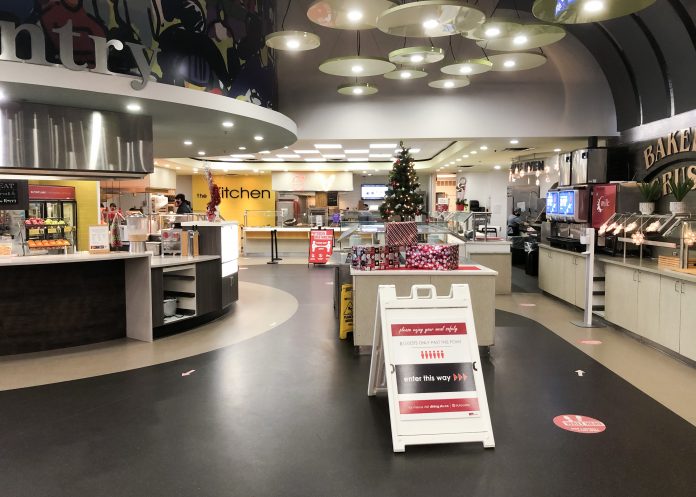
On December 11, 2020, Black SFU alumnus, Babakayode Fatoba, was arrested at the SFU Burnaby Mountain campus in the dining hall. The man was approached by two Campus Public Safety (CPS) officers who asked him to leave campus in accordance with SFU’s COVID-19 safety protocols, according to the Burnaby RCMP. The RCMP report noted they were contacted after the man refused to leave.

The man was arrested at around 9:00 p.m. for causing a disturbance. The RCMP report alleges he yelled at SFU employees, and an officer attempted to arrest him which led to a physical altercation between the two resulting in the officer being placed in a chokehold. The RCMP officer then pepper sprayed and tasered Fatoba. The man was familiar to the RCMP and was allegedly apprehended under the Mental Health Act. Roughly a week later, he was charged with “causing a disturbance, obstructing a peace officer and assaulting a police officer.”

The arrest by the Burnaby RCMP began a conversation among the student body as to whether racial profiling played a role in the arrest. 

In a written statement to The Peak, SFSS President Osob Mohamed claims that “the current [COVID-19] guidelines are not being applied in a way that’s consistent for all students.” 

According to International Studies Student Union Representative, Alea Mohamed, the man was asked for enrollment status in addition to producing ID. “Asking for active class status is not happening on a regular basis,” Mohamed said at the SFSS Council meeting on December 16, 2020. This led some SFU students to conclude that the man was racially targeted. One SFU student wrote on Facebook that they encourage others to recognize “that calling the police on Black folks over unclear policies is a death sentence [ . . . ] We cannot afford to stay silent on racial injustice.” Another student agreed that SFU “should have been more consistent with updating their policies.” 

Osob Mohamed said in an interview with The Peak that this arrest should have been avoided. “We have been calling on SFU to re-evaluate their relationship with the RCMP [ . . . ] We want to see better training, particularly around de-escalation and anti-racism training for campus security.” She added that proper training would ensure that SFU  “security operates in a way that is safe for BIPOC individuals and  [ . . . ] can hopefully minimize the need to call RCMP.”

Soon after the arrest, the SFSS released a statement in response along with the Graduate Student Society and the SFU African Students Association. The SFSS statement notes that “this arrest cannot be separated from the reality of heightened police brutality, systemic racism, and racial profiling faced by Black community members, and the unequal enforcement of unclear campus policies. Alarmingly, this is not an isolated incident, and racial profiling incidents like this one have occurred many times before on our campuses. There is no reason that an individual should be arrested in this violent manner when causing no harm to anyone in the vicinity [ . . . ] particularly Black community members for whom a police interaction is more likely to result in serious injuries or even death.” Mohamed also noted that Black students “have been sharing that they now feel unsafe on campus.” 

Another student from SFU, who asked not to be identified when they spoke to Global News, witnessed the altercation between the RCMP and the man. He claimed that “the police officer didn’t try to calm the situation down further [ . . . ] and then he rushed to violently arrest him.” He added, “It makes me worry about my Blackness. When people see me do they feel afraid? And are they going to call security? And is security going to find out what is wrong or will they try to call the police, and then I get into something like that?”

Joshua Fang, a Beedie School of Business student at SFU, was an alleged witness to the interaction between the CPS officers and the alumnus in West Mall Centre above the Tim Hortons. In an interview with The Peak, Fang noted that around 7:30 p.m. that evening, he saw the man on campus without a mask, yelling at SFU Security. According to Fang, the man was “getting really loud and asking why they’re checking ID.” 

At the Council meeting, students requested revisions to the statement as they felt it was not an accurate portrayal of the situation. Mohamed commented on the calls for revisions by saying that the statement “reflects what we want students to know: that SFSS stands on their side and for their rights no matter what, including alumni, who are past SFSS members. Some have called to revise the statement, and we are always willing and able to have these conversations about why we take a resolute stance on the side of justice, in this case, with members affected by discriminatory profiling.”

Mohamed told The Peak that she has personally received harassment online through social media and emails due to disagreements over the SFSS’ response to the arrest. She said that “it has been disheartening to receive, however I recognize that the hate and vitriol is coming from a small minority.” She added that overall, “a great number of students have shared their support of our ongoing anti-racism efforts. I am glad that so many of our members see the efforts of the SFSS as protecting and fighting for the justice of our students and community members.” 

SFU encourages Black students to use the virtual Black Student Support and Healing Space program that can be found on their website. According to the SFSS, a family friend of the alumnus set up a GoFundMe to support with legal fees. Footage of the arrest can be found on Facebook.

We aren’t safe with SFU’s security

0
Security? What security? PHOTO: Ahmed Ali / The Peak


CW: Discussion of sexual assault, police brutality, death.


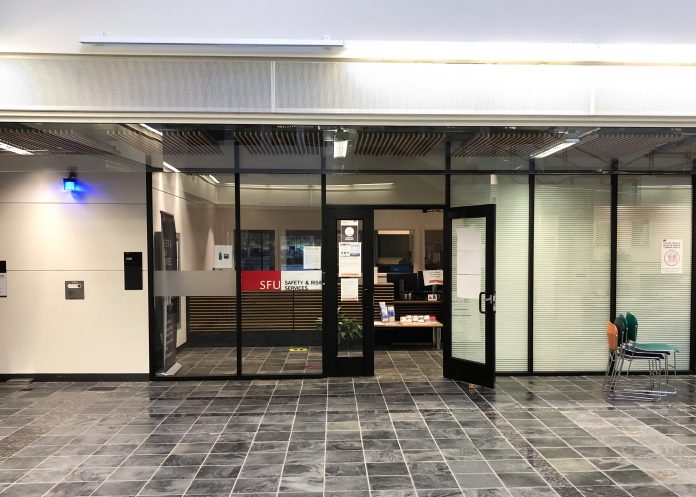
Over the years, there have been increasing concerns about the response of SFU Safety & Risk Services (SRS) to campus incidents. Most recently, the RCMP were called on a Black alumnus, resulting in them being pepper sprayed, tazed in the head, and arrested. However, if SRS’ “number one priority is always the safety of [the] SFU community,” then why are they putting students at risk? SFU’s system of student “security” is flawed and needs to be changed to better protect and prevent potential student harm.

I have had the extreme privilege to not have dealt with SFU’s security in a negative manner, but during my years at SFU I have seen many other people be affected by them in this way. Numerous sexual assault cases left mishandled or dismissed, a questionable handling of a student death, lack of support after a violent incident, and failure to adequately notify students of a possible shooter, are just a few events that come to mind. SFU’s security was also complicit in an unjustified call to remove the same alumnus in question from an SFSS debate in 2019. These past situations only exemplify the faultiness of SRS’ current operation.

First, SFU’s current COVID-19 restrictions make it so only “community members” are allowed on campus. Though, who’s to say that an alumnus isn’t a member of the SFU community? The guidelines are vague at best and don’t give security adequate guidelines for how to regulate visitors’ presence on campus. Even if the alumnus wasn’t allowed on campus, they should have been met with empathy and understanding, not a call to the RCMP. Especially when these calls can be a death sentence for Black people. 

According to a statement released by SRS, “Campus Public Safety [CPS] officers always take a peaceful approach to resolve situations.” Yes, CPS may not taze or shoot students, but calling the police on a Black person leads to a high probability of them facing violence. SRS not only needs to reevaluate their relationship with the RCMP, but they need to consider how their actions could harm students in a larger socio-political context. According to the SFSS’ statement, the Director of Campus Public safety was literally educated on this the day before the arrest.

In addition, while no one will be able to truly tell if the call was racially motivated, there is enough historical and social evidence to support the very real and often overlooked possibility. If we want to pull systemic racism from its long roots we need to critically look at how race plays a part in everyday life. We can’t assume situations with such extensive history and bias are truly ever “neutral.”

The SRS’ statement also claims that police are only called when “the situation has escalated outside of the role and capacity of [CPS] officers.” If CPS officers are not properly trained to deal with (what appeared to be) a distressed alumnus who was not putting anyone in immediate bodily harm, then they are not trained well enough.

Even if the people behind SFU’s Safety & Risk Services actually have a deep desire to keep students safe, it is clear that they are not, and that students don’t feel the sentiment. Female, LGBTQ2+, and students of colour have expressed their concern online in the past regarding these unsafe incidents. This concern was only heightened from the arrest, as is apparent from the slew of social media comments I’ve seen from students expressing worry about their own safety. It might be thought that this was an isolated incident from only a “few” CPS officers, but the training that they received to act on “threats” was created by the department themselves. Not a day before the arrest, security approached the same alumnus to leave Harbour Centre for no discernable reason.

Regarding potential threats to students, there is obviously only so much that CPS officers can do. They aren’t omnipresent and can’t react and foresee potential harm to all students, but in many cases they have been the harm. Calling the police — on a Black person no less — for a situation that could have been de-escalated, failing to support students in the aftermath of sexual assaults, and not notifying students of a potential shooter, literally put students in harm’s way.

The idea that SFU’s security is flawed isn’t new, either. Black students have had to scream over the words of people that antagonize them for this to be heard. Countless efforts from Black, Indigenous, and other students of colour have gone into making sure that SFU is a safe space for all. People of colour have to carry the weight of a country built to make them suffer and have to push back to make sure that incidents like this don’t keep happening. And when students just want to feel safe at a school that is supposed to serve them but have been suffering the effects of an institution that doesn’t prioritize their well-being, something has to change.

As the SFSS also demands, there needs to be comprehensive education on “de-escalation tactics, anti-racism, and bias awareness” for CPS officers. It’s apparent that any “verbal de-escalation” and “equity, diversity, and inclusion education” they may have had isn’t enough. COVID-19 campus regulations also need to be clarified so that confusion around who can be on campus doesn’t lead to incidents like this. SFU’s safety services simply need to take a larger look at how they “protect” students and community members. 

Students may not be frequenting campus anytime soon, but SFU’s security should improve so that when they do touch SFU soil they feel safe. No matter your opinion on the arrest, there is no denying that students are scared for their safety on campus. Something has to change, not just for the safety of SFU’s marginalized students, but for everyone who could be at risk from Safety & Risk Services’ lackluster efforts, because it’s clear that students really aren’t the “number one priority.”

SFU Residence and Housing fails to properly enforce COVID-19 guidelines

0

Several SFU students have voiced their concerns to The Peak regarding SFU Residence and Housing’s COVID-19 procedures. These concerns primarily revolve around proper sanitation and the enforcement of existing physical distancing policies that Residence and Housing already has.

One of the students who approached The Peak stated that they frequently saw groups of more than four gathering in their building without masks, and that it has been happening “since the beginning of September.” 

They further stated that sometimes these gatherings last until quite late in the night, and sometimes occur in the floor’s shared kitchen, which has an occupancy limit of three people. This prevents others from being able to use the kitchen. 

Furthermore, at least two other students have corroborated the reports of witnessing multiple gatherings of greater than four students.

According to SFU Residence and Housing’s temporary community standards, gatherings of more than four people are allowed, and they must practice “appropriate physical/social distancing as outlined by Health Canada, or it will be instructed to end.”

The student also told The Peak that multiple students (including themself) have reported the infraction — however, the group was not dispersed even after both Residence and Security were contacted.

In an email to The Peak, SFU Communications, on behalf of Campus Public Safety, outlined the procedures they follow in cases of gatherings above the set limit:

  1. “If an incident is happening and a member of the community is witnessing it, they are encouraged to call SFU Residences Front Desk to inform them of the situation. The staff will then direct the supports SFU Residence has in either student or professional staff, to engage in a conversation with all those who are involved in any potential violation(s). These conversations are intended to be educational and includes:
  • gathering all information of those involved,
  • explaining to the group why staff have approached the situation, and
  • if it is related to COVID-19 gathering restrictions, staff will inform individuals what the gathering restrictions are, what is expected of them, and ensure that in the moment staff stay until everyone is following the gathering restrictions in place.

2. If someone contacts SFU Residences after an incident has taken place, follow-up happens through the community standards process. The Residence Life Office will use the information brought forward and reach out to all involved to discuss the information and learn more about the situation.”

The email further stated, “In regard to security, Campus Public Safety (CPS) provides support and works in collaboration with SFU Residence & Housing to keep the community safe and aware of established safety guidelines. Reports about residence-specific concerns received by CPS are responded to in partnership with SFU Residence & Housing following our community standards process.”

Furthermore, the email from SFU Communications said, “SFU and FIC residents and community members are expected to wear non-medical masks in all indoor common area spaces at all times. This includes the Dining Hall, elevators, the main office, hallways, washrooms, stairwells, study areas and other high traffic common areas where physical distancing isn’t possible.” This policy has been in place since “early August.”

While Residence buildings are supplied with personal protective equipment (PPE) such as masks and sanitizing wipes, it does not guarantee their application. 

The same student who spoke above added that in residence, students are required to pitch in to prevent the spread of COVID-19, by wiping down communal surfaces. “During my time in residence (Fall 2019), I have not once seen any students wipe down communal surfaces after using them [ . . . ] [we] contacted Residence and asked them to provide free cleaning products, and thankfully they did.” 

However, the student also added that they still had seen many students not helping with the sanitation of common spaces. “I think that one issue might be from a lack of education — if students are not prompted to wipe down surfaces, they may not actively realize that they are expected to do so. [ . . . ] SFU Residence and Housing has been contacted numerous times regarding this issue, but nothing has changed in regard to students following these guidelines.”

Another student added that “the vast majority of students living in residence are quite respectful of [most] COVID-19 guidelines,” such as physical distancing, “I can say a majority do not wear masks when they are inside.”

While PPE is provided, it is up to students to use it and follow COVID-19 guidelines. Whether or not it should be up to students is another issue but nonetheless, this puts students of SFU residence in a difficult situation because they are at the mercy of people who do not recognize the severity of the pandemic. 


Board Shorts — November 13, 2020

0
Image: Irene Lo

SFSS emergency funding for Fall 2020

The Board discussed the possibility of emergency funding for students struggling financially during the pandemic. Last April, the SFSS passed a motion providing about $150,000 to an emergency fund for students with “emergency costs that had jumped up in the middle of the pandemic.”

SFSS President Osob Mohamed said, “We thought that the pandemic would have been over by now. We thought that we would have been back in school and back with each other, but that’s just not the reality of the situation. And this could very well be going on for a lot longer than we thought.”

The emergency funding is being made possible because the SFSS budget has largely been untouched according to VP Finance Corbett Gildersleve. “For instance, when I looked at the bank records  [ . . . ] it looked like we’re only, maybe about 10% of the budget has been spent so far [ . . . ] and we’re six months in.”

The university doesn’t currently have plans to provide extra assistance. VP University Relations, Gabe Liosis said, “From the discussions we’ve already had with university administrators it seems like there isn’t, they’re giving the appearance that there isn’t much money to give. We know that there there’s a huge surplus in the university budget that’s kind of restricted and we don’t really know why it’s restricted or if that money can be used for anything else.” 

Update on university advocacy

There was discussion regarding the advocacy of important issues that arose during the AGM about tuition hikes. The SFSS sent a letter to the university condemning previous hikes, with action items and demands. 

Mohamed added, “We sent out a letter with some very clear action items to the university and we have not received a response and a lot of people work at the university and I sent it to all of them. So I know that they received it.” 

Student feedback from the Annual General Meeting showed a willingness to mobilize, and that is something the SFSS aims to guide. At-Large Representative Balqees Jama explained, “People are literally talking about ‘what can we do? how can we mobilize?’ There’s buzzing about the tuition strike. Like there’s some serious energy for organizing and mobilizing. And I’m excited about it. The COVID-19 coalition has seen over 75 people sign up to just organize since the AGM. So there’s definitely an appetite for that.” 

Amendments to election policy

The policy for SFSS executive and council elections have been repealed to cover arising issues. 

According to Gabe Liosis, the “new bylaws have added new definitions for things like slates,  pre-campaigning, campaigning, and other items related to elections.”

The election policy dictates specific rules for the candidates that run for positions in the SFSS. The policy includes guidelines for the elections timeline and budget and the policies for the independent electoral commission (IEC) who are responsible for the administration of elections. It also mentions rules pertaining to candidates’ nomination, campaigning — the period before, during, and after — budget, and voting, among other things. 

For example, slates are now mentioned in the policies, this allows candidates who “are a group of two (2) or more candidates running in an election under a similar platform, for mutual advantage, with the goal of getting each other elected.” This is one of the issues that used to be decided by the IEC weeks before each election and until now, the rules were never mentioned in the by-laws.

SFU Administration presents upcoming budget for consultation after announcing tuition increases

0

A panel of SFU Administrators gathered over Zoom to discuss the university’s proposed budget and heard feedback from the student body on November 23, 2020. The university proposed an across-the-board tuition increase of 2% for domestic students and 4% for international students, provided an overview of their budget, and answered student questions. 

The panelists included President Joy Johnson, Vice-President Academic and Provost Catherine Dauvergne, Vice-President Finance and Administration Martin Pochurko, Vice Provost and Associate Vice-President Academic Wade Parkhouse, and Vice Provost and Associate Vice-President Students and International Rummana Khan Hemani. The webcast was facilitated by Executive Director of SFU’s Public Square Janet Webber. 

Webber began by stating: “The purpose for today is to hear from university leadership on the proposed budget for the year ahead and then to open up the conversation to all of you and have our panel provide answers to your questions.” President Johnson clarified that the budget for the upcoming years “must be a COVID-19 recovery plan. We need to ensure the long-term financial health of the university. So, we’re looking at this year but we’re also looking into the future.” President Johnson also acknowledged that the university and student body is “facing a lot of uncertainty and a lot of stress.”

Pochurko spoke about the effects that COVID-19 has had on their operating budget, which is around $600 million a year. According to Pochurko, 43% of that budget comes from operation grants from the provincial government and 50% from student fees and tuition. He noted that “if you look back 10 years ago, about 70% of the fees coming into the operating fund would have been from the provincial government and about 30% would have been tuition — over the past decade it has shifted.” 

COVID-19 halted revenue that the university would normally receive through ancillary funds such as parking and the bookstore. SFU has seen a decrease in ancillary funds by almost $26 million dollars this year, according to Pochurko. 

Students were able to ask the panelists questions by emailing questions in beforehand, submitting them through Zoom’s anonymous Q&A feature, or asking the question live via their cameras and microphones. The anonymous Q&A bar was made available for all meeting attendees to view about a quarter into the meeting so all student questions were viewable. 

Some of the key questions addressed the administration’s response to the demands made by the SFSS after their recent Annual General Meeting. At this meeting, the SFSS voted to condemn the university for the tuition increases. 

Dauvergne noted that their model of increasing revenue is “a more nuanced way to support students in financial difficulty [by targeting] more funding to bursaries which are assessed on the basis of their financial need.” Essentially, the university is hoping to increase revenue so that they can redistribute it through bursaries. Should their budget be approved, Parkhouse noted that they will “be looking at putting a significant amount — probably in the neighbourhood of $400,000–$500,000 — of additional revenue into bursary support.” SFSS President Osob Mohamed addressed this in a live question to the panel, noting that “depending on the term up to half of students are ineligible for bursaries because of GPA requirements or credit requirements [ . . . ] the most equitable solution to tuition increases is to make tuition affordable in the first place.” 

Hemani acknowledged that the bursary requirements need to be reconsidered in light of that information. She addressed this by assuring students that she has already “asked [their] financial aid and awards office to take a look at [the requirements of bursaries] and work with the senate policy committee on that issue.”

Mohamed noted that the SFSS would like to see a five-year freeze or rollback on tuition. However, Mohamed said, “If the university is not willing to commit to a five-year freeze on tuition, we’d like to start with a one-year freeze on tuition. We’d like it to at least be noted that this is a pandemic, this is an emergency situation, [and] that the university needs to reevaluate financial priorities to address this.” President Johnson concluded that this is “an ongoing conversation” and the university would not commit to this at the meeting, as she plans to prioritize the university’s well-being as a whole.

A similar question was posed anonymously to Parkhouse about lowering the cost of tuition instead of funding bursaries. Parkhouse replied: “This fundamentally is against [ . . . ] the principles of SFU. We believe that there are students and their caregivers who can afford to pay for the increases in tuition and we certainly have an access problem for those students who cannot afford it and the bursaries escalate the support of those students.” 

Other questions from students centered around lobbying the provincial government for more funding. President Johnson noted that they are “going to be talking about the stresses and strains in the system, [they’re] certainly going to be talking about the challenges that [SFU] students are facing as well.” President Johnson also commented that she doesn’t “want to be naive about this though [ . . . ] We have a government that is facing a huge deficit as well.”

Pochurko noted that SFU has up to $50 million of emergency funding which is one of the reasons SFU has been able to sustain these losses and absorb them. However, according to Pochurko, “Going forward, we certainly don’t want to fully deplete them given the level of uncertainty in front of us.” 

Another student anonymously raised a concern about the moral implications of increasing tuition for the decreased quality of delivering education virtually. Parkhouse responded that he “would not argue that it’s necessarily less quality.” He explained by noting that “at the end of the day, fundamentally, we continue to provide the same courses. We continue to provide the same delivery to meet the outcomes we are looking for in those courses and we continue to ensure that our students are progressing towards their degree.”

The webcast concluded with many of the student questions going unanswered due to time constraints. Webber assured students that the team of panelists will collect all of the questions and post personal answers on the website to their concerns. Pochurko noted that the consultation and student feedback that comes from the Budget Information Session is always valued. He said, “I can tell you that we do a lot of things now that we never used to do because of some of the feedback we received in our Information Sessions.” 

SFSS sends letter to Premier John Horgan and MLA Melanie Mark regarding tuition hikes

0
PHOTO: Gudrun Wai-Gunnarsson / The Peak

On November 10 2020, Samad Raza, VP External Relations of the Simon Fraser Student Society (SFSS), wrote a letter demanding that the BC provincial government include international students in the Tuition Limit Policy to regulate tuition fee hikes and an increase in operating grants to reduce financial stress for students. It was addressed to MLA Melanie Mark and Premier John Horgan following SFU’s proposal to increase tuition fees for the next two years. 

In a phone interview with The Peak, Raza explained that in recent years, the provincial government’s operating grants have declined, resulting in an increased reliance on revenue collection through tuition fees.

“Tuition fees are one of the biggest issues,” Raza said. “It’s not just a pandemic thing, but going forward, tuition fees have been increasing for local and international students [ . . . ] We have been working on it since day one — to reach out to the government and talk about it. But now since the pandemic, it has become a more urgent situation.

“We even presented this operating grant and international tuition fees cap ask in the provincial finance committee that happened in the summer,” said Raza, regarding the SFSS’ past work against the tuition hikes. 

He further added that while he has not received a response from Melanie Mark or from the Premier, he had the chance to speak with MLA Katrina Chen regarding operating grants. “She [was] really happy to connect me to whoever gets appointed as the new minister of advanced education,” Raza noted. 

“I’m hoping for a response first and to set up a meeting with them to talk about it [ . . . ] in-depth,” answered Raza when asked about what outcome he hopes for his letter. He would also like to meet to discuss what kind of action has already been taken, as well as upcoming plans for improving student life. 

As of now, Raza explained that the SFSS is working to reach out to “as many different government qualitative members [ . . . ] to try to push them to take some kind of action.” 

The Peak reached out to MLA Melanie Mark and Premier John Horgan, but they did not respond for comment. 

The following statement was provided to The Peak via email from Sean Leslie, communications director of the Ministry of Advanced Education: “Government is currently in a transition period before the swearing in of a new Cabinet — which is expected to happen later this month. During this transition period and until new ministers receive their mandate, [the] government is limited in what it can say in answer to questions relating to tuition fees.”