Home Blog Page 391

Attacking the wrong people takes away from crucial dialogues

0
Social media discourse can focus on the wrong things. PHOTO: Icons8 Team / Unsplash

I recently came across a Tweet from singer-songwriter Shamir that read: “A white boy from Utah who calls himself Ritt Momney getting successful off a cover of a Black woman’s song sounds like violence to ME.” It was a direct attack at up-and-coming indie artist Jack Rutter, who goes by the stage name Ritt Momney. In late April of this year, he released a cover of Corinne Bailey Rae’s 2006 hit single “Put Your Records On.” Since then, the track has risen in popularity and has not only gained him more fans, but also a record deal.

It seems that Shamir’s Tweet is pointing at how white people have continuously profited from the works of Black people. Whether it’s appropriating Black culture through fashion trends, or claiming particular music genres as inherently white, the profitization and exploitation of Black culture is widely apparent. While Shamir’s words are based in truth, his efforts shouldn’t be directed at singling out an artist. By doing this, it takes away from efforts that could instead be placed on more productive conversations surrounding these issues.

I should emphasize that Shamir’s pursuit to open up this topic is not only important, but necessary. History is rife with the whitewashing of Black music in the music industry. One prime example is Elvis Presley’s tune “Hound Dog.” Most people who recognize this song will credit it to the “King of Rock and Roll” himself, without realizing that it belongs to Black female blues singer Willie Mae “Big Mama” Thornton. “Hound Dog” was a deliberate attempt from the music industry to strip away the success of Black musicians. While talented Black artists were writing record-breaking hits in the background, white musicians were given all the fame and credit for being in the spotlight. Not to mention the fact that the “King of Rock and Roll” is a title credited to a white artist, despite the rock genre being rooted in Black culture. 

Today, the music industry is just as silencing to Black musicians. Although music written and produced by Black artists is heard more often, white people are still largely in control behind the scenes through management of artists and ownership of record labels. We need to be having larger conversations about these structures of power that inhibit true representations of Black music and artists in the industry.

We have seen through the expansion of the Black Lives Matter movement how impactful online spaces can be in bringing people together, educating one another, and holding others accountable. However, while accountability is one crucial step, social media users can often project hostility in the wrong direction. This tends to lead to meaningless and joke-filled social media chatter rather than productive conversation.

I recognise Shamir’s concerns around the idea that the success of a white male artist appears to be coming from the original work of a Black female artist. However, this is not the conversation that has come out of his comments. There is more attention being placed on criticizing an artist, as opposed to conversing in productive dialogues on what this is revealing about the music industry. Many of the Tweet’s replies are aimed at critiquing the cover itself, with little having to do with why placing a white artist’s cover of a Black artist’s song in the spotlight may be problematic.

Focusing on the wrong people can only overshadow and detract from these conversations. Instead of using our platforms to simply criticize artists, we should instead be amplifying the real and ongoing issues for Black musicians. Let’s dive into the role of white supremacy within the music industry that has, for example, removed genres such as jazz and rock from their inherently Black roots. And let’s make sure to have a conversation about how to support Black artists so that they aren’t at the whim of a whitewashed industry.

Council Meeting: December 16, 2020

1
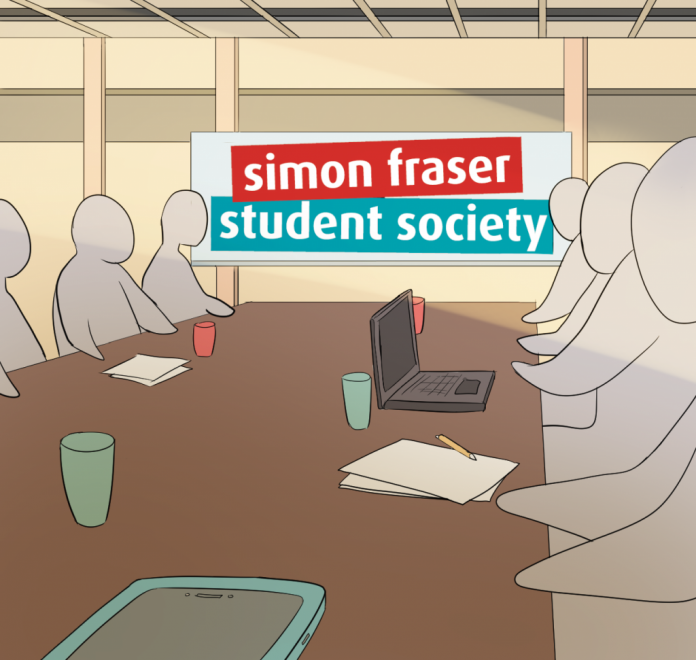
Image: Irene Lo

SFSS discusses the arrest of SFU alumnus

On December 16, 2020 the SFSS Council gathered over Zoom to vote on two motions regarding the arrest of a Black SFU alumnus. SFU security stated that the alumnus did not comply with COVID-19 guidelines and they asked him to leave. After refusal, security called the Burnaby RCMP. After several minutes of the officer allegedly engaging in verbal de-escalation techniques, a physical altercation ensued between the alumnus and officer, leading to the alumnus being pepper sprayed, tasered, and arrested. The SFSS expressed their belief that this situation involved racial profiling, citing that “this is not an isolated incident, and racial profiling incidents like this one have occurred many times before on our campuses.” 

Motion 1 proposed that council members, in support of the SFSS’ anti-racism efforts, “sign onto and support a letter by Black SFU staff and allies to condemn the violent arrest of the Black SFU alumnus and call for an apology [of the] escalation that led to this violent arrest.” Motion 1 passed with 34 votes in favour, 3 opposed, and 1 abstained. Council members agreed that SFU should be a safe space for its community. They expressed their support for BIPOC students and the SFSS’ statement stating that “security did not engage in proper de-escalation techniques, according to witnesses.”

Motion 2 condemned the Board for excluding Council from drafting their statement and argued that the SFSS’s statement contained “factual errors and omissions.” This motion called for strong policy changes and responses. It suggested that the SFSS should retract or amend the statement. Motion 2 failed with 23 votes opposing and 5 votes in favour. During this point of voting, several council members had left as the meeting had gone overtime.

Motion 2 was met with controversy as it opposed Motion 1. Most members felt that the information presented was accurate based on video evidence and that the SFSS was justified in creating the statement. 

SFSS President Osob Mohamed, opposed Motion 2 and assured attendees that all information in the SFSS’ statement had been backed up with video evidence and communication with Director of Campus Public Safety, Andrea Ringrose. Mohamed claimed that “there were no factual errors in [the SFSS’s] statement” and that omissions were made only in instances when the SFSS “did not feel comfortable speaking on anything that [they] did not have facts on.” 

Student Union Representative of Political Science, Helen Pahou, expressed understanding for the motion but “[could not] agree that there was misinformation in that statement” due to video evidence of the alumnus being mistreated by campus security.

In favour of the motion, Student Union Representative of Philosophy, Tony Yu assured participants that “nobody wants to say that racism isn’t a problem or that the intention of [the motion was] intent on saying that racism [ . . . ] and threats against BIPOC people aren’t an issue.” Yu explained that the motion aims to “keep a sort of accuracy in [their] accounts of what was going on.”

At the meeting, Joshua Fang shared that he was at West Centre Mall for a portion of the incident and was shocked reading the SFSS statement as it was different from what he saw that night. Fang expressed that although he did not agree with Motion 2, and did not wish to advocate for unnecessary force, he believed that “some sort of increased accountability would be beneficial.”

The council meeting had been extended multiple times, lasting three hours. Scheduled discussion regarding tuition increases, the P/F petition, and the DSU online learning survey were postponed to the next meeting. The next council meeting is to be determined for the Spring 2021 semester.

The full meeting can be found on the SFSS’ YouTube channel.

What Grinds Our Gears: My butter chicken should have chicken

0
Why do meat dishes only come with a couple pieces of meat? PHOTO: Charles Deluvio / Unsplash

Here’s the thing with Indian food: It’s delicious and I love it. It’s also pretty expensive (at least in Vancouver). If I’m going to pay $16 for a plate of butter chicken, I would love it if there were more than three pieces of meat. 

That’s not even an exaggeration. Ok, maybe a little one, but there legitimately aren’t more than five chunks per dish. Over the last few years, the number of actual pieces of meat has been going down but the prices have only been going up. Somehow, Indian restaurants think that substituting meat for sauce makes up for the price.

So now I’m drowning in more sauce than I know what to do with. It completely throws off the ratio of meat to naan, making my meal much more disappointing than it should be. 

Vegetarians out there may think this doesn’t affect them, but no one’s safe! They’ve also gotten to the paneer.

Higher prices for less substance — I knew capitalism was bad but did it have to get to my Indian food?

Telling students to take care of themselves ignores root issues

1
We can’t simply “relax” when we’re plagued by larger stressors. ILLUSTRATION: Siloam Yeung / The Peak

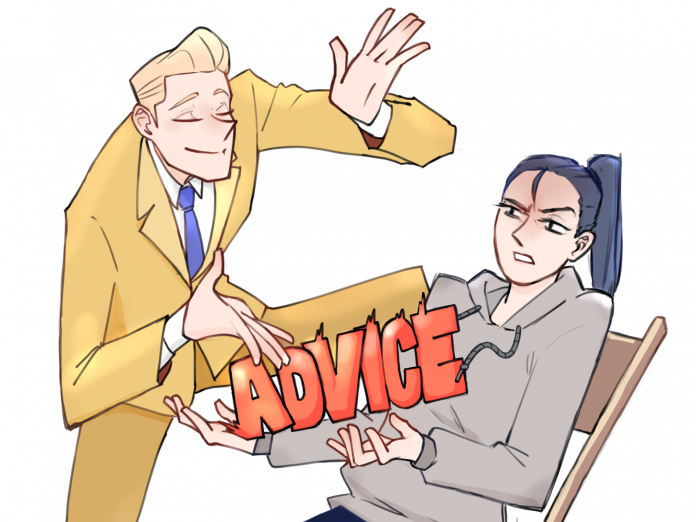
A common grievance of being a student is putting up with all kinds of unsympathetic advice. It’s heard everywhere from our professors, our parents, and even our institution’s president. It’s easy to wish students well and suggest they take care of themselves, as if calling on a series of magical words will make them perk up and focus. But they don’t work, even on a good day. They’re especially meaningless when they’re followed up by deadlines, Zoom calls, and other academic stressors. School can’t exactly just stop happening, but without a tangible effort to make these times easier, the sentiment feels rather hollow. 

Outside of being relegated to Canvas now, everything is still business as usual. I probably won’t graduate on time because the hardships of distance education mean I have to take fewer courses per semester. On top of that, my entrance scholarship only applies if I take a certain number of courses at once. To my knowledge, SFU hasn’t changed the terms of that agreement despite this being an entirely different university experience. I’m too busy to partake in the self-care people preach about — but hey, at least I got an email telling me to spend time in nature and take a break from my phone.

Students aren’t at fault for not having time to relax or go for walks. Many of these things are privileges. Alongside their studies, some students work in essential positions that they risk their lives to fill. Some care for vulnerable family members and can’t afford to take much-needed breaks. Is it really a surprise that some students are just disappearing from online school outright, ghosting Zoom calls and discussion boards alike without explanation?

I understand we’ve had over nine months to adjust to the situation, but we are still living through a literal pandemic. It’s hard to adjust when SFU isn’t making things much easier. Mentally, I can’t afford much, and few people can. We don’t have control over what stressors we take on, and many of them can’t be simply put out of mind by self-care, which feels more like a luxury than a solution these days anyway. Sometimes, all you can manage is getting out of bed. Sometimes, that has to be enough. 

These hollow well-wishes are lackluster and unrelatable in the best of times, and these are not the best of times. If students can find the time to go for walks and cut down on screen time, that’s definitely something to take advantage of. But for many people, that’s a privilege. If universities could acknowledge this privilege, maybe they would be more lenient with, for example, reinstating compassionate grading schemes, redefining what it means to be a full-time student, and even giving students more days off — like they’re petitioning for over at Purdue University. Until then, I’ll be using what little time and energy I have to keep my head above the water.

Connection between students and SFU admin needs to improve

0
If students aren’t consulted, who is the school serving? PHOTO: Annie Bhuiyan / The Peak

It seems like SFU follows a blueprint for addressing student concerns. Most of the time this consists of broken communication through emails, administrative statements, and social media posts. Occasionally, students even get to ask questions at Senate meetings or voice concerns at town halls. However, more often than not, it feels like students are left to their own devices and need to vocalize their concerns through letters, petitions, or social media campaigns. This lack of connection needs to change and it starts with working harder to include students in decision-making processes.  

SFU’s lack of Indigenous inclusivity regarding reconciliation efforts, such as with the upcoming First Peoples’ Gathering House project, shows exactly how little the administration truly acknowledges its student voices. Other than two First Nations Student Association (FNSA) members and a guest, Indigenous students were not permitted to attend this past November’s Aboriginal Steering Committee (ASC) meeting. It is significantly counterintuitive that a project intended for student use is being discussed without student input. This general lack of Indigenous consultation is a recurring issue with the administration. How can the SFU administration promote inclusion with students when the very voices that need to be heard are blocked from speaking? 

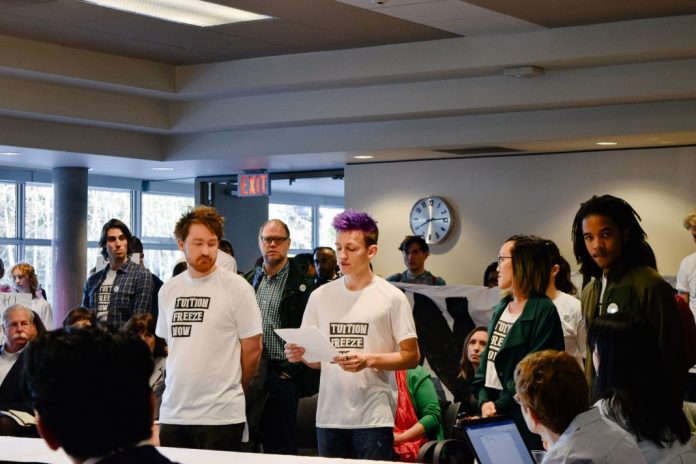
It’s also important to mention that SFU’s tuition hikes have been a major concern for students, but these concerns have yet again been poorly addressed or dismissed. As a result, student-led initiatives like Tuition Freeze Now and the C19 Coalition have emerged to advocate for concerns that the administration seems to neglect.

Because of the administration’s failure to properly communicate with students, the burden falls on students themselves — the ones who pay thousands of dollars in tuition fees and have to shoulder uncompassionate administrative decisions. Student tuition money fuels the administrative staff’s paychecks, so better communication and inclusion feels like the absolute bare minimum. Especially considering that all decisions the administration makes directly impact students. 

Taking into account these facts, there’s no question that the connection between SFU’s administration and students is poor and needs to improve. While I understand that remote learning can make implementing virtual communication tricky, there has been plenty of time for improvement in addressing student concerns with two online semesters having passed. Additionally, discrepancies in digital communication would not be so inefficient if SFU had implemented the proper infrastructure in the first place.

As a student impacted by this disconnect, I can see that there are many things that should change. One of them includes staying away from performative statements (like SFU-wide emails) that do very little to genuinely alleviate student concerns. There should also be increased inclusion of student voices before final decisions by admin are made. Student concerns could be avoided altogether if SFU could take on a more equitable approach and view students as equals rather than thoughtless funders. 

Including students in conversations regarding administrative decisions through methods such as referendums, online polls, or more open meetings is a step in the right direction. After all, where is SFU’s community without its student voices?

Victims’ statements should be believed

0
Statistically, victims are most likely telling the truth. PHOTO: Cristian Newman / Unsplash


CW: Discussion of sexual assault, rape, policy brutality.


In 2019, I sat in a room at the police station and told an officer about my sexual assault. “Why didn’t you report this sooner?” he asked me. I said I was scared. He asked me why. When I couldn’t get the words out, he raised his eyebrows and moved onto another question. I knew, in that moment, that although I was a victim of a crime, I didn’t stand a chance when it came to having that fact recognized. But I should have. 

Rape against women was first considered a “property crime,” meaning that the real offence was the rapist had robbed the woman’s husband or father. It was an act of theft, rather than one of violence. It took until the 1970s for it to be seen as a crime against women, and for marital rape to be recognized. Though it was progress, the system remains flawed. In 2014, a judge asked a rape victim if she had tried closing her legs. Until 2003, Philadelphia’s sex crimes division was referred to as the “lying bitch unit.” Even in my case, though one in every five women experience sexual violence, I was met with incredulity from the officer I spoke to. It didn’t matter that the percentage of false reports of sexual assault is between 2–8%. It made his job easier not to believe me.

That’s the problem right there: it is so much easier to not believe victims. People have this unquestionable belief in people they know and people in power. When a stranger accuses someone you care about of a harmful action, it’s easy to not believe the stranger. It’s hard to reckon with an allegation like this when you trust the person being accused. But when someone insists that the abuser is a “good guy,” all that says is that the abuser never harmed them — not that the abuser never harmed anyone. 

It gets worse when it comes to law enforcement. We’ve been taught that the police are supposed to be the good guys. They’re supposed to keep us safe. So for people who grew up with privilege and learned to call the police if they needed help, it makes sense that they wouldn’t want to believe that police are the ones doing the brutalizing. Even when it comes to the recent incident at SFU where the RCMP arrested a Black alumnus, there are people who instinctively believe that the arrest was justified. It does not matter to them how violent the arrest was. It does not matter to them that there have been countless pleas for campus security to stop calling the RCMP on students who are Black, Indigenous, or people of colour. People who grew up being told that the police system is good will likely continue to believe that because they cannot handle their worldview being shifted — but reflection on this is vital.

Aside from looking past their own personal experiences, people must examine their own prejudices. Victims of sexual assault, upon speaking about it, are often hit with a barrage of victim-blaming questions, including “What were you wearing?” and “Why did you drink so much?” These questions assume that the onus is not on their abuser for deciding to cause harm in the first place. These types of preconceived notions only perpetuate the problem.

Accepting that people are not who you thought they were is a difficult thing to do. But what’s more difficult is being a victim and reckoning with people telling you, directly or indirectly, that your words mean nothing to them. That you need more than your story and statistics to prove your point, when all your abuser has to do is exist. Victims need to be believed, no matter what.

Visit SFU’s Sexual Violence Support & Prevention Office and the SFSS Women’s Centre for more information and resources on sexual violence.

A diary of what I did during winter break

0
PHOTO: Nick Fewings / Unsplash

Day One (December 17)

Dear Diary,

Today I did the laundry that’s been piling on my chair for the last two weeks while pretending I haven’t been wearing the same sweatpants with a questionable stain on the ankle for three days straight. Turns out there was a $300 textbook under those clothes that I opened maybe once. Out of sight, out of mind? Who am I kidding? The textbook’s contents were never on my mind at all.

I also prepared a sourdough starter to leave overnight! Baking bread connects me to the bloggers who share their life stories before their recipes and I almost feel less alone.

Day Two (December 18)

Dear Diary,

Making bread is much more boring than I thought it would be. It took five hours and 47 minutes for the dough to rise. I watched it rise with YouTube conspiracy videos playing in the background. Who would’ve guessed that Robert Kardashian faked his death and became Ted Cruz, who is the actual Zodiac killer? I couldn’t make this shit up.

Now I’m sitting on the floor while my bread bakes. I’ve been googling why popcorn ceilings were made. I think there’s a face in mine, right above the oven. It’s kind of creepy. Hey, Siri, what are popcorn ceilings even made of? Are they sentient?

Day Five (December 21)

Dear Diary,

Today I walked to the store to pick up some vegetable stock so I can have soup with my bread. I decided to count the layers on my onions as I learned from YouTube that the Queen may be a cannibal, and apparently Finland may not actually exist.

There were 11 and 12 layers on the ones I chopped, respectfully. 

I also discovered there’s 11 cloves in my garlic, all of which I then minced while dissociating. Now I have to find another recipe that calls for at least eight cloves of garlic. 

Note to self: never again eat a spoonful of raw garlic “just to see.” Bad idea.

Day Eight (December 24)

Dear Diary,

Today I learned the taxonomic classification of all the birds that keep landing outside. I started naming them, too. My favourite is Ted Crows, the varied thrush, because it looks like he’s wearing a little necklace. I think he has a thing for Princess Screech, the robin.

Also, I know you’re not supposed to try to psychoanalyze anyone without a degree, but I really think my cat has narcissistic personality disorder. I’m worried. Last night, she looked right at me as she dipped her paw into my cup and then smacked my Lego Tim Horton’s off the desk. I spent two and a half hours building that with “Lego House” by Ed Sheeran on repeat, and she looked so smug destroying it in two seconds. 

It’s alright, though — I’ve got garlic bread!

Day ??? (I think it’s January now but don’t quote me on that)

Dear Diary,

I made carrot, zucchini, and raisin bread. Now I’m sick of bread. At least the face in the popcorn ceiling seems to be smiling about it. 

I was going to do laundry yesterday, but then I saw Ted poop on somebody’s car windshield just after they got in and it’s the most entertaining thing I’ve seen in weeks. Then I got too distracted when four firetruck red cars drove by in a row. Is that an omen?

I have to go — I’m on the seventh season of Supernatural now and I’ve got a cat begging for my attention. Not my cat, of course — she’s since taken over my room and claimed my bed as her own. This one is just another neighbourhood cat I’ve adopted since classes got out. I’m thriving.

COVID-19 vaccines approved and distributed to Canadians

1
PHOTO: Hakan Nural / Unsplash

Canada has approved Moderna and Pfizer-BioNTech’s COVID-19 vaccines and has begun distributing them to Canadians. BC “hopes to have vaccine[s] available for all those who choose to [be] vaccinated by the end of 2021,” according to the BC Center for Disease Control (BCCDC) website. The COVID-19 vaccine will be free for all Canadians who wish to have it. 

The Moderna vaccine is currently approved for Canadians age 18 and up while the Pfizer-BioNTech vaccine is approved for people age 16 and up, reflecting the ages used in each respective trial. 

Distribution will be done in phases, beginning with residents and staff in “long term care and assisted-living residences,” in addition to “health care workers providing care for COVID-19 patients in settings like Intensive Care Units, emergency departments, medical/surgical units and paramedics.” Remote First Nations communities are also in the BCCDC’s first group to be vaccinated and they are predicting this group will be vaccinated by February. 

The BCCDC is aiming to vaccinate the second group from February to March. This will include “seniors age 80 and above,” along with “Indigenous elders and Indigenous seniors age 65 and above, people experiencing homelessness and/or using shelters, provincial correctional facilities, adults in group homes or mental health residential care, long term home support recipients and staff, [and] hospital staff.”

Both vaccines require two injections in the muscle of the upper arm in order to reach full effectiveness. Moderna’s second dose is required one month later while Pfizer-BioNTech’s second dose is required 21 days later. Dr. Supriya Sharma, Health Canada’s chief medical adviser, told Global News that a single dose of the Moderna vaccine will achieve 80% effectiveness against COVID-19, while the Government of Canada reports that a second dose will increase effectiveness to 94.1%.

Both of these vaccines are made with mRNA; the Government of Canada notes that “mRNA vaccines teach our cells how to make a protein that will trigger an immune response without using the live virus that causes COVID-19. Once triggered, our body then makes antibodies. These antibodies help us fight the infection if the real virus does enter our body in the future.” 

After Canadians are vaccinated, there are questions around what mask-wearing and physical  distancing protocols will look like. The United States’ CDC website notes that “while experts learn more about the protection that COVID-19 vaccines provide under real-life conditions, it will be important for everyone to continue using all the tools available to us to help stop this pandemic, like covering your mouth and nose with a mask, washing hands often, and staying at least [six] feet away from others.” 

Reported side effects during the clinical trial of Moderna and Pfizer-BioNTech vaccines were mild to moderate, according to the Government of Canada. They include “pain at the site of injection, body chills, feeling tired, and feeling feverish.” More severe side effects are rare and may be linked to pre-existing allergies. The Government of Canada suggests that Canadians speak with their healthcare practitioners about health conditions and allergies before receiving the vaccine. 

The potential for long-term side effects are unknown but are currently being studied by Moderna and Pfizer-BioNTech. Allegedly, they plan to continue monitoring clinical trial patients for the next two years and will communicate with Health Canada about any findings. 

Dr. Sharma also noted that the Moderna vaccine is more accessible than Pfizer-BioNTech’s because it doesn’t need to be stored at -70°C and can be stored in standard freezers.

SFU alumni reduce electric vehicle battery waste and provide renewable energy to remote Canadian communities

1
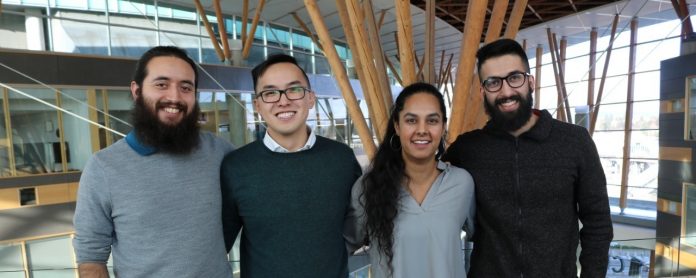
Photo courtesy of SFU News. Pictured left to right, SFU alumni Gabriel Soares, Edward Chiang, Sumreen Rattan, and Gurmesh Sidhu.

Over the past several years, the popularity of electric vehicles has steadily increased. This is due to the low cost required to run and maintain them, as well as the low environmental impact compared to gas-powered vehicles which rely on extracting and processing fossil fuels. As the demand for electric cars rises (sales of electric vehicles surpassed 2.1 million in 2019), their market is projected to dramatically increase. Though the pandemic may affect this projection in the immediate future, it’s clear the shift away from vehicles that run on fossil fuels has begun. However, as electric vehicle production increases, so does the concern over safe electric vehicle battery disposal.

Following the creation of an electric vehicle race team, Team Phantom, SFU alumni Edward Chiang, Sumreen Rattan, Gurmesh Sidhu, and Gabriel Soares founded Moment Energy (Moment) in 2019. They graduated from SFU’s Mechatronic Systems Engineering program and also participated in the Coast Capital Savings Venture Connection entrepreneurship program.  

Moment is dedicated to repurposing electric car batteries for energy storage to counteract the limits of intermittent renewable energy and facilitate the transition to renewable energy sources. Their initiative “prevents the mining of new lithium or the production of new lithium-ion batteries [ . . . ] [and] extend[s] the value and lifetime of the original battery.”

During an interview with The Peak, Sumreen Rattan attributed the Coast Capital Savings Venture Connection program and co-op (SFU Surrey’s interdisciplinary entrepreneurship program) as a source of confidence when starting the cleantech company. Moment participated in the Alaska Airlines Environmental Innovation Challenge, the Next 36 program, and won several awards including Royal Bank of Canada People’s Choice, the Scotiabank Outstanding Contribution to Society Award, the Clean Energy Prize, and the Connie Bourassa-Shaw Spark Prize. In November 2020, they won second place at the Zero Waste Innovation Hackathon.

At the University of Washington’s Alaska Airlines Environmental Innovation Challenge, university students formed teams to pitch their business plans and prototypes as environmental solutions to 250+ judges. Moment pitched their initiative of reconfiguring electric vehicle batteries for energy storage.

“We pitched the concept of having a circular economy or end-of-life batteries that come out of electric cars, and we really focus[ed] on the sustainability aspect of making sure these batteries aren’t prematurely recycled or sent to landfills. The really cool thing about a circular economy [is that it] takes [the battery] from being used in an electric car to being used in a second-life application with Moment, and then finally being sent to a recycler at the end of its life cycle.”

While recycling and repurposing batteries are both crucial in the circular economy chain, Rattan explained that reusing batteries prior to recycling them maximizes their full potential and reduces toxic waste. After Moment “reconfigure[s] the voltage level [and] add[s] in digital safety components, a battery management system, an enclosure, and additional things,” their repurposed batteries maintain 60–80% of their original capacity and reduce diesel dependency.

Explaining this further, Rattan said, “Let’s say that the Nissan Leaf battery was 24kWH [ . . . ] unless it comes out of the car, it’s usually between 16–18kWH, and then you can repurpose it.”

According to Rattan, “When these electric car batteries come out [of] the car, a lot of them still have 80% of their original capacity left, so that means that you can still use these batteries for 8–10 years or even more than that in a second-life application.”

“After [the batteries are] done in the repurposed second life, then we feel that it’s the best time for these batteries to be recycled [and] extract whatever materials are left [ . . . ] to build more batteries.”

When asked about the repurposed electric car batteries’ life expectancy, she explained that further tests are needed to determine the batteries’ longevity. She acknowledged that determining their longevity occurs on a case-by-case basis. 

“The number of years they survive in a second life completely depends on how the batteries are used [and] in what sort of application it is [in]. Based [on] some rough estimates, we can say that they would last between 7–10 years, and if it’s a low [performance] application, it can last longer.”

In August 2020, Moment collaborated with a University of Manitoba professor to start their pilot project at the Canadian Hydrokinetic Turbine Test Centre (CHTTC), a microgrid facility located in Seven Sister Falls, Manitoba that tests renewable energy set ups. 

“We basically sold them a pilot unit, which is being used to store solar and hydrokinetic power. They’re using our batteries to test the viability of hydrokinetic power.”

The project utilizes Moment’s 6.3kWH energy storage system. Rattan expressed her gratitude for the pilot because the data details their batteries’ performance. 

“On our end, we’re able to see how our batteries are performing, how they’re responding to being charged and discharged, so it’s really useful for us.”

Beyond the CHTTC, she mentioned that she is excited for this collaboration to lead to future initiatives with the UManitoba professor.

Moment also attributes their pilot project’s success to their supply-chain relationship with Nissan North America, who supplies them with used Nissan Leaf batteries to reconfigure and takes care of the spare car parts excluded from the reconfiguration process. Nissan’s support has helped Moment establish a good rapport with their clients. 

When reflecting on Moment’s relationship with Nissan, Rattan explained, “We’re excited that we’re the only Canadian company working with Nissan, which is a huge accomplishment for us.”

In preparation for transitioning remote communities from diesel generators to renewable energy, Moment analyzed case studies on remote Canadian communities and reconfigured the Nissan Leaf batteries for use in outdoor cabins and resorts. They are working in consultation with remote and Indigenous communities throughout British Columbia in order to “understand their needs, where their power infrastructure is lacking, and help bring in an environmentally friendly solution.”

“Two of our primary goals as a company are to help increase the transition to renewable energy and also reduce the world’s diesel dependency.”

In contrast to diesel generators, which are loud and pose a health concern for others, Moment Energy’s repurposed Nissan Leaf batteries are a cheaper alternative to lithium-ion battery storage and release no emissions. 

“We want to be a company that’s known for repurposing second-life batteries, a company that cares about the environment, cares about creating a circular economy for electric vehicle batteries, and one that’s here to help the transition to renewable power.”

Your Weekly Horoscopes Jan. 11–15

0
An illustration of a girl with long flowing hair. Astrological signs and stars shine around her.
ILLUSTRATION: Marissa Ouyang / The Peak

Aries: You just don’t feel alive anymore, Aries. After learning every routine on Just Dance and burning the polaroids of everyone who wronged you in 2020, you need more spice. My recommendation? Get a COVID-19 test just to feel something again. The nussy is a real thing. 

Taurus: You are about to receive a call to action, Taurus. The universe is once again calling on you to act as the winner in an argument started on a Reddit thread. Victory will be even sweeter when you retrospectively act it out in the shower.

Gemini: Some say that the happiest moments of our life were at the Scholastic Book Fair. While the rest of us were buying massive erasers, you were arguing with your teacher about buying the Twilight series in the second grade. Joke’s on them. You wound up with a vampire kink, anyway. 

Cancer: I hate to tell you this, but you’re struggling to do even the most superficial self-care. Your candle wicks need trimming. Your bath bombs aren’t the only thing crumbling. And you don’t sound poetic preaching on your story when everyone speed-clicks through the videos.

Leo: Now is a time of cleansing, Leo. Cleanse your aura with Raid. And for the love of God, delete your TikTok. You can’t do the ass shake in the 5 Seconds of Summer trend, and that’s okay. Just don’t make the rest of us watch you try.

Virgo: 2021 is here, Virgo, and it’s going to be your year. You’re waking up early and, most importantly, eating healthily. This year, you’ll feast on the souls of every group project member who has ignored your colour-coordinated master Google Doc. You’ll never go hungry again. 

Libra: You miss the pre-pandemic world, Libra. But most well-adjusted people don’t sit on the floor pretending they’re at an “indie concert venue” that is just someone’s studio apartment in downtown Van. And they definitely don’t make the experience more real by playing bad Mitski covers. But at least your tears are real, right?

Scorpio: The CSIS agent that tracks your search history just called. Uh, your horoscope was supposed to be something like “keep your head up” but I think the advice you really need to hear right now is this: Do not attempt to give yourself an ass tattoo of an anime girl. Please.

Sagittarius: Bumblebees have hair over their eyes and must comb through everything they see. You clearly aren’t a bumblebee, given how much you missed from last semester’s readings. I would give you some study tips, but now you’re just imagining life as a bee. At least they don’t have to pass university.

Capricorn: This week is going to be . . . well, mediocre at best, Capricorn. Sure, you’ll establish yourself as the baddest bitch in your Zoom classes, but most bad bitches don’t cry while watching anime on Saturday nights. Let’s face it — you’re not the main character. You’re a poorly drawn background character without a nose. 

Aquarius: The stars are speaking to you Aquarius, and they’re begging you to pick a damn aesthetic. You cannot be a cottagecore e-boy dark academia goth skater witch, okay? Your sweater over a collared shirt, flower-patterned skirt, Doc Martens, and pink streaks just don’t work — unless you’re a Taurus. Sorry.

Pisces: The hardest part about dating is learning about red flags. Red flags? Checkered flags at the racetrack? They’re the same thing to you, no? Side note: racetracks have racecars. Racecar is a palindrome. Like you, palindromes wouldn’t care if a relationship started and ended the same: badly. Now, about those flags . . .