Home Blog Page 390

Catherine Dauvergne begins term as SFU’s new Vice-President, Academic and Provost

0
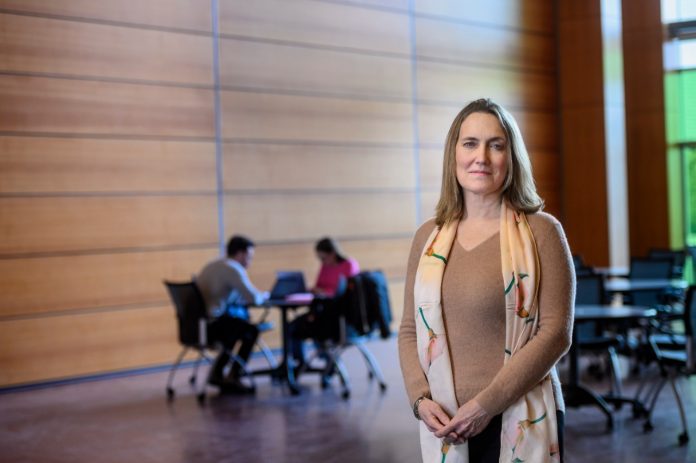
Photo courtesy of SFU News

SFU has announced its new Vice-President, Academic and Provost, Dr. Catherine Dauvergne. Taking over for Dr. Jonathan Driver, Dauvergne’s term will run from November 23, 2020 to August 25, 2025.

In an interview with The Peak, Dauvergne discussed her role at SFU. “What motivated me to accept this position is really that I’m very excited about the directions that SFU is moving in at the moment and the priorities that President [Joy] Johnson has set.”

According to Dauvergne, her role at SFU involves “most [of the] ways that students interact with the university: athletics and recreation is in this portfolio, residences, [and] academic planning.” She is the senior academic officer at SFU who will work closely with faculty, deans, and oversee all undergraduate and graduate academic programs.

Prior to this position, Dauvergne was on the faculty at UBC’s Allard School of Law for about 13 years.  While there, she took on certain administrative roles such as Associate Dean of Research and Graduate Studies and Dean of the law school.

Dauvergne’s background is in refugee, immigration, and citizenship law which she approaches through a feminist perspective. She has been named a Fellow of the Trudeau Foundation and was granted the Queen’s Counsel designation in 2019 for her contributions to Canadian discourse. Dauvergne is also a published author with multiple works that are “read and taught across disciplines,” according to the Trudeau Foundation.

During her last five-year term at UBC, Dauvergne “implemented an experiential learning curriculum, developed a post-graduation debt-relief pilot program [ . . . ] and led the implementation of Truth and Reconciliation Commission calls to action within the school,” according to an SFU news release.

“Some of the things that I’m most excited about are the big challenges around work to decolonize and indigenize the university. That’s enormously complex and not easy work but it’s really important and meaningful, and I’m very excited to have a role to play there. I’m also really interested in the direction that SFU has set around equity, diversity, and inclusion,” said Dauvergne.

Like many students and faculty at SFU, Dauvergne is also experiencing challenges with the shift to online learning and working. She said, “We know this is really difficult for students and [ . . . ] faculty and I’m immensely proud of the university community for keeping things going.” She said it has been “hard to join a new organization when there’s no capacity to actually get to know people, to attend student events, to go to meet faculty.” She added, “It’s a very strange time.”

Dauvergne noted that “one of the biggest concerns with having almost all of our learning in an online setting is just trying to ensure that both students and faculty have the things that they need to move forward.”

She expressed hope for the coming semesters and reported that “the number of people who will be on campus will almost double in the semester that starts next week and so we’ve learned about appropriate safety protocols and we’ve managed to have in-person learning without any [COVID-19] outbreaks.” Dauvergne added, “We’re encouraged by the progress we’ve made so far and we’re looking forward to some expansion.”

According to Dauvergne, “[SFU administration is] already starting to talk about how it is that we will transition back to an in-person environment. I’m hoping that that’s sometime within the next year.”

Five Zoom backgrounds for the new semester

0
PHOTO: Alex Masse / The Peak

With online school continuing its reign — and potentially outlasting Putin’s — it’s high time we spice up our Zoom calls. What better way than the custom background feature? Here are five potential backgrounds to give your Zoom self an extra . . . je ne sais quoi. Because hey, we’re still stuck inside. Let’s try for some pity laughs from our equally miserable peers.

  1. A forest, so you can pretend you’re going outside

(PHOTO: Lukasz Szmigiel / Unsplash) 

Remember the great outdoors? I do, hazily. It went on forever. There were trees and other wild things. You could pick flowers, and catch bugs, and do all the things we do in, like, Animal Crossing. But it’s real. Who knew they made Animal Crossing a real thing? Just remember to bundle up and pack bug spray. You can’t respawn if a deadly bug lunges at you out here.

2. A SPOOKIER forest, so you can pretend you’re going outside but with a bit of angst

(PHOTO: Simon Wijers / Unsplash) 

Did 2020’s quarantine transform you into someone unrecognizable through radical haircuts, dye jobs, and wacky little stick-and-pokes? Are you radical and hardcore now? Boy, do I have the background for you! Show your peers that you’re a little ~artsy~ in the best possible way. But still, bundle up, and maybe bring some bug spray. Not that it’ll protect you from the things in these woods.

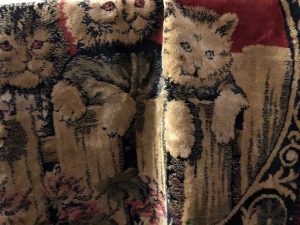
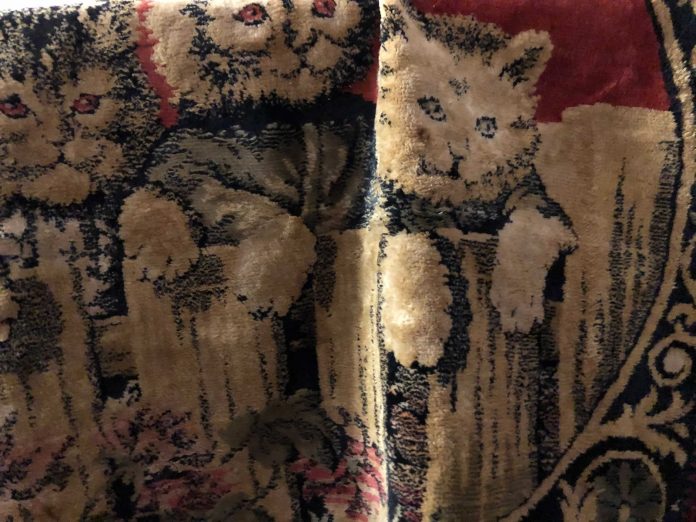
3. This cat tapestry heirloom 

(PHOTO: Alex Masse / The Peak) 

So, a few years back, my grandmother mailed me this lovely cat tapestry for my birthday. It’s faithfully guarded my bookshelf ever since. Lately, though, I think it wants more. I think it wants to be seen. Will you do it the honour of spreading its holy gospel? 

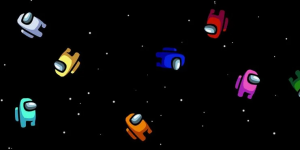
4. An Among Us background, so people know you’re out of this world!

(PHOTO: Courtesy of Pericror) 

Few things climb the ranks of pop culture’s consciousness like Among Us has, but apparently people really resonated with this intergalactic version of Mafia. With this background, you can make as many jokes about Impostor Syndrome as you want, and people won’t know if you mean that you’re insecure, wish you were being ejected out an airlock, or are planning a mass sabotage! Why not all three at once? Your head might even look like it’s being sucked into the void if you have dark hair!

5. The astral plane, because you simply aren’t even here 

(PHOTO: Jake Weirick / Unsplash) 

So, we aren’t physically meeting anymore. You’re on the fifth entry about Zoom backgrounds, so I’m sure you’ve noticed. But what if you’re not here on a physical, mental, emotional, or spiritual level? If your last brain cell has left this plane of existence, this is the background for you. Happy ascension. 

The SFSS’ leaders are doing their job

0
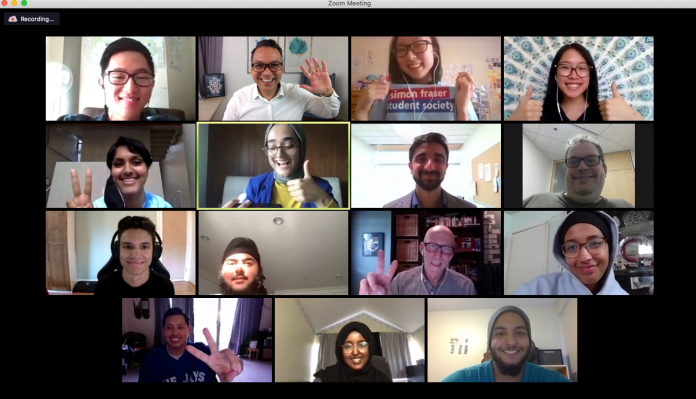
It shouldn’t be a problem that the SFSS is functioning properly. Screenshot courtesy of Simon Fraser Student Society via Facebook

To say that the Simon Fraser Student Society (SFSS) has received a lot of rightful flack over the years is an understatement. Cover-ups of assault allegations, votes to remove Black spaces and sustainability initiatives on campus, and presidential impeachments have plagued their administrations over the past few years. However, the current SFSS Board’s response to the violent December 11 arrest of a Black alumnus on campus is not one of those rightful times. 

I cannot offer better commentary on the violence than those who experience racism themselves. SFU’s Black Caucus states that they are “relentlessly violated by persistent anti-Black racism and state-sanctioned violence where [they] live and work.” Former SFSS President Giovanni HoSang has also written on the situation extensively. I can apply my experience, however, to the purpose of the SFSS as an organization.

When news of the incident spread, members of the SFSS were quick to address it. On Twitter, President Osob Mohamed condemned the actions of SFU’s security and their failure to act ethically. Vice President of University Relations Gabe Liosis publicly called for any information on the event as it developed. Several days later, the SFSS itself published a condemnation letter and suggested that SFU follow suit and take action on the systemic issue.

What followed the SFSS’ statement were waves of student pushback online, much of it claiming the incident was unnecessarily politicized and deemed racist. Petitions were even formed demanding that the SFSS be barred from making public statements without an extensive student consultation process, if they make any political statements at all. 

These vocal complaints directed at the SFSS fail to recognize two key things. The first is that, as elected politicians, their jobs are to represent the interests of the student population that voted for them, not the institution of SFU itself. Their jobs are inherently political. It’s an institution created by and maintained on politics. Any statement they make is inherently political, no matter what it is, as is the statement of any group of elected officials.

Second, when something like this happens on campus, it calls into question the safety and well-being of Black students, who already deal with the precedent of disproportionate police violence. This culture of racism isn’t new to SFU, either. It’s been statistically proven from SFU’s own diversity evaluations that just under 10% of Black individuals surveyed at SFU feel that they don’t need to change themselves to be heard and accepted at SFU. It’s no wonder; the leadership at SFU is largely white in contrast to the greater student body and staff. It’s quite literally institutional racism in action. 

Just like with any other politicians, it is the SFSS leaders’ responsibility to alert the student body of the incident as soon as possible, recognize how it impacts them and their safety, and make demands to SFU on what to do about it. If the SFSS were to wait two-to-three weeks to consult public opinion, find a supposed “unbiased” source to which these complaints often refer, and avoid any outside context and history, they would be doing a horrific job of representing students — especially Black students whose well-being is always in more jeopardy. The demands of these petitions essentially insist that the SFSS not do their job.

SFU Progressives, a student coalition that many of the SFSS’ leaders belong to, ran on a campaign of social progress that defends the needs of students who are underrepresented in SFU’s leadership and actions. They were voted into power because the majority of students who voted stood by their platform. Just because their statements don’t align with the opinions of certain students, doesn’t mean they aren’t representing the student body as a whole. Even if this commitment wasn’t part of their electoral ethos, they still wouldn’t be doing their job if they didn’t acknowledge the facts, context, and history of the incident and call it out for what it is. 

The job of the SFSS is to represent the needs and interests of students. Considering the arrest fits into a larger pattern of institutional racism and violence — both on campus and beyond — it is absolutely necessary for them to recognize this larger trend for the safety of Black students on campus. Let’s hope they continue to put SFU’s feet to the fire, and that sometime soon SFU will start to truly listen.

Top Ten reasons 2021 will be better

0
Very calm, very cool. Nothing wrong here. Illustration: Siloam Yeung / The Peak
  1. We have collectively learned the value of comfortable clothes

The importance of having comfy clothes can’t be overstated. Without crowded buses or stiff lecture hall seats to keep distracted from the potentially permanent jean imprints on our bellies, there’s no avoiding the suffocating nature of high-waisted jeans while hunched over. With an investment in warm sweaters, big-ass pants and winter socks, we can take 2020’s lockdown slob-chic look into the new year. After all, if we carry the spirit of a Kirkland 12-pack of Christmas socks in our hearts, it will be with us all year round. 

2. Podcast anecdotes are conversation fuel

With the cold weather keeping us tucked inside and desperately searching for human connection, there’s no better time to form a warm, comforting relationship with someone you genuinely care about . . .  a podcast host who doesn’t know you exist. After nine months of interesting and/or funny people whispering their life stories into your ears, we’ve got enough second-hand anecdotes and stories to carry through whatever amount of small talk 2021 throws our way. Just pretend that funny story happened to a real-life friend of yours, not some jerk with recording equipment. Because after all, podcasters are like our close friends. Right? Right?!

3. The handshake is DEAD!

My quarrel with handshakes is similar to my quarrel with the concept of Jesus Christ; I really like and admire the original meaning and intentions, but have its practitioners ever fucked it up. Handshakes are supposed to be a symbol of trust and mutual respect, but they’ve devolved into overanalyzed, pretentious, LinkedIn-spawn horseshit. How does the firmness of my grasp indicate how well I can do my job? How can I subtly wipe the sweat off my hands without a potential employer noticing? Did the ketchup-covered handshake I shared with my manager impact my (shockingly short) employment there? To hell with it all! 

4. Livestream shows as a medium have been perfected 

If you share my conflict of being an antisocial individual and wanting to see the world or whatever, you’ll appreciate the miraculous appearance of good livestreams. They were like a warm hug — one that appeared after I hadn’t felt human touch in eight months. Wow. 

Want to watch world-class events from bed? DONE. After nine months of troubleshooting bad mics and shoddy WiFi, online live shows are as seamless as Bruno Mars shifting from hopeless romantic to just hopeless. The world may be in a largely questionable state, but at least we’ve got great entertainment. 

5. We are STEPPING UP our interior design games

Have you been staring at the colour of your living space for so long you want to take your fingernails and scratch the paint right off the walls yourself? I know I have! After nearly a year of staying in my room each day, it seems like a natural reaction to switch everything up beyond getting those rave-lite TikTok lights. Like a mildly agoraphobic Beth Harmon, I drink chamomile tea every night and picture teal walls and a mid-century coffee table taking over my childhood bedroom. They’ll almost distract from the holes in the walls from my MCR posters of old.

6. A new Lorde album is on its way? Maybe??

I’ve never gotten into Lorde myself, but as an older, internet-perusing member of Gen Z, I know that a lot of people rely on this woman for relentlessly catchy cry-music to the greatest degree. If the lyric “I’ve never felt more alone / It feels so scary getting old” set to a pulsing beat doesn’t make you break out in adolescent stress-itches, I don’t know what will. It’s been four years since she released her latest album Melodrama (as the many Twitter accounts desperately tracking it will tell you), and it’s widely believed that this year will be The Return of the Queen. Start practicing your deep, strange vocal runs now; let’s hope some sad bangers are coming our way. 

7. Time to act on the shit we processed in 2020

The period is early March 2020 (no, I still haven’t gotten over it almost being March AGAIN). You can feel a bunch of worries and pressures and anxieties bubbling up inside you like a kettle of repression, but think if you keep moving, studying, talking, distracting, you won’t have to feel even worse by facing it head on. A week later, you are told it is unsafe to leave your house. The government tells you to stay home indefinitely, and suddenly, you can’t keep moving anymore. Whoops, was there supposed to be a joke in there? Anyways, 2020 was a year of being forced to confront and deal with your shit, and hopefully we’re all better off for it. Hopefully . . .

8. Award shows are going to be WEIRD AS HELL

Hey, remember when Parasite won at the Oscars last year? That was fantastic. Anyways, Aaron Tveit is the only nominee for the lead actor category this year at the Tony Awards, and I think that sets the tone for the rest of the virtual televised award ceremonies to come. How will Jason Derulo continue his tradition of falling down a flight of stairs? Either way, we were robbed of seeing Phoebe Bridgers show up to a fancy award show in a skeleton onesie. Hasn’t 2020 taken enough?

9. Dogs are THRIVING with everyone home more often

I don’t know if you’ve seen my dog Charlie lately, but he has been killing it. That new orange-purple collar makes the warmth in his eyes pop, and that happy little trot he’s been doing? What the hell is he trying to pull? Everyone wants to be like that pink bunny he carries around everywhere and be his best bud, and for good reason. No one is doing it like him. This year, with some wishful thinking, you too can be like Charlie.

10. Oh right, the vaccine. 

Some very dedicated people made a COVID-19 vaccine and it’s going to be widely distributed this year. I guess we should talk about it; it’s pretty exciting! Can you imagine being in a crowded room again? Perhaps you can attend a cult meeting on the AQ fourth floor, a house party ending in you losing a shoe and your friend, a quiet night in spent ruining your relationships with Monopoly? We will once again require excuses to avoid said gatherings. Ah, simpler times.

Broken New Year’s resolutions aren’t the end

0
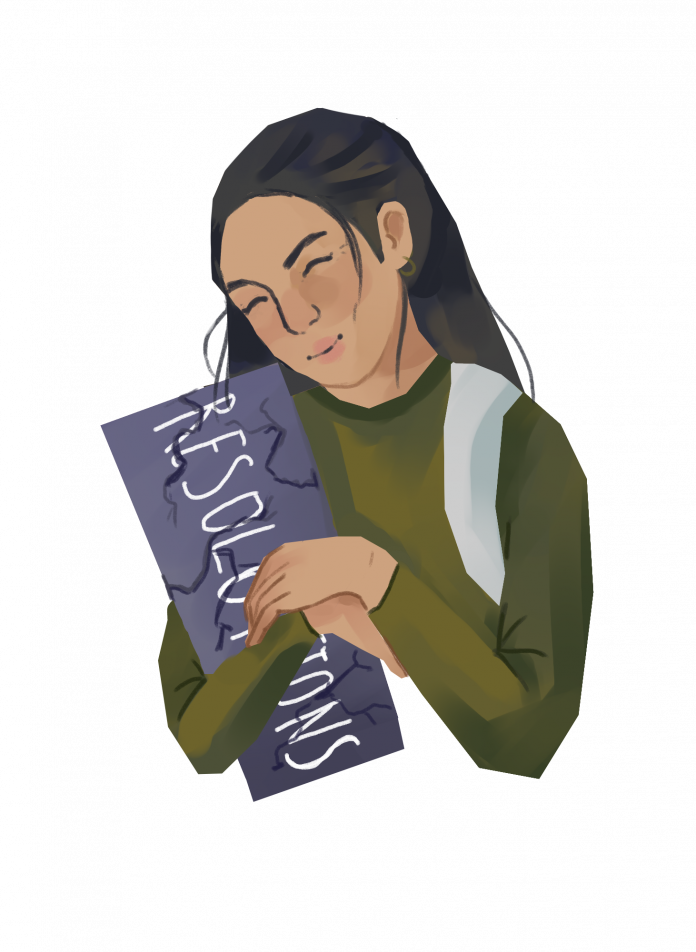
A mastery-approach practice is the better way to improve. ILLUSTRATION: Shaheen Virk / The Peak

In Ann M. Martin’s book, Karen’s New Year, Karen watches as her family makes — and eventually breaks — all of their New Year’s resolutions. Like Karen, this was the first time I had heard of New Year’s resolutions, and I felt her disappointment as she watched her brother forget to floss everyday and her best friend continue to bite her nails. As I finished the book, I remember thinking that surely it wasn’t hard to keep your resolutions, and that determination would result in my success.

That New Year’s Day, I made a resolution: write in my diary everyday. I think that resolution failed after a few weeks, if not days. I later realized it was so hard to keep it because I viewed it as a pass or fail situation, rather than a continual process of self-improvement. Instead of treating our goals like this, we should instead be embracing the possibility of broken resolutions, as they are not falls, but parts of our journey.

The theories of mastery-approach and performance-avoidance best explain this idea. Mastery-approach is a self-determined, personally-rewarding mindset about moving toward a goal and produces the highest percentage of success rates for achieving it. In contrast, performance-avoidance, a competitive mindset where rewards are received externally, moves away from failure and results in the lowest rate of success.

Common conceptions about New Year’s resolutions follow this idea of performance-avoidance. This contributes to an 80% annual unfinished resolution attempt rate. We make resolutions for a reason; we want to change a part of ourselves. Whether they were made because of tradition or just for fun, these annual promises can be a starting block for creating real change in our lives. Approaching these goals with a mastery-approach mindset would help change the outcome of these resolutions. This change would help us appreciate the effort and enjoyment of learning and improving, rather than defining our achievements by only meeting a goal.

My piano lessons helped me develop a strong, mastery-approach mindset in music. I learned piano due to my own self-determination, interest, and passion. My piano teacher praised my effort, rather than my successes. Her feedback did not deter me as I viewed her words as an opportunity to learn, not a means of finality. I measured my ability not in relation to others, but rather to my own goals. Because I wanted to learn piano for myself, others’ successes did not threaten me or make me feel like my musical journey mattered less.

Adopting a mastery-approach practice can be the bridge between bettering ourselves and still having fun. Instead of viewing New Year’s resolutions as a challenge or a race where one misstep can cost you your prize, we can view it as an adventure. By focusing on learning and self-improvement rather than just an end goal, we can appreciate all the joy and effort made in the process. From this, we won’t become discouraged when inevitable setbacks occur. We are not perfect, and our journeys to betterment aren’t either. 

No one is ever successful on the first try. Thomas Edison spent almost ten years developing and improving what would eventually become the electric lamp. As long as we are open to constantly improving, viewing a broken resolution not as an end but rather as just a brief interruption in our journey, New Year’s resolutions can hold a crucial and impactful change in our lives.

Vulnerable inmates in federal prisons receive COVID-19 vaccines

0
PHOTO: RODNAE Productions / Pexels

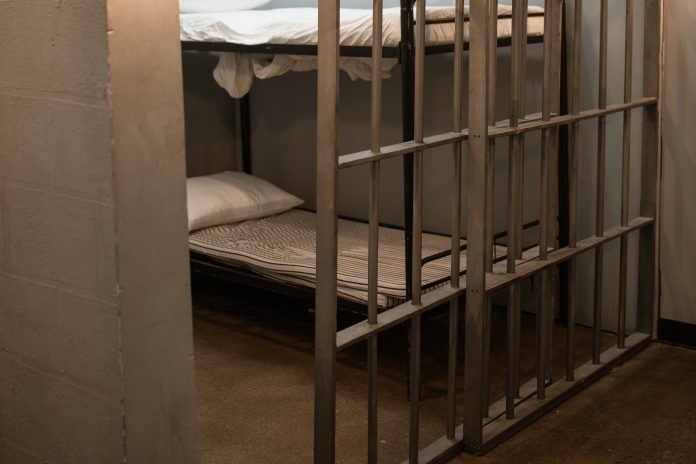
Canada has begun vaccinating at-risk inmates against COVID-19. Though there aren’t currently any active COVID-19 cases in facilities where vaccines are administered, the 

Correctional Service of Canada (CSC) explained that they chose these facilities “because they’re home to inmates deemed priorities for receiving the vaccine — namely the elderly and medically vulnerable.”

The CSC currently “expects to vaccinate approximately 600 inmates in the first phase” and stated that as more vaccines become available, all federal inmates will receive the vaccine, according to priority guidelines. However, there are mixed opinions on who is receiving priority vaccinations. 

Sherri Maier, who advocates for prisoner rights, stated in Global News that prisoners are more vulnerable because they’re kept in small spaces. She added that “they still have rights and they still deserve to be protected.”

Public Safety Minister Bill Blair also explained at a press conference that those who become seriously ill from COVID-19 use federal resources, such as hospital beds, and it would be best to “deal with those individuals at greatest risk of getting [COVID-19] and at greatest risk of having serious health consequences as a result.”

Others have stated that they feel as if inmates are being used as “guinea pigs.” 

Some Canadian politicians have also voiced concerns — but for other reasons. Opposition Leader Erin O’Toole and Ontario Premier Doug Ford have both expressed their disagreement with prioritizing vulnerable inmates ahead of other Canadians who are at-risk. Ford stated that vaccines should not be given to “the most dangerous criminals in our country [ . . . ] before we give it to our long-term care patients and most vulnerable.” Conservative MP Shannon Stubbs is also concerned with who is receiving the vaccine. She told Global News, “In the reality of limited supply, of scarce supply, what we are saying is that [long-term care residents and frontline health-care workers] should be put ahead of incarcerated inmates.” 

The CSC stated that their vaccination strategy aligns with the guidelines put out by the National Advisory Committee on Immunization and “is consistent with past public health situations, such as H1N1, during which a similar process was followed.” 

Anne Kelly, CSC commissioner stated in a news release that “the health and safety of our employees, inmates, and the public is a top priority for the Correctional Service of Canada [ . . . ] We will continue working with our public health partners, unions and stakeholders to roll out measures that help protect everyone during this public health pandemic.”     

COVID-19 vaccinations can be viewed on The Government of Canada’s tracker.

How TikTok helped me come to terms with my sexuality

0
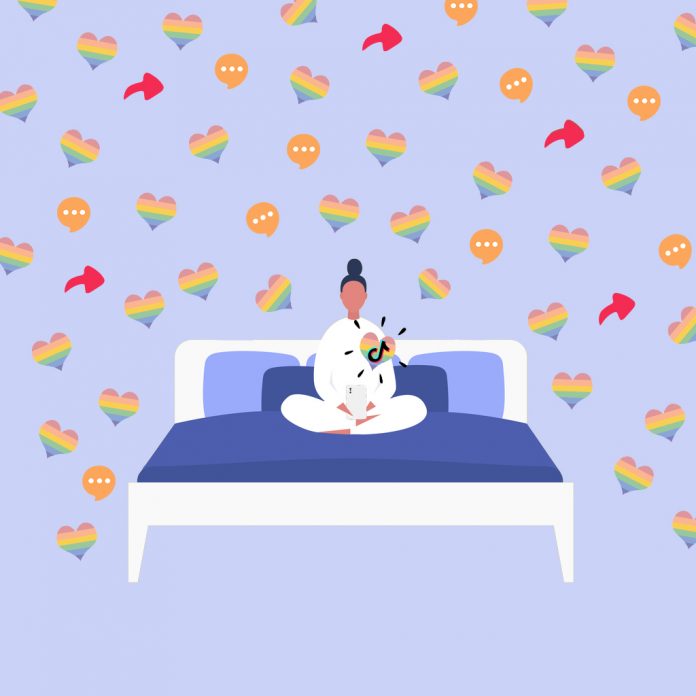
Illustration courtesy of Washington Post.

Growing up, sexuality was not a popular topic of discussion — I was rarely exposed to queer history, events, or content unless I personally sought it now. For this reason, from a young age, I’ve always felt cornered into traditional, cultural, and marital expectations. 

It wasn’t until I occasionally stumbled upon LGBTQ+ representations in television and film that I even started to question the possibility of not being straight. Even then, however, there’s only so much that can be conveyed through shows where a straight person is playing the role of a woman-loving-woman. 

Yet, most of my life has consisted of frustrations over men. I would ask myself, “Why am I so picky about who I want to date?” and “Why is it so hard for me to like a boy?” I should have known when I got Tinder and never swiped on anyone, that there was something a little gay going on with me. The onset of a Phoebe Bridgers obsession also should have been a sign. 

I digress. 

When the height of the COVID-19 pandemic hit Canada, I found myself succumbing to hours of mindless scrolling through social media just to keep myself occupied. I found that TikTok seemed to be a good distraction, especially for the relatability of some of the more niche videos. Eventually, TikToks created by other folks questioning their sexuality began to show up on my “for you” page. One thing led to another and soon, I was reading the lesbian master document at 2 a.m. 

For those unfamiliar with the lesbian master document, it is basically a gay sorting hat that goes into depth on common lesbian issues. It includes an explanation of compulsory heterosexuality (how heterosexuality is reinforced by a patriarchal and heteronormative society), and how it creates barriers for queer women and non-binary folk. Essentially, this document is an identity crisis support file for gay people. 

The lack of real-life advice and information from other queer folks was primarily what had left me confused and deeply unsure of my identity. I had always thought that I liked men, but at the same time, it had felt incredibly forced my entire life. Was I actually attracted to men, or was it just compulsory heterosexuality blinding me from the truth? 

For a long time, it felt like a struggle to identify any form of attraction. So when I came across TikToks where folks shared their own stories on discovering their sexuality, I started to realize that I was relating to a lot of the stories of women-loving-women — particularly those who talked about the role of compulsory heterosexuality. 

Since TikTok filters algorithms based on the content users engage with, I was basically being spoon-fed answers regarding my sexuality all at once. It was overwhelming. TikTok was the last source I expected to help me discover my sexuality. It was highly unconventional, to say the least.

I also saw TikToks where creators shared helpful resources — like the lesbian master document — that I otherwise would not have found, as well as shows and films with accurate representations of LGBTQ+ folks. Enthralled with so much new knowledge, I was seeing rainbows, new windows of self-discovery, and also some really bad shows. Couldn’t someone have told me that The L Word is kind of boring? 

I recall several points throughout my teenage years where I knew I was attracted to girls but was always too scared to put a label on it or even fully admit it to myself. There would be instances where I would think, “I definitely like girls,” but would quickly shut myself down because “well, I can’t be gay.” Now looking back, and having heard similar confessions from other queer people on TikTok, I am able to understand that this came from a place of internalized homophobia.

I can reframe for myself many of the aspects of my life that had always felt out of place, such as why I was always such a passionate ally. With this newfound realization, I feel that I can work on actively dismantling the internalized views and external expectations that once tied me down. 

Hearing other people express the same confusion I had battled with my entire life was comforting, finally allowing me to be honest with myself and confront the big questions I had always avoided. Being uncomfortable with my sexuality had always felt isolating and now, suddenly, it wasn’t anymore. An entire internet community began to unravel before my eyes, and although this community consists of other confused strangers hiding behind their phone screens, it was enough to validate how I was feeling. 

While my experience with TikTok and my sexuality has been positive, it is also important to mention that the app can be a platform for bigotry and hate. Since the regulation of the app is significantly poor, there have been instances where I have come across biphobic and lesbophobic content. 

That being said, while I don’t think TikTok is always a good go-to platform for education on queer issues, I do see the value in how it can be a validating place for folks seeking out advice (if it is respectful and taken with a grain of salt). It was helpful for me because I was mostly looking for indirect validation rather than education. Nonetheless, bite-sized videos that normalize aspects of an experience are powerful, regardless of the app that they are found on.

More than anything, it’s really comforting to know that there are internet communities out there that can bring a sense of security to people during these isolating times. This is so important for folks just discovering their queer identities, who cannot rely on in-person connections right now. 

I am much more comfortable with my sexuality now and (surprisingly) I have TikTok to thank for that. While there are always going to be factors that make it difficult to be queer, I know that these aren’t things only I am experiencing — there are support systems out there. Whether it’s on TikTok, Twitter, or a book club, I now know who I am and where to seek out reassurance from folks in similar situations.

SFU announces plans for Summer 2021 semester

0
Photo Courtesy of Simon Fraser University

On January 12, SFU’s Vice-President, Academic and Provost Catherine Dauvergne announced via email that Summer 2021 courses will be primarily remote. Dauvergne explained that this is because “it is not possible for anyone to predict the exact course the pandemic will take” and that SFU will only “consider in-person teaching under certain conditions.” 

Similar to the Spring 2021 semester, these conditions include “experiential courses or components of courses such as studios, labs, and seminars, where learning outcomes are substantially compromised by remote delivery” and certain core courses. Furthermore, in-person instruction is being considered for sections of labs and seminars at the graduate level. If courses transition onto campus, students will hear from their faculty in advance. However, Dauvergne stated that “all courses must be able to shift back to remote delivery if needed.”

Dauvergne also said that the “SFU COVID-19 impact scale is currently at H1, the second highest level of restrictions, consistent with public health orders in [BC].” She stated that SFU is planning for the Fall 2021 semester and will announce to students plans for remote or in-person learning as soon as possible. 

“We continue to work with public health authorities to ensure the health and well-being of students, faculty and staff,” she concluded. 

As of January 7, BC has extended the ban on social gatherings until February 5. COVID-19 FAQs can be found on the SFU website. Students are encouraged to email [email protected] for further concerns. 

Musing about dreams at Creative Collective at Home: Your Dream Board

0
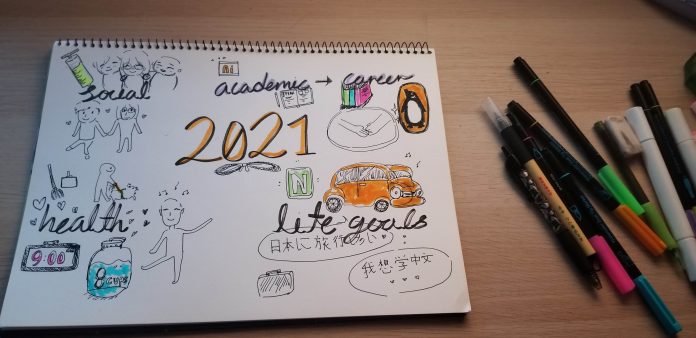
PHOTO: Kelly Chia / The Peak.

Content Warning: Mild mentions of weight

“I’ve never made a vision board or a dream board before,” I think, entering the Zoom room on January 6 with two other people. I relish any opportunity to doodle, and it’s the beginning of the year anyway, so I was curious about how making a dream board would impact me. Today’s dream board session was part of an at-home activity calendar made by SFU Health and Counselling services to inspire people to tune into their creative sides. 

Christy Ho, the host of today’s workshop, greets us enthusiastically. I feel immediately comfortable as we make small talk about our winter break and the things we’d done. After bonding over the anime we have both watched before, Ho explains that this would be chill and freeform, similar to how other Creative Collective activities have been. Armed with a bag of markers and pencil crayons, Ho aims her webcam down at a piece of paper to guide us through the activity. 

She first instructs us to write our ideas for the dream board down, giving us five minutes of silent reflection. As I lay out all of my pencils and markers, I think of the New Year resolutions I had made for myself in past years, as well as how teachers in high school would ask us to create five year plans for the future. 

As I begin writing down my ideas, I realize that it is difficult to ask myself to be vulnerable and acknowledge what goals I truly think would make me happy, not what would make me advance socially. 

Ho advises that it is good to imagine the steps to take in reaching the goals we had in mind, as well as the feeling we’d have when we achieved it. For her own dream board, she sketches out the icon of Adobe Illustrator because she’s hoping to learn it. 

The goals that I really wanted to have somehow either felt too unattainable or too personal for me to admit to myself. But with nobody peeking over my shoulder to look at my dream board and ask about what I had there, I relaxed into the activity. 

“This is for me,” I think, smiling as I doodle myself hugging my friends after taking the COVID-19 vaccine. I thought of holding my boyfriend’s hands, and how happy I know I’d feel being able to see him regularly again. Those are the dreams that first come to mind because they are things that I am constantly reminded of. 

Career-wise, I know I really want more opportunities to work in the publishing industry and expand my writing portfolio, so I draw lots of books and The Peak issues.

However, some goals are difficult to think about — especially my health goals. These are goals that without my permission have become tainted and synonymous with what they did to my body. 

I remember one year, I sketched a glum version of myself next to a toned version of me. I realized that despite parroting messages of self love, I never confronted the guilt I feel about being in my own skin. This year, I tried, as Ho suggested, to think about how I wanted to feel.

I read somewhere that everything you are procrastinating can take you away from the person you want to be.This really affected me because I had spent a lot of time in my bed, ironically thinking about how much of my day I was missing. But I didn’t want to feel like that anymore. 

With that in mind, I write down a 9:00 a.m. clock to signify that I want to live my mornings, not sleep through them. I doodle a version of me that is dancing happily, and a version of me driving an adorable yellow Volkswagen Beetle blasting Carly Rae Jepsen. Ho informs us that we have a minute or two left in the session. I carefully lay down my markers, staring at what I made. 

The session was over, and it left me with much to think about.

The most unexpected thing about this activity is that while no one could see my dream board while I was drawing it, I had an itch to do a real version of it. I wanted to perfect it, to make it look like the collages I had seen online. 

But I recalled the ways that setting “perfect” goals had failed me in the past; I always ended up letting these goals make me feel like a failure. 

No matter how much I denied my own progress, here I was at this event trying to visualize a version of myself that didn’t chastise herself for the things she didn’t have. For me, that is a dream that the version of myself from the past would have been grateful to achieve. 

I’m not sure I am a visual learner but having this more freeform look into myself and my dreams was a cathartic experience. Ho was such a friendly and calm host, and while I didn’t expect all the introspection that came with the workshop, I was really grateful to have a quiet space free of judgement to reflect. 

I have never done a dream board and it’s difficult for me to think about my dreams without cynicism but my dream board embodied all the ways I tried to respect my dreams. While doodling, I felt how easily hope came from nonchalant strokes as I thought about the things that made me happy. 

Creating a dream board for me, then, wasn’t a mental checklist of resolutions that weighed down on me but rather an illustration that made me smile and dream. Perhaps I won’t achieve everything here on my board but for the first time in a long time, I don’t think I will feel bad about it.

SFU researchers study patient needs for COVID-19 vaccine distribution software

0
PHOTO: RF._.studio / Pexels

A group of researchers at Simon Fraser University are working to identify the most effective roll-out of the COVID-19 vaccine. Led by Full Professor Dr. Diana Gromala and Professor Associate Director Dr. Chris Shaw, the team from the School of Interactive Arts and Technology are interviewing individuals to develop software that will allow them to efficiently time and track their COVID-19 vaccinations.

The SFU researchers are one component of a larger collaboration with researchers, businesses, and health organizations, called Project ABC, whose goal is the “authorization, booking, and coordination of widespread serological testing and immunization.” It is funded by Digital Technological Supercluster, an initiative by the Government of Canada.

Their research consists of analysing interview responses from individuals in British Columbia and identifying their “invisible” needs. For instance, a main factor in their research is identifying the complexities of a person’s living situation, like any caregivers or family, that would complicate factors of effective vaccination. The software developed by their partners in Project ABC integrates these needs and the complexity of the factors in each patient’s health into an interface.

“If there are a million vaccines to be given out, there’s a million people. If you treat them all as individuals, you leave out something very important — which is families with social structures where, if one person is sick, the whole family comes in with them,” said Dr. Shaw in an interview with The Peak. “It’s not just a bunch of individuals individually booking vaccination meetings; it’s all these other complexities,” he added. The researchers are developing the system with an aim to account for these complexities when determining the order of vaccinations.

Dr. Gromala describes their work as part of a branch of computer science called Human-Computer Interaction, which focuses on designing technology to create the most ease for its users with a “prime consideration [to] really put users, or people, at the centre of that.” The intersection of Human-Computer Interaction and public health was key to their previous work with their research on chronic pain, as well as Dr. Shaw’s work on arthritis. This aids their work on COVID-19, as Dr. Gromala has experienced first-hand “how [chronic conditions] can affect a person’s ability to use technology in ways that range from the subtle to the profound.”

Once the software is developed, both Dr. Gromala and Dr. Shaw hope it will be used to improve existing healthcare infrastructure to better accommodate people with chronic conditions. “The software that we’re developing with our partners, after COVID-19, will be really useful in our ability to help people get to their healthcare needs when they’re not in the home.” Dr Gromala added, “I think the most important thing is our ability to track people’s health over time because our healthcare system hasn’t been historically designed for dealing with chronic conditions.” 

Dr. Gromala noted that they believe the current Canadian healthcare system tends to treat the episodes of illnesses rather than the underlying cause of them, and explained that this will especially affect COVID-19 patients experiencing long-term effects of the virus.

Once the software is developed, the researchers aim for its use by local health authorities as a pilot program in its hospitals and in the Downtown Eastside.