Home Blog Page 375

My quirky quarantine habit: creating a deadly plague in The Sims

0
ILLUSTRATION: Kitty Cheung / The Peak

From the 20-somethings who are knitting, baking, and essentially living out the life they’ll be living in 50 years (back pain included,) to those like my roommate who have devoted their quarantine to dressing up their childhood stuffed animals in tiaras and making them hold the Torah, no one’s isolation experience is the same. 

My quarantine habit might be a little unconventional, but at least it’s not that weird. 

Without having to account for travel time between classes, I had so much extra time on my hands. Instead of studying, I slapped open my laptop and opened a game I hadn’t played in years: The Sims.

At first, I created a small family. The father was a criminal, the mother was a computer programmer (both with a hankering for performing credit card fraud; how romantic), and they lived next to the Goth family with their two small children. The details of their day to day life had me invested for a week or so, but soon it got boring. I had to kick it up a level. When Donald Trump decided to play at God, he was assisted by the Russians. That was my next step. 

After trading all of the personal information on my computer to some Russian hackers (who were honestly pretty chill), I was given access to every single The Sims expansion pack for free. Instead of blowing $40 to go to fake Sims university and become a fake doctor, I could now blow $40 on tiaras for certain teddy bear roommates.

This time around, I played a young adult surrounded by a legion of cats. The only thing hissing louder than said cat legion was my laptop threatening to combust at any moment while I played. As my Sim grew up, got married, and had children, I bred the cats to ensure that their lineage would remain. At around the eighth generation, the youngest child was playing with a hamster when he was bitten. After a few game days, he started convulsing and foaming at the mouth, turned into a giant hamster, and died.

After the requisite two game days of morning (approximately 10 minutes in-person), I decided to experiment. Could I replicate the real world pandemic in The Sims? How good would they be at social distancing and isolating? 

I set up a few apartments and gave one of the tenants the Rabid Rodent Fever. Within a day, she sneezed on another tenant while doing laundry. That tenant passed it to their roommate. Then, the neighbours came knocking. They had baked a fruitcake. One of the infected individuals went out and greeted them. 

Within a few days, the infected individuals were dead, and the uninfected Sims were receiving phone calls informing them that their neighbours and neighbour’s neighbours had passed. I had started a plague. I had killed Eliza Pancakes. Jesus wept at what I had become. 

I closed that game and started a new file, determined to never repeat my mistakes. This time, I made two young adults who were enrolled in university and stuck them in an apartment. I left one of them to her own devices and controlled the other, ensuring she did her homework and put out her roommates’ kitchen fires. She was magnificent, and only had a slight fear of hamsters. A being of my own creation. A blue-haired university student/journalist, living in the city, getting As in all her courses. The best version of myself.
Board Shorts — February 26, 2021

0
Image: Irene Lo

Student Union Building (SUB) reopening plan

SFU recently announced plans to reopen in Fall 2021. In preparation, Vice President (VP) of Finance Corbett Gildersleve brought forward a motion for the Simon Fraser Student Society (SFSS) to begin coordinating with SFU and the SUB tenants to develop a reopening plan.

VP University Relations Gabe Liosis said the majority of the students in the 18–24 age bracket should begin vaccinations by September. 

In hopes of less restrictive summer public health orders, Liosis suggested a “soft opening to see what further steps we can take.” Considering the components associated with reopening, such as student safety and the university’s undecided plans, the Board agreed to create a working group led by Liosis to prepare for the fall.

Building manager for the SUB, John Walsh, projected that the building could be ready for use in four to six weeks. He explained that in four weeks, the physical structure of the building will be equipped for students, but the SFSS would need to give their cleaning company time to hire staff. 

The motion was carried unanimously. 

Recognizing Black History Month long term 

Brought forward by Balqees Jama, At-Large Representative, and Nafoni Modi, Health Science Representative, this motion supports the SFSS’ long-term commitment to respectfully celebrate Black History Month.

With consideration to “the performative nature of organizations when it comes to addressing Blackness in general,” Jama emphasized the policy was intentional in its stance to proactively support and amplify Black students. 

As Vancouver’s Black population consists of less than 1%, she said embedding the recognition of Blackness is crucial to maintaining representation.

SFSS President Osob Mohamed commended the policy for highlighting Black joy as “Black people don’t only exist when we’re talking about racism.” Liosis said the way policies are structured and enforced “really tell a lot about an organization’s stance on systemic oppression and its inclusion of Black folk.”

Board members unanimously supported this motion, saying, “[It’s] a good example of how we can use our policy-making power to amplify the voices that historically have been silenced.” 

Properly defining club-violation procedures

Edits to sections four and six of the Club Terms of Reference documents were brought forward by Phum Luckkid, At-Large Representative. 

Jama raised concerns regarding section six, which states that executives who violate club policies may be “subject to removal as an executive member by the SFSS.” She said this statement is unclear about who exactly would take responsibility for this action. 

To fix this, Liosis suggested that coordinators could advise options to executive members, but the Council would make the final decision. Although the process might be time-consuming, he said, “Sometimes the bureaucratic hassle is worth it in order to make sure these decisions are being made thoughtfully.”

The Board unanimously agreed to bring this motion to the Governance Committee for review and will bring back the recommended changes when completed.

Clearview AI and 48 Canadian law enforcement agencies violate Canadian privacy laws

1
PHOTO: Scott Web / Unsplash

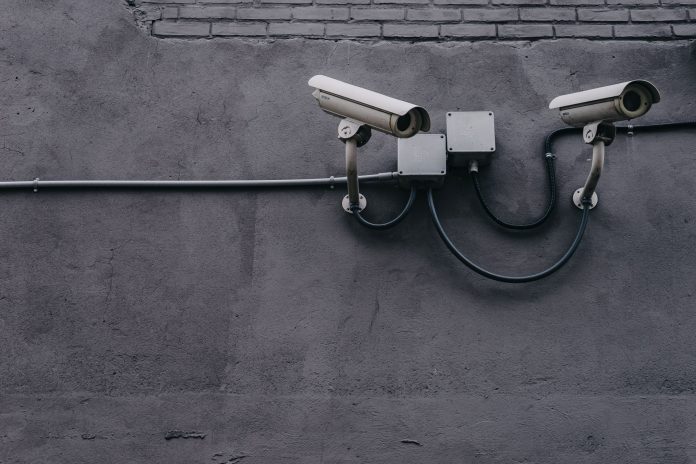
Clearview AI, the US technology company, recently came under scrutiny for their violation of Canadian privacy laws. A joint investigation from four Canadian privacy commissioners (BC, Alberta, Quebec, and federal) discovered the company indiscriminately compiled a database of over three billion images, including those of Canadians. 

Illegally obtained photos, as well as biometric facial arrays, were collected without consent, and then disclosed to law enforcement agencies for them to compare and crossmatch with a suspect’s face. 

In an interview with The Peak, Sun-ha Hong, assistant professor at SFU and expert in data and surveillance, shared his thoughts. 

“I wasn’t surprised, but I despaired,” he said. “There is a long track record with surveillance technologies where we break things fast and then worry about the consequences later. Clearview AI is so well known for its extraordinary privacy risks, as well as the company’s numerous questionable ties to white nationalists. The default should have been to approach this with extreme caution.”

Founded in 2017, the company operated in near secrecy until an exposé from the New York Times in January 2020 first made the company’s practices public. The current investigation set these practices within Canada.

The findings of the privacy commissioners’ report show that at least 48 law enforcement agencies across the country used their facial recognition technology, in violation of provincial and federal privacy laws. Agencies such as the RCMP, VPD, and many more admitted to their use of the technology after hackers obtained the company’s client list and leaked it to BuzzFeed. 

“The fact that 48 Canadian agencies have already used Clearview AI shows us how quickly [technology is] used in real life situations — certainly much faster than any rigorous, independent test of whether these tools actually work, and whether they cause more harm than good,” Hong said.  

Clearview AI avoided the existing frameworks of privacy law in Canada by claiming this technology was “being trialed or not fully implemented,” though its use was continuous in active operations. 

Doug Mitchell, lawyer for Clearview AI, said the company “only collects public information from the Internet which is explicitly permitted under PIPEDA [Personal Information Protection and Electronic Documents Act].”

While Clearview AI is no longer permitting the use of their technology in Canada, they refuse to delete existing photos of Canadians in their database, unless individuals apply through a lengthy process. 

Hong said, “I think it’s also a reminder to us that surveillance is now a truly global market, and we Canadians aren’t immune [to] all this.”

The federal government is examining its privacy laws, including Bill C-11, a proposed data privacy legislation. However, Clearview AI’s violations do not constitute financial penalties outlined in C-11. 

Hong added, “The key here is that these technologies are currently incredibly under-regulated. 

“The industry has spent millions on the messaging that any and all regulation will destroy our technologies, but of course they would.”

Hong said the impacts surveillance technologies are reaching across many facets of society. From being “used by police, or used in courts to recommend jail or parole, or to select candidates in job interviews,” surveillance technologies “are starting to have life changing impact[s] on ordinary people.”  

He added, “But it’s often very hard to actually see the algorithms and the data these companies use” as it’s unknown whether Clearview AI uses independent audits properly. 

“There are many good things about C-11 and Canada has an opportunity to lead other nations on properly regulating harmful technologies. The key bottleneck is enforcement and accountability. It is about establishing clear precedents that when you build and sell unproven, harmful surveillance tech, there are strong consequences.”

Black Academic Success in Sciences: A Conversation

0
PHOTO: Alfons Morales / Unsplash

SFU health sciences recently hosted Black Academic Success in Sciences: A Conversation where Black professors and students detailed their journey and resilience in the field. 

Moderated by Dr. Henrietta Ezegbe, the event featured SFU health science associate professors Dr. Angela Kaida and Dr. Ralph Pantophlet, and students Tsion Gebremedhen, Nafoni Modi, and Gisele Umviligihozo.

At the start of the panel, Dr. Kaida discussed her motivation to pursue health sciences. Reflecting on her family’s experience of HIV in East Africa, she chose to specialize in sexual and reproductive health.

Recounting the pushback she received for pursuing her ambitions, she said, “As you come against people who don’t have the same experiences, or perspectives, or lived experiences as you, the fact that it’s not important to them does not mean it’s not important.” 

Dr. Panthophlet focused on medical microbiology and later opened the Pantophlet Laboratory at SFU, which specializes in research on vaccines. He said, “Not everything works. You do get rejected. And the thing over time that has kept me going is a belief in science — [to believe] you have a good idea and pursue it, but also be critical enough to say when it’s not working.” 

Modi also spoke to her experiences — due to her upbringing in South Sudan, she aims to help her community by “creating efficient, tangible programs, for specific demographics to work with their health inequities.” 

In preparation for her future career path, she currently works as a program coordinator in programs that address domestic abuse, resiliency, and mental health. 

“Don’t let your failures hold you back from continuing on, because I think it’s especially important — especially for Black students — to hear because we often lack support systems in the university setting when we’re trying to navigate it,” she said. 

Gebremedhen elaborated on her aspirations to facilitate global health’s transition away from imposing Western knowledge. She said because global health is “not empowering those local communities and building their capacity, she aims to partner and learn from locals to implement sustainable approaches to health.  

“What I want to do in global health is change [the West-centric] narrative. We need to embrace local expertise. We need to work with local communities, local institutions and organizations, and actually learn from them, because there’s so much that we can learn from them.”

The panel also explored what success meant to each speaker. “I think being successful is being able to achieve your goals on a regular basis and being able to move forward — not to be stuck in one thing,” Umviligiho said. 

For Gebremedhen, the pursuit of academic success also builds up the community because it entails a combination of transferrable, analytical skills, and mentorship opportunities for others. 

“Part of being successful is being able to leave that legacy and being able to help promote other people — your colleagues, your friends, anybody who comes afterwards — to be able to be just as successful or even more successful,” she concluded.

The full event can be found on YouTube. 

SFU releases report on Black alumnus arrest

0
PHOTO: Ahmed Ali / The Peak

Content warning: descriptions of police violence. 

On March 11, president Joy Johnson released a report to the SFU community detailing the conclusions of a Black alumnus’ campus arrest. 

The report, which was conducted externally by Andi MacKay of MacKay Boyar Law Corporation, concluded there was “no evidence of racial profiling” or “lack of training in de-escalation techniques.” Further, MacKay stated SFU’s policies were clear and properly implemented, adding the alumnus was aware of COVID-19 policies. 

The findings come after the alumnus was arrested at the SFU Burnaby Mountain campus “for causing a disturbance.” When “an officer attempted to arrest him [this] led to a physical altercation between the two resulting in the officer being placed in a chokehold. The RCMP officer then pepper sprayed and tasered [the alumnus].” 

The event caused students to question “whether racial profiling played a role in the arrest.”

MacKay recommended SFU “should improve its definition of ‘community member,’ its policy regarding alumni access during the pandemic” and “should have its communications reviewed from an equity, diversity, and inclusion perspective.” 

The report added, “On December 11, 2020, the [a]lumnus’s interactions with a University Member caused them reasonable fear for their safety such that they requested a safe walk from CPS [Campus Public Security],” clarifying “CPS engaged with the [a]lumnus because of the University Member’s safe walk request.” 

MacKay concluded, “CPS could not permit the [a]lumnus to remain on campus after being alerted to the safe walk request.” She added security called the RCMP once “the [a]lumnus became aggressive and refused to leave campus [after given] multiple opportunities to leave.”

The Simon Fraser Student Society (SFSS) responded to the statement, “We are deeply concerned by the lack of concrete findings and recommendations of this investigation. We take issue with multiple elements of the report.” They said the alumnus was not aware of the safewalk request and was asked to leave campus under the basis of COVID-19 campus guidelines “which were vague, conflicting, and not widely accessible.”

They added it was a concern that to their knowledge, there is no CPS policy “that state[s] SFU [s]afewalk requests result in an automatic and immediate removal of a person from campus.” 

The SFSS concluded, “[SFU] must commit to taking tangible action led by racialized voices in tackling these systemic problems. SFU’s vague, inequitable, and inaccessible policies, always gives space for institutions to disportionately target marginalized communities.”

The SFU Black Caucus also responded to the statement, “Nothing in the report explains the violence that was unleashed on the alumnus [nor] indicates why the police were justified in this use of force.” 

Johnson said the event “has reinforced concerns about racism on our campuses and that SFU needs to continue to take real and meaningful action to address systemic anti-Black racism and increase inclusion of Black and Indigenous people and people of colour.” 

She encouraged the SFU community — particularly Black students, alumni, faculty, and staff — to reach out for support if needed.

Liberals vote against pharmacare

0
PHOTO: Christina Victoria Craft / Unsplash

On February 24, 2021 Parliament voted against Bill C-213, the “Canada Pharmacare Act,” which aimed to provide Canadians with universal access to prescription drugs. The proposed legislation was blocked by the Liberals, Conservatives, and Bloc Quebecois at its second reading with a vote of 295 in opposition, and 32 in favour. 

Sponsored by New Democratic Party (NDP) MP Peter Julian, the Act was meant to establish a set of criteria and conditions aligned with the fundamental principles of the Canada Health Act: public administration, accessibility, comprehensiveness, universality, and portability. 

Provincial governments would have been required to create a public drug insurance plan with these standards in order to receive financial assistance from the federal government to support the legislation. 

“Canada is the only country that has universal healthcare [without] universal pharmacare,” MP Peter Julian said in an interview with The Peak. He explained this Act would be essential to supporting Canadians, as jobs and drug plans have been lost during the pandemic.

Over ten million Canadians are unable to access their medication due to the high cost of drugs, according to Julian. In this situation, he added, people must decide between purchasing medication or basic necessities. 

Universal pharmacare would cut the current system’s expenses by billions of dollars as it would give the government the ability to purchase medication in bulk, lowering the cost, Julian said. 

He added the legislation would also save money for small businesses — as they would no longer need to finance employee drug plans and they would supplement the economy by creating local jobs. 

Julian said, “There aren’t any consequences to passing the bill — there are huge consequences for not passing the bill. And those consequences are upwards of ten million Canadians not being able to access their medication.” 

If the legislation had been passed, a universal drug plan could have been set up by next fall. However, he said it would be “one of the first pieces of legislation that [the NDP] bring[s] moving forward” if they are next parliament’s leading party. 

Those who voted in opposition to the bill voiced concerns it lacks consultation and would impose federal rules onto provincial jurisdiction. 

At the House debate, Prime Minister Justin Trudeau said the NDP’s proposed legislation makes the possibility of pharmacare look easier than it seems. Instead of “imposing, in provincial jurisdiction, rules that are not worked out with them,” he said the federal government should consult premiers to align provinces with their respective health-care needs. 

In 2019, former Liberal MLA of Ontario, Dr. Eric Hoskins, proposed a phased approach to pharmacare projected to be implemented by 2027. 

This would include the creation of a Canadian drug agency “governed collaboratively by the federal, provincial, and territorial governments and would have strong patient representation on the board.” 

The agency would approve a list of drugs to be covered by national pharmacare and be responsible for providing guidance and monitoring drug effectiveness. The Liberal Party aims to follow this pharmacare plan rather than the NDP’s immediate implementation plan. 

Liberal MP Ron McKinnon said in a statement to The Peak, “Implementing universal Pharmacare requires careful work in willing partnership with the provinces and territories — as, ultimately, it is they who are the level of government responsible for delivering healthcare services. To succeed here, we must proceed in close partnership with those provinces and territories willing to do so.” 

Martin Scorsese is right about Marvel

0
The film industry was struggling way before the pandemic hit. PHOTO: Karen Zhao / Unsplash

Director Martin Scorsese became the pinnacle of controversy on social media in November 2019 with his New York Times op-ed “I said Marvel Movies aren’t cinema: Let me explain.” He wrote the piece to explain his original comments about Marvel movies being “like theme parks” and “not cinema,” which provoked fiery backlash from the Marvel fanbase. Various quotes were being pulled from the piece, lacking the context of his definition of cinema and how he sees Marvel fitting into the movie industry.

Just over a year later, Scorsese doubled-down on his critique of cinema by penning an essay for Harper’s Magazine March 2021 issue to define what cinema means to him. His opinions are still being thrown around out of context, but considering the current state of the film industry, his critique is quite valid.

Cinema, in Scorsese’s view, includes the kinds of movies he saw growing up, including Scorpio Rising, The Steel Helmet, and Persona — all very different from Marvel movies. These kinds of films are not pulling big opening weekend numbers at movie theatres or making millions and ending up on everyone’s watch lists — like many franchise blockbusters today.

Scorsese’s original comments were understandably seen as a bit harsh; some even deemed them as gatekeeping, pretentious, and anti-Marvel. But it makes sense to say that the artform of moviemaking feels threatened by massive blockbusters. Many smaller movies struggle for funding and are never able to reach a larger audience — like some of his favourites. His frustration doesn’t rest on Marvel or their fanbase, but with the film industry as a whole. Even if it was solely about Marvel, it shouldn’t be controversial to call their movies theme parks, as they are both made to excite, provoke intense emotion, and suspend disbelief, unlike many franchise blockbusters.

Scorsese’s main gripe is that he sees the film industry quickly disappearing with the rise of blockbuster franchise films. This comes from the fact that movie theatres will only play what’s most profitable: blockbusters with established fan bases, not small independent films. Additionally, pandemic precautions mean that movie theatres have had to close their doors for months on end. This had led to increased discussions about the future of the film industry, particularly around how streaming services may drive movie theatres out of business — a major threat to the traditional movie-viewing experience.

Pandemic aside, small films are still left out of the limelight when it comes to popular culture and having theatre support. The highest grossing movies of all time are all byproducts of Disney or James Cameron — none of which debuted at a film festival, had to scrounge for funding, or search for a niche audience. Marvel movies and blockbuster hits are great, but there are also so many smaller films and movie makers that are so hard to come across because of this platform imbalance.

Other prominent directors have talked about how movies should be released and seen by audiences as well. Denis Villeneuve and Christopher Nolan have been fighting back against pro-streaming, anti-movie theatre discourse. Most of these directors also reference the importance of a big-screen experience for new releases. 

Scorsese has attempted to right these film-industry wrongs by creating The Film Foundation, which “supports the preservation and restoration of cinema.” In supporting this work since 1990, it becomes clear that his statements aren’t a demonstration of “all talk, no walk.” In fact, this shows the film industry has been heading down this path for a while now — the pandemic-encouraged streaming service boom is only threatening the traditional moviemaking and viewing experience more.

Any criticism of one of the largest and most passionate fan bases in the world was bound to strike controversy and backlash. But looking past the headlines and the out-of-context quotes, Scorsese does make very valid observations about the film industry and where it might end up if it continues to evolve unchecked.

Self-help books are valuable — if used properly

4
Don’t knock a self-help book if it doesn’t work. PHOTO: Delano Ramdas / Unsplash

Self-help books are filled with words that can promise accomplishments like becoming a productivity superhero and gaining financial independence. This could be enticing for the struggling student, but these books often don’t mention how to adequately use the knowledge they bring. Most of the time, readers consume the knowledge, become happier for a while, and then do nothing. However, from a self-help enthusiast, using these books is one of the best ways to improve a lifestyle, and to do so these resources need to be used smarter, not harder.

We have to be careful of what self-help resources we choose to consume. Every year, an excessive amount of self-help reading fills bookshelves and new best-selling books arrive on a daily basis. Because of this, the industry is now market-driven rather than peer-reviewed, which has some questioning the true helpfulness of these resources.

To bypass this potential deceitfulness, we should buy a self-help book like we would carefully buy a piece of furniture. Choose something that has 10,000 reviews with 4.5 stars. Search for dedicated YouTube reviews, blogs, and more. In short, do the research; the right book won’t just miraculously appear. But sometimes, the furniture bought just doesn’t match the style of the house. What then? 

Let’s say there is a minimalistic house and a colourful, patterned 80s couch is bought for it. Should the whole house be changed to match that couch, or should the couch simply be removed? The couch could be used as a unique feature piece in a simple layout, or it could simply not match the style. The answer would not be known for sure unless the combination is tested first.

Self-help resources are the same. All tips will not resonate with all people, but regardless testing those tips is crucial for exploration. For example, a person may work better at night, but a self-help book may say that waking up at 5 a.m. will make them a millionaire. Before the person thinks the tip is trash, they should test it. They cannot truly know if having a morning routine will make them more productive or help them reach their goal faster unless it is tried. Just like they cannot know if a couch does not look good in their house without putting it in their living room.

Despite this, a self-help book may ultimately be incompatible — but it is never useless. An irrelevant book can still help bring someone one step closer to a book that does help them. Trial and error, though time-consuming, is the optimal method for consuming self-help books.

Additionally, after finishing a self-help book, some people might feel amazing and that tomorrow they will make moves to change their life forever. But for the next 30 tomorrows, they do the same things and end up feeling sad again. So, they might buy another book to feel that magic again. This is called mental masturbation, where a person continuously seeks mental stimulation either through daydreaming or buying a self-help book to make excuses for not taking constructive actions. To avoid this, self-help books should be read slowly, and tips should be practiced as much as possible. When they are, it is easier to successfully find a good, productive workflow. 

Reading self-help books may not always provide the best results, and using them might not be for everyone. However for people that do want to use them, in utilizing proper methods it is possible to make the most out of every single book and help to change your life for the better.

Your weekly SFU Horoscopes: March 15–21

0
An illustration of a girl with long flowing hair. Astrological signs and stars shine around her.
ILLUSTRATION: Marissa Ouyang / The Peak

Aries: Wow. You’re so sexy, Aries. Like really hot. You know what else is sexy? Submitting your assignments on time and washing your sheets. You’re two missed discussion boards away from an F and two nights away from your sheets walking on their own.

Taurus: It’s time to stop taking things so personally, Taurus. The beleaguered student you passed on your walk yesterday wasn’t glaring at you. They were simply upset that the Dining Hall was out of macadamia nut cookies. Of course, it would have helped if you weren’t visibly smuggling 20 cookies in your arms.

Gemini: It’s time to beef up your resume! For example, you’re definitely an “out of the box thinker”— remember when you ran out of chase for your booze, so you just pre-gamed with ranch? Rip-’n-dip, right?

Cancer: Sometimes you feel you’ve got to . . . run away. You’ve got to get away from the pain I drive into the heart of you. The love we share seems to go nowhere, and you’ve lost your light. You toss and turn but you can’t sleep at night. Oh! Tainted love, tainted love.

Leo: You were definitely switched at birth. And if you weren’t, then you have a secret twin. If that’s not true, then you definitely considered dropping out in the fourth grade to run a mud pie business. I see you, girl boss.

Virgo: Stop being so hard on yourself, Virgo. So what if you accidentally unmuted yourself during lecture and everyone heard you ranting about the inconsistencies between the Pokémon games and anime? It’s not your fault that Pokémon can have more than four moves in the show. It makes no sense! The people deserve to know! 

Libra: A letter has come from your future self. It reads: “You are capable of anything. You can achieve such great things” — oh wait, sorry, that was actually Gemini’s letter. Yours says: “Invest in a plush shark from Ikea. Like you, it looks like it’s all bite, but it has foam teeth.” Is that true?!

Scorpio: You say that you wear black because you’re edgy and cool, but we all know it’s not that. It’s because your hands shake like that of a sickly Victorian orphan when you have to interact with the Starbucks barista and you’re prone to spilling your $10 matcha green tea all over your clothing.

Sagittarius: Would you rather wake up in the morning to grimy little raccoon hands snatching your collection of Funko-pops or become a servant to the raccoon king? This is not a hypothetical question.

Capricorn: I know you struggle with opening up, Capricorn, so, intuitively, it’s time to try healing through puppetry. Creating a sock puppet just won’t cut it. You’ll have to get supplies and do research — which means now you’ll have reason to rewatch Muppets Most Wanted without admitting that you’re attracted to Constantine.

Aquarius: Look at all those unopened Snapchat messages, Aquarius! You’re so cool for ignoring your friends. Oh, sorry, one’s from your “hip” aunt and the other four are from Snapchat itself. My bad.

Pisces: Did you know that Emily Dickinson was sapphic? Or that Queen Elizabeth is a trained mechanic? No? Well, now you have something to say when your TA asks you for a “fun fact” because let’s face it . . . you needed a new fact that wasn’t boring (i.e. ones about your life in quarantine).

Anyone can be a gamer, regardless of genre

1
Games other than Fortnite are fun, engaging, and educational. ILLUSTRATION: Siloam Yeung / The Peak

When I hear the phrase “video games,” first and third person shooter games often come to mind — the Entertainment Software Association even says that 47% of gamers play them. Many of these types of games — including popular ones like Fortnite, Halo, and Call of Duty — are often seen as more legitimate because those with expertise in this genre have various opportunities for wealth, fame, and recognition.

Other video game genres are also underrated because they are perceived as predictable and offer delayed gratification. However, the gaming community should accept all gamers irrespective of their preferred genre, as no game genre is lesser than another.

The gaming industry can open up doors for people worldwide to earn a living and become famous. Fortnite streamer and entrepreneur Tyler “Ninja” Blevins is just one of these people, having won numerous tournaments, appeared on TIME’s 2019 list of 100 most influential people, and been a guest on The Tonight Show Starring Jimmy Fallon. In contrast, people who don’t play games that can lead to these opportunities often lack access to expand their platform and business through networking. To promote more opportunities for all gamers, they need to first be considered valid.

The video game industry offers a wide selection of games to choose from, such as role-playing, sports, party, and action. This diversity in content should be celebrated, not ridiculed. For example, some people can perceive puzzle games as repetitive and later lose interest — some puzzle game players even quit because they are too challenging and require greater patience. While suspenseful shooter games offer instant gratification and require skill, attentiveness, and strategy, other types like puzzle are equally capable of balancing challenge and fulfillment to entice players. 

For example, NBA 2K20 and FIFA 20 were two of 2019’s best-selling video games. Challenge is inherent to video games, and exposure to new types of challenges absent from shooter games allow gamers to gain more skills. These challenges teach gamers to think creatively in a variety of video game settings, beyond how to detect and avoid an opponent’s sneak attacks. By playing other types of genres, gamers could become well-rounded by developing other techniques that they would normally not use in shooter games.

Among the National Museum of Play’s World Video Game Hall of Fame inductees are well-known, non-shooter games such as Tetris, Pac-Man, and Pong. The World Video Game Hall of Fame’s inclusivity reflects that multiple games merit praise, irrespective of their genre or form. The diversity and history of video games also demonstrates that classic video games and consoles laid the video game industry’s foundation. In fact, the early technology used in the Magnavox Odyssey, an early video game console, served as a prototype and essentially promoted the development of modern technology used in shooter games.

Gamers should also celebrate other genres because their unique storylines present educational opportunities. Through a collaboration between the Iñupiat people and Upper One Games, Never Alone (Kisima Ingitchuna) was developed. It incorporates the Iñupiat culture into the main character Nuna’s attempts to survive in the Arctic. These collaborations show the potential for promoting cultural awareness, which is often lacking in shooter games. 

As the gaming industry grows, it requires a variety of games to be welcomed. All video game genres and types are equally valuable because their diversity facilitates technological innovation and promotes educational opportunities. The gaming community’s solidarity should outlive the latest gaming trend because what the gaming community needs is greater recognition, opportunities, and acceptance of gamers from all game genres.