Home Blog Page 365

Vancouver drug decriminalization model falls short for youth

0

Vancouver is currently pushing to be the first Canadian city to decriminalize drug possession. Unfortunately, this initiative falls short in addressing community needs and is particularly unfavourable for Vancouver’s youth.  

Canadian Students for Sensible Drug Policy (CSSDP) advocate for youth and address substance use through a human rights and health concern perspective rather than one of criminality. Chair of the Vancouver Chapter of CSSDP Samara Mayer shared further information with The Peak on what the “Vancouver model” of drug decriminalization may mean for youth and the CSSDP’s concerns with this new initiative. 


The initiative’s changes

The City of Vancouver’s initiative seeks to abolish “criminal sanctions for ‘simple possession’ drugs.” This means adults in possession of three days or less worth of drugs will not face legal penalties. While it is a beginning in decriminalizing drug use and harm reduction, various stakeholders have raised concerns over how the “Vancouver model” falls short. 

Mayer fears this initiative may “[make] punitive drug policies worse.” Mayer cited some dangers of the policy can be the “lack of meaningful and equitable engagement of those directly affected by decriminalization (people who use drugs), threshold amounts that are far too low, and that police have dictated parameters of decriminalization.” Mayer is also concerned that “[the] low thresholds and discretion given to police over enforcement in the Vancouver model could actually worsen the criminalization of people who use drugs and [set] a dangerous precedent for other jurisdictions.”

Along with the CSSDP, groups like Pivot Legal, the Vancouver Area Network of Drug Users (VANDU), the HIV Legal Network, and others are taking action to communicate concerns to Health Canada.


Current challenges for youth

Youth who use drugs are more stigmatized than adults. While public opinion moves towards decriminalizing drug use for adults and harm reduction methods for safe drug supplies, these progressive ideas do not apply to youth. Young people are still being stigmatized and penalized for drug use without being offered the same support adults are. 

Because of their age, youth face more obstacles in seeking support for their drug use because “there is less funding for youth-specific services, fewer health and social services that create safer spaces for young people who use drugs, and an overall deficit of equitable youth engagement in drug policy and programming development.” 

Mayer recalls the push for Bill 22, which intends to legalise hospitalizing youth involuntarily after overdoses, and explains the harm it would cause. Mayer continues that “[this bill] would [deter] them from seeking help during an overdose, [increase] their risk of overdose after being ‘stabilized’ (i.e. forced detox), and [erode] trust in health care systems.” The CSSDP hopes to see more accessible resources for youth in the place of harmful legislation like this.


Enforcement, decriminalization, and legalization

Under the proposed policy, the Vancouver model of decriminalization does not include youth under 19. More specifically, this initiative has been developed closely with the VPD with different plans for young people, who they refer to as “young offenders.” Mayer clarifies that, instead of decriminalizing drugs for youth under 19, “VPD will support ‘young offenders’ through offering ‘diversion pathways,’ such as involuntary treatment.” This is especially problematic because police have historically harmed youth who use drugs. 

Further, the CSSDP is concerned about how the policies are unrealistic for youth. The policies were clearly developed without consulting those who will be most affected and without street-involved youth. This is clear in the “unreasonably low proposed drug thresholds” because youth are more likely to buy drugs in larger quantities than adults. This tends to be more than  a three-day supply so that it can be purchased in a single trip and be more easily shared. 

The CSSDP hopes for future legalization of drugs, but in the meantime focuses on ways to make drug use safer. One way that the CSSDP and other local groups, like The Coalition of Peers Dismantling the Drug War (CPDDW), focus on harm reduction methods includes providing safe supply. Giving youth access to safer supply includes “providing drugs of known quality and dose through a prescribing health care provider.” This is easier said than done; unfortunately, there are few youth-centred services with safer supply, the drugs available may not match the community’s demands, and services may require drug-using people to take their dose under supervision. Some sources consider access to safe supply a kind of “nascent legalization.”

Under the current legal policies and enforcement, over 7000 people died in 10 years, which makes changes to legislation imperative to saving lives in Vancouver.  


Addressing the issues

Mayer offers a handful of potential solutions to where the Vancouver model falls short. Mayer says youth should “have a meaningful say in drug policy reform, including in the application to decriminalize personal possession of drugs.” 

Mayer recommends rejecting Bill C-22 because it “violates the spirit of decriminalization and Good Samaritan Laws, and will further discourage youth from seeking medical help during an overdose, which would increase risk of death in youth.”

In future policies, Mayer says it is necessary to “disinvest from failed punitive approaches to drug use. This includes law enforcement and coercive ‘diversionary’ measures (e.g. involuntary treatment) that disproportionately target and harm Black, Indigenous, and racialized youth, youth in care, youth with mental health concerns and those identifying as queer/gender diverse.” 

For investing in youth safety, Mayer believes in “opening safe consumption/overdose prevention sites exclusively for youth [ . . . that are] where youth will use them, and are inclusive to their specific needs. This would prevent youth from using alone, outdoors in public, or other unsafe places, as many youth don’t feel safe and could potentially end up being targeted by police.” 


Why this policy matters

This initiative, if approved by Health Canada, would make Vancouver the first Canadian city to decriminalize drug use. Because it is a progressive policy, it “will provide a framework for future decriminalization models in Canada and in the US.” Already, it has had influence this year on Montreal voting to pursue decriminalization policies. Mayer warns that “[if] done wrong, we risk laying a bad foundation on which to build a more progressive health and human rights approach to substance use.” It is critical that Vancouver makes the right choices in prioritizing drug users and advocacy groups; our youth’s lives depend on it.

 

SFSS calls for Open Educational Resources for students

0
PHOTO: Allyson Klassen / The Peak

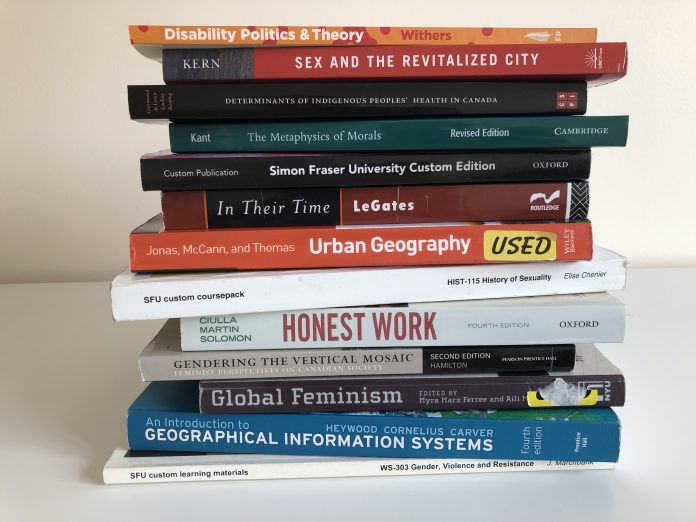
The Simon Fraser Student Society (SFSS) recently launched a new petition to support the use of Open Educational Resources (OER) and increase textbook affordability for students. 

The SFSS proposed the use of OER, including open textbooks, multimedia, and assessment tools, as a solution to rising educational costs.

“We incorporated the student responses in the textbook statistics from the SFU bookstore, and then we talked about how we can alleviate financial burdens attributed to these costs,” Liu said. 

According to the petition, SFU students spent an average of $244.17 on textbooks and course materials per semester in 2019. The campaign also asked students how they would reallocate textbook money. Responses included rent, groceries, and utilities. 

The school established an OER Grant Program in 2016 that is funded by the Office of VP Academic and Provost, said Liu. She added instructors can access funding up to $5,000 for creating or using OER in their courses. 

However, the grant money is coming to an end as resources dry up due to lack of funding, Liu explained. 

“If the petition receives positive response from students, it can be used to negotiate for further funding,” Liu said.

“The focus of the OER student campaign [ . . . ] is to let students know the alternatives to expensive commercial textbooks and other course materials, and that their instructors have the power to adopt and adapt existing OER or create their own.” 

In addressing the challenges the OER movement faces, Liu noted the importance of SFU playing a bigger role to encourage instructors to use OER.

“SFU does promote OER in their policy, but they don’t really do anything to encourage instructors to adopt or adapt it [ . . . ] It’s really hard to incentivize instructors to use extra time to learn about OER.”

The SFSS urged faculties to adopt OER as classes move online; however, it was met with resistance, Liu explained. “The response from faculty wasn’t that great because everyone was scrambling to transition their courses online.” 

Mark McLaughlin, chief commercial services officer, said in a statement to The Peak that SFU is working with students on the topic of textbook costs by “shift[ing] access to course material to an online model that favours student choice and affordability.” 

The shift from physical textbooks to online versions has reduced the costs of course material by 59%, which is “now an average of $99 per term,” according to McLaughlin. He added that online course materials “[provide] enhanced features for student accessibility, including text to speech and screen reader capabilities, as well as [allow] for access on any device, with or without internet.” 

Liu explained that while professors have been incorporating online course materials, it’s hard to gauge how much of those are open resources. 

McLaughlin did not discuss the OER Grant Program in his statement, but noted the availability of library staff and Centre for Educational Excellence as resources for instructors looking for OER support.

“The Library is also currently working on longer-term recommendations to increase support for using and developing OER and for advancing open education more broadly at SFU,” McLaughlin added.

“We are listening to student voices and as part of that we have been keeping costs in mind when making decisions on textbook and course materials.”

A list of perks university students can get in Canada

0
Photo: Ahmed Ali / The Peak

Now that I’m in the last portion of my degree, I find there are many services that SFU provides that I didn’t know about as a first-year student. I wanted to compile some of the resources I found that will hopefully help a fellow student save some money.


Student Discounts

Many retail stores offer student discounts, so it’s useful to see if student discounts are available before you shop and to bring your student ID. For example, Apple offers up to $250 in savings on iPads, MacBooks, and other select products. Students could also consider the Student Price Card (SPC), which is $10 for a one-year membership, offering 10–20% discounts in over 450 stores. This is a list of stores that offer retail discounts in Canada. 


SFU Library

As a student, you have access to academic databases and journals. One of those databases is a film platform, Criterion-on-Demand, which features more than 1,500 titles including feature films and documentaries. You can watch action films like Alita: Battle Angel or documentaries from as recent as 2020 like I Am Greta. 

The SFU Library also opened up their Media and Maker Commons space last year. Currently, the space is open for limited by-appointment services for SFU instructors, but when we return to campus, it’s bound to be popular. There are media spaces designed for recording podcasts and a video studio where you can set up lights, a green screen, and more. 

Once you complete the safety workshops on Canvas, you gain access to the 3D printer, scanner, laser cutter, or dremel for personal or professional projects. 

Lastly, did you know that you can borrow video game consoles from the library? You have to search for “console” and filter the search for “other”, but from there, you can find the Nintendo Switch, the Sega Genesis, and more. You can also find games to play on there, too!


Software

This is a list of free or discounted software which are useful for schoolwork and personal projects.


Github Student Developer Pack

This is a compilation of offers and services that partner with Github. Many are specific to developing coding skills, like educative.io, where students have six free months of access to Python and Machine Learning courses. Some may be useful for students looking to set up a portfolio for their work, like namecheap and Name.com, which let students register a domain for free. Canva is great for designing graphics and templates for personal and professional work, and students get a 12-month subscription to Canva’s pro tier. 


Free Windows 10 Education key

This is particularly helpful for students who are building their own PCs and don’t have an operation system (OS). In my experience, buying PC parts can be really expensive, so it was nice to have easy access to an OS and not have to worry about purchasing the license.


Adobe Creative Cloud Suite

Students get the Adobe Creative Cloud suite at $25.15 a month, giving them access to all of Adobe’s editing, photography, and design apps on desktop and mobile devices. Alternatively, if you would prefer free software that does a similar job, this article lists specific alternatives for Photoshop, Adobe Illustrator, and more. 


Microsoft Office 365

Microsoft Office 365 offers students Word, Excel, PowerPoint, and OneNote for free while they are a student. They also offer 100GB of space on OneDrive. 


SFU Vault 

SFU Vault is a Cloud-based storage space with apps for desktop, Android, and iOS. This means if you want to save files from your phone on the app, it will sync to your computer. It includes 50GB of space.


 SFU Webhosting

SFU students can host 10GB of webspace, which can be used for making their own website or uploading study and work files. This is also a good option for hosting your portfolio. 


Learning Resources

This section includes online classes that students can take recreationally, or university courses that they may be curious about but can’t afford to take. 


LinkedIn Learning 

Formerly known as Lynda, LinkedIn Learning provides a variety of courses, from professional development classes like accounting software and small business marketing, to creative classes like how to render and illustrate. Students can connect their school account to LinkedIn and access all offered classes for free. 


EdX

EdX partners with universities like Harvard and Berkeley to put out courses that students can audit. For free, students can access course materials but would not be able to access or complete assignments and exams with instructor support. I last took a 100-level computing science class with edX, giving me access to a discussion forum with other students, recorded lectures, and assignments. It was really insightful, and I recommend checking it out if only for the variety of classes offered to students. 

Top Ten movies “cinephiles” can namedrop to assert their dominance over casual film viewers

0
Very calm, very cool. Nothing wrong here. Illustration: Siloam Yeung / The Peak
  1. The Shawshank Redemption (Dir. Frank Darabont, 1994)

If you’ve got a heartbeat, you like The Shawshank Redemption. Name-dropping this film in conversation not only shows people that you can recognize a good story, but that you are also capable of Googling “IMDB top 250 movies of all time.”

  1. Pulp Fiction (Dir. Quentin Tarantino, 1994)

It’s 2021 and no one has heard of Quentin Tarantino. It is your duty as a cinephile to bring up this film as much as humanly possible. You need to prove your worthiness as a moviegoer and spread the gospel of an underrepresented director. Bonus points if you can quote any part of the film because you are definitely the first person capable of retaining information for two hours and 58 minutes.

  1. Apocalypse Now (Dir. Francis Ford Coppola, 1979)

Let’s face it: even for cinephiles, films like Pulp Fiction and The Shawshank Redemption can be a little too mainstream. Apocalypse Now is a great way to communicate that you know the name Francis Ford Coppola but aren’t so mainstream that your favourite film is The Godfather. Name-dropping Apocalypse Now tells people that you have a lot of interesting thoughts about The Vietnam War, imperialism, and Robert Duvall’s acting.

  1. Any Wes Anderson Movie. Ever.

If it’s pastel and has symmetrical shots, it’s art. Throw any Wes Anderson movie title to the wind and you’re sure to prove to everyone around you that you truly appreciate beauty. If you haven’t seen his entire filmography, no worries! Simple phrases such as  “I need to wear more black eyeliner” or “Bill Murray was great in it!”  or “You know what’s cool? Smoking” are sure to prove to anyone that you are a master of all Wes Anderson films and, consequently, aestheticism.

  1. Psycho (Dir. Alfred Hitchcock, 1960)

Many people cannot withstand the unbearable dullness that is black and white film, but you can, because you have immaculate taste (besides that fact that you chose to attend SFU). Psycho is great to name-drop anytime you need to communicate that you like good horror movies. Just make sure you don’t mention that the only reason you watched this film is because Ashton Kutcher’s parody of the shower scene on That 70s Show was your sexual awakening. No? Just me? 

  1. In the Mood for Love (Dir. Wong Kar-Wai, 2000)

A great option if you ever need to show someone that you like more than just Western cinema. In the Mood for Love proves not only that you can watch a film, but that you can read subtitles at the same time. (It may also prove that you just took CA 135, but we’ll keep that as our little secret.)

  1. 2001: A Space Odyssey (Dir. Stanley Kubrick, 1968)

A great film to prove to anyone that you have an attention span. An attention span so dominant that any film they like in comparison is trash. An attention span so strong that even 20-minute-long non-dialogue scenes of poorly costumed apes, indistinguishable shots of strobing colours, and weird space babies can’t deter you. Your attention span is so superior that frankly, you’re just a better person. I bet you don’t even leave three-hour lectures during the break.

  1. Citizen Kane (Dir. Orson Welles, 1941)

Let’s be honest: you probably don’t remember much about Citizen Kane except for the fact that Rosebud is a sled. However, people say it’s a good movie and you aren’t about to let your fellow cinephiles down. On the plus side, name-dropping this film lets you brag about watching a 1940s film, a considerable and harrowing achievement.

  1. Inception (Dir. Christopher Nolan, 2010)

Name-dropping Inception in conversation tells people that you are an intelligent person who enjoys decoding cryptic messages in your spare time. You have very little patience for the basic, predictable Hollywood flick that spoon-feeds you a plot and relies on rehashing old storylines. You have an infinite knowledge of stories and Inception is a fresh, original idea. Hey! Here’s a fun activity: Google “Inception Paprika similarities” and see what you learn!

  1. Fight Club (Dir. David Fincher, 1999)

The majority of people have already seen Fight Club. However, where you as a true cinephile can set yourself apart from the dreaded mainstream is by claiming the ending was predictable. This is a classic dominance assertion technique and one commonly used by cinephiles everywhere. By telling people you saw the twist ending coming a mile away, you let people know that 1) you are smarter than them 2) you’re better at art and 3) you’re an all-around great person to hang out with. 

Teaching Support Staff Union begins first bargaining session with SFU for RA rights

0
Photo taken before COVID-19. PHOTO: Gudrun Wai-Gunnarsson / The Peak

On March 23, 2021, the Teaching Support Staff Union (TSSU) and SFU administration had their first meeting to negotiate a collective agreement. To bring SFU to the bargaining table, the TSSU gave the university multiple legal notices, publicly campaigned for the RA rights, and built community support to pressure the administration.

With the consultation of RAs, the TSSU presented a proposal that focused on:

  • Including RAs in all types of research work
  • Providing job transparency
  • Protection against inequities such as harassment and intellectual property theft
  • Respecting research workers by building a fair wage and benefit system
  • Extending existing TSSU Collective Agreement rights and benefits to RAs

SFU administration agreed to give RAs a “payroll deduction for tuition, grievance procedure, bullying and harassment, and health and safety precautions,” TSSU chief stewards Seamus Bright Grayer and Katie Gravestock told The Peak.

According to Gravestock and Grayer, the university’s proposal focused on the definitions of “research” and “research assistant work.” SFU also wanted the terms in the Collective Agreement to reflect the BC Employment Standards Act, Gravestock and Grayer said. The chief stewards consider this agreement to be “the bare minimum for workers in BC.” 

For the TSSU, “a collective agreement means gaining access to mental-health coverage and sick leave.”

RAs are currently excluded from standard SFU employee medical and dental benefits. They have reported receiving unfair and irregular wages. As the university prepares to reopen in September, Gravestock and Grayer believe gaining rights for these items is especially important.

This first bargaining session had been delayed since 2019 when the university signed an agreement with the TSSU. The Memorandum of Agreement of Voluntary Recognition stated bargaining would begin by May 2020.

Vice president, research and international pro tem Dugan O’Neil previously told The Peak, “a number of complications [arose] in the process of identifying and transitioning RAs to becoming SFU employees.”

O’Neil said the current terms and conditions of RA employment can change once collective bargaining with the TSSU is finished.

“Every day that goes by is a day where RAs on campus are left without crucial rights and protections [ . . . ] SFU has treated researchers as second class workers for too long and it’s well past time to right that wrong,” Gravestock and Grayer said.

Vancouver Chinatown Foundation launches business support program amidst pandemic

0

The Vancouver Chinatown Foundation has created an economic relief package to aid small businesses in BC recovering from COVID-19’s economic impact. The package is a compilation of support benefit programs, grants, and loans for small business owners.

It outlines 13 programs ranging from reduced or frozen tax rates to Canada’s federal recovery programs, such as the Canada Recovery Sickness Benefit, Canada Recovery Benefit, or Canada Emergency Wage Subsidy. 

The package also lays out the eligibility criteria and details for each program to make the grants more accessible to struggling business owners.

Grants range from $2,000 to $1,000,000, depending on the vulnerability of the business. The Launch Online Grant Program is centred around helping businesses move their stores online. 

This grant requires businesses to employ less than 149 residents, have generated sales over  $30,000 last year, and be owned by a BC resident, among other criteria. Applicants are required to develop grant proposals and estimate how much funding they will need to improve their online business space. 

Others like the Small and Medium-Sized Business Recovery Grant target vulnerable industries like tourism-related businesses.

The Small and Medium-Sized Business Recovery Grants require businesses to apply, create a recovery plan, and then report on their recovery after they’ve received funding. These grants are targeted for tourism-related businesses that employ between two and 149 people in BC. Eligible businesses should have experienced 30% revenue losses, in addition to other criteria. Applications can be submitted through the BC Business Recovery Grant website. 

Other grants such as the Highly Affected Sectors Credit Program requires business owners to contact their financial institutions to apply for loans of up to $1,000,000. They need to be a Canadian-based business that had been financially stable prior to the COVID-19 pandemic — this includes having a 50% revenue decline for at least three nonconsecutive months.

Throughout the pandemic, the Vancouver Chinatown Foundation has provided outlets of support for the community. This includes the Meals for the May Wah program, which provides meals for seniors staying at the May Wah Hotel. The hotel is a place for low-income residents and seniors to find safe and affordable housing. 

The Vancouver Chinatown Foundation also began the Chinatown Storytelling Centre project — a “cultural space that celebrates stories of the Chinese Canadian experience told through the lens of Vancouver’s Chinatown.” 

“COVID-19, increased racial hostility, and closed businesses are conditions that the residents have to navigate right now. Restaurants in Chinatown have also been facing increased property damage crimes and significant drops in revenue,” reported the Foundation.

The Vancouver Sun said that this has caused Chinatown businesses to feel the effects of the COVID-19 pandemic more so than the rest of Vancouver.

They have undergone these community projects with the goal of “creating a lasting positive impact” on their neighbourhoods with “physical revitalization, economic revitalization, and cultural revitalization.”

The Peak reached out to the Vancouver Chinatown Foundation for more information, but did not receive a response before the publication deadline. 

Your weekly SFU Horoscopes: May 24–⁠ 30

0
An illustration of a girl with long flowing hair. Astrological signs and stars shine around her.
ILLUSTRATION: Marissa Ouyang / The Peak

ARIES: I slid down Lil Nas X’s pole to hell to gather this advice: wear your sunscreen. All the smoking hot demons do it, and so should you! Even Satan (who’s currently going through a tough breakup) managed to agree, through a series of hiccuping sobs, that we should all care about preventing sun damage. 

TAURUS: You will encounter an unreasonably fast slug this week. It will be hidden in the forest and will grant you all you desire. Find the message hidden in the iridescent slime, and read it aloud — unless you’ve gotten it confused with Gemini’s slug, in which case, don’t even think about reading it. 

GEMINI: Take care of your mental health this week, Gemini, and become the mysterious forest entity you’ve always wanted to be. It may seem slimy, but taking time for yourself is key! Don’t be afraid to send some of those needy people in your life on a wild goose chase. Now you can sip your morning coffee in sweet, sweet silence. 

CANCER: This week is all about emotions. That’s right. Go feel your feelings. Go use that student care insurance for at least three sessions with a burnt-out school counsellor before your coverage runs out. I’m rooting for you! Also, no, rewatching your favourite show on Netflix is not the same thing as therapy (no matter what that counsellor claims).

LEO: I’m not saying it’s true, but I heard from every one of your classmates that they’re tired of hearing about your succulent collection. They all thought that at precisely the same time, tearing the fabric of the universe. It gave me a splitting headache and my sewing skills aren’t what they used to be, so thanks for nothing. 

VIRGO: I know you’re known for your honesty, Virgo, but please don’t tell Taurus about the slug thing. I already feel guilty enough as it is! Uh, if you don’t mention it, you will meet a tall, handsome stranger this week. Totally. 

LIBRA: Love: 3/5. Health: 4/5. Lucky numbers: 7, 18, 43. Chances of being caught off guard by that old Sarah McLachlan commercial about dying animals and bursting into tears over your bucket of vegan cheese puffs: 5/5. 

SCORPIO: Let’s face it, Scorpio. You’re too stubborn to take any advice. In addition, you’ve been acting pretty suspicious lately. ARE YOU EVEN WHO YOU SAY YOU ARE?! Phew. Got a little worked up there. Now that I think about it, I would take this as a sign to work on those trust issues. 

SAGITTARIUS: If you’ve heard it before, no you haven’t. In fact, please destroy this document immediately. Cut it up into tiny strips, mix it with organic matter, feed it to a large family of ravenous worms, and then deliver what remains as a sacrifice to the compost bin run by aggressive raccoons over at West Mall. 

CAPRICORN: Do you remember those Capri Sun juice pouches? Stabbing the flimsy straw through the plastic to reach that juicy Tropical Punch flavour and sucking it down as if it were the hot blood of your enemies? Claiming the crown and reigning over your army of goblin brethren? Ah, to be young.

AQUARIUS: Listen closely to the call of your heart, Aquarius. Or, let it go to voicemail. Better yet, block your heart’s number and find solace in the cold recesses of your brilliant and calculating brain. Nothing is more romantic than a candlelit evening with you, yourself, and the quiet but sexy Canvas app.

PISCES: Another day, another day. Followed by . . .  another day. The landscape is desolate and nothing happens. Nobody comes, nobody goes. It’s awful. “Let’s go,” you might say. But we can’t. We’re waiting for Godot.

The secret life of an SFU textbook

0
ILLUSTRATION: Maya Ramadhina / The Peak

I was conceived one dark, rainy night in the dimly lit dorm room of a graduate student who can now be referred to as Dr. Sharon Weed. Over the next year, Dr. Weed would go through the ups and downs of what can only be described as writing a book. 

Then, one fateful day, my first page was printed and I was born. By my 420th page, it was time to explore the world.

I left my childhood home and arrived at Simon Fraser University. I remember immediately thinking, “That sure is a lot of grey.” 

It took a couple weeks but eventually I was chosen — my first love. Kai was a communication major with a mind molded by the brightest of scholars (and also Marshall McLuhan). Out of the hundreds of textbooks in the SFU bookstore, she chose me. She opened me up and took in a breath of air. No one had ever done that before. 

From what I could tell, she liked how I smelled. I liked how she smelled too.

We bonded quickly. Kai loved to read and I loved to be read, from end to end. She saw me. She could read who I really was. 

Even though I had to share her with other textbooks, or sometimes be stuffed into the dark abyss known as her backpack when she had to go to her other classes, it was all okay because I was Kai’s. 

She cried sometimes when she was overwhelmed with coursework, but I was always there to support her with my knowledge. Honestly though, it was mostly her. She took my knowledge and transformed it into such immaculate presentations, including one on how the government is listening in on everything people say and, as such, it’s better to simply hand all of one’s personal data over willingly. Now that’s what a real education looks like. 

But soon, our time abruptly came to an end. Kai needed the money to buy more textbooks and she sold me— a decision I eventually understood. Turns out, we’re really expensive, which seems kind of exploitative of universities and authors. I wouldn’t be here without Dr. Weed but the truth is the truth.

I went for a relatively high price because Kai took care of me, which led me to believe I would be going to another good partner because I had no other experience that indicated otherwise. I soon learned that I would be very mistaken.

Brad.

The mere thought of his name gives me shivers. A business major who thought his communication minor was “a waste of time,” he was nothing like Kai. Brad was the real waste of time.

Our relationship immediately started off on the wrong foot.

Trying to shove me into his overpriced laptop bag, he bent my cover and several of my pages. He proceeded to try and fold my sheets of paper back. I was irreversibly damaged; I never recovered.

Brad’s next crime was spilling his Venti triple-espresso caramel macchiato from Starbucks while trying to open me up after arriving late to lecture because he “needed” that $14 monstrosity.

Worst of all, he smelled like an Abercrombie & Fitch store and never took the time to take my air in. Not that I was as crisp as I once was —  I can blame Brad for that.

The semester eventually concluded and he passed the course with a C+, proudly bellowing from his chest, “Cs get degrees!” Yeah, okay, Brad. Cs may get degrees but job opportunities will avoid you as if you were a disease.

With the semester over, I thought, “It can’t get worse, right?”

Dr. Weed published a second edition of me and I have been rotting in a box in Brad’s garage for the last four years.

Devil politely requests that people stop advocating for him

0
ILLUSTRATION: Alyssa Marie Umbal / The Peak

In a shocking turn of events, the Devil has requested that people stop advocating for him. Despite his initial gratitude, the Devil worries those speaking on his behalf are doing a terrible job of it— especially you, Steven. You know what you did. We at The Peak have scored an exclusive interview with the Devil himself. Check out what he has to say:

You have always had such a strong base of advocates. Why ask them to stop now?

One thing that I have learned in my long career as the King of the Bottomless Pit (which refers to hell, not Robert C. Brown Hall) is that the people who advocate for me are just doing a really bad job of it! At this point, I don’t even want this subpar level of advocacy. For example, who do you all think of when you think of “Devil’s advocates”? Alex Jones, Ben Shapiro, Tucker Carlson — not great company. If someone like, say, Oprah, wanted to be my advocate, I would be all over that! I no longer want to be associated with those types — I have to keep some class, right?

You listed some pretty popular names there. How do you feel about the average Joe playing Devil’s advocate?

I would rather go to heaven than have some Reddit bros be on my team. If you are going to advocate for me, I’m going to need some research! You’re going to have to come up with an argument, cite your sources, and keep it professional. You know, I have never once been bigoted. Sure, I “tempted Jesus” and “knocked a third of the moon, sun, and stars out of the sky” and “possessed Andrew Petter so I could use him to run SFU into the ground,” but discrimination? That’s crossing a line. For some reason, all of my advocates are a bunch of narcissistic, misogynistic clowns. At first, I was excited that my name was being used to defend the Blue Man Group — and then I realized that’s not what people meant by “blue lives.” They are using my name to spread all kinds of hate! I love chaos, but sometimes you have to draw the line.

Any last remarks?

I want to tell all of my advocates that it’s been a good run. We started out strong, but everything started to fall off at the end — like, it went from your average 100-level political science course bad to Twitter troll between the years of 2015 and 2019 bad. Y’all are ruining my image, so leave my name out of this!

Thank you to the Devil for making the time to meet with us today! He can be found in any applied science class.

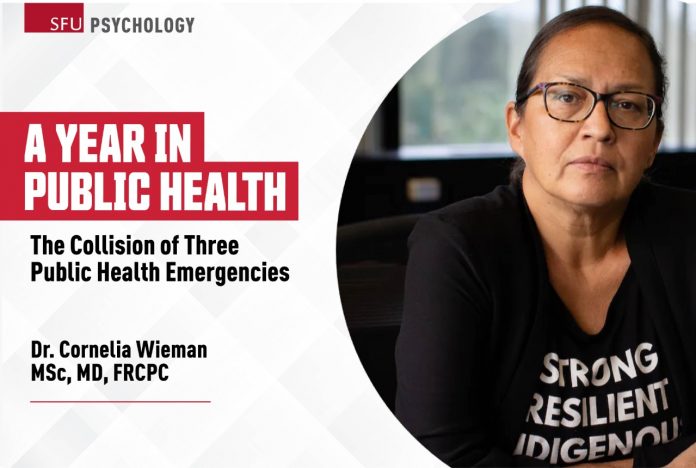
Dr. Cornelia Wieman on anti-Indigenous racism, COVID-19, and toxic drug poisoning

0
Photo courtesy of SFU

Content warning: descriptions of anti-Indigenous racism and brief mention of suicide. 

On May 6, 2021 the Indigenous Reconciliation Committee of the department of psychology hosted “A Year in Public Health: The Collision of Three Public Health Emergencies” over Zoom. 

The event featured acting deputy chief medical officer for the First Nations Health Authority (FNHA), Dr. Cornelia Wieman. She spoke about the toxic drug poisoning crisis, anti-Indigenous racism, and how COVID-19 has influenced these issues.

An increase in toxic drug use as a result of COVID-19 protocols has caused treatment centres, harm reduction services, and overdose prevention services to close. 

Dr. Wieman explained the term “toxic drug supply” is a more accurate description of the crisis than solely referencing opioids. “Not everybody experiences a toxicity related to drug use because of opioids. Nowadays, the toxic drug supply includes stimulants as well as anti-anxiety medications.” 

She also does not associate the word “overdose” with the opioid crisis because the word implies completion or attempt of suicide. She said this association misrepresents those who died from toxic drug supply. Instead, she explained that much of the crisis stems from the closure of treatment centres and similar services.

“There was a very significant, negative, unintentional consequence of COVID-19 colliding with the toxic drug poisoning crisis,” Dr. Wieman said. 

While isolation was implemented to stop the spread of the virus, it resulted in an increase in toxic drug poisoning rates by 93% from 2019 to 2020, said Dr. Weiman. She explained this has led to losing more people to death by toxic drug poisoning than to COVID-19.

According to Dr. Wieman, among the approximate 1.25 million Canadian COVID-19 cases, First Nations communities disproportionately make up 27,000 cases. Canada has seen over 24,000 deaths due to COVID-19 — 318 deaths have been in First Nations communities. 

“We have made an extraordinary effort through vaccination as one of our tools to get us out of this pandemic and especially protect our precious elders [ . . . ] who are our language holders, our knowledge keepers,” Dr. Wieman said. “This is very important to us as First Nations people.”

The FNHA advocated for First Nations communities to receive the first dose of the COVID-19 vaccine by March 31, 2021. Dr. Wieman recalled Indigenous people were also disproportionately impacted during the 2009 H1N1 pandemic due to limited access to health care from remote communities.

Because of this precedent, Dr. Wieman found it critical to push for the prioritization of Indigenous people in BC’s vaccination process.

She elaborated that Indigenous people commonly live with a high volume of people in small households, making it harder to isolate effectively and placing them at greater risk of infection.

She said people in First Nations communities might wait too long to be tested for COVID-19 or access medical support, as the fear of racism causes reluctance to leave their communities. 

Indigenous people in Cowichan Valley have reported grocery stores and restaurants refusing to serve those associated with or belonging to the Cowichan Nation. 

Dr. Weiman added that if an Indigenous person receives negative treatment from their primary care provider, they may have limited access to other physicians as their communities are often remote. 

As the FHNA begins distributing second doses, Dr. Wieman reported a relationship between Indigenous vaccinations and a decrease in daily COVID-19 cases in First Nations communities. 

Despite the impact of the three public health emergencies, Dr. Wieman encouraged First Nations communities to continue to be resilient.

“Working to eradicate anti-Indigenous racism is an ongoing battle. But I want to highlight, instead of taking a deficit-based approach, we take a strength-based approach [ . . . ] We’re still here. We’re going to get through this.”