Home Blog Page 345

Stadium project completes construction after multiple delays

0
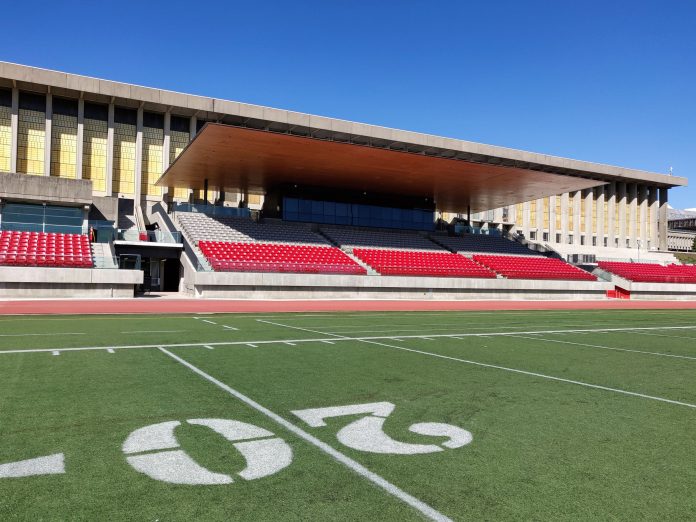
SFU Stadium from Terry Fox Field

The Stadium project at SFU Burnaby is finally open after finishing construction in Summer 2020. The stadium had a soft launch during August at the men’s soccer game against UBC where 1,000 fans attended, according to senior director athletics and recreation Theresa Hanson. In a statement to The Peak, she noted, “We are planning to welcome fans to our games this fall and deliver a comfortable, community experience in the new stadium.

“The venue will enable student groups to present events, stage concerts, and host major activities. We hope and believe the stadium will become the heartbeat of the Burnaby campus and encourage students to spend more time here.” 

The stadium has a canopy roof over 1,800 seats that “will feature spectacular sight-lines” according to SFU’s website. 

The project was approved in December of 2018, but was delayed due to challenges caused by COVID-19. It was originally projected to be completed in August of 2020.

Hanson noted the project was originally inspired by students and SFSS members years ago. “They envisioned a facility that would re-shape campus life,” said Hanson. Students’ hopes for this project dates back to the student referendum in 2012 that called for the stadium as well as the new Student Union Building that opened August 2021. 

In 2017, the SFSS offered $10 million in student levy from 2017–2030 to complete the project. The project was given the “green light” in December of 2018. The overall cost is projected to be $18–20 million. 

The project includes updates to the Lorne Davies Complex (LDC). According to Hanson, it began with “delivering amenities to the ground floor of the stadium, including a new football locker room, sports medicine taping room, and storage for outdoor varsity teams.” 

The next phase in the LDC updates is set to begin in Spring 2022. This phase of the project will include renovated change rooms with increased accessibility in the washrooms and amenities, and improvements to the varsity team rooms. “Some of the less glamorous but important improvements are seismic strengthening and improvements to the heating, ventilation and air conditioning systems,” said Hanson. 

“We have planned promotional nights that will attract and excite our students that we will be able to share once new provincial health guidelines are established next week.”

SFU announces self-disclosure of vaccine status for return to campuses

0
Two COVID-19 vaccine containers and one injection needle

SFU president Joy Johnson announced updated COVID-19 safety measures in preparation for the return to campus. In an email sent to faculty, staff, and students Johnson announced, “We are working to implement mandatory self-disclosure of vaccination status for all those who access our campuses including students, faculty, staff, and visitors.” 

Students who self-disclose must confirm two doses of an approved COVID-19 vaccine by September 13, 2021. While SFU stated they are working towards mandatory disclosure, those who do not disclose their vaccination status or are unvaccinated will be required to have “regular rapid testing.” The process will remain confidential.

Johnson’s email noted SFU is working to finalize the process. In a statement to The Peak, assistant director of external communications Braden McMillan said, “The community can expect regular updates as details are finalized.”

An update provided on September 2, 2021 noted SFU will soon be launching a “third-party website to gather vaccination status data of our campus community [ . . . ] All members of the SFU community, including faculty, staff, students and those who plan to visit one of our campuses are required to register and make a self-declaration.” It is unclear how this will be reinforced. 

As of September 2, 2021, 67% of faculty and 53% of students participated in an anonymous survey to disclose their vaccination status to SFU. At that point: 

  • 96.4% of faculty and staff and 90.1% of students are fully vaccinated 
  • 98% of faculty and staff and 95.2% of students have received at least one dose of the vaccine
  • 1.1% of faculty and staff and 1.8% of students indicated they are unlikely to get vaccinated
  • 1.7% of faculty and staff, and 1.2% of students chose not to disclose their vaccine status

SFU’s website reported they will be hosting at least 11 pop-up vaccination clinics across the Burnaby and Surrey campuses. Any individual age 12 and up can use these facilities. The clinics will be used on a drop-in basis. They are being hosted in partnership with Fraser Health. 

Along with implementing their university-wide communicable disease plan, SFU will require individuals to wear non-medical face masks in indoor spaces. SFU noted a small number of individuals will be exempt from wearing masks due to medical reasons. The process to receive exemption is unclear. The plan also includes cleaning surfaces, maximizing air flow, and auditing spaces for air quality. 

Students will need to prove vaccination in order to live in student housing, participate in intramural athletics, use the recreational facilities, and attend clubs or events.

The Peak reached out to SFU Administration for more information on the process for self-disclosure, but they noted the details had not been finalized at the time of publication.

“I am pleased with the clear decisions of the past week regarding masks and the BC Vaccine Card. We are already seeing the impact on vaccination registration due to the BC Vaccine Card. This is a meaningful approach, and will have a significant impact on vaccination rates,” said Johnson’s email.

Students with more questions regarding SFU’s COVID-19 safety plan have been directed to email [email protected]. 

RCMP Stand Down protests take place across BC

0
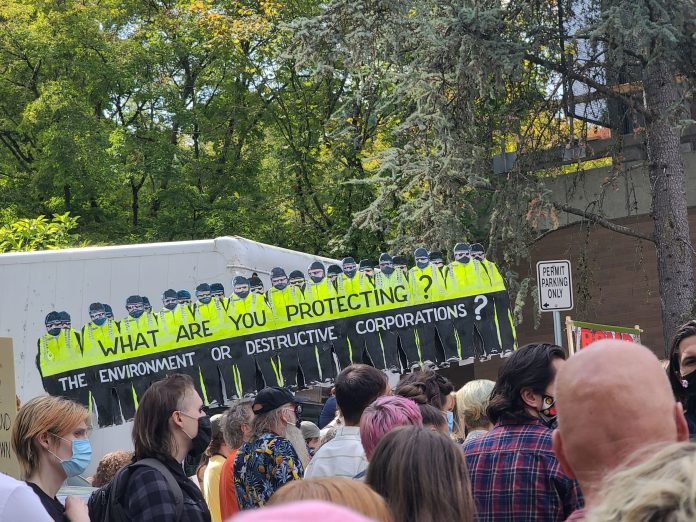
Background with board figures of police in uniform with words "what are you protecting?" on top and "the environment or destructive corporations?" at bottom. Foreground is people facing the right side.

On August 23, protestors rallied in front of RCMP offices for the “RCMP Stand Down” protests in BC. The 23 synchronous protests called for an end to the “illegal and violent actions of the RCMP” at the Fairy Creek blockade. Fairy Creek has been the stand-off ground between protestors against old-growth logging and police forces. The Peak was present and observed the protest at the Burnaby RCMP office.

In August 2020, protestors were invited by Pacheedaht Elder Bill Jones to set up a blockade at Fairy Creek watershed in Southern Vancouver Island. The watershed is a part of BC’s last 2.7% of BC’s ancient old-growth forests. 

These old-growth trees, up to 2,000 years old, are one of the last standings in the coastal temperate rainforest, with rich irreplaceable ecosystems home to endangered species such as the marbled murrelets. After the Supreme Court injunction was passed in April, the number of total arrests has risen to over 800 arrests at the Fairy Creek blockade. 

On August 9, Supreme Court Justice Douglas Thompson stated “The RCMP has not established that the police actions under examination are reasonably necessary for [ . . . ] the duties they assert.” Justice Thompson’s ruling redefined the limits of police enforcement in the injunction area, allowing regular citizens to witness and access the area “as long as they don’t violate the injunction by blocking the road or interfering in forestry.”

Protestors gathered in the parking lot of the RCMP office for the protest. Some protestors who were at Fairy Creek testified to the crowd the excessive police violence they have witnessed and experienced. 

Kaylayla Raine, an Indigenous activist, led the event with a group of Indigenous youths and young adults. Raine addressed the crowd.

“What’s happening at Fairy Creek [ . . . ] the violence towards Indigenous femmes, Indigeous and Two-Spirit people, Black people, disabled people, trans people. That’s profiling,” said Raine, “We have to protect those people — the most profiled, the most targeted, the most powerful in this fight.”

The Peak spoke to Que Banh, organizer of the RCMP Stand Down protests. 

“Since late May, the level of brutality on the front lines when the police are trying to enforce their injunction [ . . . ] has increased, especially in the past few weeks,” said Banh. “The abuse of power is completely out of control at this time and the government is not doing anything.”

Banh noted there is a lack of media presence at Fairy Creek. “Unfortunately, [mainstream] media is not on the ground, so they are not getting the factual stories. They have been for the most part copying and pasting the RCMP reports which are not factual and contain lies,” claimed Banh. “The media cannot document what is truly going on at [the] front lines when they’re kept several kilometres away from what’s really happening with the extractions.”

CBC journalists reported having to walk seven kilometres behind the police to report on the event. On July 20, the Supreme Court ruled that “restricting media access and movement” at Fairy Creek was unlawful. 

In a statement to The Peak, sergeant Chris Manseau, division media relations officer of the RCMP, stated that media have access in Fairy Creek.

“Despite some claims of access being restricted, Media Relations Officers and Division Liaison Team members on site continue to provide independent media and protester-appointed legal observers the opportunity to observe and report on arrests and provide support to arrested individuals as they are being made,” wrote Manseau.

Banh explained protestors are arrested and removed from the blockade without being charged. 

“If we were doing something severely wrong and such, why aren’t they arresting and processing and charging all of us?” Banh said. “I’m wondering if the RCMP have been following protocol when it comes to filing the appropriate paperwork, when it comes to use of force.”

“I’m not in a position to provide context to any officer’s actions based on a portion or snippets of videos and commentaries, but can assure you all our enforcement actions are well documented, including the use of body worn cameras, which we are prepared to disclose as part of evidence in criminal proceedings, or as part of a complaint process,” Manseau wrote. 

The Civilian Review and Complaints Commission, has received 163 public complaints about police misconduct at Fairy Creek as of Sept 1, 2021.

 “There’s a problem with having an oversight board but with no enforcement,” said Banh.

The SUB be the worst undersea vessel ever created

0
A partially submerged black submarine has two people standing on top. The submarine is near shore and the top has many countries' flags flown.
PHOTO: Ан Нет / Unsplash

Call me Ishmael. Some semester ago — ne’er mind how long precisely — I thought I would sail about a little ’n see the watery part o’ the world. Aft a few months at sea, I returned t’ land in search o’ me next adventure. But the sea continued t’ wave at me, beckonin’ me t’ its shore. I longed fer the days back on the water wit’ the salty air, crusty clothes covered in seagull poop, ’n scurvy. But lo, when I heard SFU was buildin’ a sub (’n nah jus’ any ol’ sub but the SUB), I climbed her heights on a quest fer undersea glory.

“Those sons o’ a beach,” I muttered under me breath lookin’ up at the massive disappointment in front o’ me owns eyes. T’was a big hunk o’ glass ’n concrete, nah the epic submersible vehicle I expected her t’ be. She was not seaworthy in the slightest — worst o’ all she be the furthest away from the sea she could possibly get. But a scallywag ain’t made fer defeat. A scallywag can be destroyed but nah defeated.

Me dreams o’ takin’ ARR 102: Deep Sea Pirates be absolutely crushed, like the mighty kraken that swallowed me pa’s ship so many years ago. So I did wha’ any sensible seaman would do ’n made me plan t’ get this mighty behemoth o’ a sub to the oceans below. ’Twas simple: I would blow up the base o’ the buildin’ ’n ride her down the mountain into the blue depths. I would stand on her helm ’n greet me watery home wit’ open arms ’n shoutin’ me pirates cry, “FUCK OFF YE LANDLUBBERS!” Thar I would live content fer the rest o’ me days. Aft all, the earth does nah wants new SUB buildings, but new submarines!

Wha’ I didn’ expect was how capable the SFU security crew were at thwartin’ me efforts. Guess nowadays no scallywag can carry a couple sticks of dynamite without bein’ stopped, no can ye? I pay me tuition, sir! If the misery of the poor be caused nah by the laws of nature, but by our institutions, great be our sin. Neigh, SFU’s power be too great. So t’ the sea I shall return. But head my warnin’ . . . that sub will be mine. No booty be too great fer the likes of me.

SFU Student Updates: September 13–19

0
"Student Updates" text in SFU red
You’ve already made it farther through the article than 97% of the student population. ILLUSTRATION: Siloam Yeung / The Peak

Key Updates

None of this means anything

According to recent email metrics, 99.5% of SFU students either automatically delete or don’t even open Student Updates emails. Of the remaining 0.5%, half of those students spend no more than 15 seconds on the screen before exiting. This data has led the writer of these updates to cry for hours on end due to the soul crushing realization they don’t mean anything to you. Why does SFU make them write empty emails? Why are they paid to write so much yet so little every day? Please, they want answers.

I gave my life to these updates and don’t know how to continue

Every day. Every single day. I wake up at 5:00 a.m. and begin my walk from campus to campus in search of updates. In a university where nothing seems to be going on, I work tirelessly to salvage any minuscule bit of information to present to you ingrates. Did you know it took me DAYS to crack the story on the co-op offices accepting co-op applications? And don’t even get me started on the weeks I apparently wasted attaching the international student hyperlinks to each update.

I begged Joy Johnson to release me from this hell but apparently I’m “integral to the well-being of SFU students,” so here we are . . . Another meaningless voice screaming into the empty void, completely robbed of the one comfort that made this job bearable.

Student Union Building (SUB) continues to be news

For the 37ᵗʰ straight year in a row, the SUB continues to be a talking point. Whether it be lack of construction, going under construction, or otherwise, the SUB has remained an ever-faithful monument to the pride of SFU student activists and Board faculty alike. After 10 years of incessant fighting, the SUB opened on August 23. Unfortunately, people seemed to have forgotten how to care about this opening after waiting for so long. The select few who remain invested appear only to be excited they have a place to nap.

So, here’s to the apparent completion of a building that will remain the point of contention for another 10 years to come. Yay.

Announcements

Campus morale remains unaffected despite mediocre efforts

A recent series of campus events you didn’t show up to or care about took place. These included some sort of yoga, something related to cooking, and dogs. I guess there’s no real problems to work on. That is all.

My wife and I are getting a divorce

Oh, that caught your attention, didn’t it? Not so quick to exit off the screen now, huh? Well, guess what. This announcement is entirely true. That’s right, my wife and I really are getting a divorce. I will not be discussing who filed but let’s just say it was not mutual.

Hollow Gesture Workshop: happening near you sometime soon

A workshop to appease students who have legitimate complaints is taking place at a convenient time and location near you. The workshop is being hosted in a beautiful nondescript hall with no expense spared to show attendees SFU really cares. There will be tiny, as well as fancy, foods served and appearances from a host of people with titles that sound important. This event intends to incite inaction in the most civilized of manners.

Employment and volunteer opportunities

The Peak Writer Position

Speaking of things that never get read, The Peak really, really needs more contributors . . . Successful candidates will possess an inflated sense of self importance, a “zany” personality, and main character syndrome.

Getting in contact with The Peak is simple, just pick up a copy of the paper from a campus newsstand and someone who works there is bound to start staring at you. Walk up to them, complain about how difficult it is to be a writer, and congratulations, you just got the job.

Head of SFU Parking

Do you enjoy bleeding people dry? Have a passion for 9ft x 18ft plots of concrete? If so, apply to be the Head of SFU Parking today!

Duties include: inventing new and effective ways to trap and punish debtors, consuming the minds of all unpaying commuters with anxiety, and creating confusing pricing and parking models.

Please note: if you have a passion for inefficiency, confusion, and transportation, direct your applications to the Head of SFU Transit systems instead.

Student Updates Writer position

Do you want a job where you’re consistently overlooked, underappreciated, and disregarded on a weekly basis? If so, look no further than the Student Updates Writer position!

Successful candidates will possess a doctorate in Communication, five years of experience working for a publication (not including student newspapers), the strength to cope with screaming into the void weekly, and a court subpoena from their wife.

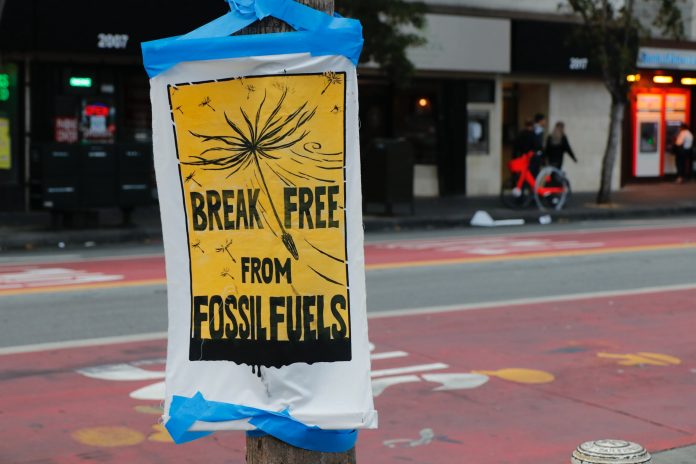
It’s time for SFU to fully divest from fossil fuels

0
Fossil fuels damage both the environment and SFU’s pockets. PHOTO: Eelco Böhtlingk / Unsplash

This summer, unprecedented temperatures captured the world’s attention when domestic and international news outlets warned about record-breaking heat in Lytton, just days before the town was destroyed in a wildfire. As grim as this was, the horror of the situation might reduce climate apathy and outright denial among individuals and institutions. 

But one institution seemingly not swayed by BC’s distressing new normal? Simon Fraser University. 

To be fair, SFU has taken important steps on climate. In 2016, the university committed to a 30% reduction in the carbon footprint of its investment portfolio by 2030. SFU did not opt for complete divestment, with former SFU president Andrew Petter claiming it would be impossible as many of SFU’s investments were in pooled funds. 

In 2019, SFU pledged to have a 45% reduction in investments in carbon-intensive companies by 2025, thanks in part to student advocacy. This year alone, as part of a wider array of climate strategies under the 2020 Strategic Sustainability Plan, construction of a new $33M biomass facility was completed on Burnaby campus. This has reduced greenhouse gas emissions from campus and UniverCity’s heating systems by 80%. 

While all of this is a good start, it’s just not enough. 

Other universities, in Canada and abroad, have stepped up to fully divest themselves of fossil fuel investments. In 2019, UBC voted to shift $380 million from its $2 billion investment portfolio into a “sustainable fund” aimed at promoting decarbonization. After a 100-hour hunger strike by the school’s chapter of Extinction Rebellion, the Board finally agreed to divest the rest of the funds of fossil fuel investments. Following UBC, SFU needs to consider new information on climate change and critically reassess its investment portfolio.

The climate crisis is strongly linked with ecocide, which international legal experts define as engaging in unlawful acts which knowingly damage the environment and have long term impacts. The crisis is also wrapped up in issues of potential genocide, since rising sea levels could lead to populations being displaced, loss of biodiversity, and food insecurity. 

If the morality of addressing climate change, or the thought of being beaten to the punch by UBC isn’t enough to change SFU’s stance on divestment, the financial aspect might.

In 2018–19, the fossil fuel sector was the “worst performing segment” of the stock market. As a result, University of Victoria’s Corporate Mapping Project reported UVIC’s fossil fuel investments suffered a $4 million loss between March 2018 and March 2019. The following year, CNBC’s Jim Cramer argued fossil fuel stocks were entering a “death knell phase” due to “young investor’s concerns about climate change.” So not only is SFU missing an opportunity to be a climate leader, we’re also probably losing money by supporting a harmful industry.

It’s worth mentioning there remains some debate as to the efficacy of divestment as a climate tool. While it’s true divestment alone doesn’t directly reduce the demand for fossil fuels, it does raise the cost of financing for companies in carbon-intensive industries like coal, oil, and natural gas. Demand-side issues can be tackled by separate policies. Fortunately, that, too, is in SFU’s power.

Divestment is just the beginning of what the university could accomplish with its investments. As the fossil fuel sector stumbles, other sectors poised to benefit from a clean energy transition offer better returns on investment — both in terms of profit and positive social impact. 

The most obvious tool to fight climate change remains renewable energy — an area SFU is expected to delve into on-campus, as per their 2025 Sustainability Plan. The price of solar and wind energy have seen significant drops in price this decade, supporting their rapid adoption. Investing in renewables would not only help continued price reduction, it can provide a return on investment as their popularity increases. 

In BC, Indigenous groups vying for energy independence and a new source of revenue have turned to local renewable energy projects. Despite regulatory hurdles, some projects have moved forward. Investing in Indigenous renewable energy projects can help manifest SFU’s commitment to reconciliation. 

There are also less obvious investing strategies to fight climate change. By investing in companies producing or researching meat substitutes, SFU can support an emerging industry aimed at tackling the environmental impact of the agricultural sector. This industry is, according to Forbes, poised for a takeoff. 

Another effective climate tool is energy efficient retrofits to reduce emissions from buildings. The practice of retrofitting has to do with replacing old “energy-consuming systems” with more energy-efficient appliances, light fixtures, ventilation systems or better insulation to reduce heat loss. Revamping existing buildings to reduce energy use offers greater potential decarbonization than building new low-carbon buildings. Investing in companies performing retrofits is a positive way to elevate climate action while profiting. 

Since SFU’s initial announcement of partial divestment in 2016, we’ve seen successive summers with out-of-control wildfires, two dire reports by Intergovernmental Panel on Climate Change reinforcing the importance of climate action (in 2018 and 2021), and a BC town leveled by fire.

It’s time for SFU to scale up its climate ambition: a healthy fossil fuel industry is incompatible with a healthy BC.

What Grinds Our Gears: TikToks that encourage overconsumption

0
Too much shopping will kill the planet. PHOTO: Karolina Grabowska / Pexels

I’m chilling on my couch, watching TikToks — as one does — when I come across the side of the app where people buy completely unnecessary things just for the heck of it. What’s more, the comment section is filled with people saying “I’m getting this” or “drop the link sis.” So one TikTok goes on to encourage hundreds, maybe thousands more, to get things like one-time use makeup wipes. My day is ruined. 

What’s even more upsetting is that the majority of TikTok users are under the age of 30, since young people arguably care the most about climate change and the plastic crisis. Oceana, a nonprofit ocean conservation organization, found we may very well have 46 million metric tons of plastic accumulating in our water bodies each year by 2025 if we do not take immediate action to stop it. But far from reducing our plastic consumption, we’re somehow coming up with new ways to increase our carbon footprint. 

Besides the environmental impact, we’re also funding the pockets of Bezos. This man has the audacity to thank Amazon employees and customers for paying for his space trip, even though the company exploits workers and plays a huge role in increasing income inequality.  So when Karen is showing us her Amazon haul of a freaking banana slicer on TikTok, she is doing double-duty by increasing plastic use and supporting Amazon. 

We can do better, Gen Z.

Political Corner: What is BDS and what does it have to do with me?

0
Palestinians deserve to wave their flag without fear. PHOTO: Latrach Med Jamil / Unsplash

By Anonymous Jewish Student

BDS stands for Boycott, Divestment, and Sanctions and was an international call made by the Palestinian Civil Society organization in 2005. 

BDS calls for non-violent pressure on the state of Israel to comply with international law by meeting three demands: 

  • the end of the illegal occupation and colonization of Palestinian land and the dismantling of the separation wall, 
  • recognizing fundamental rights of Arab-Palestinian citizens of Israel to live equally, and 
  • the promotion to right of return for refugees who were forcefully expelled from their homes in 1948 by ethnic cleansing. 

BDS is not an isolated campaign. Rather, it needs to be understood as a non-violent tactic in the broader struggle for Palestinian freedom that has been ongoing since 1948. As a result, BDS is only one path to fight for the freedom of Palestinians from colonization. The call for BDS is a call to hold Israel and the international community accountable

for its human rights violations in Palestine. Israel has built a “separation” wall forcing Palestinians to go through hundreds of checkpoints. When Palestinians tried to resist, they were harassed and dehumanized. Israel controls the airspace, commerce, and water of both Gaza and the West Bank, among many other human rights violations. A common argument in the defense of Israel is that it is a victim of bullying by the surrounding countries — yet it has invaded and occupies the Golan Heights which belong to Syria, and has invaded Lebanon.

It is important to remember that BDS emerged as a form of resistance against colonization and ethnic cleansing only after previous so-called “negotiations” have repeatedly failed. As Palestine has constantly been under attack, asked to give up more land in return for less rights, saying this movement is too harsh stems from a flawed belief there is a level playing field between the oppressor and the oppressed.

But what does any of this have to do with us at SFU? For starters, the Simon Fraser Student Society (SFSS) voted in support of BDS. The BDS call, as it might apply on campus, sees divestment from companies, institutions, and other organizations that work on or uphold the illegal occupation of Palestine and violate Palestinian human rights. For example, students should consider boycotting HP and Puma since the former “provides technology to the Israeli army” while the latter operates on “illegal Israeli settlements.”

The call for BDS on campus is not just about individual choice, but rather, a collective action to hold institutional bodies accountable for what we see as an attack on human rights. 

Life on campus will not drastically change for students on campus of any identity. BDS is not about the exclusion or abuse of Jewish students and neither is it about attacking Jewish institutions. In fact, there are many Jewish students, like myself, who are joining the call for BDS and demand that Israel stop its human rights atrocities. 

A few ways students can support this movement is by talking to your department student union or worker’s union to take up a motion for Palestine, bring this issue up at elections to see what your representatives are doing to support Palestine, put pressure on SFU to voice its support of Palestinian students, and continue to be active in various local and international actions of divestment and boycott. BDS is about including Palestinians in the conversation when discussing human rights and standing up in defence of Palestine for the injustice it endures.

We need to increase youth voter turnout

0
Young people need to show up if they want to see progressive change. PHOTO: Manny Becerra / Unsplash

The upcoming 2021 Canadian federal election has a five week campaign period. During those five weeks, political parties are attempting to persuade voters to support them, but the greater underlying issue is convincing young voters to vote at all. Despite the 2019 federal election having the “highest national turnout since the 2004 election” overall, only 53.9% of eligible 18–24 year-old voters cast their ballots. An increased youth voter turnout in the upcoming elections is necessary to represent  youths’ concerns in parliament.

The 2015 National Youth Survey results indicated “youth were less likely than older adults to feel that by voting they could make a difference and more likely to feel that politics and government seem too complicated.” 

Since winning candidates have no required minimum number of votes, it may seem like there is no incentive to vote. After all, candidates can win with a majority of votes from any voting age group and an absolute majority isn’t needed. However, the low youth voter turnout increases the risk that their respective riding’s outcome will overlook youth’s political interests. Given that us Gen Z voters are the most culturally diverse age group, our votes have the chance to increase representation for diverse communities’ concerns in parliament. Our generation is also more likely to advocate for climate action, so our votes may help elect candidates who are passionate about sustainable initiatives.

Our votes influence which political party will be responsible for making decisions crucial to Canadian residents’ and non-residents’ financial wellbeing, health, and safety. For example, the Canada Emergency Student Benefit impacted over 2 million lives. Additionally, continuously changing travel restrictions influences the lives of international students and helps curb the pandemic. As Canada’s COVID-19 cases continue to increase, the pandemic continues to demonstrate its unpredictable nature. By not voting, we miss the opportunity to choose qualified government leaders to guide us through the pandemic safely.

Elections Canada reported, “The more recent generations of youth continued to vote less, even as they became older.” These trends indicate that voter participation is an important habit to instill early on, because it may contribute to a voters’ likelihood to vote in future elections.

However, low voter turnout among young voters remains an ongoing issue, as those ages 34 and under are least likely to vote. Reasons for not voting included a lack of time, difficulty proving their identity at polling stations, and confusion about the voting process. 

Voting is more than an opportunity — it is a responsibility. Collectively, the youth vote carries weight, as 18–24 year olds made up over 2.7 million of the 2019 election’s electoral population. By voting, we have the chance to advocate for our concerns at the national level.

To register as a voter, opt-in for mail-in voting ballots, and more, visit Elections Canada. Other than election day, voters can vote on advance polling days (September 10–13), by mail, or at an Elections Canada office (before September 14 at 6:00 p.m.). Eligible voters living abroad can apply to the International Register of Electors before September 14.

SFU’s attempt to help international students with the CARES program falls flat

0
International students need more support as they travel for in-person classes. PHOTO: ConvertKit / Unspash

SFU has a prominent international student community which continues to expand despite the ongoing pandemic. Students from different countries, who have either been recently admitted or are returning after the lifting of pandemic restrictions, have been struggling to deal with travel restrictions and course requirements. 

By launching their CARES (COVID Assistance and Remote Engagement Support) program, SFU is trying to offer a helping hand for students’ self-isolation and accommodation requirements. But the program does not do enough — especially for those who are grappling with how to come back to the country now that classes are in-person again. The program provides limited financial assistance to international students, overlooks the emotional toll travelling and isolating takes, and has unclear requirements.

The CARES package offers certain benefits to SFU and FIC (Fraser International College) students who need to self-isolate after returning to Canada, like preparing an isolation stay for the student and offering financial aid up to $500. 

However, this may not be the cheapest option out there. The total cost of travelling from countries like India can be up to $4,000 per one-way ticket. Due to flight bans, Indian students are having to undergo third-country travel, which adds to the cost. Getting tested multiple times on top of that only adds to the exorbitant price of coming to study at SFU. 

The hotels offered by CARES also limit capacity for the cheapest packages, and are unavailable from August 19–31, close to the start of the Fall 2021 semester. Other hotels in the program range from $120–$125.35 per night — the cost of food on top of that means an expensive and draining situation for an international student. The accommodation is available for either 11 or 14 days, and the $500 subsidy is only offered to international students who “have exhausted all other resources, and have demonstrated financial need.” It is unclear how they would fulfill this requirement.

There is a substantial need for a separate bursary because $500 simply does not assist the students coming from lower-income backgrounds. This amount barely makes a dent in the total amount that students have to spend, which can be upwards of $7,000. Additionally, the website does not explain whether students who were able to make their own plans for isolation are eligible for the $500 subsidy, causing more confusion and uncertainty. 

While it seems like SFU and FIC attempted to help students get accommodation to transition back to Canadian student life, they missed out on the opportunity to offer help that would genuinely ease financial burden and stress. It’s great to try and help international students —  who are often stereotyped for being wealthy —  but there is more work to be done to assist those who don’t come from comfortable ways of living. 

SFU should increase the subsidies for international students, and they should also be available to all students travelling from other countries regardless of their choice to use the CARES package, as long as they can offer proof of travel. The CARES program may appear helpful, yet it segregates those international students with compromised financial backgrounds — especially those who barely have enough funds to book a flight to Canada at a time when flights are outrageously expensive. By only giving options that fit the well-off international students, the program falls short of doing what it claims to do — helping all international students return safely.