Home Blog Page 340

Sdahl Ḵ’awaas receives 2021 Sterling Prize

0
S'dahl K'awaas Sterling Prize event poster
PHOTO: SFU Public Square

Content warning: mentions of anti-Indigenous racism in paragraph four

On October 14, 2021, Sdahl Ḵ’awaas received the Nora and Ted Sterling Prize award. The Sterling Prize in Support of Controversy recognizes work that “contributes to the understanding of controversy” and challenges complacency. 

During the ceremony, she had a live conversation with Jisgang Nika Collison and Sharanjit Kaur Sandhra about her story and the role of museums in reconciliation. It took place at the Bill Reid Gallery of Northwest Coast Art. Collison is from the Ḵaay’ahl Laanas of the Haida Nation and executive director of the Haida Gwaii Museum, and Sandhra is a UBC history PhD candidate.

Sdahl Ḵ’awaas, also known as Lucy Bell, is a member of the Haida Nation. She resigned from her position as head of the Indigenous collections and repatriation department at the Royal British Columbia Museum in 2020, citing a racist and discriminatory culture. 

At the ceremony, Sdahl Ḵ’awaas recalled an instance when a curator said, “‘The Haidas treat the museum like a grocery store’” in response to a request for two masks out of the thousands in the museum’s collection. She heard another executive member at an anti-racism workshop say “it was a science that Indigenous people can’t handle alcohol.” 

Her resignation led to a months-long investigation by the Public Service Agency into the culture at the museum. The results of the investigation confirmed the museum to be a “dysfunctional and toxic workplace, ­characterized by a culture of fear and ­distrust.”

Sdahl Ḵ’awaas said, “I am both happy and sad to accept this award. It just breaks my heart that I’m here getting an award for shit that I had to put up with. 

I hope that my speaking out [creates] a space for my girl, for my nieces, my nephews to have, to claim their space in these institutions, to claim our belongings, for our kids to be going out there and getting those 12,000 Haida belongings and to not be faced with racism and a closed door.” 

Sdahl Ḵ’awaas believes justice has not yet been served. “There’s still a lot more work to do.” She added, “It’s going to take museums and the people in the museums to speak out and do better [ . . . ] I called them to action, they need to step up and do the work.” 

Speaking to the future of museology, Ḵ’awaas said, “I don’t think you need belongings to tell a story of people [ . . . ] 95–97% percent of our belongings are in storage.

I’d rather see them have current belongings, something that somebody today has created for that purpose, not [those] stolen or sold under duress to tell our story, a fragmented story.” 

Other museums such as the Museum of Vancouver (MOV) began the process of repatriation — returning Haida belongings to Haida Gwaii — in 2019. Curators at MOV also consult Indigenous groups for their knowledge and input on exhibits.

Sdahl Ḵ’awaas is continuing the Haida nation’s repatriation work and pursuing a PhD in individualized interdisciplinary studies at SFU, focusing on Indigenous museology. 

For those interested, the ceremony is available for viewing on SFU Public Square’s YouTube channel.

BC government announces creation of Young Leaders Council

0
People in a meeting
PHOTO: Leon / Unsplash

On October 6, 2021, the BC government announced the creation of the StrongerBC Young Leaders Council. The Council will consist of youth aged 14–26 and will be chaired by Brittny Anderson, the Premier’s special advisor on youth. 

The Council will provide youth members an opportunity to represent their communities, share opinions, and meet governmental leaders. “From climate change to the ongoing COVID-19 pandemic, young people are facing considerable challenges,” said Premier John Horgan in a press release. “The StrongerBC Young Leaders Council will have our government’s ear as part of an ongoing dialogue. We want to know what matters most to BC’s youth and to make sure they have a say.” 

Discussion topics will include “economic recovery, the environment and natural resources, climate change, education, housing, mental health and other areas important to youth.”

Applications to join the Council opened on October 6, and closed on October 27. The application process included submitting a self-biography, a description of work and volunteer experience, and a reference. Applicantions were open to Canadian citizens or permanent residents, residents of BC, and required applicants to be able to commit to at least one year serving on Council.  

All interested youth were encouraged to apply, specifically Indigenous youth, youth of colour, those living in remote communities, youth with disabilities, youth in the LGBTQIA2S+ community, and any other youth whose communities are under-represented in government. 

Kishoore Ramanathan, Premier of the 93rd British Columbia Youth Parliament, encouraged youth to apply in a press release. “The voices of young people must be heard at all levels of government. As youth, we have unique perspectives and diverse experiences that can contribute meaningfully to public policy. Decisions that are being made today will directly affect our generation and continue to affect generations to come.”

Council members hold positions for one to three years and meet once every three months for approximately two to four hours at a time. Council meetings will involve meeting other young leaders, discussing key topics facing youth, suggesting topics for future discussions, working on special projects, and sharing thoughts with the Chair.

More information on the Young Leaders Council can be found on the provincial government website, as well as through emailing [email protected] or calling 250-940-8555.

TransLink installs WiFi on buses and SkyTrain cars

0
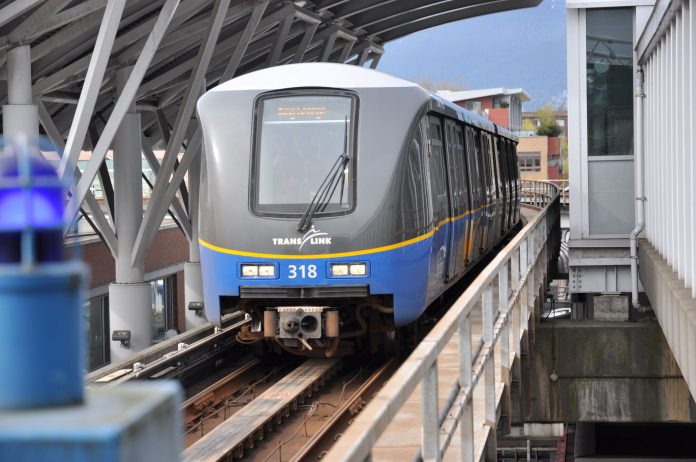
Expo line train on track
Diego Mazz/Unsplash

TransLink is partnering with Shaw Communications Inc. to add free WiFi for all passengers in select areas. During the first week of October, WiFi was added to six RapidBuses, on three SkyTrains, at Edmonds Station, and at Carvolth Exchange, according to TransLink’s media release. 

“This is the beginning of a system-wide rollout that will provide free WiFi for TransLink

customers on all buses, SeaBuses, SkyTrains, transit stations, and major transit hubs,” said TransLink. They plan to have WiFi installed system-wide by 2026. 

WiFi is currently available for all on most SeaBus vessels and terminals. 

According to Peace Arch News, WiFi on transit was supposed to be introduced in 2020 but was delayed due to complications caused by the COVID-19 pandemic. 

In 2018, the then-CEO of TransLink Kevin Desmond said to CBC News, “The Wi-Fi project in and of itself is not meant to be the revenue generator for TransLink [ . . . ] So we’re not expecting to commercialize our customers’ access to the free network.” 

Current TransLink CEO Kevin Quinn said in the media release, “Free WiFi means that our customers can use their transit time for leisure, work, or better connecting with family and friends without spending their money on data fees.”

Posters and signs will be placed in the areas where WiFi is currently available. It will also display instructions on how to connect during transit. 

Customers who use the WiFi service can give their feedback to TransLink through their website. The feedback forum is asking for information on how easy it was to connect, the reliability of the network, the presence of any issues, and suggestions for improvements. 

Katherine Emberly, president of business for Shaw Communications said in the media release, “Today’s announcement represents another milestone in our collective commitment to providing commuters with fast, seamless WiFi connectivity that they can enjoy for free across TransLink’s system.”

TransLink’s WiFi is compatible with most smartphones, tablets, and laptops. It is free to use regardless of the user’s current internet provider. 

Senate Report — October 4, 2021

0
AQ with blue skies
PHOTO: Allyson Klassen / The Peak

Reports on National Day of Truth and Reconciliation and First Peoples’ Gathering House

Johnson reflected on SFU’s programming for National Day of Truth and Reconciliation and recognized reconciliation is an ongoing process.

“At these events, SFU has been able to reaffirm its commitment to serve as an instrument for reconciliation through restoring relationships with Indigenous communities. We all recognize that this involves meaningful actions in helping with a healing process for past injustices,” said Johnson.

In September 2021, SFU showcased the First People’s Gathering House’s art. SFU plans to start construction of the Gathering House in spring 2022. According to Johnson, it intends to address the SFU Aboriginal Reconciliation Council’s calls to action. The report urged SFU to provide Indigenous students and staff with “culturally safe and culturally appropriate spaces on all three SFU campuses.”

Updates on the return to campus plan

Johnson noted SFU members’ co-operation with COVID-19 safety measures, such as following campus mask mandates.

“Our first month of the semester’s gone really well. And I really want to thank all of you who’ve been part of that process,” said Johnson.

As SFU continues to consult with public health authorities on public safety policies, they are considering ways to verify student and staff’s vaccination status.

“More than 85% of our community have self-declared in terms of their vaccination status. And of those, 97% are vaccinated,” said Johnson.

Despite the high rates of self-reported vaccine status, Johnson cautioned senators they are still checking the data for survey respondents who responded with multiple emails. The final results of SFU’s vaccination status survey are pending. 

“We’re working with Teck Industries right now, and they have generously provided funding to install 1,600 copper patches on door handles, bathroom push plate places, and elevator buttons.

“Due to the antimicrobial properties of the copper, the patches can kill 99% of the surface bacteria,” said Johnson.

The next regular Senate Meeting will be held on November 1, 2021.

Proof of vaccination now required for self-declaration

0
screenshot of how to get a digital BC vaccine card
PHOTO: Government of BC website

On October 7, 2021, SFU vice-president academic and provost Catherine Dauvergne announced in an email mandatory proof of vaccination and declaration of status. The email was sent to faculty, staff, and students. This announcement was made in support of the BC government announcing mandatory vaccination for public service employees. The email did not specify when upload of proof is required. 

Through this process, SFU hopes to gain more accurate information about the community’s vaccination rate to take the necessary steps to ensure everyone’s safety. Dauvergne stated different options will be available to accommodate those who do not feel comfortable providing proof of vaccination through digital means. 

According to Dauvergne, this mandatory process is to “reach individuals who are not fully vaccinated and support them to get vaccinated.”

Dauvergne said information from the vaccination declarations will allow the school to determine whether to make vaccinations compulsory for all faculty and staff. 

Vaccine pop-up clinics have been in place since August 27. To increase accessibility, SFU partnered with Fraser Health to provide first or second doses to domestic and international students. Students living in SFU residences were required to verify their vaccination status.

SFU’s Return-to-Campus page provides important information regarding the COVID-19 safety measures, which include vaccination pop-up clinics, mandatory mask mandate, and safe practices to prevent COVID-19. In order to participate in non-essential activities like businesses and events at SFU, the BC vaccine card is required as proof of vaccination, according to the rules set out by the provincial health authority. 

The Safety Plan on SFU’s website offers details about the university’s “layers of protection” against the pandemic such as ventilation upgrades and enhanced cleaning for “high-touch” places on campuses.

At the time of writing, 79% of all BC residents are at least partially vaccinated and 73% of the people in BC are fully vaccinated.

Dr. Eva Jewell presents lecture on embodying anti-oppression for reconciliation

0
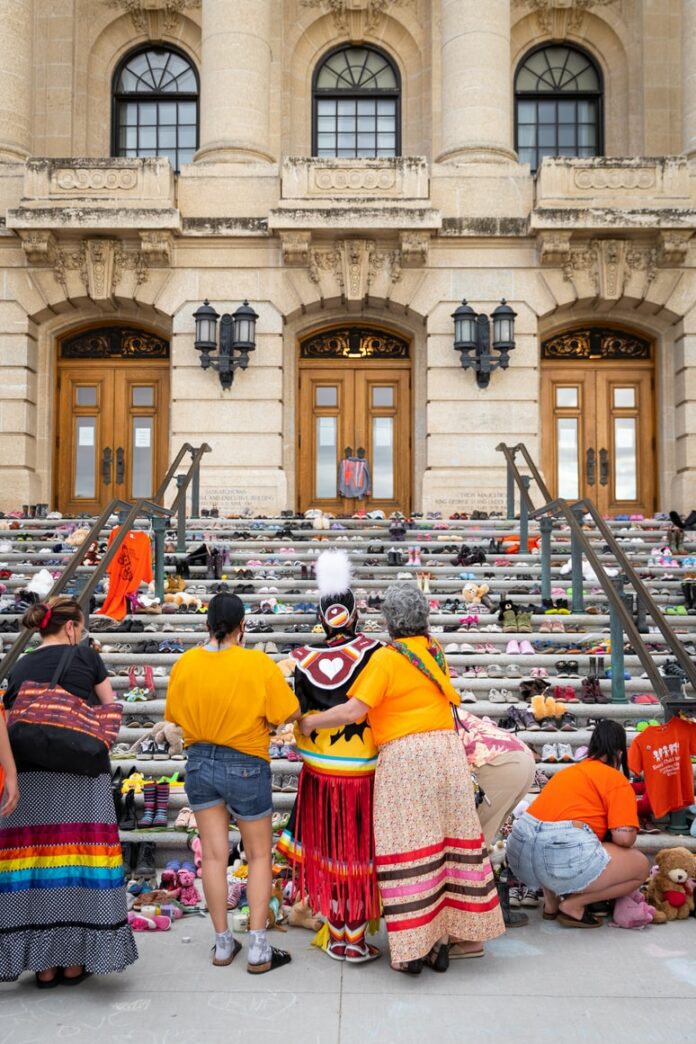
three people, one in Indigenous garment, looking at a staircase full of toys
PHOTO: Tandem X Visuals / Unsplash

On October 6, 2021, Dr. Eva Jewell presented her lecture From Structural Racism to Personal Practices: Embodying Anti-Oppression for Reconciliation as part of an ongoing series hosted by SFU Public Square and Resilience BC Anti-Racism Network. 

Jewell (Ma’iingan Dodem) is Anishinaabekwe from Deshkan Ziibiing in southwestern Ontario. She is the research director at Yellowhead Institute and an assistant professor at X University. Her work includes co-authoring the annual “Calls to Action Accountability,” as well as other community oriented work with the Anishinaabeg people.

Jewell’s talk drew from her project at Yellowhead Institute, where she observed five themes from government response reports: “representation in society, public education and awareness, institutional change, addressing policing and the justice system, and Indigenous self-determination.” 

She added, “There’s a need for positive, authentic representation [ . . . ] of Indigenous peoples. Not only will it have benefits for Indigenous peoples, it can contribute to normalizing Indigenous presence and perspectives in this country.

“Reconciliation is the context that the Canadian public is familiar with when approaching the conversation regarding their country’s systemic treatment of Indigenous people.” She challenged attendees to “resist tokenizing Indigenous peoples and asking us to perform trauma.”

She spoke about how non-Indigenous public opinion is used as an excuse to not address systemic racism. 

“Too often these issues are framed as ‘Indigenous issues’ and they are not [ . . . ] they are in fact colonial issues rebranded as the fault of Indigenous peoples. This distinction needs to be made clear in public education and awareness.” 

Jewell noted calls to action 1–42, which directly challenge structural racism and ask for structural change, are the ones being neglected. The majority of completed calls to action have been between 43–94. As calls 1–42 address the barriers Indigenous peoples face on a daily basis, Jewell emphasized the need to advocate for their completion. 

 “As reconciliation becomes a more mainstream conversation in Canada, there is a fear I think for many Indigenous peoples that this will become the new form of exploitation and recolonization [ . . . ] Canadian institutions are actually advancing predatory and exploitative practices in their reconciliation agendas,” said Jewell. 

Jewell summarized issues that seem to prevent meaningful structural change: non-Indigenous public interest, “paternalism, structural racism, reconciliation as exploitation, and insufficient resources.”

She also provided a list of personal practices that can be implemented immediately by individuals to promote systemic change. Some of the action items on the list ask for individuals to familiarize themselves with resources created by Indigenous people, “interrogate your privileges,” advocate for restitution, hold governments accountable, and to fight against the “apathy of Canadians.

“This simply isn’t about Canadians. This is about changing the structures that harm Indigenous peoples daily.” She added much of her work was “simply asking for the very bare minimum that the federal government has promised. 

“That’s not to mention the reclamation work we need to be doing in our communities for our languages, our cultures, and our ways of life.”

To find out more about Taking Action! Speaking Series and their upcoming events, visit their webpage.

Students to partake in hunger strike against SFU climate inaction

0
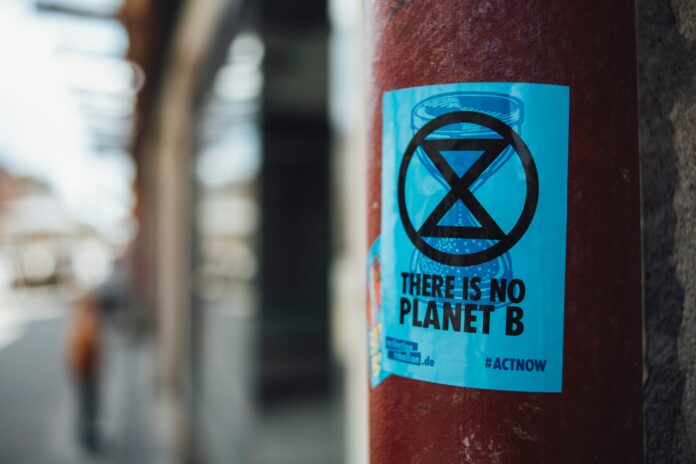
Blue poster from extinction rebellion
PHOTO: Markus Spiske / Unsplash

Content warning: May contain depictions of hunger

Disclaimer: Although some members of SFU350 are in support of this campaign, the hunger strike campaign is organized independently from them.

SFU students have organized a hunger strike which they aim to start on November 1, 2021. The hunger strike is planned in response to SFU’s delays in taking on fossil fuel divestment. The campaign demands SFU fully divest from fossil fuel by 2025, educate Burnaby campus communities on the risks of tank farms, and publish a statement recognizing SFU staff, students, and faculty who oppose the Trans-Mountain pipeline expansion. 

The Peak spoke to Zain Haq, the main hunger striker and organizer of this campaign. Haq is a third-year economics student and a member of Extinction Rebellion Vancouver (XR), a climate advocacy group committed to nonviolent direct action. Although Haq considered organizing the hunger strike as an XR action, he wanted to take this opportunity to build an SFU community of people participating in direct action. According to Haq, the campaign has already gained support from the SFU community, including Tim Takaro and SFU350. 

“It’s not just about divestment, because divestment is a bit of a euphemism, and investment in fossil fuels is also a euphemism. The reality is that they’re invested in social collapse, which is what we’re looking at if we go over two degrees,” said Haq. “I think people take you seriously once you cause emotional disruption. When you’re doing a hunger strike, that’s what you’re doing: you’re upsetting the opponent, inflicting a reputational cost on the opponent.” 

Haq plans to camp out overnight in the AQ, consuming only lemon water, salt, and vitamin tablets until SFU administration accepts their demands. Haq was inspired by Roger Hallam, co-founder of XR, and UBC’s hunger strike in 2020. Previously, Hallam did a 14-day hunger strike at King’s College in London to pressure his university to divest by 2025. Hallam was successful and King’s College fully divested from fossil fuels in 2021.

The Peak reached out to SFU administration for comments but did not receive a response by the publication deadline. 

Prior to the strike, the campaign will hold a public talk to recruit more volunteers to strike or to take on a supportive role. Jaden Dyer, media co-ordinator of the campaign and fourth-year environmental studies student said the campaign will be open to “engage in a respectful dialogue with the university administration liaisons. No date has been announced for the talk.

“[SFU has] continued to lack the urgency that the climate crisis demands, and that so many students at this institution feel,” said Dyer. “We students tend to understand all too well that our time to act is so limited. We’re told that when we get our degrees and earn our dream jobs, that’s when we’ll make a difference. But for many of us, that will simply be too late.

“We can’t live in hope for our futures, we’re forced to live in terror. And instead of having our paths paved out for us by our university, they are being stripped away. We have to demand change now, or the degrees we’re working towards won’t matter.”

Dyer stated SFU Board of Governor’s response on September 28, 2021 to SFU350’s presentation was “atrocious” and “it’s clearer now more than ever before that the climate emergency has never been treated as such.” In the Board of Governors meeting, two motions were made to refer SFU350’s demands to “a later date.” Haq, however, was not surprised at the SFU Board of Governors’ response. 

“[They] responded to the National Observer saying that divestment doesn’t solve the problem of the investment being handed over to someone less ethical [ . . . ] And that to me felt like saying that a mass murder project is better done by well-mannered people than ill-mannered people,” said Haq. “I think it comes down to what the right thing to do is and what the students are invested in because ultimately it’s the students’ money.

“Our university is complicit in something that is quite arguably the greatest criminal act in history which is the mass extermination of human beings if we go over two degrees global average temperatures. The university is financially invested in that and that’s morally regressable [sic].”

Missing and murdered Indigenous women and girls need more attention and media coverage

0
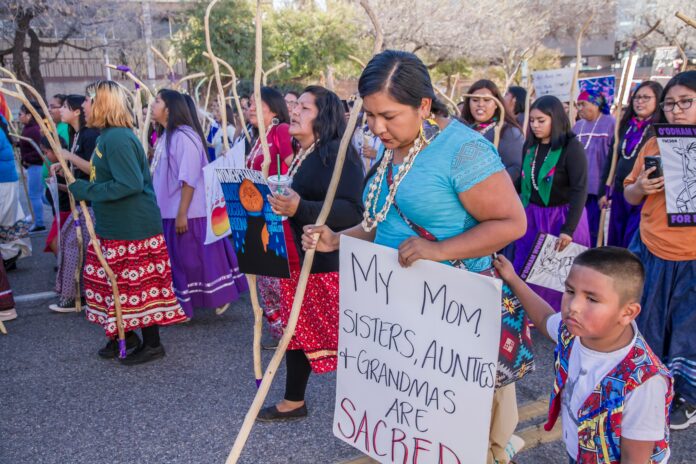
Indigenous women are important, and should be treated as such. PHOTO: Dulcey Lima / Unsplash

Content warning: Mention of murder, disappearances,and anti-Indigenous racism


In Canada, 1,200 Indigenous women have been estimated to be missing or murdered from 1980 to 2012. However, many Indigenous rights groups report that the number is much higher — nearer to 4,000 — because cases are underreported. Despite experiencing these disproportionately higher rates of violence, investigation efforts for missing Indigenous women cases tend to be slow compared to white women. Missing Indigenous women cases need to be treated with the same kind of urgency. 

Journalist Gwen Ifill coined the term “missing white woman syndrome” to explain the disparate news coverage a missing white woman’s case receives over a missing woman of colour. 

For example, Gabby Petito’s disappearance amassed a lot of media attention and awareness, leading to more pressure being put on her case. After Petito was reported as missing on September 11, her family spoke at news conferences and her case blew up on social media. Her remains were confirmed to be found on September 21. Investigation efforts for this tragedy are what Petito’s family deserves, and the same effort should be given to the thousands of families of missing Indigenous women. 

Wyoming, the state where Petito disappeared, reports that about 400 Indigenous women went missing in the last decade. Additionally, the report found 51% of all white homicides had news coverage. In contrast, only 18% of Indigenous women homicides were reported on.

Less coverage leads to less resources and pressure to find these women. It’s hard to imagine that this communicates anything other than the message that missing Indigenous women do not matter as much as their white counterparts. 

When we hear about missing and murdered Indigenous women, it’s in the collateral ways news media and police have failed to report on their deaths. It’s as if they can only recognize their mistakes when reflecting on the thousands of Indigenous women who have gone missing. I can’t recall the last time the news media covered a missing Indigenous woman to the extent they have Petito. 

Colonial legacies and oppression contribute to Indigenous women being vulnerable. Mainstream media has the ethical obligation to break free from colonial frameworks and centre Indigenous voices. The erasure of Indigenous cases is a way of silencing these tragedies as if they’ve never happened. No one deserves this.  

Candace Lowe-Zamora, a member of the Coyote Valley Band of Pomo Indians, says there is a tendency to victim-blame when Indigenous people do receive news coverage. “They always focus on something negative like, ‘Were they on drugs or drinking alcohol?’ And then they say, ‘Well, they shouldn’t have been doing this or that.’ But with Gabby, she was just treated as a victim, as she should be.” Coverage like this only perpetuates negative connotations about Indigenous people. 

As Lowe-Zamora says, by framing missing victims around stereotypes like alcohol consumption, Indigenous women don’t remain just as victims in their coverage. Why would people be as keen to find them when the news media doesn’t try to humanize them like they would a white woman? It garners less sympathy, making their disappearances seem like an inevitability rather than a tragedy. 

Petito receiving substantial news coverage is definitely not her fault. It’s the media outlets that cover the stories of missing white women much more intensely than they’d cover the thousands of Indigenous women that is significant. Indigenous lives deserve to be equally grieved and their cases deserve equal attention.

What Grinds Our Gears: People judging others for dressing up for Halloween

0
Illustration of pumpkin, sheet-ghost and raccoon costumes
Just let people dress up in their hot outfits. ILLUSTRATION: Justin Yang / The Peak

Dressing up for Halloween should not have an age limit, it is basically like ComicCon but at home with your friends. There shouldn’t be a hard limit on what is the appropriate age to stop dressing up in costumes. This is why it’s frustrating to see people shame others for just having fun and doing what they enjoy.

Halloween is the one time where you should be able to wear what you want with no judgement and eat as much candy as you want (it’s like a cheat day with ghosts). As a kid, the excitement is in the costume and the trick-or-treating. As a teenager, you get the kick out of going to multiple parties and scary movies. I remember feeling frustrated in High School because I wanted to dress up as Wednesday Addams from The Addams Family, but my mom said no because I “had grown past that dressing-up age”.

But why does the fun have to stop there? As a university student who hasn’t experienced much Halloween culture in my home country, I want to dress up and have fun before the cold takes away my ability to wear hot outfits. Grown-ups should be allowed to have fun, to rep their favourite Addams Family character, or wear their “Vampires Vs. Werewolves” t-shirt from their Twilight era.

People shouldn’t be put down for wanting to have fun, especially if it’s through an expression of themselves. If putting up Halloween-themed decorations or wearing an elaborate costume makes someone happy, why make them feel bad about it? Dressing up for Halloween can mean more to someone than you realize. It might be someone’s way of socializing and making new friends, or they could be reminiscing about their generation’s pop culture. The point is, Halloween can mean different things to different people, and making them feel bad about representing themselves should be a big no-no.


Minority governments do a better job of representing the interests of all Canadians

0
Trudeau's minority government requires greater collaboration with parties like the NDP and Bloc Québécois. PHOTO: Jason Hafso / Unsplash

Another federal election in Canada, another minority government. Minority governments have often been viewed as less effective than majority governments, but they can also force a politically diverse parliament to work together across party lines. With the diversity of our country, politically and geographically, we are better served by federal minority governments going forward. 

In a Canadian election, a minority government “exists when the governing party does not hold a majority of seats in the House of Commons (or provincial legislature) but is still able to command the confidence of the House.” This is determined through a confidence vote, which works to signify if the party in question has the ability to form a functioning government that can pass legislation in the house. 

With a minority Liberal government, Justin Trudeau and the Liberals must collaborate with non-Liberal MP’s (most likely the NDP or the Bloc Québécois) to pass legislation in the House of Commons, or else risk a vote of no confidence. And if recent minority governments are any indication of how things will go, it seems both the Bloc and the NDP will be willing to do this. 

Now, as an example of where this will be beneficial, consider the climate crisis. The planet overall is heading towards a climate catastrophe. In Canada, we are looking at extreme weather events like an increase in heat waves, more wildfires, and much warmer temperatures in our future. 

Both the NDP and Bloc Québécois have environmental issues front and centre in their platforms, and have the power to shift the Liberals towards stronger action. While this isn’t a guarantee the current government will do enough to confront the climate crisis, having a check on the Liberals from more environmentally conscious parties is better than the alternative — that is, a Liberal majority which feels justified in continuing to do less than is needed to fight climate change. 

The parliamentary system in Canada concentrates an overwhelming amount of power in the hands of the Prime Minister. And this has caused problems many times in Canada’s recent history. Stephen Harper’s Conservative majority government imposed publication bans on scientists from publishing their work on “climate change and other politically sensitive issues” without permission, and also did not allow them access to media without prior approval. This essentially stopped scientists from being able to share their work. 

During the SNC Lavalin affair, Trudeau and the Office of the Prime Minister put pressure on then-attorney general Jody Wilson-Raybould to resolve the fraud case against the group. This ended with Wilson-Raybould receiving an apparent demotion within the party’s cabinet. Following this, the Liberals shut down the justice committee’s investigation of the whole affair. The power given to majority governments can often result in outcomes that are not in line with Canada’s best interests.

Having a minority government means the Prime Minister and ruling party need to work harder, together. Members of parliament take on one of the most important roles in Canada, and working to serve the public’s best interest is part of the job. Minority governments necessitate collaboration with other parties, bring in a diversity of views for policy decisions, and provide a check on prime ministerial power. Minority governments may be here to stay, and that’s a good thing for Canadians overall.