Home Blog Page 325

The Inside Scoop

0
Cartoon illustration opens mouth wide in glee as they scoop up a slice of pie with the pi sign carved into it and numbers drawn into the filling.
Kirstie Elliot was a clear front runner for MVP of the athletic fall season. Maple Sukontasukku / The Peak

Sample size details: 

Question 1: Have you been to an in-person SFU game this school year?

Yes – 21 votes (26%)
No – 56 votes (74%)

Sample size: 77 responses 

Question 2: Who was SFU’s most valuable player from the 2021 fall season? 

11 responses total: 

Olivia Willett: 1 (9.1%)
Aaron Ahl: 0
Kristie Elliot: 7 (63.6%)
Julia Tays: 3 (27.2%)
Conrad Cheng: 0 


Question 3: What varsity sport are you most looking forward to in 2022? 

  • Basketball
  • Golf
  • Swimming 
  • Softball 
  • Track 
  • Wrestling 

12 responses total: 

Basketball: 3 (27.2%)
Golf: 0
Swimming: 4 (36.4%)
Softball: 1 (9.1%)
Track: 3 (27.2%)
Wrestling: 0
Hockey: 1

Question 4: Have you attended an SFU club practice this school year? 

Yes – 7 votes (18%)
No – 33 votes (82%)

Sample size: 40 people

Question 5: Would you rather lead a team in overall goals or points? 

Goals – 10 votes (45%)
Points – 12 votes (55%)

Sample size: 22 people 

SFU should commit to remote learning for Spring 2022

0

In late December, SFU sent out an email to students explaining there will be a “temporary shift to remote learning” for the first two weeks of class. From this email, it seems SFU is trying to reduce COVID-19 transmission in face of rising cases of the Omicron variant. While I appreciate this step, given the circumstances — SFU should fully commit to an online semester. 

BC has been setting record highs of daily COVID-19 cases over winter break. As of early January, there are over 31,000 active cases of COVID-19. Many of these cases include those who are fully vaccinated, meaning vaccination is no longer as effective at preventing severe illness and death from Omicron. However, this isn’t to say vaccines aren’t working — unvaccinated patients still make up a disproportionate amount of hospitalizations. What this means for SFU is that the self-reported vaccination rate shouldn’t be our sole layer of protection. 

To put things in perspective, the end of March 2020 gave us a cumulative total of a few hundred active cases — and only essential services were operating in-person. Testing is currently at its capacity, so the numbers we see now are largely underreported — it is estimated that cases are three to four times higher than what we’ve identified.

Fall 2021 was not as carefully implemented as it should have been — students gathered in common areas without masks, were squished together in lecture halls, and people were rarely notified of COVID-19 exposures. Further, guidelines regarding accessibility were left up to professors, leaving many students with inflexible accommodations. This does not give me any faith that SFU is prepared to handle a more transmissible variant on-campus. 

March 2020 was extremely stressful, partly because professors scrambled to switch classes online. Now, we have the infrastructure in place for an online semester. Given that COVID-19 infection rates have never been so high, I don’t understand why we wouldn’t be committing to an online semester. There should be no reason for us to switch back to in-person education at a moment’s notice. 

Although Dr. Bonnie Henry claims “educational settings are low-risk for COVID-19 transmission,” we also know these environments are generally a reflection of community transmission. If community transmission is high — which it is — it will be mirrored in school cases. 

If I knew what to expect in the days ahead, I could breathe a sigh of relief. I don’t want to commit to my courses with the possibility of switching back to in-person — risking contagion — after the deadline to drop classes. Those who prefer on-campus learning likely want to know what to expect from their semester too, so they can plan accordingly. This also goes for housing — students need to know as soon as possible whether the rest of the term will be remote so they aren’t wasting resources in finding a place to stay.

I acknowledge in-person learning doesn’t work the best for everyone — courses with lab components and the toll of isolation are issues with remote learning. However, in-person learning isn’t perfect either — and it shouldn’t be the only answer. SFU could work towards a hybrid model for lab courses, contained in small groups and should open in-person counselling so the option is available. A fully in-person term leaves immunocompromised students with few options for their education, and they shouldn’t be neglected simply because some students dislike remote learning.

We know enough about COVID-19 to understand it spreads incredibly quickly, especially in crowded indoor settings — like SFU. An incubation period of about 14 days means there’s plenty of opportunities for COVID-19 to spread before it is diagnosed. 

In the midst of rising cases, students need more than hesitation and half-measures from the university. We should be doing all the things we can to make the safest decisions. Given what we know, there is no reason for ambivalence regarding the Spring 2022 semester.

SFU signs onto the Scarborough Charter

0
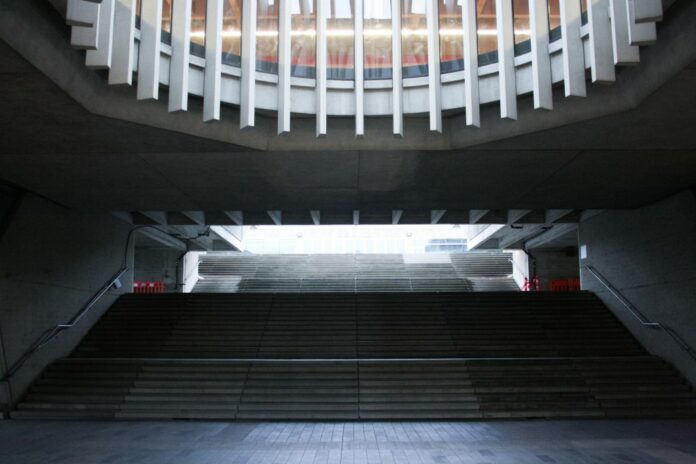
Staircase leading to West Mall Centre with Rotundra visible
SFU Black Caucus and SFU Students of Caribbean and African Ancestry participated in drafting of the charter. Gudrun Wai-Gunnarsson/ The Peak

On November 21, 2021, SFU joined over 40 post-secondary institutions in signing onto the Scarborough Charter on Anti-Black Racism and Black Inclusion in Canadian Higher Education.

The University of Toronto began drafting the charter over a year ago, in consultation with multiple Canadian post-secondary institutions. SFU Black Caucus and the SFSS BIPOC Committee were part of the national dialogue.

The charter follows four principles of advancing Black flourishing, fostering inclusive excellence, ensuring mutuality, and accountability. Signatories of the charter are committing to “redressing anti-Black racism and fostering Black inclusion in universities and colleges across Canada.”

These principles guide commitments that aim to ensure leadership on equity is prevalent across all universities with the inclusion of Black students and faculty, constructing affirming and accessible spaces that foster Black belonging.

The charter asks for “commissioning academically rigorous and community inclusive task forces to conduct independent studies of the histories of slavery, colonialism, and racial injustice,” along with other demands addressing underrepresentation in academic settings. 

In October 2020, the first National Dialogue was held to begin the development of the charter. The National Dialogue was a two-day long event with panelists discussing topics pertinent to rejecting anti-Black racism in academic institutions and “developing concrete actions and accountability mechanisms for structural and systemic change.” A statement released by the SFSS on April 1, 2021 detailed their feedback on a draft of the charter. This was after president Joy Johnson requested the SFSS BIPOC Committee’s feedback.

The BIPOC Committee recommended the inclusion of Black students in the charter and for institutions to actively “create space for them within the university apparatus.” 

The SFSS stated they “wholeheartedly support this charter” and encouraged SFU to sign on. 

The SFU Black Caucus also provided feedback to the charter. They asked schools that signed on to develop a specific action plan within 12 months of signing. The Caucus also asked for the charter to recognize “the historical presence of Black people in British Columbia” and to introduce vocabulary with an emphasis on the effects of slavery and racial segregation in Canada.

SFU reported that several of the commitments in the charter “are currently in progress at SFU,” which includes their recent decision to hire 15 more Black faculty members.

In an interview with SFU News, special advisor to the president on anti-racism Dr. June Francis said, “The charter represents an enormous moment of possibility and hope [ . . . ] Students from all backgrounds get to engage with and learn from Black perspectives and intellectual traditions. I truly think that taking these steps opens the possibility for us to thrive and flourish as an institution.”

Food for Thought: Biryani

0
Person in thinking pose with a thought bubble overhead featuring an image of biryani
This dish will replace your chilli cravings! Alyssa Marie Umbal / The Peak

Staying inside during Vancouver’s recent cold snap inspired me to make some dishes from India, my home country. Ever since I was young, biryani was made at my house on special occasions, so I decided to try and make it on Christmas. Biryani is a culmination of everything aromatic — from the spices to the rice, a specialty of the dish is being able to distinguish each smell separately.

Biryani is said to be native to Persian cuisine, and was brought to India by the Mughals. A legend states that one of emperor Shah Jahan’s wives, Mumtaz Mahal, inspired the first variation of biryani when she asked a chef to prepare a dish of meat and rice for some soldiers. The dish quickly rose to fame and became a household favourite. The relation between food, history, and storytelling from India never ceases to amaze me.

I remember my mother and father having different recipes for biryani. My mother, being a vegetarian, made veg biryani, and my father, a fan of poultry, made his famous chicken biryani. 

Biryani isn’t the easiest dish to make, but once it is done, nothing can compare to its rich taste!

For vegetarian biryani (adapted from Swasthi’s Recipes):

  1. Soak 1 cup basmati rice (easily found at any grocery store) in a container with 2 cups of water and set aside for 20–25 minutes.
  2. In a pressure cooker, add 1 tablespoon ghee or olive oil and let simmer for a minute before adding your spices. If a pressure cooker isn’t readily available, a crock pot or steamer works just as well.
  3. Add the following whole spices to the cooker: 1 bay leaf, 1 cinnamon stick, 1 star anise, 3 cardamom pods, and cumin seeds according to preference. 
  4. When the spices have simmered and begin crackling slightly, add 1 chopped red onion and 1–2 green chillies (or substitute with Thai chillies) and sauté until the onions have a golden tinge to them.
  5. Now add 2–3 cloves of chopped garlic or 1 tablespoon ginger-garlic paste. Mix until it cooks.
  6. Chop any vegetables you want in your biryani. The most commonly used are cauliflower, peas, carrots, and green beans. For a more gluten friendly option, you can also add pre-soaked soy chunks to make the dish more filling. Add these to the pot and mix.
  7. Now add the secondary spices: chopped coriander leaves, 1 tablespoon chilli powder, 1 tablespoon garam masala, 1 tablespoon turmeric powder, and 1 tablespoon salt. Then add ½ cup yoghurt and chopped mint leaves according to taste.
  8. Fry the vegetables and allow the spices to mix properly, until the two are indistinguishable from each other. By this point your kitchen should be smelling amazing!
  9. Add the soaked rice to the vegetable mix. Mix evenly and add ½ cup more water and 1 tablespoon salt. 
  10. Cover the pressure cooker or the pot of your choice firmly on medium to low heat for 15–17 minutes. Then slowly open the lid and mix very lightly, otherwise the rice will turn mushy.
  11. Serve with yoghurt or any chutney of your choice and enjoy!

Each serving can feed 3–4 people, or if you’re like me and live by yourself, you’ll have it at least twice in one day.

For those who can’t make it at home, Agra Tandoori Restaurant in Burnaby makes amazing veg biryani, so check them out.

The Peak’s December Player of the Month

0
Jessica Wisotzki smiles as she walks out to the court in between staff members while giving them low fives.
Wisotzki led her team to the first victory of the 2022 campaign with a 27-point performance over Western Oregon. Eric Baker / Western Washington

Hometown: Langley, BC
Position: Guard/Forward
Major: Kinesiology
Fun Fact: Wisotzki’s younger sister, Sophia, is a freshman on the women’s basketball team 

With two Great Northwest Athletic Conference (GNAC) Player of the Week honours, Wisotzki is The Peak’s pick for player of December. 

Wisotzki leads the women’s basketball team in points, averaging 17.5 points a game. The team is off to a (5–6) record with a two-game win streak. Despite her leading 27 points against Western Oregon, Wisotzki’s best game of the season came against the Concordia Eagles. In a stellar performance, Wisotzki racked up a career-high 32 points and turned the game around for SFU who trailed early in the first quarter. 

SFU secured their lead the entirety of the game, eventually stretching the deficit to 20 points. Wisotzki was nearly perfect from the three-point line, making all but one shot. Not to be undermined, is her defensive game, with two steals to cash in on some points for her team. 

Wisotzki previously played for Walnut Grove Secondary, where she was an honour student. In an interview for SFU Athletics, she mentioned her aspirations to become a doctor and settled on SFU for its competitiveness as the only Canadian university with an NCAA program and academics. Wisotzki is no stranger to the spotlight, leading her high school team to the Fraser Valley Championships in 2018. She previously dropped 41 points at the 2017 Tsumura Basketball Invitational, the “best of BC basketball.” 

Women’s basketball coach Bruce Langford described his star sophomore as “an athlete with a great touch and finish inside” before complimenting her defensive game and notable three-point shooting. Wisotzki and the women’s basketball team have a two-game homestand against GNAC opponents, Northwest Nazare on Thursday, and Central Washington on Saturday. SFU is currently undefeated this season at home.

Graham Clark does 24 hours of stand-up to support Little Mountain Gallery

0
In a dark wood-panelled room, comedian Graham Clark (wearing a Little Mountain Gallery shirt and sporting an impressively long beard) addresses an unseen audience. A large pile of crumpled white and yellow notepapers is at his feet.
Clark sits with a mountain of joke papers at his feet. @littlemountaingallery via Instagram

Veteran comedian Graham Clark performed his second 24 Hours of Stand Up, to benefit the recently displaced Little Mountain Gallery. The event was one of the last to be held at Little Mountain Gallery’s location on East 26th Street, after the building was sold to a developer to build condos. The performance helped fundraise for a new space.

Clark, a fixture of the Vancouver stand-up comedy scene and host of Stop Podcasting Yourself, achieved the feat alongside a group of fellow comedians. This collaborative effort highlighted the grassroots community of local, independent comedians Little Mountain Gallery has fostered since opening in 2001. The event, true to its name, started at 8:00 p.m. on December 18 and finished at 8:00 p.m. the following day, both at the venue and online.

The performance marked a transitional time for not just Little Mountain Gallery, but also the province. In response to updated public health measures, the venue audience was reduced to 50% capacity. Clark noted he hadn’t performed live in-person for some time, and with the Omicron variant it seemed he might not again for a while. When he asked the crowd if anyone was going home for the holidays, he was met with silence. “What a horrible day to ask that question,” he jested. 

The first hour featured a full set of Clark’s jokes, which were as offbeat as they were funny. Many touched on the absurdity of life, and how the unexpected turns it takes can be chaotic and bleak, but rarely boring — not unlike the circumstances of the event itself. As the night went on, the format switched as a rotating panel of local comedians wrote jokes for Clark to deliver. The crossover of writers and audience members meant that running gags formed as the hours went on, a sampling of which included the ever-topical glory hole, tiny horses, Canadian Heritage Minutes, and 1950s comedian Milton Berle’s weiner. 

The joy of the event wasn’t just in the constant stream of silliness; the feat itself was a marvel to watch. Clark’s dedication to helping Little Mountain Gallery was wonderful and impressive, but the ongoing support of friends who came with jokes, coffees, and food for him at all hours of the day was heartwarming to witness. The same went with the crowd, who offered warm enthusiasm throughout and would cheer on the show no matter what was happening. This included impassioned chants of “SUB! SUB! SUB!” every time Clark took a bite of his delivered Subway sandwiches. 

By the time hour 24 rolled around, Clark read his last bit, a mountain of joke papers lay on the floor, and over $21,000 had been raised to support Little Mountain Gallery in their new phase. It was a true pleasure to witness over livestream. In the face of corporate greed, the acts of service seen all around for the Little Mountain Gallery community gave hope for what the collective’s, and Clark’s, next act will be. For the latter, let’s hope it was a well-earned good night’s sleep. 

Graham Clark’s Stand-up for 24 Hours can be viewed online at VancouverComedy’s Twitch page. The suggested donation to watch is $20 and can be made through the GoFundMe campaign attached to Little Mountain Gallery’s website. 

Post-secondary unions call for safer return to campus in January

0
Two students in focus in a classroom with other students blurred in the background
In a joint statement, post-secondary unions demand greater government leadership and stricter health guidelines for classes. Carlynn Alarid / Unsplash

As COVID-19 and the Omicron variant are increasing cases in BC to an all-time high, post-secondary unions are calling for universities and the BC government to rethink their return to campus. Their joint statement was released on December 22, 2021. 

The statement said, “We call on institutional leaders to take the lead in establishing health and safety rules in the best interests of their campus communities.”

BCIT Faculty and Staff Association, the Confederation of University Faculty Associations of BC (CUFA), and Federation of Post-Secondary Educators of BC have all signed onto the statement. 

The unions are asking for measures including delaying in-person classes for at least one month, providing personal protective equipment, and reducing class sizes for in-person courses.

In an email interview with The Peak, CUFA executive director Annabree Fairweather said, “The fall term was chaotic and stressful for faculty, staff, and students [ . . . ] However, the semester started with a series of fast-paced announcements that left institutions in an awkward space trying to implement complex policy without a full understanding of provincial requirements.”

They are calling for “bold governance decisions” to create less uncertainty for the community as post-secondary institutions navigate the pandemic in hopes of reducing economic burden and impacts on “staff and students’ mental health and well-being.”

Fairweather noted while universities “in many ways [made] campuses safer for faculty, staff, and students by introducing vaccine disclosures and rapid testing,” without strong leadership from the government, many of these “measures fell short of their promise” this past fall.

She added, “Self-disclosures for vaccination status were weakly enforced and introduced non-confidence issues in the reported statistics for vaccination rates on campuses. Rapid testing was only available in limited circumstances, for those who were unvaccinated and asymptomatic, and not broadly accessible enough to catch COVID-19 cases on campus.”  

President Joy Johnson announced on December 23, 2021 SFU would be delaying in-person courses until January 24, 2022. UVIC and UBC have also moved back to delivering courses online for January. 

Fairweather “commends SFU administrators for making this decision as early as they did.”

She noted an equally important goal, along with greater support from leadership, was that decisions be made with accessibility and equity at the forefront. “Campuses include folks who face significant health and economic barriers that require accommodation and support. The chaotic and stressful fall term has had a direct impact on mental health and well-being of faculty, staff, and students.”

On December 21, 2021, Dr. Bonnie Henry sent a letter to post-secondary presidents regarding the return to campus in the spring. She wrote, “a move to online instruction is not an effective means of reducing COVID-19 among students, faculty, and staff, or in the wider community.”

Henry “strongly recommends continuation of on-campus instruction for post-secondary institutions in January 2022.”

Fairweather said, “Collective experience from the past four months has put into perspective the reality that faculty, staff, and students are at the front lines of the pandemic.” 

While universities have been supporting the community, post-secondary unions feel it is “important for a provincial-level strategy from the government.”

SFU’s current return plan includes safety training for faculty and staff, relaxed rules around students’ need for doctor’s notes, and vaccine declarations with mandatory rapid testing for those who are not vaccinated. SFU notes they “are ready to shift measures quickly in response to changes in public health measures to protect the community.”

For the latest updates on the return to campus, visit SFU’s website.

Students and faculty march in protest of Trans Mountain pipeline expansion

0
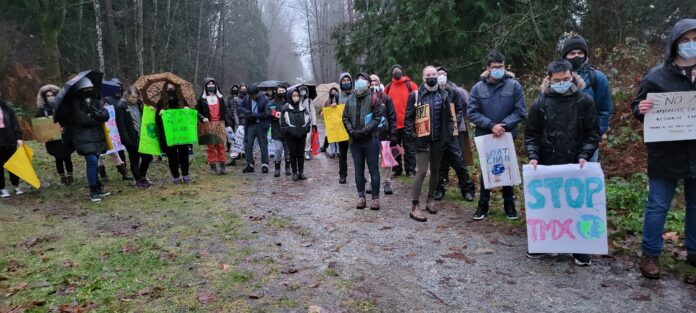
A large group of students standing outside with protest signs reading “STOP TMX”
Initially meant to be an extracurricular activity for a health science class, the march garnered campus-wide attention and attracted many supporters. Tim Takaro / PPST

On December 7, 2021, approximately 150 people marched down Burnaby Mountain in protest of the Trans Mountain pipeline expansion (TMX), according to Burnaby Beacon. 

An announcement regarding this event was posted on Protect the Planet Stop TMX’s (PPST) Facebook page. It details the route starting from SFU Convocation Mall in front of W.A.C. Bennett Library and ending at the Trans Mountain Burnaby Terminal at Shellmont Street and Greystone Drive. 

According to PPST, SFU health sciences professor Dr. Kate Tairyan organized this event with the original intention of making it an extracurricular activity for first year students in her foundations of health science class. It quickly gained campus-wide attention and was supported by SFU students, faculty, community members, and activist groups. Many of the protesters included SFU students and faculty, including Tairyan and PPST activist Dr. Tim Takaro.

“Many students are shocked to learn that the Burnaby Terminal with its massive tanks of flammable petroleum products sits so close to our campus, let alone that it’s intended to be doubled in size,” said Tairyan in a press release posted by PPST. 

“While studying the impact of climate change on health, I believe in creating opportunities for students to learn about what is happening in their community right now and to actively demand the type of future they want to see.”

The press release stresses BC’s grave situation this past year with record deaths caused by numerous climate and health emergencies. It also states the Trudeau government is continuing to push forward TMX despite these natural warnings against building new fossil fuel infrastructure. 

Takaro referred to the activists involved in this march as “a spirited group” and commended their efforts to learn how to fight the system’s “bad policy,” Burnaby Beacon reported. Takaro had been extracted and arrested from the treetops of Stoney Creek tree sit a little over a week prior to the event.

Trans Mountain stated its facilities meet high safety standards and have not had a tank farm fire incident occur in the last 65 years of operation.

This event was also backed by Burnaby Climate Hub, Burnaby Residents Opposing Kinder Morgan Expansion, Climate Convergence, Hummingbird Coordination, SFU350, and Stand.Earth. To keep up to date on anti-TMX events, check out PPST’s website and their Facebook page.

Monday Music: Songs to accompany your valiant fight against inner demons

0

Ever get so inside your head that you feel like you’re the main character with a tragic backstory? Even if it’s a little melodramatic, so what? These tracks are a perfect accompaniment to any emotional rollercoaster you’re going through.

“Hurts Like Hell” by Fleurie, Tommee Profitt

Image credit: Courtesy of Fleurie

This track opens with hypnotic, angelic strings that quickly give way to indulgent harmonies. Fleurie’s voice begins to breathe gently into the song while soft piano chords accompany her. The music swells to a peak as vocals and instruments come to a crescendo — going from gentle and unsure to confident and inspirational — before coming to a close. Fleurie tells a hauntingly relatable story of love and loss through this track that is well worth the listen.

“Thelema” by Øfdream

Image credit: Courtesy of The Playground Records

“Thelema” takes the listener on an exhilarating trip from beginning to end. Chiming bells signal the beginning of the track, which gradually descends into a gentle yet persistent beat. This captures the feeling of intense wistfulness that has you frozen in a trance. Complete with dynamic, soothing vocals and a light melody, this song serves as the perfect backdrop for nights of deep contemplation.

“Giving My All 2 U” by WEB

Image credit: Courtesy of WEB

Short but sweet, “Giving My All 2 U” begins with a slow fade into a steady, energetic beat. Moody, pleading vocals convey a raw sense of yearning through their persistence. Closing with a gentle sigh, this track is in itself a short journey describing the hopelessness of giving your all, yet feeling like it’s not enough.

“Transgender” by Crystal Castles

Image credit: Courtesy of Polydor Ltd.

This ethereal song is rich with barely-there vocals that transport you somewhere dreamlike. Echoey synths work with whispers for a ghostly melody, fusing with a bold beat to create a mind-numbing feeling. The deep and dynamic rhythm prevalent in “Transgender” scratches an itch in your brain you didn’t know existed.

Spring 2022 semester will be temporarily online

0
Illustration, a student studying online with the Zoom blue aura around them
SFSS demands a transition to online classes for the entire Spring semester. Nazmus Sakib / The Peak

On December 23, 2021, president Joy Johnson announced SFU’s temporary return to online classes for the beginning of the Spring 2022 semester. From January 10 to 23, students will attend lectures and seminars remotely. Studio courses and labs will remain in-person. In preparation for a potential return to in-person classes starting January 24, SFU will consider additional resources. They have not specified what additional resources might be implemented.

According to Johnson’s email, “Safety remains our top priority, and includes the mental health and wellness of our students, faculty and staff.” She congratulated SFU for the Fall 2020’s safe transition to in-person learning.

In a statement to The Peak, vice-president academic and provost Catherine Dauvergne said, “Shifting learning and teaching to remote delivery for two weeks allows time to learn more about the situation and consider additional tools to support a full in-person return.” 

She encouraged students to reach out to campus resources if needed. “We are deeply concerned about the impact of the ongoing pandemic on students’ mental health and are encouraging students to take advantage of supports if they need help.”

The switch to online learning followed the BC government’s enhanced public safety measures, which prohibits “organized indoor social events and gatherings of any size.” However, as of December 22, 2021, there are no public health restrictions on classroom capacity.

Provincial health officer Dr. Bonnie Henry’s letter to post-secondary presidents said students are unlikely to spread and contract COVID-19 on campus. Similarly, SFU stated, “If a student, staff or faculty member is confirmed positive with COVID-19, that does not mean that they contracted COVID-19 while at SFU.” 

School districts for grades K–12 across the province are bracing for an increase in cases as students head back to in-person classes. “Over the course of this pandemic, we’ve seen that what happens in our community reflects what we see in our schools,” said Surrey School District spokesperson Ritinder Matthew to Vancouver Sun. 

Student groups and faculty have criticized SFU’s vaccination declaration process for the lack of enforcement and poor communication when it comes to announcing COVID-19 exposures on campus.  

On December 21, 2021, the Simon Fraser Student Society (SFSS) published their response to BC’s COVID-19 situation. They expressed concerns about the Omicron variant’s spread in BC. The SFSS’ calls to action for SFU include a complete transition to remote learning during the Spring 2022 semester, “publication declaration of outbreaks,” on-campus vaccination clinics, and accessible COVID-19 rapid tests.

Through a survey, the SFSS plans to gather data “about student concerns about back to campus.”

The Peak reached out to the SFSS but did not receive a response by the publication deadline.

Students with questions regarding SFU’s transition to remote learning can email [email protected].