Home Blog Page 321

SFU creates a Bullying and Harassment Central Hub

0
over the shoulder view of someone attending a zoom meeting
The new policy on harassment and bullying also covers cyberbullying. PHOTO: Chris Montgomery / Unsplash

SFU has created the Bullying and Harassment Central Hub where members of the SFU community can access support and resources if they are experiencing bullying. 

All SFU students, staff, and faculty have access to the services provided by the central hub. If any community member is currently experiencing bullying or harassment they can contact case manager Ikjyot Rehal on SFU’s website. There is no option for in-person appointments at this time. 

The central hub aims to support the implementation of SFU’s new Bullying and Harassment Policy. The GP-47 policy was mandated on May 20, 2021 and it establishes mechanisms for responding to harassment in an appropriate manner. 

The central hub was designed off of SFU’s Sexual Violence Support and Prevention Office.

According to Rummana Khan Hemani, vice-provost and associate vice-president, students and international, “one major consideration in our return to campus planning is ensuring that we create respectful workplace and learning environments for our community.”

SFU reports that community input, such as the Diversity Meter opened in November 2019, showed them the need to clarify and strengthen their response against discrimination, bullying, and harrassment. 

Specifically, the need for a centralized and standardized process of handling cases of bullying and providing appropriate support for those experiencing harassment. The Bullying and Harassment Central Hub is designed to carry out these goals.

Additionally, SFU recognized a need for clear definitions on the terms bullying and harassment, and providing greater education to members of the university. SFU has also created a Respectful Working and Learning Environment training module, available on Canvas. This module is designed to familiarize people with the contents of the policy, their role in creating a respectful environment, where to get support, and what happens when a report of bullying is filed. All SFU employees are required to complete this training. 

Previously, SFU did not have a distinct policy on bullying and harassment. They referred to the Human Rights Policy (GP-18). This protected community members from discrimination against personal characteristics such as ethnicity, age, religion, or gender. However, bullying and harassment often “[do] not ‘fit’ within a human rights policy,” according to SFU. The addition of GP-47 gives them the mechanisms to instigate disciplinary measures and investigate cases of bullying. 

More information on the resources available or to book an appointment with the case manager can be found online. 

Being COVID-19 safe on campus

0
A picture of the COVID-19 virus.
Whether you have in-person labs or just need to visit for the school wifi, be sure to respect others’ boundaries. Animation / Unsplash

As BC marks its record-breaking fifth wave of COVID-19, you’re probably busy savouring the last few days of winter break and preparing for another pandemic semester. While we continue to learn more about variants and adjust to new restrictions, let’s remember to take care of ourselves and others during this challenging time. Being COVID-19 safe on campus is a shared responsibility and one that begins with vaccination. It is one of the most important acts we can take to protect ourselves and the people around us. Vaccines are free and available to all students, even for those without a Personal Health Number. 

In addition to getting vaccinated, here are six tips for being COVID-safe on-campus.


Stick to the basics

I know, we’ve heard the same few tips for being COVID-19 safe on campus, but that’s because our everyday small actions lead to greater safety for all. Wear a properly fitted non-medical face mask, especially in all indoor public spaces and public transit. It doesn’t do any good if you use your mask as a chinstrap. Your mask should cover your mouth, the bridge of your nose, cheeks, and chin. 

Be sure to wash your hands frequently or use hand sanitizer. Did you know washing your hands “at least five times a day has been shown to significantly decrease” the occurrence of colds, the flu, and other infections?  

Practice physical distancing of two metres or six feet from others when possible. Prepare a personal COVID-safety kit to keep on you at all times, including extra masks, hand sanitizer, wipes, and tissues. Stay home if you’re feeling sick and get tested.


Course COVID-19 protocols 

Familiarize yourself with your course COVID-19 protocols, including how the professor will make the course content accessible to those unable to attend in-person classes if they’re feeling ill or have COVID-19. Will lectures be recorded? Will the lecture slides be posted? If your syllabus doesn’t say, ask your professor.

Read more: COVID-19 protocols should be included in the syllabus.

In addition, clarify what steps a student should take to receive an instructor-granted academic concession alongside the documentation required. Concessions can include “extensions, deferred exams, make-up exams, alternate assignments, or the re-weighting of grades.” You should know how to access these supports before you or one of your classmates needs them. 


Keep an eye on SFU and SFSS updates

As COVID-19 continues to evolve, it is imperative to stay up-to-date on timely and reliable information. Visit SFU’s Return to Campus website for their latest statements, changes to campus services, and the campus safety plan. The Simon Fraser Student Society also has a section on their website on COVID-19 updates for clubs, events, and services, including their food bank program, Out on Campus, and the Women’s Centre. Additionally, be sure to follow @SFU on Twitter for any updates and to check your SFU email regularly.


Respect other people’s personal space 

While there might not be enough room in lecture halls for physical distancing, it’s still important to respect others’ personal space. The pandemic has changed our ways of connecting through having six-foot markers on floors to handshakes and hugs no longer being a commonplace greeting. When in doubt, ask what the other person is comfortable with.

If you’re approaching a friend, give them a wave or simply say “hello.” Otherwise, ask whether it’s okay to bump elbows or hug before you engage. It might feel awkward to you, but it’ll make a world of a difference to people facing these anxiety-inducing situations. On the flip side, try to prepare a response in case someone is breaching your personal space. Try saying “How about an elbow bump instead?” or “I’m going to grab this seat instead, just so we’re all spaced out.” Be polite, but assertive. 

If you’re hopping into an elevator, either wait for the next one or ask whether it’s okay to join the people inside. 

When you’re lined up for something like buying lunch, be sure to give the person in front of you at least six feet of space even if there are no markers on the ground. That is roughly the length of an adult bicycle (and also the length of a dairy cow, which is a much more fun comparison).


Develop a plan for possible exposures 

Lastly, we can abide by best practices for safety but must plan for the worst. In case you or someone close to you gets COVID-19, have a plan in place to ensure you are not caught off guard. 

For testing, visit the BCCDC’s website to find out where your nearest COVID-19 testing location is. 

Your preparation will differ if you live in a shared place, such as with family or roommates. For example, would it be possible for the infected person to stay in a separate room with a separate bathroom? If not, how will the house members manage cleaning and disinfecting high-touch surfaces? Consider having a meeting with your household to develop an isolation plan. 

At home, take stock of what you have. Check the expiry dates of your cold medications, make sure any other prescriptions are filled, and that you have enough household essentials. This could include tissues, toilet paper, hand soap, pantry staples, freezer meals, foods that you like to eat when you’re sick, cleaning supplies, and personal hygiene items. Plan how you will get such items if you cannot leave your house. This can be through friends, family, or a delivery service. 

Lastly, be sure to take a look at SFU’s website for self-isolation support and resources. 


Eating on campus 

The risk of contracting COVID-19 increases in restaurants and bars since there isn’t always a six-foot distance between individuals, there are prolonged periods of being unmasked, and COVID-19 is airborne. While dining in on-campus restaurants, try to use cashless payment methods and take your food to go or sit outside. Also, remember to wash your hands or use sanitizer before eating. 

During class breaks, find an open space, preferably outside and away from others to eat your snack. The fresh air will also do you some good — especially if you’re contemplating grabbing that third coffee of the day.

Senate Meeting — January 10, 2022

0
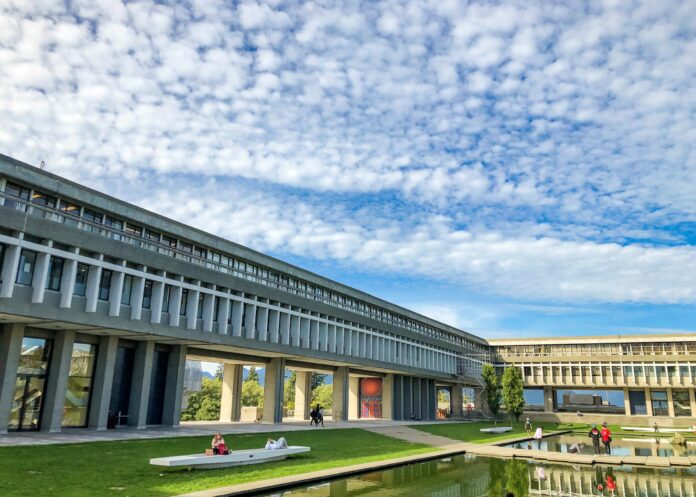
View of AQ building from the pond
PHOTO: Allyson Klassen / The Peak

The Senate receives concerns on mental health resources for students 

The Stronger Together Party at SFU saw the student body voice concerns online about remote education. Faculty of Arts and Social Sciences undergraduate representative senator Helen Pahou and member of the party brought these concerns to the Senate. 

The student group conducted a survey to gather information. “As students revert back to online learning [until January 24], a key concern rests on maintaining their mental health. Students have expressed concerns towards the increase of suicide ideation, drug misuse, and drug overdose while furthering their undergraduate degrees online,” said Pahou. 

She noted this risk is most prominent for marginalized students and those who live in inadequate living conditions. 

“Students have voiced prominent dissatisfaction towards the shortage and unavailability of mental health counselors to consult with on so-called ‘accessible’ resources like MySSP [ . . . ] While the pandemic progresses into a second year, students are continuing to lose trust in the effectiveness of the resources set up by our institution,” said Pahou. 

“Does [sic] our executives have any plans to solve the shortage of counselors within our existing mental health resources and does our institution have any updated priorities to protect the mental health needs of our marginalized students?” asked Pahou. 

Vice-president academic Catherine Dauverge noted Dr. Bonnie Henry has strongly urged post-secondary institutions to return to in-person instruction, citing data on how remote learning negatively impacts young adults’ mental health. 

“One of the reasons we are trying our best to be back in the classroom by January 24 is because the evidence is that this is the single most important thing we can do [ . . . ] for the mental health of our students,” said Dauvergne. 

She added that SFU has hired more counselors during the Fall semester and MySSP has hired more Indigenous and Black counselors. 

Dauvergne also encouraged students to reach out to the Multifaith Centre, the Sexual Violence Support and Prevention Office, or the Indigenous Student Centre for mental health resources or support. Currently, SFU health and counselling only offers virtual appointments. 

According to Dauvergne, at the rate students are using the mental health resources at SFU, it’ll be near impossible to implement enough of these resources, “especially as [SFU faces] declining revenue related to the pandemic.”

In SFU’s 2021 financial report, the university noted a revenue of $825 million, a 2.3% increase from 2020. With an expense of $784 million, SFU has a surplus of $41 million. Expenses grew but were “fully covered by revenue, providing a net annual surplus.”

The Senate discusses international student financial aid programs

Senator Daniel Leznoff raised a question to the Senate regarding the amount of financial aid SFU offers to domestic students in comparison to international students. Since the pandemic, SFU has increased their international student support and proportionally decreased the domestic student support. 

“The bursary funding for international students, which is already high, has gone up immensely in the past year or so because the domestic students are able to get support from all levels of government,” said Leznoff. 

He questioned if the levels of funding would return to normal or if international student financial aid would remain higher.

Senator Colin Percival noted “it is anticipated that it will move back in the direction it was before.” He explained this is because, as federal and provincial support programs have ended, the need for financial aid for domestic students is increasing again.

The Senate discusses their open scholarship program

Leznoff also noted a concern regarding the way in which SFU regulates their open scholarship programs — those that are based on student GPA. 

He found some faculties are more likely to have students with higher GPAs. So the open scholarship program — that is based entirely on GPA — is biased towards some faculties who consistently have higher GPA rating requirements to be in the programs. 

Senator Brian Krauth reported alternatives other institutions use is to allocate a set amount of funds to each faculty. However, he also noted “awarding by faculty would actually reduce the number awarded to the hardest grading faculties.”

BC researchers develop material sterilization methods using visible light

0
Blue disposable masks stacked on top of each other
Sterilization technology can relieve stress from lack of PPE equipment in rural communities and lessen environmental impacts of single use plastic. PHOTO: Jievani Weerasinghe / Unsplash

Researchers from SFU and the University of Victoria (UVIC) have developed a method to sterilize non-woven polypropylene materials using visible light. These materials are commonly found filtering personal protective equipment (PPE) used largely in healthcare settings such as single-use medical masks and respirators. 

The Peak spoke to Tyler Cuthbert, who led this study when he was a post-doctoral fellow at SFU school of engineering science. 

“We were able to take something called a photosensitizer, which can convert visible light into [a molecule] called reactive oxygen species, and we were able to put this specific molecule and attach it onto polymers and materials that are commonly used in healthcare,” said Cuthbert. By inserting a light-sensitive compound developed by UVIC chemistry professor Jeremy Wulff, viruses attached to polypropylene fabric were 99.9% inactivated after four hours under intense visible light.

A polymer is a molecule made up of a series of building blocks connected by bonds. A polymer can be artificially made, such as nylon or plastics, or naturally available, such as cotton or wool. 

Cuthbert explained Wulff’s research group and their chemical insertion method is “typically a difficult process to do from a chemistry standpoint.

“It’s a method that can functionalize relatively any polymeric material that has CH bonds, and that’s pretty much all of them,” said Cuthbert. “The applicability of this to a large variety of materials or products or devices is quite widespread [ . . . ] the potential is there to be able to incorporate these types of advanced materials into lots of different products for potential commercialization in the future.”

Cuthbert explained there are many opportunities for this research to be used in the future to lessen the impacts of viruses on the healthcare industry and supply shortages. 

“The advantage of this kind of technology, looking forward, is that there’s a potential it can eliminate some of the problems with the current subset of PPE infiltration technology which is really just single use,” said Cuthbert. “These materials could be reused after they undergo some exposure to light and the light we’re talking about is visible light so it’s very accessible.” 

Cuthbert said even sunlight could work, although depending on the strength of the light the time it takes to sterilize the fabric would differ. He said this could enable remote communities with limited supplies available to extend the life cycles of PPE rather than having to throw it away or have it go through a harsher sterilization processes.

He added this research could also be used in the future to lessen the massive environmental impact of single-use polymers and plastics. He hopes single-use products such as masks can be resterilized and reused, or recycled and given a new lifecycle.

“Putting advanced technology or advanced material science into some of these commodity products could have benefits far-reaching just the impact of the user but more the environment and how we see the future of the devices that we use to protect ourselves,” said Cuthbert.

This collaborative study is published and accessible online for free on Scientific Reports. 

SFSS Election 2022: What to know about each open position

0
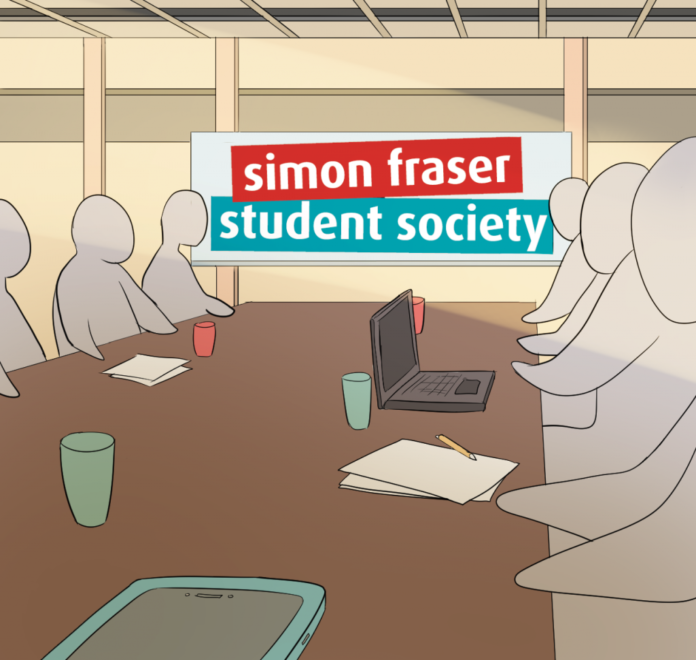
Multiple people with no face are sitting around a beige table. Behind them is the logo of the Simon Fraser Student Society.
ILLUSTRATION: Irene Lo / The Peak

The Simon Fraser Student Society (SFSS) elections are here once again. Led by SFU students, the SFSS works to represent and advocate for fellow students. Some of the ways they do this are by managing student spaces, the extended health and dental plan, the U-Pass program, the university’s free legal clinic, and an emergency food bank certificate program. There are seven positions available on the SFSS Executive Committee that any SFU undergrad can run for. We reached out to some current members of the SFSS to give us the rundown on what each position entails.  

  1.     President

This year saw the resignation of SFSS president Gabe Liosis and the temporary appointment of vice-president internal and organizational development Corbett Gildersleve in his place. Gildersleve’s term will end on May 1, when the next elected president commences their term.  

The president chairs various meetings and is required to ensure all SFSS members’ compliance with organization policies, including “collective agreements, employment contracts, and staff relations policies.” As the SFSS’ highest-ranking member, the president is expected to represent the organization in communications with the general public, SFU students, and at formal events. 

If necessary, the president will also communicate with legal counsel. 

  1.     Vice-president internal and organizational development

Candidates with a zest for policy may enjoy this role. In an interview with The Peak,  Gildersleve said what excites him about his role are “policy updates and policy reviews to make sure our rules are working and doing the job.” When it comes to any event, he said “you have to think about the SFSS system, what does that look like, what are the logistics needed to get that going?”  

Gilversleve highlighted the VP’s role in developing a training system for the executive development of councillors. It’s a practice that had been worked on for several years, culminating in a fully-formed program this year.

This past year, the Governance Committee (focused on SFSS constitutions, bylaws, and Board policies), under the VP’s guidance, made recommendations for the establishment of a Black, Indigenous, and people of colour committee, changes to the SFSS privacy policies, changes to the SFSS elections and referenda policies, and more. The committee also performed several reviews of the SFSS’ structure aimed at informing those recommendations.

  1.     Vice-president finance and services

The crux of this role is to oversee the finances and commercial endeavours of the SFSS. Current VP Almas Phangura said a regular day can involve meeting with the “bank, investors, and financial coordinators,” and communicating with student services “like TransLink and StudentCare.”

This last term saw an effort to make the SFSS’ finances more transparent for students. That work is reflected in the 2021 annual report for the Annual General Meeting (AGM). The report offers a snapshot into some elements of this VP’s portfolio. Some highlights from Phangura’s term included: 

  • WUSC x SFSS Scholarship;
  • Afghan Scholars Funding Disbursement;
  • Financial Report and Presentation at the AGM;
  • SUB Soft Opening Consultation Group, and;
  • A Financial Audit. 
  1.     Vice-president university and academic affairs

This role is intended to lobby the university on undergraduate students’ behaviour. This lobbying can take many forms, from communicating between the Board and the university, to organizing students’ involvement and collective action. They’re also asked to recommend policies related to university-undergraduate relations. 

This year, the VP’s university and academic affairs committee undertook several projects, including:

  • COVID-19 Town Hall for students;
  • P/F grading scheme in recognition of the rigours of the pandemic on students;
  • Support for the Burnaby Mountain gondola project;
  • Advocating an end to invigilation and proctoring software for online exams;
  • Researching reforms to end “sick notes” as a barrier to student success, and;
  • Creation of the Student Wellness Working Group aimed at bolstering students’ mental health.
  1.     Vice-president external and community affairs

The VP external and community affairs is responsible for communicating and coordinating with “external groups, community organizations,” and lobbying the government on behalf of undergraduates. According to current VP Matt Provost, this outreach can also take the form of “digital campaigns” to raise awareness, which have been a highlight of his time on the executive committee.

One of the best parts for Provost is the position’s ability to help groups in need. He cited the group’s response to last year’s disastrous flooding in BC, which saw $10,000 raised to support the affected areas. In this situation, the VP organizes partners to support and contribute to the project. 

The outreach to external organizations, including the government, doesn’t just consist of lobbying. The role demands “listening to [the community] and then communicating back to Council.” This includes collaborating with groups in need of assistance, or institutions that “have a direct or indirect impact on the society and its members.” 

Provost also said research is a key component of the role, such as researching ways to “build community relations” and support students. 

  1.     Vice-president equity and sustainability

In the newest role on the SFSS Executive Council, this VP is responsible for communicating with groups “representing marginalized communities on behalf of the society.” On the flip side, the VP also partners with SFU offices to work on raising awareness and eliminating discrimination. Like the VP external and community affairs, this role revolves around outreach, with a more pronounced social justice lean. The VP is expected to represent the SFSS on issues of anti-discrimination and climate justice, as well as lobby public and private institutions on students’ behavior. 

The 2020–21 SFSS Annual Report flags several advocacy projects undertaken by this group’s first VP, Marie Haddad. This includes support for student movements like the changing of the SFU Athletics “Clan” name, the Let Us Speak campaign, and the #StudentsDeserveSpace campaign. Issues like community safety and Trans-Mountain expansion hazards are also in the VP’s portfolio. 

Internally, the VP is responsible for holding “anti-oppression training within the first semester of the elected term” for SFSS directors and staff, and is asked to make policy relating to “equity, anti-oppression, disability justice, anti-racism, sustainability, and climate justice.”

  1.     Vice-president events and student affairs

As the executive group’s primary events organizer, COVID-19 has significantly changed the job. The remote nature of this position isn’t the challenge, but rather the speed at which COVID-19 changes. Being online, then sporadically in person, leads to plenty of rapid shifts in planning. This past term, current VP events and student affairs Jess Dela Cruz, said a significant departure from years past has been never having to manage a building during an event, due to the preponderance of events being held online.

That’s not to say the role hasn’t been busy. The VP’s portfolio includes management of student affairs, which has been the focus of the last year, like giving out free things to students and “donation drives for the flood.” The role also includes overseeing student unions and constituency groups’ participation with the SFSS. 

In 2021, the Events Committee, overseen by the VP, organized many events, including:

  • Black History Month;
  • Anti-Racism Workshop;
  • SFSS Trivia Nights;
  • Pet Yoga with SFU Recreation;
  • Tidy Tuesdays;
  • Social Media Giveaways.

Each current member interviewed said meetings and emails are a big part of every day. Communication skills between fellow executive members, Board members, other student groups, and SFSS staff are essential to keeping an organization moving forward. While staff members’ jobs follow regular hours, executives’ roles can take them into late or early meetings. Those interactions with staff and fellow members, said Dela Cruz, are a highlight of an executive’s job. 

Another aspect of SFSS executive life raised by each interviewee was the challenge of relearning their positions as student life oscillates between in-person and online learning. Hoping for the pandemic to ease off, SFSS executives are hopeful the next set of executive committee members will enjoy greater consistency in their positions. 

With respect to salary, every executive and non-executive councillors receive a flat stipend. According to Gildersleve, executives are currently paid $1,050 twice a month, and non-executives are paid $175 over the same period. In May, those stipends are set to increase to $1,170 and $195.

In this election, each of the above positions has posted a vacancy. For students looking to make a difference on campus, have an impact on external communities, lobby the government for change, or help trim organizational bureaucracy, it may be worth throwing your hat into the ring. To enter, students must fill out a nomination package and email it to [email protected] by no later than January 31.

Students petition for online learning in Spring 2022, others call for hybrid model

0
A student looking worriedly at their laptop
Krystal Chan / The Peak

An anonymous group of SFU students have started a petition on Change.org campaigning for online learning to continue for the remainder of the Spring 2022 term. As of January 20, the petition has gained over 4,000 signatures out of its goal of 5,000. The organizers cite the rise in Omicron cases and lack of student choice as the main reason for starting this petition.

The petition letter reads, “Due to the severity of the pandemic, the decision that Simon Fraser University (SFU) has made in forcing students back to school in-person, not giving them a choice, and disregarding their discomfort towards in-person education is not an ethical choice.”

Following the petition, on January 20, a student group announced a campus walkout in protest of in-person learning. The walkout will take place on January 24. 

The Peak spoke to Michelle Zheng, spokesperson of the petition group. “We commit to request SFU to reserve remote access to most courses for all the students [ . . . ] We respect everyone’s freedom. But we do not allow the authorities to trespass our freedom from suffering from COVID-19’s danger of health and safety.”

This petition is in response to the SFU administration’s decision to return to in-person learning and teaching following the two-week online learning period at the beginning of the semester. On January 11, vice-president academic and provost Catherine Dauvergne sent out an announcement confirming in-person learning and teaching will resume on January 24. Dauvergne said this decision was based on consultations with the public health authorities and in the best interest of students’ mental health. On January 12, UBC announced they would extend remote learning for “the majority of programs” until February 7. 

SFU student Dilraj Nijjar started a counter petition on January 17 to voice the concerns of students who prefer in-person classes. Nijjar said to The Peak the purpose of this petition is not to ask for a forced return to in-person classes, but rather to keep in-person classes as an option. “We are also concerned about the new variant, but given that majority of us are vaccinated [and] have boosters, our mental health and other factors take precedence in this debate,” said Nijjar. 

According to a data tracker by Global News, 83% of BC’s population aged five and above are fully vaccinated with two shots of the vaccine and 36% are administered a booster shot. 

The Peak reached out to Dauvergne for a statement. 

Dauvergne stated the safety plan is still in place to protect students, as well as “completed extensive work on ventilation systems.” Dauvergne cited the importance of in-person classes and the impact of the pandemic on students’ mental health as reasons to return to campus. “There are a wide range of opinions and preferences for what this term should look like, but we have heard from many students that they are excited to return to in-person study.”

The report also recommended further actions for post-secondary institutions to help relieve students’ concerns amidst the pandemic. It calls for a tuition freeze along with an expansion of mental health resources available to young adults, among many other recommendations. 

Regarding the petition to move the semester online, Dauvergne said its validity was in question as administration was notified of people listed on this petition that did not sign it. Additionally, there have been comments on social media noting concerns of false signatures (such as those of retired faculty) on the petition. Zheng addressed the petition’s credibility in her interview. “I have to first apologize to everyone whose signatures appeared on the list of our petition sent to the authorities without their consent [ . . . ] We have not expected that there were students who input others’ signatures without consent, and we condemn such irresponsible practice.” Zheng said the website hosting the petition has an anonymous setting and the organizers were unable to control fraudulent signatures.

The group has now changed its approach to petition. They encourage students to send emails from their own SFU account to the school’s COVID-19 response team. Zheng said this solution will ensure “no room for anyone who should falsify other’s signatures.”

The Peak spoke to Hannah McGregor, SFU publishing assistant professor and graduate program chair who is offering flexible hybrid course options for her students. These include relaxed deadlines and grading schemes, as well as giving students the choice to access the seminars online or in-person starting January 24. 

McGregor was not surprised by the petition and said everyone at SFU needs compassion and flexibility right now. “Unfortunately, compassion and flexibility don’t work very well within institutional structures, which are often more concerned with budget lines, legal liability, provincial regulations, and labour issues,” said McGregor. “As I understand: the university can’t stay online without the province’s say-so, and the province has evidence-based reason to believe that it is better at a population level for universities to be open and operating face-to-face. 

“It’s a difficult situation across the board, one that I don’t think would be solved by a unilateral decision for SFU to stay online but that I do think will benefit from ongoing student agitation for greater flexibility at an institutional level.”

This is a developing story that The Peak may cover in future pieces.

Updates and current expectations on SFU’s return to campus can be found on their website. The petition for remote learning and in-person learning in the Spring 2022 term can both be found on Change.org.

Movies are better without the 3D

0
A guy is sitting in a theatre. He is wearing 3D glasses, and manages to look both skeptical and unimpressed.
Why pay more for a worse experience? PHOTO: Tima Miroshnichenko, Pexels

Imagine this: you’re going to see a movie that you’ve been looking forward to. You have your tickets paid and your seats reserved. As you walk to the theatre, your excitement growing by the step, you see an unfortunate sight: a theatre employee is handing out glasses. You’ve made a terrible mistake — the tickets you bought were actually for a 3D movie, not a regular 2D movie. 

3D movies have been a novelty item for theatres from almost the inception of film. However, the practice didn’t really take off until the 1950’s when studios were faced with the growing threat of television. Even then, there was some dissatisfaction — famed film critic Roger Ebert also spoke against it. 

The problem with 3D movies is the glasses needed to make the film work filter out light and make the film darker. Additionally, with 3D images, you tend to miss more of the movie because the screen is constantly refocusing your eyes on the images jumping out in front of you. It’s distracting, and makes it less likely for a film to catch you with what really matters: the great stories and characters. Rather than enhancing the movie experience, 3D often breaks the immersion of the film.

Along with being a terrible way to watch a movie, 3D isn’t good for the environment either. Yes, many of the glasses are recycled, cleaned, and repackaged, but the plastic packaging is still garbage. As someone who works at a theatre, I have seen so many children popping out the lenses for the paltry five seconds of fun it provides. I doubt many of those pairs are salvageable.

If 3D is so bad, we might wonder why movie studios still make movies like this. Relying on the draw of novelty, the motivation is in the profit. Converting a film to 3D is usually expensive, but for a blockbuster film like Spider-Man: No Way Home that you know people will clamour to see, it’s safe to expect that the extra expense will be made back, especially with a $3 increase on ticket prices. There are great things about watching a movie in theatres instead of at home. The big screen, the surround sound, the feeling of going out — but 3D isn’t one of them.

Phrases to sound like you’ve done your reading

0
A chalkboard with E=MC squared written on it
You — confident in your participation.

Whenever a new semester starts, most of us swear to stay on top of our courses and do our readings in a timely manner, but let’s be honest here — does that ever really work? By week four, we’re already six weeks behind on homework, and some of us (me) start to panic. In an attempt to calm ourselves and save our GPA’s we create an action plan largely centred around that sweet 15% of a participation grade. Suddenly it’s week 10, you realize you haven’t said a single thing in class and your professor only knows you as the person who, in the middle of lecture, got their bag stuck in the door that one time. Well, fear not. I, a professional procrastinator, shall show you, an amateur postponer, how to get those participation grades you so desperately desire, save your GPA, and win back the respect of your parents in just four easy steps.


  1. Tie the topic being discussed to a completely unrelated pop culture reference that your professor will not get. 

An absolute alpha move that works every time. Your professor may know a bunch of nerd stuff but only you know how that nerd stuff is kind of like that one episode of Gilmore Girls. This will not only make you sound like you know your shit, but this is a chance to trick your classmates into thinking that you can make thoughtful connections across texts. Random references will also help you gain the attention of your class-crush who for some reason is sexually attracted to information synthesis. Nothing like a good Suite Life on Deck reference to get the hormones going. 


2.  “Piggy-backing off of Tara’s point…” 

This phrase has been known to have a very high success rate* in classroom testing scenarios and remains a favourite of finance bro’s everywhere. Simply by using the word “piggy-back”  you ingeniously imply that you also meant to say whatever Tara’s point was — she just happened to say it before you. The beauty of this strategy is no matter what you say, you’re getting credit for participation and what was primarily a woman’s contribution. Boo yah bro!

*Success rates are 5% higher if there is actually someone named Tara in your class. 


  1. Consistent nodding and making eye-contact with your professor 

You know what speaks louder than words? Actions. And this magic little action is the silent participation mark no one gives enough credit. I especially like to use it when totally clueless about what’s happening in class — it makes me feel like I know more than everyone else. 


  1. Have excellent argument skills — even when you’re clearly wrong

I’ll let you in on a trade secret: any participation is good participation. Even though your argument might be filled with total inaccuracies and wild assumptions, your confidence will win the hearts of the classroom and marks of the participation. This strategy has been largely championed by The Flat Earth Society, who, despite being constantly disproven, refuse to submit and instead just argue louder. They have clearly girlbossed too close to the sun, and they can’t (or won’t) back down now. Taking inspiration from them, learn to argue about anything, even if it’s wrong, and. Do. Not. Submit. You’ll get those grades you want, even if it comes at the cost of social embarrassment.

What Grinds Our Gears: Autocomplete phrase suggestions

0
A collection of fridge magnets fill the photo. They have words printed on them. Some of the most visible ones are: wet, bug, explore, sorrow, torn, bed, wings, miss.
We have an entire language’s words to choose from; why use the ones given by a computer? PHOTO: Glen Carrie, Unsplash

Autocomplete this, motherfuckers. 

Despite the various word processing platforms’ increasing propensity for prediction, there was no autocomplete suggestion to the above line — and understandably so. Autocomplete phrasing comes from the collection and comparison of similar text, and is widely supported on most digital platforms, be that on Google Docs, Outlook, or your favourite messaging service. I doubt this opening phrase has been used often.

The immediate result of text prediction is that the most commonly-used phrases become even more commonly used, and interesting language — the words and phrases that we ourselves choose — get lost for the averages. That’s not to say every sentence should be written with funky, unexpected language. Commonly used phrases are commonly used for a reason: they’re quick, understandable, and direct. 

The issue with autocorrect is in how upfront it is. Often midway through writing a sentence, it’ll jump in — were you intending to write “have a nice day?” Well yes, I was aiming for something along those lines. But now that phrase is in my head, I’ve lost my initial train of thought, and feel inclined to write exactly that — “have a nice day.”

The worst part of autocomplete suggestions is that they’re technically great completions. They fit well with the prior phrasing, and are exactly what one would expect to follow. How do we compete with the pleasantly sterile phrasing of an autocomplete? We can’t! All the markers of personality that come from having to write around that one word you can’t quite remember, or the clumsiness of a phrase written amidst dozens of real-life distractions — they’re all lost in a suggestion and a press of a button. 

There’s more to communication than being efficient in the sharing of information. It’s the reason we attend lectures rather than just reading the textbooks — we communicate for the sake of interacting with other people. The presence of autocomplete phrasing in our online interactions takes this away from us. We get enough interaction with aritifical intelligencethrough websites and feeds as is; let’s at least keep our messaging human.

Horoscopes January 17–21

0
An illustration of a girl with long flowing hair. Astrological signs and stars shine around her.
ILLUSTRATION: Marissa Ouyang / The Peak

ARIES: Sorry I haven’t gotten out of retrograde. I accidentally had caffeinated tea at 8:00 p.m. last night and my orbital schedule has been a nightmare. 

— Mercury


TAURUS: I get that you’re really into the phrase, “The early bird gets the worm,” but you are neither a bird nor early to anything. So why do you keep trying to eat worms?

— Earth


GEMINI: If you say anything bad about my dance recital last night I will lose it. I swear I’m not above telling everyone about that one time you farted in the Denny’s waiting area.

— Venus


CANCER: WOW. I can’t believe you actually fell for that lie your close friend told you two days ago. I had no idea you were such a complete sucker! Well it’s only going to cause you moderate to grave consequences so don’t worry too much.

— The Sun


LEO:  I know I said “never go to bed angry” but dude — you look terrible. Just spitballing here but maybe get some sleep and instead channel that anger into raising a suburban family.

— The Moon


VIRGO:  Your mom called and told me to tell you that you have to start calling me dad now.

— Jupiter


LIBRA: Sometimes it feels like you’re just one big joke to everyone and no one sees you for who you really are. I get that. I’m here if you ever need me to take that shit for you.

— Uranus


SCORPIO: Nothing is impossible if you believe in yourself. Even when people with a “doctorate” say you aren’t what you want to be and try crushing your dreams with “scientific criteria,”  keep believing, friend.

— Pluto


SAGITTARIUS: Do you ever feel forgotten just because you don’t have a funny name or controversial size? Yeah, me too. Just know that I see you and you’re beautiful. 

— Neptune


CAPRICORN: You should consider starting your own chocolate bar line. It’s an extremely lucrative business opportunity and great for personal branding!

— Mars


AQUARIUS: I watched you on Google: Street View last night! Your performance was so incredibly realistic! I especially liked when you “tripped” on that curb and made the child cry. Keep up the good work sweetie — here’s hoping for that Oscar!

xoxo

— Saturn


PISCES: You’re so wound up. Sometimes in life you just gotta float aimlessly for a bit. Who knows, maybe you’ll find a hot ball of rock gas and the two of you can spark a new life together.

— A passing asteroid