Home Blog Page 238

New Music: Young Fathers releases new album, Heavy Heavy

0
Young Fathers in a black and white polaroid photo.
PHOTO: Press

Young Fathers is back from a four-year hiatus and their style is as avant-garde as ever. The well-anticipated album, Heavy Heavy, has listeners captivated by the band’s euphoric electro-gospel. But not even that category does their music production justice. Alloysious Massaquoi, Kayus Bankole, and “G” Hastings furnish their recordings with hue and cries, unpredictability, and symbolism through their peculiar beats and lyrics. I find it hard to compare this record to anything mainstream or categorize their genre.

Starting off the album, in “Rice,” the singer acknowledges their power and reach within their community with lyrics like, “These hands / can heal / clean hands / can heal.” Metaphors of “coming around a bend” and being “caught in the light” depict overcoming the woes that cling to our identities. This sets up the cataclysmic themes for the following tracks. Fun fact: If you have played the new FIFA 23 recently, you’ll notice this song is on their official soundtrack.

“I Saw” and “Drum” are the scorchers of the album. Even with the dissonance heard in these tracks, bittersweetness is felt, with the lyrics, “Buried in between justice / Holier than thou / I saw what I saw / I keep walking on the line.” The song takes on the point of view of a person aware of the disparities embedded in their surroundings but chooses to stay silent in order to live peacefully. This artistry can be a reflection of life’s current political and socio-economic tribulations around the world. In “Drum,” Kayus Bankole pays tribute to his mother tongue, Yoruba, expressing himself in spiritual and cultural ways that English can’t. Close your eyes. Listen to how each rhythm speeds up, slows down, and see if your pulse syncs up.

Got enough to think about as it is? Skip over to tracks “Ululation” and “Sink or Swim.” The light piano melodies, upbeat claps, South African chanting, and instrument layering offers a sense of optimism and sanguineness to light up sorrows. It brings a feeling of relief from the competing thrashes of noise and brooding meanings as the album climaxes.

This album tells the stories of adversity and the contrasts between light and dark. Heavy Heavy carries on stories from past records containing a rich history of the band’s upbringing. As always, Young Fathers’ genre non-conformity welcomes all kinds of musical tastes.

Decriminalization isn’t enough — drug stigma needs to go

0
Various drugs and paraphernalia surrounding a large marijuana leaf. Includes pills, cocaine, a joint, heroin, and a bong
ILLUSTRATION: Ananya Singh / The Peak

Content warning: mentions of drug use and addiction.

BC’s new drug decriminalization laws are a considerable step forward. While some may view this change as too “liberal,” let’s clarify that decriminalization differs from legalization. Essentially, it exempts the province of British Columbia from the Controlled Drugs and Substances Act. This exemption helps reduce the barriers that prevent people from accessing lifesaving medical support and services associated with using the included drugs, such as opioids, cocaine, methamphetamine, and MDMA. That said, the BC government states decriminalization doesn’t mean these drugs will be permitted for commercial sale. Most concerns over these new changes overlook the reality of the situation. Stigma around drug use is widespread in the media, and in common perceptions surrounding addiction. Decriminalization doesn’t do enough to address this stigma. 

The assumption that certain drugs are nothing but addictive and harmful for users is very prevalent today. Some people who need drugs like opioids for medical treatments refuse or hide their use due to societal pressure, and the fear of a damaged reputation. The uncontrolled and unprescribed exploitation of these drugs through illegal sources has also contributed to stigma. However, drugs like LSD, mushrooms, alcohol, and cannabis do not receive the same judgment within society, even though they can still be linked to mental health conditions like psychosis and addiction for some people.

The media has a significant impact on shaping public perception of drug addiction. The way that substance use disorders are portrayed on screen can either reinforce negative stereotypes or challenge viewers to address them. Such negative portrayals in films and TV shows often exploit people who use drugs by depicting them as criminals and failures. For instance, the movie Requiem for a Dream sensationalizes people who use drugs, and portrays them as unredeemable. On the other hand, media that takes a more nuanced and empathetic approach can reduce stigma by highlighting the complex nature of addiction and contributing factors such as mental illness, houselessness, and trauma.

One media analysis from 2022 suggested ways to address and discuss addiction without stigmatizing it. They recommend the use of person-first language, which means not using words like “tippler” or “addict” and instead describing individuals as a “person with alcohol use disorder” or a “person with an addiction.” Moreover, they encouraged the media to preserve anonymity and have a “dispassionate, fact-based, balanced discussion on substance use.” These discussions should extend beyond the media we consume, as stigma is shaped by the way we view substances and those who use them.

The National Post wrote about BC’s drug crisis by arguing that shaming people for drug use would make them “change for the better.” This couldn’t be further from the truth. A Harvard Medical School publication states that stigma “can lead to unnecessary suffering and more overdose deaths” by discouraging people from asking for help, and impacting the quality of medical care they receive. We need to recognize these barriers and actively work against the shame associated with drug use.

Shifting the way we perceive drug use as a whole will lead to a greater understanding of addiction as a chronic illness rather than a personal failure. It will increase support for evidence-based treatment involving recently decriminalized drugs. People who use drugs are just that — people. Decriminalization is only the starting point in addressing the barriers faced by those who use substances.

People who mock those without their driver’s license

0
PHOTO: Harsahil Dhillon / The Peak

“Ohh! You don’t own a car? But you’re an adult — how do you get around!?” 

I get a lot of comments like this, and they’re exhausting. First and foremost, I choose not to travel by car, and this has nothing to do with my maturity. Maybe your uncalled for remarks say something about yours, though. It says more about your character when you look down on those without a driver’s licence. There are numerous reasons why someone may choose not to drive. Everyone has different circumstances and priorities in life, so it’s pointless to pass judgement on someone based on something as insignificant as a driver’s licence. 

Some people may have health issues, financial constraints, environmental concerns — or they might simply prefer the freedom of not maintaining a vehicle. Driving a car is just one mode of transport, and not the only way of getting around. In fact, using public transportation, cycling, or walking is a much cheaper and more environmentally sustainable option. Yes, my decision not to pour cash into a costly, coal-rolling hunk of metal actually serves a purpose: benefiting the greater good! 

Mocking someone for their personal choice is unkind and reveals a lack of empathy. We’re not getting any closer to a respectful society by preoccupying ourselves with whether or not someone has their N. I don’t judge you for your choice to drive a car, so please — leave your assumptions about my decisions to yourself.

The effects of COVID-19 on sex workers

0
This is a photo of two people kissing each other through the face masks they are wearing.
PHOTO: Gustavo Fring / Pexels

Ahmed Al-Rawi, an SFU Communication professor, recently published a study outlining the effects of COVID-19 on sex workers, including their stigmatization in society and representations on social media. He said in an interview with The Peak, “I believe that the stigma surrounding sex work made many people overlook its true impact during the pandemic, despite the fact that sex workers are and should be considered frontline workers, too.” 

By analyzing Twitter posts of sex workers from different gender groups, the researchers found sex workers “mostly expressed a variety of health concerns due to the lack of regulations on their work, even when there is no pandemic.” Further, “Concerns were also expressed about immunocompromised and racialized sex workers whose health has been impacted by COVID-19.”

Al-Rawi explained the challenges that were faced while conducting this research. “We had great difficulty finding sex workers on social media like Twitter.” This is because social media platforms will often restrict the activities of sex workers, which means that they must find other sites to use. He explained, “Sex work is often treated as a taboo topic that should be avoided in public discourses.”

Sex workers use social media to market themselves, just as entrepreneurs or artists do. Ramona Flour, a sex worker, told MTV, “Because of my visibility as a sex worker, companies have blatantly, without consideration for my business, removed me from their platforms.” This ultimately affected her business, income, and livelihood. Al-Rawi noted deplatforming sex workers “only increases the risks involved in this type of work.”

Al-Rawi also discussed the widespread stigma associated with sex work and how it affects them. He shared, “Sex work has existed since the beginning of time, and it is part of human civilization. Hence, it is called the oldest profession. However, many religions tried to ban or restrict sex work, though this never worked.” Despite the long history of the sex work industry, the work is still associated with guilt and negativity. 

Al-Rawi shared that in recent years, “sex work is increasingly viewed as another profession that requires regulations, something that sex workers urgently need to protect themselves from exploitation, security, and health risks.” While it is important that sex workers are being recognized, the risks they face are still prevalent. 

Human trafficking and modern slavery are risks of the industry that sex workers do not consent to, but are continuously exposed to. They often don’t get to decide who they are having sex with, and their basic human rights are often ignored by clients. 

Further, safe sex practices may not always be occurring during sex work, which can lead to poor health effects such as sexually transmitted infections, or HIV.

While there is increasing social acceptance associated with sex work, Al-Rawi emphasized the need to combat stigmas surrounding the topic. “This should start with introducing some government policies that offer clear regulations of sex work and acknowledging the stigma associated with this profession.” As well, “NGOs can play another role in spreading awareness about the importance of regulating this profession to protect everyone.”

To read Al-Rawi’s study “Sex Workers’ Lived Experiences With COVID-19 on Social Media: Content Analysis of Twitter Posts,” visit JMIR Publications. 

Hold music isn’t fun enough

0
An illustration of a person staring at their phone speaker as it plays smooth jazz.
Photo: Pexels

Hear me out, we have seen a number of industries be disrupted, leading to unprecedented innovation. But there is one area where we have not seen much progress, which is a shame, and that is hold music. Do you think waiting in customer service limbo is a little annoying? Not as annoying as listening to boring music. Or not being afforded the opportunity to finish the dance party that inevitably ensues. This is a legitimate complaint I think Alexander Bell should have considered.

First, we should bring back the TikTok trend of vibing to hold music. For one brief time in history, all the cultured people like me who enjoy being subjected to tunes instead of timely service were highly visible online. Where have all my people retreated to? I need to reconnect with them. 

Second, the music needs to be better. If I can press one for English and deux for français, I should also be able to press three for hyperpop and four for escape room (yes, that’s a music genre! It was on my Spotify Wrapped, go argue with the wall). Also, where are the visuals? I’m looking at you, Beyoncé. Do you mean to tell me we’re in 2023 and hold music does not come with visuals? Everyone is talking about AI and ChatGPT but all I want is a good old-fashioned hologram coming out of my cellular device. Why is it even called a smartphone if it can’t animate my Pixel Perfect fantasy?

Hold. Music. Karaoke. I know it was very brave of me to express such a revolutionary thought. You’re welcome. 

No, no. Forget everything I have previously said. I was young and silly. Hold music lip-sync for your spot. That’s the next big thing. People love asinine competition. If you disagree, go check out all the new Netflix originals reality shows and then come back to me. Presumably, I’m on hold because there are people ahead of me in line. I should be able to compete in live lip sync battles to move ahead in line. This is a genius idea! I will salsa to very neutral jazz music! How wonderful would that be: to showcase my best moves and talent as an entertainer, destroy the competition, make it to the front of the line, get rewarded with being able to talk to a real employee and not a robot voice, all to be told I can only cancel my gym membership in-person! That would be so slay. 

Horoscopes February 20–27

0
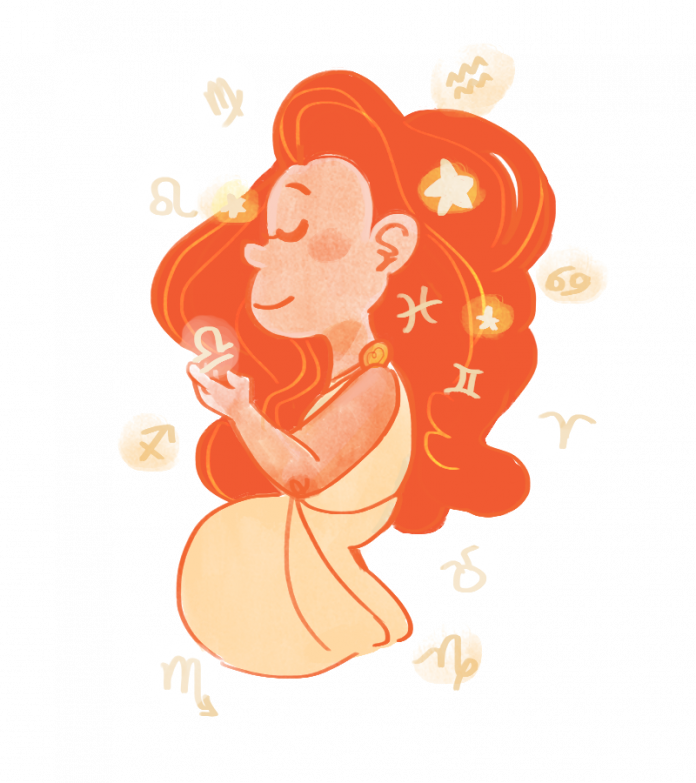
An illustration of a girl with long flowing hair. Astrological signs and stars shine around her.
ILLUSTRATION: Marissa Ouyang / The Peak

Aries: Hu Tao. Maybe your friends worry that you are burning both ends of the candle, but you always make it through (looking a little haunted) in the end! She is the perfect, fiery, high-energy date for you — even though you are a meta-slave who shit-talked Kokomi before her release, and now you refuse to acknowledge your struggle with corrosion.

Taurus: Itto, duh. His elemental skill is literally a bull and he is a grown-up version of Naruto — nurture your childhood anime crush. You find his bullishness . . . rather charming! Catching bugs can be cute, I promise. Also, you should really lean into mono geo teams. 

Gemini: We think the graceful Ayaka is just right for you. The princess of the Kamisato Clan is known for her dancing — and wet socks — you two are going cherry blossom viewing together! A small word of advice, there are other team comps besides freeze teams. 

Cancer: Childe. Sorry. I know, I know, you just wanted Layla. That’s what happens when you “build pity.” 

Leo: You literally always want attention and someone needs to keep that in check. The obvious answer is to go on a date with Kaeya! There is no way you can continue your arrogant ways after going out with someone so fabulous. 

Virgo: I know deep down inside you are a furry, so this one is easy — Gorou. 

Libra: Mona. You will have to pay for her, but she is an astrologist who can see your fate. Fair trade. Also, as a fellow student, you probably feel some pity for the eternally poor young lady.

Scorpio: Xiao. I can hear the angst teen phase you had/are still going through. Two negatives make a positive, right? Besides, conquering demons is what he does, so maybe he can get rid of some of those inner demons for you. 

Sagittarius: You are a believer in women’s rights, and women’s wrongs, so of course your brain shut down when the Raiden Shogun was introduced. You refuse to learn anything about team comps, but it doesn’t matter ‘cause you main Raiden, apparently? Idk, maybe you should update those mismatched artifacts. 

Capricorn: Keqing. Oh, you thought it was going to be Ganyu? Sorry, I’m not that predictable. You are loyal. You pulled for Keqing when she was on the Limited Event Banner, and have been maining her since. Now you can laugh at everyone who called her “the worst five star,” since the abyss is an easy clear with your new aggravate team. 

Aquarius: Ayato. You are so good at convincing everyone you are a gacha dolphin, not a whale, even though you used all the one-time offers in the shop. Ayato is the perfect match for your conniving ways. 

Pisces: Yoimiya. As a fish sign, you probably expected a character with a hydro vision. Yoimiya’s signature dish is a festival fish though! You need a little spark in your life, not everything needs to be dramatic and sad. Maybe if you stopped pulling on the weapon banner you wouldn’t be so sad.

New comedic docuseries reclaims “killjoy”

0
A stuffed unicorn on a stage standing in front of a mic.
PHOTO: Yannick Pulver

Just as the word “snowflake” has been weaponized by conservatives, “killjoy” is another word that has been historically used to silence those who question authority. Documentarist Shana Myara knows what it’s like to be called a killjoy, which is part of what inspired her new docuseries, Killjoy Comedy. 

The six-part series highlights professional “killjoy” comedians who prove social activism doesn’t compromise humour. Each episode spotlights an up-and-coming Canadian comedian, featuring hilarious stand-up sets, personal interviews, and all-around “goofball antics,” while investigating “power in the comedy business.” 

“I’ve loved comedy all my life,” Myara shared with The Peak. “At some point, I realized — I’ve watched Letterman, Carson, Conan O’Brien, Jay Leno, Seinfeld, all these people. But when you come to think about it, what do they have in common? Pretty homogenous group; so, where’s everyone else? Why have I been denied access to other voices that might have resonated more deeply with me?”

The series features comedians well-known in the Vancouver comedy scene: Lil Clitty, Ashlee Ferral, Sasha Mark, Joanne Tsung, Sunee Dhaliwal, and Tin Lorica. The group is made up of “Black, Indigenous, racialized, queer, fat, women, and gender diverse” comedians  — identities who are often the “butt of jokes at comedy clubs.” Redefining traditional insult-comedy, Myara spoke on the importance of “punching up.”

“When you talk about punching up, it’s really about speaking truth to power,” she said. “When comedians do it, it’s so refreshing, convincing, and persuasive, because they can frame things in a way where you end up laughing. And the point they’ve made sinks in deeply. There’s a political potency to what [comedians] can do.”

The series seeks to investigate how comedy is an “ethical tightrope,” considering whether it’s acceptable for comedians to poke fun at their own communities, and what other considerations need to be taken into account. But one thing is clear: it’s a different story when comedians with power target groups who have historically been oppressed, stereotyped, and underrepresented. When these groups punch-up, it’s a way to fight back.

On top of being an award-winning writer, Myara is a documentary hit-maker. Well Rounded, her first documentary about body positivity, won the 2021 Best Canadian Film award by Reelout Queer Film Festival. 

She was inspired to make Killjoy Comedy thanks to Candy Palmater, an activist and comedian who starred in Well Rounded. She said the way that Palmater was able to use comedy to make a point made it more “relatable,” “hilarious,” and “persuasive.” This is exactly what Killjoy Comedy seeks to do.

Killjoy Comedy premiered on February 14 on OUTtvGO. Subscribe to OUTtvGO to watch it on-demand. Watch the trailer and read the comedians’ bios at killjoycomedy.com.

Dr. Sanjiv Gandhi speaks on COVID-19, public health, and preventive care

0
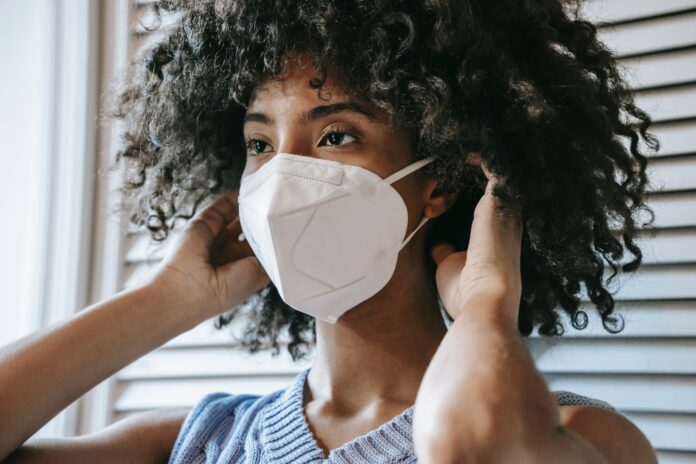
Photo of a woman putting on respirator
PHOTO: Sora Shimazaki / Pexels

“Scientifically and objectively, we’re really still in the midst of this pandemic,” said Dr. Sanjiv Gandhi in conversation with Protect our Province BC. “Emotionally, much of the population — I think to no fault of their own — is in a different place.” On February 3, the grassroots organization hosted an online seminar with Gandhi to discuss the current state of the pandemic and BC’s pandemic response. 

Gandhi, who specializes in pediatric heart and lung surgery, recently left the BC Children’s Hospital and joined the BC Greens as their deputy leader. In an interview with The Tyee, he cited his reasons for leaving the medical field as a toxic work environment and “the health authority’s positive narrative,” as a barrier to providing patients with proper care. He has been a vocal critic of BC’s current healthcare policies. 

“Some would say we need to move past COVID-19 and ‘learn to live with it,’ but I think this thinking really demonstrates a fundamental ignorance and lack of education,” Gandhi continued. “That’s unfortunately been an approach that’s been encouraged by a government that hasn’t been honest with British Columbians about the virus, how it spreads, and how to protect ourselves.” 

In regards to BC’s pandemic response, Gandhi said one of the biggest mistakes, “can be traced back to a failure to adapt to a changing science, which should have been used to educate the public properly.” This includes lagging information on COVID-19 transmission, incomplete mask guidance, and a lack of recognition of long COVID from public health. 

“Polls suggest that voters don’t particularly care about COVID-19 anymore, but it really needs to be science, not polls, that guides public health.” He cited the increasing death toll of COVID-19, noting more deaths have occurred from acute COVID-19 in 2022 in BC than previous years of the pandemic. Acute COVID-19 refers to the stage of infection that involves symptoms which would typically resolve on their own, rather than a chronic condition like long COVID. “Those numbers don’t include people who have suffered from other medical issues because of previous COVID-19 infections.” 

Gandhi explained the importance of preventative care and acknowledging COVID-19 as an airborne disease. “‘Preventative’ means not getting the disease in the first place. Wear a mask before you get sick.” He described “spraying a can of mace in a room,” as a way to understand the lingering nature of airborne disease. “It doesn’t leave immediately — you can walk into that room a few minutes later and your eyes are going to burn and your lungs are going to sting — and COVID-19 is just like mace.” 

He added our ability to control respiratory illnesses will be dependent on our ability to “improve air quality.” This includes measures such as CO2 monitors and air filtration devices. Gandhi said the airborne nature of COVID-19 is a “fact not up for debate, the inability of the government to state that categorically is, I think, politically based. Acknowledgement of that fact would make them culpable for their inaction on measures.”

Measures to prevent airborne disease are not only applicable to COVID-19, but will also prevent the transmission of future outbreaks. “We stop waterborne diseases with clean water, so stop airborne diseases with clean air — it’s not just about COVID-19 — it’s about the nature of airborne diseases.”

Gandhi also spoke on the false theory of immunity debt. This theory claims the early pandemic response is to blame for the recent influx of respiratory illnesses, because measures such as social distancing and using masks “understimulated” the immune system. However, it’s not a theory formally recognized by immunologists. “Never, ever, have we promoted illness to promote wellness.” 

In 2022, McGill reported that the idea of “immunity debt” largely stemmed from a single 2021 scientific paper, and has since been critiqued as lacking evidence. Global News also reported the paper as being misinterpreted. Other doctors noted immunity does not require constant exposure to viruses, as the immune system wouldn’t become less effective over time “on its own.” Gandhi added this theory “doesn’t recognize the vascular nature of this virus and falsely concentrates on the acute respiratory symptoms.” 

Evidence for potential long-term health complications due to former COVID-19 infections has been quickly accumulating, explained Gandhi. Studies show long COVID can produce “dozens of symptoms across multiple organ systems.” This can include cardiac impairment in the heart, cognitive impairment, blood clots, erectile dysfunction, and irregular menstruation — among many other symptoms. A study in Nature reported that “symptoms can last for years.” Gandhi added, “The potential ramifications of repeated COVID-19 infections — for everyone — young, old, those with pre-existing medical conditions, and those that were previously healthy are significant.” Studies show repeated COVID-19 infections increase the risk of death, organ failure, hospitalization, and long COVID. 

“We need specific clinics with experts knowledgeable about this disease,” he explained. “We have these clinics for disorders whose prevalence is far lower than long COVID.” 

He said while the current pandemic response encourages people to “assess their own risk,” the public hasn’t been sufficiently informed on how to do so or understand the risk associated with a COVID-19 infection. If the BC Greens were elected, Gandhi said the party would first focus on “proper education, rooted in science, geared to empowering people to make informed decisions,” in addition to clean air, which Gandhi emphasized as a part of preventative medicine. 

“Clean air is not hard. You measure air quality, and when air quality is not up to snuff, you put air filtration devices in. There’s a variety of them out there.” CO2 monitors can measure air quality by providing a sense of how well-ventilated a room is. In spaces where there is poor ventilation, CO2 levels will be higher, and signify a risk of potential infection to airborne disease. To improve air quality, measures like ventilation and filtration can be taken. Ventilation allows fresh air to circulate into a space, whereas filtration can “reduce airborne contaminants including viruses,” by filtering the air already within a space. Masks, ventilation, and filtration all help to reduce the risk of COVID-19 and other diseases by providing better air quality. 

Gandhi said those who are still concerned with COVID-19 are not “obsessed” with it. He added, “I’m not obsessed with COVID-19, what I am obsessed with is caring about the health of people.” 

VANDU criticizes Vancouver’s new drug policy, says it is not enough

0
This is a photo of the SFU Vancouver Harbour Centre campus. It is an aerial photo overlooking the harbour.
PHOTO: Angie / Unsplash

The BC government was granted an exemption from the Controlled Drugs and Substances Act by Health Canada, to decriminalize the possession of certain illegal drugs from January 31, 2023 to January 31, 2026. The decriminalization is a critical step in BC’s fight against the growing opioid crisis, homelessness, and overdose deaths in the province.

This exemption allows adults 18 years or older in BC to carry certain illegal drugs for personal use without facing criminal charges or being arrested. These eligible drugs include crack, powder cocaine, methamphetamine (meth), ecstasy (MDMA), and opioids — heroin, morphine, fentanyl. However, individuals carrying more than a combined total of 2.5 grams will be subject to criminal charges and the drugs will be confiscated.

The Peak had an interview with the Vancouver Area Network of Drugs Users (VANDU) to learn how this decision impacts people who use drugs. Since 2016, the overdose crisis has resulted in over 11,000 deaths in BC. VANDU is a collection of people in the Vancouver community who have formerly used or currently use drugs. They fight against stigma, and work to improve the lives of people who use drugs through user-based peer support and education.

David Hamm, a member of the Board of Directors of VANDU spoke to The Peak about how they “have been lobbying for this move since the beginning of VANDU, 25 years ago.” Hamm added that while the step is long overdue for the ongoing opioid crisis, it is a step in the right direction. He said VANDU’s “efforts have finally been taken seriously [ . . . ] to do something that will help decriminalize the population of drug users, but we do find it woefully lacking.”

According to Hamm, a survey conducted by VANDU concluded that 4.5 grams of each substance would be a more appropriate amount than the current limit of 2.5 grams of collective amount. He explained, “The reason people have larger amounts on them is because they only want to go out as little as possible to get their substances and also because [ . . . ] if you get more of it, then you get a better price on it.” He added, “Navigating through the community, and the drugs, for a person using drugs could be a very trying experience, especially for the elderly, and there are a lot of people that experience violence too.” By increasing the number of grams an individual can carry, it reduces the risks to their economic and personal safety.

According to Lisa Lapointe, chief coroner at the BC Coroners Service, toxicology data “confirms that the drug supply in British Columbia is increasingly volatile and life-threatening.” Hamm believes that decriminalizing toxic substances is not going to help the overdose crisis. Instead, he noted the resources being used for decriminalization should have gone towards providing a safe supply of opioid substances to save users from the “really toxic supply out there.” 

While Hamm mentioned people who use drugs still have to deal with backlash and stigma from the community, there have been instances of support. “A heartwarming gesture was put out by the public when we heard about losing some funding for our art program [ . . . ] in one evening we received twice the amount of money that we were gonna receive from the city.”

The VANDU art program is a series of events which encourages vulnerable people who use drugs to engage with art projects, like making banners commemorating the lives lost to toxic drugs, with the help of a facilitator. This year the Vancouver City Council voted against the allocation of $7,500 as an art grant to VANDU citing the organization’s failure to “deliver what it promised when it was given a sizable grant to clean up East Hastings Street last year.”

According to Hamm, the overall lack of government action against the opioid crisis is worsening the crisis. “This emergency has been going on for over seven years now [ . . . ] I can’t picture any other situation where there would be such a lack of action [ . . . ] they would do anything, use any resources, to tackle any other kind of emergency, but because it’s drug users, they have not been willing to do what it takes, which is having a regulated safe supply by the government.

For more information about VANDU’s community engagement activities, visit their website.

Comics

0
ILLUSTRATION: Sara Brinkac / The Peak
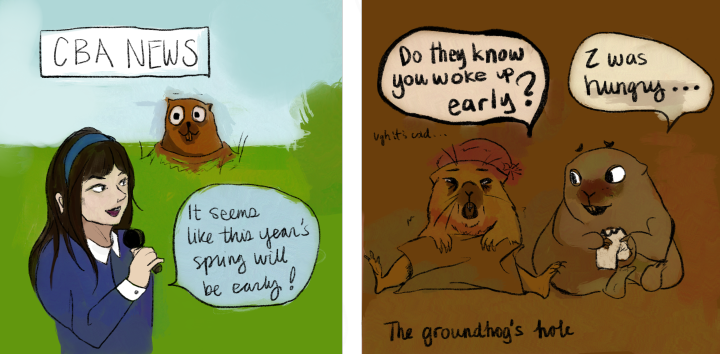
COMIC: Panel 1 features a CBA news anchor, smiling at a bewildered groundhog while saying, "It seems like this year's spring will be early!" Panel 2 features a sleepy groundhog saying to its partner in their habitat, 'The groundhogs' hole,' "Do they know u woke up early? Ugh, it's cold . . ." while the other groundhog responds, "I was hungry . . ."
ILLUSTRATION: Angela Shen / The Peak