Home Blog Page 15

StudyTok promotes a problematic approach to learning

0
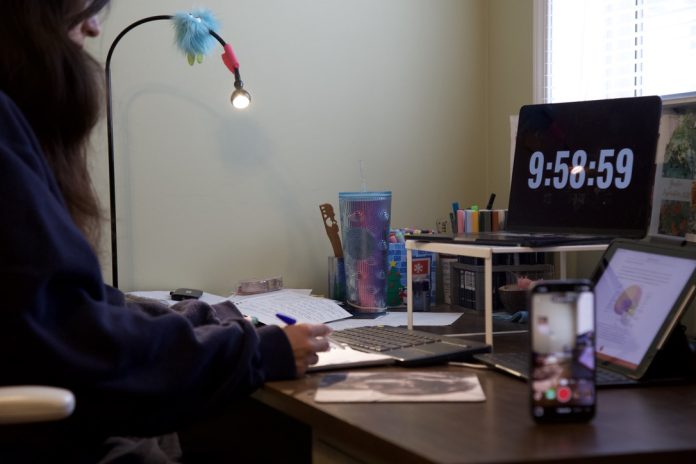
A person films themselves with their phone as they study.
PHOTO: Maya Barillas Mohan / The Peak

You may have heard of StudyTok. It’s a niche community with guides on creating effective flashcards, instructions for prettier handwriting, and all-nighter study marathon timelapses. University life has long been romanticized online. Education is largely a path to a better future, but inspirational study content can turn TikTok into a theatre for classism and self-hate. 

These videos are revered for their aesthetic, though they tend to centre social privilege under the guise of elite work ethics. The neatly staged videos suggest an irrefutable correlation between discipline and rewarding outcomes. Instead of encouraging peers, StudyTok becomes another place for the privileged to flaunt and attribute their success to themselves entirely. TikTok has multiple other toxic “sides” focused on the embellishment of capitalistic values: makeup and clothing hauls, unhealthy fitness motivation, tradewife content, and others. StudyTok is far from an exception on the social media platform.

The most viewed StudyTok videos feel like they facilitate classism. The videos are often set to clean, neatly staged backgrounds with multiple monitors and the latest technology. The most popular videos are made by content creators that can afford these setups, and can take the time away from their responsibilities to make them. The amount of time that can be spent creating studying videos depends on not having other duties, like having a job or being a caregiver.  

“The videos do not acknowledge what privilege exists behind the scenes, and invite the viewer to blame themselves for the discrepancy between what they live and what they see.”

Many of these performances of sustained focus on TikTok invite viewers to comment on their forms of “toxic study motivation.” The replies correlate endless hours of studying with financial security. A user comments, “If you want to buy things without looking at the price, work without looking at the time.” It’s not classist to desire financial stability, but a lot of StudyTok posts suggest that worse outcomes are related to a lack of work ethic. For example, with more than 300,000 likes, an edit shows multiple scenes of financial precarity with the caption, “Fine. Then don’t study.” StudyTok videos commonly portray success within the capitalist system as a result of individual efforts alone, not society. The videos do not acknowledge what privilege exists behind the scenes, and invite the viewer to blame themselves for the discrepancy between what they live and what they see. 

In reality, working hard does not ensure success; although sometimes it is a factor. Tuition is increasingly unaffordable, for one thing, and social media sets unrealistic expectations. StudyTok coalesces these conditions to make the viewer believe they can study their way out of a difficult socioeconomic situation. StudyTok leans into the idea that poverty only occurs if you don’t work hard enough. Filled with praise of long-term rewards, StudyTok ignores how systemic obstacles force people of lower socioeconomic status to exist in a state of “permanent now,” as sociologist Elliot Berkman calls it. Not everyone has the luxury to work for a better tomorrow; some must prioritize immediate basic needs. It’s easy to watch a video and think studying is the ticket to privilege. In some ways, it can be; but these videos facilitate dissonance between the resources the creator often has and the life conditions of the viewer. 

StudyTok content frequently has comment sections filled with long winded expressions of despair that viewers’ lives don’t resemble the videos. I don’t relate to the comments that self-flagellate about being unproductive failures. StudyTok seems to romanticize a subculture where you should be ashamed to take breaks. I don’t think spending time away from my computer or textbooks is wasted if I spend it with my friends. StudyTok tends to push a narrative of isolation, even though campuses are literally designed to be walkable, social environments. The videos on StudyTok argue that you shouldn’t build connections with your classmates. The sentiment to compete with your peers is an unhealthy one to nurture. 

I’ve had my share of caffeinated all-nighters. Adrenaline-induced motivation feels good, and it feels even better to achieve the results you want. All-nighters are unhealthy, but for me, they were at least tests of my potential. StudyTok is problematic because it pushes the goalpost increasingly further away, somehow sacrificing both health and learning. In some cases, creators promote AI tools to lighten their 24/7 workloads. You can’t buy more time or motivation to read dense textbooks, but StudyTok will sell a shortcut. AI is cheating, as many syllabi say. Even if certain educators do not recognize it as such, AI remains unethical. It offloads the labour of learning and lets a machine handle the privilege instead. Moreover, the access to several AI tools requires payment — another classist barrier to inhuman levels of productivity. 

StudyTok’s toxic romanticization of productivity is exactly what it wanted to become: an individualistic, time-sucking system. It is depressing to think that online spaces focused around academic performance glamorize the unhealthy, possibly counterproductive desire to get ahead. School should not be an environment for classism or self-hate. Approach campus life with an open mind, and approach StudyTok with caution. The videos are made in the image of privilege, and there is only a kernel of truth in their message.

Dear sweater weather, you’ve been gone too long

0
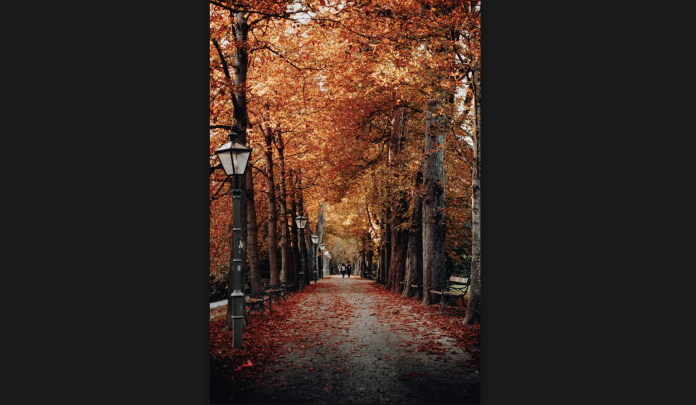
Tree-lined autumn walkway
PHOTO: Daniel J. Schwarz / Unsplash

Amid the humidity of the last evenings of August lingers a whisper of wistful wind — a reminder of the nearing autumn. As the days get shorter, and the nights get longer, we graciously welcome back sweater weather. There is something promising about reaching out for the old cardigan in the closet or under the bed and feeling the warmth of the knit brush up against your fingertips.

Many dread, even despise, the long days of autumn — the absence of persisting daylight. Though they are entitled to do so, it is crucial to consider the reasons to feel blissful. Bundled up in our warm sweaters, we can enjoy the crisp and cold mornings on Lhuḵw’lhuḵw’áyten (Burnaby mountain). Autumn-attire sets a kind of harmonious precedent among students. Pumpkin spice drinks, silky scarfs, and fluffy earmuffs all become part of an unofficial uniform. As a student heavily immersed in Greek and classic literature, I feel I very much belong to the genre of dark academia. When I have my favourite black cable-knit sweater on, my connection to dark academia strengthens.

Sweater weather is not merely a fun rhyme but a mindset. Magic must be woven into the wool because sweaters give you the motivation and comfort needed to focus on any task at hand. Perhaps it is the burnt orange leaves littering the ground or the scent of hot chocolate lurking through the corridors from Renaissance Coffee promoting the mind to work hard. Whatever it is, a soft sweater is the antidote to the sadly striking temperature of the outdoors.

If you’ve ever felt melancholic on the mornings of autumn, I suggest you embrace sweater weather. Romanticizing the glacial state of the upcoming season brings no harm, only the coziest clothes.

Meet the masthead: Introducing our team

0
A photo of staff

Abbey Perley spent two of three years at The Peak as production editor. She’s returned to assistant production editor for her last two semesters before taking on the world with a degree in Interactive Arts and Technology. Asked about how she customizes article layouts, she says it’s all about tone: “Humans are very semantic creatures and we’re constantly creating meaning in things all the time, even if we’re not aware of it! Designing means to become aware of all those possibilities and use them to our advantage.” Abbey’s visual inspiration includes signage, menus, and brochures. She’s recently picked up violin again, and she loves creative writing, fulfilling her inexplicable need to “create new worlds from nothing.” In anticipation of the fall, she looks forward to sweater weather, parks on sunny days, and hitting up cafés and boba shops. “There are so many people who long to experience the Pacific Northwest during the rain and fog that we consider so normal.”

Cazzy Lewchuk is a communication major joining The Peak this semester as a staff writer. He wrote and edited for the Douglas College newspaper, The Other Press, in the 2010s. His proudest accomplishment was getting 100% on a research project about climate change in cinema, achieved through deep hyperfocus — that’s also probably how he memorized pi to 100 decimal places in high school. “Believe it or not, I didn’t date much,” he jokes. He likes movies and sees about 50 a year. “Cineplex is where I’m locked in, at peace in nirvana.” His favourite film is Jurassic Park. “The movie sparked a lifelong love affair with film. It taught me how cool dinosaurs are, the consequences of capitalism, hubris, and defying nature, and that life, uh, finds a way.” Working at an arcade aligns deeply with Cazzy’s passion. “I’m basically a pinball wizard. I get to try and beat my high score on Stranger Things and King Kong.”

Dani Carmack is new to The Peak in the news writer role. Before transferring to SFU, she was “a health science major on a pre-nursing track” in a community college in California. “I decided to make the jump and switch my major and join the student newspaper there and I immediately fell in love with journalism.” She tells The Peak she especially loves “telling stories that give platform to marginalized voices.” Her favourite book is Firekeeper’s Daughter by Angeline Boulley “because of the strong Indigenous representation, detailed and powerful character development, and somewhat relating to the main character Daunis.” Her favourite film is tied between Sinners directed by Ryan Coogler and Frankenstein directed by Guillermo Del Toro. Outside of work, Dani likes thrifting and live music. “From huge arena concerts to small shows in DIY venues, chances are you might find me there.”

Ella Pendlington began contributing to the features section last fall and is joining The Peak as a staff writer a year later. She brings a passion for deep research, and says her favourite part of writing for the paper has been speaking with people she “otherwise would not have gotten the chance to learn from.” She believes “strong journalism brings light to significant social issues and aims to create a more just society.” She says, “Reading makes for stronger writing. This summer I read I Who Have Never Known Men by Jacqueline Harpman (translated by Ron Schwartz), and The Invisible Life of Addie La Rue by V.E. Schwab, both of which were beautiful.” She spent her summer hiking, swimming, paddleboarding, and working the long lines at Earnest Ice Cream (which she loves, due to the people and the ice cream). She looks forward to baking pumpkin loaf and going for walks with her dog while listening to Noah Kahan and Fleetwood Mac to romanticize fall. Ella is entering her second year in the Faculty of Arts and Social Sciences.

Jonah Lazar is in his fifth year in French and international studies, and his third term as a staff writer. He especially enjoys writing reviews and his favourite article he’s written was about a Jazz Festival performance by Étran De L’Aïr, exploring their traditional Tuarag composition. “I’m the second oldest sibling of nine,” he says about his upbringing. “And no, we aren’t Mormon.” He does rockclimbing, paddleboarding, and snowboarding — “I’ve been riding since I was 7 and I’m currently in the process of getting a job in the Alps for the winter so I can ride every day.” His favourite book is Marabou Stork Nightmares by Irvine Welsh and recommends it to people who liked the film adaptation of Welsh’s book Trainspotting. Another story revolving around memory loss, his favourite movie is Eternal Sunshine of the Spotless Mind. “For a couple years I watched this movie about once a month. Timeless.” If he could eat at one restaurant for the rest of his life, he’d choose Lunch Lady located on Commercial Drive.

Marie Jen Galilo is our sports and science editor, a new role starting this fall. She previously contributed to the arts section before becoming a staff writer in the summer. As a biology major minoring in English, she wants to use her skills to make science “accessible for those without a science background” and also looks forward to the upcoming season of SFU sports, as The Peak hasn’t had a sports section since spring 2025. Being Filipina, she has many family traditions, like starting to celebrate Christmas on September 1 and on New Year’s Eve, “buying 12 round fruits to represent the 12 months of the year.” Marie Jen is also co-president of the Blood, Organ, and Stem Cell Club and a peer mentor for first year science students. She likes doodling on her lecture notes and collecting stationary like stickers and washi tape (and wants to work on actually using them). Other hobbies include legos, playing Legend of Zelda, and making Pinterest boards.

Mary Gigiberia was an assistant production editor since January 2025 and is going into her second term as production editor. She’s currently pursuing a BA in Interactive Arts and Technology. She also works for Clip Through Interactive making video games. “I do all the fun modelling, texturing, lighting, UI design, and more!” she says. Outside of work and academia, she likes birdwatching and has found 134 unique birds this year. “I just think they’re silly. Other than that I’ve been trying to bike more and learn to hold a handstand.” When it comes to designing a weekly newspaper, she thinks the most surprising thing is the amount of coordination and changes a piece goes through before it reaches readers, with three rounds of edits on production day alone. Other than Pinterest, her sources of inspiration include “the way graphic design decorates cities, like the ‘pop’ of a stylish poster on a blank wall or a fun font that a brand new cafe is using for their logo.” Asked whether she would prefer to sleep on a bed of cheese or bed of glass, she replied, “Bed of glass. I’m afraid of mold so after a few days I’d simply pass out from the state of the cheese bed.” She’ll be romanticizing fall with Lorde’s 2013 alternative pop album Pure Heroine.

Mason Mattu started as a news writer before becoming a humour editor. Mason has always loved creative writing, from short stories to songwriting. He is passionate about news writing and has recently contributed to The Tyee. As well, he teaches musical theatre to kids and is executive director of Youth Justice Link, an organization that makes legal knowledge accessible to youth. As an international studies major, he is passionate about politics — and enjoys following live election results. “A bunch of devices open to different election stats and trackers, flipping between two news channels, and diligently tracking the results as the night goes on. I have no clue why I enjoy this,” he confesses. An obscure yet poetic fact he wants to share is that in Alaska, two Dan Sullivan’s are running for US Senate, and one of them was endorsed by an Alaskan mayor, also named Dan Sullivan. Mason wants the humour section to be a safe place for writers: “People are super duper funny and don’t even realize it [ . . . ] Send me Instagram reels, email me memes, whatever you want.”

Maya Barillas Mohan, staff writer, tells The Peak, her interest in writing comes from “observing and recording the scenery around me as I leave and enter new spaces. I remember living in this tiny house in New York and covering the walls in pictures I ripped out of magazines. My apartment now doesn’t look too different.” Maya shared a few of her favourite articles she’s written: her arts interview with local band In Pieces and a news piece on the low income transit pass. “Transit is one of my special interests,” she says. “The student readership is important to me. I like knowing that the people who will read my articles have similar local experiences and interests,” she says. Maya has also contributed photography to The Peak, including live music and art galleries that she’s reviewed. For fun she likes oil painting and thrifting, and her style icon is Lucy Liu in Watching the Detectives (2007).

Niveja Assalaarachchi is a fifth-year political science major, minoring in history and International Studies. He has been a news writer at The Peak for one year and is now a staff writer, looking forward to developing his writing skills across different sections. “Being able to learn more about the community around you” was his favourite part of writing for news. “I was able to meet so many people in the Lower Mainland and beyond” and “uncover a different part of the region that a lot of people overlook: the grassroots organizing that often occurs.” Niveja describes himself as a “Bollywood fanatic” and recommends two favourites: “The Hundred-Foot Journey, a movie about an Indian family going to France to start a restaurant and English Vinglish, a comedy film featuring the late great Sridevi.” Being involved in many extracurriculars including as co-president of the History Student Union and a member of the SFU Model United Nations Club, he says, “I’ve met so many cool people [ . . . ] I’ve also learned a lot about who I am as a person.”

Noeka Nimmervoll joined The Peak as a staff writer and is going into her second term as news editor. “I try to see what might be of interest to include in our paper, since we are first and foremost written for the student body,” she says regarding her pitching. She’s currently switching majors from cognitive science to English. Her favourite memory at The Peak is all the times she went to the office and chatted and laughed with Yuri, the business manager. When it comes to hobbies, she loves walking her “dog named Cosmo who is an 80lb Labradoodle! He is a very silly, entertaining guy.” She loves “dressing up unnecessarily and doing makeup. Fashion is a big, and low-barrier, outlet of creativity in my life.” Noeka also works as a cruise bartender, and writes music with her band, which is “(slowly) working on releasing an EP.” Regarding the bed of cheese versus glass debate, she is resolutely team cheese: “If it was made of parmesan, then it would not be terribly unhygienic (see a cheese wheel).” 

Sasha Rubick is The Peak’s fact checker for the past two semesters and begins an additional role as social media coordinator this fall. They state, “Too often, people are forced to choose between their values and their career. I joined The Peak because I didn’t have to make that choice. At a time when factuality is so eroded, doing my small part to fact-check The Peak is refreshing, honest, and rewarding work.” While Wikipedia is practically blacklisted as a source for articles, they were personally enlightened by the “List of common misconceptions” Wikipedia page. “So many things I wholeheartedly believed were flat-out wrong. It’s a really long list,” they said. Outside of work and their international studies major, they also tend to their houseplants, read, and hike. I asked Sasha about their music recommendation for fall. “#1 album of all time ever is The Miseducation of Lauryn Hill, shortly followed by Oklou’s choke enough. I’ve also been really into trip hop lately, particularly Massive Attack, Tricky, Hooverphonic, and Portishead,” they shared.

Zainab Salam is starting her master’s in political science this fall, and her second semester as editor-in-chief. Having always been interested in journalism, contributing last year led her on a “much-welcome detour,” she recalls. She became opinions editor, which did much more than improve her writing. She learned about “university and our societies on a much deeper level that theory and books could not supply. Covering issues that harm the public” gives her fulfillment. She’s excited to work with like-minded individuals, and encourages those interested in contributing to try; “If you ask anyone on our team, they’ll guide you through your contribution. (They’re all really nice, too!)” She also wants you to know your voice matters. “Our paper is only as awesome as it is because it reflects the voices within our university,” she says. “It’s always a wonderful experience to read and edit the work of our fellow students!” Zainab earned a BA in political science and psychology with a minor in global humanities and a certificate in Spanish studies, which she no doubt uses to psychoanalyze staff with her weekly icebreaker questions (she is team bed-of-cheese, “for late night snacking”). Her hobbies and talents include singing, crocheting, and reading a lot of books. Her most recent research side-quest was about women in Renaissance Italy, connecting this to issues women face today.

“I am grateful to everyone on our team for the dedication they exemplify. And incredibly appreciate the diligence of past staff for working hard to make this paper as diverse and set in its values as it has been,” Zainab concludes.

If you’re interested in contributing to The Peak, meeting the team, or simply seeing what a pitch meeting looks like, SFU students can attend online every Friday at 11:30 during the semester. Sign up at luma.com/thepeakatsfu.

Chris Outten’s reflections on artistic media

0
PHOTO: Yoona Charland / The Peak

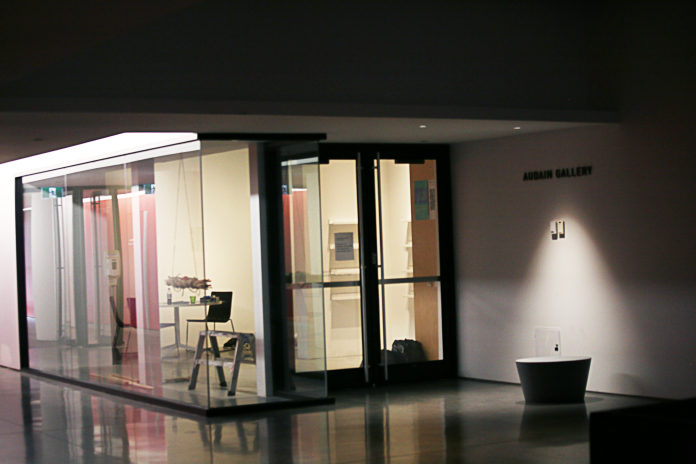
The beginning of each fall semester at the School for the Contemporary Arts brings the Master of Fine Arts graduating exhibition, and this year is no different. Transitive and Ever presents the works of 8 graduating artists from the 2026 cohort of master’s students in interdisciplinary arts. In addition to the SFU Audain Gallery exhibition, this year’s program includes various installations, performances, and concerts. 

The Peak sat down with one of the artists, Chris Outten, who also completed a Bachelor’s of Fine Arts at the School for the Contemporary Arts, to discuss the exhibition and his experiences as an artist at SFU. “I’m an artist from the Bahamas,” Outten introduced. “So generally, the things that inspire me would be things related to my culture. We come from a culture where it’s a lot of play and folklore and just a lot of bright colours and tropical festivities.”  

In the art studio, Outten works with painting and sculpture, and he’s recently made forays in performance as well. “I’ve been exploring Junkanoo. That’s the cultural festival we have in the Bahamas during Christmas time. And that contains a lot of costume-making, music, making sounds out of created instruments, like cowbells and goat skin drums.” Junkanoo is a cultural festival that celebrates creativity, resilience, and interconnectedness in the face of inhumane British colonization and the transatlantic slave trade. Its origins come from enslaved people expressing a longing for home and their traditions.    

This exploration of these various forms of artistic media will be part of Transitive and Ever, as Outten works on murals and paintings for the gallery exhibition, as well as a handmade costume for his performance on the opening night. His “alter ego character,” the Kettle Man, is his thesis and culmination of years of work in the program. 

“He’s supposed to personify a tea kettle,” Outten said, using the kettle as a metaphor to describe feelings of ostracization and discrimination. “When the steam goes off in certain tea kettles, it screams and it alerts you, you know? And I’ve been trying to personify that vessel into human experience. Especially those of marginalized people, and the things they’ve experienced in [Turtle Island], where they may have to remain silent about the treatment and prejudice they receive. And that frustration gradually builds up in the tea kettle and it gets to a point where they have no choice but to scream out.” Outten has previously performed as the Kettle Man in his first-year exhibition in April 2025, which explored the theme of idea-formation and exchange between first year students in the master’s program.

“We’re in transition. We’re all going at different paces, doing different things, and we’re all trying to get our points across.” — Chris Outten, MFA Graduating Artist

On the title, Transitive and Ever, Outten outlined the variety in disciplines favoured by each artist. “We’re in transition. We’re all going at different paces, doing different things, and we’re all trying to get our points across.” 

He also described how he grew a deep respect for his fellow artists from the cohort. Outten said that it’s easy to respect artists working with similar media since you already “have an understanding of what it is, what it takes to create.”   

“When you get to people who are performers or movie makers or composers, it’s like, wow, I can’t do that, but I see the beauty in it.” 

To conclude our interview, Outten invited us to check out the gallery opening. “Come to our show on [September 9], from [6:00–9:00 p.m.], and I’ll be doing a performance at the opening. It should only be about five minutes. So don’t miss that.” 

Transitive and Ever takes place from September 10–26 at the SFU School for the Contemporary Arts, with an opening on September 9 at the SFU Audain Gallery.

Monday Music: A Throwback to 2000s Pop-punk

0
A photo of someone holding an electric guitar at an outdoor music venue
PHOTO: fotoinformator pl / Pexels

Pop-punk is a subgenre of rock music that combines elements of punk rock and pop, taking the electric energy of punk rock with pop’s hooks and melodies. With big-name artists like Fall Out Boy, Sum 41, My Chemical Romance, Paramore, Green Day, and Blink-182, the genre captivated millions of fans worldwide during its rise to popularity in the 1990s and early 2000s. As someone whose playlist and life soundtrack mainly consists of pop-punk, here are four songs by emerging artists who are keeping the genre alive well into 2026. 

“I Kinda Like That” by the Paradox

The Paradox makes music that sounds like it would be a playable song in Guitar Hero II and “I Kinda Like That” is no exception. The nostalgic fast-paced tempo, distorted guitar riffs, and lyrics that sound like a Blink-182 song including, “It’s gone too far/Left your key and your name in the side of/My car, everyone saw/You freak out in the middle of the party,” absolutely scream black nail polish and Converse (or Vans, depending on what kind of pop-punk kid you were) high tops. The Paradox was the first all-Black band in the genre to chart at number one on the Billboard Alternative chart in January 2026 with their track “Get The Message,” and they continue to break barriers for Black artists in the alternative scene. 

“Airhead” by Honey Revenge

“Airhead” is another track that gives a mix of angsty lyrics and 2010s summery and vibrant pop punk vibes. Honey Revenge is a duo consisting of vocalist Devin Papadol and guitarist Donny Lloyd. The energetic guitar riffs combined with Papadol’s hypnotic vocals and playful melody make this the perfect track for your 2016 vibe playlists. If you enjoy Hayley Williams or Halsey, you’ll absolutely love this track, or anything by Honey Revenge. 

“Emily” by Daisy Grenade 

When you press play on this track, you might think it was released in 2006, not 2026. With heart-fluttering guitar riffs and poetic and vengeful lyrics like, “You’re first on my list,” Daisy Grenade made a time machine back to a lot of our teenage years with “Emily.” The track has sapphic limerence with a hint of rage written all over it. Daisy Grenade is yet another duo, made up of Dani Nigro and Keaton Whittakker. They saw a rise in popularity after being opening acts for Fall Out Boy and the next artist on this list, Waterparks.

“BETTER THAN THERAPY” by Waterparks

If you’re looking for an upbeat, lively song that doesn’t take itself too seriously and brings you back to summer even during the coldest winter days, this track is for you. “BETTER THAN THERAPY” is an example of Waterparks’ comedic and honest way of storytelling through their lyrics, with the song exploring finding comfort in a relationship with someone who accepts and understands you, flaws and all. The song’s title contrasts the intimacy of a relationship with the clinical setting of therapy, declaring that the subject of the song is “better than therapy.” Since the band’s formation in 2011, Waterparks has been known for genre-bending tracks that keep listeners interested while still staying true to the pop-punk sound on their albums.

Feminist scholars’ literature explores gender and war

0
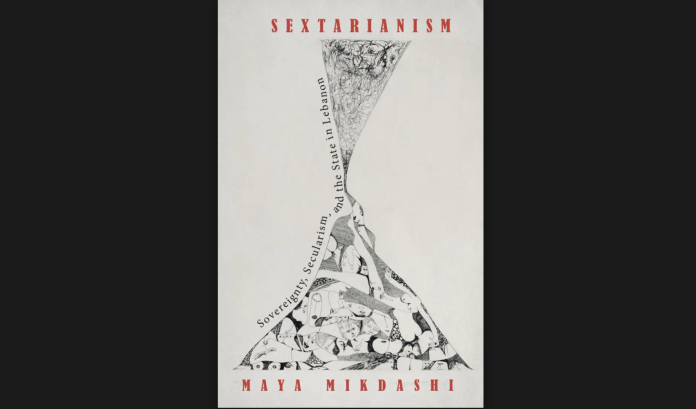
The cover of Sextarianism: Sovereignty, Secularism, and the State in Lebanon by Maya Mikdashi
SOURCE: A cover of Sextarianism : Sovereignity, Secularism, and the State in Lebanon by Maya Mikdashi / Stanford University Press

Content warning: mentions of intimate partner violence and war.

SFU’s Harbour Centre talk, Sex and the War on Terror at 25, hosted by the Centre for Comparative Muslim Studies, is set exactly 25 years after the attacks of September 11. The talk extends debates around the “war on terror”(the US invasions of Afghanistan and Iraq following 9/11) by explaining how “gender and sexuality function as technologies of governance and securitization, and sites through which terror is produced, rendered legible, and mobilized.” To help the general public better understand this intersection of gender and war, feminist and queer scholars from University of California Los Angeles, Oregon State University, Rutgers University, and the University of British Columbia will be presenting their research at this event. This upcoming intersectional discussion is a great opportunity to read some research authored by a couple of the featured scholars. 

Maya Mikdashi, a Rutgers professor whose research focuses on the crossroads of state power, politics, and secularism, is also the author of Sextarianism: Sovereignty, Secularism, and the State in Lebanon. Sextarianism explores how deeply patriarchal values yield gendered laws in Lebanon. The book uses a variety of archival sources like court records, public records, and ethnography of the Court of Cassation (highest civil court in Lebanon), to determine the steepness of the issue, and examine how far-reaching misogyny is in Western Asian systems. Sextarianism is also esteemed for analyzing regional and global sociopolitical patterns that “will force everyone to rethink how religious and sexual differences work at the nexus of states and citizenship,” as succinctly stated by a review from American anthropologist Lila Abu-Lughod.

Sextarianism is complemented by Mikdashi’s article, which similarly explored “social acceptability of female vulnerability to violence.” This article displays how intimate partner violence can extend from structural conditions of violence. Understanding how gender ties into each level of social connection compounds the tragedy covered in Sextarianism. These ideas can be extrapolated across the world in places such as South Korea, where rising militarism and conservatism among young men is leading to negative perceptions and violent sentiments against women today, for instance, through protests that aim to downplay or criticize feminist movements (such as 4B Movement) throughout the country.

Razan Ghazzawi is an assistant professor and former political prisoner whose research focuses on queer theory and political revolutions along the “war on terror.” One of Ghazzawi’s most notable works is an article about the “war on terror” and the erasure of local struggles by leftist movements in the West. The “war on terror” is contained by quotation marks in Ghazzawi’s work because of the narratives that perpetuate the victimization of marginalized peoples, especially towards Muslim women and queer people. Rhetorically, quotations are used to signal that a word is operated outside of its normal use. The title is demeaned to showcase that the war, for the offending party, is a social construct. By delegitimizing such Western narratives, Ghazzawi strives towards “self determination” for queer and marginalized populations, resisting patriarchal militarization (a process where military values such as domination, hierarchy, and obedience feed into a belief that men are superior) especially in Western Asia.

Sex and the War on Terror at 25 is very timely with the ongoing issues of sexism, misogyny, and patriarchy associated with American interventionism, defined as the US involvement in other nations’ affairs, both overtly and covertly.

Sex and the War on Terror at 25 is a very timely event, considering the ongoing issues of sexism, misogyny, and patriarchy associated with American interventionism, defined as the US involvement in other nations’ affairs, both overtly and covertly. 

Attend Sex and the War on Terror at 25 at SFU Harbour Centre on September 11 at 6:00 p.m.


Studies and songwriting with Coral Pichurski

0
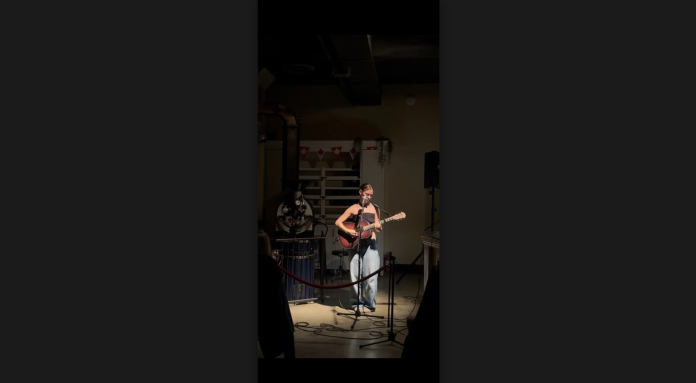
A photo of Coral Pichurski performing at Trees
PHOTO: Courtesy of Coral Pichurski

For many, art brings purpose to life. With classes starting up again, some creative starvation is bound to set in as artists lose the free time they have to pursue their passions. To look at how one can continue (or embark on) their creative endeavours while taking a full courseload, The Peak spoke with SFU English student Coral Pichurski. Together, we discussed making time for songwriting, becoming a featured performer at Trees Organic Coffee, and the value and community that comes from pushing oneself to share their art with others.

Pichurski majors in English with a creative writing minor. After graduation, she plans to complete a Dual Master of Archival Studies and Library and Information Studies at the University of British Columbia, with the ultimate goal of “working in spaces that make education and creativity more accessible.” Aside from her studies, Pichurski pursues songwriting as a “ten-minute break” from her schoolwork. Pichurski plays original songs live at Trees on Granville in downtown Vancouver.

Her introduction to the music scene at Trees came from an SFU club meeting that took place there. Every Thursday, there is an open mic night, and coincidentally, the night she was there, not many people were performing. So the owner asked if she played music, and lent her his guitar to perform some songs. Since then, he has invited her back every couple of months, where she plays acoustic folk songs influenced by the “vibrant music community” in her hometown of Crowsnest Pass, Alberta. 

On Open-Mic-Thursdays, Trees becomes a place where up-and-coming artists can become well known within the local scene. Pichurski describes the supportive regulars at Trees as those who “know each other’s songs, which is really cool when you’re a small artist to have people know your music.” 

“The arts will never not be nerve wracking because it inherently means being vulnerable with a very intimate part of yourself.”

— Coral Pichurski 

When giving advice to people who want to enter the creative scene for the first time, she addresses the nerves: “the arts will never not be nerve-wracking because it inherently means being vulnerable with a very intimate part of yourself.” She concludes her thoughts on stage fright and discomfort with a profoundly accepting perspective that “it’s a part of what makes it worth it.”

Although she sometimes has to put off performing to focus more attention towards schoolwork she makes time for gigs by studying ahead. On the songwriting side, she often finds her inspiration in assigned readings, which brings her to see her position as a student as a helpful tool towards creative expression, rather than a hindrance. She summarizes her experience balancing time between art and school as “difficult to do, but ultimately worth it.”

So, with the new term on the horizon, Pichurski reminds us that there is always time to sneak in some creative expression. And, equally valuable to making the art is daring yourself to share the art, whether by performing at a local coffee shop or giving out zines about your deep thoughts. Pichurski exemplifies that possibilities to pursue creative passion can come up in unexpected places, even as a student.


What is the seasonal flu?

0
Coffee cup surrounded by glasses, a tissue box, and crumpled tissues
PHOTO: Kelly Sikkema / Unsplash

The spread of the flu starts subtle at first, but it doesn’t take long before you’re followed by an inescapable, haunting chorus of coughs throughout the entire campus. 

The fall semester is the busiest semester at SFU. Students returning to campus are joined by new students starting their academic journeys. There’s a lot to look forward to in the fall — the atmosphere feels cozy, the warm-coloured leaves turn crisp, and there are many holidays and celebrations. It’s also when many people contract the flu. While the flu circulates year–round, fall and winter create favourable conditions that increase the likelihood of catching it. The spread of the flu starts subtle at first, but it doesn’t take long before you’re followed by an inescapable, haunting chorus of coughs throughout the entire campus. 

The seasonal flu is a respiratory illness caused by strains of the influenza virus, specifically influenza A and B. It’s difficult to distinguish between influenza A and B because both strains share similar symptoms, including: headaches, fever, sore throat, dry cough, runny nose, and muscle aches. The main difference between influenza A and B is that influenza A infects birds and mammals (yes, that includes us humans), while influenza B can only infect humans. Influenza A is also more common than B and causes more flu outbreaks. Whether one contracts Influenza A or B, the treatment plan is generally the same. 

Infected individuals exhibit symptoms one to four days after exposure to influenza, and are most contagious on the first three days after symptoms appear. The Public Health Agency of Canada advises infected individuals to “avoid close contact with others for at least three days” during this infectious stage. One common way through which influenza spreads is by inhaling or touching infectious droplets released by an infected person when they cough or sneeze. 

Fall and winter create the perfect conditions for the efficient transmission of influenza. Viruses, including influenza, require a host to reproduce and survive. Influenza is surrounded by a lipid layer that hardens in the cold, allowing the virus to survive for longer without a host. The lipid bilayer protects the genetic material of the virus and allows it to enter the host cell. During fall semesters, students spend more time indoors in crowded lecture halls, dorms, and social gatherings. Immune systems may also weaken during the fall and winter because of reduced exposure to sunlight, which our bodies use to produce vitamin D — a molecule that supports immune systems and can lower the risk of respiratory tract infections.

The best way to protect yourself from the flu is to get vaccinated. SFU’s Health and Counselling Services provide influenza vaccinations which are covered by the Medical Services Plan. Other personal protective measures include wearing a mask if you have the flu to avoid infecting others, “washing your hands often with soap and water for at least 20 seconds,” and keeping your hands away from “your eyes, nose, or mouth,” the common modes of entry for influenza, according to the Public Health Agency of Canada. 

If you get infected with the flu, the best way to recover is to rest, drink plenty of fluids, and take over-the-counter medications for fever and muscle aches. If you’re experiencing severe symptoms, such as difficulty breathing, headaches, and confusion, you’re advised to call 9-1-1 and seek medical assistance. Age and health conditions also make certain groups more vulnerable to developing flu complications, including young children, adults older than 65, and people living with chronic illnesses.

To learn more about seasonal influenza, please visit the Public Health Agency of Canada and HealthLink BC websites.

Two-minute drill: Macyn Unger

0

Macyn Unger is a fifth-year criminology major and senior libero on the SFU Women’s Volleyball team. At the age of seven, she started playing volleyball and had extensive volleyball experience before SFU. She played volleyball for Duchess Park Secondary and represented Team BC in high school. She also played for the Prince George Kodiaks Youth Volleyball Club. In the summer of 2025, she participated in Canada’s NextGen volleyball program.
Editor’s note: This piece has been edited for clarity and length. 

Q: What is your favourite thing about volleyball?

A: I love the competitive nature of volleyball and the opportunity to be part of a team, especially when I get to share that experience with some of my closest friends.

Q: What is your favourite volleyball move and why? 

A: My favourite part of volleyball is definitely digging. As a libero, it’s a big part of my role, and I love being able to keep the ball off the floor and turn a tough play into an opportunity for my team.

Q: What inspired you to become a volleyball player?

A: I was really inspired by my older sister. I was always watching her play and spending time around her volleyball teams. Being around the sport so much made me fall in love with it, and that passion has stayed with me ever since.

Q: What do you do to unwind after a long day of practice?

A: I like to spend time with my friends, get outside and do something fun, and then of course end the day relaxing and scrolling through TikTok. 

Q: How do you balance sports and school? Do you have any tips for students on how to balance other life commitments with academics?

A: I try to plan out my semester as much as possible. Staying organized helps me avoid falling behind and makes it easier to set aside dedicated time for school while still prioritizing training, recovery, and my overall well-being as a student athlete. My biggest advice would be to stay organized, plan ahead, and make sure you are still leaving time to rest and take care of yourself.

Q: What is something you’re looking forward to in the Fall Semester for your sport?

A: I’m really excited for our preseason tournaments and getting the chance to compete alongside my friends again. Our goal is to compete for another Great Northwest Athletic Conference Championship and hopefully make a strong run at a national championship, too. 

IKEA opens pop-up at SFU residences

0
A photo of the yellow IKEA sign on a deep blue warehouse building.
PHOTO: Adam Kolmacka / Unsplash

A surprise to some, a great deal of excitement for others —  IKEA’s pop-up shop is now open at SFU. Titled “Hej Hösten!” (Hey University!), the pilot project is targeted towards students moving into the dorms. For most, it’s their first time living away from home and not having mommy take care of every single need and want. “We are helping young people develop critical life skills: navigating IKEA, assembling furniture from IKEA, and not breaking up with your partner after a trip to IKEA,” IKEA spokesperson Abba D. Sweed explained.

This was a rare opportunity to shop for some real furniture for dorms. Most of us just use milk crates, a pile of blankets, and empty IKEA boxes. Under the assumption that Hej Hösten would result in returning customers, designer furniture sets were priced at suspiciously low prices. 

I received an email inviting “försökspersoner” (I assume this was a typo for journalists!) to an exclusive preview showing. It was a great opportunity to cover this for The Peak. More importantly, I needed a trash can and shelves. I’ve been keeping my garbage in my backpack and my books under my bed (three milk crates held together by duct tape). Minimalism, am I right? 

The invitation was for sunset at the empty area outside the dining commons. I arrived to find a massive beige structure dominating the lot, a new addition to the previously barren concrete. It was shapeless and off-putting, with a shade and design unlike anything I’ve seen before — much like most IKEA furniture and the AQ (I wonder if they’re related?).

I entered to find a hallway so long I couldn’t see the end. There were aisles to my left and right — dozens of them stretching far into a dark void. Luckily, there were arrows on the floor showing which direction to go. Unfortunately, there were 12 of them at each corner, pointing in all directions like a clock. I was relieved to see the sections were labelled. But I don’t speak Swedish, and it looked like the English translations hadn’t been added yet. Damn you, Duolingo for not teaching me practical language skills.

With no sense of direction, I decided to take my chances and went to the first door on the right, where I was greeted by a juggler dancing. He waltzed in front of a red curtain, gliding across a zig-zag striped linoleum floor. Ethereal jazz music played as he approached me, swaying with a huge grin. “Can you tell me where the trash cans are?” I asked, only slightly frightened. He handed me a Swedish meatball. Great. This was identical to regular IKEA locations, where the presence of employees is confined to the food court. And yes, I ate the meatball. 

I had various other strange encounters, including witnessing raccoons tearing apart a showroom of a dorm. My Swedish meatball (which was surprisingly undercooked and might give me salmonella — but I digress) swivelled in my stomach. I began crawling, searching for an exit. The only thing that found an exit was the meatball in the pit of my stomach. 

My continued journey was so intense and life-changing that words cannot describe the adventure. I witnessed depths of IKEA that I would have never expected to see before in my life. I saw inexpensive dishes dropping out of a chute labelled “FANCY EUROPEAN STUFF,” a billion French presses that could walk, and ten thousand Swedish fish swimming towards me. I crawled as fast as I could.  I even glimpsed the rarest sight of all; a fast moving checkout line with numerous cashiers. It really makes one think about the grand meaning of the cosmos, and why the furniture giant continues to dominate the competition.

After what felt like 30 years of crawling, I finally saw the light. Not death, but an exit. I then realized that I forgot my garbage can, so I crawled right back inside. Oh well.