Home Blog Page 130

“G” is for Genocide: Google and Amazon’s Project Nimbus

0
A group of Amazon and Google employees protesting the contracts with Israel for the use of AI and cloud systems. They are holding signs, one that says “No tech for apartheid”
ILLUSTRATION: Emma Nash / The Peak

Artificial intelligence (AI) isn’t a sci-fi pipe dream anymore. For nearly 75 years, computer scientists have researched and developed programs that can mimic and predict human thinking — we currently stand witness to this new technological frontier. AI technology has undeniably furthered progress in many areas such as medical efficacy, agricultural optimization, and cyber security. The recent advancement of “deep-learning” AI models is especially promoted as revolutionary for its ability to “process extremely large and varied sets of unstructured data and perform more than one task.”

As an emerging phenomenon, AI is only beginning to be regulated, with Canada issuing its Artificial Intelligence and Data Act just last year. The United Nations (UN) General Assembly also recently adopted a resolution for the regulation of AI in 2024 to operate in accordance with international human rights law. However, this resolution isn’t legally binding for member states and stakeholders, and merely a recommendation “urged” by the UN. Perhaps it would be an appropriate measure if it could actually be enforced. Maybe then it wouldn’t feel like too little too late. However, money and power are twin harbingers of injustice. They are both the end and the means of all kinds of destruction, and AI is only the newest vehicle for its facilitation.

The Nimbus Project is a $1.2 billion deal signed in 2021 which has since provided the Israeli government and military with its own secure and private cloud computing infrastructure and advanced AI technology. The project was a joint venture between Google and Amazon, companies which ranked fourth and fifth (respectively) in Forbes’ Top 10 Largest Global Companies by their total value in 2024. As written in an anonymous letter from Google and Amazon employees in coalition with the advocacy organization No Tech for Apartheid, “This technology allows for further surveillance of and unlawful data collection on Palestinians, and facilitates expansion of Israel’s illegal settlements on Palestinian land.” 

Surveillance is not new for Palestinians, and it has only gotten worse. For years Israel has tested and used AI facial recognition software to identify and track individuals, monitored their computers, phone calls, and employed the use of Pegasus spyware on political adversaries. “For the Israeli government, this surveillance regime is both a tool of control and a money-making business,” writes an Al Jazeera article. The author, Jalal Abukhater, likens the Gaza Strip and West Bank to a lab where Israel can trial spyware and surveillance technology before putting it on the global market. 

The Nimbus Project not only provides the Israeli military with technology for their current projects, but also allows them to increase surveillance and control of Palestinians. AI systems like Lavender or The Gospel are used to recommend targets suspected of Hamas or political association, as well as locate them within their homes. However, Lavender is known to make errors, and targets are not thoroughly verified. The risks posed by AI inaccuracy due to data bias make the use of these systems increasingly dangerous. If the dataset used for its training is unreliable and non-representative, the AI will make biased decisions — every step in the process of training these models from data collection, labelling, and the employment of the AI afterward will influence its output. 

An article from +972 and Local Call, an independent publication made up of Palestinian and Israeli journalists, states that “a fundamental difference between the two systems is in the definition of the target.” They explained Lavender generates a “kill list” of individuals, while The Gospel on the other hand marks whole buildings the Israeli military suspects militant operation from. This designation has often resulted in the annihilation of residential areas and civilians. Additional AI systems such as the Where’s Daddy? software specifically tracks alleged militants to their homes before bombing them with the objective of killing the entire family. These AI systems only generate lists of potential targets, overseen by soldiers with little to no concern for its accuracy. Issues of misidentifying targets as well as timing discrepancies between tracking and carrying out attacks has had catastrophic consequences for Palestinian civilians — often disregarded as “collateral” damage.

Software engineers, data scientists, and many other employees of tech giants Google and Amazon spoke publicly against the Nimbus Project for its complicity in the Palestinian genocide. As stated on the No Tech for Apartheid website, over a thousand employees agree that “technology should be used to bring people together, not enable apartheid, ethnic cleansing, and settler-colonialism.” These companies have made their positions clear. When protests began concerning the Nimbus Project, Google fired the employees involved and doubled down on the deal.

Is it terrifying that the CEO of a trillion dollar company has such a severe deficit of moral integrity? Definitely. Is it surprising? Absolutely not. Greed for money and power only deepens systemic injustice experienced, which is why making support for the genocide financially unsustainable the only real solution to erradicating it.

Organizations like the BDS movement which call for the boycott, divestment, and sanctions of those in support of Israel’s apartheid proudly follow the lead of the South African anti-apartheid movement. The international effort to boycott and divest from companies that supported South Africa’s apartheid, as well as sanctions from the country’s major trading partners and general strikes and protests were all crucial to ending the violent regime. When corporations like Google or Amazon profit from enabling colonial violence, it’s imperative we refuse their products and services, seek alternatives, raise awareness and continue pushing for corporate accountability. While it might seem impossible to untangle our lives from companies like Google, using alternatives like Ecosia or open-source software such as Dropbox and LibreOffice are meaningful forms of boycott. Perhaps most importantly, petitions and initiatives that call for regulation and ethical practices of tech giants and the usage of their products and services could be our strongest option. If bloodshed cannot change their minds, the bottom line will.


The Rundown: End of summer headlines

0
In black and white, Canadian soccer legend Christine Sinclair stands with an outstretched scarf covering her face. The scarf reads ‘stronger by nature.’
PHOTO: Courtesy of @northernsuperleague on Instagram

August 26 — Introducing Vancouver Rise FC

Women’s professional soccer has a new home in Vancouver. The Northern Super League (NSL), which begins play in April 2025, will have teams playing in Calgary, Halifax, Montreal, Ottawa, Toronto, and Vancouver. At an event in late August, the team name was announced as Vancouver Rise FC. The club noted the importance of their name as “a beacon of empowerment and progress, inspiring the next generation to rise above and chase their dreams.” While the team has not yet announced a home base, Burnaby’s Swangard Stadium has been eyed as a contender. The Rise social media accounts have also teased the potential involvement of Canadian soccer legend, Christine Sinclair.

August 27 — Williams Racing replaces underperforming Sargeant with junior driver Colapinto

After scoring no points in 15 races this season — and suffering a big crash during the Dutch Grand Prix practice sessions — American Logan Sargeant lost his seat at the British-based team. Sargeant was the only American on the grid, and only scored one point during his year and a half racing in Formula 1. Auto racing team Williams Racing replaced him with Argentinian Franco Colapinto, a member of their Williams Driver Academy who was sixth in the Formula 2 standings before being promoted to the top series.

August 31 — Nathan Rourke wins again in the CFL

After not finding a place in the NFL since leaving the BC Lions as the 2022 CFL Outstanding Canadian, Canadian quarterback Nathan Rourke made his return to the CFL. He returned in the absence of the regular Lions starting quarterback, Vernon Adams Jr., who was injured during a 25–0 loss to the Winnipeg Blue Bombers on June 21. Rourke earned his first win at the 2024 Touchdown Pacific event — a Lions home game hosted in Victoria instead of Vancouver — where he had 21 completed passes for 30 attempts, and threw 325 yards in the 38–12 win against the Ottawa Redblacks. 

September 3 — Leon Draisaitl re-signs with the Edmonton Oilers

Previously eligible for free agency at the end of 2024–25 NHL season, the German center re-signed in Alberta’s capital for eight more years. Draisaitl’s new contract is worth $112 million, with an average annual value of $14 million — currently the highest in the league. Draisaitl scored 850 points in 719 regular season games with the Oilers, and has earned 108 points in 74 playoff games. This re-signing comes after Draisaitl scored 31 points in 25 games during the Oilers’ run to the 2024 Stanley Cup Finals, where they lost to the Florida Panthers in seven games.

September 5 — NFL season kicks off in Kansas City

The reigning Super Bowl champion Kansas City Chiefs defeated the Baltimore Ravens 27–20 in the NFL’s season-opening game. Chiefs quarterback Patrick Mahomes had 20 completed passes for 28 attempts and threw 291 yards, while Ravens quarterback Lamar Jackson had 26 completed passes for 41 attempts and threw 273 yards. And yes, Taylor Swift was in attendance.

September 6 — The Woodhalls are golden

On August 8, Tara Woodhall-Davis earned her first Olympic gold medal by reaching a 7.10m distance in women’s long jump in Paris. Nearly a month later, her husband Hunter Woodhall sprinted to gold in the men’s 400m T62 final at the Paralympics in the same stadium, the Stade de France. The couple also document their respective athletic journeys on their YouTube channel, Tara and Hunter.

If the CRA really wanted my money, they’d pick up when I call

0
Is the “shut up and take my money” meme too stale to reference here?
PHOTO: Moose Photos / Pexels

It’s not tax season, but I would like to talk about taxes anyway. After all, this is my section; I can write about whatever I want (oop, our editor-in-chief has just informed me that is not the case). So today, I want to talk about the Canada Revenue Agency, aka the CRA, aka the Can’t Run away from our Audits. 

If an auditor is reading this right now, I would like to preface this whole thing by saying I love the CRA, I love paying money to the CRA, and I love taxes. I am a law-abiding citizen. I do not engage in tax evasion. I hate tax evasion. Whenever the opportunity for tax evasion arises, I put on my best Dora the Explorer voice, break the fourth wall and say, “We need your help to stop tax evasion. You have to say, ‘Tax evader, no evading!’” The billionaires don’t listen, but you can’t say I didn’t try. 

But even a fantastic, amazing, and excellent agency like the CRA is not above little teeny tiny criticism. So here’s the criticism: CRA phone assistance is shit. Well, that’s not fair. Saying this implies that I have received phone assistance. I have received no such thing. But it’s not for lack of trying! I have called the CRA even though that’s such an unnatural thing for a Gen Zer to do. That’s like asking me to mail a letter or use a rotary phone . . . Humans have evolved to forget how to do those obsolete tasks. You can’t tell me the CRA doesn’t know this because they’ve created a website where you can file your taxes and make payments online. 

As I am naturally predisposed to prefer this option, this is where I began. Unfortunately, I am also predisposed to all the stars in the universe aligning against my favour. I got hit with the dreaded error message asking me to call the CRA to fix the issue. So, I took a deep breath and channelled my inner millennial. It was time for some serious adulting. I dialled the number, ready to press deux pour le service en français (yeah, that’s right, I’m a francophone outside of Québec. I know your west coaster brain is blown). I’d mentally prepared myself to listen to hours of terrible hold music. BUT! I WAS DENIED (sorry, that was really loud. It’s just that it’s all so fresh)! 

The robot lady told me so many people were on the line that I needed to call at another time. And then, she had the audacity to tell me I could use the website instead. She said it so smugly, like she was teaching me something, like she was helping me. So now the website wants me to call and the number wants me to website (this is a free country, let me make website a verb). That’s like when your prof and your TA are giving you conflicting assignment guidelines and you know in your heart that they’ll deduct points no matter what you do. 

As you’ve probably deduced, I’ve had this experience more than once. Every day is Groundhog Day: I call, the Siri wannabe mocks me, I hang up. Lather, rinse, repeat. Why are they making me feel like an ex who can’t take a hint? Do they think I enjoy regularly dialling their number and being met with an automated message? This is so embarrassing. 

I can’t be made to look desperate. It’s time I stand up. I’m making new rules. The main rule is every time you try to pay the CRA, and they don’t answer or take the money, the amount you owe should be lowered. Because everyone wants to talk about me and how I’m supposed to be responsible and settle my debts, but no one seems to have told the CRA that they also need to be responsible and take my money! The second I learn how stamps and mailing addresses work, the CRA will be receiving a strongly worded letter from me. Until then, suckers like you get to read my rants. You’re welcome.

Hot study spots: Vancouver campus edition

0
Upside down trapeze artist on top of the SFU Woodward’s sign. She is holding a laptop between her legs.
ILLUSTRATION: Angela Shen / The Peak

What better way to bid a warm welcome back to the scholarly season than by seeking out the hottest study spots around the Vancouver campus? Hot girls study in hot spots, you know! The Vancouver campus is the most sophisticated and chic of them all, if you ask the hot, artsy music major in me. Goldcorp screams contemporary arts, with our snazzy study spots that are secretly glorified lounges equipped with free coffee, abstract paintings, exclusive film screenings, and a plethora of impromptu performances. We don’t really need to study; we just pretend we’ve already had our big break. Cue jazz hands. But alas, if you must hit the books, here are the top spots our artsy asses adore.

Goldcorp – Right in the middle of the Prop Shop

There’s no greater spot than the basement dungeon prop shop equipped with every prop imaginable and a slew of creepy dolls as the cherry on top. As if the dimly lit room isn’t enough to supplement your study session, watch out for the tripping hazards of stuff tossed across the floor, sewing machines running off the hook, dangling chairs from the ceiling, and props thrown in every direction to really help you hone in on your required readings. Not distracting at all.

Goldcorp – Right in every back exit stairwell with limited access only

Seriously, the quietest study space in the entire building is the one where you need a special code to enter, and if you don’t have a fob, you’re out of luck. Here’s a hot tip, ask faculty to sneak into this exclusive space (but you didn’t hear that from me). Nothing says focus more than being stuck in a stairwell with no exit. This is the place for all the claustrophobics!  

SFU Woodward’s – Ri– smack dab on top of the motherfucking Woodward’s sign

Since being a student is a balancing act anyway, you might as well channel your inner trapeze artist and get your study on! Forget swinging from the chandelier, upgrade with the iconic W as it spins around and ingrains all the course content into your brain.

Goldcorp – Smack dab in the dance changerooms attached to the fourth floor washrooms 

Nothing’s more considerate than indulging in a long, secluded study sesh while tying up the dance changerooms as all the dancers tap their toes impatiently before pirouetting their way through the door. How convenient! Better yet, sit down and set up your study space inside the shower stall for a cleansing study session. We love a sophisticated multi-tasker! 

Harbour Centre – Smack dab in the middle of the main lobby

Who needs study silence when you can sit in the middle of all the action and eavesdrop on everything from gossipy conversations and registrar complaints to student chatter abuzz with an artsy affluence? The screeching sirens right outside the door are a nice, added touch to complement your inner city chick scholar.

Harbour Centre – Right smack dab in the middle of the escalators 

What’s more fleeting than studying on a set of moving escalators ascending and descending to your book hitting avail, you ask? Nothing! Why not cram in a quick required reading while taking your tired butt up to the next floor, and then back down to the lobby to engage in all the hustle and bustle.

Folk and roots by the beach is a highlight of summer

0
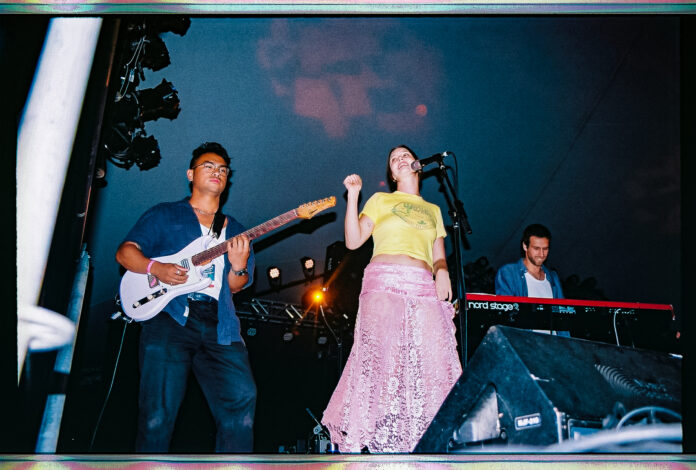
A woman in a yellow shirt and pink skirt stands by a microphone while two guys play a guitar (left) and set of keys (right) on each of her sides.
PHOTO: Gudrun Wai-Gunnarsson / The Peak

I have fond memories of long days spent at Vancouver Folk Festivals at ʔəy̓alməxʷ (Halkomelem), Iy̓álmexw (Squamish), or Jericho Lands. Perusing eclectic public vendors beyond the gates as music trickled from the stages and bunnies pranced always made me feel connected to the festival even without a ticket in. On July 21, I attended the final day of the three-day event going on its 47th year, and saw why the turnout is always in the tens of thousands, not to mention run entirely by a dedicated volunteer base.

This year’s lineup brought traditional and contemporary acts from near and far. While I had a few on my radar, I was more than ready to discover new artists. The main evening show demonstrated just how wide of a net folk and roots can cast, with all of them brought together by the deep level of musical connection.

PHOTO: Gudrun Wai-Gunnarsson / The Peak

South African group BCUC (standing for Bantu Continua Uhuru Consciousness) entranced everyone with their percussive-synched choruses and energetic rhythms. Taking inspiration from ‘70s Afro-Jazz and Afro-Psychedelic, the seven-member ensemble sees their music as “a weapon of political and spiritual liberation.” 

PHOTO: Gudrun Wai-Gunnarsson / The Peak

I also enjoyed Pharis and Jason Romero, a duo from Horsefly, BC. Their time on stage felt like an expected folk experience with yodelling, anecdotes about living in the Cariboo mountains, animal fable songs, and fiddle and handmade banjos front and centre. I found myself drifting away to the harmonies and gentle string picking in their ‘70s-esque love song, “Souvenir.”

What better place to enjoy such raw performances than by one of the best local beaches, overlooking mountains? The festival fields, a sea of draped floral and boho fabrics, had a crowd area divided into separate dancing and sitting sections. People of all ages seemed to be feeding energy back to the stage. 

PHOTO: Gudrun Wai-Gunnarsson / The Peak

Vancouver local Dawn Pemberton brought the soul out of the crowd with her renditions of some funk and gospel classics as well as her own songs. With a new album in the works, Supernova, you’ll likely find the vocalist, choir director, and music teacher performing at local soul and R&B scenes. 

With quaint patches of wetland surrounding the path, folk fest also had food trucks, music-themed workshops, and local artisans to explore while travelling from stage to stage. 

PHOTO: Gudrun Wai-Gunnarsson / The Peak

The final two performances were the ones I was most anticipating. Katie Tupper, an up-and-coming neo-soul singer-songwriter from Saskatchewan, is easy on the ears. Her voice was even more toned and smooth live singing her groovy, sultry singles like “She Said” and “Live Inside.” 

PHOTO: Gudrun Wai-Gunnarsson / The Peak

A fitting finale, Jeremy Dutcher’s classically-trained voice was a force in the performance that sent the festival off into the night. Dutcher is a Wolastoqiyik (Maliseet) ethno-musician from “Tobique First Nation in north-west New Brunswick.” He writes music in his traditional Indigenous language of Wolastoqiyik. His performances always feature archival recordings of traditional songs and speaking from his Ancestors, and he makes sure to teach the crowd words in Wolastoqiyik. Speaking on the importance of music for connection, his message resounded as the sky turned black.

Some crowd members had attended the debut festival at Stanley Park back in 1977. Having taken it in for myself, I can see why many folk fest attendees make the weekend a late-July tradition. 

What Grinds Our Gears: Parking at SFU Burnaby

0
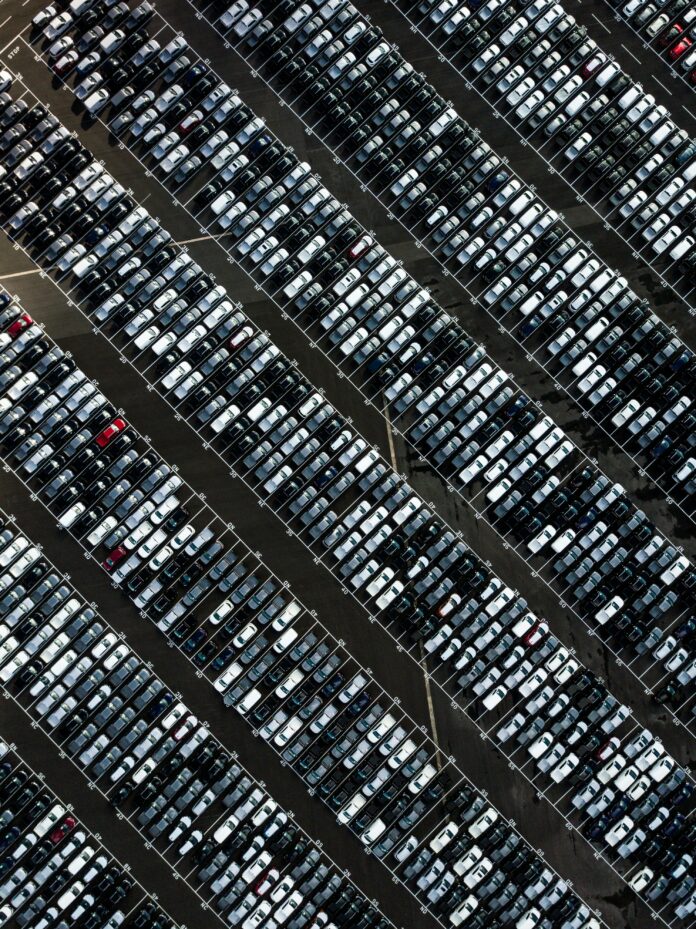
A full parking lot as seen from above
PHOTO: Ryan Searle / Unsplash

You’re running late, already stuck in traffic on the way up to campus, and then you finally pass the threshold of driving up Gaglardi Way to find a spot at Central parking. Lo and behold, you are eternally bound to join the seemingly endless carousel of cars waiting to find empty spots, like undead souls floating down the River Styx, longing for redemption. 

All for naught, all in vain, as every spot is filled. And if you think you found a spot, think again — it’s really just an electric car that’s the size of a small hippo, giving you the faintest illusion of hope only to vanquish your faith with swift malice. You circle around for half an hour to every parking lot like someone stuck in a desert trying to find an oasis to no avail. Your class started an hour ago, you’ve wasted half your tank just driving around the lots, and you start to question if it’s even worth it at this point. 

For a place that considers itself a commuter school, as a commuter, I feel unwelcome. Don’t get me started on the permits. Why in god’s name am I paying up to $420 for a chance at parking that’s not guaranteed? And if, by some holy intervention where the planets align, I get a spot, I am then forced to pay almost $20 for a day pass or else I’ll get ticketed. What more do you want from me?! More money? My car? My soul?!

An argument for reducing your meat intake

0
Illustrative farm animals with innocent expressions. Two chickens, a cow, two pigs, and a sheep
ILLUSTRATION: Victoria Lo / The Peak

Content warning: mentions of animal cruelty.

In another, far-off universe, humans might be photosynthetic — converting sunlight to energy as our source of food. Luckily, in our universe, we get to enjoy the great pleasure of eating food. As a primary ingredient to life, food has been driving human behaviour since time immemorial. It’s no surprise it has become a cornerstone in human culture, identity, celebration, and expression. Accordingly, debates and discussions around it can get heated quickly.  

To some, meat is perhaps the most beloved and most contentious part of our diet. Opinions vary, but the evidence is pretty clear: if we ate less meat, we — along with the Earth and the rest of society — would be healthier. Here’s why.

Current health recommendations from the World Health Organization (WHO) “suggest that red meat consumption should be between 98 g and 500 g per week for adults.” The Canadian Cancer Society recommends eating less than 255 g of red meat per week. Some doctors like Michael Greger and T. Colin Campbell say that an entirely plant-based diet can be life prolonging for many humans.

Meat is the most inefficient and resource-intensive way of feeding humans. Livestock consume far more calories than they produce. Chickens only convert about 11% of the calories we feed them into edible calories for us. For cows, that number is a shocking 1%. Indeed, most of those precious calories are lost to us. However, 75% of all agricultural land is used to support animal production. It’s hardly a stretch to say that if we shifted our diet to incorporate more plants and less animals, efficiency would skyrocket. If we gave the plants we feed to animals to humans, it’s estimated that we could feed an additional 3.5 billion human mouths.

The livestock industry produces 15–20% of the world’s greenhouse gases, which is as much as all ships, cars, planes, and trucks combined. While greenhouse gases are a necessary part of Earth’s natural atmosphere, the scientific consensus is that their massive increase in concentration due to human interference is causing disastrous consequences. Glaciers melting, land burning, animals dying en masse, and air pollution are just some of these consequences.

The meat industry causes horrific amounts of animal suffering — seven billion male chicks are gassed to death soon after birth because they can’t lay eggs, and cows are constantly impregnated to produce milk. I could go on about the animal rights violations, but there continues to be massive human rights violations, too. The industry has some of the highest rates of workplace injury and illness. Conditions are often unsanitary, and workers are frequently exploited and treated harshly. When COVID-19 hit, workers were forced to keep working in unclean and unsafe environments in close proximity to other workers. If demand for meat decreases, the industry will produce less meat and less suffering.

You aren’t a bad person if you eat and enjoy meat. You don’t have to cut meat out entirely to see the health, environmental, and ethical changes. And you’d be surprised at how delicious a dish can be without meat if you put care into it. Our approach to environmentalism and animal rights does not need to be all or nothing — every bit matters.

Brighter Side: Print newspapers

0
A stack of The Peak newspapers
PHOTO: Abbey Perley / The Peak

As classes begin and SFU fills up with students again, we’re back to printing this fall! While The Peak has been producing digital newspapers this summer, I’m looking forward to seeing our covers on stands. What better way to showcase the talented work of our illustration and photography contributors than on display across campuses?

Courses usually come along with additional screen time. Giving your eyes even the slightest break from those pixelated boxes that have taken over every inch of our lives can work wonders. You could catch up on the latest news between classes, complete a crossword side-quest while at Renaissance Coffee, or read the humour section on transit instead of scrolling through reels — good old ink on paper not only feels less straining on the eye, but also your brain. We all know how fatiguing the excessive illumination of screens can be, especially paired with the constant mental noise of pop-up notifications and messages. Sometimes, it’s nice to just turn it off and read a print article.

Over the summer, I loved grabbing the latest copies of Exclaim! and The Georgia Straight from my local coffee shop. I already spend most of my day looking at my laptop for work, so it’s nice to start the day differently. The colourful pictures and illustrations also double as collaging material, which is another fun screenless activity. From blackout poetry to origami — there’s so much inspiration you can find with newspapers that you can take home and hold in your hands.

What Grinds Our Gears: Convocations during classes

0
A group of people wearing graduation caps
PHOTO: Joshua Hoehne / Unsplash

I am not looking forward to this fall. My one and only reason for this is that I despise class-hour convocations. Dramatic, I know. I understand that scheduling is tricky, and there will always be at least one class running at any given time on weekdays. But hear me out: I’m still going to complain.

The bagpipe serenades and ear-piercing speaker feedback are honestly not my biggest gripes when it comes to convocations. It’s the random attendees wandering around every campus floor while I’m trying to find a quiet spot. Or, the crowds of people blocking my way as I rush to make it to my morning class. These things both suck, but nothing tops the photo ops I just know I’m in the background of and will never get to see. I promise your photo will look better if I’m not in it. 

Anyway, here’s to our 2024 grads. I’m not blaming you of course, but rather the school design that forces me to traverse a ceremony of hundreds to get to classes at least once a semester. 

Keep your cats indoors!

0
An outdoor cat
PHOTO: Jack Blueberry / Unsplash

Like most people, I always appreciate coming across a friendly neighbourhood feline. I love cats as much as any other cat person, but there’s no denying that outdoor cats wreak havoc on local ecosystems no matter how friendly they are. Letting your furry friend outdoors is not just cruel — it’s damaging to local wildlife. 

It makes sense that someone would want to let their cat roam around outdoors. If you’ve ever owned a cat, you’ve likely seen it stare out your windows longingly or even cry at the front door. You may have heard people say it’s more cruel to keep their pet indoors when it wants to be outside, but I promise that isn’t the case. An outdoor cat’s lifespan is two to five years due to exposure to wildlife, vehicles, and diseases. They’re also unfortunately at risk of animal cruelty from strangers. Compare that number to the 13–17 years that indoor cats live and ask yourself if it’s really worth it.  

Even if you’re unconcerned about the health of your cat, it’s worth considering the impact felines have on local ecosystems. Cats kill around 40–140 million birds per year in Canada. They’ve also led to the extinction of 34 global bird species. Nature reported that in the US, cats kill up to 22.3 billion mammals per year. Many of these deaths are from stray or feral cats, which means domesticated cats that went missing. Stray and feral cats are also sometimes euthanized if they come to a shelter without a known owner. Remember that cats did not evolve to live along roads and highways — traffic accidents are a major cause of death for outdoor cats, and they’re almost entirely preventable if you keep your cat inside.

The cats we’re familiar with nowadays originate from ancient Egypt, and lived off an entirely different food system than in North America. Your outdoor cat is quite literally an invasive species. No matter how much it cries or claws at the front door, remember that it’s in their best interest to keep them indoors. And despite what you may think, it’s very possible to transition an outdoor cat to indoors. The BC SPCA has a guide for making this transition, which also includes building instructions for a “catio.”

Your pet deserves to live a happy life, but it must actually be alive to enjoy its time on earth. As temperatures begin to drop and we enter the winter season, think about how you can give your furry companion the best chance at longevity.