Home Blog Page 1112

Thank the young players

1

CMYK-Whitecaps-Alan Davey-Flickr copy

In case you missed it, Canadian soccer was given a beacon of hope earlier this month. The hope that our homegrown talent can effectively tangle with million dollar European talents was affirmed by a handful of defiant, debutant Vancouver Whitecaps.

When manager Carl Robinson named his preliminary squad call-ups to the first-leg match of the Amway Canadian Championship away to Toronto FC, fans were in a mix of shock, worry, and national excitement. Understandably so, the immense pressure to come out with a result after years of failed defensive strategies and agonizing defeats due to the “away goals rule” had taken its toll on the ‘Caps faithful.

Now, the onus was on a starting 11 with an average age of 22 to kick off the tournament away to a star-studded Toronto in the right fashion. Vancouver’s Welsh manager also gave three teenagers their first professional start at BMO field; most notably Calgary’s 17-year old shot stopper, Marco Carducci.

Captained by 21-year old Niagara Falls native Russell Teibert (who joined the ‘Caps residency program at age 16), the blue and white did not disappoint. The young guns finished more passes and shots on target — 323 and six over Toronto’s 318 and four respectively. On the defensive hand, the Vancouverites blocked three dangerous chances and Carducci came up big and composed during hectic moments.

The reds were no pushovers, and reaped a two-goal benefit provided by newly signed designated players Jermaine Defoe and Michael Bradley. Without hesitation, the Whitecaps answered the two-goal deficit just before the final whistle courtesy of 19-year old Kekuta Manneh’s strike.

Thus the hard work reaped reward: the FC won 2-1, but the ‘Caps left the pitch delighted with grabbing what could be a crucial away goal. Just a 1-0 victory at a home return leg could take them to the Amway Canadian Championship final.

Winning the Canadian Championship with homegrown talent could invigorate the spirit of Canadian soccer.

Carl Robinson’s faith in the explosive speed and technical abilities of the young Canadians has proven to be iconic for the nation and club alike. In the face of Toronto’s million dollar signings, the Whitecaps defiantly controlled and dictated what the fans had wanted and needed, in true David vs. Goliath fashion.

Robinson spoke highly of his players following the match. “Nobody expected anything from us,” he said. “I told the guys to [. . .] enjoy yourself and play with a smile. I think they certainly did that.” This single opportunity that Robinson has given these young players will surely galvanize them for years to come.

Winning the Canadian Championship with homegrown talent is the fairytale ending that could invigorate the spirit of the sport on Canadian soil. Aspiring starlets now know that there is a national tournament to strive for and potentially earn a first professional start. Teams do not always have to spend millions to gain victories and form a squad; youth can be the answer.

Soccer fans can attest to the revolutionary power of youth academies that create championship-winning homegrown players for world-class clubs such as Barcelona, and corresponding national teams like the current world champion, Spain. Canada is a long way away from these comparisons, yet the fans must feel a sense of resurgence and hope due to efforts like this landmark performance of the young Whitecaps.

To potentially host the World Cup in the year 2026, Canada will need a fortified talent core and national team to boot. If youth is the future, then the future certainly looks bright.

University Briefs

0

WEB-briefs-Naika Esenalieva-Flickr


Digital health for expectant mothers

The University of British Columbia has begun a program for prenatal education through text messaging. The digital health program, called SmartMom Canada, is headed by Professor Patti Janssen of the School of Population and Public Health in conjunction with the Child and Family Research Institute. 

Educational prenatal health information is sent by the agency to expectant mothers via text message. The service will connect pregnant women with health services and educate them on how to care for themselves and their babies before birth. According to Janssen, one of the main goals behind SmartMom is to provide educational information to individuals seeking knowledge, but who are unable to attend the classes.

With files from The Vancouver Sun

Poodle sculpture removed from Capilano U

Capilano University has seized a piece of art from its campus grounds. The work in question, named “Blathering on in Krisendom,” is a sculpture of university President Kris Bulcroft, toting a poodle and wrapped in the American flag. 

Capilano professor and creator of the piece, George Rammell, is calling for the return of the sculpture. “It’s ridiculous,” he said. He was informed by campus security that the administration had given them the authority to remove the piece from campus. “I called the RCMP to report the theft. The officer arrived and he said he had been talking to administration: they had asked him if they would be liable if they destroyed the sculpture,” said Rammell.

With files from The Georgia Straight

Grads at U of M to pay three times more

The University of Manitoba intends to increase graduate student fees by almost 330 per cent. As it stands now, students pay an initial program fee in their first year and then pay an annual continuing fee of $700. The plan is to increase that continuing fee to $3000. 

Dean Jay Doering says that the fees will go toward support for graduate students as well as administrative and library services. Despite the reasoning behind the tuition hike, a survey done by the University of Manitoba Graduate Student’s Association showed that the majority of students are concerned about the increase.

With files from Yahoo News

Do you know how hard I work to put food on this family’s table?

0

Listen up, I’ve been hearing a lot of complaints tonight and I’ve got to say that I am downright sick of it.

Can I get more water? When are the breadsticks going to be here already? Could I get that without onions? Can I get that but without the mushrooms and pepperoni instead? Come on! Why don’t you just order a pepperoni pizza instead of a mushroom pizza then?

I have to put up with a lot of shit just to get food on this goddamn family’s table and it’d be nice if, for once, someone would just appreciate it.

If I could just have one person thank me for remembering to stock the table with salt and pepper instead of just complaining about how there aren’t any napkins, it might be okay. Do I ever hear that though? No, I just hear a whole lot of whining.

I work really hard to provide families with their food, and sure I also get paid money for it, money that I will in turn use to buy myself a new Xbox, but still I’d like a little more recognition.

You think it’s easy for me to work here on select nights throughout the month? Putting in 10 to 15 hours, every single week? No way, it can be hell. I’ve missed out on tons of super fun, great parties just so that you don’t have to go hungry or have Darryl as your waiter (seriously, Darryl’s awful).

So please, show some goddamn respect when you come to one of my tables. As long as you are under my roof (well, Boston Pizza’s roof) you better show some gratitude.

I don’t have to do this for you, you know, I do it because I care. I care about getting that Xbox. Everyone I know has the new one and now I don’t have anyone to play with online, it’s the worst.

Anyway, hopefully now you’ll realize how hard I work to put food on this family’s table and just shut up about those breadsticks. They’re on their way. When I said 10 minutes, I meant 10 minutes. Just relax.

Sasquatch capture disappointingly easy

1

SQUAMISH – Local hiker Bob Jamison has finally found the Sasquatch, stumbling into him on a hiking trip. Bigfoot, or “Foot” as he likes to be called, was found “just chilling” watching television and drinking beer.

“To be quite honest, it was kind of stupid,” said Jamison. “I mean he was just sitting on a couch, a couch in the middle of the forest, where there are literally no couches, watching TV. How do you miss him? It’s like he wasn’t even trying.”

Upon being found, Bigfoot was reported to have said, “You got me man, you got me,” before returning to his nap.

“He looked like he was going to attack for me for second but then he just said, ‘Screw it’ and went to sleep. It was kind of pathetic,” added Jamison.

Perhaps most notably, Jamison had captured detailed pictures of the Sasquatch along with video evidence, a never previously accomplished feat. However, the American Bigfoot Watchers Association (ABWA) claims this disproves the sighting.

“Didn’t you notice that he’s not blurry?” asked president of the ABWA and self-proclaimed Sasquatch expert Alex T. Poklevich. “That’s like his trademark man, do you think Bigfoot would just forget to be blurry? He didn’t for us.”

An anonymous member of the ABWA stated that Poklevich was just concerned for their jobs.

“It’s pretty hard being a Bigfoot hunter if he actually exists, I mean people will believe us now,” he said. “I’ll probably have to find other work, maybe a government conspiracy nut, the History channel has shows on that, right?”

When asked to comment, Bigfoot said he was shocked, claiming that he put a lot of effort into hiding from humanity, only to be found lazing around at his home.

“I took all the precautions, you know. I disguised myself in public, when I went to the store I wore my fake mustache and glasses, pretended to read giant newspapers, I did everything right.”

When asked how his life will change as a result of this newfound exposure, “Foot” responded, “I’ll have to be more careful when I eat people . . . and I’ll probably have to pay for cable now.”

Board Shorts

0

6365127501_a031d8a183_z
At-large rep off to Prague

Newly elected at-large representative Rebecca Langmead has left for Prague for two months. The board approved Langmead’s leave of absence at their board meeting on May 6. Although the bylaws state that the IRO must approve the leave, board approved Langmead’s request as the IRO position no longer exists.

Given that a board member on a leave is unable to fulfill requirements to receive their stipend (for instance, attending Clubs Days or attending council), Langmead will not receive her stipend. Although she is not receiving a stipend, SFSS President Chardaye Bueckert told The Peak that Rebecca plans to keep up on society matters via email and online by reading meeting minutes, etc.

Student At-Large Nominations

There has been a call for nominations for a student at-large to sit on various SFSS committees. While any member of the student society is welcome to attend all committee meetings, the upcoming elections will be for students who are to formally fill seats on these committees with voting rights. The nomination period is to end on Friday, May 23.

Elections Canada Workshop

VP, External Relations, Darwin Binesh, is to represent the SFSS at a workshop put on by Elections Canada surrounding the issue of low youth voter turnout. The event will take place downtown on May 29 and 30. The focus will be on the declining voter turnout of young people and how it can be improved. “Obviously, this would be pertinent to us, I think, as young people, not just as the board of directors,” said Binesh.

Satellite Signals

0

vancouverHarbour Centre

An event last Tuesday at Harbour Centre, called Brain Food- How to Eat Smart, enlightened students on the effects that eating has on your mood — or, as organizers put it, those “butterflies” in your stomach. The talk discussed how the digestive tract actually contains millions of neurons (just like the brain) which makes what you eat all the more important. Those in attendance learned how to feed their brains for steady energy, which foods improve concentration and memory, which foods “leave you tired and blue,” and five foods to avoid for brain health.


surrey

Surrey

SFU educators (or would-be educators) were invited to kick back and interact at the Central City Pub last Friday afternoon at a Teaching with Technology social event. The event was a follow-up to the Teaching with Technology in Surrey series kick-off, which brings staff together to discuss new ideas and best practices for teaching with technology. Attendees participated in short, fun activities while enjoying light snacks and refreshments.


vancouver

Morris J Wosk

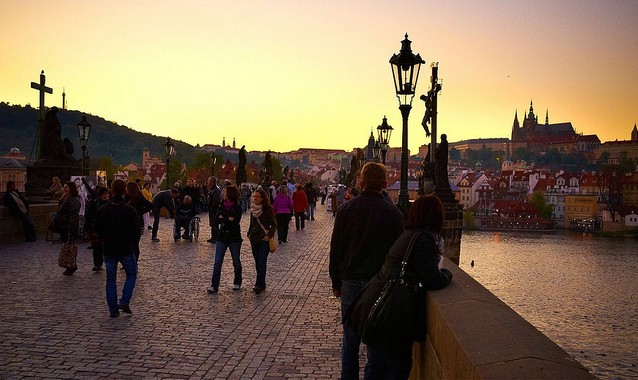
SFU partnered with the NATO Defense College to host their second joint summit last Friday, entitled “Euro-Atlantic Meets Asia Pacific: NATO, Partners and the US Rebalance.” The day-long event invited speakers from around the world to share their own perspectives on the rise of Asia-Pacific as a global economic and security region. The keynote was given by Peter Lavoy, former Acting Assistant Secretary General for Asian and Pacific Security Affairs for the US Department of Defense, and closing remarks were made by SFU professor of political science, Alexander Moens.


SFU Faculty Association votes to unionize

0

SFU faculty members and library staff have officially voted to unionize.

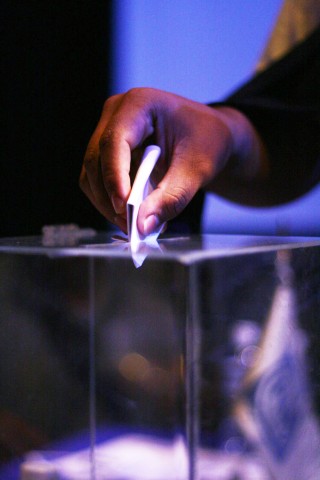
The results of the vote, which were made public on Thursday, May 15, showed a majority of staff members are for unionization. Out of the 800 votes cast, 590 were in favour of becoming a certified union, while 210 were opposed. Voter turnout on the issue was 73 per cent.

The results are similar to those of a vote from the UVic Faculty Association in January of this year, when 82 per cent of the association voted to become a certified union.

The ballot asked voters if they wanted “the Faculty Association of Simon Fraser University (SFUFA) to be recognized as a certified union, under the Labour Relations Code” and to have that body act as representative of faculty members and librarians in collective bargaining with the university.

Now that staff have officially given their go ahead on unionization, the next step is the issuing of a formal certification order by the Labour Relations Board of British Columbia. SFU administration and the newly formed SFUFA will then begin negotiating their first collective agreement.

A public release signed by VP Academic Jonathan Driver and SFUFA president Neil Abramson, stated that “The University Administration and Faculty Association respect the choice made by faculty members and librarians regarding their preferred form of representation.”

The release concluded, “Both the Administration and the Association are committed to maintaining the positive working relationship we have enjoyed.”


This story is currently developing and more details will be added as information becomes available. Please check back soon.

Weekly List: Ten summer movies to look forward to

0

4385687715_037448f749_o

The summer blockbuster season officially kicked off last week with The Amazing Spider-Man 2, which hit the theatres to a collective “meh”. Thankfully, there’s no shortage of upcoming summer releases that are worth putting down the books and hitting the theatre for — even some of the superhero sequels. Here are some of the upcoming summer movies we’re most looking forward to:


Godzilla (May 16): If you’re wondering what Bryan Cranston has been up to post-Breaking Bad, the answer is working as a nuclear scientist and provoking Japanese mega-beasts. That’s right, the original movie monster is back in this much-needed reboot of the 60-year old franchise. It was filmed largely in and around Vancouver — look for uncredited cameos by Canada Place and the Convention Centre.


X-Men: Days of Future Past (May 23): Everyone’s favourite mutants are back for an umpteenth sequel, this time changing the past in order to protect their future. The franchise stays fresh with the addition of new characters like Fan Bingbing as a teleporting mutant and Peter Dinklage as a villain bound on destroying all mutants.


Maleficent (May 30): In the style of Wicked, this live-action Disney flick tells the story of Maleficent, the vindictive fairy who curses Sleeping Beauty. The film stars Angelina Jolie as the titular red-lipped, black-horned villainess, whose icy beauty is sure to inspire the most popular costume of Halloween 2014. This one is worth seeing — even if you don’t have a little sister.


Edge of Tomorrow (June 6): Tom Cruise and Emily Blunt star in this Independence Day-meets-Groundhog Day sci-fi bloodbath about soldiers trapped in a time loop of the final day in a war against an alien civilization. Based on a Japanese graphic novel whose title, All You Need to Kill, is way, way better.


Dawn of the Planet of the Apes (July 11): In 2011’s Rise of the Planet of the Apes, we saw the hyper intelligent primate Caesar go from genetically engineered lab animal to vigilante chimp-on-a-mission. The story picks up 15 years later at the outbreak of a human vs. ape war, with Caesar as the leader of a simian army that has figured out how to use those opposable thumbs to work a shotgun.


Jupiter Ascending (July 18): We have high hopes for the new film from the Wachowskis, their first original sci-fi script since The Matrix trilogy. It stars Mila Kunis as the world’s most beautiful janitor, who discovers she’s actually interplanetary royalty with a bounty on her head. Channing Tatum co-stars as the human-wolf hybrid ex-military hunter whose mission is to protect her. I know, right?


Mood Indigo (July 18): Who better than Audrey Tautou to star in the adaptation of a French surrealist novel about a newlywed who discovers she’s terminally ill with flowers growing in her lungs? This is the perfect film for asking that manic pixie dream girl in your summer session class out on a date.


The Giver (August 15): This is the summer that Lois Lowry’s “unfilmable” young adult novel about Jonas, a boy in a seemingly perfect, pain-free world who is tasked with the job of storing memories, hits the screen. If it’s anything like the myriad other films about teen protagonists in dystopian worlds released in recent years, it’s bound to be a hit.

My grades? None of your business

0

4728093020_de5b2e5dda_b

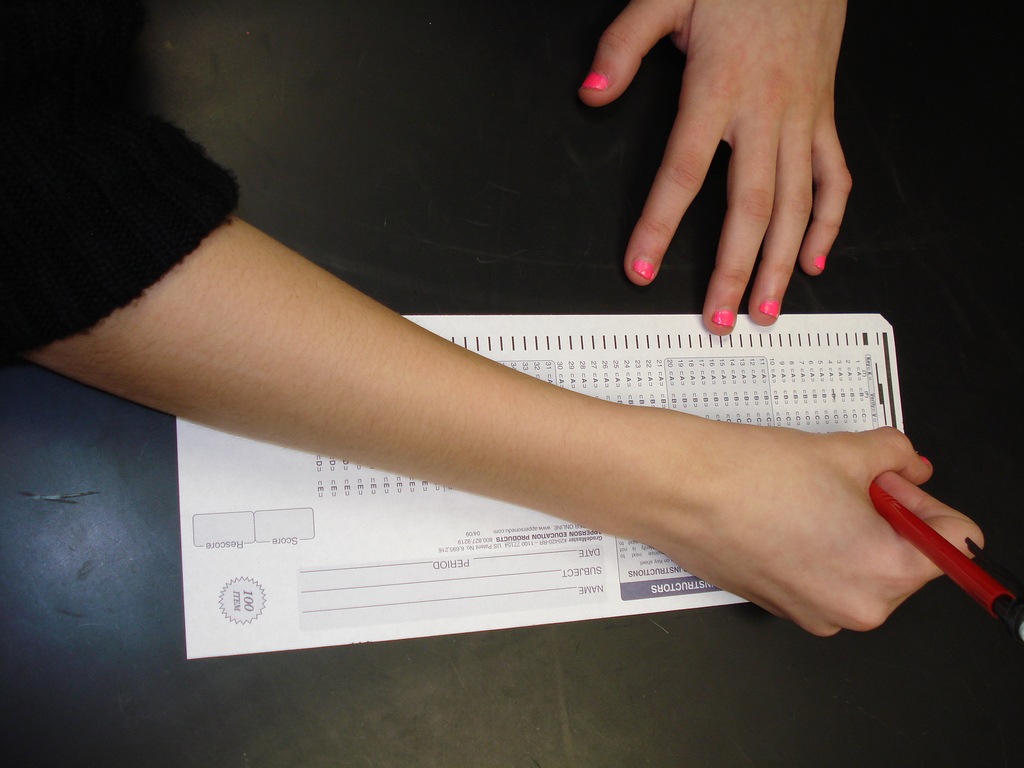
If you have ever done poorly on an exam, then you will be able to relate to the internal conflicts resulting from the procession of friends asking to hear your mark. Personally, I have been faced with two not so pleasant options: either giving it out and being reminded of my self-inflicted inadequacy, or being perceived as rude, not wanting to share.

After a particularly humiliating experience involving an organic chemistry midterm on which I received a lower mark than all of my friends, I realized that keeping your marks to yourself is not rude. Going around and asking everyone for his or her grades, though, is.

After the exams are handed back and the professor explains the distribution of the marks, there is really nothing to gain by asking other people about their grades. We are simply going through these inquiries to compare ourselves to others. This succeeds only in perpetuating the unhealthy type of stress-inducing competition which so often occurs among university students.

While competition is inevitable in a system in which we are all distributed along a curve, it doesn’t mean that we have to know who is where. Understanding where you fit among your peers is entirely enough information to let you know if you need to study harder or get some extra help. By comparing each other directly we are not accomplishing anything to help one another and we are failing to make university a more welcoming experience.

Perhaps my “bad” mark is your “great” one. But neither of us needs to know what each others’ are.

Furthermore, if you do well on a test, that doesn’t mean that everyone has to hear about that amazing grade. Proclaiming it to the world isn’t necessary. If I didn’t ask about it, I probably do not want to know. Don’t get me wrong: I am not shaming those who succeed. If you think you did well and want to share, then say so! If you didn’t feel that you did well, also feel free to say so!

Marks are, after all, both relative and personal. Perhaps my “bad” mark is your “great” one. But neither of us needs to know what each others’ are. Flashing yours around or prying marks from people, no matter how innocent in intention, isn’t necessary, as yours are yours and mine are mine.

If you need to make small-talk after an exam, here are a few alternatives to putting another student in a possibly uncomfortable position. Say: Are you happy with your mark on the exam? Or, Did you do as well as you thought you did?
In university, let’s change the way we ask about each others’ grades. Let’s take this first step towards making an environment of support, rather than one of egotistical competition.

Me, My Selfie, and I

1

14119417192_92d158b83b_o

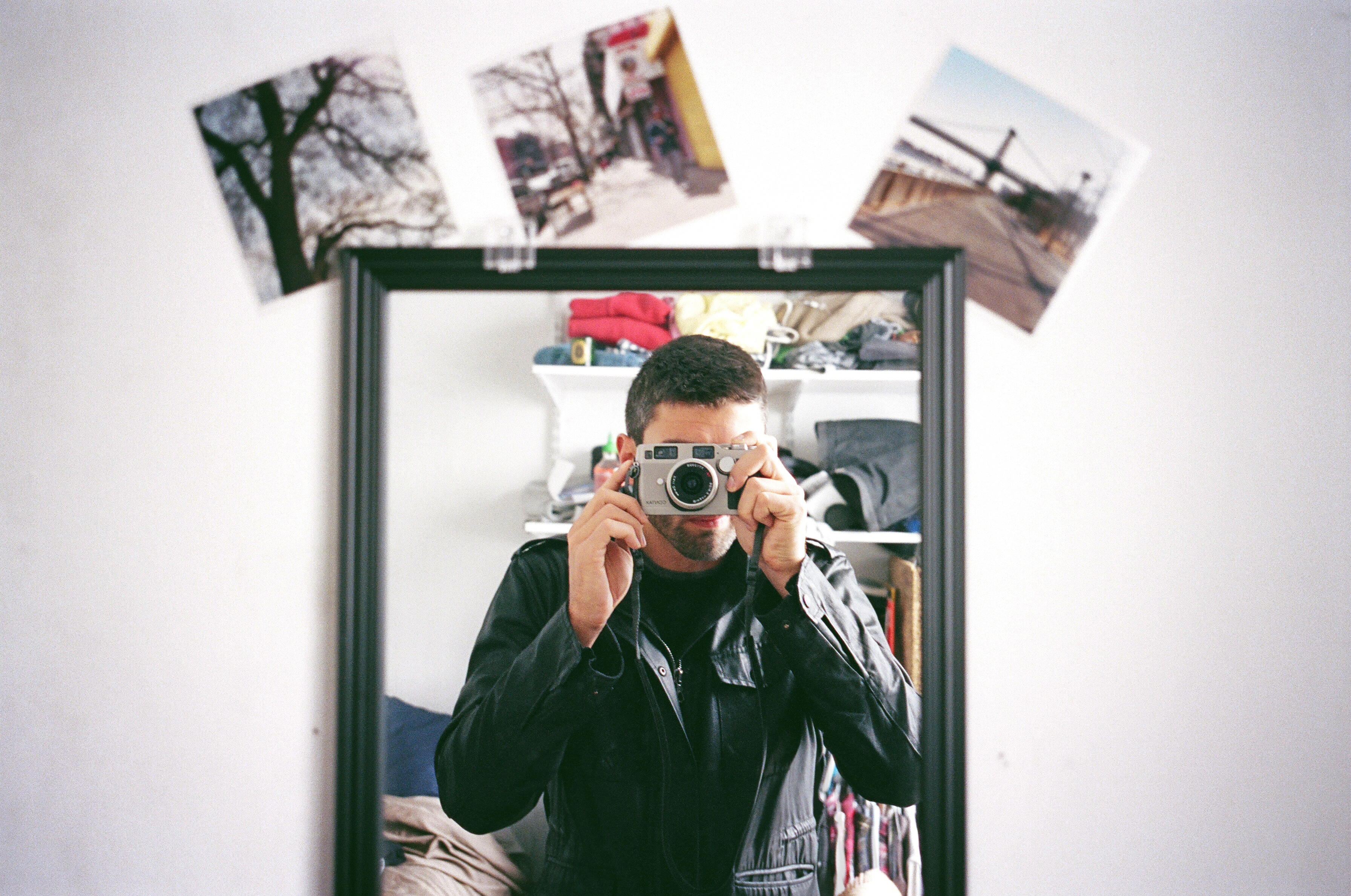
Before anything, check that the room is well lit. That’s the first step. Now take a good look at yourself in the mirror, and evaluate — is your hair tamed? Your shirt sufficiently buttoned, or unbuttoned? Is your lipstick the right shade of red, or your beard trimmed?

Test out a few expressions: silly, serious, flirty, flippant, daring, destitute, casual, classy. Cock an eyebrow, purse your lips, or wink an eye. Try to pick a look that says: I’m taking this seriously, but not too seriously. Make sure your camera phone is tilted upwards to a 45 degree angle — an unspoken but invaluable rule. Take a deep breath, strike a pose, and snap the photo. Choose a filter, pick the right border, tag your friends, and add a couple of hashtags for good measure.

Now press send.

Congratulations; you’ve just joined a league of more than one million people daily who take photos of themselves and upload them to Instagram, Snapchat, Facebook, Grindr, Tumblr, and dozens of other social media networks. Whether you’re looking for attention, wooing potential suitors or just trying to put on your best face for the rest of the world, you’ve become a part of one of the biggest, most persistent trends of this decade: you just took a selfie.

Famously, the selfie reached the zenith of its cultural status just last year, when the Oxford English Dictionary awarded it the honour of being 2013’s Word of the Year, beating out harsh competition from similarly ubiquitous buzzwords such as twerk, binge-watch and bitcoin. When selfie took the title last November, no one could argue that it had earned the distinction: its usage had gone up by about 17,000 per cent since that time the previous year.

35 million selfies have been posted to Instagram — more than the population of Canada.

Unsurprisingly, the most active and vocal members of the selfie movement are millennials. The PEW Research Centre conducted research which concluded about 91 per cent of American teenagers have taken at least one selfie in their lifetime, and Instagram stats prove that about 30 per cent of photos posted by 18–24 year olds are selfies. Of course, there’s also a pronounced and vocal percentage of selfie takers who don’t fit into the millennial generation — look no further than the high-profile snapshots of Barack Obama, David Cameron and the Pope to see just how wide a net the selfie casts.

For the uninitiated, there’s plenty of selfie varieties and classifications, each with its own distinct style and message. There’s the workout selfie, the half selfie, the couple selfie, the no makeup selfie, the graduation selfie, the after sex selfie, the funeral selfie, the breakup selfie, the stealth-ie, the space selfie, the bathroom selfie, the pet selfie, the celebrity selfie, the food selfie, the duckface selfie; even the kicked-in-the-head-in-front-of-a-moving-train selfie.

More and more, casual, spontaneous self-portraits have begun to invade our social networks and Instagram feeds — but what’s behind this burgeoning trend? Is it narcissism, or identity building? Is it a new phenomenon, or just the next stage in an ongoing movement in art and culture? And, perhaps most importantly, will it ever go away?

~

Though the term might be new, the concept behind selfies has been around almost as long as civilization itself. The history of the self-portrait reaches all the way back to, well, Bak.

The chief sculptor for the Egyptian pharaoh Akhenaten, Bak’s self portrait is the oldest one anthropologists have uncovered — though it’s likely that older ones exist. Self-portraits were common practice in the Greek and Roman Empires, but didn’t really hit their first stride until the Renaissance, with the work of Albrecht Dürer, a painter famously obsessed with his public image. (Sound familiar?) Dürer painted dozens of self-portraits, usually painting himself facing slightly to the right — still common practice for selfies today.

Apart from Dürer, many painters dabbled in self portraits as a form of self-expression. Some, like Vincent van Gogh, Frida Kahlo and Rembrandt, have become particularly well-known for their self-portraiture. Eventually, with the invention of the photograph, the camera became the tool of choice to depict oneself: one of the first documented photos of a human is a selfie of Robert Cornelius, an American pioneer of photographic technology.

Since then, selfies have become common practice for photographers, artists, and celebrities. Vivian Maier, Arthur Rimbaud, Edgar Dégas, Paul McCartney, Andy Warhol, Princess Anastasia Romanov, and JFK were all known to snap the occasional self portrait — way before it was cool.

The first known instance of the term selfie actually surfaced in 2002, a full decade before its Word of the Year title. As far as anyone knows, the very first “selfie” on the web can be found in a post on an Australian forum, three years before the word earned its own Urban Dictionary entry. Australians remain the world champion selfie takers — Canada comes in at number three — and the Oxford English Dictionary even recognizes the word as having an Australian origin.

Selfies gained popularity in the Internet age at first as “MySpace pics,” blurry, often sexually charged snapshots posted to the aforementioned website. They began as, and remained, predominantly a teenage phenomenon (because let’s be honest, who else used MySpace?). The trend actually came close to dying out in 2009, when the great MySpace exodus took most self-respecting users over to Facebook. Most users felt that selfies weren’t suited to the new social network, so they were pretty much uniformly scrapped.

If Facebook was the straw that almost broke the camel’s back, the iPhone 4 was the trend’s saving grace. Released in 2010, the new iPhone was the first North American phone to include a front-facing camera, making self-portrait photography easier and more precise than ever before. Suddenly, people could take selfies that didn’t depend on a bathroom mirror or an awkwardly maneuvered arm. It helped that three new social networks — Tumblr (2007), Instagram (2010), and Snapchat (2011) — were all coming to prominence around the same time. Add in a dash of narcissism and a sprinkle of identity crisis, and you’ve got yourself a new and powerful trend.

Nowadays, selfies are everywhere. Hell, if you’re reading this, you’ve probably taken one. I was convinced I hadn’t until I plumbed the depths of my iPhoto to find a few forgotten bathroom portraits from my years as a high school freshman. Predictably enough, the most popular Instagram photo of all time is the now-infamous group selfie taken by Ellen DeGeneres at the 2014 Oscars. And PicMonkey, in a study last year, claimed over half of American citizens had taken at least one selfie.

Overall, in the past four years, more than 35 million selfies have been posted to Instagram alone. That’s just over the entire population of Canada.

~

Think you’re addicted to selfies? Think again.

Danny Bowman, a 19-year old from the United Kingdom, spent 10 hours every single day taking selfies — amounting to around 200 selfies daily — for four years, until his inability to take a perfect photo of himself led him to attempt suicide by overdose. He survived, and is currently in therapy for technology addiction, OCD and body dysmorphic disorder. He’s also become a minor celebrity in Britain, even appearing on the popular talk show Daybreak to discuss his addiction. He was introduced as the world’s first “selfie addict.”

It turns out that Bowman isn’t exactly a special case. Many scientists have spoken out against the perceived negative effects of selfies — Dr. David Veale, an expert on body dysmorphic disorder, has linked a spike in the disease to the rising popularity of the trend. “Two out of three of all the patients who come to see me with body dysmorphic disorder since the rise of camera phones have a compulsion to repeatedly take and post selfies on social media sites,” he told the Daily Mirror.

The disorder is characterized by an unhealthy obsession with one’s personal appearance, often focused on either minor or imaginary flaws. The reason selfies spark instances of BDD might have something to do with our brain’s perception of the way we look. According to Nolan Feeney at The Atlantic, since we’re so used to seeing our inverted faces reflected in mirrors and the like, the sight of your face the way others see it can be destabilizing.

Photographs, especially those we take ourselves, can be pretty deceiving.

He quotes Pamela Rutledge of the Media Psychology Centre: “Looking at yourself in the mirror becomes a firm impression. You have that familiarity. Familiarity breeds liking. You’ve established a preference for that look of your face.” Your non-inverted face, however, is unfamiliar — and much more prone to self critique.

Some have combated this effect by taking photos that are meant to look ugly, strange, and contorted. This trend, profiled in The New York Times, is meant as a reaction to the attempted perfection of selfies taken by celebrities, models, reality TV stars, and that one girl you went to high school with that you haven’t deleted off of Facebook. Some have even gone so far as to post double selfies: one in which they try their best to look flawless, and the other in which they scrunch up their face, muss up their hair, and generally give zero fucks.

It’s meant to make an important point, and it does: photographs, especially those we take ourselves, can be pretty deceiving.

Of course, if you are interested in getting as many views as possible with your selfies, you’re in luck: science has an answer for that one, too. Aditya Khosla, a PhD student at MIT, recently developed an algorithm that can predict which selfies will get the most likes and comments. It’s based on three key factors.

First, try to make your photo as colourful as possible: bright colours, like yellows, pinks, and oranges, fare better than dark blues and greens. Second, amp up the sexiness. It should come as a surprise to no one that, the more skin you show, the more views you’ll get. Third, if you’re one of those people who adds a million tags after every selfie, turns out you’ve got the right idea. Khosla’s research on Flickr stats shows that the more you tag, the more views — and subsequent likes — you’ll get.

~

Beyond the science and statistics of the selfie, there’s plenty of debate over whether or not we should be taking quite as many as we do. A quick Google search will turn up dozens of think pieces on how the millennial generation is self-absorbed and narcissistic which cite selfies as a prime example — and, frankly, it’s a pretty valid point to make. But are selfies just proof of our generational narcissism, or is there more to it than that?

Stuart Poyntz, an SFU communications professor and expert on digital media, seems to think so. To him, selfies are “a way for us to communicate with each other through images. But what’s funny,” he says, “is that it’s just as much about ourselves as those around us — who we are, who I am. They’re our way of looking at the world, but they’re really a way of looking at ourselves.”

Can we use selfies to communicate both with each other and with ourselves? In a sense, selfies do the same thing for us that cameras and daguerreotypes have done for generations previous: to capture a moment, the people that we are at a specific time and place, and to do it in a very personal, direct way. It’s not just an attempt to express our identities or to share ourselves with the people we love — it’s also a tool for us to keep track of ourselves as we change and grow, a sort of visual diary. As Poyntz explains, “selfies extend the way that cameras allow us to organize and think about who we are, and how we are who we are.”

Poyntz also sees the transformative potential of the selfie: “As a form of image communication today, it’s amazing, and it’s significant,” he says. “There’s ase spectrum of images and stories that come to us through selfies which, otherwise, we wouldn’t see or hear.” Looking at it this way, selfies function as a democratization of the images we’re exposed to on a daily basis. People who aren’t often given exposure in the media — those with different racial backgrounds, physical or mental disabilities, LGBT people, and so on — can take selfies and create their own space to be seen and heard.

“There’s a spectrum of images and stories that come to us through selfies which, otherwise, we wouldn’t see or hear.”
– Stuart Poyntz, SFU professor of communications

Selfies have also been lauded as tools for feminism by several writers, much for the same reasons. In an article for Hyperallergic, Alicia Eler calls the selfie “an aesthetic with radical potential for bringing visibility to people and bodies that are othered,” and celebrates the popular hashtag #feministselfie, in which women and others are encouraged to post photos which don’t conform to the usual cultural conventions of “beauty.”

Though they have plenty of potential to make a radical statement about our culture, our society, and who we are as individuals, anyone who’s scrolled through the selfie hashtag on Instagram or Facebook will likely agree that not all selfies achieve this lofty goal. Rather than going against the grain and challenging the status quo, many selfies simply attempt to duplicate the imagery of the mass media: advertising, reality TV, beauty magazines, and the like.

Plus, it’s hard to deny that the selfie trend has more than a few shades of narcissism to it. As much as sex positivity and a healthy body image are important — especially for the development of young people, the majority of selfie takers — the oversaturation of selfies does seem to speak to our societal obsession with ourselves.

It’s a bit of a chicken and egg scenario: do selfies make us self absorbed, or are they simply a reaction to our self-absorption? Where do we draw the line between positive self image and unhealthy obsession with the way we look?

Whatever the case, it doesn’t seem like they’ll be going away anytime soon. As far as Poyntz is concerned, the selfie’s “significance, its uniqueness, will fade. It’ll become a kind of regular thing, but I don’t think it’ll be as surprising to us, maybe three or five years from now.”

One can imagine that, given the limitations of the basic selfie, the creative potential of the medium will inspire photographers to try to break the mould. The #selfieOlympics, an Instagram competition earlier this year where users had to come up with the most creative, unexpected snapshot, is a prime example of the potential of the trend to inspire, provoke, challenge, and subvert expectations.

If the selfie really is here to stay, well, maybe that isn’t so bad. Despite the suddenness of its popularity, it’s pretty hard to imagine a world without a single selfie. After all, how am I supposed to let the world know what a good hair day I’m having?