Home Blog Page 1098

SASS seeks to unite faculty of arts

0

WEB_SASS_Anderson Wang
During the SFSS elections earlier this year, the Society of Arts and Social Sciences (SASS) was officially recognized as the first Faculty Student Union (FSU) at SFU after a campus wide referendum. 

In the past, SFU students were represented by Departmental Student Unions (DSUs) only, making the introduction of an FSU a drastic change. According to newly elected SASS president, Dion Chong, this formalization will allow for better representation of arts students.

However, the referendum passed by a narrow margin of only 12 votes over the required voter quota, raising questions and challenges for Chong and his team. 

When asked about the low overall voter turnout — 9.44 per cent — Chong replied, “For a young organization the positive result of the vote is pretty awesome. It is unfortunate that we had one of the lowest voter turnouts we’ve had yet, and it can be disheartening at times, but we needed to reach at least five per cent of our membership [to pass our referendum] and we did that.”

“Everything we’ve been working on has led up to this point, and we hope to continue to grow,” said Chong. SASS members have been working towards official recognition since 2011, when they were first recognized by forum. “We were kind of in limbo for a while,” explained Chong, because the bylaws simply did not have a provision for FSUs to exist.

Chong went on to explain the difficulties of reaching the many members of SASS; the FSU represents not only students who are majoring in arts and social sciences, but also any student who is pursuing a minor, a certificate, or is enrolled in just a single class. This makes SASS membership larger, as many students elect to take breadth courses in arts and social sciences, compared to other faculties.

“If this had been a different union, the sciences for example, it would have been an easier vote. We would have had to reach less students, but as it is, this vote and the turnout was no small task,” explained Chong. 

As an FSU, SASS now represents over 30 different DSUs, 14 of which are active, and has a bigger budget, more man power, and authority behind it. 

“A big challenge in the arts is that students in the arts don’t necessarily stick in one department,” said Brady Wallace, arts and social sciences representative on the SFSS board of directors. “They may not feel that they want to participate in a particular DSU or program that they’re only taking six courses in. Because there is that lack of attachment, there may be a lack of engagement.”

Chong hopes to use the added level of legitimacy SASS has garnered through the vote to build bridges between departments, coordinate activities, begin a completely arts-centric scholarly journal, and develop fun and representative learning opportunities which will help foster a sense of pride in arts and social science undergraduates. 

Despite the challenges such ventures will likely entail, Chong is optimistic about the future of SASS and what it stands for. He told The Peak that SASS represents “the value of the arts,” saying, “it instills a degree of pride. We have great courses, hilarious profs, and students who actually give a damn about making the world a better place.

“I’m proud of that, and I’m proud that I represent a society which encapsulates that and cares enough to channel it into an even better future for the faculty,” concluded Chong. 

Senate Report

0

WEB-Mould-2
At the most recent SFU senate open session, President Andrew Petter addressed a question regarding the indoor air quality in the education building put forward by graduate student senator Ehsan Jozaghi.

Jozaghi requested an update on the action taken by administration to address the issue of mould in the education building and Robert C. Brown hall, given that it is an ongoing issue affecting the health of students and faculty working in these buildings.

Petter responded by saying that despite a lack of funding for deferred maintenance, the problem will be handled: “If there is a health issue, or a safety issue, we simply address it. We have to. That means funding has to be reallocated, as it has been from other areas in order to do so.” 

Chief safety officer Terry Waterhouse spoke to the efforts that have been made to communicate with the SFU community about this issue. He explained that the communication process has been a “two-way street.” 

The university has been hearing concerns “openly and thoroughly” from people working in the building by way of direct interviews and surveys. A user working group has been formed and town hall meetings have been held as well; full reports on the education building review and assessment are available online. Waterhouse stressed the importance of transparency in this matter.

Petter concluded that the age of the buildings and lack of resources were at the heart of the issue: “Although we are investing in upgrades, and although we are dealing with safety concerns wherever they may arise, it’s still not enough to compensate for systematic underfunding.” 

Pipe Dream

0

Alan Bevan - Abbotsford

SFU contains a host of hidden wonders; one of them, in particular, is dear to my ear. As far back as I can remember, I have felt enamored by music of Scottish origin — in particular, the tradition of piping combined with drums. 

I stumbled upon SFU’s Pipe Band one day during a short stroll across Burnaby Mountain. Literally, all it took was walking by the Pipe Band practicing, and I was hooked. Without a second’s hesitation, I plunged head-first into the bagpiping, drumming goodness. 

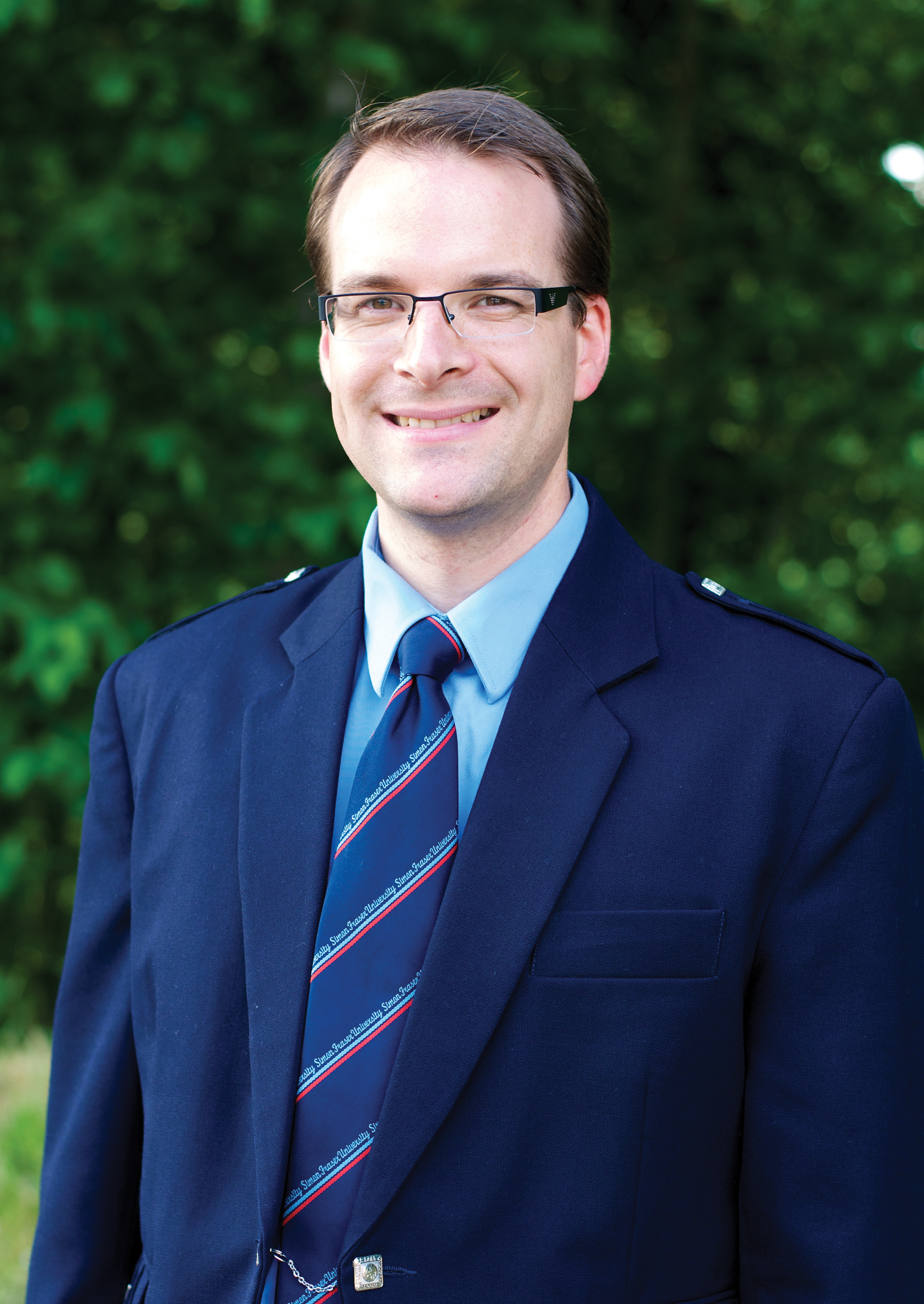
For over 30 years, the SFU Pipe Band was organized, led, and conducted by Terry Lee. Recently, Lee stepped down and was replaced by Alan Bevan, a world class piper and member of the band since 1995. I had the opportunity to interview Alan about the SFU Pipe Band and his prior involvement with Terry and Jack Lee.

“I started when I was seven and a half in Abbotsford in the local Pipe Band, eventually reaching Grade 1 and competing against the SFU Pipe Band,” Bevan remembers. “Grade 1” is a term connoting the highest level of performance within the world of piping. After facing off against SFU, Bevan soon joined the team’s ranks, and rose to become one of its most prominent pipers.

Replacing Lee as SFU’s pipe major was a daunting task for Bevan, especially in light of the band’s six-time World Champion status under the former’s leadership. However, Bevan has a wealth of experience, both with piping and with the Lee family.

“We have people come from all over the world to play in the band.” – Alan Bevan, pipe major

“I started taking lessons from Jack Lee [pipe sergeant of the SFU Pipe Band and Terry’s brother] as a young teenager. That was a turning point in my career. I did well in the amateur ranks, and I turned pro after studying under Jack for a year,” Bevan explained.

He continued, “They [Terry and Jack Lee] are both excellent players. Terry was the first one to be asked to join the Pipe Band. Jack has been the number two guy in the pipe core. They have a symbiotic relationship.”

Despite leaving his grand legacy to Bevan, Terry Lee is still involved with the SFU Pipe Band; however, his level and degree of involvement has lessened, with Alan taking on many of Lee’s previous tasks. Though he has big shoes to fill, Bevan is confident in his level of expertise as a piper.

Speaking to his experience at the highest level, Bevan said,“You can only win the gold medal once at each of those contests [which SFU Pipe Band competes in]. I’ve now won each of those gold medals.”

But it’s not just Bevan raking in the medals. Besides meeting the pipe band’s exceptional leadership, I have also experienced first-hand the high-quality drummers and pipers that make up the band, each of whom is passionate about both the music and the team — living up to the impressive standard Bevan has set.

“It’s a tough band to get into in the first place,” Bevan admitted, referring to the group’s high standards. “We have kids come up through the ranks of the Robert Malcolm Memorial Organization [and Pipe Band]. Not all of those guys get into SFU. A few have, they’re pretty fired up by the time they get there, obviously.

“We have people come from all over the world to play in the band,” Bevan continued. The Pipe Band’s international and local performers throughout the last few decades have performed at such venues as Carnegie Hall, Lincoln Center in New York, the Salt Lake Tabernacle, and the Sydney Opera House. 

The pipe band has an unique way of preparing for a given season; it’s a process Bevan describes as the band’s way of always having something to work towards. Rather than focusing single-mindedly on one big performance at the World Championships, the band works towards other contests, while keeping their eventual goal of a championship in mind.

This kind of preparation keeps the band’s spirits and motivation high throughout the year. In fact, it may be the secret to their world class success. Not many universities can claim to have a pipe band; even fewer can claim to have one as talented and successful as ours. As the band’s proud new pipe major, Alan Bevan has high hopes for the future — and with everything he has going for him, why shouldn’t he?

Risky trades pay off

0

At the trade deadline, both Stanley Cup finalists made what appeared to be questionable trades. Now, with both the LA Kings and the New York Rangers competing for the cup, those deals aren’t looking too bad.

Let’s start with the Kings. They traded Matt Frattin, a prospect who saw fourth line minutes, a second round pick, and a conditional third round pick, to the Columbus Blue Jackets for Marion Gaborik.

The return was not necessarily in question, as Gaborik is supposed to be an elite goal scorer and, to my knowledge, Frattin is not touted as a huge prospect. A team can always use picks, so throwing them away is a bad idea. But LA is in the midst of a possible dynasty, and they have got to be in “win now” mode.

However, Gaborik does not strike me as someone who would fit into the Kings’ defensive system. He was obviously added to give them some offensive firing power. The question was: could he also play a good defensive game?

Gaborik clashed with John Tortorella on the Rangers due to his presumed inability to play Torts’ style of game (although, considering Torts, it may not have just been Gaborik’s game). Gaborik, whether it was right or not, came off as offensively gifted, but one-dimensional.

St. Louis is still skilled at 38 years old, but he probably only has a few years left.

After his turbulent time with the Rangers, he was traded to the Blue Jackets ― which did not help matters. He posted only nine goals and played 34 games, over what was essentially one season. He appeared plagued with injuries, and was no longer the 40 goal scorer he once was.

However, after the trade he seemed to fit right in with the Kings. He went nearly a point per game after his trade, and in the post-season, he heated up. As of June 10, he has scored 13 goals and 21 points. This puts him on pace for over 40 goals in a season.

It also seems likely that he will want to stick around for a few more years and sign a contract with the Kings, considering this new found revitalization. The LA sun probably doesn’t hurt either.

The Rangers, Gaborik’s former team, also made a big and questionable move. They traded Ryan Callahan, a franchise guy, a 2015 first round pick, and a conditional second round pick, to the Tampa Bay Lightning, for Martin St. Louis. (Note that Callahan and St Louis are on the last years of their contracts, and will be unrestricted free agents next year.)

St. Louis is 38 years old. Even though he is still skilled, he probably only has a few years left. Tampa Bay, though they gave up their captain and are not guaranteed to re-sign Callahan, would have lost St. Louis to free agency anyways. Now they gain two high picks for the future, and a great player for their ill-fated playoff run.

On the other hand, St. Louis will likely sign again with the Rangers, but it is likely that his production will decline as he approaches and passes 40. And Callahan seemed to be the face of the Rangers before being traded.

However, the Rangers made the finals. And Martin St. Louis looks pretty darn good. I think it’s pretty easy to argue that without him, they wouldn’t have made it this far.

Both teams made controversial decisions that paid off. Soon, one team is one cup ring richer, and the other will have come so close.

World Cup Woes

0

soccer-lilyli

For most of us in Canada, it’s difficult to understand the immense impact that the World Cup and soccer in general have on the rest of the world. Think of it this way: can you think of any other sport that’s played by over 250 million people, with over 3.5 billion fans, in almost 200 countries? I didn’t think so. Many around the world consider soccer — or football, if we want to be accurate — a sort of religion, with the World Cup as their holy month of worship.

Every four years, millions gather around TVs and in stadiums to watch 32 different countries face off in a series of football matches. For an idea of the crowds these matches attract, look no further than the final World Cup match back in 2006, which garnered a TV audience of over 715 million people.

To make a long story short, to a lot of people, football is a pretty big deal.

But there are enough issues with this year’s World Cup tournament, which began last week in Brazil, to consider reevaluating whether the competition — and the organization behind it — are worth the trouble in the first place.

The Fédération Internationale de Football Association (FIFA), established in 1904 as the international governing body of football, has been running World Cup tournaments every four years since 1930. They’re also probably the most corrupt, greedy, and generally detestable sports organization in the world — and that’s saying something.

It’s worth remembering that, in these games, there’s a lot more at stake than just a trophy.

FIFA started out as a small committee with the aim of enforcing regulations, but quickly grew into the corporate juggernaut it is today. Today, FIFA maintains their status as a tax-exempt not for profit organization, a title which saves them about $250 million a year in taxes.

This is despite the fact that they’ve done little to hide their astronomical earnings — most of which have come out of World Cup championships, where FIFA is routinely reported to earn much more than the host countries. The organization currently has over $1 billion in bank, which FIFA president Sepp Blatter described in an Al Jazeera interview as “a reserve.”

At this point, FIFA’s tendency towards bribery, corruption, homophobia, sexism, and financial mismanagement is pretty much an open secret among football fans. Most recently, FIFA has struggled with controversy over their choice to host the 2022 World Cup in Qatar — a nation where working conditions have been described by the International Trade Union Confederation as “a system of modern slavery,” and where temperatures during games can reach upwards of 50 degrees Celsius.

Since the Qatar decision was announced back in 2010, FIFA has faced repeated allegations of bribery, notably from The Sunday Times and The New York Times. FIFA president Blatter even openly described the choice to host the Cup in Qatar as “a mistake,” before blaming racism as the main reason for the media’s scrutiny towards the organization and its decision.

Like I said. FIFA — not so great.

Never has this been more clear than in the lead up to the 2014 World Cup, which has been plagued with mismanagement and corruption since the beginning. As of publication date, nine construction workers have died working in construction for the games, and as many as 250,000 impoverished people living in favelas — shanty towns around urban centres — are facing displacement in an attempt to make the Cup safer for tourists, and to free up room for construction.

Over $15 billion has been spent in preparation for the tournament, and projections for the ultimate cost of the games have landed at around $30 billion, more than the last three Cups combined. Roughly $270 million of this budget has been spent on a new stadium in Manaus, a small city on the bed of the Amazon river. The stadium will be used four times over the course of the World Cup, but given its remote location, the difficulty of transporting equipment there, and the lack of a large football team in Manaus, it’s unlikely to be used much afterward.

To top it off, FIFA practically forced Brazil to temporarily repeal its law against drinking in stadiums, a law originally introduced for safety and security reasons, in order to appease one of its key corporate sponsors, Budweiser. 

As you might expect, Brazilians aren’t exactly pleased. In fact, the majority of Brazilian citizens (about 61 per cent) oppose the World Cup and FIFA, citing its potential damage to the economy, its negative effect on the country’s international image, and internal corruption as the main reasons. The results of the poll, conducted by Pew Research, came on the heels of widespread protests in May, in which over 10,000 Brazilians marched on the National Stadium in Brasilia, criticizing the games and the complicity of Brazil’s government.

Of course, it isn’t just football that’s the issue here. Brazil’s economy has ground to a halt in the past few years, and issues which have long threatened the nation’s presence on the world stage — rising crime rates, high illiteracy rates, and an 85th-place ranking on the Human Development Index — have largely been set aside in anticipation for football’s biggest celebration.

As much as the game is central to Brazil’s culture (many Brazilians even refer to their country as o País do Futebol, or “the country of football”), it’s easy to see why it isn’t the ideal time for the World Cup to be held in the country. And amidst seemingly endless controversies with FIFA — whose unpopularity has even led some of Europe’s football officials to call for president Blatter’s resignation — it seems as though the Cup, whether played in Brazil or not, will continue to attract negative attention.

I’m not saying that you can’t enjoy the World Cup this year. You certainly won’t be alone in doing so. But whether you’re a casual football watcher or a die hard fan, it’s worth remembering that in these games, there’s a lot more at stake than just a trophy. 

Prenatal exposure to chemicals linked to lower IQs

1

A recent study conducted by Simon Fraser University researchers found that exposure to flame retardants during pregnancy can lead to lower IQs and hyperactive behaviours in children. 

The birth cohort study was originally designed to test the impact that chemical exposures have on the developing brain.

SFU health sciences professor Bruce Lanphear is part of a research team who study these effects; they hope results will lead to the creation of a systematic approach in testing these chemicals by the federal government. 

Lanphear and his team conducted their study by examining the levels of polybrominated diphenyl ethers (PBDEs), a type of flame retardant, in pregnant women. PBDEs are persistent organic pollutants that were withdrawn from the US market in 2004 due to concerns of toxicity. The team observed the levels of PBDEs in expectant mothers who were 16 weeks pregnant, and subsequently monitored these levels over time until their children reached the age of five.

The researchers reported that a tenfold increase in a woman’s exposure to flame retardants during pregnancy — routinely found in furniture, car seats, and pajamas — led to a 4.5 IQ decrease for her child.

Lanphear speculated as to the meaning behind the results. “The developing brain is more vulnerable to toxins. Cells that are undergoing rapid growth tend to be more vulnerable to neurotoxins, and exposure to flame retardants could be responsible, in part, for learning problems, or behavioural problems like ADHD, in children.” 

Lanphear noted that PBDE levels are higher in North America than in other parts of the world due to previous regulations that actually required higher amounts of the chemicals in the manufacturing of products such as furniture.

While the majority of modern North American products built after 2005 should contain little to no traces of PBDEs, the chemicals have been detected in foods such as fish and other meats, making exposure a significant risk.

Regarding the results, Lanphear said, “It is time to regulate these chemicals like we regulate drugs and test them for toxicity before they are marketed.”

School girls shouldn’t be taught shame

1

brastraps-clarachow

As summer sun soars on, girls across the country find comfort in tank tops and spaghetti straps.  However, many of these young women are being punished at school for violating dress codes. It looks like such rules are a way to perpetuate systemic sexism, for both males and females.

Recently, at Labrador City’s Menihek High School, approximately 30 students were sent home from school for wearing inappropriate clothing, including mostly females with exposed bra straps, and two males wearing sleeveless shirts.

While the dress code appears to be non-gender biased, students have said otherwise. The Huffington Post quotes student Maddie Plynn saying that school officials said dress codes are in place to keep girls’ bodies from distracting boys. Some boys, she said, feel they are being made out to be “uncontrolled horny monsters.”

Another student, Danielle Matias, says that she was told girls can’t wear certain clothing, as “male students will take it the wrong way”

These rules are clearly unfair for both sexes. While women often deal with the confrontational side of this issue, males surely have difficulties reconciling a rule that makes them out to be dogmatic.

Recognizing that someone is attractive is natural and often uncontrollable. However, punishing a girl, either through embarrassment or sending her home, based on how she looks is unacceptable. What the girl is wearing should not be the focus of the issue. Instead, the focus should be on the staff and students who feel the need to target women for their attire.

Moreover, shaming young women for their bra straps is a destructive rule as it objectifies them and alienates them from their male counterparts. Perhaps not at this school, but certainly at others, and in general public, boys wear tanks, showing the exact same amount of skin as girls, yet never face similar punishment or criticism.

Bras are a female-specific garment that provide comfort and support. Sending girls home from school because of visible bra straps sends a message that sexualization is their fault and it’s up to them to not lead men on with what they wear. Teaching kids to shame bra straps is proof of work yet to be done in regards to sexual objectification.

Sadly, the explanations girls like Plynn and Matias receive regarding their summer attire are too commonly heard. Rather than a clothing crack-down, schools need more opportunities in place to educate both males and females about respecting the differences in their anatomies.

School boards and staff have argued that schools are a workplace and students should be dressed professionally. Schools need to be treated as more than strictly professional, though.

To kids, they’re so much more: they’re places of personal growth and socialization. It is in the best interest of schools to let students feel that a school is a safe place where they can express themselves freely without fear of judgment and humiliation. Perpetuating a taboo on bra straps does not serve society or schools well. Women should feel that how they present their bodies is up to them.

The core of this issue is going by unnoticed. Everyone has a right to wear comfortable clothing on hot summer days. School boards should not dictate what young girls find comfortable. A girl showing her shoulders or bra straps is not trying to provoke any attention, but rather stay cool and comfortable on hot days.

Teachers or parents sending girls home are out of line, and send damaging messages to children.

Apply to be The Peak’s Editor in Chief!

0

In anticipation of the passing of The Peak’s new constitution, the collective will be electing an Editor in Chief on July 2. The Editor in Chief will be responsible for overseeing the day-to-day operations of the paper as well as the hiring and management of staff.

To apply to be The Peak’s Editor in Chief for Fall 2014 and Spring 2015, please fill out the form below. Applicants are invited to give a brief presentation of their plans and qualifications at The Peak office, MBC 2900, at 1 p.m. on Wednesday, June 2. Voting will then be open for one week, with results announced at collective on July 9. Please contact [email protected] for more information.

Error: Contact form not found.

Hiccup and Toothless are back in another animated adventure

0

HOW TO TRAIN YOUR DRAGON 2

I have three words to describe this film: short and sweet; any hopeless romantic who enjoys seeing their favourite characters go on new adventures would be satisfied with How To Train Your Dragon 2. For some older audience members, the plot points will seem simple and perhaps predictable, but predictability is hardly a fault with a film intended for a younger audience.

Beyond that, or perhaps in spite of it, the film moves at a reasonably fast pace and offers a fun, well-rounded story. It also displays a larger array of aerial manoeuvres by the dragon riders than in the previous film, and is similarly enhanced by the 3D feature. It’s almost a guilty pleasure — at the end of the day, what’s not to love about dragons and flying?

Much as it was in the first installment, the script is cleverly written and filled with ample moments that balance the comedy and the action; the animation often utilizes foreground and background to balance the two. In one scene, Hiccup (Jay Baruchel) is having a conversation about something relatively serious, while Toothless (Randy Thom) is in the background being bombarded by tiny dragonet(te)s.  

The humorous dialogue is well portrayed by the returning cast, with the addition of Cate Blanchett, Kit Harington, and Djimon Hounsou, the latter being the latest villain. These voice actors engaged with the story and once again brought it to life.

The film succeeds in expanding the world of Hiccup and Toothless. With the background laid down in the first film — and aside from probably the only major plot development that was surprising — the second film focuses instead on supplementing and enhancing the details.

One focus centres on character development: Hiccup’s struggles with figuring out who he is, the person he wants to be, and his role in the world.

Set five years after the first movie, the animators have altered the characters and setting to mark the difference. Some people have even commented that Hiccup and Astrid (America Ferrera) were rather “good looking.” 

For those who haven’t seen the short film Gift of the Night Fury or the TV series, the biggest shift from the original is probably Hiccup’s relationship with his father Stoick, the Village of Berk, and Hiccup’s relationship with Astrid. The sequel also features the dragons’ growing personalities, along with the strengthened bonds between them and their riders. Not to worry though, despite any changes, the characters still maintain their fun, unique personalities!

From time to time the film might feel like a side story. While it ends with a resolution, there is the hint of a possible continuation, and indeed, director Dean DeBlouis intends to continue with a third installment. Despite leaving some questions unanswered, the film was enjoyable, and if you are already a fan, this shouldn’t dissuade you in any way.

University Briefs

0

9915504
UBC to build new aquatic centre

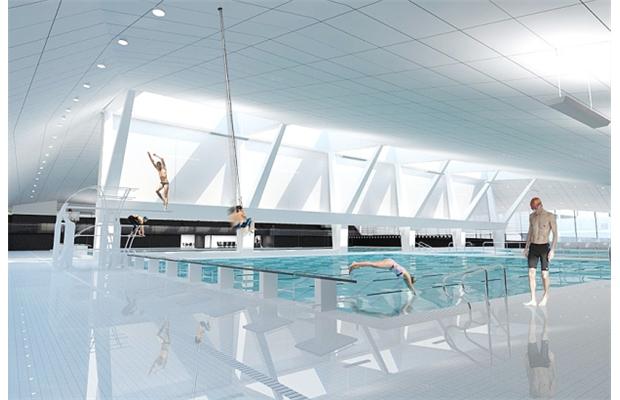
The University of British Columbia is investing $40 million in the construction of a new aquatic centre, construction of which is set to begin in late July.

The new aquatic center is a response to the poor state of current facilities. Just recently, the current aquatic center had a steam room failure, resulting in its closure for three weeks. The current aquatic center’s problems have persisted for several months to the concern of university officials. According to Kavie Toor of UBC athletics’ facilities and business development, the indoor pool may soon be unsafe to use.

With files from The Ubyssey and Vancouver Sun


U of R deported students return

Two Nigerian University of Regina students have returned to the university after their deportation  eight months earlier. Victoria Ordu and Favour Amadi were deported after violating their visa restrictions by taking jobs at Walmart.

“It’s still like a dream to me you know. It still hasn’t set in yet. We’re very, very happy to be back here to complete our education,” said Amadi.

Some have defended Ordu and Amadi, seeing the punishment as too severe for their mistake. Following rallies held all across Saskatchewan, the Canadian government has changed its policy to allow international students with study permits to work off-campus.

With files from CTV News


Four vie for U of A presidency

Professors from across the country are vying for the opportunity to become president and vice-chancellor of the University of Alberta. The situation is an open joke on current affairs because 56 people have applied, all in teams of four.

Current U of A president Indira Samarasekera’s salary is ranked among the highest in the country; in 2012, she earned almost $1.2 million in salary and benefits. By applying together, the groups are insinuating that this salary is high enough to support four people, and are protesting the high salaries of university administrators across the country

With files from The Gateway