Home Blog Page 1096

Gay men: stop the hookup stigma

0
ILLUSTRATION / C

CMYK-Grindr-chenchen

I speak for all guys when I say we have sex on our minds a lot — like right now (guys, don’t deny it). Naturally, there’s an app for that. Many, in fact. But, like with many online interactions, people are less inhibited than they would be face-to-face, which leads to some pretty nasty situations. . . exacerbated when sex is involved.

This seems to be more prominent in the gay community. What happens on meet-up apps for guys who are interested in guys is pretty ironic, given LGBTQ history. For a society that has long fought for acceptance simply for being who we are, apps such as Grindr relentlessly perpetuate discrimination, exclusion, belittling, and, one could even say, elitism.

It’s only been a few years since the first geosocial networking platform tailored towards gay, bisexual, and bicurious guys launched, and now almost every 20-something gay guy has one on his phone. According to its inventors, apps such as Grindr make “socializing easier” (i.e. put sex at every horny guy’s fingertips).

Scrolling through the plethora of Adonis torsos, profiles read as follows: No fems, Masc only, Asians + +, Drama free, Discreet only, No Asians, NSA, Not into twinks, Straight-acting, NEG U B 2, Love bears / otters, Jocks front of the line! Oh, but my personal favourite? Must be built (and variations of this). I’m sorry, not all of us spend five days a week at the gym, taking shirtless/headless selfies.

Apparently, this taxonomy of gays is a growing, unforgiving practice. Categories such as twink (a young, boyish look) or bear (having a hairy body) invalidate gay guys. These categories turn into “gatekeepers” to gay sex. If you don’t fit into a type, you aren’t worthy of intimacy.

This is not to say we should all just have unfiltered processes of getting into bed with everyone, but this casual discrimination and exclusion should be reconsidered when it comes to casual fun/sex. This discrimination denies guys a sense of self-worth as they’re judged on things out of their control such as genetics and race, which affect things far more important than just having sex. Does this level of discrimination sound familiar?

Though we rally together for equality in a hetero-dominant world, there is still much work to be to done. We want everyone else to love and accept us for who we are, yet we can’t even do it amongst ourselves. We use sex as a means to thicken lines of division when it could safely be used to do the complete opposite!

Yes, everyone has preferences, and don’t get me wrong, there’s nothing wrong with having them! But coming off as blatant and rude is not sexy.

This bluntness is also shocking to some heterosexual people as well. In one video, “Straight Men React To Grindr,” a couple of guys say, “I see a lot of abs [. . .] This is just straight up honesty.” Another states, “You cannot have this in the straight world.”

When it comes to guy on guy sex, the interaction seems to be far more straight to the point. Maybe we enjoy being braver than assumed to be. But is parading this forwardness worth the cost of another’s self-worth?

In the virtual sea of perfectly sculpted, pretentious, and discriminating bodies, though, there is still hope. There are those who use “socializing-turned-finding-sex apps” for other purposes, and make these intentions clear: No hookups, Whatever happened to just chatting?, Here 4 friends but open to possibilities.

These are just some enlightening words that seldom appear, but that are the truly sexy ones.

How I Lost It is a not-so-sexy evening of comedy

0

CMYK-comedy-eleanorqu

Maybe you lost it on a heavenly hotel room duvet sprinkled with silk rose petals, covered in droplets of spilled champagne and sweat reeking of romance. Perhaps it was in the backseat of a ’96 Toyota Camry surrounded by empty water bottles, fast-food containers, and promises.

Heck, maybe you awoke covered in body paint and vomit, wrapped in the arms of a person you only met hours prior! Despite how you bid good riddance to your virginity, I’m sure that we can collectively agree that it was super awkward, exhilarating, messy, adorable, and — most importantly — hilarious.

Recognizing this, comedians Brent Constantine and Stefan MacNeil have joined forces to create what is sure to be a memorable comedic storytelling event. How I Lost It will feature Constantine and MacNeil (along with other renowned stand up comics in Vancouver) talking about how they lost their virginities, making sure to cover every uncomfortable, exciting, disgusting detail along the way.

I sat down with these two masterminds, and this conversation alone should make you nostalgic for the moment that you lost your virginity.


The Peak: You’re both talented comedians who perform regularly in Vancouver. Is this the first show you two have worked on together?

Brent:  Yeah, this is the first show we’ve put on together. Stefan was running a regular monthly room at the Railway, and I’ve done a bunch of stuff around the city as well since I’ve been here [Brent is from Edmonton], but yeah this is the first thing that we’ve done together. We’ve wanted to do something for a little while.

Stefan:  I don’t know how it came up, but we were just talking about it one day, and it was like —  hey! This could be a great show.

Brent:  We were talking about our personal, terrible experiences with sex and just thought ‘This is awful, and we should just tell everybody about this and have them also share in on how disgusting our lives are!’


P: So, essentially, the concept of the show came up when you guys were talking about having shitty sex?

Brent:  Yeah. I think we were at [Stefan’s] house when we were just talking about our different attitudes towards sex.


P: How did you choose the [other] comedians?

Stefan:  Most of them are just friends of ours. We asked a bunch of people if they wanted to do the show, but it’s a very uncomfortable question. You don’t even realize how weird of a question it is. It’s one thing when you’re asking your friends, but then asking people that you just know from around the comedy scene to do this thing . . . you’re like, ‘Hey, you wanna talk about this thing?’ And then as soon as you hit send on Facebook, it’s like, ‘Hmm that’s kind of a weird message . . .’

Brent:  I asked a couple of people, and pretty much everyone is like, ‘I have the best story for you!’ Only one or two people were like, ‘My story is not funny, it’s very romantic.’ But by and large, everyone has an awful experience that they want to share. Or maybe it’s just comedians, I don’t know.

Stefan:  Also when you go see most stand-ups, most people are talking about their sex lives. And not just their sex lives, but it comes up a lot in stand up. So it’s not a hard topic for them to talk about.

Brent: Boom. Is that a pun? But yeah, people like to talk about that kind of stuff, and I really like doing shows where you get people who you know are funny, and they’re doing stuff that’s not in their regular routine. The majority of people are gonna be [doing new material] — well probably all of them because I don’t know of anybody on the show that has material that they already do about their virginity.

Stefan: That was the thing. I like doing storytelling shows. It kind of changes it up from stand up. It’s a lot more interesting and more like an exercise. We tried to shy away from old material ‘cause some people do have bits and you think that they would work out perfectly. But, for this kind of show, what we really wanted was for people to write a story specifically for this.

Brent: One person was chosen because I truly believe they are disgusting, and I think that his story would be the grossest story in the world . . .

Stefan: See, I thought he was a virgin! That’s why we held off on him . . .


P: So is it just virginity that you will be focusing on, or is it gonna end up being weird sex stories in general?

Brent: Well Stefan and I will be hosting, so we might talk about sex in general, but everyone on the show is going to be doing a virginity show.

Stefan: We want it to be about virginity [. . .] that “losing your virginity” story. I think that one’s more interesting, and that’s the one that everybody can relate to.


P: Is that why you think the virginity concept is going to work? 

Stefan:  Your virginity story is so embarrassing, so it would make you feel so much better going to a show where a bunch of people are making fun of themselves while sharing that part, and most people in their 20s can relate to that moment. You can tell one story and people are just gonna be receptive to it. It doesn’t have to hit hard as long as it’s interesting.

How I Lost It will take place on June 24 at 8:00 p.m. at the Cottage Bistro at 4468 Main Street.

Disability and desire aren’t mutually exclusive

0

6543678649_6357c14d5f_z

Sexy Sick Chic Lit is a new literary genre that was coined by Canadian authors Robyn Michele Levy and Kim Clark during the 2012 Sunshine Coast Festival of the Written Arts. It was at this festival that the two women first met and quickly realized that they had something in common — Levy has Parkinson’s disease and breast cancer, while Clark has multiple sclerosis (MS).

According to Levy’s website, the genre is “written specifically by and about women with chronic diseases and/or disabilities,” and features humorous, sassy, and sometimes even sexy elements.

Last Thursday, they performed at Slocan Hall through Kickstart Disability Arts and Culture. A dozen or so people, mostly older men and women, some in wheelchairs and others with canes, were present. Tea and snacks were laid out on a counter. The event began with introductions, aided by a translator for those with hearing impairments, before the authors took turns reading excerpts from their novels.

Levy is a visual artist and writer who previously worked for CBC Radio. Her first book, Most of Me, is a memoir of her journey with Parkinson’s. The book was shortlisted for the 2012 Steven Leacock Medal of Humour and the 2012 Edna Staebler Award for Creative Non-Fiction.

Clark began writing after being told that she had progressive MS. Her latest book Attemptions, features a collection of fictional stories about women who suffer from physical ailments and the multiple ways they deal with this reality.

Chronic diseases continue to carry a stigma; women and men still hesitate about coming out and talking about them. So, it was heartening to hear both women tell their stories with such humour. Their accounts give hope that, despite everything, the body is not something to be ashamed of.

Levy had her right breast removed due to breast cancer and opted out of reconstructive surgery. Clark believes that it’s important to “decide you’re interested . . . [to] decide to spend time with yourself or have the energy to be interested.”

Ultimately the books are “part of who we are and not everything about us,” says Levy, “[but] it gets the attention of the world.”

Levy’s clever use of words and powerful voice showcase her strength and confidence. In one excerpt, she describes visiting her neighbour, a dentist, in the middle of the night. If you didn’t know her disease had immobilized her left arm, the entry would read almost like a midnight rendezvous. It’s amusing then, that when she sees her neighbour, she says, “floss me,” in the same tone another might say, “kiss me.”

Clark’s excerpts introduce a girl named Mel whose MS afflicted body can only have six more orgasms. With this bizarre situation, we hear Mel trying to figure out the best way to budget this reality, as she fusses with dating sites and dating profiles. While fictional, Mel’s struggle is reflective of the realities of such a disease, mainly the difficulties of managing what used to be a simple, if not common, activity.

Sexy Sick Chic Lit is a genre that may seem geared towards women, but at it’s core it is simply about people who have suffered. Both women and men, old and young, the affected and the unaffected, can read these novels and gain something. Facing chronic diseases and disabilities is difficult, and “having a sense of humour does help,” as Levy says, because in the end, “your voice is your power,” and this is what this genre is truly about.

To find out more about this genre and other events with Clark and Levy, visit sexysickchiclit.wordpress.com.


Let’s talk about masturbation

0

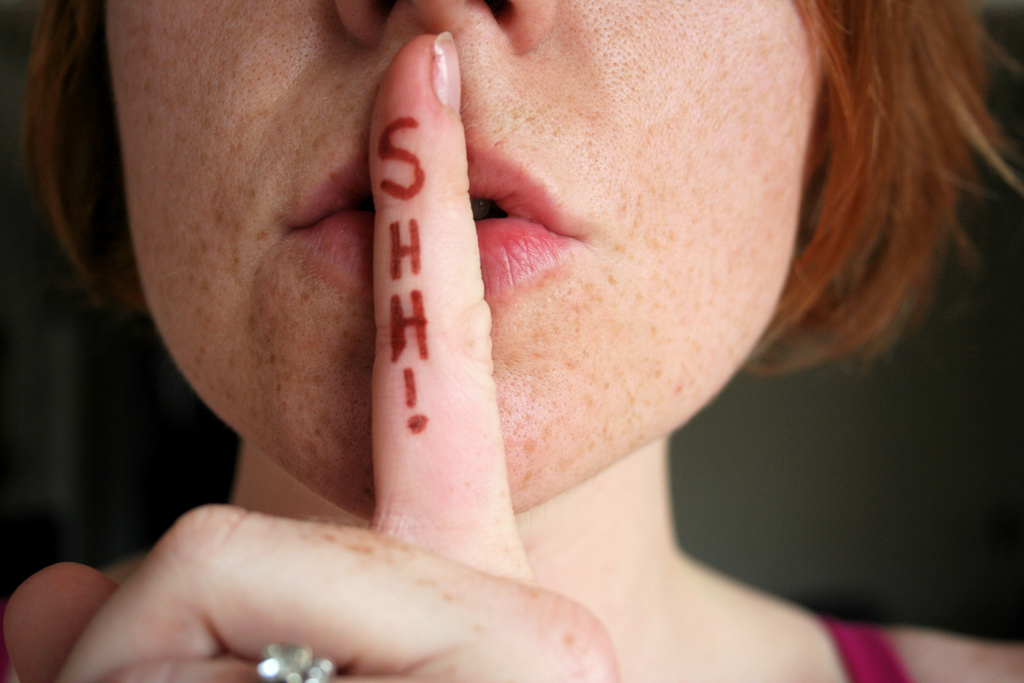
web - shh - (cup)cake_eater Flickr

Girls, we are not ashamed to eat our breakfast in the morning because we are hungry, take our morning wee, or go out for a run to work out our bodies, so why is masturbation still such a big deal to talk about?

Considering the fact that human sexuality is an inherent part of almost everyone’s lives, you would think that it would have been normalized and accepted as just a bodily function by now. But this is not yet the case.

For some reason, it seems like we are far more comfortable talking about a steamy hook up than a little self-loving, and that doesn’t make sense to me.

From my experience this attitude is especially common among women versus men. I believe this is because women are still uncomfortable talking about female sexuality out of the context of being with another individual. This attitude is just archaic, rooted in a patriarchal society in which women are used as sex objects, not active participants in their own sexuality.

Masturbation has been cast out as an activity reserved for the perverse individual, which cannot be true. We do not look at other animal species and make these accusations, so why do we put them on ourselves?

The act of seeking satisfaction doesn’t have to be regarded as an activity purely associated with sex.

It is not like we as humans are special: masturbation is seen all over the animal kingdom. From dogs spending quality time with blankets, to dolphins, parrots, horses, and turtles, it is a widely observed behaviour.

This may sound like a contradiction, but the act of seeking satisfaction doesn’t have to be regarded as a purely sexual activity. We learn how to please ourselves simply because it feels good. Arousal doesn’t have to be based off of porn, fantasy, or being with another individual. We know this because even as infants we are capable of masturbating without any of these thoughts in our heads!

I come from a really open family, so the shame and embarrassment associated with the mere thought of masturbation were not issues for me. But I know that my situation is not typical; I can recall several female friends who simply burst with joy at the chance to talk about their own experiences with masturbation when I brought it up.

This is because most of them had never spoke about it before and had always felt like they were alone. Now, but especially in high school, that isolation can be scary; no girl should ever have to feel that way.

Now, I know not every guy out there is ready to go out and talk about pleasing himself, but I think that society is far more comfortable with the idea of men masturbating than women. That needs to change.

Females out there should not feel like they will be judged for what they do with themselves to make themselves feel good. It is not only healthy to masturbate, it will also make any sexual encounter in the future a lot more comfortable. Masturbation is about learning to please yourself first, and that action should neither be judged nor questioned.

Web-crawling software targets child exploitation

0
Image credit: Kenneth Uzodinma.

CMYK-robotic spider-KennethUzodinmaA new grant will enable SFU International Cybercrime Research Centre to further their development of a web-crawling software that targets child exploitation.

By combining computer science and criminology, researchers are developing a digital mapping software that will help guide police to sources of websites involved in internet crime related to the manipulation and/or coercion of minors into sexual activity.

Richard Frank, an assistant professor of criminology at SFU, became involved in the project when another researcher in the department pointed to the time consuming nature of manually tracking the social network of child exploitation. Frank saw the opportunity for a software that could do the work automatically.

The software he developed is a “web-crawler” that works by traveling through hyperlinks. To start the program, one manually enters a website involved in child exploitation. The program will then follow any suspicious hyperlinks found on the site that are not on safe domains.

Frank told Global News, “The problem is that it’s very, very easy to set up websites and webpages to take this content and put it on. If police or a service provider shuts it down, then [the offenders] create a new one and put it up again.”

Once on the site, the crawler looks for keywords and travels through image fingerprints to see if either exists in the police database. If the website is suspected of hosting content associated with child exploitation, the web-crawler will branch out again and continue traveling through the hyperlinks.

The team recently received a grant to continue their work from the Canadian Internet Registration Authority (CIRA). In an interview with The Peak, Byron Holland, CIRA president and CEO, said, “SFU’s International Cybercrime Research Centre, and the project they proposed, is a prime candidate as an initiative to help advance the safety and security of the Internet in Canada, and fill a social and legal need that will have a significant impact across the country.”

Using this grant, the team is attempting to develop a geolocator to work with the software. The current software can efficiently track content being displayed but it cannot see who else is visiting a website or who runs it. With a geolocator, the software would be able to track the website’s source location.

Once the source is found, the police can uncover important information that the software cannot, such as who accessed the site.

Internet crime is still a relatively new and growing field in the technology age, but Frank believes this software could eventually be used to track down other harmful social networks. For now, the web-crawler should provide a needed helping hand to police on the hunt for exploitative cybercrime.

It’s not enough: sexual assault and the university

0

The amount of sexual violence faced by students at Canadian universities is staggering. Every semester, the average post-secondary institution in this country sees eight different cases of sexual assault in the first eight weeks of classes — that’s one instance every week, per school.

Canadian women aged 15 to 24 are by far the most likely victims of sexual assault in the country, and university students are no exception: the Sexual Assault Centre of Hamilton and Area reports that 29 per cent of female university students have experienced some form of sexual assault.

That’s almost one third of students. Something is seriously wrong here.

University culture, one that usually promotes openness and exploration, has also historically been a silencing factor for many assault victims. Recently, however, activists have been more vocal than ever about universities upscaling their policies to prevent sexual assault and punish abusers.

Statistics would argue that sexual assault is becoming more prevalent: there’s been a 52 per cent increase in rape reports on American campuses from 2001 to 2011. More than anything, though, it’s a sign that assault victims and allies are making greater efforts to voice their experiences and change the way we think about assault on campus. And we’d do well to listen.

Most victims of assault in post-secondary settings seek justice within the school system.

We know that most sexual assaults go unreported, and that victims are encouraged by our culture to hide their experiences rather than discuss them openly. As an article in Time magazine noted, this statistic “doesn’t necessarily mean that more sexual assaults [have] occurred as much as it shows that colleges are getting better at acknowledging the ones that have always taken place.”

Whether or not the numbers have always been this high, it’s only now that we’re finally realizing the scope of the issue. This is — a little counterintuitively — actually a good thing. The number of complaints towards colleges in handling and accurately defining sexual assault cases has risen steadily over the last 10 years, showing that people are, now more than ever, feeling capable of speaking up.

Though these numbers are deeply disturbing, it is important that we realize just how dangerous and unsafe university campuses prove for many people. Since most victims of assault in post-secondary settings seek justice within the schools rather than through police or legal action, institutions have a serious responsibility to protect their students; the increasing outcry towards university policy on assault is a crucial step in the right direction.

In an op-ed for The Los Angeles Times, Gabrielle Glaser writes, “The disciplinary systems of colleges [. . .] have proved utterly inadequate to deal with the more serious issue of sexual assault.” Accordingly, she says “Many women report feeling victimized a second time by their universities.” This is not an uncommon experience — many assault victims have shared stories of ill treatment from universities when reporting their experiences.

Consider Angie Epifano, an Amherst College student whose first person account of her rape, along with the story of how college officials brushed her off, went viral in 2012. Her story is the story of thousands of people whose assault has been treated with disinterest — sometimes even disdain — by the very people who should be helping and protecting them.

In order to end the crisis of sexual assault in North American universities, we need to look past the individuals who commit these crimes, and examine the institutions that allow these attacks to occur in the first place, and that don’t respond appropriately. Taking these institutions to task is crucial in promoting a safe campus environment for everyone, and making sure university students can focus on what’s important: their education.

Man upset after girlfriend shouts out wrong ethnic slur during sex

0

VANCOUVER – A local man is incensed after his girlfriend of over five months screamed out a racial slur in the middle of intercourse that wasn’t a term for his racial makeup.

Terence Smith, a black-Canadian, says he’s starting to have serious concerns that his girlfriend, Caitlin, is cheating on him after she aggressively called him a “filthy c****” during sex.

“Believe me, I love dirty talk, especially when it’s racially charged, but you’ve got to get the words right,” Smith explained, still reeling from the previous night’s events. “Don’t tell me that it was just a mistake, that word sounds nothing like the ones she normally yells at me!”

Smith said that this is the first time this has happened in their relationship, which has, up to this point, only been filled with love and n-words directed towards him during sex. Now he says he can’t help but feel as if she may not be being faithful to him.

“I know that mistakes happen, like when she yelled out my friend Tyrone’s name instead of mine a couple weeks ago,” Smith continued. “But I understood that, it was just because all black people look the same to her. This is totally different.”

While Caitlin has assured him that last night was an accident and that she just had a brief lapse in judgement in the heat of the moment, Terence has still decided to put the relationship on hold.     

“He’s completely overreacting, I’m just a passionate person,” Caitlin told The Peak. “I swear to god that I meant to call him a ‘filthy c***,’ it was just a terrible, stupid slip-of-the-tongue.”

Caitlin has said that she is extremely embarrassed by the whole situation and hopes they can move forward from it soon. 

 “I love him and he should know that I would never, ever, ever have sex with a Chinese person,” Caitlin said in conclusion. “I just want to move past this . . . hopefully Tyrese will come around soon.”

15 Songs You Didn’t Know Were About Getting a Handjob in an Elevator

0

Who knew all these songs were written about that specific sex act in that very specific location? Well, it’s true! Pretty crazy, huh?

1. “Let it Be” by The Beatles

Yeah, that’s what it’s about.

2. “Sympathy for the Devil” by The Rolling Stones

They don’t talk about it much but it’s true, that’s what it’s about.

3. “Everyday” by Buddy Holly and the Crickets

That’s what Buddy is singing about.

4. “Symphony No. 9” by Ludwig van Beethoven

Who knew this was about that? Well, it is.

5. “Wonderwall” by Oasis

It’s surprising but it’s true!

6. “Pinball Wizard” by The Who

Yep, that’s what this song is about.

7. “Lucy in the Sky with Diamonds” by The Beatles

Hard to believe, but that’s what it’s about.

8. “Hey Jude” by The Beatles

That’s what this tune was talking about.

9. “Imagine” by John Lennon

Pretty shocking but, again, it’s true.

10. “Amish Paradise” by Weird Al Yankovic

This is really what this song is about.

11. “So What” by Miles Davis

That’s what this song was written about.

12. “Sunday Bloody Sunday” by U2

Unexpected, but that’s what it’s about.

13. “Yellow Submarine” by The Beatles

This song is about that, it’s true.

14. “Cocaine” by Eric Clapton

8 He wrote this about that.

15. “Handjob in an Elevator” by Matt Markley and the Sharkfighters

I’m actually not sure about this one, 14 just didn’t sound as good though.

Satellite Signals

0


WEB-woodward


Woodward’s


SFU presented an exciting evening of music, media arts, performance arts, and dance with Launch 2014, an event showcasing Vancouver’s professional emerging artists. Performers included Tegan Wahlgren, a vocalist and violinist, Munira Mohamud, a filmmaker from Somalia, Subscura, an all-female dance collective, and Animal Atlas, a Vancouver-based Indie/R&B band.

The evening also offered career advice to young artists from co-founder of the Vancouver Folk Festival, Gary Cristall, among others.

surrey

Surrey

International medical experts and researchers gathered at SFU Surrey from June 19 to 22 to attend the Canada India Networking Initiative (CINI) 2014 conference.

The event focussed on four key areas of health and civil society: nursing and allied health education, health-technology and the economy, chronic disease management, and the role of yoga, science, and modern medicine in wellness.

vancouver

Vancouver

Students gathered at Harbour Centre on Monday for professor David Mitchell’s examination of the one-time X-rated 1969 film, Midnight Cowboy, which follows a male prostitute and his sickly friend who struggle to survive on the streets of New York City. 

Mitchell discussed how the film represented the “alternative lived experience of queer/crip relations in late liberalism” and explored how the subjective experiences of the disabled can alter the collective consciousness.

Fall Kickoff concert is a go

2

KICKOFF_BANNER_DRAFT.inddThe Simon Fraser Student Society (SFSS) has officially announced that they will be hosting a Fall Kickoff concert, set to take place on September 19 from 4:00 p.m. to midnight.

The event differs from previous SFSS concerts in that it will feature two live bands as well as two electronic dance music (EDM) acts.

Zied Masmoudi, VP student services and project lead for the concert, anticipates that offering different genres of music during the same event will be challenging. “Having bands, then DJs, they have different rearrangements, different needs, so in terms of production, in terms of technical details, it requires a lot of work,” he said.

There will also be a fifth act, but the identity of the performer(s) will remain a mystery until the night of the concert itself.

In the past, the SFSS has sponsored an online DJ competition, with the winner performing at the concert itself. This year, however, they will be hosting a separate live DJ contest at the Highland Pub on September 12, during which seven or eight DJs will compete for three concert spots. The three finalists will each play a 10 minute set at the concert; the most popular DJ will play the after party at the Highland.

The SFSS will begin selling presale tickets for the concert in the near future, despite not knowing the headliners. As such, these tickets will be sold at a discounted price. Masmoudi expects to be able to announce the headliners in mid-July.