Home Blog Page 1087

The Duchess of Malfi explores the truth about humanity

0

CMYK-Duchess of Malfi - rear - Paul Herbert as Ferdinand, front - Alison Raine, as The Duchess, Adam Bergquist as Antonio copy

“There’s always a beautiful veneer with a grisly underbelly,” explained director Tariq Leslie. Like the dark side of the moon, The Duchess of Malfi delves into the deepest hollows of humanity and questions the bare truth of what lies within our souls.

This season, the Ensemble Theatre Company has lined up three plays: The Duchess of Malfi, The Cripple of Inishmaan, and The Normal Heart. “The wonderful thing about this season is that all of these plays are investigating human rights [and] how society treats people,” says Alison Raine who plays the Duchess. 

As Leslie explains, the majority of the ensemble within the company are also in one of the other two pieces; it takes tremendous focus to switch between the characters and the different settings of each play.

Raine, for example, plays the Duchess in the historical setting of The Duchess of Malfi and is also performing in The Cripple of Inishman, a play set in the modern world. She states that the important thing is managing both your own energy level and that of other people. In theatre, unlike film, the cast is able to form a deeper sense of connection and community due to the larger number of rehearsal hours.

The Duchess is based on the story of Giovanna d’Aragona, containing a fine mixture of historical facts and fictional embellishments. It follows a young widow who secretly marries her steward, much to the disapproval of her two brothers. In the heat of madness and jealousy they seek their revenge, enacting a macabre tragedy that tears each character apart.

Raine says her character is a strong woman. She is a mother who chooses a man out of love, which was revolutionary at the time. “She was noble, not in the sense of aristocracy, but noble in spirit, honourable, and passionate,” says Raine. For her, the play is about the Duchess’ journey to find grace; she’s a woman who, amidst imprisonment and torture, is able to find meaning in life and accept death gracefully.

The notable distinguishing factor with this production would be the time period shift from Jacobean to a pseudo-Victorian era. Leslie wanted an era that wasn’t terribly forlorn; he also saw that many of the original stations and positions would have made it harder for the modern audience to relate to. He stresses that he did not “change the Webster language” and tries to the best of his ability to match the intentions of the playwright.

The playwright, John Webster, was one of the greatest Jacobean dramatists and was also a contemporary of Shakespeare. T.S. Eliot once wrote, “Webster was much possessed by death, and saw the skull beneath the skin.”

According to Leslie, both Webster and Shakespeare wrote beautifully poetic plays and often drew attention to political matters, but Webster’s dialogue is faster and looser than Shakespeare’s. “It is also more concise [and] that is the beauty of it,” says Leslie.

Apart from Shakespeare, those who enjoy the fast-paced drama of Alfred Hitchcock or Quentin Tarantino, or the complexity found in Game of Thrones, may find The Duchess of Malfi just as enticing.

The Duchess of Malfi is presented by Ensemble Theatre Company from July 12 to August 15 at the Jericho Arts Centre. For more information, visit ensembletheatrecompany.ca.

Nanaimo city council violates Canadian rights

1
David Stobbe / stobbephoto.ca
Ezra Levant was among several commentators to decry the Nanaimo city council decision.

Just over two months ago, Nanaimo’s city council made a decision, the controversy of which was only matched by the lack of reporting on the issue. This lack was impressive, as in the space of 20 minutes, the council managed to deny a group of Nanaimo residents four of their basic rights under the Charter of Rights and Freedoms. Canadian journalist Ezra Levant went so far as to call the act the “most disgraceful act of discrimination I can recall in Canada in my life.”

So what was this act? A church group was planning to simulcaste an American leadership conference whose sponsors included Chick-fil-A, a company whose chief operating officer made public statements opposing same-sex marriage two years ago. In response, council member Fred Pattje proposed a resolution banning “any events that are associated with organizations or people that promote or have a history of divisiveness, homophobia, or other expressions of hate” from the Vancouver Island Conference Centre. 

Over the next 20 minutes, all of which can be viewed on the city of Nanaimo’s website, the council made no effort to debate the issue, and appeared to dedicate the time to how they would implement the ban and why it was important. This was done despite the fact that, as mentioned, the conference was not of a religious nature, but a leadership conference, and past speakers have included renowned social rights activist Archbishop Desmond Tutu. 

To guarantee the rights of one group at the cost of another undermines the equality in our democracy.

One councillor, Jim Kipp, was in favour of the motion because he “[would not] accept if a criminal organization wants to come into our community” and compared the strong Christian organization to the terrorist kidnapping of Nigerian girls by Boko Haran. Councillor Bill Bestwick believed that “it would be more effective to blackout [. . .] because we don’t support it,” essentially moving for a motion of government sponsored censorship.

One might ask if there were any voices of dissent during this meeting, and indeed a single voice, that of Councillor Bill McKay, stood against the ban and questioned why neither representatives of the conference nor the church were invited to the meeting. Pattje responded by claiming that their presence at the meeting was irrelevant, but in reality it amounted to nothing more than a trial where the defence was not even present.

Only three days before the conference was scheduled to broadcast, ordinary residents of the city who had paid $60 a person to attend were informed that the event would not be taking place. Worse than that, the council’s decision labelled them as hate-mongers and violated many of their basic human rights as guaranteed by Canadian law. 

Section 2 of the Charter of Rights and Freedoms guarantees freedom of conscience and religion, freedom of peaceful assembly, and freedom of association. All of these rights were violated by the city council’s decision. Even if we accept their premise regarding the Chick-fil-A position on same-sex marriage as justification for the ban, this ban still violates the freedom of association of those who wished to attend, as one cannot be punished for the actions or opinions of those they associate with.

In the name of tolerance and inclusiveness, Nanaimo city council has chosen to become intolerant and exclusive. One cannot guarantee the rights of one group at the cost of another. To do so undermines the equality that is a necessary prerequisite of our democratic tradition. Perhaps the city council should add itself to the list of groups banned for promoting divisiveness, because they have done exactly that.

Open Letter: Taking the time to remember Nelson Mandela

0

CMYK-Mandela-South Africa The Good News- Flickr

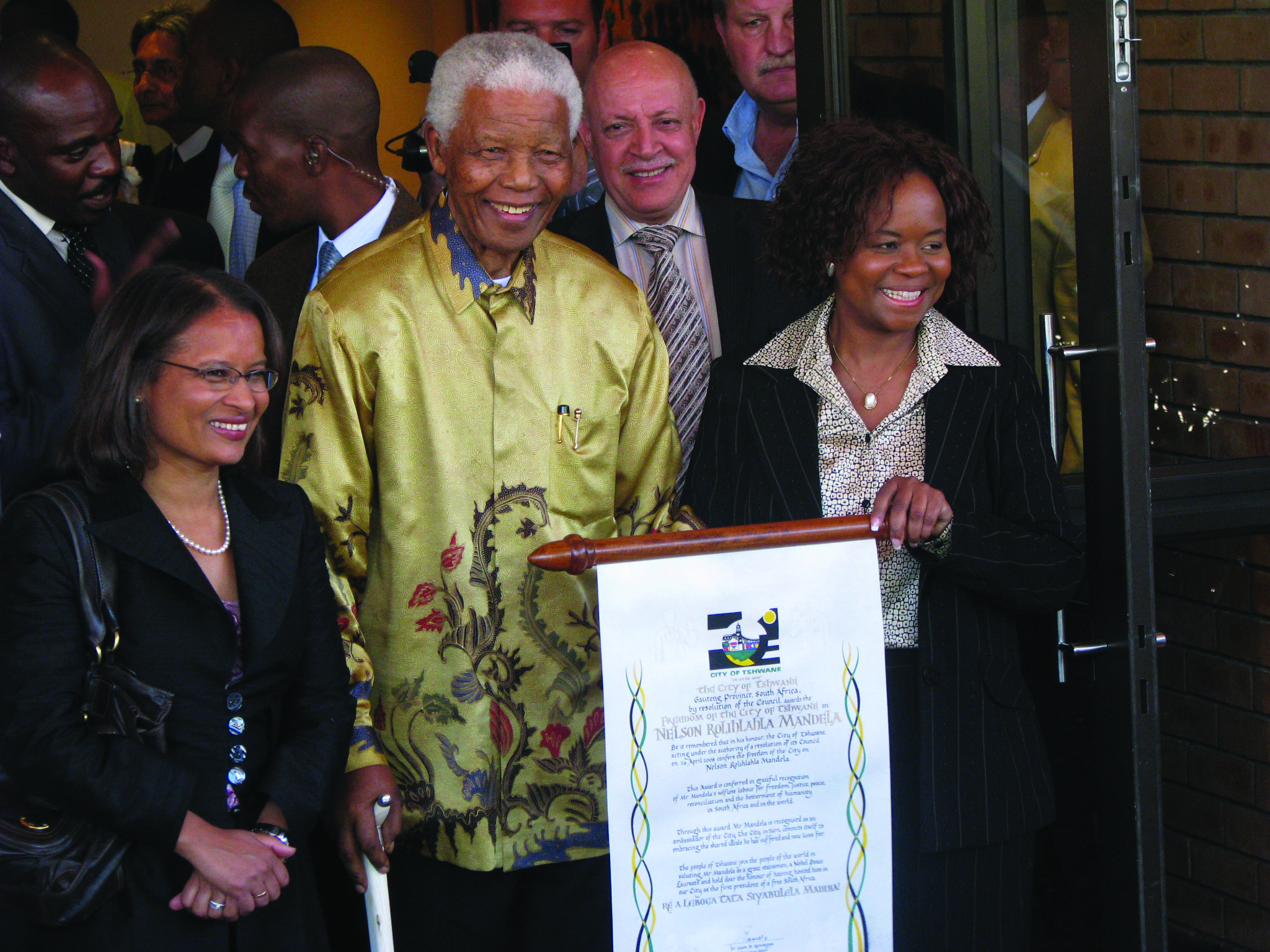
In Seneca’s sixth letter to Lucilius, he writes that the behaviour of a teacher could instruct more than any moral lesson they taught, noting that Plato and Aristotle “derived more from Socrates’ character than from his words.’’

Encapsulated in Mandela Day, July 18, is the recognition of Mandela’s life, one that offered the same sort of example. The purpose of the day is twofold: to celebrate Mandela’s life, and to inspire us to try to emulate some of his best efforts. The day asks people to dedicate 67 minutes of their day to community service — the number being derived from the years Mandela spent in service of his own.

With his passing having occurred so recently, it’s likely that this year’s celebration will have more of a pulse around it and will, perhaps, also motivate more people to learn from Mandela’s life and character.

His autobiography can be particularly informative in this respect. Reading through it, one never encounters the type of solipsism guaranteed to those who are victims of oppression and injustice. If I had to offer the briefest synopsis of it, I would try to include some declarative statement about the importance of dignity and its relation to freedom. When the prison guards would tell him to run to his jail cell, he would walk; when given shorts to wear, he would ask for pants. These small acts prove that even the smallest acts of rebellion are essentially attempts at freedom.

Mandela’s forgiving nature is especially highlighted by his actions after his prison release. He was forced to walk and meet with politicians, many of whom only wanted to absolve themselves of their complicit involvement in his, and South Africa’s, subjugation.

Seneca’s greatest contribution to the Stoic philosophy was his definition of it. He saw it as a philosophy teaching people not how to live life, but how to deal with the sea of troubles that accompanied it. In life, Mandela often quoted Shakespeare, one of his favourite sayings being that “the ready is everything.’’ He spent decades in prison for trying to oppose an evident injustice. He lost his freedom and was relegated to the company of criminals on a secluded and destitute island.

But, he dealt with these trials in such a way that only inspires the mind, and acts as a perpetual source of inspiration for those who are facing hardships in their own lives. If Mandela Day can act a catalyst for people to help their own communities, then perhaps it can also entice people to study the life of Mandela and learn much from it.

Sincerely,
Michael Johnson,
SFU Student

Kangaroo tails have a tale to tell

0
Image credit: Kenneth Uzodinma.

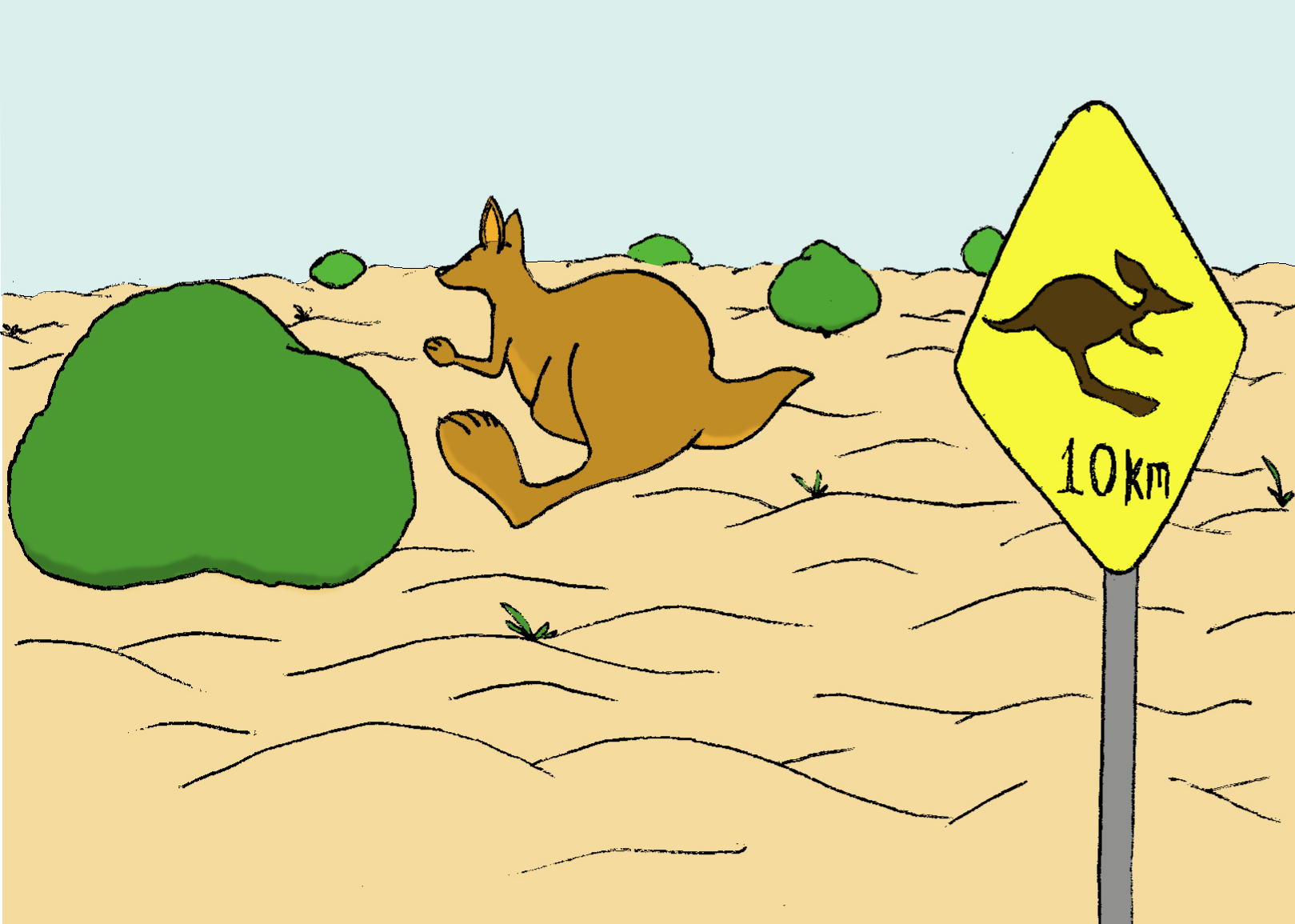
kangaroo-kennethUzodinmaA study out of SFU shows that kangaroos actually use their tail as a fully functional leg when they are grazing the land.

Max Donelan, an associate professor in the Department of Biomedical Physiology and Kinesiology, led the study on kangaroos’ unusual gait. Donelan explained that a kangaroo does “as much mechanical work with their tale as we do when we walk.”

Aided by postdoctoral fellow Shawn O’Connor, Donelan’s study focused on the awkward gait kangaroos have when they graze the land, which is unlike the “graceful hop” we picture them having when we think of the Australian outback.

Kangaroos graze with their tail planted on the ground, acting in combination with their short front legs and long hind legs. This motion is known as “pentapedal gait.” The tail acts as a leg in the sense that it pushes off the ground, rather than the front legs, in order to create the force that starts the cycle of walking.

Donelan, whose principal field of research revolves around humans and walking, explained to The Peak, “With humans, we have learned in the course of the past 15 years that a key part of the walking cycle is before your right foot comes in contact with the ground, you have to push off the ground with your left foot. This movement is really important in saving energy that is required for walking.”

Kangaroos’ unique anatomy restricts them from using their short front legs as a means to push off the ground; thus, their tail becomes key in this essential push needed to commence the walking cycle.

Donelan believes that studying the “pentapedal gait” of kangaroos, as well as the unusual gaits of other animals, sheds light on the general principles of biomechanical motion and offers insight into the solutions available to biomechanical problems.

Donelan noted, “A key aspect of covering this is the question: Why are Canadians studying this interesting, yet possibly irrelevant form of locomotion? What this really gets across is that it is helpful for us to understand the basic principles of locomotion, which works into the bigger picture of understanding humans.”

Donelan has also studied the movements of cats, shrews, crocodiles, elephants, and giraffes. As interesting as these animals are, Donelan’s research is not driven by the type of animal he gets to study; rather, he says, it is driven by the important questions and the insights that can be gained in order to better understand the biological movements of humans.

Shrek and Fiona find love in Stanley Park

0

CMYK-Shrek-TUTS

Matt Palmer has never played a character quite like Shrek. “It feels very large, very green, very grumpy,” laughed Palmer. Even just getting into costume is a unique experience. It takes him one and a half to two hours to make the transformation into the lovable ogre, and the process involves prosthetics along with tons of green make-up. 

Shrek, playing in repertory with the return of Legally Blonde, should be a popular show for all ages. Just as the animated film cleverly included many jokes that only adults would understand, the musical will be entertaining for the whole family. The adaptation follows the story pretty closely, said Palmer, with a few additions of some characters’ backstories. The score, however, is completely original except for the inclusion of “I’m a Believer” during curtain call. 

Palmer said that the music is clever and very entertaining, with many standout songs. “I get to sing ‘Who’d I Be,’” said Palmer. “Donkey asks Shrek, ‘Who would you be if you could be anything?’” Donkey gets his moment to shine when he sings “Don’t Let Me Go,” and Fiona also has some great songs, including “Morning Song.” These songs tell the story in a powerful way and help the audience understand Shrek’s struggle. 

“The message at the heart of Shrek is that just because you’re not necessarily beautiful and you may be framed as an outcast or freak,” explained Palmer, “you have beauty on the inside and you’re capable of love and being loved.” The show features many characters that are considered to be freaks, and feeling like an outcast is something most people can relate to in some way.

Another aspect of the story that is endearing, explained Palmer, is the relationship between Shrek and Donkey. “Shrek has never known friendship or love until Donkey insists on being his friend. It’s a complete surprise to him.”

Palmer said that Donkey and Farquad will get the most laughs from the audience, although Shrek has his moments as well. “Shrek is the straight man; you would never expect to have a big green ogre as the straight man,” he laughed.

Along with the laughs, “the audience will leave feeling uplifted, happy, and touched by the journey of these characters,” said Palmer. “I don’t see how they could leave feeling any other way.”

Shrek: The Musical will be presented at Theatre Under the Stars from July 15 to August 22. For more information, visit tuts.ca.

Diaspora conference connects SFU with its Scottish heritage

0

4884904376_23bf86b7a6_zSFU was well represented at a conference in Edinburgh from July 4 to 6 that looked at the Scottish diaspora, and its effects both in the world and in Scotland.

The executive director of SFU’s Harbour Centre campus, Laurie Anderson was a panelist at a talk titled “The Global Migrations of the Scottish People since c. 1600: Issues, Debates, Controversies,” along with former coordinator of SFU’s Centre for Scottish Studies (CSS), Harry McGrath. Also in attendance was the dean of SFU’s Faculty of Arts and Social Sciences, John Craig.

Anderson, a first generation member of the Scottish diaspora, who moved to Canada from Scotland in his youth, describes diaspora as being “essentially about the ‘scattering’ or movement of peoples from their original home or country of birth.

“It is studied a lot in Scotland because the Scots have migrated around the globe since medieval times, and is one of the most significant diasporas in the world,” Anderson explained. One of the main themes of the conference revolved around the ongoing dissemination of Scots over the past 700 years.

As a result the Scottish diaspora has had a large influence on our modern world, particularly in North America. However, McGrath pointed out that not all of its effects have been positive.

Over the three days of the conference, participants attempted to take a balanced view of the effect the Scottish diaspora has had on the world, McGrath stated in an email. “So, for instance, while there was some focus on Scottish achievements, there was an equal, perhaps greater, focus on issues like the Scottish connection to the slave trade, which has often been neglected or deliberately ignored,” he explained.

“Scotland for a while was by far the most diasporic nation in the world.” 

– Harry McGrath, former CSS coordinator

According to Anderson, part of the importance of the diaspora aligns with Scotland’s upcoming referendum for independence. “The economy of the country is a very important aspect of being independent,” he said. “[And there are] many, many more people with Scottish connections outside of the country than in the country. If they can promote business ties, cultural ties with the diaspora, it can support the cause of the country becoming independent.”

Among the examined topics was whether the number of Scots that have left Scotland was detrimental or beneficial to the country. Anderson said, “When you have a country with so many people leaving all the time [. . .] you’re losing your best and brightest [. . .] However, one of things that [was] also talked about was the fact that many people who left the country made a lot of money overseas.

“Some people left by choice for better opportunities, and some people were forced to leave during different political uprisings.”

The three-day conference concluded with the panel, “Scotland Today: Perspectives from the Diaspora,” which was chaired by McGrath and featured Anderson as a panelist.

McGrath said of the CSS, where he worked from 2003 to 2007, “One thing I took away from the conference was the fact that the Centre for Scottish Studies at Simon Fraser University is an unusual and precious resource. There are very few such centres outside of Scotland and I would like to see it develop into a true international research hub for the Scots in Canada in general and those of Western Canada in particular.”

He concluded, “I would very much like to see the Scottish diaspora find its place in the great upsurge of interest there has been recently in diasporas from all countries.”

Hobby Lobby ruling harms women’s rights in the US

1

14395472089_515699c1c4_o

The Supreme Court has chosen religion over human rights in the case of Burwell vs. Hobby Lobby. On June 30, the Court ruled that certain for-profit companies cannot be required to pay for specific types of contraceptives for their employees. 

The complaint over the Affordable Care Act’s requirement was made by Hobby Lobby, an Oklahoma arts and crafts retail store operated by Southern Baptists, and Conestoga Wood Specialties of Pennsylvania, which is owned by a Mennonite family. They argued that this requirement violates their religious freedom as it requires them to pay for two types of morning-after pills and intrauterine devices, which they believe are the same as abortion. 

The company had also rejected a compromise made by the government, which would see their insurers, or third party administrators, pay for the contraceptives; they argued that the insurers and third party administrators are complicit in offending their religious beliefs.

The Supreme Court’s decision promotes the connection between the church and state: it imposes religious beliefs on the companies’ employees who may not share them.

Indeed, many supporters of the ruling have called it a victory for religious freedom, but it is a violation of the First Amendment of the American Constitution. In addition to the free exercise of religion, the amendment also says that the state is not allowed to make laws that respect a religious establishment. 

Hobby Lobby has no right to control the reproductive rights of its female employees.

The ruling has also violated the Equal Rights Amendment of the Constitution, which protects women’s rights, as a company has no right to control the reproductive rights of their female employees. 

Justice Ruth Bader Ginsburg, who was against the companies’ claims, argues that the ruling would “deny legions of women who do not hold their employers’ beliefs access to contraceptive coverage,” and noting that the Affordable Care Act requirement is important to women who work minimum wage jobs, as an IUD without coverage costs a month’s pay. Eliana Dockertman, writer for Time, also brings up the important point that most women who are economically and geographically restricted cannot choose their place of employment in order to obtain coverage.

Furthermore, if the exemption is made on religious grounds for health care coverage of contraption, then who is to say that it could not extend to objections by companies run by Jehovah’s Witnesses to blood transfusions, Scientologists to antidepressants, Jews to medication derived from non-kosher animals, and various religious groups to vaccines? 

A broader consequence is that the Supreme Court’s granting religious freedom rights to companies could affect laws on employment, safety, and civil rights. The most alarming consequence is that the Supreme Court’s granting of religious accommodation could extend to other laws not related to health care or employment. By then, the union of church and state will have been complete.

Build SFU accidentally submits foosball table as stadium proposal

0

BURNABY — The architects contracted by Build SFU to build a new SUB and stadium for SFU released their incredibly ambitious plans for a new stadium this week, but according to Build SFU the design is a mistake.

The proposed stadium which is set to be 10 times larger than an average football field and built on top of four 200 meter high columns is apparently the result of a simple miscommunication. 

“When we were presenting the new SUB ideas, we made a scale model of what it would look like to show to students,” explained a representative for Perkins+Will, the project’s architects. “When we got to the Build SFU Think Tank we saw that they had done the same with the stadium so we decided to get a jump start on planning that.”

Not realizing that the scale-model stadium was actually just a foosball table set up to draw students into their offices, the architects got to work on the blueprints for the new stadium immediately. 

“Sure it seemed infeasible, outrageously expensive, and downright insane, but we didn’t want to offend them,” the architect told The Peak. “It took weeks to come up with a design that was even remotely structurally sound but we got there eventually.”

In a surprise unveiling on Friday, the architects showed off the new stadium plans to students who were much less excited than they had anticipated.

Instead of being carried out of the room on shoulders and sung praises, the architects were simply met with perplexed reactions and questions about how much the new stadium would cost.

Unfortunately, the architects say they’re too far into the project now to go with a different, less ridiculous design and that, due to the complex nature of the stadium, they no longer have the funds to complete the SUB building.

“It’s a real shame about the mix-up but even though the SUB isn’t going to happen, I still think everyone’s going to love the new stadium,” continued the architect. “Yeah, there might not be any room for seating and it’s so high up that no one can even get to the field but still those giant number cubes for keeping score are pretty cool.”

Construction on the stadium is supposed to commence in the fall and be completed in 2027. While no sports teams will be able to use the stadium, it is expected to bring tourism to SFU with people eager to witness the “world’s biggest waste of money.” 

Zero Waste design is garbage

0

CMYK-Recycling-Anderson Wang

In January 2014, SFU launched its comprehensive Zero Waste program on all campuses as another step to achieve the goal of “diverting 70 per cent of landfill waste into recycling and composting by the end of 2015,” according to the SFU Sustainability Office.

The Zero Waste Program was designed to help reduce the amount of waste that is sent to landfills, and consists of four containers for different types of materials. By differentiating recyclable materials from non-recyclable waste, it aims to increase the percentage of recycling and reuse of misplaced resources.

However, as a fourth-year design and media arts student at SFU Surrey, years of studying user behaviour and product design have led me to notice some of the design flaws of garbage containers, specifically at Surrey campus.

During the spring semester, I saw a pile of coffee cups and food containers over-filling the corresponding containers in some high traffic areas. The design of these recycle bins did not meet the demand of garbage disposal from students.

When it comes to throwing away garbage, people aren’t prepared for such a difficult process.

The first problem with these garbage bins is that each separate container is of identical size, and, in order to not take up much space, each is very narrow. Their small openings also make them hard to use.

Garbage comes in various sizes and shapes, not all of which can easily fit these narrow opening: a flattened box fits in the opening pretty well, but a plastic fruit container does not. When it comes to throwing away garbage, people aren’t prepared for such a difficult process. 

The size of each garbage bin does not meet the volume and size factor of particular garbage disposal. It is easy to understand that a thin piece of paper takes less space than an empty plastic bottle — the mixed paper bin is more than roomy enough for paper, but will not hold as many recyclable bottles. This means some bins require more frequent empties otherwise they will easily overfill.  

These problems indicate that the design of the receptacles has failed to accommodate students’ garbage disposal demands, and this is where user design plays a vital role to ensure that a product works as expected. Sustainable innovation does not automatically lead to sustainable user behaviour; it is the design that influences users to more sustainable behaviour. 

If a designer designs a product in such a way — i.e. different sized bins to accommodate different sized waste — it increases the likelihood that students dispose of garbage in environmentally conscious ways, following the instructions and acting greenly.

When students see an overfilled Zero Waste collection station with all kinds of misplaced garbage, they aren’t likely to follow any instruction, and simply toss their trash anywhere. 

Designing bins that make unsustainable behaviour difficult or even impossible, while sustainable behaviour is easy to achieve or even automatic, would boost the effectiveness of the Zero Waste idea: students would not have a hard time disposing of garbage, instead their sense of approval with the Zero Waste program would increase.

As a first step, can we at least start by making the recyclable and landfill bins larger on satellite campuses, like they are in Burnaby? 

And if we have time, let’s consult a new designer.

Woohoo Boohoo: Potato salad, fruit, and growing up

0
7974641931_032f4f3970_o
Worth every penny!

Woohoo: >$70,000 for potato salad

A dude in the US recently started a kickstarter campaign to raise ten dollars to make a potato salad for himself. A lot of people got on board, and he now has over $70,000. Good for the guy!

Boohoo: >$70,000 for potato salad

The guy got over $70,000 for being ironic. Seriously? This is what people care about? Fun is fun, but how much could $70,000 have done otherwise?! Plus, this guy stole my idea.

Woohoo: Perfect, glowing fruit

I, for one, become ecstatic when surrounded in a supermarket by perfect fruits, identical in size, colour, and wax-coated flavour. I’m not even sure if they count as fruits anymore they taste so good!

Boohoo: Birds are dying

Recent research from the Netherlands suggests that a widely-used class of insecticides are responsible for the decreased populations of 14 species of birds. Now, I’m all for killing off every bee on earth, but birds are pretty!

Woohoo: Being an adult

Living on my own has been a pretty sweet experience so far. I can’t tell you how much I just walk around naked in my house. So much!

Boohoo: Cleaning my house

Where does all this dirt come from?! And those smells?! There’s a distinct bathroom smell and a distinct kitchen smell, neither of which I ever want to smell on a regular basis. But cleaning takes so looooong, when there’s eating and naked-living to do.