Home Blog Page 1014

A thank you letter to Tim Hunt

1
Photo courtesy of Wikipedia

Thank you, Tim Hunt. Thank you for successfully outlining the key feelings I have long held about what’s been holding back my scientific pursuits.

In his progressive and insightful words to young science journalists at a recent conference, Hunt, a Nobel Prize winning British scientist, said what has needed to be expressed for a long time regarding women in science: “you fall in love with them, they fall in love with you, and when you criticize them, they cry.”

Never have I felt so suddenly spellbound by a man I have never met in person. His words were sincere and yet so simple — he really gets it.

However, I can’t deny that his charming disposition was only offset by his devastatingly good looks. Hunt is something of a king among the silver foxes: with glasses, a hint of nasal hair peeking out, and an air of power that makes me feel like he will always take charge. Any sensible woman would become understandably overwhelmed in his presence.

But here I go again, getting distracted by old white men of superior intelligence with entitlement issues. I am barely making it through my current co-op position because I am so attracted to my supervising professor that I can never focus on the task at hand. But really, how can I help it? A girl acts in silly, irrational ways when she finds herself faced with a man of that caliber.

Hunt struck a real chord with me when he went on to explain that mixed-gender labs are disruptive. For a long time, I have been struggling to deal with the guilt I feel for distracting my male co-workers.

Promising young male scientists don’t deserve to be kept from their PhD just because they’re distracted by the more pressing matter of the other D. I have wrongly felt like I have a right to roll up the cuffs of my lab coat, or wear earrings that accentuate my neck while my hair is pulled back in a ponytail to keep it out of the saliva samples.

It’s too much. I am too much. And it is about time someone went out there pushed me in the right direction: out of the mixed lab and into an all female lab where I belong.

Being in an all-female lab will have other benefits too. Women, being the more kind and nurturing gender, will be more sensitive to their coworkers’ emotional fragility.

I can speak to that. Just yesterday, after a grueling nine-hour shift in the lab, I started sobbing when my supervisor told me to change the colours of my bar graph. I was embarrassed, but then my kind supervisor recognized that as a woman I could be experiencing PMS symptoms.

My period is not expected to start for another two weeks, but he is an internationally recognized and celebrated researcher, so I think it is fair to say that he knows best.

I hope that Tim Hunt continues to share his message of hope for all female scientists who have been held back simply because of their gender. I for one will continue to the conversation and become more aware of how my body can influence the rigor of any serious research in the future.

HUMOUR: Delta plans shutdown of Alex Fraser Bridge for Magic: The Gathering tournament

28
Photo courtesy of Bobanny (Wikipedia)

Shortly after the cancellation of the widely criticised ‘Om the Bridge,’ another familiar politician, Delta mayor Lois Jackson, announced that the city will be shutting down a different Lower Mainland bridge for a trading card game tournament.

“The City of Delta is committed to serving its people and hosting events representative of their interests,” announced Jackson in a press conference. “As such, we have opted to close the Alex Fraser Bridge on June 28 to facilitate a Magic: The Gathering tournament for Delta youth and man-children alike. Are you all ready for ‘Ice Storm the Bridge’? Because ‘Ice Storm the Bridge’ is ready for you.”

Just two weeks ago, Premier Christy Clark announced the closure of the Burrard Street Bridge for a several hour-long yoga event — a move that faced significant public backlash, considering the event was planned for the same day as National Aboriginal Day and Father’s Day. Om the Bridge was canceled just a week after the announcement.

Learning from Clark’s mistakes, Jackson reassured Delta residents that the event would not encroach on any other special occasions happening on that day: “We want to come together and have fun, but we also want to be respectful. That’s why we triple-checked our calendars and the only other thing happening on June 28 is National Paul Bunyan Day.”

However, some people are unhappy about the event. Fans of the popular card game Pokémon have voiced their disdain for ‘Ice Storm the Bridge’ over social media; many claim they felt insulted and neglected by the planned event, with others arguing that if anyone has the right to shut down a major bridge in order to play a card game, it’s Pokémon fans.

“The bridge being shut down is not what’s upsetting here,” SFU student and Pokémon enthusiast Charlie Kim told The Peak. “Jackson has turned her back on a far more vast community of people. And for that, she’s going to feel the heat like a Charizard’s blaze!”

Only a day after her announcement, Jackson made matters even worse when she tweeted a photo of a deck of Digimon cards with the hashtag #patulo2016. Needless to say, outrage over the event has only ramped up since.

“Personally I think it’s fantastic,” laughs SFU political science student Murtaza Zain. “As someone who’s played [Magic: The Gathering] from a very young age, I can’t wait. Pokémon fans are notorious for this crap. If I had it my way, I’d lock them all in their parents’ basements and throw away the key.”

Time will tell if the event will face the same fate as Clark’s ‘Om the Bridge,’ but at this time ‘Ice Storm the Bridge’ is still scheduled to go forward.

HUMOUR: An open letter to the people convocating this semester

0
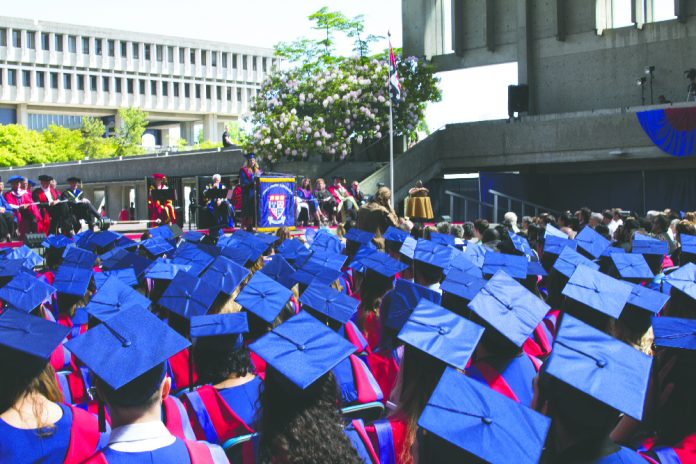
Photo by Phoebe Lim

First off, congratulations are in order for the class of 2015. You did it, graduates. You deserve it after four to 10 (or more) years of extraneous brain exercises. We undergraduates are so proud of every single one of you bastards and wish you all the luck you won’t need to conquer your “real-life” future.

With that aside, here’s a glimpse at what the non-graduates go through during the greatest week of your academic career.

Banners are hung to impress visiting parents and relatives, 6,848 chairs are dragged out from the Narnia wardrobe, the sounds of bagpipes are piercing and inescapable (and somehow more unbearable than usual), and that spine-tingling stage that you, and secretly everyone, are afraid of tripping on is constructed. The moment that setup begins, we undergrads get goosebumps — though partly from the obnoxious dragging of massive metal carts across Convocation Mall.

My favorite on-campus study area, Higher Grounds Coffee Shop, is a major no-go zone during the week of Convocation. It’s an especially lethal environment for introverts like me to be in, with all the people congregating to get coffee, or soup, or to head upstairs to the pub. By people, I mean all of the people — and by all of the people, I mean all the graduates and their families. My advice is to just stay out of Spirit Bear that week and let the graduates enjoy it one last time. Imagine crime scene tape reading “Caution! Non-graduates really don’t want to be here right now!” sectioning off the premises.

The insecurity and internal conflict during convo week is a struggle for non-graduates, especially the ones who’ve already served four years but still have time left on their sentence. We’re motivated to study 100 per cent more than our norm, and that’s for one of two reasons: we fear we’ll never graduate, or that we’ll graduate unprepared. There’s something about seeing successful graduates in their proud gown-and-cap attire that drives us up the wall in conflict; one minute we’re thinking “I’m so excited to get there and start my professional life,” and the next we’re panicking, “No, wait, I’m not ready for that real-life shit. Sign me up for graduate school; I’m never leaving this beautiful prison!”

Can we return to the sheer number of humans on campus during convo week? And the bagpipes? God, the bagpipes. I swear I heard them in my sleep the other night, like a backwards lullaby; hear them once and they stick to the inside of your ear and play for eternity. No offense, bagpipe players. It’s nothing personal. You’re all really damn talented and I respect your super cool outfits and your super cool lungs, which probably mean you could run a marathon really easily or something. But if there’s a hell and I go there when I die, there’ll probably always be at least seven bagpipes playing in the background.

With all seriousness, a big cheer to you, graduates. We sincerely hope that your day was perfect and everything you wished it to be. Thank you for the sudden burst of motivation to study for midterms and a re-evaluation of my time management skills. Proud of you, happy for you, kind of want to be you, kind of don’t want to be you. Good luck and farewell!

This week in comics

0

Screen Shot 2015-06-19 at 3.13.23 PMWill this be tested? (by Serena Chan)

Seagull Square #7Seagull Square (by Jill Mandrake)


DraperPun 2 3 (by Sarah Walker)

AGORA #7The Adventures of Agoraphobia Man: World Defender (by Jacey Gibb)

HUMOUR: Mandatory blinding deemed only feasible option for male scientists

0
Photo by Phoebe Lim

Since the profound and extremely accurate remarks made by Nobel Prize winner Tim Hunt — that having women in the lab always leads to romantic entanglement and females weeping whenever criticised — scientists from around the globe have been working tirelessly to remove this hindrance on scientific progress (women). In a confined space like a laboratory, after all, how is anyone supposed to get any work done around any distractingly sexy women?

Finally, an answer has been found: compulsory blinding for all male scientists.

“It’s a wonder the field even made it this far in the first place,” says biochemist Joel Marshall, the scientist credited for solving the dilemma standing in the way of everyone being even remotely productive. “To be perfectly honest, I’m surprised any work has been done in any branch of science at all. Females are just too damn distractingly sexy. I want to get work done but I just can’t help falling in love with them, which inevitably leads to all of the crying.”

Prior to compulsory blinding, many solutions had been proposed to the sexy women phenomenon. First, several labs tried making hazmat suits part of a mandatory dress code for all female scientists, but this was deemed insufficient. It was also suggested that those same suits be constantly worn by women in everyday situations as well, but this was also seen as counterproductive: a thin layer of fabric cannot stop the male mind from thinking of those pesky females, and suits can be removed, so men remained distracted.

Luckily, in a flash of blinding insight, Marshall saw the answer that males simply need to be blind: “My son, unable to focus on homework, suggested, ‘If only I’d never seen a girl, then maybe I could finally focus.’

“It was at that moment that everything became clear.”

Going forward, Marshall’s (patent pending) technique of blinding aspiring male scientists will become part of orientation for post-secondary science-based faculties across the country. If successful, the program could expand beyond just the sciences and maybe even outside of schools.

“There may be a few minor difficulties with the procedure,” says Ben Schiller, the recently hired on-call blinding doctor for SFU’s Faculty of Science, “but these problems will surely resolve themselves quickly.  Some individuals have protested, but this must be done for the progress of the nation. Once men see how much being blind helps them focus, they will be eternally grateful.

“Personally, I can’t wait for my own scheduled blinding.”

With one part of the problem finally resolved, scientists have now turned their attention to figuring out how to prevent women from crying all of the time, though trials so far have been unsuccessful.

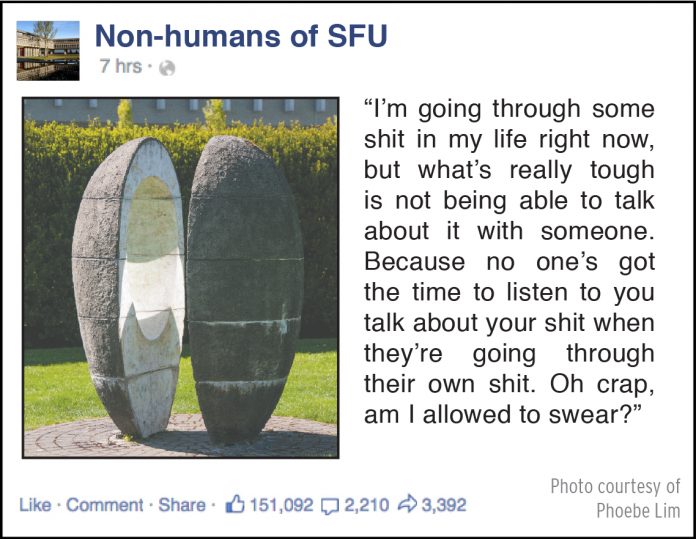
Non-humans of SFU

0

Children need more than an app to learn about sex

0
Photo Credit: Phoebe Lim

A new app called “Clementine Wants to Know” is being marketed towards parents as an aid to help teach their children about sex. At first, this seems like a great idea. The sooner kids know about sex the sooner the stigma surrounding open conversations about sex will be over. Win-win for everyone, right?

I don’t think so. By using an app to teach kids about sex as a way to replace “the talk,” parents continue the cycle of conversations regarding sexual taboo.

I will admit that talking to younger children about anything other than toys and cartoons can be uncomfortable. But shouldn’t a parent feel comfortable having an honest conversation with their children about any asked question? Honest questions deserve honest answers, not only as a way to teach children that deception is wrong, but as a way to create more open discussion surrounding difficult topics, including sex.

Although less taboo than it once was, sexual discussion can still be awkward. This is why dialogue is so important; the more something is discussed, the less awkward it becomes — and the sooner these conversations start, the better.

Although an app would teach Jimmy where babies come from, he would not learn how to talk about it.

Why, then, is a parent using an app to teach kids about sex a bad thing? By relying on technology, parents remove their responsibility. Hand little Jimmy an iPad and say, “here you go, son.” Although Jimmy will learn where babies come from, he will not learn how to talk about it. A parental conversation also allows an opportunity for Jimmy to ask questions that he felt the app may have not answered well enough.

While using technology or other resources can be beneficial for one’s learning, it needs to be used as a tool to propel the conversation and not to replace it. We don’t need to giggle nervously each time we say “penis or “vagina.” The only way to become comfortable with these words is if we use them repeatedly in a serious context. If using an app helps remove some of the awkward feelings that a child has about using these words then that is fine, but it should also be used to encourage parents to be more comfortable in using these words as well.

Using an app as a tool to assist parents in talking to and teaching children about sex is a great idea. By removing the ‘game’ element from the app, and turning it into an interactive book that requires parental participation (perhaps through having to enter a passcode or using the built in fingerprint scanner), the advantages that come from using technology to learn can be harnessed, while still encouraging parents to have the actual conversation about sex.

If you are or will one day be a parent, make the commitment to use your words, not your phone. Talk to your kids and encourage them to talk to you, and you’ll create healthy, open relationship.

TAs to withhold grades

0

SFU’s Teaching Support Staff Union (TSSU) has decided to escalate job action by withholding numerical and letter grades from their students.

This is the second escalation since March, when 92 per cent of union members voted in favour of the strike.

The first action included an overtime ban for the foreign language instructors at Harbour Centre, taking three to five minutes out of a tutorial to update their students on the bargaining process, and stickering student assignments with the TSSU logo and a message that said “marked” or “taught” by a TSSU member.

George Temple, spokesperson for the TSSU, explained, “We’ll still be teaching and marking work as normal, we just won’t be providing any number or letter grades on any assignments and we won’t be [entering] grades into any SFU systems. This way, it’s the least disruption to students.”

The secondary escalation was initiated after the TSSU received no response to a letter sent to the SFU administration on June 10. The letter outlined four bargaining demands with a deadline of June 16. As a result, the TSSU cancelled the bargaining session that was scheduled for June 17 and moved to escalate job action on June 19.

According to a press release issued by the TSSU on June 17, SFU administration has “instructed TSSU members to break their strike.” 

TSSU Chief Steward Reagan Belan stated in the press release, “Instead of bargaining meaningfully on our core issues, SFU Administration has directed our members to hand in grads in direct contravention of our legal strike action.”

SFU issued a statement to The Peak, expressing how administration was “very surprised at these threats, given the positive progress made at the last meeting on June 3, and the potentially significant negative affect this would have on the TSSU’s own membership.”

The statement explained, “We believe the Union’s course of action contravenes the Labour Relations Code and constitutes a failure to bargain in good faith and have asked leadership to reconsider their position.”

The first of the four main bargaining demands made in the TSSU’s June 10 letter to the administration was for the addition of “a member of Senior Administration to their bargaining committee with the authority to conclude an agreement.”

TSSU Chair Derek Sahota said that, “When SFU sent a Senior Administrator to the table in 2012, we signed a contract within 48 hours.” 

SFU’s statement explained that the demands made by the TSSU are not enough to halt the bargaining process under the Labour Relations Code.

On June 16, the Graduate Students Society (GSS) issued a letter to President Andrew Petter, indicating their support for the TSSU and concern over the lack of “meaningful dialogue on major issues.” The letter urged the administration to “negotiate more productively with the TSSU.”

The TSSU identified three of the four concerns raised by the GSS — guaranteeing access to work, merging the TA (teaching assistant) and TM (tutor marker) language in the collective agreement, and paying workers on time — as three of their major concerns. TAs and TMs are currently on two different payscales, although the TSSU argues the jobs have become increasingly similar.

SFU’s statement acknowledged the letter from the GSS, stating, “We understand the GSS recently expressed some concerns around current progress in bargaining. We share these concerns‎.”

Temple expressed the frustration with the bargaining process, “At this point [. . .] we haven’t even proposed monetary issues, we’re not even discussing — for most of our members — pay and benefit yet. They’ve just refused to bargain with us on language issues.”

The TSSU hopes to reach a collective agreement sooner rather than later. “We know SFU is planning a huge celebration on September 9 of its 50th anniversary,” said Sahota. “It would be a shame if we had to escalate even more before then, maybe even see picket lines on that day. I think that would be a really awful thing, but we do need to get to a contract.”

TSSU bargaining demands made in June 10 letter to SFU admin

1. “Add a member of Senior Administration to their bargaining committee with the authority to conclude an agreement.”

SFU and the TSSU came to an agreement within 48 hours of VP Academic and Provost Jon Driver joining the bargaining committee in 2012.

2. “Add another faculty member to their committee who has taught in the past three years.”

There is currently only one member of SFU’s bargaining committee who is a teacher, who Temple says has not been able to attend most of the bargaining sessions.

3. “Schedule back-to-back bargaining dates that do not end at 4 p.m.”

Derek Sahota explained, “It’s sort of like a Cinderella experience, where they have to leave at four-o’clock, no matter what is going on.”

4. “Withdraw SFU Administration’s concessionary proposals for Instructors in ELC/ITP.”

There are approximately 30 ELC/ITP employees working at at Harbour Centre. SFU has proposed to decrease their benefits and seniority due to unexplained budget cuts.

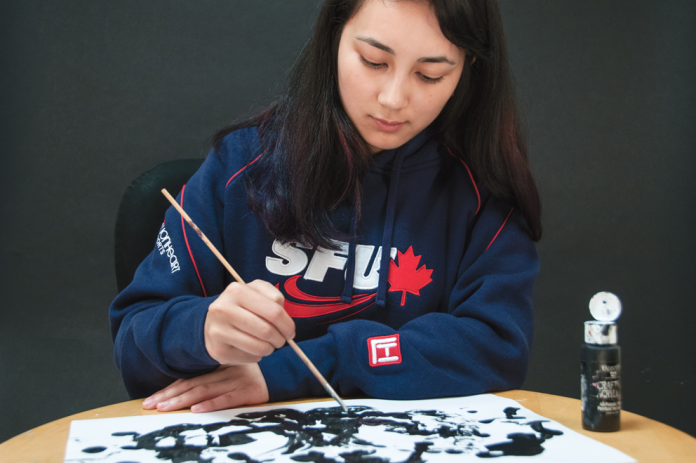
The importance of self-care

0
Photo Credit: Phoebe Lim

As I have a few more days off than I normally would this summer, I’ve been trying to keep every week busy. On one hand, it has been great to reconnect with friends and volunteer, but on the other, it has also been easy to overcommit myself and end up feeling emotionally and physically exhausted on top of my schoolwork and job.

Overloads of stress and exhaustion could eventually lead to burnout, or even depression, which is often common in a high-stress environment like university. However, as it usually starts gradually, there are simple changes one can make in their everyday life to prevent it from getting to this point.

It’s called “self-care.” Having struggled with depression and self-injury in the past, I found this to be a foreign concept. Self-care, defined by Pauline Salvucci, author of Self-Care Now, is “the right and responsibility to take care of your physical, emotional, and spiritual well-being,” looks different for each person.

At the time, this practice made me feel shameful because I thought it was selfish, or that I didn’t deserve to be helped. Now, I realize that that was far from the truth. Self-care is more selfless than it is selfish.

As I began learning (ever so slowly) how to care for myself and respect my limits, I saw a difference in my life. I had more energy to do the things I love, attend to my studies and workplace, and more importantly, I was able to help others more efficiently.

As I began learning how to care for myself and respect my limits, I saw a difference in my life.

For example, a couple weeks ago after finishing a 14-hour Mental Health First Aid course, I felt overwhelmed and hopeless in my own ability to help others who were struggling with mental health problems. Sulking in my bed that night, I remembered our instructor’s advice to practice some self-care, and for me, this was going to a birthday party and playing with some babies that night.

Since finishing that course, and practicing self-care on a more regular basis, I have felt more capable in handling a mental health crisis that might occur, and in supporting the teens in the youth group at my church. By setting aside some “me-time” to attend to my social, emotional, spiritual, and physical needs, I have felt stronger, healthier, and more equipped to support someone in their time of need.

Self-care doesn’t have to be done alone. I often misconstrue the phrase “I can take care of myself” into “I can handle it on my own,” when sometimes I just can’t. Having someone to listen to you and support you can be very beneficial, and sometimes I will talk to a friend or counsellor after experiencing something emotionally exhausting. Other times I’ll do some therapeutic activities like painting, laughing, writing poetry, or something more physical like having a good nap, eating well, or exercising.

As you get to know yourself better, you will come to know what types of self-care work best for you. Sometimes, I do just need to cry in my bed, and other times I just need to get out of bed when my only reason for staying in is not wanting to brush my teeth –– which happens more than I’d like to admit.

By practicing self-care, you’ll learn innovative ways to deal with stresses and problems that may arise in your own life, and in return, be better prepared to help that person who may need your support.

Facilities Services addresses accessibility issues

0
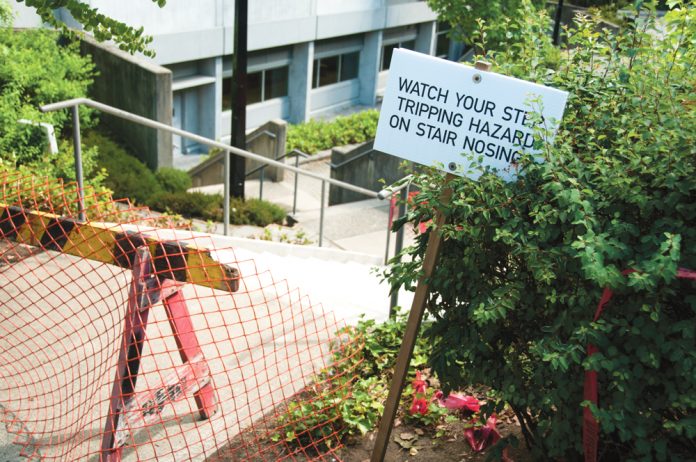
Handrails are being installed on the staircases between the West Gym and Shell House. - Phoebe Lim

Following the January 26, 2015 incident where blind student Anthony Janolino fell down a set of concrete steps and sustained a concussion, SFU has begun accessibility improvements on campus.

Janolino has since been in touch with SFU Facilities Services. They are currently doing work to improve accessibility at the site of his fall, installing handrails on the staircase near the West Gym and Shell house in order to prevent hazards for the visually impaired.

“It is to prevent anyone from stepping off that edge,” said Frank De Vita, Buildings and Grounds superintendent. The estimated time for completion is not set, but De Vita expects the work to be done in three or four weeks.

“There is an accessibility office on campus that primarily focuses on accessibility issues, and there is an Accessibility Committee where the members sit on and review the accessibility needs with certain amount of funding to make those modifications,” explained De Vita.

According to him, these processes take time and some areas are “not easily modified because of the way [. . . the] university was built over the years.”

Facilities Services is trying to look at more creative ways to solve accessibility problems, says De Vita. Otherwise, it is likely to become costly for the university.

“All this takes some time, but it is up to the Accessibility Committee to prioritize issues. But when issues do come up, the accessibility office does contact us to let us know where the issues are,” said De Vita.

One of the challenges Facilities Services faces when making modifications to the campus is trying to preserve historical value of the buildings and aesthetics of the university.

De Vita explained that the issue of accessibility was not a high priority issue when the university was built in the ‘60s, but they are now striving to resolve accessibility problems.

“Facilities Services is always here to address problems, and the students should feel free to contact us when issues arise,” he stressed.

Sitting on the Simon Fraser Student Society’s (SFSS) Accessibility Fund Advisory Committee and representing Students United for Disability Support (SUDS) on the SFSS council, Janolino is involved in numerous accessibility efforts at SFU.

He added that although this particular concern is being addressed, there are certain accessibility measures that need to be maintained on a regular basis, pointing to how shrubberies on campus require continual trimming to allow adequate clearance around campus walkways.

Janolino also mentioned that while the work being done right now will benefit the visually impaired, there are many other needs to consider when approaching accessibility on SFU’s campuses.